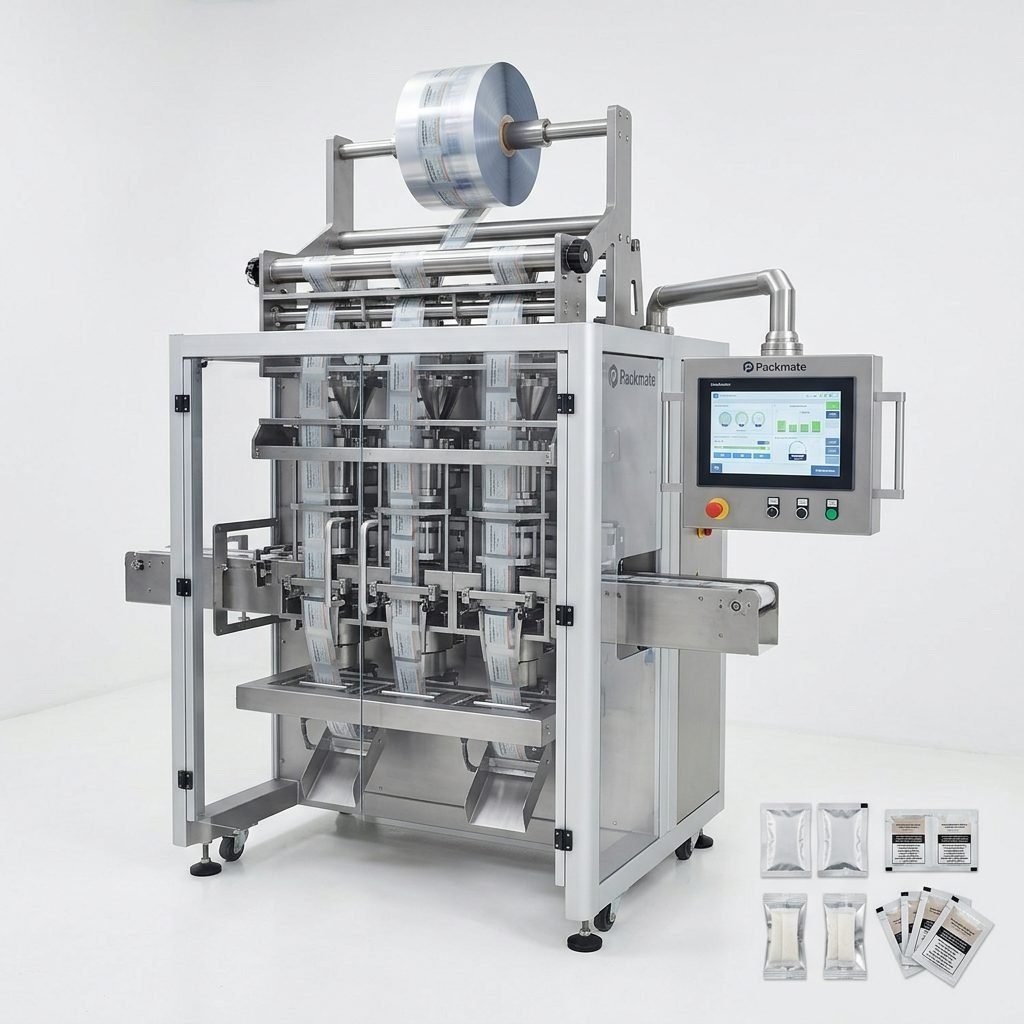
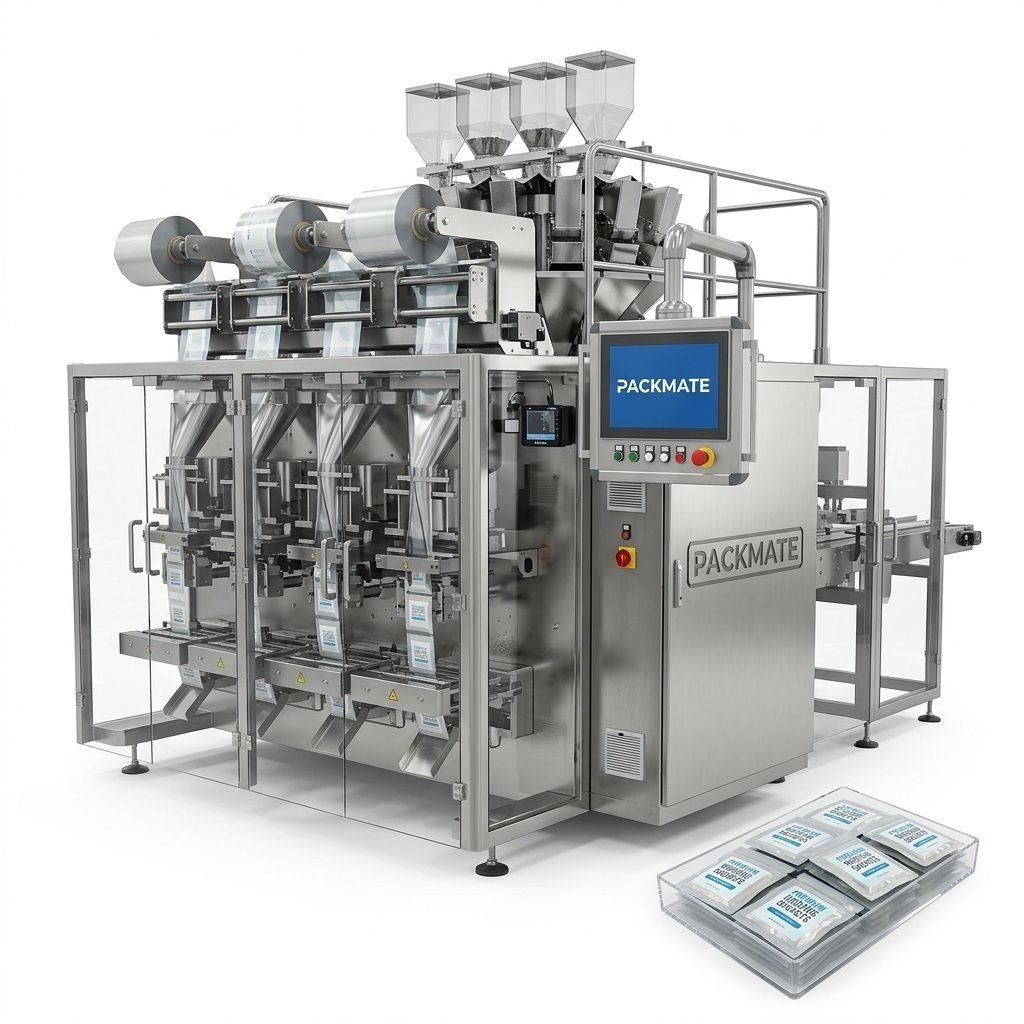
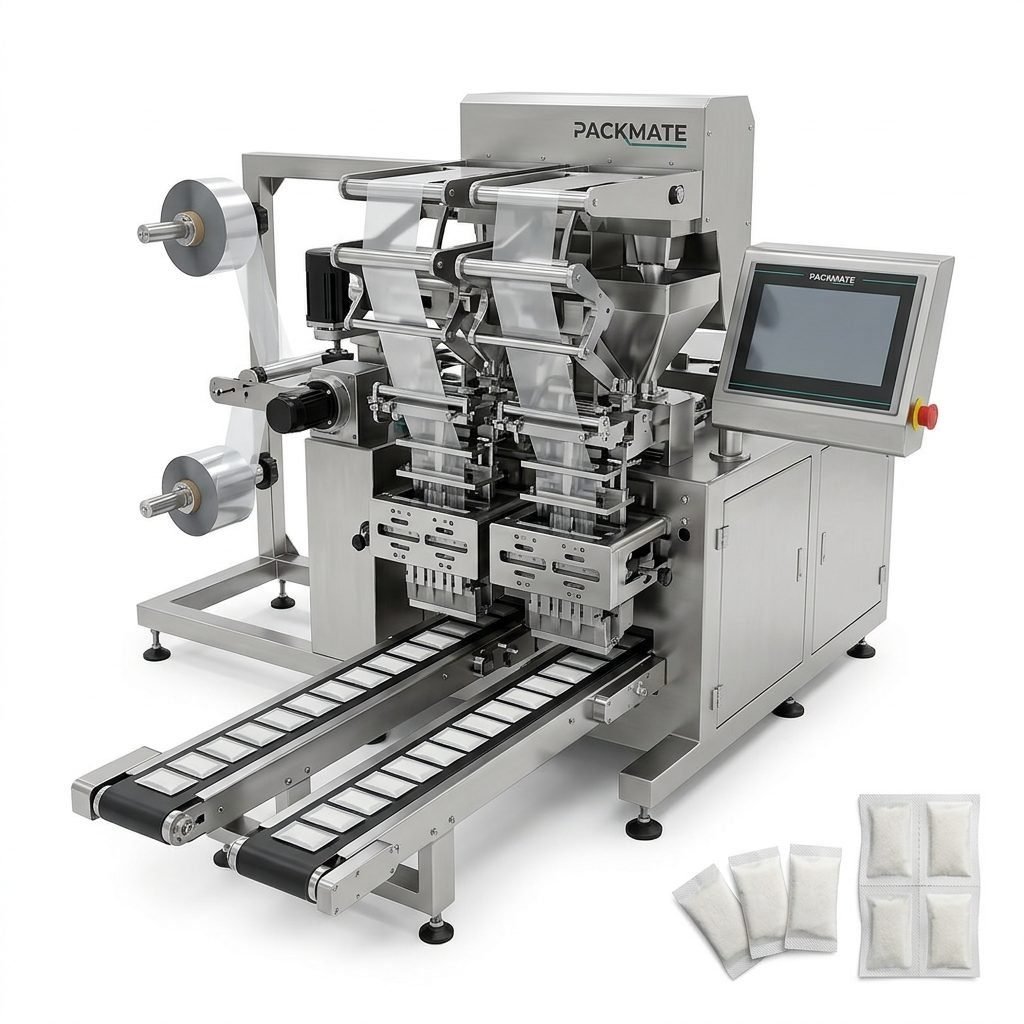
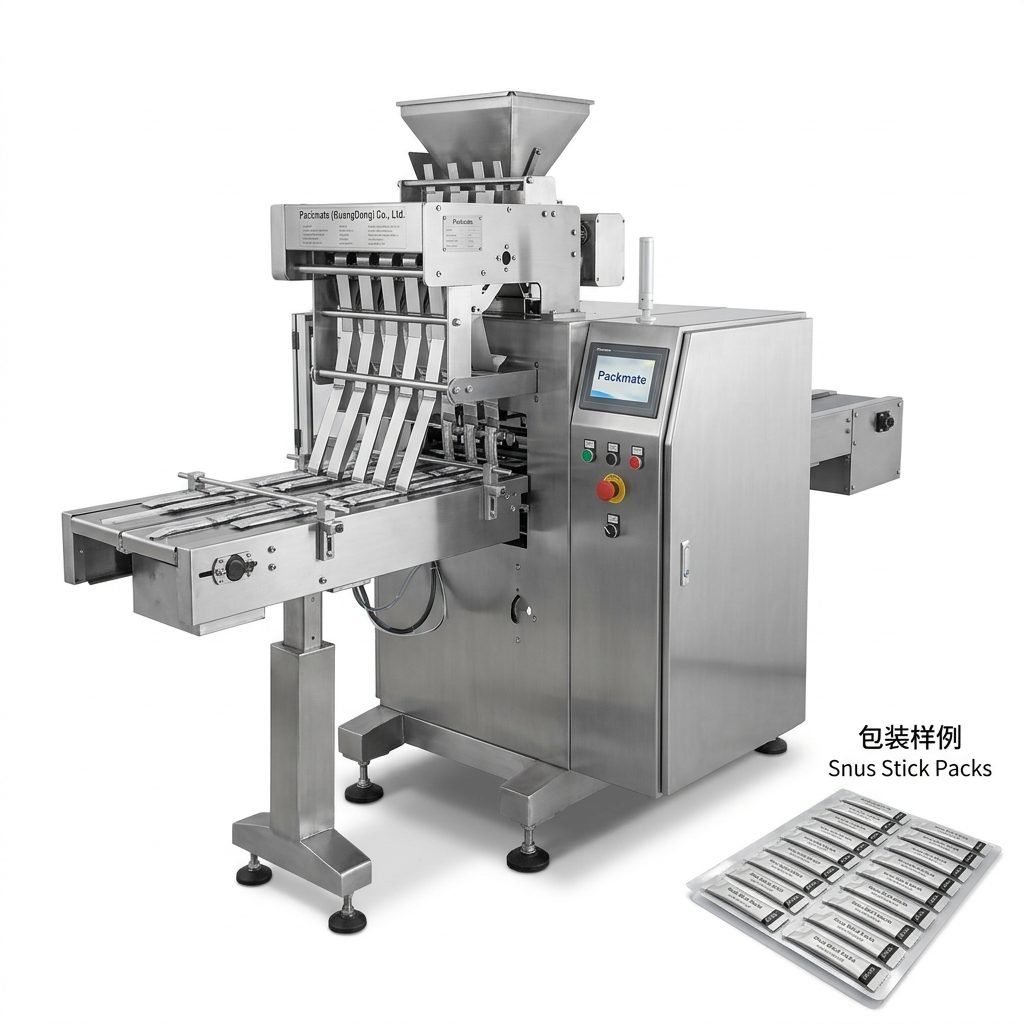
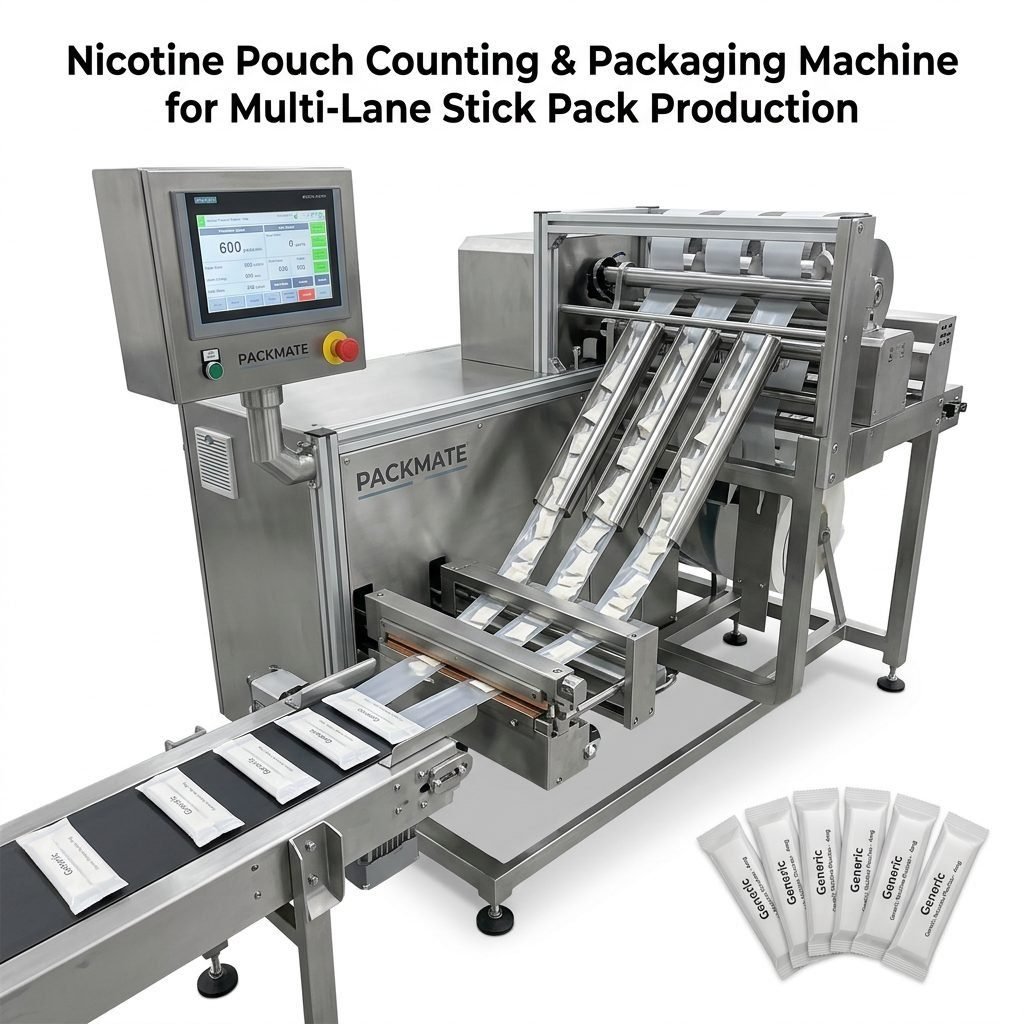
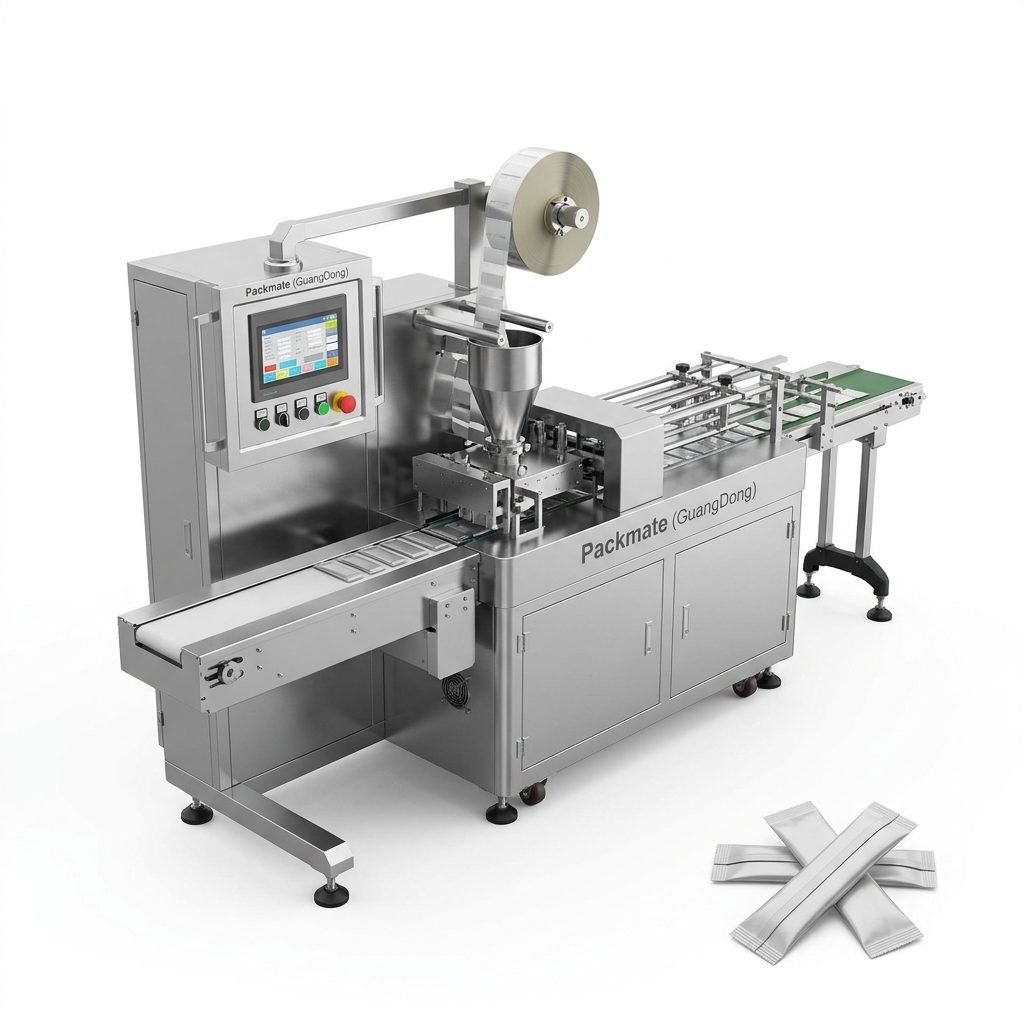
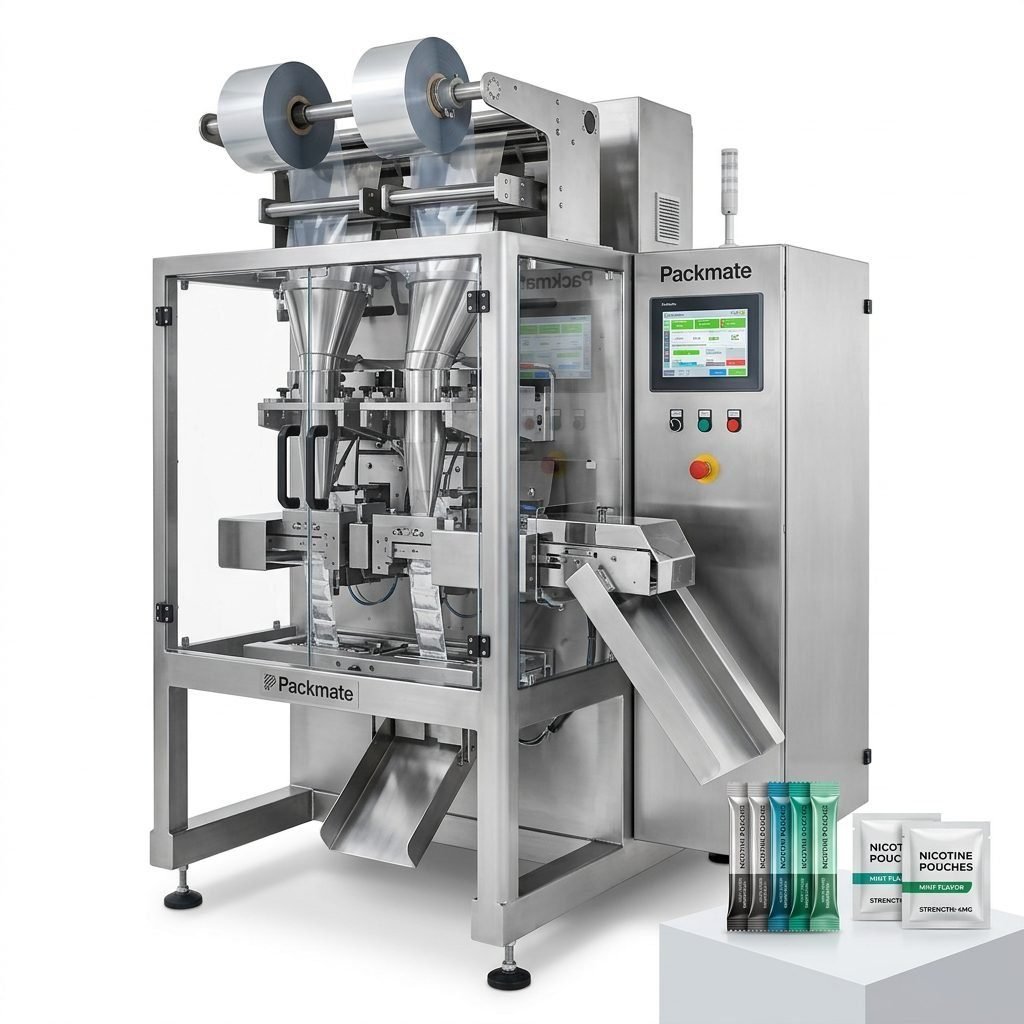
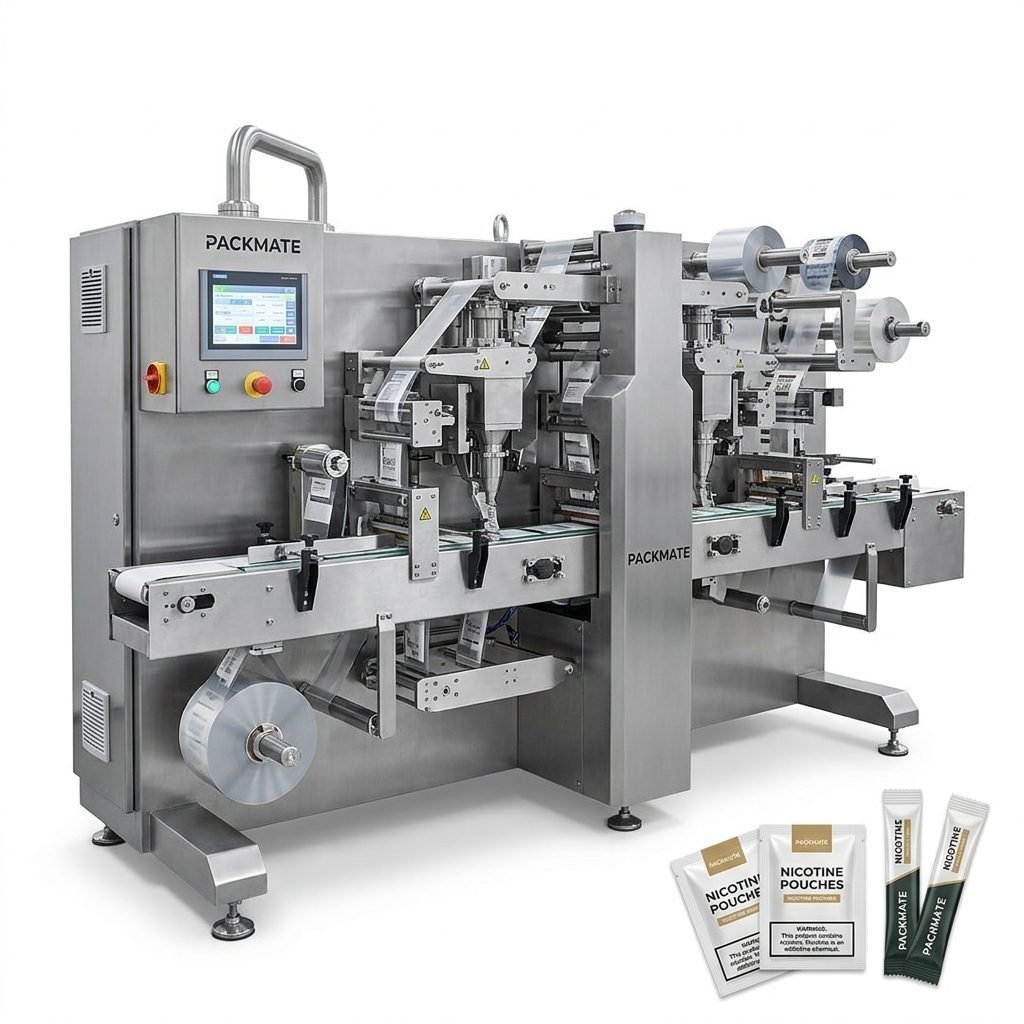
In the rapidly evolving nicotine pouch and snus market, a Complete Snus Production Line with an Integrated Cartoning Machine delivers the consistency, speed, and compliance that modern manufacturers demand. This article explores turnkey automatic packing solutions that combine high-precision filling, multi-lane pouch forming, and synchronized cartoning to create a seamless production flow — from raw material dosing to finished, labeled packages ready for distribution.
Why Choose a Turnkey Snus Production Line? 📦⚙️
Investing in a turnkey line means receiving a complete, engineered solution rather than purchasing piecemeal machines. A well-integrated system reduces downtime, minimizes manual handling, and ensures uniform product quality. For manufacturers targeting nicotine pouches, snus, and related small-dose sachets, the benefits include improved yield, traceability, and simplified regulatory compliance.
Key advantage: a single point of responsibility for machine compatibility, commissioning, and after-sales support reduces integration risk and accelerates time-to-production.
Core Components of a Complete Line
A full production line typically comprises a sequence of specialist machines designed to work in harmony:
1. Feeding & Dosing Systems — high-accuracy weighers and feeders ensure uniform pouch weight for nicotine powders, granules, or moist snus formulations.
2. Pouch Forming & Filling Machines — multi-lane or single-lane pouch machines form sachets or stick packs with repeatable sealing integrity and clean room-friendly designs.
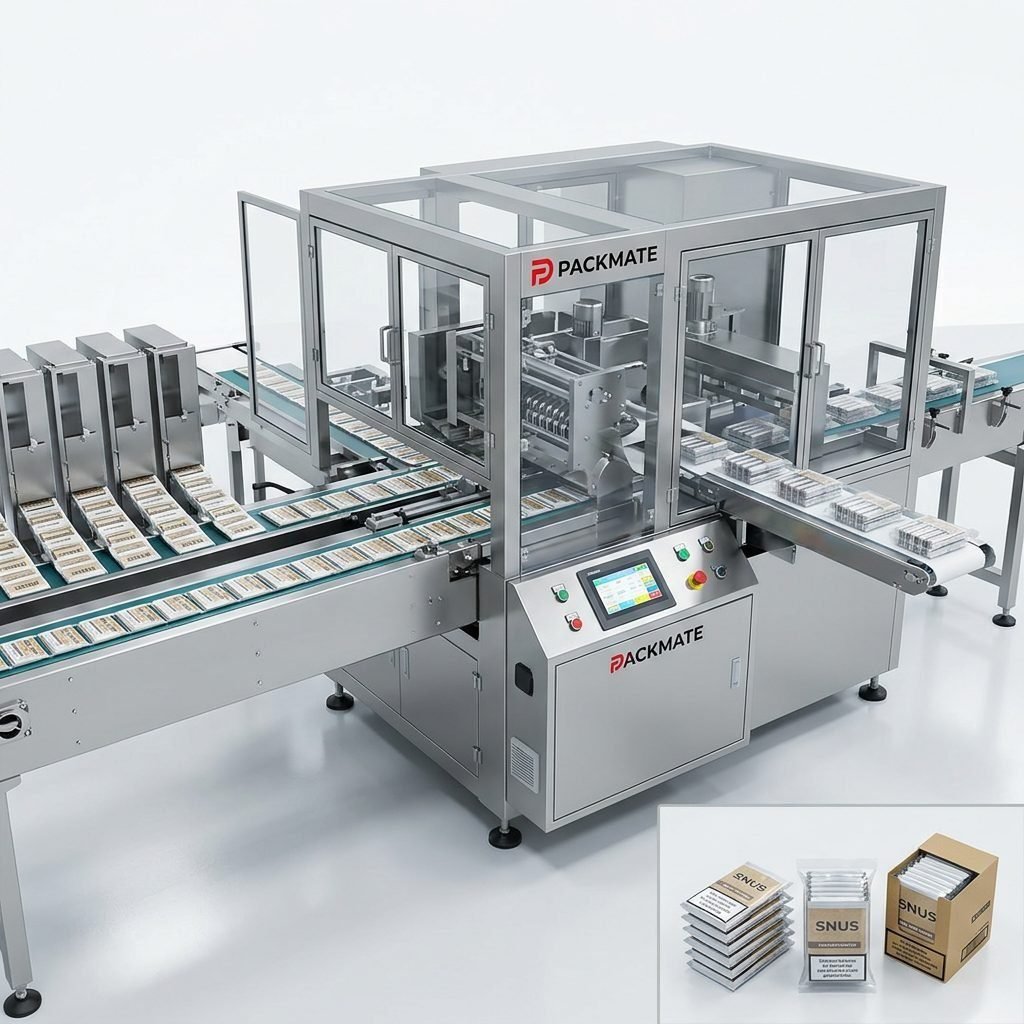
3. Integrated Cartoning Machine — picks, erects, and loads pouches into cartons, folds flaps, and applies glue or tuck closures with precise timing.
4. Labeling, Coding & Inspection — ensures each package contains batch codes, expiry dates, and passes metal/density inspection where required.
5. Conveying & Palletizing — automated conveyors and palletizers handle finished cartons for upstream logistics.
How an Integrated Cartoning Machine Transforms Workflow ✅
The cartoning unit is often the bottleneck or the liberation point of a packaging line. When properly integrated, the cartoning machine synchronizes with upstream pouch speeds, taking completed pouches and placing them into retail-ready cartons without manual intervention. This yields a clean, continuous flow and reduces product touchpoints.
Integration highlights:
• Synchronized timing — servo control aligns pouch transfer and cartoning cycles for minimal accumulation and high throughput.
• Gentle handling — pneumatic and servo-driven grippers minimize product deformation for delicate nicotine pouches.
• Quick format change — tool-less adjustments and recipe-based HMI control reduce downtime when switching carton sizes or pouch formats.
Technical Features to Look For
When evaluating machines for a turnkey snus line, consider the following technical capabilities to ensure long-term performance:
Precision Weighing — multi-head weighers or volumetric feeders with repeatable dosing accuracy to maintain compliance with labeled weights.
Multi-Lane Capability — flexible lane counts enable high output per machine footprint, critical for scaling production.
Hygienic Construction — stainless steel frames, sanitary surfaces, and easy-clean design reduce contamination risk and simplify validation.
Intelligent Control — PLC and touch HMI with recipe management, remote diagnostics, and data logging for QA traceability.
Customization: From Small Batches to High-Capacity Lines
No two manufacturers have the exact same product mix or regulatory constraints. Turnkey suppliers should offer modular design and customization options:
Format Adaptation — tailor pouch sizes, carton dimensions, and lane quantity to match SKU variety.
Material Compatibility — integrate sealing heads and drive profiles to match film laminates and heat profiles for consistent seals.
Regulatory Support — design for traceability and labeling requirements in target markets, including batch code application and inspection logs.
Factory Capabilities & Quality Assurance
A reliable supplier brings manufacturing strength, testing, and certifications that back the equipment they deliver. Look for suppliers with:
Advanced Machining & Assembly — in-house CNC centers and precision lines reduce lead times and ensure component consistency.
Comprehensive Testing — every system should undergo dry runs, filled-product trials, and acceptance tests before shipment.
Certifications — CE, ISO and other regional standards demonstrate compliance with safety and manufacturing quality expectations.
Installation, Commissioning & Training
A turnkey project includes on-site installation, commissioning, and operator training. Proper commissioning ensures that the integrated cartoning sequence aligns with pouch output, and training empowers your staff to operate, maintain, and trouble-shoot the line confidently.
Remote Support — look for suppliers offering remote diagnostics and spare parts support for rapid fault resolution.
Operational Benefits & ROI Considerations
Replacing manual or semi-automated steps with a fully integrated line delivers measurable advantages:
Increased Throughput — multi-lane pouch machines coupled with high-speed cartoning multiply finished units per hour.
Lower Labor Costs — automated feeding, packing, and cartoning reduce repetitive manual tasks and occupational risk.
Improved Consistency & Compliance — precise dosing, sealing, and labeling minimize recalls and noncompliance.
Faster Time-to-Market — a turnkey supplier accelerates project timelines via integrated system design and single-vendor responsibility.
Case Example: Global Deployments & Support 🌍
A proven supplier offers global exhibition presence, project references, and regional support networks. Real-world deployments demonstrate how lines perform across different markets, raw materials, and regulatory environments.
Explore product categories and case studies here:
Snus & Nicotine Packaging Machines,
Filling & Packaging Lines,
and see real-world examples at
Case.
Selecting the Right Supplier
When choosing a partner for a turnkey snus line, evaluate manufacturing footprint, R&D depth, spare parts inventory, and after-sales service. Suppliers with decades of experience, advanced CNC facilities, and global certifications provide greater confidence for long-term operations.
Packmate Strengths: over 30 years of engineering experience, a 20,000㎡ factory, 50+ machine models, and international service capabilities.
Service, Maintenance & Parts
A complete solution must be backed by structured maintenance plans and a readily available parts inventory. Preventive maintenance, spare kits for wear components, and training for in-house technicians increase uptime and lower lifecycle costs.
For service inquiries and exhibitions, visit:
Service and
Our Exhibition.
Regulatory & Certification Considerations
Ensuring machines comply with CE, ISO, and local health and safety standards is essential. Confirm the supplier provides documentation for machine safety (electrical, guarding), material contact surfaces, and calibration validation for dosing equipment.
Preparing Your Facility for Installation
Pre-installation checks include floor loading capacity, utility supply (power, compressed air, vacuum), HVAC and clean-room classification if required, and clear access for crate delivery and machine positioning.
Sustainability & Waste Reduction
Modern packaging lines incorporate reelsaving strategies, optimized carton sizes, and waste monitoring to reduce material consumption. Efficient film handling and cut waste recovery lower both environmental footprint and material costs.
Next Steps: From Inquiry to Commissioning
Start with clear product specifications, target output rates, and preferred packaging formats. Engage with the supplier to perform a feasibility study and layout plan. A solid project timeline includes design review, FAT (Factory Acceptance Test), shipping, installation, and SAT (Site Acceptance Test).
Contact Packmate for further information and personalized proposals:
Contact Us and learn more About Packmate.
Conclusion
A Complete Snus Production Line with an Integrated Cartoning Machine is a strategic investment for manufacturers who require reliable, high-throughput, and compliant packaging solutions. By partnering with a seasoned turnkey supplier, you can reduce operational complexity, ensure consistent product quality, and accelerate time-to-market for your snus and nicotine pouch products.
Frequently Asked Questions
1. How long does commissioning a turnkey snus line typically take? Installation and commissioning timelines vary by scope but typically range from 4 to 12 weeks after FAT sign-off, depending on line complexity and site readiness.
2. What production speed can I expect from a multi-lane pouch and cartoning integration? Speeds depend on lane count, product type, and cartoning format; modern multi-lane systems commonly deliver tens of thousands of pouches per hour aggregated across lanes when paired with high-speed cartoning.
3. Do turnkey suppliers provide spare parts and training? Yes. Reputable suppliers include spare parts kits, training during commissioning, and ongoing support options to maximize uptime.
4. Can the line handle different pouch materials and carton sizes? Modern systems are designed for quick format changes and support a wide range of films and carton styles, with recipe-controlled settings for repeatability.
5. Where can I find detailed product specs and case studies? Visit the product pages and case examples to review specifications, configurations, and real-world deployments: Snus & Nicotine Packaging Machines, Case Studies, and the FAQs.