Choosing the right nicotine packaging machine for a production line in Zambia requires more than just comparing prices. You need a solution that matches your production volume, packaging format, regulatory requirements, and local support expectations. This guide walks you through a practical selection process and highlights the technical and commercial factors that ensure a reliable, high-efficiency nicotine pouch or snus packaging line.
Understanding the Zambian Market and Production Goals
Zambia’s market for nicotine pouches and related products is evolving — manufacturers must balance local demand, export possibilities, and compliance with regional rules. Begin by clarifying your production goals: are you targeting local retail, regional export, or both? Define weekly/monthly production targets, desired pack formats (single-dose pouches, stick packs, sachets), and packaging materials. These decisions directly drive machine type, number of lanes, and auxiliary equipment requirements.
Key production questions to answer
🔧 Production volume: How many pouches per minute/hour/day do you need?
📦 Pack formats: Do you require sachets, stick packs, or multi-lane pouches?
⚙️ Integration: Will the machine work with existing weighing, filling, or secondary packaging lines?
Core Factors When Selecting a Nicotine Packaging Machine
1. Machine Type and Pack Format
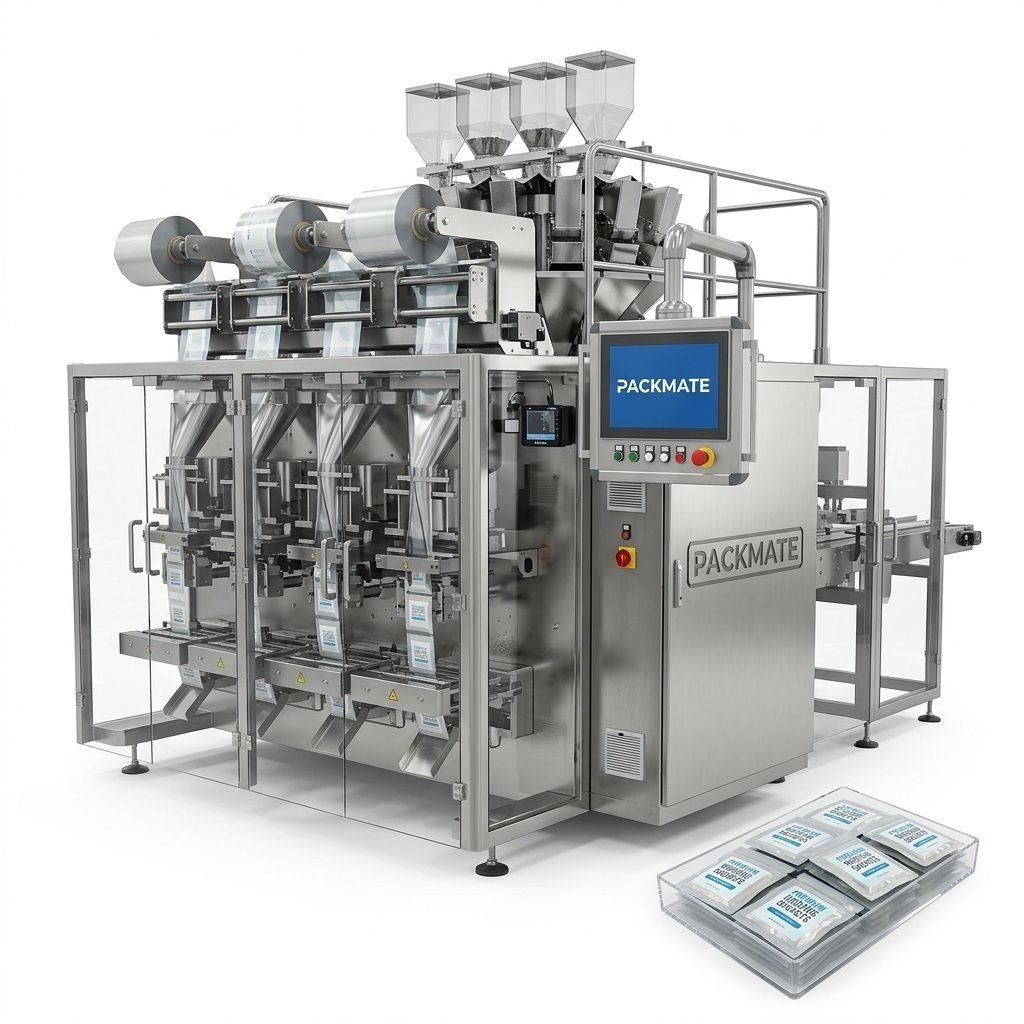
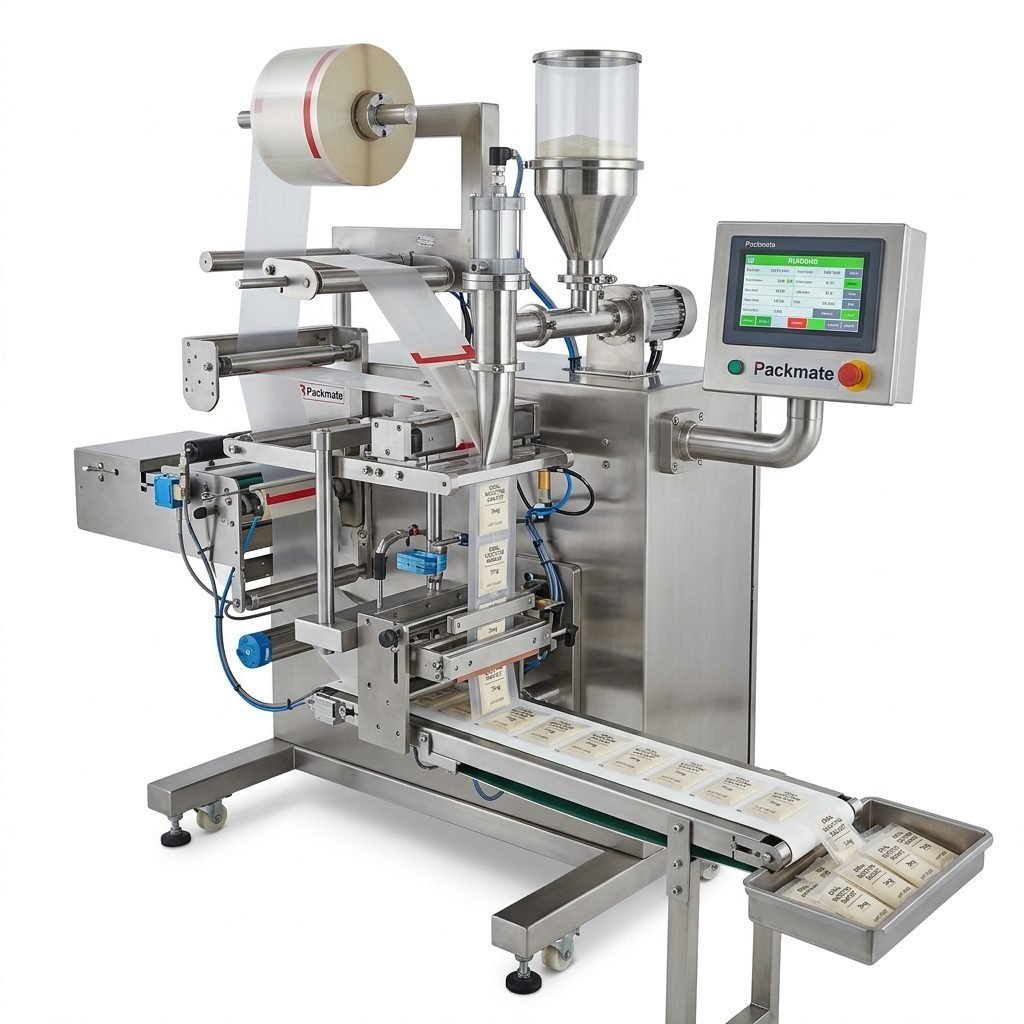
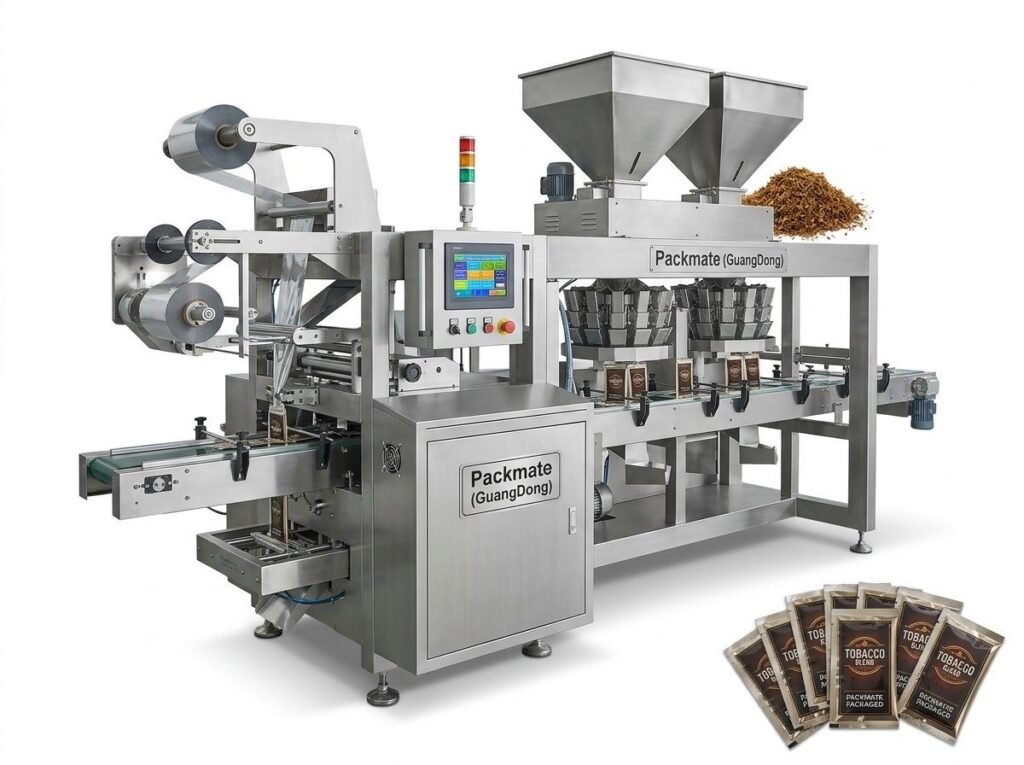
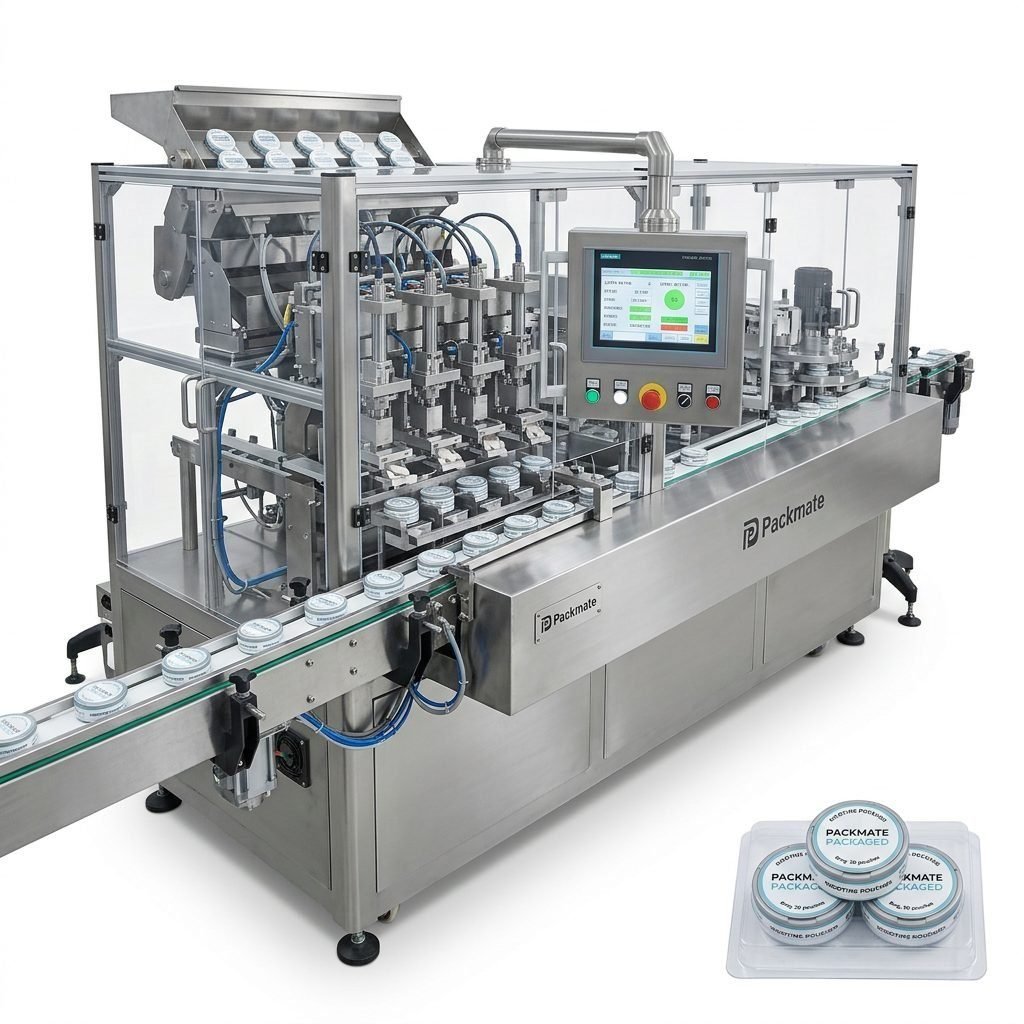
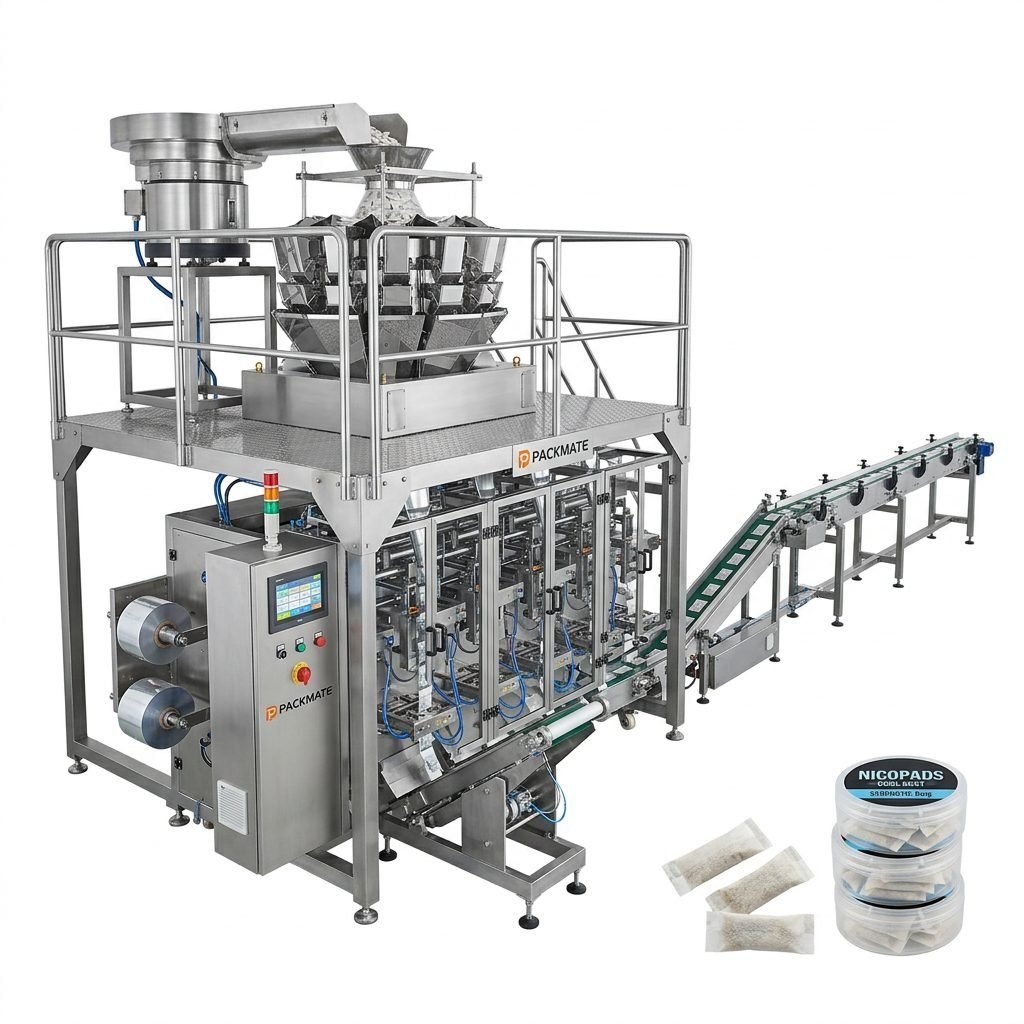
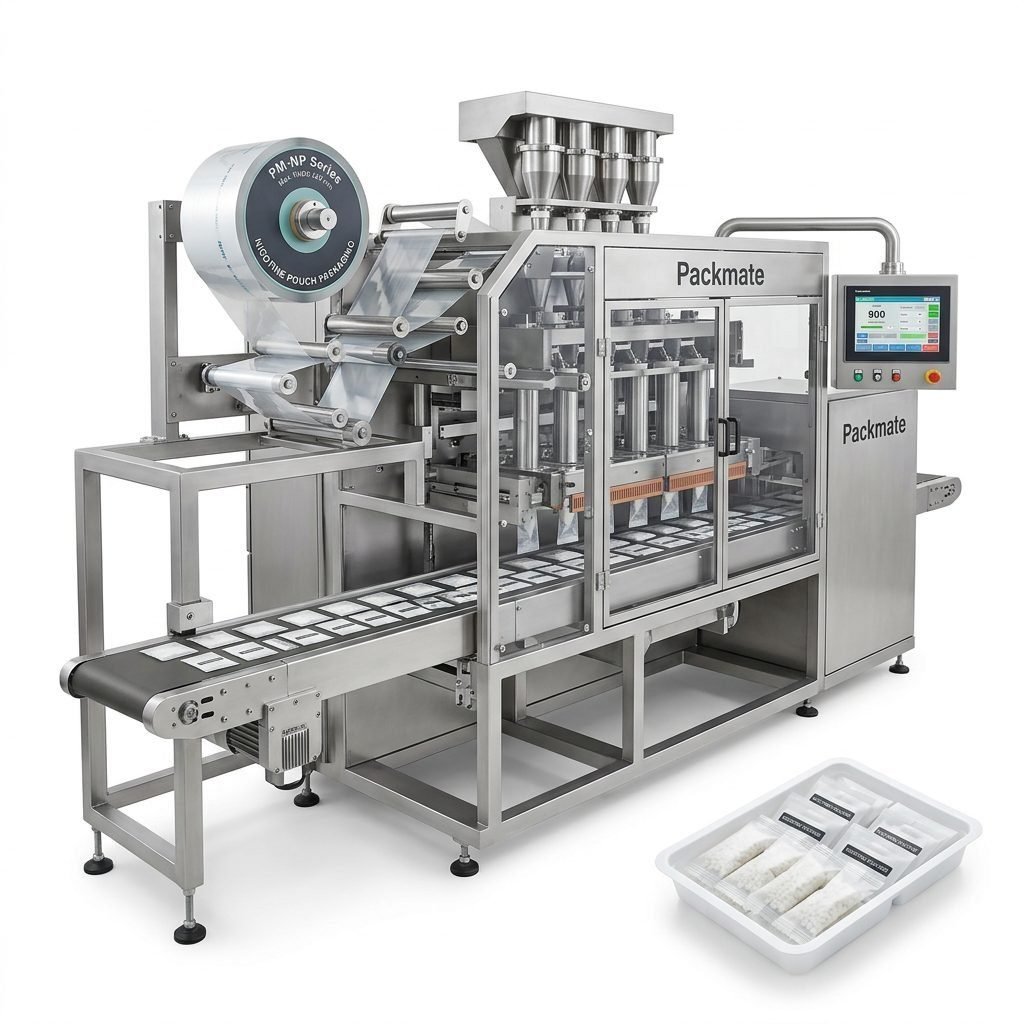
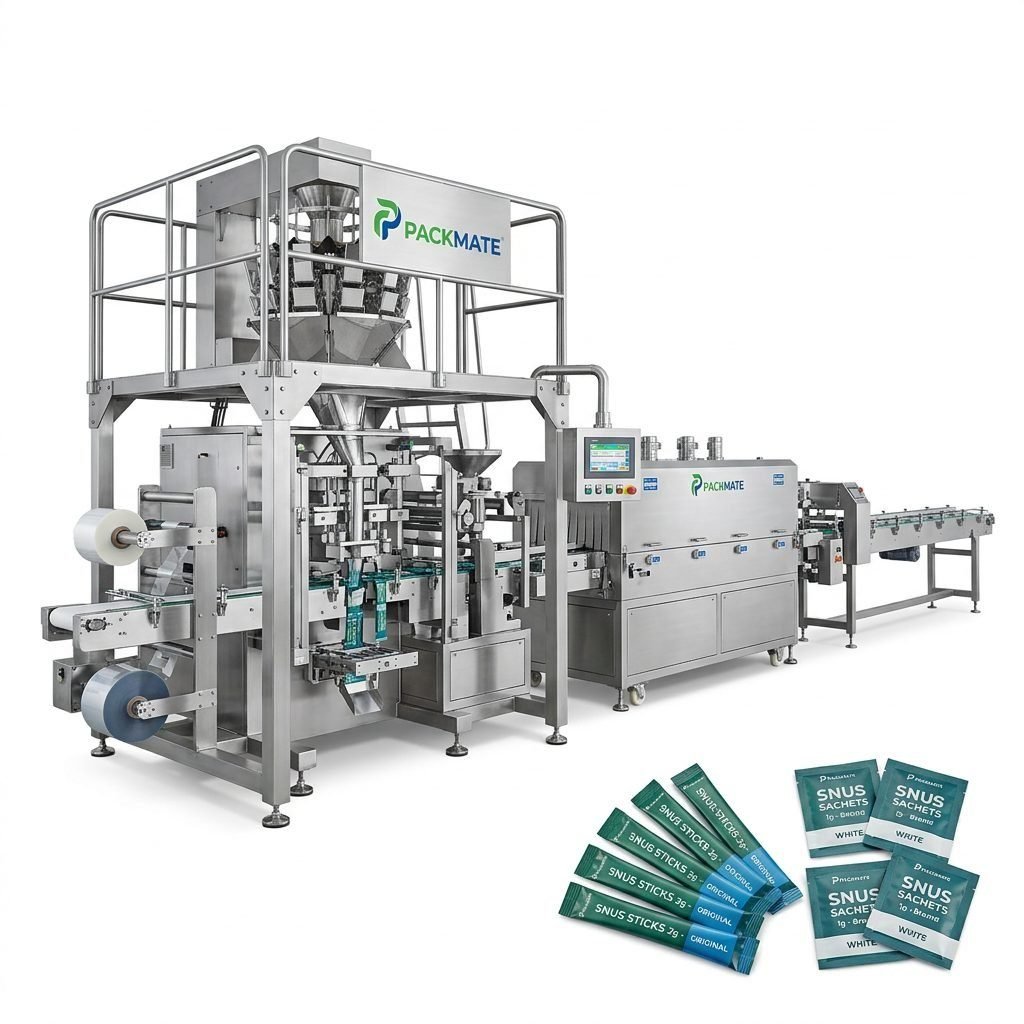
Choose machines designed for the specific format you will produce. For single-dose nicotine pouches and snus, specialized snus packaging machines and multi-lane pouch systems are ideal. For stick packs or sachets, look into stick pack and sachet machines. Packmate offers a full range — see relevant product lines such as Snus & Nicotine Packaging Machines and Sachet & Stick Pack Machines.
2. Throughput and Multi-Lane Configurations
Throughput is typically measured in pouches per minute. If you target high output with a compact footprint, multi-lane machines are the best choice. Confirm whether lane counts can be adjusted (e.g., 4, 8, 12 lanes) to scale production without major capital expenditure.
3. Filling Accuracy and Dosing Systems
Nicotine pouch weight control is critical for regulatory compliance and product consistency. Choose machines compatible with precise dosing systems (vibratory, volumetric, or auger systems for powders and granules) and integrate reliable weighing systems. For complete weighing and packaging integration, review Weighing & Packaging Systems.
4. Material Compatibility and Seal Quality
Material selection — paper, laminated film, or foil — affects machine sealing technology and tooling. Confirm that the machine delivers consistent seals and can handle the film thickness and laminations you plan to use. Good sealing avoids contamination and preserves shelf life.
5. Regulatory Compliance and Certifications
Ensure equipment complies with international standards and local regulations. Manufacturers with CE and ISO certifications demonstrate adherence to safety and quality norms — Packmate equipment complies with CE and ISO standards, which helps when exporting or meeting buyer requirements.
Evaluating Manufacturer Capability and Support
Choosing a supplier with production expertise, stable manufacturing capacity, and robust after-sales support is essential. Consider the following:
✔️ Experience: Look for manufacturers with decades of R&D and application experience.
✔️ Factory capability: A large factory with CNC centers and precision assembly lines ensures consistent machine quality.
✔️ Product range: A vendor offering multiple machine models and turnkey solutions makes future expansion simpler.
Packmate has over 30 years of engineering experience and a 20,000㎡ facility that supports a wide range of models and customization. You can learn more About Packmate.
Practical Technical Specifications to Compare
When comparing machines, compile a shortlist and request detailed specs. Key items include:
- Rated speed (pouches/min and per-lane speed)
- Number of lanes and flexibility to add lanes
- Dosing accuracy (± grams)
- Changeover time between sizes and formats
- Control system (PLC, HMI, remote diagnostics)
- Sanitation & maintenance access
Example: Why changeover time matters
Short changeover times reduce downtime when shifting production between flavors or pack sizes — this directly improves overall equipment effectiveness (OEE). Machines with modular tooling and quick-release components are preferred.
Integration: Auxiliary Equipment and Turnkey Lines
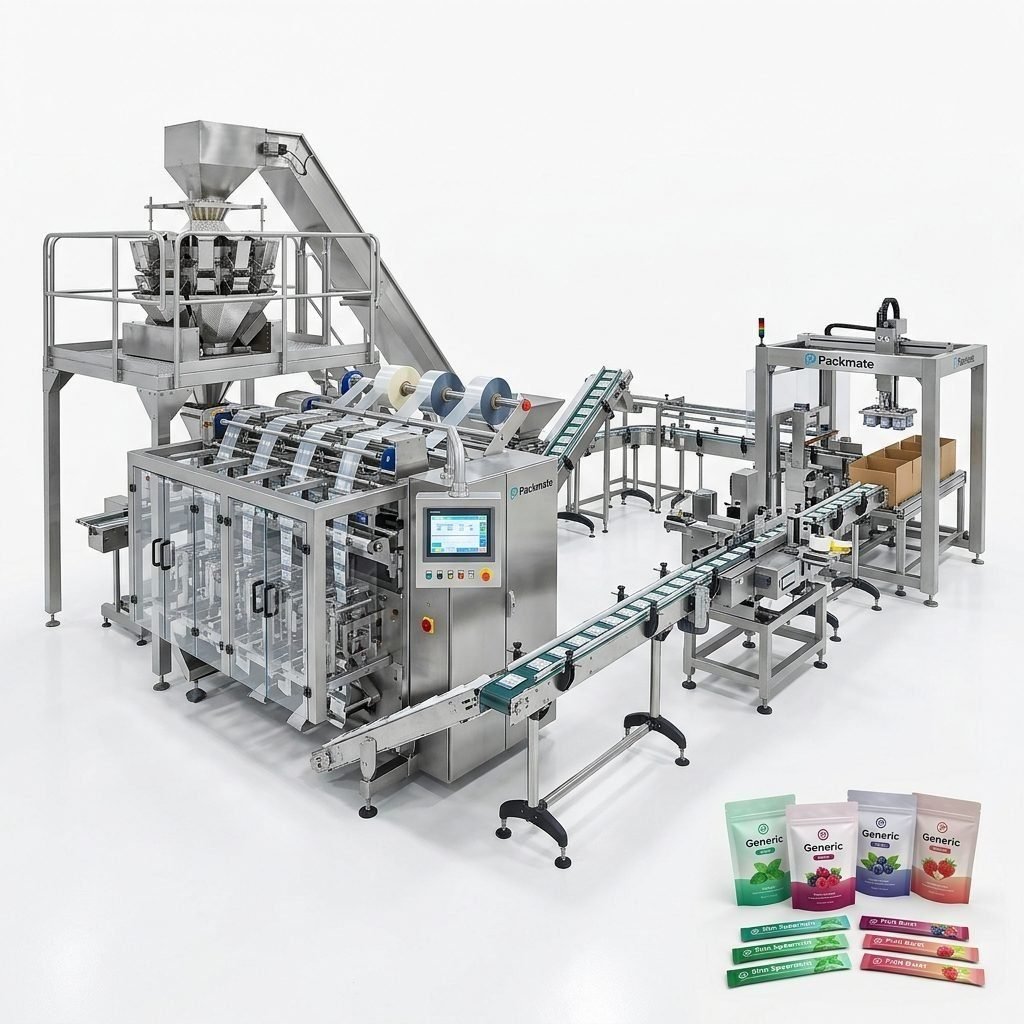
A complete nicotine pouch line often requires feeders, dosing/weighing systems, conveyors, metal detectors, checkweighers, and secondary packing. Vendors that provide integrated solutions simplify commissioning and warranty support. Check out Filling & Packaging Lines and Auxiliary Packaging Equipment for integrated options.
After-Sales Support, Training, and Spare Parts
Local or regional support reduces downtime. Ask about:
- On-site commissioning and operator training
- Availability of spare parts and lead times
- Remote diagnostics, software updates, and maintenance contracts
📞 Pro tip: Insist on a clear spare parts list and recommended inventory for critical wear components to minimize production disruptions.
Total Cost of Ownership (TCO) and Return on Investment
Avoid looking only at the purchase price. Factor in energy consumption, maintenance labor, consumables, spare part costs, downtime risk, and expected lifespan. A higher initial investment in a robust machine often pays off through reduced operating cost and higher uptime. Request case studies or performance references that show real-world ROI.
Installation, Commissioning and Local Considerations in Zambia
Plan for site preparation — stable power supply, appropriate floor loading, ventilation, and access for delivery. If power instability is a concern, discuss UPS or stabilizer options. Work with vendors familiar with international shipping and customs procedures to reduce delays at import points.
Logistics & Shipping tips
Choose suppliers experienced in exporting machinery to Africa; they can help with documentation, customs, and export certifications. Verify machine crating and packaging for long-distance transport and request pre-shipment inspection photo reports.
Selecting the Right Vendor: Checklist
✔️ Verify factory capability: tour reports, CNC centers, assembly lines
✔️ Certifications: CE/ISO documentation
✔️ Product range: ability to supply snus machines, stick packs, and full lines (Snus & Nicotine Packaging Machines, Sachet & Stick Pack Machines)
✔️ After-sales: spare parts, training, remote support
✔️ References & cases: ask for recent export customers and case studies (Case).
Common Machine Types and When to Use Them
Snus / Nicotine Pouch Machines
Purpose-built for small-dose pouches and snus, these machines focus on accurate dosing, gentle pouch formation, and compact multi-lane designs. They are ideal when your primary product is nicotine pouches intended for retail packs.
Stick Pack & Sachet Machines
Use stick pack or sachet machines if you intend to diversify into other single-serve products like powdered flavor sachets. These machines often have faster single-lane speeds but consider multi-lane variants for higher output.
Maintenance Best Practices
Implement a preventive maintenance plan: daily checks, scheduled lubrication, monthly calibration of dosing systems, and timely replacement of wear parts. Maintain a log of downtime causes and part replacements to optimize inventory and reduce unexpected stoppages.
Why Packmate Is a Consideration for Zambian Producers
Packmate (GuangDong) Co., Ltd. has decades of R&D history and a full manufacturing facility, offering tailored snus and nicotine pouch solutions. Their portfolio includes multi-lane snus machines, stick pack options, filling lines and weighing systems — enabling turnkey project delivery. For inquiries and specifics, reach out via the vendor Contact Us page or review certifications at Certificate.
Making the Final Decision
Summarize your production priorities, compare technical proposals against your checklist, and validate vendor claims with factory visits or third-party inspections if possible. Prioritize machines that deliver consistent dosing, minimal downtime, and have strong service support. Factor in scalability so the line grows with your business.
Decision roadmap
1. Define product & throughput → 2. Shortlist machine types → 3. Request detailed specs & demos → 4. Check references & certifications → 5. Finalize purchase with clear support terms.
Frequently Asked Questions
-
Q: How do I know what throughput I need?
A: Estimate monthly sales, add safety stock, and calculate daily production targets. Match this with rated machine speed and expected uptime to choose lanes and the number of machines. -
Q: What certifications should I ask for?
A: Request CE and ISO documentation for the equipment and verify them against the manufacturer’s certificate listings. -
Q: Can machines be customized for local requirements?
A: Yes. Reputable vendors provide customization for film types, lane counts, and integration with local weighing/filling systems. -
Q: What is critical for after-sales support in Zambia?
A: Prioritize suppliers offering remote diagnostics, clear spare parts lists with lead times, and accessible training and commissioning services. -
Q: Where can I view product ranges and case studies?
A: Visit product and case pages such as Snus & Nicotine Packaging Machines and Case to review models and customer implementations.