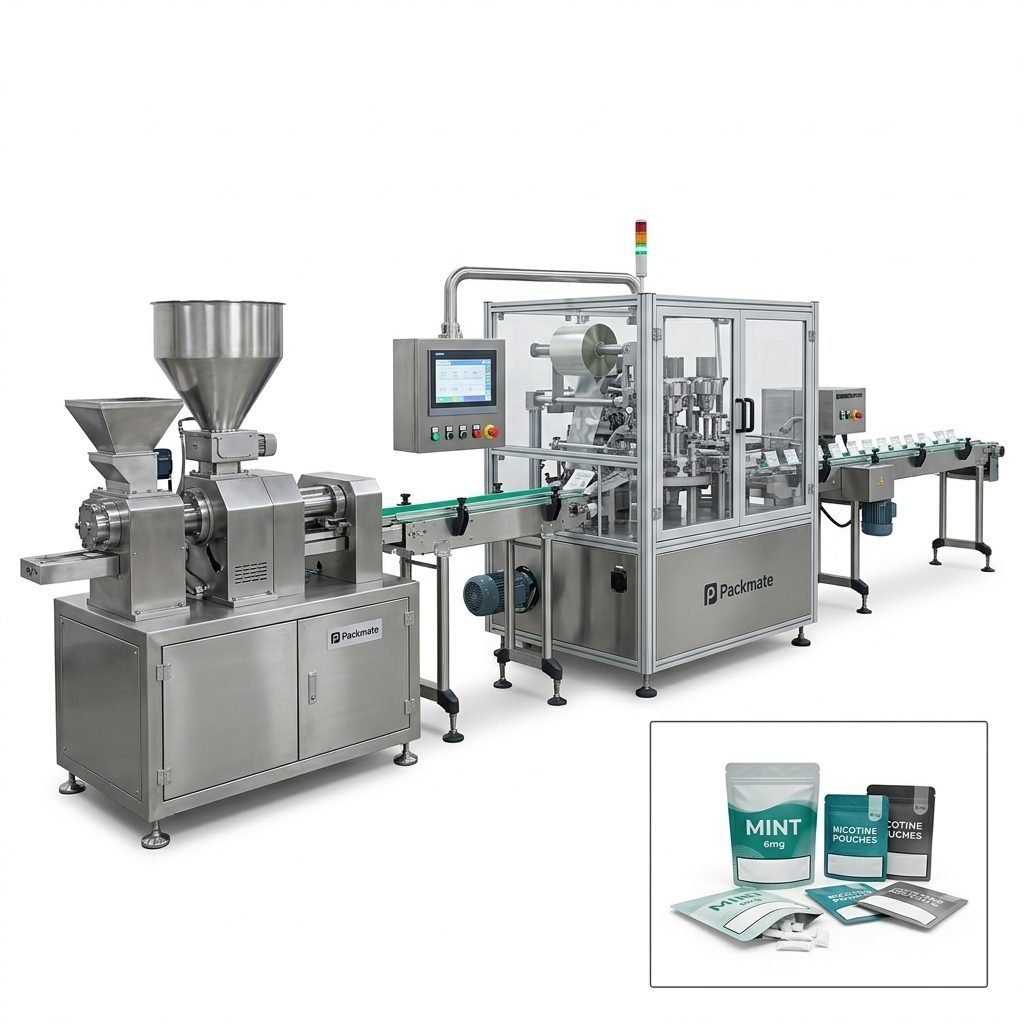
Choosing the right nicotine packaging machinery for your production in Honduras is a critical decision that affects product quality, regulatory compliance, and long-term profitability. This guide breaks down the practical steps, technical criteria, and commercial considerations to help manufacturers, brand owners, and plant managers select a packaging line that fits local market demands and production goals.
Market context in Honduras and Central America
Honduras is part of a rapidly evolving nicotine pouch and snus market across Central America. Market growth is driven by changing consumer preferences and increased import activity. When selecting machinery, consider local distribution channels, packaging sizes popular in the region, and the ability to scale if demand rises. A machine that handles multiple pouch sizes and materials will give you flexibility to respond to shifting market trends.
Regulatory and compliance priorities
Regulatory requirements for nicotine products vary by country. Ensure that any equipment you purchase supports hygienic design, easy cleaning, and traceability systems that help you meet labeling and batch control requirements. Look for machines from manufacturers with CE and ISO certifications and documented experience supplying nicotine packing lines globally.
Key reminder: choose machinery that supports traceability, quick changeovers, and is built from food-grade stainless steel to simplify regulatory audits and reduce contamination risk.
Types of nicotine packaging machinery you should evaluate
Different formats require different equipment. The most common machine categories used for nicotine pouches and snus include multi-lane pouch machines, stick pack machines, and sachet or pillow baggers. Each has strengths and trade-offs:
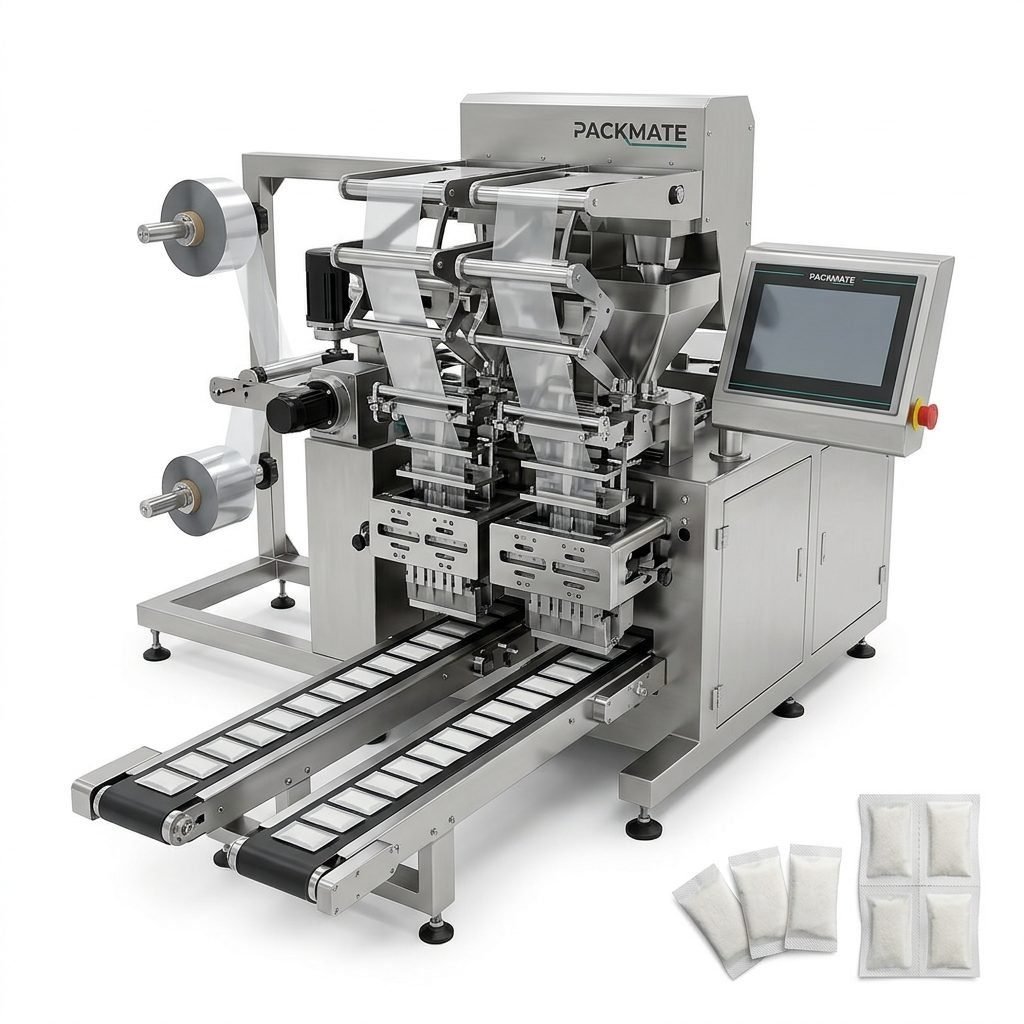
Multi-lane snus / nicotine pouch machines
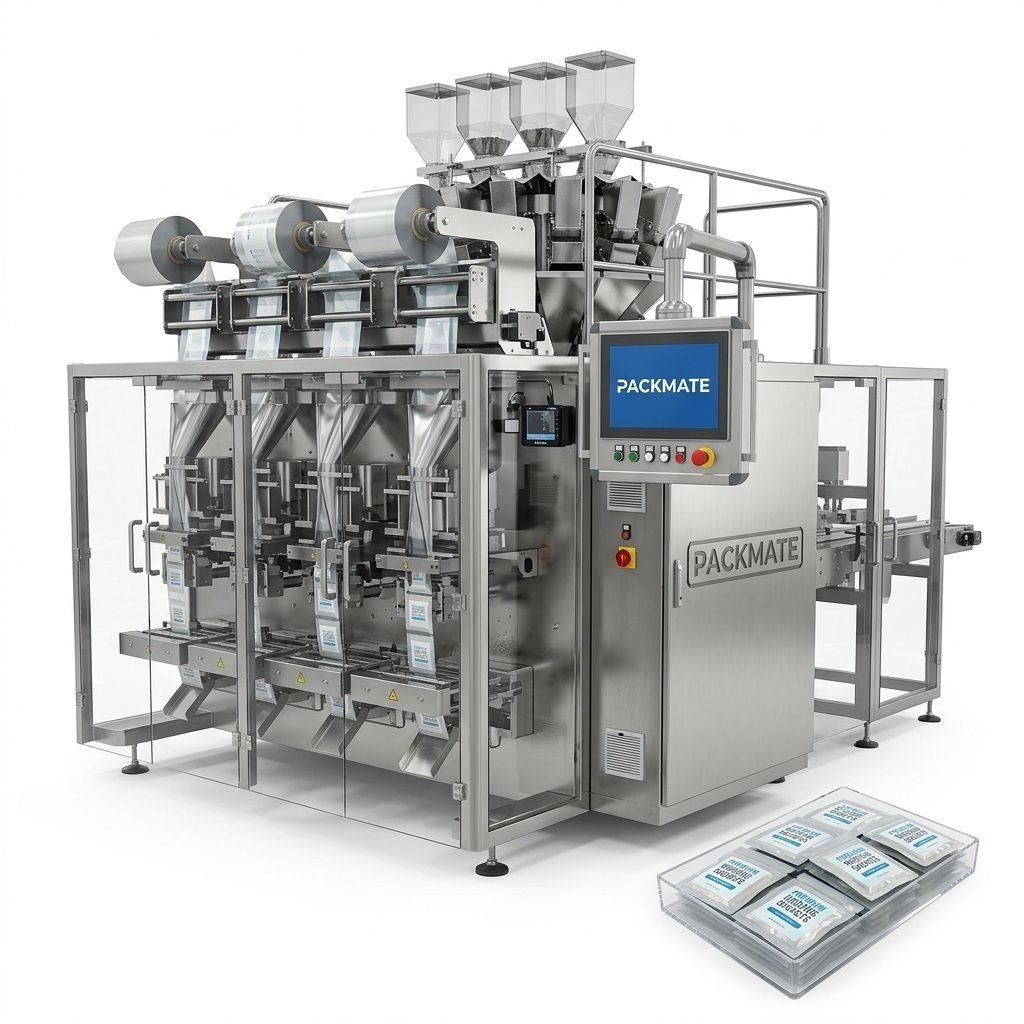
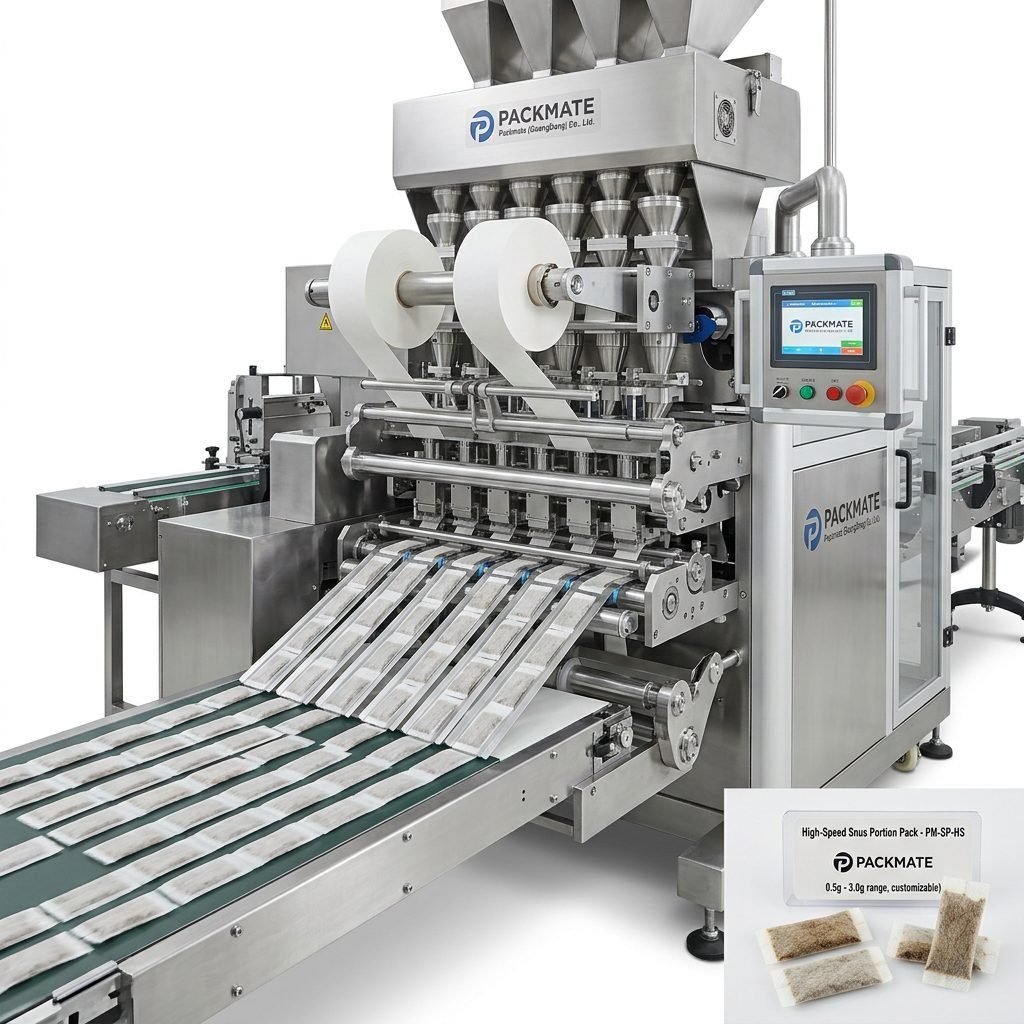
Multi-lane systems are optimized for small-dose pouches with high output per footprint. They are a common choice when producing nicotine pouches at scale because they combine precise metering, fast sealing, and synchronized lanes for consistent pouch quality.
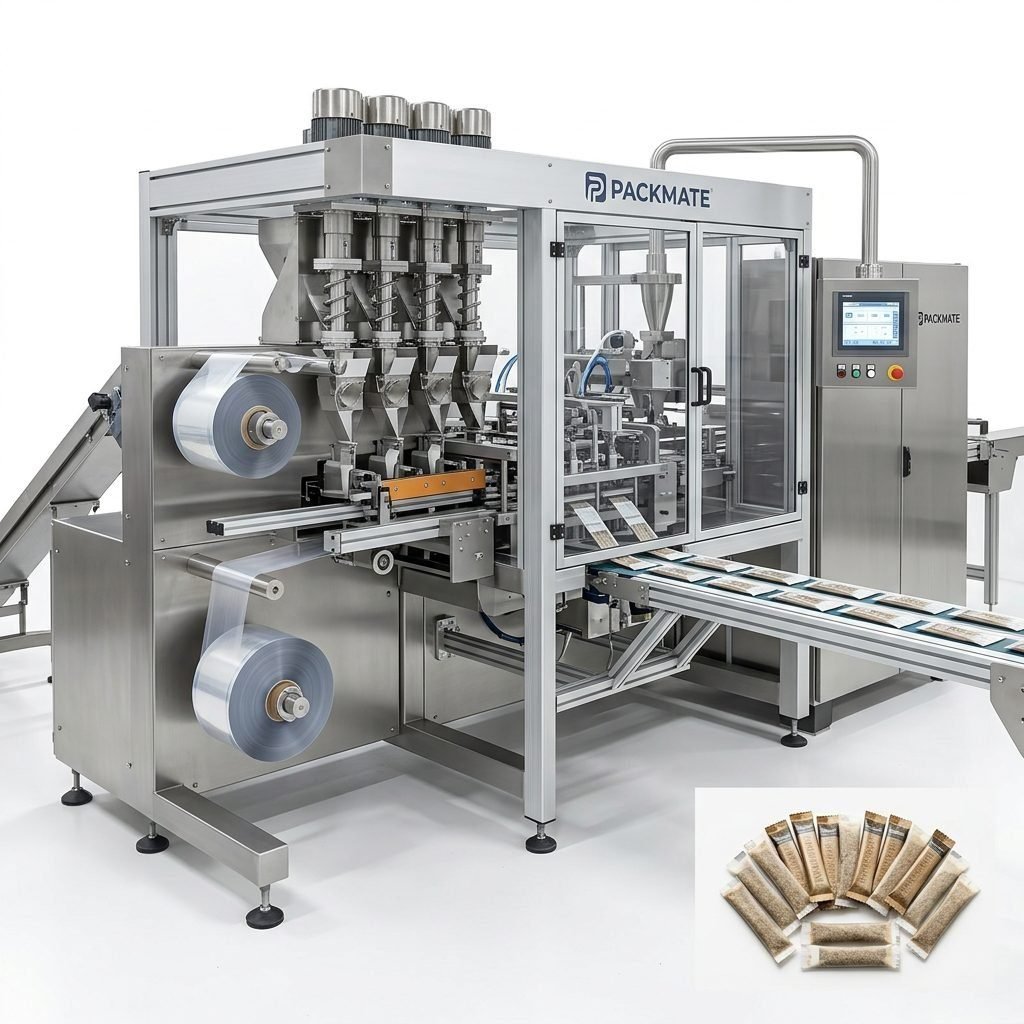
Sachet and stick pack machines
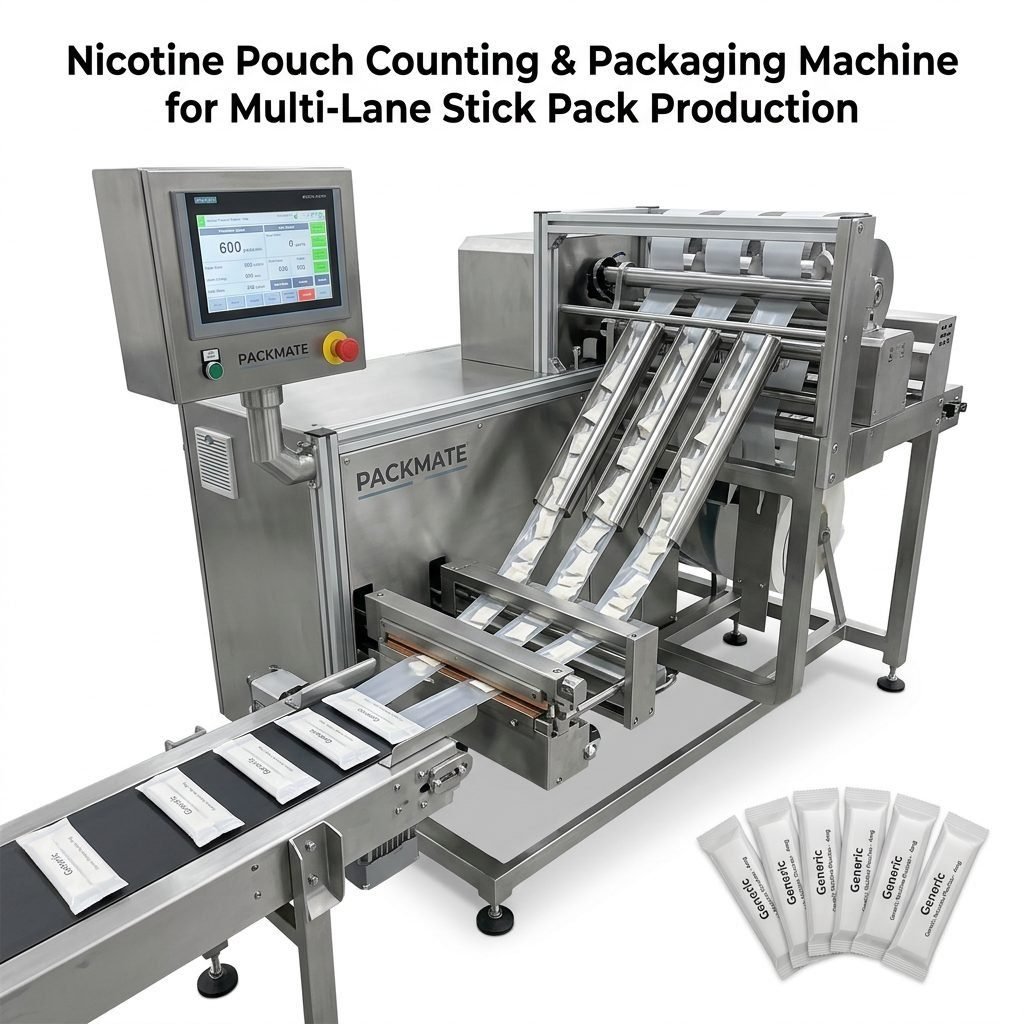
Stick packs and sachets can offer a different consumer experience and packaging cost profile. Machines in this class are often versatile, able to work with powders, granules, and even small liquid doses when needed. Consider these for single-use formats or promotional SKUs.
Tip: evaluate machines with modular lanes so you can add capacity without replacing the entire line.
Technical specifications that determine performance
When comparing models, focus on these technical specs which translate directly into production output, quality, and ROI:
Production speed and throughput
Look for line speeds expressed as pouches per minute per lane and maximum output for the entire machine. Factor in realistic uptime: include changeovers, cleaning, and maintenance when estimating effective daily throughput.
Accuracy and filling systems
Precise dosing is essential for nicotine products. Check the type of dosing system (volumetric, auger, multi-head weighing) and tolerance ranges. High-precision weighers or multi-head systems help maintain consistent nicotine content and reduce giveaway.
Control systems, HMI and automation
Modern packaging machinery uses PLCs, servo drives, and touchscreen HMIs for fast setup and diagnostics. Remote support capability can be valuable for troubleshooting when local technical resources are limited.
Material compatibility and packaging formats
Consider the film and pouch materials you plan to use: mono-layer, multi-layer laminates, or barrier films. Your machine must be compatible with the thickness and sealing parameters of those materials. Also verify the machine supports your preferred pouch styles: round pouches, oval, pillow, or stick packs.
Important: test sample material on the exact machine model before purchase to confirm sealing integrity and aesthetic finish.
Space, utilities and factory readiness
Map your factory floor carefully. Multi-lane lines can be compact but require stable utilities: three-phase power, compressed air, and sometimes vacuum or chilled water. Pre-installation surveys by the machine vendor reduce surprises during commissioning.
Service, spare parts and local support
After-sales service is a top priority. Ask about local spare parts availability, recommended spare part kits, and lead times. Consider a vendor that offers training, preventive maintenance packages, and remote diagnostics to maximize uptime.
Why manufacturer experience matters
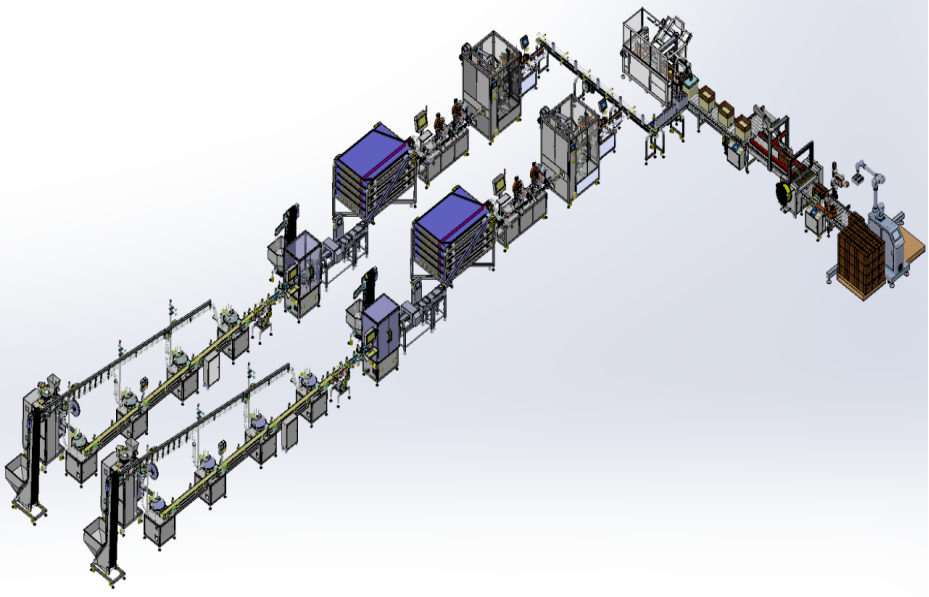
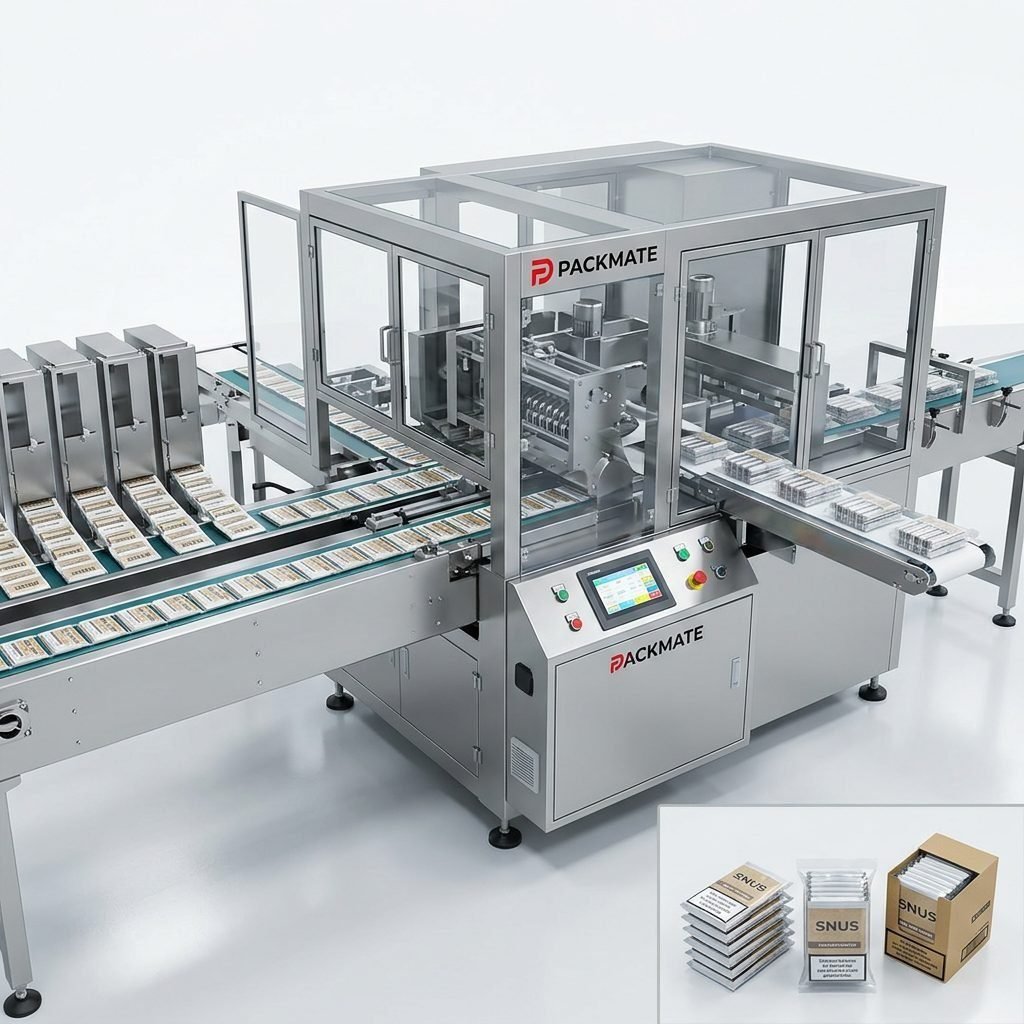
A supplier with decades of experience in snus and nicotine packaging brings valuable know-how in materials, lane balancing, and hygiene design. Manufacturers with global turnkey projects can also advise on upstream filling systems and downstream secondary packaging.
For example, Packmate Snus Machine has been dedicated to snus and nicotine pouch packaging for over 30 years and provides specialized multi-lane systems and complete packaging lines. Explore their solutions on the Snus & Nicotine Packaging Machines page to evaluate machine families and case studies.
If you require flexible pouch or bag formats, review the Bag & Pouch Packaging Machines portfolio which covers a wide range of formats and sealing technologies suitable for nicotine products.
Custom features and optional modules to request
Depending on your product and regulatory needs, consider these optional modules:
- Inline metal detection and rejection systems
- Vacuum sealing or nitrogen flushing for extended shelf life
- Inline checkweighers and vision inspection for seal and print verification
- Automatic reel splicing for long-run efficiency
- Multi-head weigher integration for blends or mixed dosages
Checklist before signing a PO: confirm FAT (Factory Acceptance Test), training hours, spares list, warranty terms, and local installation support.
Financial and commercial considerations
Machine cost is only part of the total investment. Account for:
- Shipping, customs duties, and local taxes for imports into Honduras
- Installation, validation, and staff training
- Spare parts inventory and consumables (sealing jaws, belts, knives)
- Ongoing service contracts or remote support subscriptions
Consider total cost of ownership (TCO) rather than just the headline machine price. A higher-quality machine with lower downtime and better yield may deliver superior ROI.
Installation, commissioning and training
Ask for a clear installation and commissioning plan. A trusted supplier will perform FAT at their factory and then support commissioning at your site, including operator training and maintenance instruction. Verify language support and documentation in English or Spanish as required.
Maintenance strategies to maximize uptime
Implement preventive maintenance schedules based on vendor recommendations. Keep critical spares on hand and maintain a log of common failure modes. Consider service agreements that include scheduled visits and remote diagnostics.
Pro tip: request a spare parts kit with consumables and wear parts when you place the order — this minimizes downtime in the first production months.
Where to source reputable snus and nicotine packaging machines
Choose vendors with a proven track record in nicotine pouch equipment and global turnkey projects. Explore vendor product pages for machine specs, case studies, and certification details. Packmate Snus Machine, for instance, offers a comprehensive lineup — you can review their machine categories and company information to assess fit and experience; see About Packmate for company history and factory capabilities.
If you need an integrated solution including filling and weighing systems, review vendors that provide Weighing & Packaging Systems and Filling & Packaging Lines to ensure upstream and downstream compatibility.
Decision-making checklist
Use this checklist to compare shortlisted machines:
- Production capacity vs. forecasted demand
- Material compatibility and pouch formats supported
- Accuracy of dosing and acceptable tolerances
- Hygienic design, material grade, and cleanability
- Service network, spare parts availability, and training
- Total cost of ownership and expected payback period
For reference and contact options, you can check vendor product pages such as Snus & Nicotine Packaging Machines or use the Contact Us page to request quotations and arrange factory visits.
Final considerations and next steps
Buying nicotine packaging machinery is a long-term investment. Prioritize machines that balance flexibility, accuracy, and uptime. Ensure your vendor offers clear documentation, FAT, and a local or remote service plan. A hands-on evaluation with sample materials and a FAT demonstration will reduce risk and provide confidence before shipment.
Quick action plan: 1) Define formats & materials, 2) shortlist 2–3 vendors, 3) schedule FAT with sample runs, 4) confirm installation & spares, 5) finalize commercial terms.
Useful links
– Snus & Nicotine Packaging Machines: https://www.snusmachinery.com/products/snus-nicotine-packaging-machines/
– Bag & Pouch Packaging Machines: https://www.snusmachinery.com/products/bag-pouch-packaging-machines/
– About Packmate (Company & Capabilities): https://www.snusmachinery.com/about-us/
– Service and Support: https://www.snusmachinery.com/service/
Frequently asked questions
1. What capacity machine do I need for a new plant?
Estimate your annual and monthly production targets and factor in realistic uptime. Start with a machine that covers peak demand with a safety margin. Multi-lane systems provide higher capacity per footprint and are ideal for scaling production efficiently.
2. Can one machine handle multiple pouch sizes and materials?
Many modern machines are designed for quick changeovers and can handle multiple pouch sizes and laminate films, but always verify with the vendor. Request a demonstration or FAT with your exact materials to confirm compatibility.
3. How important is local support in Honduras?
Local or regional support reduces downtime and simplifies spare parts logistics. If direct local service is limited, ensure the vendor provides robust remote diagnostics, training, and a clear spare parts plan.
4. What documents should I request before purchase?
Request machine specifications, FAT procedures, CE/ISO certificates, maintenance manuals, spare parts lists, warranty terms, and training plans. A clear commercial contract that defines delivery, installation, and acceptance criteria is essential.
5. Where can I see machine case studies or exhibitions?
Check vendor case pages and exhibition schedules to view demonstration videos or arrange live demos. Packmate, for instance, lists case studies and exhibition events where machinery is shown to prospective customers.