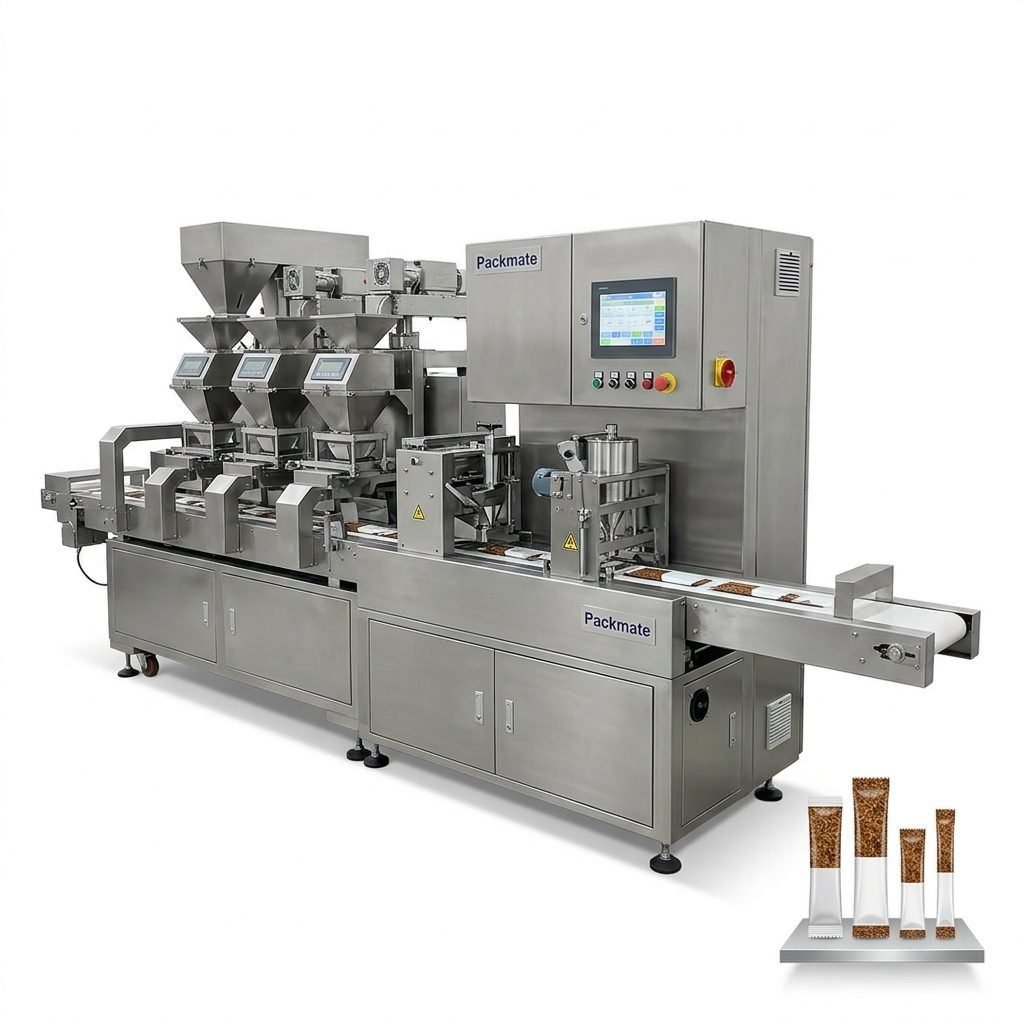
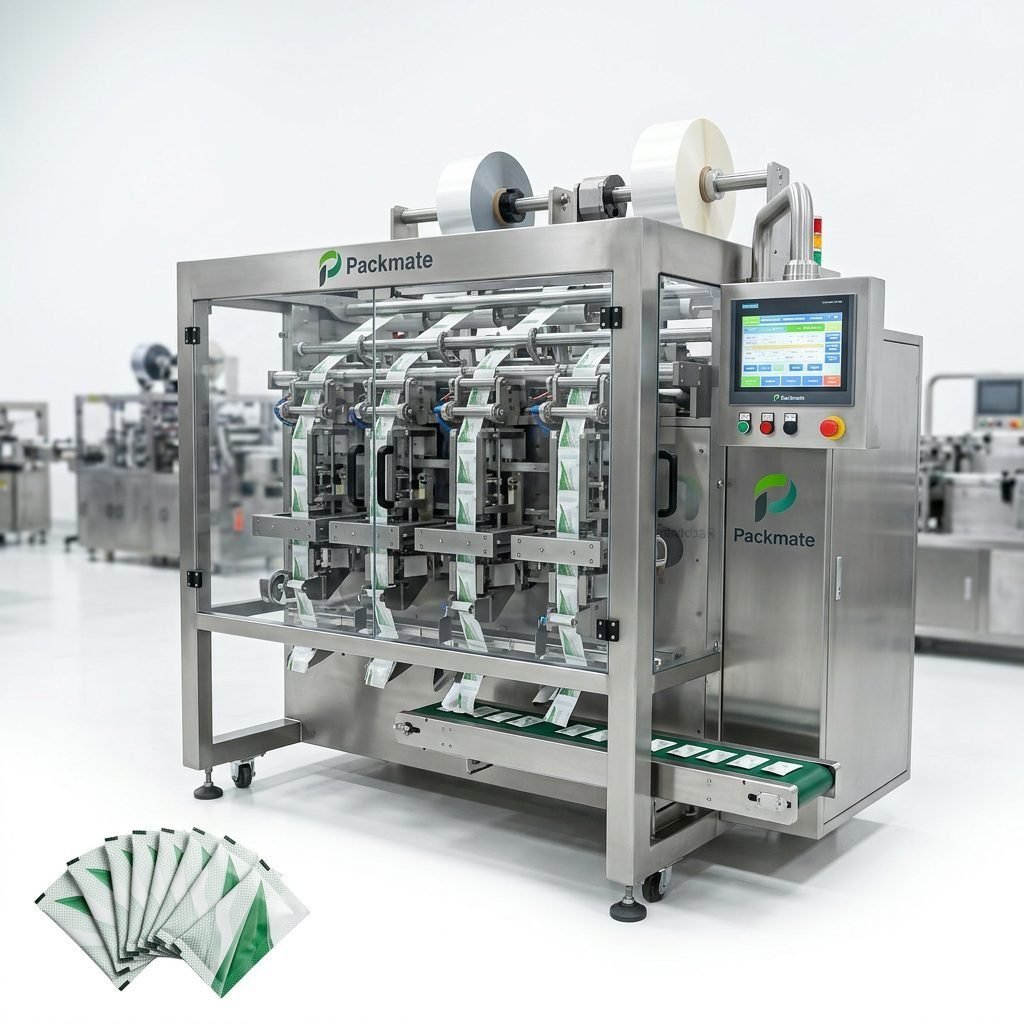
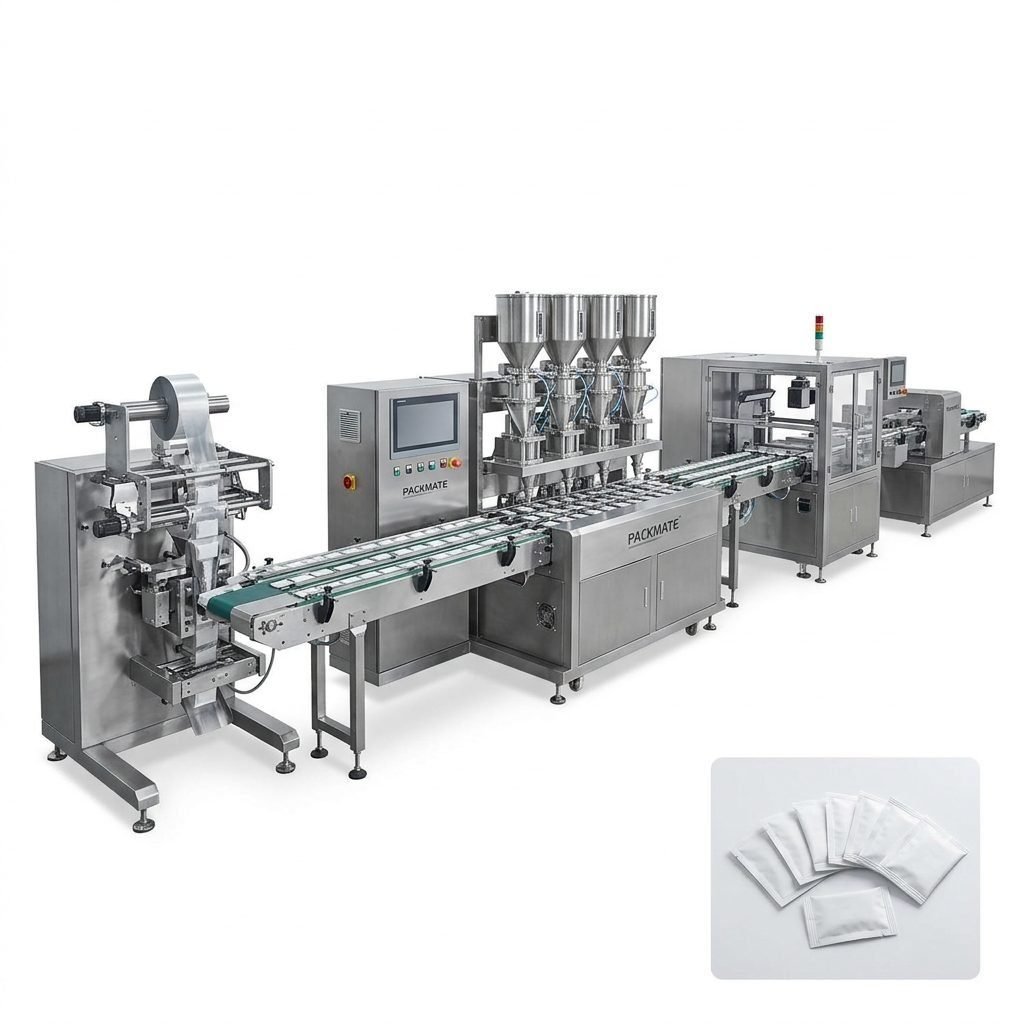
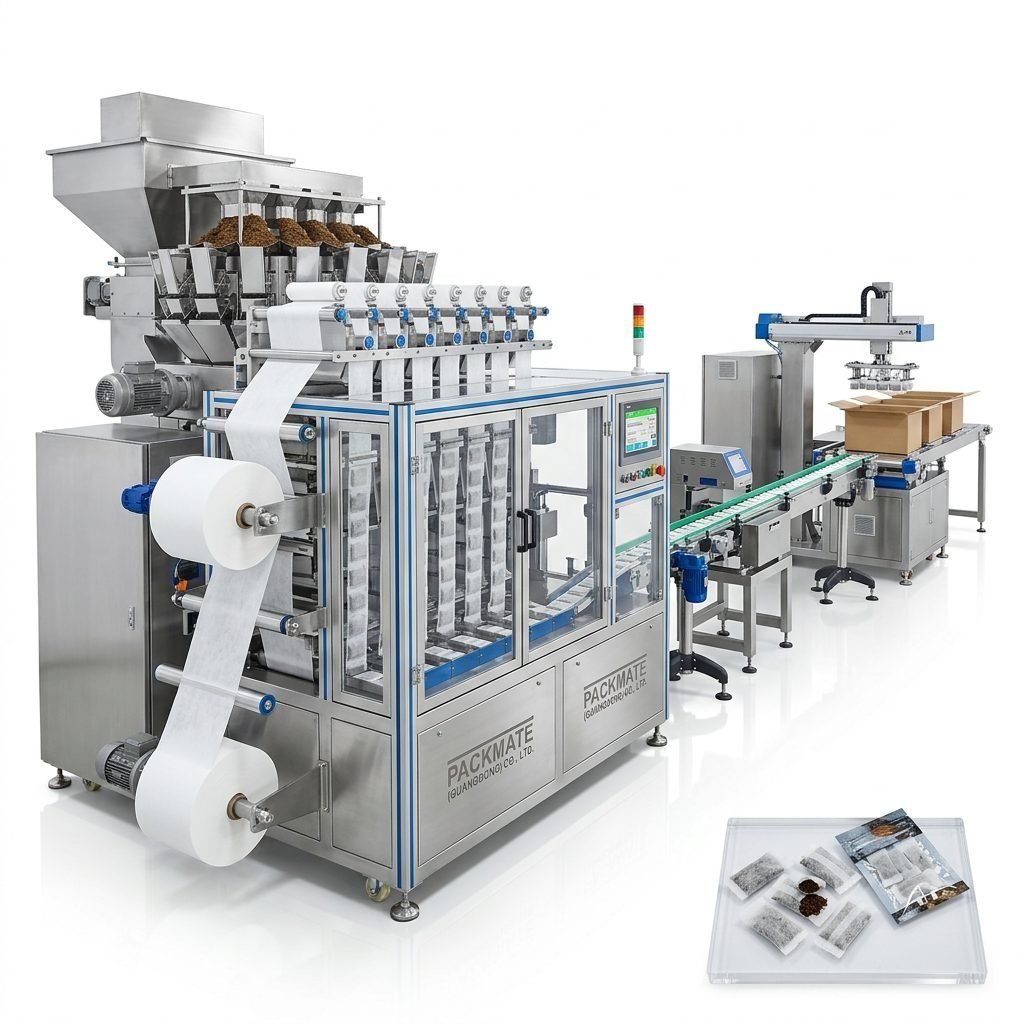
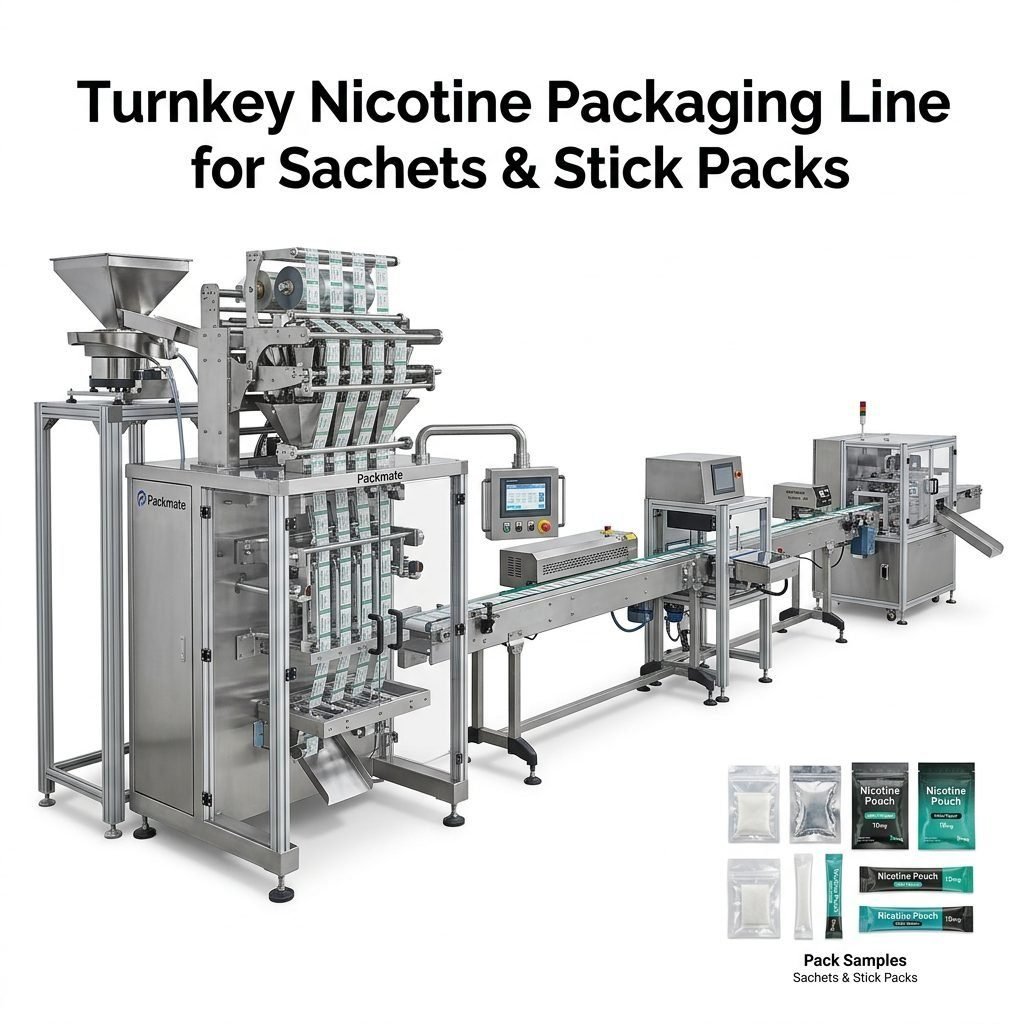
Choosing the right nicotine packaging machinery for a production line in Sudan requires balancing compliance, output, reliability, and local serviceability. This guide walks you through practical, industry-tested criteria and step-by-step considerations so you can select equipment that matches your product format, production targets, and long-term operational goals.
Understand Your Product and Output Requirements
The first step is to precisely define what you are packaging. Nicotine pouches and snus come in many formats — single-dose pouches, stick packs, sachets, and multi-lane strips. Each format demands different filling, sealing, and feeding technologies. Estimate your target daily production volume, number of shifts, and planned growth over the next 3–5 years. These figures determine whether a single-lane, multi-lane, or fully automated turnkey line is the right investment.
Key questions to answer
• What pouch or stick sizes will you run?
• Will you package powders, granules, or moist pouches?
• Do you require secondary packaging (cartons, trays, shrink-wrap)?
• What is your target throughput (pieces per minute/hour)?
Types of Nicotine Packaging Machinery to Consider
Different machines serve different purposes. Understanding each type helps you match technology to product and capacity needs:
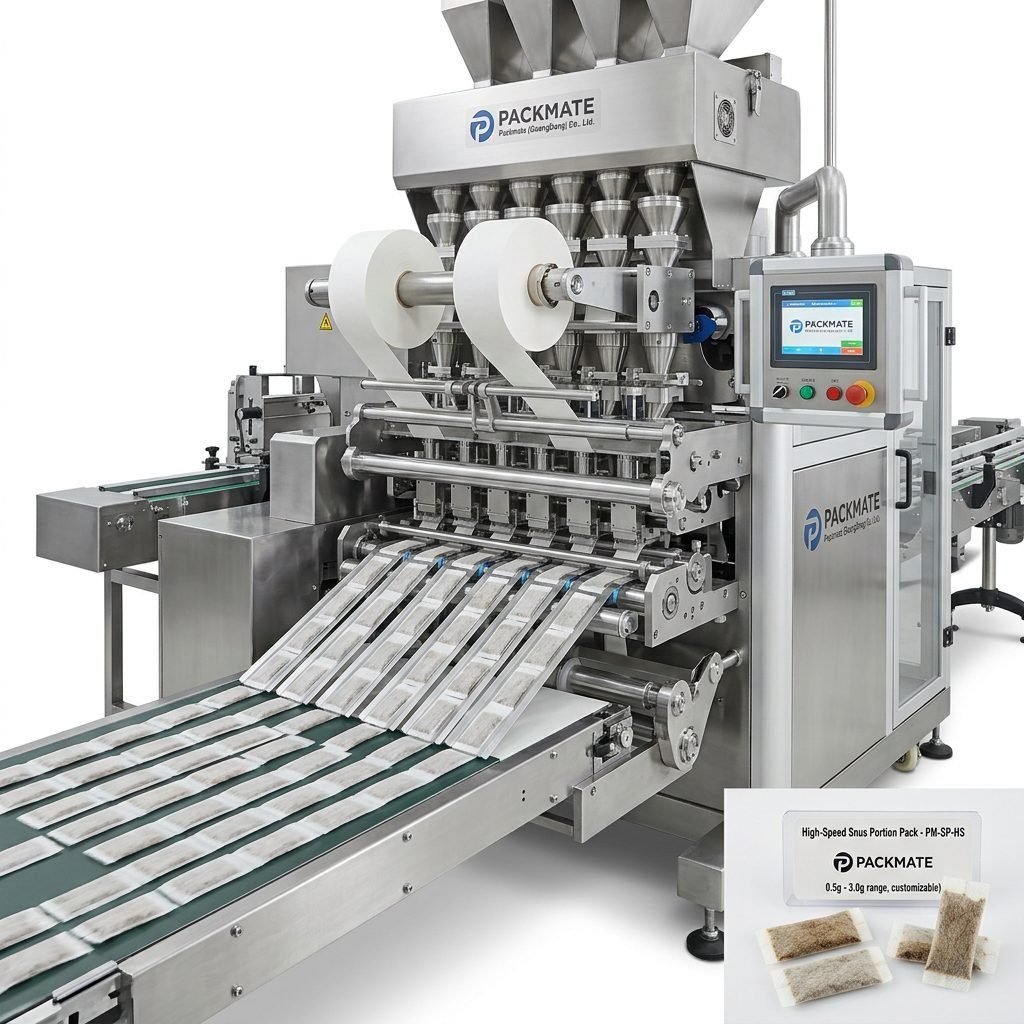
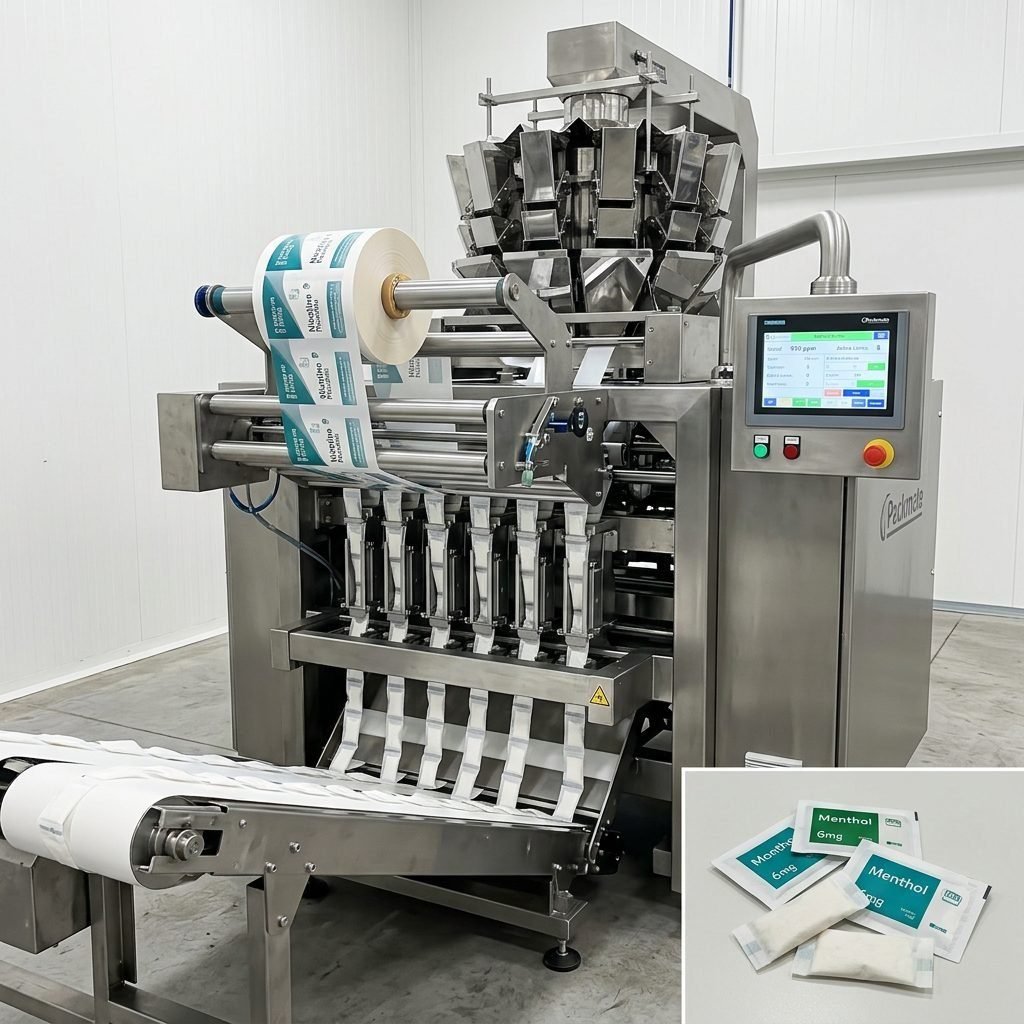
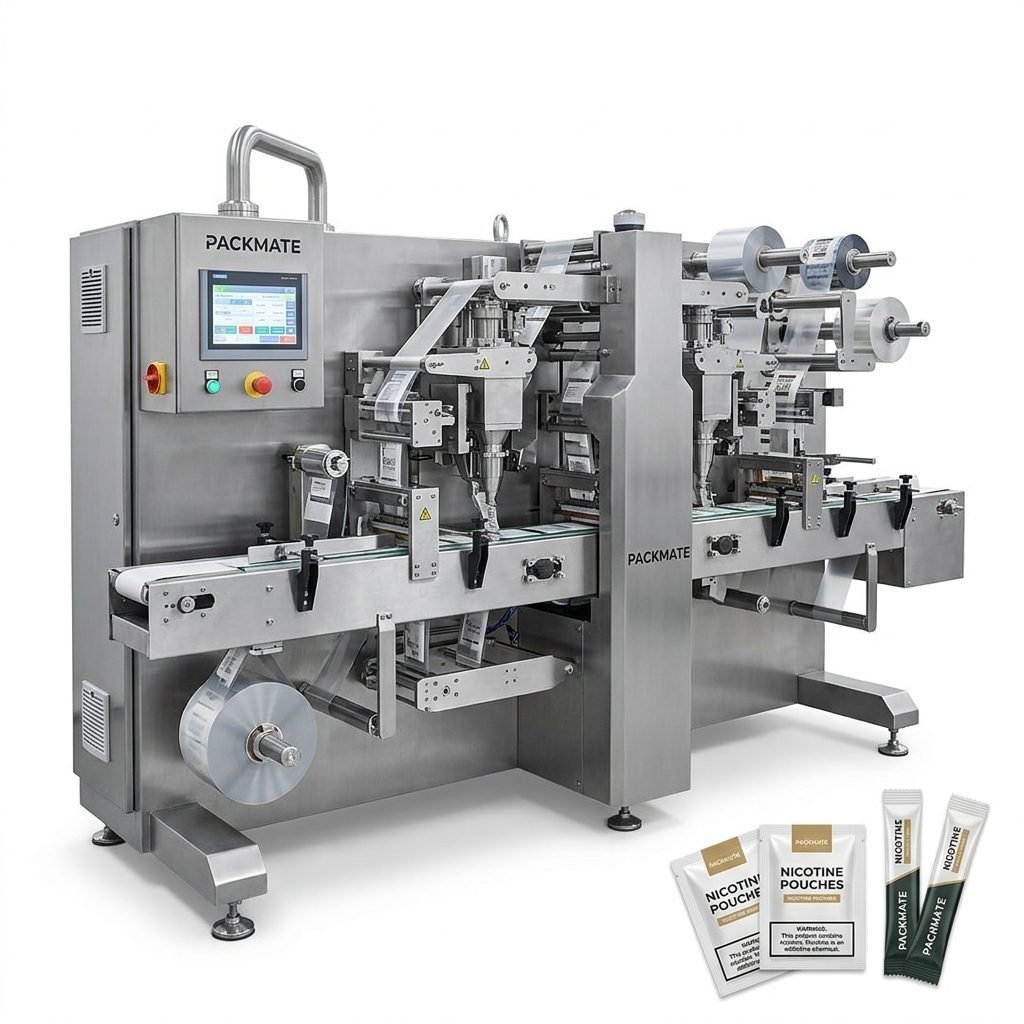
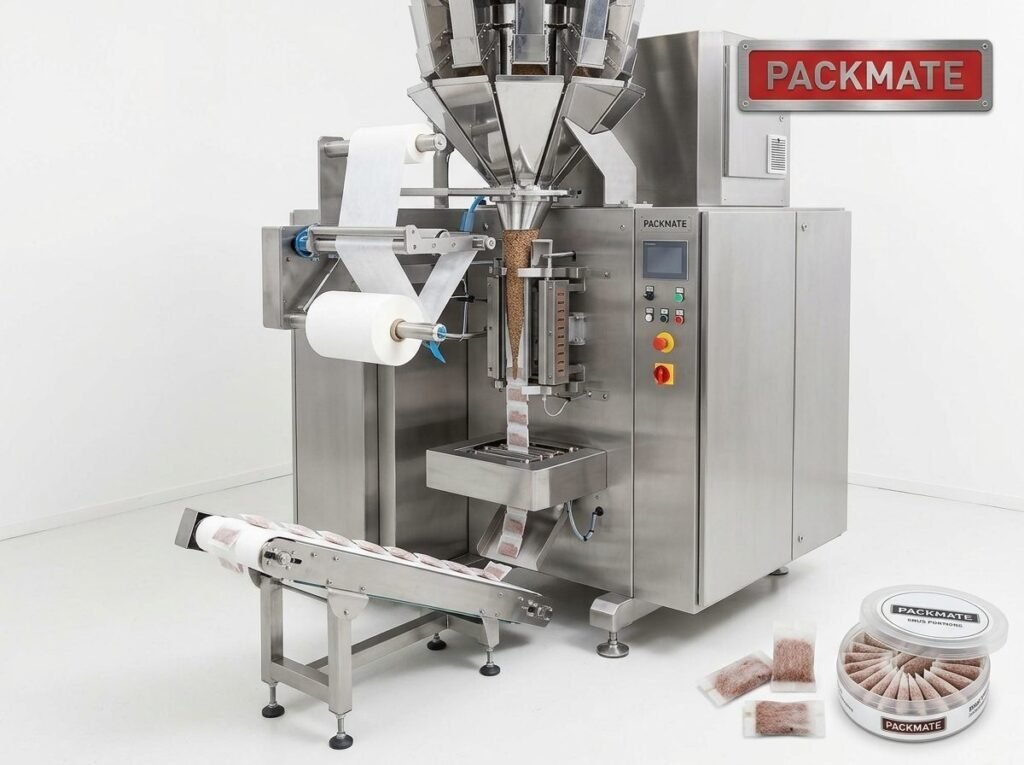
⚙️ Snus & Nicotine Pouch Machines — Specialized for small-dose pouches with precise dosing and gentle handling to preserve product integrity. Ideal for high-precision nicotine pouches. See product range: Snus & Nicotine Packaging Machines.
Stick pack machines deliver high-speed packaging for single-portion formats, while sachet and multi-lane systems increase throughput by parallelizing lanes. If your product mix is diverse, look for modular machines that can be retooled between runs.
Typical machine lineup
• Filling & sealing machines for nicotine pouches
• Multi-lane packaging machines for small-dose production
• Weighing & dosing systems for consistent filling: Weighing & Packaging Systems
• Auxiliary equipment: conveyors, metal detectors, and cartoners: Auxiliary Packaging Equipment
Evaluate Quality, Compliance, and Certifications
Regulatory compliance and build quality are non-negotiable for nicotine products. Choose manufacturers whose machines are built to international standards (CE, ISO) and who provide documentation and validation support for hygienic design and electrical safety. Packmate Snus Machine, for example, emphasizes CE and ISO compliance across its models.
Assess Factory & Manufacturer Capabilities
In Sudan, strong after-sales support and spare parts logistics are essential. Verify the supplier’s manufacturing strength, parts lead times, and service footprint. A manufacturer with advanced CNC machining centers, a large factory footprint (20,000㎡), and an established supply chain is likely to provide durable machines and faster spare parts delivery. To learn more about a manufacturer’s profile and certifications, check their About and Certificate pages: About Packmate | Certificate.
📦 Key factory indicators: number of machine models (50+), years of industry experience (30+), precision assembly lines, and global turnkey solutions.
Integration with Your Production Line
Packaging machines rarely operate in isolation. Plan for upstream and downstream integration: feeders, automatic weighing, metal detection, secondary packaging, and palletizing. Decide whether you want a single-vendor turnkey solution or best-of-breed components from multiple suppliers. Turnkey systems reduce integration risk; see examples of integrated lines: Filling & Packaging Lines.
Automation and control systems
Ensure the machine control (PLC/HMI) supports recipe management, batch traceability, and remote diagnostics. This minimizes downtime and enhances reproducibility across batches. Look for machines with simple HMI screens and options for Industry 4.0 connectivity if you plan advanced monitoring.
Local Service, Installation, and Training
For operations in Sudan, prioritize suppliers offering:
• On-site commissioning and operator training
• Spare parts kits for wear items and critical components
• Remote support and preventive maintenance programs
• Clear documentation and spare parts lists
🔧 Pro tip: Negotiate a service-level agreement that specifies response times for spare parts and technical support in Sudan, or confirm a regional partner network.
Cost, Total Cost of Ownership, and ROI
Initial machine price is only part of the story. Evaluate the total cost of ownership (TCO) including installation, training, consumables, energy consumption, planned maintenance, spare parts, and downtime risk. Higher-quality machines typically offer lower TCO due to longer service intervals and greater uptime — a critical factor when producing regulated nicotine products.
Calculating ROI
Estimate daily throughput and yield improvements from automation, then model payback time. Include potential revenue from higher-quality packaging and reduced rejects. Fast ROI often justifies choosing robust, slightly more expensive machines.
Materials Compatibility and Packaging Formats
Confirm the machine supports your chosen packaging film, pouch material, and sealing requirements. Some nicotine pouches require special oxygen barrier films or flow-wrap materials. Request sample runs with your film supplier to validate seal integrity, dosing accuracy, and defect rates.
Quality Acceptance Tests and FAT/SAT
Insist on factory acceptance testing (FAT) and site acceptance testing (SAT) with your product. FAT should include full-speed runs, monitoring of reject rates, and demonstration of all recipes and safety functions. A reliable manufacturer will welcome FAT and provide documented test protocols.
Regulatory and Market Considerations in Sudan
Nicotine products face evolving regulations. Work with suppliers knowledgeable about labeling, child-resistant packaging options, and tamper-evident features. Confirm that machinery can accommodate required label printing, batch coding, and serialization if regulations demand traceability.
Vendor Selection Checklist
Use this checklist when talking to vendors:
✅ Machine performance specs and throughput at your product density
✅ Verification of CE/ISO and hygienic design features
✅ Spare parts availability and lead times for Sudan
✅ Installation, commissioning, and local training packages
✅ Warranty terms and extended service plans
✅ References and case studies from similar projects: Case
📌 Negotiation tip: Ask for a detailed quote that separates machine cost, installation, training, spare parts kit, and optional items to compare proposals fairly.
Why Partner with an Experienced Supplier?
Choosing an experienced supplier like Packmate Snus Machine, with decades of engineering and a broad product portfolio (including sachet & stick pack machines and bag & pouch machines), reduces technical risk. Strong suppliers provide design-for-manufacturability inputs, assist with product-to-pack conversions, and support long-term spare parts planning.
What to expect from a reliable partner
• Complete documentation and operation manuals
• Training programs for operators and maintenance staff
• Transparent spare parts pricing and quick shipping
• Participation in global exhibitions and live demos: Our Exhibition
Practical Next Steps for Sudanese Producers
1) Create a detailed product spec sheet (weights, dimensions, film types).
2) Define production targets and budget constraints.
3) Shortlist 2–3 vendors and request FAT with your samples.
4) Verify local service options or plan for trained in-house technicians.
5) Confirm compliance and labeling capabilities for the Sudanese market.
🔎 Quick Resource Links: Explore product categories and services when assessing suppliers — Snus Machines | Weighing Systems | Contact Us.
Maintenance Best Practices to Maximize Uptime
Establish a preventive maintenance schedule and stock critical spare parts. Train maintenance staff on routine checkpoints: lubrication, sensor alignment, belt tension, and sealing temperature calibration. Monitor production logs to identify patterns and preempt potential failures.
Final Recommendations
Prioritize machines that combine precision dosing, hygienic design, proven reliability, and strong after-sales support. Modular multi-lane designs often provide the best balance between capacity and flexibility for growing nicotine pouch production in Sudan. When evaluating suppliers, request references, FAT videos, and an itemized spare parts kit to reduce ambiguity during post-sale servicing.
Contact and next steps
For detailed quotations and tailored turnkey solutions, consult the manufacturer’s service and product pages, review customer cases, and schedule a demonstration or FAT visit. Learn more about services and catalogs before purchase: Service | Catalog.
Frequently Asked Questions (FAQs)
Q1: What is the minimum production capacity to justify a multi-lane snus machine?
A1: If your daily throughput regularly exceeds a single-lane machine’s capacity and you plan multi-shift production, a multi-lane system becomes cost-effective due to higher output per operator and lower per-unit labor costs.
Q2: How long is typical lead time from order to delivery for custom snus packaging lines?
A2: Lead times vary by configuration and customization. Standard machines may ship in a few months, while fully customized turnkey lines can require longer manufacturing, FAT, and shipping windows — plan ahead and confirm timelines during quotation.
Q3: Are local spare parts and service available for major manufacturers operating in Asia?
A3: Reputable manufacturers maintain regional partners or express spare parts programs; otherwise, they provide clear spare parts kits and support for expedited shipping. Confirm local support options before purchase.
Q4: Can machines handle different nicotine pouch sizes on the same line?
A4: Many modern machines are designed for format flexibility with quick-change tooling and recipe storage. Verify changeover times and whether additional toolsets are needed for different sizes.
Q5: What certifications should I require for nicotine packaging equipment?
A5: Require CE and ISO as a baseline for safety and quality. Additionally, confirm hygienic design standards and electrical safety certificates relevant to your market and export destinations.