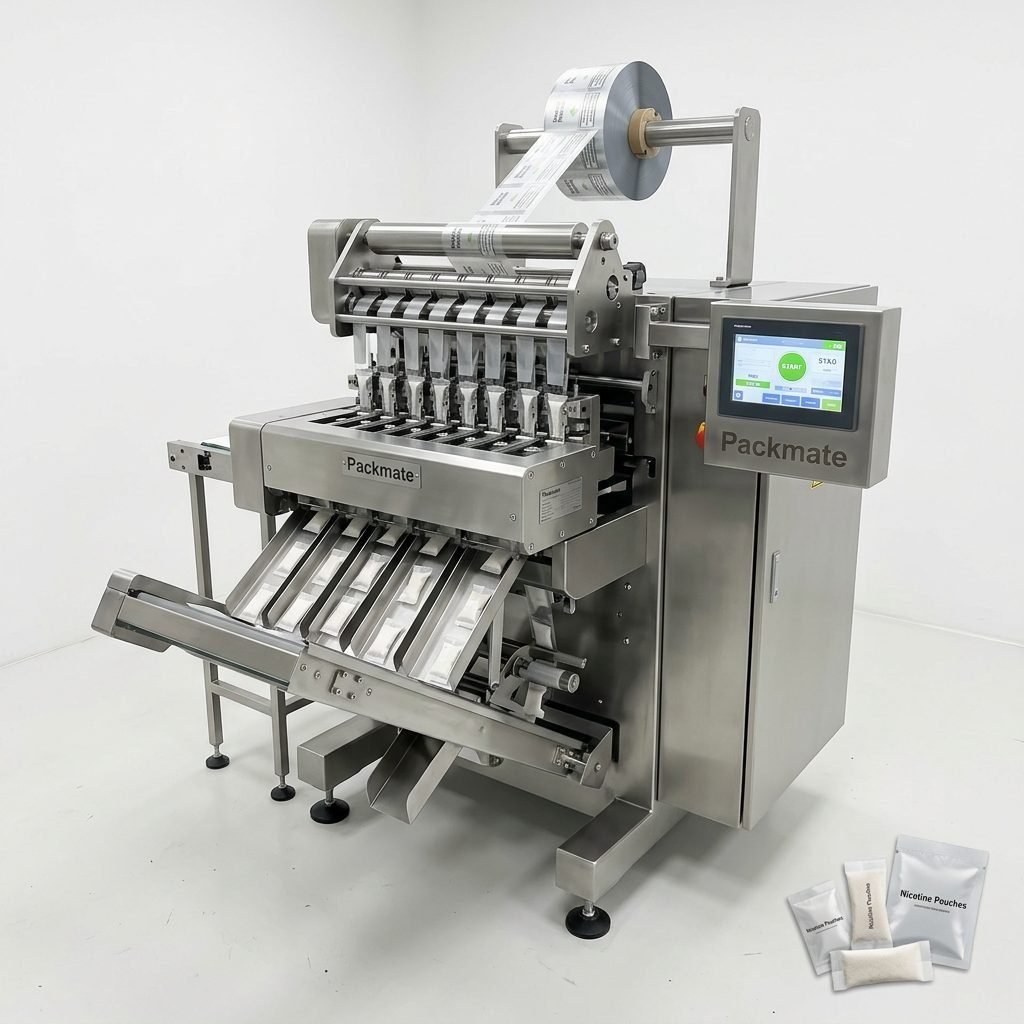
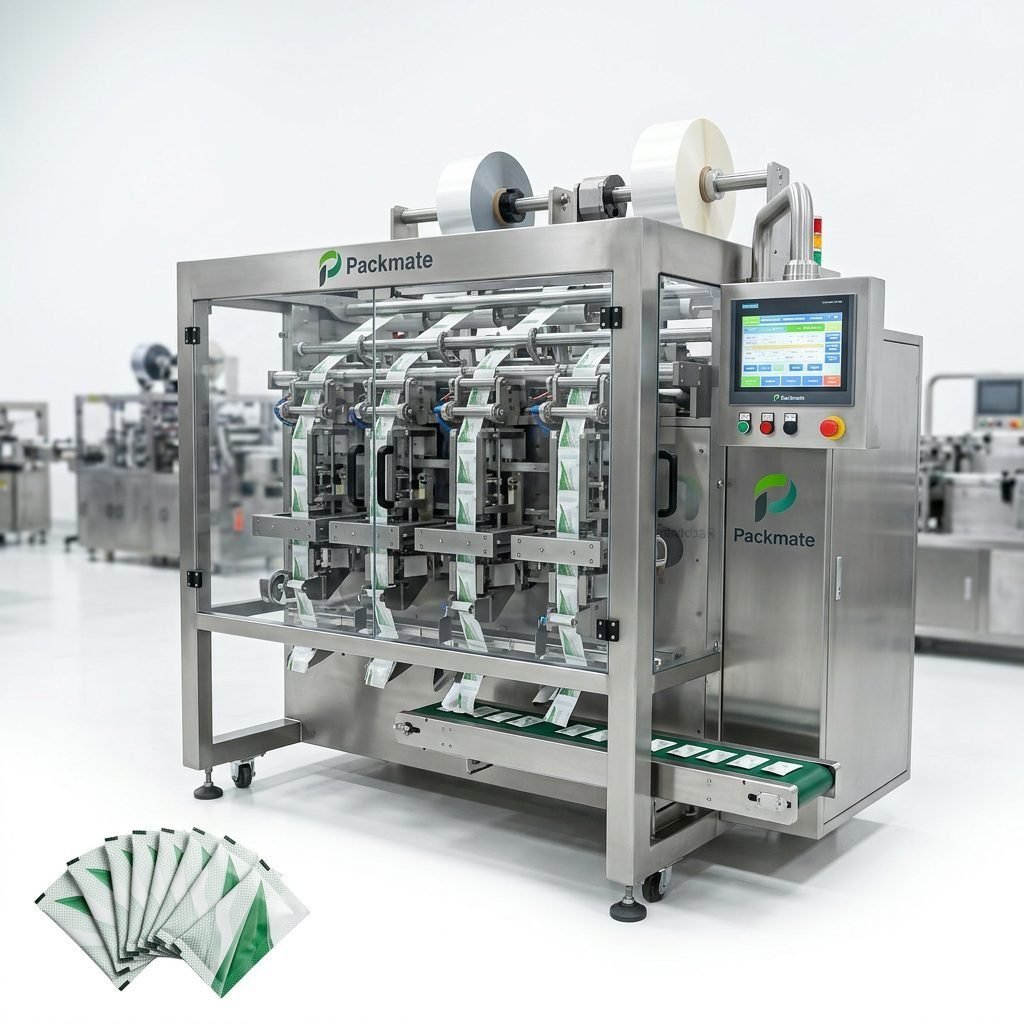
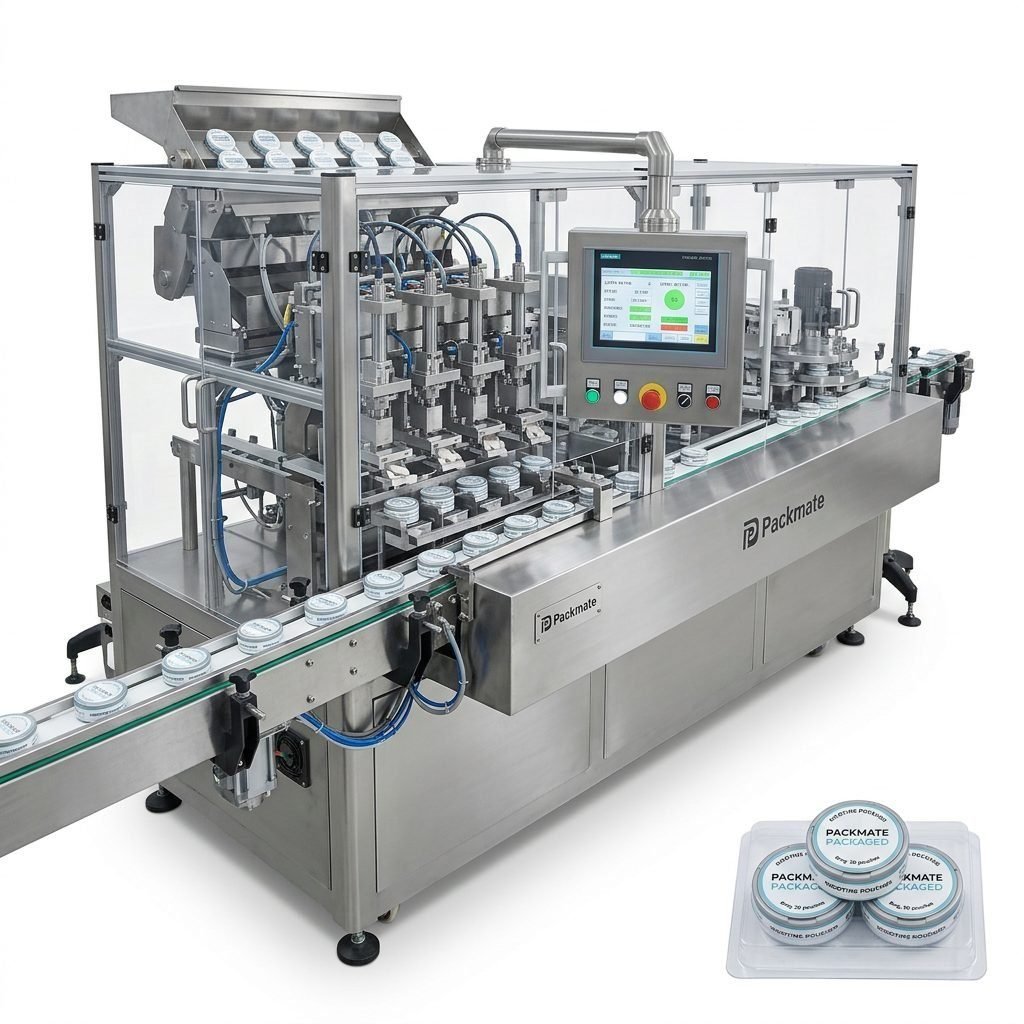
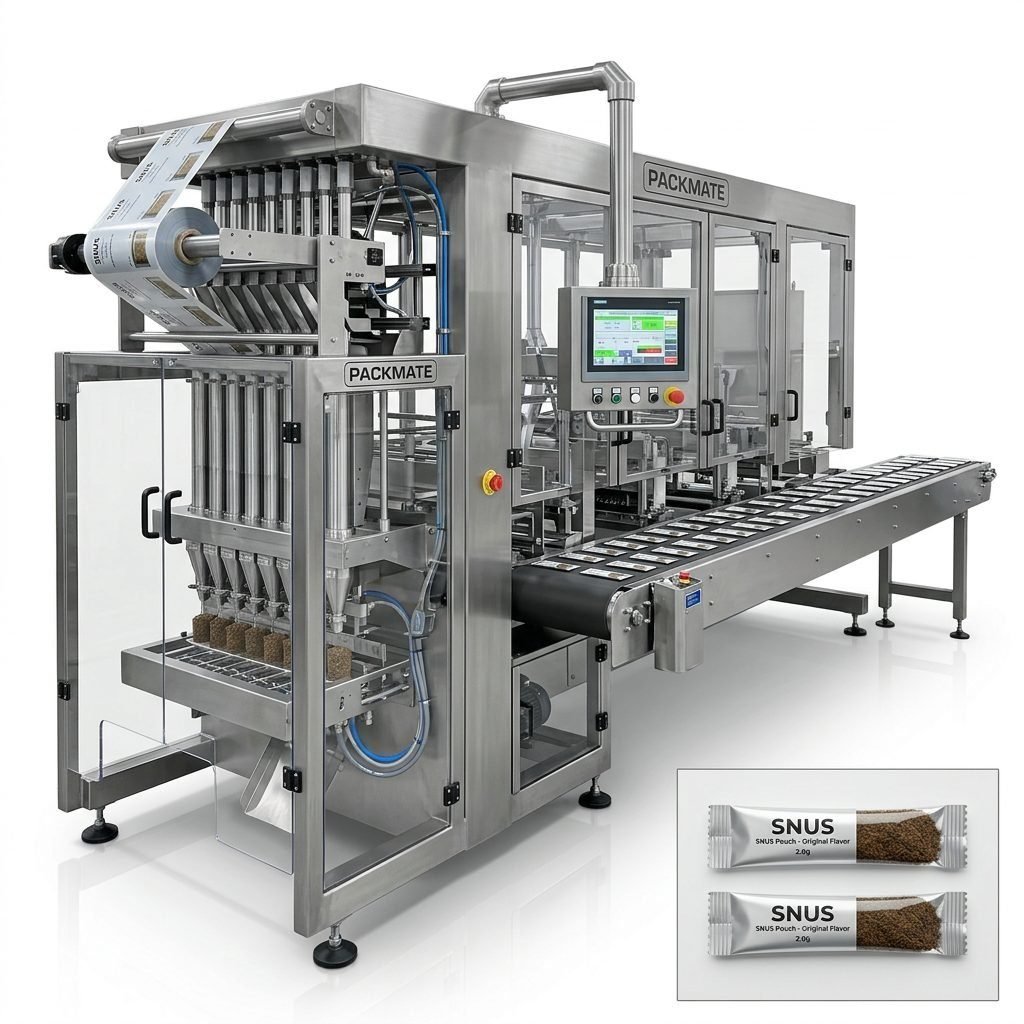
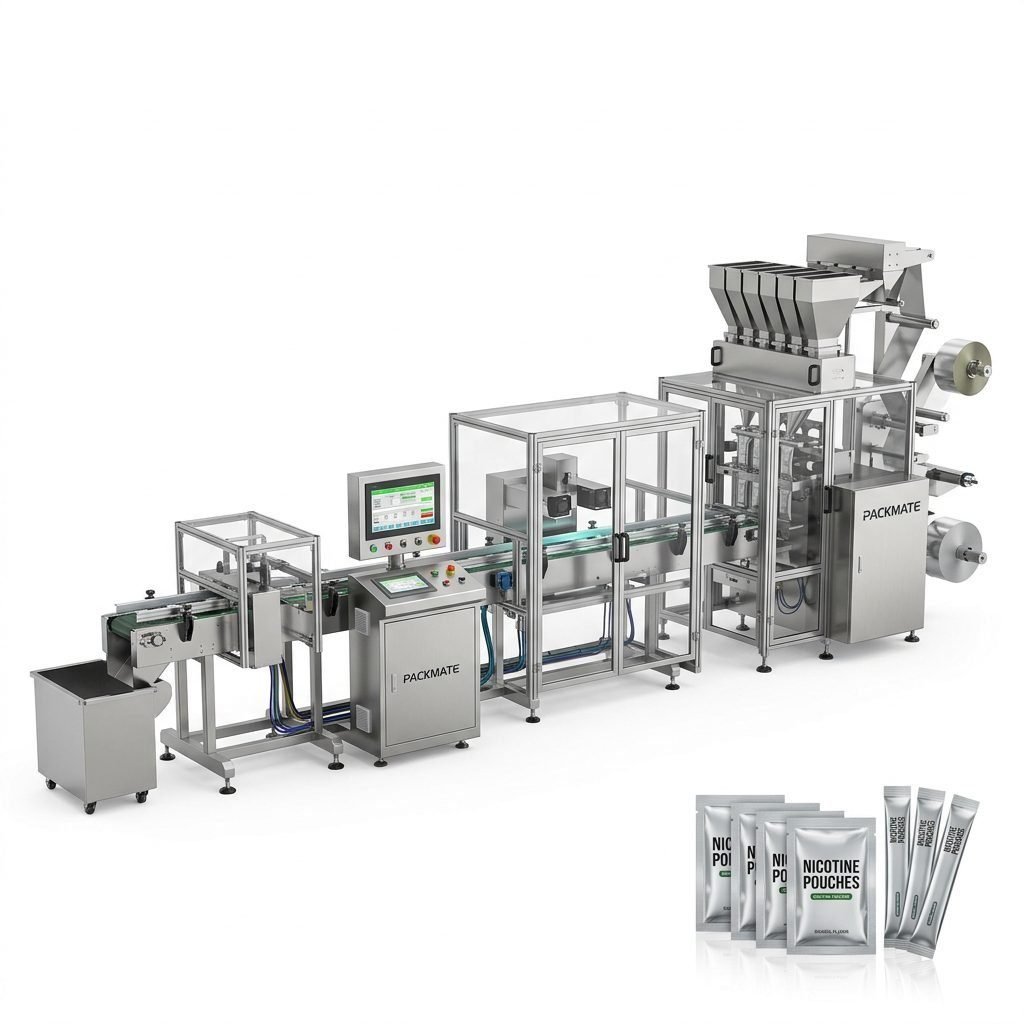
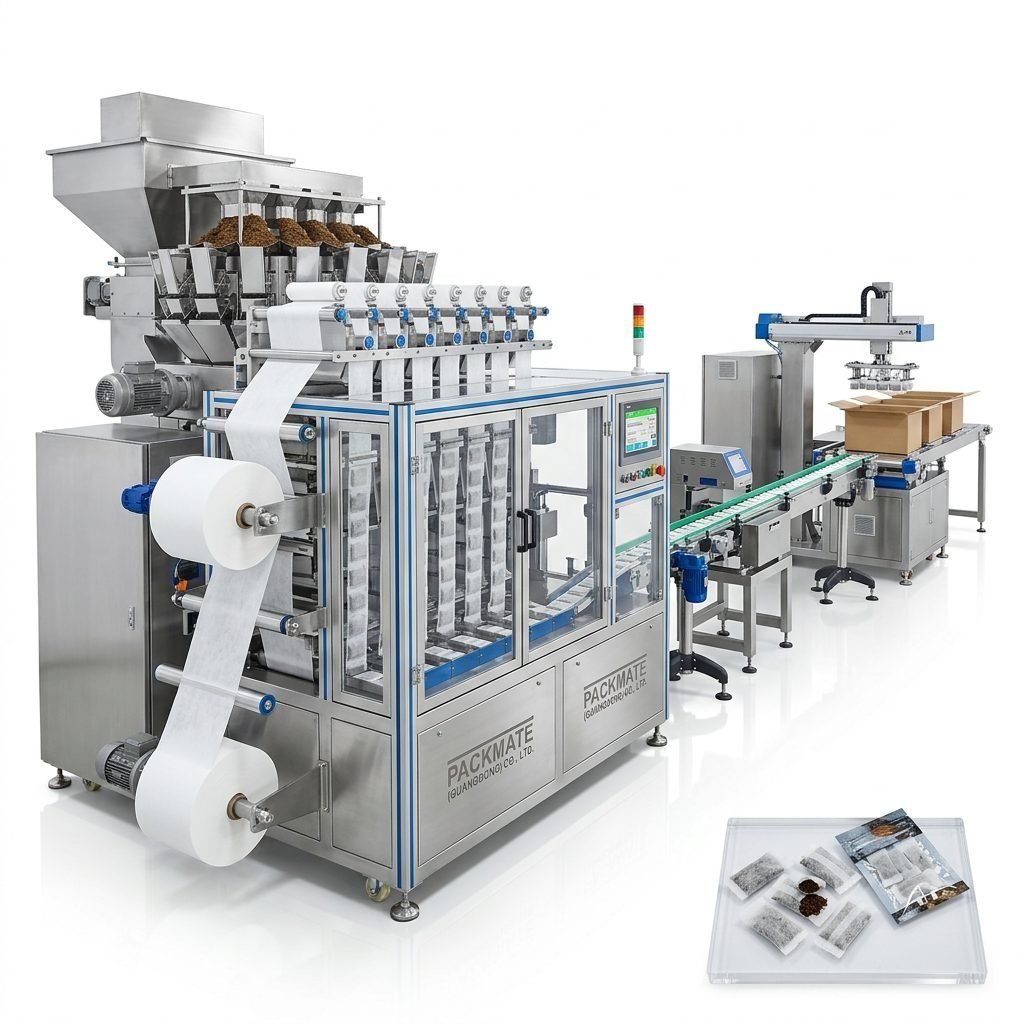
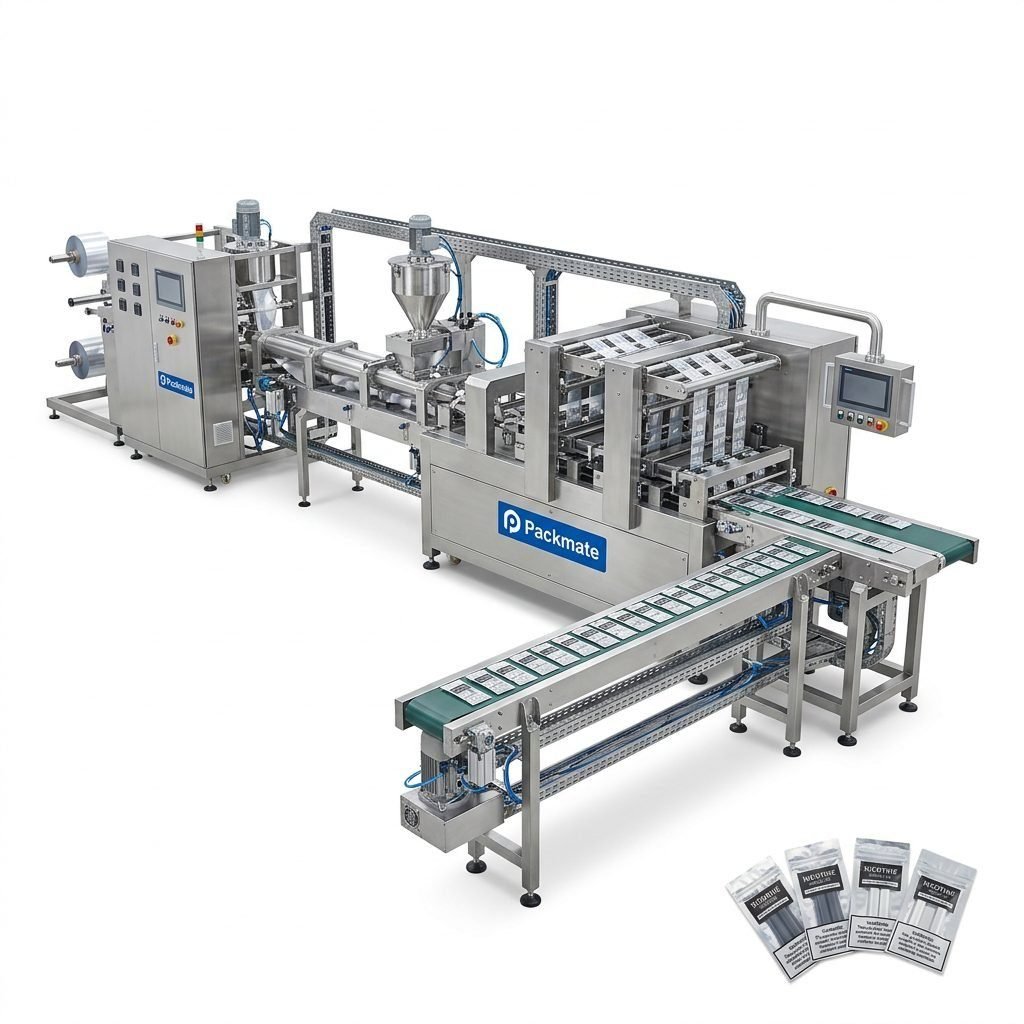
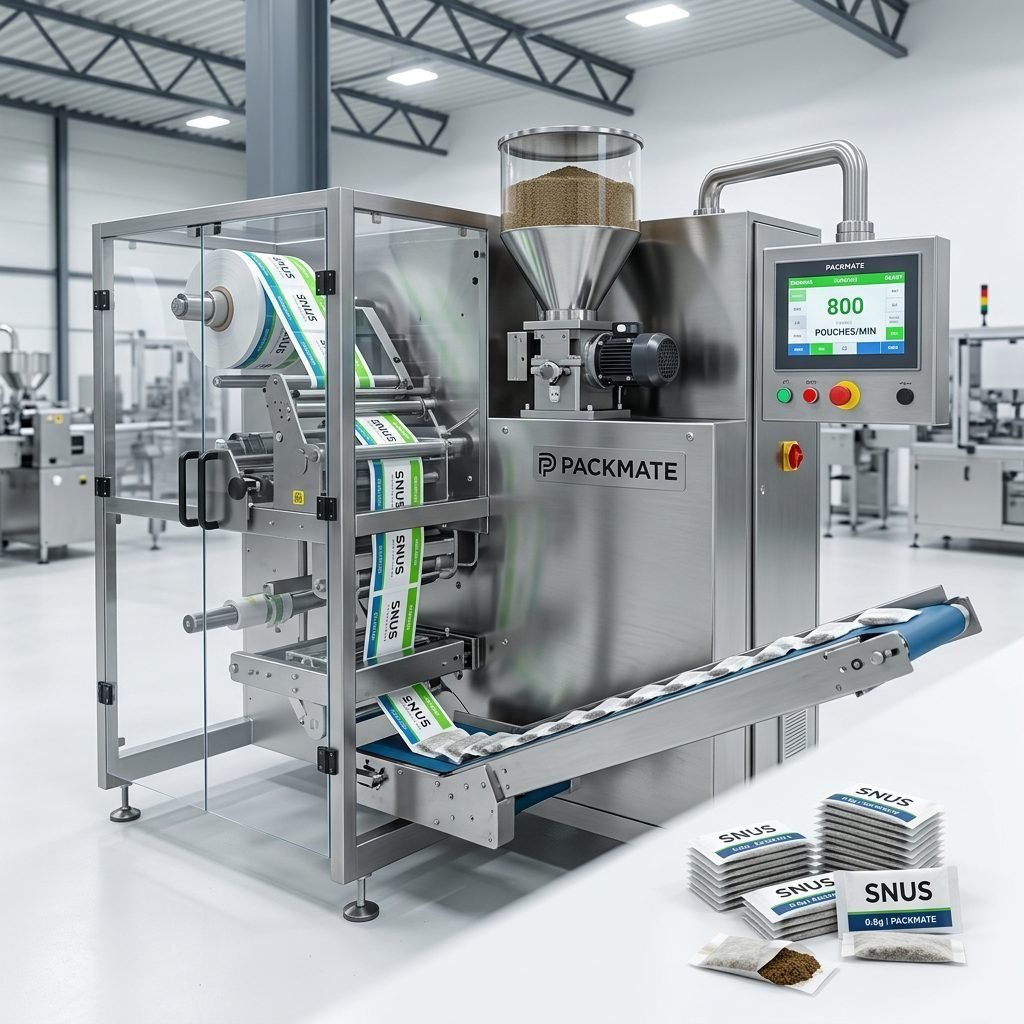
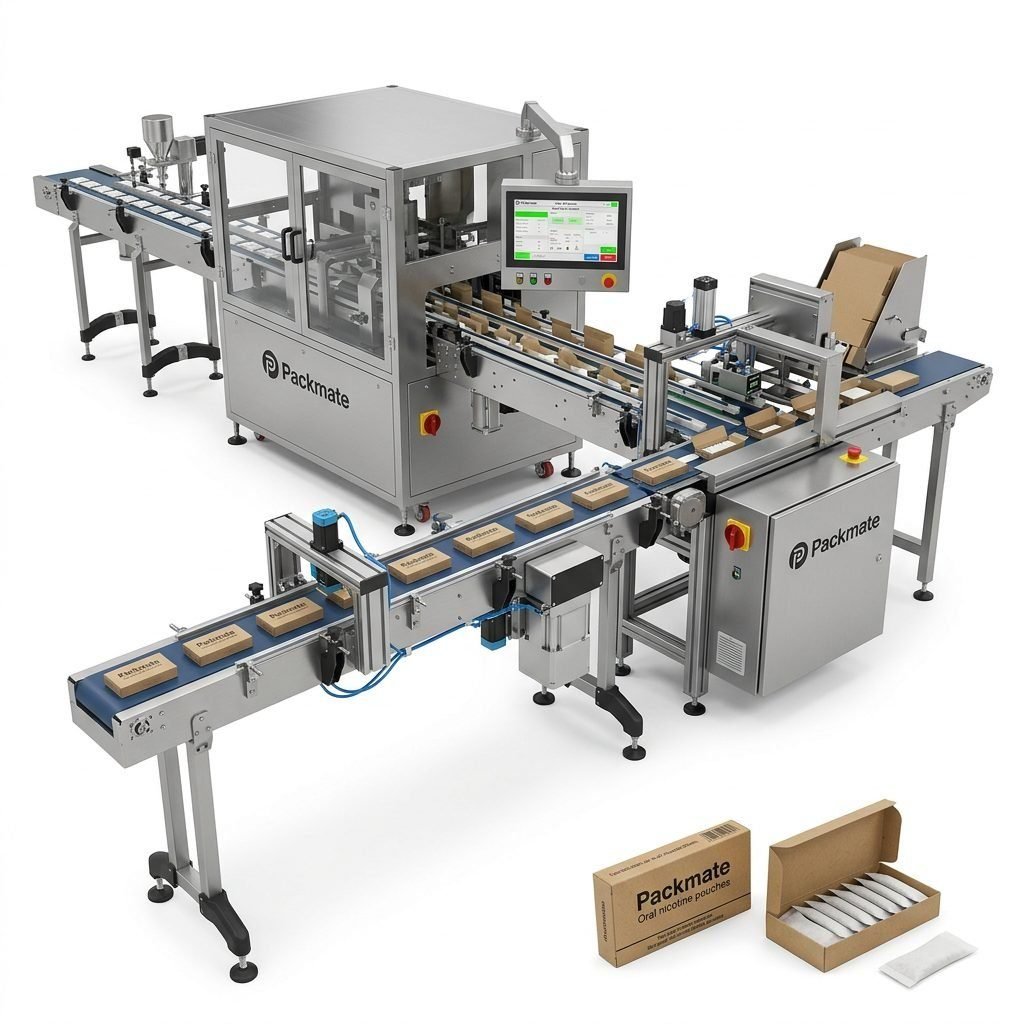
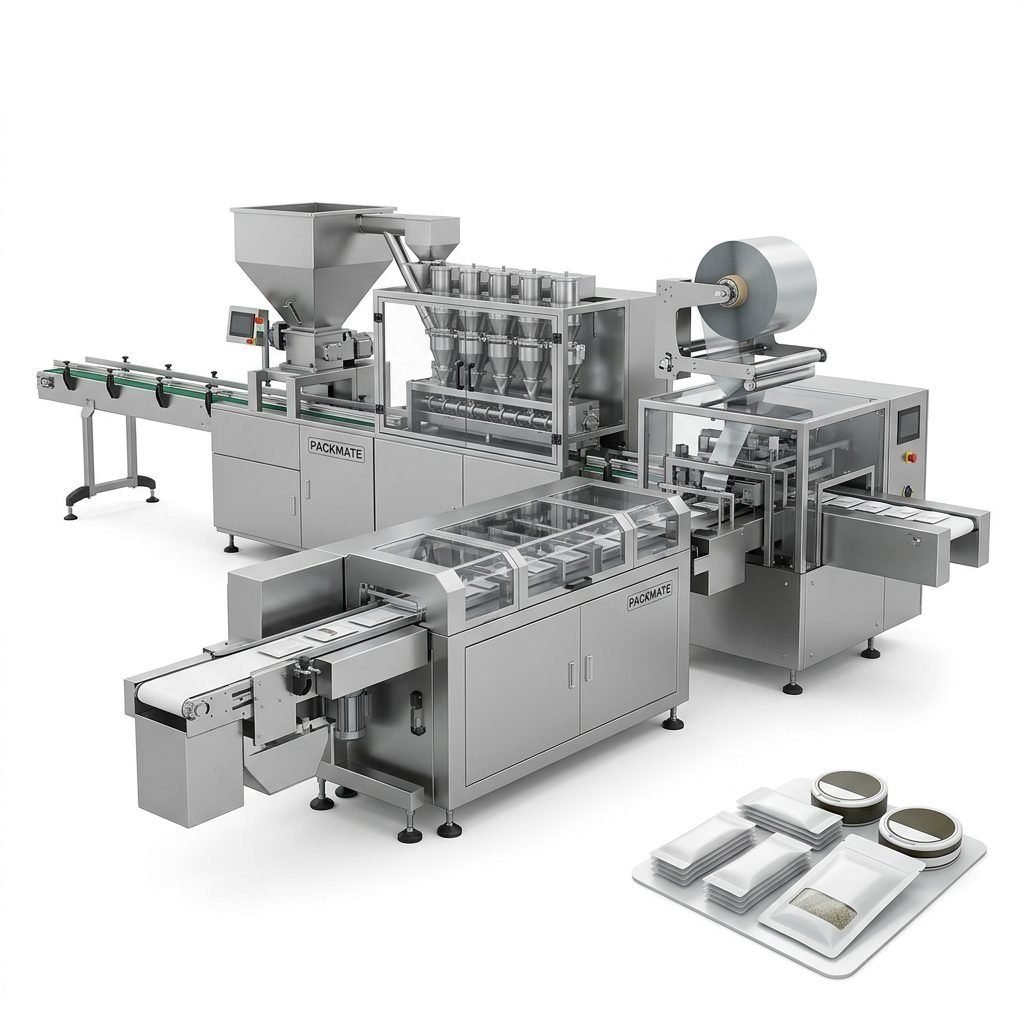
Installing and fine-tuning a snus packing line demands a methodical approach to ensure consistent dosing, reliable sealing, and safe operation. This guide walks you through the complete setup process for a snus / nicotine pouch packing line—covering unpacking, mechanical installation, electrical and pneumatic connections, calibration, initial trial runs, and common adjustments for multi-lane systems. Follow each step carefully to reduce downtime and accelerate your route to stable production.
Pre‑installation Checklist
Before the machine arrives, prepare the installation area and confirm utilities. A proper setup reduces installation time and prevents rework.
Key items to confirm: floor level and load capacity, dedicated power supply and grounding, compressed air (0.6–0.8 MPa) with dry, oil‑free lines, network ports for PLC/HMI if required, and safe, well‑lit space for operators and maintenance.
Unpacking, Inspection & Positioning
On arrival, inspect crates for visible damage and verify serial numbers against the packing list. Use certified lifting equipment to unload and position modules—primary frame, feeder, filling units, sealing station, and conveyor sections.
Tip: Align the main machine frame to be parallel to your downstream packaging conveyors. Accurate positioning prevents lateral stresses and film skewing.
Mechanical Foundation & Leveling
Use calibrated spirit or laser levels to set the base frame. Adjust leveling pads and tighten anchor bolts to manufacturer torque values. Ensure the machine sits firmly without rocking; recheck after initial test run.
Electrical & Pneumatic Hookup
Electrical and pneumatic installation must be performed by qualified technicians. Follow the supplied wiring diagrams and confirm PLC, motor drivers, heaters, sensors, and HMI connections.
Safety reminder: Ensure lockout/tagout procedures before connecting power. Verify protective earth continuity and emergency stop circuits are functional.
Air Preparation
Install air filters, regulators, and lubricators as specified. Check that pressure stabilizes under load and that the air supply is dry—moisture can degrade valves and pneumatically driven dosing parts.
Film Path, Web Tensioning & Seal Alignment
Correct film tracking and tension are vital for consistent pouch formation and sealing. Feed the film carefully, engage tension rollers, and set nip rollers per machine documentation.
Adjustment point: Use the web guide and optical sensors to center film. If your machine supports servo tension control, initialize the tension PID settings during the dry run.
Dosing System Calibration (Powder / Granule / Paste)
Proper dosing calibration ensures weight consistency for snus pouches. There are multiple filling methods—auger, vibratory, piston, or multi-head weighers—each with different setup steps.
Initial steps
Start with a nominal dose value from the manufacturer. Run several cycles into collection trays, weigh samples on a calibrated scale, and adjust feed rates. For multi-lane systems, calibrate each lane independently.
Critical: Check for bridging or segregation in the hopper. If material clumps, introduce agitation or a flow aid to maintain uniform throughput.
Sealing Temperature & Pressure Optimization
Seal quality depends on accurate temperature and pressure settings for your film substrate. Begin at conservative temperatures and increment in small steps until achieving a strong hermetic seal without film burn.
Note: Different laminate films require different temperature profiles—confirm the recommended sealing window from film suppliers or your machine documentation.
Multi‑lane Synchronization & Phase Adjustment
For multi‑lane snus machines, phase alignment across lanes is essential to avoid cross‑lane variation. Use encoder feedback and the machine’s servo tuning utilities to synchronize lane indexing.
Quick check: Run the machine at low speed and mark pouch registration points across lanes. Adjust phase offsets until registration lines up visually and with sensor signals.
Electrical Tuning & Servo Parameters
Fine-tune servo gains and motion profiles to reduce vibration and ensure smooth acceleration. Engage machine OEM support if unusual oscillations, missed counts, or encoder errors appear.
First Production Run: Step‑by‑Step
Start with an empty film roll and minimal product dose. Progressively increase speed while monitoring critical parameters—fill weight, seal appearance, pouch integrity, and reject rates.
Checklist during trial run: verify pouch weights, check seals for consistent width and fusion, ensure no product leakage, confirm correct coding/printing alignment, and validate in‑machine sensors.
Quality Control Sampling & Data Logging
Implement sampling intervals during the ramp‑up period to confirm stability. Log weights, temperature profiles, reject causes, and operator interventions. Data trends let you spot drift or repeatable errors.
Pro tip: Integrate your snus packer with weighing & packaging systems for automated sampling and SPC. See compatible lines and systems for reference at Weighing & Packaging Systems.
Routine Maintenance & Preventive Checks
Establish daily, weekly, and monthly checklists. Clean sealing jaws and film guides daily, lubricate moving parts per the manual, and inspect belts, bearings, and sensors regularly.
Consumables: keep spare sets of sealing jaws, filters, and electrical fuses on hand to minimize downtime. Consider stocking a service kit from your supplier or visiting the Service page for support options.
Common Troubleshooting Scenarios
Below are frequent issues and corrective actions to restore stable production quickly.
1. Seal Flaws (wrinkled, incomplete fusion)
Verify temperature uniformity across the sealing bar, adjust pressure, confirm clean sealing surfaces, and check for film contamination or incompatible film grades.
2. Weight Drift
Recalibrate dosing system, check hopper flow, confirm no air entrainment in paste or powder, and verify servo encoder stability.
3. Lane Misregistration
Inspect encoder signals, adjust phase offsets, and ensure mechanical indexing components are free from play.
Optimization & Scaling to Higher Speeds
After achieving stable low‑speed operation, increase speed in increments. At each step, validate product quality and reject rates. Tuning may be required for dosing feeders, servo profiles, and film tension control to maintain product integrity.
Scale advice: Consider a trial batch with final film and product formulations—lab results can differ from bench tests, and real materials reveal true behavior under production conditions.
When to Contact OEM Support
If persistent issues occur after standard checks—such as repeated encoder faults, unexplained electrical trips, or mechanical resonance—engage your machine manufacturer. Provide clear logs, photos of error codes, and sample rejects to speed diagnosis.
Packmate resources: For authoritative machine specs, spare parts, and global service options visit the About Packmate and Case pages.
Integration with Upstream & Downstream Lines
Ensure compatible speeds and buffering when integrating feeding systems (hoppers, conveyors, weighers) or downstream cartoning and case packing machines. Use line control protocols or simple handshakes for start/stop and fault relay signals.
Recommended read: Explore complementary equipment such as Filling & Packaging Lines and Snus & Nicotine Packaging Machines to design complete production workflows.
Operator Training & Documentation
Train operators on routine checks, changeover procedures, and emergency stops. Maintain accessible documentation—electrical diagrams, parts lists, and machine manuals—to accelerate troubleshooting.
Support path: For catalogs, certifications, exhibitions and to contact the manufacturer, see the Packmate resources: Catalog, Certificate, and Our Exhibition.
Final Acceptance & Handover
Conduct a Factory Acceptance Test (FAT) or Site Acceptance Test (SAT) with agreed criteria—speed targets, weight tolerance, reject thresholds, and uptime. Complete handover paperwork, and schedule periodic maintenance visits.
Summary Checklist
✓ Mechanical leveling and anchorage
✓ Verified electrical and pneumatic hookups
✓ Dosing calibration and multi‑lane phase alignment
✓ Seal temperature and pressure optimization
✓ Quality sampling and data logging for the ramp‑up period
Frequently Asked Questions
Q1: How long does a full installation typically take?
Installation time varies by line complexity and site readiness. A single-lane snus packer can often be installed and commissioned in 3–7 working days, while multi‑lane turnkey lines may require 2–4 weeks including integration and validation.
Q2: What are the most common causes of weight variability?
Hopper flow inconsistency, vibratory feeder settings, air entrainment in product, and incorrect dosing calibration are leading causes. Regular sampling and proper hopper agitation reduce variability.
Q3: Can I upgrade from a single‑lane to a multi‑lane system?
Many manufacturers, including Packmate, offer upgrade paths or modular solutions. Review mechanical space, control system capacity, and product handling needs before planning an upgrade. See modular options on the Sachet & Stick Pack Machines page.
Q4: Which spare parts should I stock?
Keep spare sealing jaws, belts, sensors, fuses, filter elements, and common pneumatic valves. A customized spare parts kit from your OEM shortens downtime for critical failures.
Q5: Where can I get professional installation or training?
Contact your machine supplier for certified technicians and training programs. Packmate provides global turnkey solutions and on‑site commissioning—visit the Contact Us page for local support.