Choosing the right snus packaging machinery in Austria requires balancing production goals, regulatory compliance, and long-term return on investment. Whether you are scaling a nicotine pouch line or launching a new snus product, the selection process is strategic: it touches product integrity, throughput, operator safety, and the flexibility to adapt to market changes. This guide walks you through practical criteria and decision checkpoints so your packaging line performs reliably from day one.
Understanding Your Production Needs 🔧
Start by defining the fundamentals: daily output targets, package formats (pouch, sachet, stick pack), number of SKUs, and the physical properties of the product (powder, granule, moist snus/pouch). These parameters shape the machinery class you need. For example, multi-lane solutions dramatically increase throughput for small-dose nicotine pouches, while single-lane stick pack machines offer flexibility for varied sachet shapes.
Key production questions to answer:
🔹 What is your target hourly and daily output?
🔹 How many product SKUs will run on the same line?
🔹 What are the acceptable downtime and changeover windows?
⚠️ Tip: If you plan frequent SKU changes, prioritize machines with fast tool-free changeover, intuitive HMI, and programmable memory for recipes.
Machine Types and When to Choose Them 📦
The snus packaging market typically uses a set of proven machine types. Aligning the machine type with your product and volume is essential to avoid overpaying for unnecessary features or under-equipped lines that cause frequent jams and loss of yield.
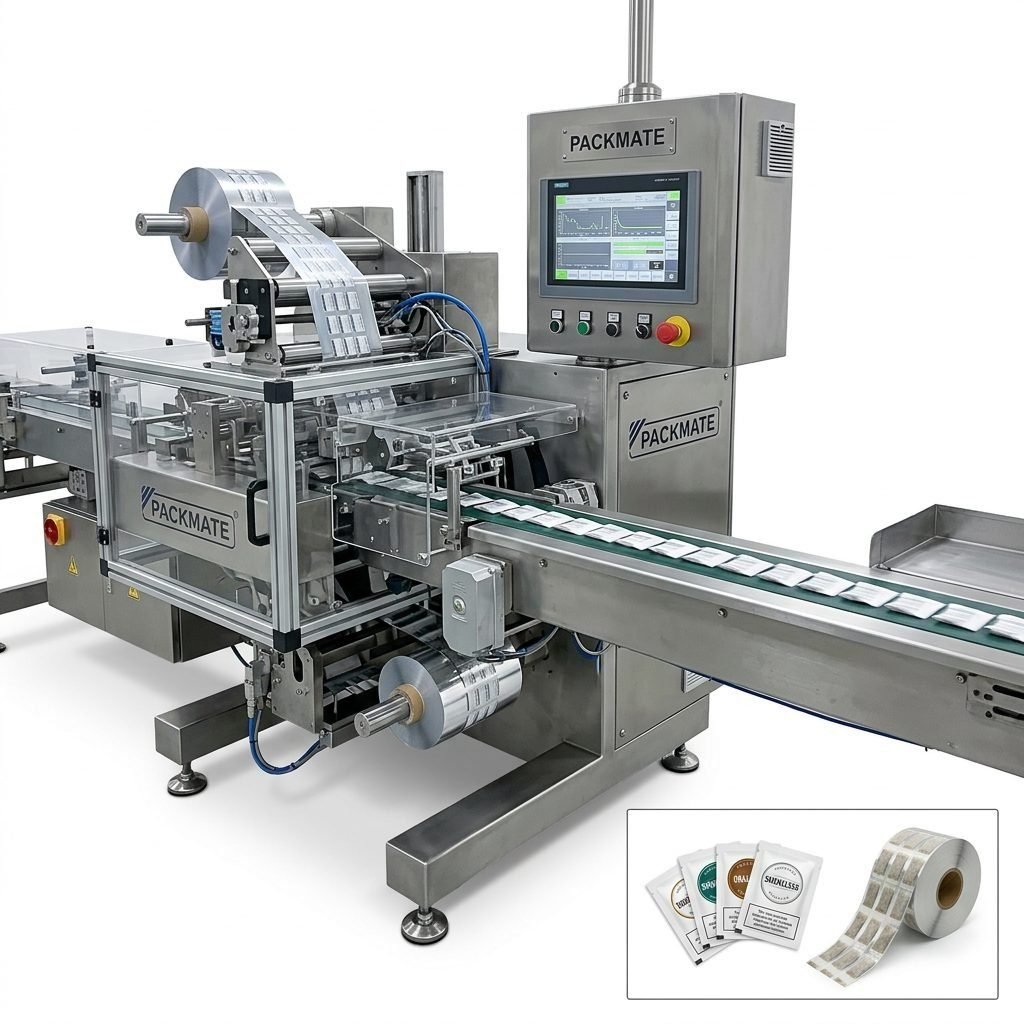
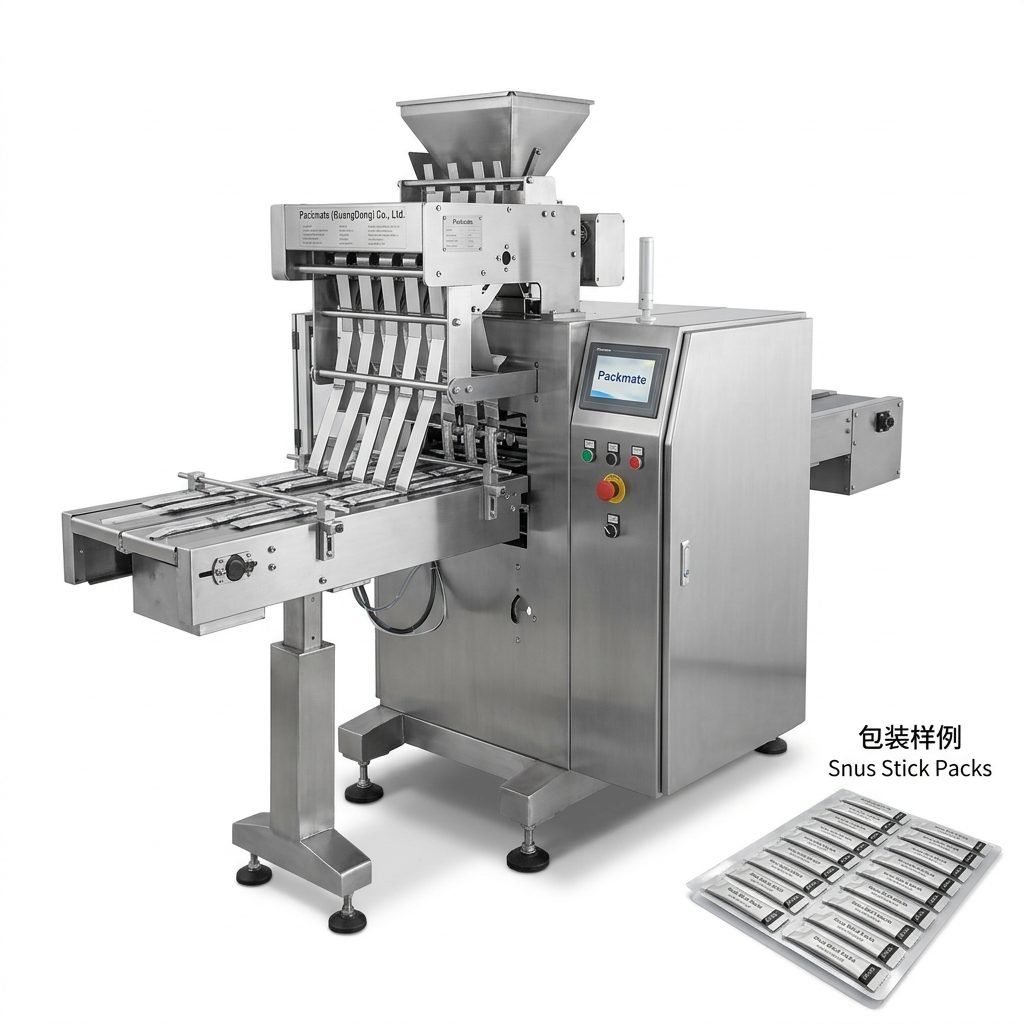
Sachet & Stick Pack Machines
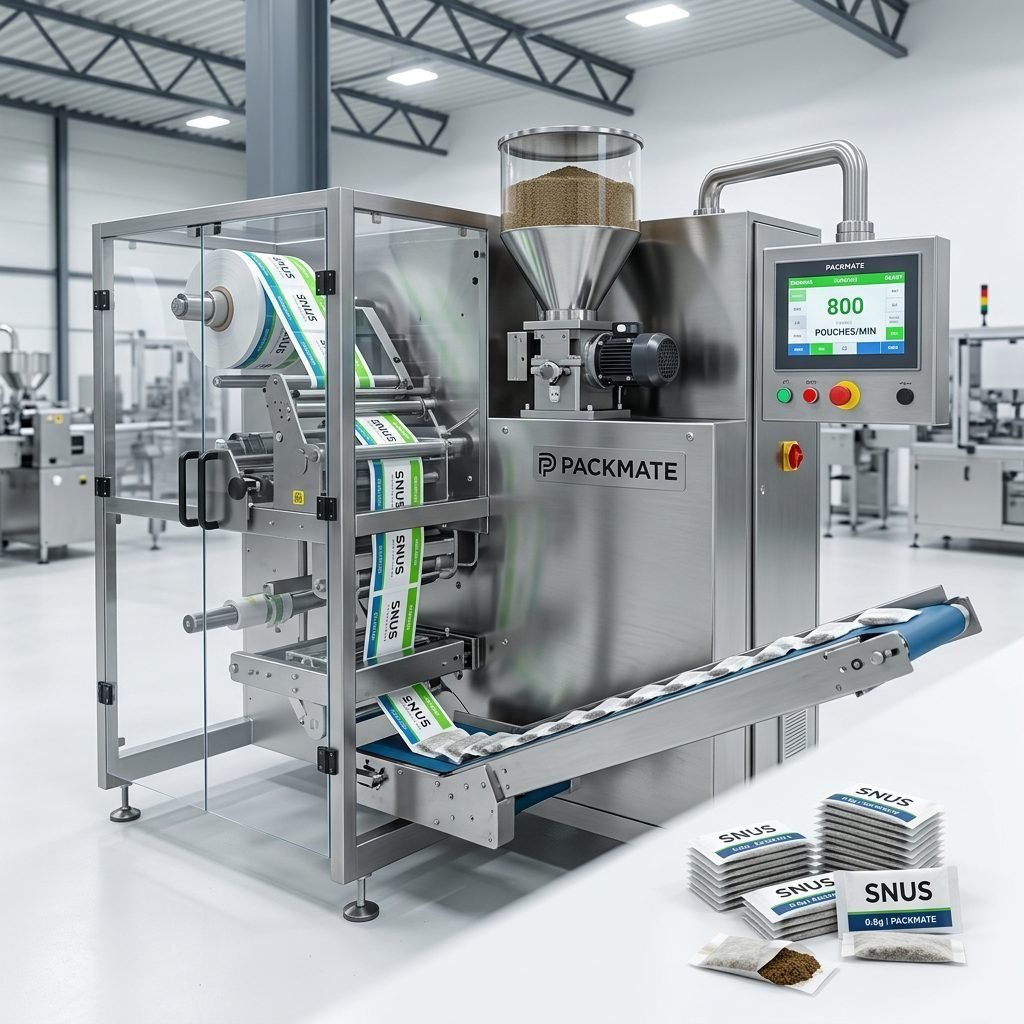
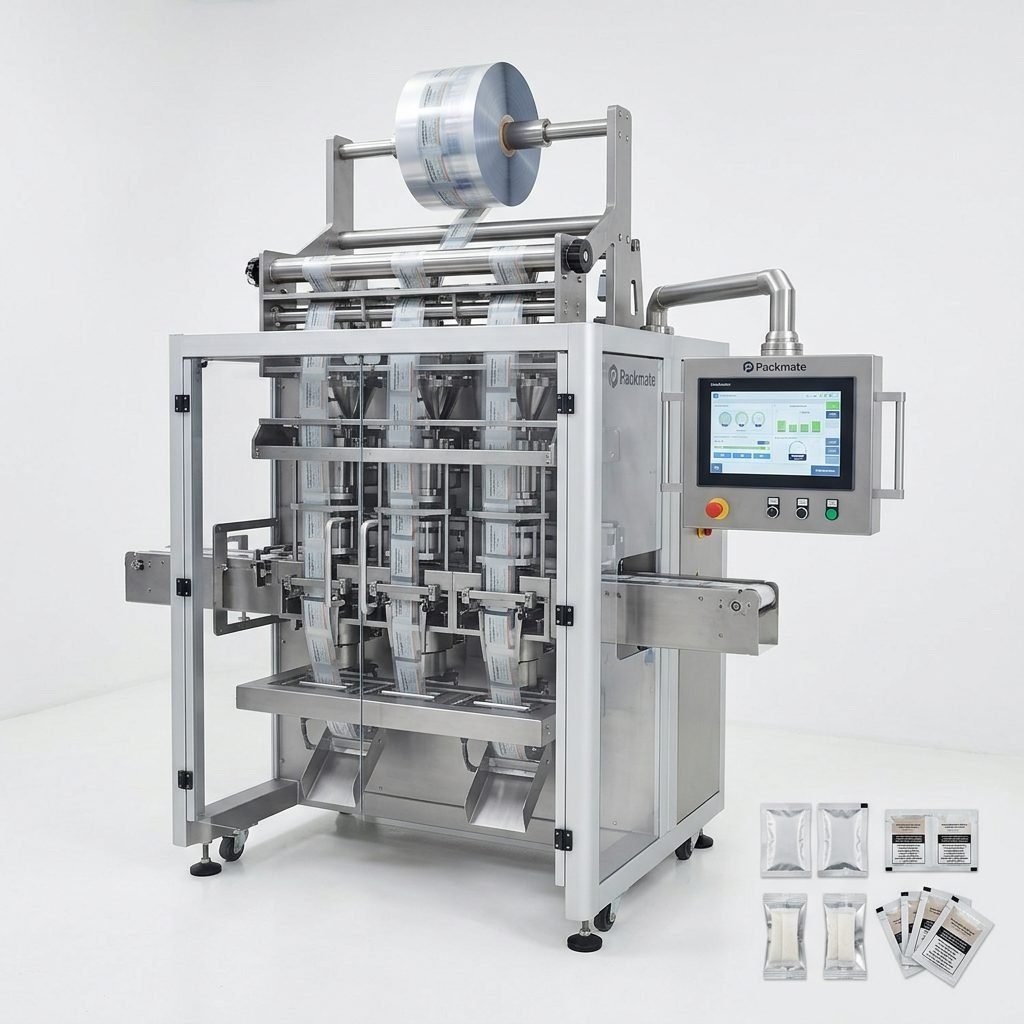
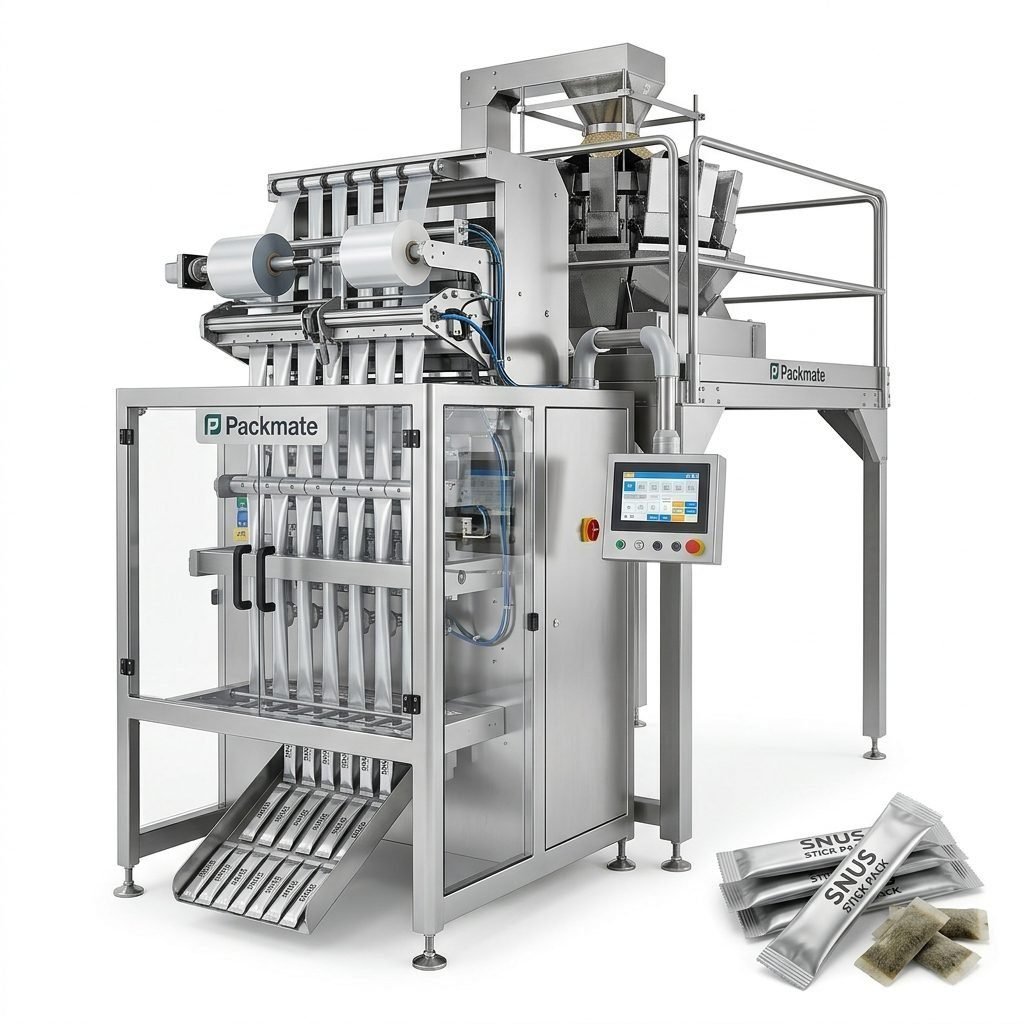
Ideal for single-portion nicotine pouches and stick-packed formats. These machines can handle many formulations and are great for medium-speed lines. If your products need sealed, tamper-evident single-dose packaging with precise dosing, consider advanced stick pack options.
Explore options designed specifically for sachets and sticks: Sachet & Stick Pack Machines.
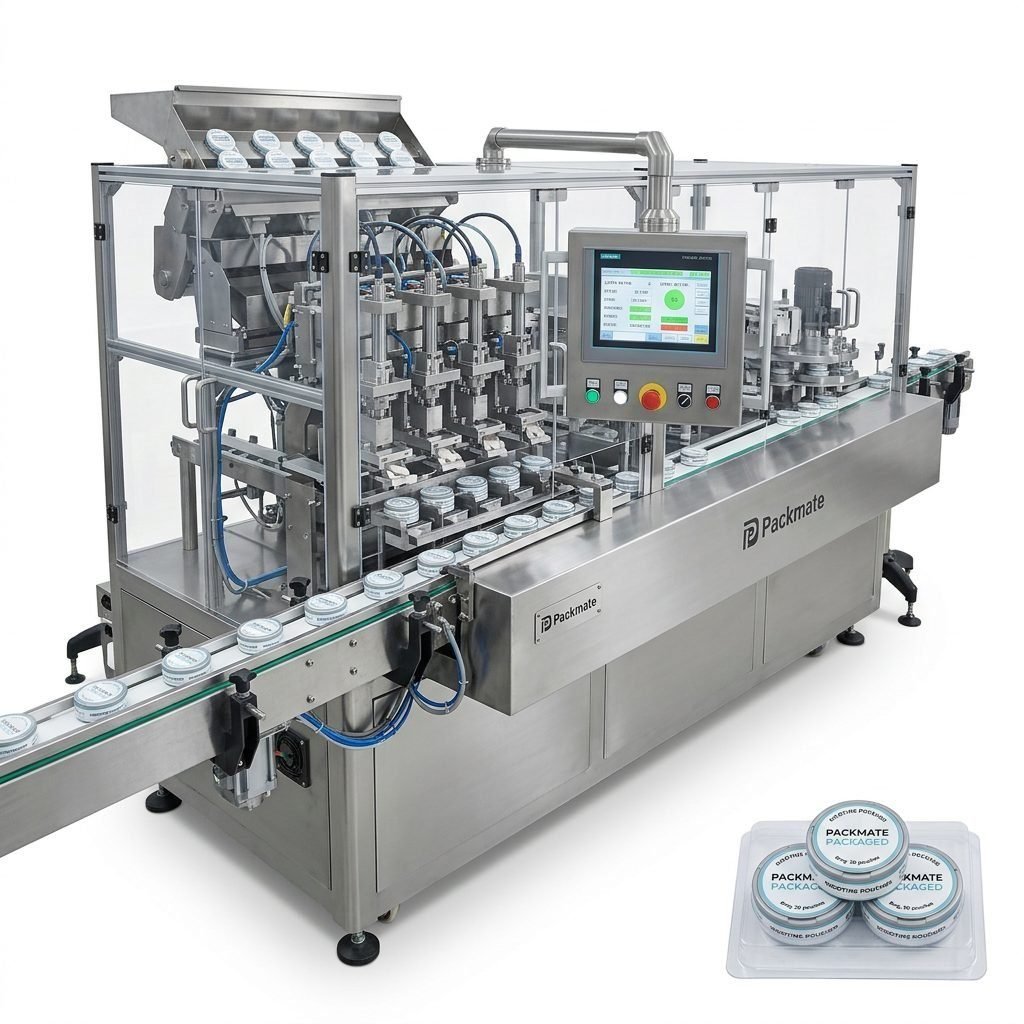
Multi-lane Snus Packaging Machines
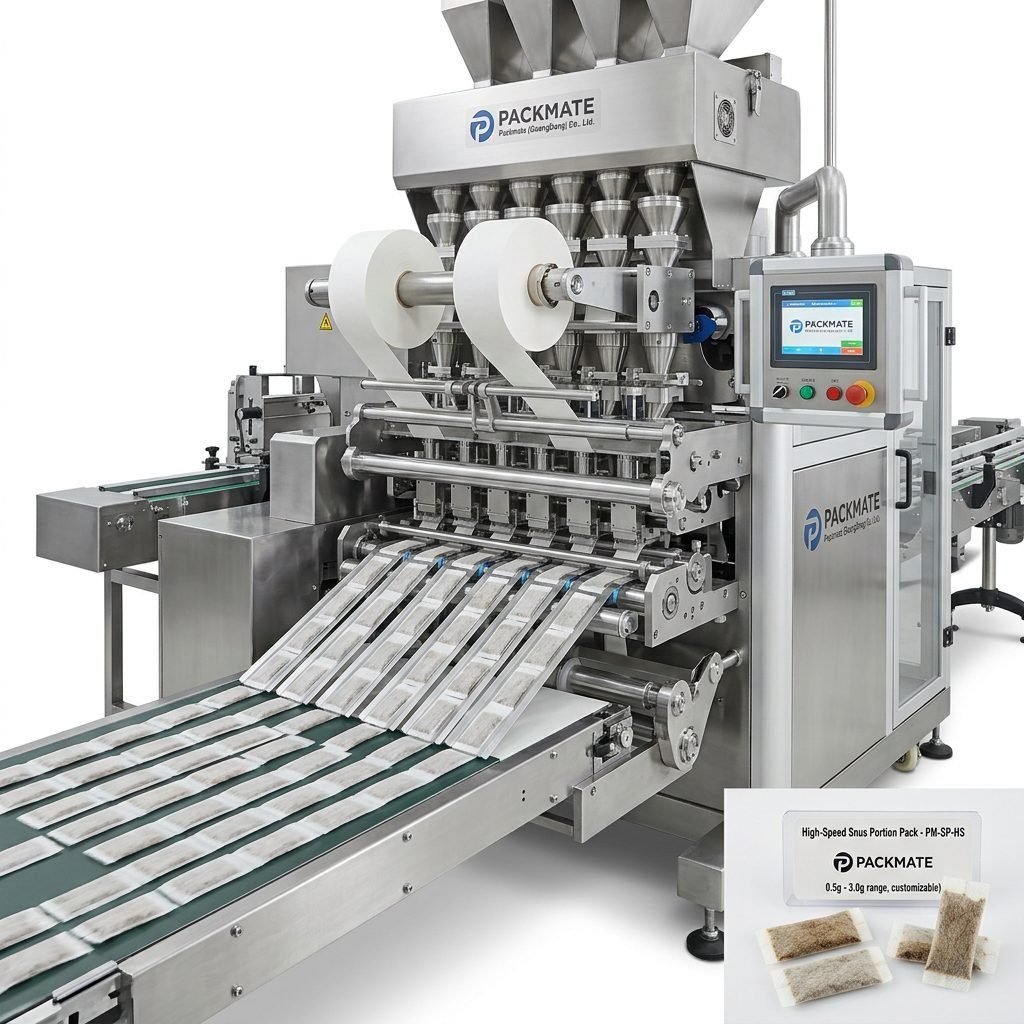
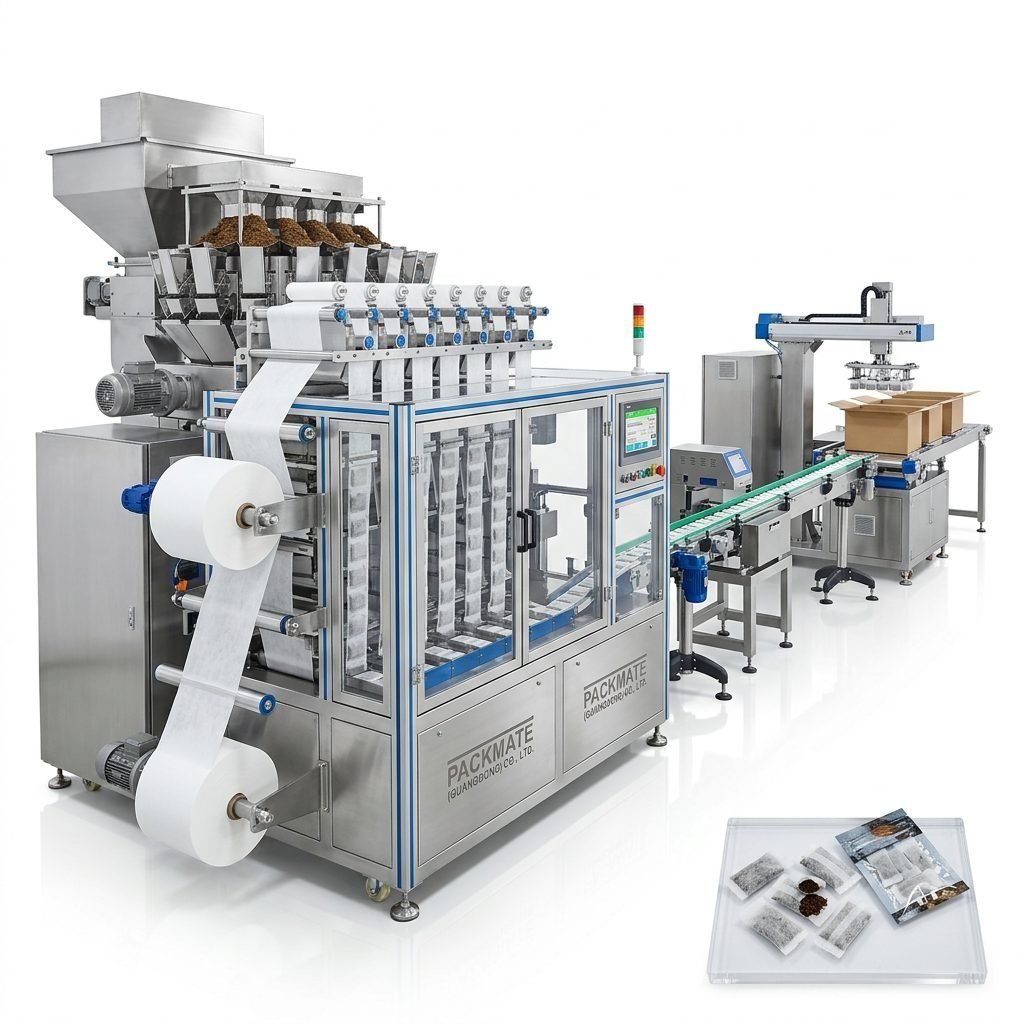
For high throughput and compact footprints, multi-lane systems are the industry standard for nicotine pouches. They multiply lanes to achieve higher output with synchronized dosing and heat sealing. If you target aggressive market growth, multi-lane technology reduces per-unit labor and floor space cost.
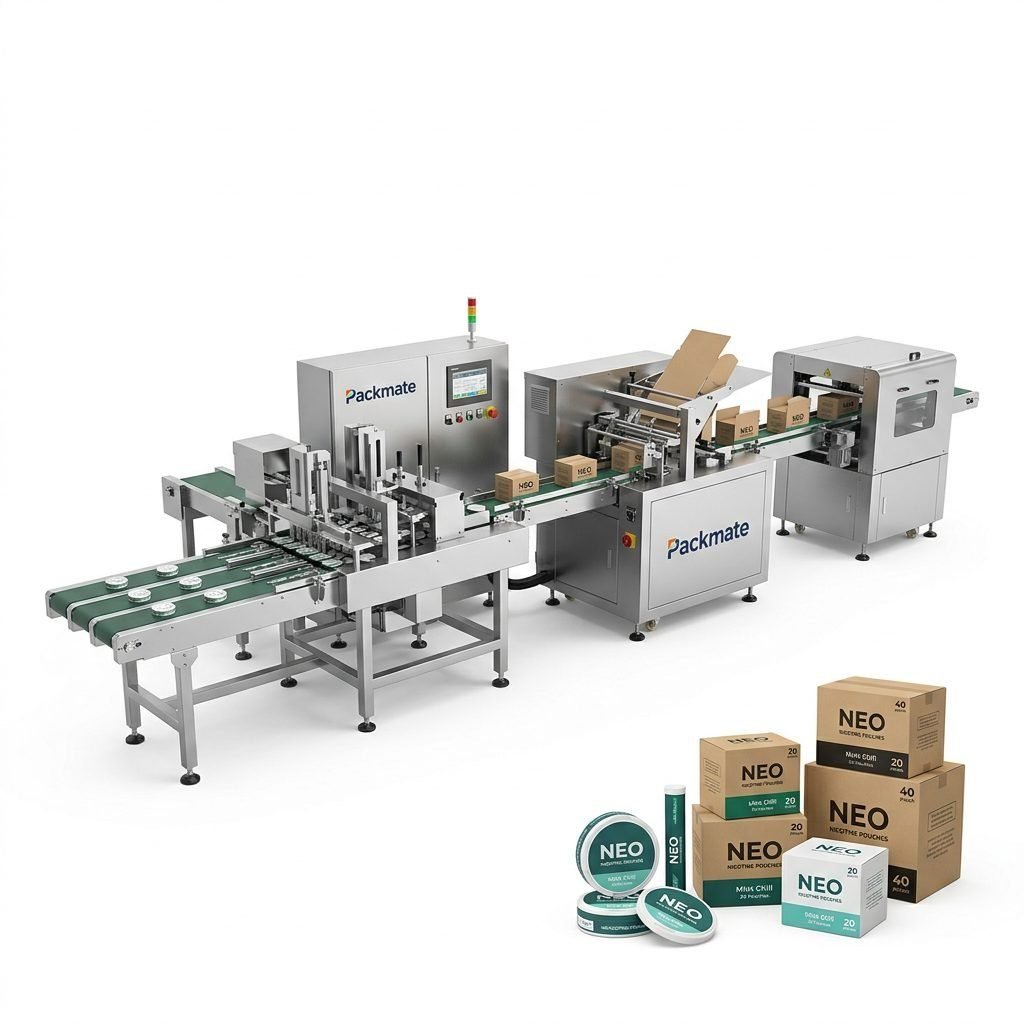
Full Filling & Packaging Lines
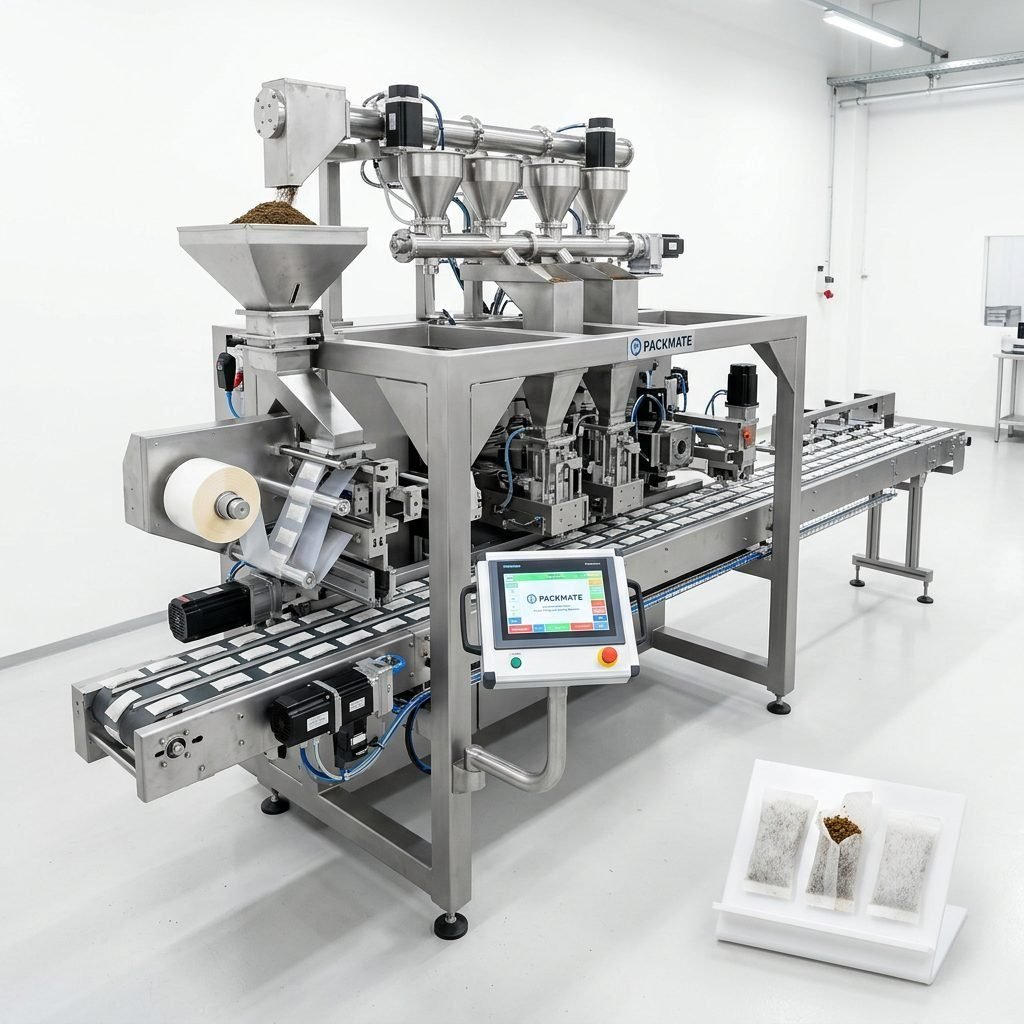
When you need turn-key solutions integrating weighing, dosing, filling, and final packaging, evaluate complete filling & packaging lines. These systems reduce integration risk and allow suppliers to take responsibility for line balance and throughput optimization. See sample solutions here: Filling & Packaging Lines.
✅ Recommendation: Choose multi-lane systems for mass production and stick/sachet machines for flexibility and niche SKUs.
Evaluate Technical Specifications & Performance Metrics ⚙️
Once you narrow the machine class, review the technical specs carefully. Performance metrics tell how a machine will behave under real production conditions and are crucial for capacity planning.
Key metrics to compare:
• Nominal speed (packs/min per lane)
• Number of lanes and modular expandability
• Filling accuracy and dosing technology (loss in weight, volumetric, auger)
• Changeover time and tool requirements
Regulatory Compliance and Quality Standards 🏷️
In Austria and the EU, packaging lines for nicotine products must comply with safety and hygiene standards. Prioritize suppliers whose equipment meets CE and ISO requirements and who provide documentation for compliance and risk assessments.
Packmate Snus Machine, for example, emphasizes CE and ISO-aligned processes; you can view certifications and company details to confirm compliance: Certificate and About Packmate.
Automation, Integration and Industry 4.0 📡
Advanced control systems and data collection are no longer optional. Look for machines with PLC control, user-friendly HMI, remote diagnostics, and the ability to export production data (OEE, downtime logs, batch records). Integration with upstream weighing and downstream cartoning or case packing should be seamless.
Consider linking packaging machines with complementary equipment: Weighing & Packaging Systems and auxiliary solutions to ensure consistent material flow and minimize manual intervention.
Supplier Selection: What to Inspect 🔍
Choosing the right supplier is as important as selecting the right machine model. A reliable supplier reduces commissioning time, offers spare parts stock, and provides timely service.
Essential supplier attributes:
• Proven track record in snus/nicotine packaging and long-term experience.
• Factory capabilities: CNC machining, precision assembly, and QC processes.
• Comprehensive machine portfolio (e.g., snus, sachet, stick packs, auxiliary equipment).
• Transparent warranty, spare parts availability, and on-site service support.
🌍 Packmate in context: With 30+ years of engineering experience, a 20,000㎡ manufacturing facility, and over 50 machine models, choose a supplier that demonstrates both manufacturing depth and real case histories. See examples of completed projects: Case.
Installation, Commissioning and Staff Training 🧰
Effective installation and commissioning reduce ramp-up time. Insist on a supplier who provides pre-shipment FAT (Factory Acceptance Test) and on-site SAT (Site Acceptance Test) with training sessions for operators and maintenance teams. Proper training prevents improper handling and reduces early-life failures.
Maintenance Strategies & Spare Parts Planning 🔩
Create a maintenance plan based on machine MTBF and critical wear items. Secure a spare parts agreement for long-lead components. Some suppliers offer predictive maintenance and remote fault diagnosis, which can dramatically reduce machine downtime and expedite repairs.
Cost Considerations and Return on Investment (ROI) 💶
Evaluate total cost of ownership, not just the purchase price. Include installation, operator training, spare parts inventory, energy consumption, and expected yield losses. High-efficiency machines that reduce product waste and labor often produce a faster ROI despite higher upfront costs.
📌 Checklist for ROI: throughput vs. demand, yield percentage, labor reduction, maintenance cost, and resale/residual value.
Site Preparation and Utilities 📋
Before the machine arrives, ensure your facility meets the electrical, air, and ergonomic requirements. Confirm floor loading, ventilation, and clean-room or hygienic conditions if required for your product. The supplier should provide clear installation drawings and utility specifications.
Sustainability and Packaging Materials 🌱
Sustainability is increasingly important for European markets. Choose machines compatible with recyclable or multi-layer lightweight films and consider the ability to switch film types without significant downtime. Ensure the sealing technology works with eco-friendly films to maintain package integrity.
Why Factory Capability Matters 🔧
A supplier with in-house CNC machining, precision assembly lines, and strict QC reduces supply-chain variability. Confirm the vendor’s manufacturing footprint and quality systems to avoid surprises in part tolerances and machine durability.
To review producer portfolios and machine types in detail, check the product collections: Snus & Nicotine Packaging Machines and Bag & Pouch Packaging Machines.
Final Steps: Trials, Contracts and After-Sales Service 📞
Before final purchase, request a demonstration with your product on the machine. Negotiate warranty terms, acceptance criteria, lead times for spare parts, and service-level agreements for response times. Reliable after-sales service is a cornerstone of a lasting partnership.
📅 Before signing: insist on FAT results, a clear spare parts list, and documented training schedules for operators and maintenance staff.
Additional Resources & Contact
If you’d like to learn more about suppliers, certification, and exhibition demos, visit the supplier pages for catalogs, exhibitions and service details: Catalog, Our Exhibition, and Service. For direct inquiries, use the official contact portal: Contact Us.
Common Questions
Q: How do I choose between single-lane and multi-lane snus machines?
A: Choose single-lane or stick pack machines for flexible SKU runs and lower volumes. Multi-lane machines are best when you require high throughput with uniform product specifications and minimal labor per unit.
Q: What certifications should I request from a packaging machine supplier?
A: Request CE compliance documentation, ISO quality system certificates, and electrical safety reports. Also ask for FAT reports and evidence of material compatibility testing for your specific packaging films.
Q: How can I minimize downtime after installation?
A: Reduce downtime by requiring on-site commissioning, operator/maintenance training, a spare parts kit for critical wear items, and a rapid-response service agreement with the supplier.
Q: Are turnkey filling & packaging lines worth the extra cost?
A: Turnkey lines reduce integration risk and accelerate time-to-market. They are worth the premium when you need guaranteed throughput and prefer a single point of accountability for line performance.
Q: Where can I see real examples of snus packaging lines?
A: Visit supplier case studies and exhibition demonstrations to view live machines and reference installations; supplier case pages and exhibition schedules provide real-world proof of capability.