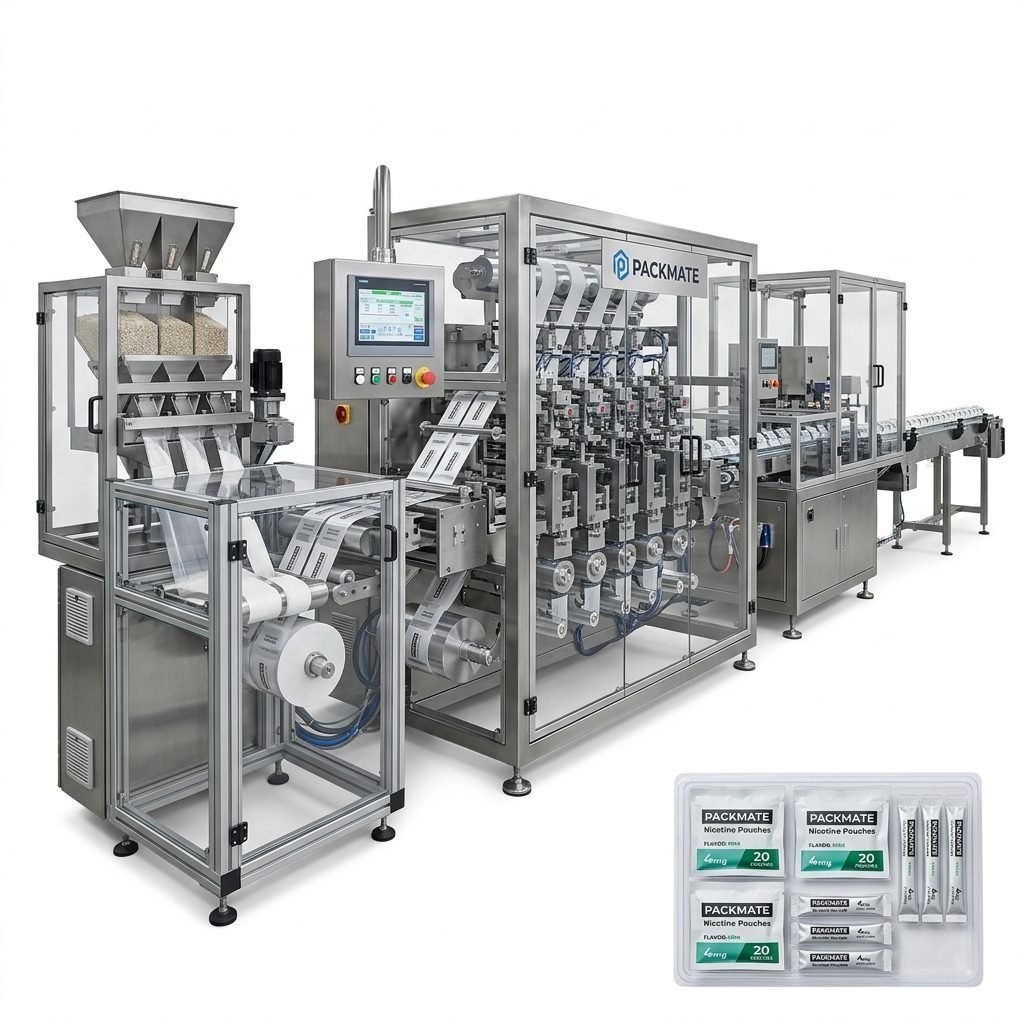
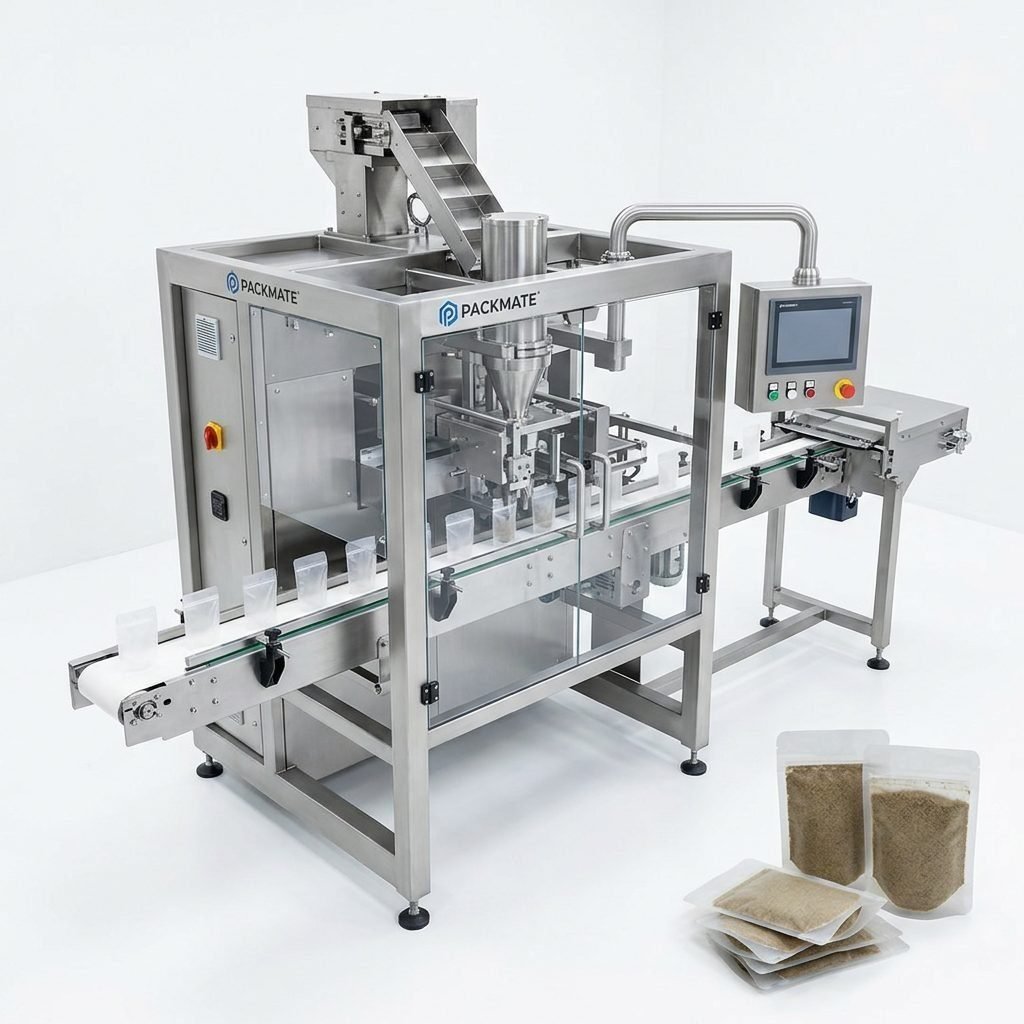
Choosing the right snus packaging machine is a critical decision for manufacturers seeking consistent product quality, regulatory compliance, and operational efficiency. This guide walks you through the technical considerations, production scenarios, equipment types, and vendor selection tips to help you select an automatic snus packing solution that meets your production goals and budget.
Understanding Snus Packaging Requirements
Snus and nicotine pouches demand precise dosing, hygienic handling, and reliable sealing to maintain shelf life and consumer safety. Key packaging objectives include:
✔️ Consistent pouch weight and fill accuracy
✔️ Secure and tamper-evident seals
✔️ High hygiene standards for food and nicotine-grade products
✔️ Flexibility to run multiple pouch sizes and formats
Common Snus Packaging Formats
Different production targets and markets call for different formats. Familiarity with these helps narrow machine selection:
• Stick packs and single-dose sachets for single-use pouches.
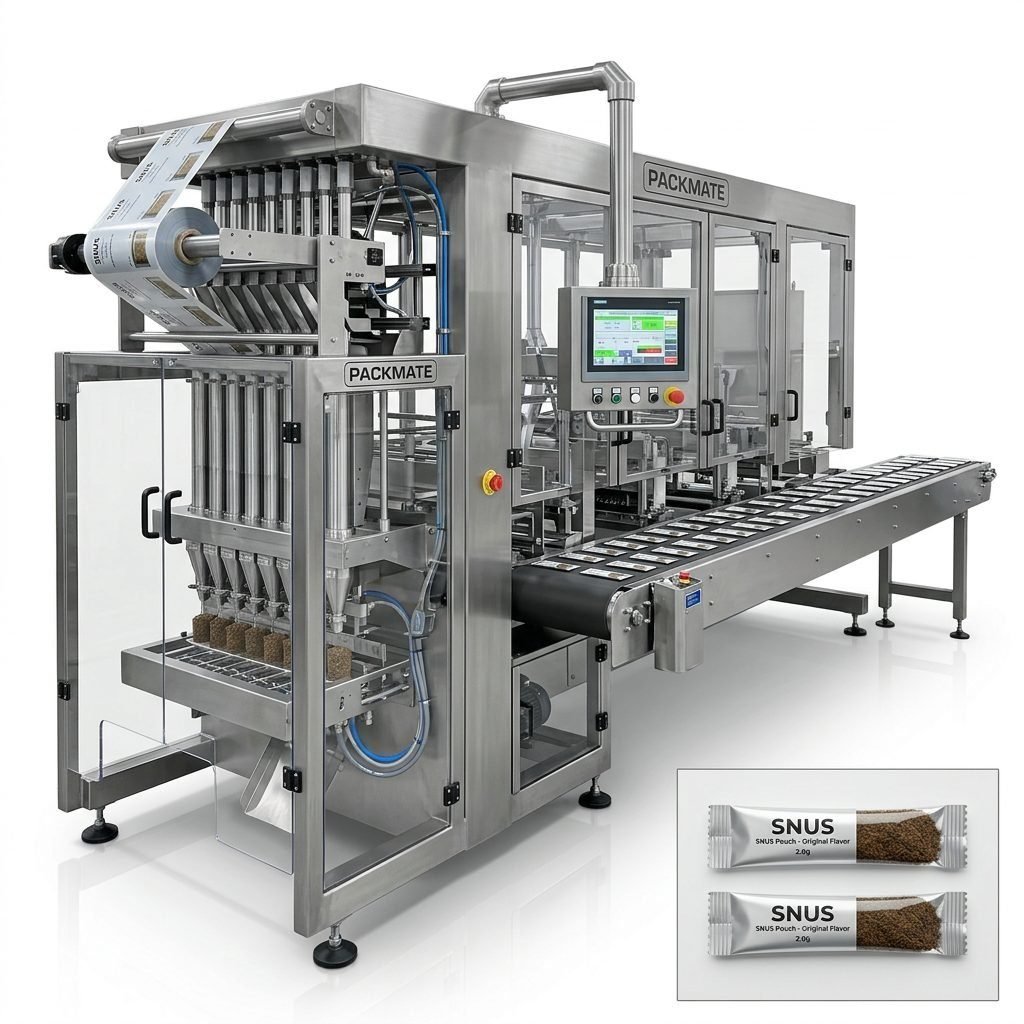
• Multi-lane pouch systems for high-output small-dose products.
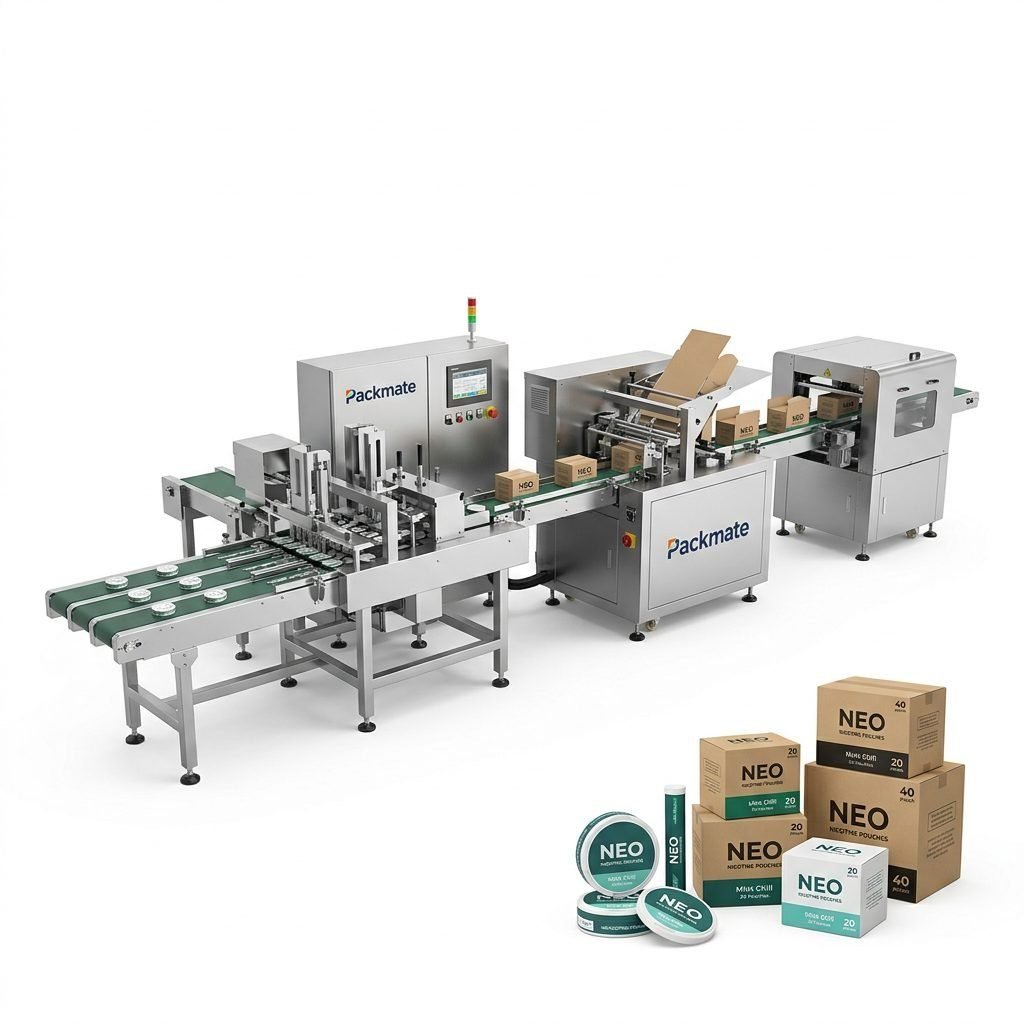
• Block or can packaging integration for retail-ready formats.
Key tip: If your production uses a wide range of pouch sizes, consider a machine with quick-change tooling and programmable recipes to minimize downtime.
Machine Types and Which One Suits Your Line
Several machine types are used in snus packaging. Match the right architecture to your throughput and product characteristics:
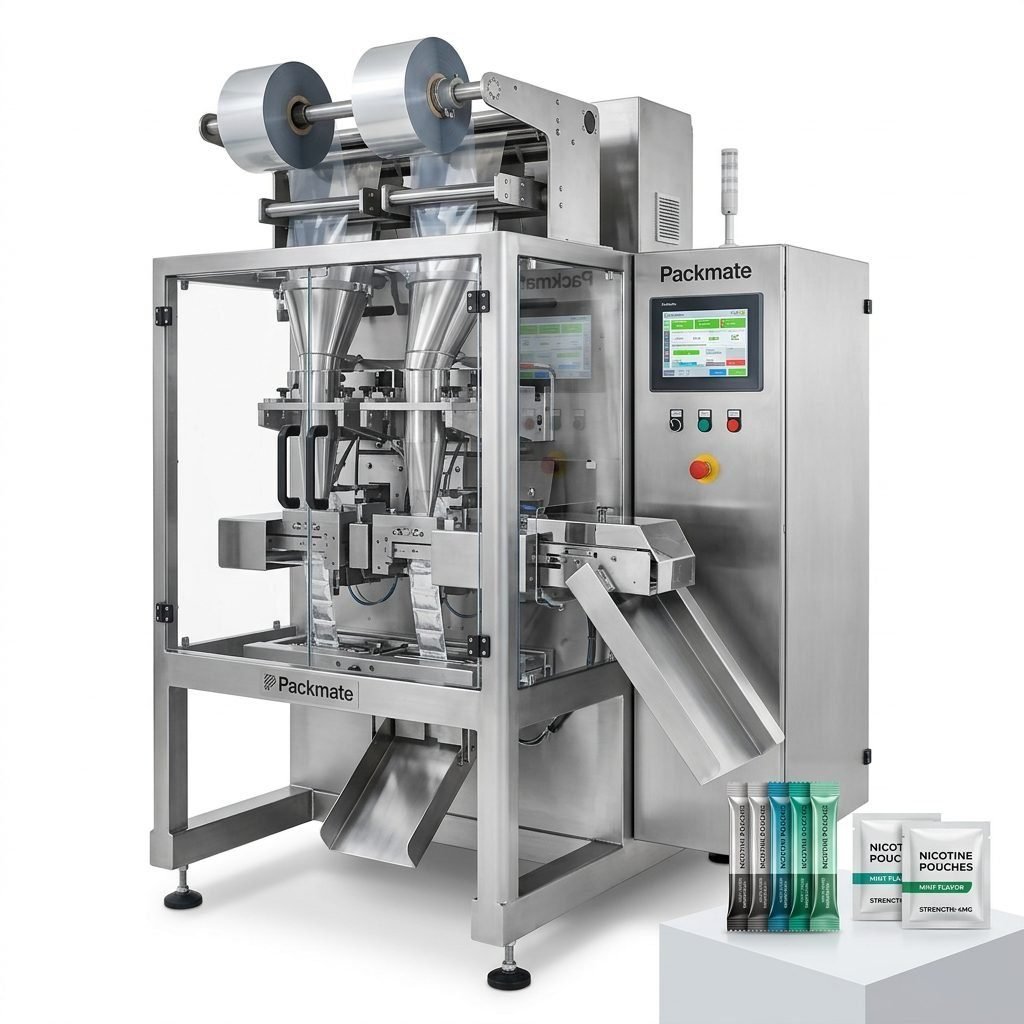
Vertical Form Fill Seal (VFFS)
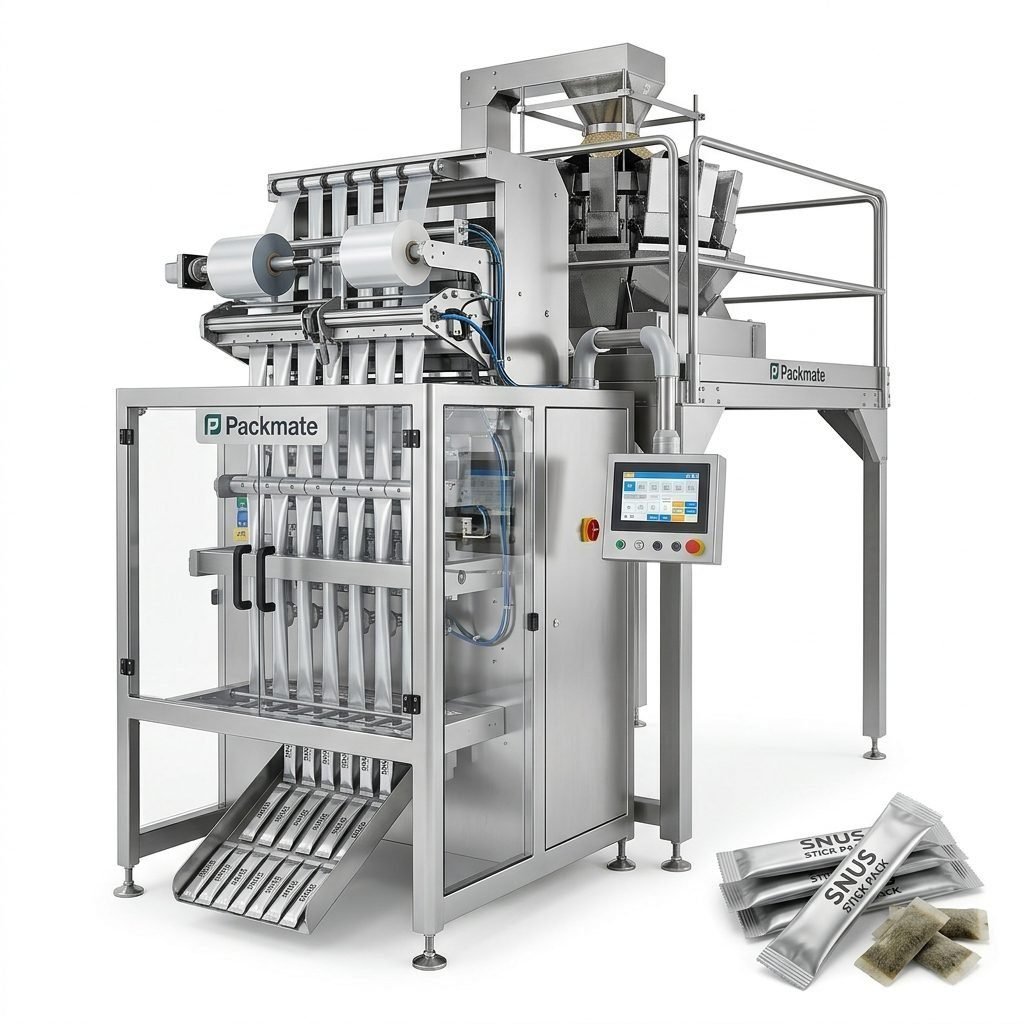
VFFS machines are versatile for many pouch formats. For snus, they’re often paired with precision dosing systems to maintain accurate portioning. Choose VFFS when you need flexibility across pouch shapes and moderate speeds.
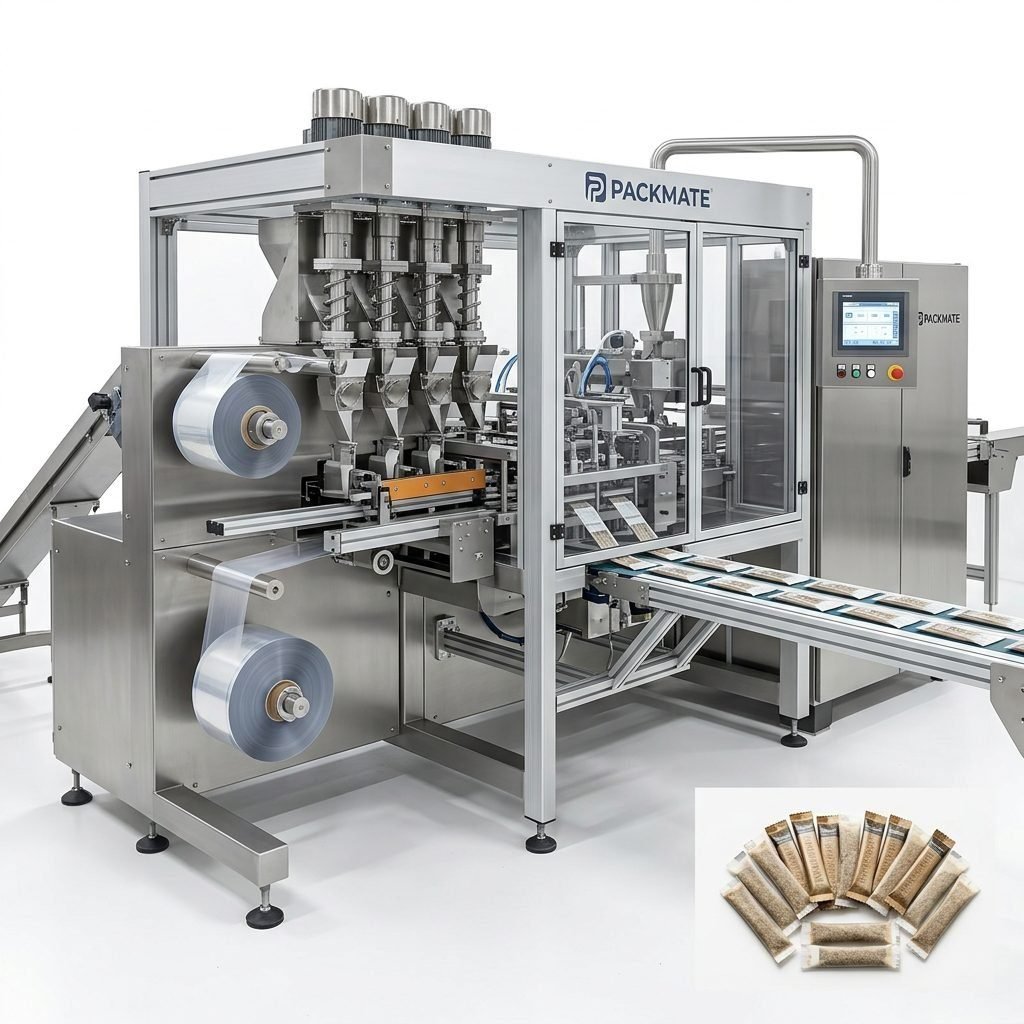
Multi-Lane Sachet / Stick Pack Machines
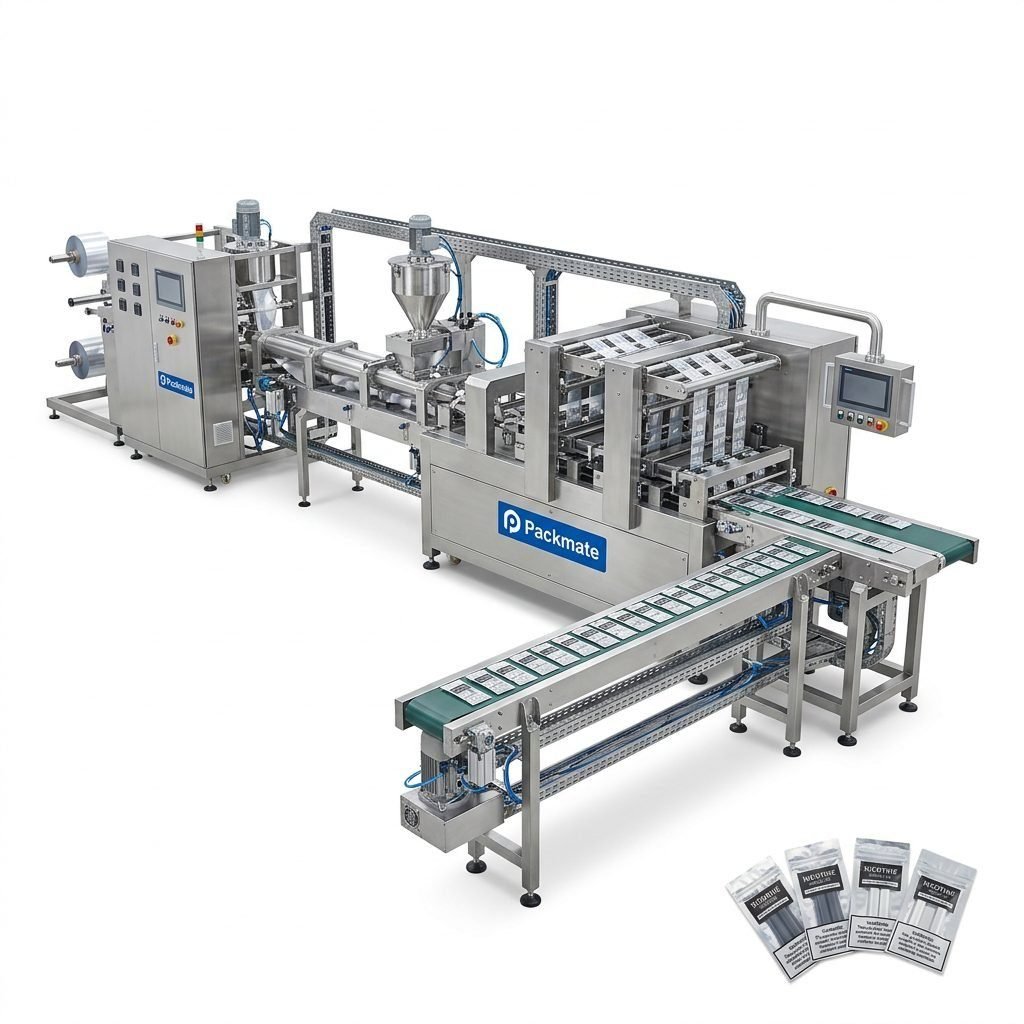
For high-volume small-dose snus or nicotine pouches, multi-lane equipment increases throughput while keeping footprint manageable. These systems excel when you need high-speed output with consistent pouch weight control.
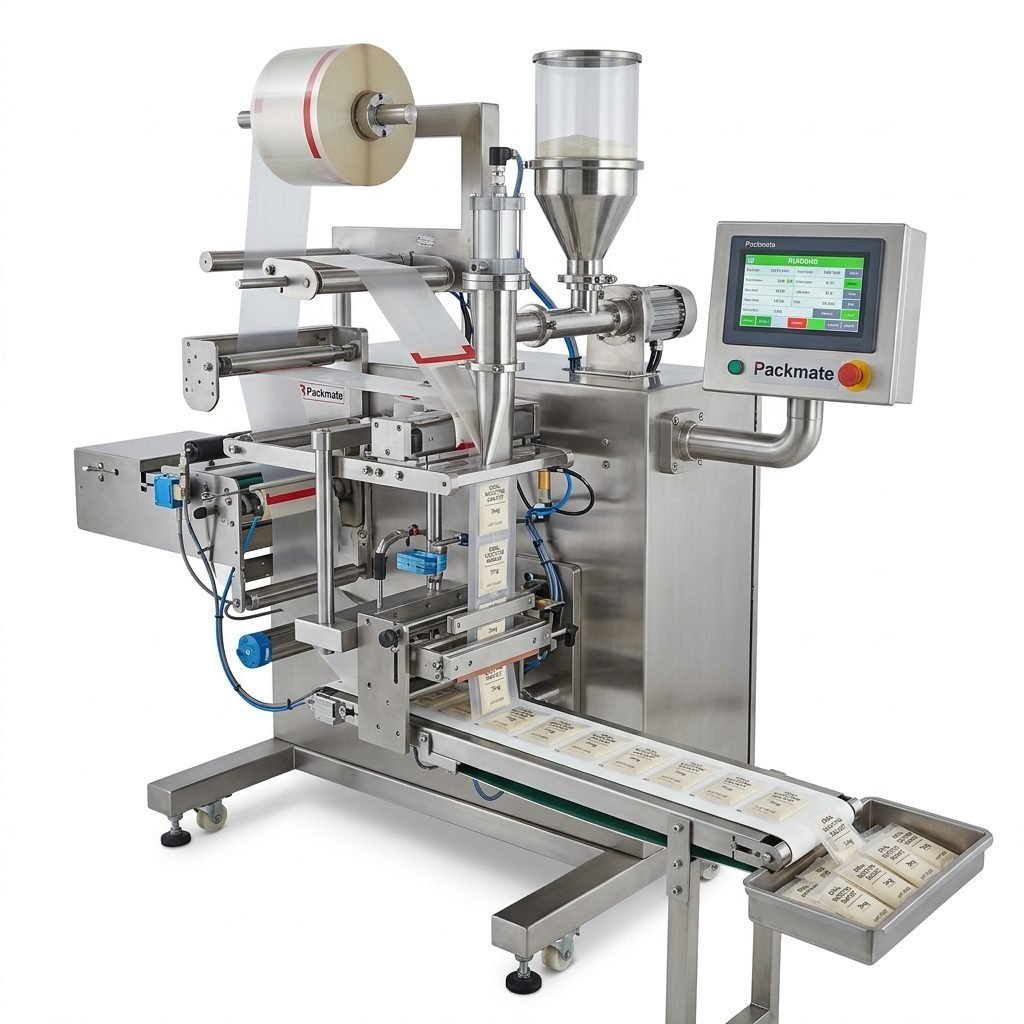
Stick & Sachet Dedicated Lines
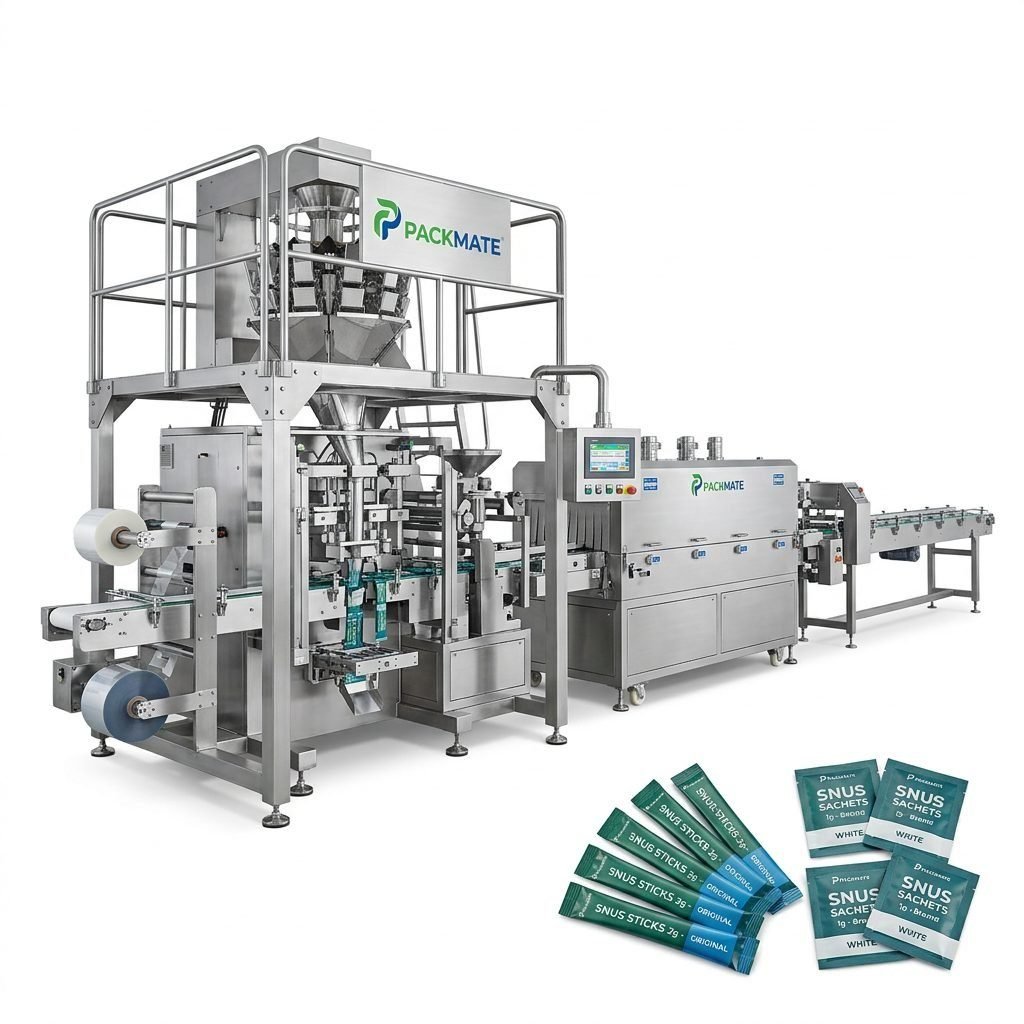
Dedicated stick pack and sachet machines provide optimized sealing and cutting for specific formats. If your product range is narrow and stability is paramount, a dedicated machine often yields the best ROI.
Production Capacity & Speed Considerations
Estimating your required capacity is the first step to choose a model. Consider:
• Daily production targets (units per shift/day).
• Targeted uptime and changeover times.
• Anticipated product mix and seasonal peaks.
• Integration with upstream weighers and downstream cartoners.
Production rule of thumb: Multiply your peak hourly demand by a safety factor (1.2–1.5) to account for maintenance, rejects, and operator variability.
Accuracy, Dosing & Weighing Integration
For snus, precise dosing is non-negotiable. Look for machines that support integration with high-performance weighers or volumetric dosing units. Features to prioritize:
• Closed-loop weighing feedback for accuracy.
• Multi-head or multi-lane weighers for higher speeds.
• Gentle product handling to avoid dusting or content loss.
• Easy calibration and recipe management.
For complete turnkey solutions, explore integrated systems combining precision dosing and packaging: Weighing & Packaging Systems and Filling & Packaging Lines.
Material Compatibility and Sealing Technology
Packaging film selection and sealing technology determine shelf life and appearance. Consider:
• Film types: multilayer barrier films, heat-sealable laminates.
• Seal strength and temperature control to avoid wrinkles or product migration.
• Compatibility with modified atmosphere packaging (MAP) if needed.
• Clean design to avoid contamination between product and sealing jaws.
Automation, Control & HMI
Modern snus packaging machines should include intuitive PLC control and HMI interfaces that allow operators to:
• Save and recall product recipes.
• Monitor alarms and real-time production metrics.
• Run remote diagnostics and preventive maintenance alerts.
• Integrate with factory MES/ERP systems.
Operator efficiency: A clear HMI with visual changeover steps can reduce changeover time by up to 50% in practice.
Safety, Compliance & Certifications
Ensure any machine you consider complies with international standards and hygienic design principles. Key requirements:
• CE / ISO certifications for electrical and mechanical safety.
• Food-contact material approval where applicable.
• Guards and safety interlocks to protect operators.
• Documentation for validation and traceability.
Serviceability, Spare Parts & Global Support
Long-term uptime depends heavily on after-sales service. Evaluate vendors on:
• Availability of spare parts and consumables.
• Local service network or rapid remote support.
• Training packages for operators and technicians.
• Warranty and preventive maintenance offerings.
For companies seeking global support and robust production capability, Packmate Snus Machine offers a comprehensive portfolio and international experience—learn more About Packmate.
Customization & Turnkey Lines
Many snus manufacturers require custom configurations: multi-lane layouts, upstream dosing, downstream packaging into cans or cartons, and in-line quality checks. When evaluating suppliers, ask for:
• Examples of completed turnkey lines and case studies.
• Engineering support for layout, utilities, and safety compliance.
• FAT (Factory Acceptance Test) and SAT (Site Acceptance Test) procedures.
• Modular upgrade paths to increase capacity or add functionality.
Explore real-world installations and reference projects for confidence: Case.
Total Cost of Ownership & ROI
Price is only one part of the decision. To calculate realistic ROI, include:
• Initial capital cost and installation expenses.
• Expected uptime and labor savings from automation.
• Energy consumption and maintenance frequency.
• Consumable costs (film, seals, spare parts).
Financial insight: A slightly higher upfront investment in a more robust machine often pays back through reduced downtime and lower scrap rates.
Why Choose a Specialist Snus Packing Machine Manufacturer?
Manufacturers with domain experience in snus and nicotine pouch packaging bring focused engineering and proven solutions. Advantages include:
• Deep understanding of small-dose handling and sealing challenges.
• Pre-engineered multi-lane solutions that reduce development time.
• Compliance knowledge for global markets.
• Proven spare parts and service networks.
Discover a comprehensive range of snus equipment including multi-lane and stick pack options at Snus & Nicotine Packaging Machines and Sachet & Stick Pack Machines.
Selecting a Supplier: Checklist
Use this quick checklist to evaluate potential suppliers:
🔧 Technical fit: Does the machine match your pouch format and speed?
🔧 Certifications: CE/ISO and food-contact compliance?
🔧 References: Can the vendor provide relevant case studies?
🔧 Service: Local support, spare parts lead times, and training?
🔧 Upgrades: Roadmap for capacity or functionality growth?
Factory Capability & Quality Assurance
Inspect manufacturer capabilities: CNC machining, precision assembly, and testing procedures. A reputable factory will have documented quality checks, FAT processes, and a controlled manufacturing environment.
Installation, Commissioning & Training
Plan for a smooth ramp-up with these steps:
• Pre-installation site survey to confirm utilities and layout.
• FAT at the vendor to verify machine performance before shipment.
• On-site commissioning and process validation.
• Operator and maintenance training to maximize uptime.
If you need full-line planning or on-site services, check vendor support pages like Service and Contact Us for direct inquiries.
Common Integration Challenges & Solutions
Integration into an existing production environment can surface challenges. Anticipate and mitigate these:
• Conveyor height mismatches — confirm mechanical interfaces early.
• Communication protocols — ensure PLC/HMI compatibility (OPC/Modbus/Ethernet).
• Utility limits — verify compressed air, power, and vacuum requirements.
• Environmental controls — dust or humidity may require additional enclosures.
Pro tip: Request a layout drawing and utility schedule during the RFQ stage to avoid costly changes during installation.
Case Study Snapshot
A European snus producer needed a multi-lane solution to scale small-dose pouch production. After evaluating vendors, they selected a multi-lane line with integrated multi-head weighers, achieving a 35% reduction in labor and a 12% decrease in material waste within six months of commissioning. The supplier provided FAT documentation, spare parts kits, and on-site training that accelerated ramp-up.
Final Selection Tips
When ready to buy, follow these steps to reduce risk:
1) Define clear technical and commercial requirements.
2) Ask for machine demos or video evidence of the exact model.
3) Request references and visit an installed line if possible.
4) Include detailed acceptance criteria in contracts (FAT/SAT).
Where to Start
Start by listing your production targets, pouch formats, and regulatory needs. Contact a specialized provider with proven snus experience to discuss a tailored solution. For a broad view of available machine types, check the manufacturer’s product categories such as Bag & Pouch Packaging Machines.
Quick decision checklist: Throughput, dosing accuracy, hygiene, service support, and compliance.
Conclusion
Selecting the best snus packaging machine requires balancing production targets, product requirements, and long-term operational costs. Specialized manufacturers with deep experience in snus and nicotine pouch systems can accelerate implementation and deliver more reliable, efficient lines. Prioritize accuracy, hygiene, serviceability, and supplier transparency when making the investment.
常见问题 (Frequently Asked Questions)
Q1: How do I determine the right machine speed for my needs?
A: Calculate your peak hourly demand, factor in expected uptime and reject rates, then select a machine with nominal speed above this number. Include a 20–50% safety margin to account for maintenance and product changeovers.
Q2: Can one machine handle multiple pouch sizes?
A: Yes. Many modern machines support multiple sizes via quick-change tooling and programmable recipes. Verify changeover times and ask for a demonstration of size change procedures.
Q3: What maintenance is required for snus packing machines?
A: Routine cleaning, lubrication, periodic calibration of weighers, and inspection of seals and cutting blades. Follow the vendor’s preventive maintenance schedule and keep critical spare parts in stock for fast recovery.
Q4: How do I validate machine performance before purchase?
A: Request a Factory Acceptance Test (FAT) with your product or a close analogue. Require documented performance metrics, video evidence, and acceptance criteria in the contract.
Q5: Where can I see examples of installed lines and get vendor references?
A: Ask suppliers for case studies and client contacts. Visit reference sites where possible, and review published project summaries on vendor pages such as Case and exhibition reports on Our Exhibition.