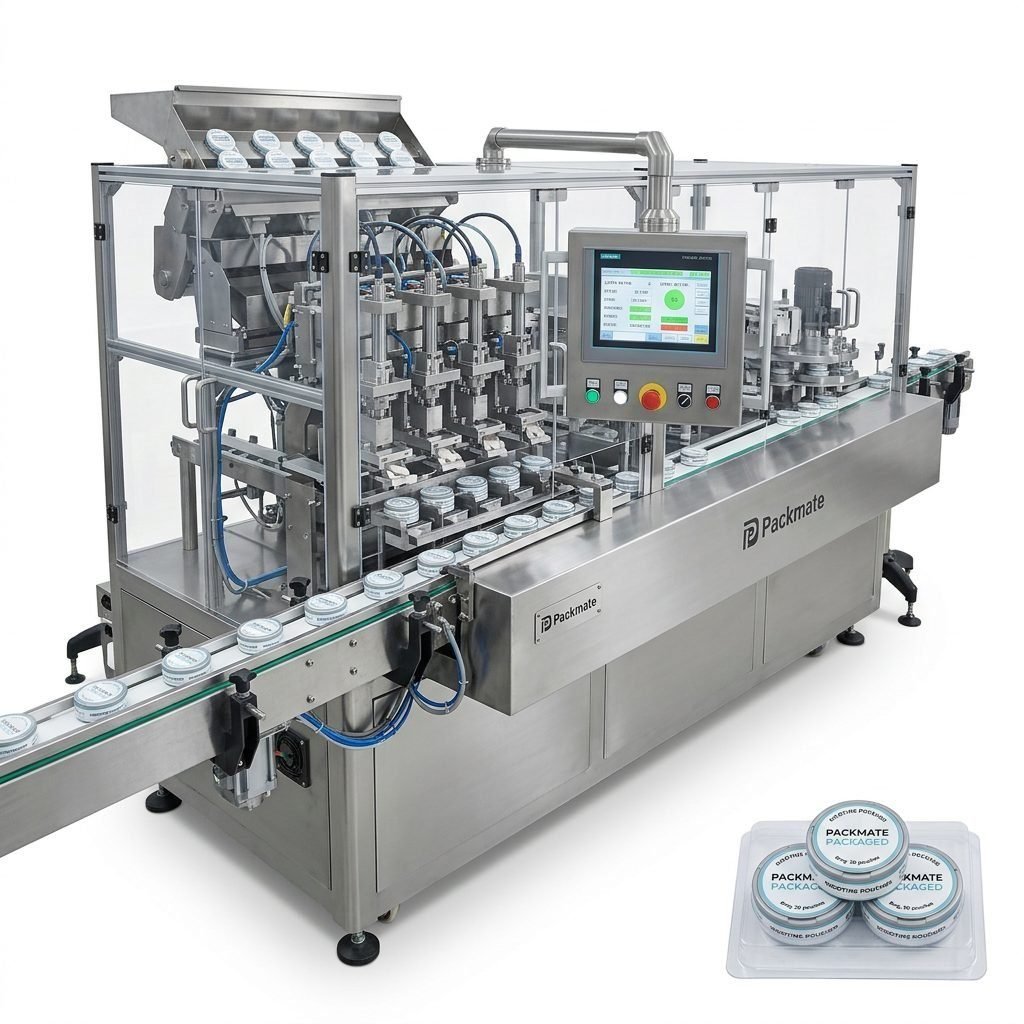
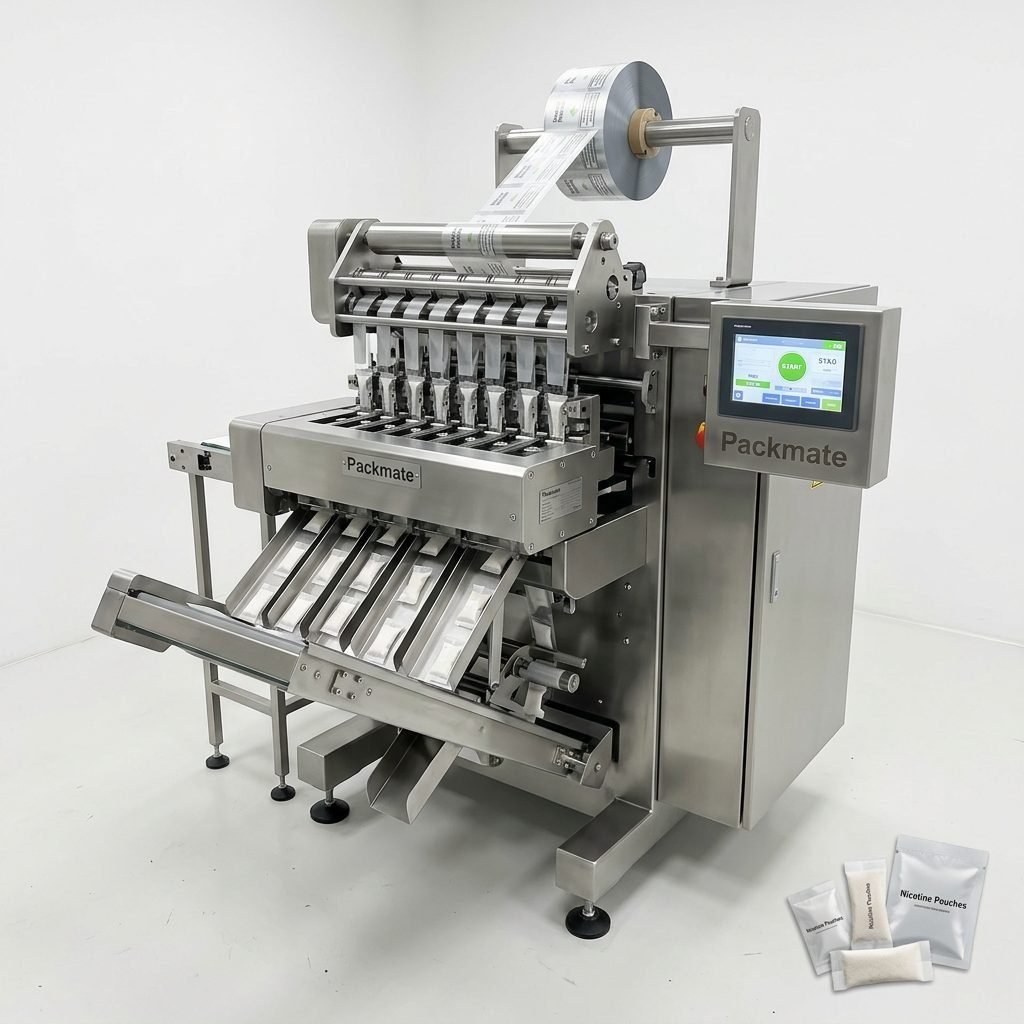
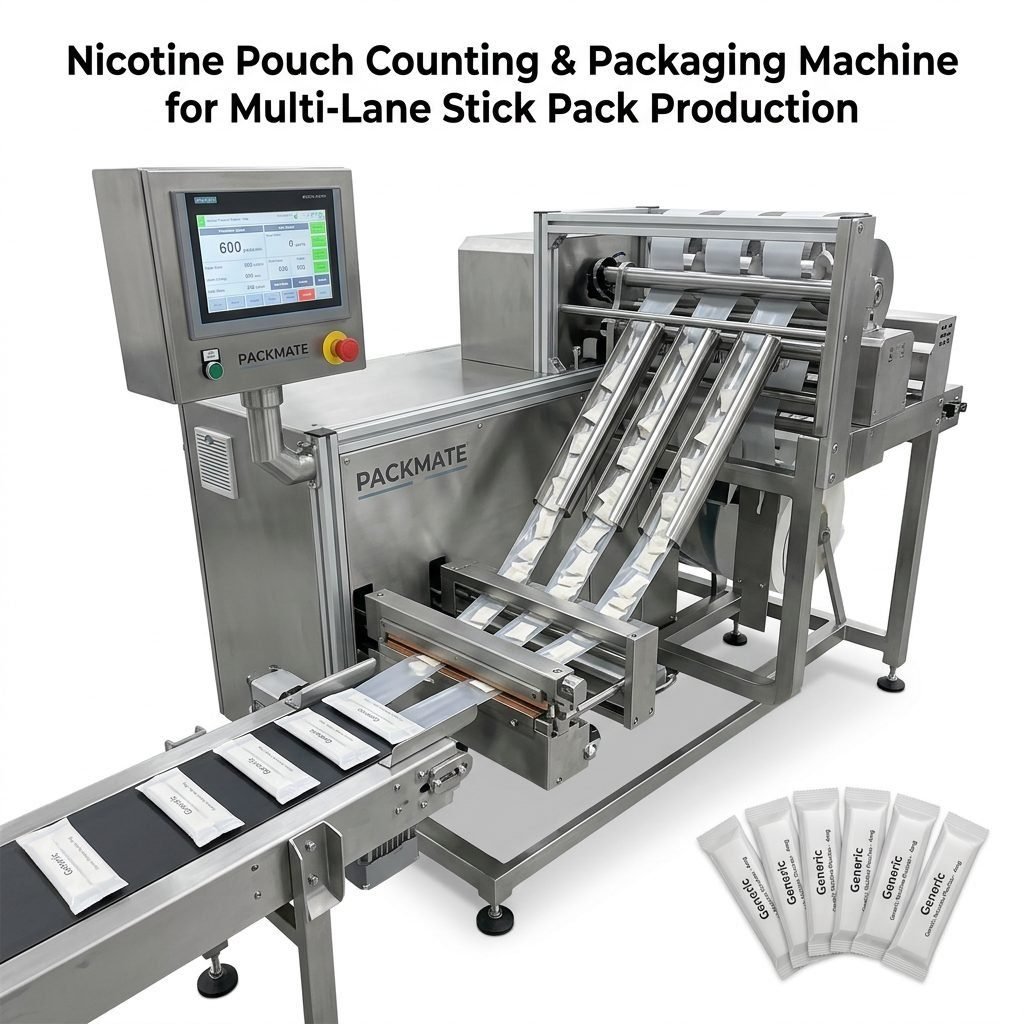
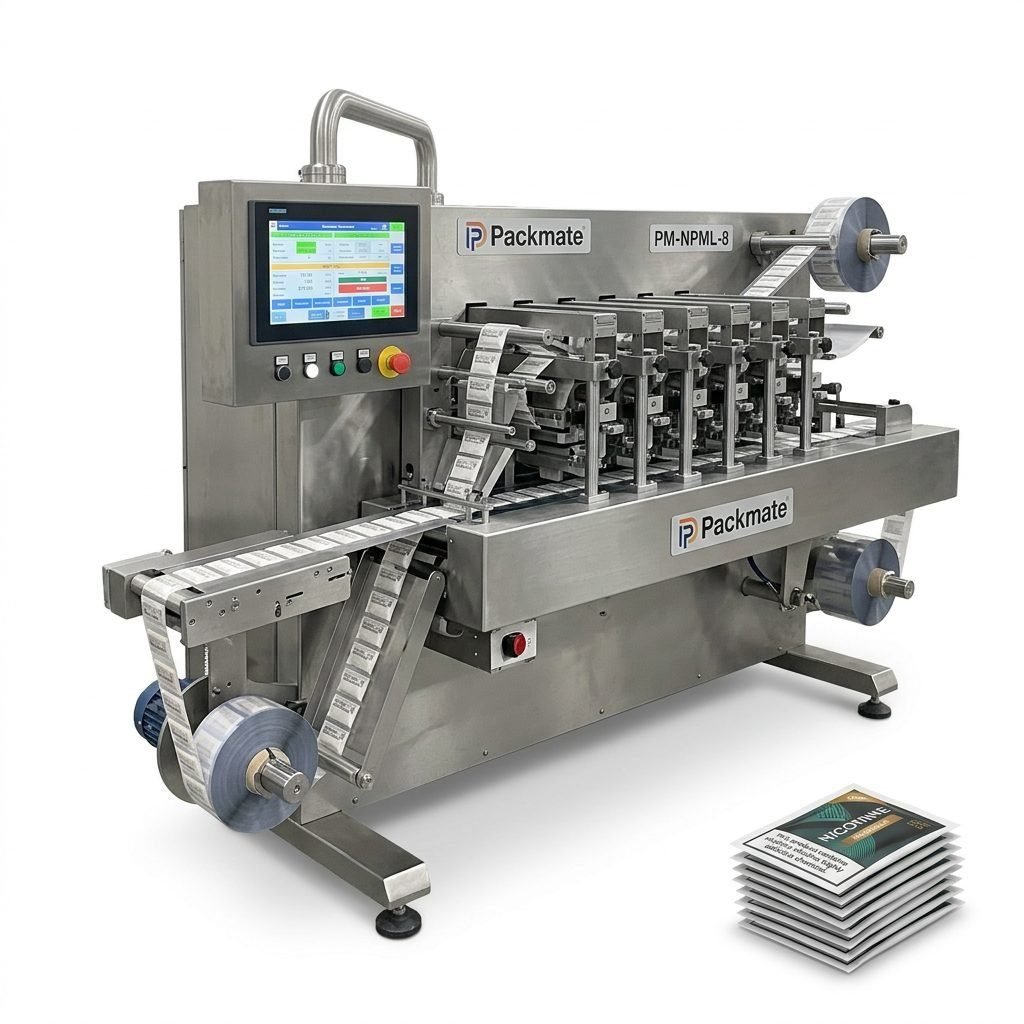
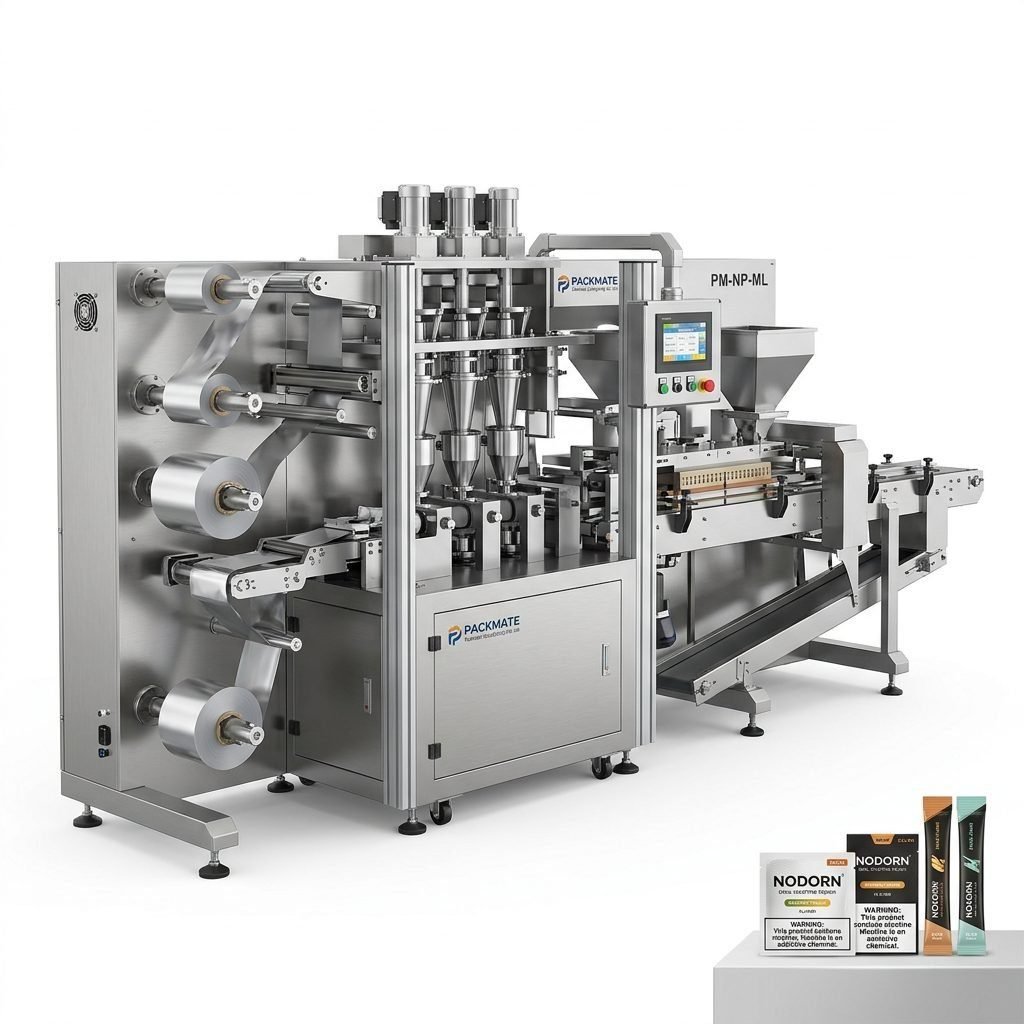
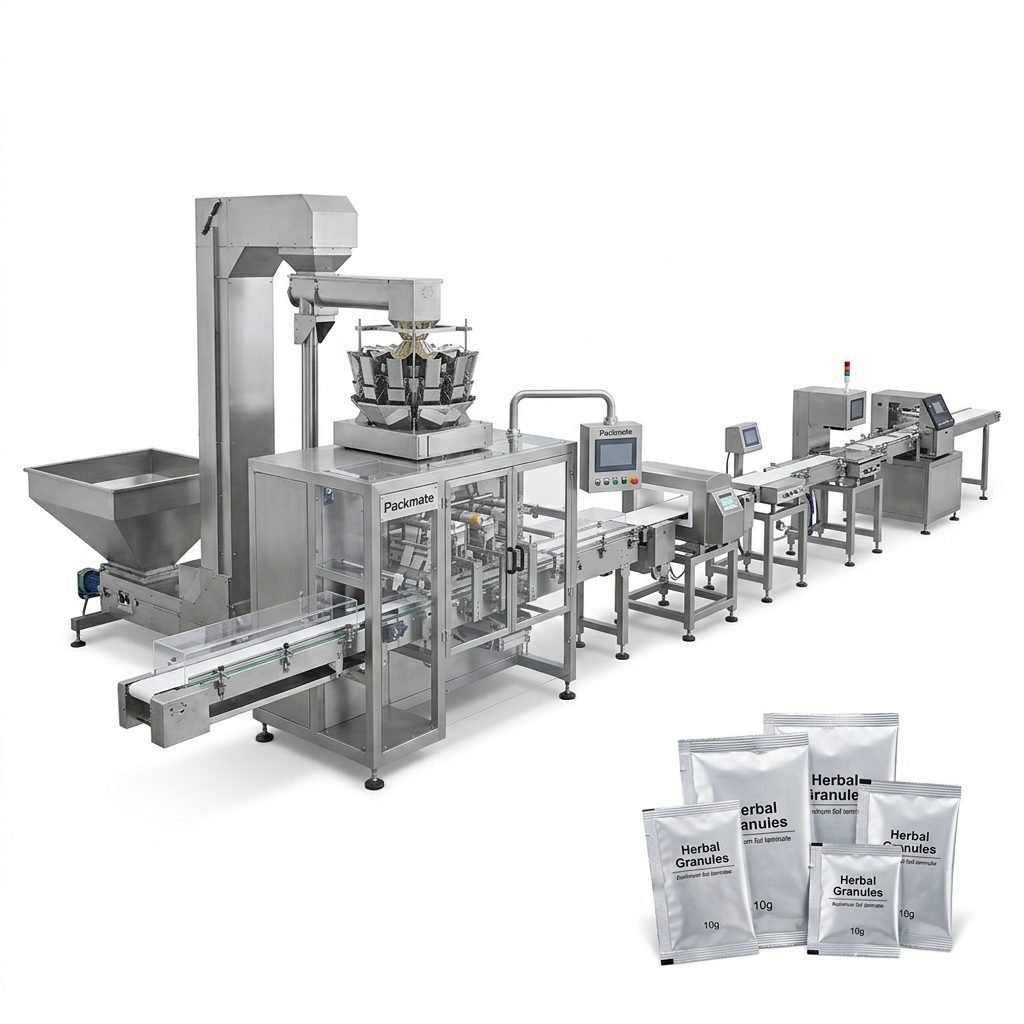
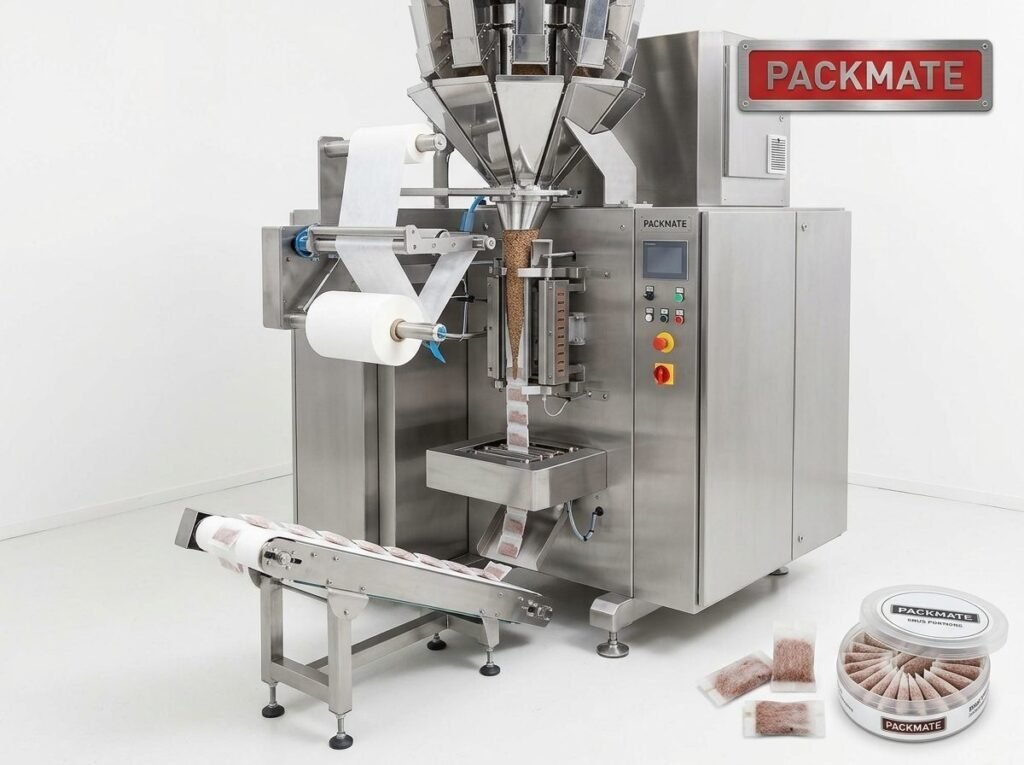
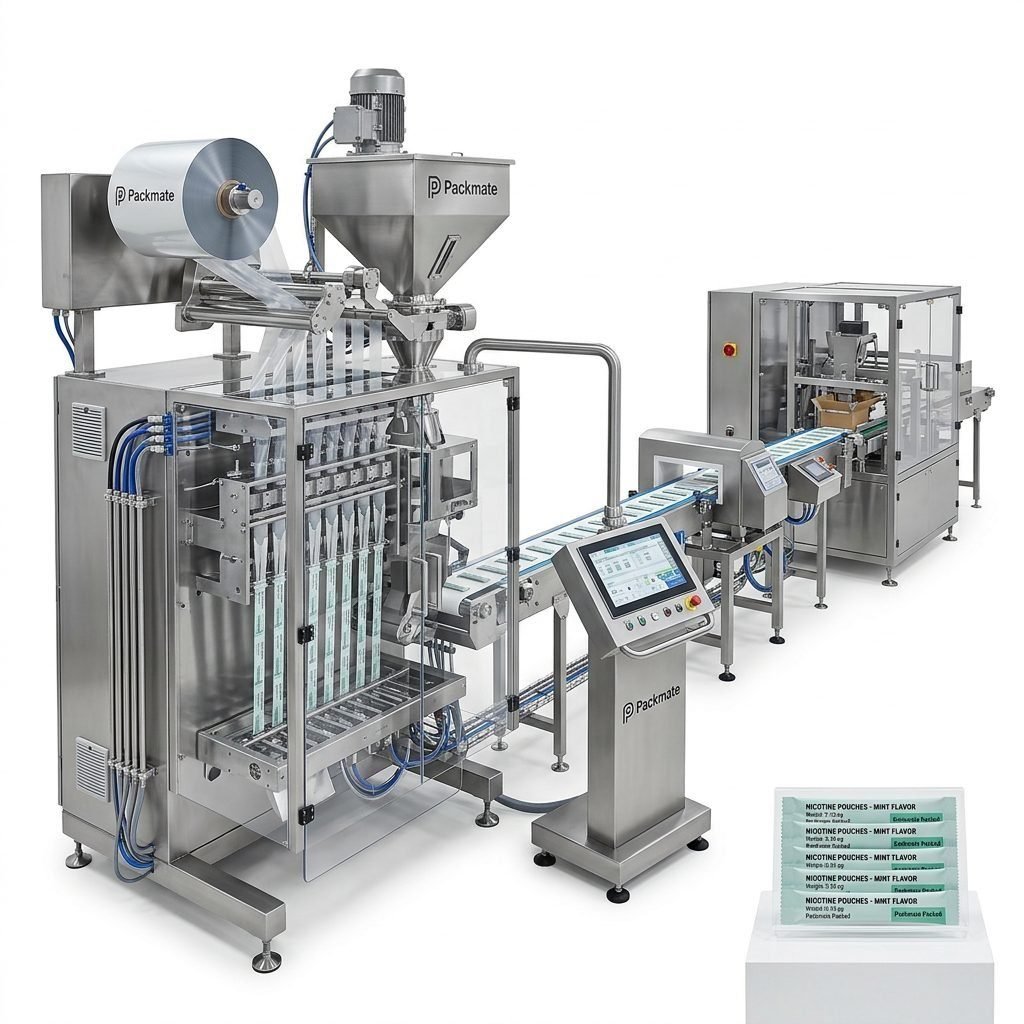
The snus pouch packing system is a cornerstone of modern nicotine pouch production, enabling brands to scale with consistent product quality and compliance. This article explains the automatic snus filling, sealing and packaging solutions used by manufacturers, outlines system components, and guides buyers through selection, integration, and maintenance. Whether you are evaluating multi-lane pouch lines or single-lane sachet systems, the following content will give you a complete, practical overview.
🔧 Core Components of a Snus Pouch Packing System
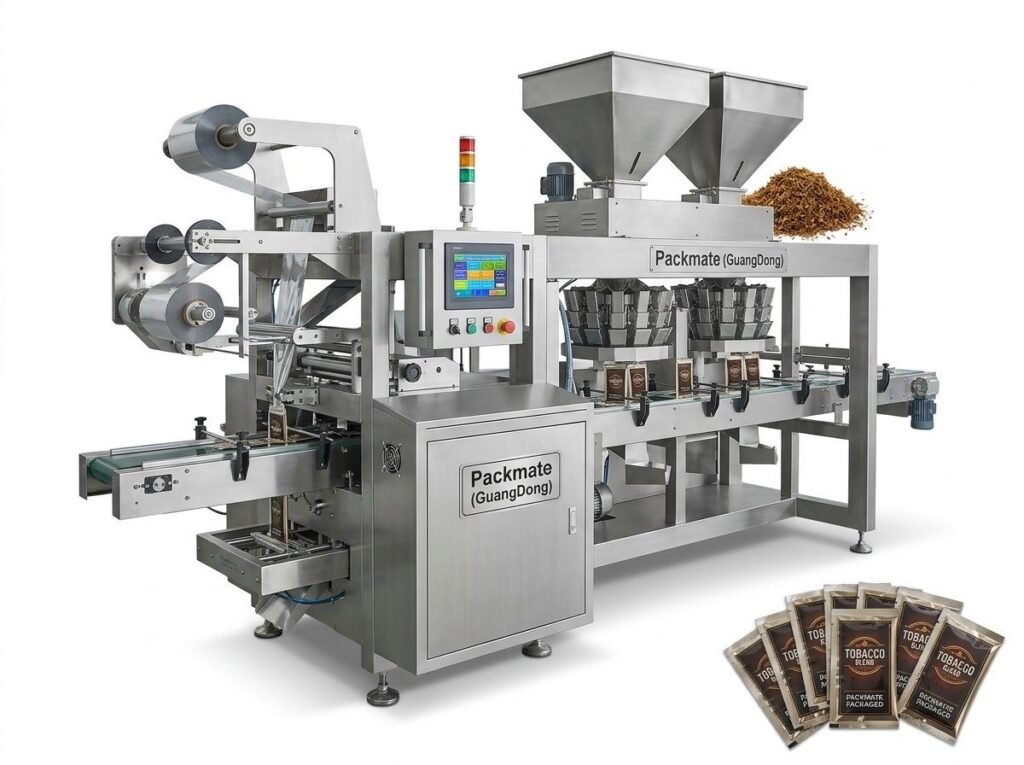
A full snus pouch packaging line typically integrates several modules that work in sequence: product feeding and dosing, pouch formation, filling, sealing, cutting, conveying, and end-of-line packaging. Each module can be tailored for the chosen pouch style (e.g., round pouches, teabag style, stick pack). The most critical modules include:
– Product dosing and weighing units that ensure precise mass per pouch.
– Multi-lane filling heads for high throughput on small-dose snus pouches.
– High-precision sealing stations to guarantee airtight seals and consistent appearance.
Key performance indicators (KPIs): production speed (pouches per minute), dosage accuracy (mg/pouch tolerance), and uptime. Investing in quality dosing and sealing modules yields the biggest improvements in yield and compliance.
⚙️ Types of Snus & Nicotine Pouch Machines
Manufacturers choose equipment based on product format and capacity needs. Typical categories include:
– Multi-lane pouch packing machines for high-volume, small-dose snus production. These are ideal for nicotine pouches and are widely used where speed and consistency matter.
– Sachet and stick pack machines for single-portion products with flexible design options.
– Bag and pouch packaging machines for secondary packaging, including box-insert, zipper pouches and pre-made pouches.
For detailed machine families and models, manufacturers often review options available under Snus & Nicotine Packaging Machines and Bag & Pouch Packaging Machines to determine the best match for product geometry and throughput requirements. Explore snus machine models.
📦 Workflow: From Bulk Fill to Finished Packs
The standard workflow in an automated snus pouch line includes:
1. Product conditioning and feeding — ensuring consistent humidity and particle size for optimal dosing.
2. Precision dosing and distribution — loss-in-weight feeders or volumetric dosing modules deliver the correct portion to each pouch cavity.
3. Pouch forming and filling — either form-fill-seal (FFS) modules or pre-made pouch feeding systems place the product into the pouch.
4. Sealing, cutting and inspection — thermal or ultrasonic sealing methods are common; in-line vision systems inspect seal integrity and print quality.
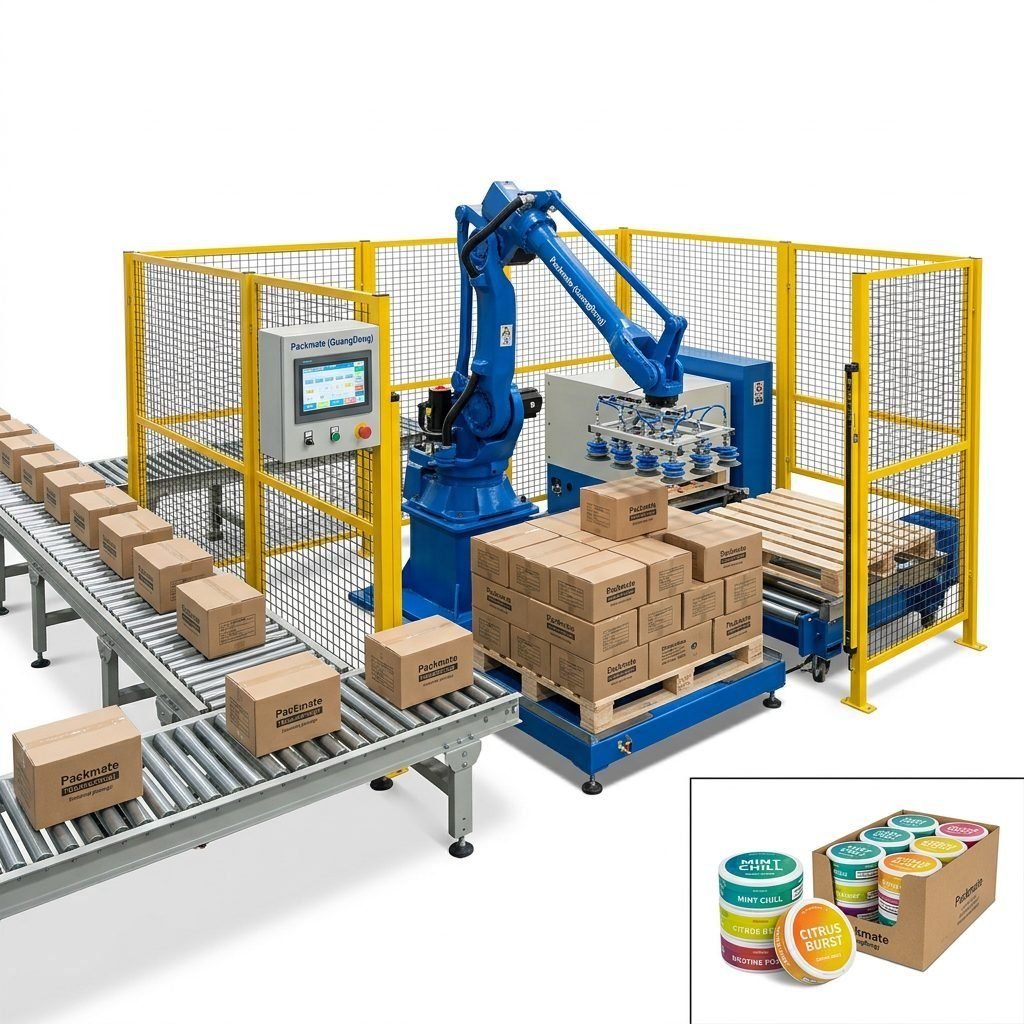
5. Secondary packaging — automated cartoning, case packing and palletizing prepare finished goods for shipping.
Tip: Integrating weighing & packaging systems with your pouch line improves traceability and reduces manual handling risk. See recommended modules in Filling & Packaging Lines for integration examples. Integration examples
✅ Benefits of Automated Snus Pouch Systems
Automation offers measurable advantages in snus manufacturing:
– Improved consistency and package quality with minimal human error.
– Higher throughput using multi-lane systems without proportional increases in footprint.
– Cost savings over time through reduced labor, less product giveaway, and lower scrap rates.
🔍 Quality Control and Compliance
Compliance with international standards is a priority for snus producers. Equipment vendors typically design machines to meet CE and ISO requirements, and they often provide documentation and test reports. In-line inspection systems — including weight checkers, vision systems and seal scanners — help maintain product integrity and regulatory compliance.
🛠️ Maintenance, Service and Lifecycle Support
Reliable service support extends machine life and reduces downtime. Key aspects of vendor support include spare parts availability, remote diagnostics, installation and commissioning, and operator training. Many global suppliers provide turnkey solutions that include on-site training and preventive maintenance programs.
Factory capability: Look for manufacturers with CNC machining centers, precision assembly lines and strict QA testing. A strong manufacturing footprint often indicates solid spare parts support and consistent machine quality.
📈 Selecting the Right System: What to Evaluate
When choosing a snus pouch system, review these criteria:
– Throughput requirements (pouches/min) and scalability.
– Product characteristics: moisture, particle size, and blend uniformity.
– Integration needs for upstream dosing and downstream secondary packaging.
– Vendor certifications, references and case studies — real-world deployments provide assurance. See relevant implementations under Case for examples. View cases
🔗 System Integration and Customization
Modern lines are modular and communicate via PLC and industrial Ethernet protocols. Customizable features include multi-lane configurations, heated/ultrasonic sealing options, automated reject & rework subsystems, and CIP-compatible material contact surfaces for easy cleaning. Many manufacturers offer tailored turnkey solutions covering everything from formulation handling to final palletizing. For product families and auxiliary equipment, review the Bag & Pouch Packaging Machines and Auxiliary Packaging Equipment sections. Auxiliary options
💡 Real-World Implementation: Case Considerations
Successful machine deployment includes site surveys, utility checks, proper foundation or securing schemes (if required), and operator acceptance testing (OAT). Consider environmental controls — humidity and temperature influence snus stability and dosing behavior. An experienced vendor can help design conditioning and storage solutions to reduce variability.
Manufacturer profile: Companies with decades of engineering experience typically provide robust machines, spare parts pools, and global service networks. To learn more about a full-service supplier and its mission, visit About Packmate. About Packmate
🧰 Installation Checklist
– Site layout and workflow mapping.
– Utilities verification: power, compressed air, vacuum, and drainage.
– Safety layouts, guards, and access for maintenance.
– Operator training plan and spare parts list for the first 12 months.
📞 Next Steps: Purchasing and After-Sales
Engaging with a vendor includes requirement gathering, factory acceptance testing (FAT), shipping logistics and installation. Confirm warranty terms, spare parts availability, and remote support capabilities. If you need tailored solutions, most suppliers will provide site-specific proposals and implementation roadmaps.
For sales inquiries and service requests, use the vendor’s contact channels to obtain catalogs and technical datasheets. Contact the manufacturer for quotes and lead time information.
📚 Additional Resources
Explore product lines and technical catalogs to compare features, model specifications and options. Many vendors publish catalogs, certificates and exhibition schedules which are useful for validating claims and arranging live demonstrations. See the product families under Snus & Nicotine Packaging Machines and the Exhibition schedule for upcoming demos. Our Exhibition
📝 Final Recommendations
When specifying a snus pouch packing line, prioritize dosing accuracy, sealing consistency, and after-sales service. Request FAT videos, acceptance criteria, and a spares kit. Consider multi-lane designs for scale and modular integration for future upgrades. Choosing a reputable manufacturer with a proven track record, documented certifications, and global support reduces risk and shortens time-to-market.
❓ Frequently Asked Questions
Q1: How do I determine the right throughput for my production?
A1: Calculate current and forecasted demand, allow headroom for growth, and factor in multiple SKUs and changeover times. Discuss multi-lane options if you expect rapid scaling.
Q2: What are common sealing methods for snus pouches?
A2: Thermal sealing and ultrasonic sealing are most common. Material selection and pouch geometry will determine the optimal method. Vision inspection of seals is recommended for quality assurance.
Q3: Can I integrate my existing dosing equipment with a new pouch machine?
A3: Yes, many systems are modular and can accept third-party dosing modules. Confirm communication protocols, mechanical interfaces and control integration during vendor discussions.
Q4: What certifications should I expect from a reputable supplier?
A4: CE and ISO certifications are standard for international compliance. Request documentation and test results for safety and electrical systems.
Q5: How do I arrange a site visit or machine demo?
A5: Contact the vendor’s sales team to arrange factory visits, live demonstrations at exhibitions, or FAT video sessions. Many suppliers maintain exhibit schedules and case references to help evaluate machine performance. See client cases