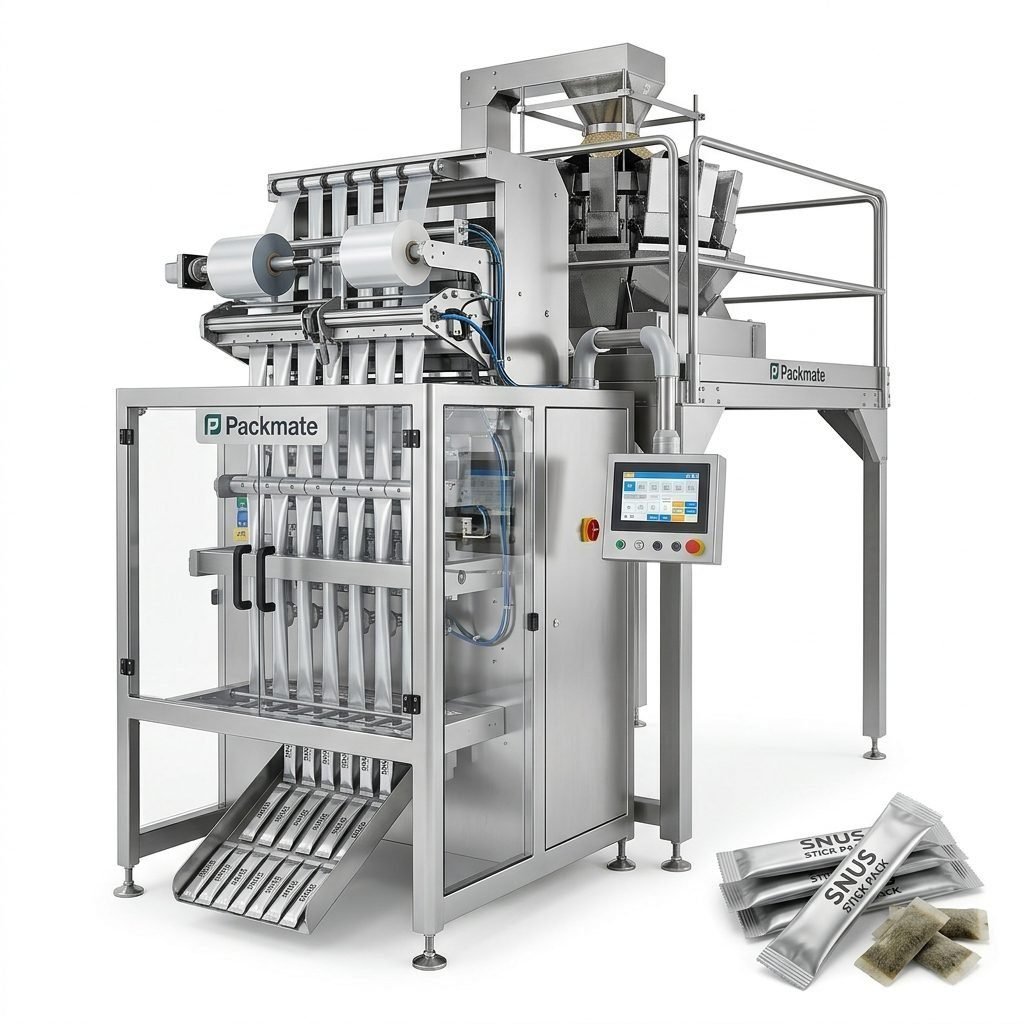
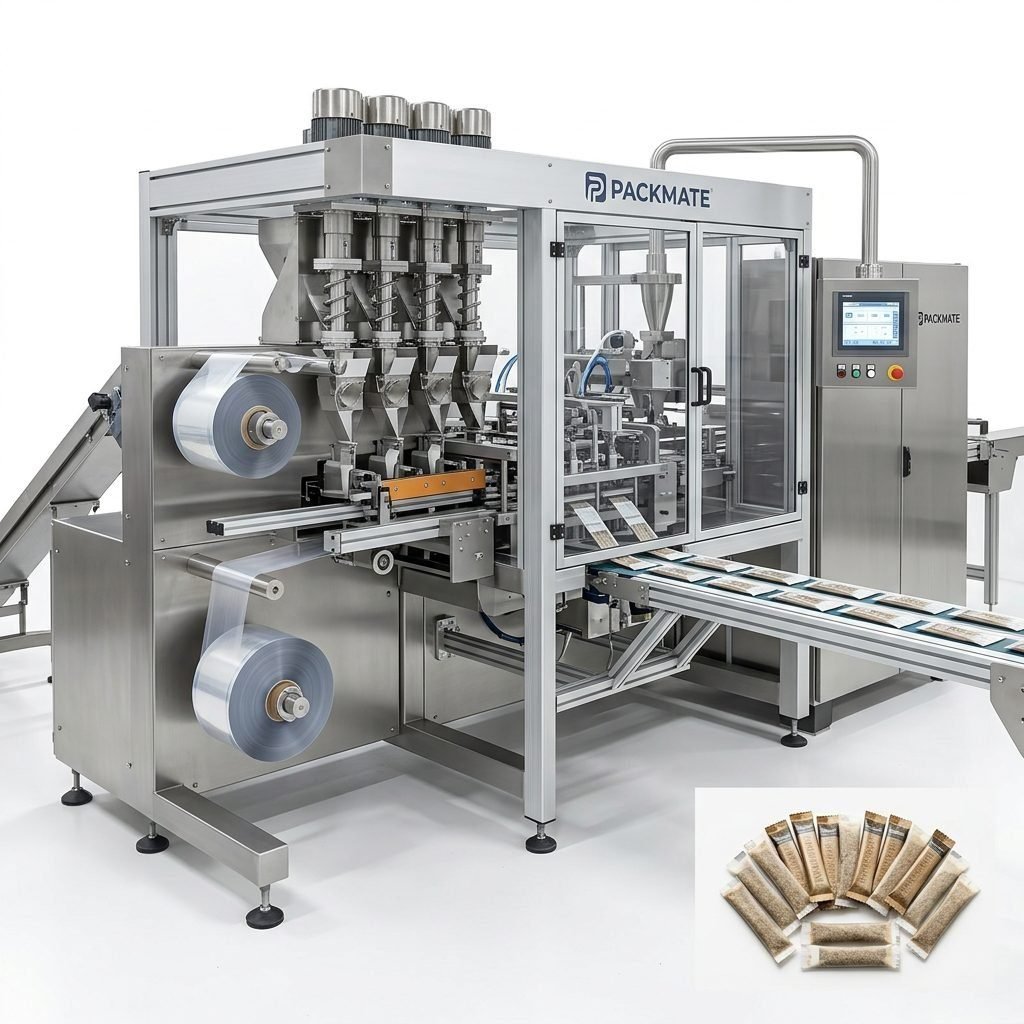
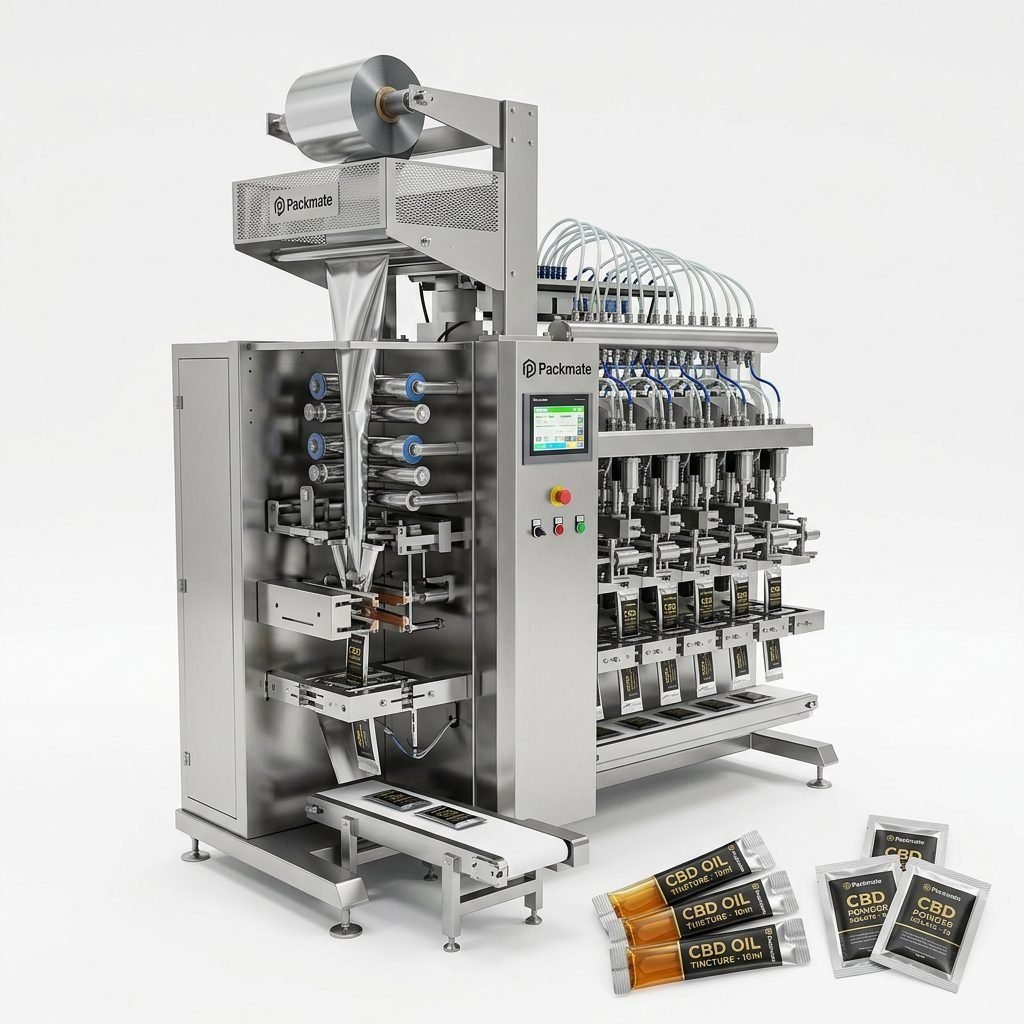
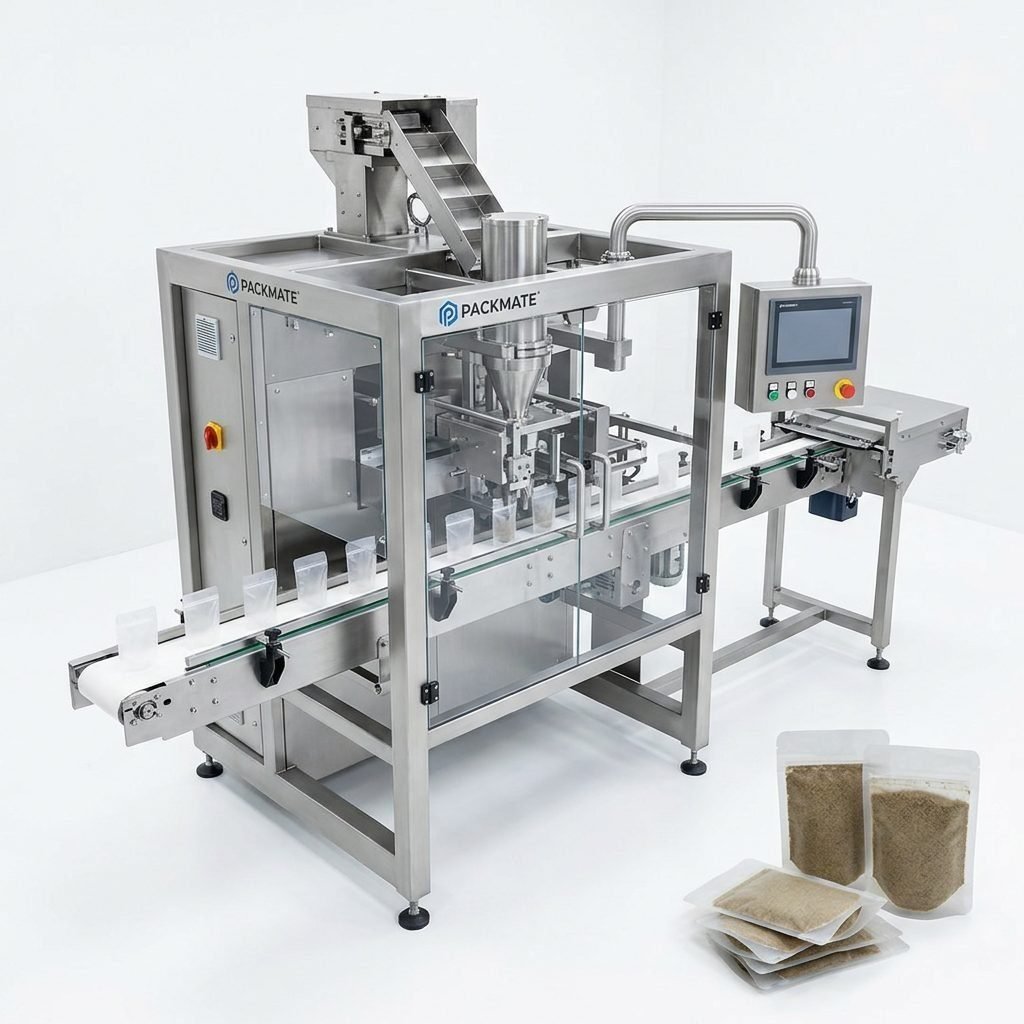
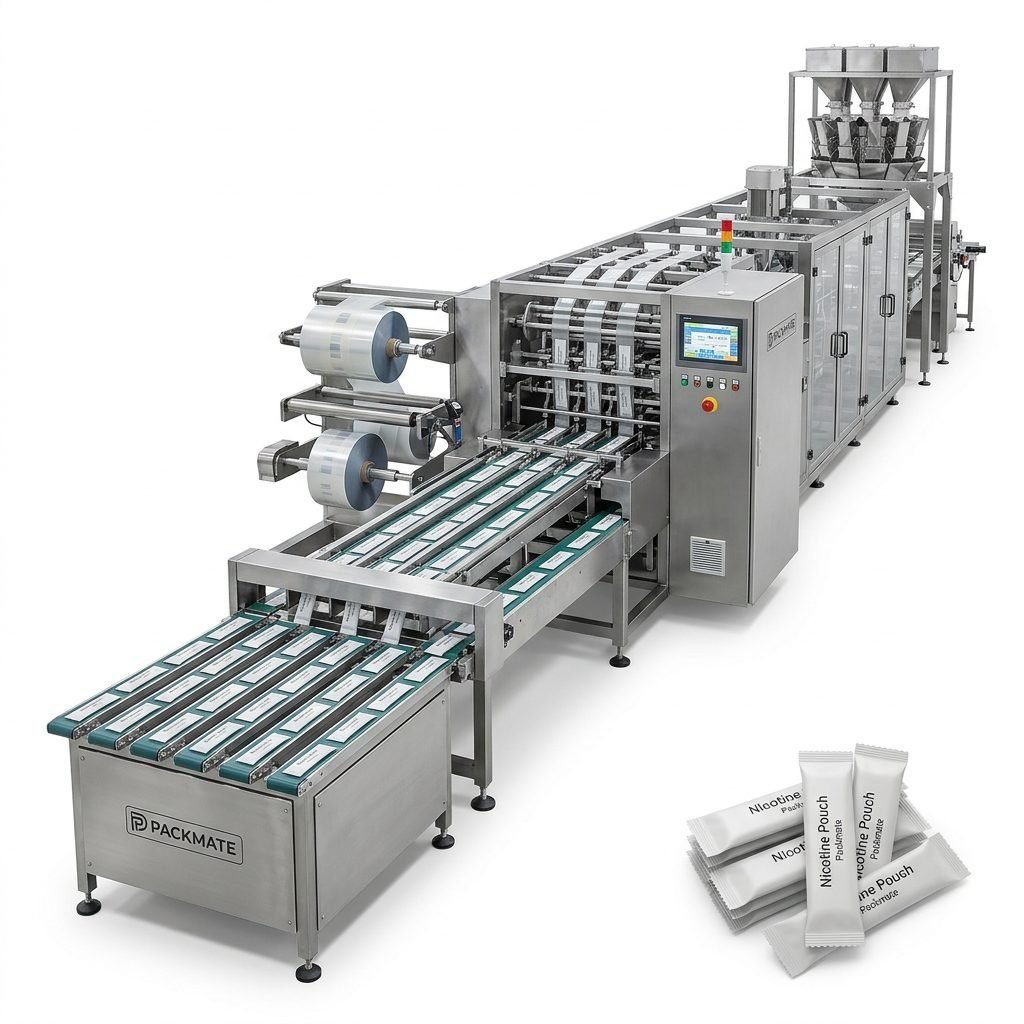
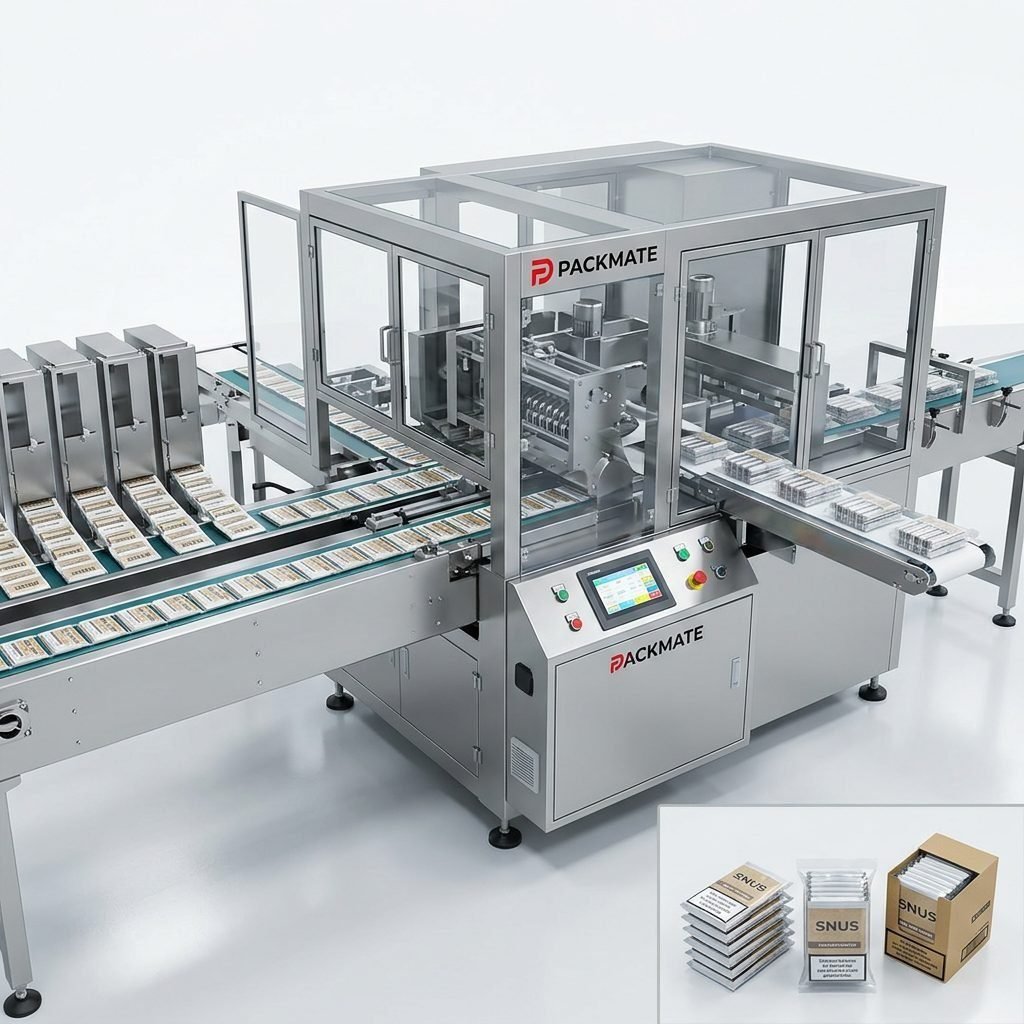
The snus and nicotine pouch sector demands precise, hygienic, and highly repeatable packaging. Whether you are producing nicotine pouches, snus, tea sachets, or fine powders, selecting the right packaging equipment is critical to maintaining product integrity, controlling cost, and scaling production. This guide explains the main machine types, the typical working process of snus packaging lines, and practical selection criteria to choose the best solution for your operation.
Overview: What Is a Snus Packaging Machine?
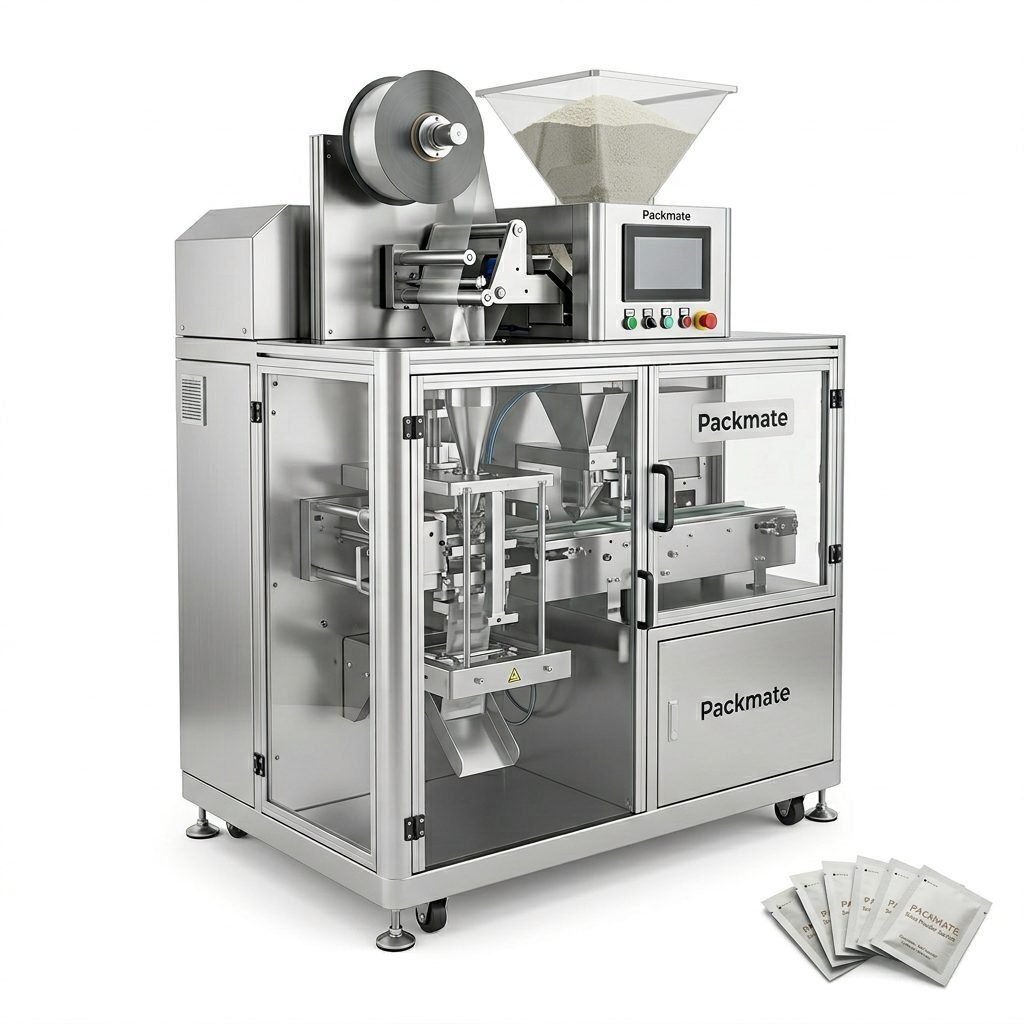
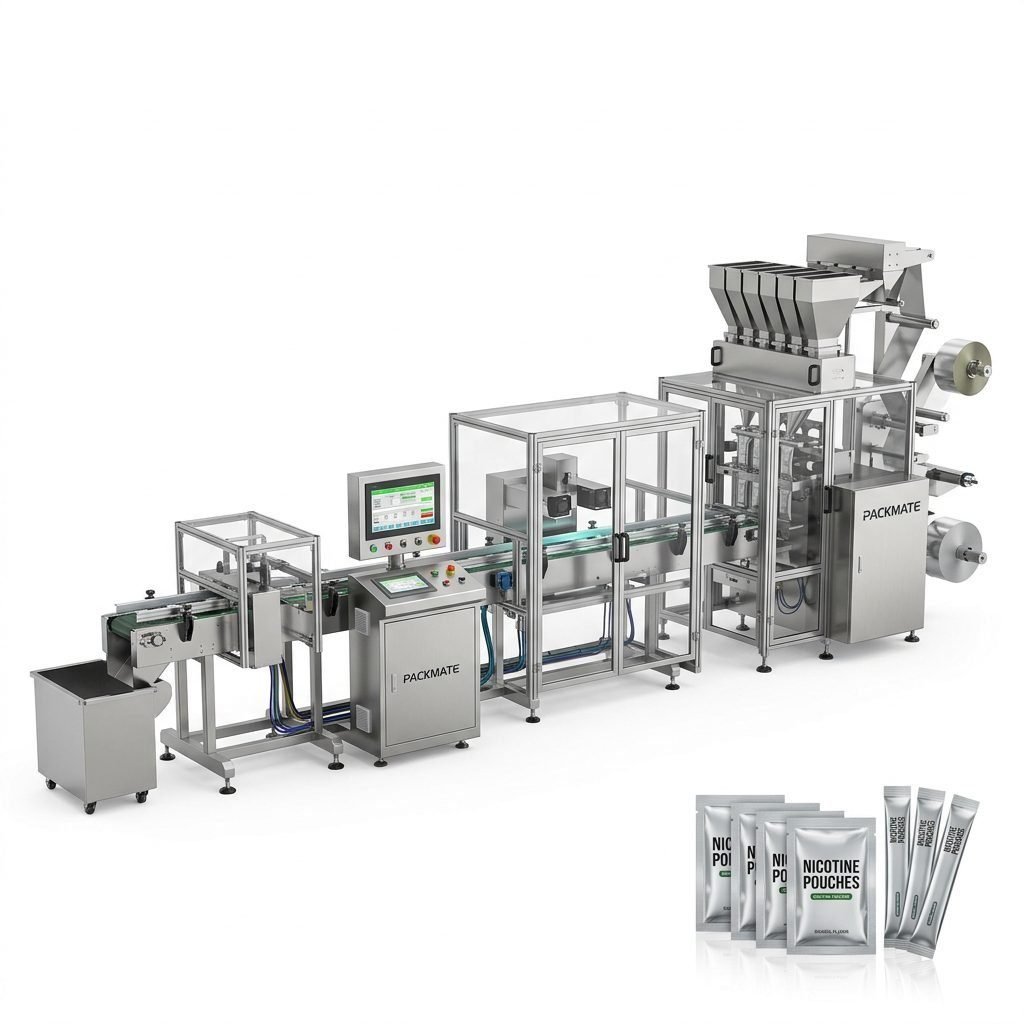
A snus packaging machine is an integrated set of equipment designed to form, fill, seal, and deliver nicotine pouches or snus products into their final retail packaging. These systems vary from single-lane stick pack machines to high-speed multi-lane lines capable of producing thousands of small-dose pouches per minute. Modern lines often include dosing units, multi-head weighers, pouch forming systems, labeling and counting modules, and automated case packers.
Why precision matters
For nicotine pouches and snus, consistent dose, airtight sealing, and contamination-free handling are essential. Inaccurate dosing can cause regulatory risks and consumer complaints, while poor sealing leads to product degradation. Investing in purpose-built equipment helps avoid rework and ensures stable yields.
Types of Snus Packaging Machines
Stick Pack Machines
Stick pack machines produce long, narrow sachets typically used for single-portion products. They are well suited for liquid or powder nicotine delivery formats and are favored for easy dosing and low material waste.
Sachet & Multi-Lane Pouch Machines
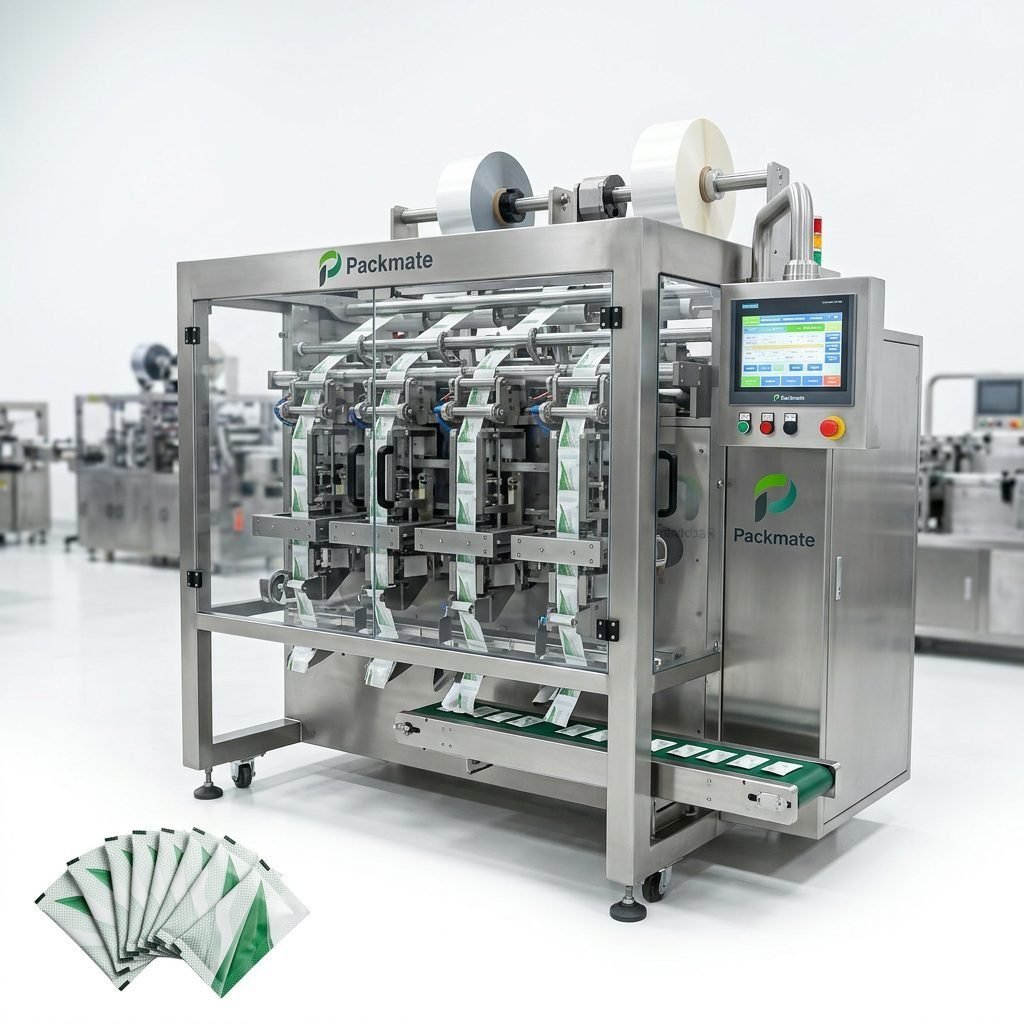
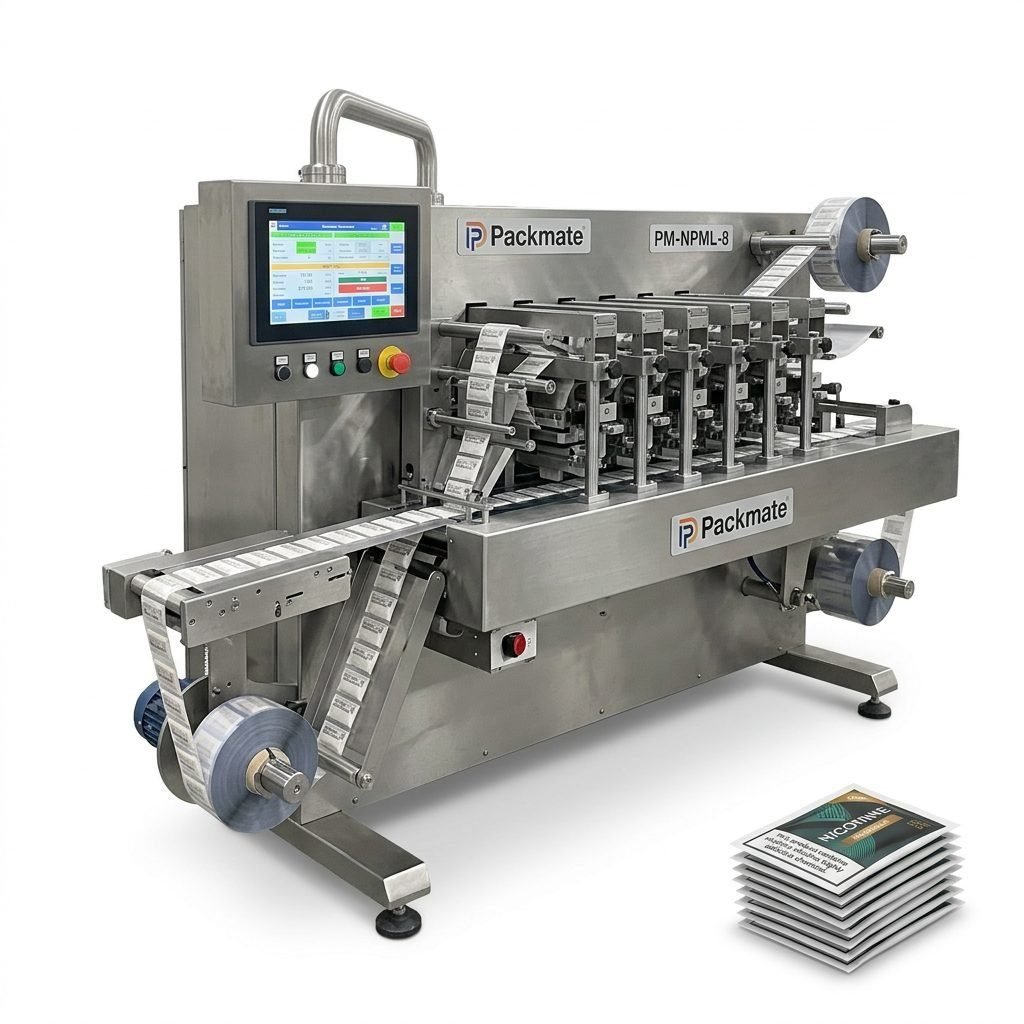
Sachet and multi-lane systems form individual pouches — often square or round — that are ideal for nicotine pouches and small-dose snus. Multi-lane machines multiply throughput by handling several columns simultaneously. For high-volume nicotine pouch manufacturers, multi-lane designs provide the best trade-off between footprint and speed. See advanced Sachet & Stick Pack Machines for typical machine families.
For product-specific options and models, explore the Snus & Nicotine Packaging Machines product range to compare capacities and configurations.
Pouch & Bag Packaging Machines
When retail-ready pouches or resealable bags are required, bag & pouch packaging machines provide final form-fill-seal capability with zipper insertion or tear notches. These systems integrate well with upstream pouch production.
Typical Working Process: Step-by-Step
A complete snus packaging line is a sequence of coordinated stations. Understanding each step helps you match machine capability with product needs.
Key production stages
1. Product feeding ⚙️ — powders, granules, or dry blends are bulk-fed into hoppers or conveyors for controlled dosing.
2. Dosing & weighing ⚖️ — precision dosing (auger, vibratory, or multi-head weigher) ensures each pouch contains the correct amount.
3. Forming 🧩 — film or substrate is formed into pouches or sachets ready for filling.
4. Filling & metering — the measured dose is placed into each pouch with minimal dust and precise placement.
5. Sealing & cutting 🔒 — high-quality sealing (heat or ultrasonic) followed by trimming or cutting to separate individual units.
6. Inspection & rejection ✅ — vision systems and weight checks verify pouch integrity and dose accuracy; rejects are removed automatically.
7. Secondary packing 📦 — products are counted, boxed, and prepared for warehousing or distribution.
Important technical considerations during processing
Minimizing product migration, controlling dust, and ensuring cleanability are critical. For hygroscopic blends, choose material handling and dosing technology that limits moisture exposure. For ultra-fine powders, integrate dust extraction and enclosed transfer to meet hygiene standards.
How to Choose the Best Snus Packaging Solution
Choosing the correct machinery requires balancing production targets, product requirements, budget, and long-term serviceability. The following checklist helps prioritize decisions.
Production capacity and scalability
Estimate current hourly and daily output needs, and include growth forecasts for 2–5 years. Multi-lane systems provide scalability with smaller incremental footprint increases, making them ideal when throughput may grow.
Product format and materials
Determine pouch shape, substrate (paper/film/foil), and whether barrier or resealable features are required. For flexible packaging, choose machines compatible with your film materials and sealant layers. If you need retail-ready pouches, evaluate bag & pouch machines and filling lines.
Compliance & certification — Verify that equipment meets CE, ISO, and local regulatory standards. Certified lines simplify audits and reduce regulatory risk.
Automation & control — Look for PLC-based controls, recipe management, and HMI interfaces that reduce operator error and speed changeovers.
Cleanability & maintenance — Stainless steel contact parts, accessible design, and modular components lead to faster changeovers and less downtime.
Service, spare parts, and local support
After-sales service is often the deciding factor for long-term performance. Ensure the vendor provides fast spare parts supply, remote support, and on-site technical training. Packmate highlights global turnkey solutions and service support — learn more on their Service and About pages.
Customization & Turnkey Lines
Some operations require bespoke designs: integrated multi-head weighing, nitrogen flushing, barcode printing, anti-static handling, or vacuum dosing. Turnkey providers can integrate upstream filling and downstream case packing into a single validated line — reducing project complexity and alignment risks.
For reference projects and real-world deployments, review case studies that show how integrated systems are designed and commissioned.
Factory & manufacturing strength
Selecting a manufacturer with proven engineering capacity, advanced CNC machining, and factory testing reduces implementation risk. A vendor with a proper factory area and dedicated assembly lines can ensure consistent quality and quicker lead times.
Cost Considerations and ROI
Evaluate total cost of ownership (TCO) rather than capital purchase price alone. Consider energy consumption, spare parts, operator training, yield loss reduction, and expected uptime. Higher initial investment in reliable equipment often pays back quickly through reduced waste, higher uptime, and lower maintenance costs.
Short checklist for ROI analysis
⚙️ Expected throughput vs. actual machine rated capacity
🧾 Predicted scrap and rework rates with current and new equipment
🔧 Spare parts lead time and maintenance contract pricing
📈 Potential production growth and upgrade paths
Integration Examples & Product Links
Manufacturers often package related modules into product families. If you plan to combine pouch formation with weighing and secondary packing, review these solution categories:
- Snus & Nicotine Packaging Machines — for dedicated nicotine pouch systems: product details
- Sachet & Stick Pack Machines — for single-dose sachets: view models
- Filling & Packaging Lines — integrated end-to-end lines: learn more
Implementation Roadmap: From Inquiry to Commissioning
A successful equipment purchase follows a structured path: specification, factory acceptance testing (FAT), shipping, installation, and site acceptance testing (SAT). Always request FAT to verify machine performance before shipment.
Practical pre-purchase checklist
🧭 Define product formats, targets, and allowable tolerances
🛠 Request spare parts lists and recommended consumables
🔍 Visit a live installation or request a video demonstration
📄 Confirm warranty, service level agreement, and training scope
Vendor Selection: Questions to Ask
When evaluating manufacturers, ask about production history, factory capacity, certifications, and global service footprint. Inquire about reference installations and case studies, and request client contacts for independent feedback. Packmate provides case references that illustrate turnkey deliveries and long-term partnerships.
Key vendor capabilities
– Engineering resources and customization expertise
– Factory testing and quality control procedures (CE, ISO compliance)
– Spare parts inventory and regional support network
Final Recommendations
Choose equipment that matches current needs while providing headroom for growth. Prioritize hygienic design, reliable dosing, and robust sealing technology. Vendors that provide full-line integration and local technical support reduce installation risk and speed time-to-market.
To start a conversation about tailored snus packaging solutions or to review real-world installations, see About Packmate and contact their team for consultation and quotes.
Useful links
Explore product families and support resources: Snus & Nicotine Packaging Machines, Sachet & Stick Pack Machines, and Case Studies. For direct inquiries, visit Contact Us.
Frequently Asked Questions
Q1: What capacity do multi-lane snus machines typically achieve?
Capacity depends on lane count, pouch size, and dosing speed. Single-lane sachet machines may reach several hundred pouches per minute, while 4- to 8-lane configurations can multiply that output. It’s best to request measured capacity data with your specific pouch dimensions and product characteristics.
Q2: Can the same machine handle both powder and granule formulations?
Many dosing platforms are configurable for both powders and granules. Auger fillers and vibratory feeders suit powders and fine blends, while multi-head weighers handle free-flowing granules with high accuracy. Ensure the vendor recommends the correct feeder and that dust control is integrated where needed.
Q3: What certifications should I insist on for snus packaging equipment?
CE and ISO compliance are baseline requirements for many markets. Additionally, sanitation and material contact standards (e.g., food-grade stainless steel) and documentation for traceability help meet regulatory audits.
Q4: How important is after-sales support?
Critical. Fast spare parts delivery, remote troubleshooting, and training reduce downtime and protect production. Choose a supplier with a proven global service network and documented support SLA.
Q5: Where can I see real examples of installed lines?
Ask for customer references and visit the vendor’s case studies and exhibition pages to view video demonstrations and past installations. Live demos or FAT sessions are the most reliable way to validate performance.