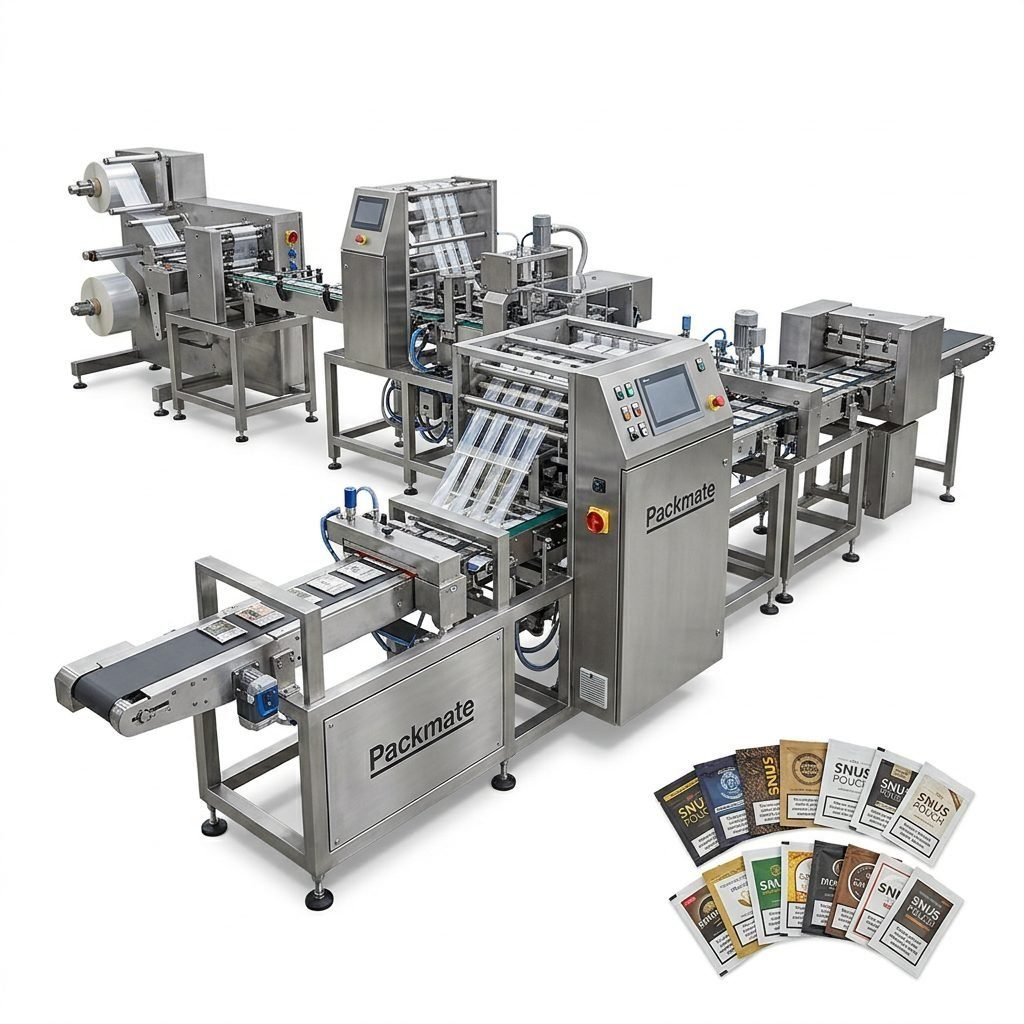
Choosing the right snus packaging machinery in Lithuania requires more than a price comparison — it demands an understanding of local market needs, regulatory requirements, production targets, and the technical capabilities of machines and suppliers. This buyer’s guide walks through the practical steps, selection criteria, and vendor evaluation tips you need to make a confident purchase for snus and nicotine pouch packaging lines.
🔍 Understand Your Production Requirements
The foundation of any smart investment is a clear statement of production goals. Start by defining your:
• Daily and weekly output targets (pouches/hour or packs/minute) — these drive the required machine speed. ⚙️
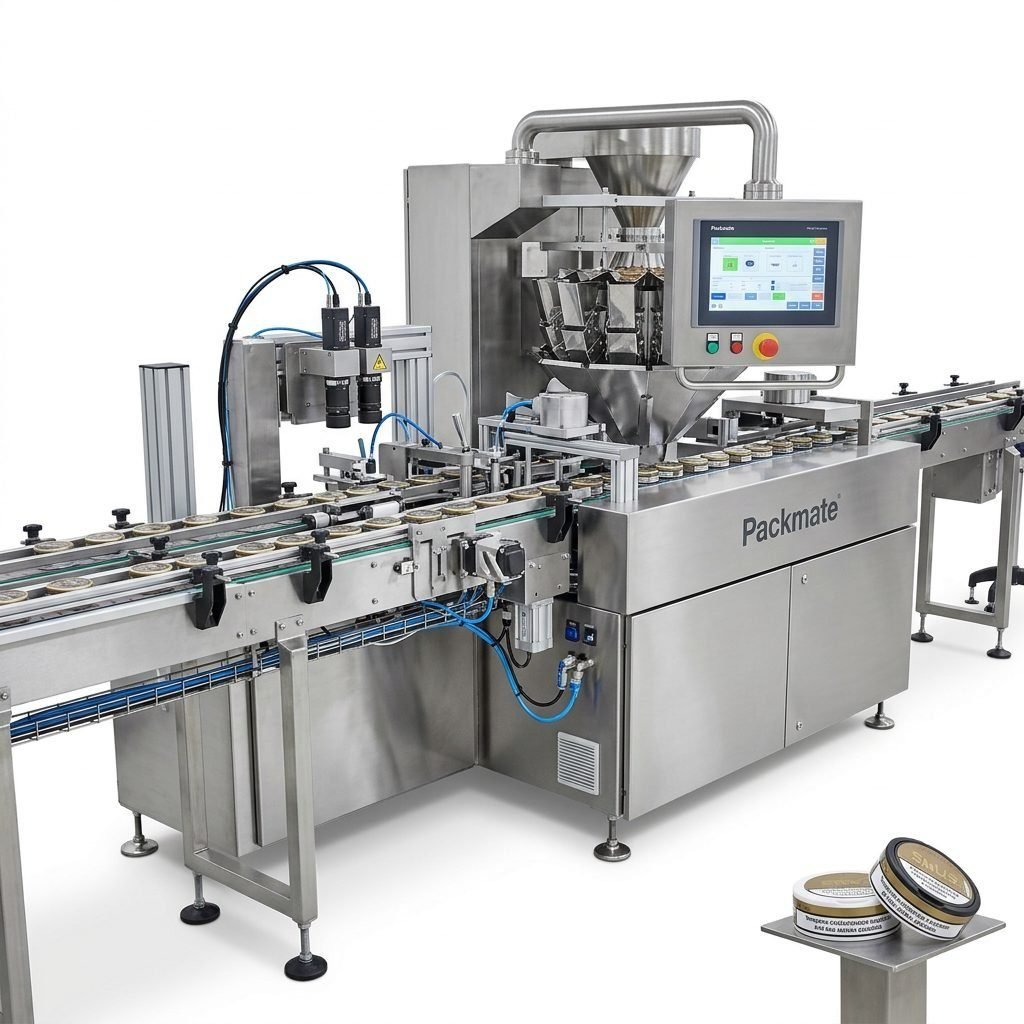
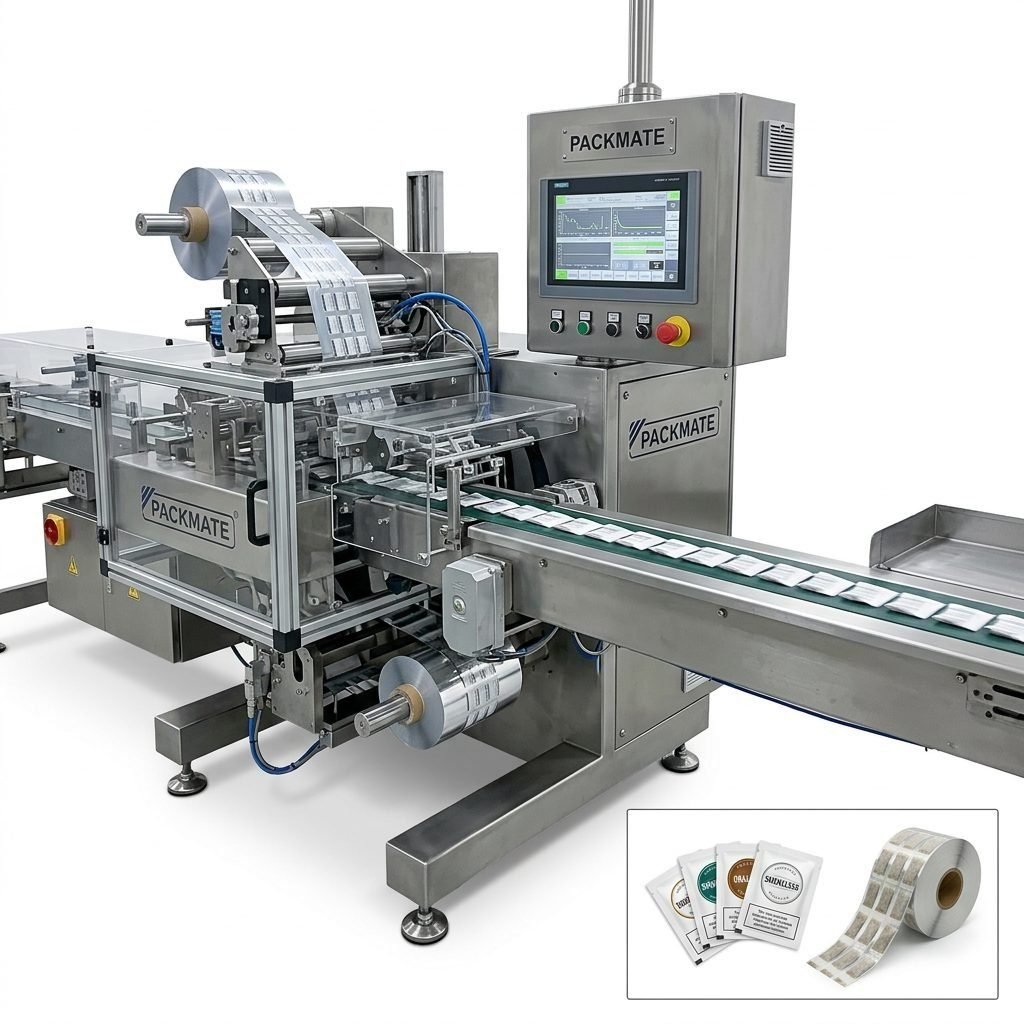
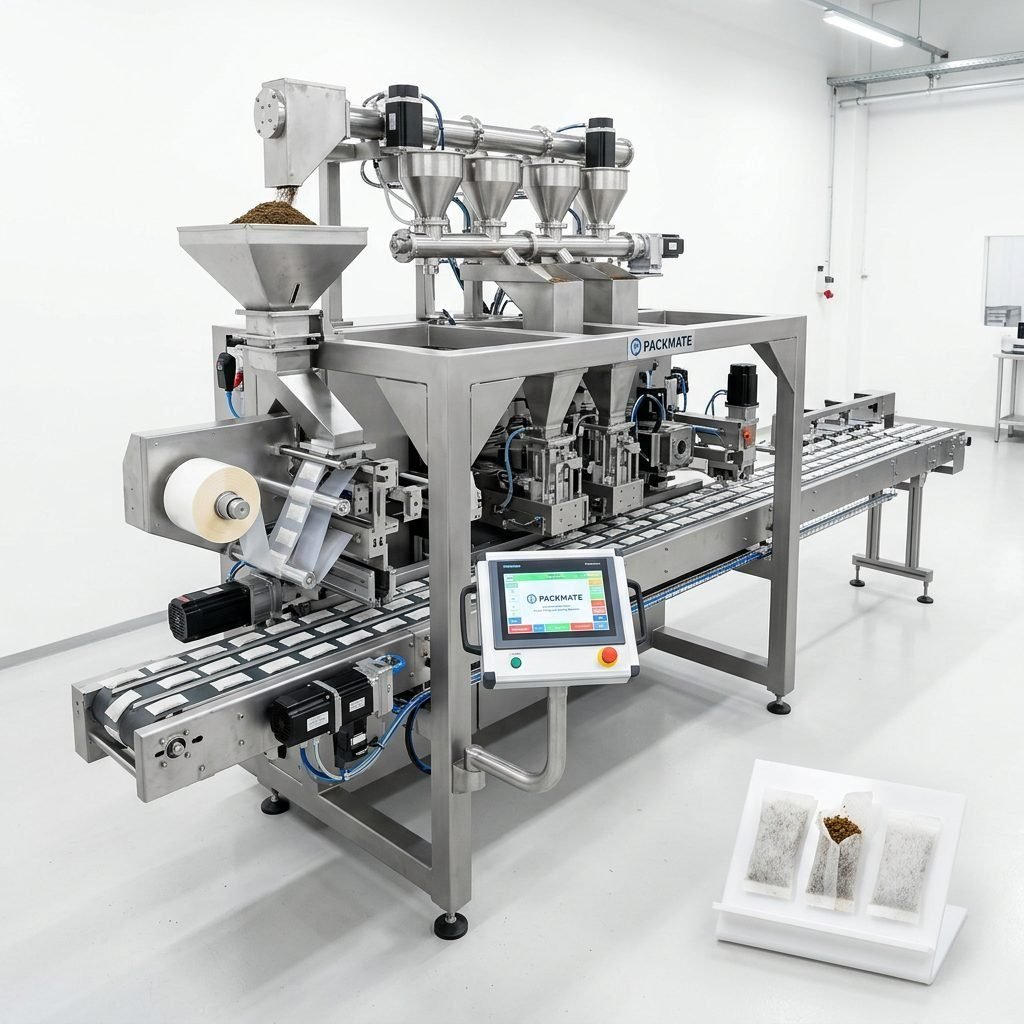
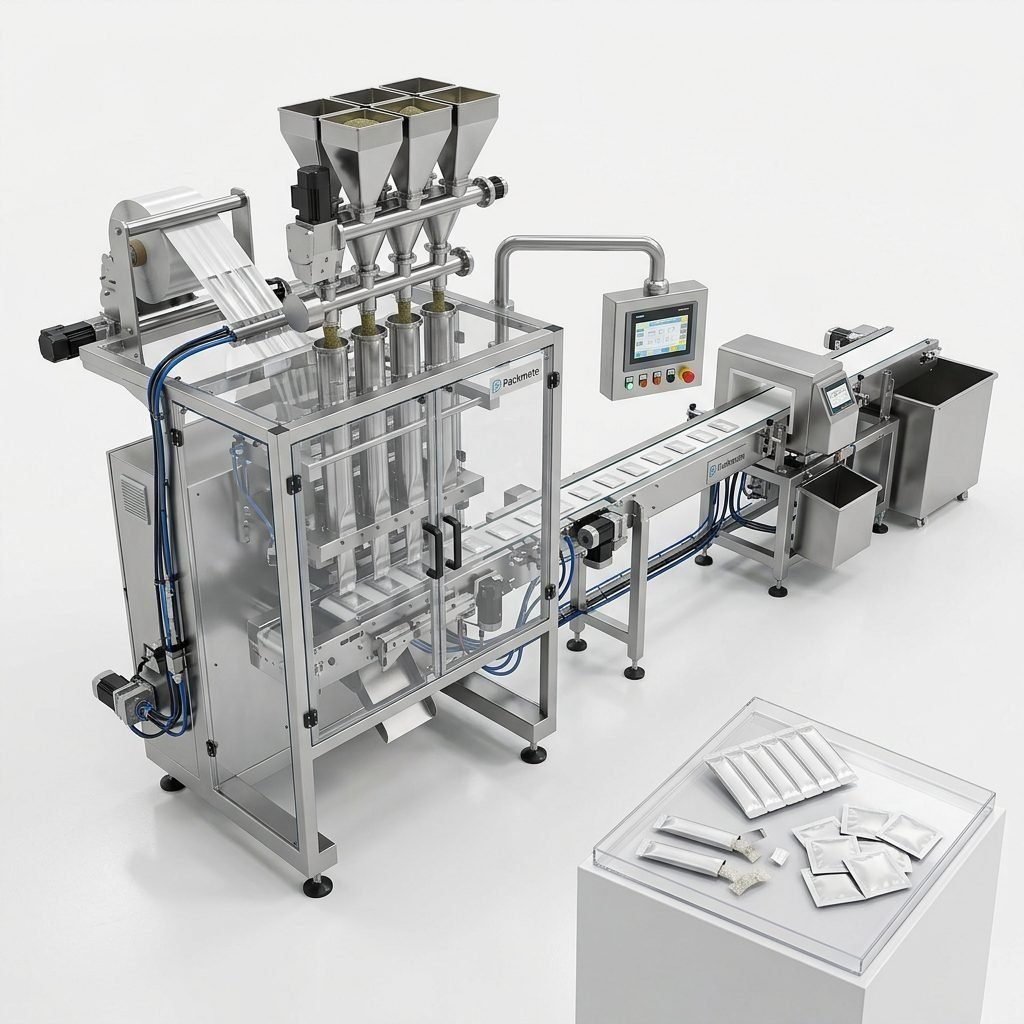
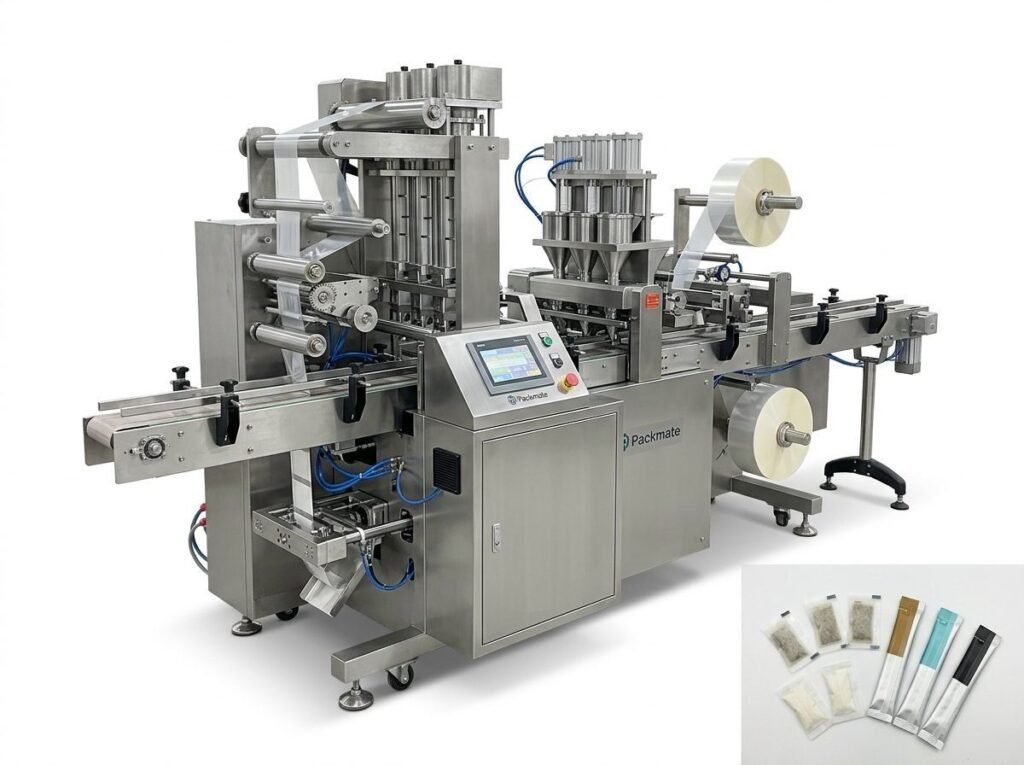
• Product formats: nicotine pouches, snus cans, stick packs, sachets, or multi-lane small-dose pouches. Packmate offers tailored solutions across these categories. For examples, see the Snus & Nicotine Packaging Machines page.
Key tip: If your product range includes multiple pouch types, prioritize machines with modular tooling and quick changeover capabilities to reduce downtime.
⚖️ Compliance, Regulations & Safety in Lithuania
Lithuania follows EU standards for machinery and product safety. When selecting equipment, ensure the manufacturer provides CE and ISO certifications and documentation that supports regulatory audits and customs clearance.
• Request machine CE certificate copies and quality control records. Packmate Snus Machine equipment complies with CE and ISO standards and includes detailed test reports.
📌 Documentation Checklist
• CE Declaration of Conformity
• ISO quality certificates and factory inspection reports
• FAT (Factory Acceptance Test) and SAT (Site Acceptance Test) protocols
• Spare parts list, maintenance manuals and electrical schematics
⚙️ Machine Types and Which One Fits Your Operation
Different product lines need different equipment. Below are common machine types used in snus and nicotine pouch production, with practical guidance for each.
Sachet & Stick Pack Machines
Ideal for single-dose pouches and stick designs. They are compact, cost-effective, and suitable for higher-speed runs of lightweight materials. See Sachet & Stick Pack Machines for models and specifications.
Multi-Lane Small-Dose Pouch Systems
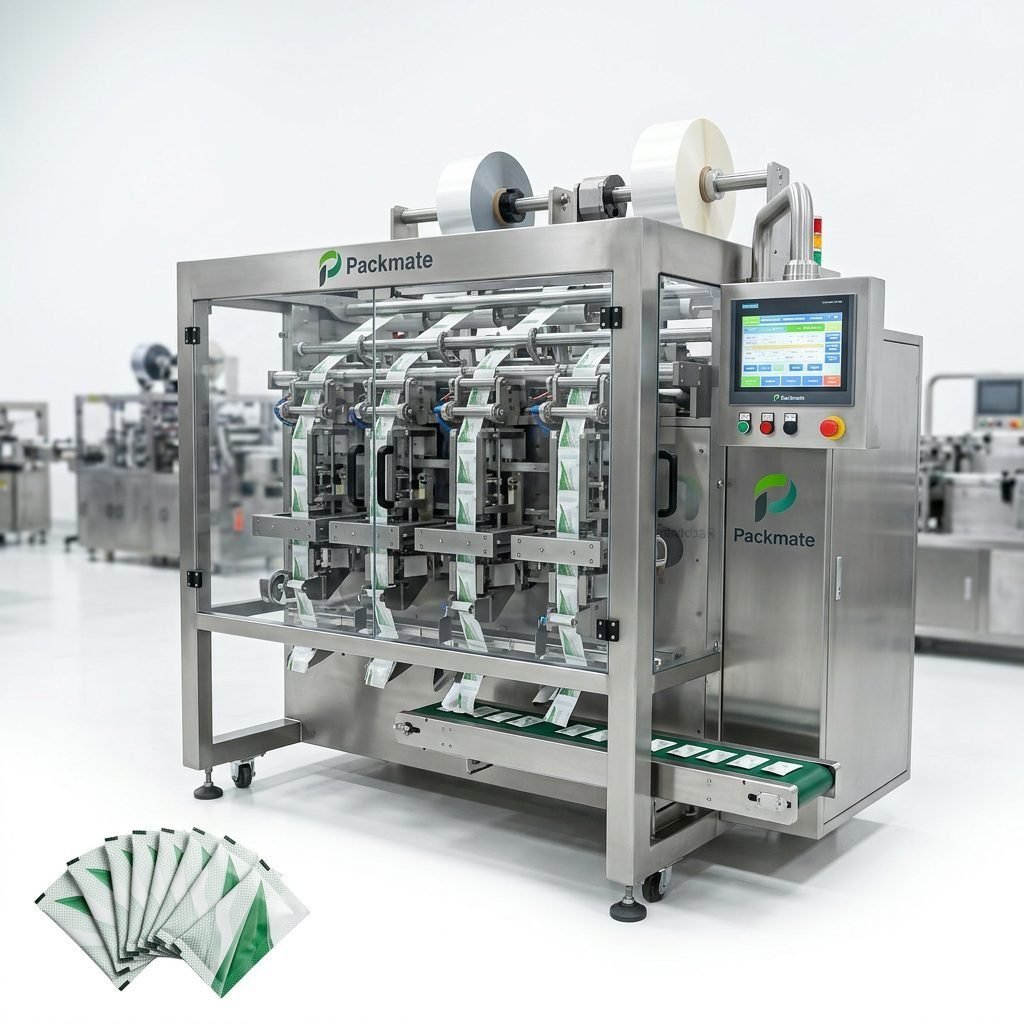
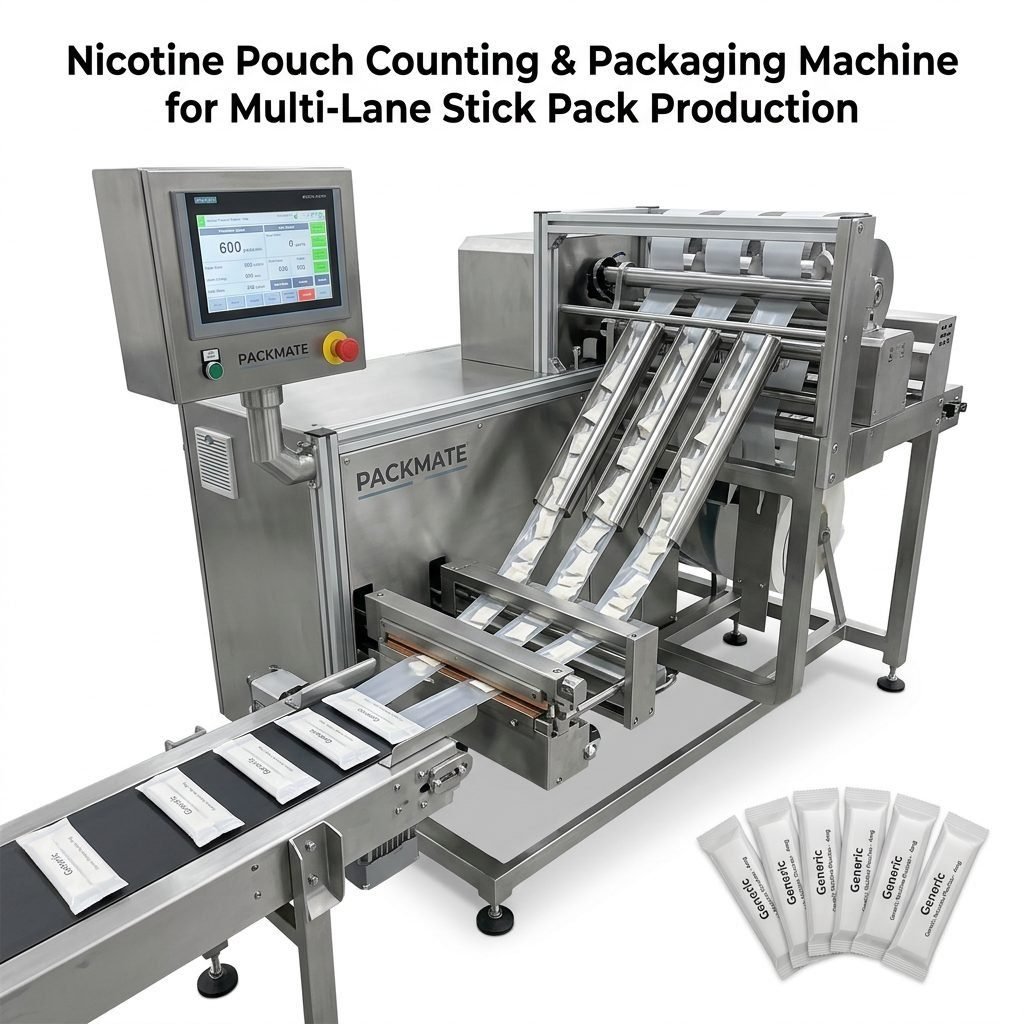
Perfect for high-volume nicotine pouch production. Multi-lane machines increase throughput without scaling floor space proportionally. When throughput and lane synchronization matter most, choose robust multi-lane systems with accurate weighing and dosing.
Stick-to-Can & Aluminum Can Lines
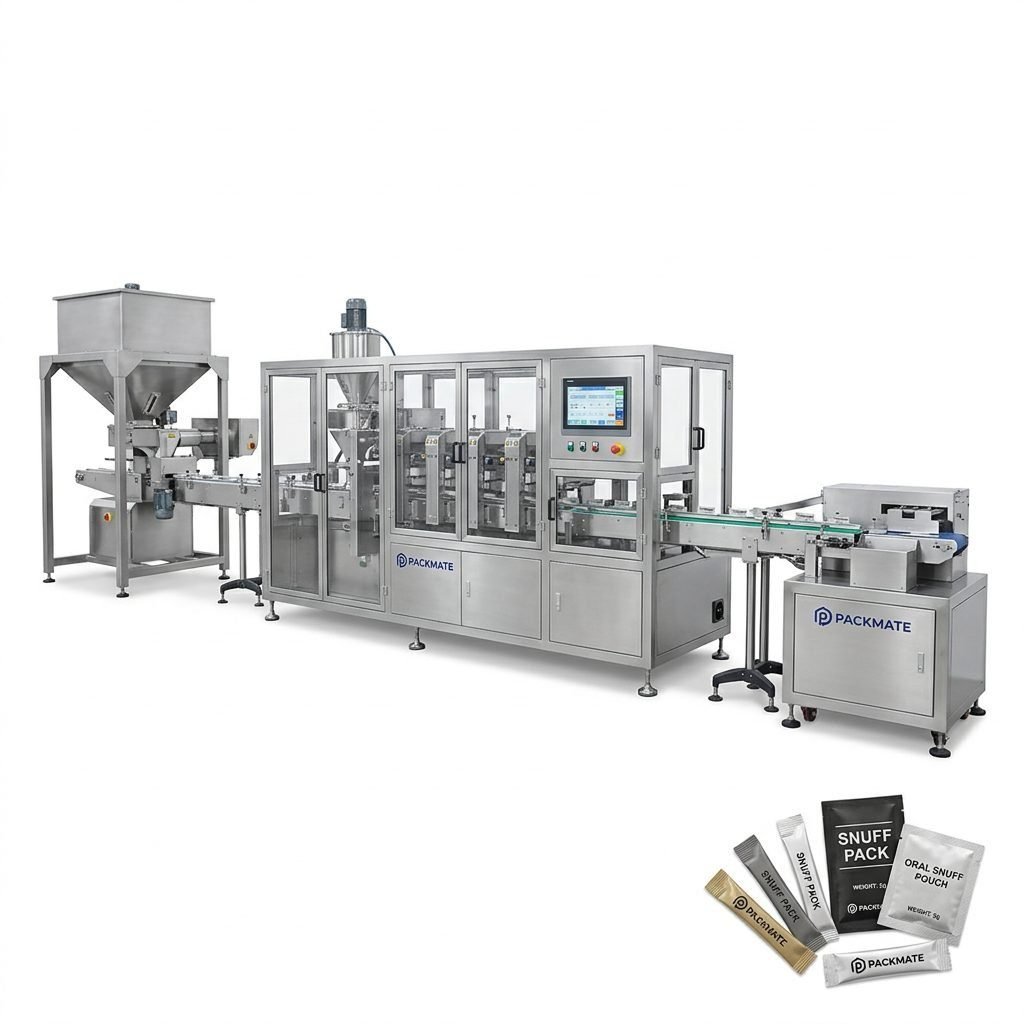
If you plan to pack in cans after pouch forming, select an integrated solution or modular line that handles pouch forming, dosing, can filling, and sealing. Integrated lines reduce manual handling and contamination risk.
Performance indicator: Choose a machine whose tested stable output at target format is at least 10–20% higher than your expected peak demand to provide a margin for maintenance and variation.
🔧 Technical Features to Prioritize
When comparing machines, evaluate these technical attributes closely:
• Dosing accuracy and consistency — crucial for regulatory compliance and customer experience.
• Servo control and PLC systems — for repeatability and ease of integration with factory automation.
• Changeover time between formats — lower changeover saves labor and production time.
• Material compatibility — ensure the machine supports your pouch film, flow agents, and any desiccant inserts.
• CIP/COP capability and hygienic design if your product or dealing environment requires strict cleanliness.
💡 Evaluate Supplier Capability and After-Sales Support
A reliable supplier reduces lifecycle costs. Consider:
• Manufacturer track record — Packmate Snus Machine has 30+ years of engineering experience and a 20,000㎡ manufacturing facility with advanced CNC machining and precision assembly lines.
• Spare parts availability and lead times — request a stocked spare parts list and typical delivery times to Lithuania. Faster spare part delivery minimizes downtime.
Service & training: Confirm the supplier will provide onsite commissioning, operator training, and a clear warranty policy. Packmate provides global turnkey solutions and long-term technical support.
📈 Total Cost of Ownership (TCO) — Beyond the Purchase Price
When evaluating quotes, ask for a TCO breakdown covering energy consumption, maintenance labor, consumables, spare parts, depreciation and expected uptime. A lower purchase price can hide higher long-term costs if the machine is less reliable or inefficient.
• Energy efficiency: modern servo-driven systems use less power than older pneumatic designs. ⚡
• Planned maintenance schedules and Mean Time Between Failures (MTBF) forecasts will help you project uptime.
🧪 Factory Acceptance Test & Site Acceptance Test
Always require a FAT and SAT in your purchase contract. FAT demonstrates the machine’s performance at the manufacturer’s site; SAT verifies operation at your facility under real production conditions.
FAT checklist: run the machine for extended periods at target speed, verify dose accuracy, film sealing integrity, lane synchronization and complete machine documentation.
🔗 Integration with Your Production Line
If you already have upstream or downstream equipment (weighing, filling, cartoning), ensure electrical and communication standards align. Request PLC details and data exchange protocols before purchase. For multi-component lines, consider a complete solution from a single supplier to simplify responsibility and integration — review Filling & Packaging Lines and Weighing & Packaging Systems for compatible modules.
📦 Packaging Materials & Supplier Partnerships
Choose film and laminate suppliers who can provide test samples for machine trials. Material properties influence sealing parameters, film strength, and final pack integrity. Machines should support the range of films you plan to use, including barrier films for shelf-life extension.
📞 Visiting Suppliers & Exhibition Demos
Seeing machines running live is invaluable. Attend exhibitions or factory demonstrations. Packmate participates in global exhibitions — meeting a supplier in person lets you inspect build quality and ask detailed technical questions. For exhibition schedules and live demos, check Our Exhibition.
✅ How to Compare Quotes: A Practical Checklist
• Base machine cost and scope of supply (tools, dies, sensors)
• Installation, commissioning, and training fees
• Warranty terms and availability of local service partners
• Spare parts lead times and stocking recommendations
• FAT/SAT acceptance criteria and penalties for missed performance
📁 Useful Links & Resources
Explore product pages and company resources for detailed machine specs and case studies:
• Snus & Nicotine Packaging Machines: https://www.snusmachinery.com/products/snus-nicotine-packaging-machines/
• Bag & Pouch Packaging Machines: https://www.snusmachinery.com/products/bag-pouch-packaging-machines/
• About Packmate (company background and capabilities): https://www.snusmachinery.com/about-us/
• Contact & service inquiries: https://www.snusmachinery.com/contact-us/
Final Recommendations Before You Buy
1) Ask for a video of the exact machine running your product or a close sample. Video evidence reduces surprises at delivery. 🎥
2) Require detailed acceptance tests in the contract and link payments to FAT/SAT outcomes. This protects your investment and ensures performance.
3) Prioritize suppliers with proven multi-year installations in your target region or similar markets — after-sales responsiveness can make or break continuous production.
Pro tip: For a turnkey experience including dosing, filling, and final packaging modules, review modular product lines like Filling & Packaging Lines and Weighing & Packaging Systems to minimize integration risk.
Frequently Asked Questions (FAQ)
Q1: How long does it typically take to install a snus packaging line in Lithuania?
Installation and commissioning depend on line complexity. A compact sachet or stick pack machine can be installed in 2–4 weeks, while a full multi-lane, multi-module line with canning and cartoning can take 8–16 weeks including site prep, utilities, and SAT.
Q2: What are the key maintenance considerations for snus machines?
Regular preventive maintenance includes lubrication, seal inspections, sensor calibrations, and scheduled replacement of high-wear parts like sealing jaws and belts. Keep a small stock of critical spares to reduce downtime.
Q3: Can I expand capacity later without replacing the whole machine?
Many manufacturers, including Packmate, design modular systems that allow lane expansion, adding upstream dosing modules, or integrating secondary packing stations. Plan expansion paths during the initial purchase to save costs later.
Q4: Where can I see real case studies of snus packaging lines in operation?
Request case studies or references from the supplier. Packmate provides global cooperation cases and demonstration videos — check the Case section for real-world examples and performance data.
Q5: How important is local service and spare parts availability?
Extremely important. Local or regional service partners reduce response times for repairs and maintenance. If the supplier has no local presence, verify international support processes and spare parts shipping times to Lithuania.