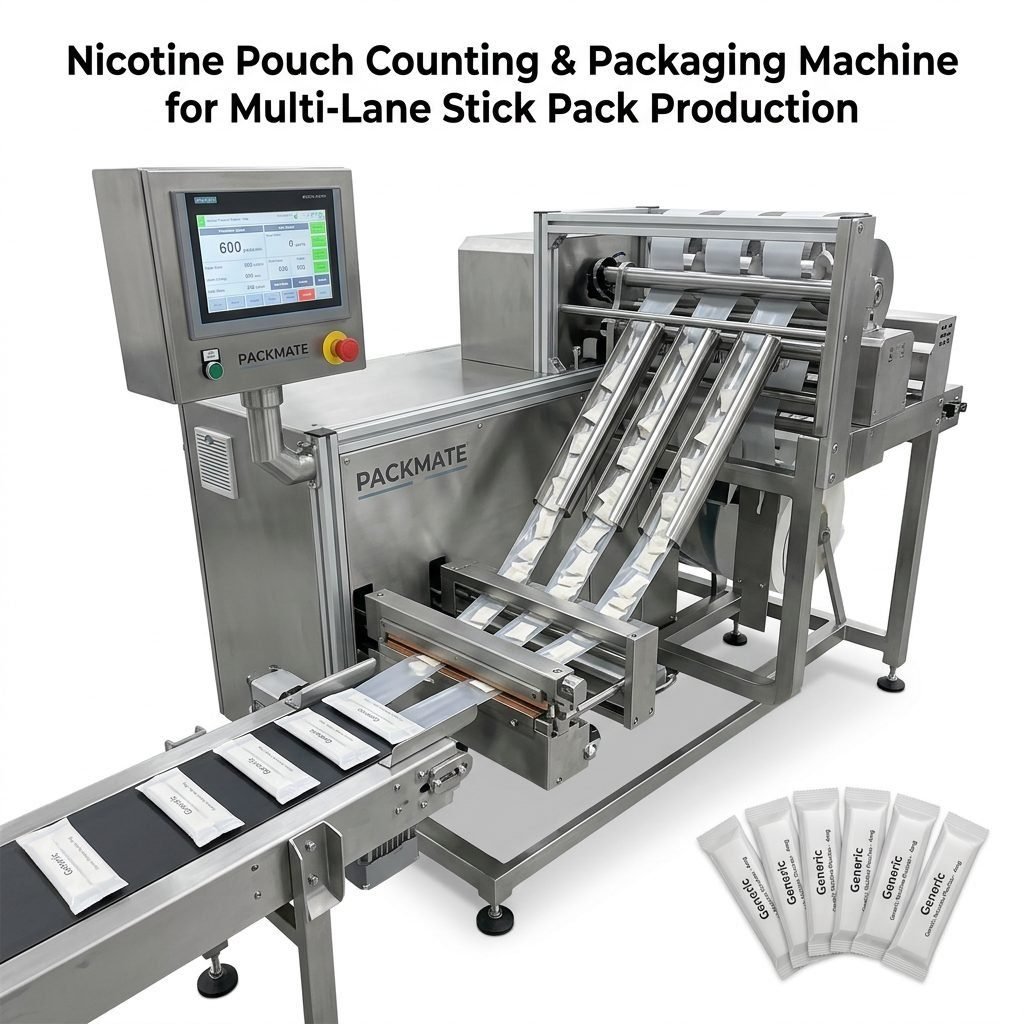
The demand for nicotine pouches and modern oral tobacco alternatives continues to accelerate, and manufacturers need production lines that combine high throughput, consistent quality, and regulatory compliance. A turnkey nicotine pouch production system streamlines everything from raw material handling to final packaging and case loading, helping brands scale quickly while maintaining product integrity and traceability.
Overview of a Complete Turnkey Production Line
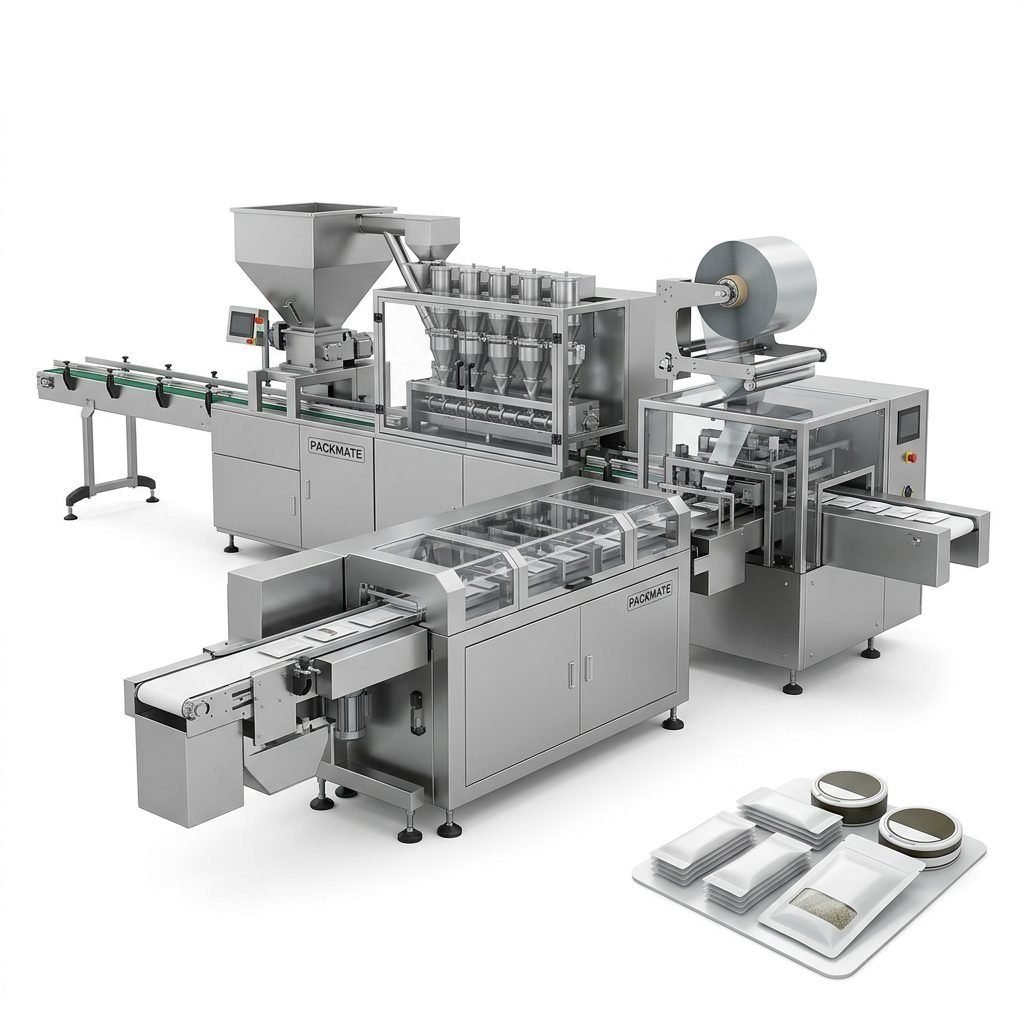
A turnkey production solution for nicotine pouches integrates multiple specialized machines into a single, automated workflow. Typical stages include ingredient weighing and mixing, pouch forming and filling, sealing, labeling, secondary packaging, and palletizing. The goal is to deliver a reproducible process that minimizes manual intervention, reduces contamination risks, and improves overall equipment effectiveness (OEE).
🔶 Key benefits:
consistent dosing, higher throughput, compact footprint, and simplified validation for regulators and customers.
Core Equipment and Process Flow
A reliable nicotine pouch line typically contains modular stations that can be tailored to specific product formats (portion type, moisture, fill weight, and additive types). The most common modules are:
🔸 Ingredient metering & dosing — precision feeders or micro-weigh systems that deliver accurate low-dose portions.
🔸 Blending & conditioning — mixers with humidity control for consistent texture and release properties.
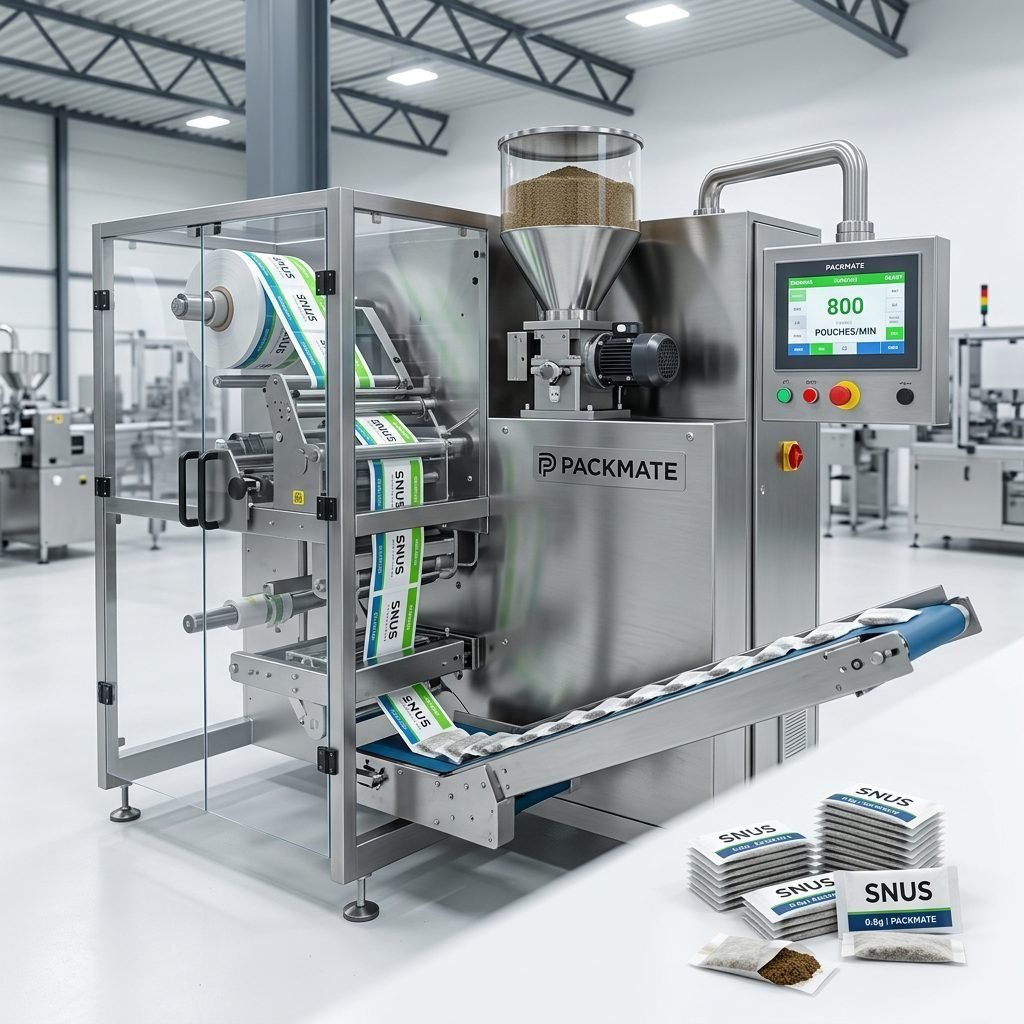
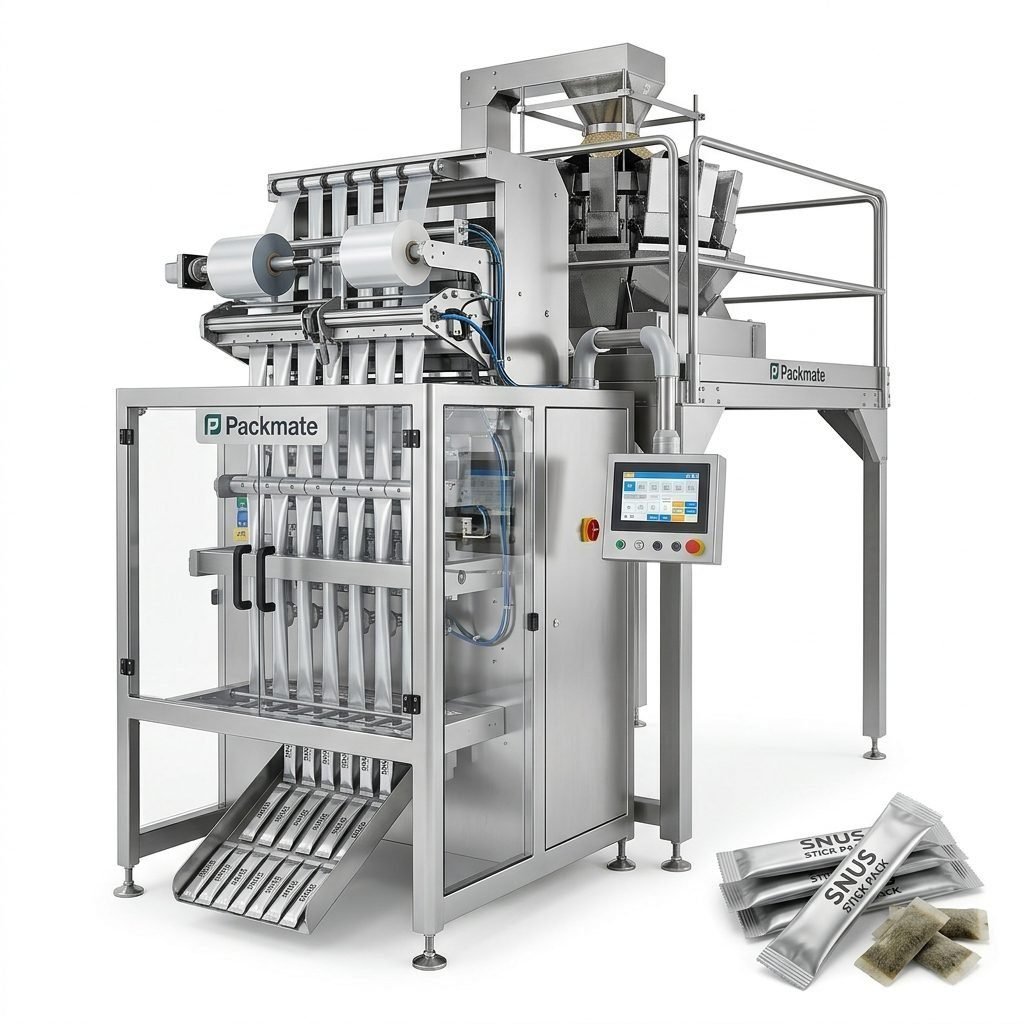
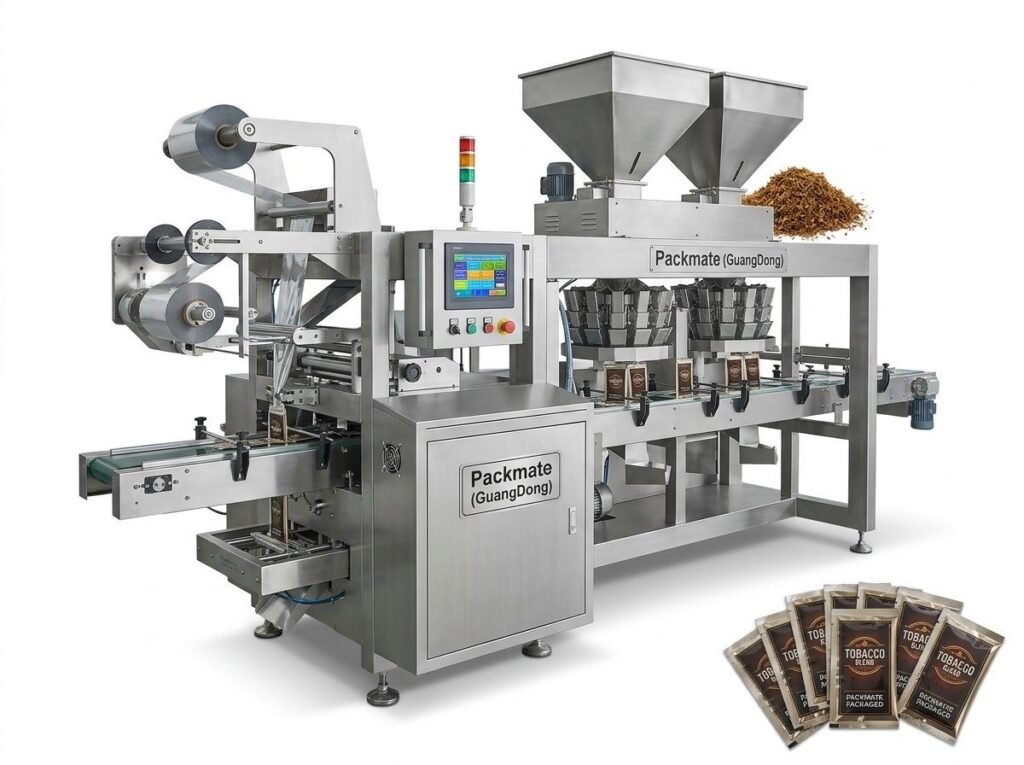
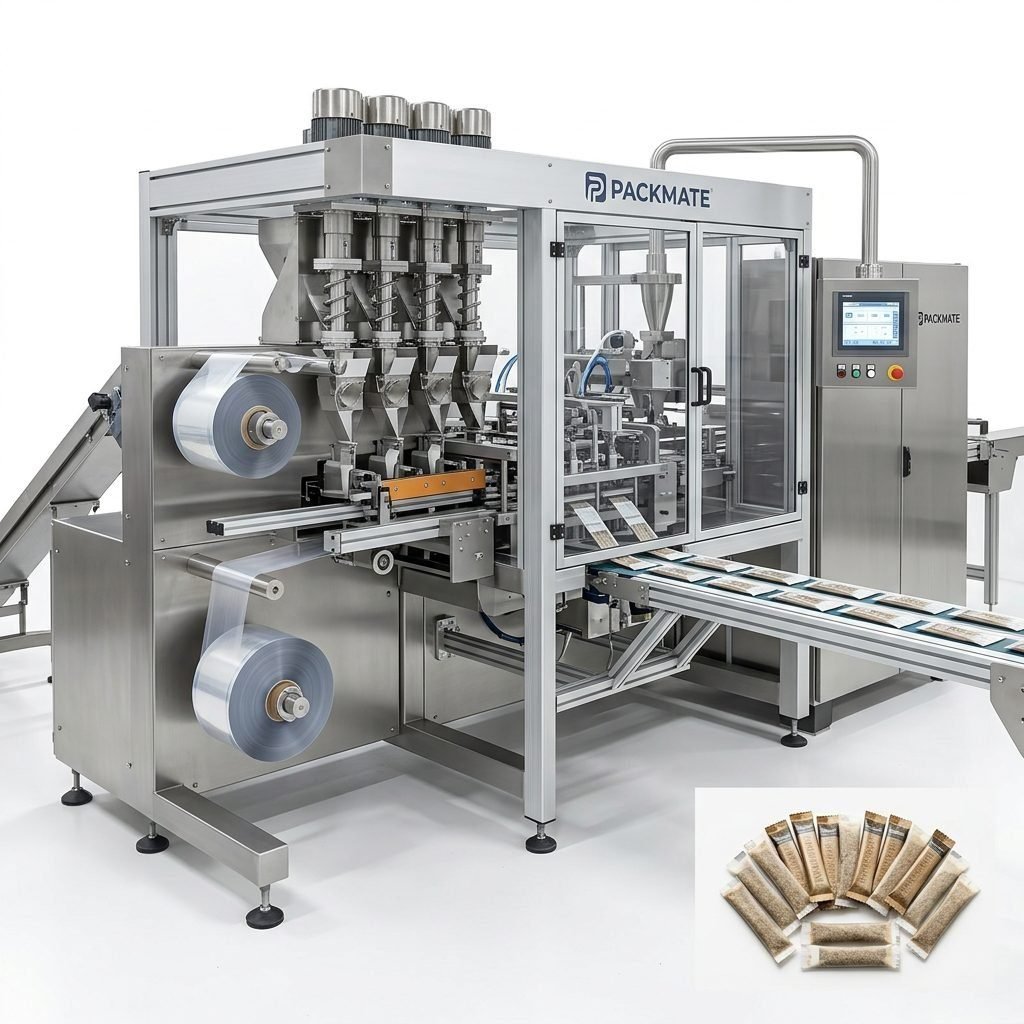
🔸 Pouch forming & filling — multi-lane, high-speed form-fill-seal or pre-formed pouch handling designed specifically for snus and nicotine pouches.
🔸 Sealing & cooling — thermal or ultrasonic sealing methods to ensure product integrity and shelf life.
🔸 Inspection & metal detection — inline quality checks and contaminant control.
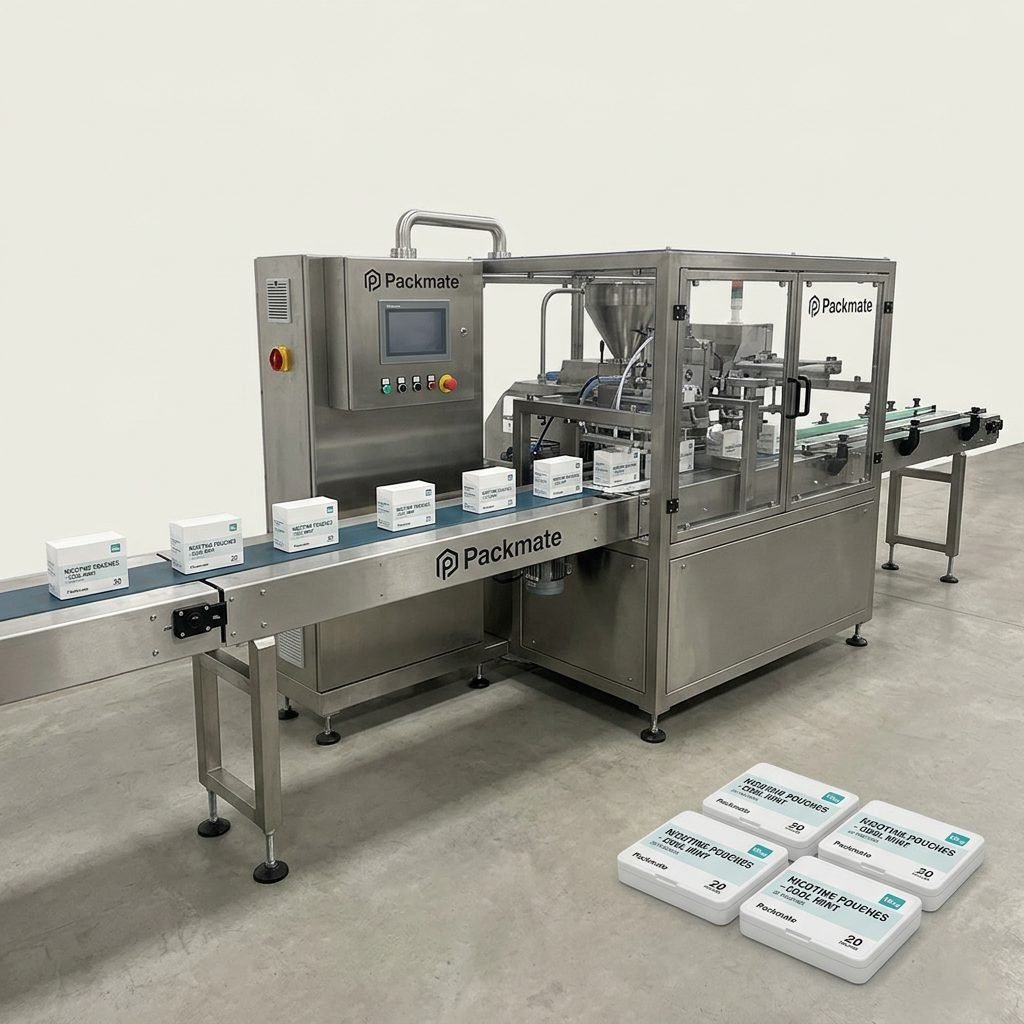
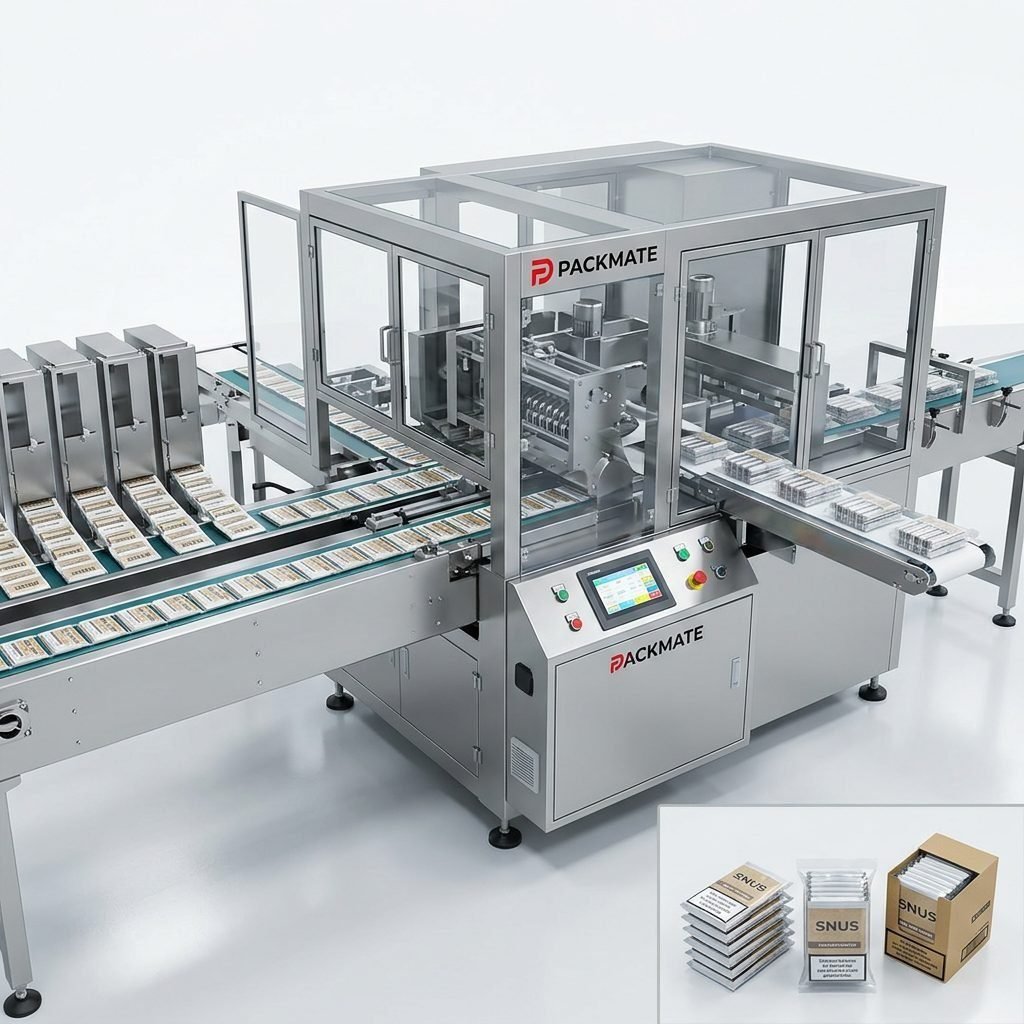
🔸 Secondary packaging — automated cartoning, tuck-in, or sachet grouping for retail presentation.
🔸 Case packing & palletizing — final automated loading for warehousing and distribution.
Precision Dosing & Weighing
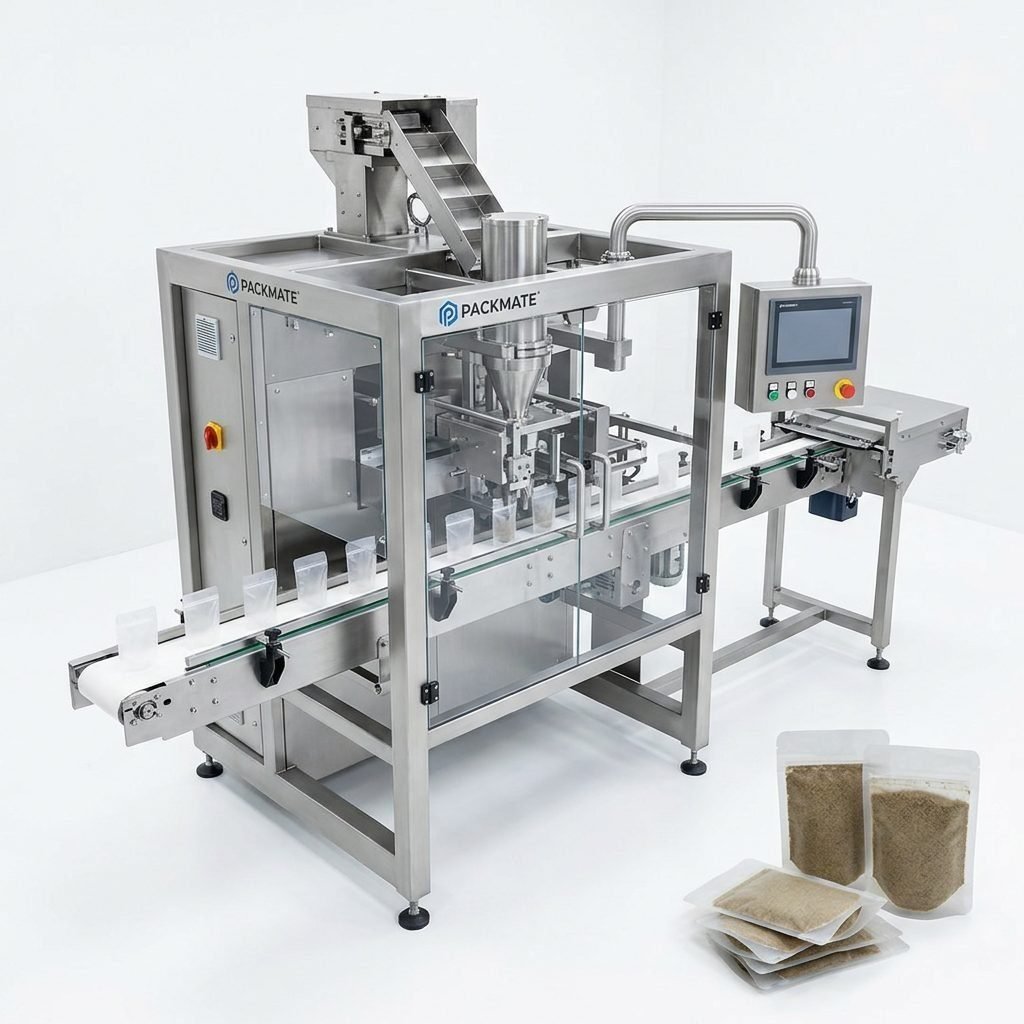
Accurate dosing is critical for nicotine pouches where each portion carries regulated active content. Modern turnkey lines incorporate high-precision micro-weighers and multi-head systems that can handle ingredients ranging from fine powders to small granules. These systems are often linked to centralized PLC control to log weights and produce batch records automatically for traceability.
✅ Quality control tip:
integrate checkweighers and automated rejection to reduce recalls and maintain compliance with local regulations.
Specialized Pouch Forming & Filling Technologies
Multi-lane pouch machines designed for snus and nicotine products are engineered to maintain portion uniformity at high speeds. Options include stick packs, sachets, and various portion shapes. These machines often feature servo-driven mechanisms for precise cut and seal, dust extraction, and humidity control to protect product properties during production.
Integration & Automation
A true turnkey system ensures each module communicates seamlessly with the others. Centralized HMI dashboards, industry-standard PLCs, and OPC-UA connectivity enable remote monitoring, recipe changes, and predictive maintenance. Integration also supports batch traceability, linking raw material lots to finished batches—critical for efficient recalls and audits.
Compliance, Safety & Certification
Equipment used in nicotine pouch manufacturing must meet strict hygiene and safety standards. Machines built to CE and ISO specifications simplify acceptance in European, North American, and other regulated markets. Packmate Snus Machine emphasizes stainless-steel contact parts, easy-to-clean designs, and validated control systems to support GMP-like environments.
🔒 Regulatory note:
documenting machine validation, calibration logs, and batch records is essential when launching new nicotine product formats.
Customization Options & Line Scalability
Turnkey suppliers typically offer modular upgrades—more lanes, different pouch formats, labeling stations, or enhanced analytics. This flexibility allows producers to start with a compact pilot line and scale to a multi-lane production system as demand grows. Customization also extends to downstream packaging styles to match brand identity and retail requirements.
Upgrading for New Markets
If targeting export markets, consider line features such as tamper-evident packaging, multilingual labeling modules, and serialization capabilities. These options help meet retailer and regulatory expectations across different regions and reduce barriers when expanding internationally.
Turnkey Project Implementation: Timeline & Support
Typical turnkey projects move through site assessment, engineering design, FAT (Factory Acceptance Test), installation, SAT (Site Acceptance Test), and handover. Suppliers often provide operator training, maintenance programs, spare parts kits, and remote diagnostics. These services accelerate production start-up and lower total cost of ownership.
After-Sales & Service
Robust after-sales networks and documented service contracts ensure uptime. Look for providers that offer preventive maintenance schedules, quick-response spare parts distribution, and remote troubleshooting capabilities to keep lines running at peak efficiency.
Why Choose a Specialist Manufacturer
Working with a manufacturer that focuses on snus and nicotine pouch equipment brings domain expertise: knowledge of portion mechanics, moisture control, and appropriate sealing technologies. Manufacturers like Packmate Snus Machine combine decades of engineering experience with a portfolio of specialized machines—ideal for companies seeking predictable scale-up and reliable performance.
For more details on specialized equipment, explore product categories such as Snus & Nicotine Packaging Machines and Bag & Pouch Packaging Machines. Case studies of turnkey projects provide insights into real-world deployments: Case.
Real-World Considerations for Production Leaders
Manufacturers must balance speed with quality. Even with automated systems, operators require training in hygiene practices, changeover procedures, and emergency stop protocols. Additionally, supply chain planning for raw materials (fiber, pouch substrates, nicotine salts) is a critical factor in maintaining continuous production.
💡 Pro tip:
pilot runs and sample aging tests help optimize moisture and sealing parameters before full-scale launch.
Sustainability & Material Choices
Sustainable packaging is a growing priority. Turnkey providers can support alternative pouch substrates, reduced-material cartons, and optimized case sizes that lower shipping emissions. When selecting materials, consider barrier properties, recyclability, and compatibility with sealing technologies.
Exhibitions & Demonstrations
Seeing a line in action is invaluable. Attend live demonstrations at industry exhibitions to observe machine cadence, noise levels, and changeover speed. For company background and upcoming events, visit the manufacturer’s pages such as About Packmate and Our Exhibition.
Return on Investment & Cost Considerations
While initial capital investment for a turnkey nicotine pouch production line can be significant, the lifecycle benefits include lower labor costs, reduced material waste, improved yield, and faster time-to-market. Comprehensive ROI assessments account for throughput gains, quality improvements, regulatory readiness, and the value of reduced downtime.
Interested teams can request catalogs and specifications to compare models and calculate expected output rates. For assistance with technical selection or to review a turnkey proposal, the manufacturer’s Contact Us page offers direct communication channels.
🔎 Quick checklist before purchase:
production capacity, product formats, traceability needs, regulatory paths, service coverage, and upgrade roadmaps.
Final Thoughts
Selecting the right turnkey nicotine pouch production system requires technical due diligence and a trusted partner with domain experience. A specialized supplier with a broad portfolio and global project track record can minimize risk and accelerate your brand’s production readiness.
Frequently Asked Questions
Q1: How long does it take to install a turnkey line?
Typical timelines range from 3 to 6 months for standard lines (site prep through SAT), and longer for highly customized multi-lane systems. Fast-tracked projects can be negotiated with prioritized engineering and logistics.
Q2: What regulatory certifications should the equipment have?
Look for CE, ISO-compliant manufacturing practices, and documentation that supports GMP-style operations. Additional region-specific compliance may be required depending on target markets.
Q3: Can I scale a pilot machine to high-speed production?
Yes—modular turnkey systems are designed to scale. Start with pilot lanes and expand modularly, or replace modules with higher-capacity units while reusing ancillary systems when possible.
Q4: What after-sales services are typically offered?
Comprehensive packages include installation support, operator training, spare parts kits, remote diagnostics, and preventive maintenance agreements.
Q5: Where can I see real-world examples?
Review case studies and project reports on the manufacturer’s Case page to evaluate similar deployments and performance metrics.