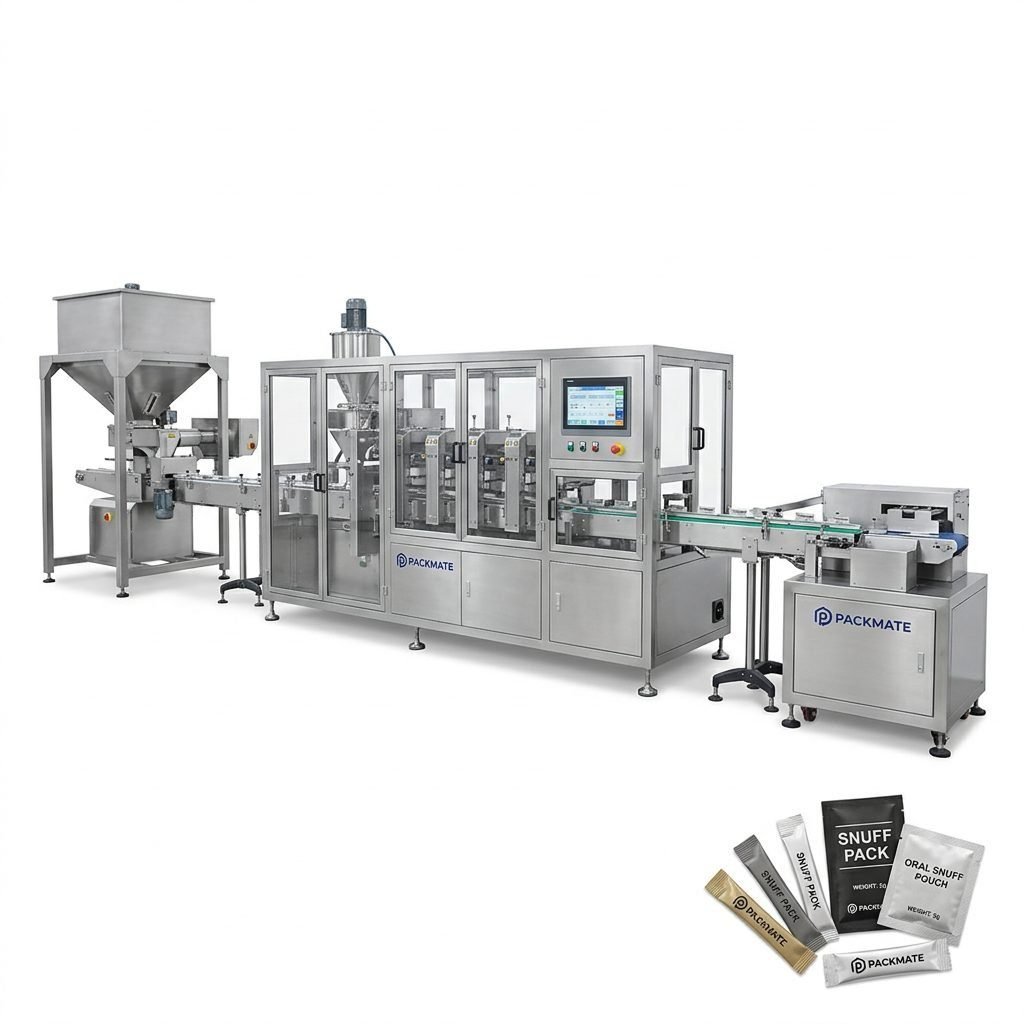
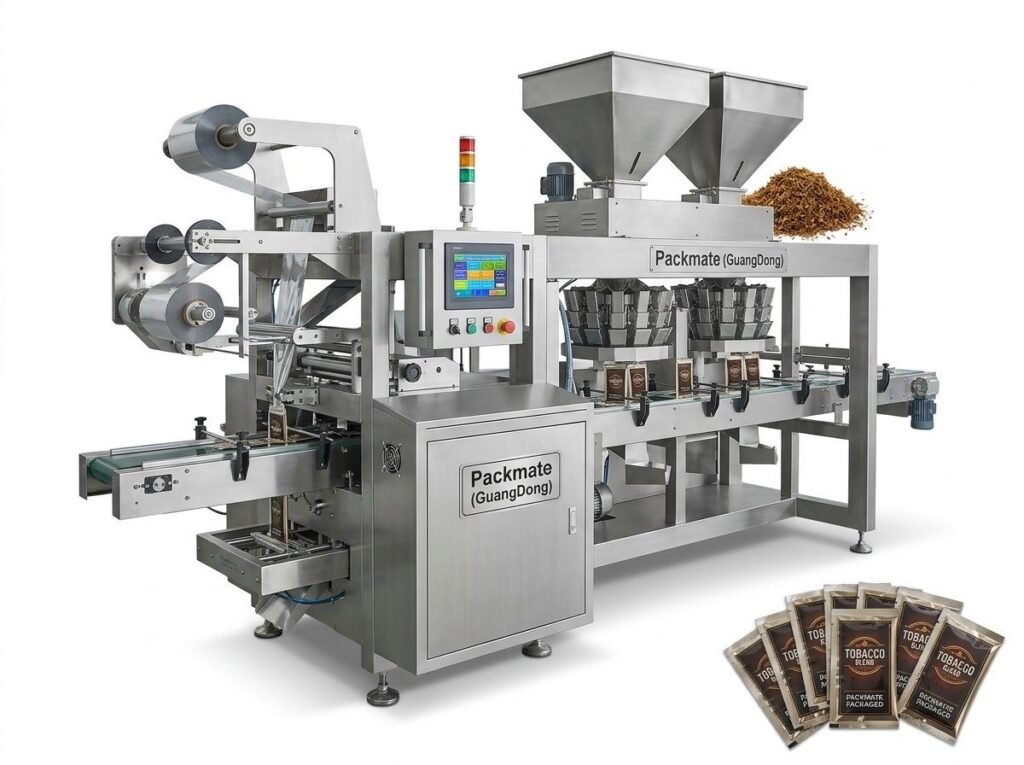
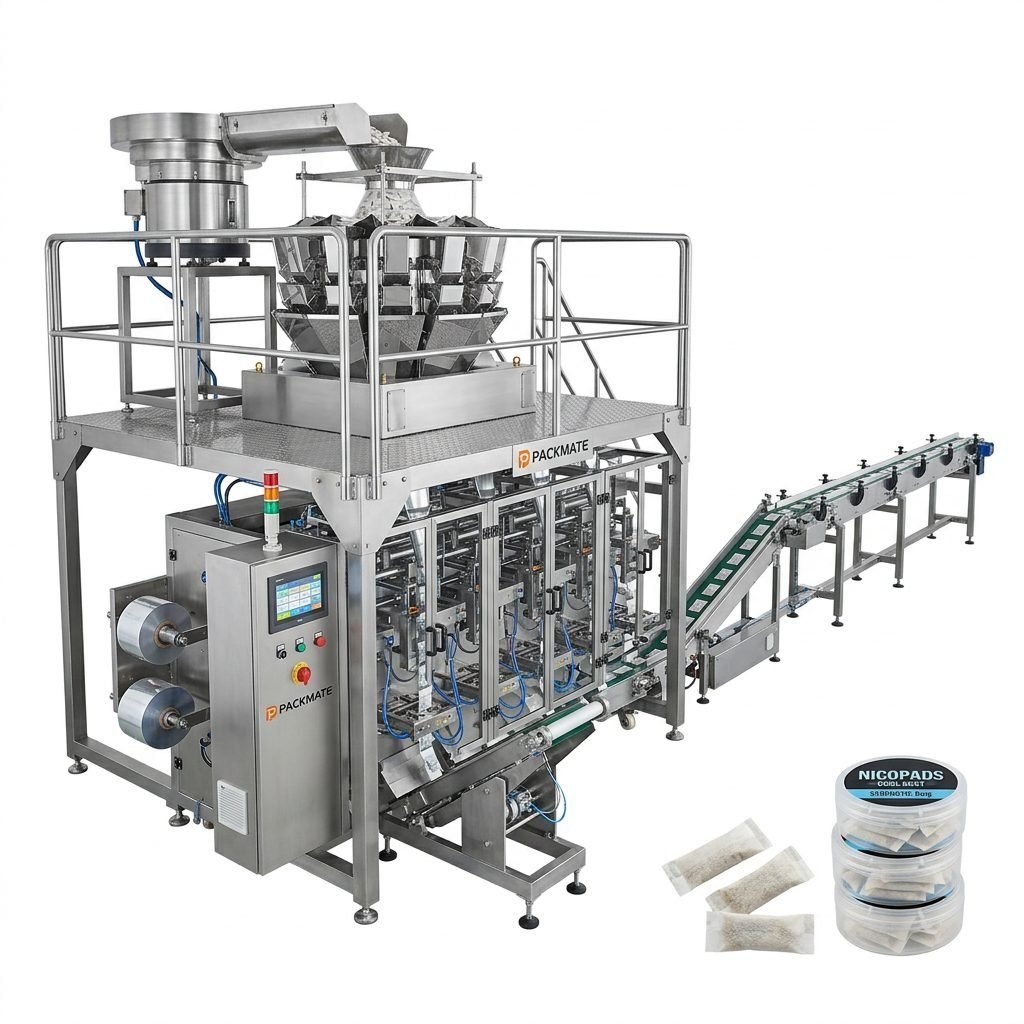
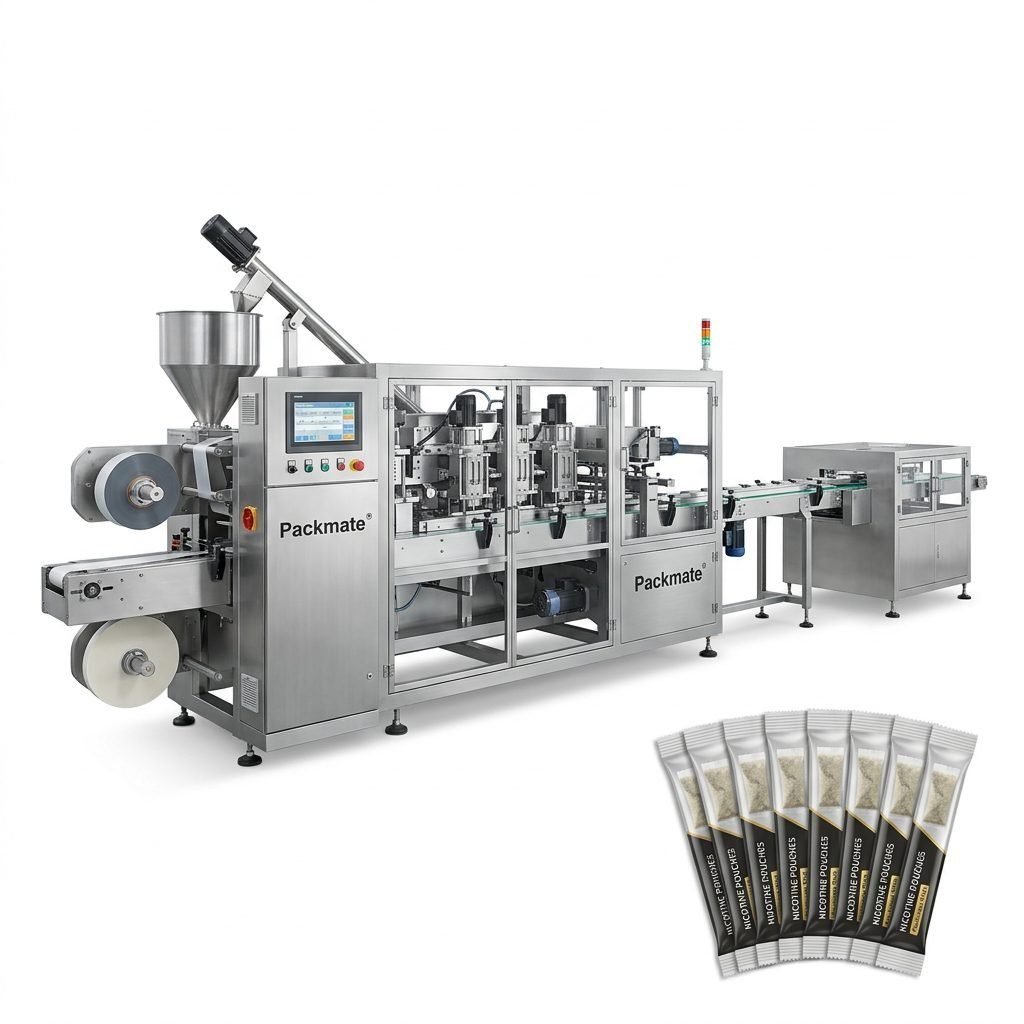
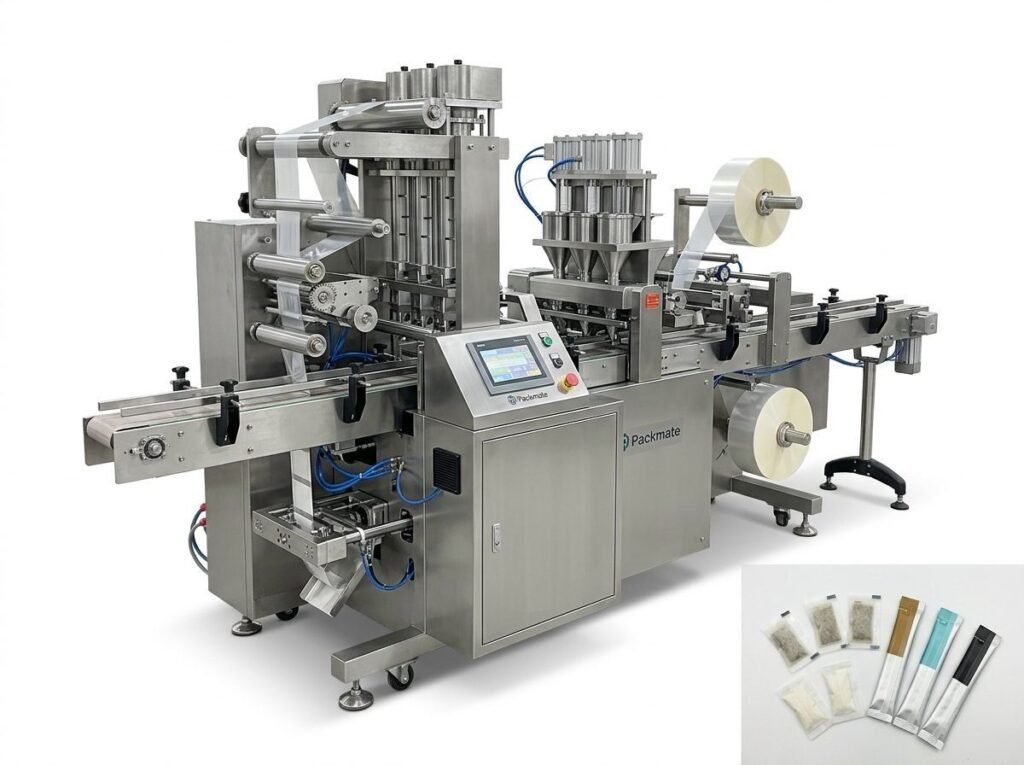
Choosing the right snus packaging machine is a critical decision for manufacturers of nicotine pouches, snus, and other small-dose products. The right equipment impacts production efficiency, product quality, regulatory compliance, and long-term costs. This guide compares common snus packaging machine types and provides a practical framework to help you select the best machine for your production needs.
Market trends and production demands ⚙️
Demand for snus and nicotine pouches has grown rapidly in many global markets, driving interest in high-speed, multi-lane packaging systems. Manufacturers are increasingly focused on automation, precision dosing, and low waste. When evaluating machines, consider current production volumes as well as planned growth: a machine that fits today’s needs may be a bottleneck tomorrow.
Common machine types and where each excels
Stick pack machines
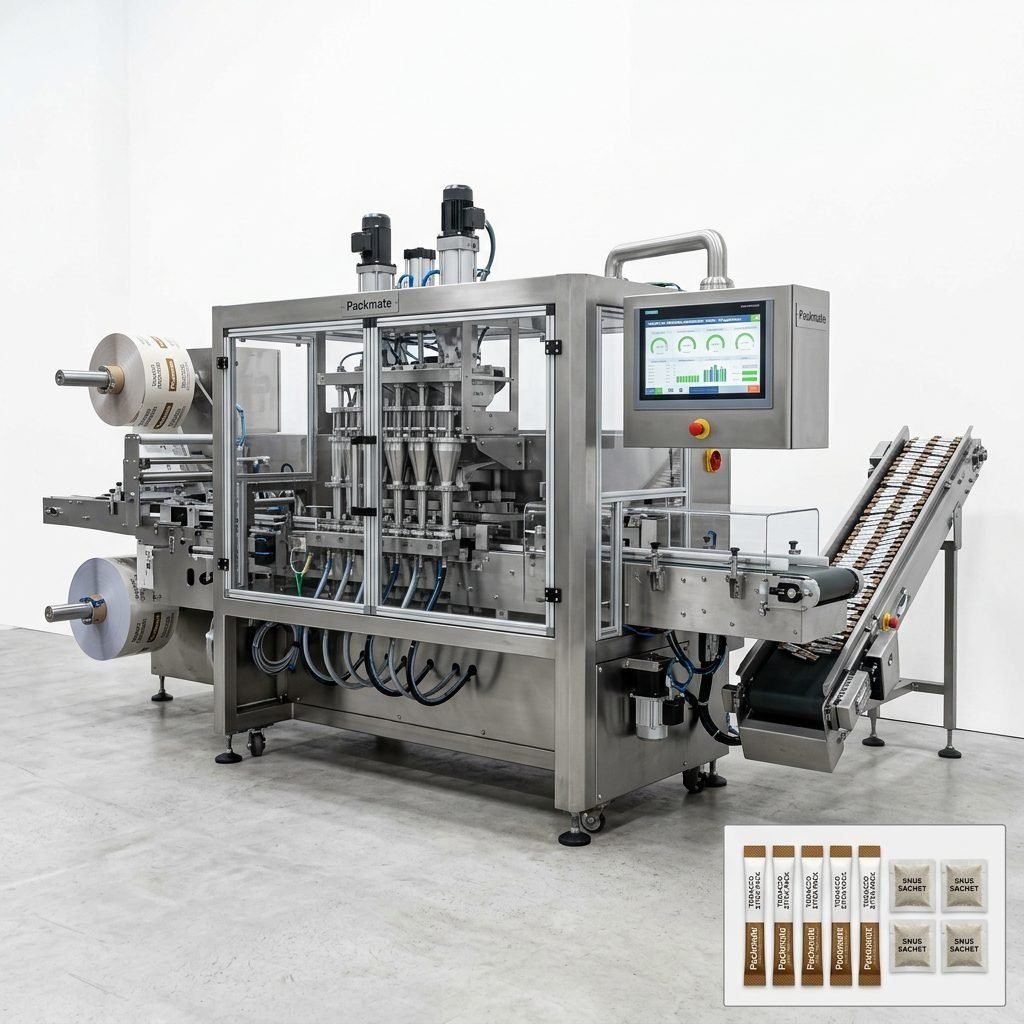
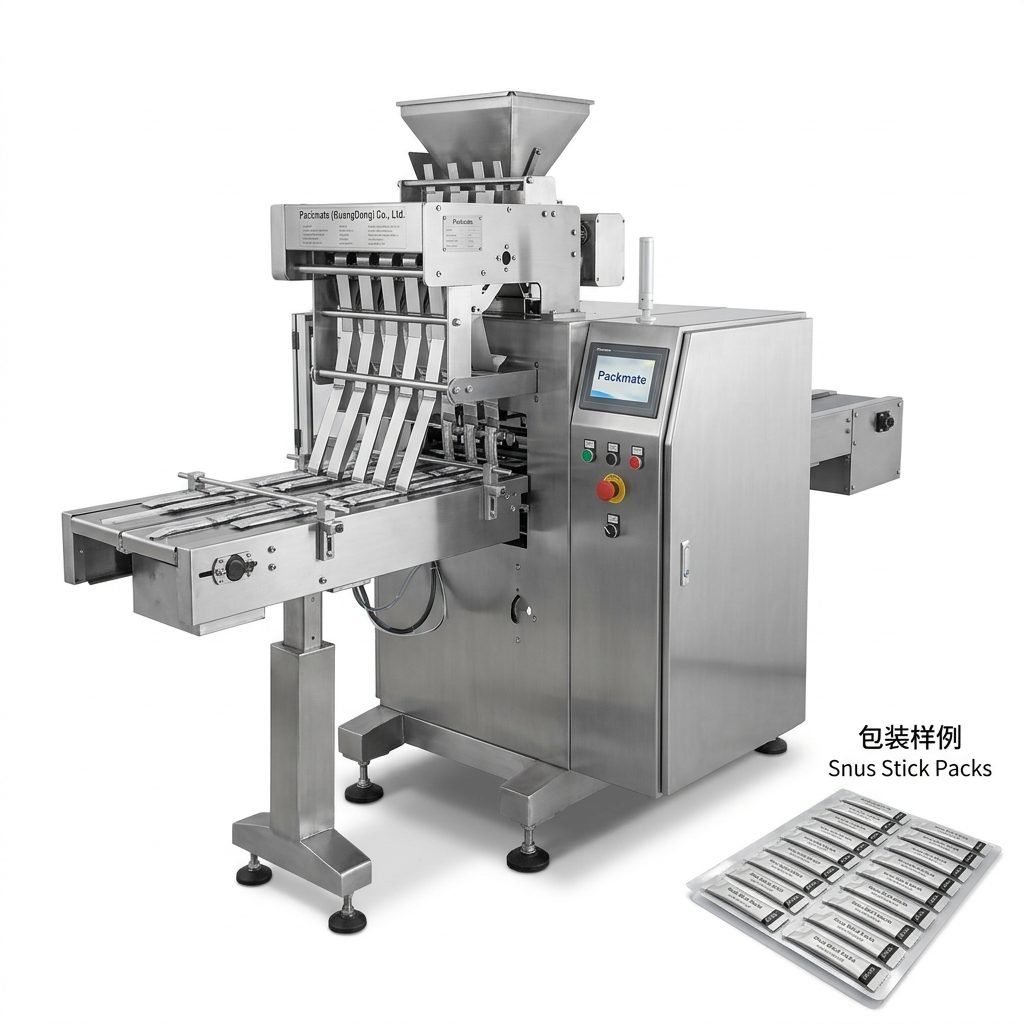
Stick pack machines are ideal for single-portion formats and can handle powders, granules, and pastes. They are often chosen for promotional packs, individual dose delivery, or when a slim footprint is required. Typical strengths include compact design, lower initial cost, and relatively simple operation.
Sachet packaging machines
Sachet machines produce sealed pouches in various shapes and sizes, offering excellent protection and the ability to print product information directly on the pack. Sachets are commonly used for nicotine pouch portions where barrier properties and tamper resistance matter.
Multi-lane snus pouch systems
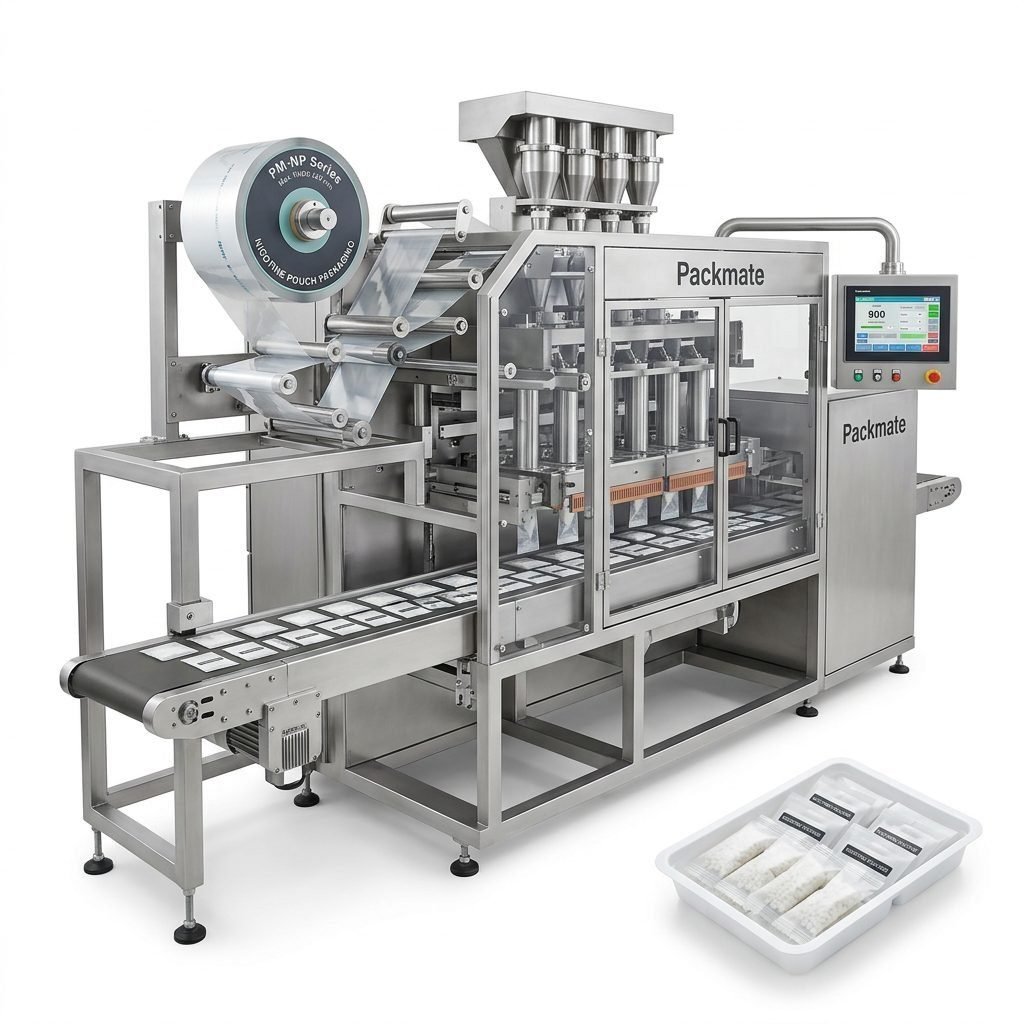
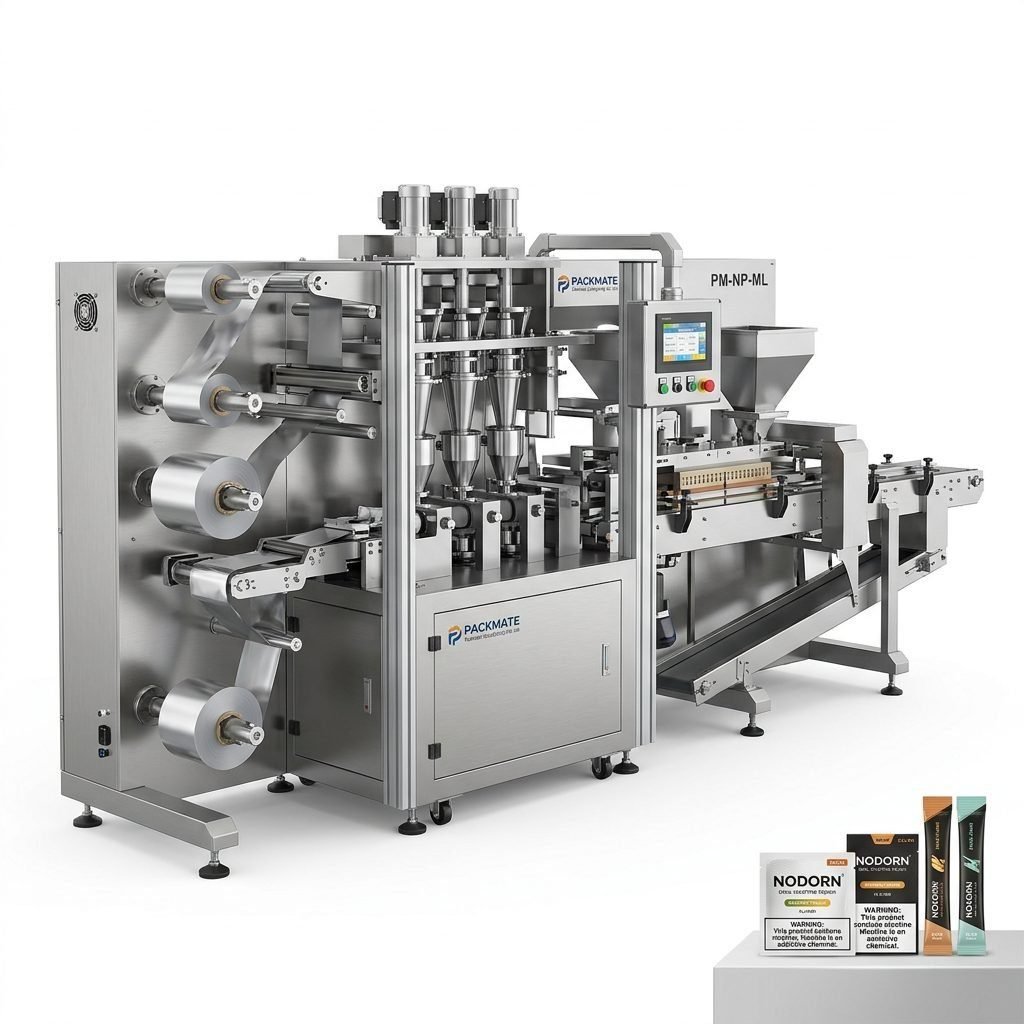
Multi-lane systems are designed for high-volume production and enable multiple lanes of pouches to be produced simultaneously. These systems are the go-to choice when you need high throughput with consistent portion weight and minimal downtime. Multi-lane machines often come with advanced feeding and cutting systems to support high speeds while maintaining dose accuracy.
Tip: For manufacturers scaling up, a multi-lane snus packaging machine usually offers the best balance of speed and per-unit cost. If flexibility and low volume testing are needed, stick pack or single-lane sachet machines can be more appropriate.
Key selection criteria to compare
1. Production speed and throughput 📦
Evaluate machine specifications in terms of packs per minute (PPM) and lanes. A multi-lane system with 4–8 lanes can multiply a single-lane performance and is essential for high-volume factories. Always match machine capacity to realistic production schedules including maintenance and changeover time.
2. Dosing accuracy and consistency 🔍
Portion weight tolerance is critical for compliance and customer satisfaction. Look for machines with integrated weighing or precise volumetric dosing. Closed-loop controls, servo-driven dosing, and high-quality feeders reduce variance and product giveaway.
3. Flexibility and product changeover ⚙️
If you plan to run multiple SKUs, choose equipment with quick changeover features and modular tooling. Machines that can switch between pouch sizes, materials, or lane counts with minimal downtime provide better return on investment for multi-product facilities.
Important: Prioritize machines with clear and fast changeover procedures if you produce a range of formats — this saves valuable production hours and reduces operator errors.
4. Integration with upstream and downstream equipment
Packaging is rarely a standalone operation. Consider how the machine integrates with fillers, feeders, conveyors, cartoners, and case packers. Seamless communication (PLC, OPC-UA, digital I/O) reduces manual handling and improves total line efficiency.
5. Build quality, serviceability and spares
Look for manufacturers with strong engineering capabilities and a global support network. A company with experience in snus machinery, robust CNC fabrication, and precision assembly will deliver machines with better longevity and less unplanned downtime. Check availability of spare parts and local service options.
6. Certifications and compliance ✅
Ensure equipment meets international standards such as CE and ISO. For tobacco or nicotine products, local regulatory requirements may apply; working with a certified supplier simplifies compliance and audit readiness.
7. Total cost of ownership (TCO)
Initial purchase price is only one part of the equation. Consider operational costs, energy consumption, maintenance, spare parts, and potential production losses due to downtime. A slightly higher upfront cost for a more reliable, efficient machine often results in lower TCO.
How Packmate (GuangDong) Co., Ltd. addresses these needs
With over 30 years of engineering experience and a 20,000㎡ manufacturing facility, Packmate Snus Machine specializes in snus and nicotine pouch packaging solutions. Their product range includes Snus & Nicotine Packaging Machines and Sachet & Stick Pack Machines, alongside auxiliary equipment and turnkey lines.
Factory facts: 50+ machine models, advanced CNC centers, strict quality control and global turnkey solutions. For more about the company, visit About Packmate.
Practical comparison checklist (use during RFQ and factory visits)
Use this checklist to benchmark suppliers and models:
✔️ Production capacity (PPM and lanes)
✔️ Dosing accuracy and measuring method (weighing vs volumetric)
✔️ Changeover time and tooling availability
✔️ Maintenance accessibility and spare parts lead time
✔️ Control system, connectivity and data collection features
✔️ Safety guards, hygiene design and cleaning procedures
✔️ Certifications (CE, ISO) and factory audit records
Case studies and validation
When evaluating suppliers, ask for case studies or references that demonstrate similar product runs and production volumes. Packmate regularly showcases its solutions at international exhibitions and provides documented cases of global installations; see their Case page for examples.
Quick validation step: request video demonstrations of the exact machine model running your product. Validate packaging integrity, seal quality, and dose consistency across lanes.
Installation, training and after-sales service
Effective installation includes alignment with upstream and downstream equipment, operator training, and initial process validation. Prioritize suppliers that include on-site commissioning, remote diagnostics, and clear service contracts. Packmate offers global technical support and proactive spare parts planning to minimize downtime.
Making the final decision: an action plan
Follow this process to make an informed purchase:
1) Define target annual and peak production volumes.
2) Identify required pouch formats and materials.
3) Shortlist suppliers with proven snus/nicotine pouch experience.
4) Request on-site or video demonstrations and full technical specifications.
5) Evaluate TCO, spare parts lead times, and local service capability.
6) Plan factory layout and integration, then schedule FAT/SAT with the supplier.
Where to learn more and next steps
Explore detailed product categories such as Snus & Nicotine Packaging Machines, Sachet & Stick Pack Machines, and complementary Auxiliary Packaging Equipment. Contact suppliers early to discuss custom needs, pilot trials, and project timelines—if you need direct contact information, see Contact Us.
Final recommendations
Select machines that align with both your current production and future growth. For many medium-to-large operations, multi-lane snus pouch systems deliver the best throughput and cost-efficiency. For specialty or low-volume SKUs, stick pack and sachet machines provide agility and lower initial investment. Always verify dose accuracy, machine uptime history, and supplier service capability before committing.
FAQs
Q1: What is the typical payback period for a snus packaging machine?
A1: Payback varies by production volume, machine cost, and labor savings; typical payback ranges from 12 to 36 months depending on utilization and product margins.
Q2: How do I ensure portion weight consistency across multiple lanes?
A2: Use machines with precision dosing systems, servo controls, and integrated check-weighing. Regular calibration and fatigue testing of feeders also maintain long-term consistency.
Q3: Can a snus packaging machine handle different pouch materials and barrier films?
A3: Most modern machines are designed to handle a range of film types, but you should validate sealing parameters and tensile properties during FAT to confirm compatibility.
Q4: What level of after-sales support should I expect?
A4: Look for suppliers offering commissioning, operator training, remote diagnostics, spare parts kits, and clear SLAs. A global supplier with a documented service network reduces downtime risk.
Q5: How important are certifications like CE and ISO?
A5: Certifications indicate compliance with international standards for safety and quality. They are especially important for exporters and for meeting local regulatory requirements.