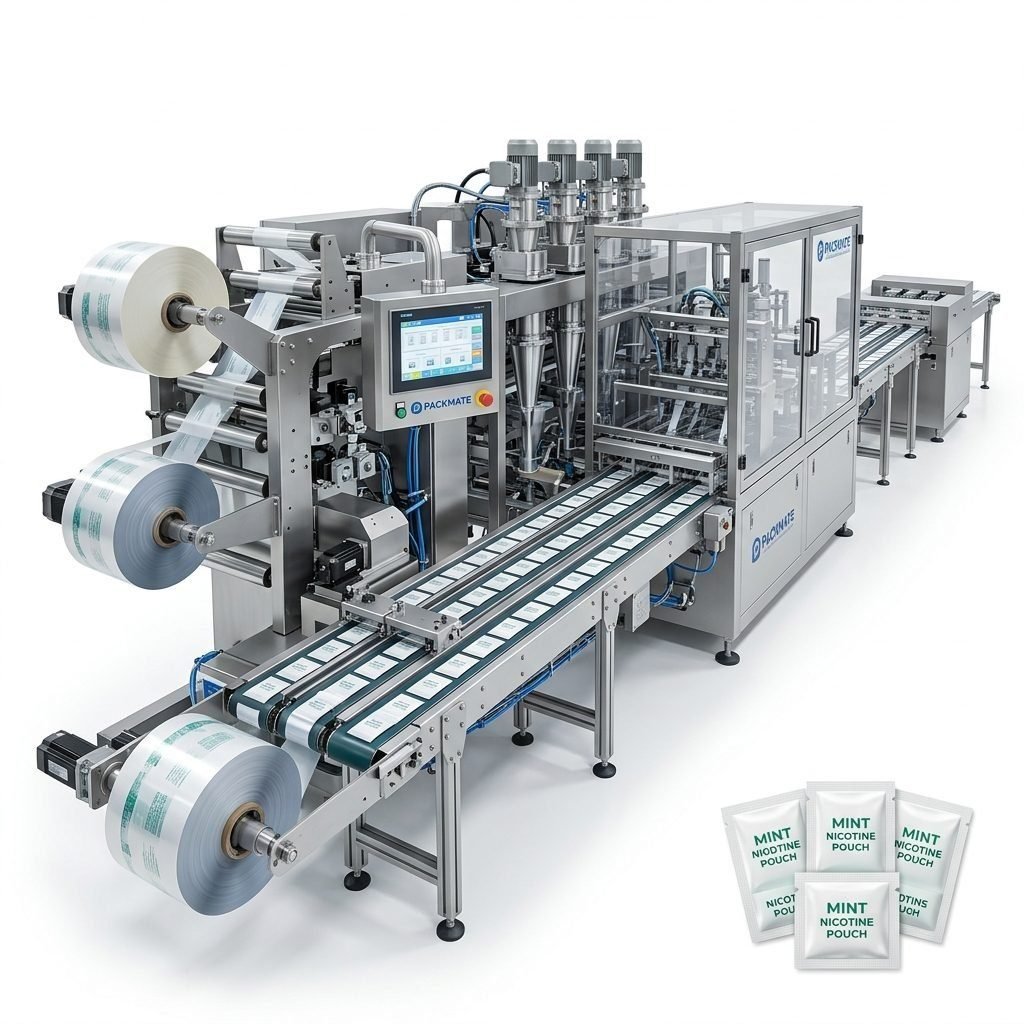
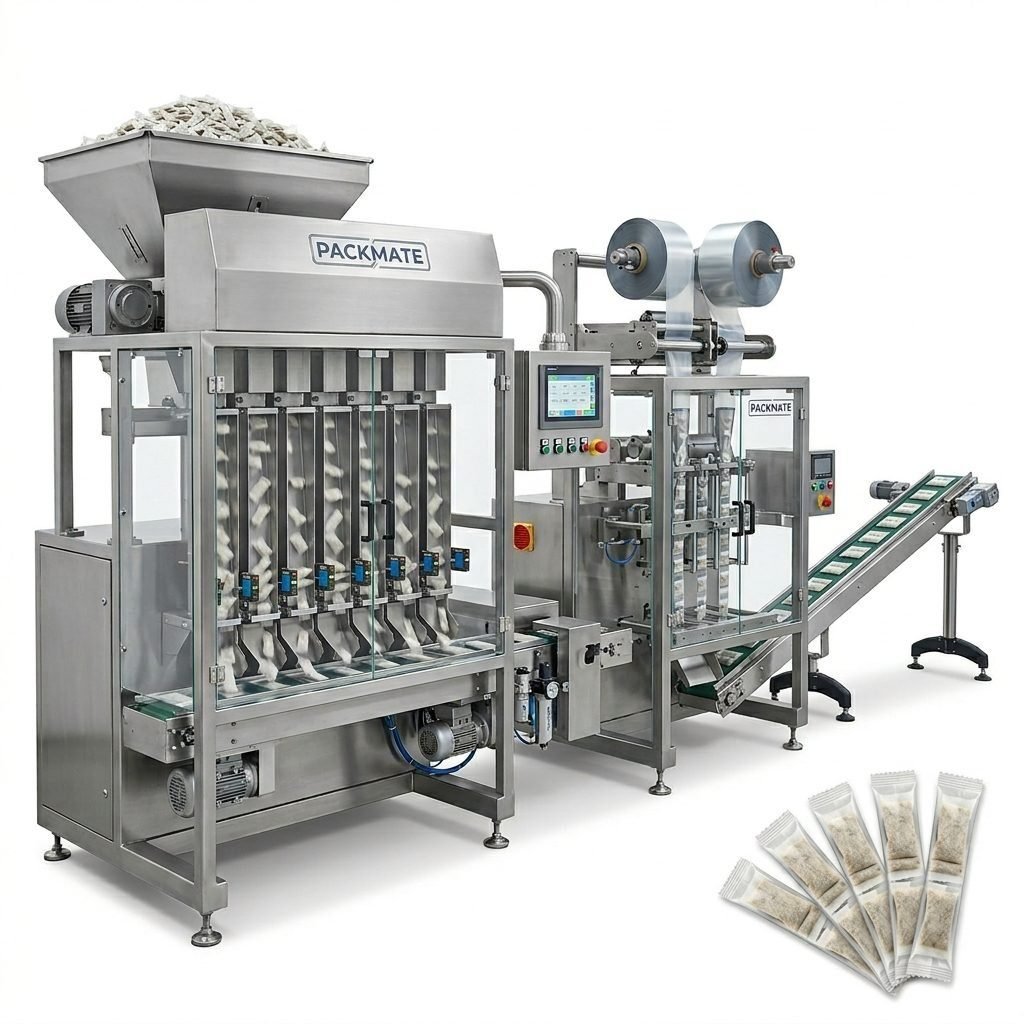
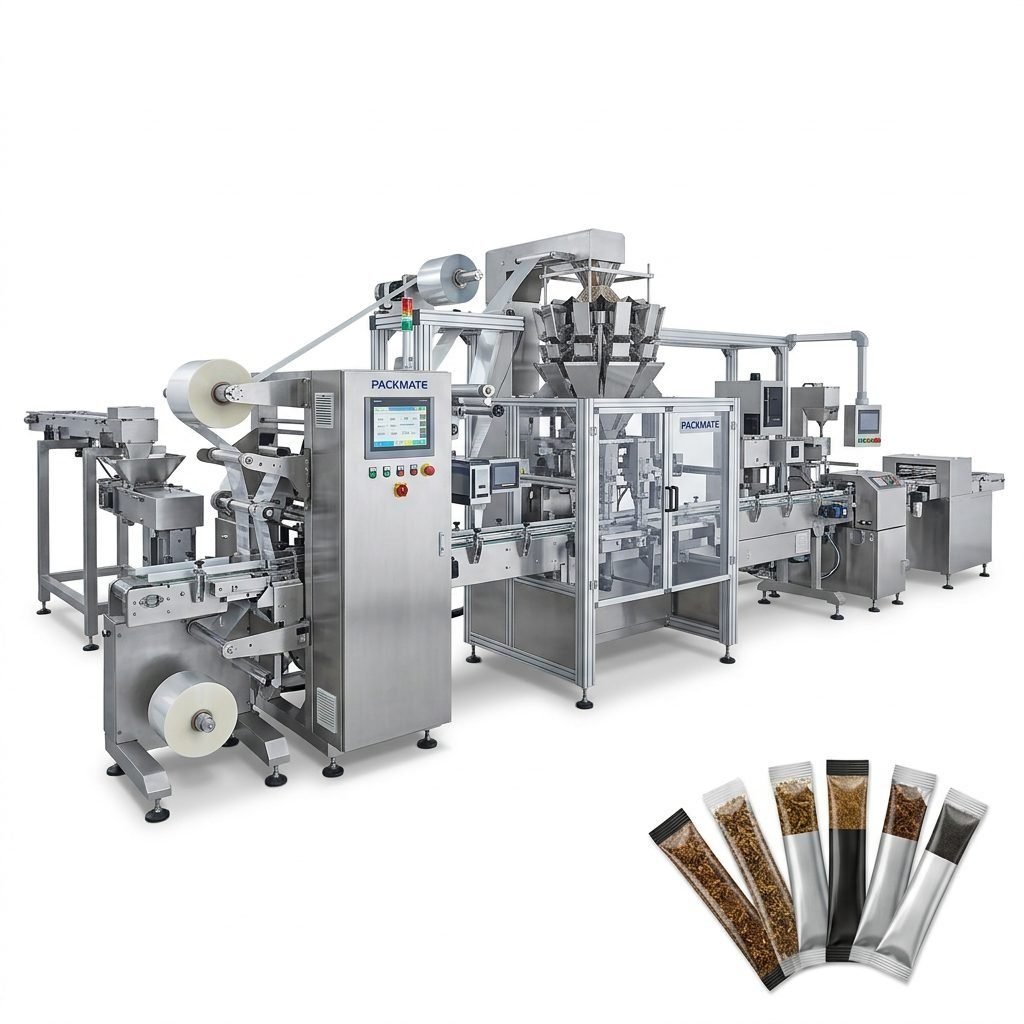
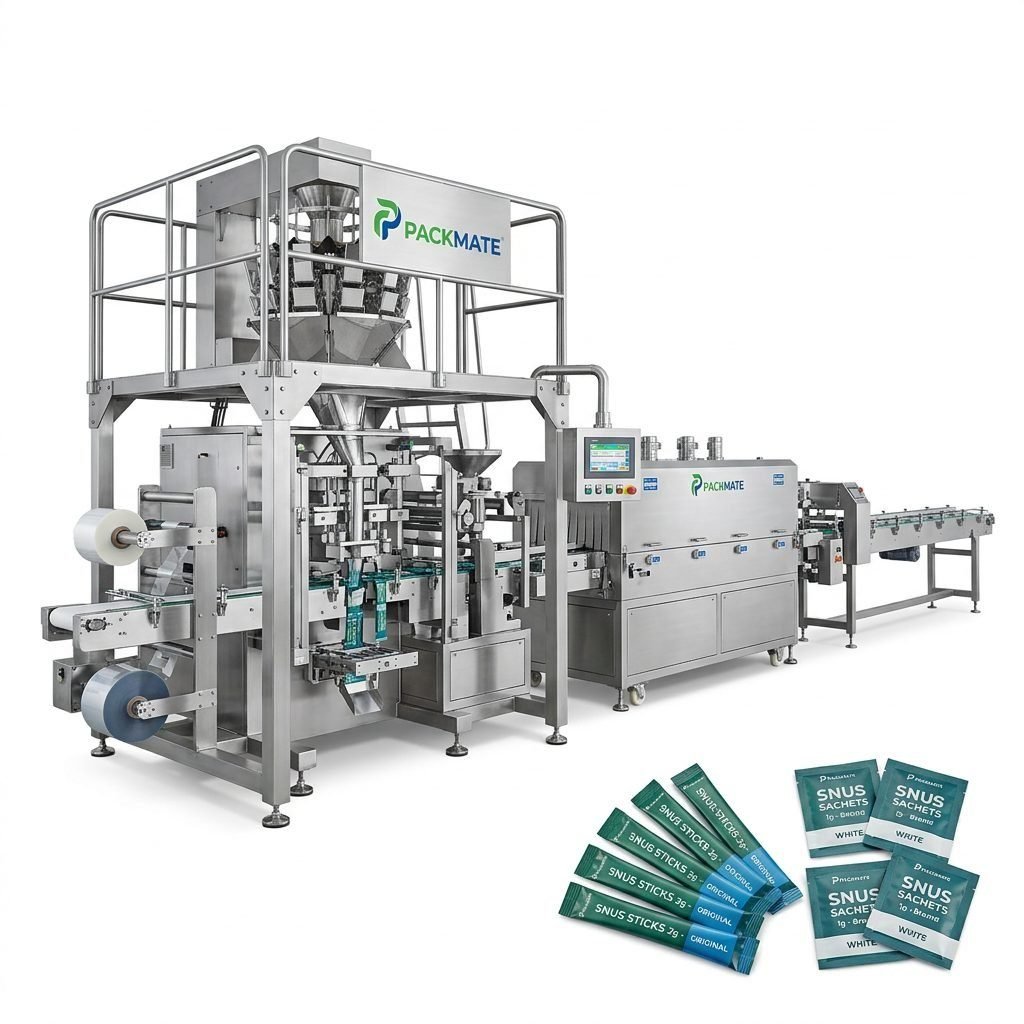
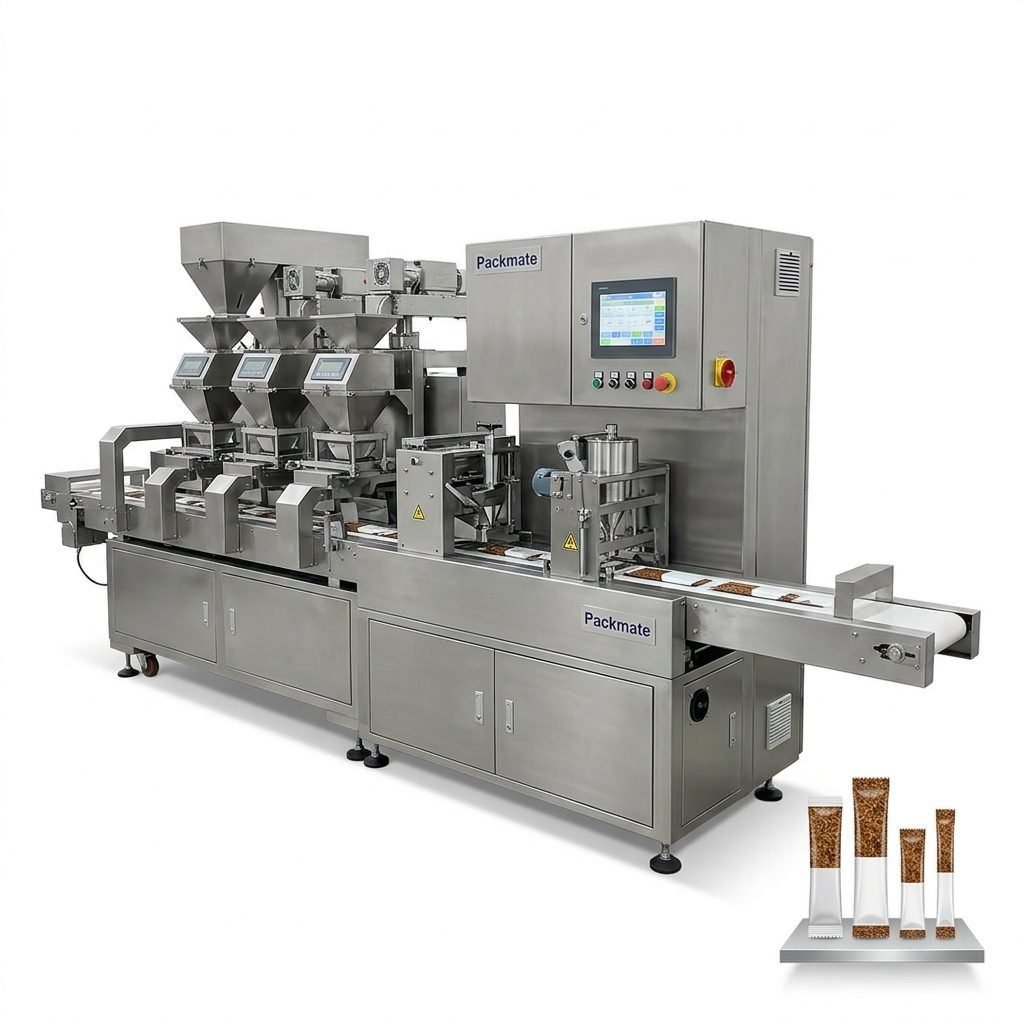
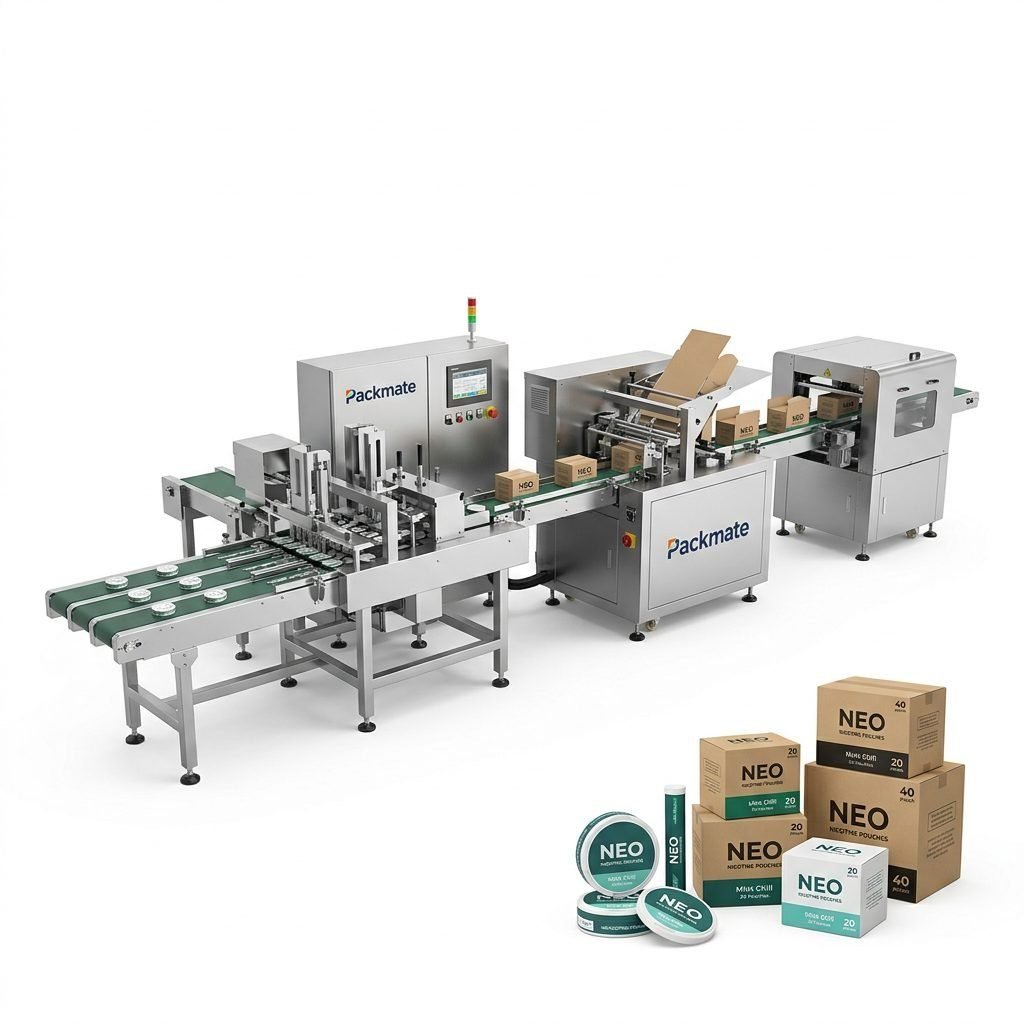
Snus Production Factory Equipment covers a range of precision packaging machines, complete automated lines, and auxiliary systems designed for the efficient manufacture of nicotine pouches and snus products. This guide walks through core machines, line layouts, automation strategies, quality control considerations, and real-world deployment tips to help packaging engineers, production managers, and procurement teams choose the right configuration for scalable, compliant snus production.
Overview: What Constitutes a Modern Snus Production Line
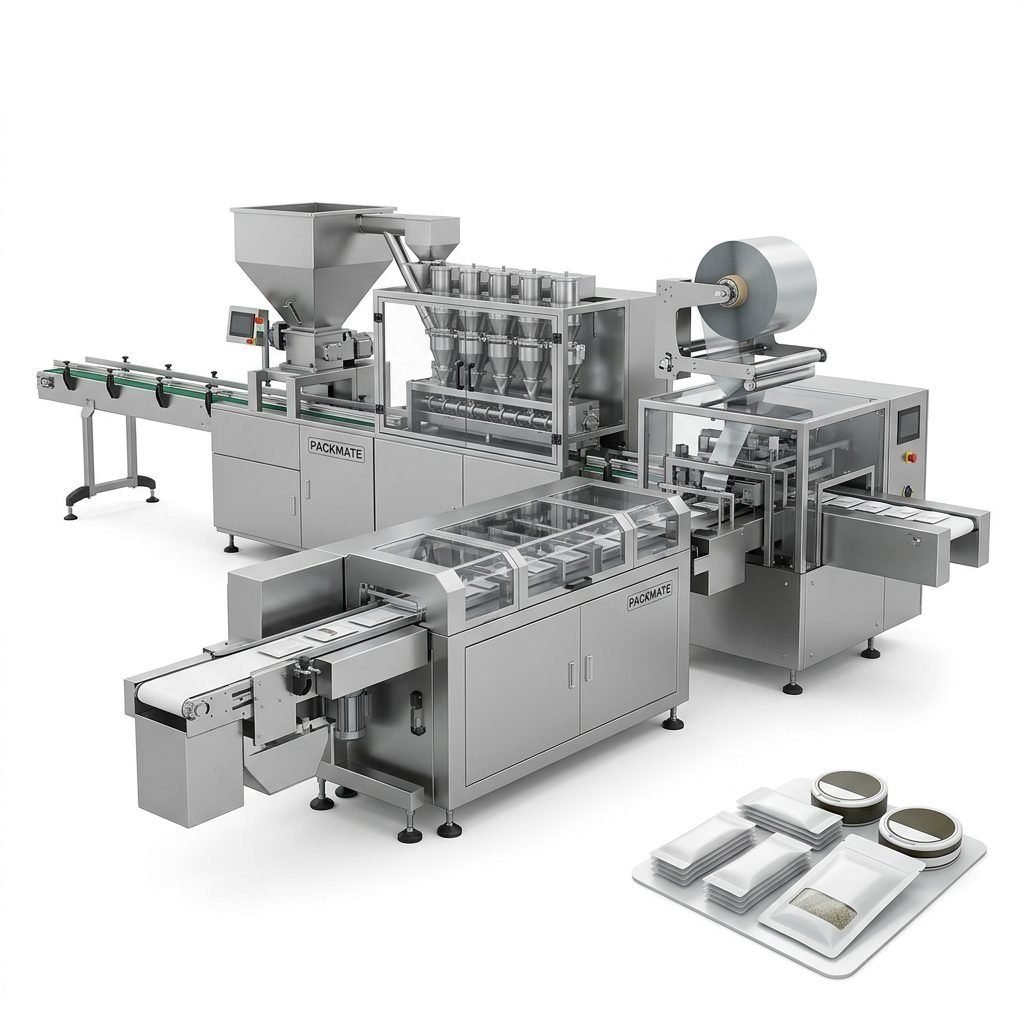
A modern snus production line integrates upstream dosing and filling, pouch forming and sealing, multi-lane synchronization, labelling and secondary packaging, plus quality inspection and product handling. The goal is to deliver stable throughput, consistent portion weights, hygienic operation, and easy changeover for flavor or pack formats. Typical line components include filling & dosing systems, pouch forming machines, multi-lane packaging machines, robotic pick-and-place, and final case packers.
Key takeaway: Reliable snus lines prioritize precision dosing, multi-lane scalability, and hygienic design to meet regulatory and market demands. Small changes in dosing accuracy can impact cost and compliance significantly.
Primary Machine Types and Their Roles
Below are the core machine families you will encounter when specifying a snus production factory.
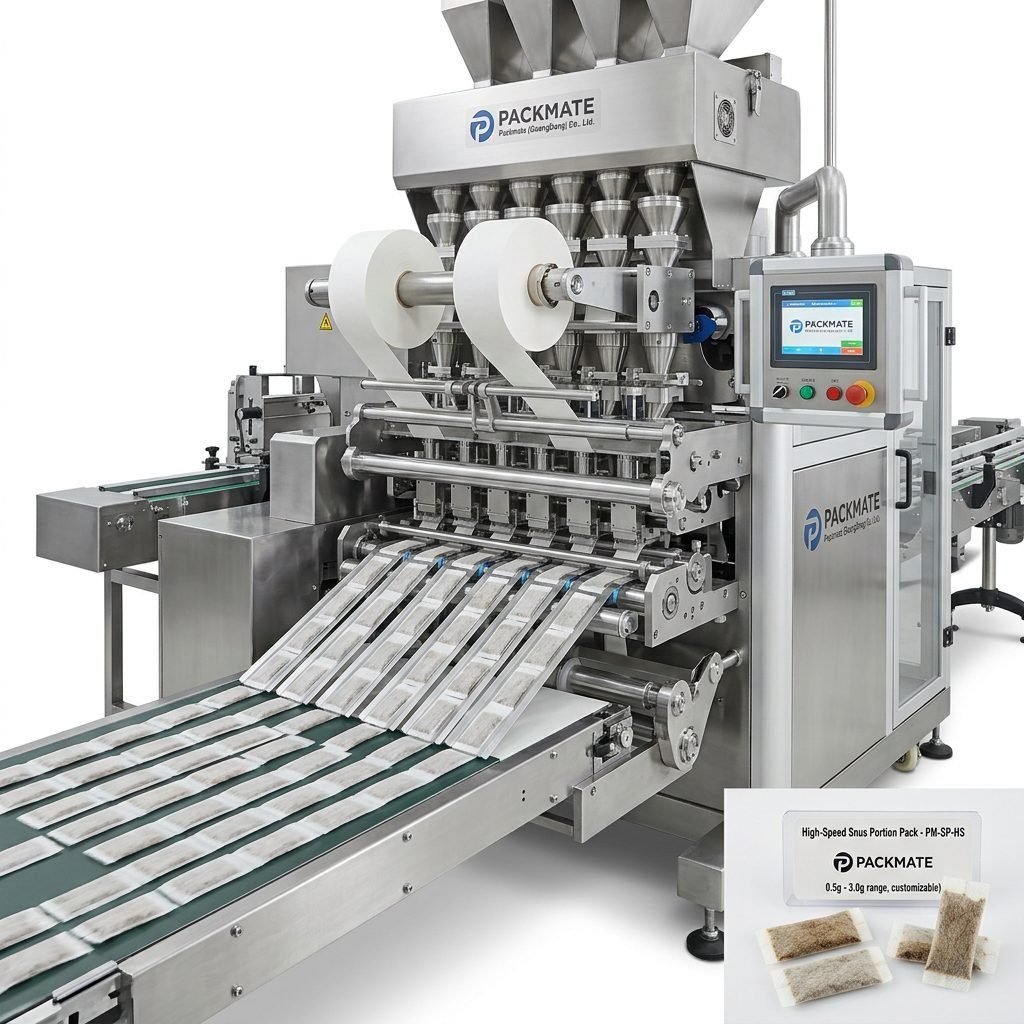
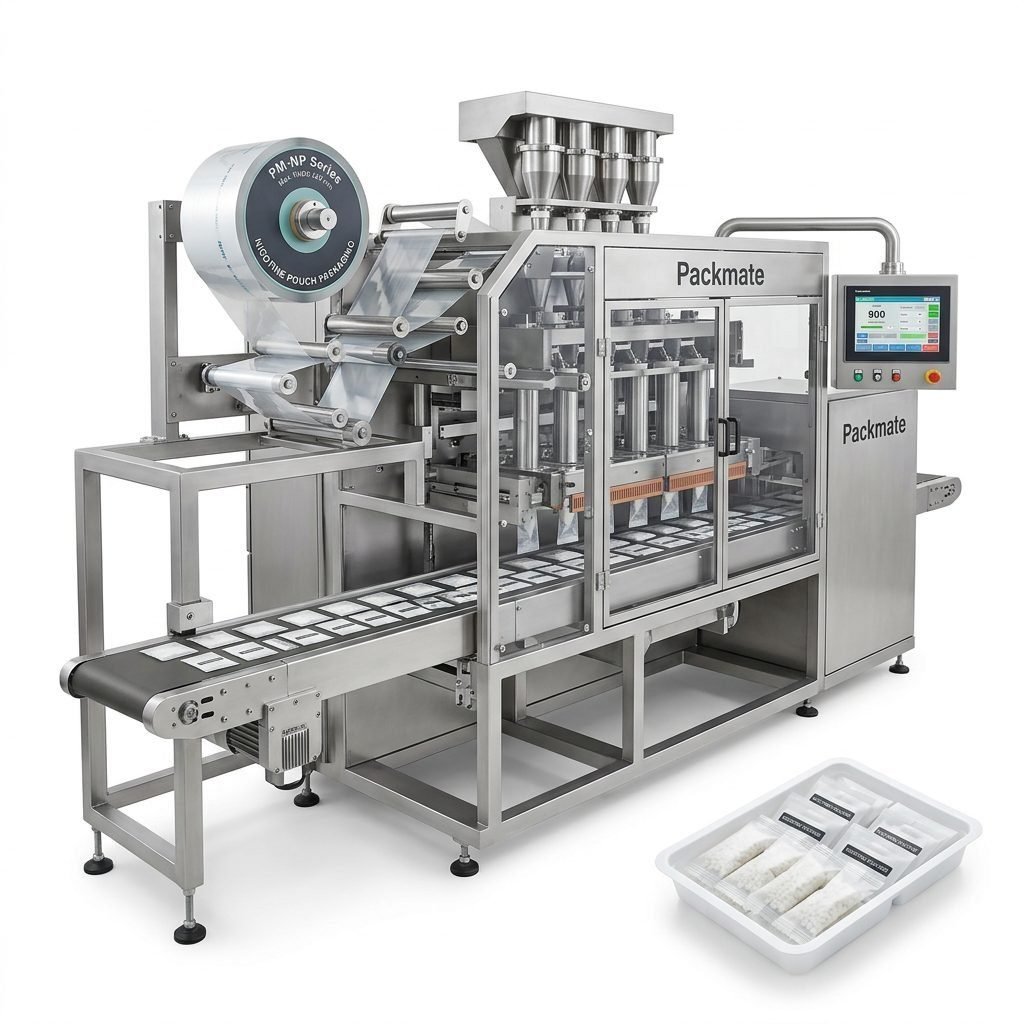
- ⚙️ Snus & Nicotine Packaging Machines — specialized multi-lane pouch machines tailored for small-dose nicotine pouches and snus formats. High-speed options achieve thousands of pouches per minute across multiple lanes. (Product overview)
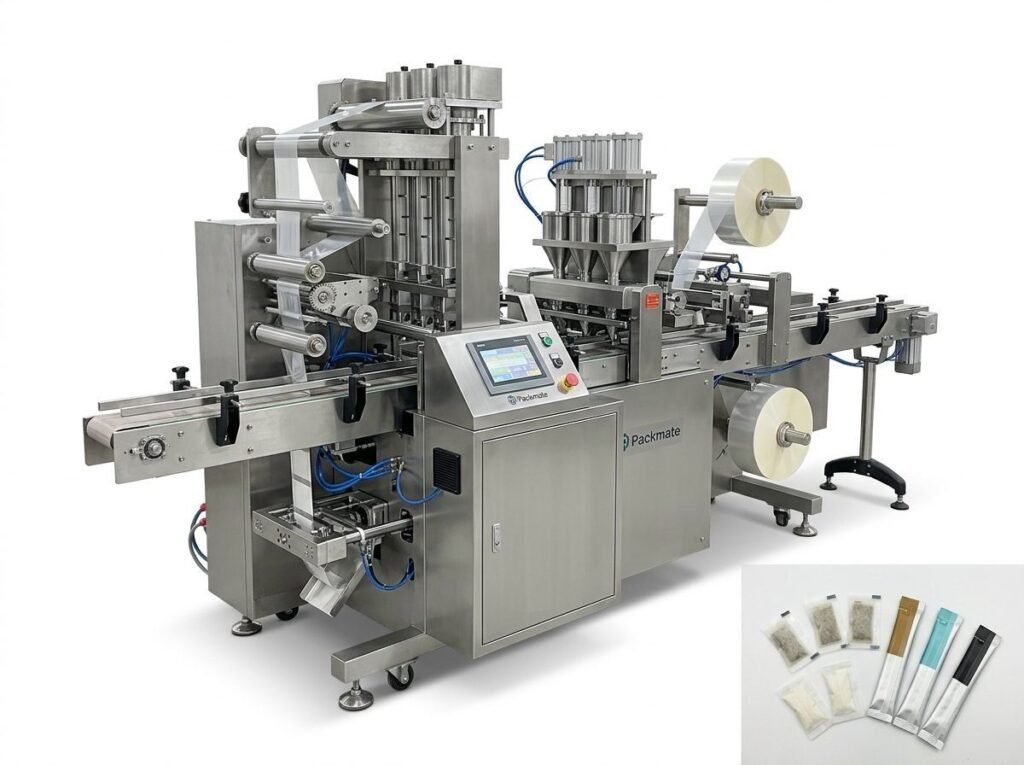
- 📦 Sachet & Stick Pack Machines — flexible for single-dose sachets or stick packs when format variety or promotional packaging is required. These machines can handle powder, granules, and moist tobacco blends. (See models)
- 🔬 Weighing & Dosing Systems — multi-head weighers, auger fillers, and precision vibratory dosing systems that ensure portion accuracy. Critical for regulatory compliance and cost control. (Weighing systems)
- 🏷️ Filling & Packaging Lines — integrated solutions that combine filling, sealing, in-line quality inspection, and secondary packing for efficient end-to-end production. (Line solutions)
Machine Features to Evaluate
When selecting equipment, focus on features that affect uptime, product integrity, and regulatory compliance.
Operational considerations:
- Hygienic product paths and easy-to-clean surfaces to meet food/pharma hygiene standards.
- Tool-less changeovers and modular design for rapid format swaps and maintenance.
- Integrated sensors and PLC control for synchronization across multi-lane modules.
- Traceability support for batch codes, date stamps, and serialization where required.
Designing a High-Efficiency Production Line
A well-designed line starts with capacity planning and ends with downstream packaging choices. Consider throughput targets, SKU complexity, and future growth when configuring machines and automation. Typical planning steps include process mapping, capacity calculations, footprint layout, and integration planning for upstream blending and downstream case packing.
Throughput and Multi-Lane Strategy
Multi-lane machines multiply per-lane speed to achieve target throughput without pushing individual channels beyond stable operating ranges. For example, a 4-lane pouch machine running at moderate speed offers better stability and easier maintenance than a single-lane machine at extreme RPM.
Production tip: Adopt gradual scaling: start with a 2- or 4-lane solution and reserve space and I/O for fast expansion to higher lane counts as demand grows.
Automation & Robotics Integration
Robotic pick-and-place units and vision-guided systems streamline secondary packaging, grouping, and case packing. Integration reduces manual handling, improves hygiene, and enables flexible end-of-line configurations. Look for open communication protocols (Ethernet/IP, Profinet) to ensure seamless integration with existing factory automation.
Quality Control, Compliance and Validation
Quality controls are embedded in machine design and process flow. Common QC tools include in-line weight checks, vision systems for seal inspection and label accuracy, metal detectors, and environmental monitoring for moisture-sensitive blends. Compliance with CE and ISO standards is fundamental for global market access.
Compliance checklist:
- CE marking and machine safety guards
- ISO-based quality assurance and documentation
- Traceability of raw materials and batch numbers
- Regular calibration and verification plans for dosing equipment
Material Handling and Environmental Controls
Snus and nicotine pouches often require humidity control and dust management. Proper HVAC, controlled storage, and dust extraction at feeding points preserve product quality and protect operators. Closed transfer systems minimize cross-contamination for flavored blends.
Factory Capabilities and Partner Selection
Selecting a partner with production-floor experience and strong engineering support is critical. Evaluate suppliers for manufacturing scale, CNC capabilities, assembly expertise, and after-sales service. A partner that offers turnkey lines reduces integration risk and accelerates time-to-market.
Manufacturer profile to consider: Look for proven experience in snus equipment design, a sizable factory footprint, robust CNC and assembly capabilities, and documented global installations. Strong OEMs will show CE/ISO certifications and case studies.
Lifecycle Support and Spare Parts
After-sales support, training, and a reliable spare parts supply chain are part of the total cost of ownership. Prioritize suppliers who maintain spare inventory, offer remote diagnostics, and provide scheduled maintenance programs to maximize uptime.
Case Studies and Real-World Deployments
Successful deployments range from compact single-format lines for start-ups to large, multi-line facilities supplying global markets. Key success factors include phased commissioning, operator training, and continuous process optimization. For inspiration and practical examples, review manufacturer case histories and exhibition demonstrations to validate real-world performance.
Selecting a Turnkey Solution vs. Modular Build
Turnkey solutions offer reduced integration risk and a single point of responsibility, often favored by fast-moving companies. Modular builds provide flexibility for phased investment and incremental scaling. The optimal choice depends on capital availability, time-to-market needs, and in-house engineering capacity.
Pro tip: When aiming for global export, align equipment with international standards early and confirm support for spare parts in customer regions to avoid long downtime.
Investment Considerations and ROI
Capital expenditure must be evaluated alongside labor savings, yield improvements, and regulatory risk reduction. Accurate portioning reduces raw material waste; downtime reduction and automation lower operating costs. Factor in installation, qualification, training, and spare parts for a realistic ROI timeline.
Cost Drivers
Major cost drivers include lane count and machine speed, degree of automation, special materials and finishes for hygiene, and integration complexity with upstream/downstream equipment. Custom tooling and format plates also add one-time engineering costs.
Getting Started: Practical Steps for Factory Implementation
Start with a clear product specification and throughput target, then work with suppliers to create a line layout. Include mechanical, electrical, and process validation milestones in the project plan. Early factory acceptance testing (FAT) and site acceptance testing (SAT) help catch integration issues before full production.
Implementation checklist:
- Define SKUs, portion weights, and packaging formats
- Perform FAT with actual product samples
- Plan for operator training and maintenance documentation
- Schedule preventive maintenance and spare parts list
Where to See Machines in Action
Manufacturers frequently demonstrate machines at international exhibitions and through facility visits. Watching live demos is invaluable for judging machine behavior with actual product blends and pack formats. Check vendor exhibition schedules for nearby events and machine demo availability.
Summary and Next Steps
Investing in snus production equipment requires careful consideration of machine capabilities, hygiene design, automation level, and supplier lifecycle support. By prioritizing precision dosing, modular multi-lane scalability, and strong after-sales service, manufacturers can build robust, compliant lines that scale with market demand.
Common Questions
Q1: What machines do I need to start a small-scale snus production?
A: Begin with a precise dosing/filling module, a single- or dual-lane snus packaging machine, and basic in-line inspection. Add a simple secondary packer for retail cartons. Prioritize dosing accuracy and hygienic design for small-scale reliability.
Q2: How important is multi-lane design?
A: Multi-lane designs improve throughput while maintaining per-lane stability and lower mechanical stress. They also allow incremental capacity expansion by adding lanes or modular units as demand grows.
Q3: What certifications should I require from a supplier?
A: Request CE compliance, ISO-based quality management evidence, and safety documentation. For pharmaceutical-grade or highly regulated markets, validate traceability features and cleanability standards.
Q4: How do I reduce downtime and ensure fast support?
A: Choose a supplier with local spare inventories, remote diagnostic capabilities, and scheduled preventive maintenance programs. Train operators for basic troubleshooting and maintain a critical spares list on-site.