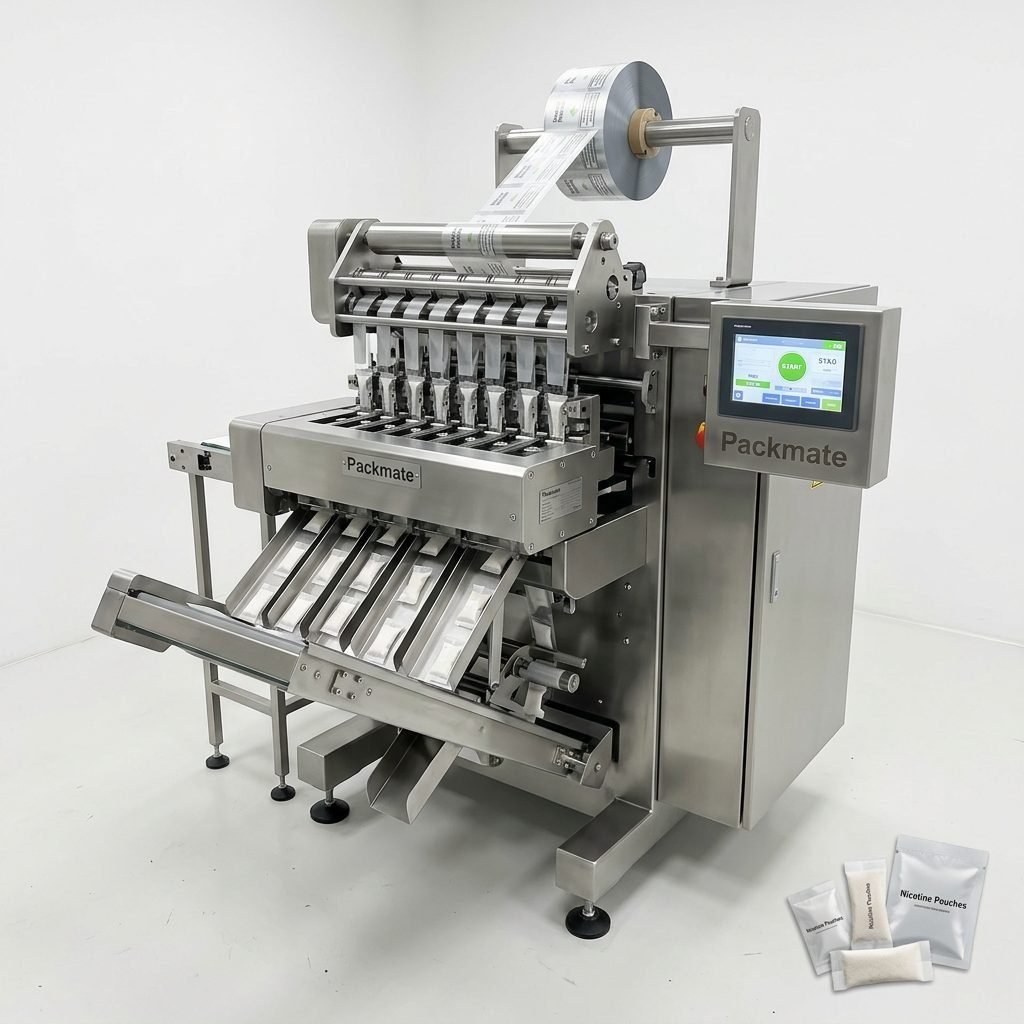
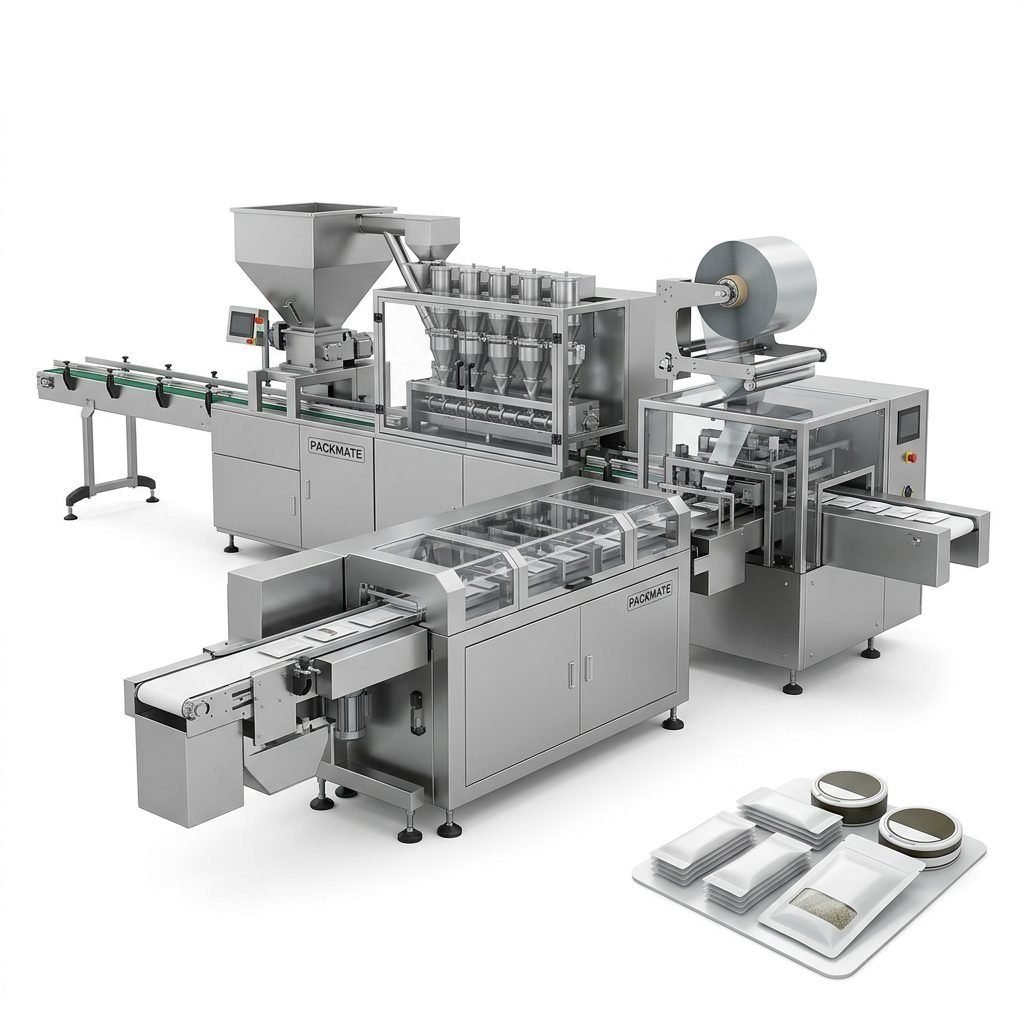
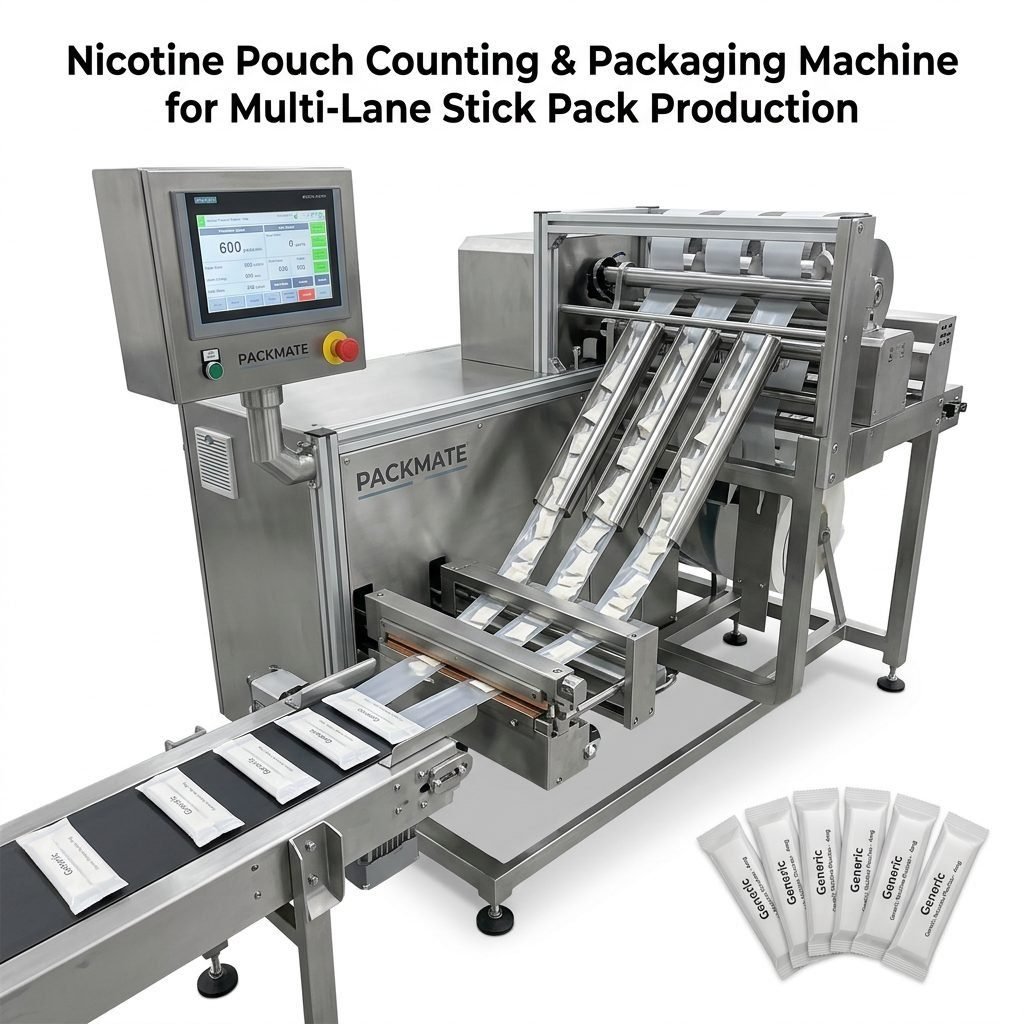
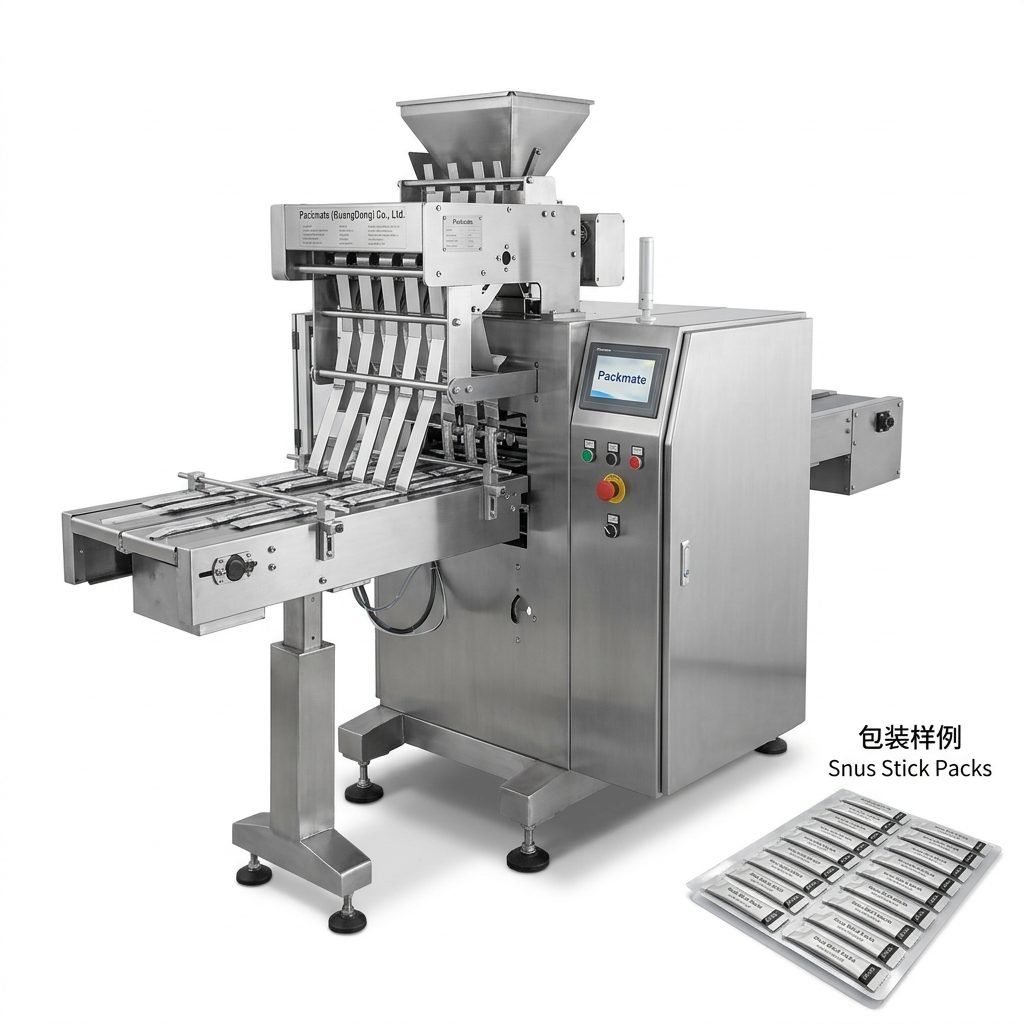
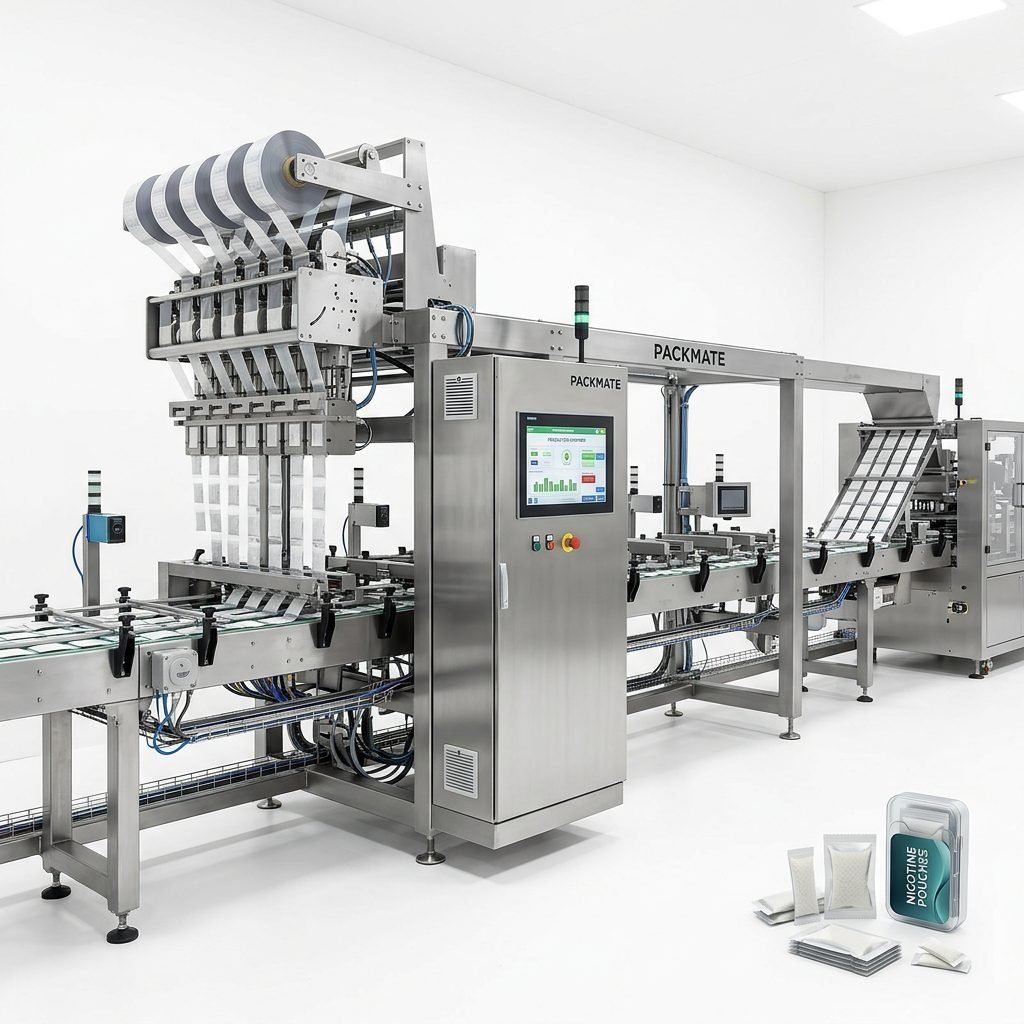
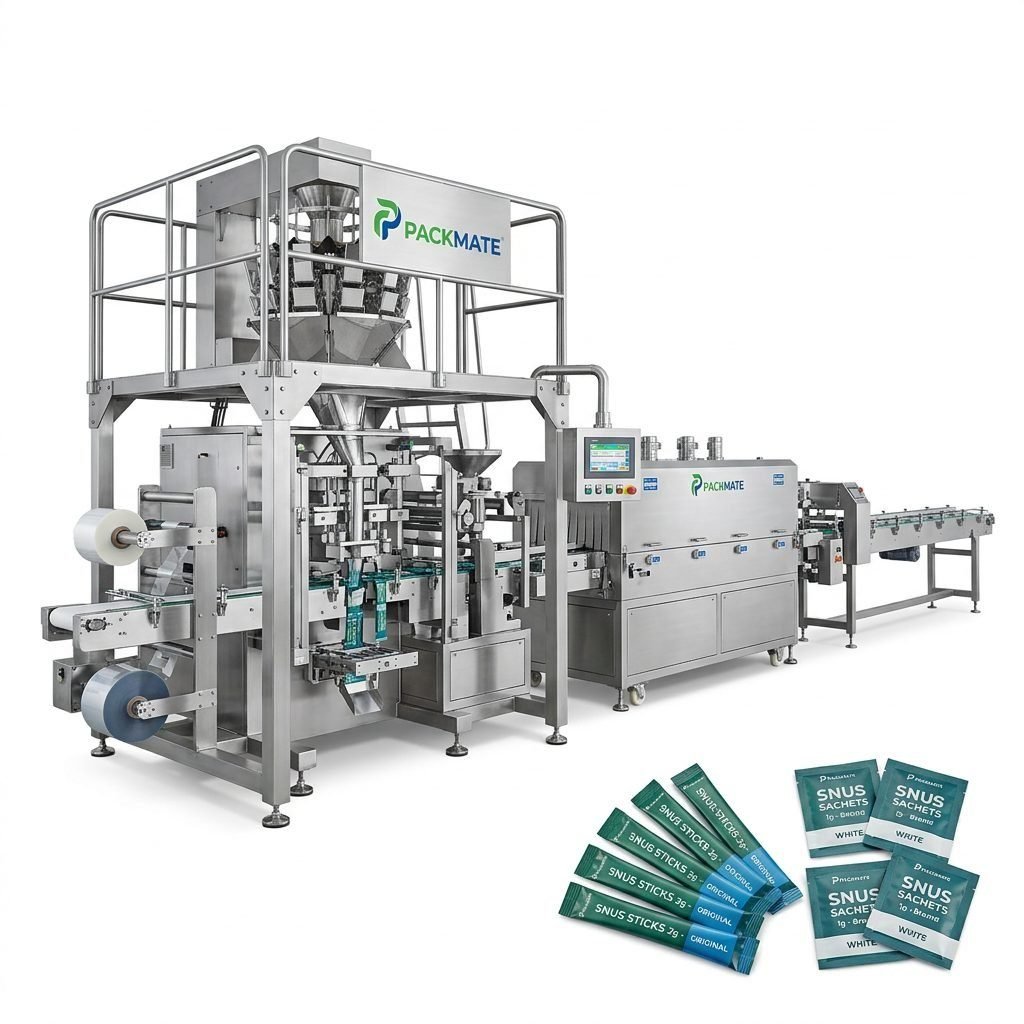
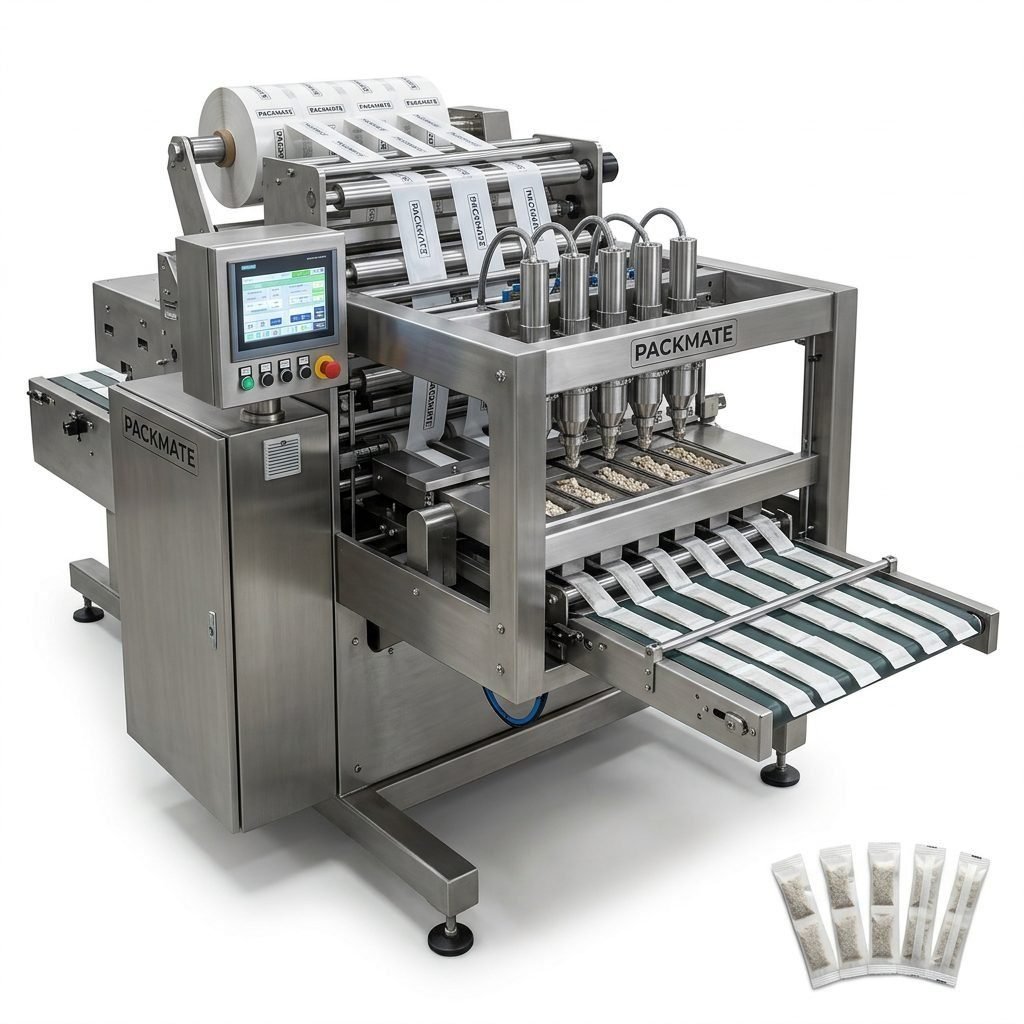
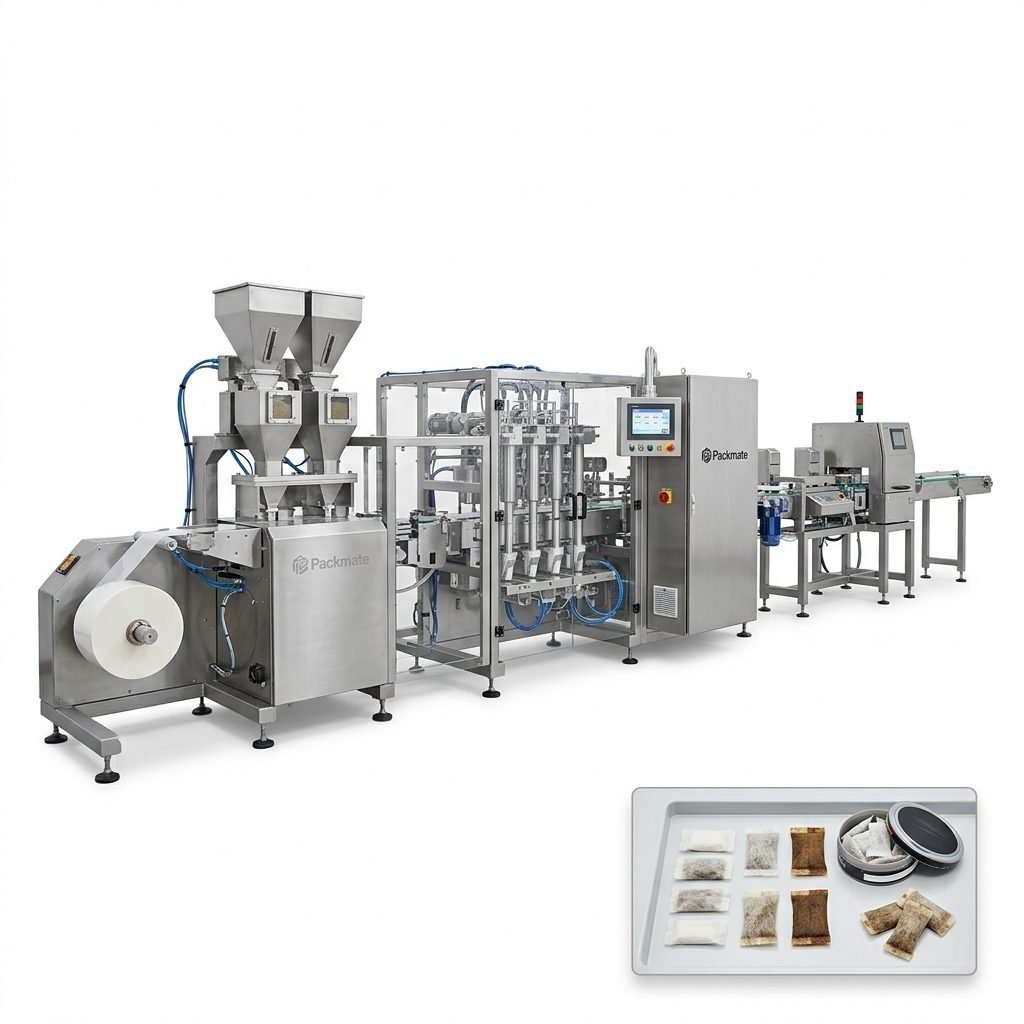
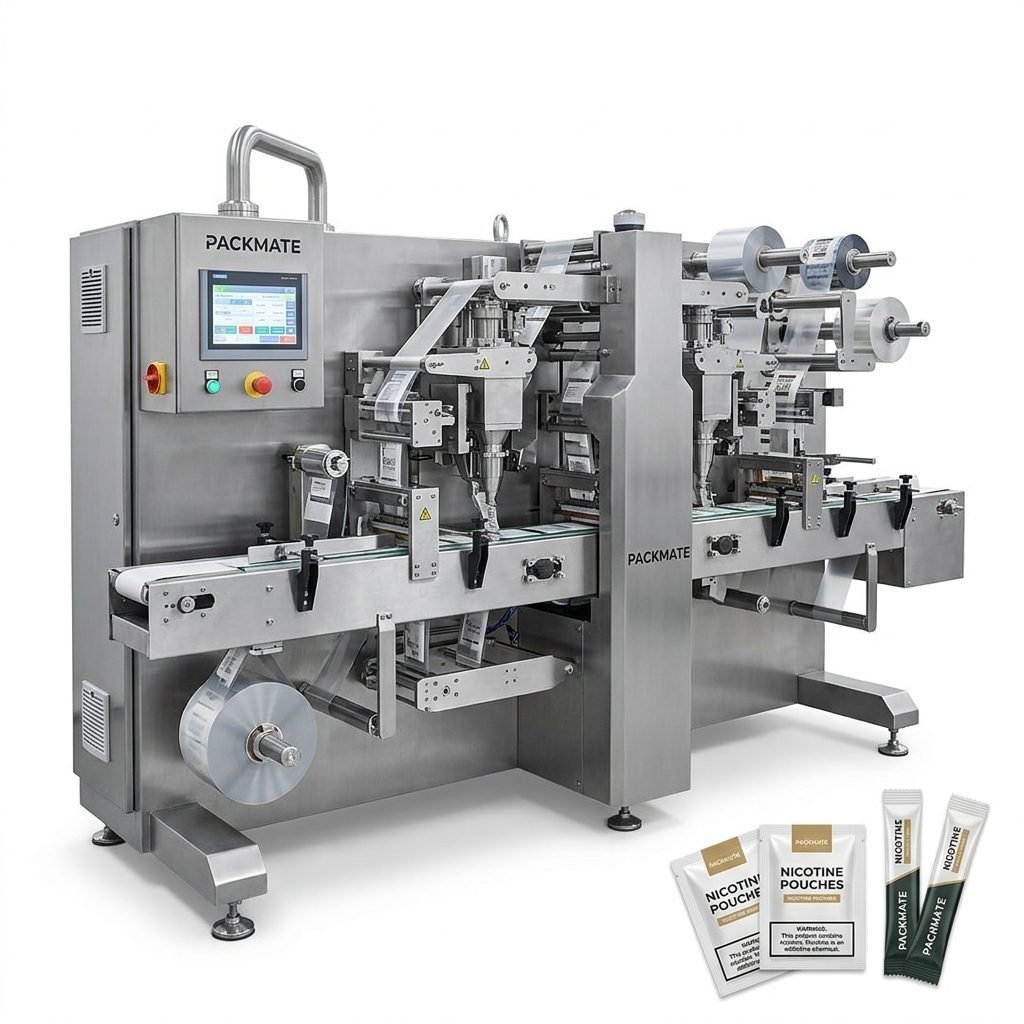
The snus pouch filling system is at the heart of modern nicotine pouch production. As demand grows for consistent, high-quality small-dose pouches, manufacturers require turnkey high-speed automatic packing solutions that combine precision dosing, multi-lane throughput, and reliable sealing. This guide explains the core components, performance considerations, integration tips, compliance issues, and how to choose the right system for scalable production.
Why High-Speed Automatic Snus Pouch Filling Matters
Production efficiency directly affects cost-per-unit and market competitiveness. A modern snus pouch filling line reduces manual labor, minimizes product variance, and enables flexible formats (single-pouch, multi-lane sachets or stick packs). For manufacturers targeting rapid growth, consistent dosing accuracy and minimal downtime are the primary benefits that a purpose-built automated system delivers.
Key Business Drivers
Manufacturers select high-speed filling systems to:
✓ Increase throughput — scale from pilot runs to continuous production without changing core equipment.
⚙️ Improve precision — tight tolerances for nicotine dosing and herbal blends.
📦 Reduce waste — lower scrap rates via integrated weighing and rejection systems.
🚀 Faster time-to-market — flexible tooling and multi-format capability accelerate product launches.
Core Components of a Snus Pouch Filling System
A robust snus pouch packaging line typically includes several integrated subsystems. Each must be engineered for hygiene, accuracy, and continuous operation.
1. Product Feeding & Pre-Conditioning
Material handling begins with controlled feeding. For powders, granules, or moist snus blends, pre-conditioning (de-aeration, controlled humidity) ensures consistent fill characteristics. Vibratory hoppers, screw conveyors, and gentle dosing feeders are common solutions.
2. Precision Weighing & Dosing
High-accuracy load cells or volumetric/gravimetric dosing heads deliver reproducible pouch weights. For multi-lane lines, synchronized dosing heads ensure balance across lanes. Integration with weighing & packaging systems provides real-time feedback and automatic calibration.
3. Form, Fill & Seal (FFS) Module
The FFS module shapes the pouch, controls film movement, deposits the product, and seals the package. Choices include pre-made pouch infeed or film-based forming for stick packs and sachets. Higher speeds require precise film handling systems and robust sealing jaws.
4. Multi-Lane Synchronization
Multi-lane platforms multiply output without proportionally increasing floor space. Synchronization mechanisms, lane-matching sensors, and centralized PLCs maintain uniform performance across lanes — minimizing lane imbalance and ensuring uniform dosing.
Technical Features to Evaluate
When comparing systems, focus on features that improve uptime, reduce maintenance, and guarantee product integrity.
● Servo-driven accuracy: Faster, repeatable motion control for dosing and film handling.
● CIP-friendly design: Sanitary structures and easy-clean components reduce contamination risk.
● Quick-change tooling: Fast format swaps minimize downtime for new pouch sizes.
● Integrated rejection systems: Automatic removal of under/overweight pouches to maintain quality standards.
● Remote monitoring & Industry 4.0 readiness: Data logging, alerts, and predictive maintenance for reduced OEE losses.
Compliance, Safety & Certifications
Regulatory compliance is vital, particularly for nicotine products. Equipment should comply with international standards such as CE and ISO. Sanitary design, food-grade materials where applicable, and clear documentation for cleaning and validation are mandatory. Many established suppliers provide certification packages and FAT/SAT support as part of commissioning.
Selecting a Manufacturer: What to Ask
Choosing the right equipment partner determines long-term operational stability. Evaluate manufacturer experience, custom capability, and after-sales service.
• Experience & track record: Ask for case studies and references — established suppliers will have global installations and show real-world uptime statistics. See examples at the Case page.
• Custom engineering: Can the supplier tailor multi-lane configurations or integrate upstream and downstream systems?
• Factory capability: Large-capacity manufacturers with CNC and precision assembly lines typically deliver more reliable machines.
• After-sales service: Local support, spare parts availability, and remote technical assistance reduce downtime.
Integration: End-to-End Packaging Lines
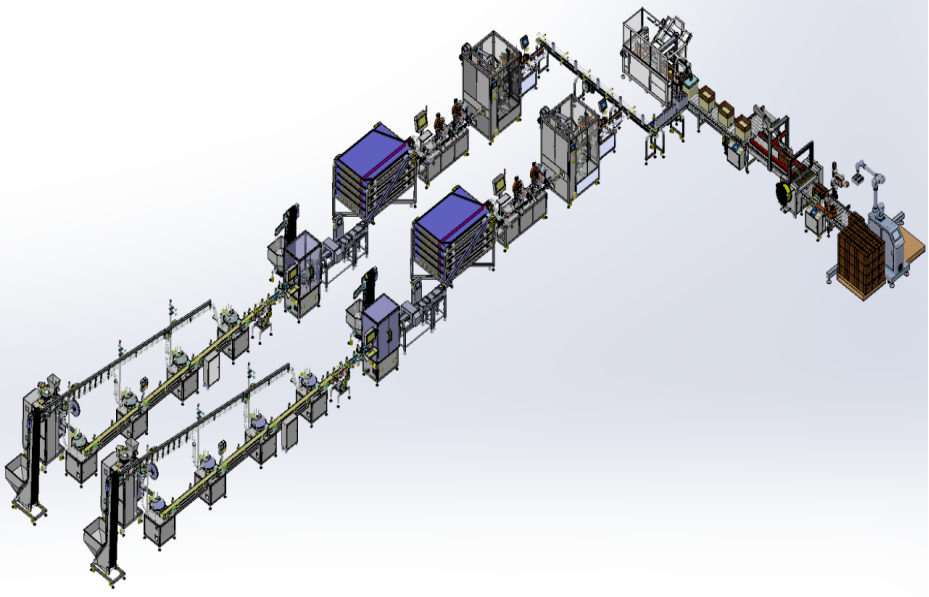
For turnkey operations, integrate the snus pouch filling system with upstream material handling and downstream cartoning or secondary packaging. Combining machines into a synchronized line avoids bottlenecks and simplifies automation. Manufacturers often bundle FFS machines with feeders, weighers, and conveyor systems — look for integrated solutions under Filling & Packaging Lines and Snus & Nicotine Packaging Machines.
Common Integration Challenges
Expect to address product flow discrepancies, electrical and PLC compatibility, and mechanical timing between modules. Early-stage factory layout planning and coordination with suppliers’ integration teams mitigate most of these issues.
Installation, Commissioning & Training
Professional installation ensures machine safety and production reliability. A recommended process includes site readiness checks, mechanical and electrical hook-ups, FAT (Factory Acceptance Test), on-site SAT (Site Acceptance Test), operator training, and performance validation under actual production conditions.
Pro tip: Prioritize vendor-led training for maintenance staff and create a preventative maintenance schedule. Well-trained teams and documented procedures dramatically extend mean time between failures (MTBF).
Maintenance, Spare Parts & Lifecycle Support
Long-term support includes spare parts kits, remote diagnostics, and firmware updates. When evaluating suppliers, request a spare-parts list, recommended stocking levels, and typical lead times. Suppliers that maintain a global parts distribution network and remote service portals will shorten repair cycles.
ROI Considerations
Return on investment depends on throughput gain, labor savings, yield improvement, and reduced waste. Calculate ROI by comparing current cost-per-unit (manual or semi-automatic) to projected cost with an automated line factoring in capital expenditure, reduced headcount, and improved yield. Don’t forget to include downtime risk and service contract costs.
Customization Examples & Use Cases
Modern suppliers offer customized options: multi-lane arrays for small-dose pouches, active humidity control for hygroscopic blends, nitrogen flushing for extended shelf life, and inline metal detection. Explore dedicated product pages for packaging variants like stick packs, sachets and bag formats on the Sachet & Stick Pack Machines and Bag & Pouch Packaging Machines.
Case Study Snapshot
A European snus producer transitioned from semi-automatic filling to a 6-lane automatic snus pouch line. Results included throughput increases of 350%, a 22% reduction in product giveaway, and savings in labor costs that produced a payback period under 24 months. For real-world installations and performance metrics, review the supplier’s project examples on the Case page.
Why Packmate Snus Machine?
Established engineering experience, precision manufacturing, and global turnkey capabilities make a difference. With over 30 years of development and a 20,000㎡ factory, Packmate specializes in snus and nicotine pouch packaging equipment — offering multi-lane high-speed lines, custom engineering, and global after-sales support. Learn more about the company and its mission on the About Packmate page.
Procurement Checklist
Use this checklist during RFQs and factory visits:
1. Performance specs: Max pouches/min per lane, total lanes, and uptime targets.
2. Dosing accuracy: Typical variation per pouch and calibration procedure.
3. Material compatibility: Supported powder/granule/moist blends and film types.
4. Life-cycle support: Spare parts lead times, service contracts, and local presence.
5. Compliance & documentation: CE/ISO certificates, validation documents, and FAT/SAT reports.
Final Recommendations
When planning to invest in a snus pouch filling system, prioritize proven multi-lane performance, sanitary design, and vendor support. Conduct a detailed ROI analysis, request FAT demonstrations, and confirm spare parts availability. Partnering with an experienced manufacturer ensures faster commissioning and reliable production growth.
Need help or a consultation?
For machine specifications, on-site evaluation, or turnkey line proposals, contact the manufacturer’s sales and service team via their Contact Us page.
Frequently Asked Questions
Q1: What production rates can multi-lane snus pouch systems achieve?
Typical multi-lane systems scale from several hundred to several thousand pouches per minute depending on lane count and pouch format. A 4–8 lane high-speed platform can dramatically increase throughput while keeping footprint compact.
Q2: How accurate are dosing systems for nicotine pouches?
Modern gravimetric or precise volumetric dosing systems routinely achieve tight tolerances suitable for regulatory compliance. Accuracy depends on product characteristics and proper calibration; integrated weighing feedback further refines performance.
Q3: What maintenance is required to keep lines running reliably?
Routine maintenance includes cleaning, lubrication, periodic replacement of wear parts, and firmware updates. A vendor-provided maintenance plan and stocked spare parts reduce downtime and extend machine life.
Q4: Can I integrate existing upstream/downstream equipment?
Yes — many suppliers specialize in system integration. Define communication protocols (PLC, I/O), line speeds, and mechanical interfaces during the design phase to ensure seamless operation.
Q5: Are turnkey solutions available for snus pouch production?
Most experienced manufacturers offer turnkey solutions that include fillers, weighers, form-fill-seal machines, conveyors, and secondary packaging. Review supplier portfolios and ask for references to validate end-to-end capability.