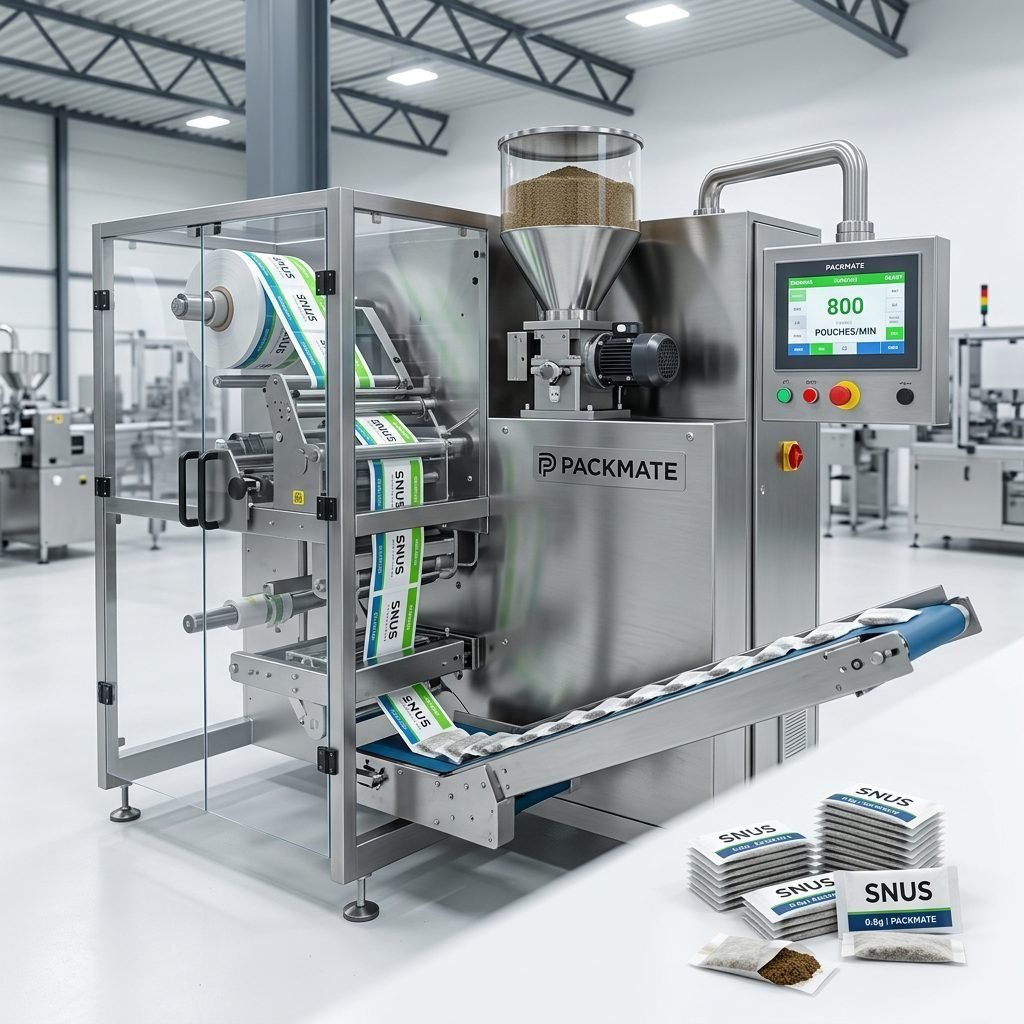
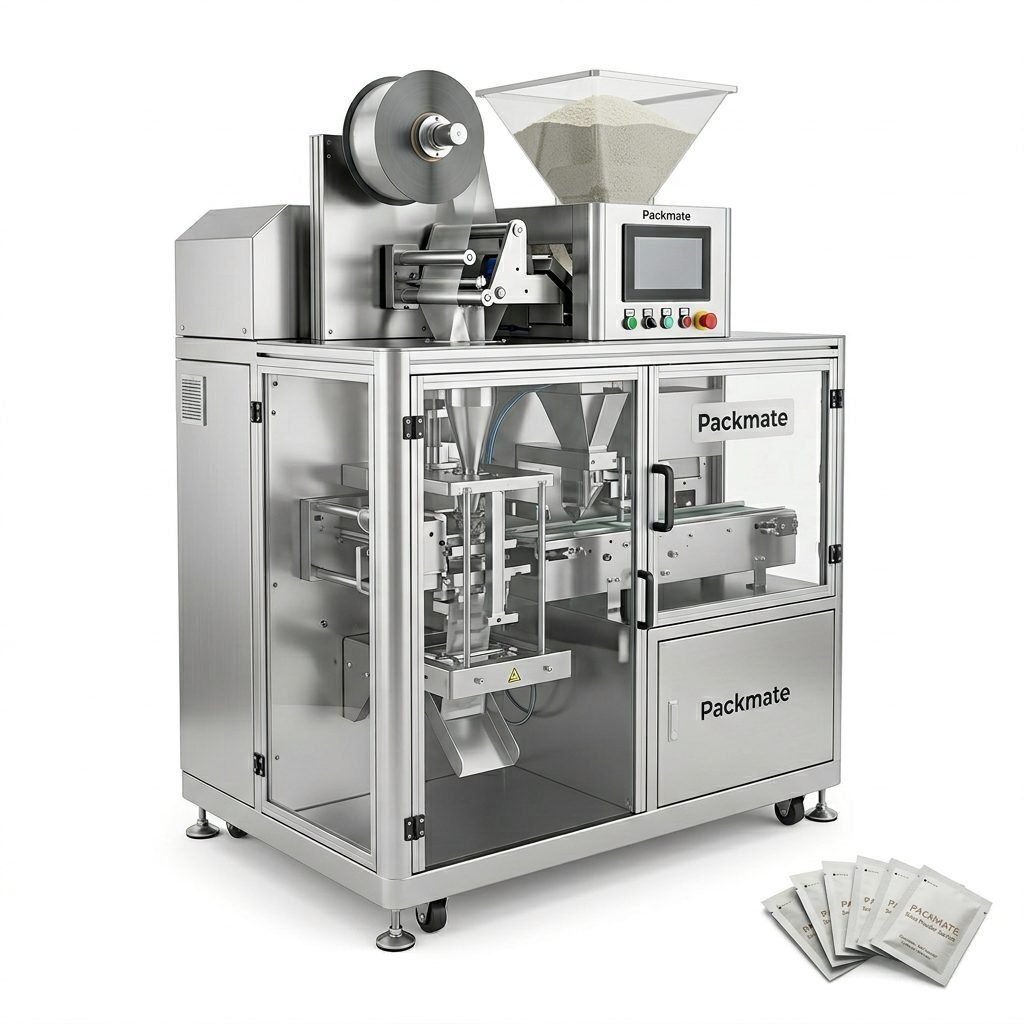
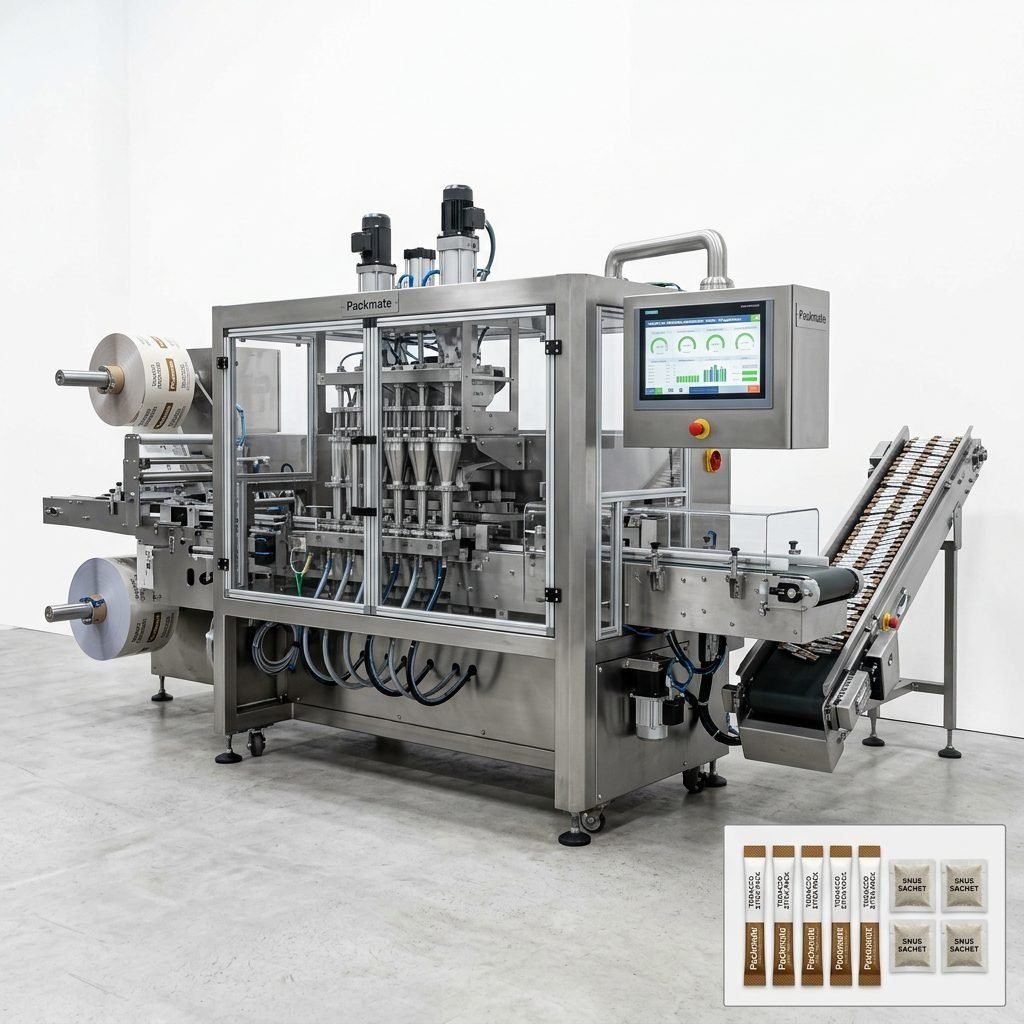
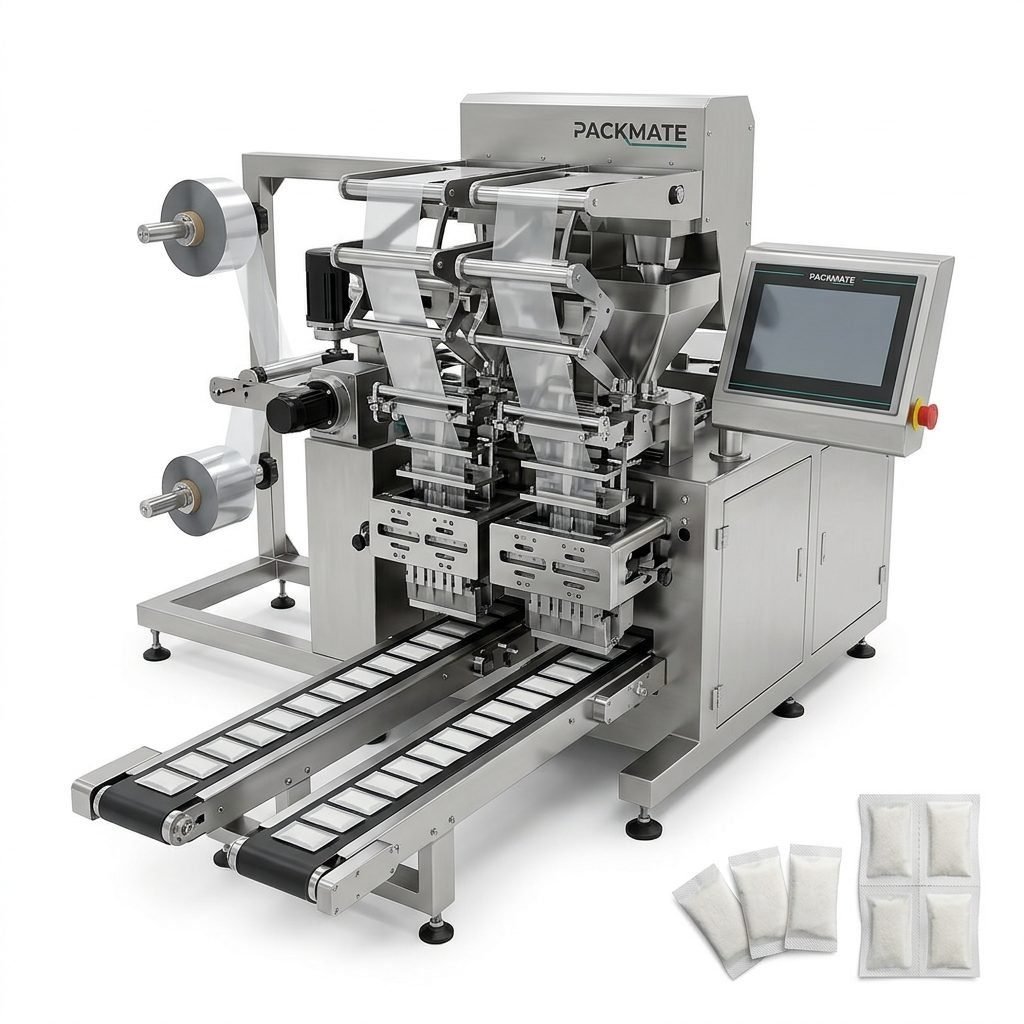
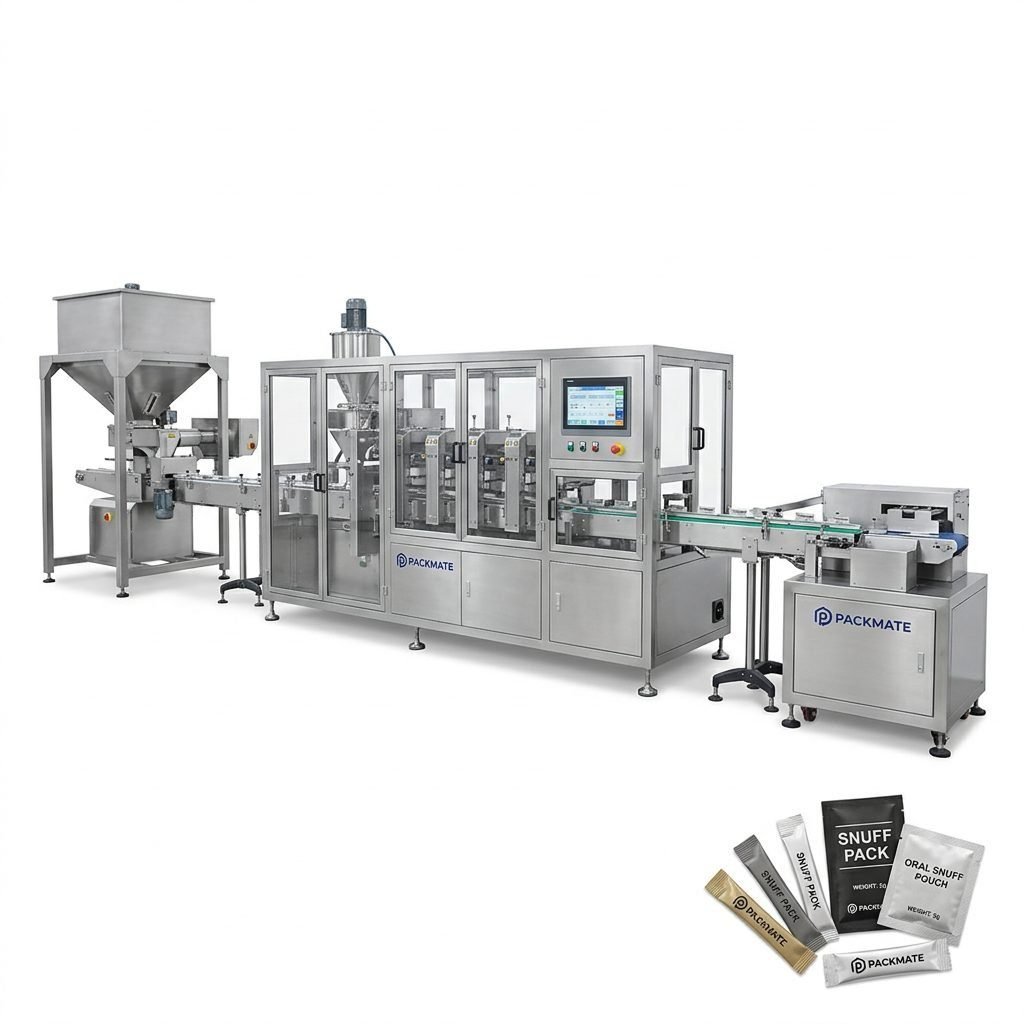
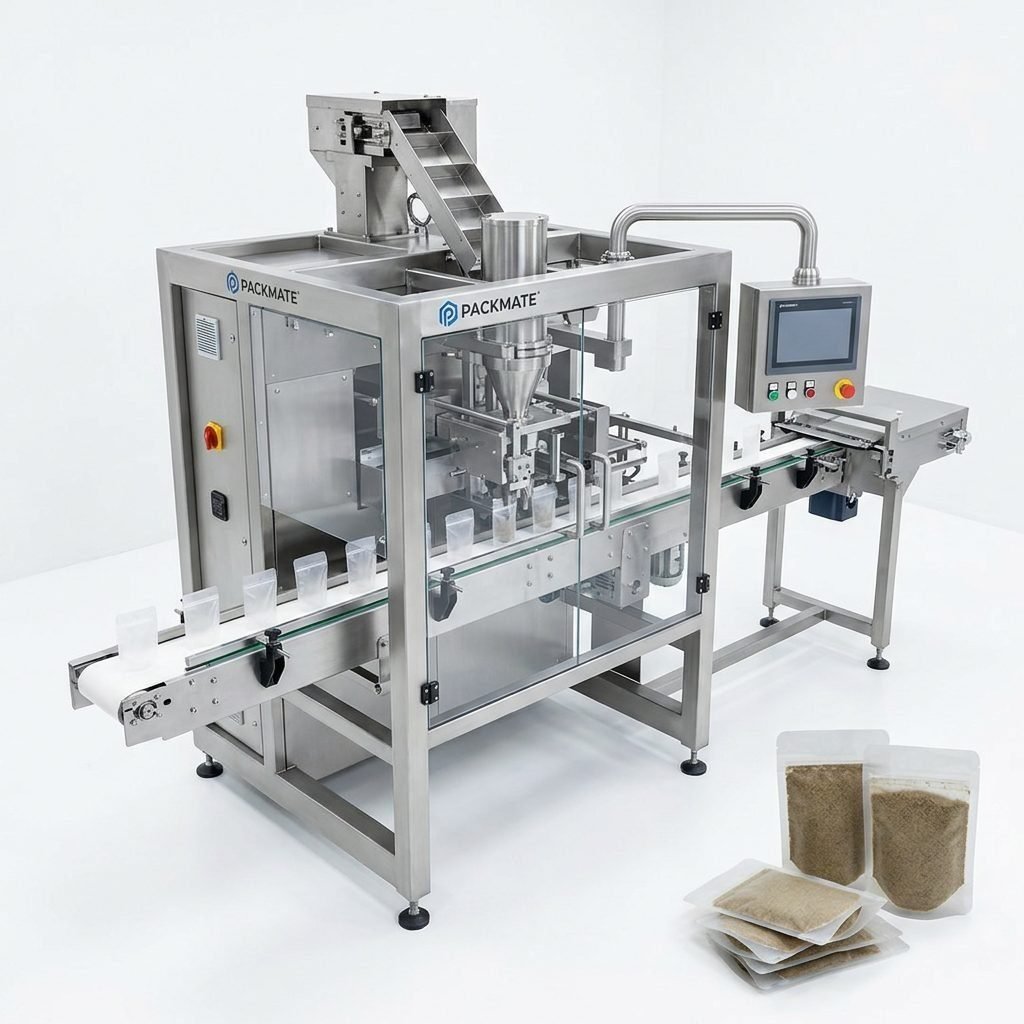
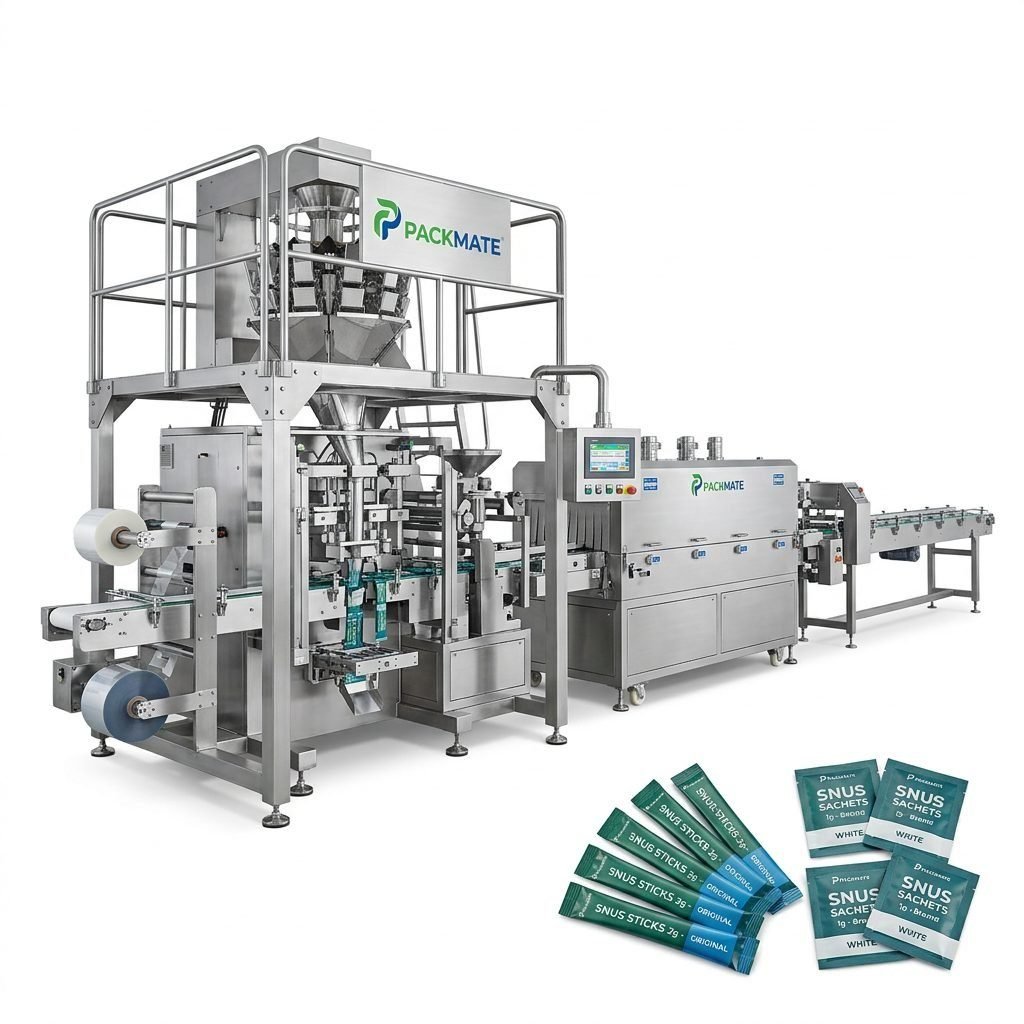
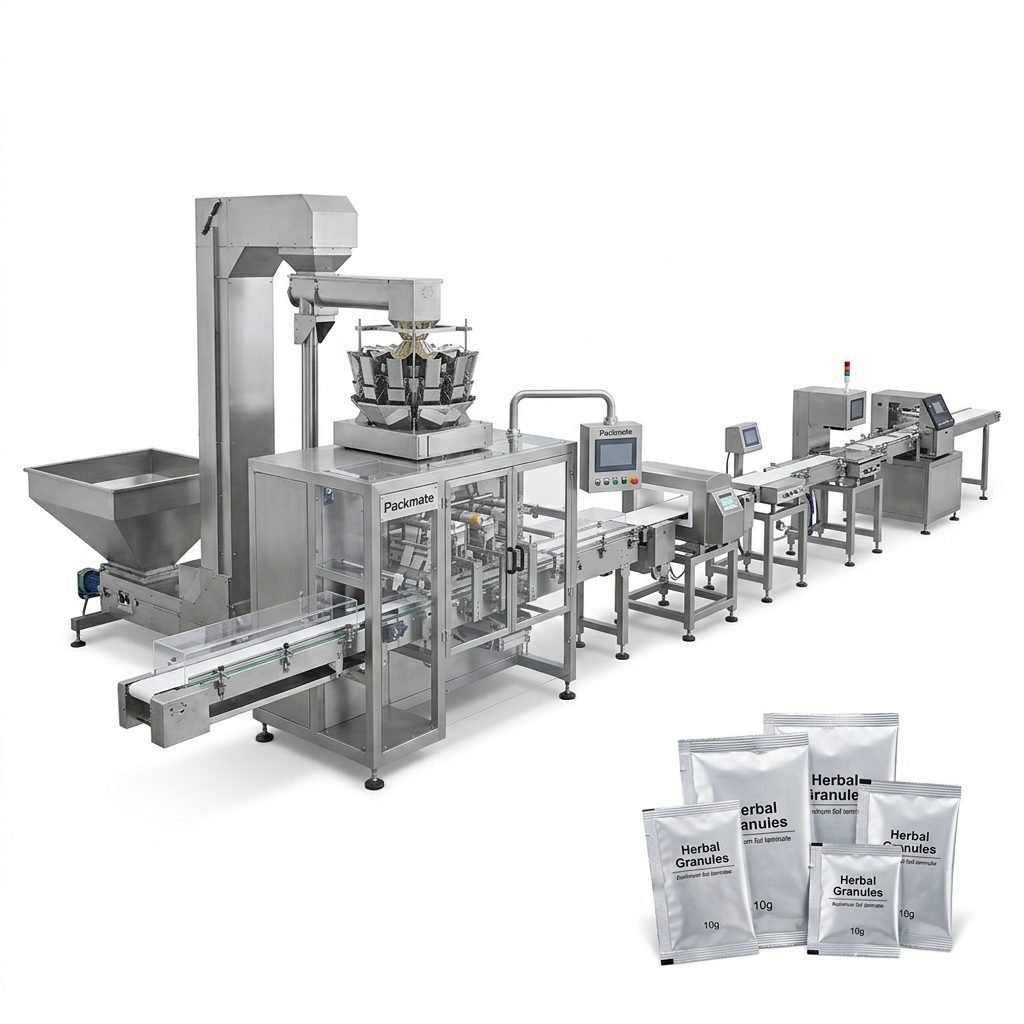
This technical guide walks packaging engineers, production managers, and purchasing teams through selecting, configuring, and optimizing a modern snus (nicotine pouch) packaging line. It focuses on practical decision points, configuration options, and operational tips that maximize throughput, minimize waste, and ensure regulatory compliance for snus and nicotine pouch production.
⚙️ Key selection criteria for a snus packaging machine
Choosing the right snus packaging equipment starts with a clear understanding of your product and business objectives. Consider these factors together to define a machine specification that matches real-world production needs.
Product format and pouch type: stick packs, sachets, multi-lane nicotine pouches, and doypacks require very different forming and sealing systems. Identify the exact pouch geometry, ply structure, and sealing requirements before evaluating machines.
Production speed and throughput: calculate daily and peak throughput targets. Confirm that the machine’s rated cycles per minute and multi-lane options meet future capacity projections.
Filling accuracy and dosing technology: for low-dose nicotine pouches, dosing precision is critical — choose from volumetric, auger, belt, or gravimetric dosing depending on product characteristics.
📦 Material compatibility & packaging film
Understand the film type (single- or multi-layer laminate), barrier requirements (moisture and oxygen), and heat-seal characteristics. Machines must be tuned for film thickness, sealing temperatures, and seal dwell times to prevent wrinkles, leaks, or inadequate seals.
📈 Regulatory compliance & traceability
Ensure equipment supports serialization, batch coding, and integration with quality management systems. Packmate machines can be supplied with marking, vision inspection, and data-logging modules to meet CE/ISO and market-specific requirements.
🔩 Core machine components and common configurations
A modern snus packaging line is modular — understanding the role of each module simplifies selection and future upgrades.
Feeding & product handling: vibratory or belt feeders and sachet collation units reduce product jams and ensure consistent metering into the forming area.
Dosing systems: choice between multi-head weigher, auger filler, piston volumetric, or loss-in-weight gravimetric depending on powder/granule properties and dosing accuracy.
Forming, sealing & cutting: servo-driven film transport, adjustable forming stations for different pouch sizes, hot-seal or impulse sealing, and precise cutting or perforation systems.
Inspection and rejection: vision systems, weight-checking, and metal detectors integrated downstream to protect quality and brand reputation.
Multi-lane solutions
For small-dose snus pouches, multi-lane machines multiply throughput without increasing cycle speed. When evaluating multi-lane designs, confirm lane-to-lane consistency, film unwind width, and lane isolation for maintenance or quick changeovers.
⚡ Configuration & automation choices
Automation level significantly influences cost, OEE, and labor requirements. Here are common automation features to consider.
Human-machine interface (HMI): recipe management, CIP prompts, and production dashboards reduce operator errors and shorten startup.
In-line quality control: single-point vision inspection for print and seal integrity, web break detection, and weight station integration.
Robotics & secondary packaging: pick-and-place robots, case packers, and cartoning systems deliver turnkey lines ready for palletizing.
🔧 Tips to optimize a snus packing line
Optimizing production is an ongoing process. Implementing robust procedures and smart adjustments reduces downtime and improves yield.
Standardize recipes: maintain a digital library of parameters for each product format to accelerate changeovers and ensure consistent seals and fills.
Preventive maintenance: schedule checks for belts, bearings, and seal tooling. Replace wear parts on a time- or cycle-based plan to prevent unplanned stops.
Film handling and storage: store films in climate-controlled conditions and ensure proper unwind tension to avoid wrinkles and seal defects.
Operator training: invest in hands-on training for setup, sanitation, and minor troubleshooting to reduce dependency on external support.
Line balancing and OEE improvements
Map the entire line — from feeding to packing to case erecting — and remove bottlenecks. Monitor Overall Equipment Effectiveness (OEE) to prioritize improvements: availability, performance, and quality metrics will guide ROI-driven upgrades.
🔬 Commissioning, validation and after-sales service
A smooth ramp-up depends on professional installation, commissioning, and training. Packmate offers global turnkey services including FAT, SAT, on-site commissioning, and preventive maintenance contracts to keep lines running reliably.
Factory Acceptance Testing (FAT): exhaustive pre-shipment checks using your film and product reduce on-site surprises.
Validation & IQ/OQ/PQ: documentation and test protocols ensure regulatory-ready records for snus and nicotine pouch production.
Remote support and spare parts: quick remote diagnostics and locally stocked critical spares minimize MTTR (mean time to repair).
✅ Common production issues and proven fixes
Below are typical issues encountered in snus packaging and the most effective countermeasures.
Seal failures: check film cleanliness, seal temperature uniformity, and replace worn seal jaws. Use process data to identify drift in parameters.
Weigh/fill variability: calibrate dosing heads, maintain consistent feed hopper levels, and implement in-line weight checks to reject out-of-spec packs automatically.
Web tracking and wrinkles: adjust unwind tension, confirm guide roller alignment, and verify proper film core mounting.
🏭 Why choose a specialized snus machine manufacturer?
Specialized manufacturers bring deep domain knowledge: tailored sealing profiles, lane synchronization expertise, and dosing systems specific to low-dose nicotine pouches. Packmate brings 30+ years of packaging machine experience, advanced CNC manufacturing, and global turnkey capabilities to deliver reliable, high-performance lines.
Explore relevant machine families and line solutions: Snus & Nicotine Packaging Machines, Sachet & Stick Pack Machines, and Filling & Packaging Lines.
Factory capabilities & certifications
A robust supplier should provide detailed machine drawings, materials traceability, CE and ISO certifications, and a demonstrable track record. Packmate’s 20,000㎡ facility, 50+ machine models, and international exhibition presence provide assurance for global customers — see About Packmate for company details.
For practical case studies and deployed lines across markets, review published examples and customer success stories to match references to your product and regulatory region: Case.
🔭 Final checklist before purchase
1. Confirm pouch formats, film samples, and target throughput with the supplier.
2. Request FAT with your product and approve performance before shipment.
3. Verify spare parts list, training plan, and warranty terms.
4. Ensure integration capability with upstream/downstream equipment and MES/ERP systems.
❓ Frequently Asked Questions
Q1: What machine speed do I need for a 1 million pouch/month target?
A1: Determine daily shifts and uptime. For example, with two 8-hour shifts and 85% uptime, calculate required pouches/minute and select a multi-lane machine to meet that rate. Contact supplier engineering for a capacity calculation.
Q2: Can the same machine handle different pouch sizes?
A2: Many machines support multiple formats with change parts and recipe-based servo adjustments. Quick-change tooling reduces downtime for frequent format switches.
Q3: How do I ensure dosing accuracy for ultra-low nicotine doses?
A3: Use gravimetric or precision auger dosing combined with inline weight checks and frequent calibration. Environmental control and consistent bulk density are also essential.
Q4: What after-sales services should I expect?
A4: Expect FAT, on-site commissioning, operator training, remote diagnostics, spare parts kits, and preventive maintenance contracts. Review the supplier’s service scope before purchase.
Q5: Where can I see machines and request a quote?
A5: Visit the manufacturer’s product pages and contact their sales team for machine demonstrations and quotes. For more machine categories and support resources, see Bag & Pouch Packaging Machines and About Packmate.