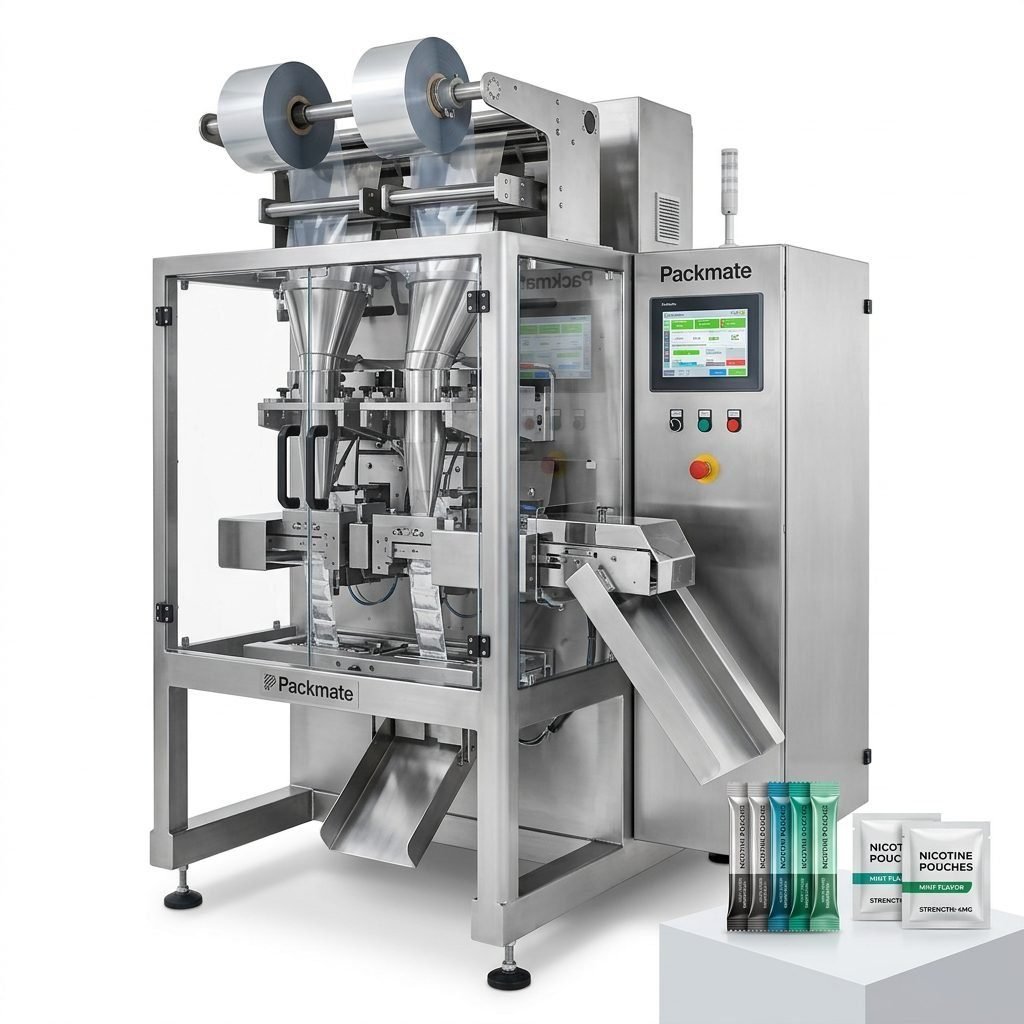
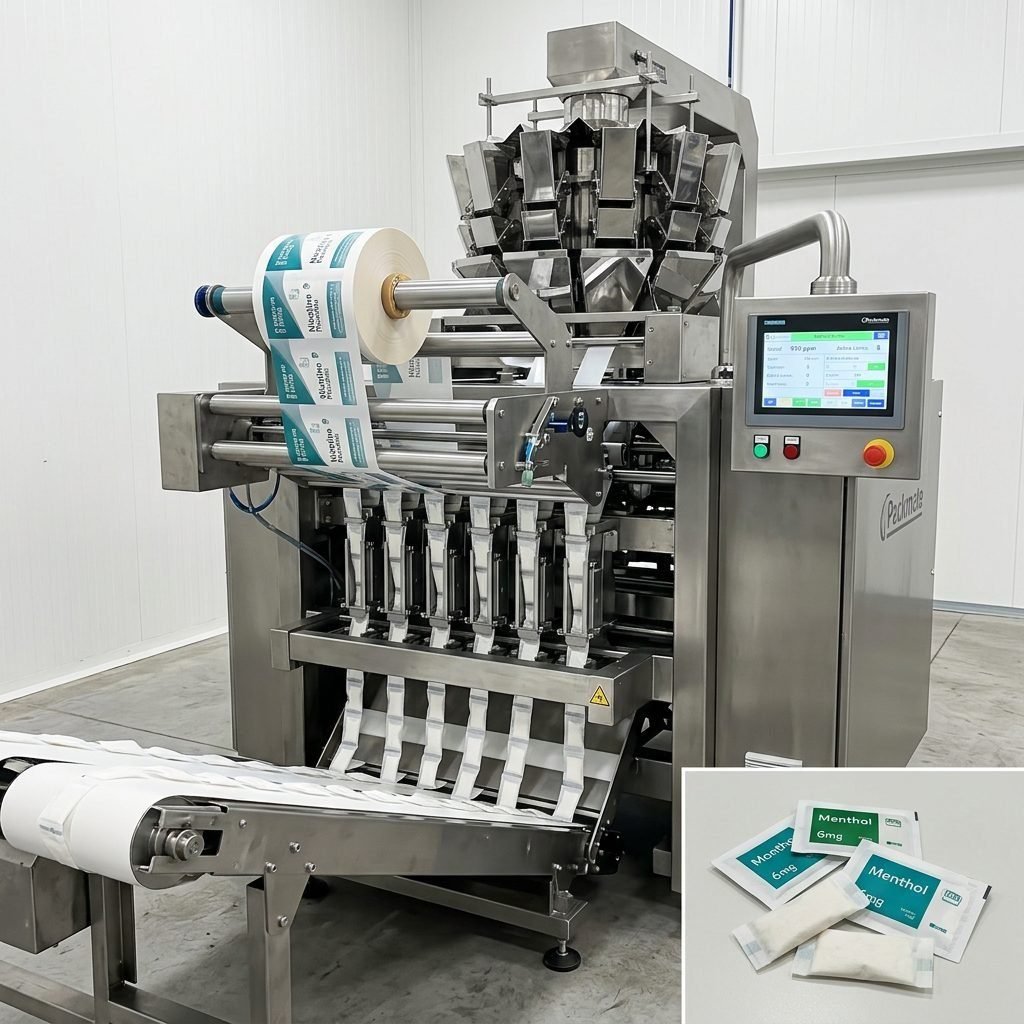
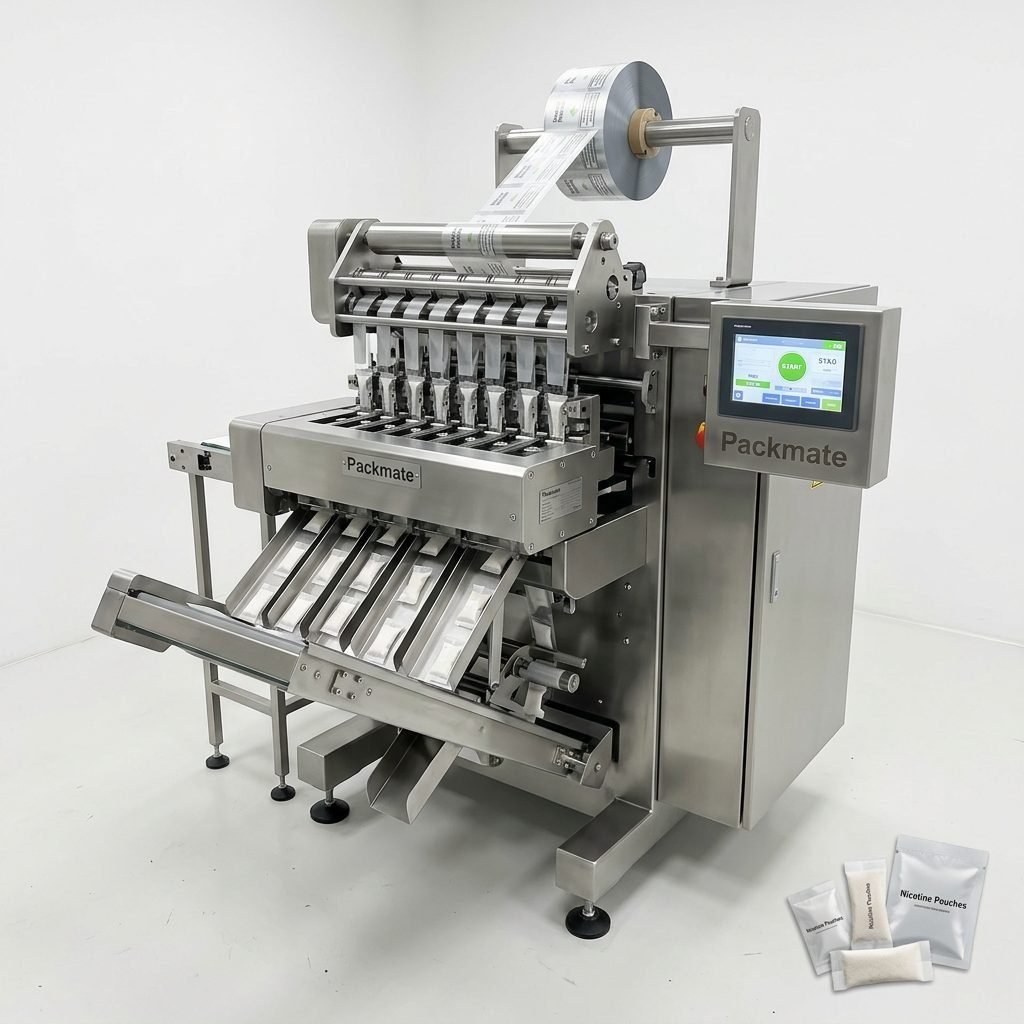
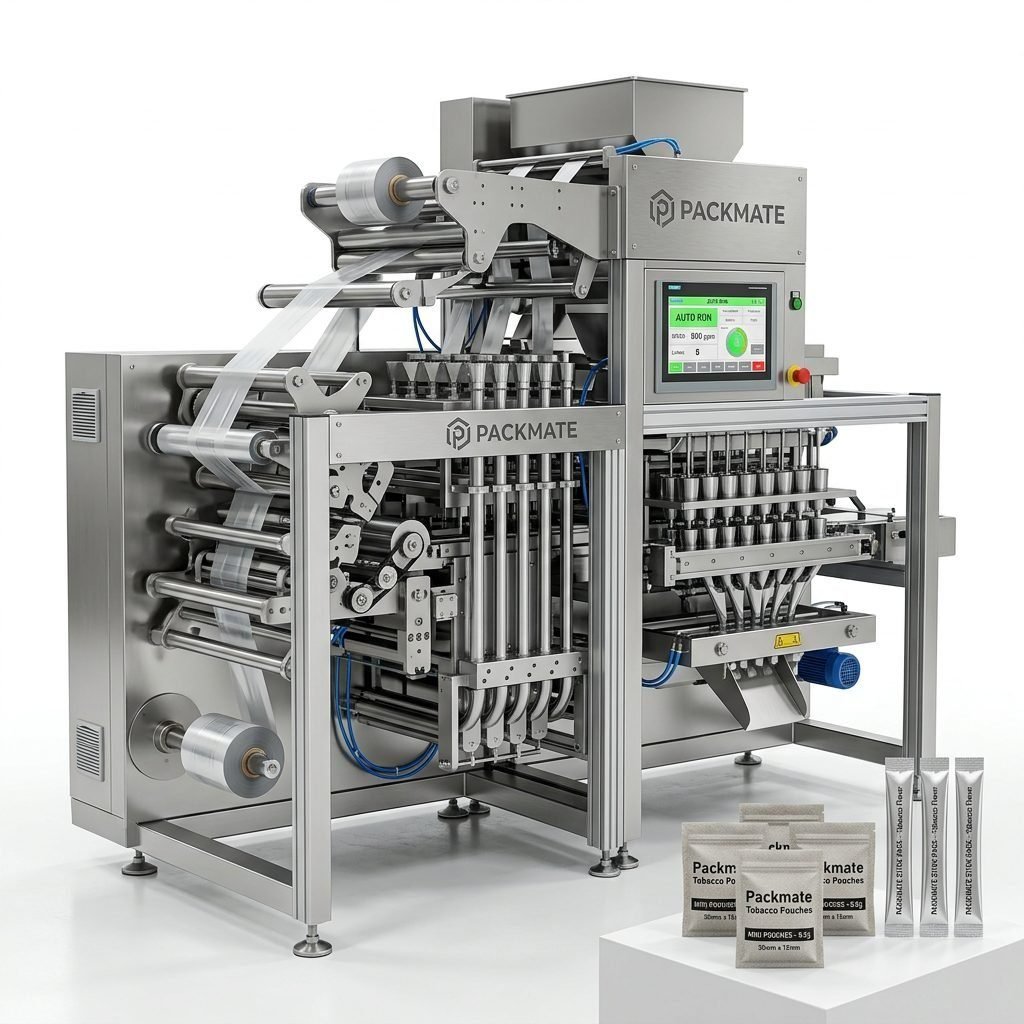
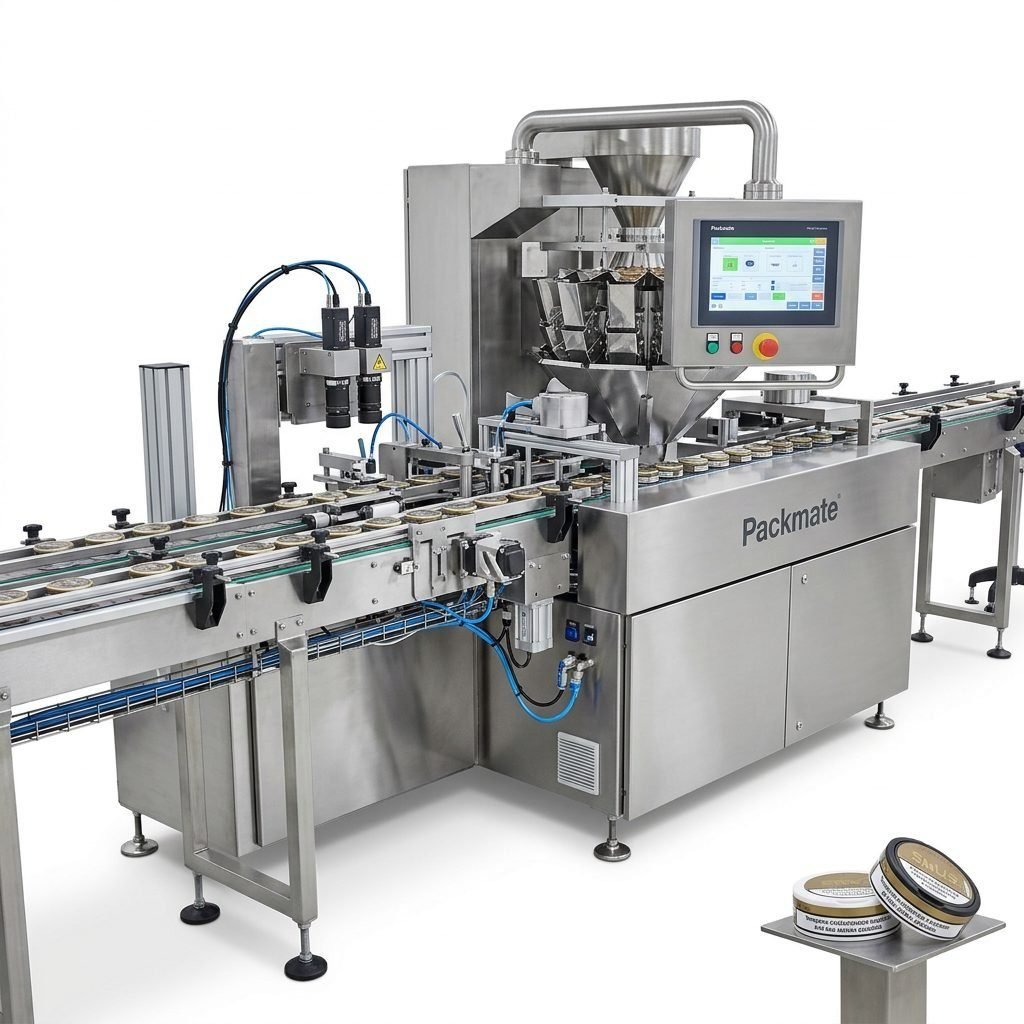
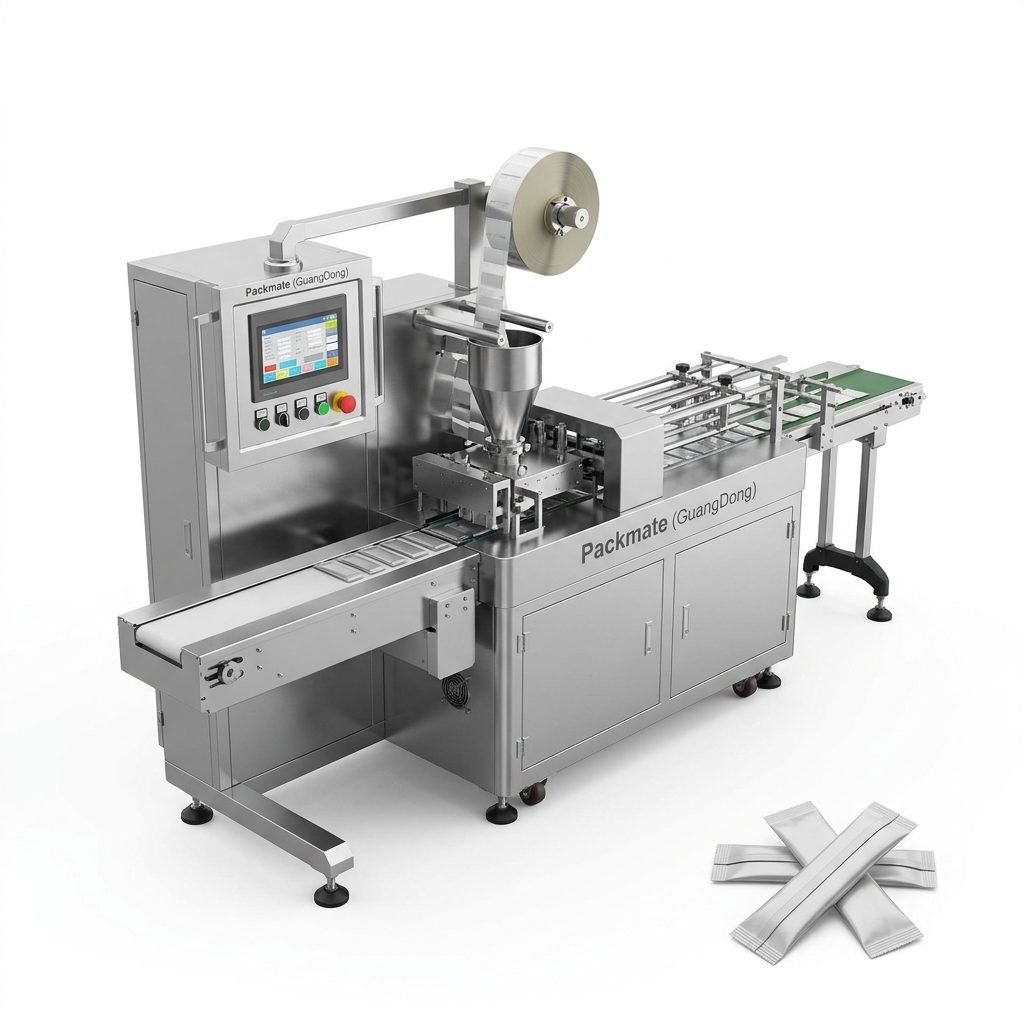
The global demand for portion snus and nicotine pouches continues to grow, driving manufacturers to seek reliable, high-output, and fully automated production lines. This article outlines complete automated solutions for portion snus manufacturing — from raw material handling to finished cartons — and explains how modern snus machines deliver consistent quality, regulatory compliance, and strong return on investment.
Overview of a Complete Automated Portion Snus Production Line
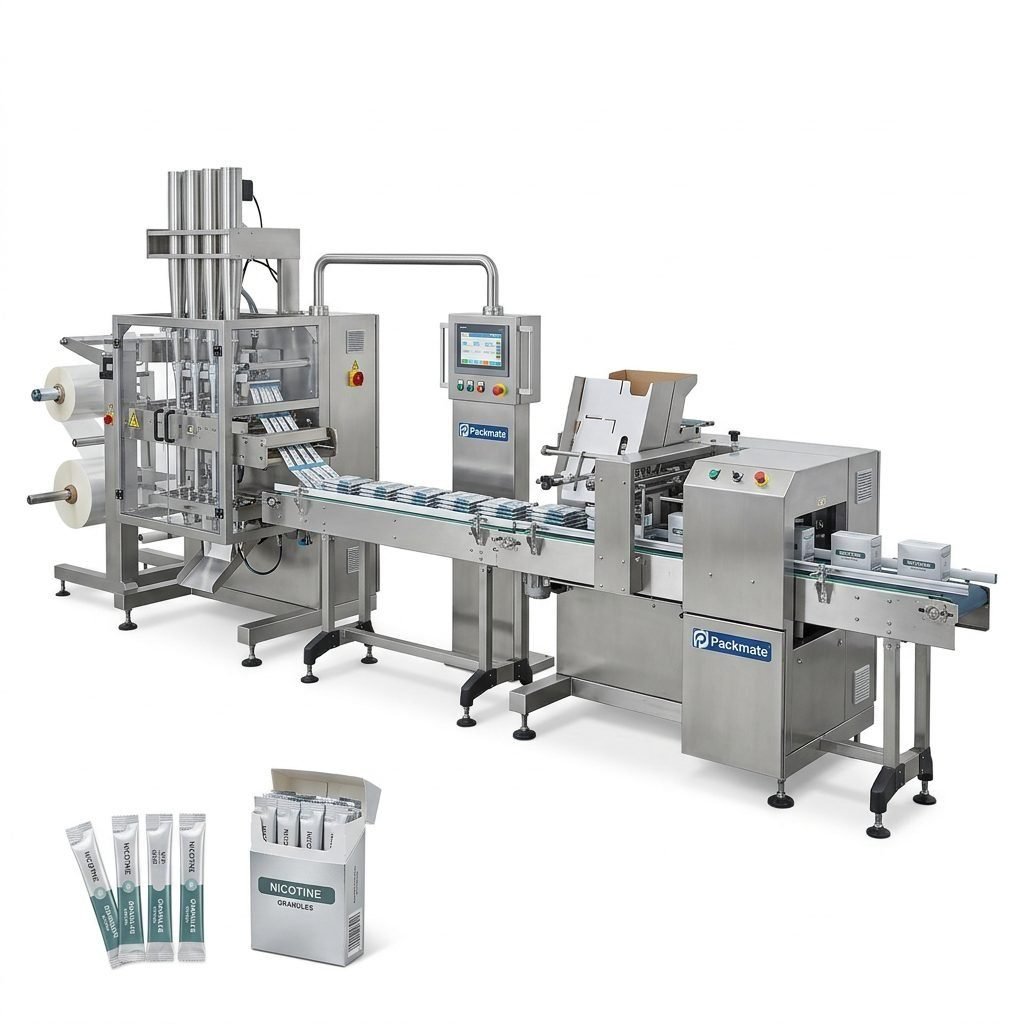
A complete automated portion snus production line integrates multiple machines and subsystems into a synchronized workflow. Typical stages include:
🔧 Raw material handling and pre-mixing
✅ Precision dosing and blending
🧪 Portion forming and pouch filling
📦 Sealing, labeling, and end-of-line packaging
Key components explained
Each component in the line is optimized for snus and nicotine pouch production. Choosing the right configuration depends on production speed, pouch format (portion pouches, sachets, stick packs), and downstream packaging.
1. Feeding & Pre-mixing Modules
Proper feeding and pre-mixing ensure homogeneity of the snus base and consistent moisture content. High-precision feeders and conical mixers reduce variation and ensure every portion meets product specifications.
2. Weighing & Dosing Systems
Modern multi-head and loss-in-weight dosing systems provide repeatable dose accuracy for micro-portion formats. Integration with Weighing & Packaging Systems allows inline adjustments and batch traceability.
3. Portion Forming & Pouch Machines
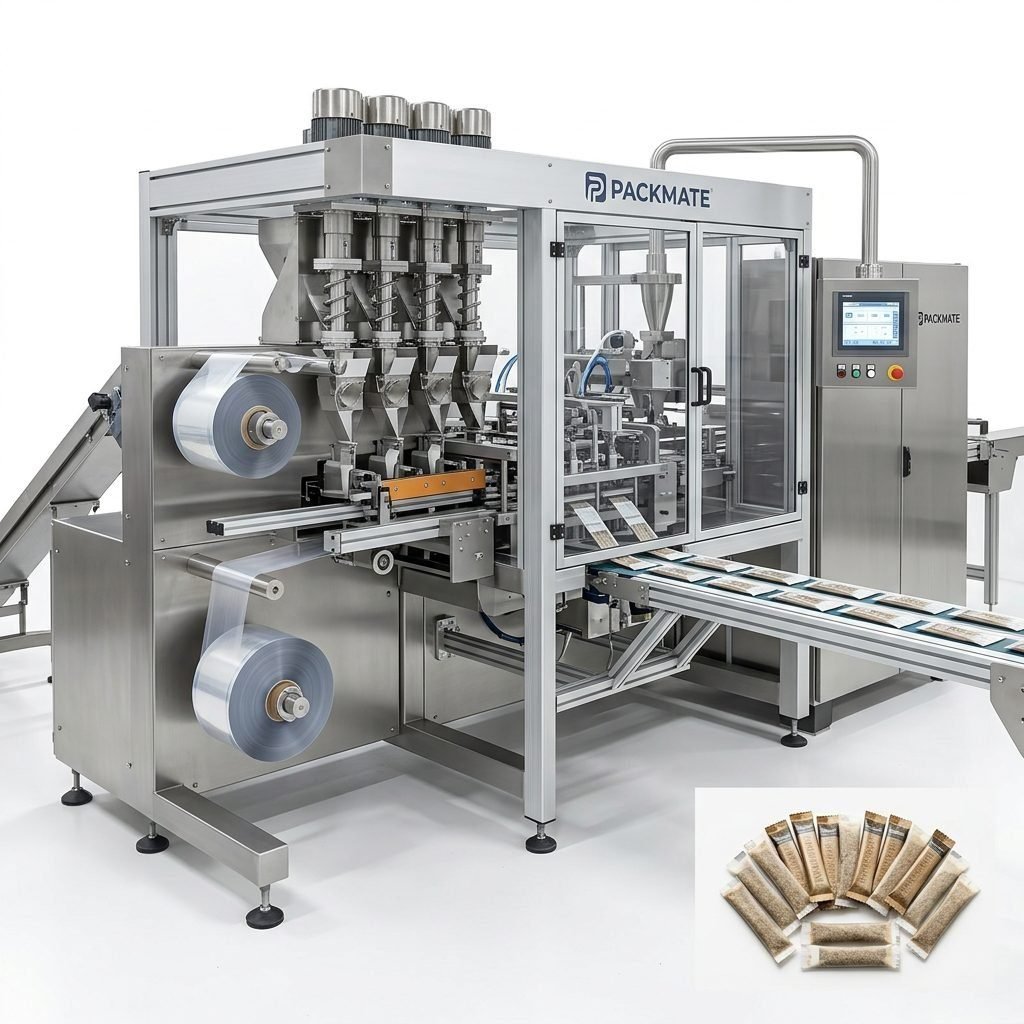
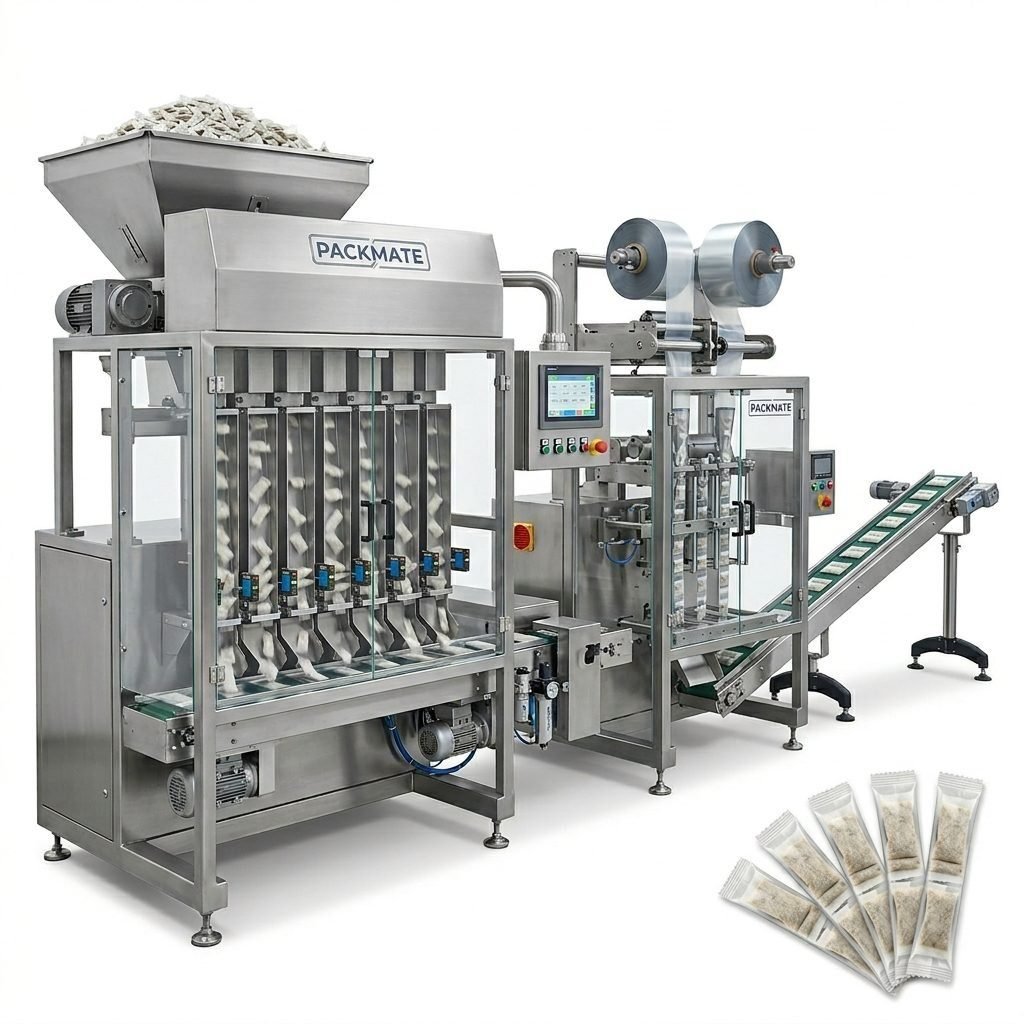
Portion forming machines are the heart of the line. They shape and fill the snus portion into pouches made of fiber, paper, or non-woven material. Choose between single-lane precision machines for small production or high-speed multi-lane systems for large volumes.
Tip: For nicotine pouch brands targeting scaling markets, multi-lane snus machines dramatically increase throughput while preserving portion consistency.
Machine Types & Packaging Formats
Manufacturers must match machine types to end formats. Typical options include:
- Portion pouches (fiber or non-woven): low-dose, premium feel
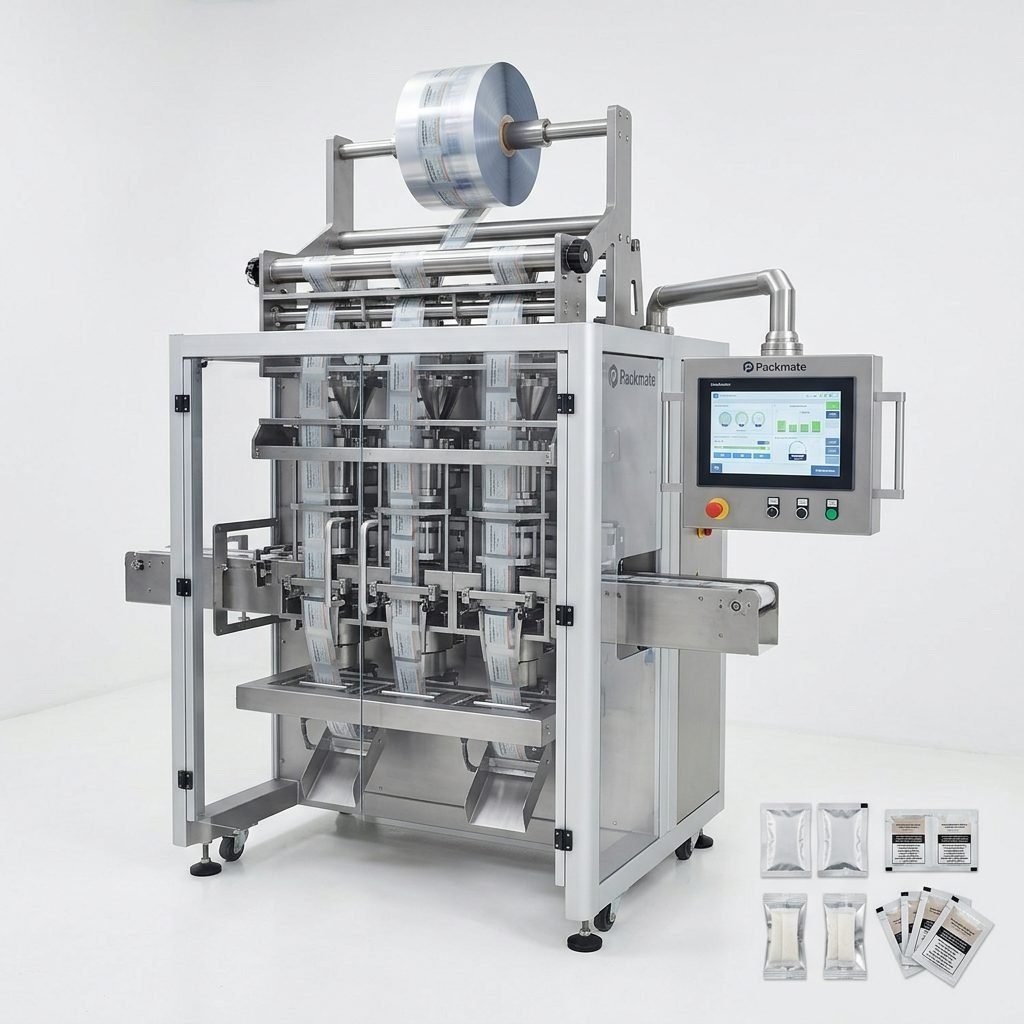
- Sachets & stick packs: flexible single-dose options with high-speed sealing
- Multi-lane pouch machines: up to 8 or more lanes for high output
Explore industry solutions such as Snus & Nicotine Packaging Machines and Sachet & Stick Pack Machines for details on available configurations.
Design Priorities: Accuracy, Hygiene & Traceability
When designing a snus production line, three priorities dominate: dose accuracy, hygienic design, and full traceability. These priorities affect shelf life, regulatory compliance, and consumer safety.
• Accuracy: Electronic weighing and closed-loop dosing systems reduce variation to ±0.5% or better.
• Hygiene: Easy-to-clean designs, stainless steel contact parts, and CIP-compatible components shorten cleaning cycles.
• Traceability: Batch codes, serialization, and integrated data logging ensure regulatory documentation and supply chain transparency.
Production Capacity & Line Balancing
A balanced line avoids bottlenecks. Assess the slowest module (often filling or sealing) and upgrade upstream equipment accordingly. Multi-lane machines reduce per-portion cost but require matching conveyors, checkweighers, and cartoning speeds.
Customization & Turnkey Solutions
Leading manufacturers provide turnkey lines tailored to product specs, facility layout, and regulatory needs. Custom features often include different pouch materials, integrated nitrogen flushing, and variable portion sizes.
Packmate Snus Machine supports factory-scale customization and offers full line integration. Learn more about the company’s history and capabilities on the About Packmate page.
Automation & Industry 4.0 Features
Smart production lines include PLC control, HMI screens, remote diagnostics, and data analytics. These features reduce downtime and provide actionable insights into yield, downtime causes, and maintenance needs.
🔍 Remote support: Real-time error reporting and remote troubleshooting cut service response time and MTTR.
Quality Assurance & Certifications
Equipment for snus production must meet strict safety and hygiene standards. Reputable manufacturers provide CE and ISO certifications, documented FAT/SAT procedures, and full materials traceability.
Packmate Snus Machine’s factory has advanced CNC and precision assembly systems to ensure consistent quality across every machine model and production lot.
Installation, Commissioning & After-sales Service
A successful project includes professional installation, on-site commissioning, and operator training. After-sales service should include spare parts, preventive maintenance schedules, and remote diagnostics. Look for manufacturers offering local support networks or international field service capabilities.
🚚 Global delivery: Ensure the vendor has experience exporting and commissioning lines in your region to avoid customs or installation delays.
📞 Training & support: On-site training nurtures skilled operators and reduces typical startup losses.
Turnkey project timeline (typical)
From contract signing to production acceptance, a turnkey snus line project follows clear milestones: design & layout -> machine fabrication -> FAT -> shipping -> installation & commissioning -> SAT. Timelines vary with complexity but expect 12–26 weeks for standard lines and longer for highly customized solutions.
Case Examples & Market Applications
Packmate has supplied snus and nicotine pouch lines worldwide. Typical customers include tobacco companies transitioning to modern oral nicotine formats, contract manufacturers, and new brands scaling from R&D to commercial production. Browse project references and case studies on the Case page.
Common industry applications
Snus production lines often serve:
- Nicotine pouch manufacturing (various nicotine strengths)
- Portion pouch production for traditional snus brands
- R&D and pilot-scale production for new pouch materials and sizes
Selecting the Right Supplier
When selecting a supplier, evaluate technical experience, factory capabilities, and after-sales responsiveness. Key indicators include factory size, model range, CNC and precision assembly capacity, and documented global installations.
🏭 Manufacturing strength: A 20,000㎡ factory with advanced CNC centers signals repeatable quality and reliable delivery.
📄 Certifications: CE and ISO compliance helps streamline regulatory acceptance in many markets.
For product and machine catalogs, you can visit the provider’s Catalog and service pages to understand spare parts, maintenance plans, and full lifecycle support.
Cost Considerations & ROI
Capital costs vary with automation level and output capacity. Factor in production yield, labor savings, material efficiency, and time-to-market. Multi-lane solutions increase throughput and lower per-unit cost but involve higher upfront investment. A detailed ROI analysis should include energy consumption, consumables, and maintenance intervals.
Reducing operating costs
Invest in energy-efficient drives, predictive maintenance sensors, and modular spares packages. These measures lower unplanned downtime and reduce long-term operating expenses.
Getting Started: Steps to a Successful Project
Start with a technical consultation, share product specifications, and request a proposed line layout. A professional vendor will offer a feasibility study, 3D layout, and CAPEX/OPEX estimates before issuing a formal quotation. If you need hands-on demonstrations, schedule a factory visit or attend an exhibition to watch live demos — check the Our Exhibition page for upcoming events.
Contact & Next Steps
For detailed machine specifications, project quotes, or to schedule a factory visit, reach out via the Contact Us channel. Suppliers with established global relationships and turnkey experience simplify deployment and reduce project risk.
Final Thoughts
Automated portion snus production lines combine precision engineering with hygienic design and smart controls. Whether launching a new brand or scaling established production, selecting the right machines and an experienced partner ensures consistent product quality, compliance, and economic performance.
Frequently Asked Questions
Q1: What is the typical lead time for a turnkey snus production line?
A1: Lead time depends on customization level. Standard configurations usually take 12–20 weeks, while bespoke multi-lane lines may require 20–26+ weeks including FAT and shipping.
Q2: How do I ensure dose accuracy in portion pouches?
A2: Use calibrated weight-based dosing systems and closed-loop control. Periodic check weighing and integration with automated correction reduce variation to under ±1% for most formulations.
Q3: What certifications should I expect from reputable equipment suppliers?
A3: Look for CE and ISO compliance, documented FAT/SAT reports, and materials traceability. These certifications support regulatory clearance and quality assurance processes.
Q4: Can the same line handle different pouch materials?
A4: Yes. Many machines are configurable for paper, fiber, or non-woven pouches. Specify your material options during design to ensure tooling and sealing modules are compatible.
Q5: Where can I see real-world installations and performance data?
A5: Request case studies and client references from suppliers. Review documented project pages and consider factory visits or exhibition demonstrations to validate performance claims.