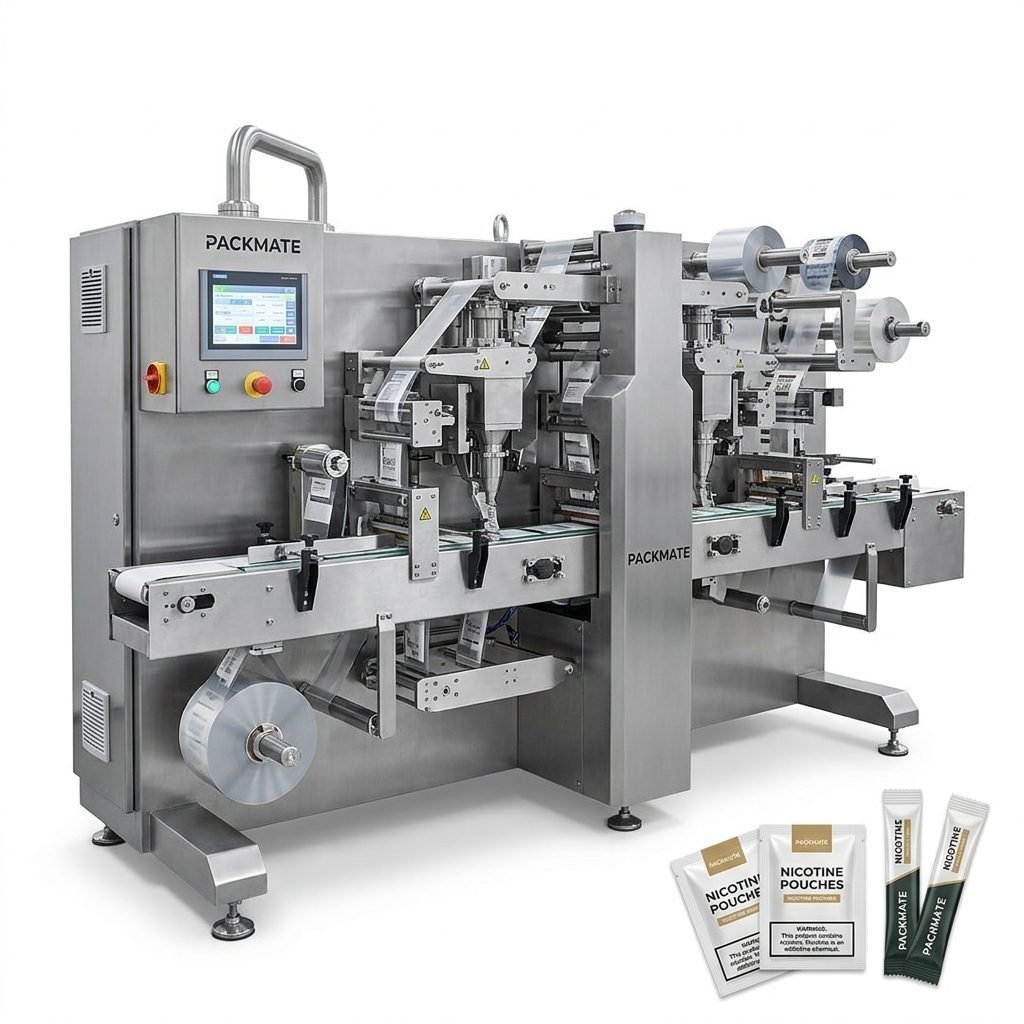
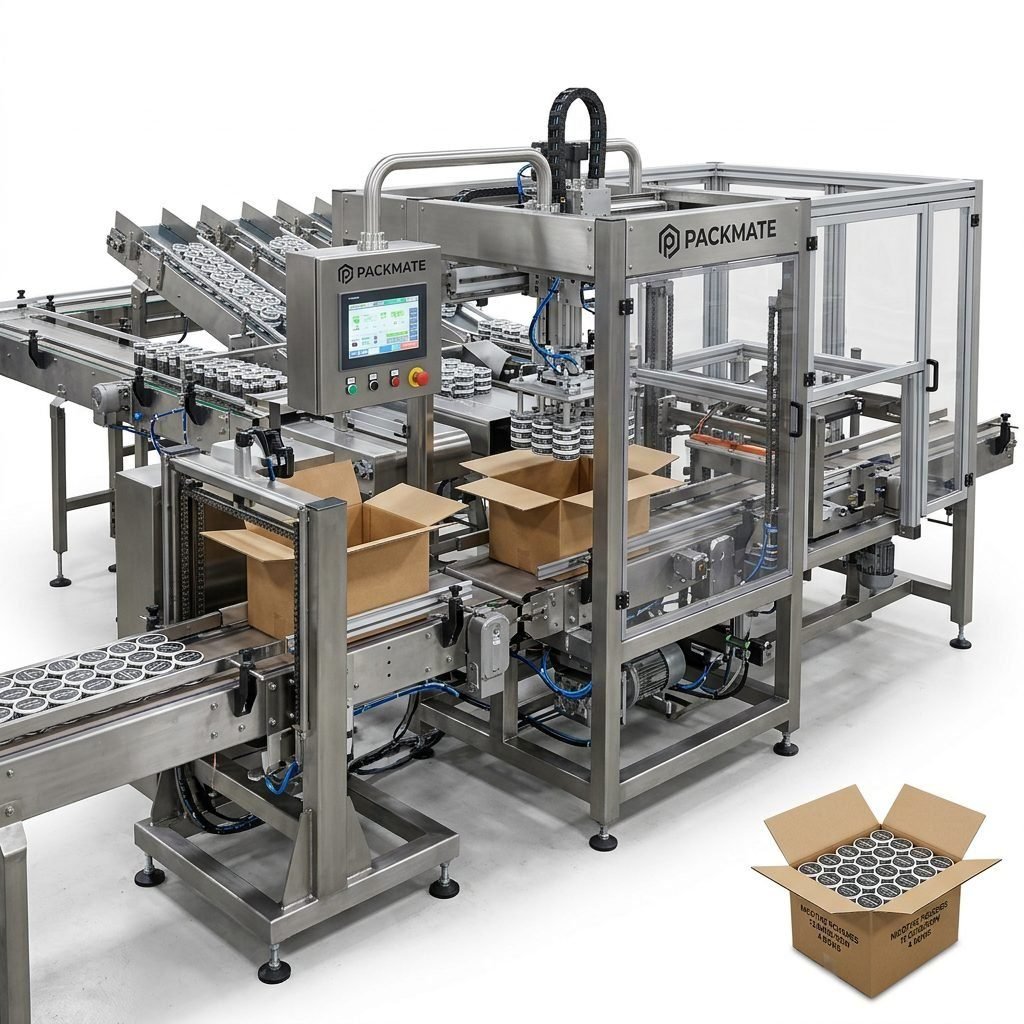
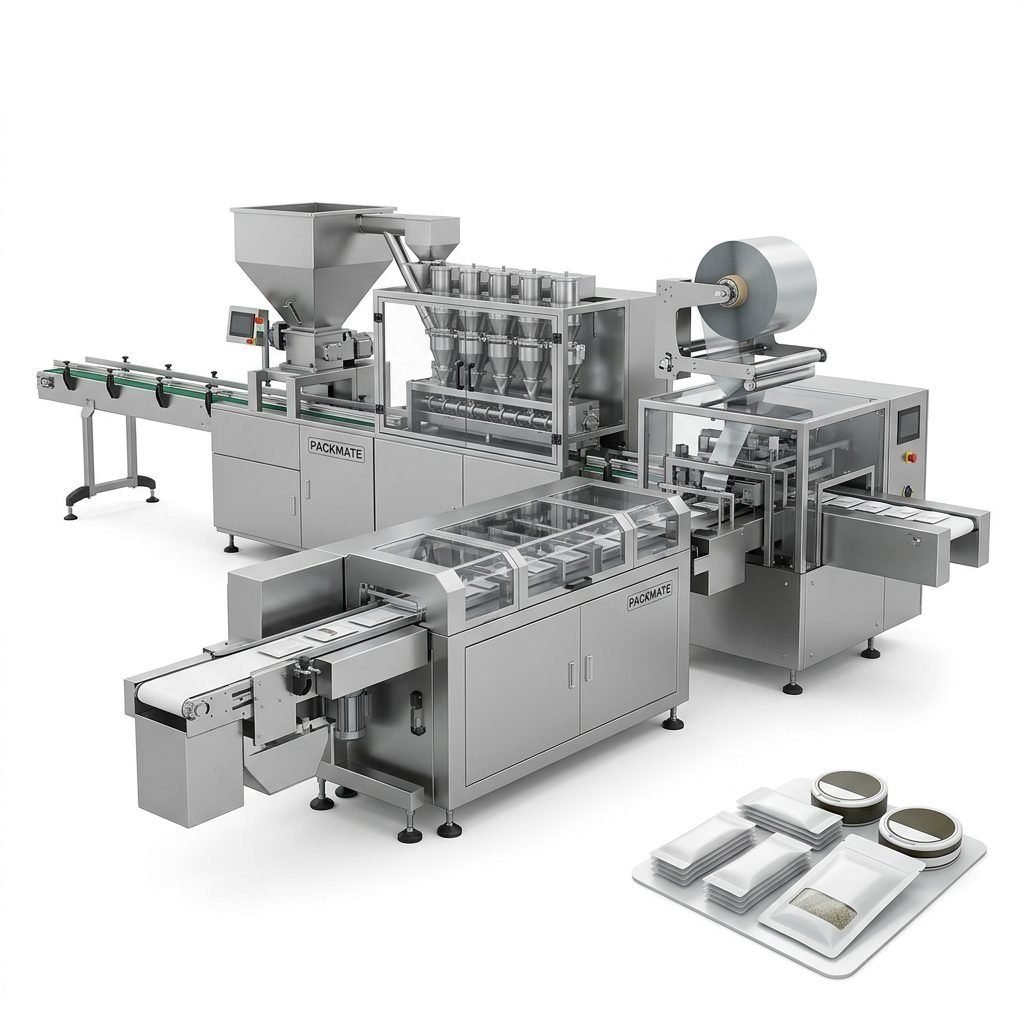
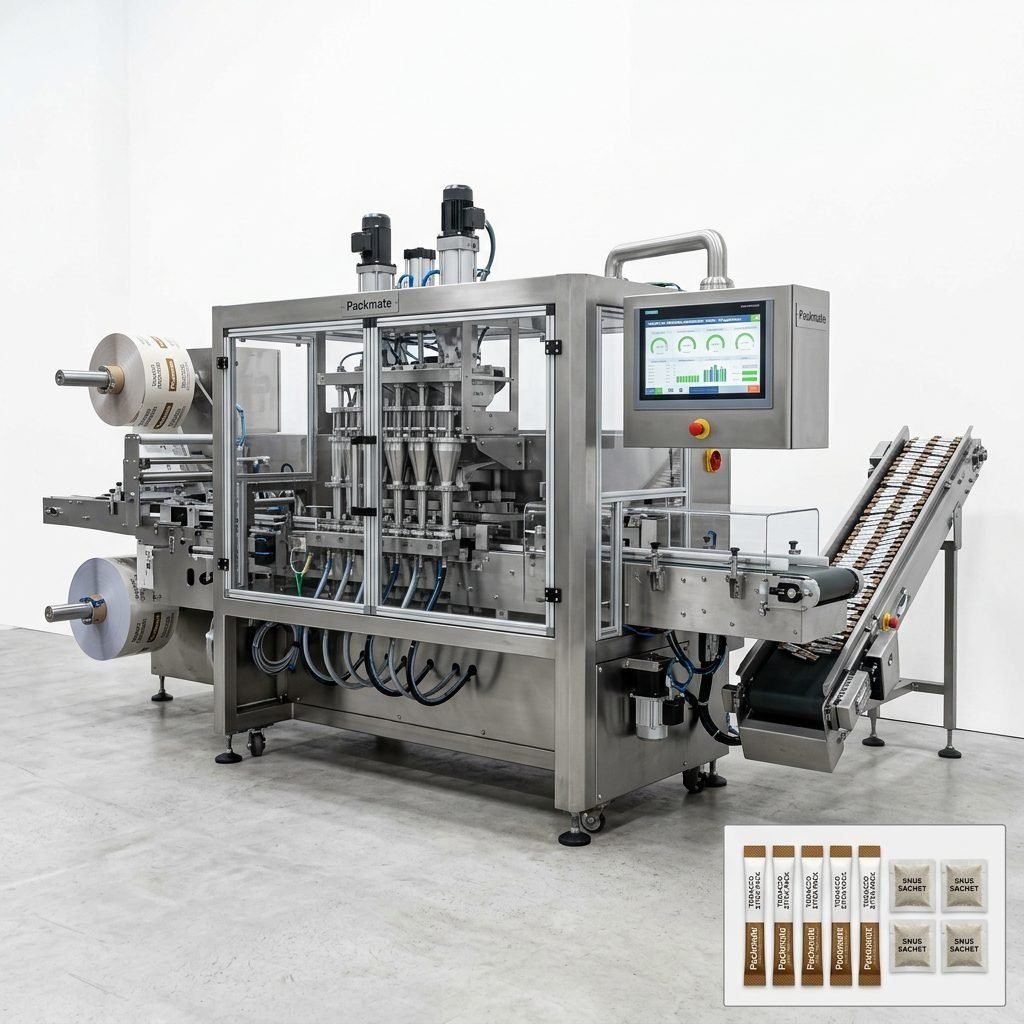
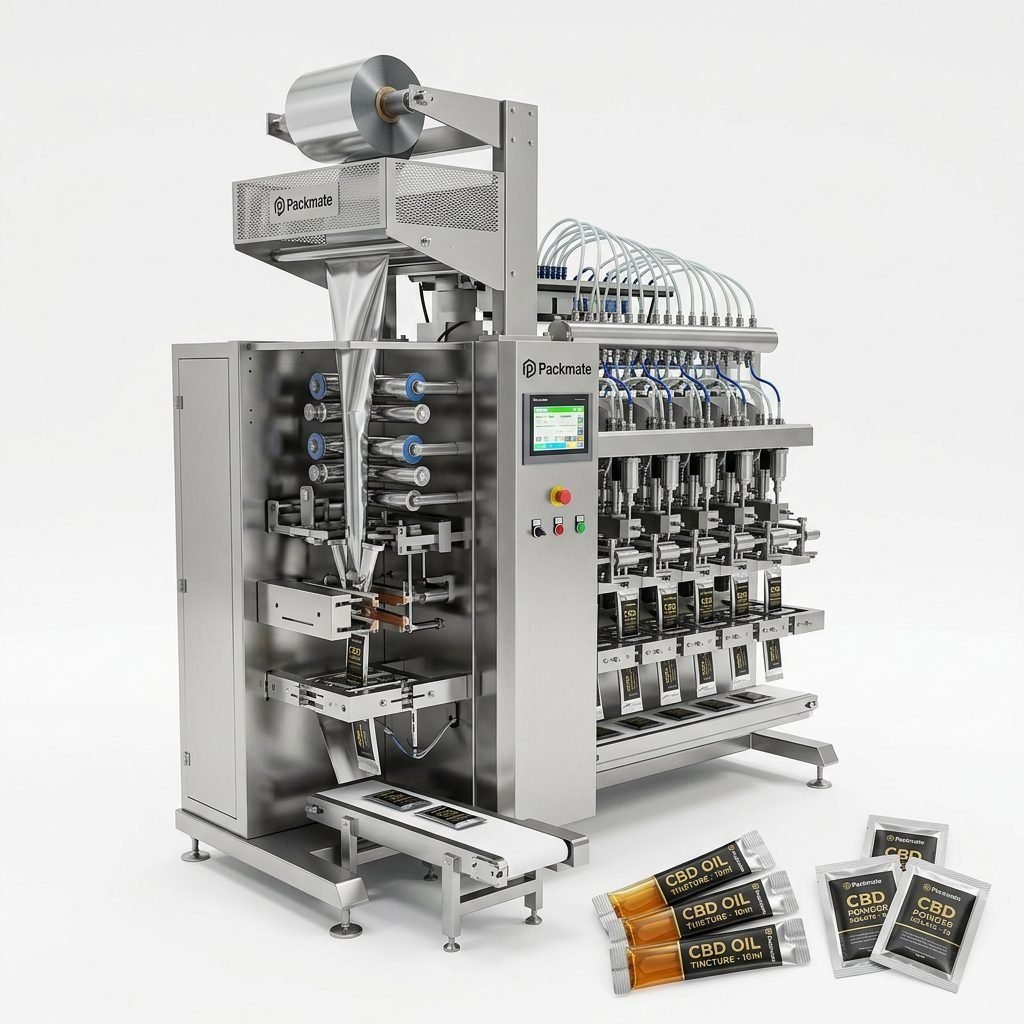
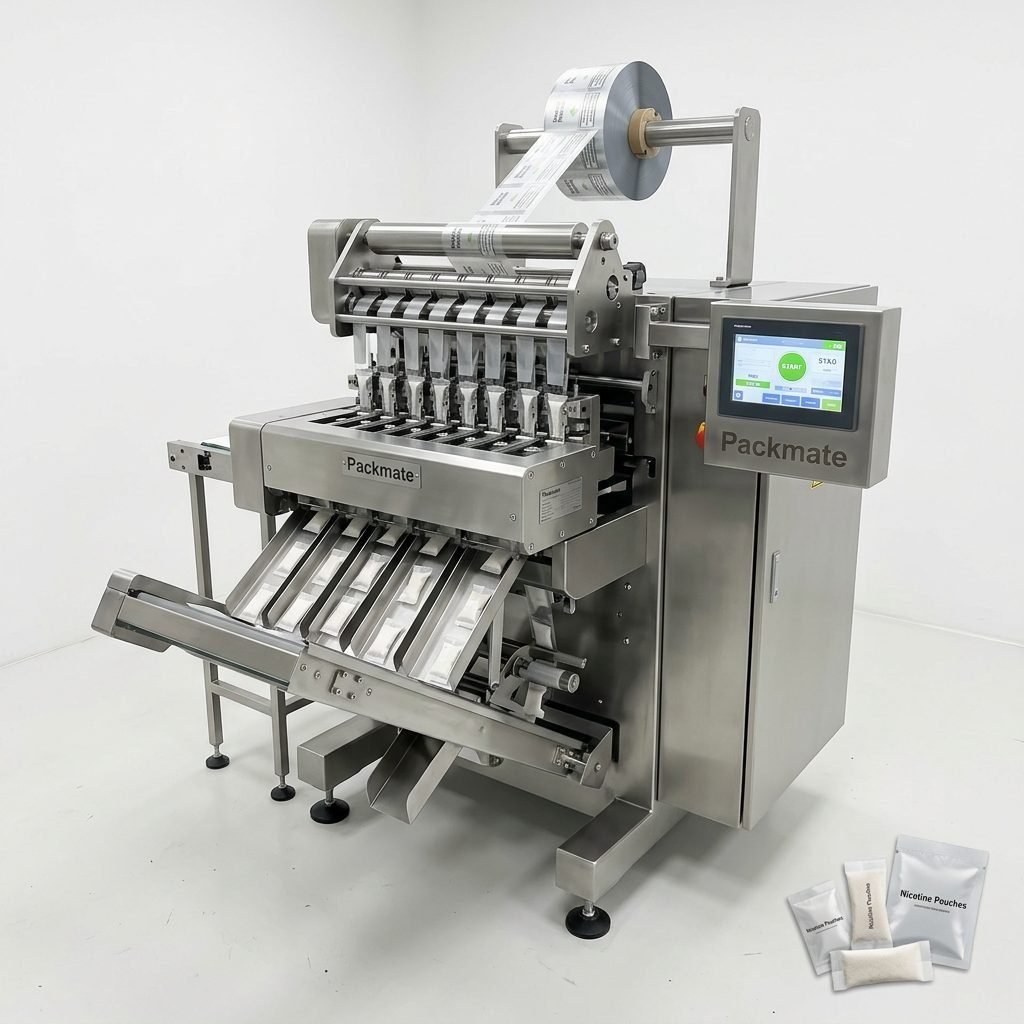
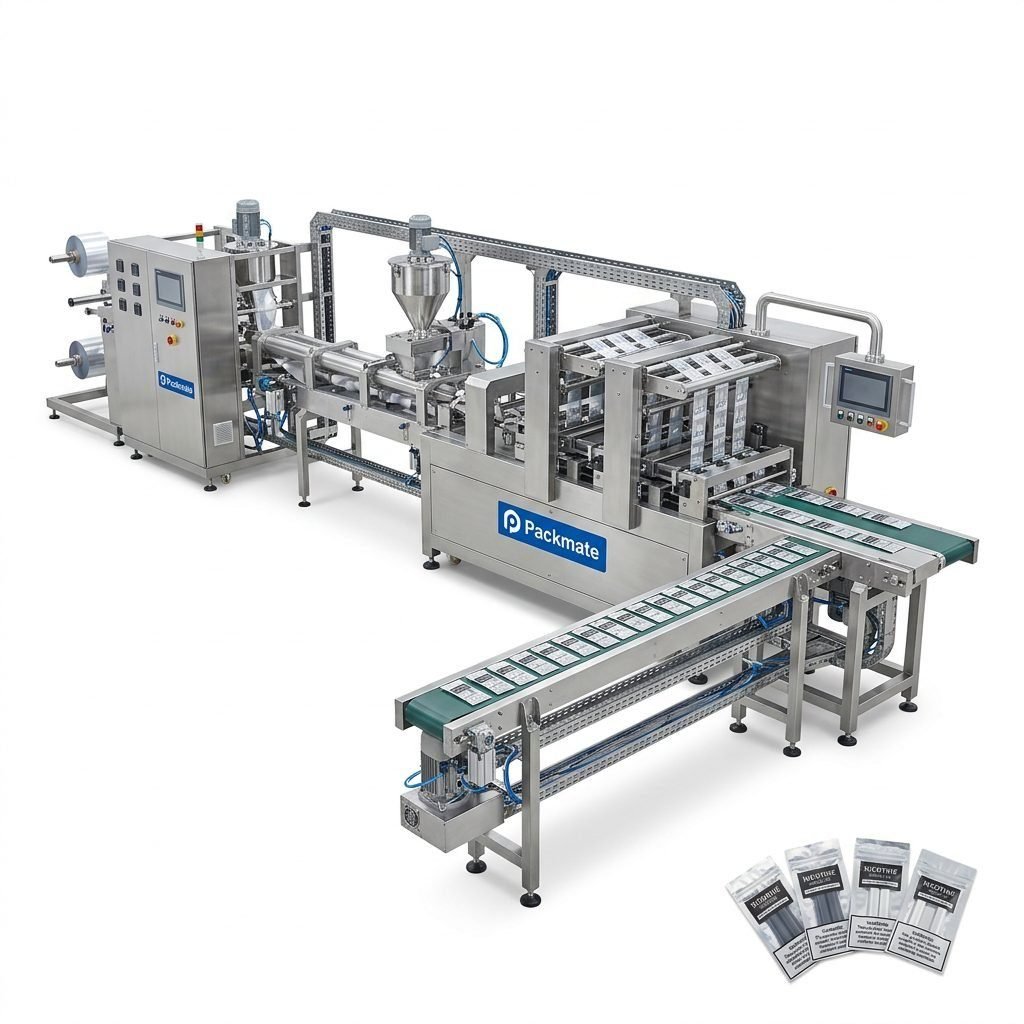
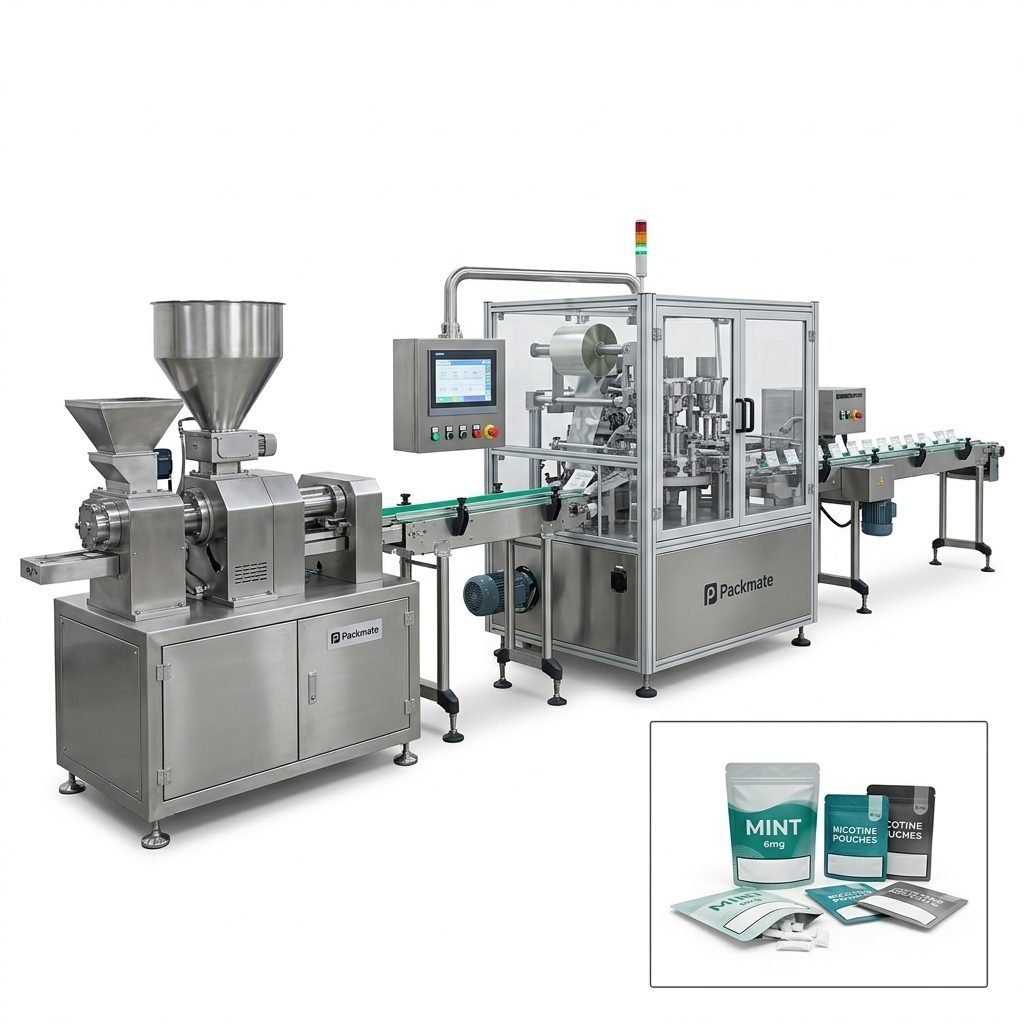
Snus machine dosing systems are at the heart of modern snus and nicotine pouch production lines. Precise portioning, high-speed filling, and seamless automation determine product consistency, regulatory compliance, and overall line efficiency. This guide covers practical design choices, performance trade-offs, and real-world implementation tips for packaging professionals seeking reliable dosing solutions for snus, nicotine pouches, powders, and small-dose sachets.
Understanding Snus Dosing Systems: Fundamentals
A typical dosing system for snus and nicotine pouches includes material handling, metering, portioning, and transfer to the pouch or container. Key performance indicators are: accuracy (mg-level), speed (pouches per minute), changeover time, and repeatability. Choosing the right combination of technologies—mechanical augers, multi-head weighers, vibratory feeders, or volumetric cups—depends on product characteristics and required throughput.
Key takeaway:
accuracy and stability matter more than raw speed for premium small-dose snus products.
Common Dosing Technologies
Multi-head weighers are ideal for high-precision portioning of granular or particulate snus blends because they deliver excellent accuracy with dynamic combination weighing. Auger fillers and volumetric screws serve well for powders with consistent flowability. For sticky or damp formulations, controlled vibratory feeders or specially coated augers reduce blockages.
When to choose each:
– Multi-head weighers: best for small portions with tight tolerances and variable bulk density.
– Auger/volumetric fillers: cost-effective for free-flowing powders at medium speeds.
– Servo-driven cup fillers: suitable for visually precise, single-dosing applications in sachets and stick packs.
Precision Portioning: Design & Calibration Tips
Achieving consistent portion weights requires tight control of both the mechanical system and the material supply. Simple steps during design and commissioning drastically improve performance: select wear-resistant materials for contact parts, provide closed-loop servo control where possible, and ensure the supply hopper design minimizes bridging and segregation.
Calibration checklist:
hopper level sensors, servo zero-point tuning, periodic weight validation with certified test weights, and adaptive dosing logic for changing humidity or powder flow.
Adaptive Dosing Strategies
Advanced dosing systems use feedback from in-line check weighers and statistical process control (SPC) to automatically adjust dispensing volumes. This closes the loop and minimizes give-away or underfill. For snus pouches where mg differences are critical, consider system-level compensation across lanes to maintain consistent average weight.
High-Speed Filling: Mechanical & Control Considerations
Speed increases complexity: more lanes, faster pick-and-place, and quicker material metering. Key mechanical solutions include multi-lane dosing heads, synchronized rotary fillers, and high-speed servo indexers. On the control side, deterministic motion controllers and fast IPCs are essential for coordinating events and avoiding misfeeds or spillovers.
Example:
A 4-lane rotary filler using synchronized servo augers can achieve high throughput while retaining mg-level accuracy if each lane has independent feedback and correction.
Material Transfer & Dust Control
At high speeds, material transfer becomes a bottleneck. Design hoppers and chutes with smooth radii and anti-bridging features. Dust collection and local extraction not only protect electronics and optics but also improve product yield and operator safety. For nicotine-containing products, choose enclosures and extraction systems to meet occupational health standards.
Automation & Integration: Building a Turnkey Line
Dosing systems rarely operate alone. Integration with upstream feeding, sachet or pouch forming machines, sealing stations, check weighers, and secondary packaging is vital. Turnkey suppliers provide complete layouts, control cabinets, HMI recipes, and PLC logic that reduce start-up time and ramp-up risks.
For a full production solution, explore combined systems such as Snus & Nicotine Packaging Machines and Weighing & Packaging Systems that link dosing, pouch forming, and sealing into a single controlled line.
Integration tip:
standardize communication (OPC-UA or EtherCAT) and use recipe management to switch between SKUs with minimal mechanical changeover.
HMI & Recipe Management
An intuitive HMI with recipe storage accelerates changeovers and reduces operator error. Recipes should capture dosing parameters, servo profiles, and acceptable tolerance windows. Combine HMI controls with remote monitoring to enable predictive maintenance and production analytics.
Maintenance, Cleaning & Validation
Regular maintenance and hygienic design are essential, especially for nicotine-containing products. Use stainless steel contact parts, quick-disconnect fittings, and modular dosing heads that can be removed without disturbing gearboxes or motors. Design clean-in-place (CIP) or rapid manual cleaning procedures to minimize downtime while meeting regulatory cleaning validation requirements.
Maintenance essentials:
periodic weight validation, bearing lubrication schedules, and verification of servo encoders. Keep a documented maintenance log and spare parts kit for fast recovery.
Quality Control & Traceability
Traceable production records, batch codes, and integration with check weighers and metal detectors protect brand integrity. For regulated markets, storing batch-level dosing data supports audits and customer inquiries. Consider line-side label printers and vision inspection to validate seal integrity and labeling accuracy.
Regulatory Compliance & Certifications
Choose equipment from certified manufacturers that follow CE/ISO standards and can support documentation for machine safety, electrical compliance, and hygienic design. For global supply chains, machines with worldwide certifications reduce import/export hurdles and simplify customer qualification.
Packmate Snus Machine, for example, offers CE and ISO-compliant systems and comprehensive documentation—useful when qualifying lines for Europe and other regulated regions. Learn more about full production line options at Filling & Packaging Lines.
Selecting the Right Supplier: What to Evaluate
When selecting a supplier, evaluate technical capability, custom engineering experience, factory capacity, and after-sales support. Look for:
– Proven designs: multi-lane systems, easy maintenance, and hardened contact parts.
– Manufacturing capability: in-house CNC and assembly lines to control component quality.
– Global support: spare parts availability, remote diagnostics, and onsite commissioning.
For a comprehensive supplier profile, see About Packmate and the company’s case studies at Case.
Total Cost of Ownership (TCO) Considerations
Initial machine cost is only part of the story. Evaluate lifetime reliability, spare parts pricing, energy consumption, and changeover efficiency. High-precision multi-head systems may cost more up front but reduce give-away and rework, improving ROI for premium snus products.
ROI example:
reducing give-away by a fraction of a gram per pouch across thousands of pouches per day quickly offsets higher initial equipment costs.
Practical Case: Multi-Lane Snus Production
A manufacturer switching from single-lane to a 6-lane rotary dosing and filling system improved throughput by 5x while maintaining ±3% portion tolerance. Critical success factors were lane-by-lane weigh feedback, robust servo tuning, and a standardized spare parts kit. For similar full-line integration, review Sachet & Stick Pack Machines and allied auxiliary equipment options at Auxiliary Packaging Equipment.
Local Considerations & Operator Training
Operator skill level influences line selection. In regions where skilled maintenance personnel are scarce, prioritize modular, easy-to-service machines and remote diagnostic services. Provide structured training and maintenance SOPs to local teams to ensure long-term reliability.
Final Selection Checklist
– Product characteristics: flowability, moisture, particle size.
– Required throughput and lane count.
– Target accuracy and allowable give-away.
– Integration needs: pouch/former compatibility, labeling, inspection.
– Supplier capability: documentation, commissioning, spare parts.
Want to explore options?
Check product categories and catalogs for guidance: Catalog • Service • Contact Us.
Conclusion
Choosing a dosing system for snus production is a balance between precision, speed, and operational practicality. Multi-head weighers, servo-driven augers, and integrated check weighing provide reliable solutions for mg-level portioning. Prioritize suppliers with strong manufacturing capability, CE/ISO compliance, and post-sale support to achieve consistent product quality and long-term productivity.
Frequently Asked Questions
Q1: How do I choose between a multi-head weigher and an auger filler for snus powder?
A1: Use multi-head weighers when high accuracy and variable bulk density exist; choose augers for free-flowing powders when cost and simplicity matter. Consider in-line weighing feedback for either to minimize variance.
Q2: What maintenance practices most reduce downtime?
A2: Implement scheduled weight validation, quick-change components, inventory of critical spares, and remote diagnostics. Train local technicians on common mechanical adjustments and cleaning procedures.
Q3: Can I upgrade an existing line to higher speed without replacing the dosing heads?
A3: Often yes—upgrades to servo drives, synchronized indexing, and hopper/material flow improvements can raise throughput. However, verify mechanical limits and the ability to maintain required accuracy at higher speeds.
Q4: What certifications should I verify with a supplier?
A4: CE and ISO are baseline certifications. For export or regulated environments, request electrical safety reports, material certificates for food-contact parts, and documentation supporting hygienic design and cleanability.
Q5: Where can I see real-world installations and get technical support?
A5: Review supplier case studies and exhibition schedules to view machines in action. For Packmate and similar suppliers, refer to the company’s exhibitions and case pages for demonstrations and support information: Our Exhibition • Case.