Complete Snus Sachet Production Line: Automated Solutions for Efficient Portion Snus Manufacturing
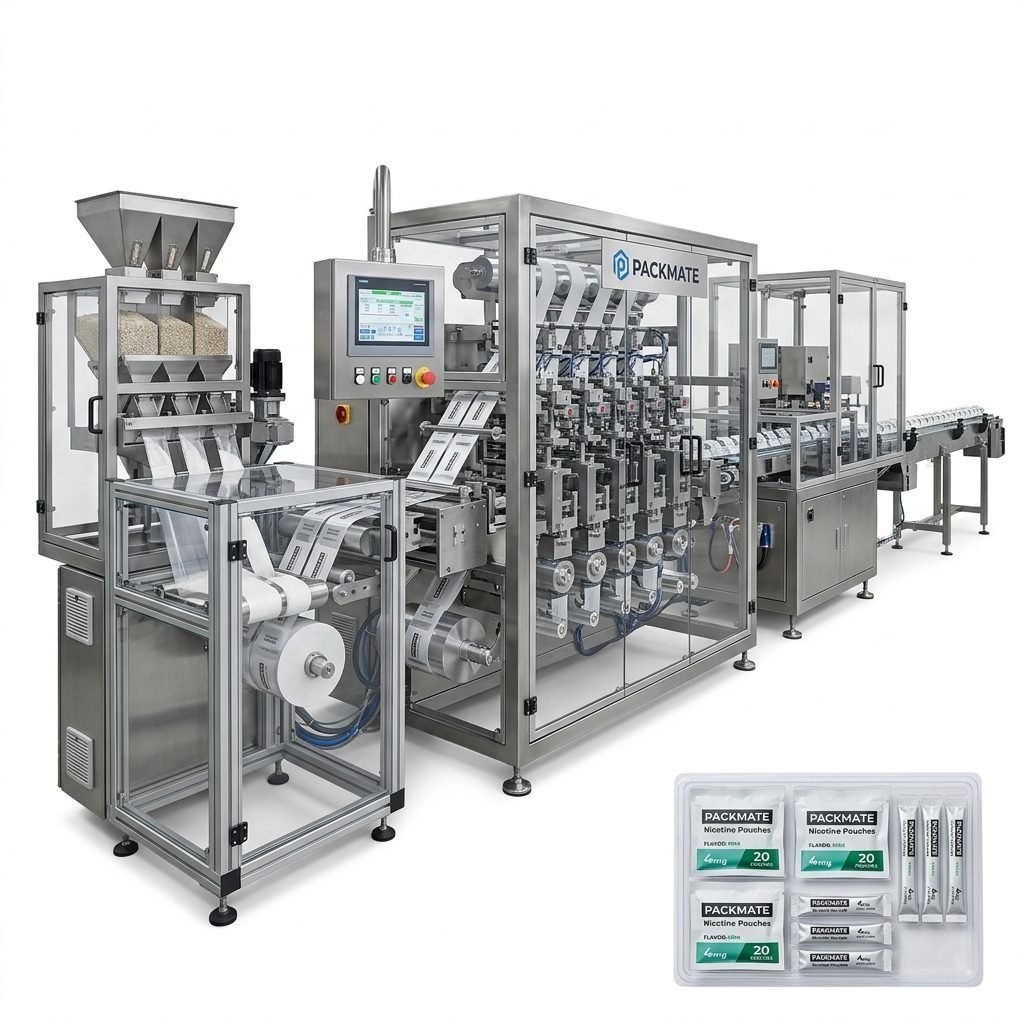
The modern snus sachet production line is an integrated assembly of precision machines designed to convert raw tobacco or nicotine pouch material into consumer-ready portion snus sachets. Manufacturers seeking higher throughput, consistent portion quality, and lower labor costs rely on turnkey systems that combine dosing, forming, sealing, conveying and final packaging. This article outlines the key components, workflow, technology options, and important selection criteria for anyone planning to implement a complete snus sachet production line.
Why Invest in an Automated Snus Sachet Line?
⚙️ Consistency and precision: Automated dosing and forming systems ensure each sachet receives an exact portion weight and consistent sealing quality, minimizing product variance and rejects.
📦 Higher throughput: Multi-lane sachet machines and high-speed stick-pack units can dramatically increase output compared to manual or semi-automatic lines.
🔧 Lower operating costs: Automation reduces direct labor needs, improves production uptime, and enhances raw material utilization.
📈 Targeted ROI: Investing in a complete snus sachet production line can quickly pay off through reduced waste, faster changeovers, and improved product consistency — especially for companies scaling to industrial volumes.
Core Components of a Complete Production Line
1. Primary Material Handling
Raw material handling includes storage, controlled feeding, and pre-conditioning stations. For nicotine pouches or snus, moisture control and homogenization are critical to ensure consistent feel and release profile. Feeders can be hopper-based or vacuum-assisted depending on material flow characteristics.
2. Precise Weighing and Dosing Systems
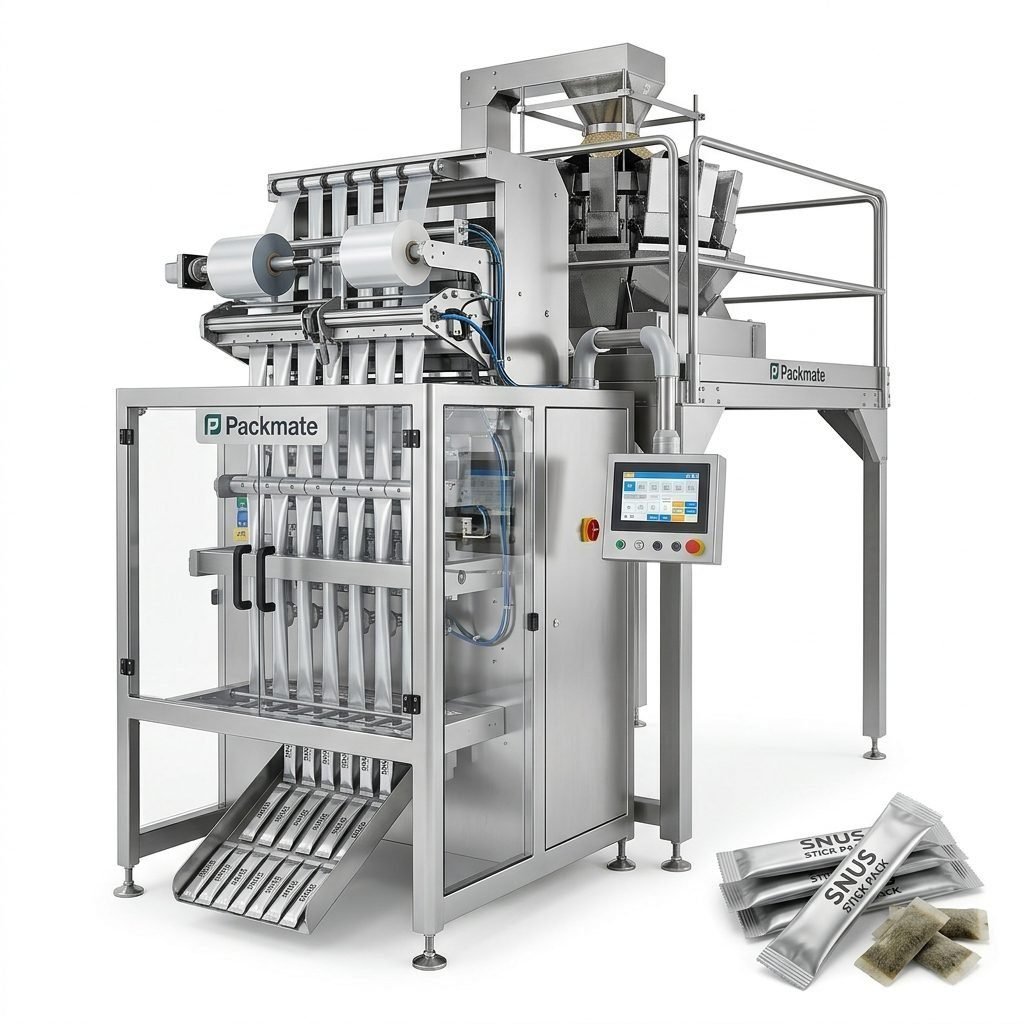
A high-accuracy weighing module or multi-head weigher ensures each sachet gets the correct dose. For micro-dose snus pouches, accuracy is especially important. Integrating the Weighing & Packaging Systems with the sachet machine enables seamless, closed-loop control and rejection of out-of-spec portions.
3. Sachet Forming & Filling Machines
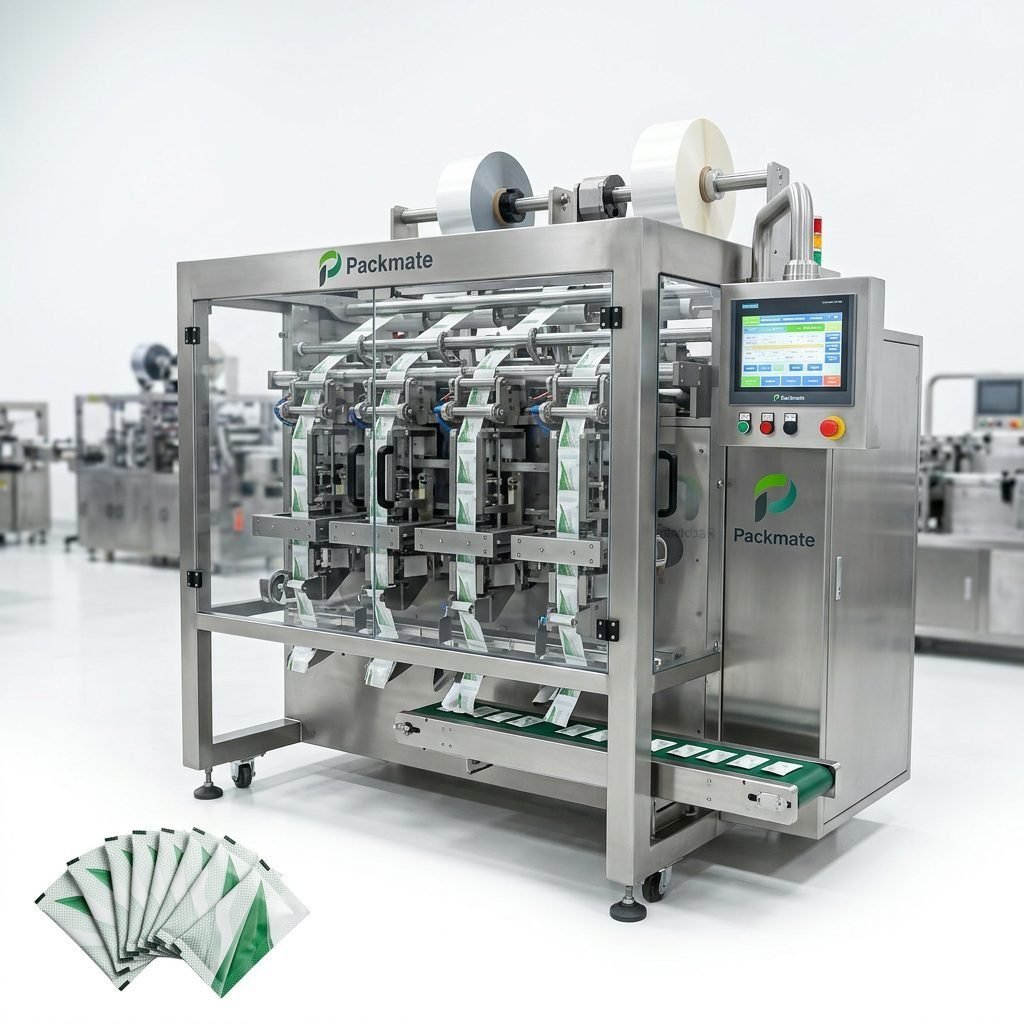
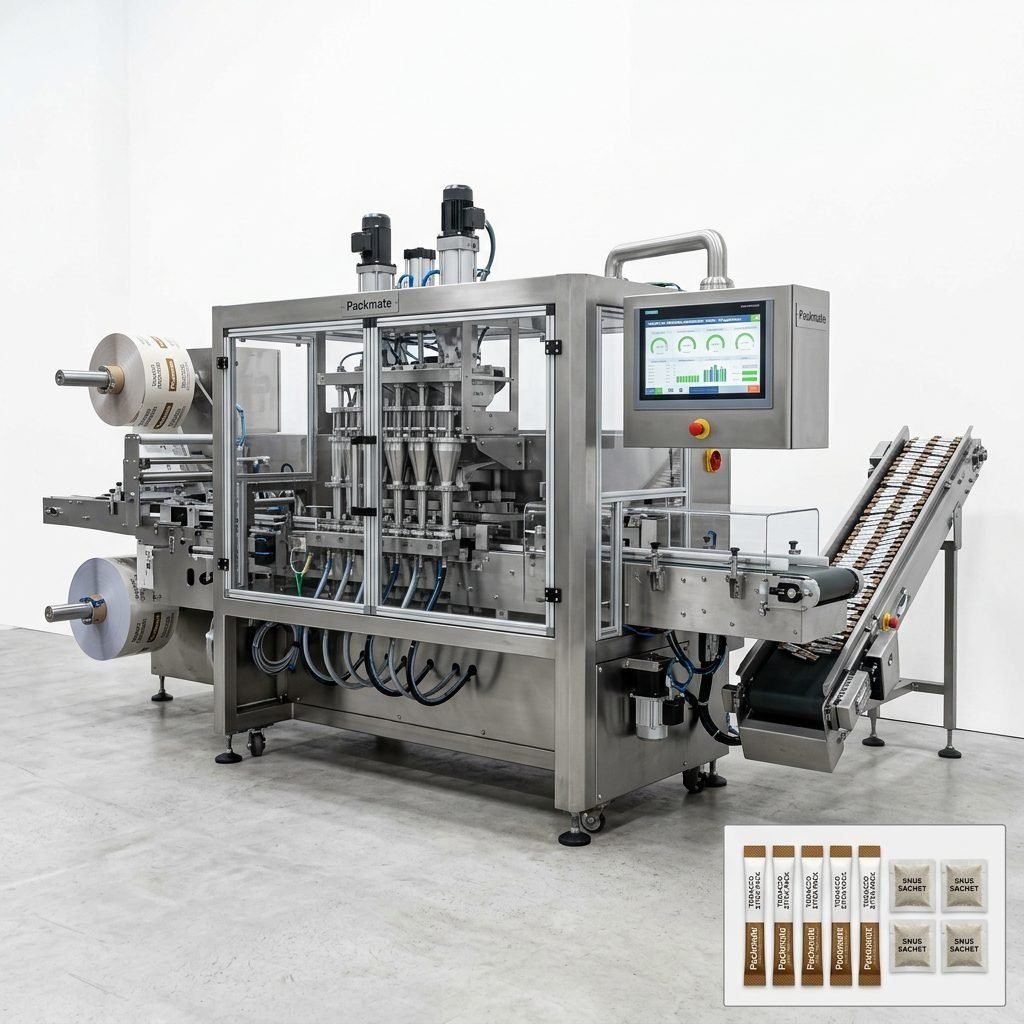
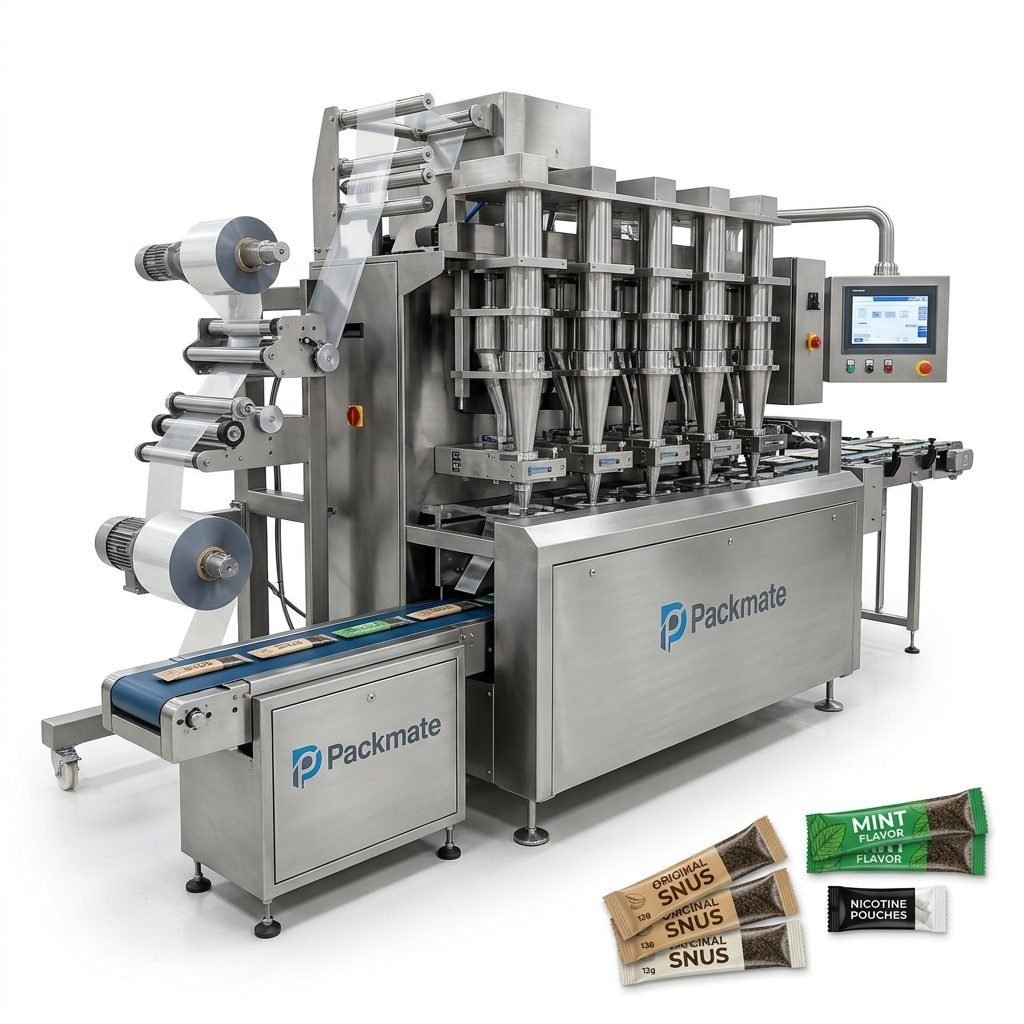
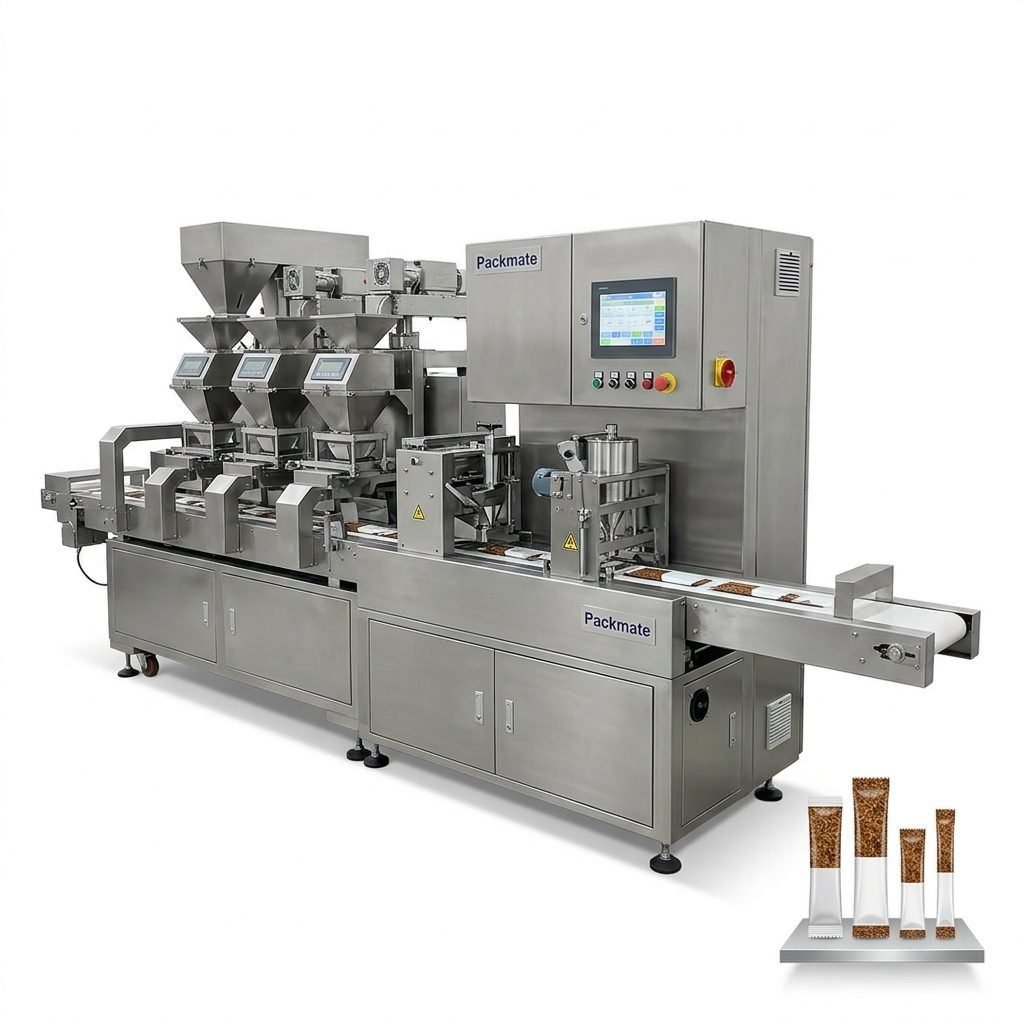
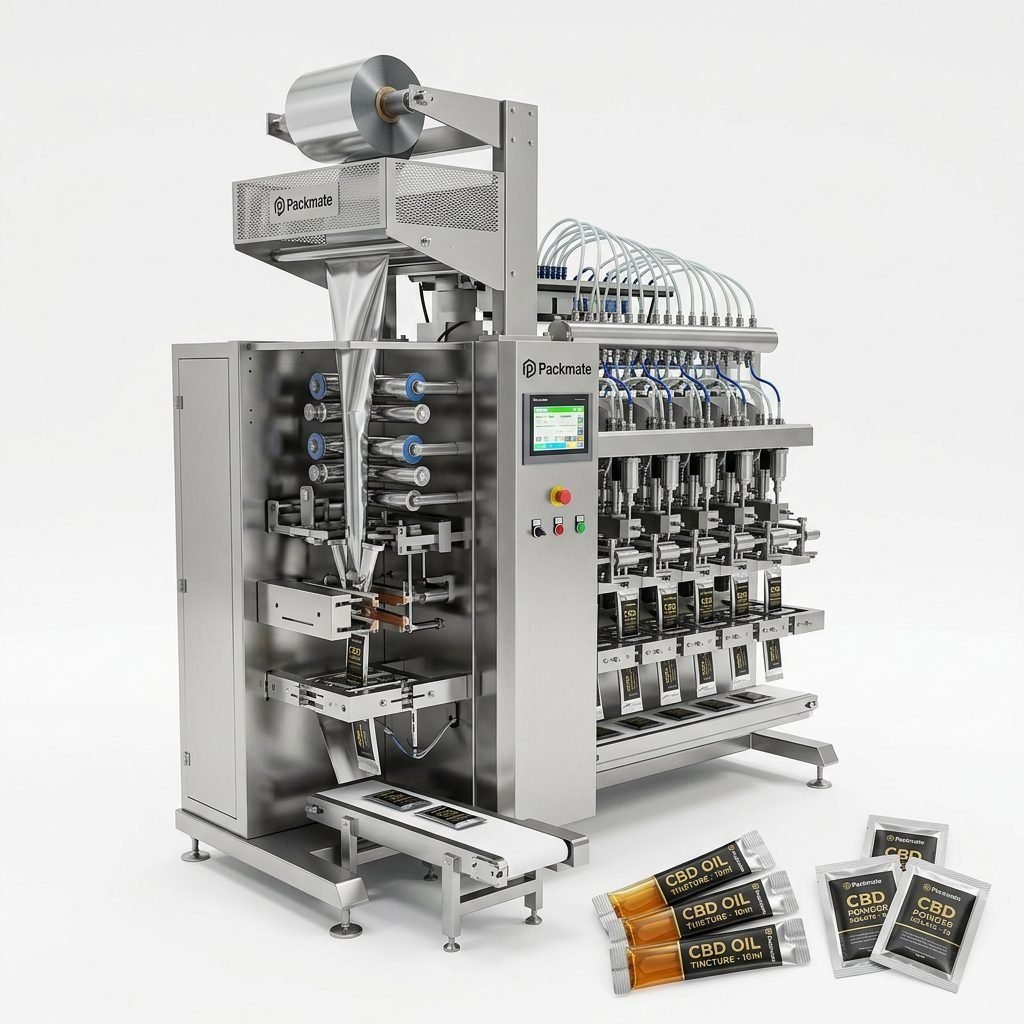
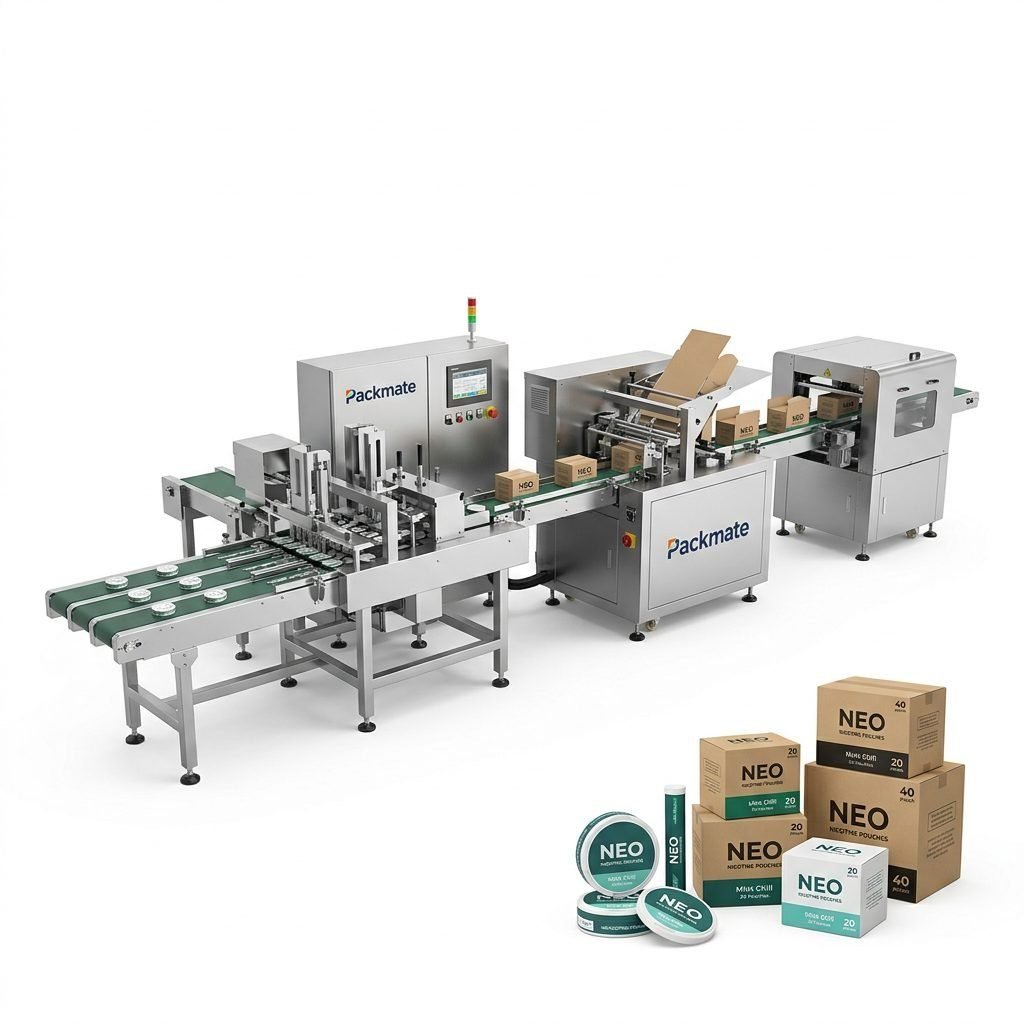
The core sachet machine forms pouches from film or pre-made pouches, fills them with the weighed portion, and seals them. Multi-lane sachet and stick-pack machines provide scalability. For detailed equipment options see Sachet & Stick Pack Machines.
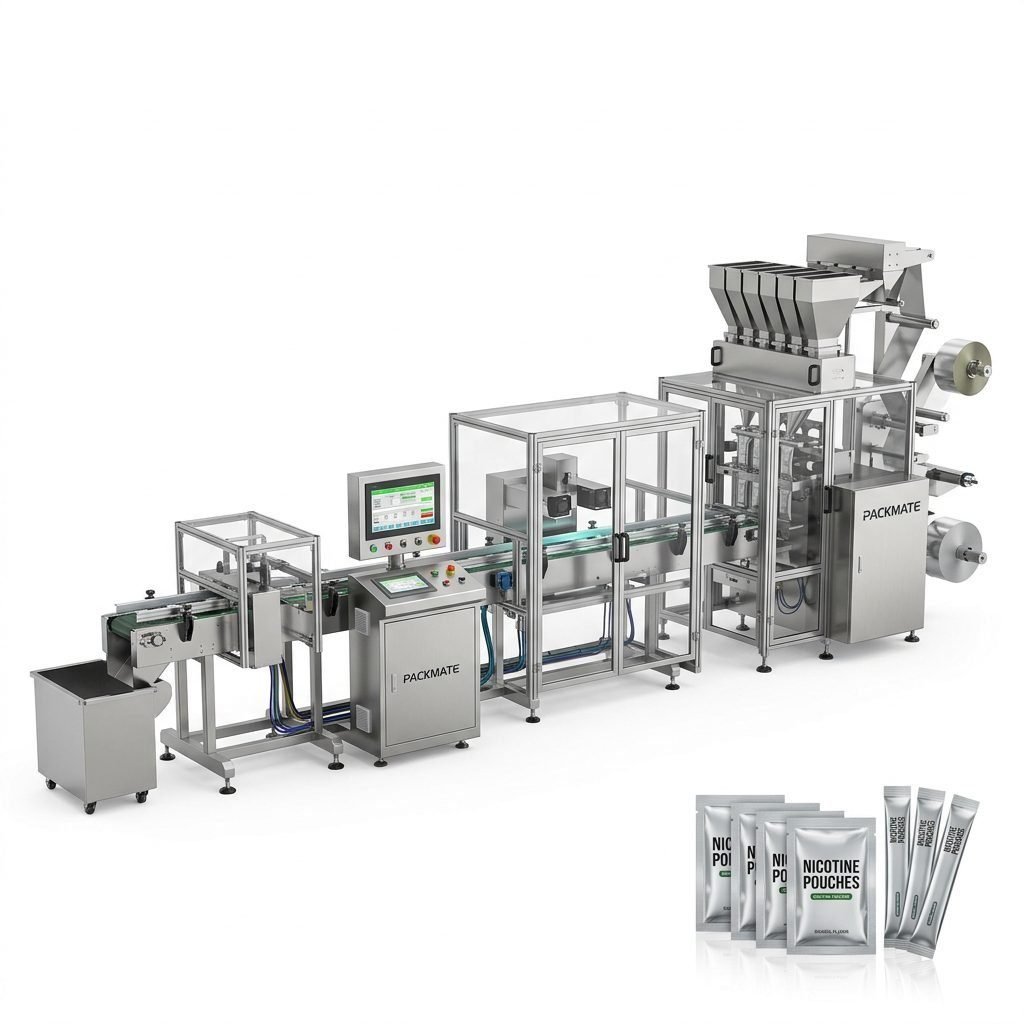
4. Auxiliary Systems: Conveyors, Metal Detectors & Reject Stations
Auxiliary equipment maintains flow and quality: conveyors for synchronization, metal detectors for safety, vision systems for seal inspection, and reject units to remove defective sachets. A fully integrated control system synchronizes these elements to minimize bottlenecks.
5. Secondary Packaging and End-of-Line
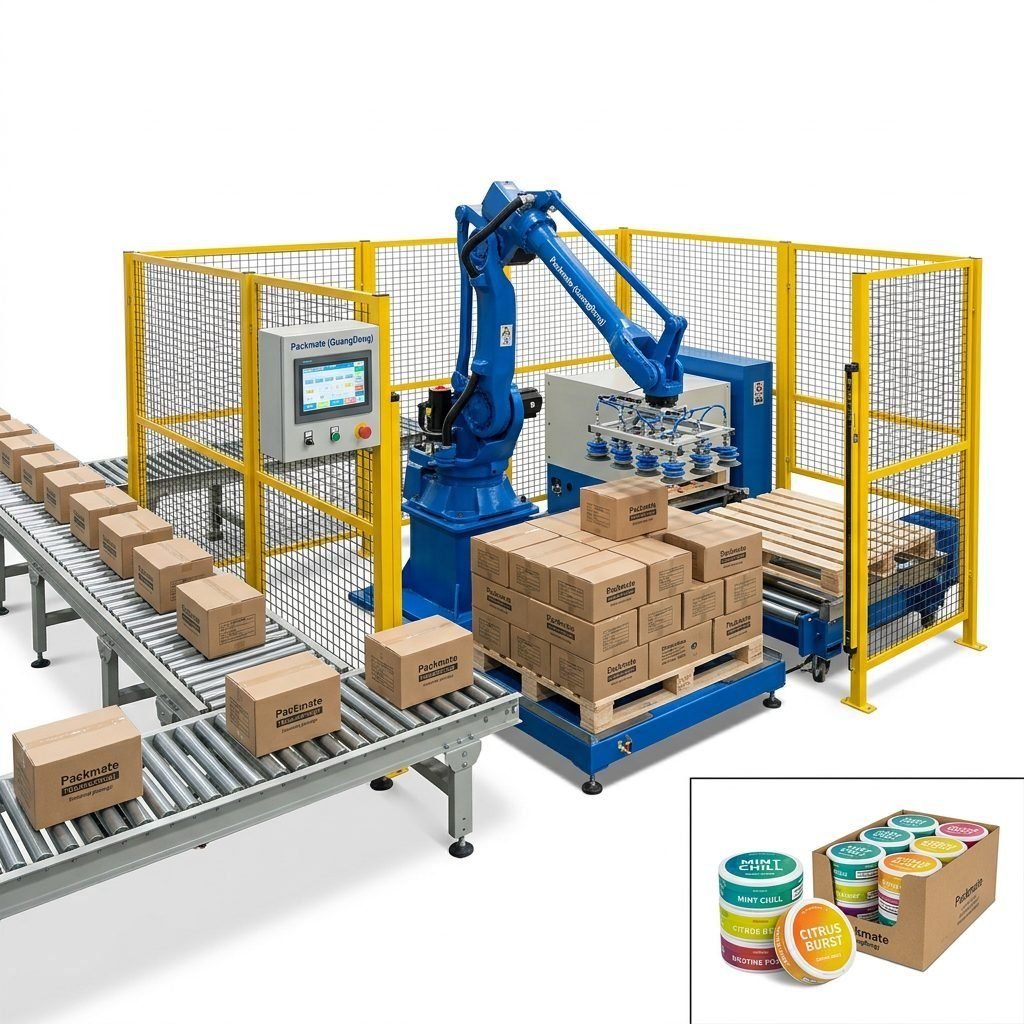
Finished sachets are accumulated, grouped and packed into cartons, tins or display boxes. Automatic cartoners, case packers and labeling machines complete the line. For modular secondary options review Filling & Packaging Lines.
✨ Tip: Consider including an inline pouch feeding system if you use pre-made sachets — it reduces film waste and speeds format changes.
Key Technical Features to Evaluate
When selecting equipment, focus on the following features:
- Servo-driven motion for accurate and repeatable dosing and sealing
- Quick-change format parts to reduce downtime during product changeovers
- Integrated HMI with recipe management for multiple SKUs
- CIP-friendly design and hygienic materials compliant with industry standards
- Remote support capabilities for diagnostics and software updates
Customization and Turnkey Solutions
Packmate Snus Machine provides turnkey solutions that can be customized to the client’s process requirements. Customization options include lane count, sachet size and shape, filling method (volumetric vs. weight-based), and integration with upstream and downstream systems. The company’s decades of experience enable tailored designs for complex production scenarios.
For an overview of full product lines and customization options visit the main product directory: Snus & Nicotine Packaging Machines.
Quality, Safety and Compliance
Regulatory compliance and product safety are top priorities. Choose suppliers with recognized certifications such as CE and ISO to ensure machines meet international safety and quality standards. Packmate’s machines are built to comply with these standards and include sanitation features for easy cleaning and maintenance.
🔒 Safety highlight: Magnetic safety guards, emergency stop systems, and controlled-access panels are standard on modern lines to protect operators and maintain production continuity.
Layout Planning and Factory Integration
Effective factory layout planning optimizes material flow and reduces handling steps. A typical production footprint includes material receiving and conditioning, weighing/dosing area, sachet forming/filling, quality inspection, and secondary packaging. Modular designs allow phased upgrades without major disruption to existing operations.
Operational Considerations and Workforce Training
Even with automation, skilled technicians are essential for maintenance, troubleshooting and changeovers. Training programs covering PLC/HMI operation, preventive maintenance, and hygiene protocols will maximize uptime. Many manufacturers offer on-site and remote training and after-sales service packages.
Maintenance, Spare Parts and After-Sales Support
Planned maintenance reduces unplanned downtime. Evaluate suppliers on spare parts availability, lifecycle support, and remote diagnostic capability. Companies with global support networks and extensive parts catalogs, such as those with full manufacturing facilities, can shorten lead times for critical spares.
Learn more about company capabilities and history at About Packmate, and explore real-world installations in the Case section to understand how lines perform in different markets.
Choosing the Right Supplier
When evaluating suppliers, consider these criteria:
- Proven track record in snus and nicotine pouch packaging
- Engineering expertise and ability to customize multi-lane systems
- Factory manufacturing strength and quality control
- Local support or global service network for rapid response
- Clear warranty, spare parts and training options
📣 Note: Visiting a supplier’s factory and witnessing machine testing and assembly lines is highly recommended for high-investment projects.
Cost Factors and ROI
Initial capital investment varies with automation level, lane count, and customization. Evaluate total cost of ownership (TCO), including energy consumption, spare parts, labor savings, and expected lifespan. Higher automation often yields faster ROI through productivity gains and lower scrap rates.
Industry Trends and Market Considerations
The snus and nicotine pouch market continues to grow globally with shifting consumer preferences toward portioned products. Multi-lane systems and small-dose capabilities help manufacturers meet demand for diverse SKUs. Sustainability is also a rising concern — consider machinery that supports recyclable or lightweight films to reduce packaging waste.
Case Example: Typical Multi-Lane Snus Sachet Line
A typical production line might include: automated feeding and conditioning → multi-head weighing → 4- or 8-lane sachet forming & filling machine → inline metal detection & vision inspection → accumulation and counting → automatic cartoning and case packing. This configuration balances throughput with flexibility for format changes.
🔗 Further reading: Explore auxiliary equipment and modular upgrades: Auxiliary Packaging Equipment.
Final Recommendations for Implementation
1) Define production targets, SKUs and future growth to determine lane count and modularity. 2) Choose equipment with robust support and spare parts access. 3) Prioritize hygiene-friendly designs to simplify cleaning and compliance. 4) Plan operator training and maintenance schedules before commissioning to ensure smooth ramp-up.
Contact and Next Steps
To discuss a tailored snus sachet production line or to schedule a machine demo, contact the supplier via their contact page: Contact Us. For product catalogs and detailed specifications, request materials from the Catalog.
Frequently Asked Questions
Q1: How quickly can a complete snus sachet line be installed and commissioned?
A1: Typical lead times for delivery and installation depend on customization and current production schedules, but a standard multi-lane line often takes 8–16 weeks to manufacture and 1–3 weeks for on-site installation and commissioning.
Q2: What is the expected accuracy for portion dosing?
A2: Modern weighing and dosing systems can achieve accuracy within a few percent of the target dose for micro-portion products; performance depends on material properties and calibration routines.
Q3: Can the line handle different sachet sizes and materials?
A3: Yes. Machines with quick-change format parts and adjustable sealing stations support multiple sachet sizes and film types. Discuss SKU range with the supplier to ensure the right configuration.
Q4: What kind of after-sales support should I expect?
A4: Reliable suppliers provide spare parts, remote diagnostics, training, and on-site service. Verify warranty terms and local service availability before purchase.
Q5: Are there options for environmentally friendly packaging?
A5: Yes. Many suppliers support film materials designed for recyclability or reduced weight. Discuss material compatibility and sealing requirements when designing the line.