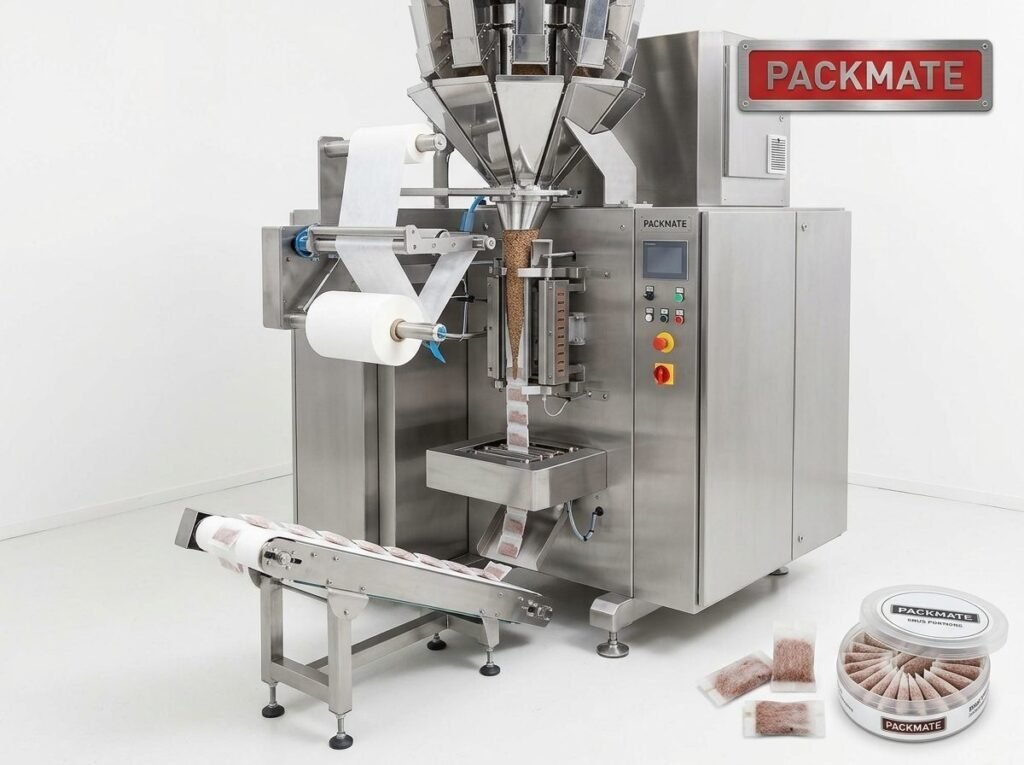
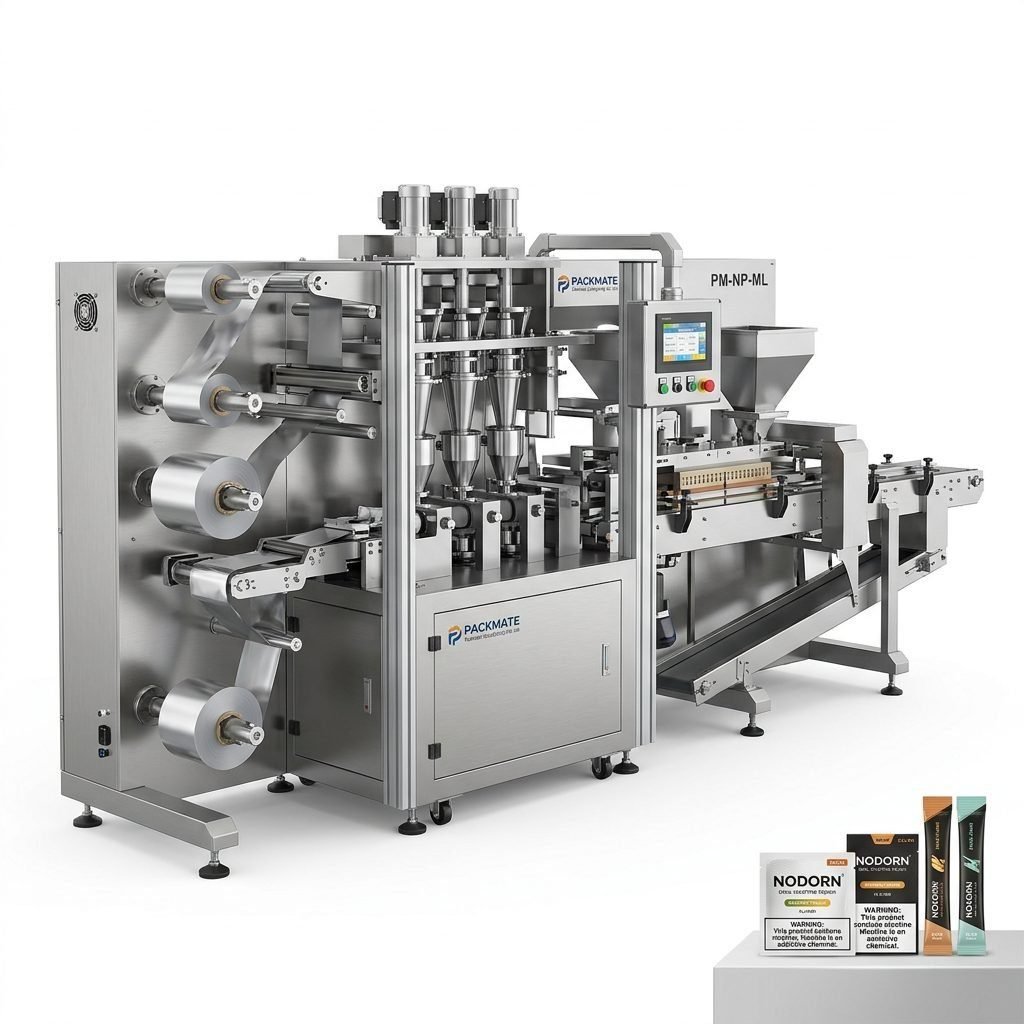
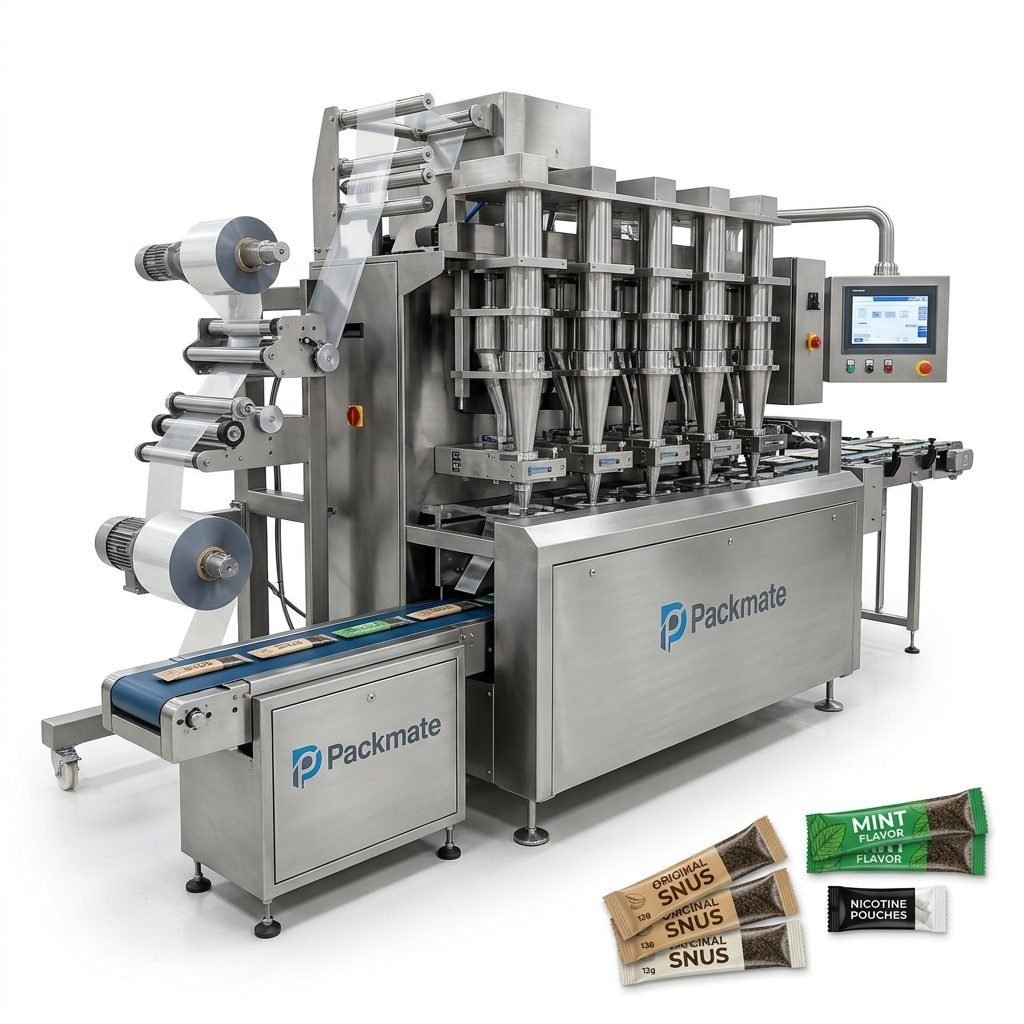
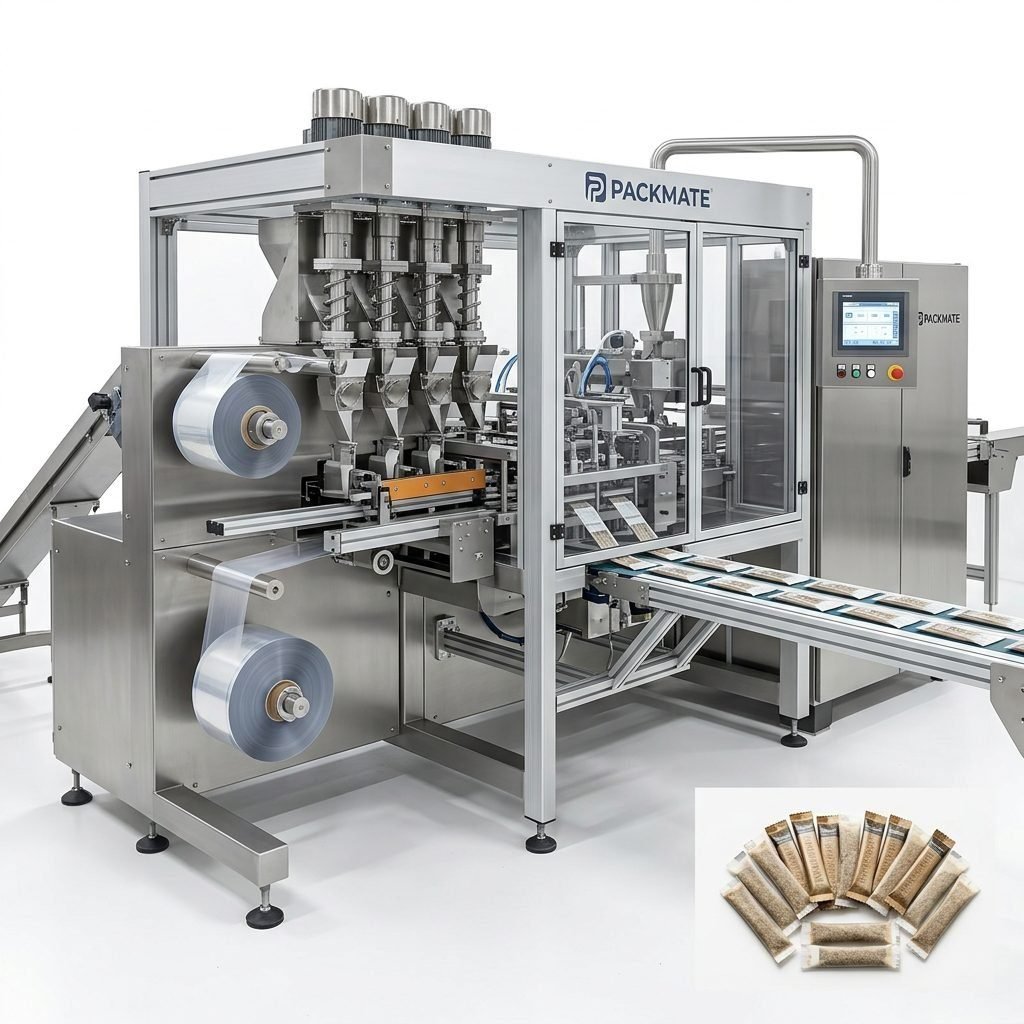
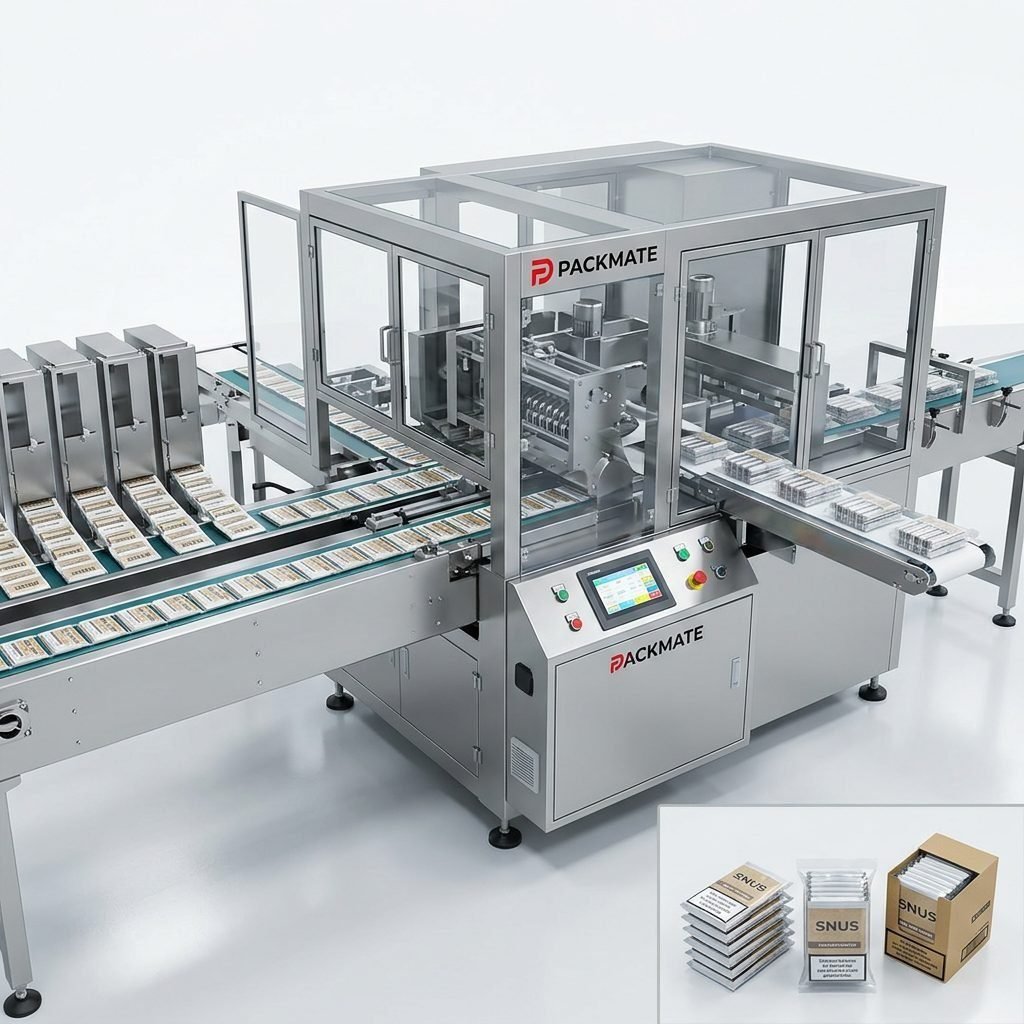
The nicotine pouch manufacturing industry has matured into a precision-driven niche where consistency, hygiene, and automated throughput determine commercial success. This guide walks packaging engineers, production managers, and procurement teams through a complete production process, equipment setup and automation considerations for a modern nicotine pouch manufacturing line. It covers core machines, workflow layout, critical process parameters, quality control checkpoints, and practical advice for commissioning and scaling operations.
Overview: What a Complete Nicotine Pouch Line Includes
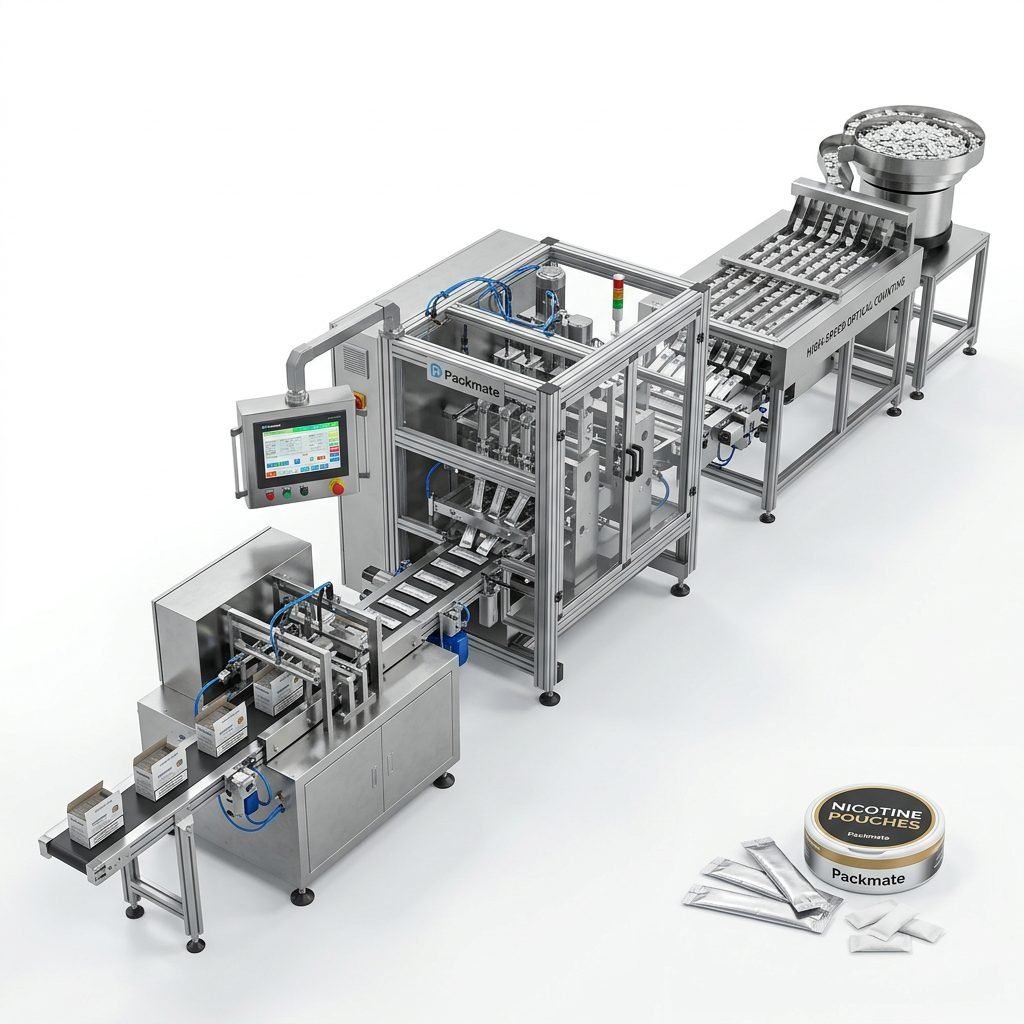
A full nicotine pouch production line integrates upstream material handling, precise dosing and pouch forming, efficient filling & sealing, and downstream inspection and secondary packaging. Typical modules include:
🔧 Mixing & flavor dosing unit — prepares the tobacco-free or nicotine slurry and blends humectants and flavors.
⚙️ Granulation or homogenization — ensures uniform particle size and moisture distribution for consistent weight per pouch.
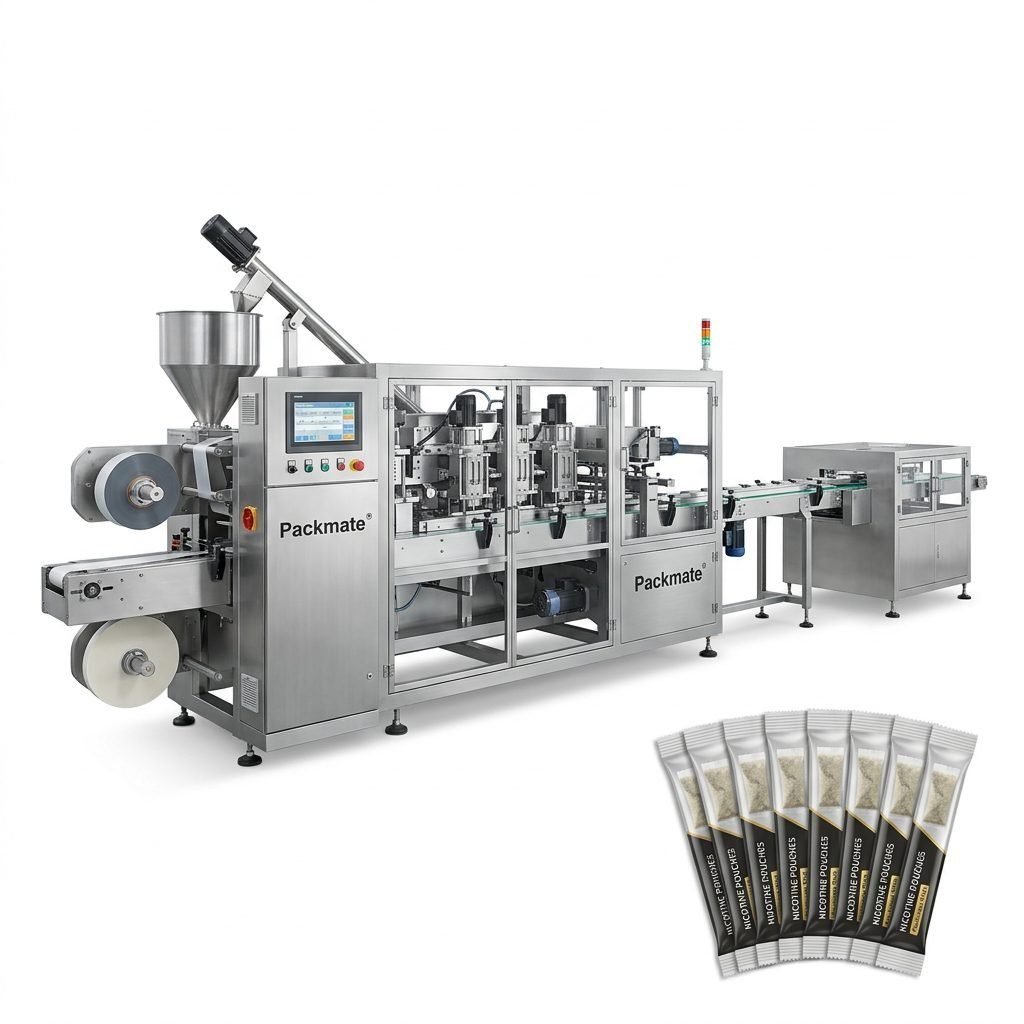
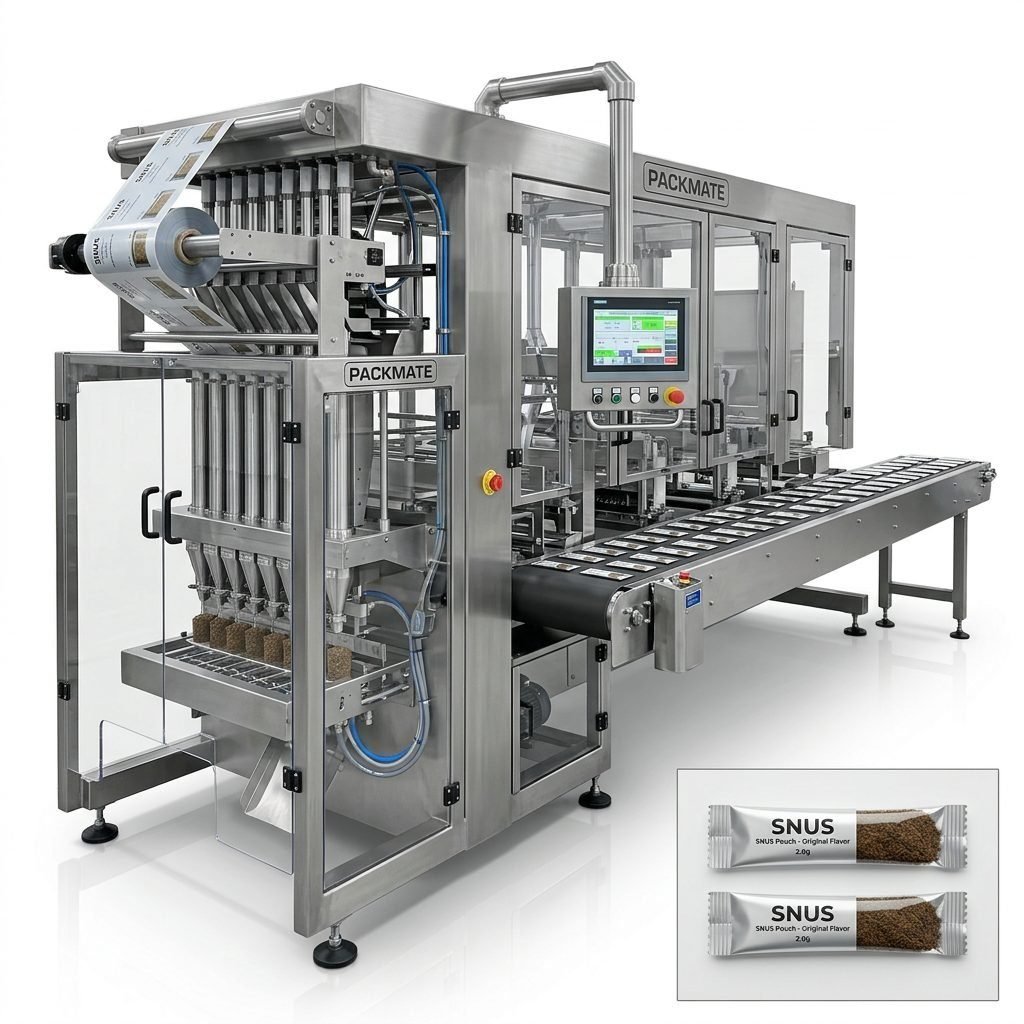
📦 Pouch forming & filling machines — multi-lane pouch makers with high-precision dosing for micro-doses.
🔍 Inspection and metal detection — in-line systems to remove contaminants and verify weight/appearance.
📮 Secondary packaging — carton erectors, case packers and palletizers to finish the production flow.
Why automation matters
Automation delivers repeatable weight control, hygienic handling, and reduced labor cost. For small-dose nicotine pouches, precision dosing and synchronized multi-lane feeding are essential to avoid product variation and regulatory non-compliance. Modern systems supported by PLCs and HMI interfaces also enable traceability and remote diagnostics.
✅ Key outcome of a well-designed line: consistent pouch weight ±2-3% (typical target), high uptime (>92%) and rapid changeover between flavors or formats.
Raw Materials and Preparatory Systems
Raw materials for nicotine pouches commonly include nicotine extract or salt solution, fillers (e.g., plant fibers or cellulose), humectants (glycerin), pH adjusters, and flavor concentrates. Proper handling and preparation equipment prevents variability:
Mixers and dosing stations
High-shear mixers and dosing pumps with mass-flow metering provide consistent liquid and powder blending. Use hygienic tanks with CIP (clean-in-place) capability for liquid nicotine streams to maintain safety and reduce cross-contamination.
Pre-granulation and homogenization
For pouch products that require defined texture, roller compactors or pin mills can produce granules with controlled bulk density. Target moisture and particle-size distributions to match your dosing head requirements.
Pouch Formation and Filling: Core Machinery
Pouch formation technology varies by pouch type — sachet, stick pack, or multi-lane pillow/flat pouches. Choose equipment based on production rate, pouch size, and flexibility needs.
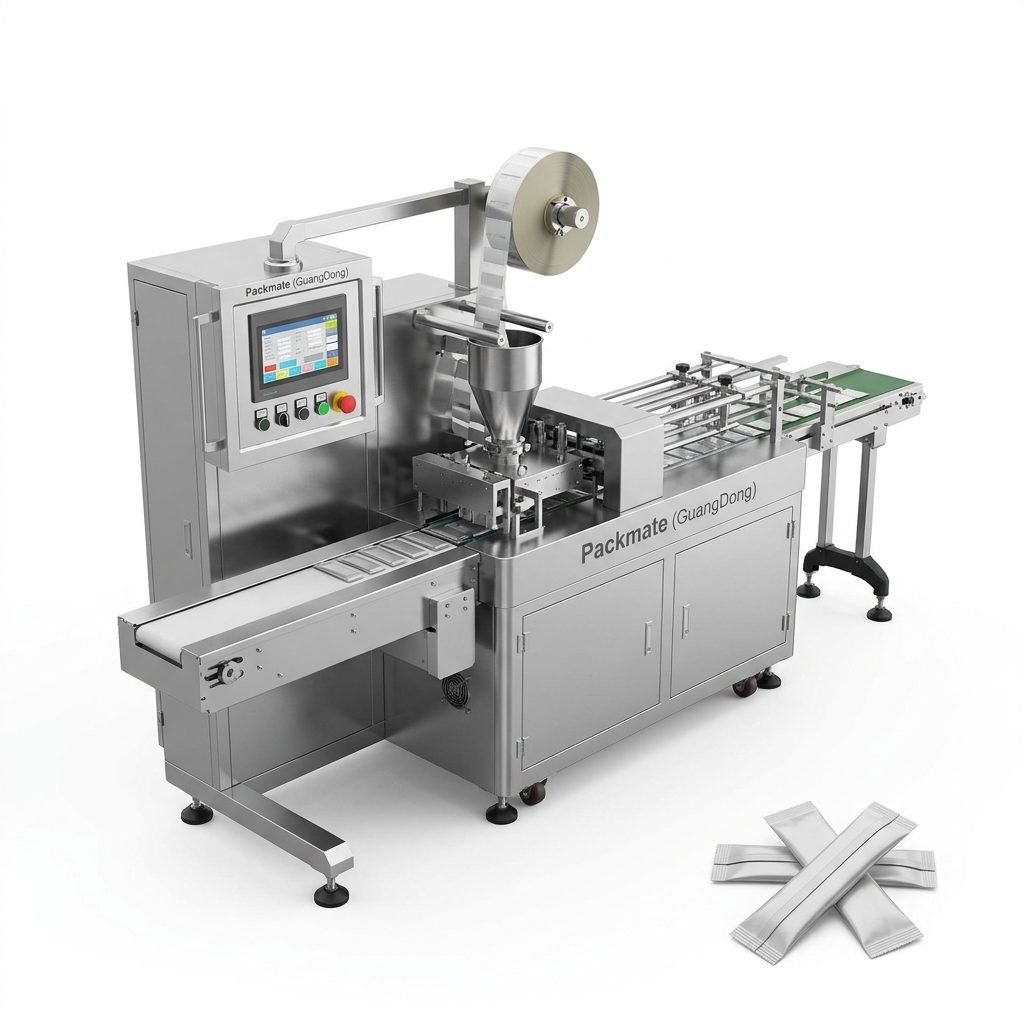
Form-fill-seal (FFS) machines
FFS machines convert roll stock into individual pouches, fill them with precisely metered product, and seal them. For nicotine pouches, multi-lane dosing heads allow parallel pouch production (e.g., 4/6/8 lanes) to reach high throughput without compromising dosing accuracy.
Weighing & metering systems
Gravimetric or volumetric feeders can be used depending on particle flow behavior. Integrating a high-accuracy weighing system into each lane reduces weight distribution variation. Consider servo-driven augers or vibratory feeders for powders and fiber blends.
🔴 Production tip: Validate dosing stability at target speed with multiple lanes before finalizing line acceptance. Use in-line weight checks after every 1000 pouches in commissioning.
Sealing, Coding and Integrity Checks
Reliable sealing is essential for shelf life and regulatory compliance. Heat-seal systems with controlled temperature zones and precision pressure create strong, tamper-evident seals.
In-line inspection systems
Vision systems inspect seal quality, pouch geometry and print legibility. Metal detection and X-ray can be integrated before secondary packaging. Automated rejection stations reduce manual inspection labor and prevent faulty shipments.
Secondary Packaging and Serialization
After primary pouch production, secondary packaging includes insertion into cartons, batch coding, and case packing. Serialization and batch coding capabilities help with traceability and regulatory reporting. Modular case packers and cartoning machines adapt to variable production speeds.
For turnkey solutions that combine primary filling with downstream systems, manufacturers deliver integrated lines including feeders, cartoners and palletizers. See examples of complete product families like Filling & Packaging Lines and Weighing & Packaging Systems.
Automation, Controls and Data Management
A modern nicotine pouch line should be controlled by a centralized PLC with a clear HMI for recipes, alarm management and changeover procedures. Connectivity options (Ethernet/IP, OPC-UA) enable factory MES or SCADA integration. Implement production data logging for lot traceability and performance analytics.
⚡ Automation highlight: recipe-based changeovers reduce manual adjustments and cut downtime during flavor or weight changes.
Remote support and predictive maintenance
Use remote diagnostics for real-time support and implement condition monitoring (vibration, motor current) to predict component wear. This lowers unplanned downtime and optimizes spare-part stocking.
Quality Assurance and Regulatory Compliance
Regulatory frameworks for nicotine-containing products vary by market. Ensure your facility and line meet relevant standards — GMP, ISO and CE compliance where applicable. Validate cleaning procedures, allergen controls (if flavors contain allergens), and maintain documented batch records.
Packmate Snus Machine’s engineering approach emphasizes robust QA processes and compliance documentation. Learn more about their company credentials at About Packmate.
Factory Setup, Installation and Commissioning
Plan your factory layout for material flow, segregation of raw and finished goods, and maintenance access. Typical steps for commissioning:
1) FAT (Factory Acceptance Test) at vendor site to verify machine performance.
2) Site installation and mechanical alignment.
3) IQ/OQ validation — Installation Qualification and Operational Qualification with documented test runs and sample collection.
4) Training for operators and maintenance staff; create SOPs and maintenance schedules.
📌 Installation tip: Allocate buffer zones for spare parts and a dedicated control cabinet area for easy access to PLCs and networks.
Maintenance, Spare Parts and Service
Planned preventive maintenance is critical. Maintain a parts list including wear components (seals, belts, heating elements), dosing screws and sensors. Work with suppliers who offer global spare-part delivery and service contracts to reduce Mean Time To Repair (MTTR).
Packmate provides modular service solutions and post-sale support; see their Service offerings and case histories at Case.
Selecting a Supplier and Customization Options
When choosing a supplier, evaluate engineering capability, factory size, model range, and customization experience. Key considerations:
• Production flexibility: ability to support multiple pouch formats and quick tooling changeovers.
• Documentation and validation support: FAT, IQ/OQ, and spare-part lists.
• After-sales network and training resources to ensure rapid ramp-up.
🧾 Supplier checklist: factory area, CNC capabilities, number of machine models, and global turnkey experience help determine maturity — Packmate lists a 20,000㎡ factory area and 50+ machine models as indicators of capacity.
Case Study Snapshot
A medium-sized tobacco alternative manufacturer implemented a 6-lane pouch line configured for 200–500 mg nicotine doses per pouch. After integration of a gravimetric feeder, automated in-line weighing and a vision inspection station, the line achieved target throughput with 30% less material giveaway and improved batch traceability. For examples of packaging machine families and solutions, explore Snus & Nicotine Packaging Machines.
Cost, ROI and Scaling Considerations
Initial investment depends on automation level, lane count, and auxiliary systems. Evaluate total cost of ownership including spare parts, service agreements, and energy consumption. Key KPI targets to calculate ROI:
• Production throughput (pouches/minute) and annual run-hours.
• Yield and giveaway percentages.
• Labor reduction and scrap rate improvements after automation.
Summary: Building a Robust Nicotine Pouch Line
A reliable nicotine pouch production line balances precision dosing, robust pouch formation, and strict quality systems. Start with well-defined product specifications (dose, pouch dimensions, speed) and partner with an experienced supplier that supports FAT, installation, and long-term service. A carefully engineered line maximizes product consistency, regulatory compliance and operational uptime.
Actionable next steps: validate dosing accuracy on candidate machines, require FAT documentation, confirm spare part lead times, and secure a service agreement for commissioning and training.
Useful resources
For product families and deeper specification sheets, visit the manufacturer’s product pages: Bag & Pouch Packaging Machines, Sachet & Stick Pack Machines, and explore real-world implementations on their Case page.
Frequently Asked Questions
Q1: What production speeds are achievable for multi-lane nicotine pouch lines?
A1: Multi-lane lines can range widely; a typical 4–8 lane line targeting micro-doses may run from 60 to 300 pouches per minute depending on lane count, dosing technology, and pouch format. Throughput must be validated with the final formulation and packaging film.
Q2: How to ensure cross-contamination control between flavors?
A2: Use dedicated or validated clean-in-place systems for liquid lines, implement SOPs for changeovers, and plan for purge runs or physical separation for strong flavors. Documented cleaning validation is critical for regulatory audits.
Q3: What are typical tolerances for pouch weight and how are they enforced?
A3: Typical manufacturing targets aim for ±2–3% weight tolerance. Enforce with high-accuracy dosing, in-line weight checks and automatic rejection of out-of-spec pouches. Gravimetric dosing heads and check-weighers are standard.
Q4: How much factory floor space is required for a standard turnkey line?
A4: Space needs depend on lane count and downstream equipment; a compact single-cell line may fit into a few tens of square meters, whereas a fully integrated high-capacity line with cartoning and palletizing can require several hundred square meters. Discuss layout needs during procurement.
Q5: Where can I see real machine demonstrations before purchase?
A5: Request factory FAT and attend trade exhibitions where manufacturers demonstrate machines. Many suppliers offer pre-sale demonstrations and virtual or on-site FAT. See exhibition history at the manufacturer’s Our Exhibition page.