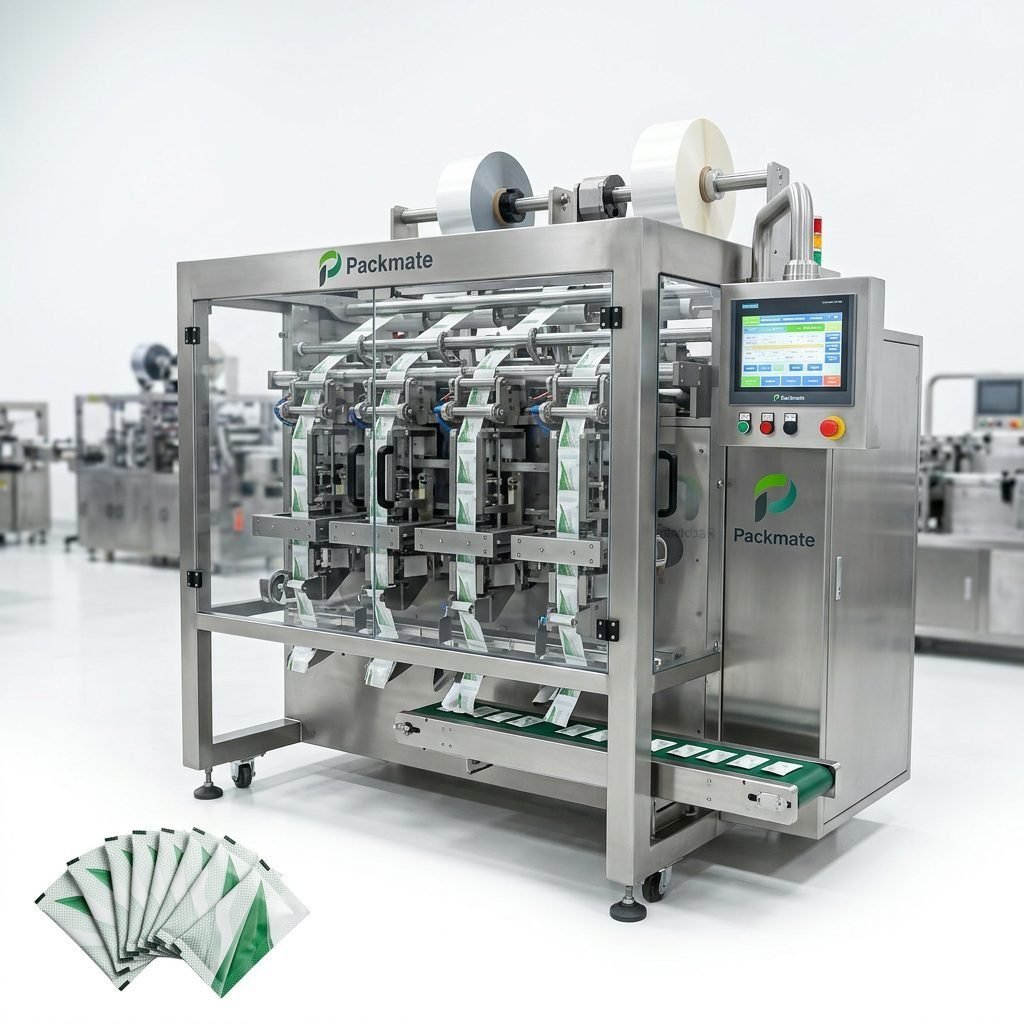
Choosing the right nicotine packaging machine in Uganda is a strategic decision that affects product quality, regulatory compliance, and long-term profitability. This guide walks you through practical considerations—from machine types and production capacity to supplier credibility and after-sales service—so you can make an informed purchase that fits your production goals and local market conditions.
Why the Right Machine Matters for Uganda’s Market 📦
Uganda’s emerging nicotine pouch and snus markets demand consistent product quality, accurate dosing, and compliant packaging. A well-chosen packaging machine reduces waste, lowers labor costs, and enables reliable batch traceability for regulatory inspections. Investing in a machine tailored to nicotine pouch production can be the difference between a pilot operation and a scalable industrial line.
Regulatory and Compliance Considerations ⚖️
Before selecting equipment, confirm the applicable regulations in Uganda regarding nicotine products, labeling, and food-contact materials. Machines that support hygienic design and easy cleaning help meet sanitary standards. Look for suppliers whose machines comply with international certifications (e.g., CE, ISO) to simplify export or multinational compliance.
Types of Nicotine Packaging Machines and Their Best Uses ⚙️
Different formats call for different technologies. Here are the common types:
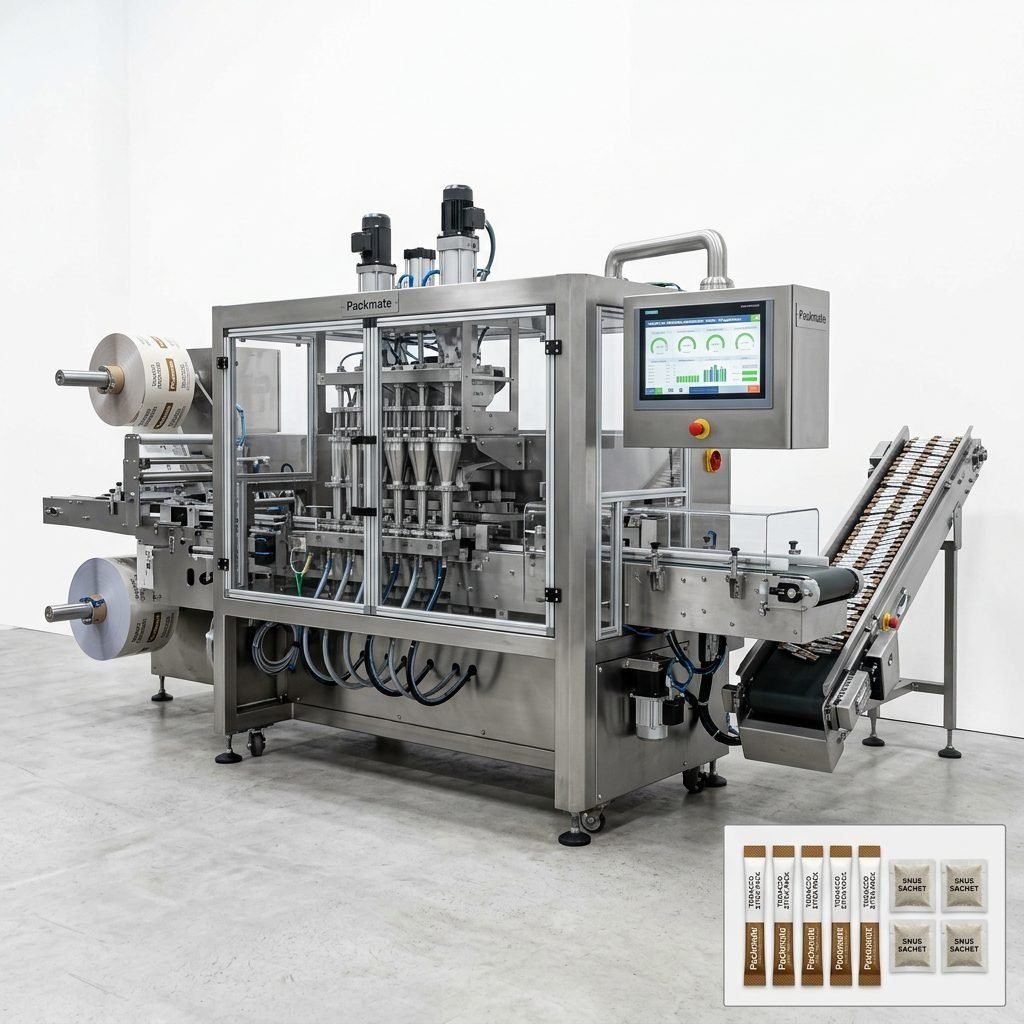
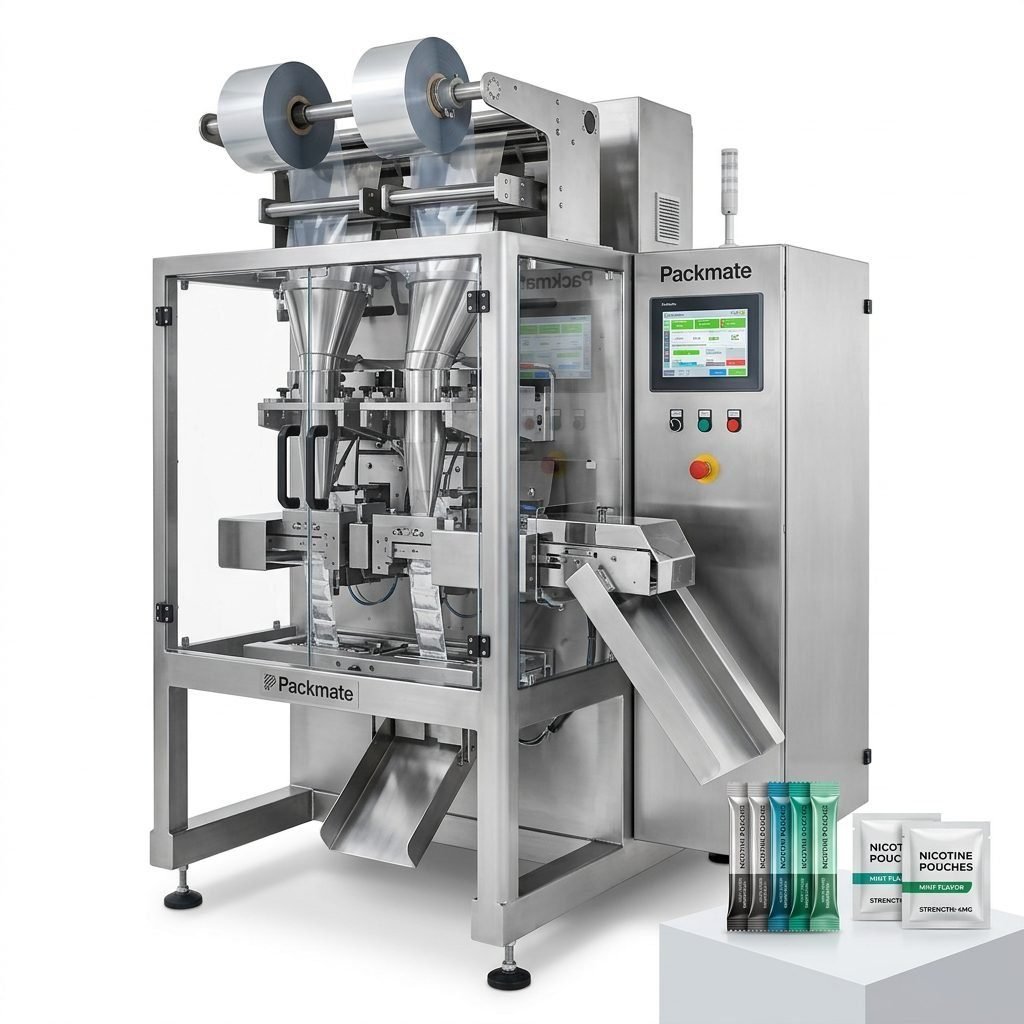
Stick pack / single-dose machines: ideal for single sachets or stick-style nicotine pouches where precise small-dose filling is required.
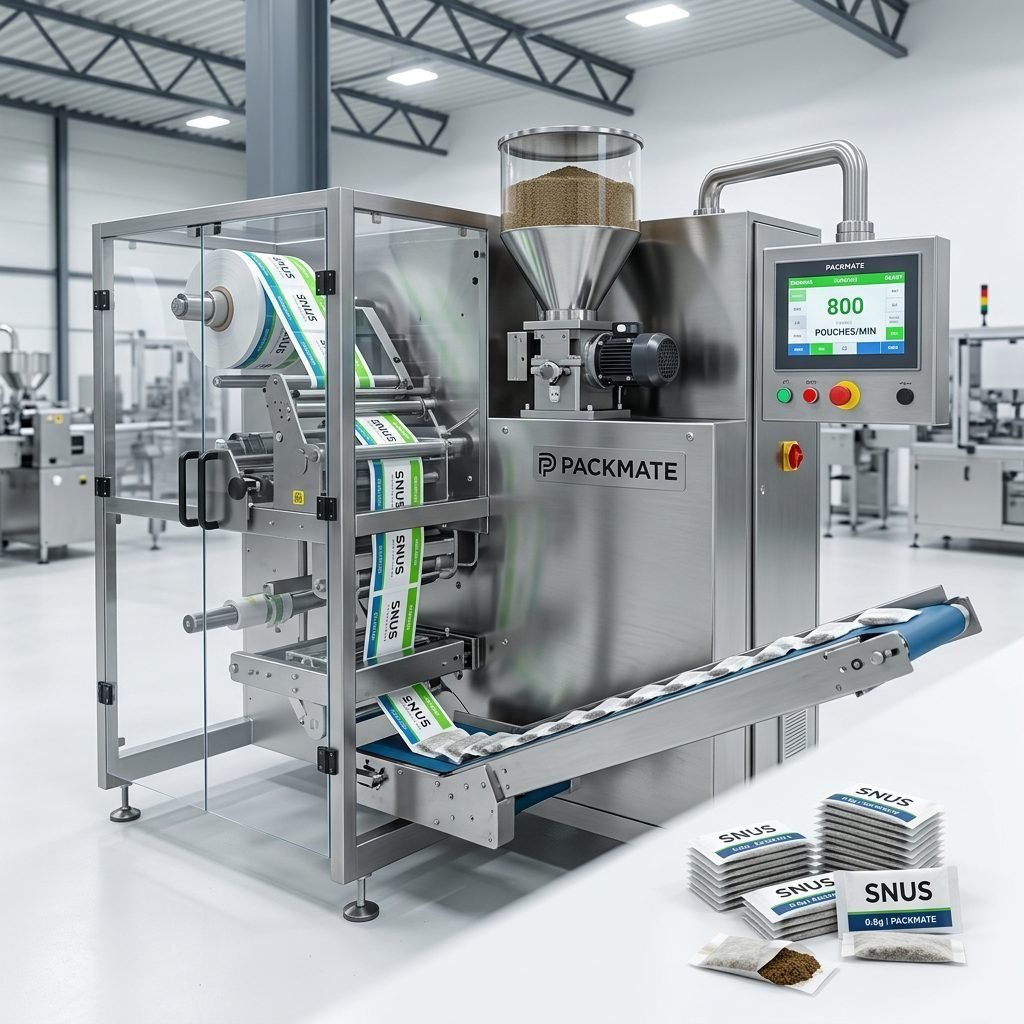
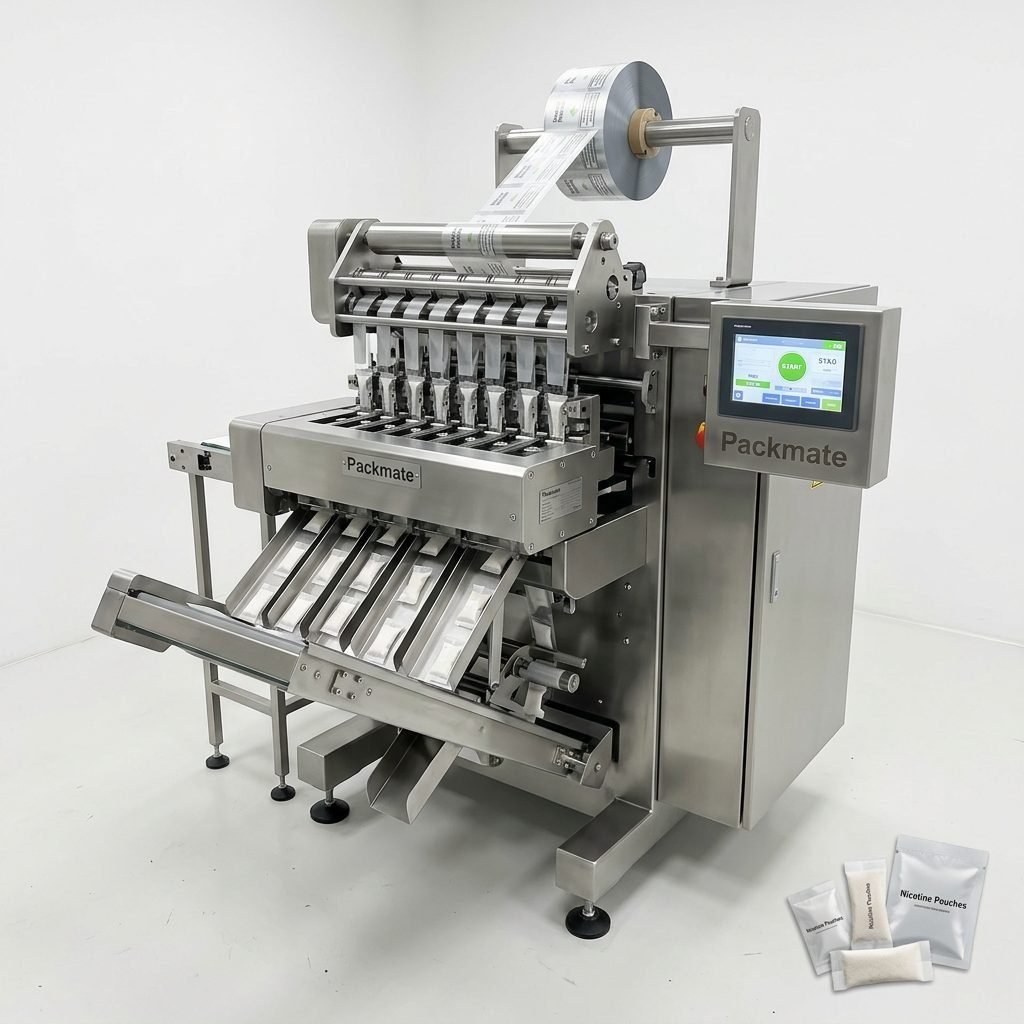
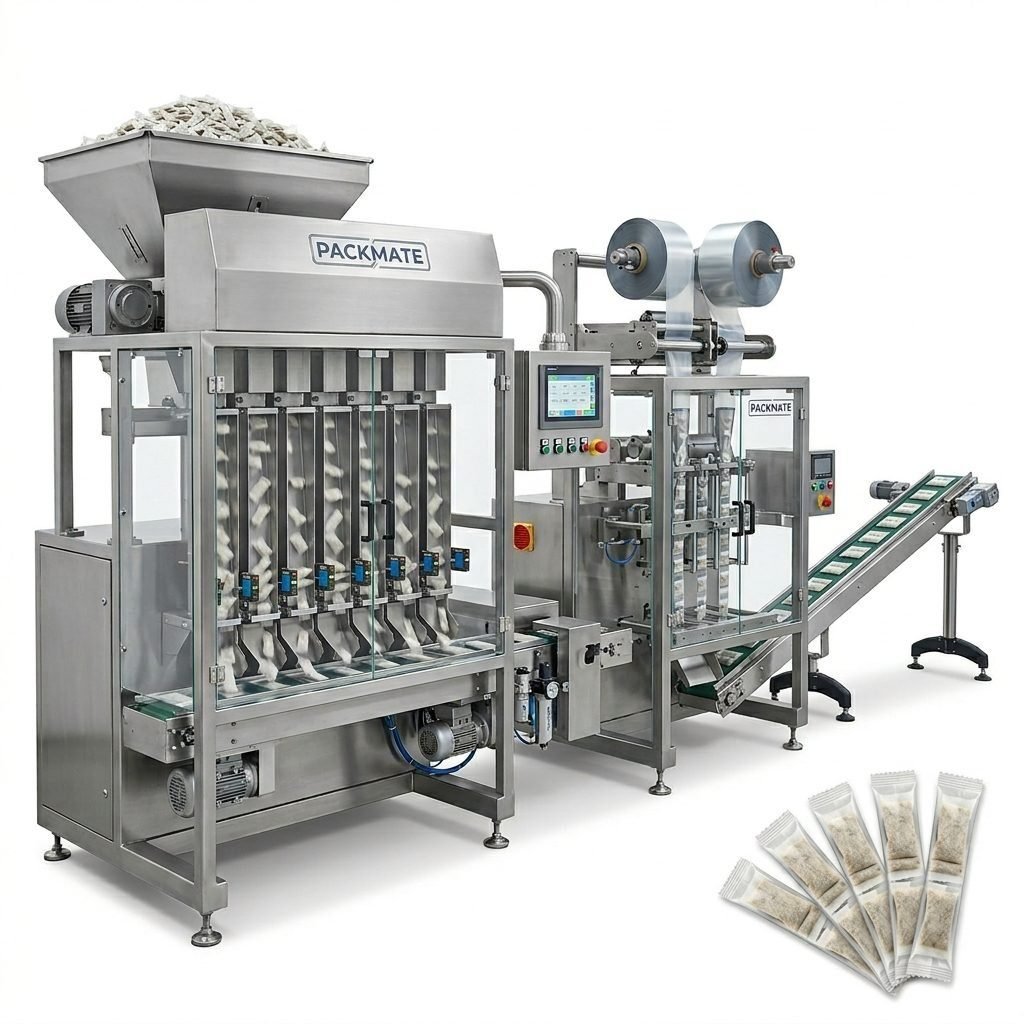
Sachet & multi-lane machines: suitable for high-throughput operations packaging many pouches per minute across multiple lanes.
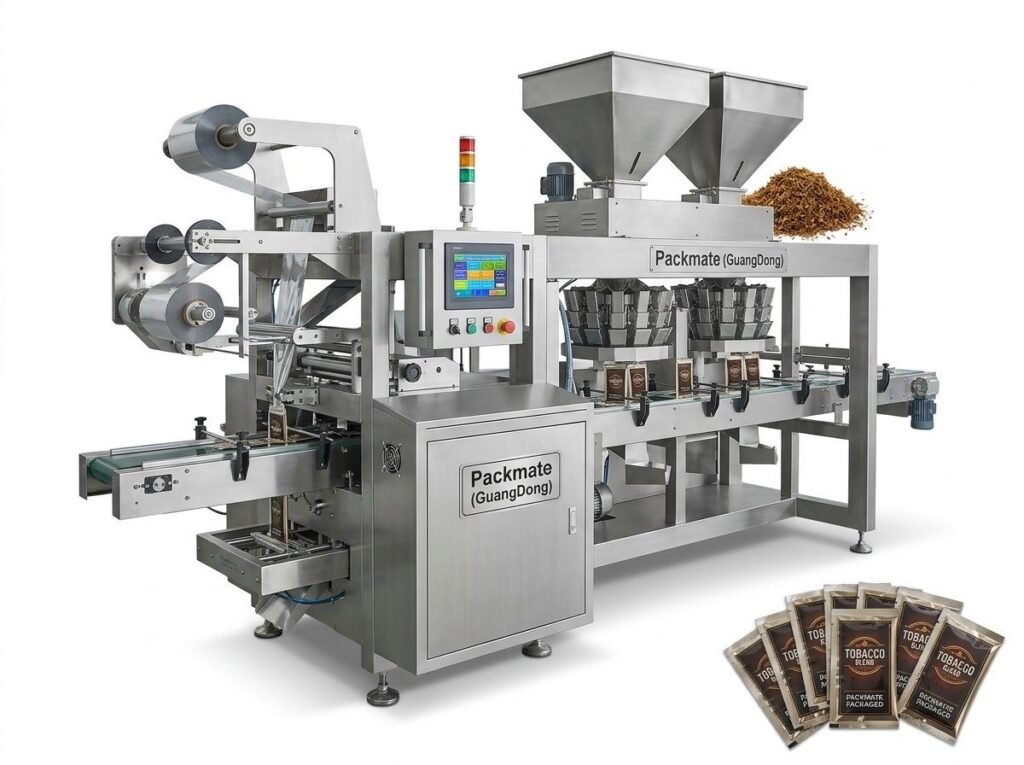
Pouch and bag machines: used for larger sachets or pillow packs and when secondary packaging is required.
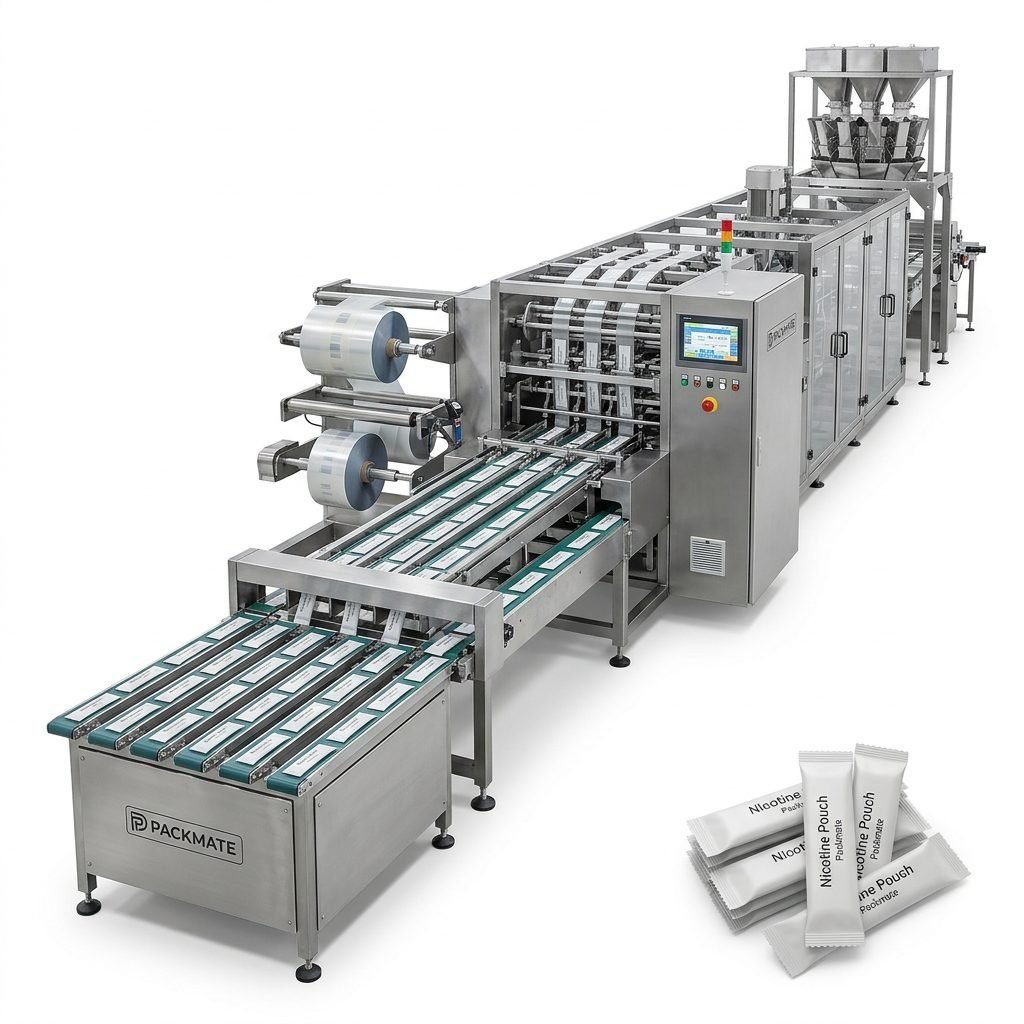
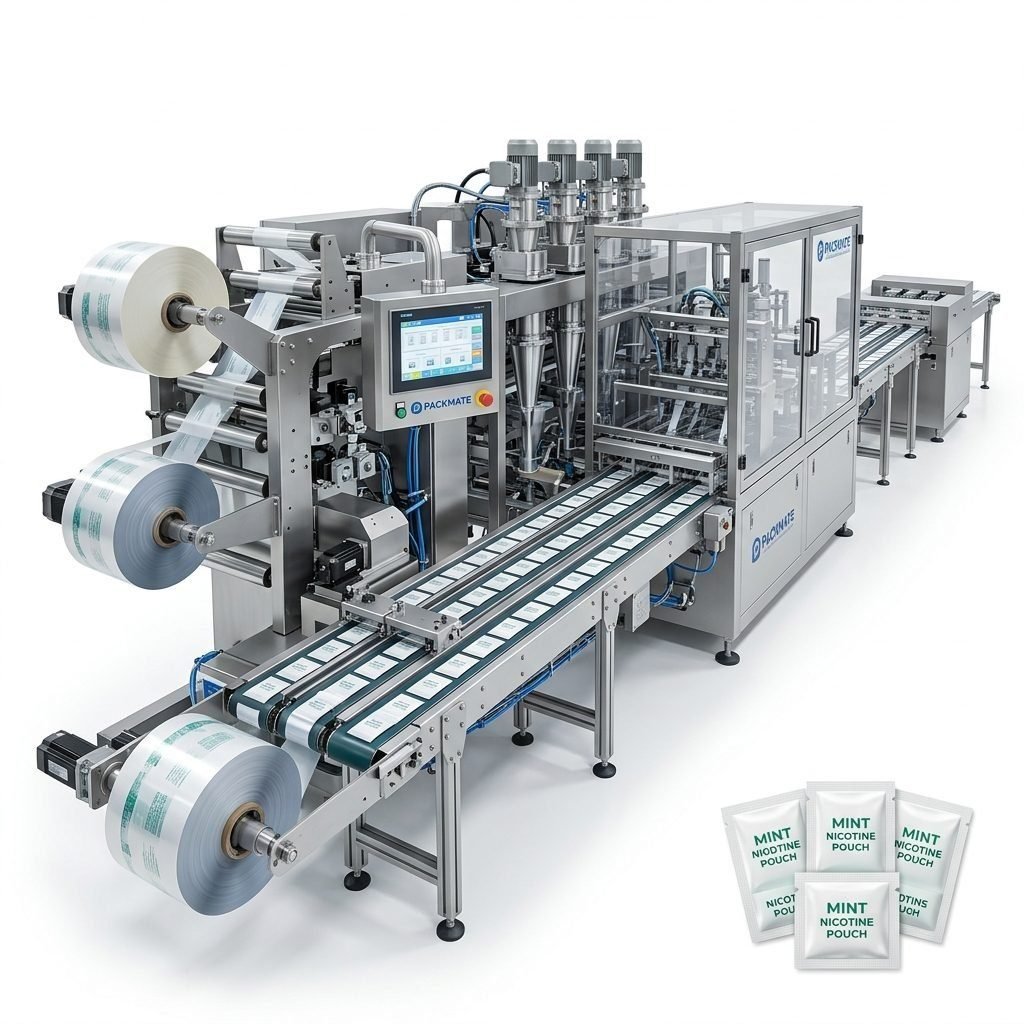
Complete filling & packaging lines: integrate weighing, filling, sealing, and secondary packaging for turnkey production.
Production Capacity & Scalability 🔁
Estimate current and near-future demand. Select a machine with capacity headroom to avoid premature replacement. For small-scale startups, a single-lane or low-speed multi-lane system may be economical. Medium to large producers should consider multi-lane or high-speed stick pack systems that support 24/7 operation and can be expanded or paralleled as demand grows.
Key consideration: Match machine throughput (pouches/minute) to realistic sales forecasts. Overbuying capacity ties up capital; underbuying risks missed sales and long lead times.
Material Compatibility and Filling Accuracy 🎯
Nicotine pouches vary: dry powdered tobacco, nicotine extract blends, or novel formulations with polymers. Ensure the machine’s dosing and feeding systems are compatible with your product’s particle size, hygroscopicity, and flow properties. Gravimetric or volumetric dosing technologies, and optional checkweighers, maintain consistent dose accuracy—critical for compliance and consumer safety.
Hygiene, Cleaning, and Maintenance 🧰
Machine design should allow easy disassembly, washdown-resistant surfaces where needed, and minimal product contact crevices. Consider machines with quick-clean modules and modular spare parts to reduce downtime. A local maintenance plan or trained technicians who can perform preventive maintenance is invaluable in Uganda where international service visits may take time.
Utilities, Footprint and Workshop Requirements 📐
Verify site requirements: floor space, power supply (voltage and phase), compressed air, and environmental controls (temperature/humidity). Multi-lane lines may need more space and robust utility infrastructure. Ask suppliers for detailed mechanical drawings and utility consumption charts to plan your workshop layout.
Automation, Control, and Integration 🤖
Modern machines offer PLC controls, HMI touchscreens, recipe management, and data logging—features that simplify changeovers and ensure repeatability. If you plan to integrate upstream (weighing/filling) and downstream (cartoning, case packing) systems, choose machines designed for synchronous integration and communication protocols.
Performance tip: Prioritize machines with recipe storage and remote diagnostics for faster product changeovers and easier troubleshooting.
Total Cost of Ownership (TCO) and Return on Investment (ROI) 💸
Purchase price is only one part of cost. Calculate energy consumption, spare parts availability, expected maintenance intervals, and staff training. A higher-quality machine with longer life and better uptime often yields lower TCO. Request sample ROI calculations from suppliers based on your projected output and product margins.
Spares, Service and Local Support 🛠️
Reliable after-sales support reduces costly downtime. Ask if the supplier offers local partners in East Africa or remote support capabilities. Confirm availability and typical lead times for critical spare parts. Suppliers with global service networks and clear spare parts catalogs are preferable.
Evaluating Suppliers: What to Look For ✅
When choosing a supplier, evaluate their engineering track record, factory capabilities, and case references. A supplier with extensive experience in snus and nicotine pouch lines—like those offering specialized snus packaging solutions—will better understand the nuances of nicotine pouch dosing and sealing.
Consider suppliers who can provide:
- Factory visits or virtual factory tours and demonstration videos
- References and real-world case studies
- Detailed technical documentation and spare parts lists
- Training programs for operators and maintenance staff
For a comprehensive view of machine models and capabilities, review product portfolios such as the Snus & Nicotine Packaging Machines and Bag & Pouch Packaging Machines.
Factory Strength and Certifications 🏭
A well-equipped factory with CNC machining, precision assembly lines, and a robust quality control system indicates manufacturing reliability. Certification to international standards (CE, ISO) is a strong indicator of quality and safety. Suppliers who exhibit at global shows demonstrate market presence and client engagement.
Testing, FAT and Acceptance Procedures 🔍
Insist on Factory Acceptance Tests (FAT) with your product samples. FAT should validate dosing accuracy, sealing quality, speed, and integration with any upstream/downstream systems. Document acceptance criteria and commissioning plans to avoid disputes after installation.
Checklist item: Require FAT videos, sample run reports, and a clear warranty and spare parts agreement before signing the purchase contract.
Deployment in Uganda: Logistics, Installation and Training 🚚
Consider the logistics of shipping heavy equipment to Uganda: customs clearance, local transport, and site preparation. Work with suppliers experienced in international shipping and local agents. Ensure installation includes commissioning by qualified engineers and hands-on operator training for multiple shifts if applicable.
For integrated lines, coordinate utility upgrades, foundation requirements, and safety systems in advance. A smooth installation minimizes production delays after machine arrival.
Local Partnerships and Service Contracts 🤝
Establish a service contract covering preventive maintenance, spare parts, and remote diagnostics. Where possible, cultivate a local technical partner who can perform routine repairs under supplier guidance. Suppliers offering pre-packaged service plans often reduce long-term operating costs.
Real-World Case Study Snapshot 📘
A mid-sized African producer replacing manual pouch packing with a multi-lane snus packaging line saw a 300% throughput increase and a significant cut in product giveaway due to precise gravimetric dosing. The investment paid back in under two years thanks to reduced labor costs and improved product consistency. Suppliers with documented case studies and export experience can provide similar success templates.
Explore real examples and production lines in a supplier’s case library to better understand delivered results and timelines: Case.
Quick Buyer Checklist — At a Glance ✔️
⚙️ Production capacity vs. forecast
📦 Machine type compatibility with your pouch format
🔧 Spare parts availability and service options in-region
🧪 FAT with your product samples
📄 International certifications and supplier references
Negotiation Tips and Contractual Safeguards 📝
Negotiate clear delivery timelines, payment milestones, and defined acceptance tests. Include warranty terms, spare parts kits, and a training package in the contract. Ask for clear escalation paths for technical issues and specify penalties for missed delivery or non-conformance if necessary.
Upgrades and Futureproofing 🔧
Choose machines with modular designs to allow future upgrades—additional lanes, updated control modules, or automation packages—without full replacement. This approach protects your capital investment as product formats and volumes evolve.
Where to Find Reliable Machines and Partners 🌐
Search for manufacturers with proven snus and nicotine pouch experience. Suppliers like Packmate Snus Machine specialize in snus packing machines and complete packaging lines across stick pack, sachet, and multi-lane systems. Review their product pages and service offerings for a match to your needs: Snus & Nicotine Packaging Machines and Filling & Packaging Lines.
Final Recommendations Before You Buy 🔍
1) Validate dosing accuracy with your product samples during FAT.
2) Prioritize suppliers offering robust after-sales support and local service partners.
3) Factor in spare parts lead time and service contracts into your TCO calculations.
4) Confirm compliance certifications and sanitary design for easy cleaning.
5) Plan for operator training and document standard operating procedures.
Need help? If you want detailed machine options and turnkey solutions, check the supplier’s service and contact pages for tailored consultations: Service | Contact Us.
Conclusion
Selecting the right nicotine packaging machine in Uganda requires balancing capacity, product compatibility, regulatory compliance, and supplier support. By focusing on machines designed for snus and nicotine pouches, validating performance through FAT, and ensuring strong after-sales service, you can secure a reliable production solution that supports growth and protects product quality.
Frequently Asked Questions — Common Buyer Concerns
Q1: What machine type is best for small-batch nicotine pouch production?
A1: Single-lane stick pack or low-speed sachet machines are ideal for small batches due to lower initial investment and simpler operation.
Q2: How can I ensure dosing accuracy for nicotine pouches?
A2: Use gravimetric or high-precision volumetric dosing systems and mandate FAT runs with your product samples to verify accuracy.
Q3: What after-sales services should I insist on?
A3: Preventive maintenance contracts, local spare parts availability, remote diagnostics, and on-site commissioning/training are essential.
Q4: Are there suppliers with nicotine-specific experience I can trust?
A4: Yes. Look for specialists in snus and nicotine packaging with proven multi-lane and stick pack solutions and transparent case studies.
Q5: How do I plan for future capacity increases?
A5: Choose modular machines that support lane additions or higher-speed modules and ensure the supplier offers upgrade paths and spare parts to scale economically.