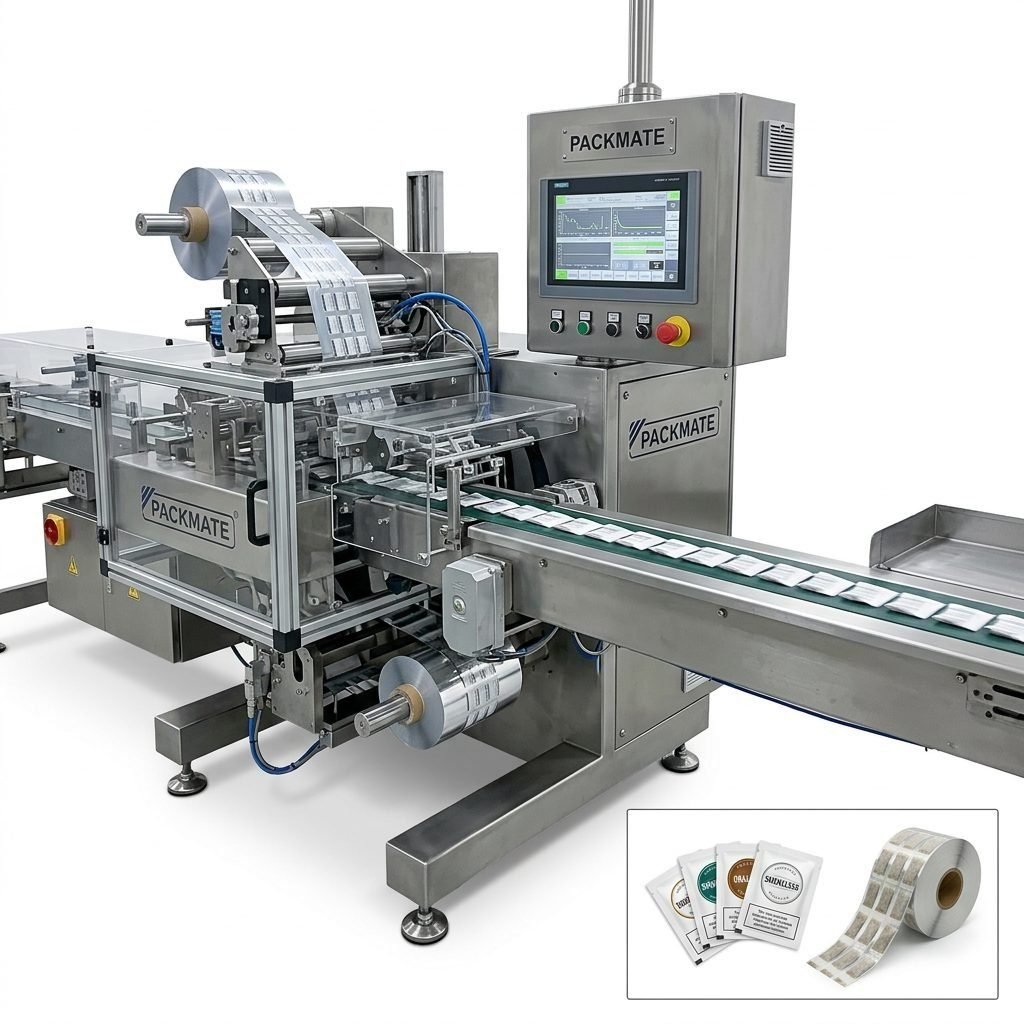
Choosing the right snus packaging machinery manufacturer in the United Kingdom is one of the most important decisions you will make for your production line. The right partner delivers machines that match your product format, speed, quality, and regulatory demands — while providing reliable service and long-term value. This guide walks you through practical, actionable steps and key evaluation criteria so you can select a supplier that aligns with your production goals and growth plans.
Understand Your Production Requirements
Before evaluating manufacturers, get crystal clear on your own requirements. Ask practical questions about:
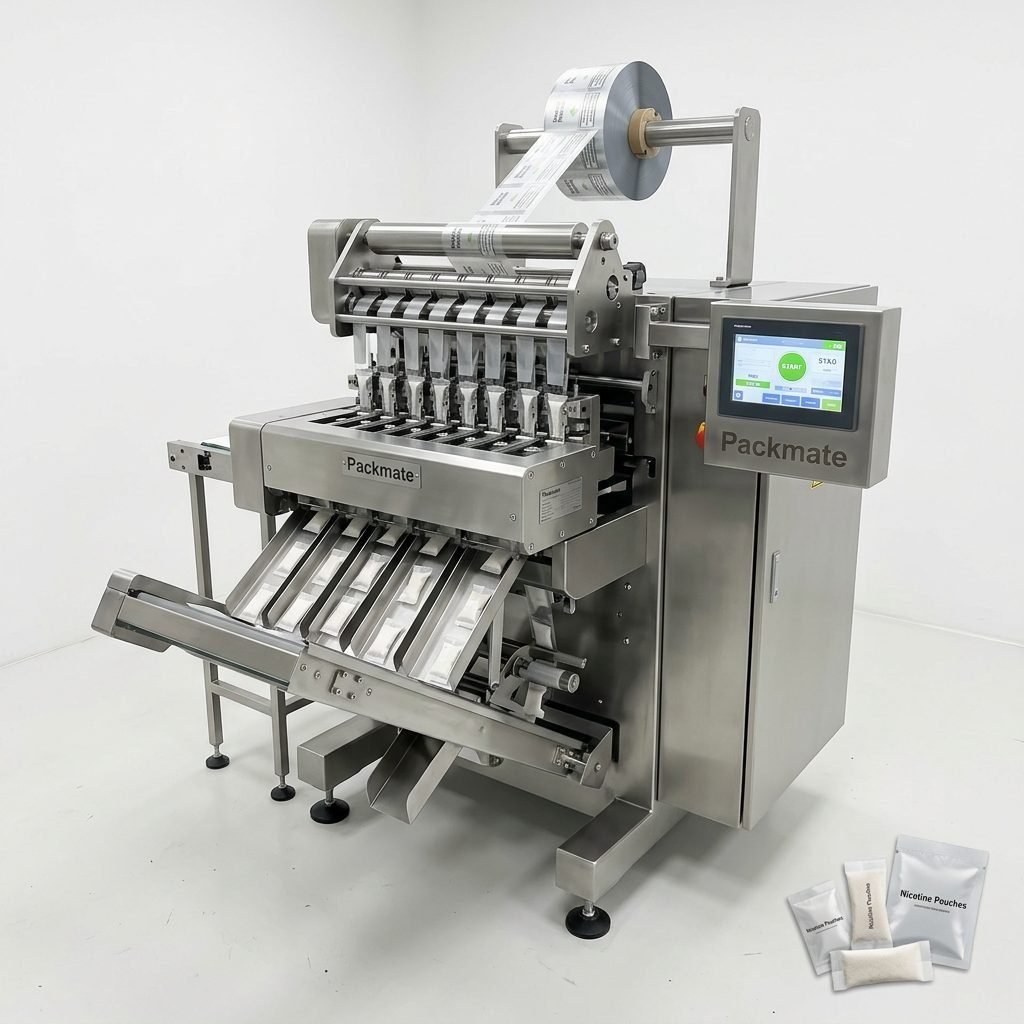
✔️ Product format: Are you producing nicotine pouches, snus sticks, sachets, multi-lane pouches or bespoke formats? Machine families differ dramatically by format.
✔️ Throughput targets: How many units per minute, hour and shift do you need? Peak capacity and realistic sustainable speeds are both important.
✔️ Materials and filling type: Will you pack powders, granules, moisture-sensitive tobacco blends, or liquids? Filling technology and handling differ for each.
✔️ Multi-lane vs single-lane: Small-dosage nicotine pouches often benefit from multi-lane systems to achieve high output while keeping footprint reasonable.
Match Machine Types to Product
Different machine families serve different needs. Seek manufacturers who have demonstrable experience with your specific product.
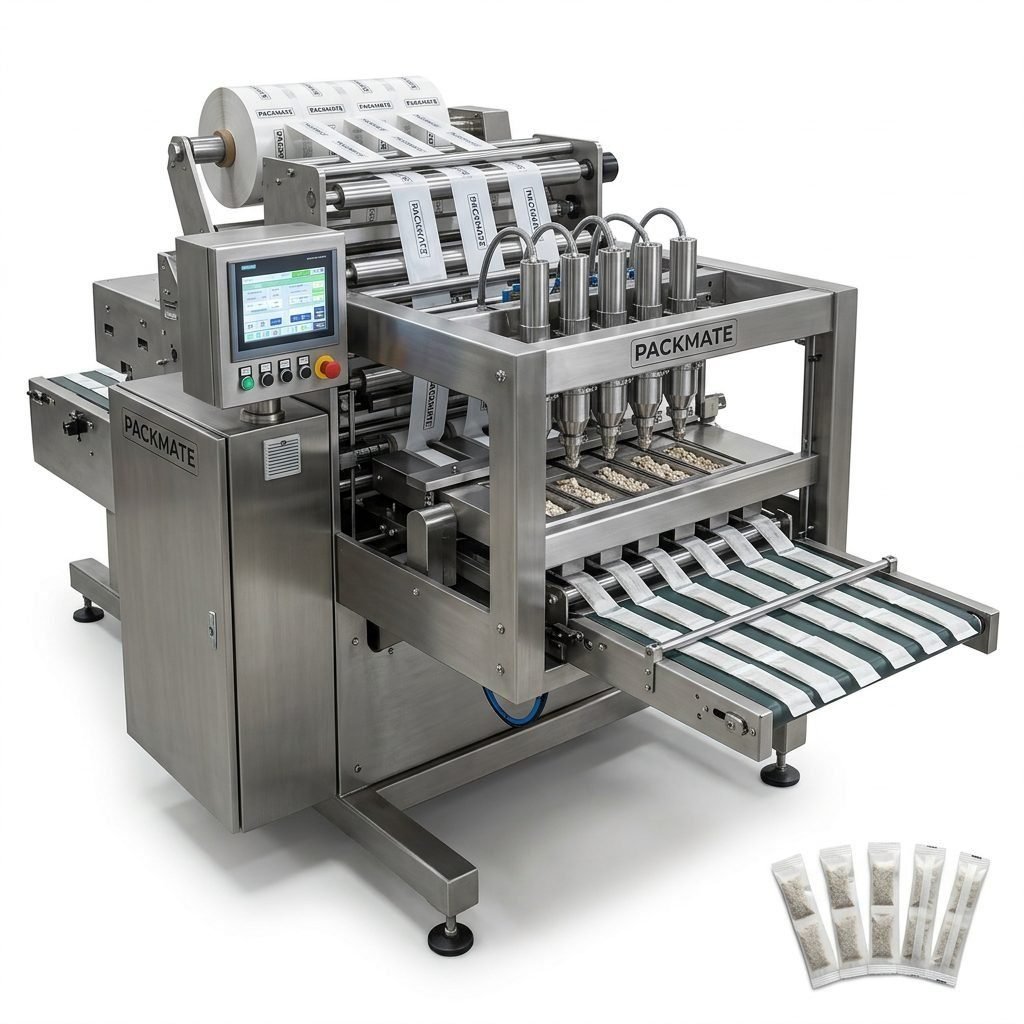
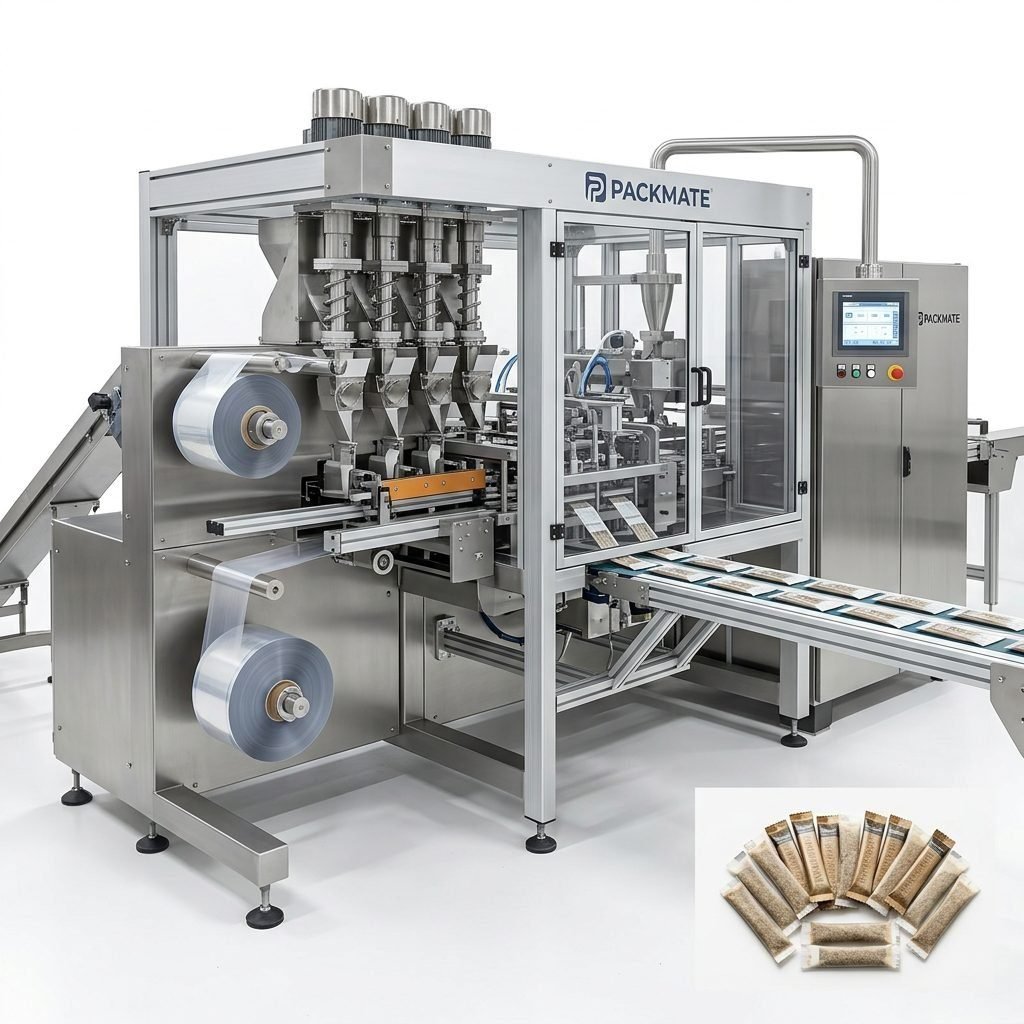
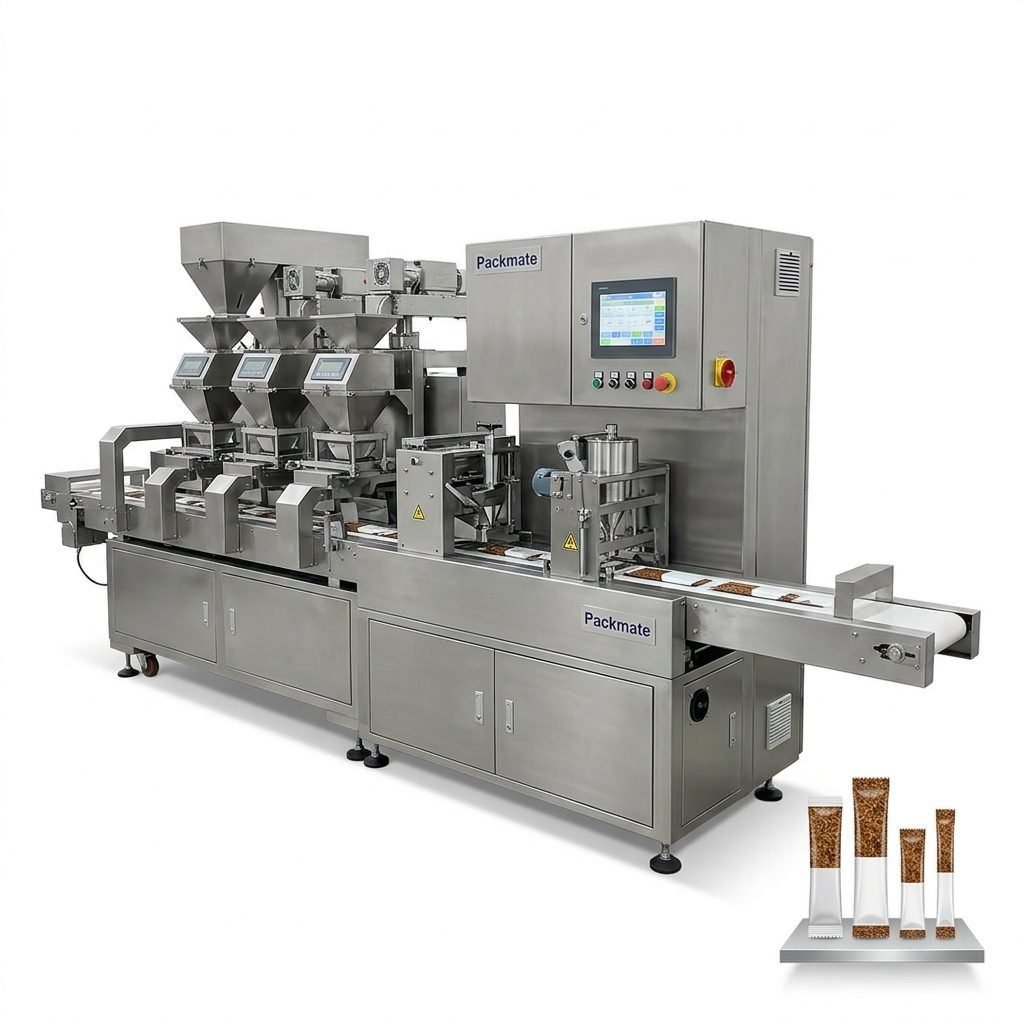
🧩 Stick pack & sachet machines: Ideal for single-dose pouches and sachets; look for repeatable seal quality.
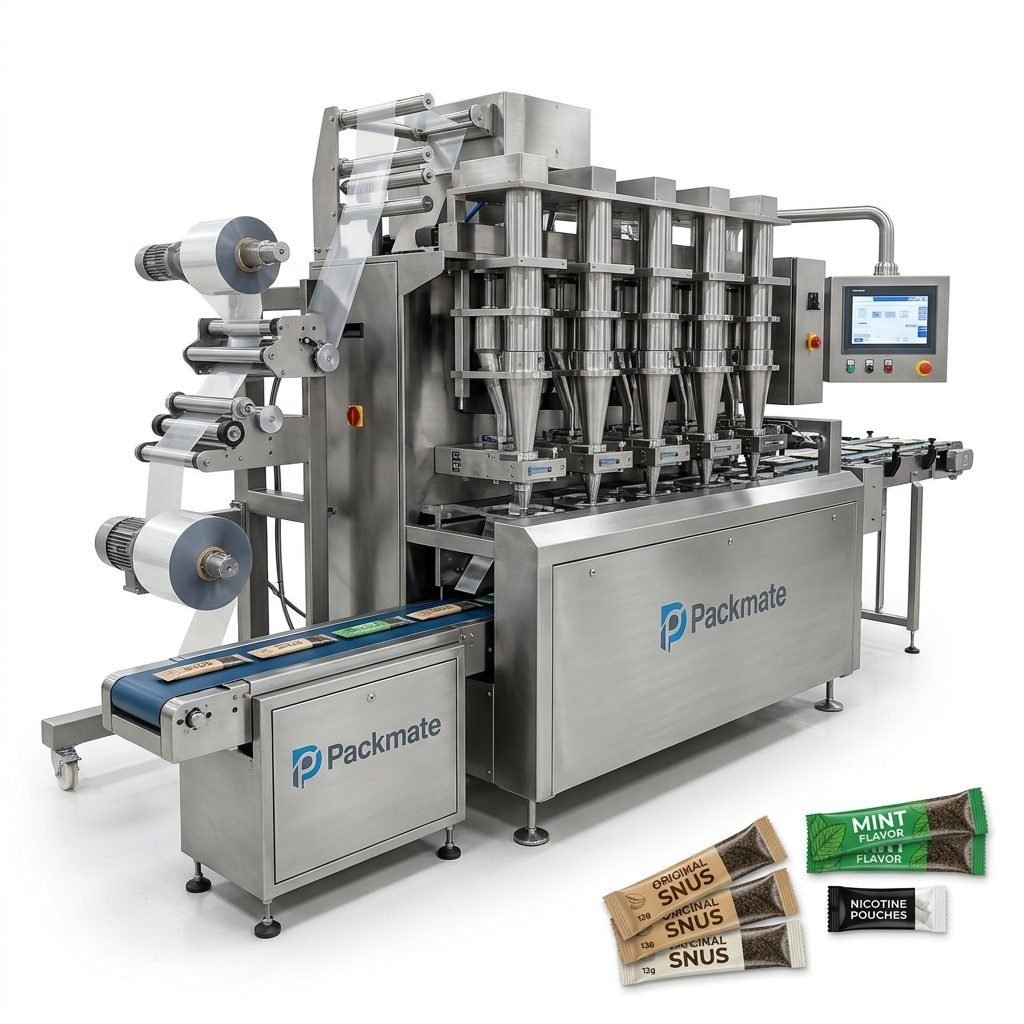
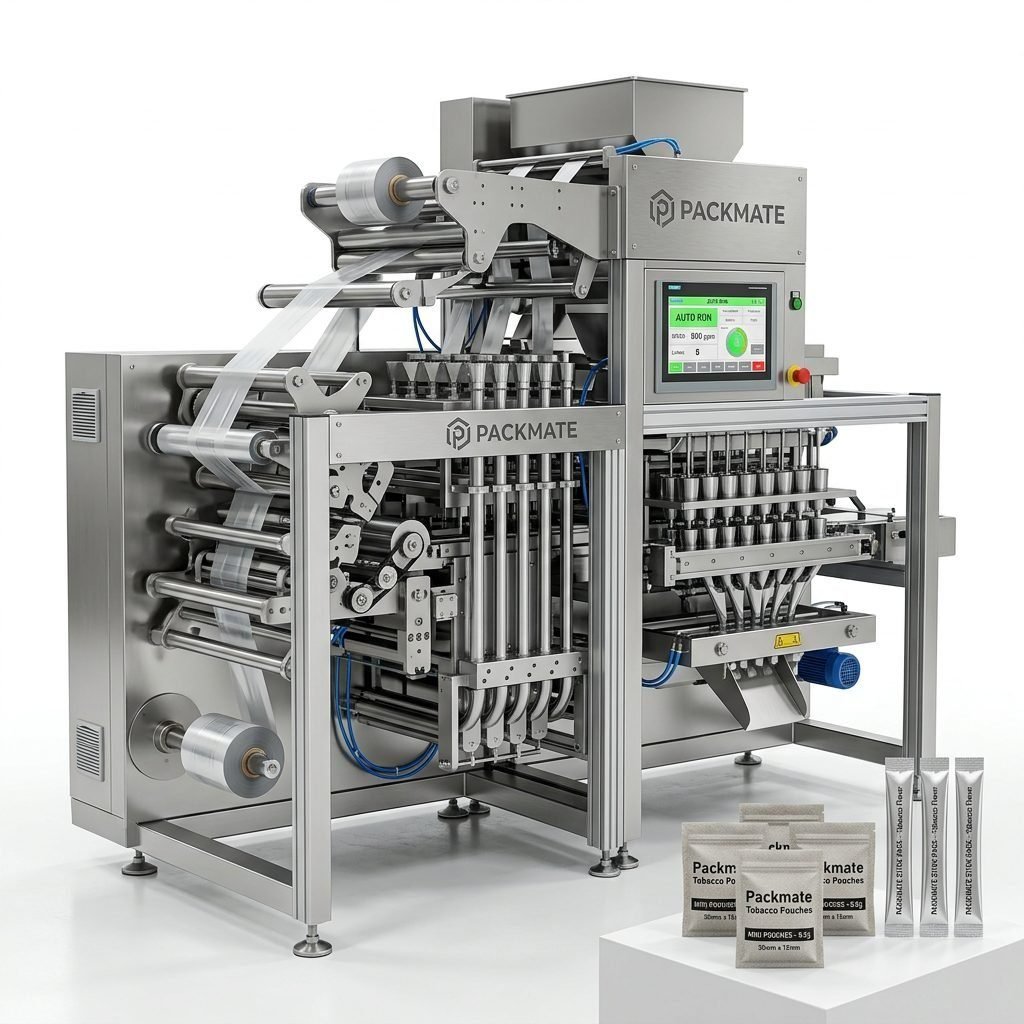
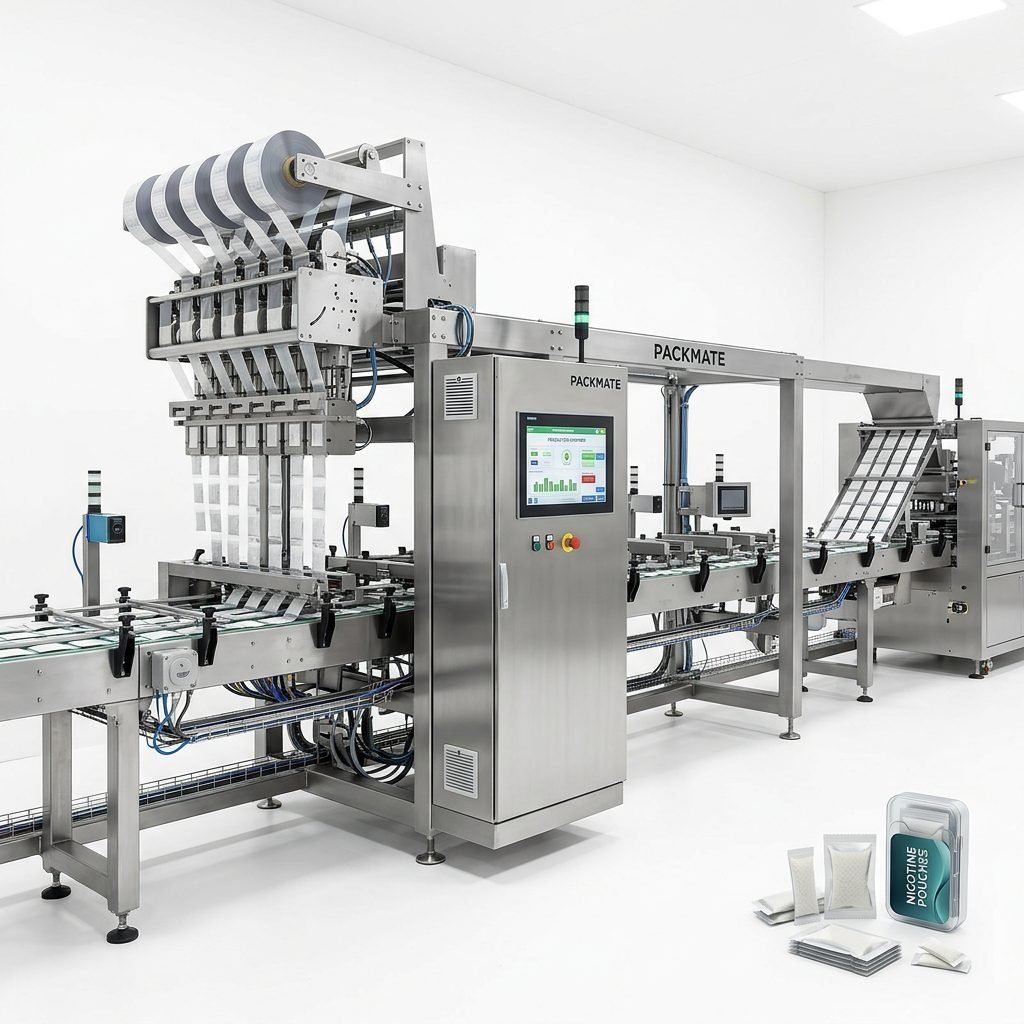
📦 Multi-lane snus pouch systems: If you need high throughput for small-dose pouches, multi-lane lines are essential to reach targets without excessive line count.
Manufacturers that publicly showcase product lines — for example their Snus & Nicotine Packaging Machines — typically have proven designs and case studies to review. Explore machine types.
Evaluate Manufacturer Experience and Factory Strength
Industry tenure, factory capabilities, and engineering depth matter. Strong mechanical design, robust electronics, and precise assembly lead to lower downtime and longer service life.
🏭 Factory metrics to check: floor area, CNC & assembly capabilities, quality control lab, number of machine models and customization expertise.
For example, manufacturers with a large manufacturing facility, advanced CNC centers and 30+ years of engineering experience indicate mature processes and a broad product portfolio, which reduces risk when you order turnkey packaging lines.
Certifications and Regulatory Compliance
Certifications such as CE and ISO are not just paperwork — they reflect structured design, production, and testing processes. Check whether the machines meet UK and EU safety, hygiene, and EMI standards.
Assess Technical Capabilities and Customization
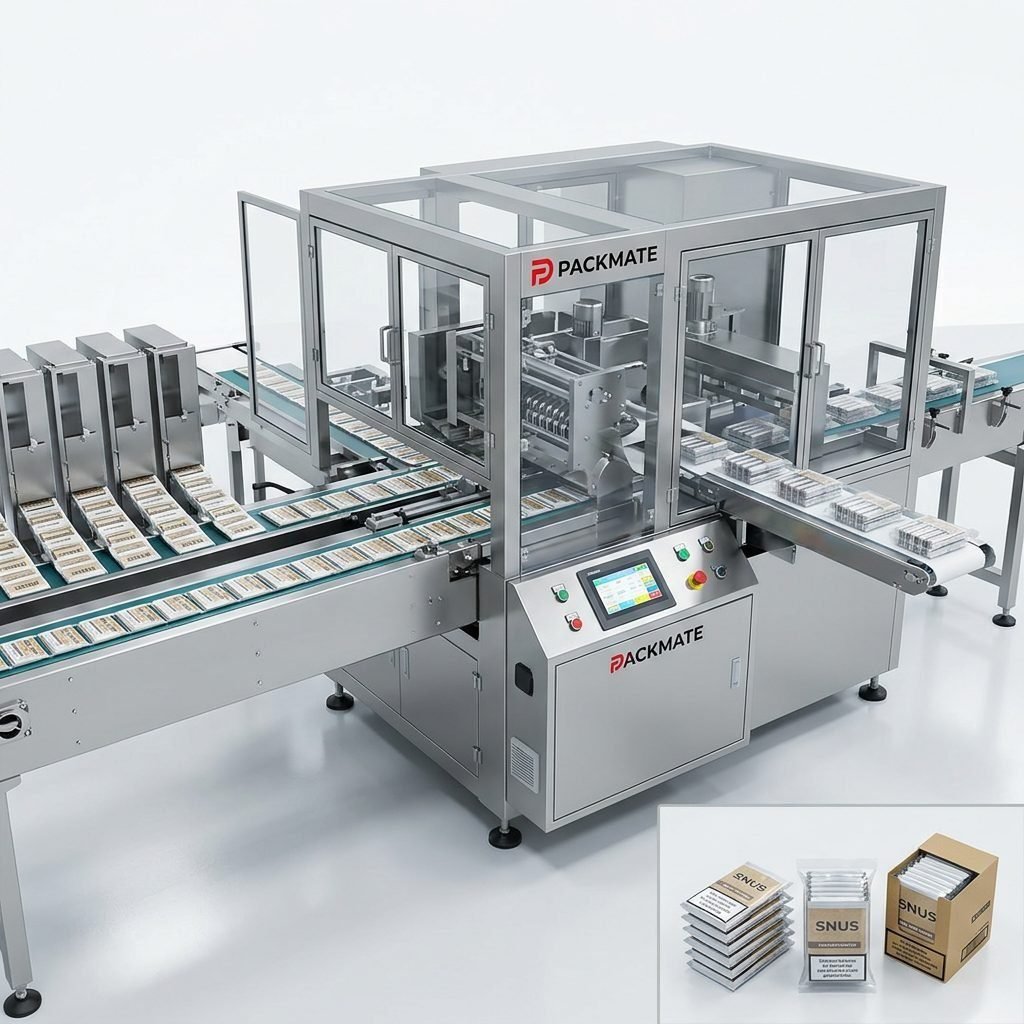
Your production may evolve. Choose a manufacturer that offers modular designs, scalable multi-lane systems, and the ability to develop custom tooling, dosing systems, or integrations for labelling, cartoning and case packing.
🔧 Integration & automation: Does the supplier provide complete filling and packaging lines, including weighing, dosing, and auxiliary equipment? See if they offer end-to-end solutions such as Filling & Packaging Lines and Weighing & Packaging Systems for streamlined commissioning. Filling & Packaging Lines and Weighing & Packaging Systems can reduce integration risk.
Performance Metrics to Verify
– Repeatability and accuracy of dosing; acceptable production yield and spoilage rates.
– Machine uptime and mean time between failures (MTBF).
– Changeover time between formats and ease of cleaning/maintenance.
– Spare parts availability and lead times.
Service, Support and Spare Parts Strategy
After-sales support distinguishes a vendor from a partner. Confirm local service options or rapid remote support, availability of replacement parts, training programs, and preventive maintenance plans.
📦 Spare parts & service checklist:
• Local stocking or guaranteed express shipment
• Remote troubleshooting tools and PLC backup files
• On-site commissioning and operator training packages
Factory Acceptance Tests and Site Acceptance
A reputable manufacturer offers Factory Acceptance Tests (FAT) where you can witness production with your materials and formats. Insist on witnessable FAT and clear site acceptance criteria to minimize surprises during installation.
Quality, Durability and Material Choices
Inspect materials and finish standards: stainless steel grades, food-contact finishes, sealing jaws and conveyor components. High-quality components give better sealing consistency, lower contamination risk, and longer life.
Case Studies, References and Exhibition Presence
Request real-world case studies and client references, particularly projects in Europe and the UK. Exhibitions and live demonstrations are also useful for hands-on evaluation. Visit manufacturer case pages or exhibition listings to see proven installations and performance reports. Case examples and Exhibition shows help validate claims.
Total Cost of Ownership (TCO) Versus Purchase Price
Do not let a low purchase price obscure higher lifetime costs. Include energy consumption, spare parts pricing, predicted downtime, maintenance frequency, and upgrade options in your TCO model.
⚖️ Financial checklist: initial cost, installation, training, spare parts kit, warranty coverage, and expected ROI timeline.
Warranty, Upgrades and Future-proofing
A strong warranty and a clear policy for software/firmware upgrades, spare parts and retrofit options protect future growth and regulatory changes. Ask about upgrade paths for automation, safety and increased lanes or speeds.
Practical Evaluation Checklist Before Signing
🔎 Pre-order checklist:
• Observe or witness FAT with your materials and pouch formats.
• Verify spare parts lead-time and local stocking policies.
• Confirm service SLA, remote support tools and training schedules.
• Get written performance guarantees for throughput, yield and uptime.
• Confirm installation, commissioning timeline and penalties for delays.
Why Manufacturer Reputation Matters
Well-established manufacturers that present clear documentation, visible factory capacity and a broad global presence typically offer lower risk. If a supplier has decades of experience and a large model range, it indicates maturity in engineering and production planning, which saves you headaches later.
Vendor Relationship: Communication & Cultural Fit
A good working relationship speeds problem resolution. Evaluate communication responsiveness, clarity of proposals, and the willingness to provide transparent timelines and technical references. Tools like remote video commissioning and digital documentation improve collaboration.
Quick Reference: How Packmate Snus Machine Aligns
If you need a starting point for suppliers, consider companies with dedicated snus and nicotine pouch lines, extensive manufacturing facilities and global project experience. For example, manufacturers that offer complete product ranges like Snus & Nicotine Packaging Machines, Sachet & Stick Pack Machines and Auxiliary Packaging Equipment bring integrated experience that helps reduce integration risk. Learn more about the manufacturer profile and services they offer on their About Packmate page. About Packmate
Also review product catalogs and technical documents to compare specifications across models — many suppliers provide downloadable catalogs and case references. Download catalogs and contact their team for tailored proposals. Contact
Final Steps: Negotiation, Pilots and Delivery
Once you select a supplier, negotiate clear payment milestones tied to FAT completion and site acceptance. Consider a pilot run or initial low-volume batch before ramping production. Confirm delivery, commissioning schedule and spare parts kit reception before acceptance.
📌 Quick summary checklist:
• Define product & throughput needs → choose correct machine family.
• Verify factory capability, certifications and FAT procedures.
• Confirm spare parts, warranty, service SLAs and upgrade paths.
• Validate references, case studies and on-site demonstrations.
• Negotiate contract terms tied to performance and acceptance.
Next Actions
Create a short RFP summarizing product formats, target throughput, expected uptime, environmental requirements and regulatory expectations. Share this with at least three qualified manufacturers and request FAT schedules, spare parts policies and lead times. Suppliers with documented turnkey solutions such as Bag & Pouch Packaging Machines and Sachet & Stick Pack Machines will usually provide more seamless integration. Sachet & Stick Pack Machines
Conclusion
Selecting the best snus packaging machinery manufacturer in the UK requires a balance of technical fit, factory strength, service capability and commercial terms. Prioritize manufacturers who demonstrate real-world experience with snus and nicotine pouch formats, provide clear FATs, and commit to service and spare parts availability. An informed decision today will reduce downtime, improve product quality, and deliver stronger returns over the machine lifecycle.
Frequently Asked Questions
Q1: What is the typical lead time for a custom snus packaging line?
A1: Lead times vary by customization level and factory workload, but expect anywhere from 12 to 28 weeks for fully customized multi-lane lines. Standard models with minor customization can be delivered faster. Always confirm lead times in writing.
Q2: How important is a Factory Acceptance Test (FAT)?
A2: FAT is essential. It allows you to verify machine performance with your actual materials and formats, confirm sealing and dosing accuracy, and document acceptance criteria before shipment. A witnessed FAT reduces commissioning risks at your site.
Q3: What ongoing support should I require from a manufacturer?
A3: Require remote diagnostic support, spare parts availability, scheduled maintenance plans, operator training, and clear SLAs for on-site visits. A spare parts starter kit and PLC backup files should be provided at delivery.
Q4: Are multi-lane systems always better for nicotine pouches?
A4: Multi-lane systems are often the most efficient solution for small-dose pouches because they increase throughput without multiplying machine footprints. However, consider complexity, format changeover times and maintenance when choosing lanes.
Q5: Where can I see examples and get more information about suppliers and product ranges?
A5: Review supplier case studies, catalogs and exhibition demos to validate performance. For detailed product lines and case examples, explore manufacturer pages and catalogues for solutions such as Auxiliary Packaging Equipment and complete production lines. Auxiliary Packaging Equipment and Case studies.