Choosing the right snus packaging machinery manufacturer for your factory in Nepal is more than a procurement decision — it’s a strategic choice that affects product quality, production uptime, regulatory compliance, and your ability to respond to market preferences. This guide walks factory owners, production managers, and procurement teams through the critical steps to select the best supplier and the right machines for nicotine pouches, snus, sachets, stick packs, and related products while taking into account Nepal’s market conditions and operational realities.
🔎 Understand Your Product & Production Needs
Before assessing manufacturers, clearly define the product specifications: pouch size, dose range, number of lanes, packing speed, material types (paper/foil/laminate), and desired formats (stick pack, sachet, round snus pouch). For factories in Nepal, also consider local consumer preferences — many buyers favor compact, ready-to-carry formats and discreet packaging — and distribution channels such as local retail, duty-free shops, or export to neighboring markets.
⚙️ Key technical parameters to list
Production capacity: target pieces/min or packs/hr and daily throughput.
Flexibility: ability to switch formats, lane changes, and tooling conversion time.
Accuracy & hygiene: dosing accuracy, cleanability, and compatibility with GMP/food-safe practices.
🏭 Why Manufacturer Capabilities Matter
Selecting a manufacturer with proven snus and nicotine pouch experience reduces technical risk. Look for companies that design multi-lane lines, precision dosing systems, and modular solutions. A manufacturer with a broad model range and customization experience will better support Nepalese factories that may begin with smaller volumes and scale later.
✔️ What to verify in supplier capabilities
– Years of R&D and industry focus on snus / nicotine packaging.
– Range of machines: single-lane to multi-lane, sachet, stick pack, and pouch lines.
– In-house CNC & assembly capabilities for reliable spare parts and custom tooling.
📌 Evaluate Quality, Certification & Compliance
Quality and certifications are non-negotiable. Manufacturers that comply with CE and ISO standards deliver machines that meet international safety and quality benchmarks — a vital consideration if you plan to export finished products or source components internationally. Ensure the supplier can provide validation documents and test reports for materials in contact with product.
💡 Consider Local Nepal Factors
Nepal presents unique logistical and workforce realities. Remote site transportation, customs clearance processes, local electricity stability, and availability of skilled technicians affect machine selection and supplier support requirements. Choose equipment that tolerates local utility conditions or ensure the supplier can offer compatible electrical and control options.
📝 Practical Nepal-oriented checklist
– Spare parts availability: stock in regional warehouses or guaranteed shipping timelines.
– Local training: on-site commissioning and operator training for Nepali staff.
– After-sales service: remote diagnostics and timely field service arrangements.
🔧 Types of Machines & When to Choose Each
Different product forms and business models require different machines. Below are typical options and their ideal applications.
Sachet & Stick Pack Machines
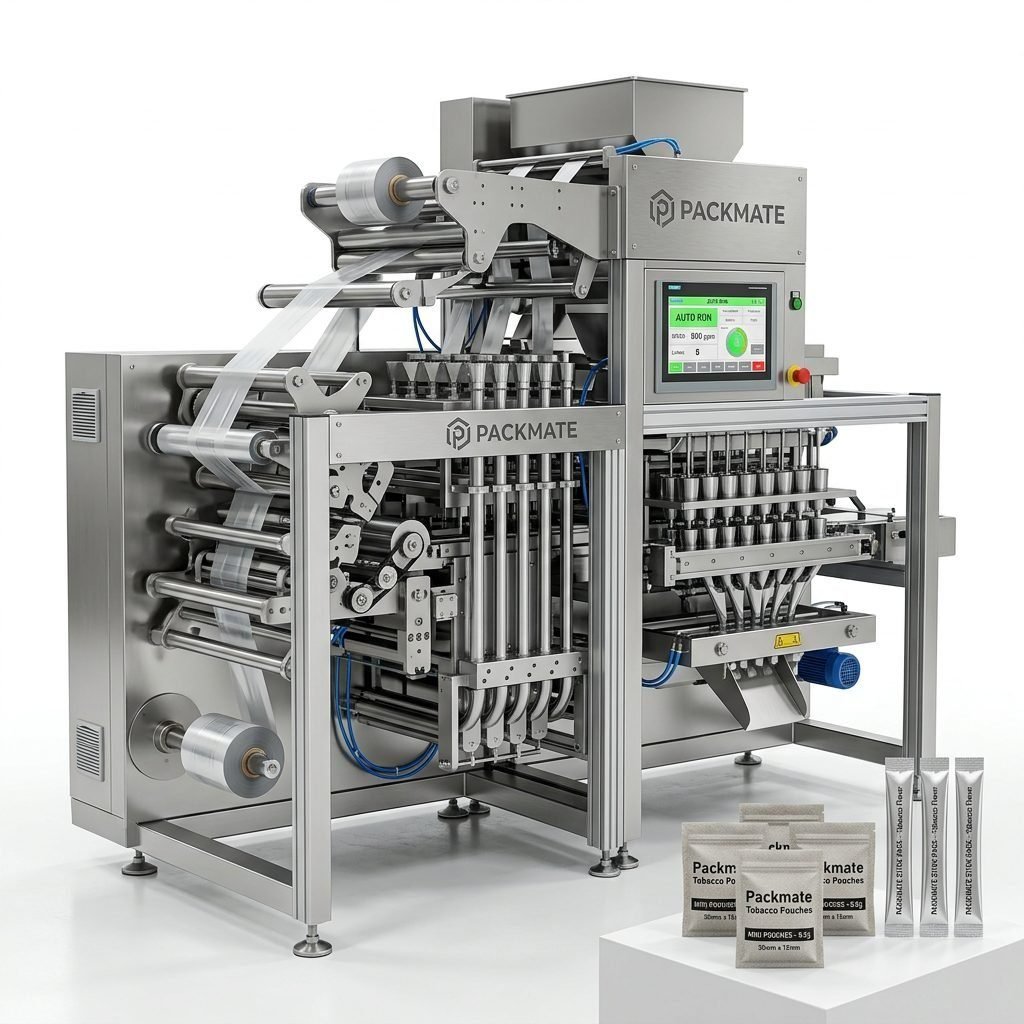
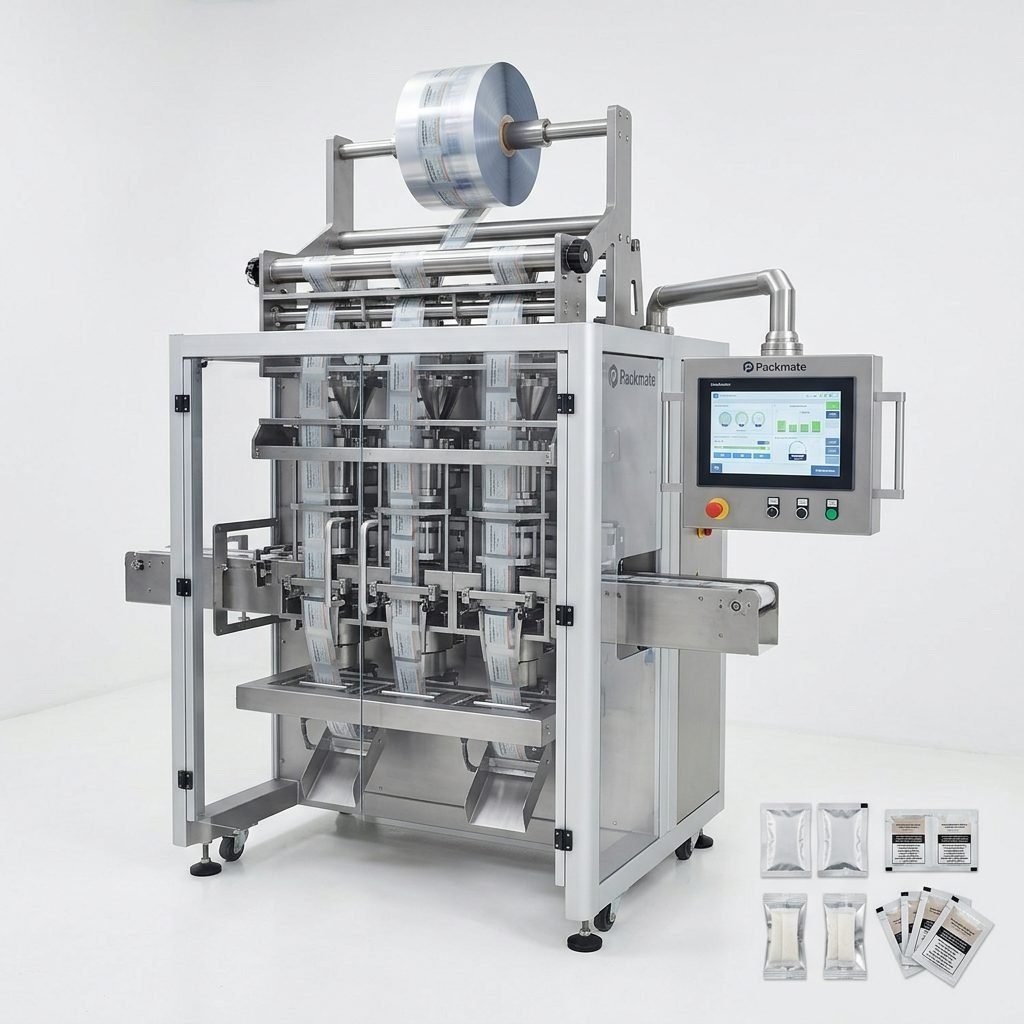
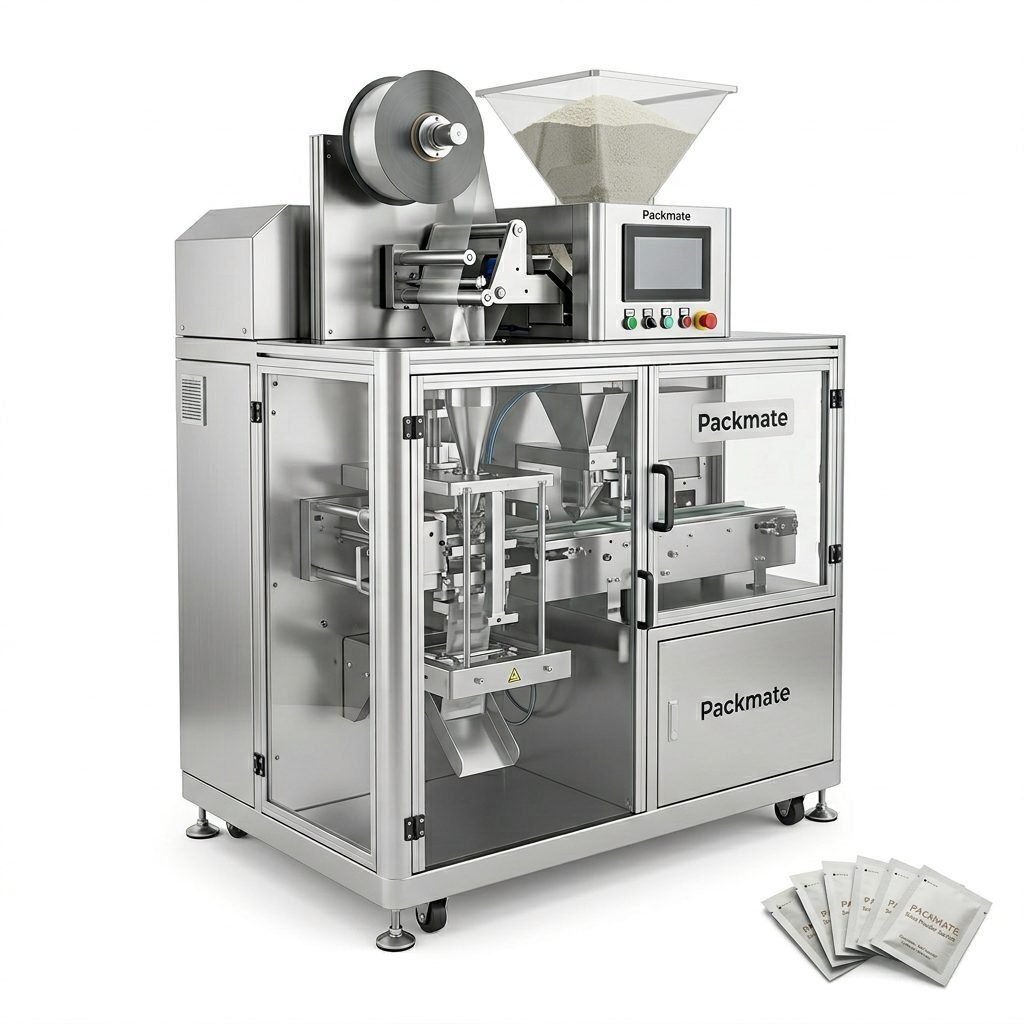
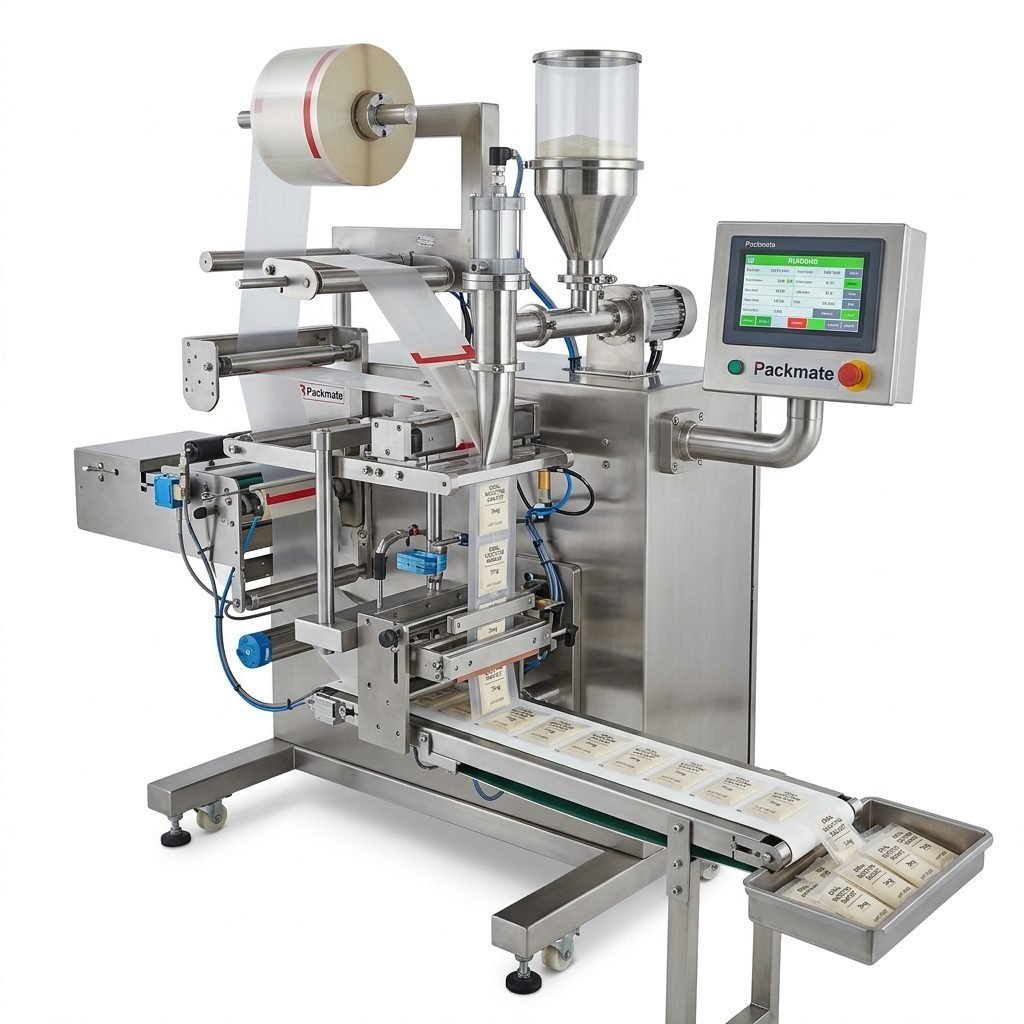
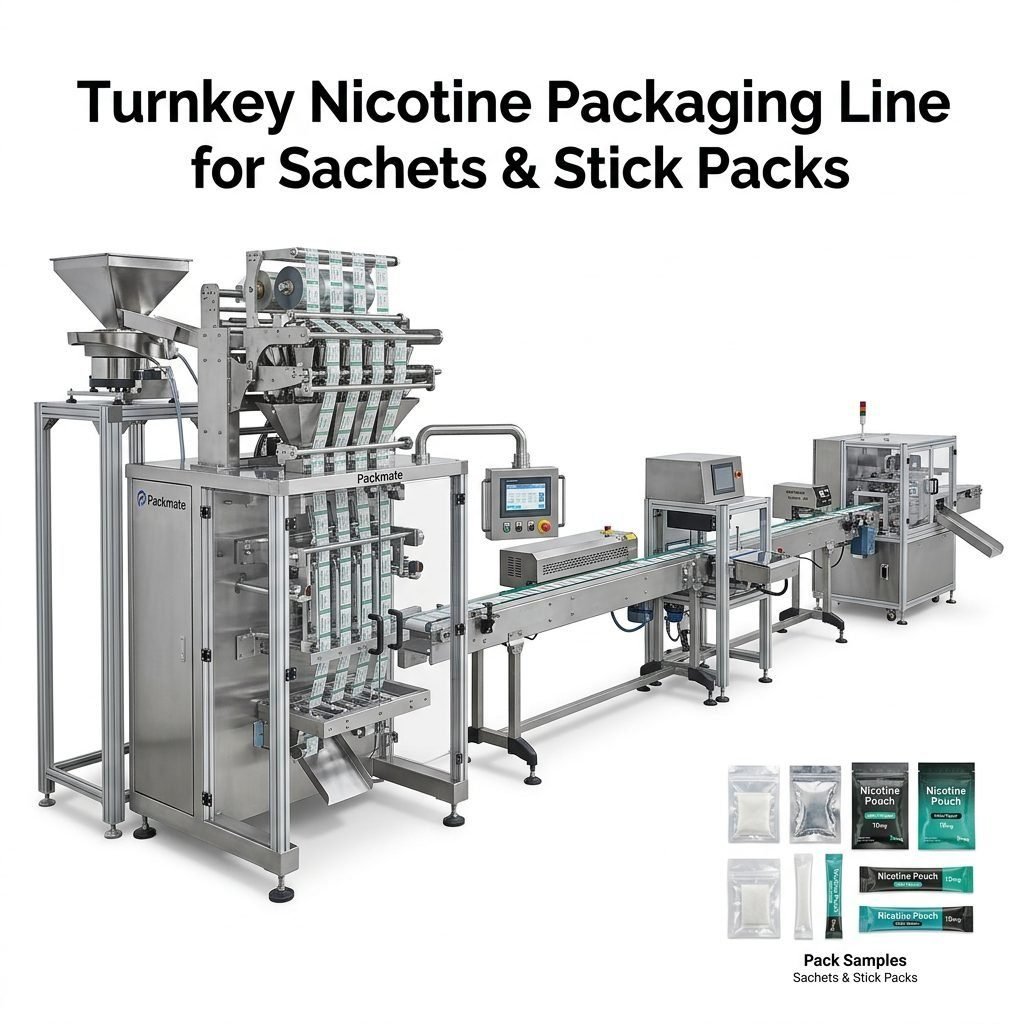
Sachet and stick pack machines are ideal for single-dose nicotine pouches and small-format snus. They are compact, often less expensive, and suitable for startups or niche product runs. For higher throughput, consider multi-lane stick pack options.
Snus / Nicotine Pouch Packaging Machines
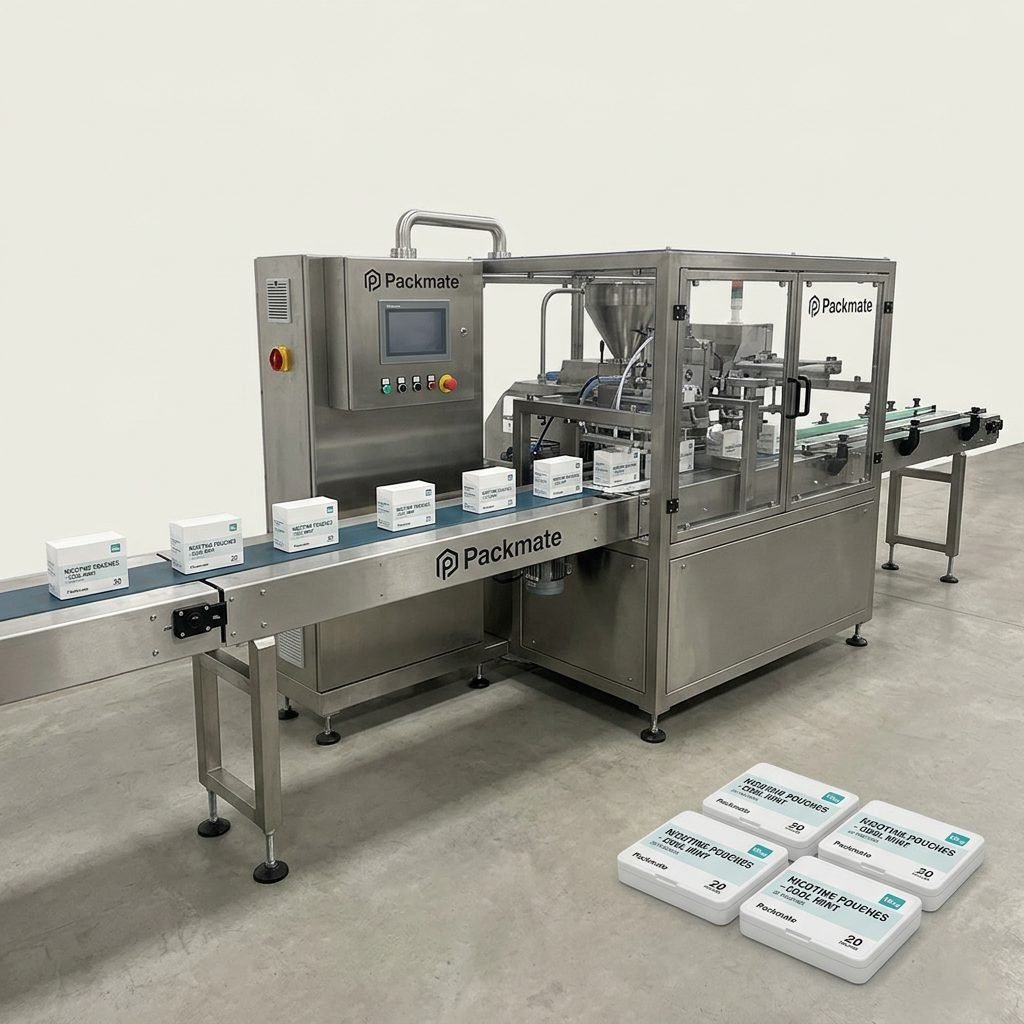
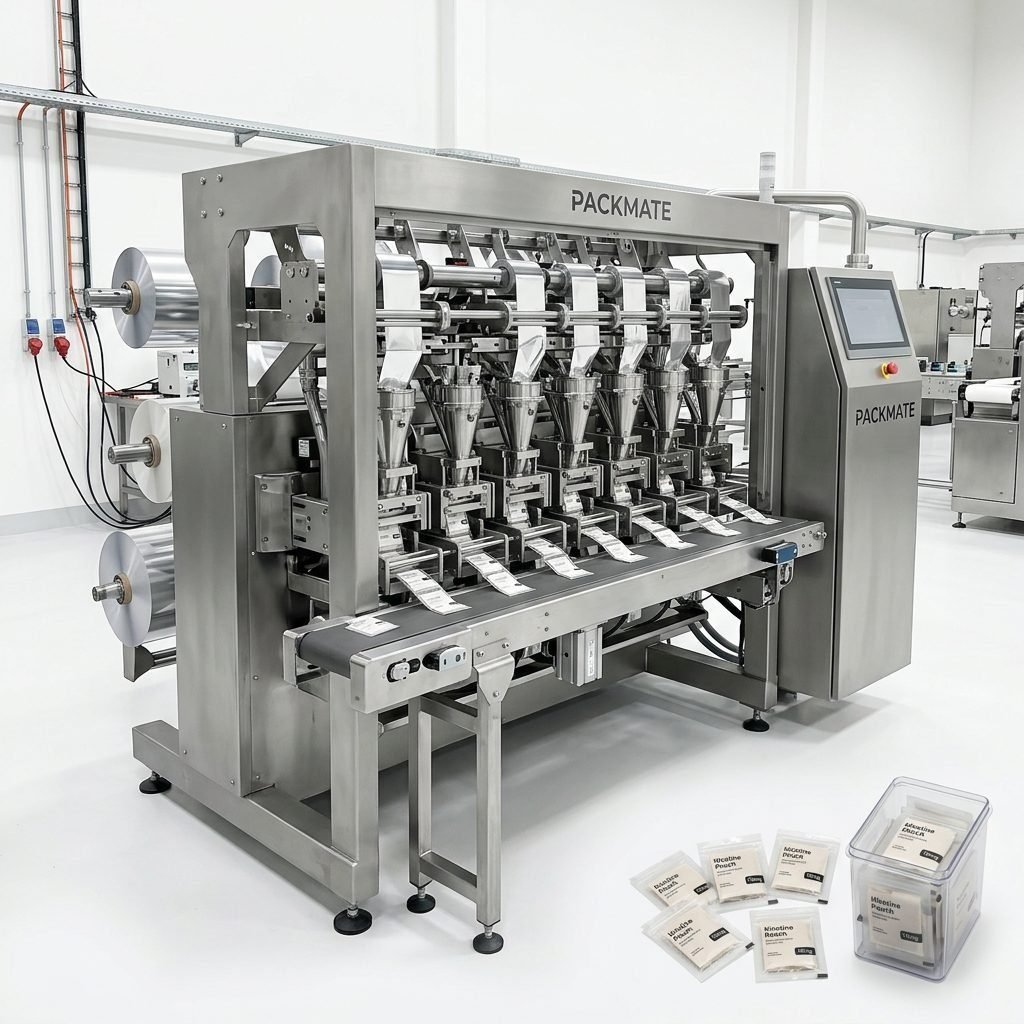
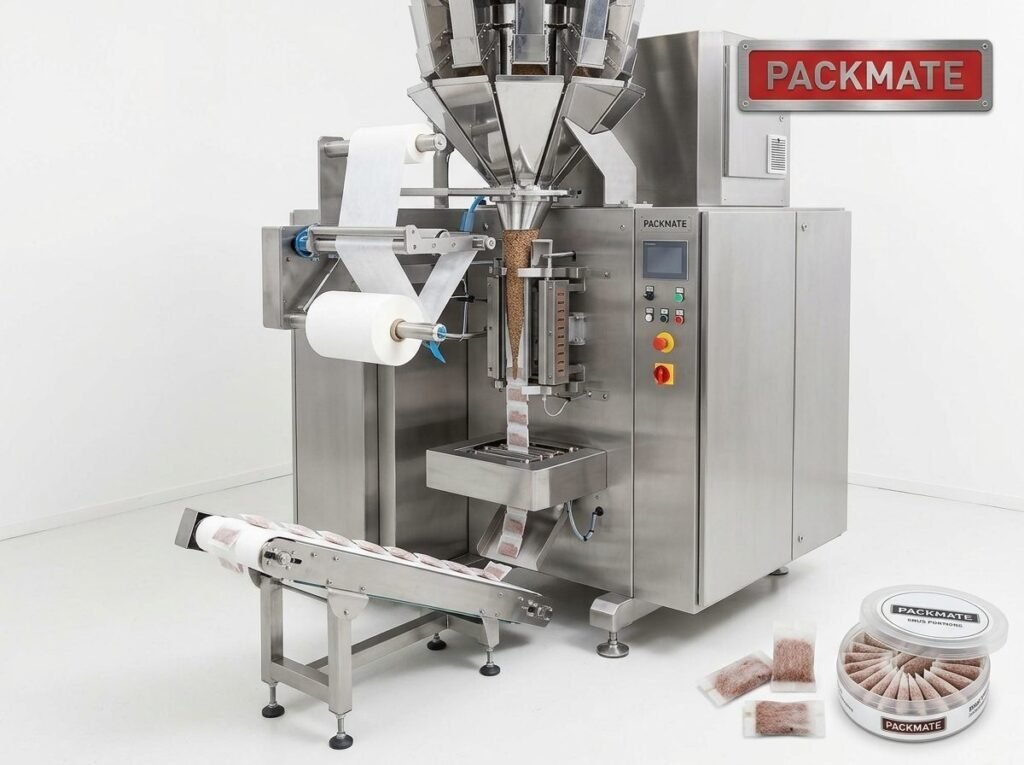
Dedicated snus packaging systems deliver precise dosing and pouch formation for round portions or flat pouches. These units excel in product protection and consumer-friendly presentation.
Multi-lane & Turnkey Lines
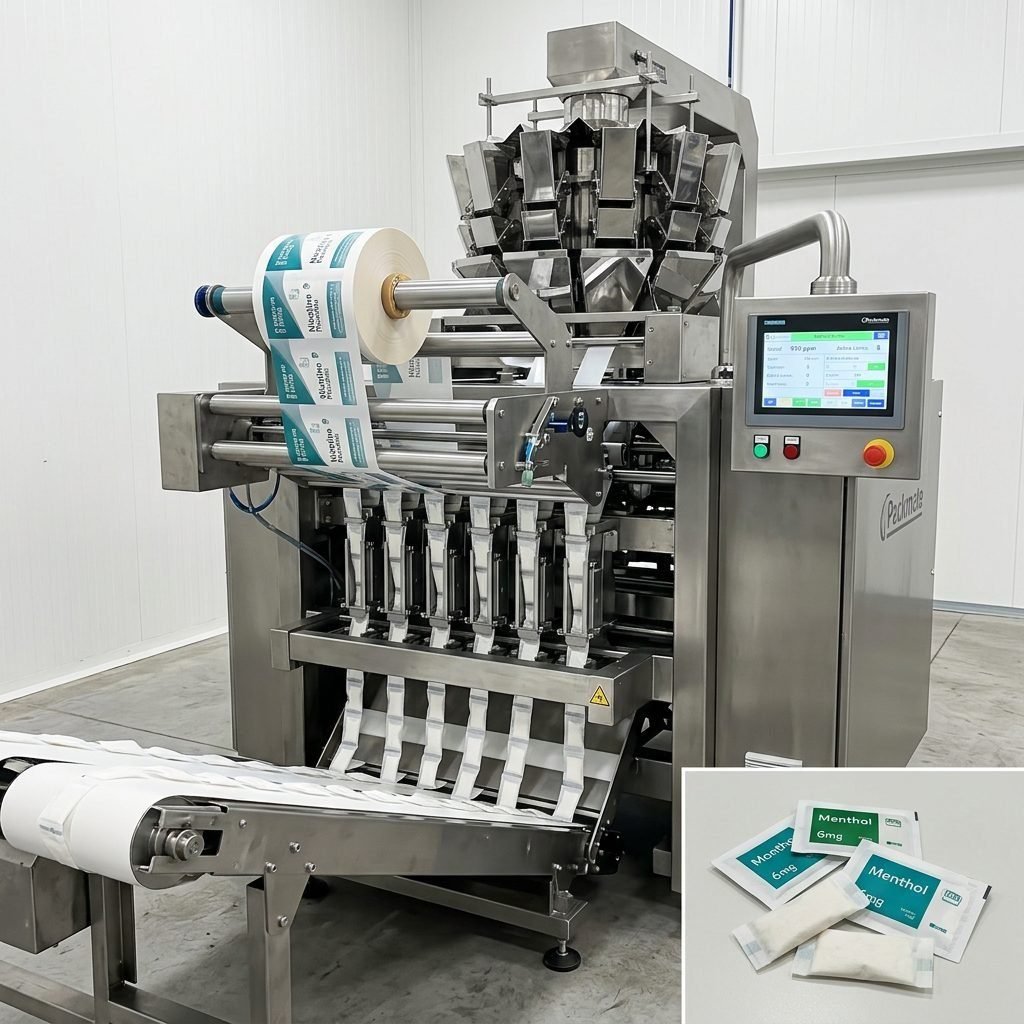
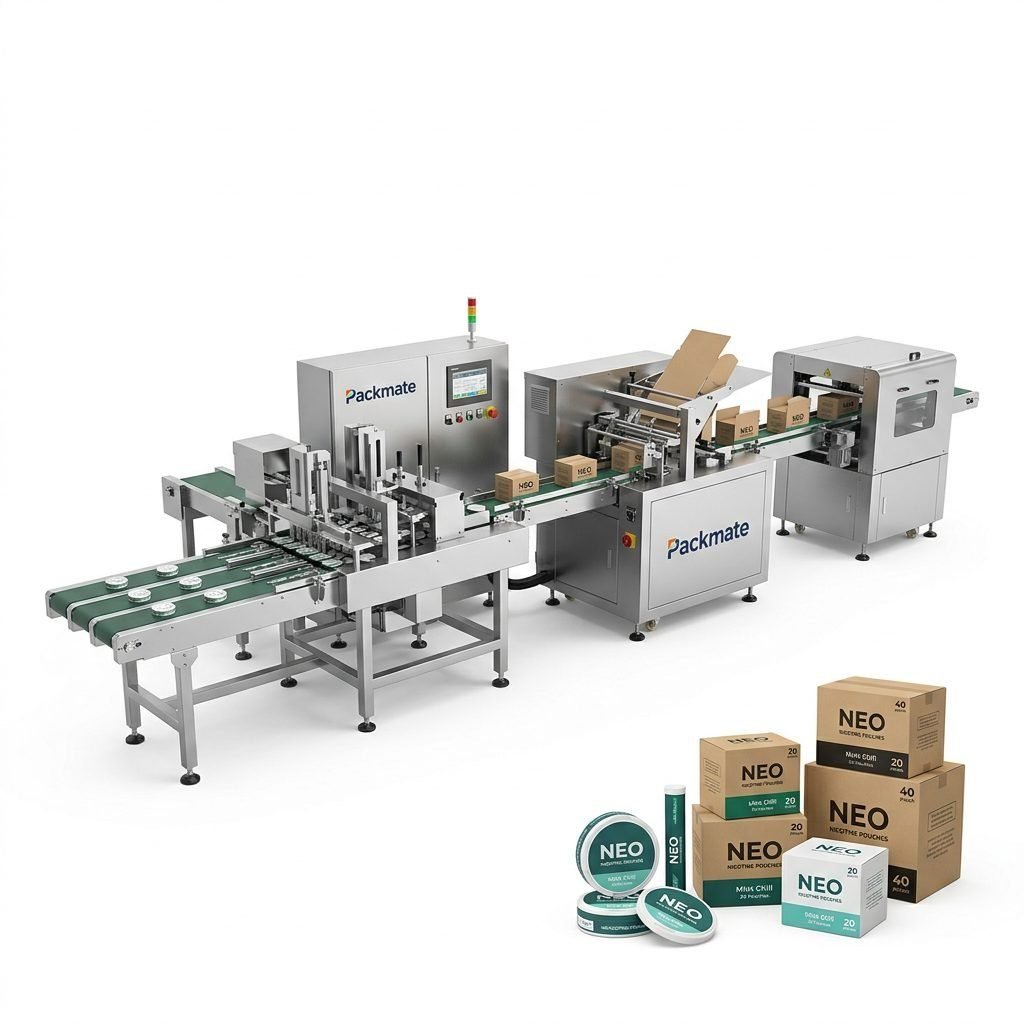
Factories aiming for large-scale production should opt for multi-lane systems combined with upstream and downstream automation: accurate feeding/weighing, orienting, sealing, secondary packaging, and case packing. Turnkey solutions minimize integration risk and accelerate ramp-up.
💰 Cost, ROI & Financing Considerations
Initial equipment cost is only part of the story. Evaluate total cost of ownership (TCO): energy consumption, maintenance, spare part pricing, training, and expected uptime. A higher upfront investment in robust multi-lane machinery often yields faster ROI through higher throughput and lower per-unit labor cost.
Tip: Ask for detailed power consumption data and real-life throughput examples from the supplier’s case studies to make realistic ROI projections.
📦 Service, Spare Parts & Training
After-sales service can be the deciding factor. Prioritize manufacturers who offer:
- Fast spare part delivery and local stock options
- Comprehensive on-site commissioning and operator training
- Remote support, PLC backup files, and diagnostic tools
🧾 References & Case Evidence
Request real-world case studies and client references. Manufacturers that showcase international projects and exhibitions demonstrate mature processes and market acceptance. For example, you can review product lines and cases by visiting manufacturer product pages and case examples to verify performance and client feedback.
Helpful links: Snus & Nicotine Packaging Machines, real-world cases, and the manufacturer’s About Packmate page for company history and capabilities.
🔁 Customization & Future-Proofing
Your chosen supplier should support customization: tooling for unique pouch sizes, recipe-controlled dosing, and PLC-driven format changeovers. Ensure that the control architecture is open enough to accept future upgrades and integration with factory MES or OEE systems.
📋 Factory Acceptance Testing & Delivery
Insist on Factory Acceptance Testing (FAT) before shipment. FAT should include a simulated production run with your product sample or a representative material. Obtain full documentation: electrical diagrams, PLC programs, mechanical drawings, and maintenance manuals. For installations in Nepal, coordinate customs documentation early and request support for international freight logistics.
🛡️ Warranty, Guarantees & Aftercare
Ensure clear warranty terms covering parts and technical service windows. Ask about extended warranty packages and preventive maintenance contracts. Manufacturers with longstanding global presence typically offer structured aftercare plans to maximize machine life and minimize downtime.
📞 How to Run Supplier Evaluations
Use a scoring matrix to compare suppliers objectively. Key evaluation criteria include technology fit, cost, lead time, spare parts policy, training, references, and compliance certifications. Arrange virtual or on-site audits and prioritize transparent communication and technical responsiveness.
Must-ask questions: lead time for machine delivery, spare part lead times, local installation support, training scope, and reference contacts in similar climates/markets.
🌐 Working with International Suppliers from Nepal
If you import machines, ensure clear contracts on shipping responsibilities (INCOTERMS), customs clearance assistance, and local service handover. Consider suppliers who participate in international exhibitions, provide documentation in English, and have experience exporting to South Asia.
For more product categories such as supporting equipment and auxiliary systems, review the manufacturer’s offerings to build an integrated line: Auxiliary Packaging Equipment and Weighing & Packaging Systems.
✅ Final Selection Roadmap
Follow a structured approach to finalize a supplier:
- Define product specs and three-year capacity plan.
- Shortlist manufacturers with snus-specific experience.
- Request quotes with TCO breakdown, FAT, and spare parts plan.
- Conduct FAT, review documentation, and verify references.
- Negotiate warranty, training, and logistics terms before signing.
📌 Quick Checklist Before You Buy
🔧 FAT performed with your material
📦 Spare parts lead time & kits supplied with shipment
👨🏫 Operator & maintenance training included
📝 Clear warranty & service-level response times
🧭 Where to find more detailed machine info
Explore detailed product catalogs and technical specs on the manufacturer’s web pages, such as product ranges for snus & nicotine lines and related equipment. Links to technical pages and catalogs help you compare specifications and modular options.
Useful pages: Bag & Pouch Packaging Machines, Sachet & Stick Pack Machines, and the Contact Us page to request customized quotations.
⚠️ Cultural & Market Note for Nepal
Consumer habits in Nepal often favor familiar formats and price-sensitive options. Product presentation, labeling in local languages, and small pack sizes can influence acceptance. Work with manufacturers who can support packaging customization and labeling options to help your brand resonate locally while meeting export standards if required.
📣 Final reminder
Choosing the right snus packaging machinery manufacturer is a balance of technical fit, service capability, and commercial terms. Prioritize suppliers with proven snus expertise, strong manufacturing capacity, and comprehensive after-sales support to ensure reliable production in Nepal.
Frequently Asked Questions
Q1: How long does it take to install a snus packaging line in Nepal?
A1: Typical installation and commissioning for a moderate turnkey line ranges from 4 to 8 weeks after machine arrival, depending on site prep, utilities, and operator training needs.
Q2: What spare parts should I stock locally?
A2: Keep critical wear parts (sealing jaws, belts, cutters), PLC/servo spare modules, sensors, and a basic mechanical toolkit. Coordinate with the supplier for a recommended parts kit.
Q3: Can machines be customized for local packaging materials?
A3: Yes — most experienced manufacturers customize forming sets, sealing profiles, and feed systems to suit different film laminates and biodegradable materials.
Q4: What documentation should I request before purchase?
A4: Request FAT protocol, CE/ISO certificates, wiring diagrams, PLC backup, maintenance manuals, and a spare parts list with part numbers.