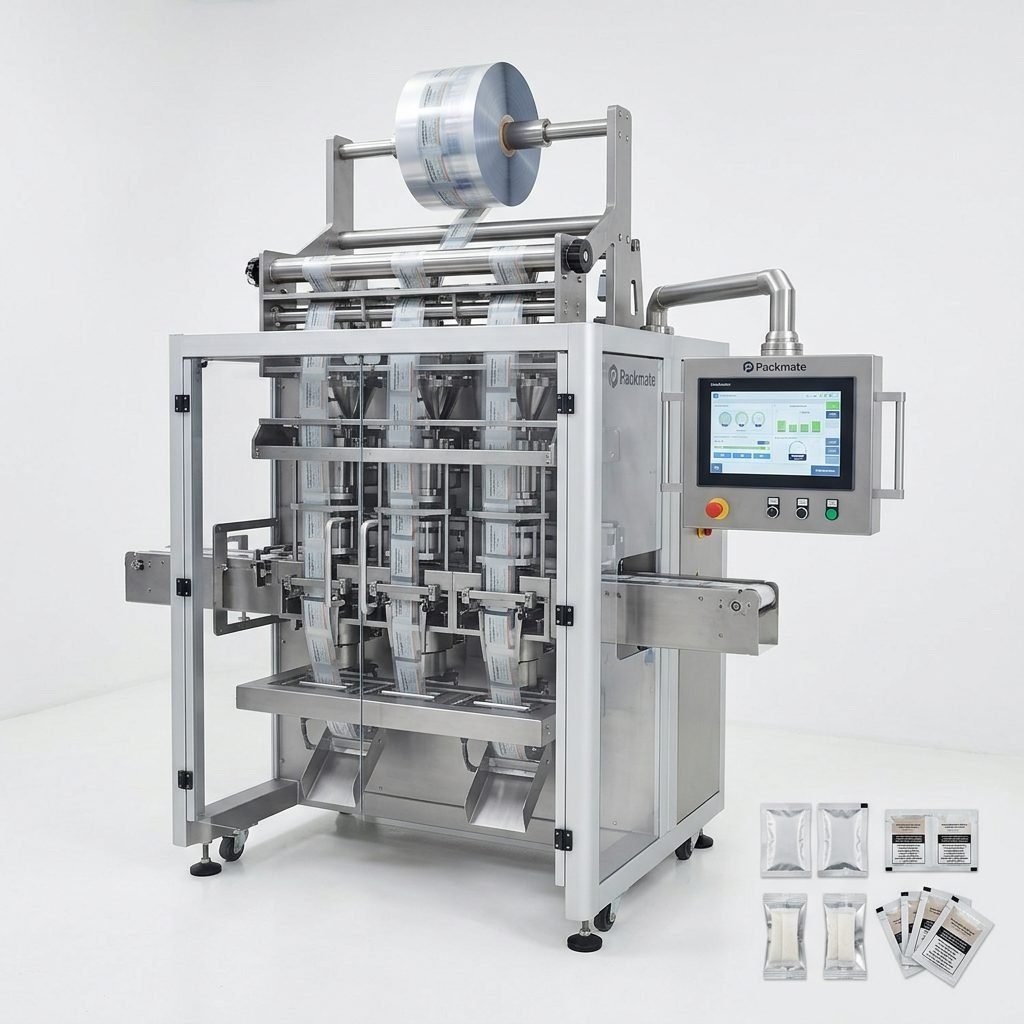
Selecting the right snus packaging machinery manufacturer for your Guatemala-based operation is a critical strategic decision. The right partner impacts production efficiency, product quality, regulatory compliance, and long-term profitability. This guide walks you through practical, business-focused steps to evaluate manufacturers, compare equipment, and secure a reliable supplier that matches your production goals and budget.
Why the Manufacturer Choice Matters
Choosing a packaging equipment manufacturer is not only about machine price. It affects uptime, maintenance costs, output consistency, and speed to market. A well-engineered snus pouch or nicotine pouch packaging line will reduce waste, simplify validation, and allow you to scale quickly as demand grows. Consider the supplier as a long-term partner — their engineering depth, factory capability, spare parts supply, and service network are all essential.
Key Manufacturer Credentials to Review
✔️ Proven Industry Experience: Look for companies with decades of focused packaging machine design and manufacturing experience.
✔️ Manufacturing Capacity: Ensure the manufacturer has a modern factory, CNC centers, and assembly lines that support consistent quality and timely delivery.
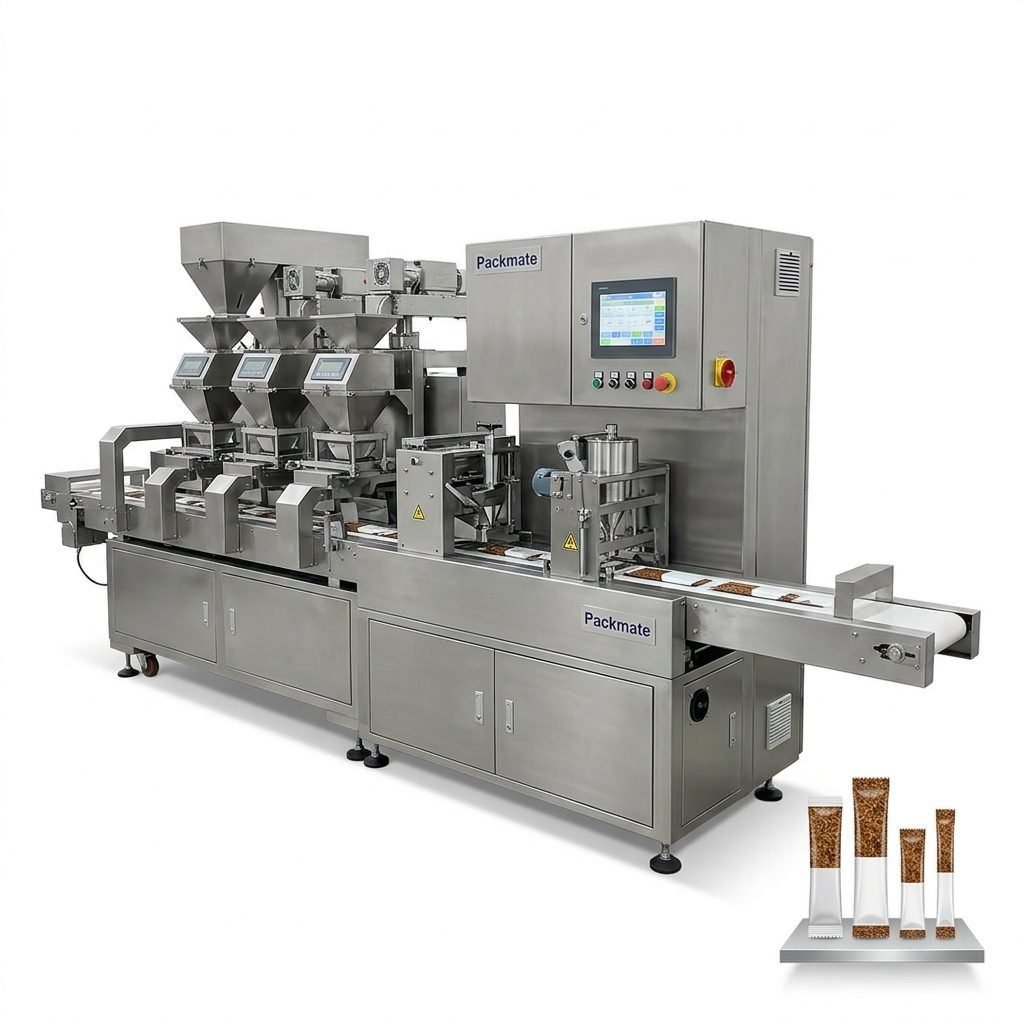
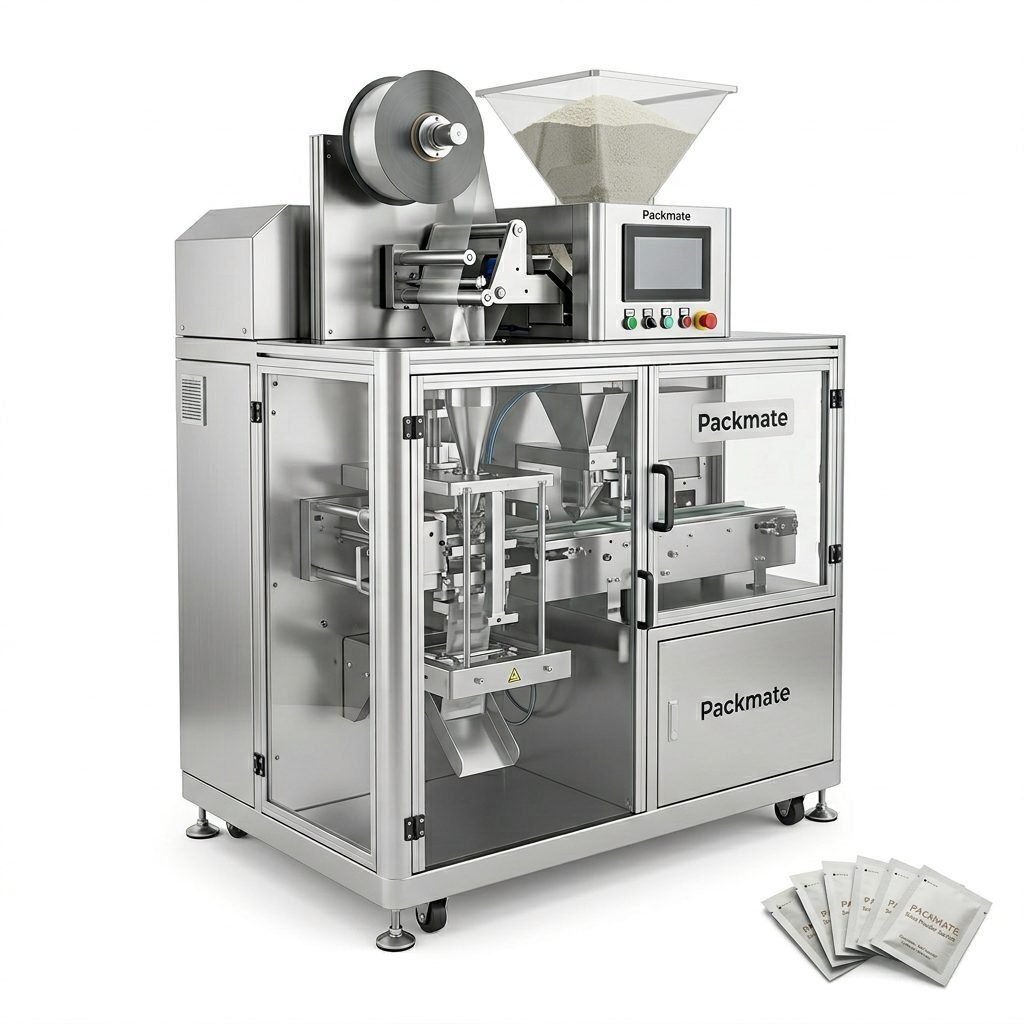
✔️ Product Range & Specialization: A supplier with dedicated snus and nicotine pouch lines (stick pack, sachet, multi-lane systems) offers more tailored solutions.
Why Packmate Snus Machine Is a Reference Point
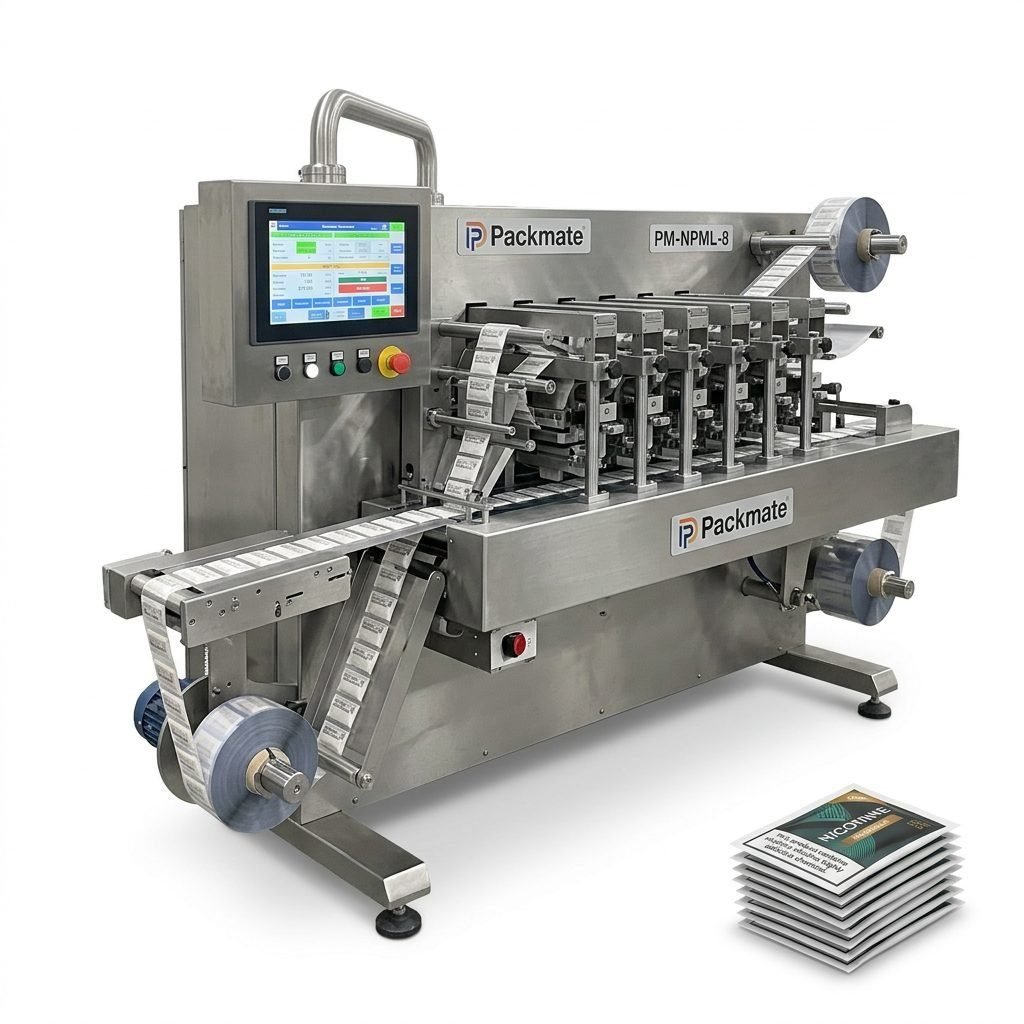
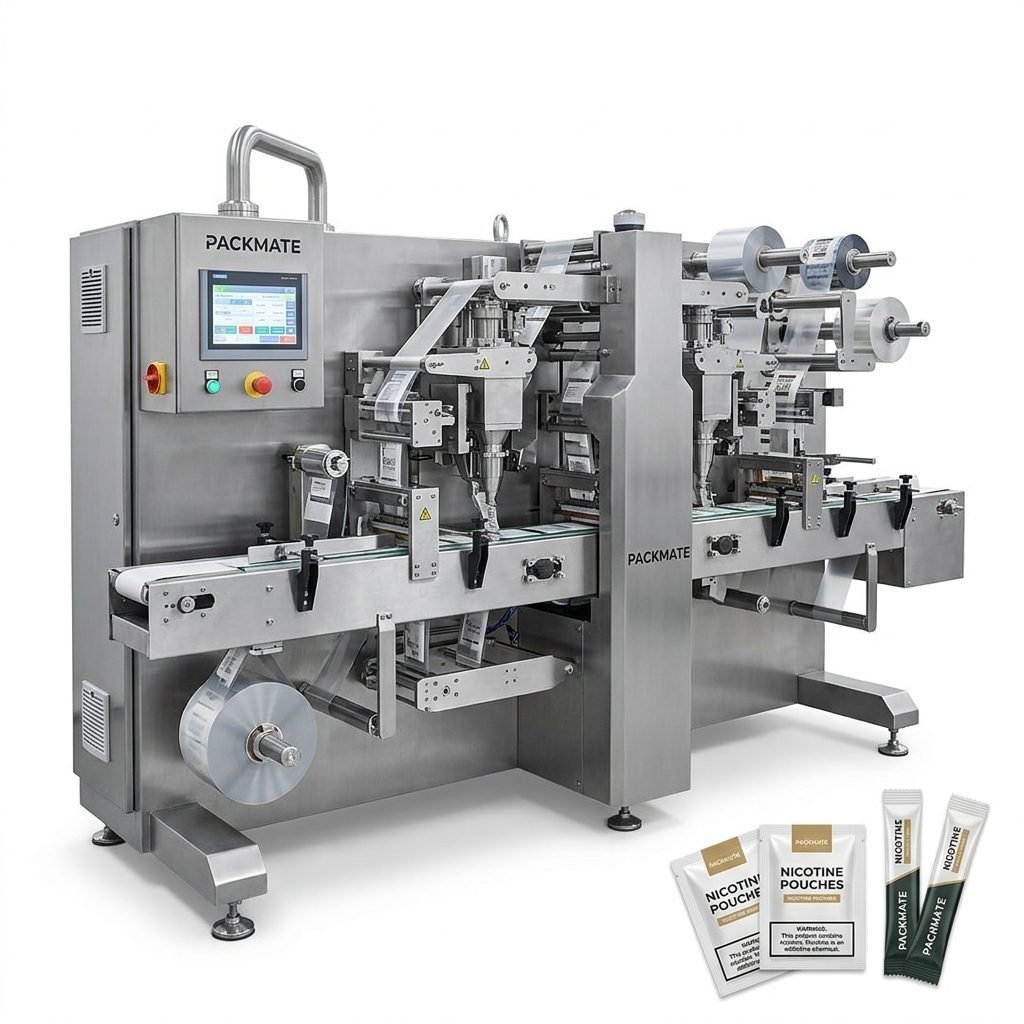
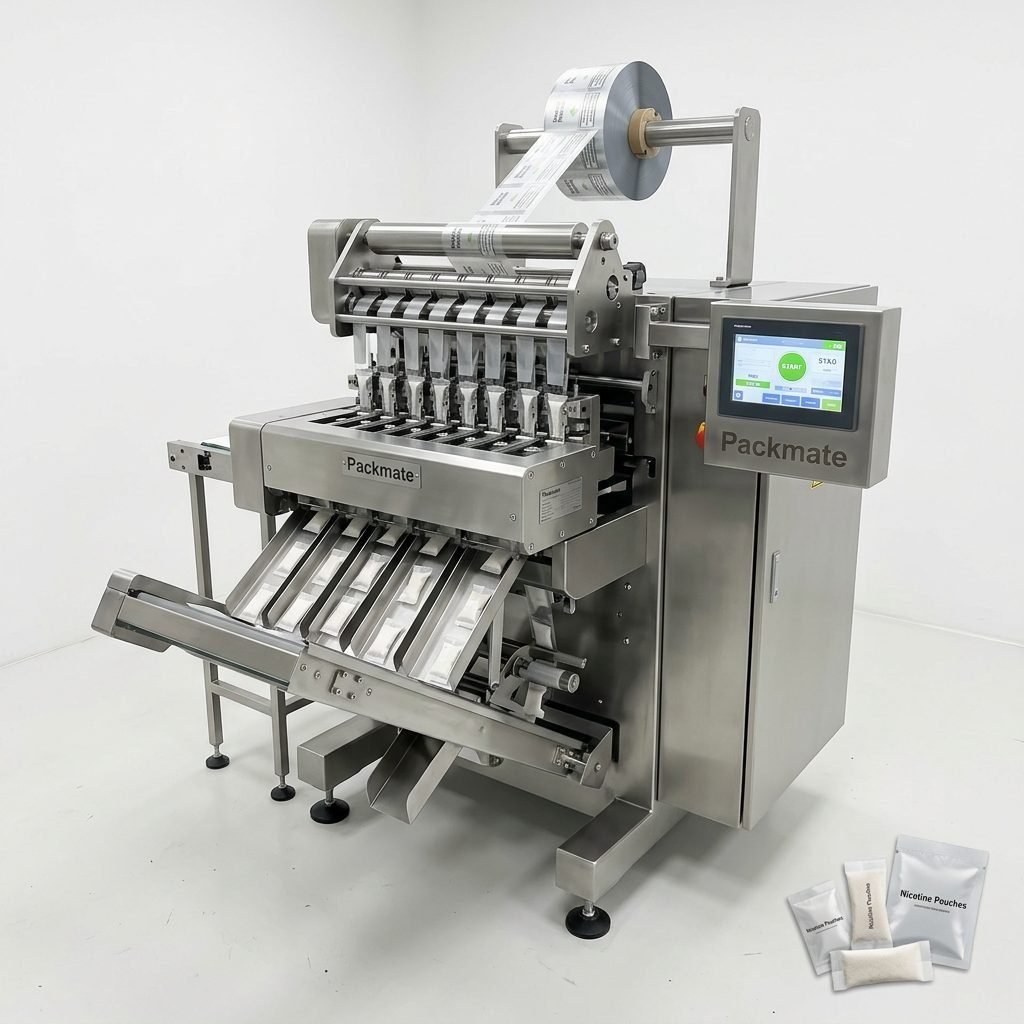
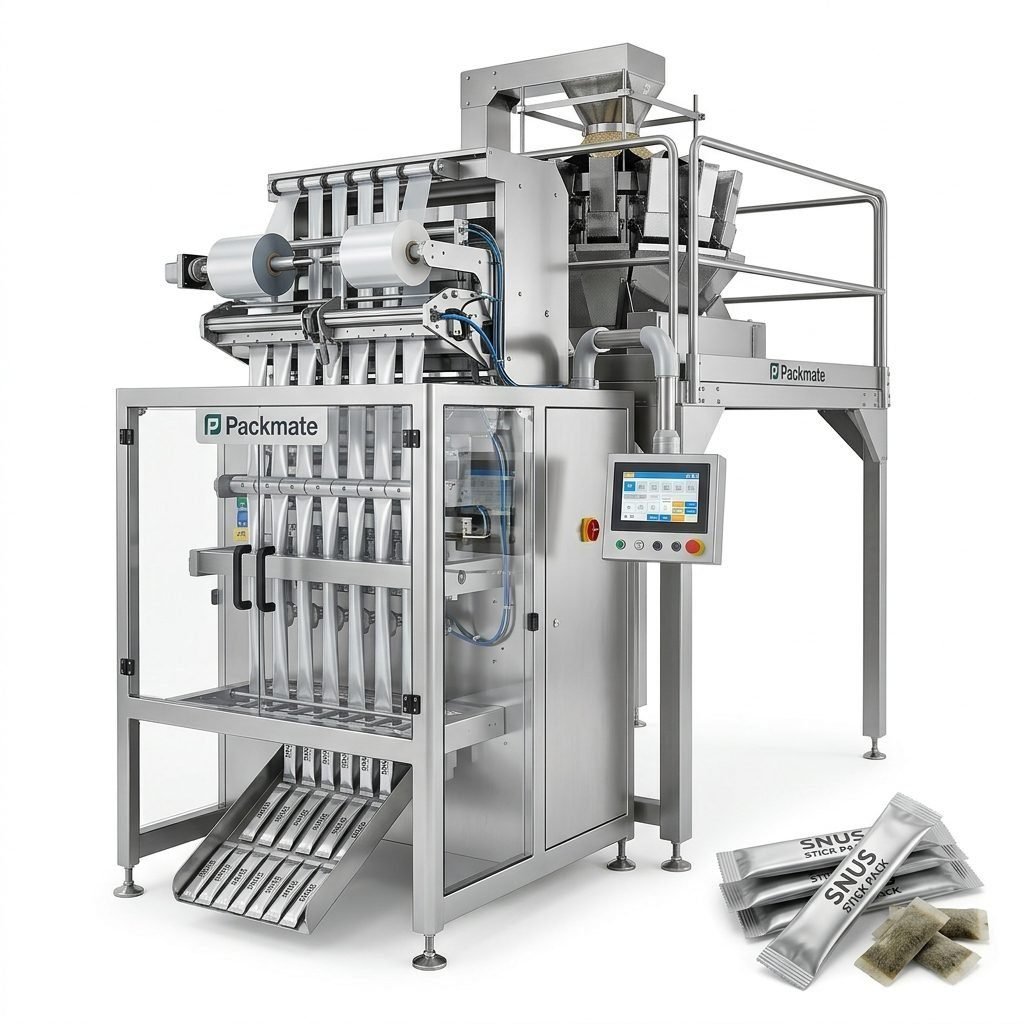
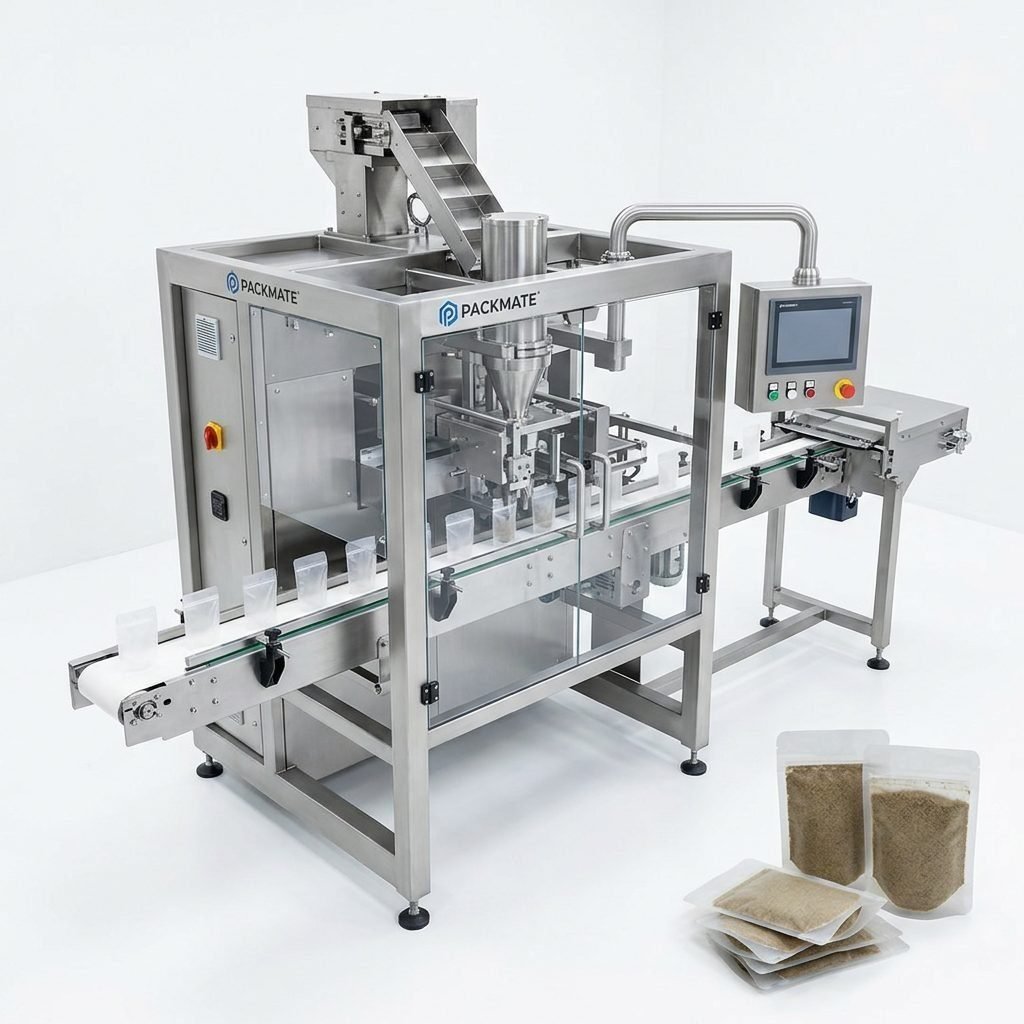
Packmate has evolved from workshop R&D in 1993 to a 20,000㎡ advanced manufacturing plant, offering 50+ models and turnkey lines. Their experience with multi-lane small-dose pouch systems makes them representative of the engineering depth you should expect in a top-tier supplier. For product lines, see their Snus & Nicotine Packaging Machines and Sachet & Stick Pack Machines.
Essential Selection Criteria (detailed checklist)
⚙️ Production Capacity & Speed: Verify machine packaging speed (pouches/min or lanes × speed), and ensure it meets your daily output needs with margin for downtime.
🔧 Flexibility & Formats: Confirm capability for stick packs, sachets, and multi-pocket nicotine pouches. Multi-lane systems can massively increase throughput for small-dose products.
🔍 Accuracy & Fill Technology: Check dosing systems for powders, granules, or liquids — weighing, auger, or volumetric fillers — and their tolerances.
🛠️ Serviceability & Spare Parts: Assess spare-part lead times and local stock options; ask about remote diagnostics, training, and on-site commissioning packages.
Technical and Quality Considerations
Dive into mechanical design, control systems, and quality validation. Reliable machines commonly use servo-driven systems for precise motion, PLC controls with clear HMI interfaces, and stainless-steel contact parts for hygiene and corrosion resistance. Request machine specifications and performance test records to validate claims on speed, accuracy, and uptime.
Certifications & Testing
International standards (CE, ISO) and factory quality controls are a must for exports or regulatory compliance. Review the supplier’s certificate documentation and inquire about factory acceptance tests (FAT) and site acceptance tests (SAT). For supplier credentials, you can inspect their Certificate pages and case studies which demonstrate real-world performance.
Turnkey Solutions & Integration
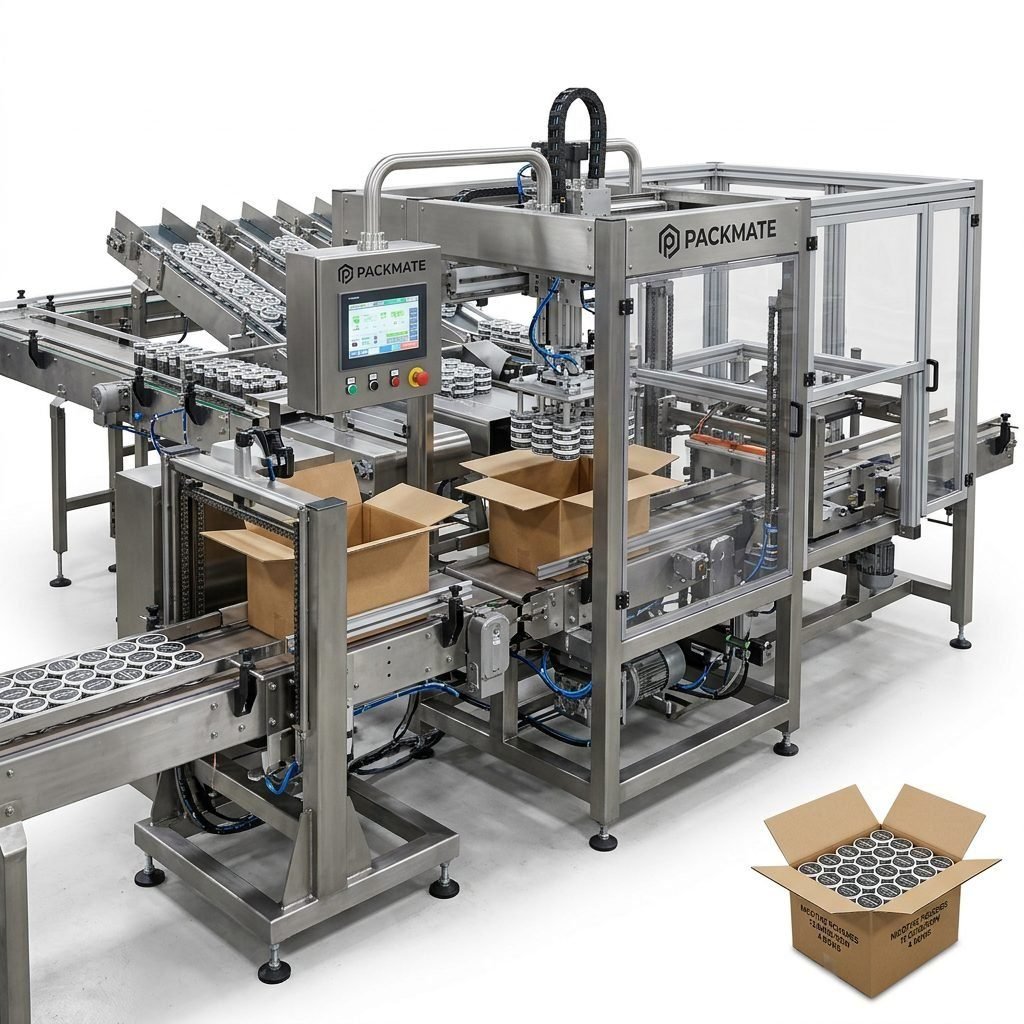
If you require a fully integrated production line — feeding, weighing, filling, sealing, date-coding, and case packing — prioritize manufacturers that provide integrated systems and have experience with complete lines. Integration reduces engineering gaps, simplifies responsibility, and accelerates commissioning. See examples under Filling & Packaging Lines and Weighing & Packaging Systems.
Cost vs Value — What to Negotiate
Price is important, but prioritize lifecycle value: uptime, energy consumption, consumable costs, and spare part availability. Negotiate for warranty terms, on-site commissioning, operator training, and an initial spare parts kit. A slightly higher initial investment often pays back through reduced downtime and better yield.
Tip: Request a clear breakdown of costs (machine, controls, tooling, shipping, installation) and ask for references in similar markets.
Service, Training and Local Support in Guatemala
After-sales support is a differentiator. Ask potential manufacturers about:
- Local representatives or partners in Central America for fast response.
- Remote support tools for diagnostics and software updates.
- Operator and maintenance training included in the purchase price.
- Service contracts and annual maintenance plans to protect uptime.
Manufacturers often list their service offerings on the Service page — review those closely and confirm available service levels for Guatemala.
Factory Visits, Samples and FAT
Whenever feasible, visit the supplier’s factory. Witnessing FAT is the most reliable way to validate performance claims. If you cannot visit, request a live video FAT with demonstration runs using your actual product and packaging material. This step avoids common surprises during site commissioning.
Review case studies to see how similar lines perform in production environments: Case studies often reveal uptime metrics, format changeover times, and real-world issues solved by the supplier.
Logistics, Installation & Lead Times
Understand lead times for manufacturing, shipping, and customs clearance into Guatemala. Confirm whether the supplier supports turnkey installation and how long commissioning takes. Early planning of customs paperwork and local handling reduces delays and unexpected costs.
📌 Practical Checklist Before Finalizing Purchase:
• Written guarantee of throughput and accuracy under contractual conditions.
• Spare parts list and recommended inventory levels for 12 months of operation.
• Training plan for operators, technicians, and maintenance staff.
• FAT acceptance criteria and penalties for unmet delivery dates.
Integration with Upstream & Downstream Processes
A packaging machine rarely operates alone. Evaluate how the snus packaging line integrates with upstream dosing or mixing processes and downstream cartoning, case packing, and palletizing. If you need multi-machine synchronization, prefer suppliers experienced in full line integration to avoid interface mismatches.
Documentation & Compliance
Make sure the manufacturer provides complete documentation: electrical diagrams, mechanical drawings, spare parts catalogs, operation manuals, and CE/ISO certificates. These documents support regulatory filings, maintenance planning, and future expansions.
References & Live Customer Feedback
Ask for references of installations in similar markets and products. Speaking to an existing customer reveals practical insights: actual machine uptime, responsiveness of support teams, and the real cost of ownership.
Useful Links and Resources
Explore these pages for product details, cases, and contact information:
- Snus & Nicotine Packaging Machines: Product Details
- Sachet & Stick Pack Machines: Format Options
- Filling & Packaging Lines: Line Solutions
- About Packmate: Company Profile
- Contact & Service: Get in Touch
Negotiation Tips
Negotiate clear warranty terms, acceptance criteria, and penalties for late delivery. Seek bundled pricing for spare parts and training, and try to include at least one scheduled maintenance visit in the first year. Request a clear roadmap for software updates and remote support capabilities.
Final Decision Flow — A Practical Roadmap
1) Define production targets and product formats; 2) Shortlist suppliers with relevant experience; 3) Request detailed proposals including FAT; 4) Validate references and visit factory or request live FAT; 5) Negotiate contract terms that include warranty, spare parts, and training; 6) Plan logistics and commissioning with clear timelines.
🔎 Bottom Line: Choose a manufacturer that demonstrates reproducible performance on real products, provides clear service commitments, and offers integration experience for full packaging lines. Long-term reliability and fast support often outweigh minor price differences.
If you need tailored recommendations for a Guatemala operation, prepare your product specs (weight, dimensions, pouch type, target speed) and share them with shortlisted suppliers. This helps generate accurate quotes and technically validated proposals.
Frequently Asked Questions
Q1: How long does it take to receive and commission a snus packaging line?
A: Typical lead times vary by model and customization, usually 8–20 weeks for production plus shipping. Commissioning can take 1–3 weeks depending on integration complexity.
Q2: What spare parts should I stock for the first year?
A: Keep critical wear parts (seals, belts, cutters), key electronics (sensors, PLC modules), and at least one set of common drive components. Your supplier should provide a recommended spare parts kit.
Q3: Can a single supplier provide both snus pouch machines and downstream cartoning?
A: Yes. Many manufacturers offer integrated filling, packaging, and cartoning lines. Confirm their integration experience and request references for similar turnkey projects.
Q4: Are remote diagnostics commonly available?
A: Yes. Modern machines typically support remote access for diagnostics and software updates. Verify security and support scope with the supplier.
Q5: Where can I see real installations and performance data?
A: Ask for case studies and references — many suppliers publish installation case pages and exhibition demos that showcase real-world performance and customer feedback.
For detailed machine specifications or to arrange a live FAT demonstration, visit the supplier product pages or contact the manufacturer directly via their Contact Us page.