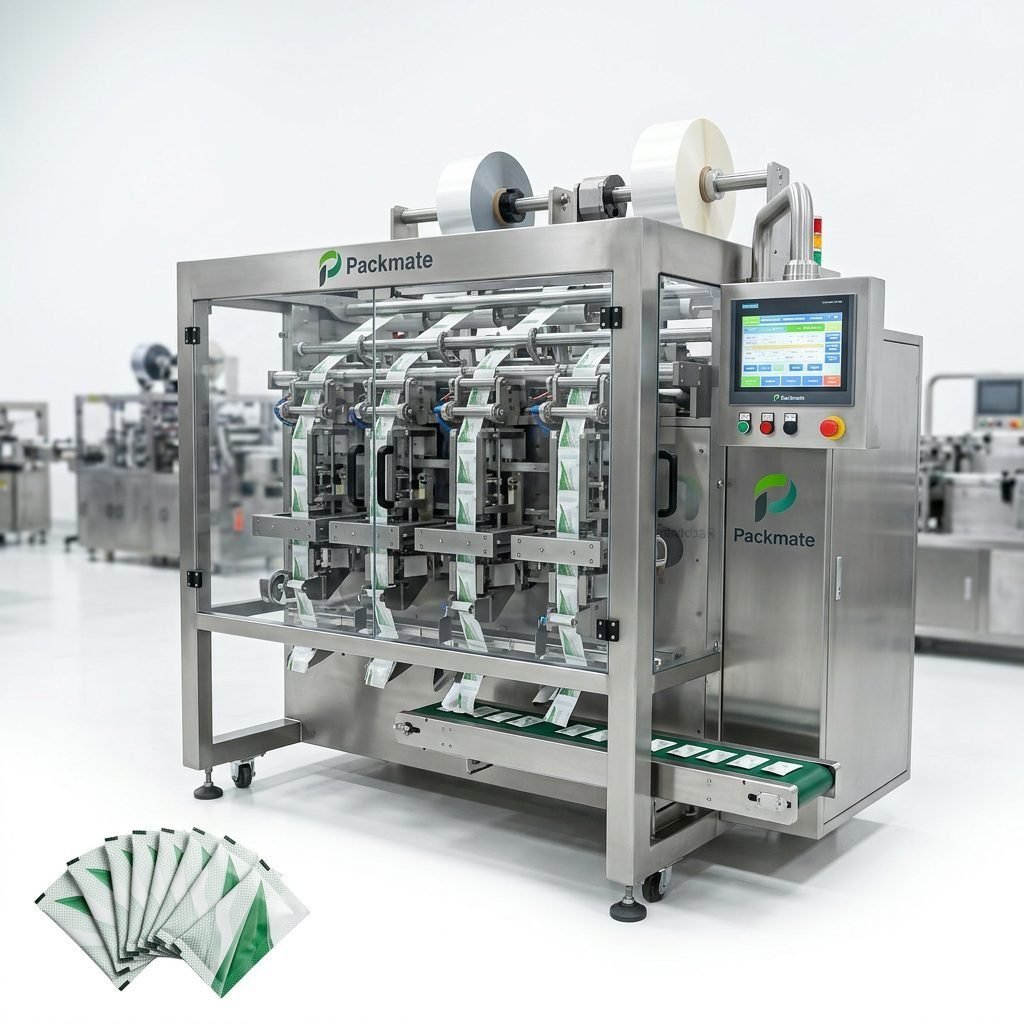
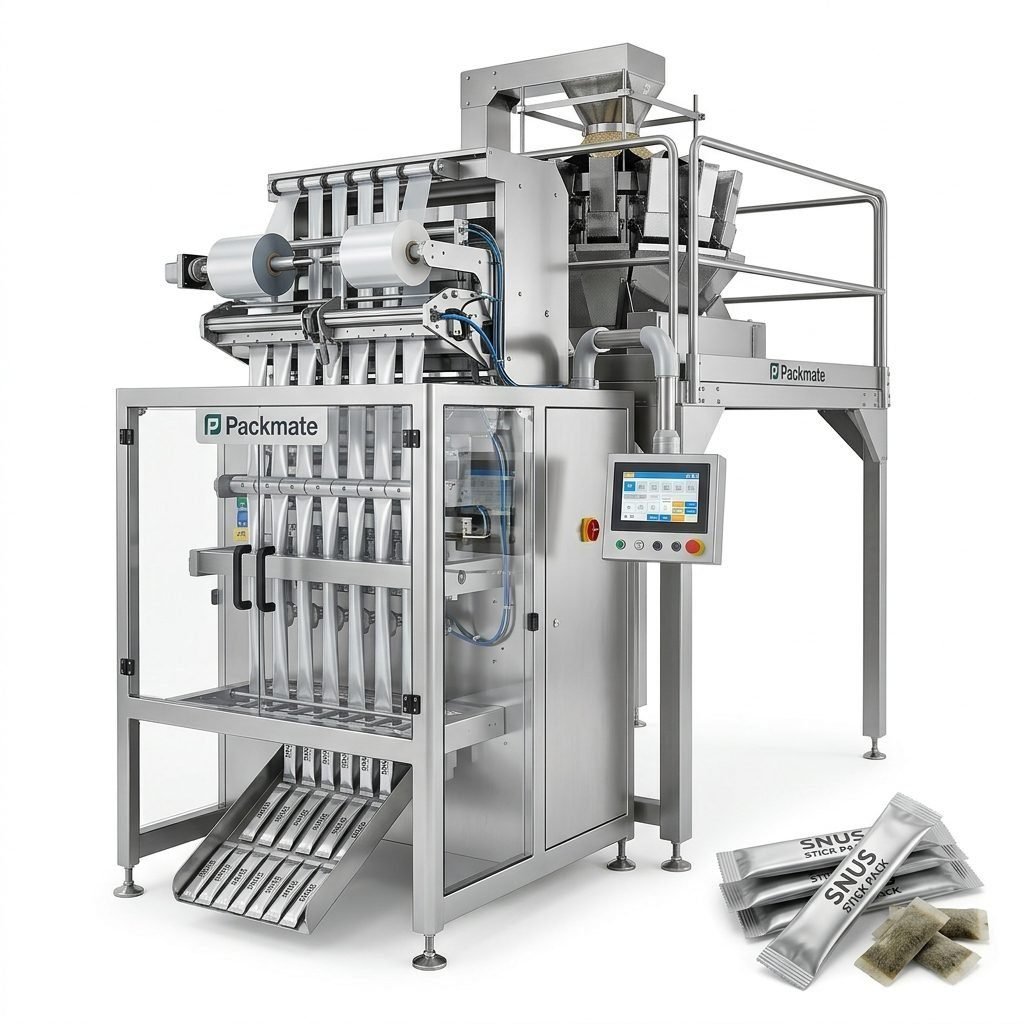
Choosing the right snus packaging machinery manufacturer for your production in Austria is a strategic decision that affects product quality, line efficiency, regulatory compliance, and total cost of ownership. This guide walks you through the practical steps and evaluation criteria to select a supplier who can deliver reliable snus and nicotine pouch packaging solutions — whether you need single-lane precision machines or high-speed multi-lane turnkey lines.
Understand Your Production Requirements
Before you contact manufacturers or request quotations, define the core parameters of your production. These will determine machine type, automation level, layout, and long-term scalability:
Production capacity: target units per hour/day; expected monthly throughput.
Product format: nicotine pouches, snus sachets, stick packs, or multi-lane pouches; dimensions and dose consistency.
Fill material: powder, granule, moisture-sensitive pouches, or liquids — each requires specific dosing and sealing solutions.
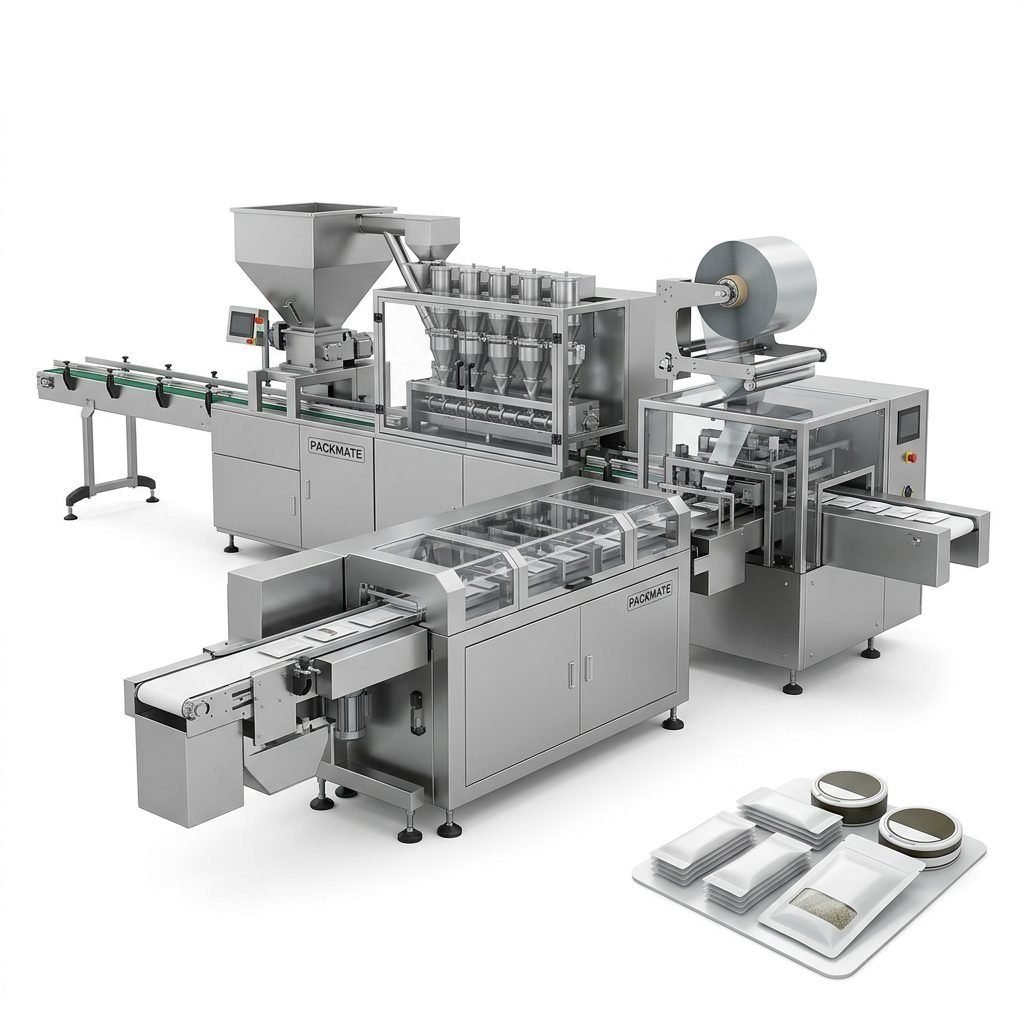
Line integration: do you need upstream weighing/filling or downstream cartoning, labeling and case packing? Full line providers reduce integration risk.
Key machine types to consider
Match the product and capacity to the correct machine category:
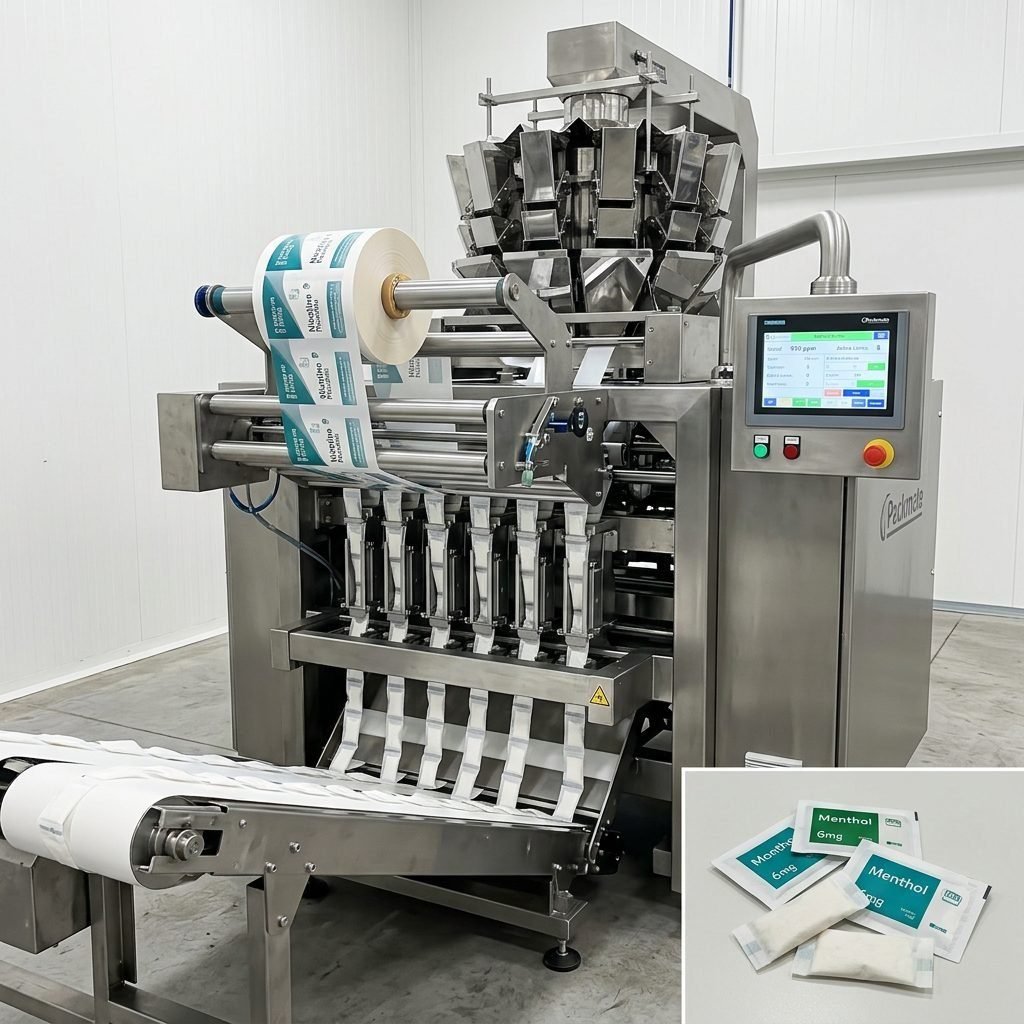
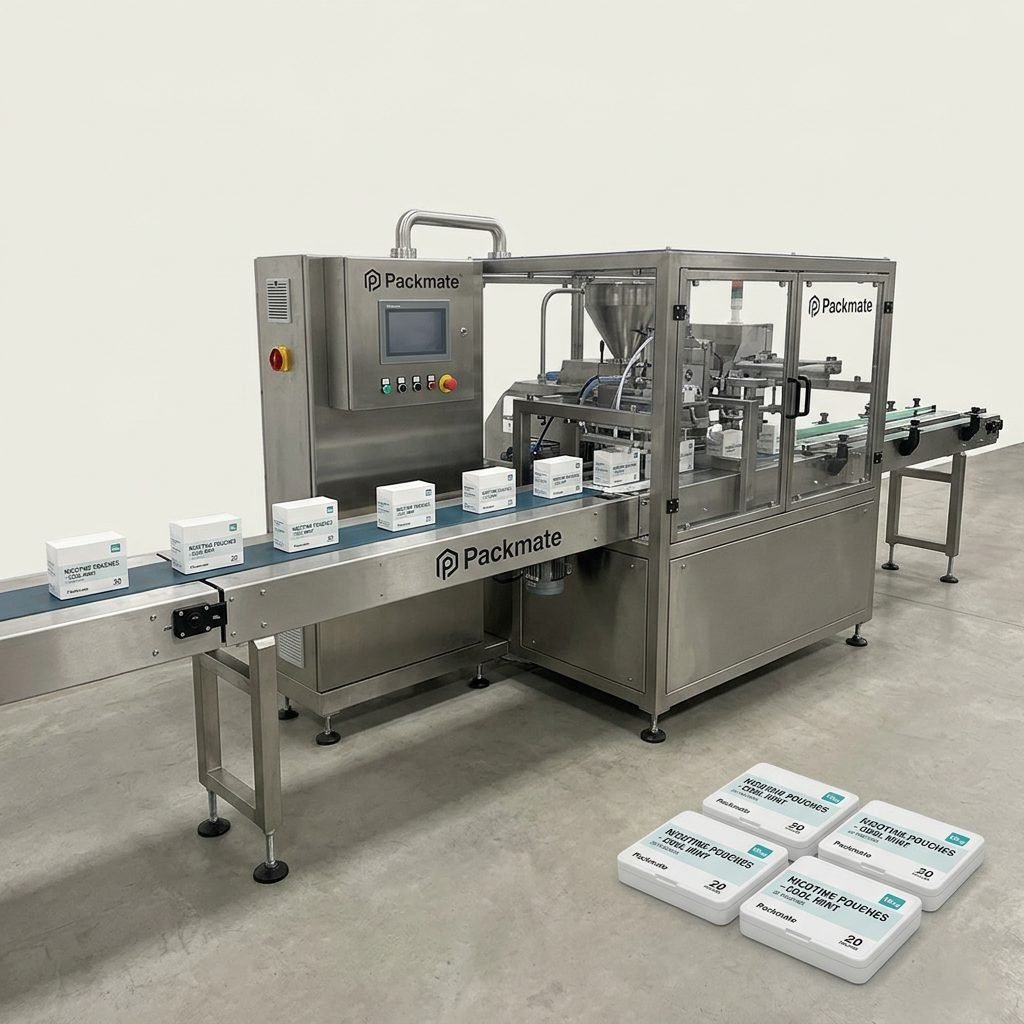
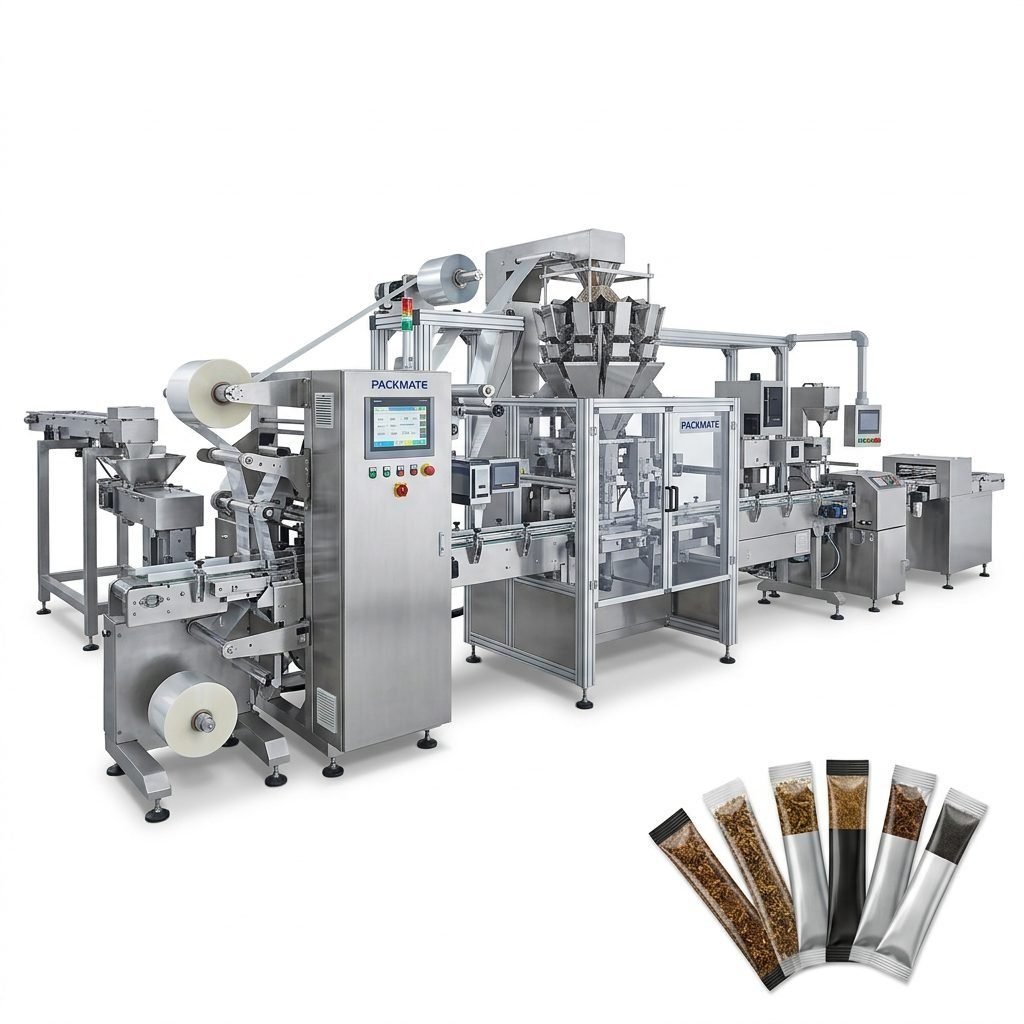
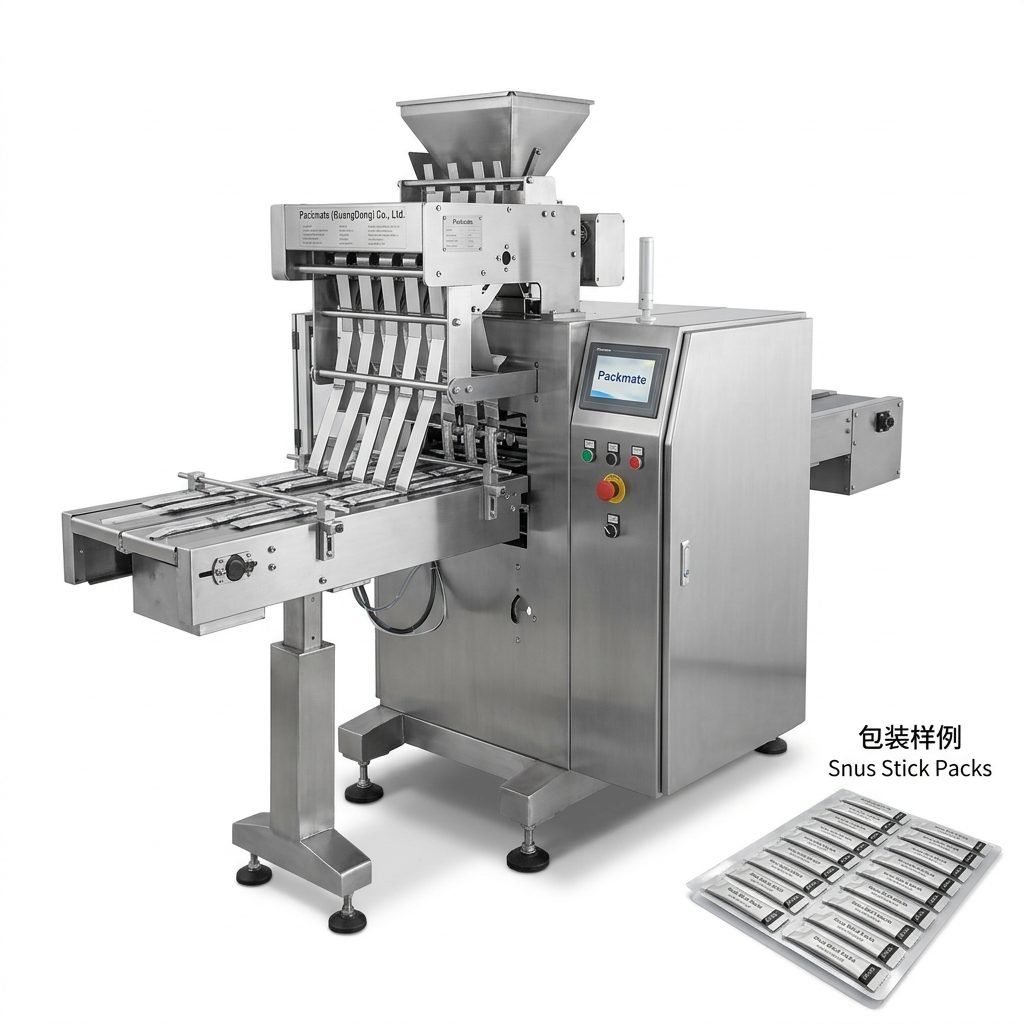
• Stick pack machines for single-dose, elongated pouches.
• Sachet & stick pack machines for versatile sachet shapes and small sachet output.
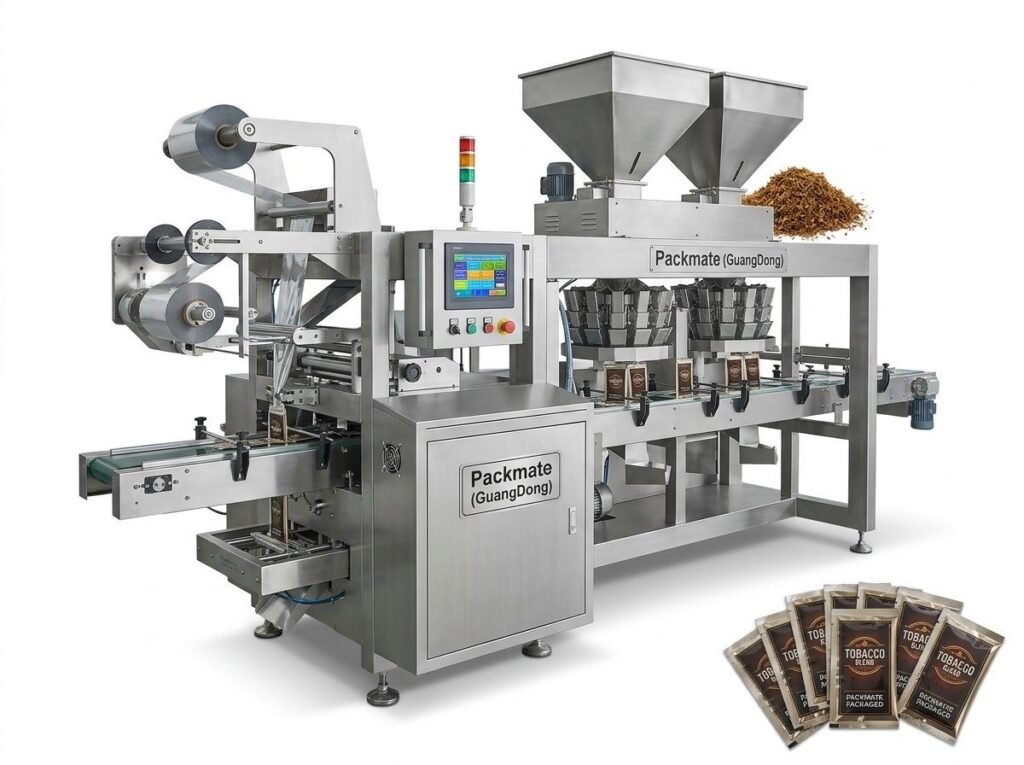
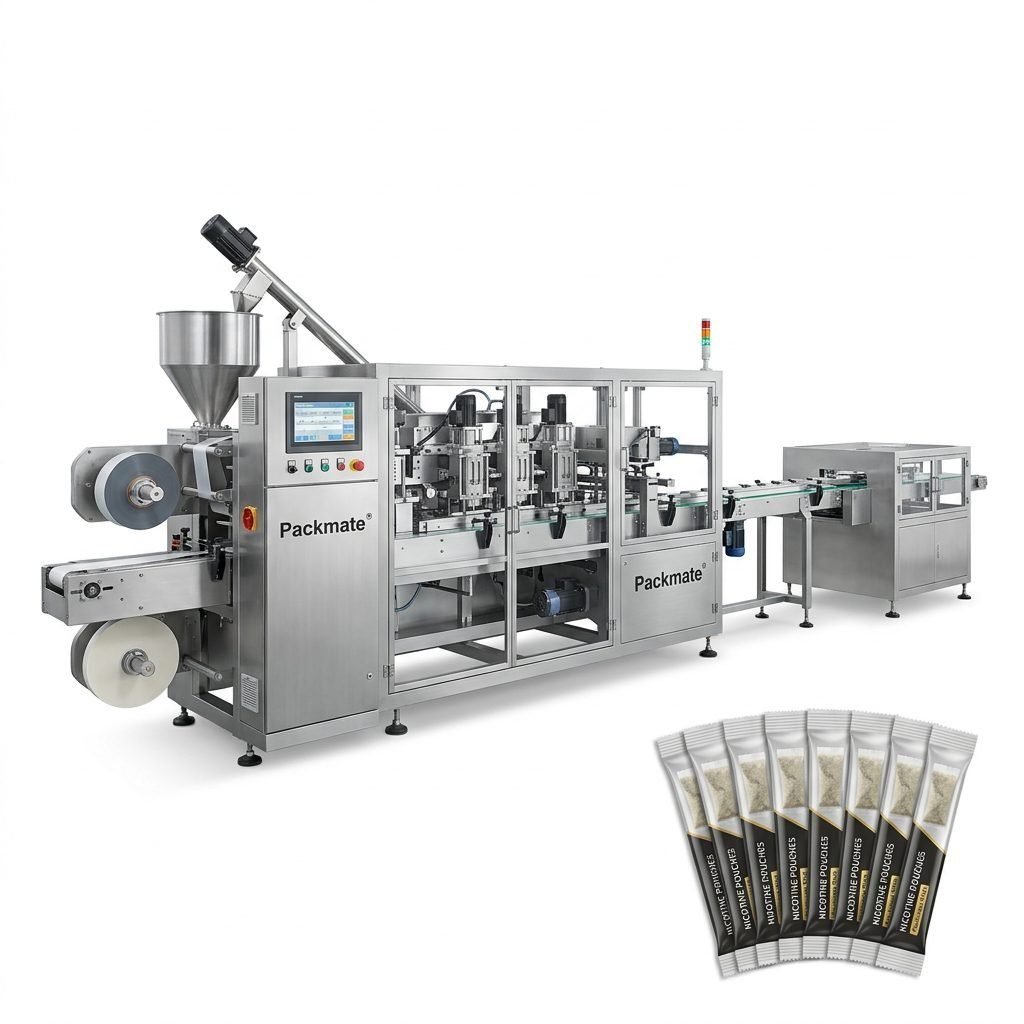
• Multi-lane snus pouch machines for high throughput small-dose pouches with tight weight control.
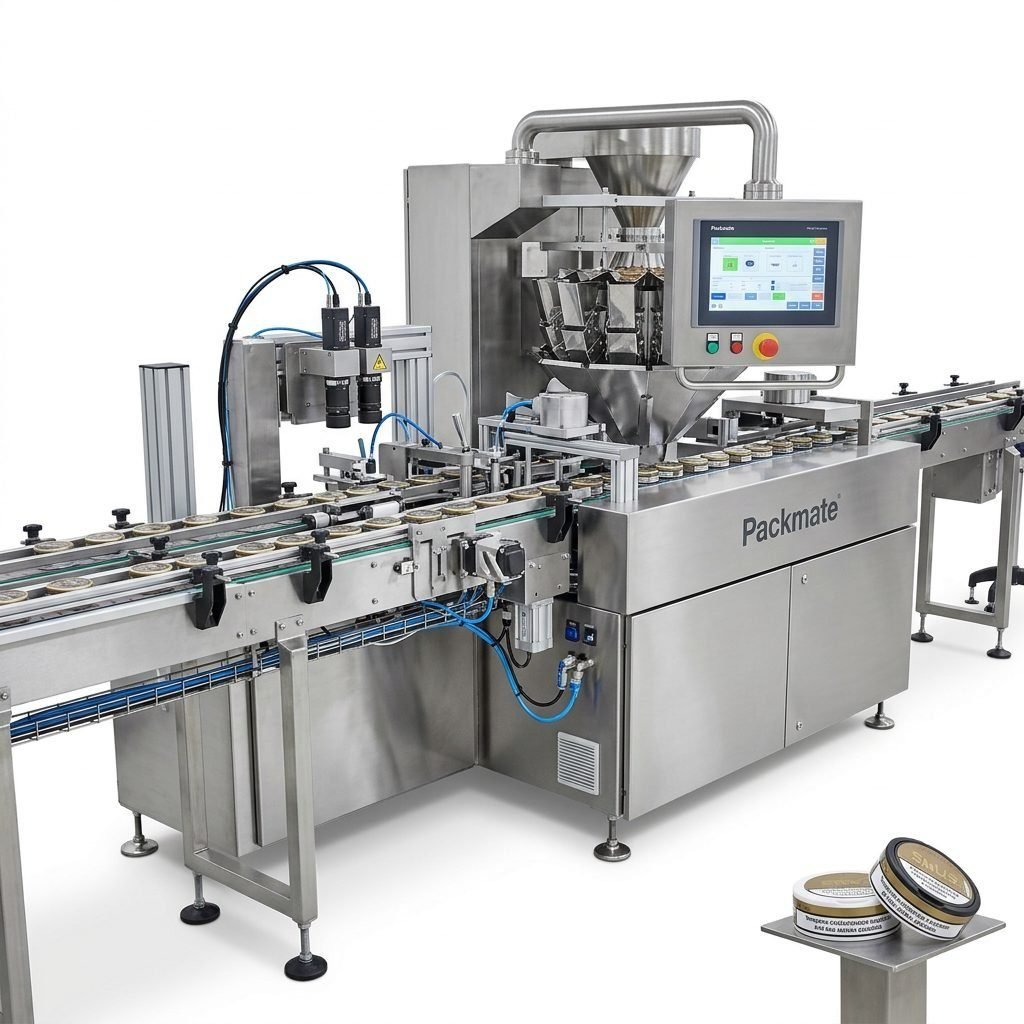
• Auxiliary and filling systems for dosing powders, granules and liquids that feed the main packaging machine.
Evaluate Manufacturer Capabilities
Not all suppliers are equally capable. Use these criteria to evaluate potential manufacturers thoroughly:
Engineering experience: look for decades of R&D and proven models. Experience in snus/nicotine pouch packaging and multi-lane engineering matters greatly.
Manufacturing scale & equipment: a larger factory with CNC centers, precision assembly lines, and QC systems reduces variability and ensures consistent quality.
Product range & customization: suppliers that offer modular models (stick pack, sachet, multi-lane, filling systems) and bespoke turnkey solutions are advantageous.
Compliance & certifications: CE, ISO and other relevant certifications show commitment to safety and export readiness.
Why factory visits or virtual tours matter
Seeing production facilities (physically or through video) helps verify claims about manufacturing capabilities, assembly quality, and test procedures. During a visit or virtual demo, ask to see:
• CNC machining centers and evidence of component machining quality.
• Final assembly lines, testing rigs, and quality control checkpoints.
• Live machine demos producing your pouch format or similar products.
Technical and Performance Specifications
Ask for detailed technical documentation and performance validation:
Speed & throughput: measured outputs under real product conditions, not just paper specs.
Dosing accuracy: weight control tolerance for nicotine pouches and small-dose formats.
Changeover time: how long to switch formats or pouch sizes — faster changeovers reduce downtime.
Material compatibility: film types, laminates, and barrier materials supported for sealing and pouch integrity.
Testing and acceptance criteria
Include factory acceptance tests (FAT) and site acceptance tests (SAT) in contracts. Specify acceptance metrics such as weight variation, seal integrity, and continuous run time to qualify the line.
Service, Support and Spare Parts
After-sales service is vital for uptime. Check the supplier’s global support structure and spare parts strategy:
Local support or remote service: does the manufacturer provide local technicians in Europe or fast remote diagnostics and spare shipments?
Spares availability: lead times for critical parts and availability of wear components to minimize downtime.
Training & documentation: onsite operator training, maintenance manuals, and troubleshooting guides in English (or local language) are essential.
Commercial Terms and Total Cost of Ownership (TCO)
Price is only one component of cost. Compare suppliers on TCO which includes energy consumption, spare parts, maintenance intervals, and expected lifespan.
Negotiate clear terms for warranty coverage, project milestones, shipping, installation, and acceptance testing. Ask for references and case studies that demonstrate long-term value.
Useful procurement checklist
🔧 Confirm machine model and variants suitable for your pouch format.
📦 Request FAT video demonstrations with your actual materials.
ℹ️ Get a full spare parts list with lead times and consumable life estimates.
✅ Verify certifications (CE/ISO) and export support for Austria/EU.
Selecting between local Austrian suppliers and global manufacturers
Local suppliers can offer faster service response in Austria and potentially easier compliance with local regulations. Global manufacturers, however, often provide broader product ranges, advanced multi-lane systems, and competitive pricing due to scale. Use the following lenses to compare:
• Local advantage: faster on-site service, local language support, and easier logistics within the EU.
• Global supplier advantage: wider technology portfolio, proven multi-lane solutions, and economies of scale.
How to vet suppliers — practical steps
Follow a structured vetting process to reduce procurement risk:
1. Prepare a detailed Request for Quotation (RFQ) including product specs, production targets, and acceptance criteria.
2. Shortlist 3–5 suppliers and request references and case studies for similar snus/nicotine pouch lines.
3. Schedule FAT demos or ask for sample runs with your film and formula.
4. Compare TCO, spare parts strategy, and training packages before signing contracts.
Examples of questions to ask suppliers
• Can you run my exact pouch film and fill material in a FAT?
• What are the real-world throughput numbers with my product?
• What is your spare parts lead time for critical components to Austria?
• Do you provide installation, commissioning and operator training in Europe?
Recommended resources and next steps
If you are researching manufacturers and solutions, review manufacturer product portfolios and case studies. For example, companies with focused snus and nicotine pouch experience provide tailored multi-lane and stick pack options and often support complete production lines. Explore product families and examples:
• Snus & Nicotine Packaging Machines — https://www.snusmachinery.com/products/snus-nicotine-packaging-machines/
• Sachet & Stick Pack Machines — https://www.snusmachinery.com/products/sachet-stick-pack-machines/
• About Packmate — company profile and capabilities — https://www.snusmachinery.com/about-us/
• Case studies and global installations — https://www.snusmachinery.com/case/
Decision matrix — balancing quality, support and cost
Use a simple scoring matrix to weigh the most important factors: technical fit, reliability, support response, spare parts, and price. Assign weights based on your priorities (for example, if uptime is critical, give service and spare parts higher weight).
🔎 Example: Technical fit (30%), Service & spares (25%), TCO (20%), References (15%), Price (10%).
🧾 Score each vendor and choose the one with the highest weighted score and demonstrable FAT results.
Final considerations before signing
Ensure the contract includes clear delivery timelines, penalty clauses for missed milestones, acceptance test criteria, and a detailed scope for installation and training. Confirm warranty periods and post-warranty service packages to protect your investment.
Tip: If you are sourcing internationally, validate export documentation, customs clearance assistance, and on-site commissioning support for Austria/EU.
Contact and follow-up
When you are ready to request proposals, use a clear RFQ and request FAT scheduling. For direct contact, supplier websites typically provide contact forms and catalogs to start the conversation: Contact Us and review their catalog for specifics: Catalog.
Summary: key takeaways
Selecting the best snus packaging machinery manufacturer for Austria requires a clear specification of production needs, thorough technical evaluation, verified FAT demonstrations, reliable spare parts and service plans, and a careful review of total cost of ownership. Balance local support advantages with the technical breadth of global suppliers to achieve the best long-term outcome.
Common Questions
Q1: How important is FAT when buying snus packaging machines? — FAT is critical; it validates real-world performance with your materials and should be contractually required.
Q2: Should I choose a local Austrian vendor or an international manufacturer? — Choose based on priorities: local for fast service and logistics; international for wider product range and multi-lane expertise.
Q3: What certifications should I check? — CE and ISO are standard; confirm machine safety, electrical compliance, and any country-specific export/import documentation.
Q4: How do I reduce downtime after installation? — Secure a spare parts plan, schedule operator training, and arrange fast-response service options (local or remote).
Q5: Where can I find recommended machine models and case studies? — Review product pages and case studies for proven solutions: Snus & Nicotine Packaging Machines, Sachet & Stick Pack Machines, and company case pages linked above.