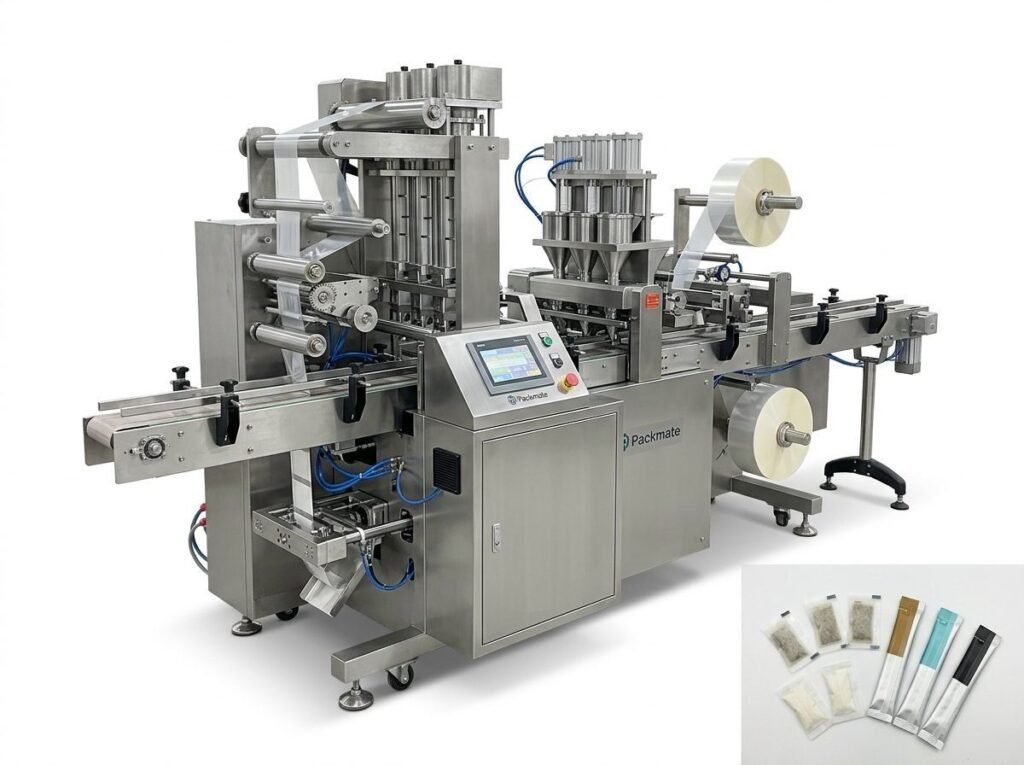
Entering the Swedish snus and nicotine pouch market requires careful selection of packaging machinery that balances regulatory compliance, production capacity, product quality, and total cost of ownership. This guide walks you through the practical steps and technical considerations to choose the best snus packaging machinery in Sweden for your production line, helping you make a decision that improves throughput, maintains product integrity, and supports future growth.
Understand Your Product and Market Needs
Before evaluating machines, define the product specifications: pouch size, dose weight, moisture sensitivity, intended packaging material, and required shelf life. Sweden’s snus market often demands precise dosing and packaging that preserves aroma and moisture. If you produce multi-dose or micro-dose pouches, choose equipment designed for high-precision filling and gentle handling. Consider seasonal demand, SKU variety, and future product expansions when deciding on a modular versus fixed configuration.
Key questions to answer
✔️ What pouch formats (stick, sachet, round pouch) will you run?
✔️ What are the target line speeds (pouches per minute)?
✔️ Which packaging materials (foil, barrier films, paper laminates) are required?
✔️ How many SKUs and changeovers per shift?
Machine Types and Which Suits Sweden Production Lines
There are several machine types commonly used for snus and nicotine pouch packaging. Understanding their strengths helps align machine selection with production goals.
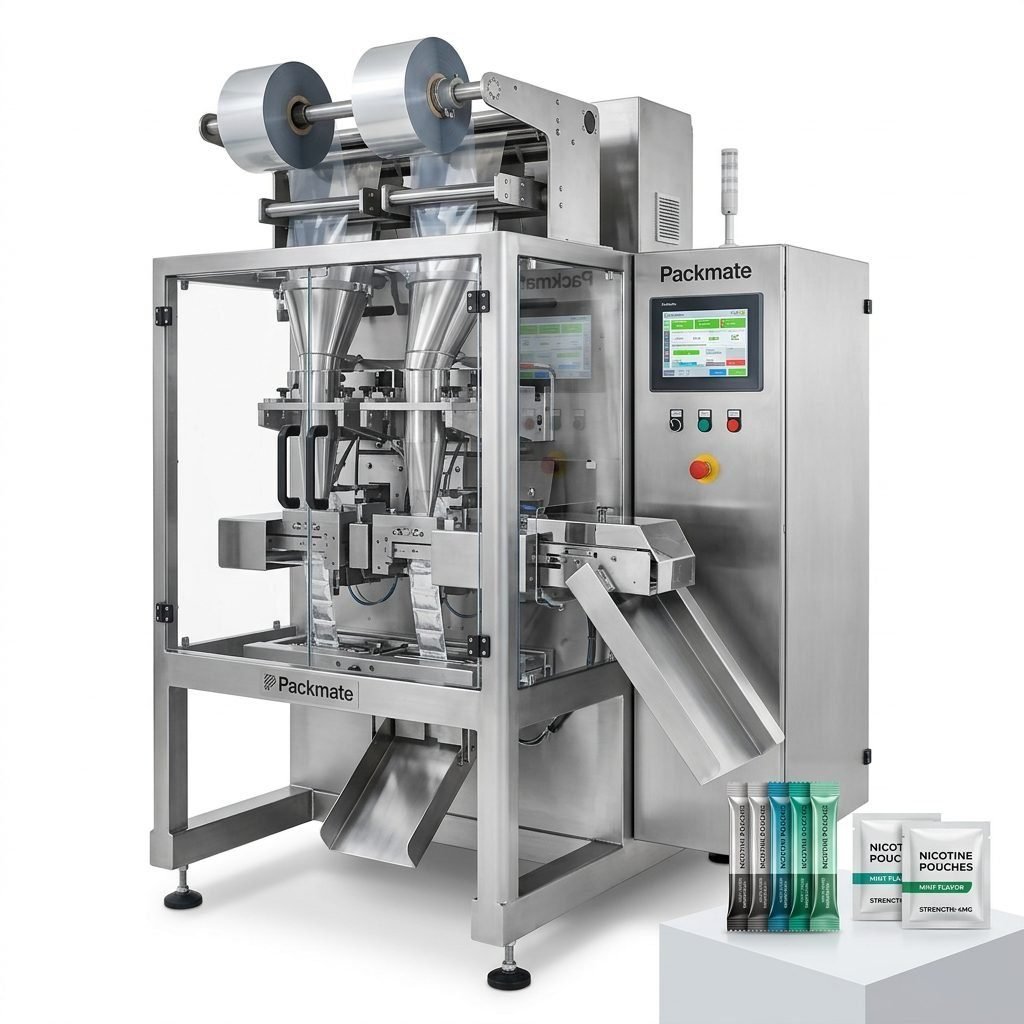
Sachet & Stick Pack Machines
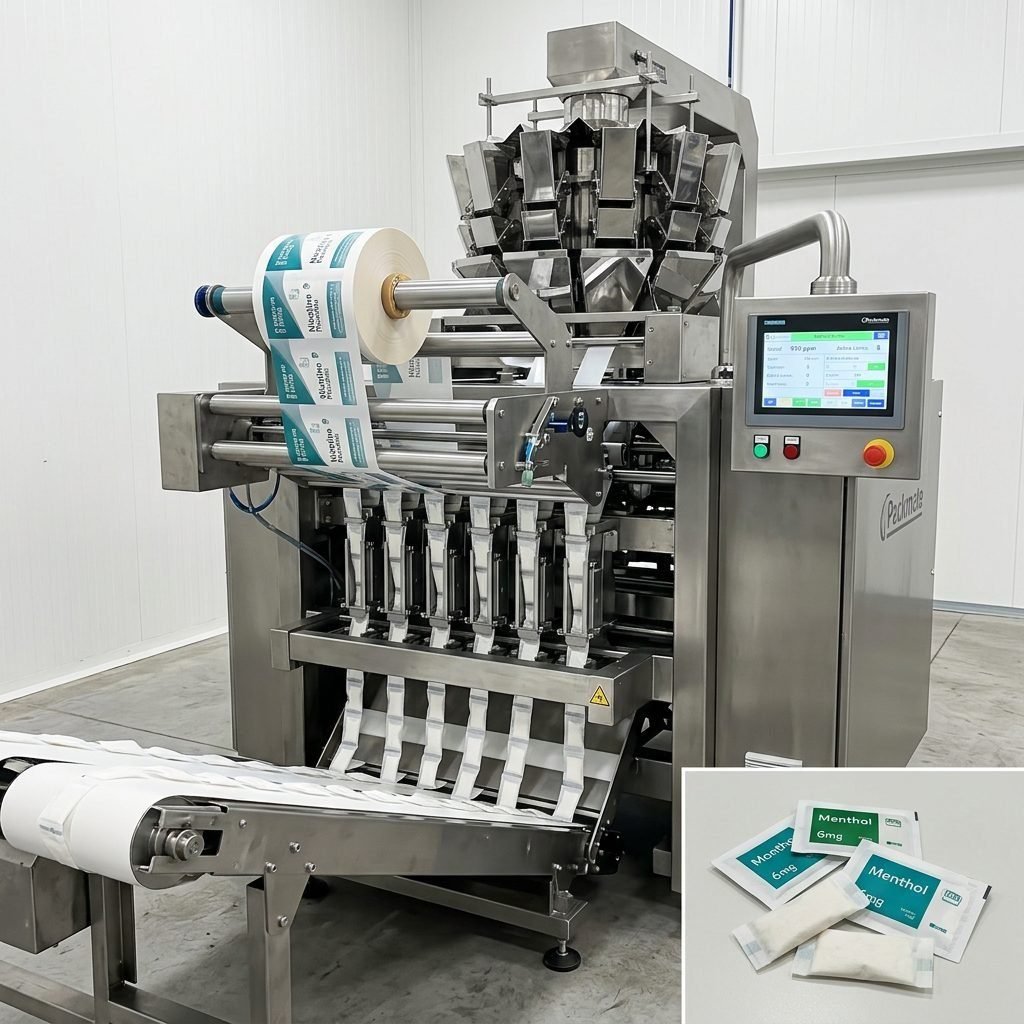
Stick pack and sachet machines are ideal for single-portion pouches and are often used for nicotine products sold in individual sachets. They offer rapid changeovers and efficient film utilization. If your business model includes retail single-dose sachets, these machines are suitable for high-speed output and consistent sealing.
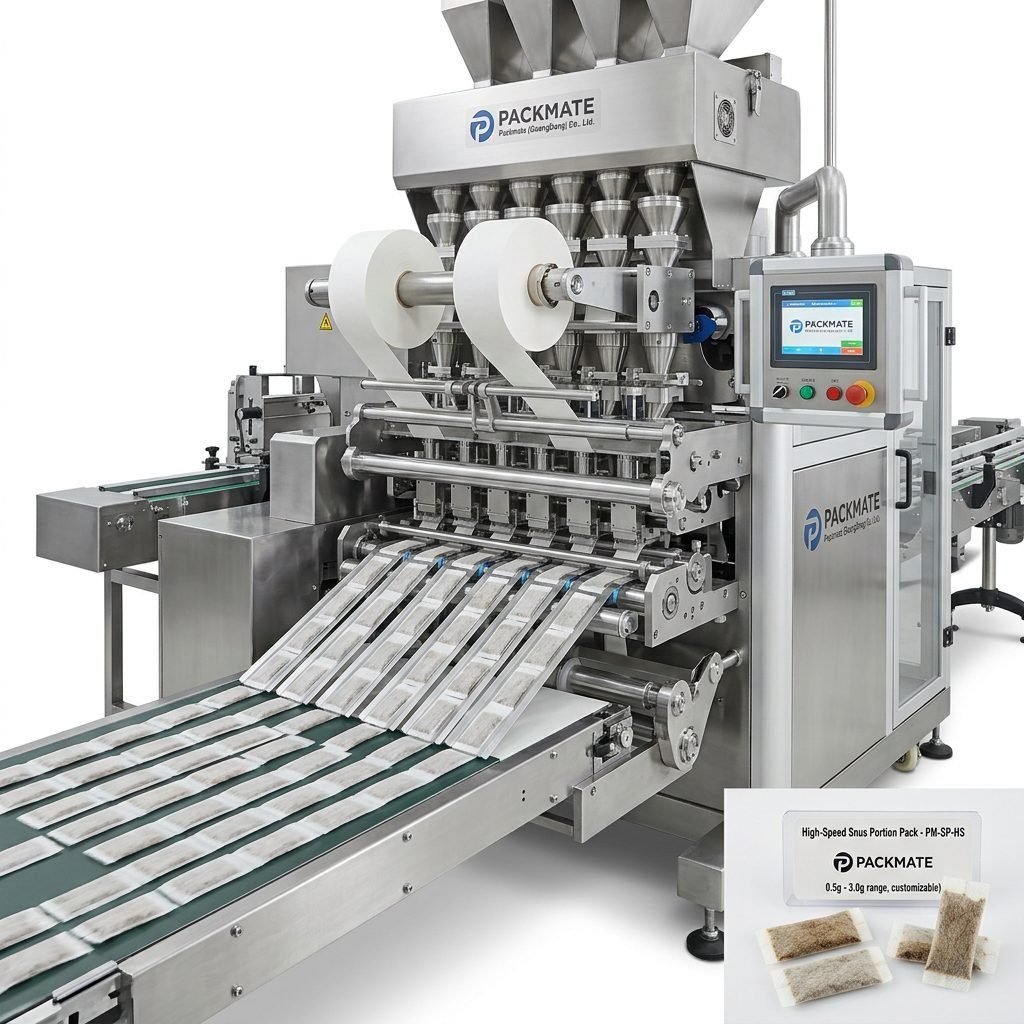
Multi-lane Snus Pouch Systems
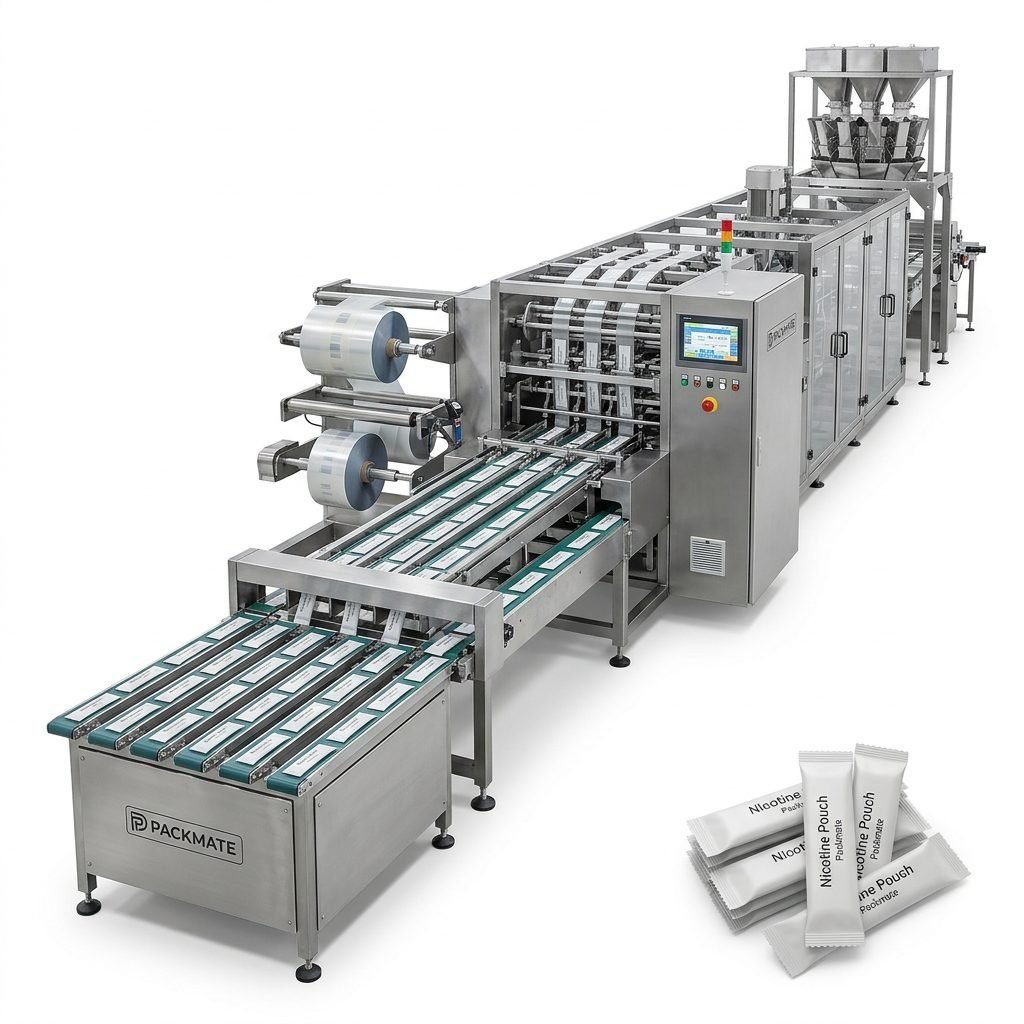
Multi-lane machines multiply throughput by running several lanes in parallel. For high-volume Swedish manufacturers, multi-lane systems reduce footprint relative to multiple single-lane machines and provide more predictable scalability. Precision filling systems and synchronized lane control are critical to ensure uniform weight distribution across lanes.
Learn more about machine categories and model options here: Sachet & Stick Pack Machines and Snus & Nicotine Packaging Machines.
Technical Specifications That Matter
When comparing supplier specifications, focus on measurable items that affect daily operations and product quality.
⚙️
Precision & Accuracy: Filling accuracy ± tolerances, weight control systems (load cell or multi-head weighers), and repeatability across batches.
🔧
Sealing Quality: Temperature control, seal integrity testing, and compatibility with barrier films for long shelf life.
📈
Throughput & Expandability: Realistic achievable line speeds under full production conditions and options for adding lanes or modules later.
Hygiene, Materials and Regulatory Compliance
Swedish regulatory and retail expectations require machinery that supports hygienic design and traceability. Look for stainless steel contact parts (food-grade 316/304 where needed), easy-to-clean designs, enclosed dust management for powders, and software-enabled batch traceability. Certifications like CE and ISO demonstrate compliance with international standards and are often required by European buyers.
Packmate Snus Machine offers equipment compliant with relevant standards — read more on certifications here: Certificate.
Integration with Auxiliary Equipment and Full Lines
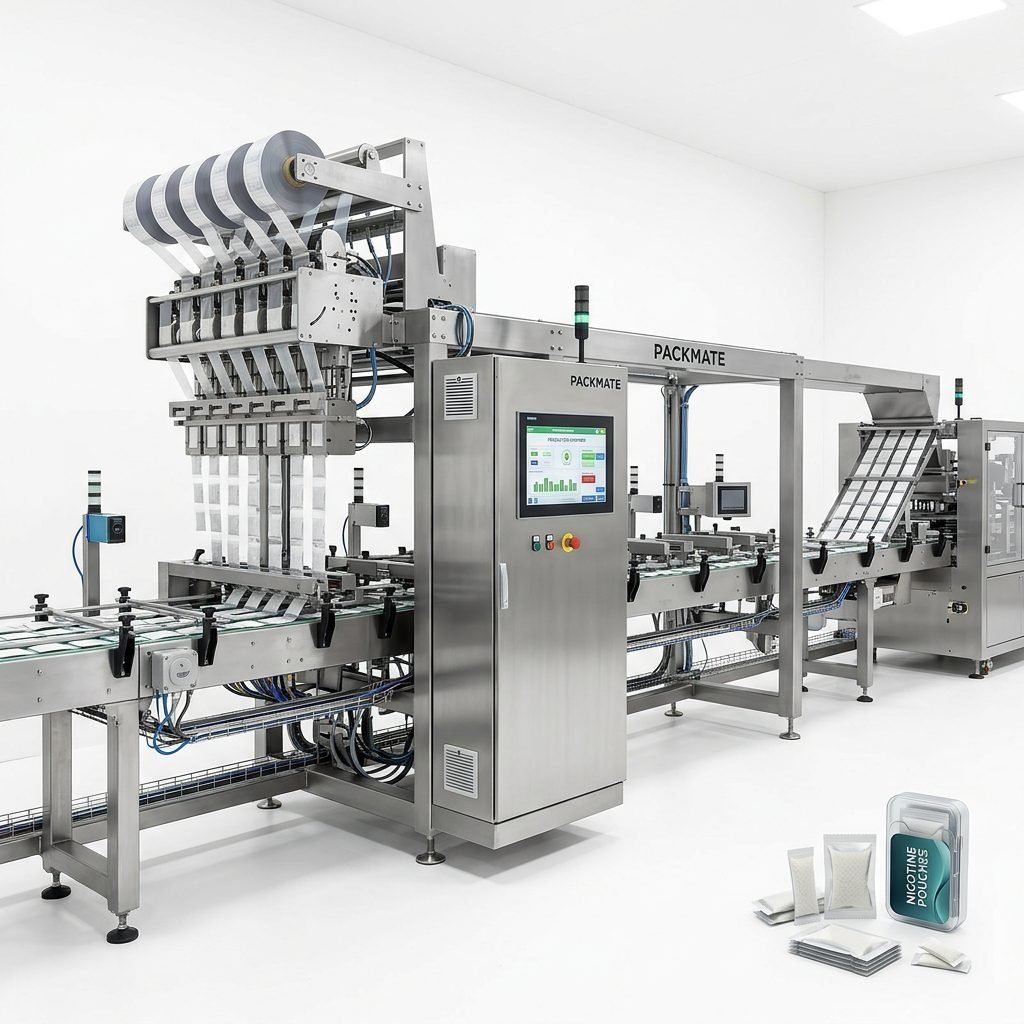
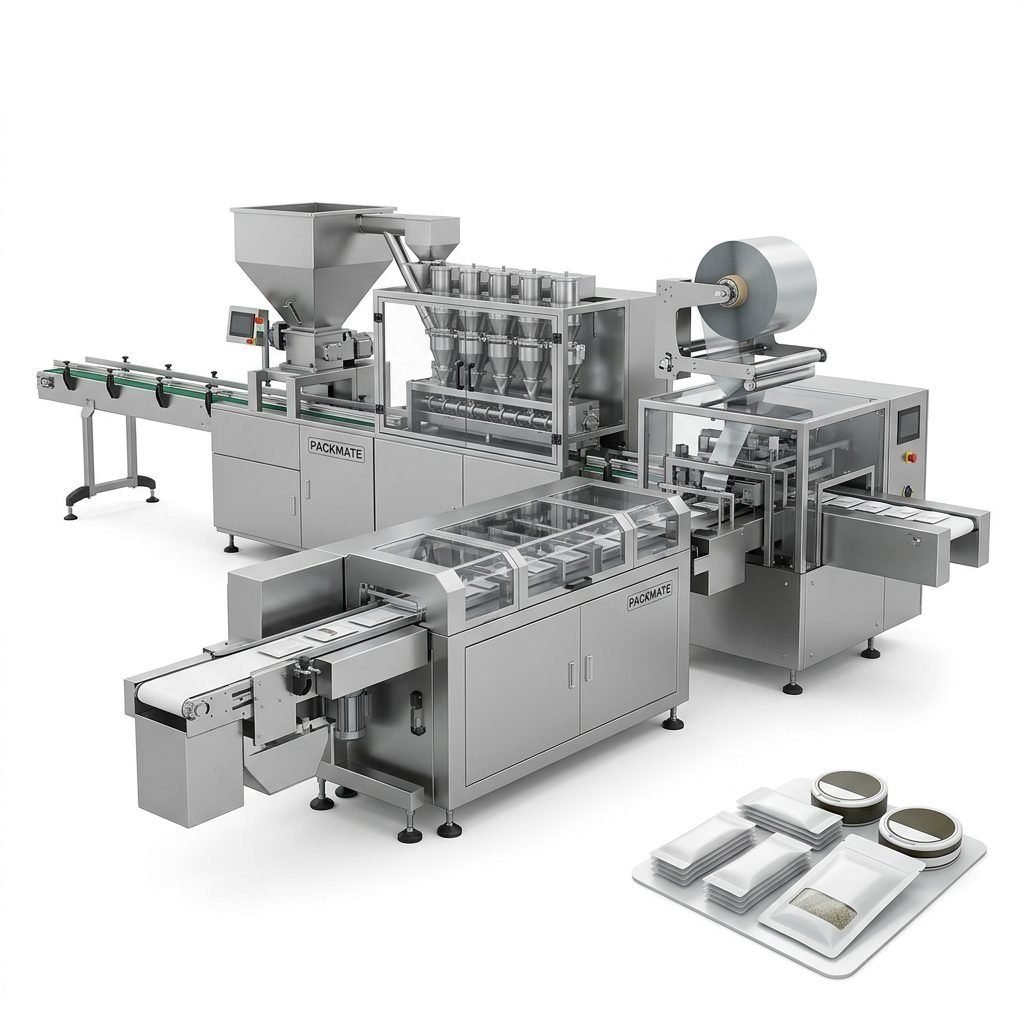
A single machine rarely forms a complete production solution. Consider upstream and downstream equipment: dosing/weighing, feeders, sealing, metal detection, checkweighers, cartoning, and palletizing. Suppliers that provide modular turnkey solutions simplify integration, reduce commissioning time, and ensure consistent communication between modules via PLC/SCADA.
Useful references for full-line options: Weighing & Packaging Systems and Filling & Packaging Lines.
Automation & Industry 4.0 Compatibility
Choose machines with modern PLCs, HMI interfaces, remote diagnostics, and data logging capabilities. Industry 4.0 readiness means easier integration with ERP systems and better predictive maintenance. This reduces unplanned downtime and improves overall equipment effectiveness (OEE).
Service, Spare Parts and Local Support in Sweden
After-sales support is as important as machine specifications. Evaluate lead times for spare parts, availability of service engineers, training programs, and whether the supplier offers commissioning and operator training on-site. For companies operating in Sweden, European service networks or local partners reduce response time and logistical costs.
📦
Turnkey & Customized Solutions: Vendors with design, installation, and training packages simplify setup. If you need custom lane counts, special filling heads, or barrier packaging sequences, choose suppliers with proven customization experience.
🤝
Local Partners and Spare Stock: Confirm which spare parts are stocked locally or regionally and what service SLAs are available for Sweden.
Evaluating Supplier Credentials and Factory Strength
A supplier’s history, factory capabilities, and case studies provide evidence of reliability. Consider manufacturers with strong engineering experience, comprehensive machining facilities, and a track record in snus/nicotine pouch solutions. Factory size, CNC capability, and the number of machine models indicate maturity and production flexibility.
Example: Packmate Snus Machine has 30+ years of industry experience, a 20,000㎡ facility, and 50+ machine models—attributes that support robust engineering, customization, and global service provision. Explore their profile: About Packmate.
Cost Considerations and Return on Investment
Purchase price is only part of the equation. Evaluate total cost of ownership (TCO): energy consumption, spare parts cost, maintenance hours, expected lifetime, and productivity gains. A slightly higher capital cost can be justified by better uptime, lower scrap rate, less labor required, and faster changeovers.
Use a basic ROI model: estimate the additional pouches produced per day, subtract expected downtime improvements, and calculate payback time considering labor and material savings.
Factory Acceptance Testing and Commissioning
Always request Factory Acceptance Tests (FAT) and Site Acceptance Tests (SAT) with your product or representative materials. FAT verifies machine performance under controlled conditions; SAT confirms integration in your facility. Insist on acceptance criteria for weight accuracy, seal integrity, speed, and downtime metrics.
Commissioning checklist
• FAT with full production recipe
• On-site installation and calibration
• Operator & maintenance training
• Spare parts handover and documentation
• Performance guarantee period
Practical Tips for Buying in Sweden
– Prioritize hygienic design and CE/ISO certifications for compliance and retailer acceptance.
– Request references and case studies from similar markets — this demonstrates reliable performance in comparable environments.
– Consider leasing or staged investment if capital expenditure constraints exist.
– Evaluate energy-efficient options and local incentives for industrial upgrades.
✅
Checklist before signing a contract:
• Acceptance test criteria defined
• Spare parts list and lead times
• Warranty and service terms
• Training scope and documentation
• Integration plan with auxiliary equipment
Why Partner with an Experienced Manufacturer
Experienced manufacturers bring engineering maturity, robust quality control, and a portfolio of proven machines. They understand material behavior, dosing complexities, and sealing nuances specific to snus and nicotine pouches. A trusted supplier reduces commissioning friction and accelerates ramp-up to full production.
If you want to review examples and case studies before deciding, see: Case. To contact a supplier for quotes and technical consultations, use: Contact Us.
Final Selection Process — A Recommended Roadmap
1. Define product and throughput requirements.
2. Shortlist suppliers with relevant snus experience.
3. Evaluate technical specs, hygiene design, and automation level.
4. Arrange FATs, request references, and check factory capabilities.
5. Negotiate terms including training, spare parts, warranty, and acceptance criteria.
6. Plan commissioning, operator training, and preventive maintenance schedule.
Quick procurement tip
When in doubt, prioritize machines that minimize product waste and maximize uptime — these have the greatest impact on profitability over the machine life.
Conclusion
Choosing the best snus packaging machinery in Sweden involves balancing product specifics, production targets, regulatory expectations, and after-sales support. Machines built with hygienic design, precise dosing, and modern automation deliver long-term value. Partnering with an experienced manufacturer that provides turnkey solutions, FAT/SAT procedures, and local support ensures a smoother start-up and reliable production for your snus or nicotine pouch lines.
Frequently Asked Questions
Q1: What certifications should snus packaging machines have for the Swedish market?
A1: Look for CE compliance, ISO management systems, and supplier-provided documentation proving hygienic design and material safety. Certification evidence simplifies regulatory review and retailer acceptance.
Q2: How do I decide between single-lane and multi-lane systems?
A2: Choose single-lane for lower volumes and flexibility; multi-lane systems for scaling high-volume production with a smaller footprint and more predictable expandability.
Q3: What support should I require from my machine supplier?
A3: Insist on FAT & SAT, operator and maintenance training, a clear spare parts agreement, warranty terms, and remote diagnostics options. Local service presence is a major plus.
Q4: Are there turnkey providers for full snus packaging lines?
A4: Yes. Choose providers that offer integrated weighing, dosing, sealing, inspection, and secondary packaging. Review turnkey case studies and ask for references from similar industries.
Q5: How can I evaluate machine ROI effectively?
A5: Compare total cost of ownership including energy, spare parts, maintenance, labor savings, and uptime improvements. Model payback time based on realistic throughput and yield improvements.