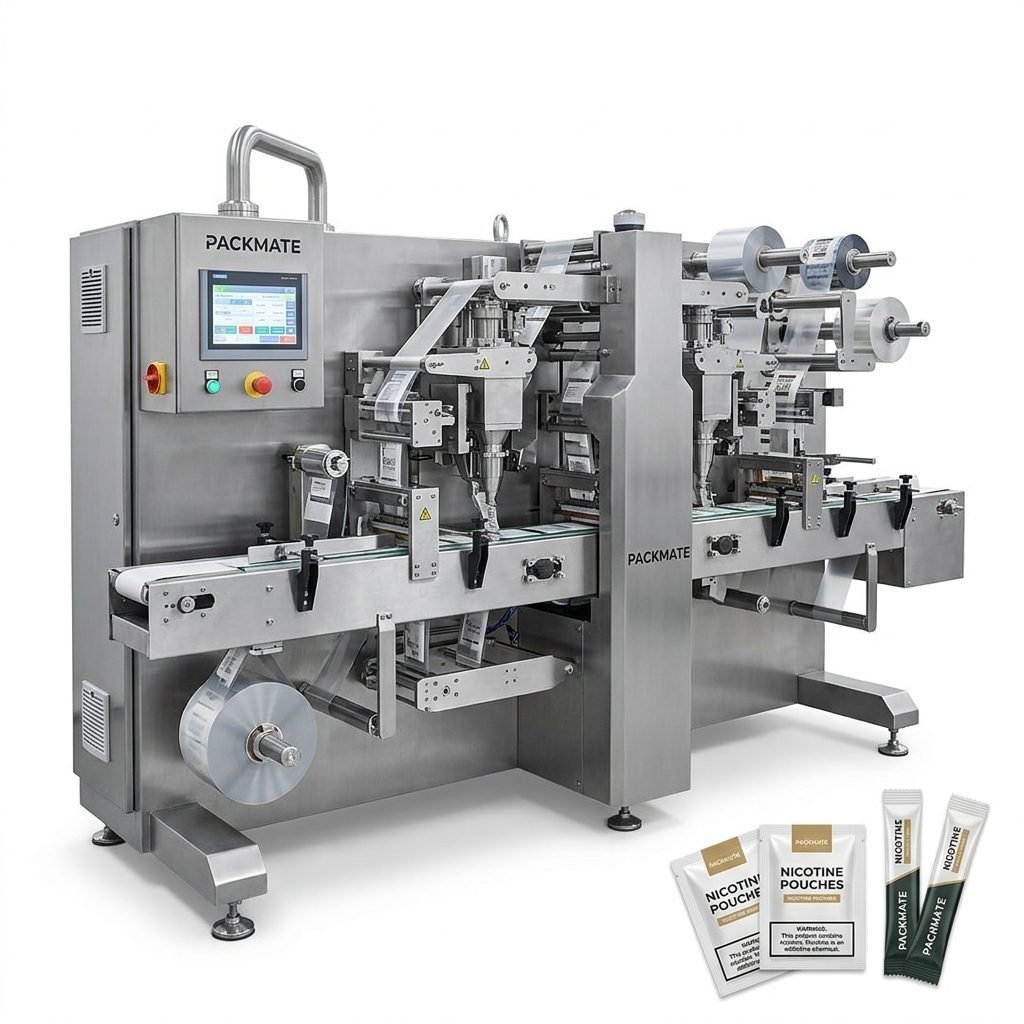
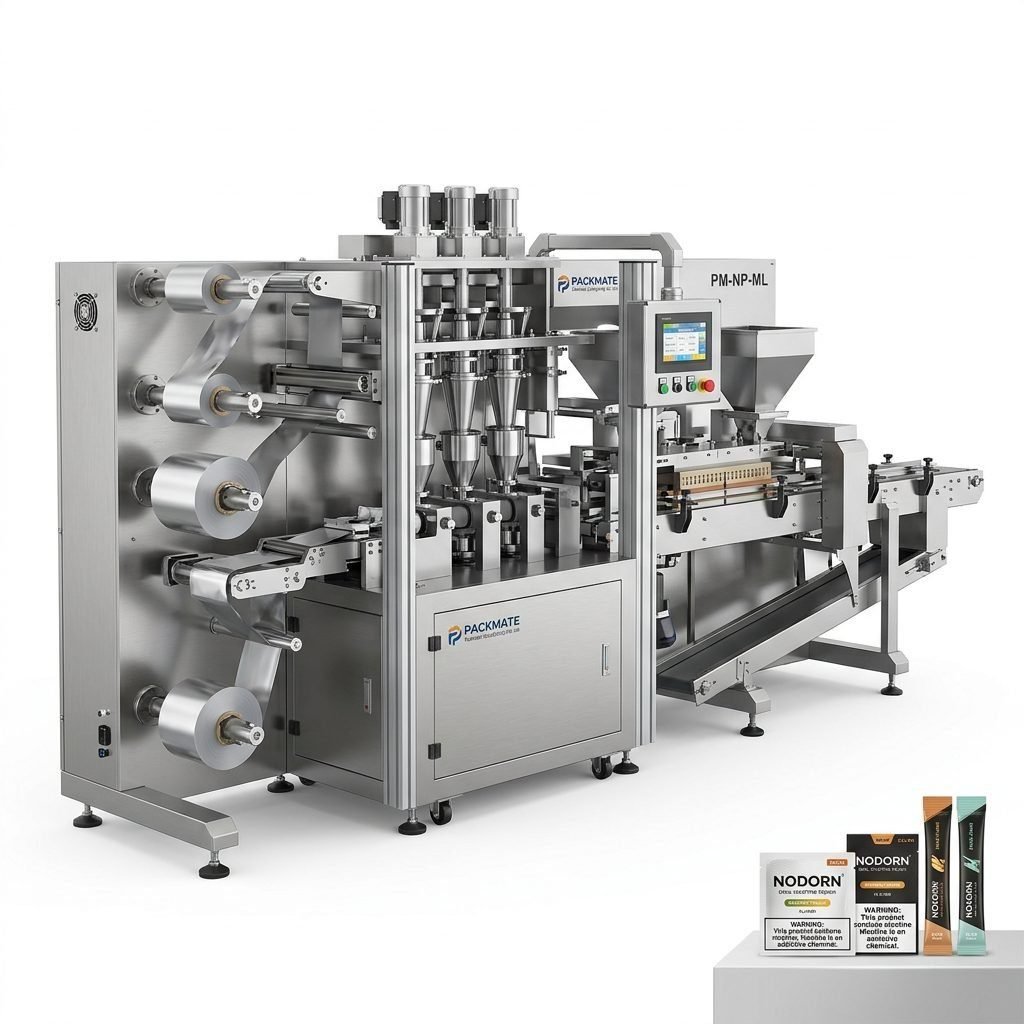
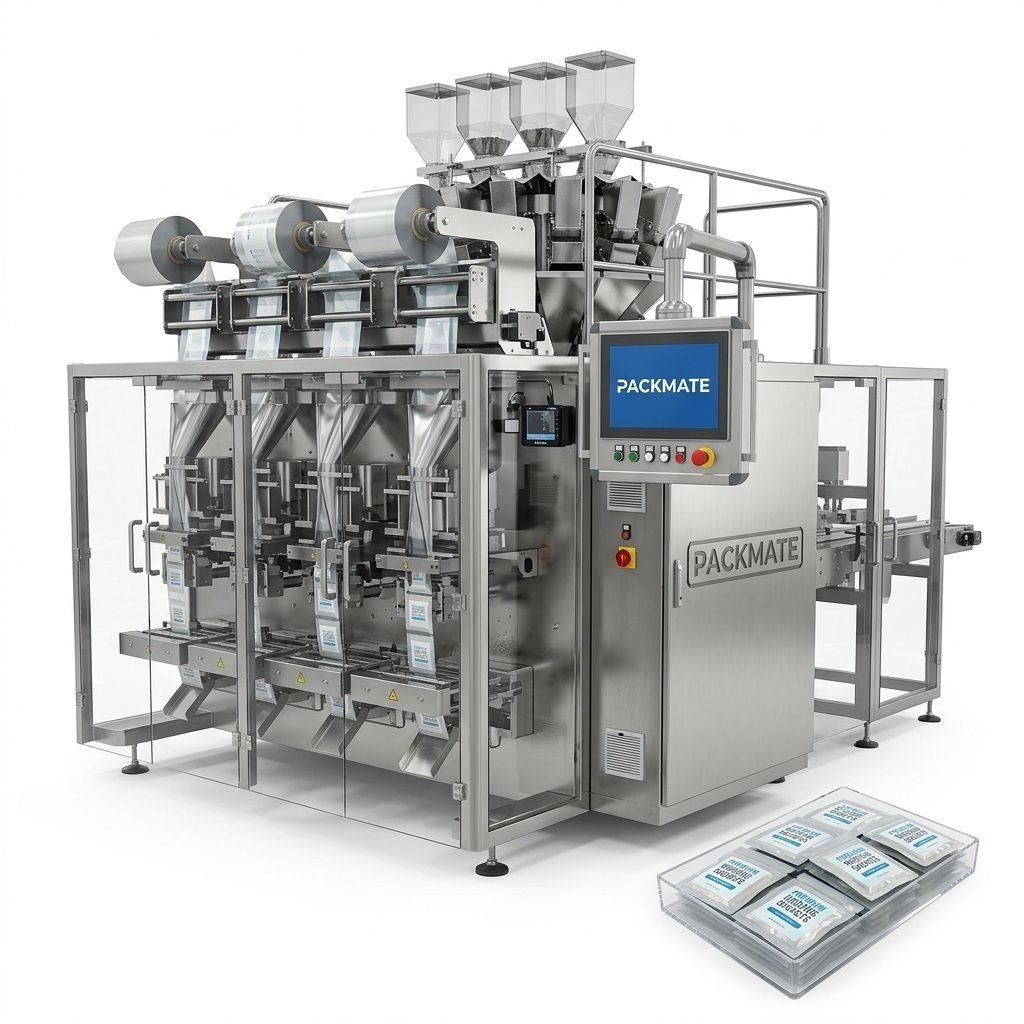
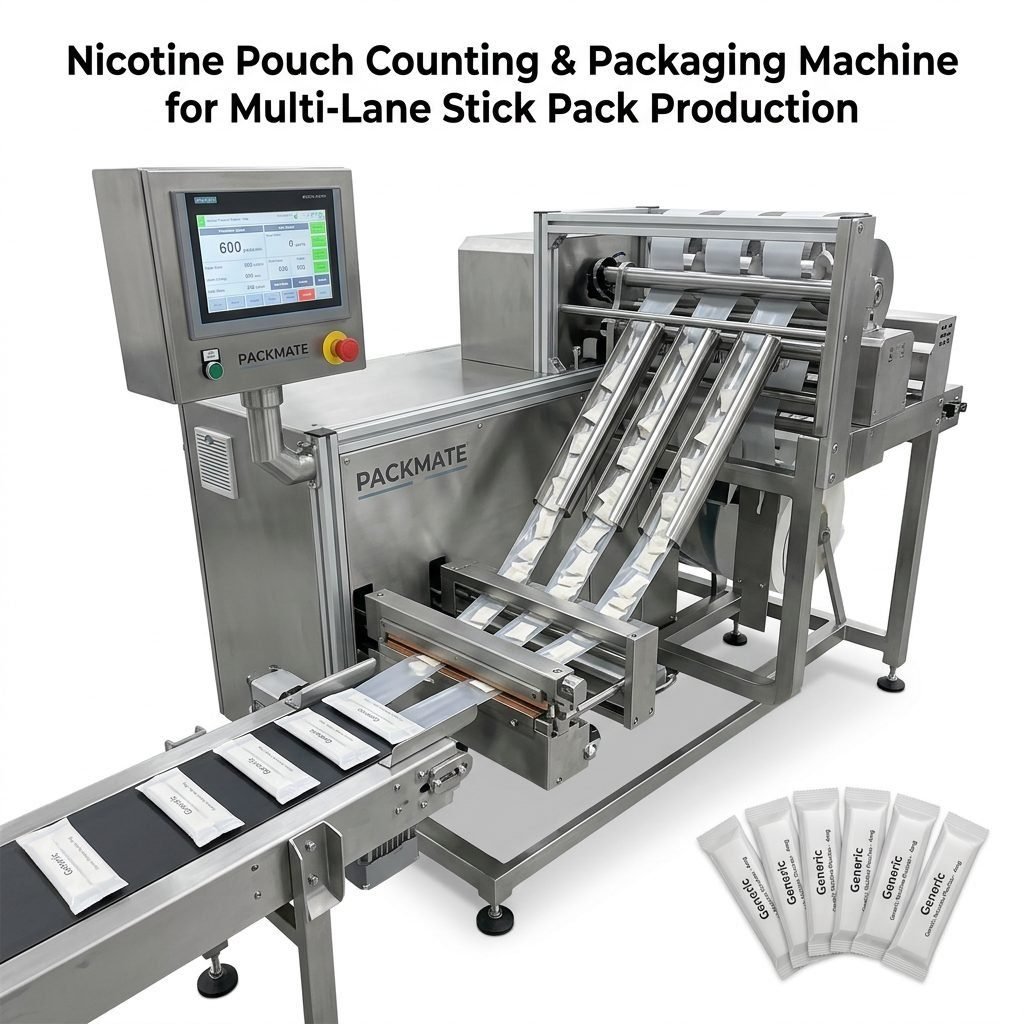
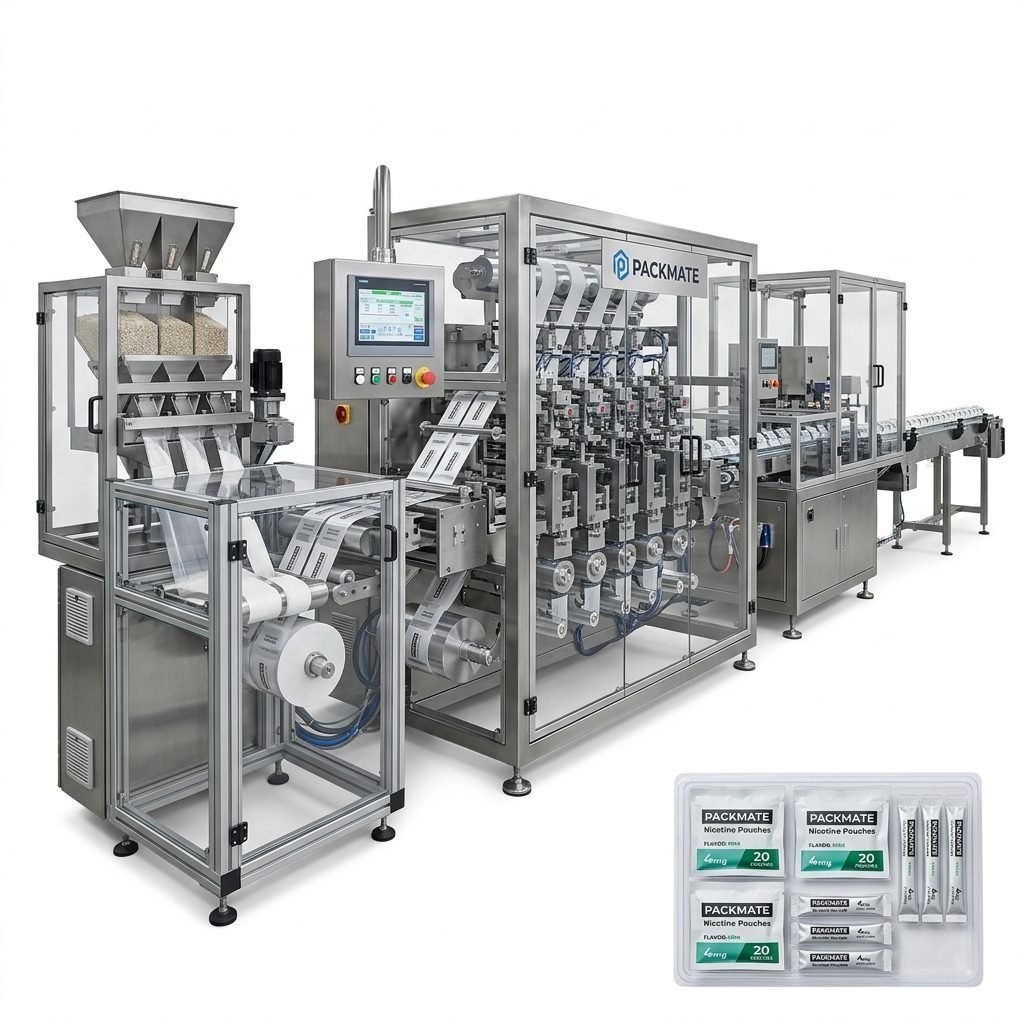
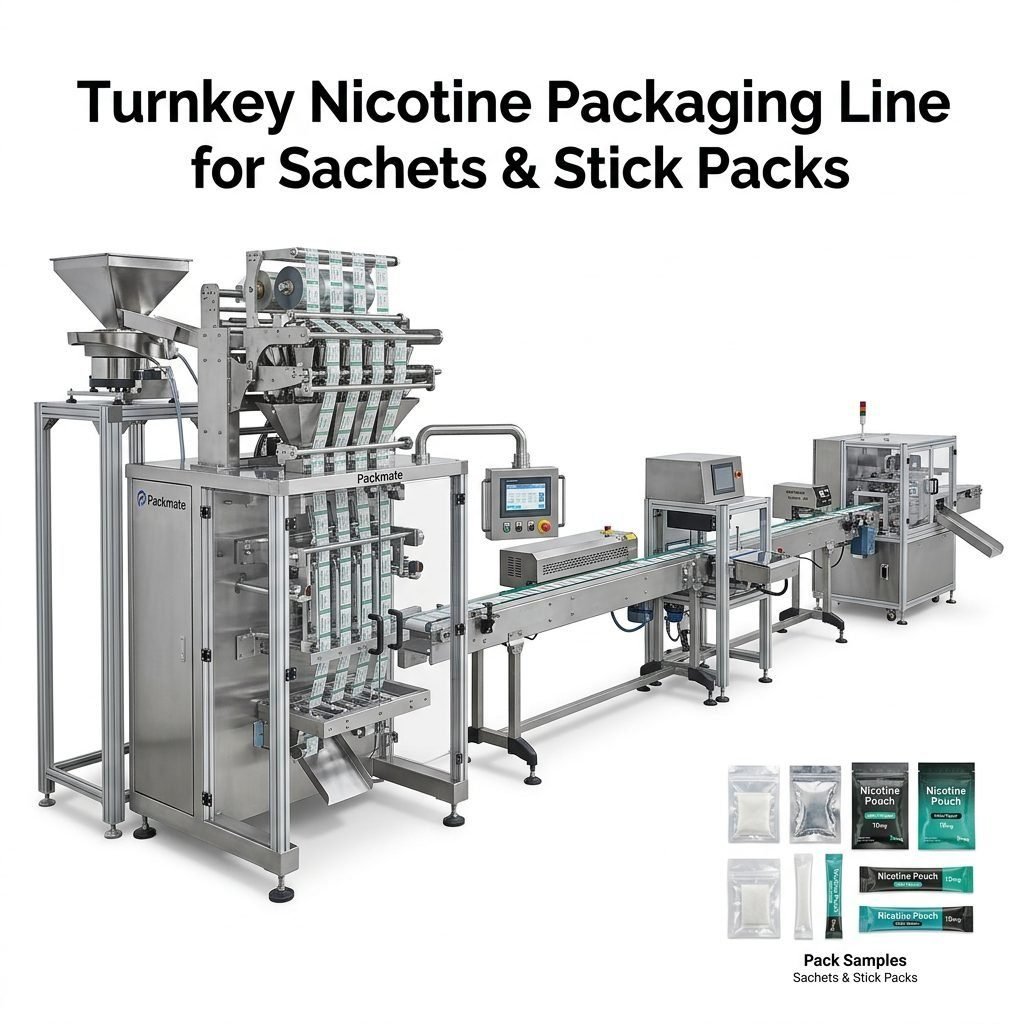
Choosing the right nicotine packaging machine manufacturer for your business in Somalia can determine your production efficiency, cost structure, and long-term competitiveness. This guide walks you through practical criteria, checks, and negotiation tips so you can select a partner that delivers reliable snus and nicotine pouch packaging lines tailored to your market needs.
Understand Your Product and Production Needs
Before contacting manufacturers, clarify your product specifications. Ask yourself: what pouch format will you produce (single-dose nicotine pouches, snus sachets, stick packs)? What are your target daily throughput and multi-lane requirements? Do you need powder filling, granular dosing, or wet/liquid handling? Precise internal specifications help eliminate vendors that cannot meet core requirements.
Key specs to prepare:
✔ Product format and weight range per pouch
✔ Required production speed (pouches/minute or lanes × pouches/min)
✔ Desired automation level (manual feeding to full turnkey)
✔ Environmental or regulatory constraints for Somalia market
Evaluate Manufacturer Experience and Proven Solutions
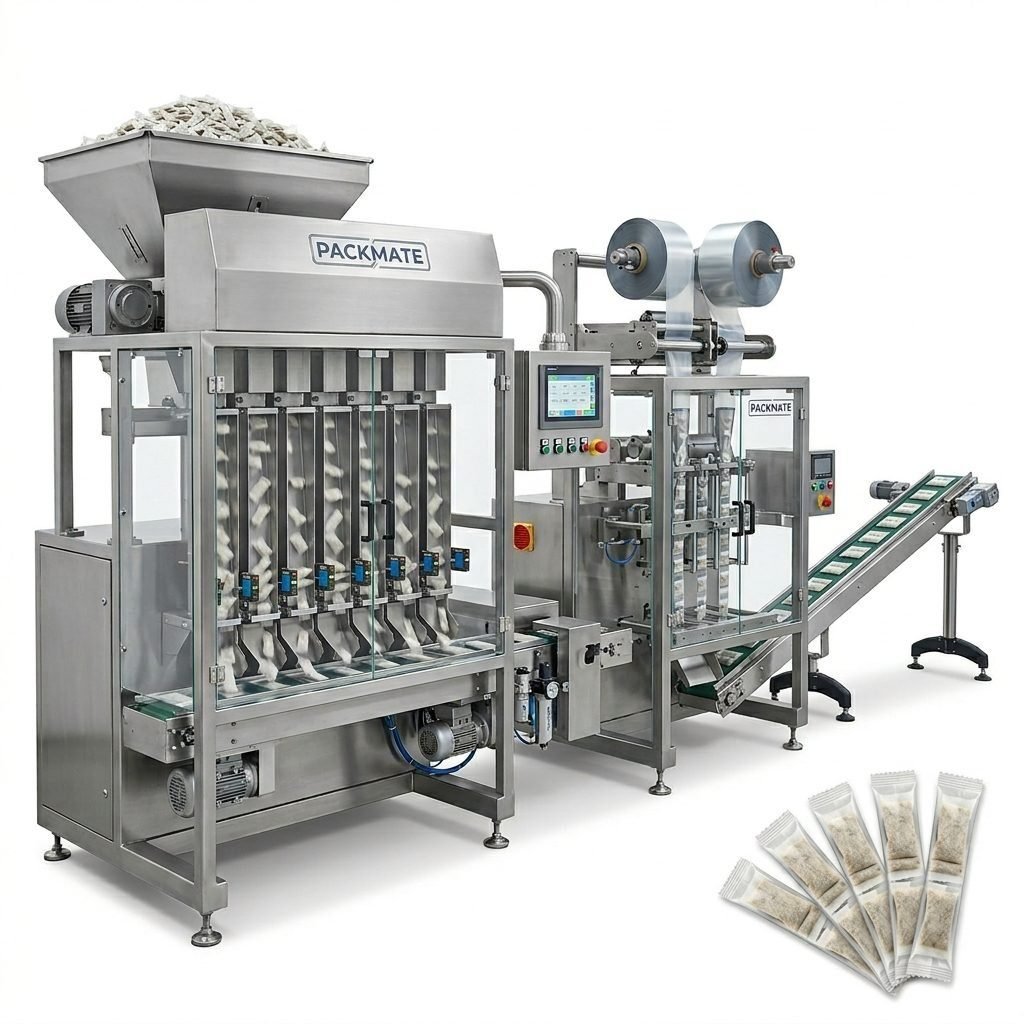
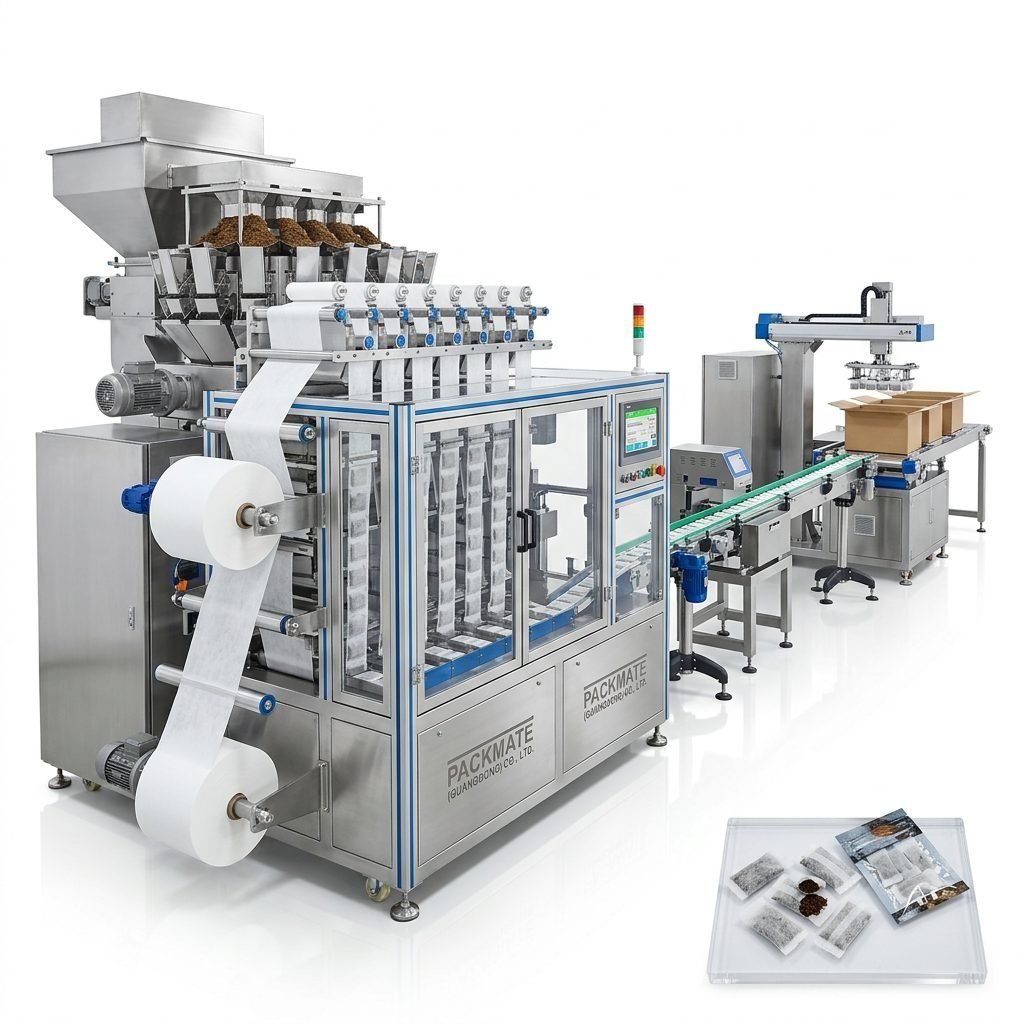
Experience in snus and nicotine pouch packaging is essential because these products require precise small-dose handling and contamination controls. Look for suppliers with decades of packaging machine development and a track record of multi-lane, high-precision systems. For example, established suppliers that specialize in nicotine packaging lines often present product families including stick packs, sachets, and multi-lane pouch lines.
When reviewing manufacturers, ask for references and case studies. Manufacturers that can point to completed installations in similar markets and that publish customer case studies demonstrate not only technical capability but also after-sales reliability. You can review product ranges and case references from trusted sources like Snus & Nicotine Packaging Machines and real project examples in the Case section.
Inspect Factory Capacity and Quality Control
A manufacturer’s factory footprint, machining capabilities, and assembly lines reflect their ability to deliver consistent quality and meet lead times. Key indicators include advanced CNC centers, precision assembly stations, and formal quality testing protocols. A sizable manufacturing facility of 20,000㎡ or more with dedicated testing ensures repeatability and faster customizations.
Factory checks to request:
➤ Photos or video tours of CNC centers and assembly lines
➤ Evidence of in-house testing and final inspection reports
➤ Number of machine models and customization capacity
Assess Technical Capabilities and Machine Models
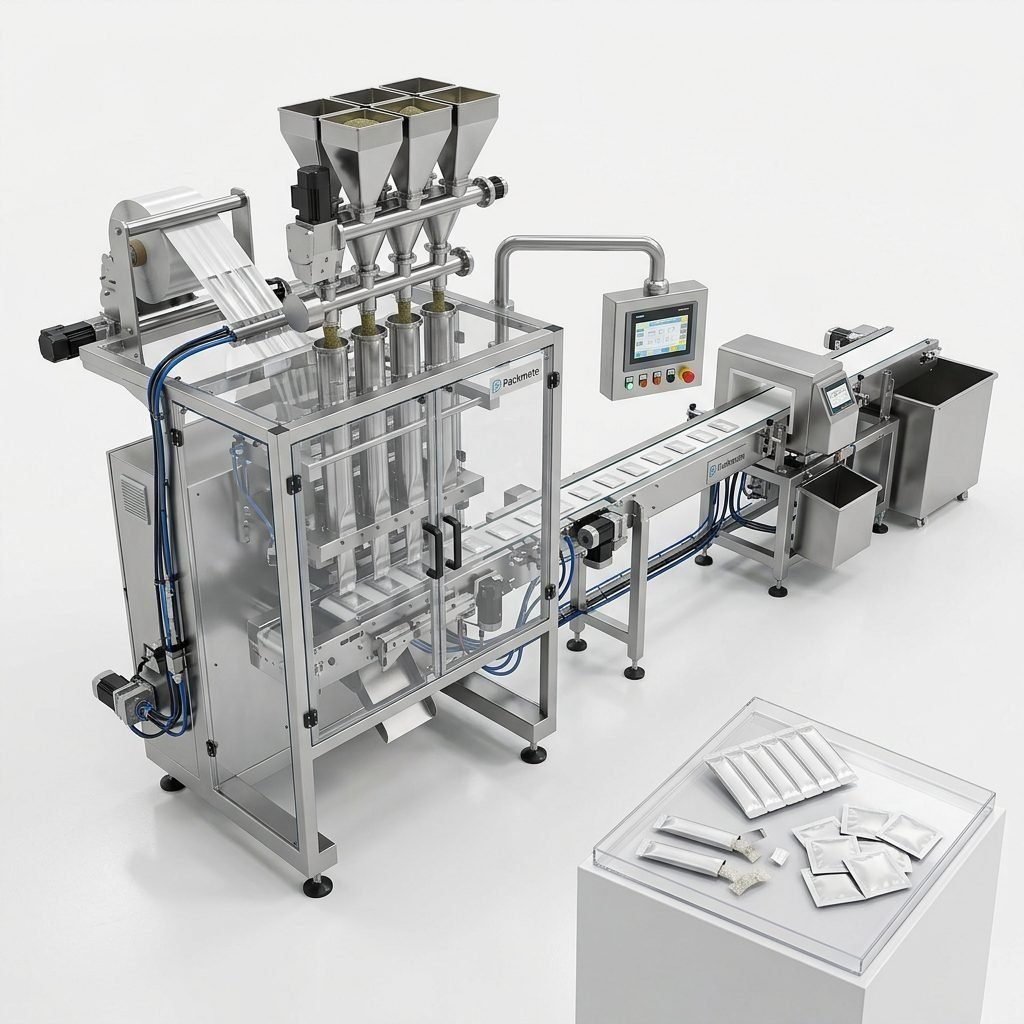
Make sure the manufacturer offers machine models that align with your production scale: from compact single-lane machines for startups to multi-lane continuous lines for larger operations. A diversified product family that covers stick pack, sachet, and multi-lane snus packaging machines suggests a supplier with deep engineering expertise.
If flexibility matters, choose manufacturers that can provide modular designs easily upgraded with auxiliary equipment such as weighing systems, auger fillers, or vacuum and nitrogen flushing. Explore product catalogs like Sachet & Stick Pack Machines and Weighing & Packaging Systems to compare technical specifications.
Precision and Stability
Smaller nicotine pouch doses require precise dosing mechanisms and consistent sealing performance. Inspect specifications for dosing tolerance, sealing methods, and temperature control. Ask for long-run test data showing downtime rates and mean time between failures (MTBF).
Certifications, Compliance, and Safety Standards
Confirm that the manufacturer adheres to international standards such as CE and ISO. Certifications indicate compliance with safety and quality systems and are essential for export documentation and insurance. A manufacturer with robust compliance systems also simplifies regulatory approvals when importing equipment into Somalia.
Review the certificate pages and technical dossiers — reputable suppliers often publish certifications and test reports in dedicated sections like Certificate.
After-sales Support, Spare Parts, and Training
After-sales support is a critical differentiator. Machines will require commissioning, calibration, and occasional spare parts. Prefer manufacturers that provide comprehensive commissioning, operator training, remote diagnostics, and stocked spare parts. Verify the geographic scope of support and expected response times for Somalia or nearby regions.
Support essentials:
✔ Detailed commissioning at your site
✔ Training for operators and maintenance staff
✔ Spare parts availability and express shipping options
✔ Remote support and diagnostic tools
Customization and Turnkey Solutions
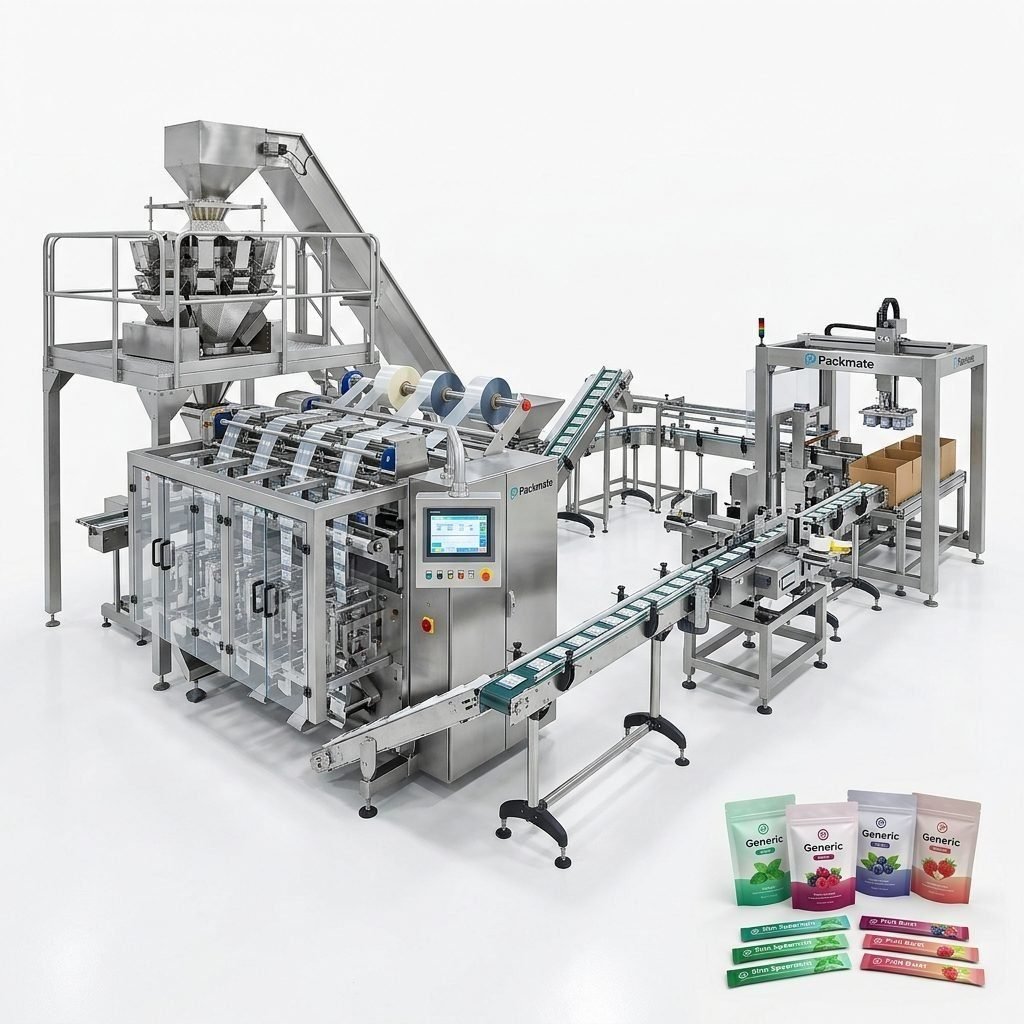
Some manufacturers focus on standard machines while others deliver fully customized turnkey lines integrating fillers, conveyors, metal detectors, and packaging machines. If you need a complete production line with minimal integration effort, prioritize vendors that design end-to-end solutions and manage project timelines from engineering to commissioning. Learn about comprehensive offerings in Filling & Packaging Lines.
Total Cost of Ownership (TCO) Over Initial Price
Don’t let a low upfront price drive your decision. Evaluate total cost of ownership, which includes energy consumption, consumables, spare parts, expected lifetime, and support costs. A robust machine with lower downtime and easy maintenance can be more economical over five years than a cheaper alternative that requires frequent repairs.
Ask for an itemized quote showing machine price, installation fees, spare parts kits, training costs, warranty terms, and estimated annual maintenance. Compare these figures across suppliers to determine the best long-term investment.
Lead Time, Production Scheduling and Logistics to Somalia
Lead time for specialized nicotine packaging machines can range from a few weeks for standard models to several months for customized turnkey lines. Clarify manufacturing lead times, testing durations, and shipping schedules. Also verify packaging for overseas transport, sea freight recommendations, and documentation for customs clearance in Somalia.
A manufacturer with global shipping experience and a clear export process reduces delays. Use references and the supplier’s exhibition history to confirm their export competencies — companies that attend major international exhibitions often have proven international logistics experience; check their exhibition events at Our Exhibition.
Factory Acceptance Tests (FAT) and Site Acceptance Tests (SAT)
Require a Factory Acceptance Test before shipment. FAT documents machine performance under simulated production conditions and provides the opportunity to validate specs and finalize software settings. After arrival, a Site Acceptance Test verifies installation, performance, and operator training within your facility.
FAT checklist:
➤ Run rate validation at target speeds
➤ Sealing integrity and dosing accuracy checks
➤ Control system and HMI validation
➤ Documentation handover (manuals, wiring, PLC programs)
Warranty, Spare Parts Kits and Consumables
Confirm warranty coverage and what is included. A basic warranty should cover mechanical defects and major electrical components. More valuable is a manufacturer who supplies an initial spare parts kit and clear part numbers for future orders. This ensures rapid recovery in the event of breakage or wear.
Spare parts to request upfront
Motors, belts, sealing jaws, sensors, PLC modules, and common sealing elements. Part availability and clear supply timelines are essential for remote markets like Somalia where sourcing replacements can be slower.
Communication, Transparency and Long-term Partnership
Choose a supplier that communicates clearly and offers transparent documentation. A reliable manufacturer provides structured project management, regular progress reports, and prompt responses to technical questions. Building a long-term partnership is particularly useful when you plan product expansions or need line upgrades in the future.
If you want more detailed company information and service terms, consult the manufacturer’s about page and service pages such as About Packmate and Service.
Practical Steps to Shortlist Suppliers
1. Prepare a detailed Request for Quotation (RFQ) with product specs and expected capacities.
2. Require technical datasheets, videos of machines running similar products, and FAT schedules.
3. Compare total cost of ownership, not just machine price.
4. Request references and contact them to validate delivery and support experiences.
5. Confirm warranty, spare parts lead times, and training scope.
Negotiation Tips
Negotiate for bundled value: spare parts kits, extended training, on-site commissioning, and a favorable warranty in exchange for payment terms or a larger order. If importing to Somalia, align payment terms with shipping milestones (e.g., deposit, pre-shipment acceptance, final payment after SAT).
Quick checklist before signing:
✔ Detailed technical scope and deliverables
✔ FAT and SAT acceptance criteria
✔ Spare parts list and warranty terms
✔ Clear delivery and payment milestones
Final Recommendation
Selecting the best nicotine packaging machine manufacturer for Somalia requires a balanced assessment of technical capability, proven track record in snus packaging, factory strength, certifications, and after-sales service. Prioritize suppliers that offer high-precision multi-lane solutions, transparent testing and documentation, and durable parts supply. When in doubt, lean toward vendors that present clear FAT/SAT workflows and offer strong commissioning and training packages to reduce ramp-up risk.
If you need an initial vendor shortlist, review product categories and solutions such as Bag & Pouch Packaging Machines and consult manufacturers’ case studies and service pages to verify real-world performance.
Frequently Asked Questions
Q1: What is the typical lead time for a customized nicotine pouch packaging line?
A1: Lead time varies by complexity. Standard single-lane machines may ship in weeks, while customized multi-lane turnkey lines typically require several months for design, manufacturing, FAT, and shipping. Always request a detailed schedule and buffer time for testing.
Q2: How important is Factory Acceptance Testing (FAT)?
A2: FAT is critical. It verifies machine performance under controlled conditions and reduces the risk of on-site surprises. Ensure FAT criteria are written into the contract and that witnessed testing or video evidence is available prior to shipment.
Q3: What spare parts should I keep on hand for nicotine pouch machines?
A3: Keep a spare parts kit including belts, sealing jaws, sensors, critical PLC modules, motors, and common wear components. The manufacturer should provide recommended kits and part numbers; better suppliers also offer expedited shipping options for critical parts.
Q4: Are certifications like CE and ISO necessary for equipment imported to Somalia?
A4: Certifications help with international compliance, operator safety, and insurance. While local import rules vary, CE and ISO-certified equipment generally simplifies customs clearance and provides assurance of manufacturing standards.
Q5: How do I evaluate after-sales support quality?
A5: Check response times, the availability of remote support tools, documented training packages, and spare parts lead times. Reach out to references and ask about any post-installation issues and how they were resolved. Reliable suppliers provide clear service contracts and a visible track record of global installations.