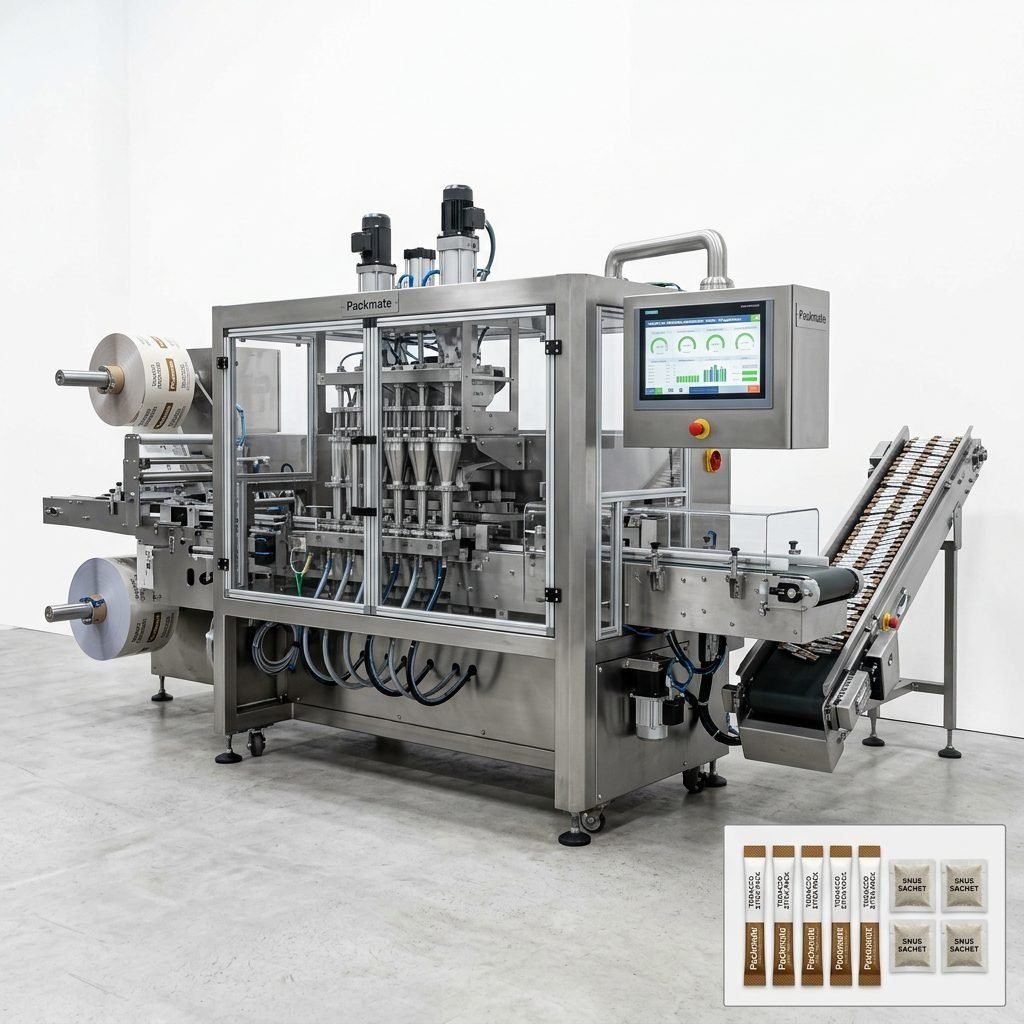
The global demand for snus and nicotine pouches has driven rapid innovation in automated packaging. Manufacturers and brand owners are increasingly focused on reliable, precise, and flexible machinery that can handle small-dose pouches, multi-lane production, and varied pouch formats. This guide explains everything you need to know about snus pouch packaging equipment, from machine types and critical features to production-line integration, compliance, and how to evaluate suppliers.
Overview: Why Specialized Snus Pouch Packaging Matters
Nicotine pouches and snus require packaging solutions that protect product quality, control dose consistency, and support high throughput. Unlike bulk filling, snus pouch production often involves delicate materials, precise metering, and strict hygiene requirements. Using purpose-built equipment reduces waste, increases yield, and ensures regulatory compliance. ⚙️
Key market drivers
The main factors fueling investment in automated snus pouch lines are:
🔺 Growth in nicotine pouch demand — Consumers seeking smoke-free alternatives are driving volume.
🔺 Product variety — Flavors, formats, and doses require flexible systems.
🔺 Regulatory scrutiny — Traceability and hygiene matter in packaging lines.
🔺 Efficiency and cost control — Automated lines lower labor and increase output.
Types of Snus Pouch Packaging Machines
Choosing the right machine depends on pouch type, throughput targets, and product characteristics. Below are the most common categories used by manufacturers.
Stick Pack & Sachet Machines
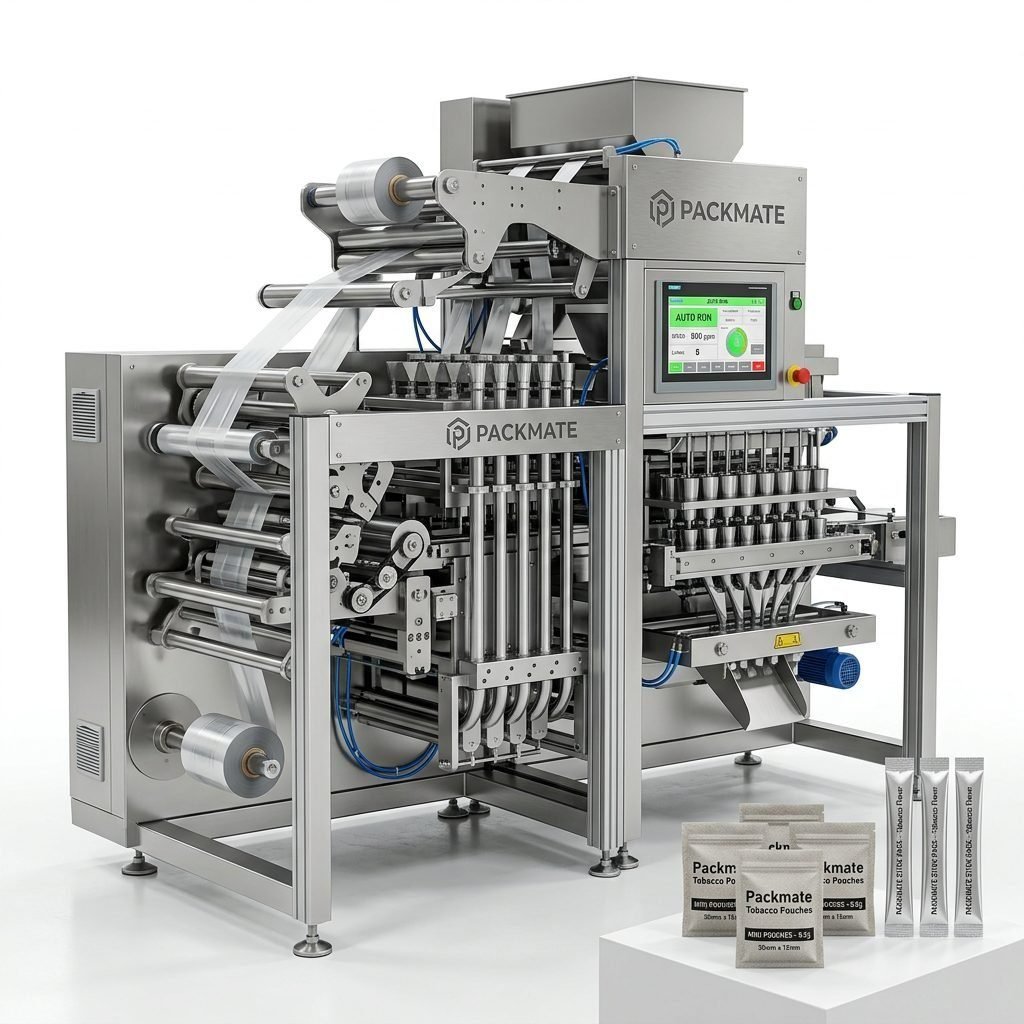
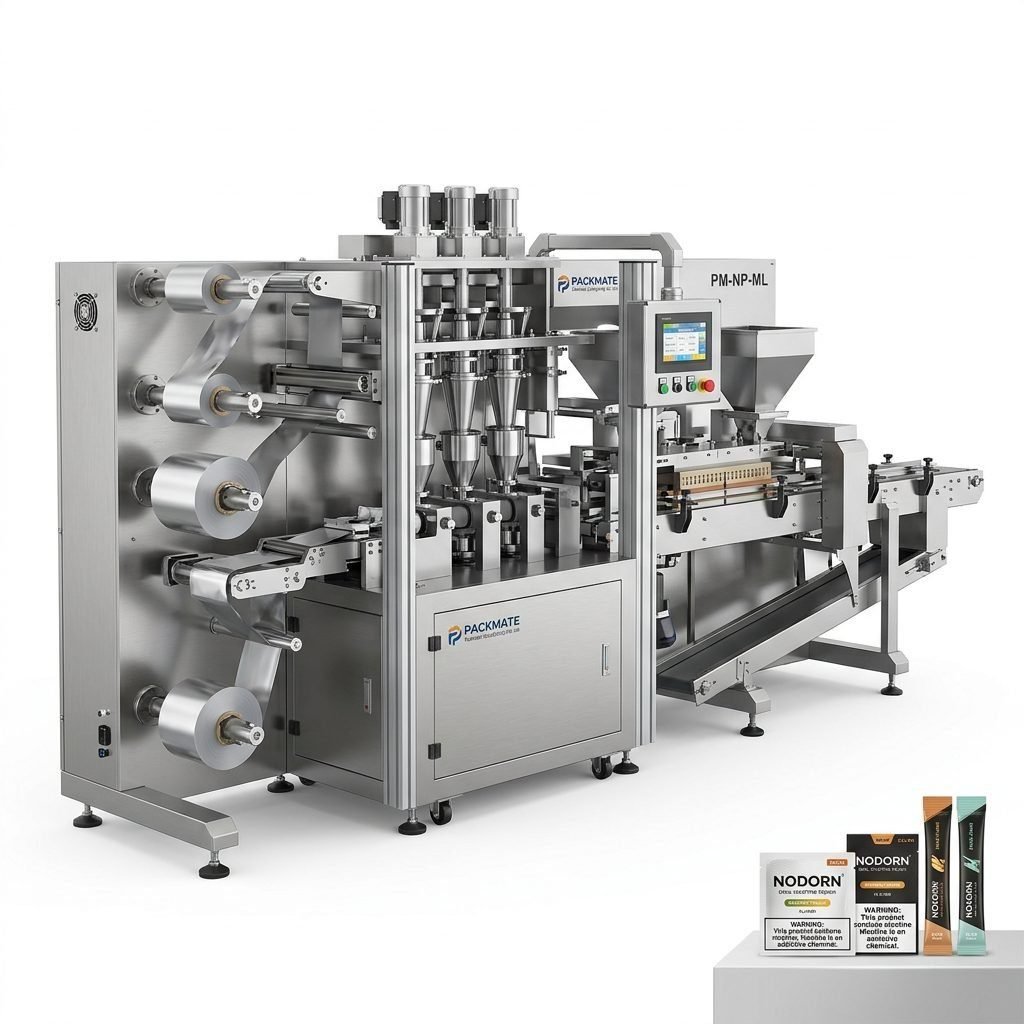
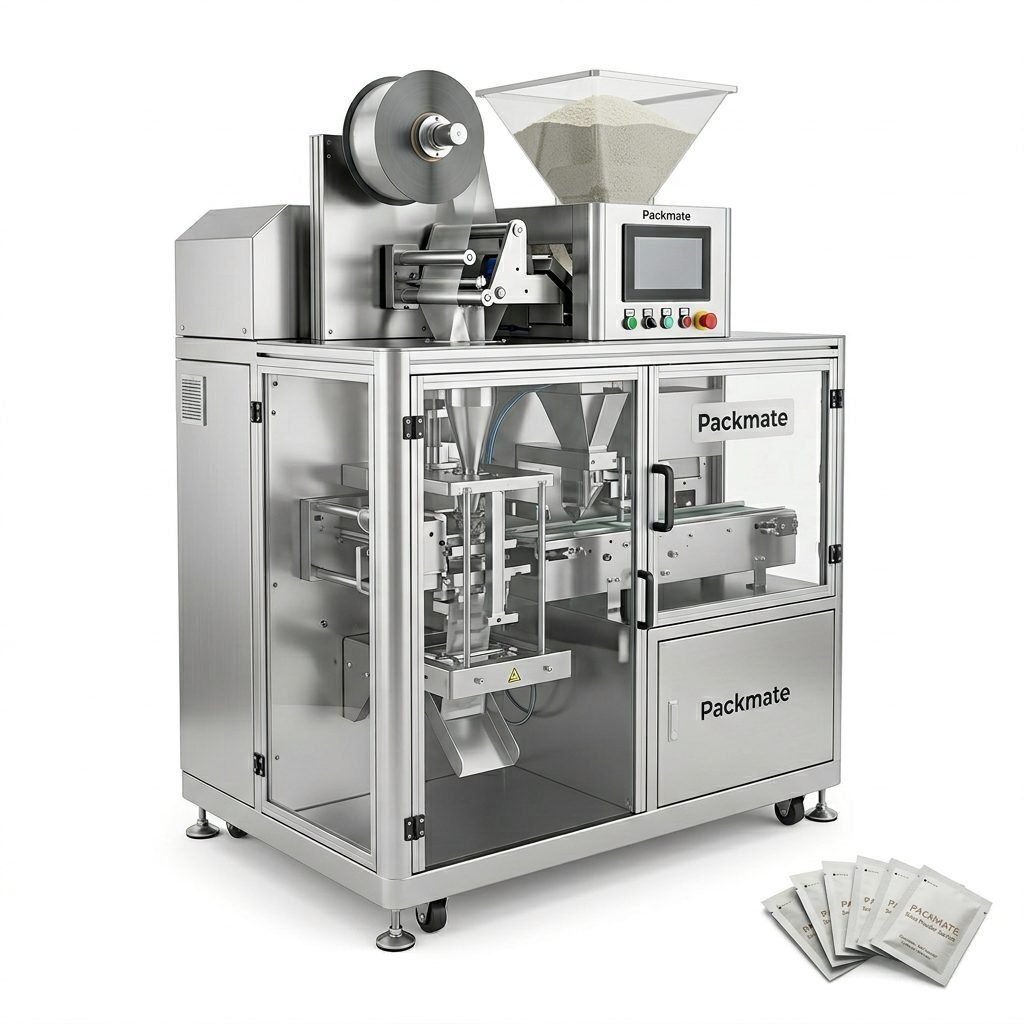
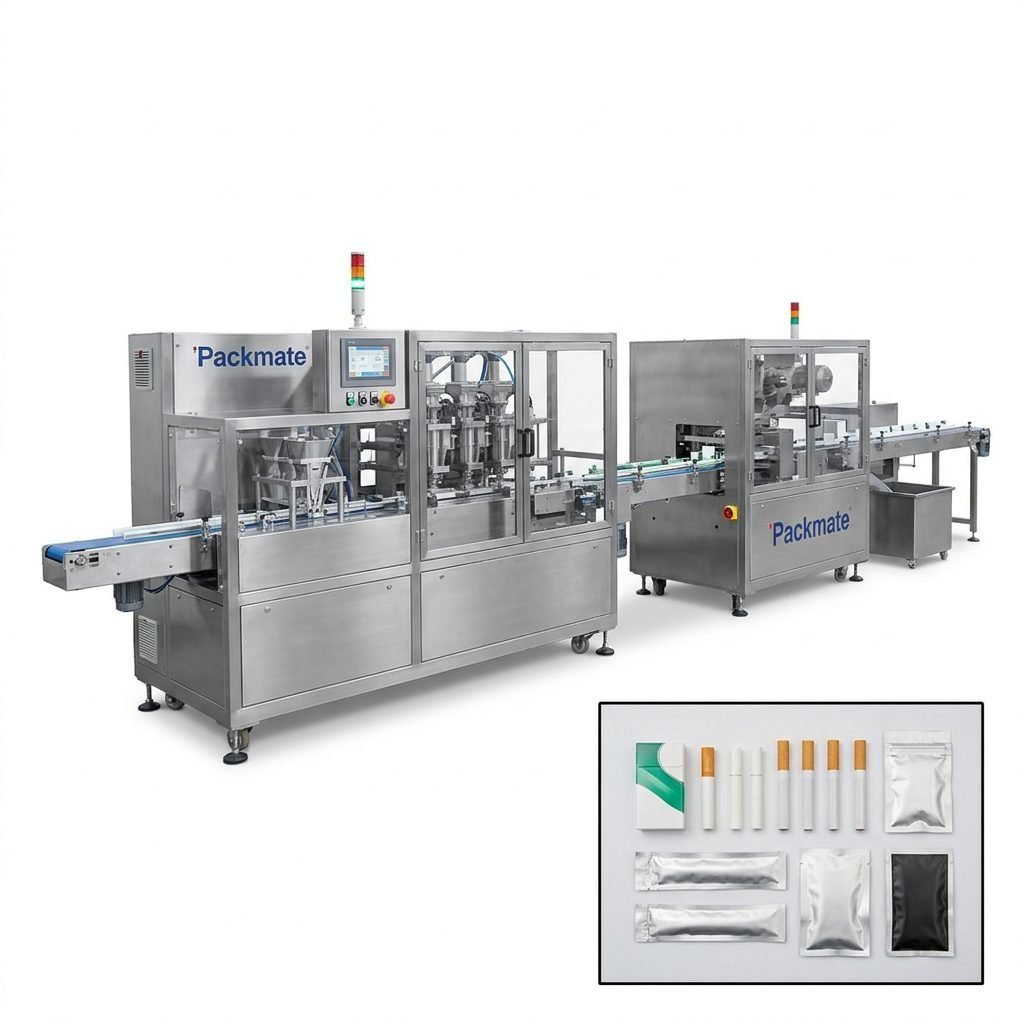
Stick pack and sachet machines are ideal for single-dose stick formats and sealed sachets. They offer fast changeovers and are well-suited for flavored nicotine pouches that require individual dosing and hermetic seals.
Multi-Lane Pouch Systems
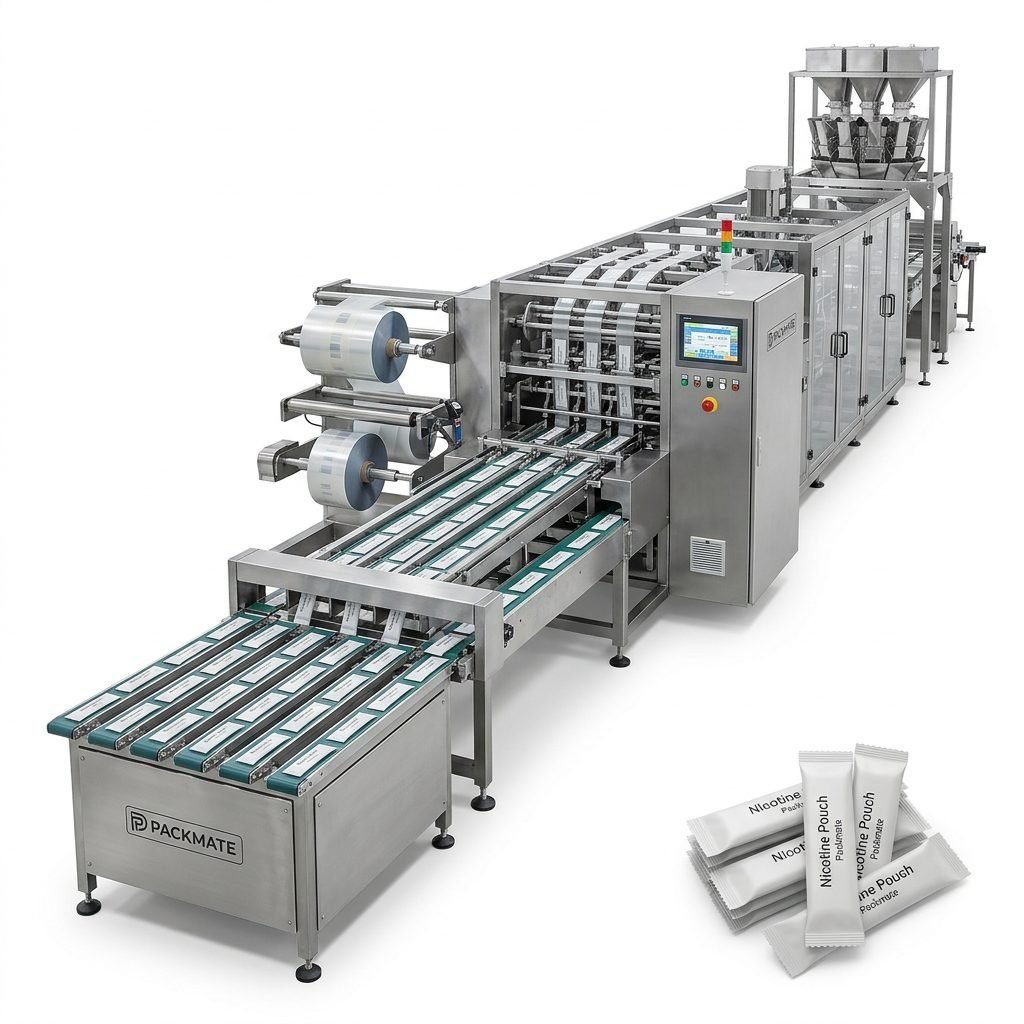
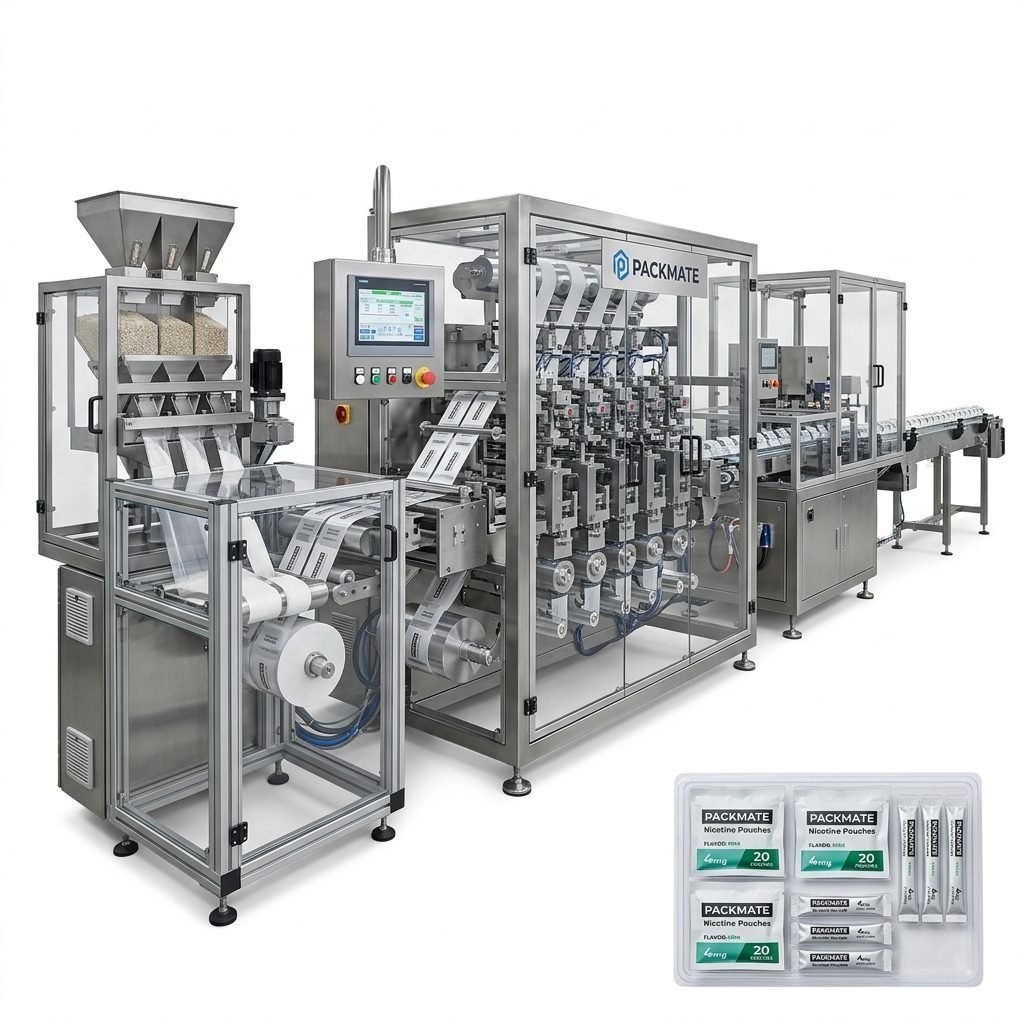
Multi-lane machines allow several discrete pouch streams to run simultaneously across one machine frame, multiplying output without a proportional increase in footprint or operators. These are essential for scalable production of small-dose pouches.
Form-Fill-Seal (FFS) Pouch Machines
FFS machines form pouches from roll stock, fill with measured product, and seal. When combined with accurate dosing systems, FFS is suitable for powder, granular nicotine substrates, and other free-flowing materials used in pouches.
Critical Features to Look For
When evaluating equipment, prioritize features that safeguard product integrity, enable flexibility, and reduce downtime.
✅ Precision dosing systems — Consistent nicotine dosage is non-negotiable.
✅ Gentle handling — Prevents damage to soft pouches and preserves appearance.
✅ Quick changeover — Minimize downtime between SKUs.
✅ Sanitary design — Easy cleaning, compliant materials, and hygienic guards.
✅ PLC and HMI controls — For recipe management, diagnostics, and remote support.
✅ Modular construction — Expand or reconfigure lines as demand changes.
Typical Production Line Components
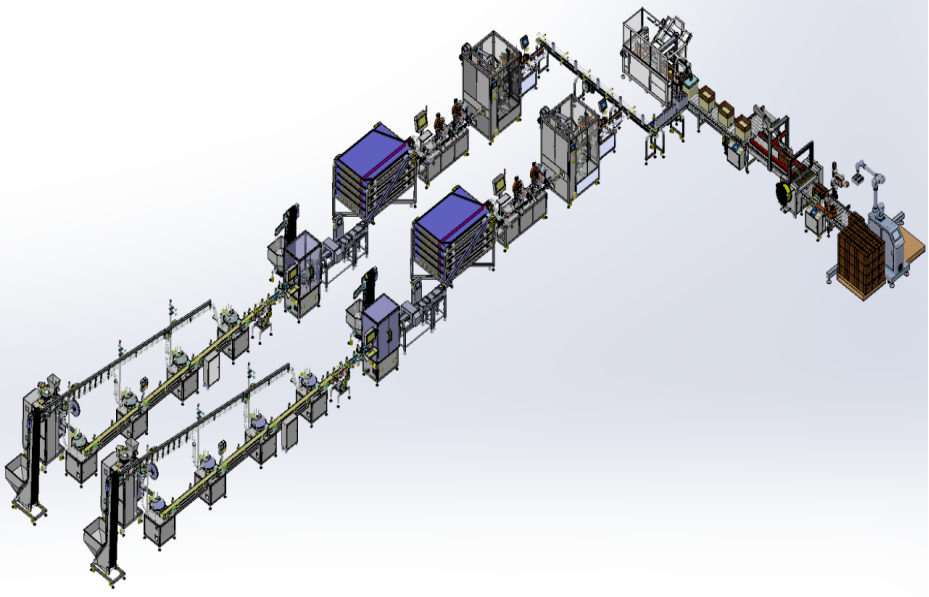
A complete snus pouch production line typically includes upstream and downstream equipment to create a seamless process.
Upstream
Feeding systems, weighing modules, and pre-mixers that ensure consistent raw material delivery and precise portioning.
Core Packaging Machine
The pouch forming/filling/sealing or multi-lane packing machine — engineered for speed, accuracy, and minimal product loss.
Secondary Packaging & End-Of-Line
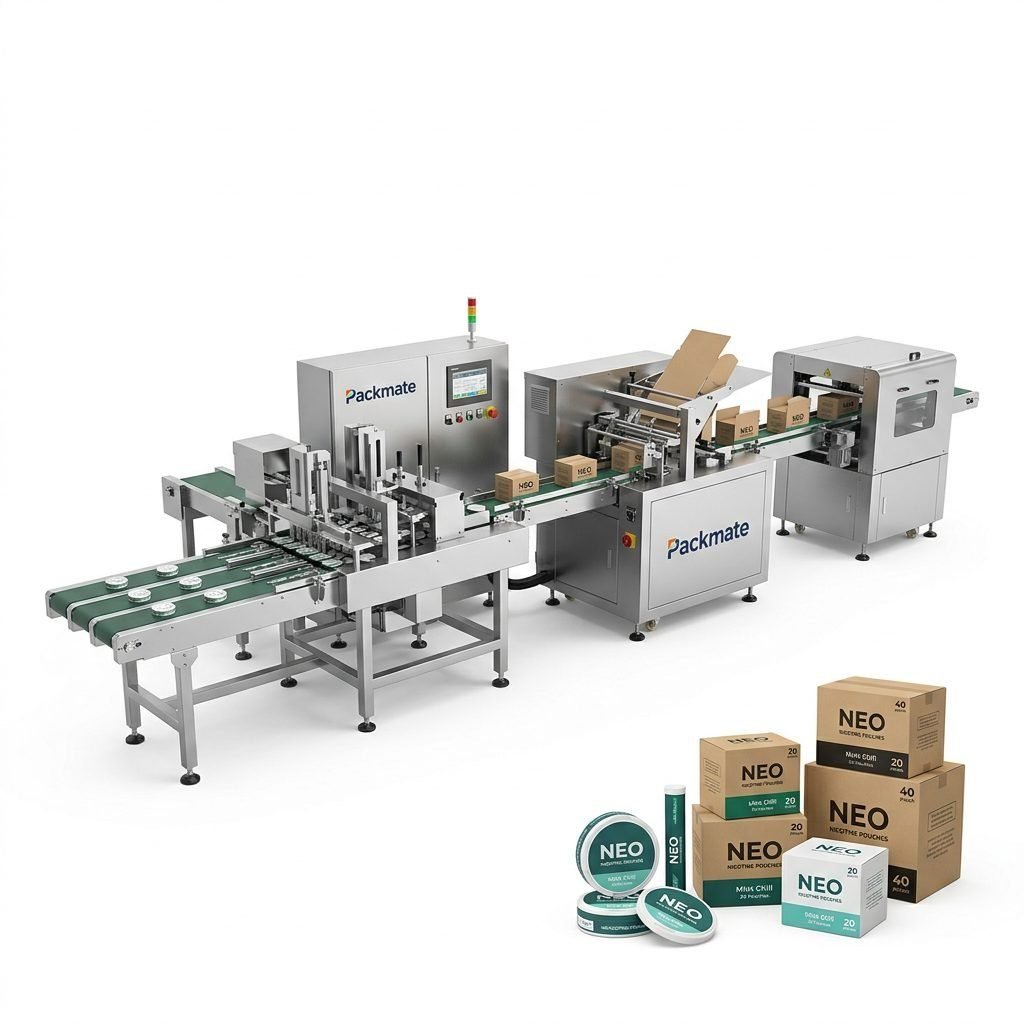
Cartoners, case packers, labeling, and checkweighers that finalize the consumer-ready packs and ensure correct counts and weights.
Automation, Controls, and Data
Modern snus packing machines come with integrated PLCs, touch HMIs, and optional Industry 4.0 features. Real-time production data, error logging, and recipe storage improve traceability and reduce troubleshooting time. Remote support and diagnostics also speed up service visits and keep uptime high. 📈
Materials, Seals, and Barrier Requirements
Packaging films and pouches must provide adequate barrier protection against moisture and aroma loss. Machine sealing systems must be compatible with chosen film types and able to deliver consistent, hermetic seals across multiple speeds.
Tip: Test new film across full speed ranges to verify seal integrity and adjust temperature controls and dwell time accordingly.
Quality, Certification and Compliance
Compliance with international standards reduces regulatory risk and smooths market entry. Look for equipment built to CE and ISO standards, hygienic design for easy cleaning (where applicable), and the option for material traceability. Manufacturers with documented testing and third-party certification make due diligence simpler. ✔️
Service, Spare Parts and Global Support
After-sales service is a crucial part of a packaging investment. Consider lead times for spare parts, availability of local technicians, remote support options, and training programs for operators and maintenance staff.
Cost Considerations and ROI
Initial capital cost is only part of the equation. Evaluate total cost of ownership by factoring in throughput, yield, maintenance, energy, and labor. Multi-lane machines often deliver better unit economics for small-dose pouches by increasing throughput while minimizing footprint growth.
Customization & Turnkey Solutions
Many snus producers need tailored solutions: specific pouch sizes, multi-lane configurations, or integrated downstream cartoning. Turnkey suppliers that design, supply, and commission complete lines can simplify project management and speed time-to-market. Packmate Snus Machine provides turnkey packaging lines spanning filling, weighing, and end-of-line packaging with in-house engineering and assembly capabilities.
Learn more about specialized equipment offerings such as Snus & Nicotine Packaging Machines and the broader Bag & Pouch Packaging Machines that support a variety of pouch formats.
Packmate Snus Machine: Manufacturing Strength & History
Packmate Snus Machine brings over three decades of experience in packaging equipment engineering. From a workshop founded in 1993 to a modern 20,000㎡ manufacturing facility, the company builds machines across 50+ models and provides CNC precision machining, assembly lines, and quality testing. Their product range spans snus packing machines, stick pack and sachet machines, and integrated weighing and filling systems.
Company highlights: 30+ years’ experience, CE & ISO certification, global turnkey projects, and a presence at international exhibitions — see Our Exhibition for recent shows.
Selecting the Right Supplier: Checklist
Use the following checklist when vetting vendors:
🔧 Engineering experience and proven references
🔧 Factory capability and spare parts inventory
🔧 Onsite commissioning and operator training
🔧 Compliance documentation (CE/ISO) and testing protocols
🔧 Options for modular upgrades and future scalability
Integration Examples & Case Uses
From Europe to Asia and the Americas, snus packing lines are deployed for:
- High-speed multi-lane nicotine pouch production for brand scaling.
- Flexible sachet production for seasonal flavors and limited editions.
- Turnkey packaging lines combining weight-based dosing, pouch forming, and cartoning for end-to-end automation.
For more in-depth examples and customer cases, review Packmate’s portfolio and case histories at Case.
Maintenance Best Practices
Regular maintenance keeps performance consistent. Recommended practices include scheduled lubricant checks, seal and cutter inspections, sensor calibrations, and preventive spare parts inventory management. Remote monitoring and predictive maintenance can reduce unplanned stops.
Common Pitfalls and How to Avoid Them
⚠️ Pitfall: Underestimating material testing.
Solution: Run material trials at production speeds before committing to film or pouch specs.
⚠️ Pitfall: Choosing a machine solely on price.
Solution: Evaluate TCO and expected throughput; higher upfront spend can mean faster ROI.
⚠️ Pitfall: Ignoring service network.
Solution: Confirm spare parts lead times and availability of qualified field engineers.
How to Start a Packaging Line Project
Begin with a clear production brief: target SKUs, expected throughput, pouch formats, upstream material properties, and budget. Engage a supplier early to translate requirements into machine specifications, layout, and utility needs. A phased approach — pilot trial, commissioning, ramp-up — reduces risk and speeds validation.
If you’re evaluating turnkey suppliers or need more technical details, visit About Packmate and explore product catalogs including Sachet & Stick Pack Machines.
Conclusion
Investing in the right snus pouch packaging equipment is critical for product quality, regulatory compliance, and profitable production scaling. Prioritize precision dosing, hygienic design, multi-lane scalability, and reliable supplier support. Turnkey solutions from experienced manufacturers can shorten project timelines and reduce integration risk while delivering predictable ROI.
Frequently Asked Questions
Q1: What is the typical throughput of multi-lane snus pouch machines?
A1: Throughput varies by model and lane count; multi-lane systems can multiply single-lane rates by 4x–8x, depending on pouch size and dosing method. Confirm with machine test runs at target speeds.
Q2: Are Packmate machines CE and ISO certified?
A2: Yes. Equipment from Packmate Snus Machine is designed to meet international standards including CE and ISO, with documented compliance available on request; see Certificate.
Q3: How long does commissioning and training typically take?
A3: Commissioning and operator training depend on line complexity. Standard turnkey lines usually require several days to weeks for full commissioning and operator familiarization; suppliers commonly offer extended support options.
Q4: Can existing lines be upgraded to multi-lane formats?
A4: In some cases, modular retrofits or upstream/downstream upgrades are possible. A site survey and engineering review will determine feasibility and cost-effectiveness.
Q5: Where can I get more detailed product specifications and case studies?
A5: Product pages and case galleries provide specifications, machine options, and real-world examples. Start with the product catalog and case pages for technical details and references: Catalog and Case.