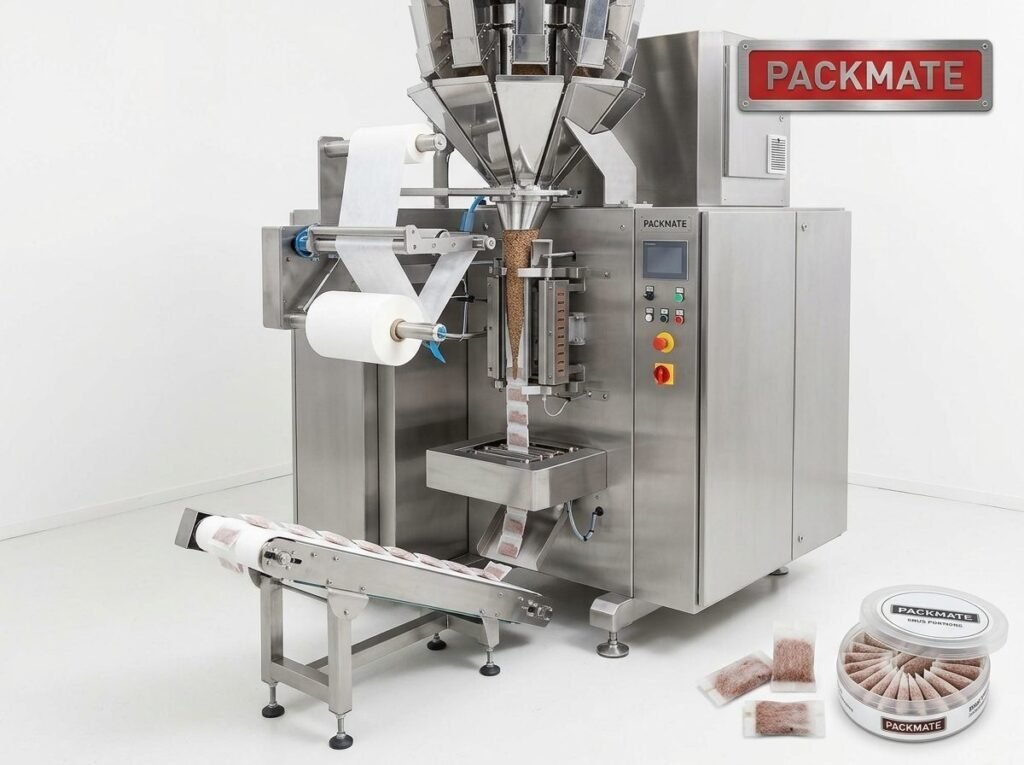
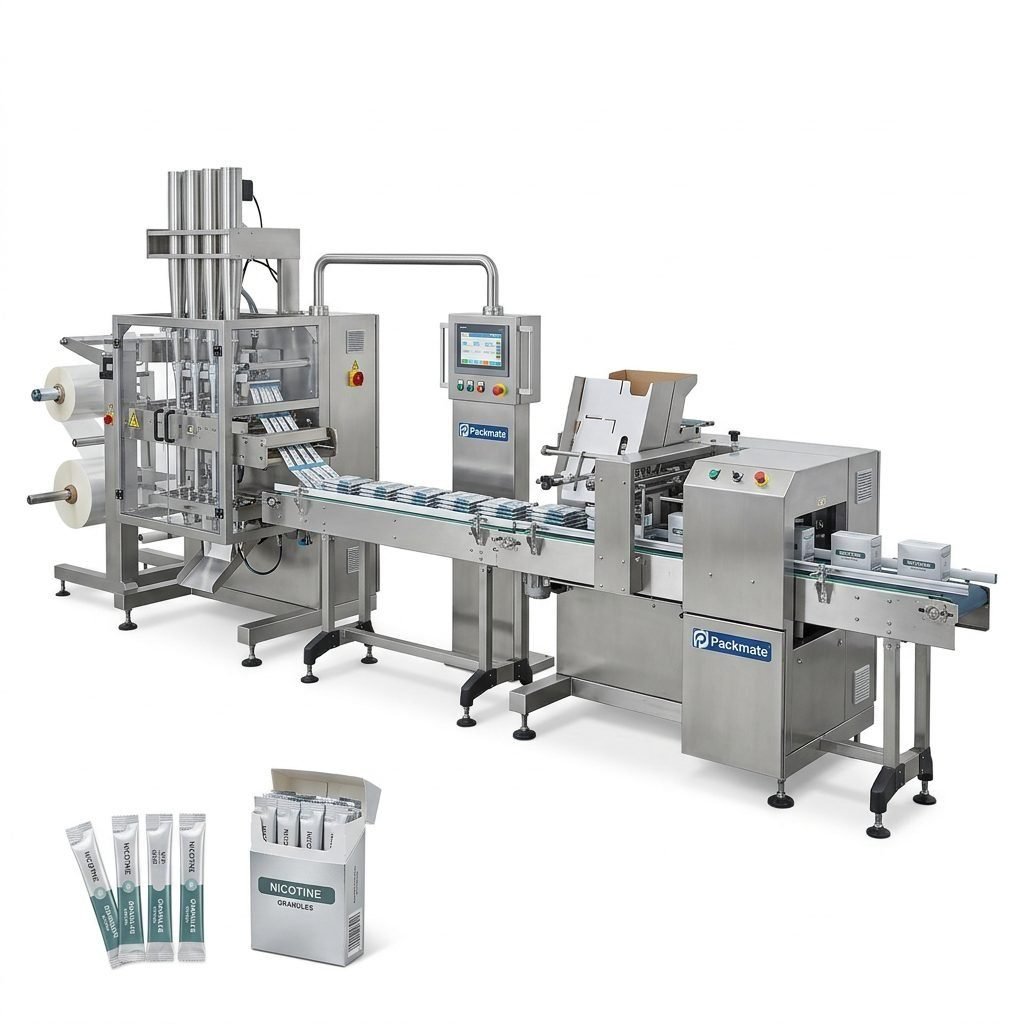
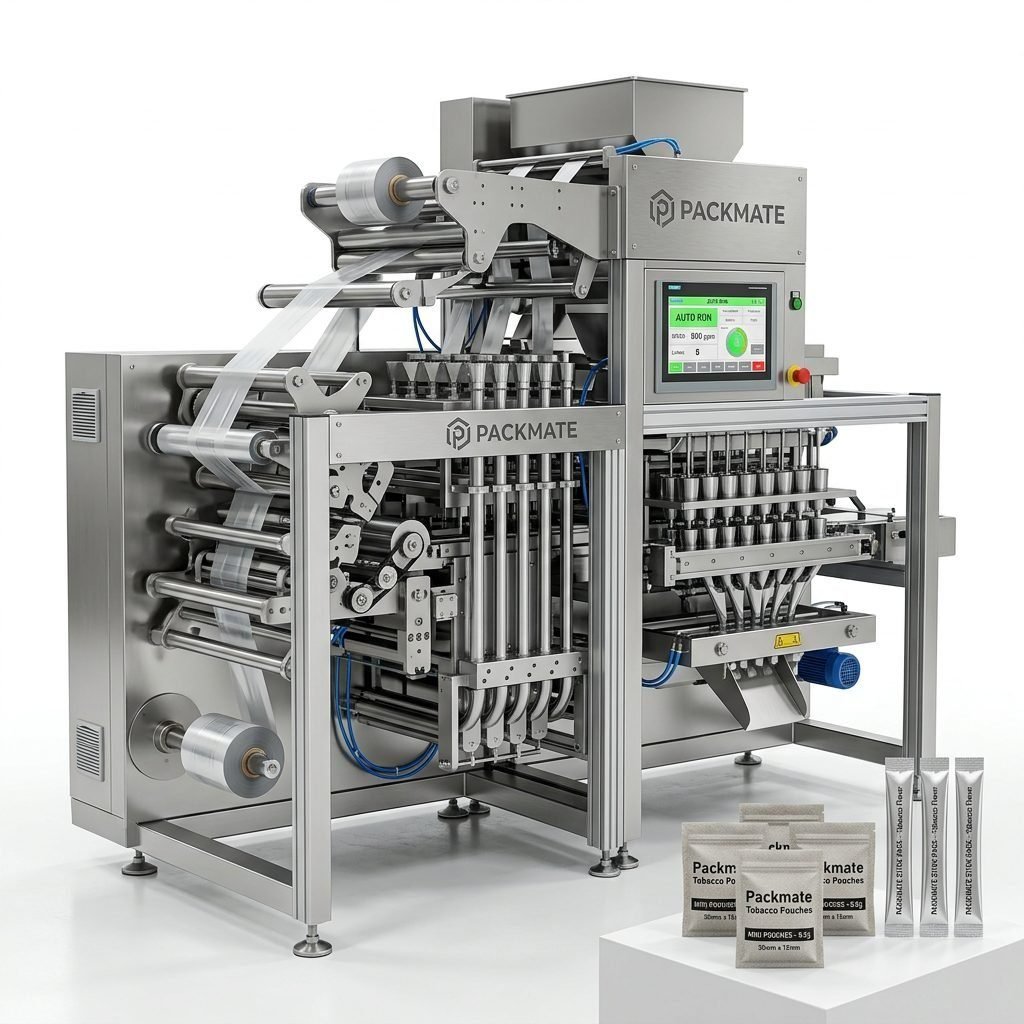
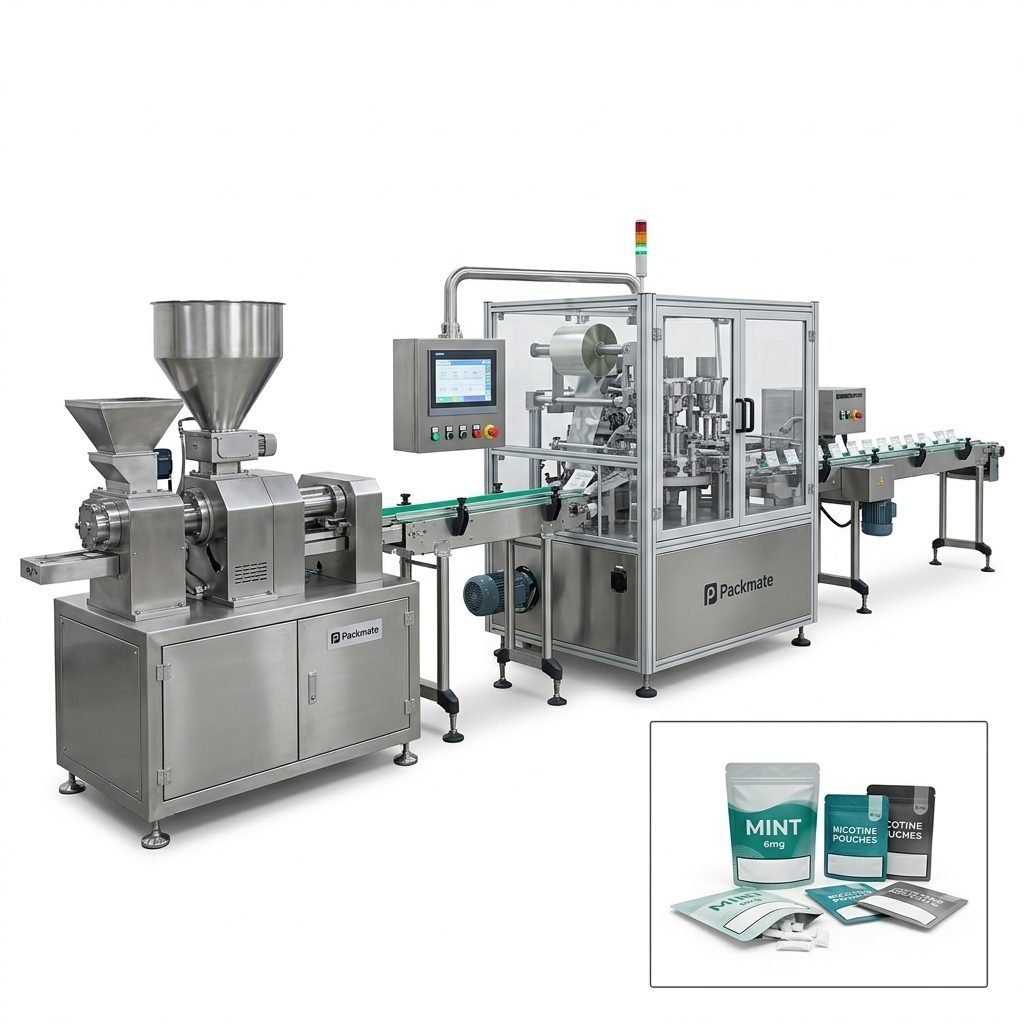
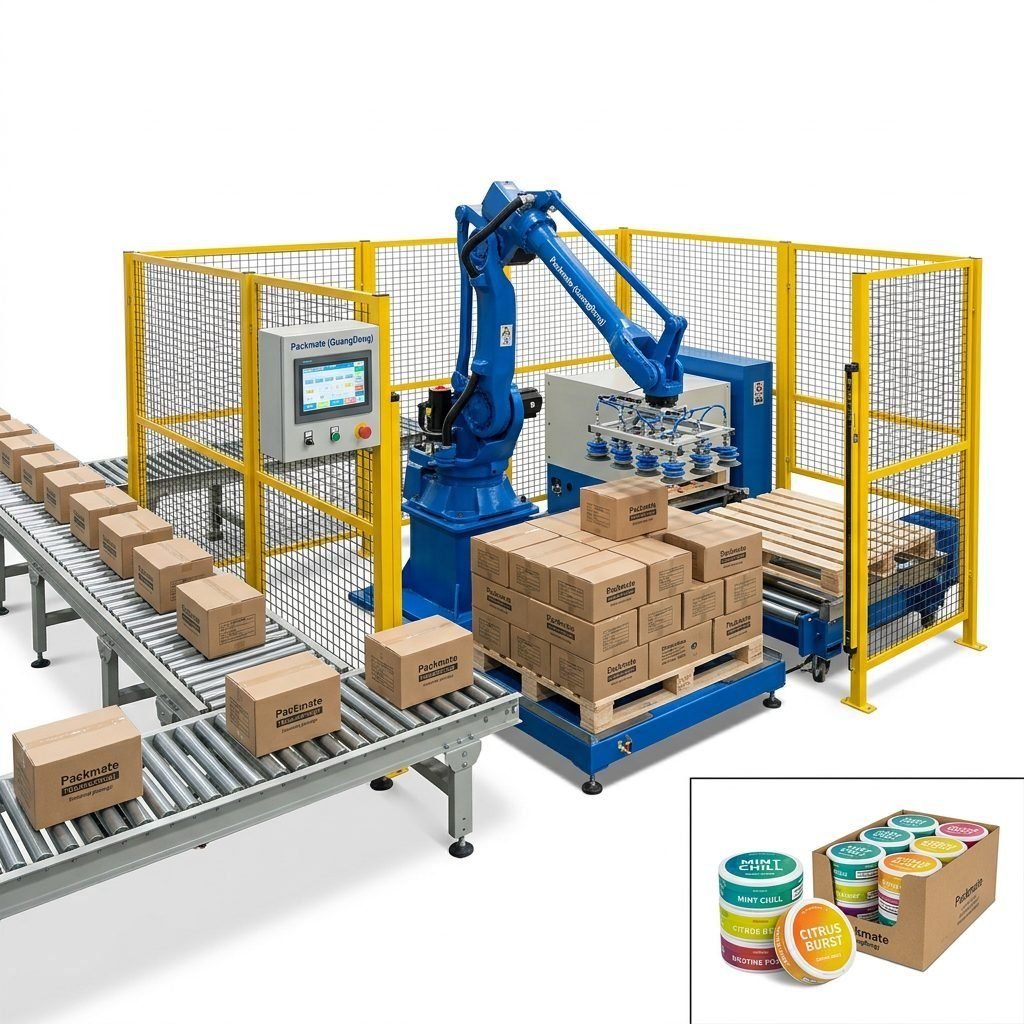
Choosing the right snus packaging machine for production in Liechtenstein requires a careful balance of capacity planning, regulatory awareness, machine features, and long-term service commitments. This guide walks you through the decision-making process, highlights the most important technical and operational factors, and shows how to match Packmate-style solutions to your business goals. Whether you are scaling a small line or investing in a multi-lane automated production system, these insights will help you buy smarter and operate more reliably.
Understand Your Production Requirements First
Before evaluating models, define your production profile. Key parameters include:
✓ Planned daily output (pouches/hour and shifts per day) • Desired pouch formats (stick, sachet, round/flat snus pouches) • Product characteristics (powder, granule, moisture level) • Packaging film types and roll sizes • Space constraints on your production floor.
Accurately estimating these needs prevents under-spec machines that bottleneck production or over-spec purchases that inflate CAPEX and complicate operations.
Why Location Matters: Considerations for Liechtenstein
Liechtenstein’s high regulatory and quality expectations, import logistics, and labor costs influence the ideal machine choice. Important local considerations:
ℹ️ Regulatory compliance and documentation (CE, ISO and traceability) • Compact footprints for premium factory space • Efficient energy usage and noise limits • Reliable spare parts delivery and service contracts.
Key Machine Features to Prioritize
When comparing snus packaging machines, look for the following critical capabilities. These features determine throughput, product integrity, and operational ease:
1. Multi-lane vs Single-lane Flexibility
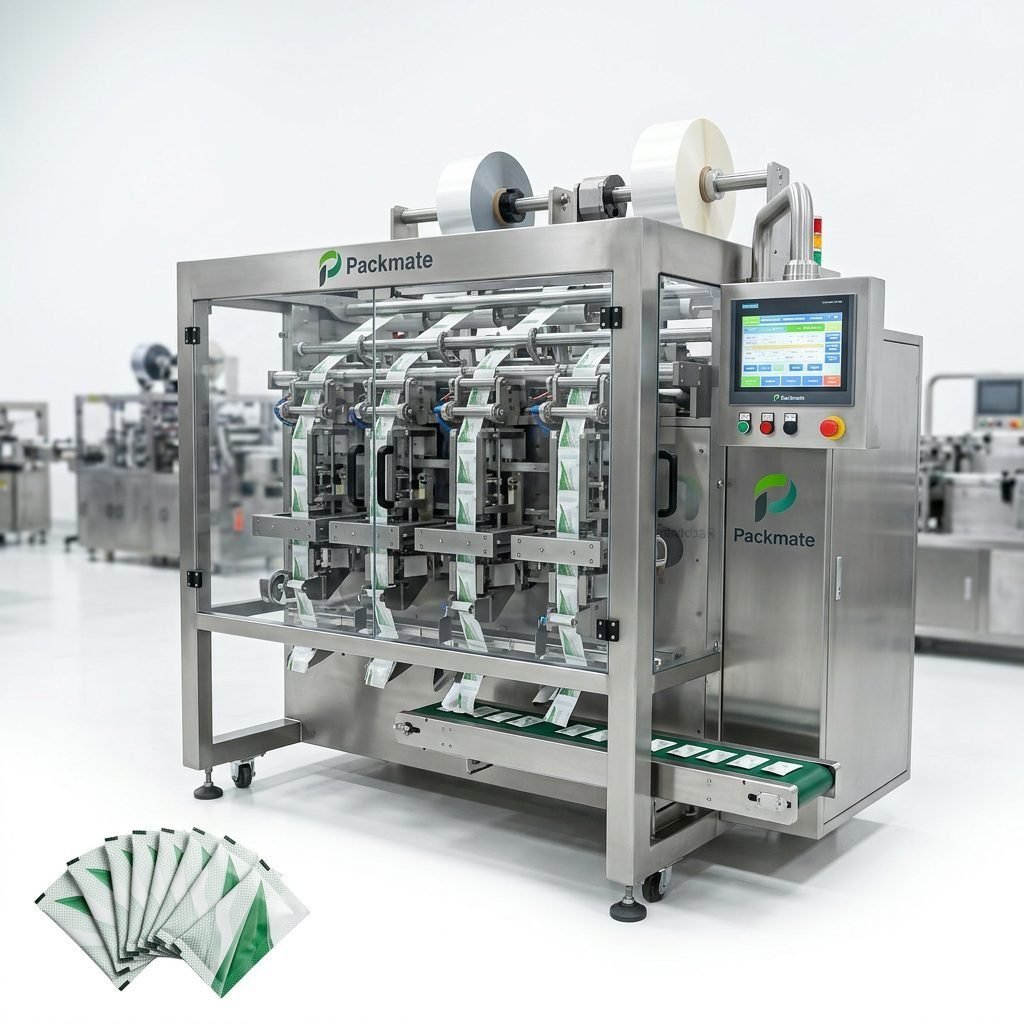
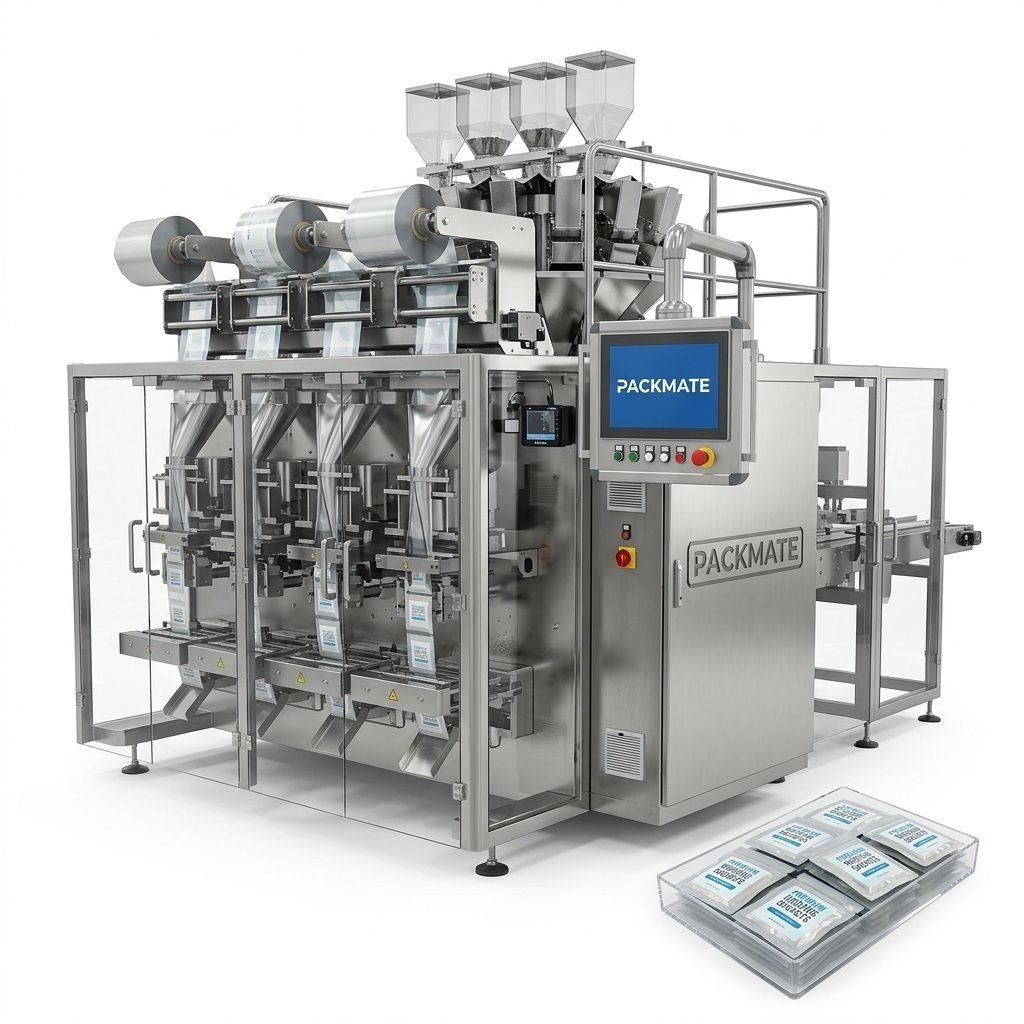
Multi-lane systems dramatically increase throughput without requiring a larger machine footprint, ideal for medium-to-large plants. Single-lane or modular systems work well for niche flavors or smaller production runs. Choose a configuration that matches both current and expected future demand.
2. Dosing and Weighing Precision
For nicotine pouches and snus products, weight accuracy is essential for regulatory compliance and consumer consistency. Look for closed-loop dosing systems and high-precision weighing modules with fast response times and low variation.
3. Material Compatibility and Sealing Technology
Machines must handle your chosen films and foil laminates with consistent sealing quality. Robust temperature control, adjustable sealing pressure, and reliable cutting mechanisms prevent leaks and maintain shelf life.
4. Changeover Speed and Tooling
Fast, tool-free changeovers reduce downtime for small-batch production. Check whether the machine supports quick-format changes for different pouch types and has intuitive fixturing for repeatable alignment.
5. Automation & HMI
Modern PLC controls, touchscreen HMIs, recipe storage, remote diagnostics, and industry 4.0 compatibility can dramatically reduce operator errors and speed troubleshooting.
Production Scenarios and Recommended Solutions
Match common production scenarios to Packmate-style product classes:
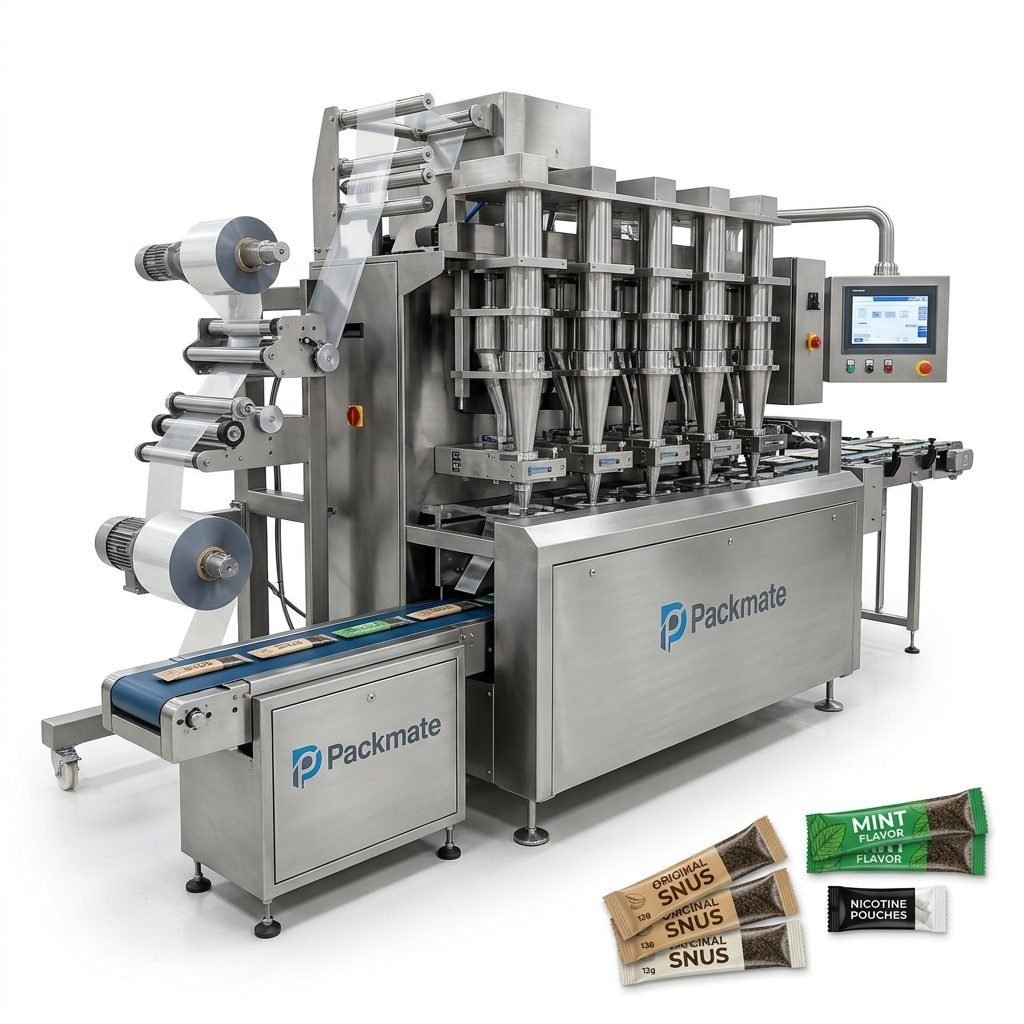
Small specialty lines: Low-volume flavors, high SKU variety — choose compact stick-pack or single-lane sachet machines with fast changeovers.
Scaling lines: Multi-lane systems increase throughput without proportional space increases; ideal for growing export-focused operations.
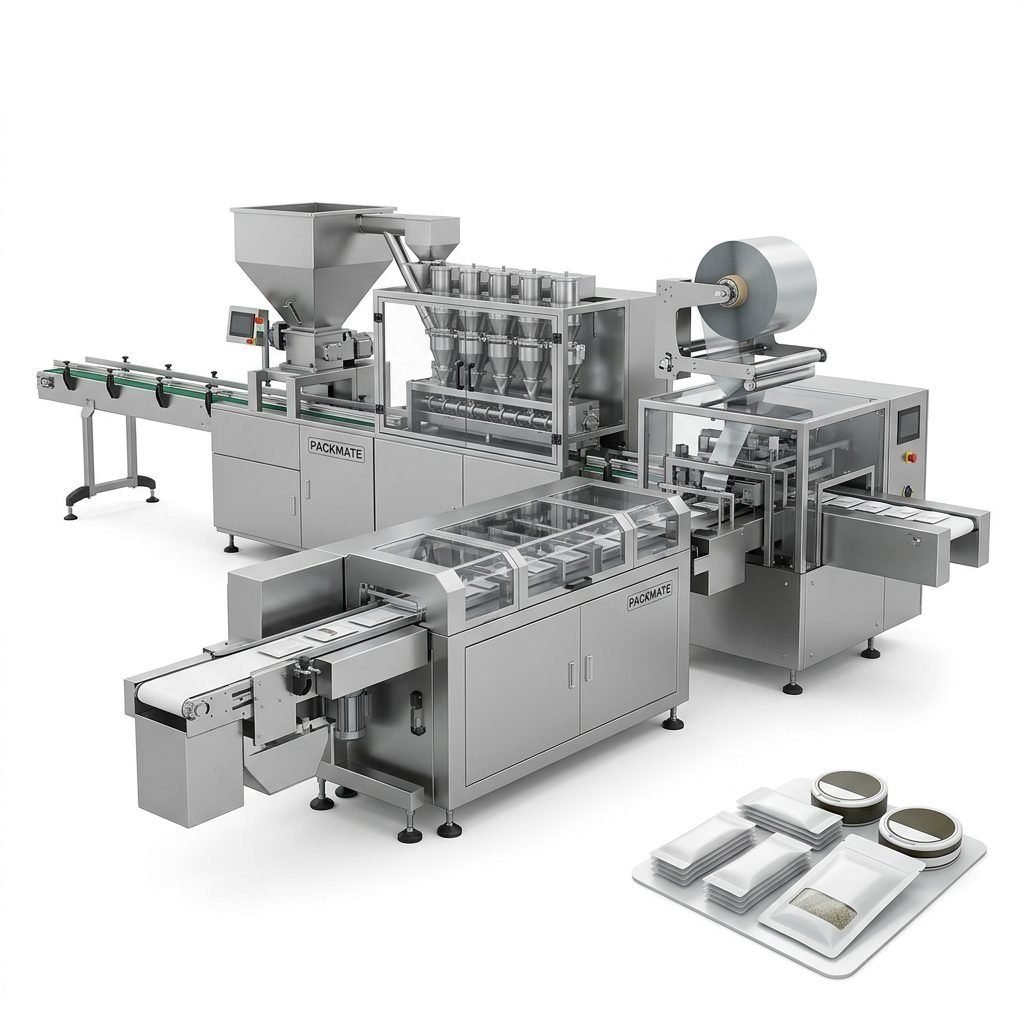
Full turnkey plants: Integrated filling, dosing, packaging, and secondary packing lines provide optimized flow and single-vendor responsibility.
Technical Specifications to Compare
When you receive quotations, compare these specs side-by-side:
• Nominal speed (pouches/minute and pouches/hour) • Power consumption and compressed air needs • Machine footprint and weight • Product contact materials and cleanability • Changeover time and spare parts list • Warranty & on-site commissioning included.
Certifications, Compliance & Risk Management
Ensure the machine supplier offers documented compliance with CE and ISO standards, and provides material traceability and validation procedures. Packmate-style manufacturers typically supply certificates; ask for the specific documents before purchase.
Service, Spare Parts & Training
After-sales service matters more than the initial discount. Evaluate:
- Response time for on-site repairs and remote diagnostics
- Availability of critical spare parts in EU/Schengen warehouses
- Operator and maintenance training programs
- Extended warranty and consumables packages
For reference, check supplier service pages and case studies to verify real-world support performance.
Budgeting: Total Cost of Ownership
Total Cost of Ownership (TCO) goes beyond purchase price. Include:
Upfront: Machine, tooling, installation, FAT (factory acceptance testing) • Ongoing: Energy, consumables, spare parts, maintenance labor • Opportunity: Downtime risk, changeover losses, product waste.
Why Choose Packmate-style Solutions
Manufacturers with a 30+ year track record and modern CNC-enabled factories deliver machines with higher stability and repeatability. Packmate Snus Machine-style offerings typically include:
- Wide model range covering stick pack, sachet, and multi-lane machines
- Turnkey capabilities from filling to secondary packing
- Global references and CE/ISO compliance
Explore product portfolios such as Snus & Nicotine Packaging Machines and Bag & Pouch Packaging Machines to find models matching your specs.
Asking the Right Questions of Suppliers
During vendor evaluation, ask:
✓ Can you provide FAT and SAT documentation? • What is the lead time and logistics plan to Liechtenstein? • Are spare parts stocked in Europe? • What training, commissioning, and remote support are included? • Can you provide references for similar installations? • Is the machine energy-efficient and designed for continuous operation?
Installation, Commissioning & Operator Training
Good suppliers include on-site commissioning and hands-on training for operators and maintenance staff. Confirm that training covers preventive maintenance schedules, troubleshooting, and safety procedures to minimize startup issues and reduce early-life failures.
Maintenance Best Practices to Maximize Uptime
Implement a preventive maintenance plan covering lubrication, belt and seal inspection, sensor calibration, and software backups. Maintain a recommended spare parts kit and track wear parts consumption. Remote diagnostics can cut response times and reduce lost production.
Real-world Evidence: Case Studies & References
Reviewing similar installations helps validate a supplier’s claims. Ask for case studies that demonstrate multi-lane throughput, packaging integrity, and long-term reliability. Manufacturer case references show how machines perform across markets and product types — see examples at the supplier’s case page.
Additional resources: Case and the Service overview provide insights into deployment and support history.
Checklist Before You Sign
Use this short checklist to finalize decisions:
• Technical spec sheet and guaranteed throughput • Validated FAT report and acceptance criteria • Spare parts list with European availability • Training and commissioning plan included • Clear warranty and service agreement • Compliance certificates (CE/ISO) provided.
Final Recommendations
Start with a detailed production audit, request on-site or virtual demonstrations of candidate machines, and insist on FAT before shipment. Choose a supplier with proven multi-lane experience and a robust support network for European customers. If you need a broad view of product choices and supporting systems, review related product categories like Sachet & Stick Pack Machines and the integrated Weighing & Packaging Systems.
Where to Start: Steps for a Smooth Purchase
1) Document your production and product specs. 2) Shortlist 2–3 suppliers and request detailed quotations and FAT plans. 3) Visit or request live demos and review references. 4) Negotiate a clear service and spare parts agreement. 5) Plan logistics, installation, and operator training in advance.
Conclusion
Selecting the best snus packaging machine in Liechtenstein means matching production goals with machine capabilities, ensuring regulatory compliance, and prioritizing a supplier that offers strong after-sales support. By evaluating multi-lane options, dosing accuracy, sealing reliability, and service responsiveness, you can secure a solution that maximizes output and minimizes risk. Leveraging established suppliers with global turnkey experience makes the purchasing and ramp-up process smoother and protects your investment over the long term.
Frequently Asked Questions
Q1: What is the typical lead time for a snus packaging machine? — Lead times vary by model and customization; plan for 8–20 weeks depending on configuration and FAT schedules.
Q2: Are multi-lane machines worth the investment for medium volumes? — Yes, multi-lane systems often deliver better throughput per square meter and lower labor costs as volumes increase.
Q3: How important is FAT before shipment? — Extremely important: FAT validates performance against your acceptance criteria and greatly reduces commissioning issues on arrival.
Q4: Where can I verify supplier certifications and past installations? — Review supplier documentation pages like About, Certificates, and Case study sections to confirm CE/ISO compliance and reference installations.
Q5: What ongoing support should I require? — On-site commissioning, operator training, a recommended spare parts kit, and a service agreement with defined response times are essential.