Choosing the right nicotine packaging machinery for operations in Africa requires a blend of technical understanding, regulatory awareness, and practical on-site considerations. This guide walks production managers, procurement teams, and business owners through the essential factors to secure safe, efficient, and compliant nicotine pouch or snus packaging lines that meet market demands and protect consumer safety.
Market context and why the choice matters
Africa presents a range of opportunities for nicotine pouch producers: rapidly growing urban populations, expanding retail networks, and evolving consumer preferences. However, challenges such as supply chain logistics, varying regulatory frameworks across countries, and workforce skill gaps make selecting the right machinery a strategic decision. A mismatch can cause production delays, increased waste, regulatory non-compliance, and higher long-term costs.
Key outcomes to aim for
Reliable uptime — minimize unplanned stops; accurate dosing — ensure nicotine content consistency; operator safety — protect staff from exposure; and compliance — meet local and international standards.
Quick tip: Evaluate machines not only by headline speed (packs/min) but by sustained throughput under real product conditions — humid environments, variable pouch materials, and multi-shift operation all affect actual output.
Understand the machine types and match them to your product
Different nicotine products and formats demand different packaging technologies. Choosing the wrong platform often results in poor seal quality, inconsistent dosing, or excessive giveaway.
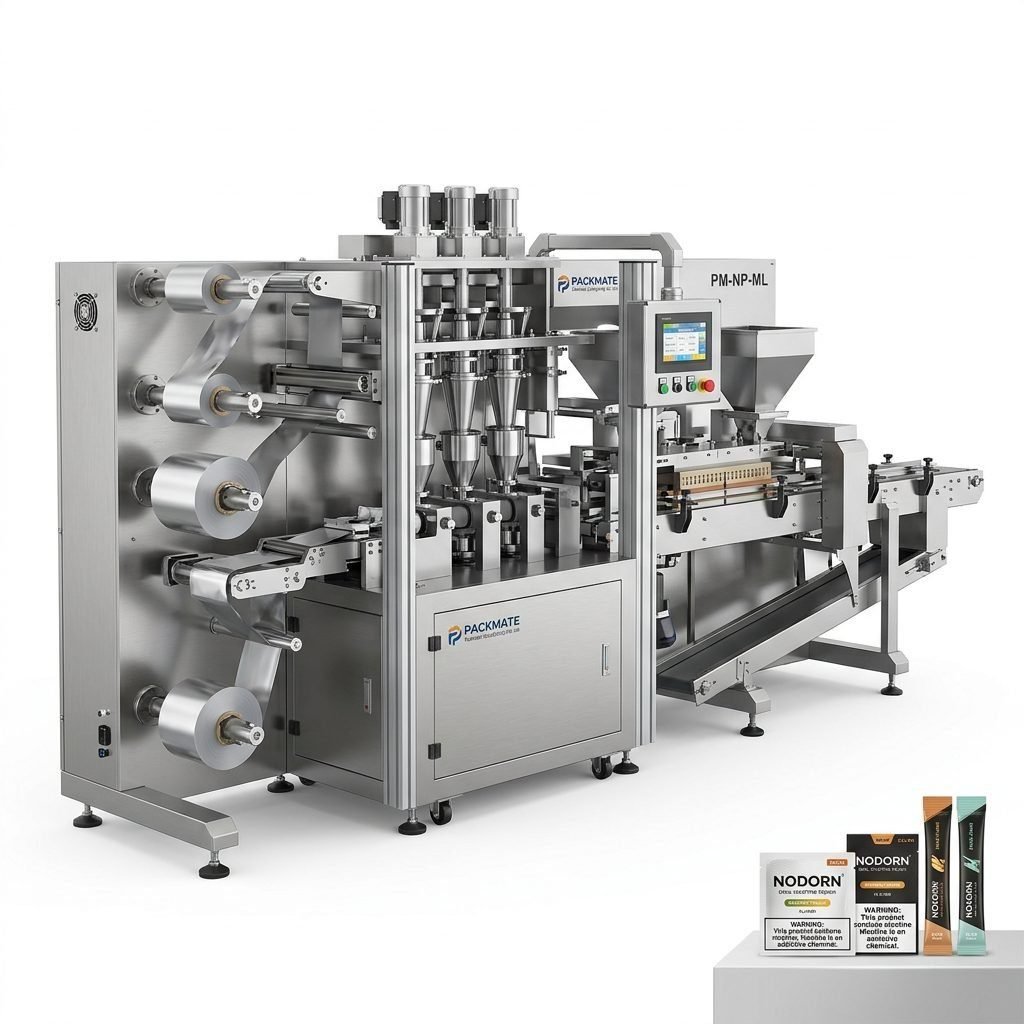
Snus & nicotine pouch packaging machines
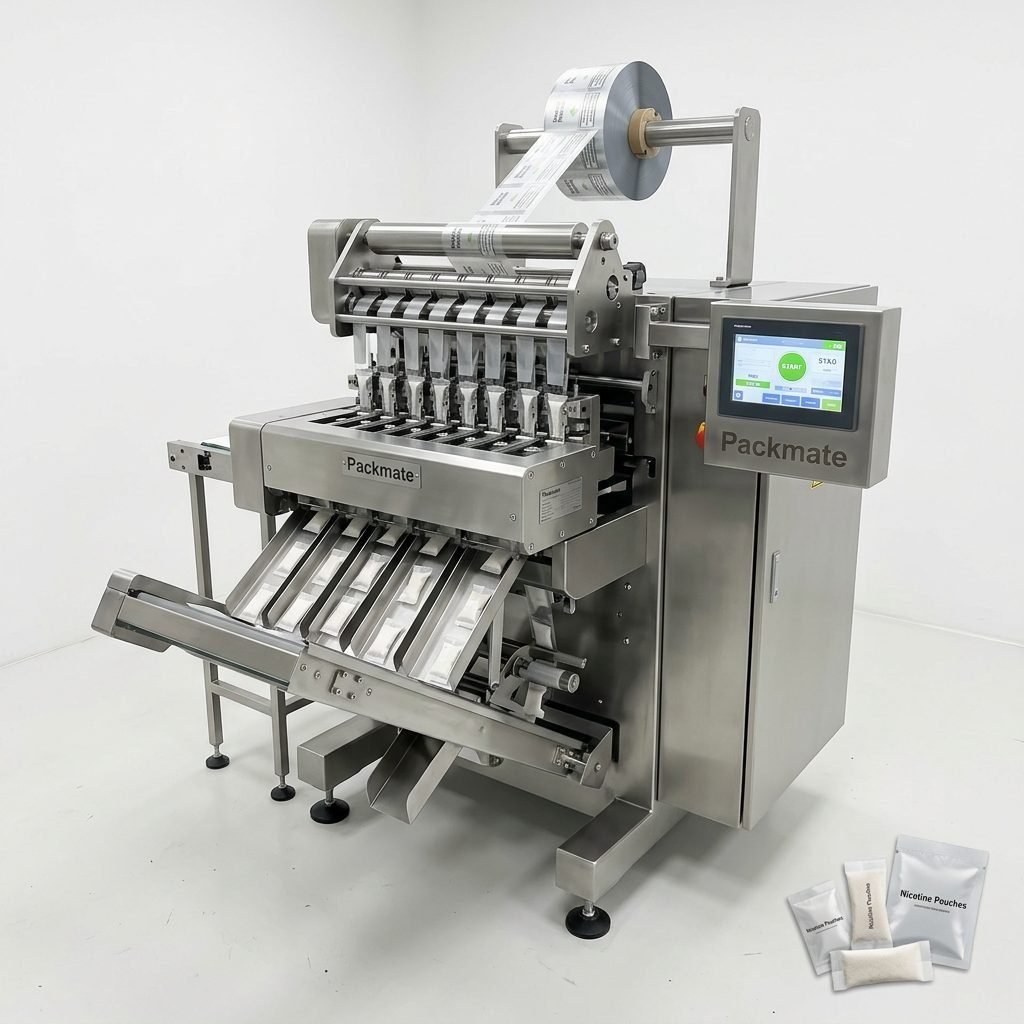
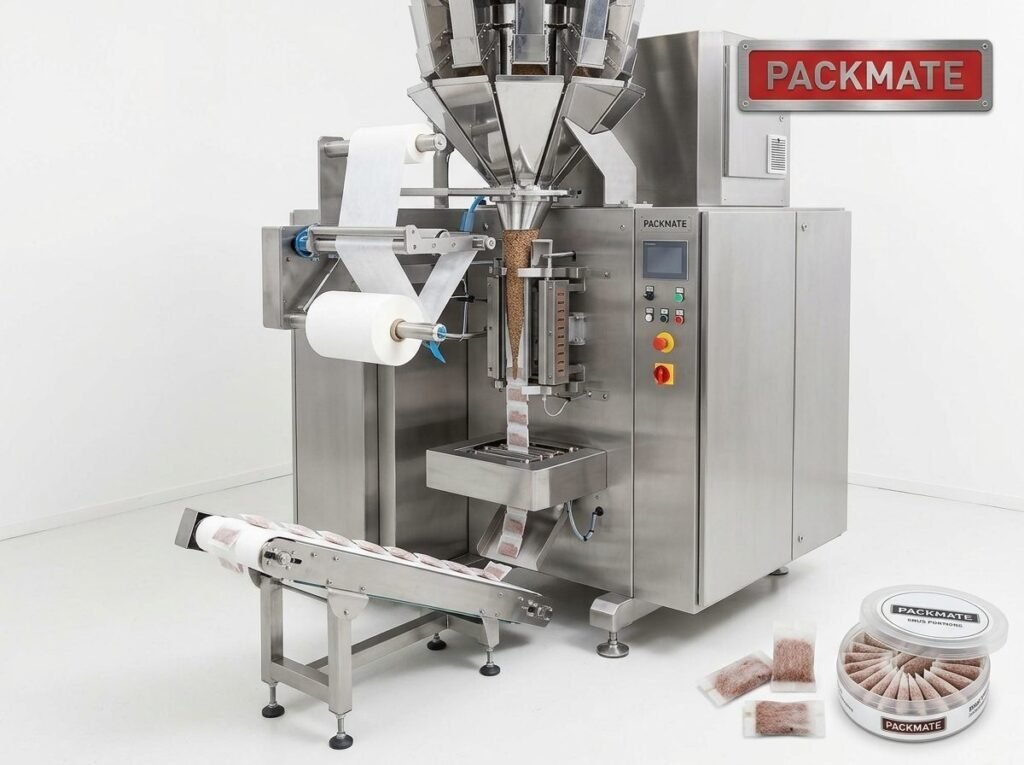
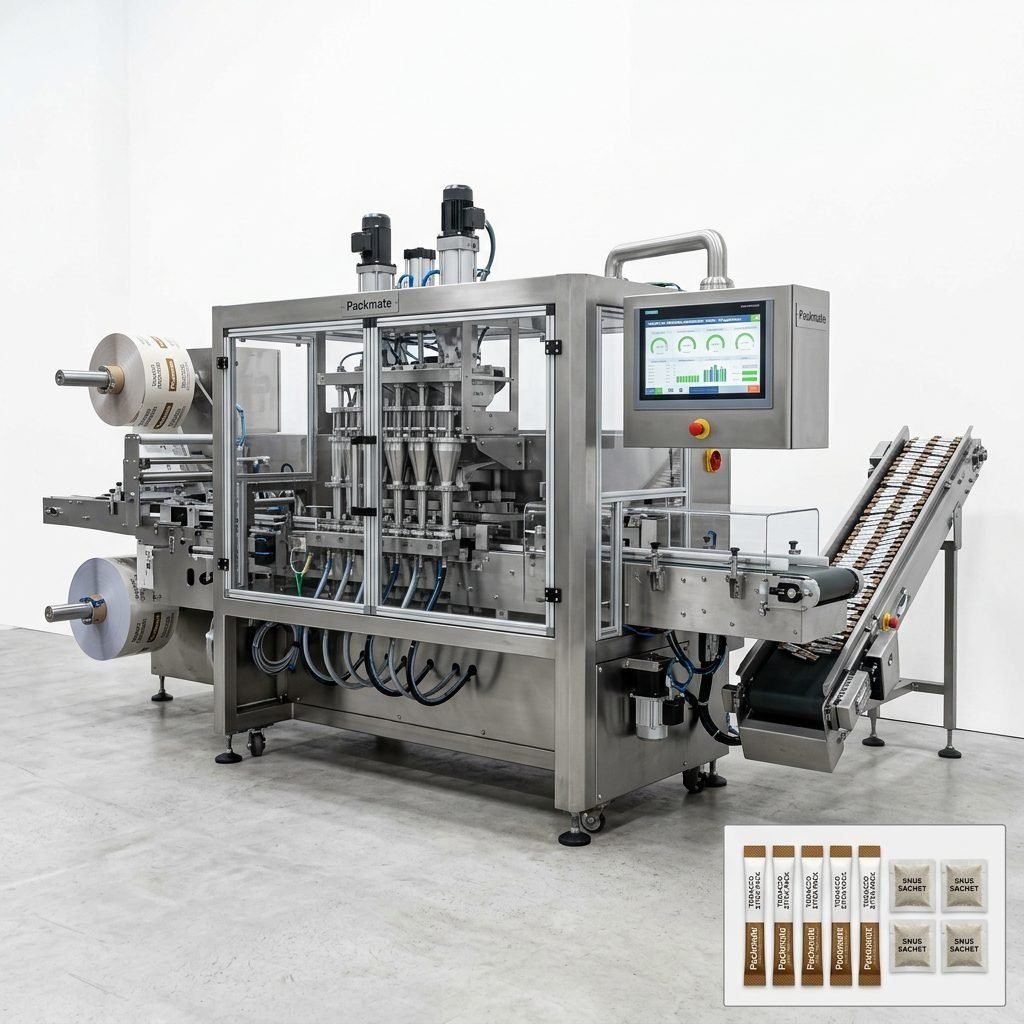
These systems are engineered for small-dose sachets or pouches, with extremely high precision dosing and gentle product handling. For companies focused on nicotine pouches, prioritize models designed expressly for this category to avoid adapting food or pharmaceutical equipment that may not meet dosing precision.
Explore dedicated options: Snus & Nicotine Packaging Machines and modular lines for scaling production.
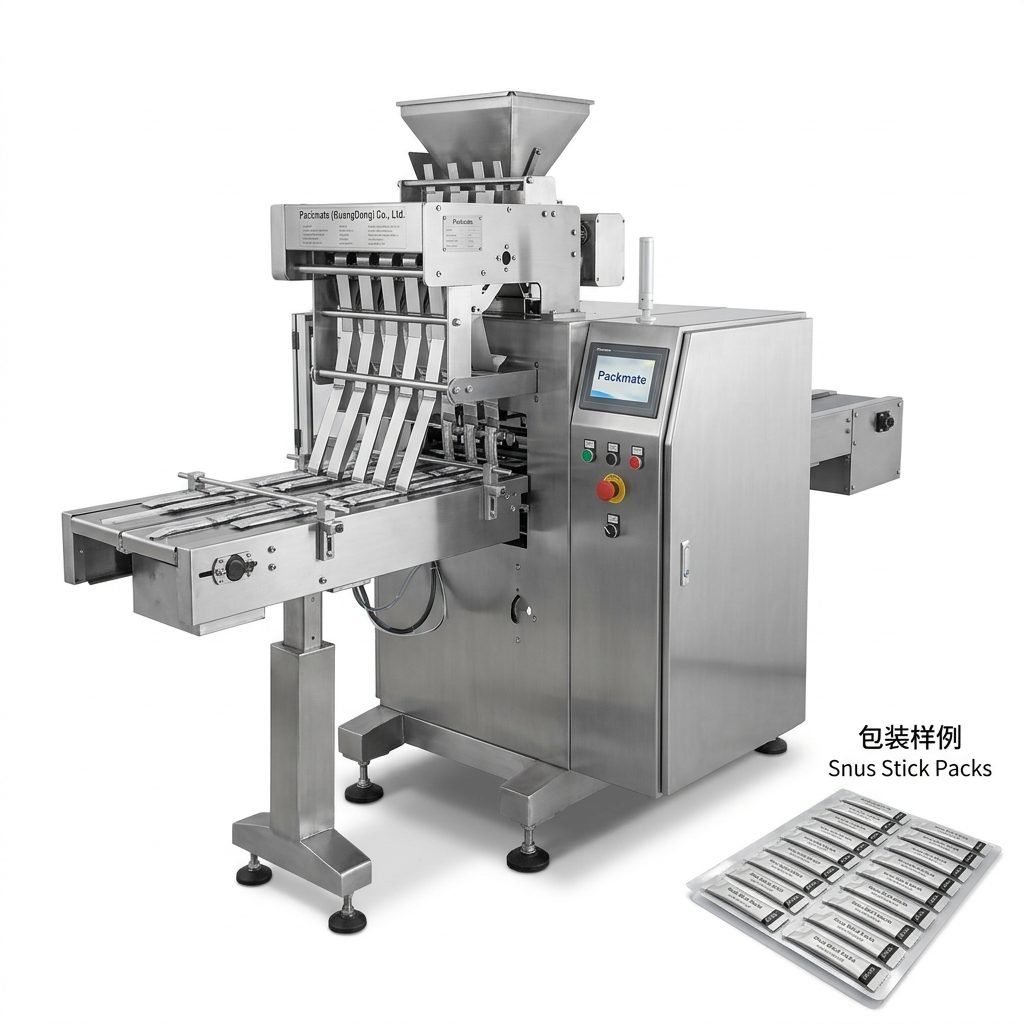
Sachet and stick pack machines
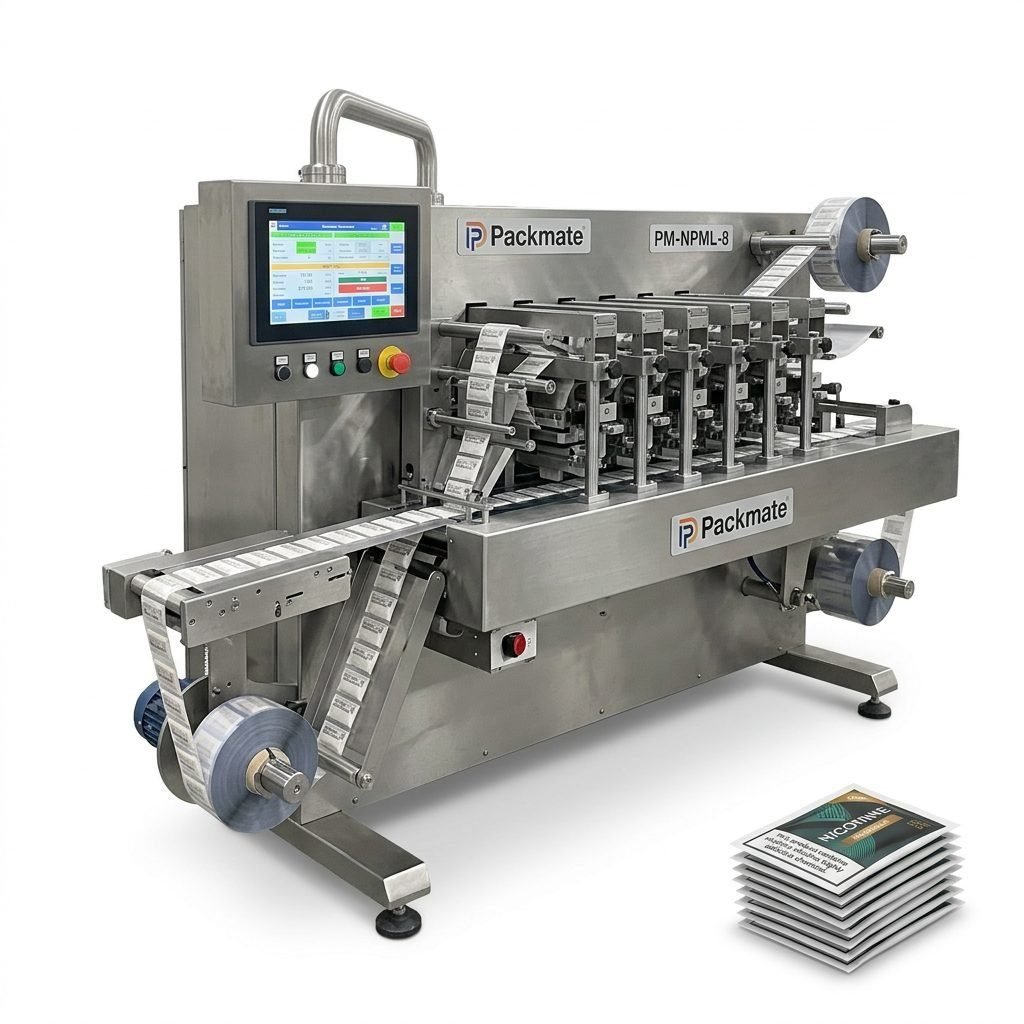
Stick packs and single-chamber sachets suit fast-moving retail segments and promotions. These machines are typically faster but require careful material selection and control systems to maintain dose accuracy for nicotine-containing products.
Related technology: Sachet & Stick Pack Machines.
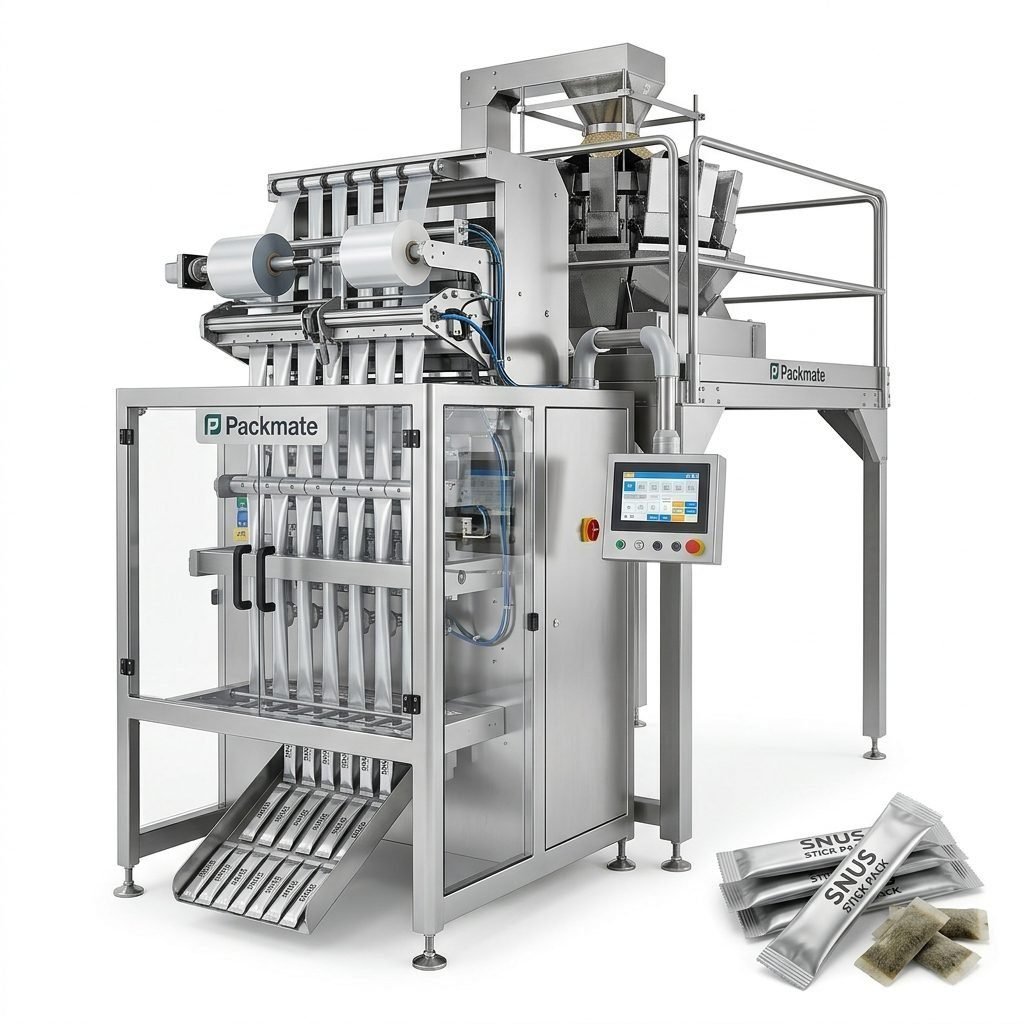
Multi-lane and high-speed systems
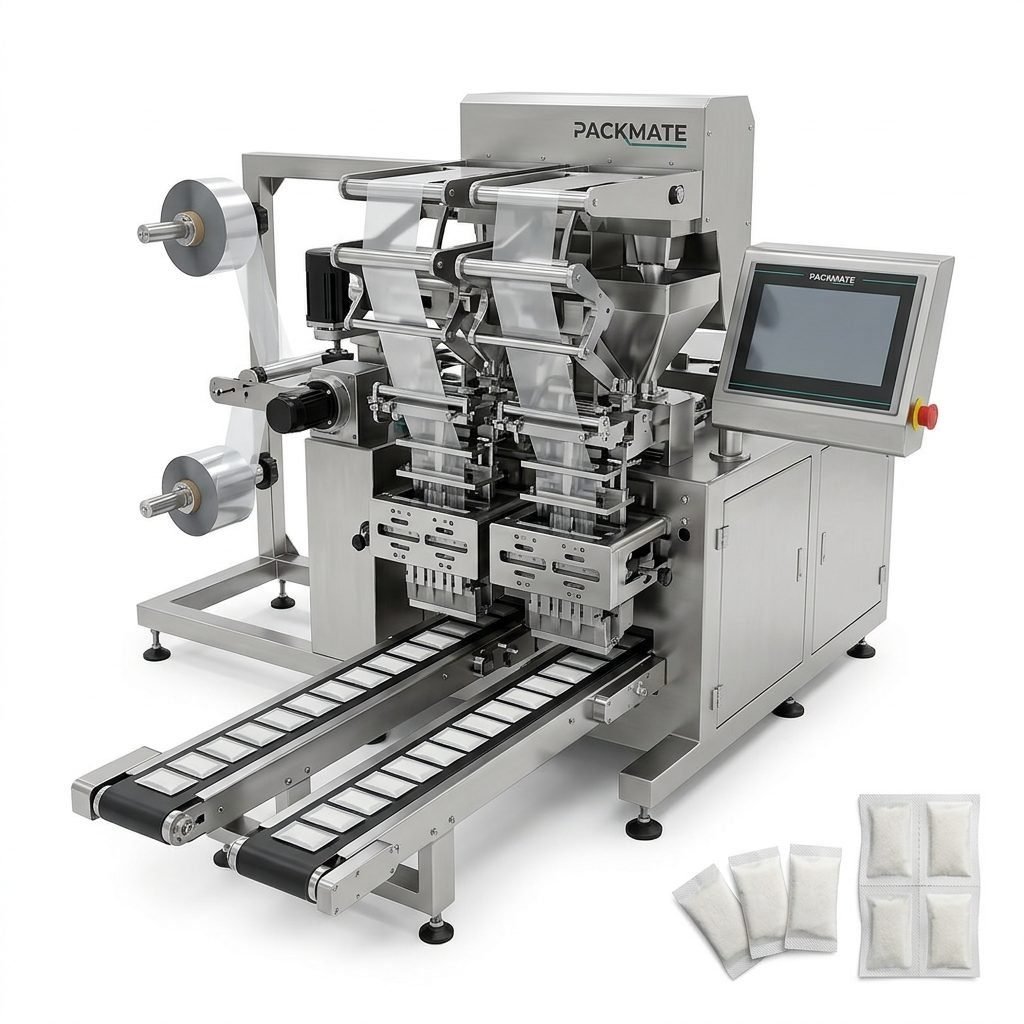
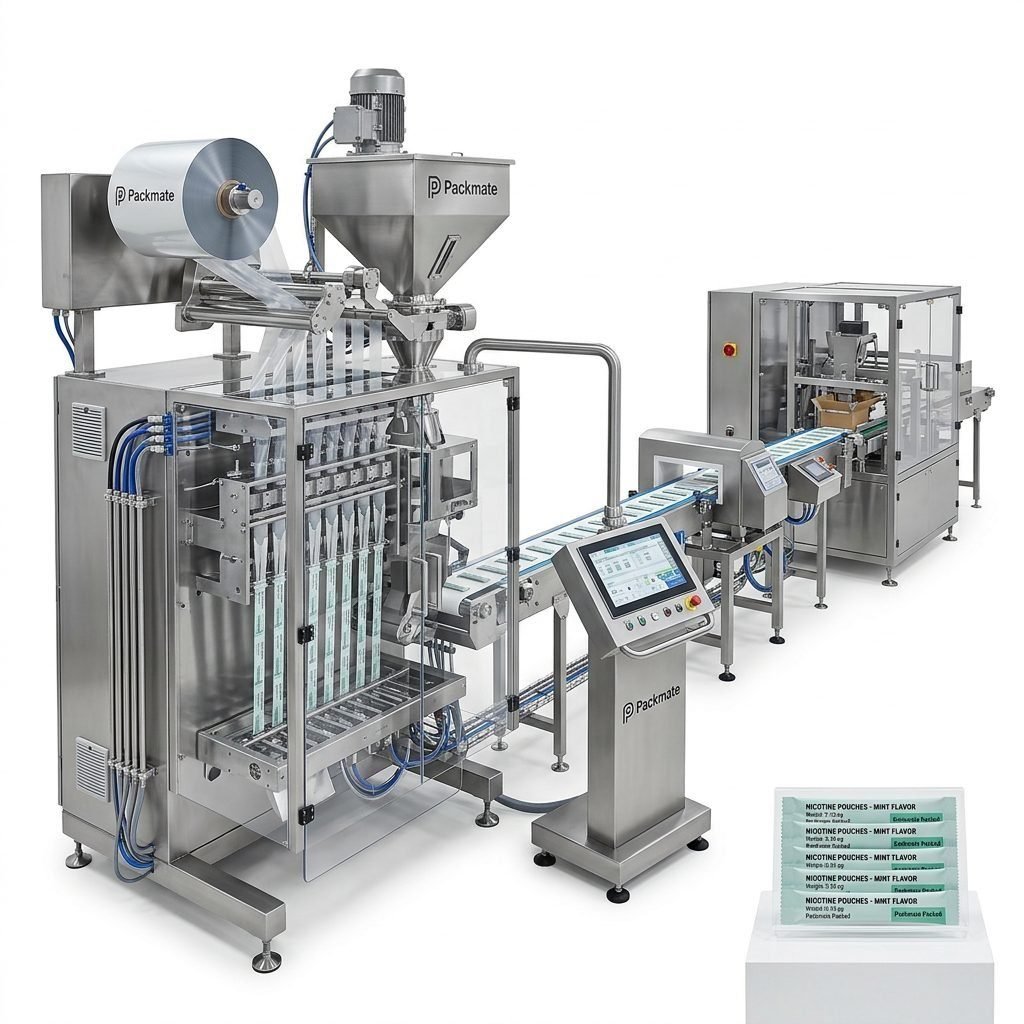
For higher volumes, multi-lane systems multiply throughput within a smaller footprint. They demand robust synchronization, precise filling heads, and strong maintenance discipline. Multi-lane solutions are ideal when you expect rapid scale-up across markets in Africa.
Highlight: If you expect product variants (different nicotine strengths, flavors), choose flexible platforms with easy changeover and recipe management.
Technical specifications to prioritize
When evaluating specific models, inspect the following technical parameters carefully — they will determine long-term performance, safety, and product quality.
1. Dosing accuracy and filling technology
For nicotine pouches, dosing precision is non-negotiable. Look for high-precision auger or vibratory dosing systems with feedback loops and in-line weighing or checkweighers to verify every package.
2. Packaging material compatibility
Ensure compatibility with your chosen pouch materials (paper, film laminates, foils). Machines should offer adjustable sealing temperatures and dwell times, and reject logic for poor seals.
3. Speed vs. reliability
Advertised top speeds are useful for comparison, but evaluate sustained production rates under real conditions and planned maintenance cycles. Prioritize a machine that balances speed with uptime.
4. Automation, control and integration
Open PLC systems, HMI recipe storage, and industry-standard communication (Modbus, OPC-UA) simplify integration with upstream and downstream systems, like filling lines or cartoning systems.
Safety, compliance and operator protection
Nicotine is hazardous at high concentrations. Machinery and the plant environment must minimize worker exposure and ensure product traceability to meet regulatory and customer expectations.
Key features: enclosed dosing areas, local exhaust ventilation (LEV) interfaces, dust mitigation, lockable guards, integrated CIP (if applicable), and emergency stop systems. Verify CE or ISO certifications and documentation for electrical and mechanical safety.
Regulatory considerations in African markets
Regulations differ by country: labeling, limits on nicotine strength, and child-resistant packaging requirements may apply. Choose equipment that supports secure labeling modules and accommodates tamper-evident or child-resistant closures where needed.
Safety checklist: enclosed dosing, sealed product zones, dust/air handling, traceability systems, and emergency controls.
Supplier diligence: what to inspect and ask
Selecting a suitable supplier is as critical as the machine specification. Consider manufacturing competence, track record, after-sales support, spare parts availability, and local presence or partners in Africa.
1. Experience and field references
Ask for case studies in similar markets and products. Manufacturers with decades of experience in snus and nicotine machinery bring proven engineering, as exemplified by global suppliers who have multiple case projects and exhibition presence.
Relevant resources: Case, Our Exhibition.
2. Factory capability and certifications
Evaluate factory scale, CNC capabilities, assembly standards, and quality control. Certifications such as CE and ISO offer confidence in design and safety. A manufacturer with a large, modern facility typically provides better spare parts support and customization capacity.
Learn more about a supplier’s credentials: About Packmate, Certificate.
3. After-sales support and spare parts
Local or regional support reduces downtime. Confirm spare part lead times, remote service capabilities, and training packages. A supplier with remote diagnostics, video support, and spare kits can dramatically improve OEE (overall equipment effectiveness).
Plant layout, utilities and integration planning
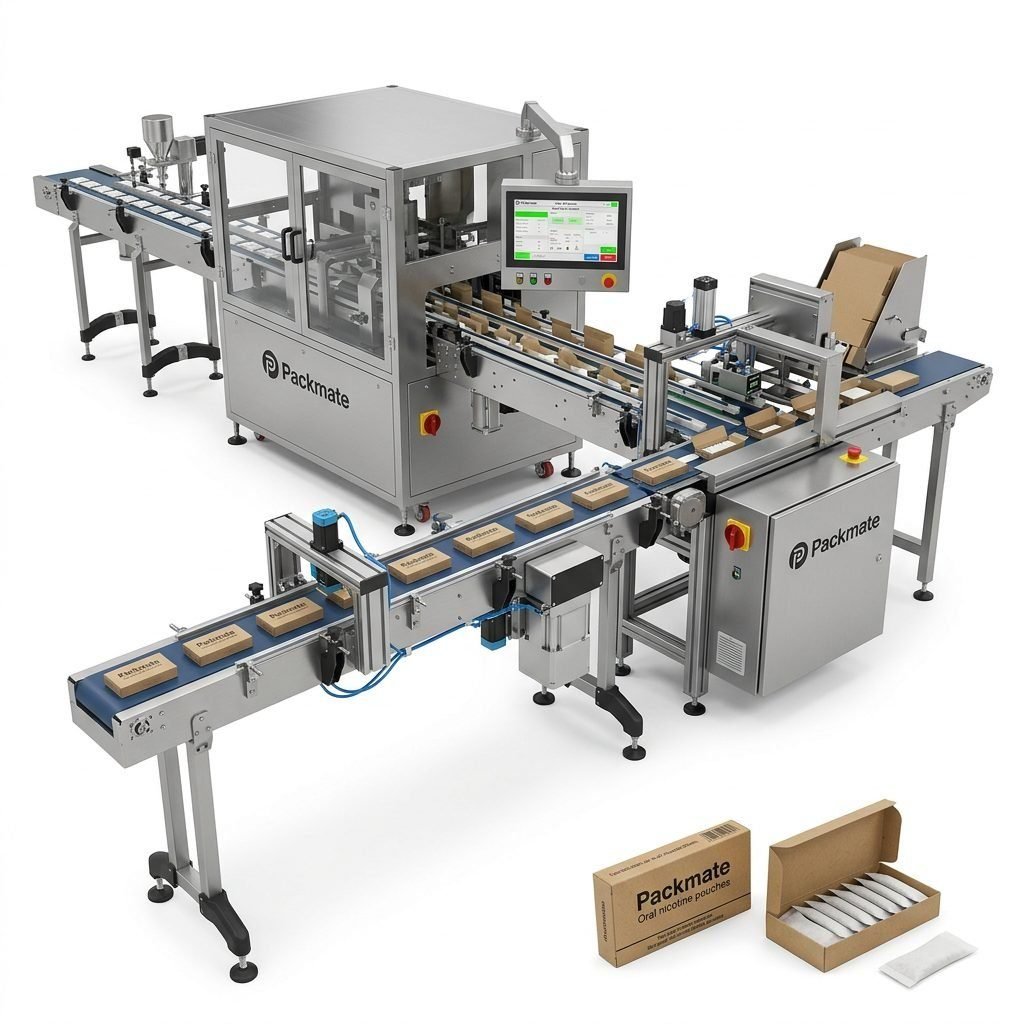
Successful installation requires planning: floor load, power supply, compressed air, vacuum, dust collection, and routing for conveyors and packaging material. Ensure the supplier provides detailed dimensional drawings (layouts) and utility requirements early in procurement.
Consider future expansion: reserve space for additional lanes, upstream mixers or blenders, and downstream cartoning or secondary packaging to avoid costly rework later.
Design note: plan utilities with 20–30% headroom to accommodate peak demand and future automation modules.
Energy, maintenance and lifecycle costs
Initial machine price is one piece of the puzzle. Consider energy consumption, spare part costs, mean time between failures (MTBF), and ease of preventive maintenance. Machines designed for easy access to wear parts and tool-less changeovers reduce maintenance hours and labor costs.
Sourcing consumables and parts in Africa
Ensure you can source belts, seals, heaters, and dosing components locally or via a supplier with fast shipping. Map out a spare parts list and stocking strategy aligned with lead times to avoid long production stoppages.
Installation, training and commissioning
A robust commissioning package is essential. This should include onsite engineers during startup, operator training, maintenance training, and a trial production window to validate product quality. Ask for training materials and remote learning options for shift teams.
Useful resource pages: Service, FAQs.
Practical decision checklist before purchase
Use the following checklist as a final validation tool before signing an order. Each item reduces risk and clarifies expectations between buyer and supplier.
- Confirm sustained throughput under real product trials (not just lab numbers).
- Verify dosing accuracy and in-line verification capabilities.
- Obtain factory acceptance test (FAT) videos and on-site SAT plan.
- Agree spare parts kit and lead times in contract.
- Confirm training scope, warranty, and remote support SLA.
ROI note: Factor in reduced giveaway, quality rejections, and downtime improvements — these typically pay back a higher-quality machine within 12–36 months depending on volume.
Why consider a proven manufacturer
Manufacturers with deep experience in snus and nicotine pouch equipment offer design optimizations specific to nicotine products — from dosing heads and pouch handling to safety enclosures and easy-clean designs. They typically provide a wider range of machine models and turnkey solutions for scaling production.
For a comprehensive product portfolio and turnkey experience, review offerings such as Bag & Pouch Packaging Machines, Weighing & Packaging Systems, and Filling & Packaging Lines.
Conclusion
Choosing the right nicotine packaging machinery for Africa is a multi-dimensional decision that affects production quality, regulatory compliance, worker safety, and long-term profitability. Prioritize machines built for nicotine pouch applications, insist on supplier transparency for testing and parts support, and plan your factory layout and utilities with future growth in mind. With careful selection you can achieve safe, efficient, and scalable production that supports market expansion.
Frequently Asked Questions
Q1: What machine type is best for small-batch nicotine pouch production?
A1: Single-lane snus/nicotine pouch machines or low-speed sachet systems with flexible dosing are ideal for small batches and recipe changes.
Q2: How important is supplier after-sales support in Africa?
A2: Extremely important — fast access to spare parts, remote diagnostics, and training reduce downtime and protect production continuity.
Q3: Are multi-lane systems suitable for African market expansion?
A3: Yes — multi-lane systems offer high throughput with a compact footprint, but require strong maintenance and careful commissioning to achieve reliable operation.
Q4: What certifications should I request from a machine supplier?
A4: Request CE and ISO documentation, electrical safety reports, and factory acceptance testing evidence. Also verify any regional compliance needed for packaging and labeling.
Q5: Where can I learn more about manufacturers with snus and nicotine packaging expertise?
A5: Review manufacturer profiles and product catalogs to compare models and capabilities: Catalog and Contact Us for direct inquiries.