Choosing the right nicotine packaging machinery supplier for your Uruguay-based operation can determine whether your production scales smoothly or stalls under regulatory, logistical, and technical challenges. This guide walks you through practical, business-focused steps to evaluate suppliers, compare machine technologies, and plan installation and after-sales support — with special attention to Uruguay’s market characteristics and local business customs.
Understand the Uruguay Market & Local Preferences
Uruguay’s consumer tastes and regulatory environment create a set of expectations for nicotine pouch and snus packaging. Discretion and portability are often prioritized — small-dose pouches and compact retail packs perform well. Spanish is the dominant language in business dealings, with Portuguese widely used near the Brazilian border; expect documentation and training needs in Spanish or bilingual support for faster onboarding. Local import customs and taxation can affect lead times and landed cost, and companies often appreciate suppliers that proactively provide compliance documentation and CE/ISO certificates.
Practical tips for Uruguay-specific sourcing
📌 Work with suppliers who understand regional logistics and can recommend customs brokers.
📌 Expect negotiation to be relationship-driven — on-site demos, factory visits, and long-term service offers build trust.
📌 Prioritize suppliers who can provide Spanish documentation, training, and local-language remote support to reduce downtime.
Define Your Technical Requirements First
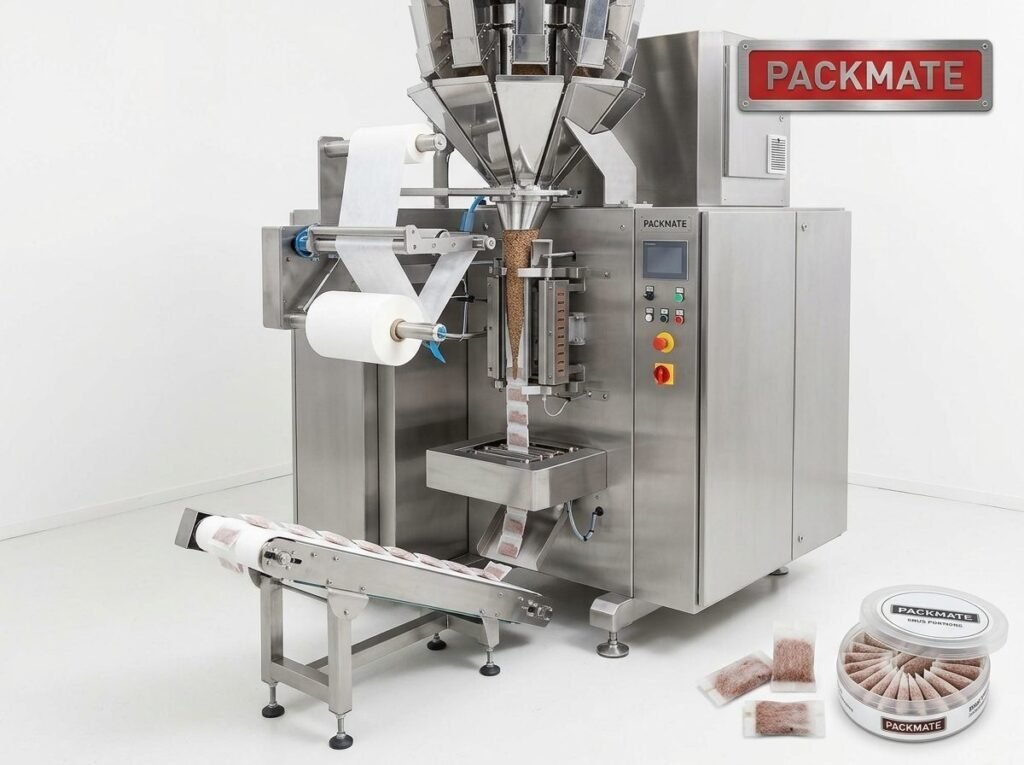
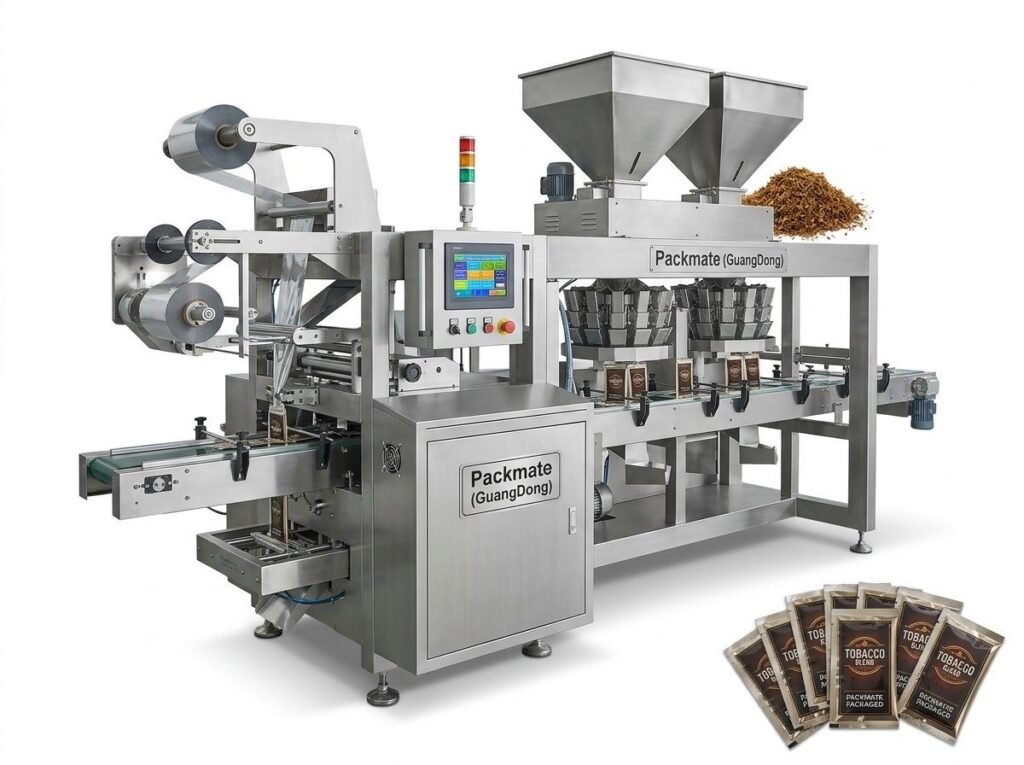
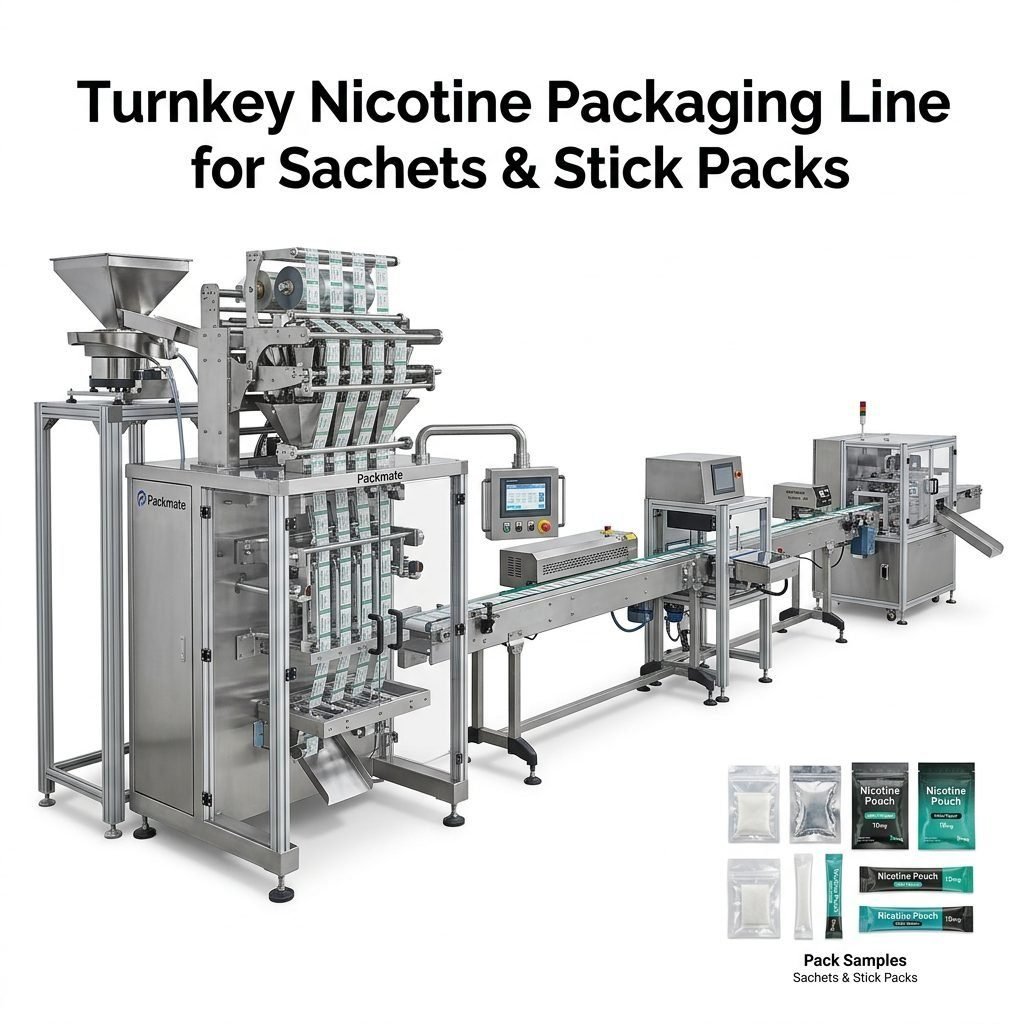
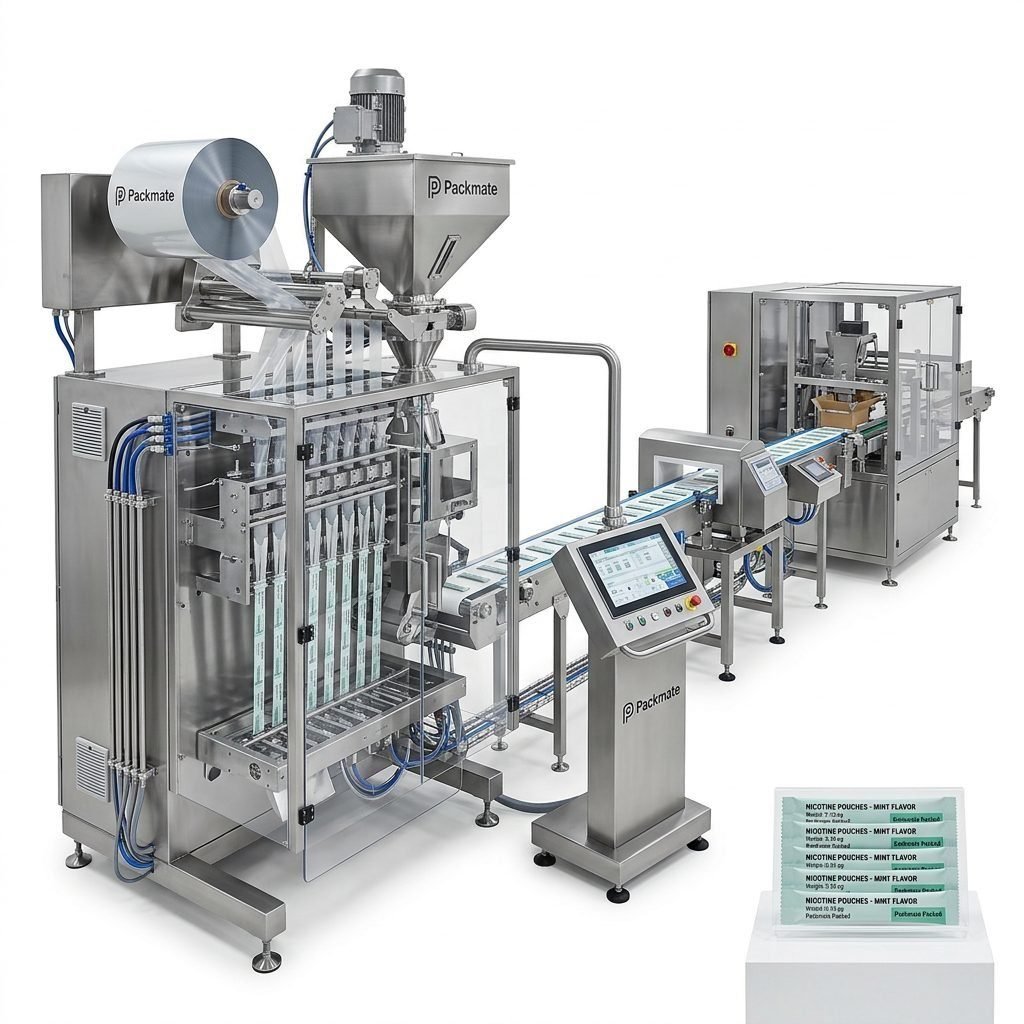
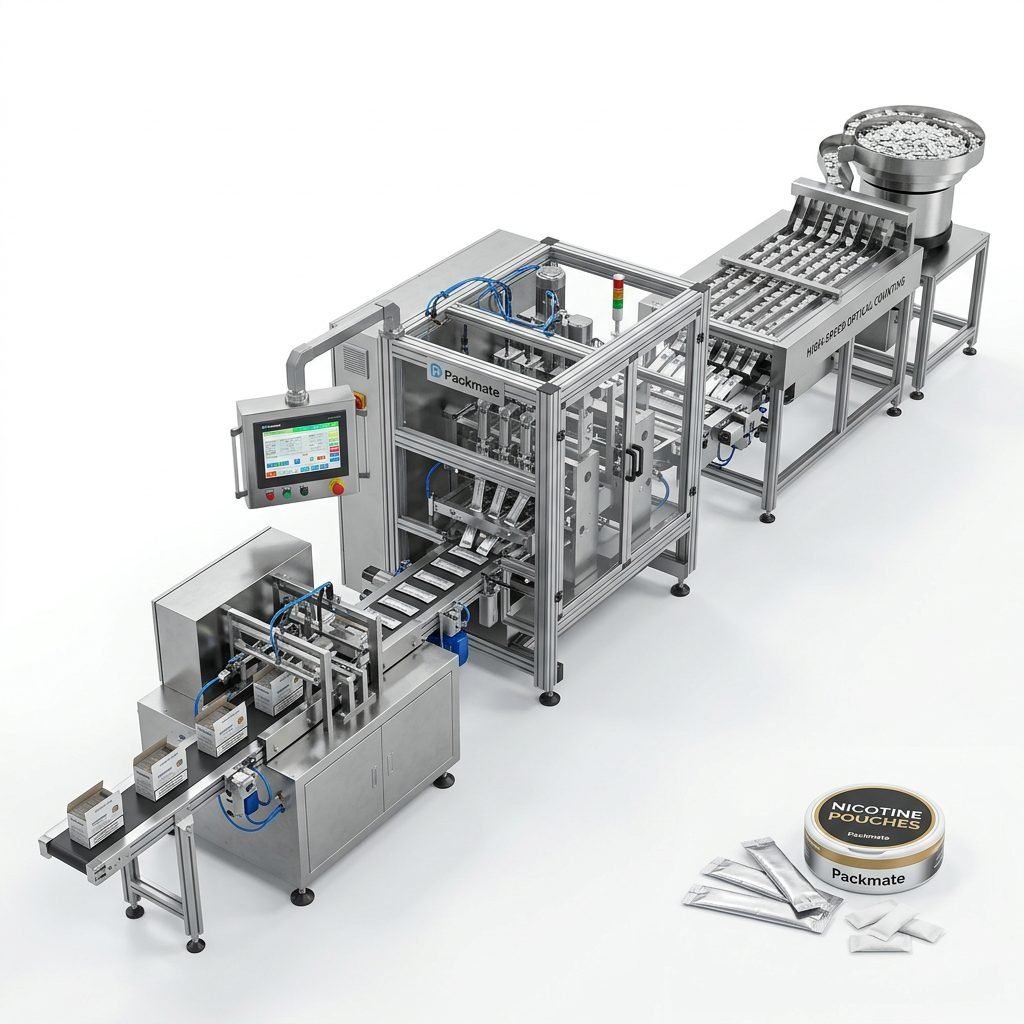
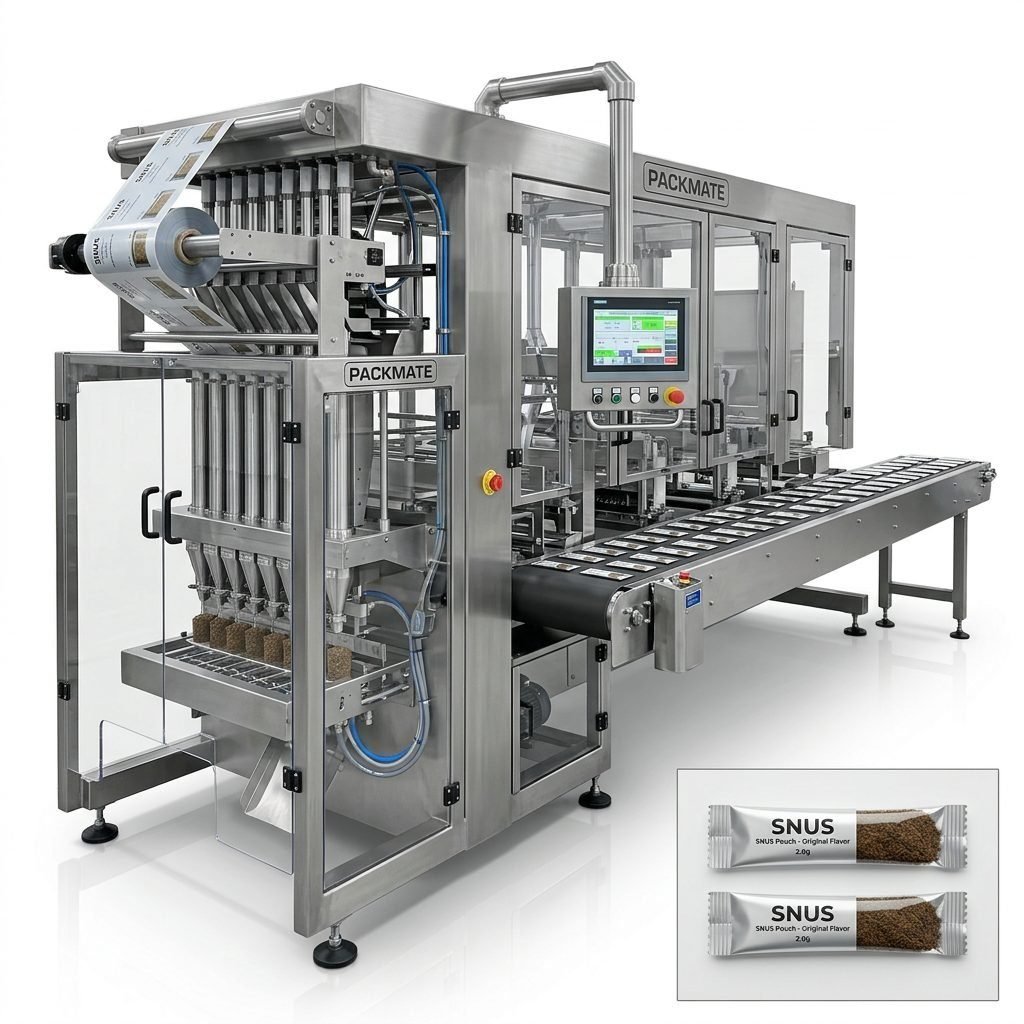
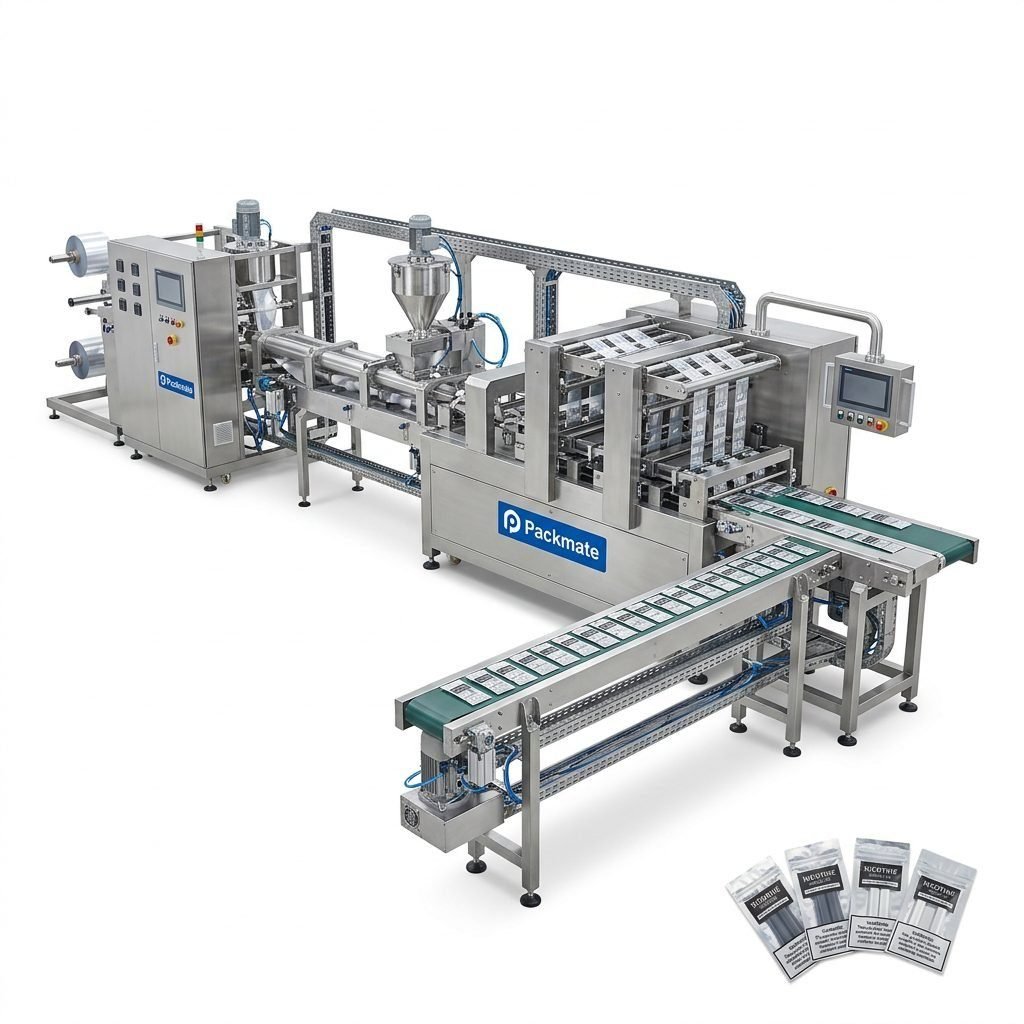
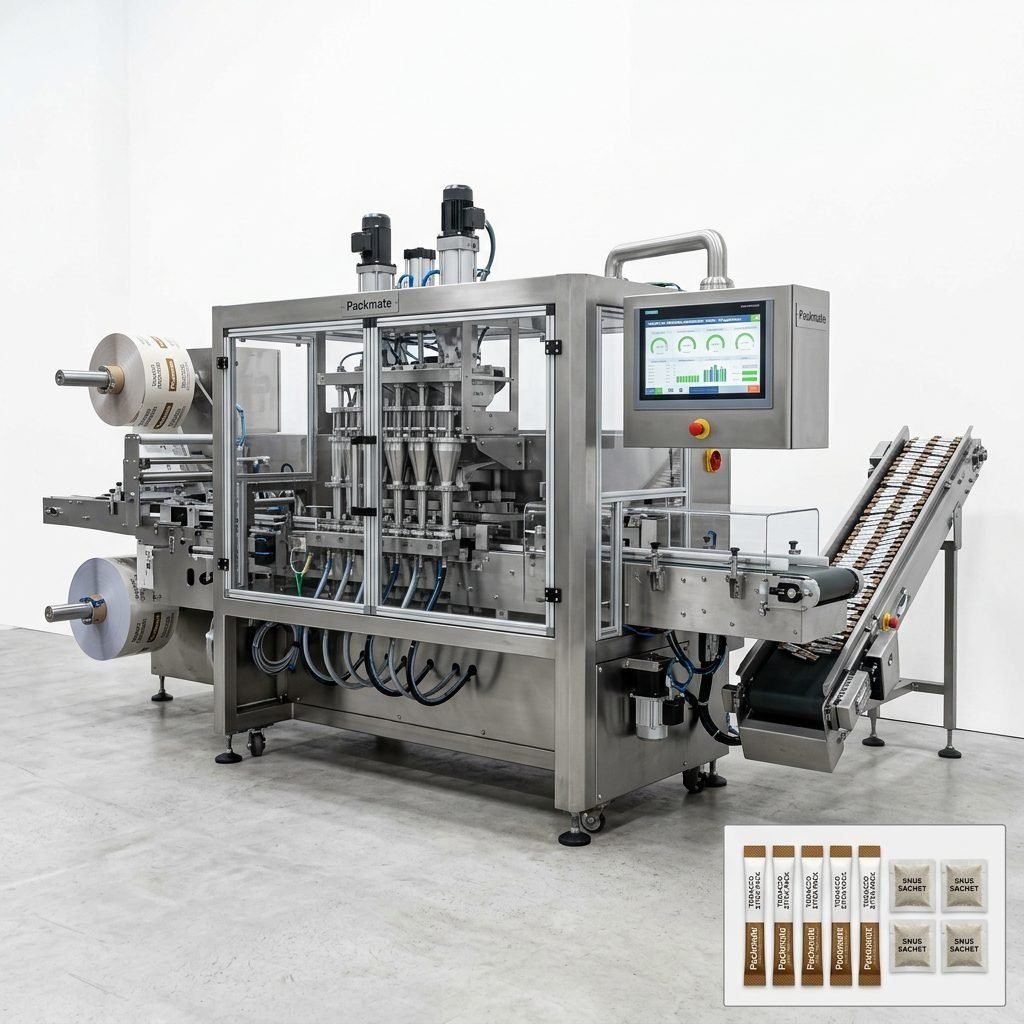
Before you request quotes, map out product SKUs, target throughput, and packaging formats. Common nicotine packaging machines include multi-lane pouch machines, stick pack systems, sachet machines, and fully integrated filling lines. Matching the machine to your product (powder, granule, liquid, or pouch) prevents costly retrofits later.
🔍 Key specifications to define:
- Target output (pouches per minute and daily capacity)
- Package formats: multi-lane pouches, sachets, stick packs
- Fill accuracy & dosing range
- Integration needs: weighing systems, conveyors, secondary packaging
- Cleanability, maintenance access, and spare-part friendliness
Find machines built for nicotine pouch production
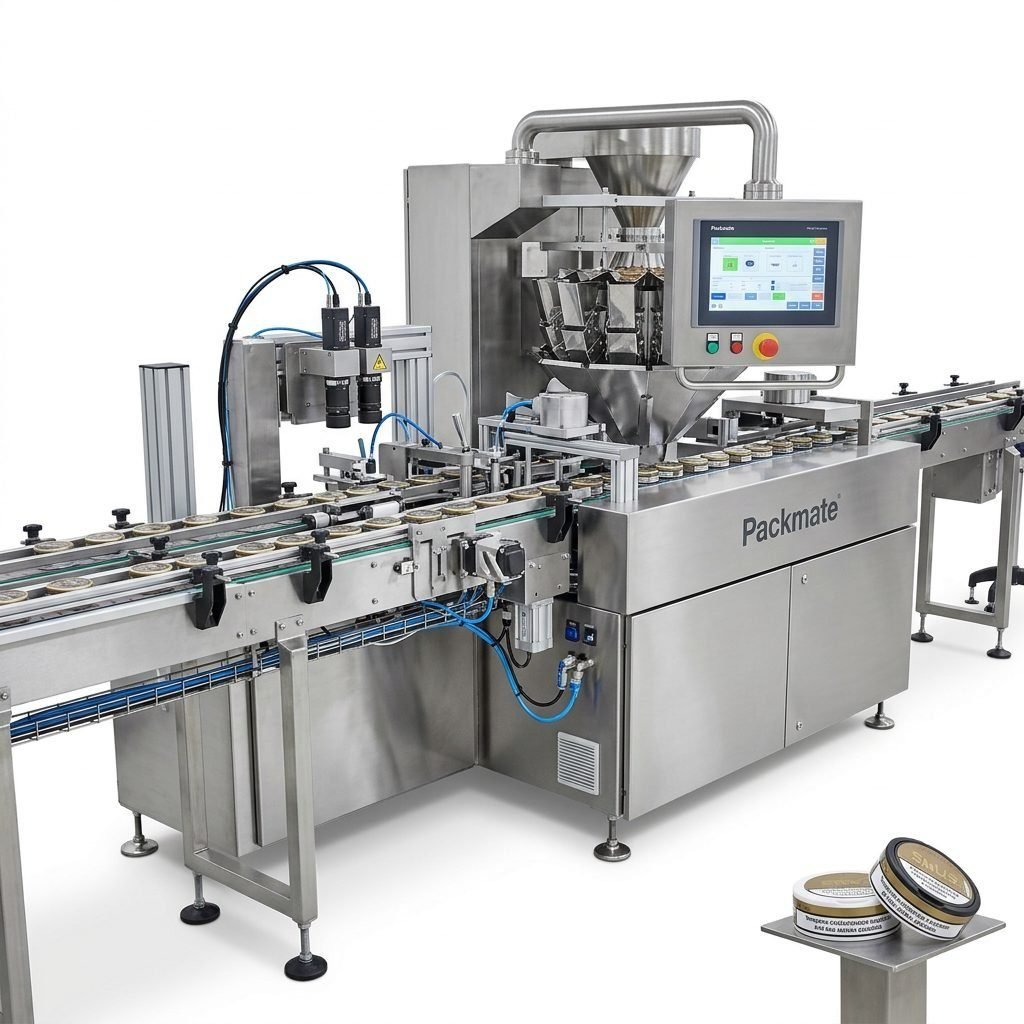
For specialized lines consider proven models tailored to snus and nicotine pouches. Suppliers like Packmate offer focused solutions across multiple formats — see detailed product categories at their Snus & Nicotine Packaging Machines and integrated Filling & Packaging Lines.
Assess Manufacturer Capability & Quality
Machine performance is tied to manufacturer engineering capacity. Look for suppliers with strong machining, assembly, and testing infrastructure. Important indicators include factory size, CNC capabilities, model variety, and compliance certifications.
✅ What to verify:
- Factory area and equipment (e.g., advanced CNC centers)
- Number of models and customization options
- Certifications: CE, ISO — ask for document copies
- Reference installations and machine run-hours in real production
Packmate highlights a 20,000㎡ manufacturing base with 50+ machine models and CE/ISO compliance; review their factory and case studies at About Packmate and Case.
Quality Control, Testing & Acceptance
Insist on witnessing a FAT (Factory Acceptance Test) or receiving recorded run tests before shipping. Acceptance criteria should be written into the purchase contract: target output, dosing accuracy, downtime targets, and allowable defect rates. Require documentation of electrical diagrams, software backups, and spare-part lists.
Supplier transparency matters
Transparency around material sourcing, tolerances, and control logic reduces friction during commissioning. Ask for machine component brands (PLC, servo, sensors) and inquire about the availability of equivalent components in Uruguay for faster repairs.
After-Sales Service, Training & Spare Parts
After-sales service is where long-term value is realized. Evaluate the supplier’s spare-part strategy, ease of remote troubleshooting, and training offerings. For Uruguay, consider whether the supplier provides Spanish documentation, on-site training, and timely spare part shipments.
⚠️ Service commitments to secure in the contract:
- Response time for remote support and spare parts shipments
- Warranty length and coverage details
- Training scope: operators, maintenance, and automation engineers
- Local partner or agent presence in South America (preferred)
Total Cost of Ownership (TCO) — Not Just the Price Tag
A low initial price may hide higher running costs. Compare energy consumption, cycle efficiency, mean time between failures (MTBF), and consumable costs when assessing suppliers. Consider upgrading automation or multi-lane options to increase throughput per footprint if labor cost or factory space is a constraint.
Calculate ROI with realistic assumptions
Include the cost of changeover time, validation, spare parts inventory, and expected lifetime maintenance in your ROI model. Many established suppliers provide ROI examples — request these and compare with your production plan.
Logistics, Shipping & Import into Uruguay
Shipping heavy machinery to Uruguay requires planning for ocean freight, customs documentation, and inland transport. Verify the supplier’s export experience to South America and whether they provide packing lists, export certificates, and support for clearance. Local assembly or pre-shipment modularization can reduce customs headaches.
Recommended shipping checklist
📦 Ensure supplier provides:
- Detailed packing & weight lists
- Clear electrical and mechanical manuals for customs and installers
- Spare parts pack for initial commissioning
- Assistance with import codes and HS classification
Contract Terms & Warranty — What to Negotiate
A robust contract protects both parties. Define acceptance tests, penalties for late delivery, warranty response times, and spare parts pricing. Ask for software license terms, rights to PLC code backups, and clear training delivery schedules. For long-term partnerships, discuss volume discounts for additional lines or retrofits.
Implementation Roadmap & Scaling
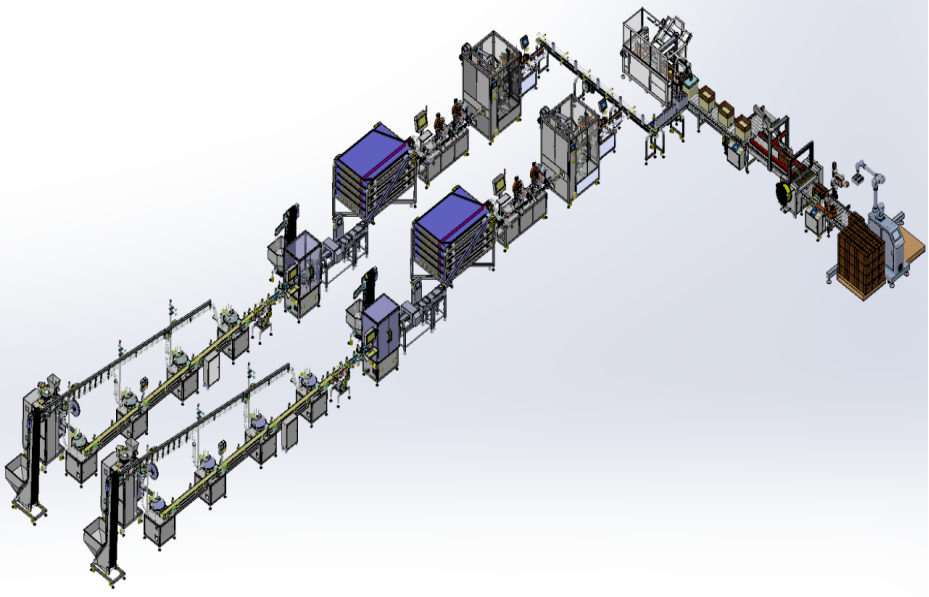
Plan the implementation in phases: site preparation, machine delivery and mechanical installation, electrical and automation hookup, FAT/SAT, validation runs, and ramp to full production. Suppliers with turnkey line experience can coordinate conveyors, weighing systems, and secondary packaging for a faster start. Consider modular designs if you expect to add lanes or formats later.
If you need integrated weighing and handling systems, review supplier solutions like their Weighing & Packaging Systems to ensure compatibility with your line layout.
Why Consider a Supplier like Packmate for Uruguay?
A supplier with decades of focused experience in snus and nicotine pouch packaging can shorten development cycles and reduce technical risk. Packmate emphasizes specialized snus packing lines, a wide model range, and international compliance. Their history of multi-lane systems and global turnkey projects makes them a candidate worth evaluating for Uruguay operations.
For more details on product lines and services, see Packmate’s product pages and service offerings: Sachet & Stick Pack Machines, Bag & Pouch Packaging Machines, and their Contact Us page for direct inquiries.
Quick supplier evaluation checklist
✔️ Factory visit or video tour with machine demos.
✔️ FAT records and run-rate proofs.
✔️ Clear warranty, spare part lead times, and Spanish documentation.
✔️ Local service partner or fast international response policy.
✔️ Transparent TCO and references in similar projects.
Final practical steps before signing
Request a written project timeline, confirm spare part kits shipped with the machine, get training dates in writing, and set measurable acceptance targets. Use a staging plan that covers ramp-up production and scheduled maintenance windows to protect your first-month output.
Selecting the right supplier for your Uruguay nicotine packaging project is a blend of technical fit, logistical readiness, local-market understanding, and reliable after-sales support. Evaluate suppliers holistically to avoid surprises and build a resilient production capability.
Common Questions
Q1: How long does it typically take from order to installation for a pouch packing line in Uruguay?
A1: Typical lead times range from 10 to 20 weeks depending on customization and shipping. Add customs clearance and local installation time — plan for a full 14–26 week window in many cases.
Q2: What certifications should I require from a supplier for nicotine pouch machinery?
A2: Require CE and ISO where applicable, plus documented machine-specific tests, electrical diagrams, and material compliance statements. If you sell in additional markets, ask about export-related certificates.
Q3: How can I ensure quick spare parts delivery to Uruguay?
A3: Negotiate an initial spare-parts kit shipped with the machine, agree on stock levels for critical parts, and secure a list of local-compatible component equivalents. Suppliers with global parts distribution will shorten downtime.
Q4: Is on-site training essential, or is remote training sufficient?
A4: On-site training is highly recommended for the commissioning phase; remote training can supplement ongoing operator education. Ensure documentation is available in Spanish for best results.
Q5: Where can I see real examples of installed lines and reference projects?
A5: Request case studies and factory visit schedules from your supplier. Packmate publishes case information and exhibition activity where you can often see machines running before purchase: Our Exhibition and Case.