Entering the nicotine pouch or snus market in Guinea-Bissau requires more than a good product: it demands the right packaging machinery partner. Choosing the best supplier influences product quality, regulatory compliance, delivery timelines, and your long-term cost of ownership. This guide helps you evaluate suppliers — with practical steps, technical checklists, and local tips specific to Guinea-Bissau’s market and business culture.
Why the right packaging machinery matters in Guinea-Bissau
The coastal, humid climate and limited cold-chain logistics in Guinea-Bissau create unique challenges for nicotine product stability and shelf life. Efficient, precise packaging reduces product exposure to moisture and ensures consistent dosing — critical for consumer satisfaction and regulatory scrutiny. A trusted supplier offers machines tailored to small-batch runs common in developing markets, energy-efficient systems that tolerate unstable power supply, and flexible configurations that adapt as your brand grows.
Snapshot: What local buyers care about
✓ Reliability: machines that run consistently in humid environments.
✓ After-sales support: spare parts availability and timely technical service.
✓ Low total cost of ownership: energy efficiency and easy maintenance.
✓ Compliance: evidence of CE/ISO and traceability documentation for import clearance.
Key supplier evaluation criteria
When assessing a supplier, use a structured checklist to compare capabilities, risk, and long-term fit. Below are the most important dimensions to evaluate.
1. Technical experience and machine portfolio
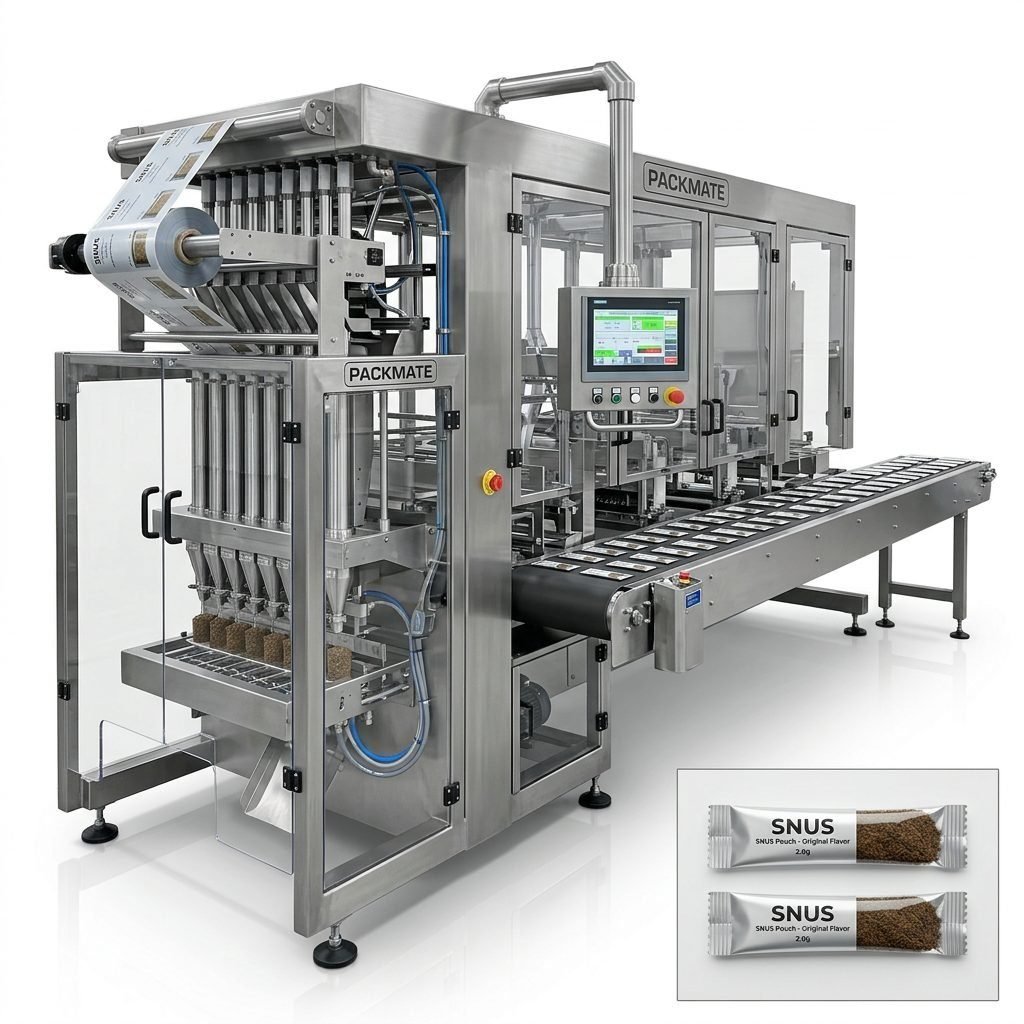
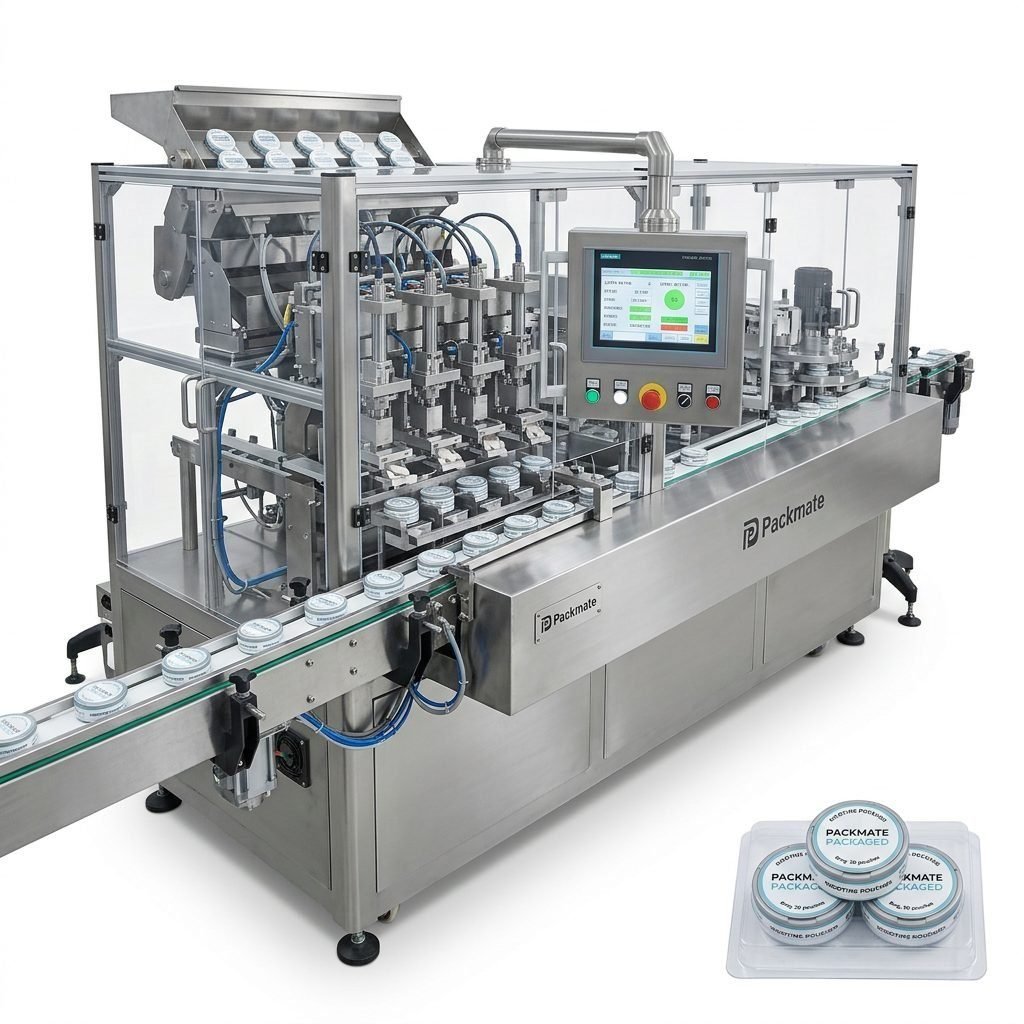
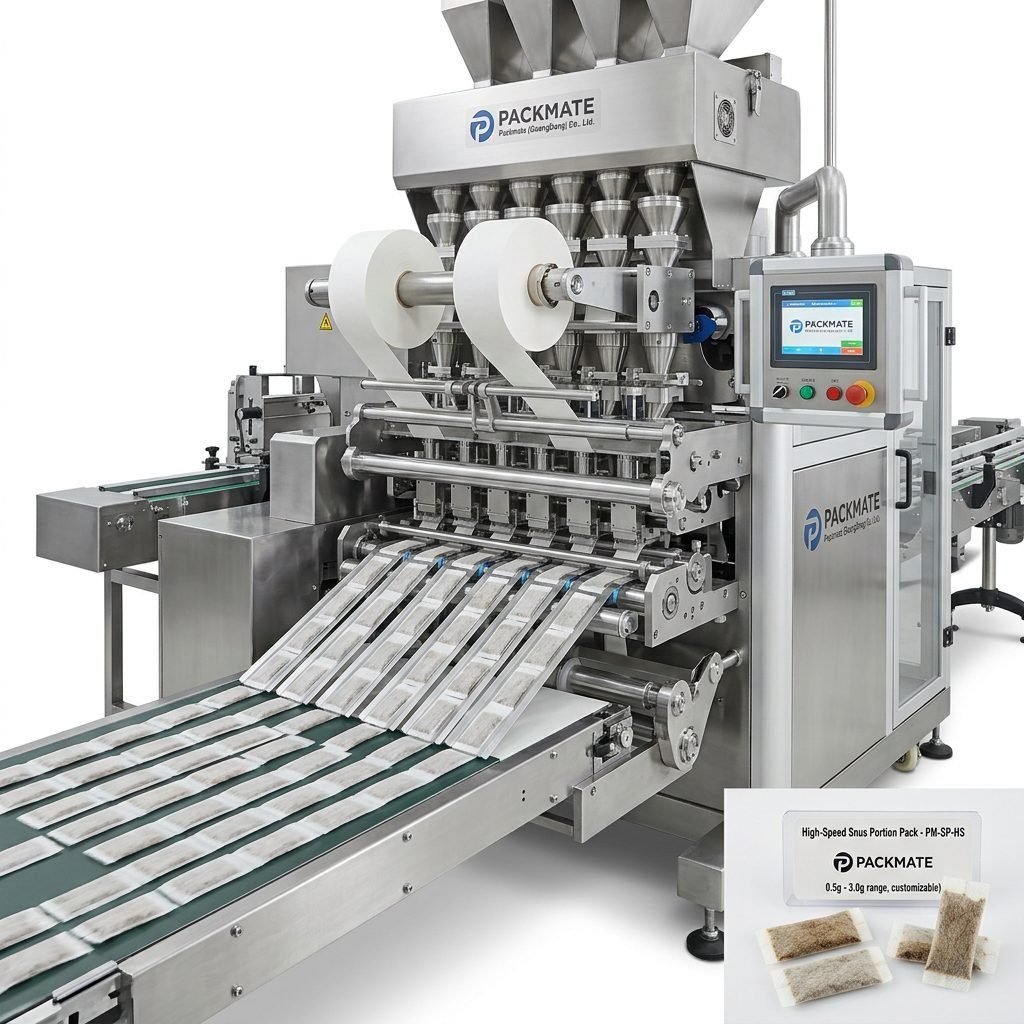
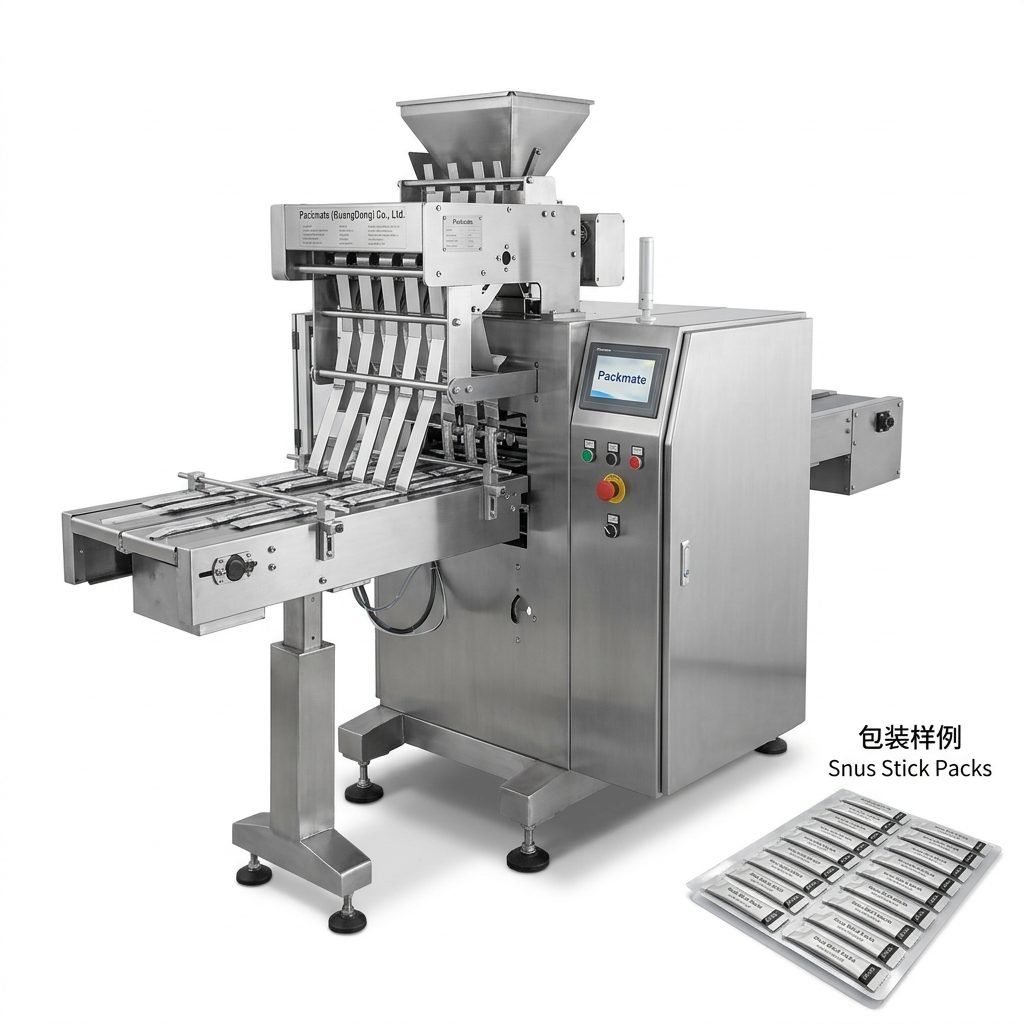
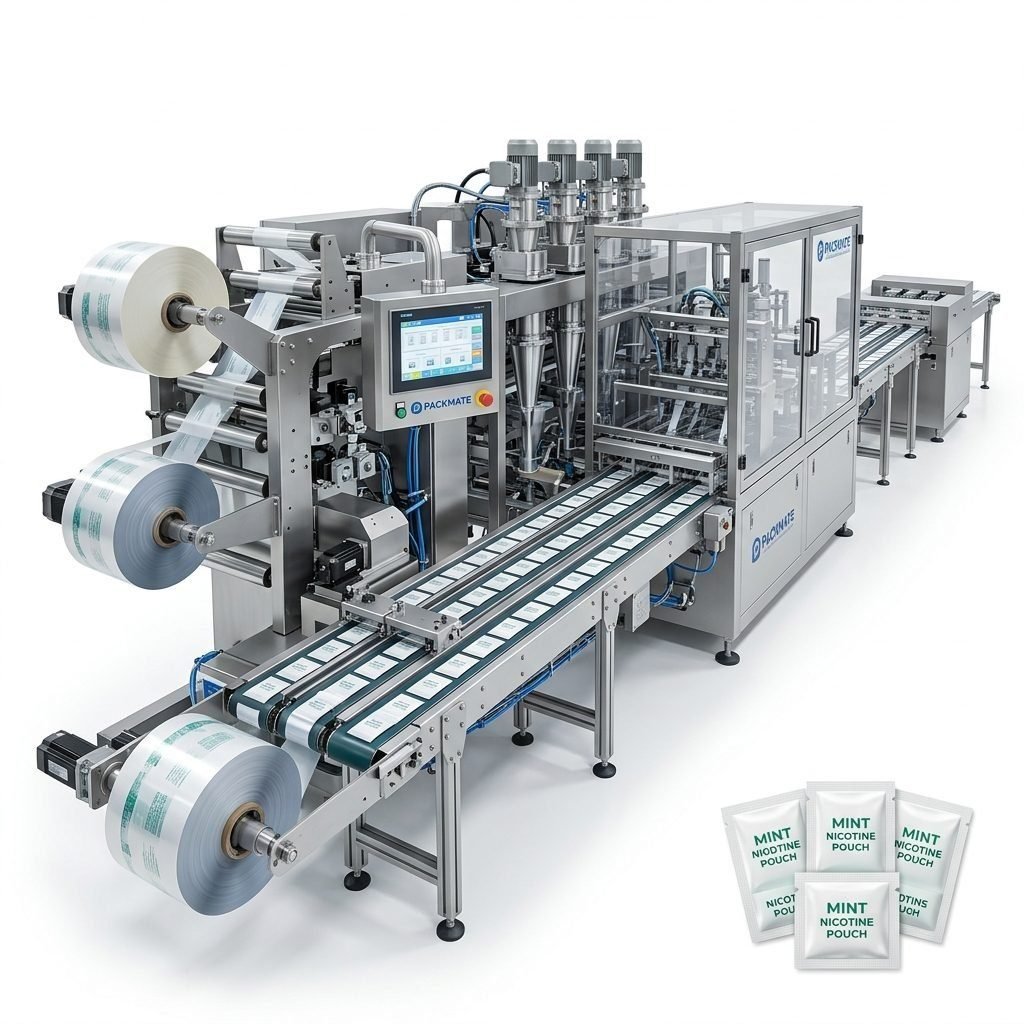
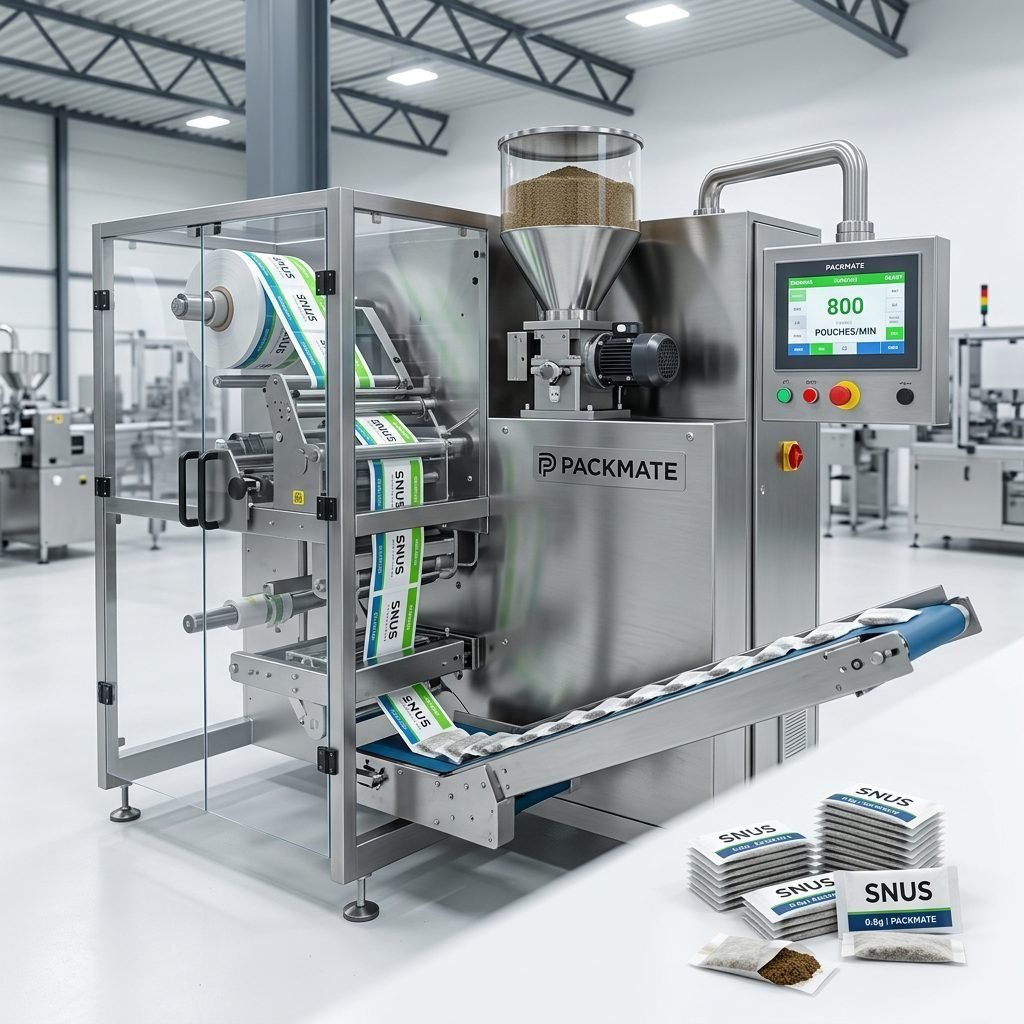
Look for suppliers with proven lines for snus and nicotine pouches. Suppliers that offer a range — from single-lane sachet machines to high-speed multi-lane systems — provide flexibility as your volumes change. For example, Packmate’s portfolio includes specialized snus & nicotine packaging machines, stick pack and sachet equipment, and integrated weighing & packaging systems to suit different production scales (Snus & Nicotine Packaging Machines).
2. Manufacturing strength and quality control
A robust factory with CNC machining centers, precision assembly lines, and rigorous testing reduces the likelihood of on-site failures. Verify certifications like CE and ISO and ask for factory photos, assembly videos, and test run reports. Suppliers that publish certificates and case histories demonstrate transparency and capability (Certificate, Case).
3. After-sales service and spare parts
In markets like Guinea-Bissau, quick access to spare parts and responsive remote troubleshooting matter more than ultra-low purchase prices. Ask about spare parts lead times, local partners or agents, remote diagnostics, and guaranteed response times. A supplier that offers commissioning, operator training, and maintenance packages reduces downtime.
4. Customization & turnkey capability
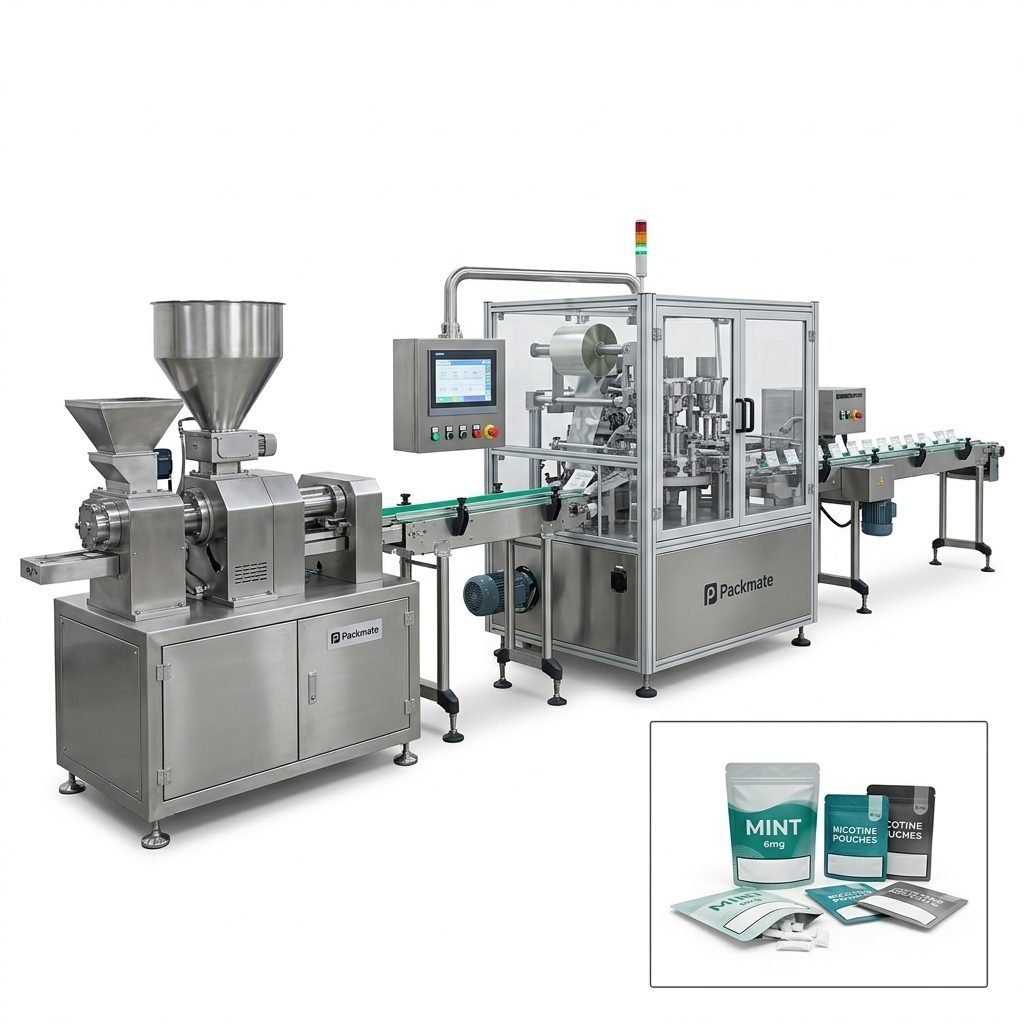
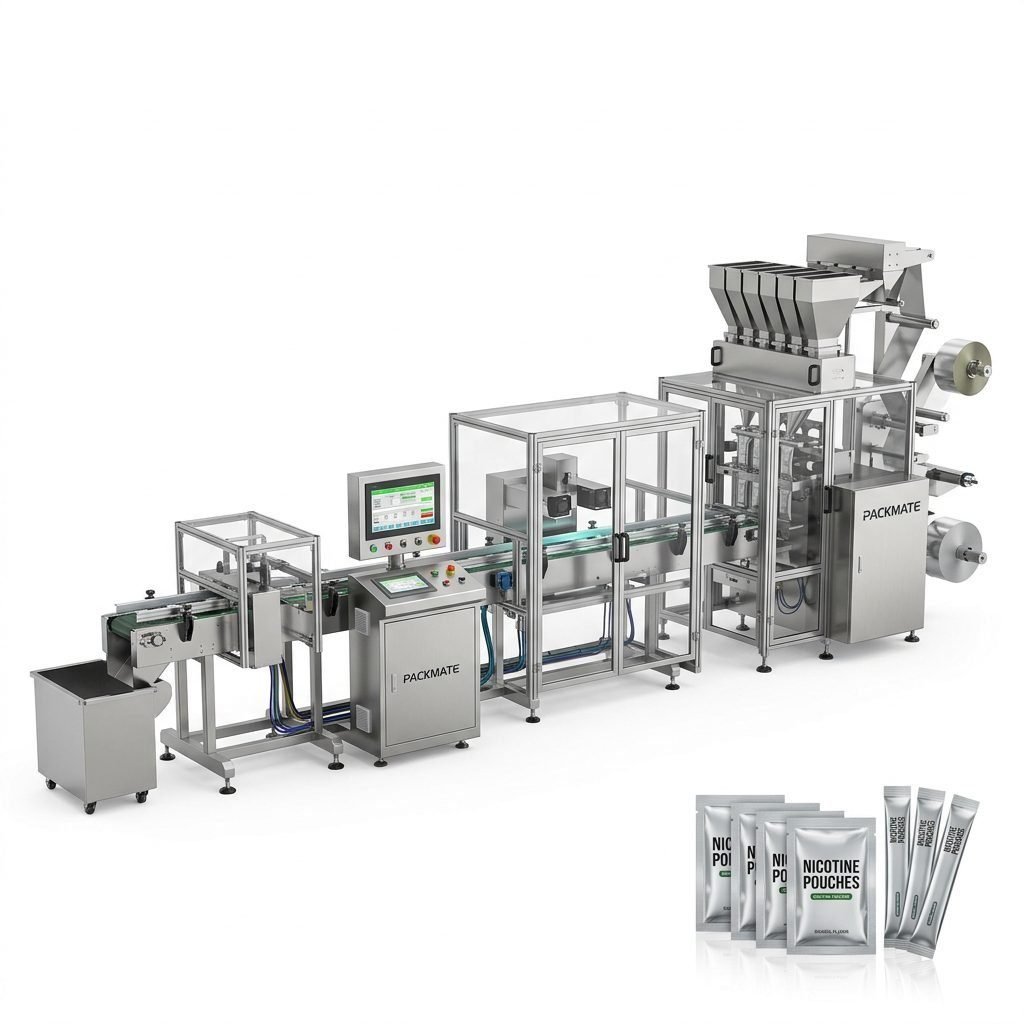
Many businesses need a complete line: weighing, filling, sealing, and secondary packaging. Choose a supplier who can deliver integrated solutions and modify machine settings for local packaging materials. Packmate’s full-line offerings and turnkey solutions are examples of what to look for (Filling & Packaging Lines).
Technical considerations for nicotine pouch packaging
Ensure the equipment supports the pouch format, dosing accuracy, humidity control, and sealing quality you need. Below are specifics to request during technical evaluation and trials.
Pouch format and lane configuration
Decide whether single-lane, multi-lane, or modular equipment best fits projected volumes. Multi-lane systems are efficient for scaling but require higher upfront investment. Confirm that the supplier can adjust lane spacing, pouch length, and sealing formats for local packaging artwork and regulations.
Dosing precision and filling systems
Weight accuracy is crucial for nicotine pouches. Check available dosing systems (volumetric, loss-in-weight, vibratory feeders) and request accuracy specifications and sample reports. Suppliers often integrate weighing & packaging systems to maintain consistent dosing (Weighing & Packaging Systems).
Material handling and sealing quality
The right film type, lamination, and heat-seal parameters preserve nicotine pouch integrity. Ask for sample seals, shelf-life studies, and guidance on barrier materials suitable for Guinea-Bissau’s humidity and heat.
Logistics, installation and local practicalities
Importing machinery into Guinea-Bissau involves practical challenges: port infrastructure, customs clearance, and limited local installation partners. Plan early for these elements to prevent costly delays.
Shipping & customs readiness
Provide your supplier with the exact import documentation requirements for Guinea-Bissau. Confirm HS codes, required certificates, and whether the supplier can assist with freight forwarding. Ask for machine packing lists, shipment photos, and a proforma invoice to expedite customs.
Site preparation and utilities
Ensure your factory has stable flooring, correct electrical supply, and humidity control. In locations with unreliable power, consider voltage stabilizers, backup generators, and equipment with robust electrical tolerance. Confirm the supplier provides installation schematics and power consumption data.
Commercial terms, warranties and financing
Pricing is one variable — the total cost of ownership is more important. Compare warranties, training packages, spare parts policies, and possible financing or leasing options.
Pro tip: Negotiate a parts kit and a written SLA for response times. This can save weeks of downtime in a country where spare parts shipments can be delayed.
Factory visits and audits — what to inspect
If possible, visit the supplier’s factory or ask for live video demonstrations. During audits, focus on assembly quality, control panels, wiring neatness, spare parts storage, testing protocol, and operator training processes.
Questions to ask during a demo
- Can you demonstrate consistent dosing at the target speed?
- What failure modes have been observed in similar climates?
- How is the human-machine interface localized or translated?
- Do you provide on-site commissioning and local operator training?
Working with local partners and understanding culture
Business in Guinea-Bissau is relationship-driven. Portuguese is the official language, and many business interactions mix Portuguese with local Creole languages. Building trust through face-to-face meetings, clear timelines, and reliable post-sale support goes a long way. Respect local customs, be mindful of national holidays, and plan meetings with flexibility.
Distribution and market access
The market often relies on small-scale distributors and informal retail channels. Packaging that protects against humidity and offers clear dosing information in Portuguese will improve retail acceptance. Consider investing in secondary packaging that facilitates transport and local shelf display.
Why consider Packmate as a supplier
Packmate (GuangDong) Co., Ltd. is a specialized snus and nicotine pouch machine manufacturer with 30+ years of engineering experience, a 20,000㎡ factory, and a portfolio covering stick packs, sachets, multi-lane systems, and complete filling & packaging lines. Their global turnkey solutions, certifications, and exhibition presence demonstrate maturity and global after-sales reach (About Packmate, Sachet & Stick Pack Machines).
Global references and exhibits
Check the supplier’s exhibition history and customer cases to verify how they perform across similar markets. Meeting them at trade shows or requesting recorded demonstrations helps validate claims quickly (Our Exhibition).
Implementation roadmap: from inquiry to production
A pragmatic implementation plan reduces risk and speeds time-to-market. Below is a recommended timeline and key milestones.
0–2 weeks: Initial inquiry and scoping
Share target formats, projected volumes, power specs, and local packaging materials. Request catalogues, technical sheets, and client references. Useful links: product pages and catalogs (Catalog).
2–6 weeks: Technical review & quotation
Arrange technical calls, watch demos, and negotiate commercial terms. Request a detailed quotation including shipping, installation, warranty, and spare parts list.
6–12 weeks: Manufacturing & staging
Track production milestones and ask for pre-shipment tests and videos. Confirm crating specifications and shipping timelines.
Shipping to operation readiness
Coordinate customs clearance, pre-installation checks, and commissioning schedules. Ensure operator training is included and establish remote support channels.
Quick procurement checklist
• Machine model & lane configuration
• Dosing accuracy & yield targets
• Spare parts list & lead times
• Warranty, commissioning & training
• Shipping documentation for Guinea-Bissau customs
Final recommendations
Prioritize suppliers who combine technical depth with strong after-sales service and proven global experience. For businesses in Guinea-Bissau, emphasize humidity-resistant packaging solutions, local language support for documentation, and fast spare parts access. Request references from similar climates and ask for a staged acceptance test before final payment.
Useful resources
Explore product and service pages to compare technical specifications, case studies, and support offerings: Snus & Nicotine Packaging Machines, Auxiliary Packaging Equipment, and Contact Us to start a scoped quotation.
Common questions (FAQs)
Q1: How long does it take from order to commissioning?
A1: Typical lead times vary by machine complexity; expect 8–12 weeks for standard systems plus shipping and customs clearance time. Confirm exact timelines with your supplier.
Q2: What warranty and spare-parts support should I require?
A2: Request at least a 12-month warranty, a starter spare-parts kit, and defined SLA response times for remote and on-site support.
Q3: Are machines suitable for Guinea-Bissau’s humid climate?
A3: Demand humidity-tolerant sealing solutions and guidance on barrier film selection. Ask for sample shelf-life data under similar conditions.
Q4: Can the supplier provide turnkey lines and training?
A4: Look for suppliers offering turnkey solutions with onsite commissioning, operator training, and long-term service packages — these reduce risk for new operations.
Q5: How do I handle customs and import documentation?
A5: Ensure the supplier provides complete packing lists, certificates, and proforma invoices to match Guinea-Bissau’s customs requirements. Engage a local customs broker early.