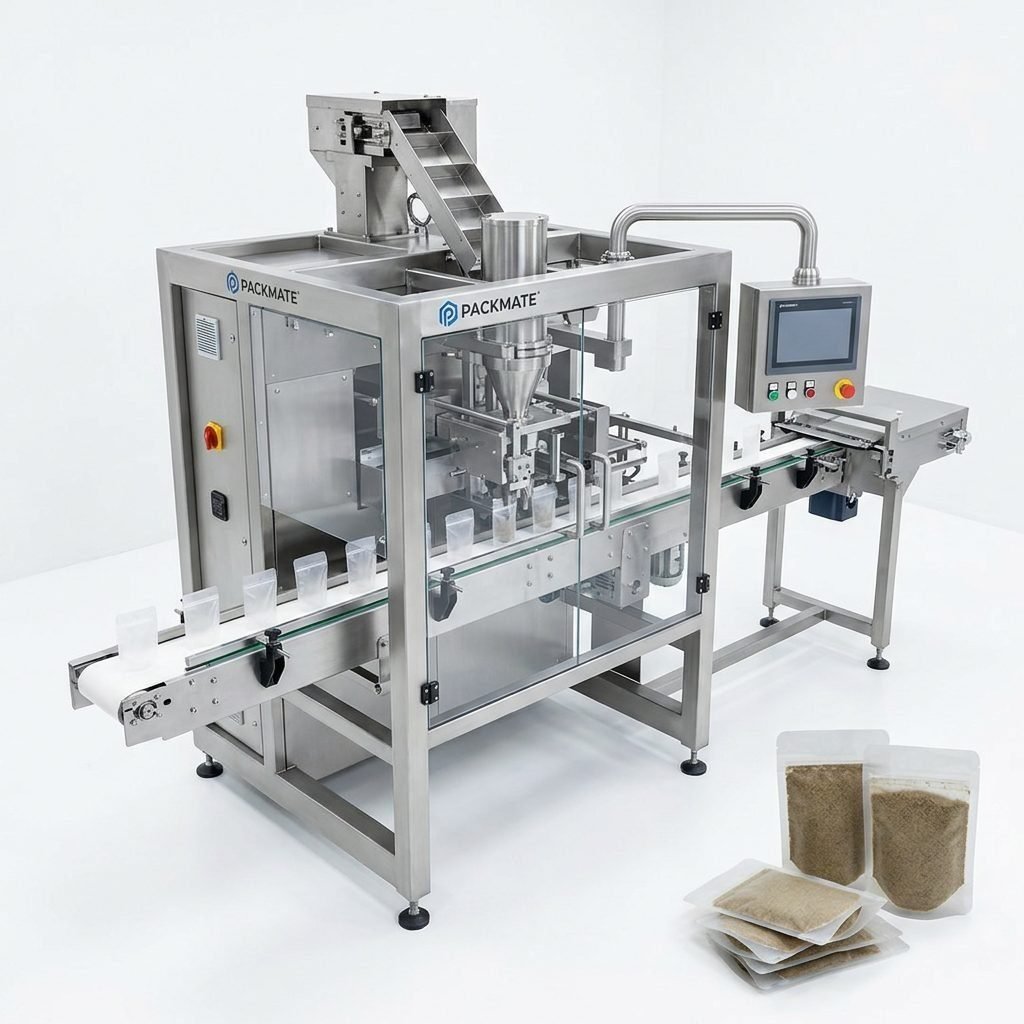
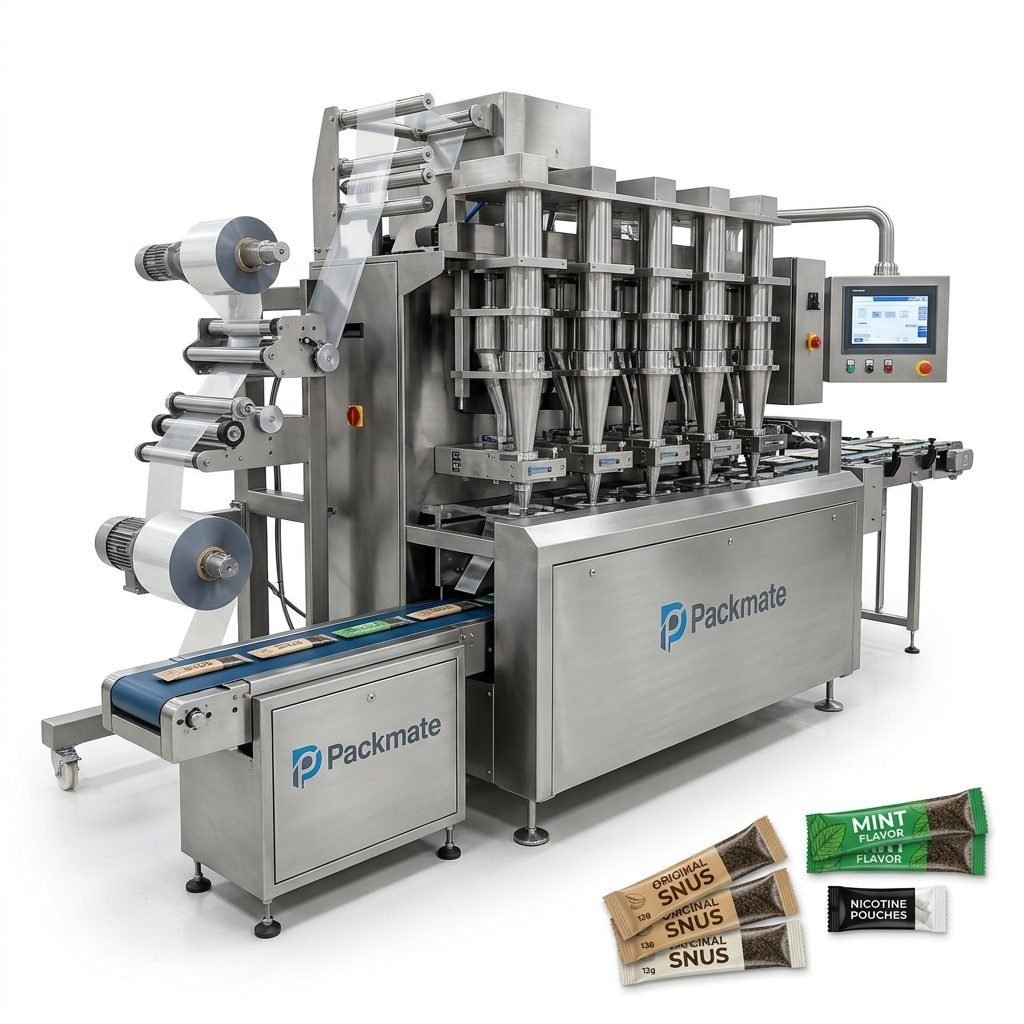
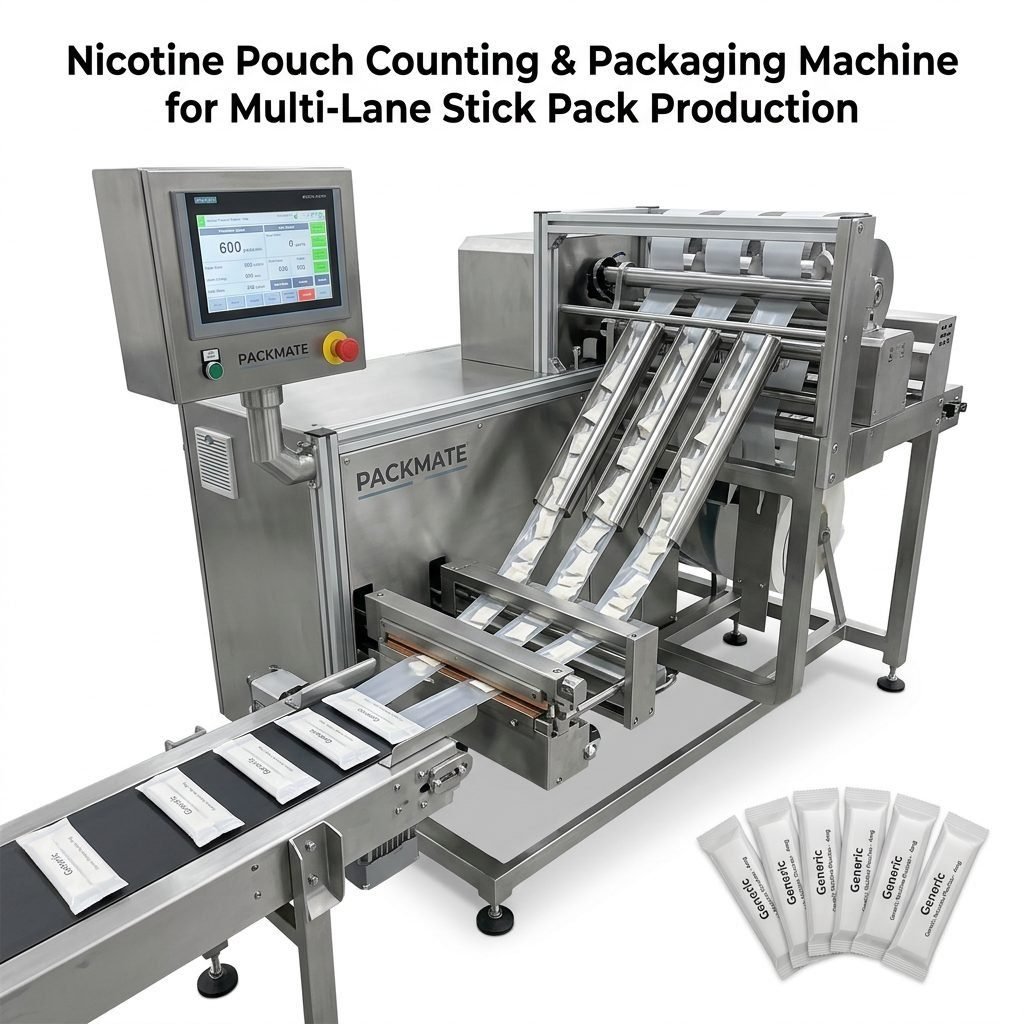
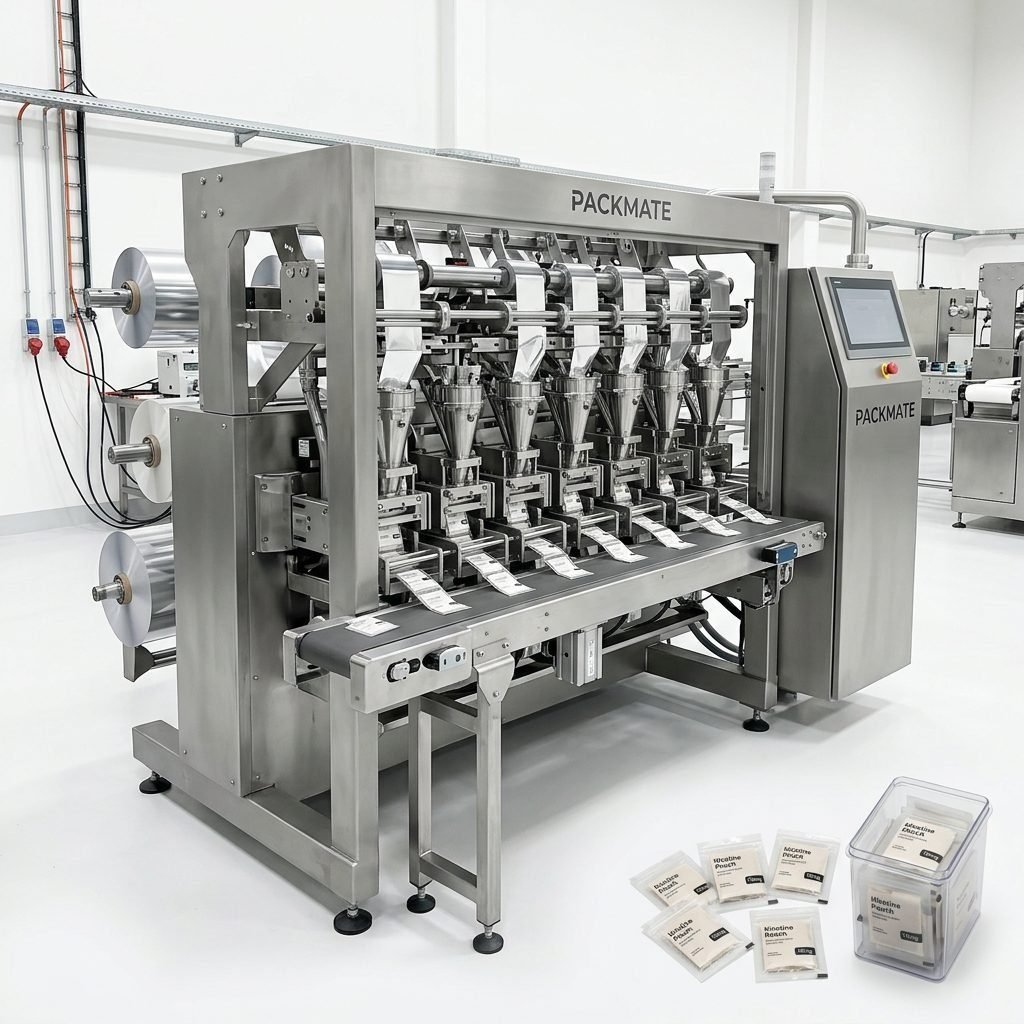
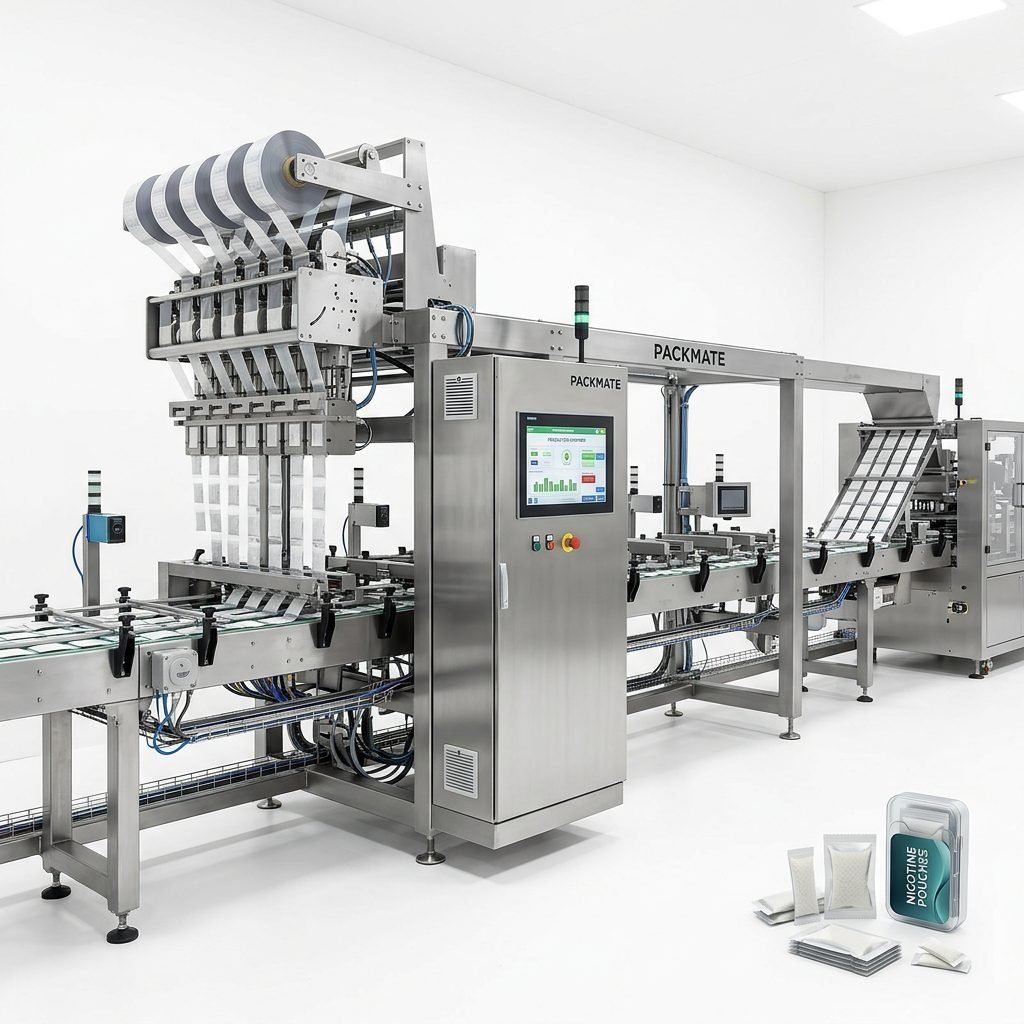
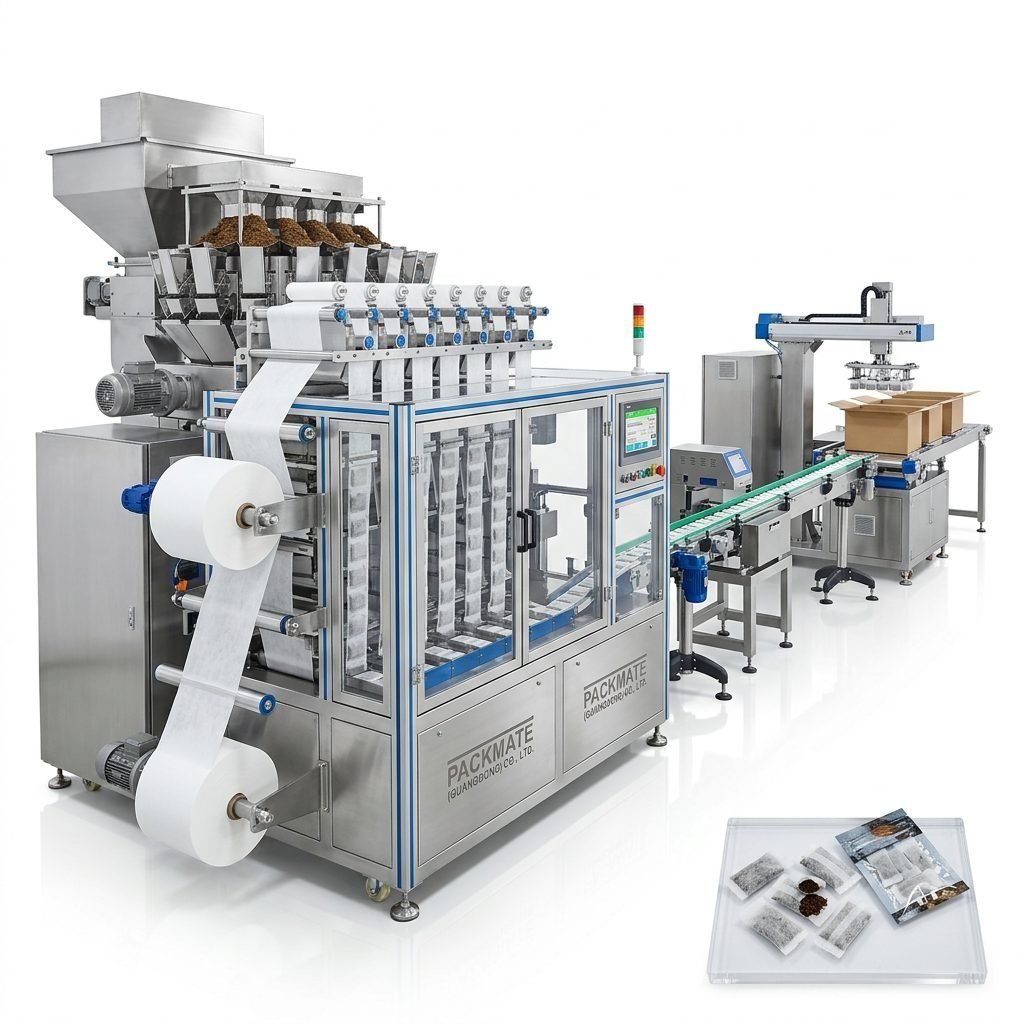
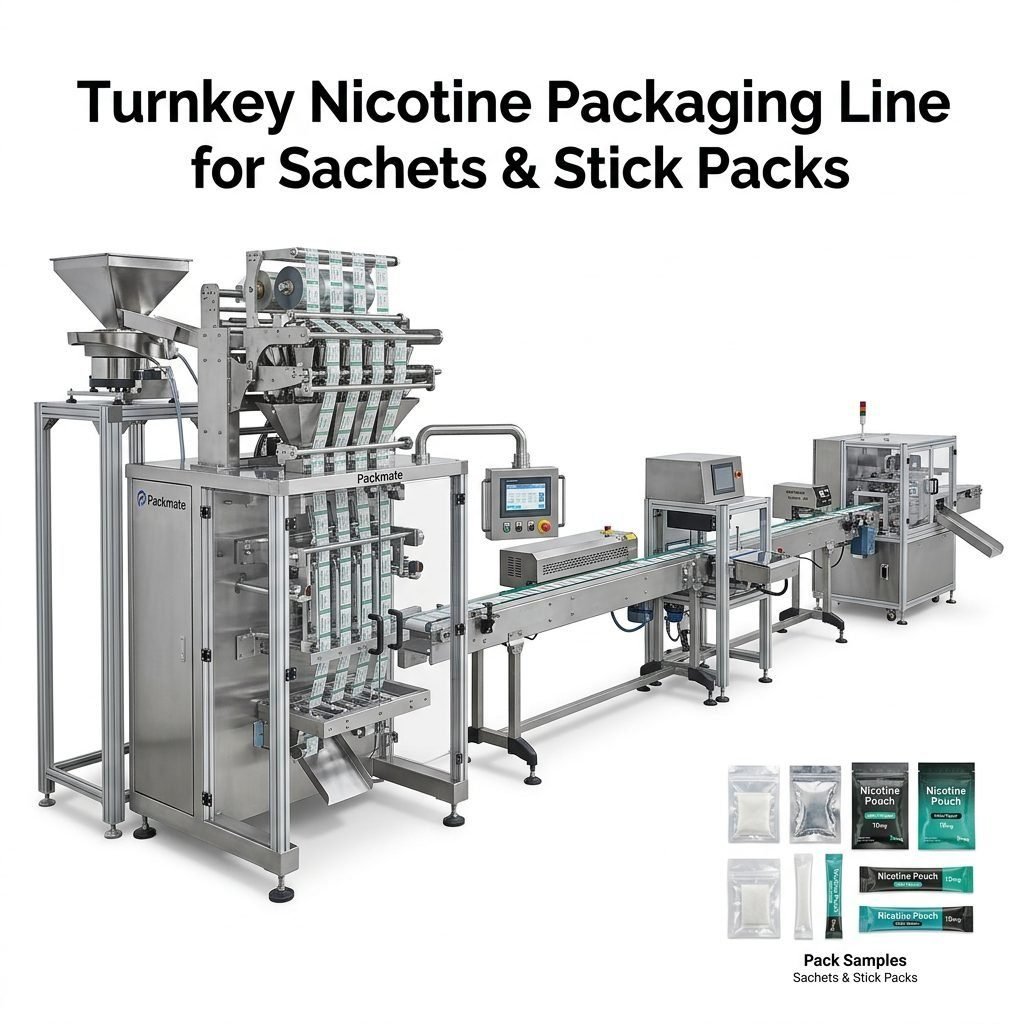
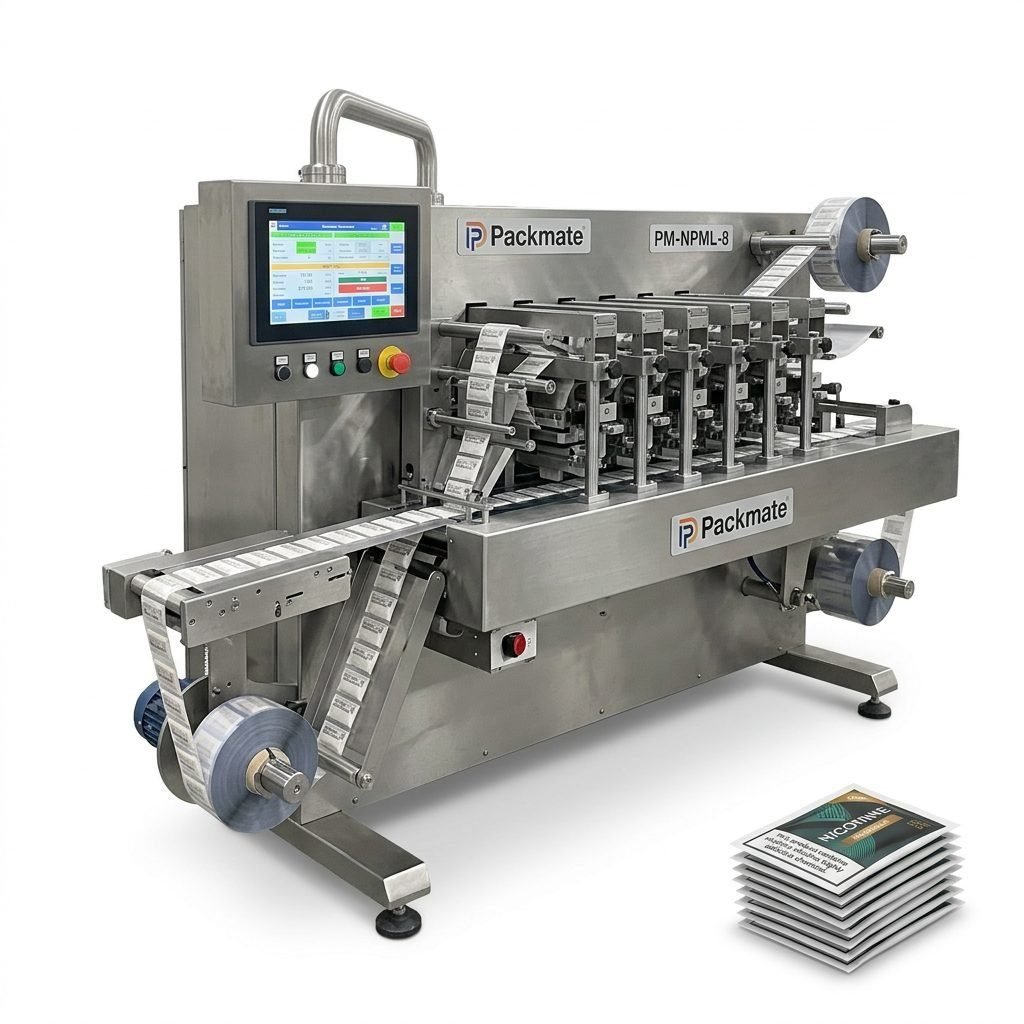
Choosing the right manufacturer for nicotine packaging machinery can determine the efficiency, compliance, and ROI of your production line. With the rapid growth of the nicotine pouch and snus market, manufacturers must weigh technical performance, after-sales support, regulatory adherence, and long-term reliability when selecting a partner. This guide walks you through practical selection criteria, factory considerations, machine types, and a procurement checklist so you can make an informed decision that aligns with production goals and quality expectations.
🔎 Understand Your Production Requirements
The first step is an accurate assessment of your product format, hourly output target, and future scalability. Ask these questions:
- What are the pouch formats? (loose snus portion, nicotine pouch, sachet, stick pack)
- What is target throughput (pieces/min or packs/min) now and in 2–5 years?
- Do you require single-lane precision or multi-lane high-output lines?
- Are there special materials (foil, cellulose, biodegradable films) or secondary processes (boxing, cartoning)?
Matching machine type to these requirements prevents costly retrofits later. For multi-lane small-dose snus, high-precision systems designed specifically for snus are essential.
📦 Common Machine Types and Where They Fit
Familiarity with common machine categories helps you shortlist manufacturers by expertise. Typical categories include stick pack machines, sachet machines, snus/nicotine pouch systems, and integrated filling & weighing lines. If you want to explore proven models, check product pages such as
Snus & Nicotine Packaging Machines
and
Sachet & Stick Pack Machines.
✅ Key Manufacturer Evaluation Criteria
When you evaluate vendors, prioritize the following criteria:
Experience & Industry Focus
A manufacturer with decades of experience and a focus on snus/nicotine packaging will understand the nuances of small-dose pouch dosing, sealing integrity, and cross-contamination prevention. Look for companies with proven specialization rather than generalist packaging suppliers.
Certifications & Compliance
Confirm CE, ISO, and any region-specific certifications that align with your market. Compliance reduces integration risk and eases regulatory approvals on import/export.
Manufacturing Capability & QC
Factory scale (CNC machining, precision assembly lines, and testing labs) affects delivery accuracy and machine consistency. Ask for factory photos, process flow, and quality control procedures.
Customization & Turnkey Solutions
If you need integrated weighing, automated feeding, or specific packaging sizes, the ability to deliver a turnkey line is vital. Some manufacturers provide full lines including fillers, weigher, and cartoning equipment — reducing integration headaches.
After-sales Support & Spare Parts
Evaluate the vendor’s global support network, spare part lead times, remote troubleshooting capability, and training programs. Long-term uptime depends on rapid service and parts availability.
Total Cost of Ownership (TCO)
Beyond purchase price, include installation, validation, spare parts inventory, and energy usage into your TCO model. Sometimes a higher initial investment yields lower operating costs and less downtime.
🔧 Technical Specifications to Verify
Technical details matter more than marketing claims. Before buying, validate these specs with test runs or factory acceptance tests:
- Throughput range and stable speed at intended format
- Filling accuracy ± tolerance for powders, granules, and liquids
- Sealing integrity tests (heat/weld seals) and materials compatibility
- Changeover time between formats and required tooling
- PLC/HMI platform, connectivity for Industry 4.0, and data logging
- Noise levels, energy consumption, and preventive maintenance schedule
Factory Acceptance Test (FAT)
A mandatory FAT demonstrates performance with your product. Request a full FAT that includes continuous-run tests at required speeds, sealing checks, and sample production for validation paperwork. A transparent manufacturer will welcome customers to witness FAT or provide live video demonstrations.
📈 Service & Lifecycle Considerations
Long-term performance depends on the manufacturer’s lifecycle support. Important service factors include:
- Global spare parts distribution and average lead times
- Training programs for operators and maintenance staff
- Remote diagnostics and software updates
- Upgrade paths (e.g., adding multi-lane modules or automation)
For vendors with global presence, ask for local references and case studies to verify real-world support. Packmate’s history of global turnkey solutions and exhibition presence provides evidence of market reach and service capability — see their company details at
About Packmate.
💡 Practical Procurement Checklist
Use this checklist during vendor selection and contracting:
- Define required formats, throughput, and quality criteria in writing.
- Request detailed technical specs, wiring diagrams, and component lists.
- Require FAT with your materials and provide acceptance criteria.
- Confirm lead times, delivery schedule, and site installation plan.
- Include warranty terms, spare parts kits, and training in the contract.
- Negotiate performance guarantees and penalties for missed targets.
- Plan for spare parts inventory and preventive maintenance contracts.
🌍 Global Considerations & Local Market Habits
Nicotine product regulations vary by region. When sourcing machinery for different markets:
- Europe: Expect robust documentation for CE conformity and a focus on child-resistant designs and traceability.
- North America: Emphasize FDA-related requirements, batch traceability, and tamper-evident packaging.
- Asia: Rapid scalability and cost-effective automation can be prioritized; local vendor presence aids fast support.
Manufacturers that have global exhibition presence and multi-region case studies are often better equipped to handle different regulatory landscapes. For verified case examples and global projects, refer to
Case.
💬 Negotiating Price vs Value
Price is one component; value includes uptime, consistency, and service. Use the following approach:
- Obtain multiple quotes and ask for clear scope — base machine vs turnkey line.
- Quantify expected uptime and calculate lost production cost in case of downtime.
- Include training, spare parts, and software in the total cost proposal.
- Prefer machines with modular upgrades to protect your investment against future market changes.
🔗 Integration: Automation & Auxiliary Equipment
A complete nicotine packaging line often includes feeders, weighers, fillers, metal detectors, checkweighers, and cartoning machines. Selecting a manufacturer that either supplies or interfaces seamlessly with auxiliary equipment reduces integration risk. Explore auxiliary product offerings such as weighing and filling solutions:
Weighing & Packaging Systems
and
Filling & Packaging Lines.
Interfacing and Data
Confirm PLC compatibility, OPC-UA or other IIoT protocols, and whether the machine offers production data export for OEE and MES integration. Data-driven machines simplify troubleshooting and optimize yield.
🛠️ Red Flags to Watch For
When evaluating proposals, be cautious of:
- Vague performance claims without FAT results or references
- Hidden spare parts or proprietary consumables that lock you in
- Long lead times without clear manufacturing capacity evidence
- No clear warranty, training, or remote support plan
🚀 Why Choose a Specialist Manufacturer?
Specialist manufacturers with focused product lines deliver benefits in precision, reliability, and continuous improvement. For nicotine and snus equipment, this specialization translates into finely tuned dosing systems, robust multi-lane solutions, and industry-specific QA protocols. If you want to review a focused product range and factory capabilities, visit
Bag & Pouch Packaging Machines
and
Auxiliary Packaging Equipment.
📝 Final Steps Before Purchase
Before signing any purchase agreement:
- Confirm delivery and installation milestones with penalties for delays.
- Include acceptance criteria and sample acceptance protocol in the contract.
- Agree on training dates, documentation language, and spare parts package.
- Plan site preparation, utilities, and local approvals in advance to avoid installation delays.
📞 Contact & Next Actions
Reach out to shortlisted manufacturers for site visits, FAT schedules, and reference checks. If you need a supplier with proven global turnkey solutions and strong factory capability, consider viewing the company profile and contact pages for additional details and direct inquiries:
Service |
Contact Us |
Our Exhibition.
🔁 Conclusion & Key Takeaways
Selecting the best nicotine packaging machinery manufacturer requires balancing technical capability, proven experience, strong after-sales service, and a clear TCO assessment. Prioritize vendors who provide FAT with your materials, clear warranty and spare parts arrangements, and modular systems that allow future upgrades. A specialist supplier with global turnkey experience can significantly reduce integration risk and accelerate time to market.
Frequently Asked Questions
Q: How important is a Factory Acceptance Test (FAT)?
A: A FAT is essential. It verifies the machine’s performance with your actual product and confirms throughput, sealing integrity, and tolerance before shipment.
Q: Should I buy a single machine or a turnkey line?
A: If you aim for fast production ramp-up and minimal integration risk, a turnkey line (including fillers, weighers, and cartoning) is recommended. For phased expansion, modular machines with clear integration protocols work well.
Q: What warranties and spare parts strategy should I require?
A: Insist on at least a 12-month warranty, a starter spare parts kit, and committed lead times for critical components. Remote support and preventive maintenance contracts are highly valuable.
Q: How to verify vendor credibility quickly?
A: Request references, factory photos, FAT video evidence, certification copies, and international case studies. Attendance at industry exhibitions and published client cases indicate market credibility.
Q: Where can I find more detailed product listings and company information?
A: For detailed product categories and technical specifications, review the product pages and catalogs available on the manufacturer’s website such as the
Catalog and
Snus & Nicotine Packaging Machines pages.