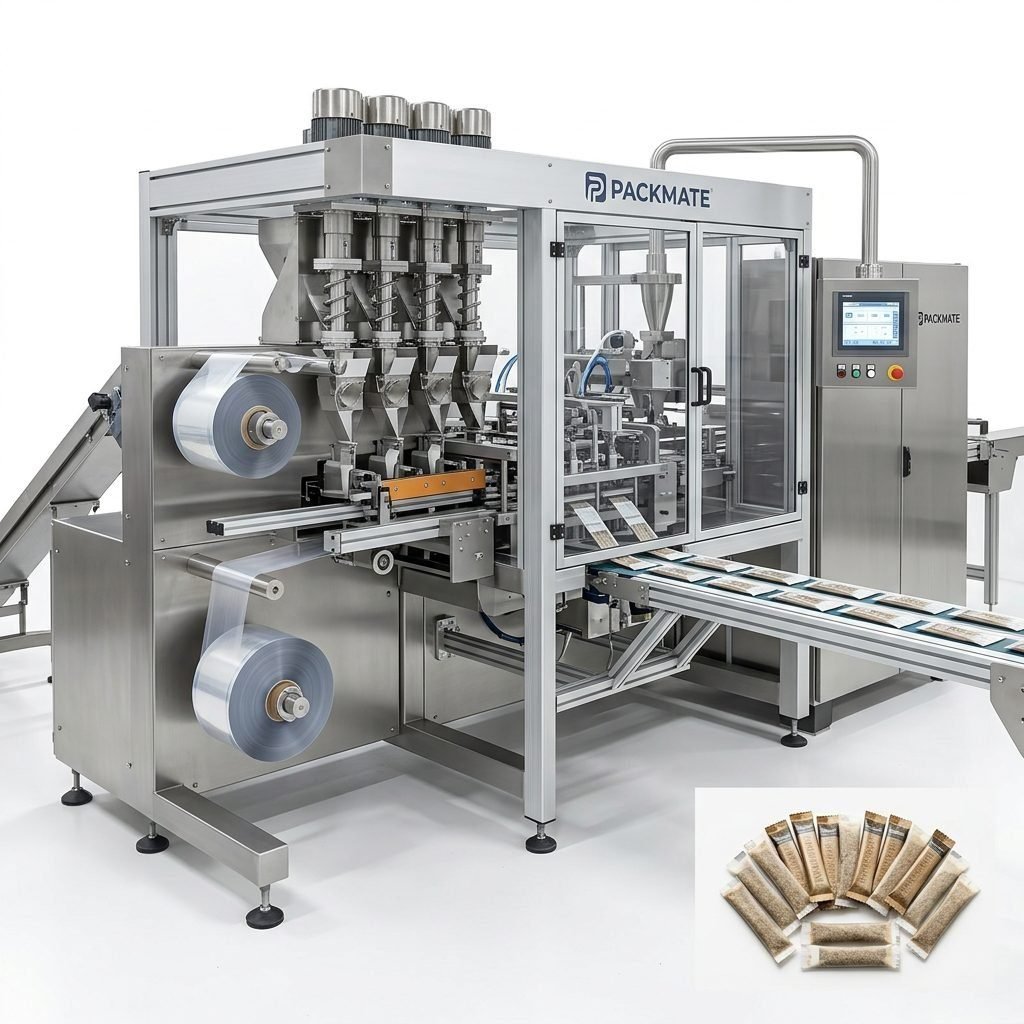
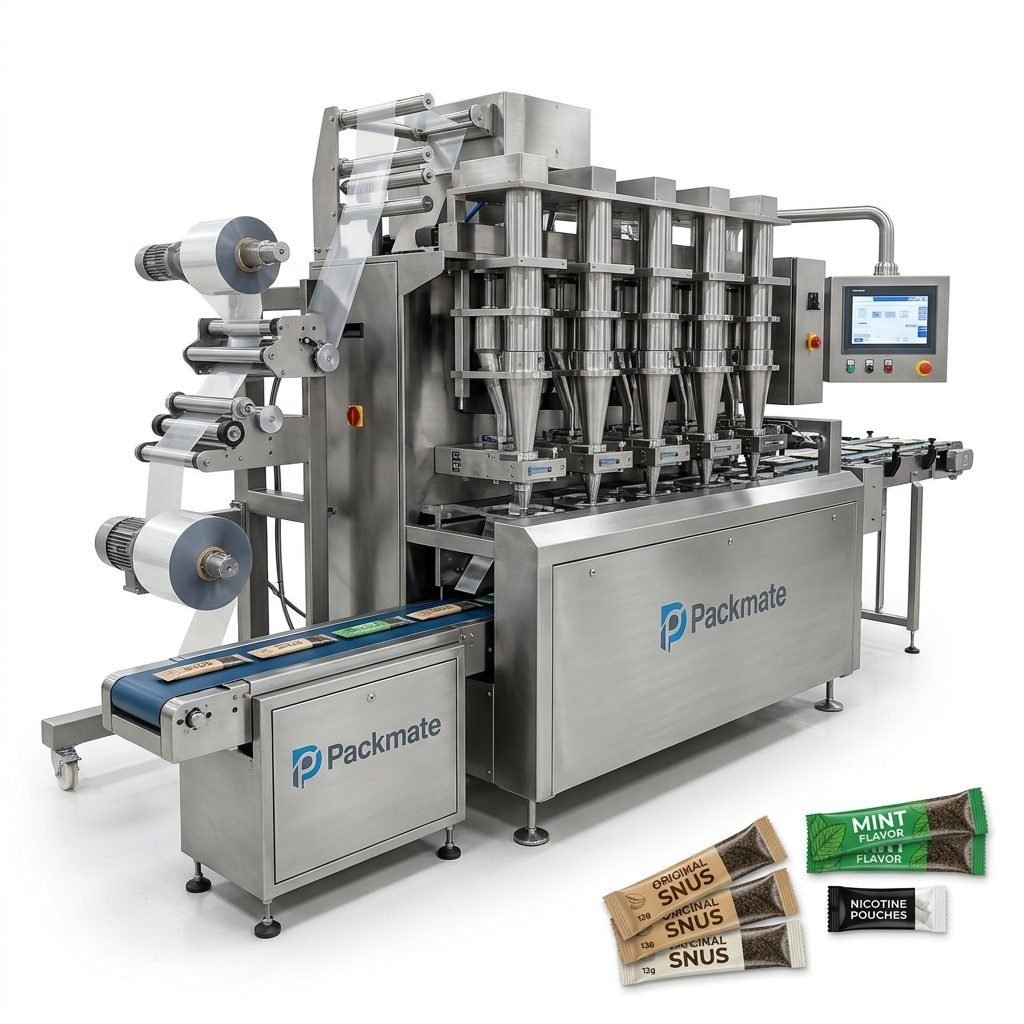
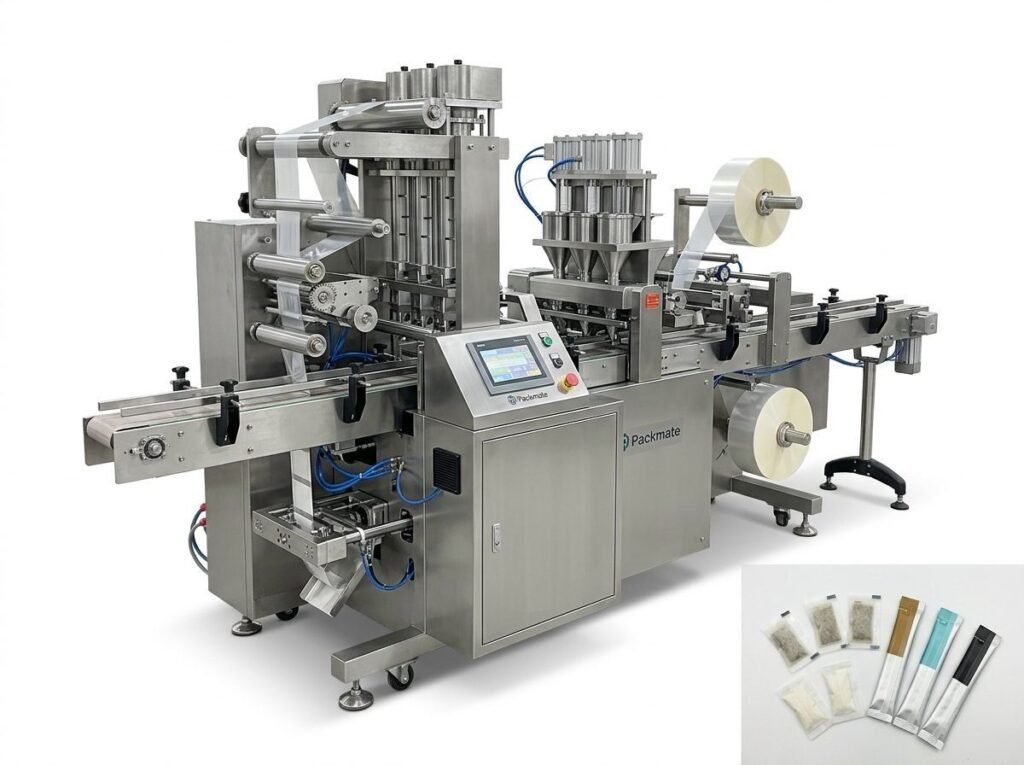
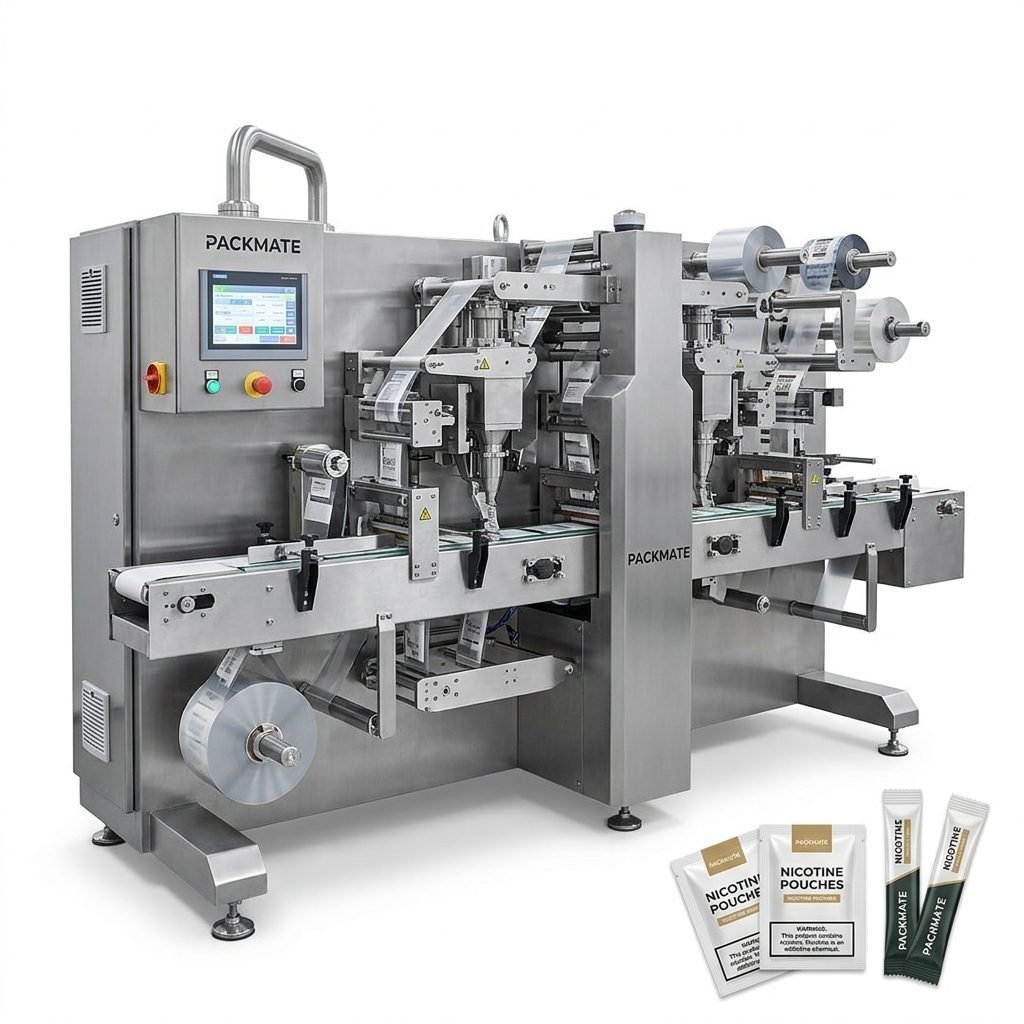
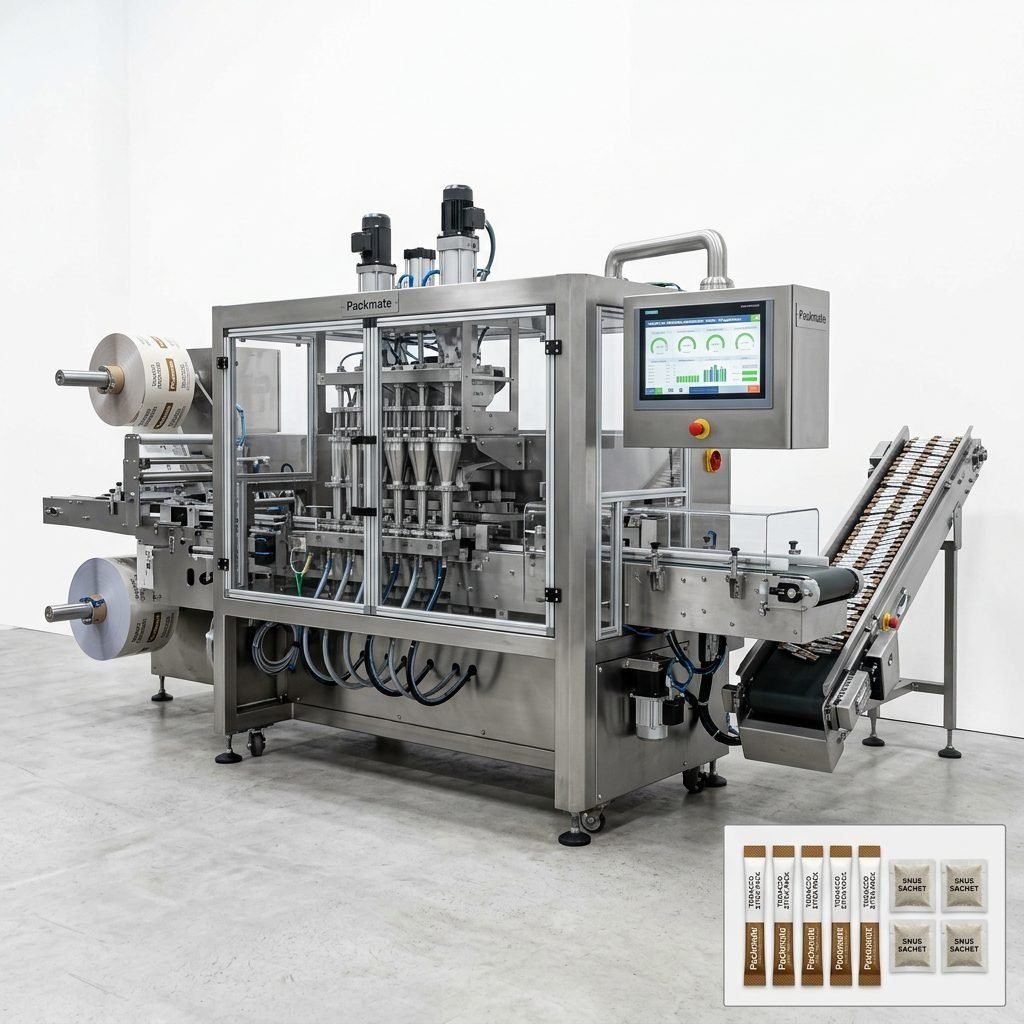
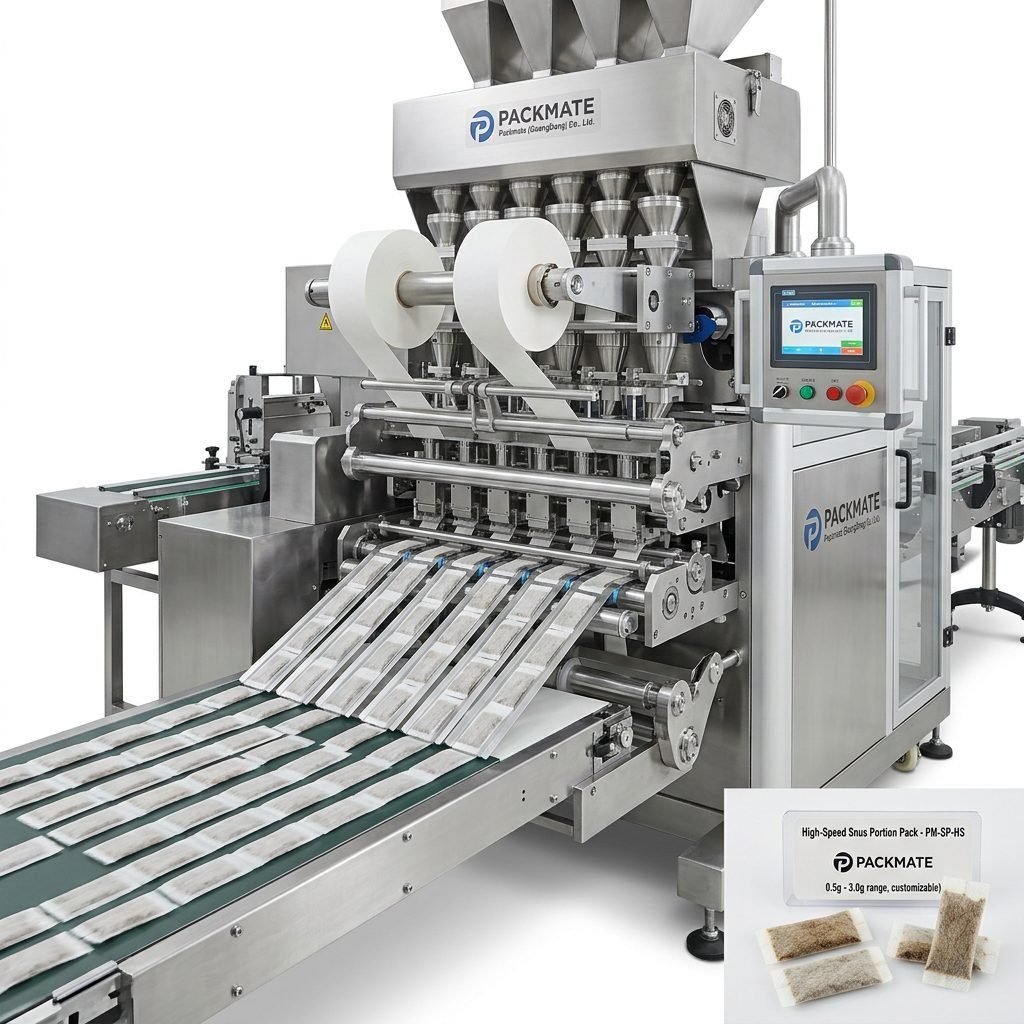
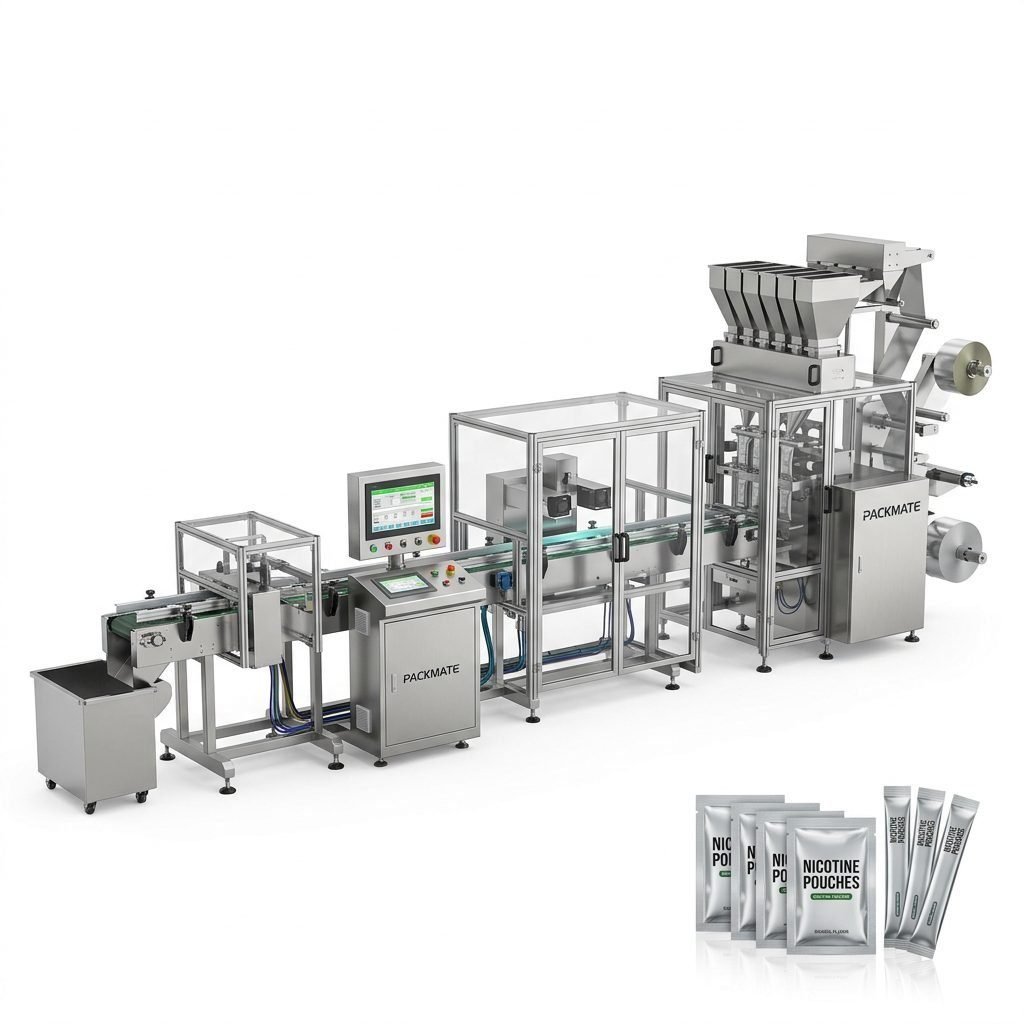
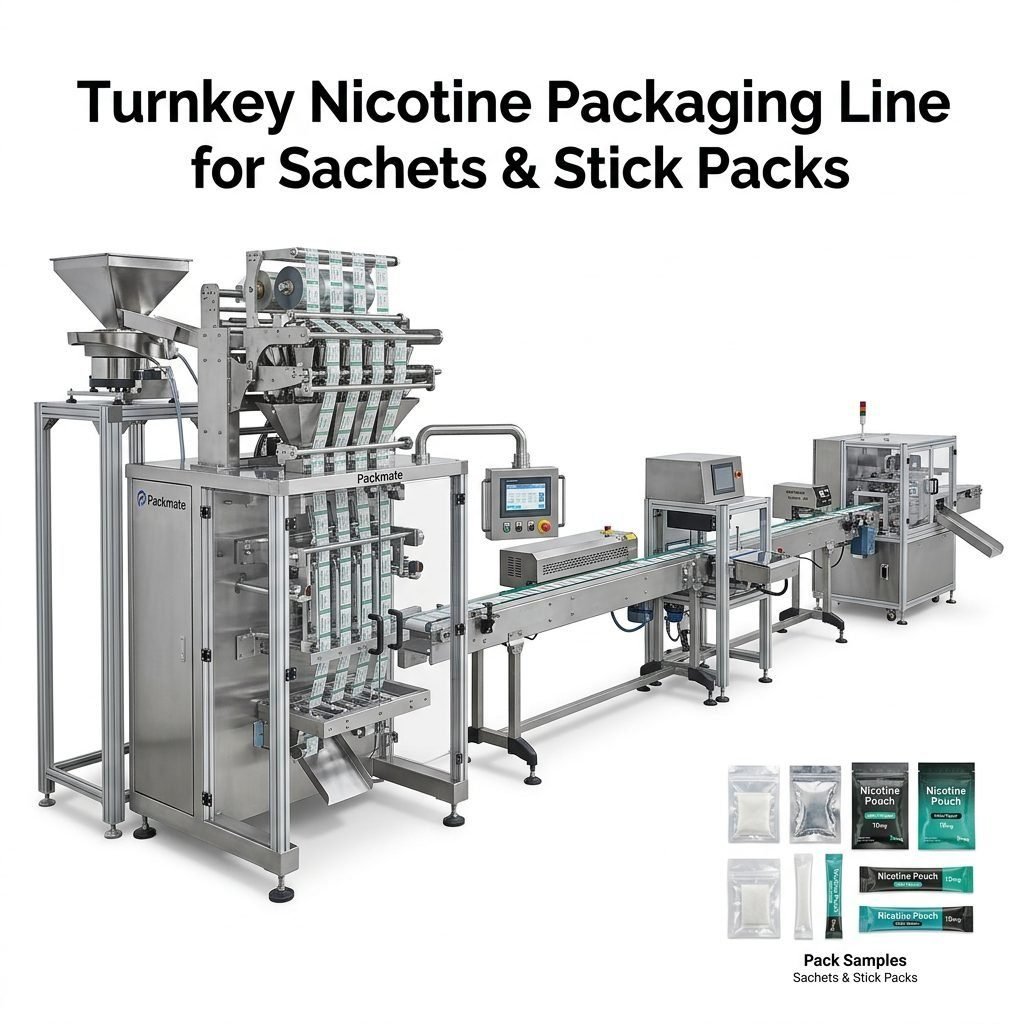
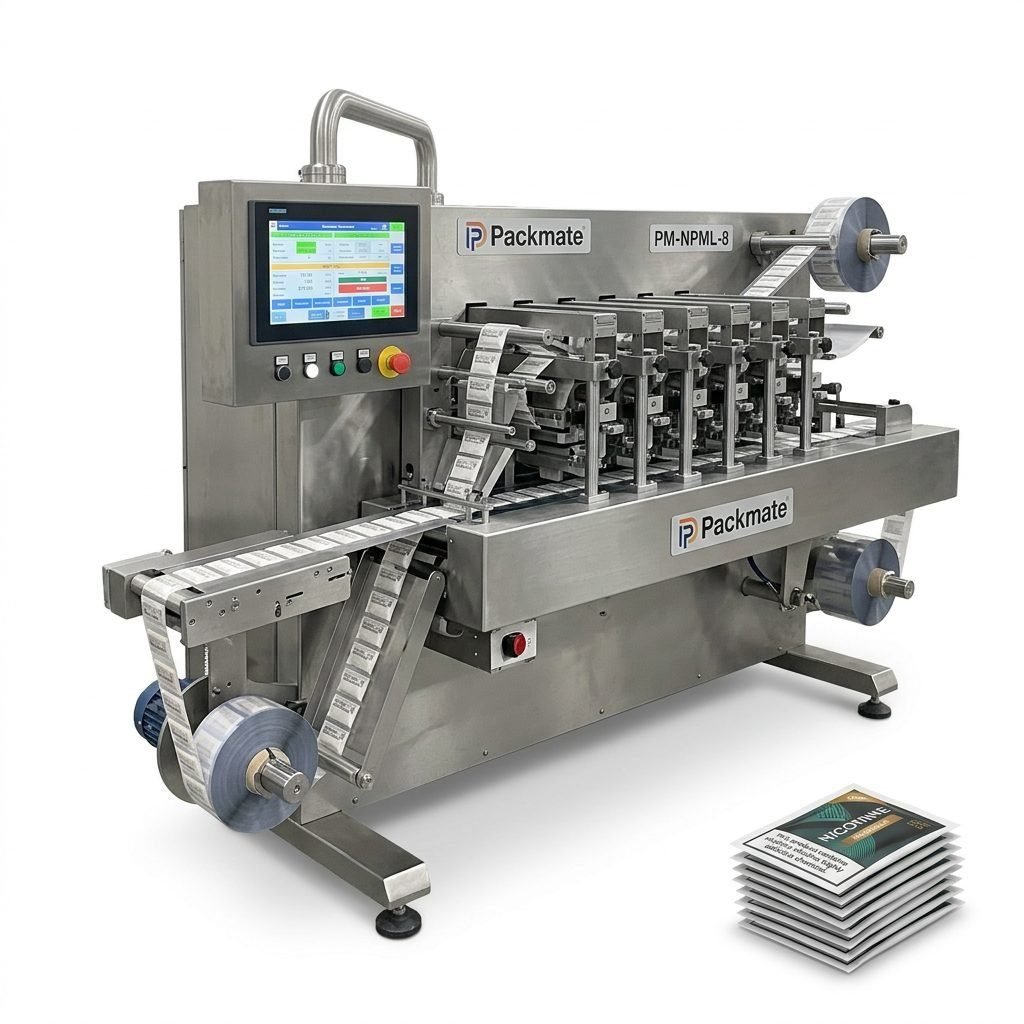
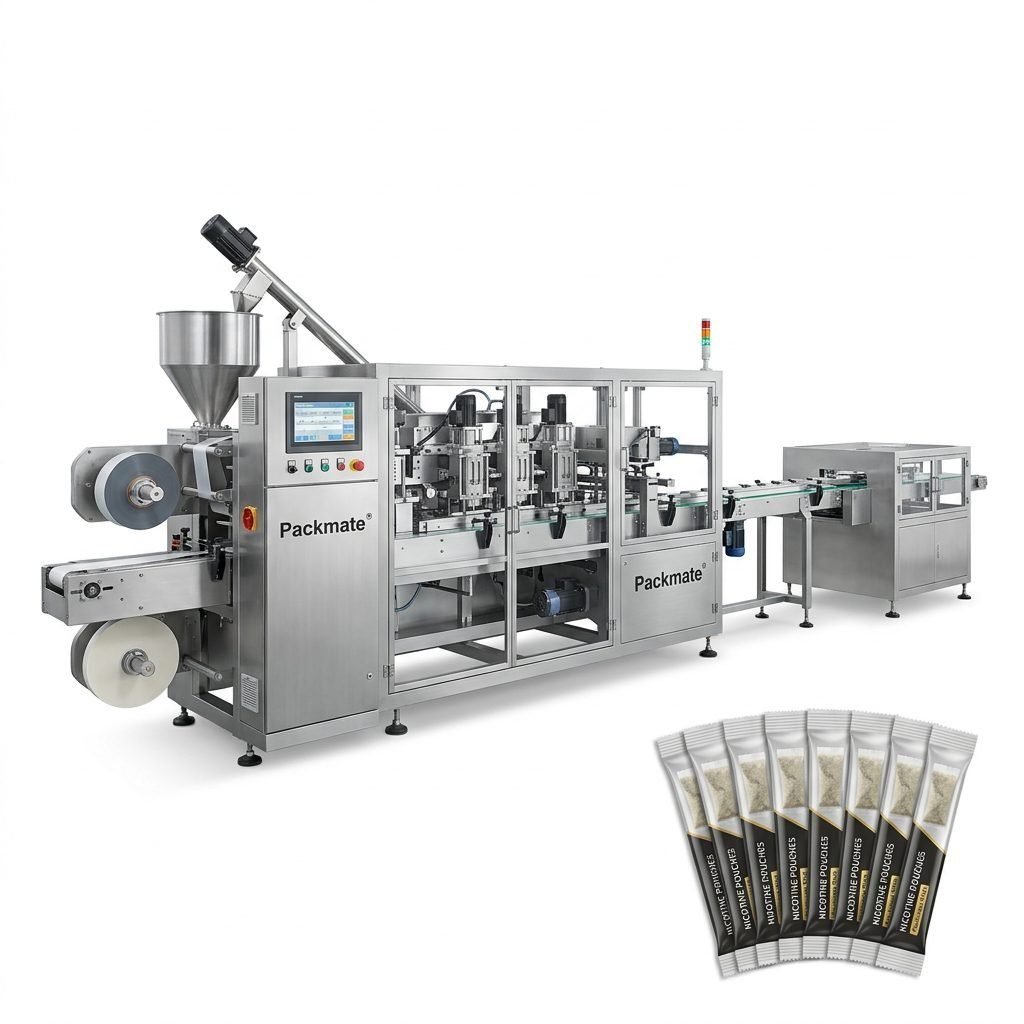
In today’s competitive nicotine pouch and snus market, manufacturers need production lines that deliver high throughput, consistent quality, and low downtime. A well-designed High Output Snus Production Line achieves exactly that by integrating precision dosing, multi-lane pouch forming, synchronized sealing, and automated packing. This article outlines how modern snus lines boost efficiency and capacity while ensuring regulatory compliance and product consistency across global markets.
Why High Output Matters for Snus & Nicotine Pouch Production
The market demand for nicotine pouches has surged, driven by consumers seeking smoke-free alternatives. High output production lines reduce per-unit cost, shorten lead times, and allow manufacturers to scale rapidly. Key outcomes include:
✓ Higher throughput: Multi-lane machines can produce thousands of pouches per minute, multiplying output without increasing floor space dramatically.
✓ Consistent dosing: Precision weighers and closed-loop controls keep nicotine content within tight tolerances for compliance and consumer safety.
✓ Reduced labor & downtime: Automated changeovers, self-diagnostic systems, and remote support minimize manual intervention and stoppages.
Core Components of a High Output Snus Production Line
A high-performance snus line is a modular integration of specialized subsystems. Each module must be engineered for speed and repeatability:
1. Precision Feeding & Dosing
Accurate feeding systems and micro-dosing units ensure each pouch receives exactly the intended weight of tobacco or nicotine blend. Advanced gravimetric or multi-head weighers reduce variability and support recipes for different product SKUs.
2. Multi-Lane Pouch Forming
Multi-lane sachet or stick-pack formers maximize throughput by producing several pouches side-by-side. Designs focus on stable web handling, synchronized cutting, and high-speed sealing to preserve pouch integrity at high line speeds.
3. Sealing & Package Integrity
Reliable heat-seal systems and inline leak detection maintain product shelf life and customer confidence. Options include tamper-evident features and specialty films for moisture and aroma protection.
Iconic functions: ⚙️ automated adjustment • 📦 inline packing • 🚀 remote monitoring
Engineering for Consistent Quality and Compliance
Consistency is non-negotiable for regulated nicotine products. Robust quality control measures include in-line weighing, metal detection, vision inspection for seal integrity, and batch traceability. Equipment certified to CE and ISO standards reduces compliance risk and simplifies market entry across regions.
Scalable Configurations and Custom Solutions
Not every producer has the same needs. Modular lines allow you to start with a compact cell and scale up to fully automated production with upstream mixing and downstream cartoning. Manufacturers like Packmate deliver customized turnkey lines tailored to product format, speed targets, and footprint constraints. Explore product lines and machine types to find the best fit:
- Snus & Nicotine Packaging Machines — product overview
- Bag & Pouch Packaging Machines — formats and specs
- Sachet & Stick Pack Machines — multi-lane options
Maximizing Efficiency: Best Practices on the Line
Efficiency is achieved through a combination of design and operation:
Standardize SKUs: Minimize changeover time by grouping runs with similar materials and packaging films.
Preventive maintenance: Scheduled checks of servo motors, heaters, and web paths reduce unplanned stops.
Operator training: Skilled staff can use diagnostics and quick-replace tooling to keep uptime high.
Automation & Industry 4.0 Integration
Modern lines support MES connectivity, OEE monitoring, and cloud-based analytics. Remote troubleshooting and predictive maintenance algorithms help detect wear patterns before a failure occurs, saving both time and parts.
Return on Investment: Cost vs. Capacity
While capital costs for a high-output line are higher than single-lane machines, ROI is realized through:
- Lower labor costs per pouch
- Less waste due to tighter dosing and better seal quality
- More predictable throughput enabling larger contracts and better supply agreements
Why Choose Packmate for Your Snus Line
Packmate combines three decades of engineering with a full manufacturing facility to deliver robust, customizable lines:
Factory strength: 20,000㎡ facility with advanced CNC and precision assembly.
Experience: 30+ years in packaging machine development and global turnkey projects.
Global support: Worldwide exhibitions and after-sales service to keep lines running.
Learn more about corporate capabilities and service offerings on the About Packmate page, or view real-world implementations in our Case studies.
Installation, Commissioning and After-Sales Service
Successful deployment requires careful planning: site utilities, clean room considerations, and operator training. Reputable suppliers provide installation, validation, and remote monitoring support. For spare parts and technical questions, use direct communication channels such as the Contact Us page.
Common Customization Options
To meet brand and regulatory requirements, manufacturers often request:
- Special films for extended shelf life and aroma retention
- Child-resistant closures or tamper-evident seals
- Custom pouch shapes and branding printing modules
- Automated secondary packing into cartons and cases
Real-World Benefits: A Practical Example
Consider a producer upgrading from a single-lane stick pack system to a four-lane multi-lane snus line. Output can increase nearly fourfold while retaining the same floor footprint. When combined with automated feeding and cartoning, order fulfillment times drop, enabling faster distribution to retailers and improved cash flow.
Sustainability and Waste Reduction
High-efficiency lines contribute to sustainability by reducing material waste through precision forming and heat-seal control, and by optimizing film usage with better web alignment. Many manufacturers also prioritize recyclable films and streamlined secondary packaging to lower environmental impact.
Selecting the Right Supplier
Evaluate suppliers on machine performance, build quality, certifications, and service network. Key questions to ask:
Are machines CE/ISO certified? Certification ensures adherence to international safety and quality standards.
What is the lead time and installation plan? Clear timelines reduce downtime during transitions.
Is there a local service presence or remote support? Rapid access to parts and technical help keeps production steady.
Further Resources
For additional machine types, peripheral equipment, and full line solutions, visit the Packmate product categories for Weighing & Packaging Systems and Filling & Packaging Lines.
Conclusion
Investing in a high output snus production line is a strategic step for manufacturers aiming to scale, improve quality, and reduce costs. The right combination of precision dosing, multi-lane forming, robust sealing, and smart automation yields better margins and a stronger market position. With experienced suppliers, proven equipment, and a focus on service, you can transform production capacity while maintaining compliance and product integrity.
Frequently Asked Questions
Q1: How do multi-lane systems affect product changeover time?
Modern multi-lane systems are designed with quick-change tooling and recipe-based parameters. With operator training and pre-set recipes, changeovers between SKUs can be reduced to minutes rather than hours.
Q2: What certifications should I expect from a reputable snus line vendor?
Look for CE and ISO certifications as baseline indicators of quality and safety. Additionally, vendors should support validation documentation and component traceability for regulated product manufacturing.
Q3: Can I integrate existing upstream or downstream equipment with a new line?
Yes. Reputable system integrators design interfaces to sync new lines with mixers, conveyors, cartoners, and case packers. Clear electrical and mechanical specs during planning ensure smooth integration.
Q4: What after-sales support is typically offered?
Expect commissioning, operator training, spare parts kits, remote troubleshooting, and optional service contracts. Global exhibitors and local service networks make response times faster and reduce downtime.
Q5: How can I evaluate ROI before purchasing?
Calculate expected output increases, labor savings, reduced waste, and improved uptime. Request sample production runs and performance guarantees to model real-world returns.