Choosing the right nicotine packaging machine in Sierra Leone requires more than just comparing prices. Producers must balance local market habits, climate challenges, available workforce, and regulatory requirements with technical specifications such as speed, pouch types, material compatibility, and automation. This guide walks you through practical steps to select a machine that fits both your production goals and the Sierra Leonean business environment.
Understanding the Sierra Leone Market Context
Sierra Leone is a West African country with a predominantly young, English-speaking population and a growing urban consumer base. When evaluating nicotine pouch production, consider local consumption patterns and cultural attitudes to oral tobacco products. Distribution often depends on small retail outlets and informal markets, so packaging that is compact, durable, and easy to display can increase sales. Power reliability and humidity are practical operational concerns in many parts of the country — these affect machine uptime and material storage.
Why climate and power matter
Sierra Leone’s coastal climate is hot and humid, which can affect powder flow, hygroscopic ingredients, and paper or laminated film properties. Choose machines with sealed critical components, humidity-resistant feeding systems, and stainless contact parts. Also evaluate energy consumption and consider backup power options; machines with soft-start motors and energy-efficient drives help manage unstable grids.
📦 Quick checklist:
Production goals, pouch type, humidity control, power stability, local support & spare parts availability.
Types of Nicotine Packaging Machines to Consider
Different packaging styles meet different market needs. In Sierra Leone, compact retail formats and lightweight pouches are often preferred.
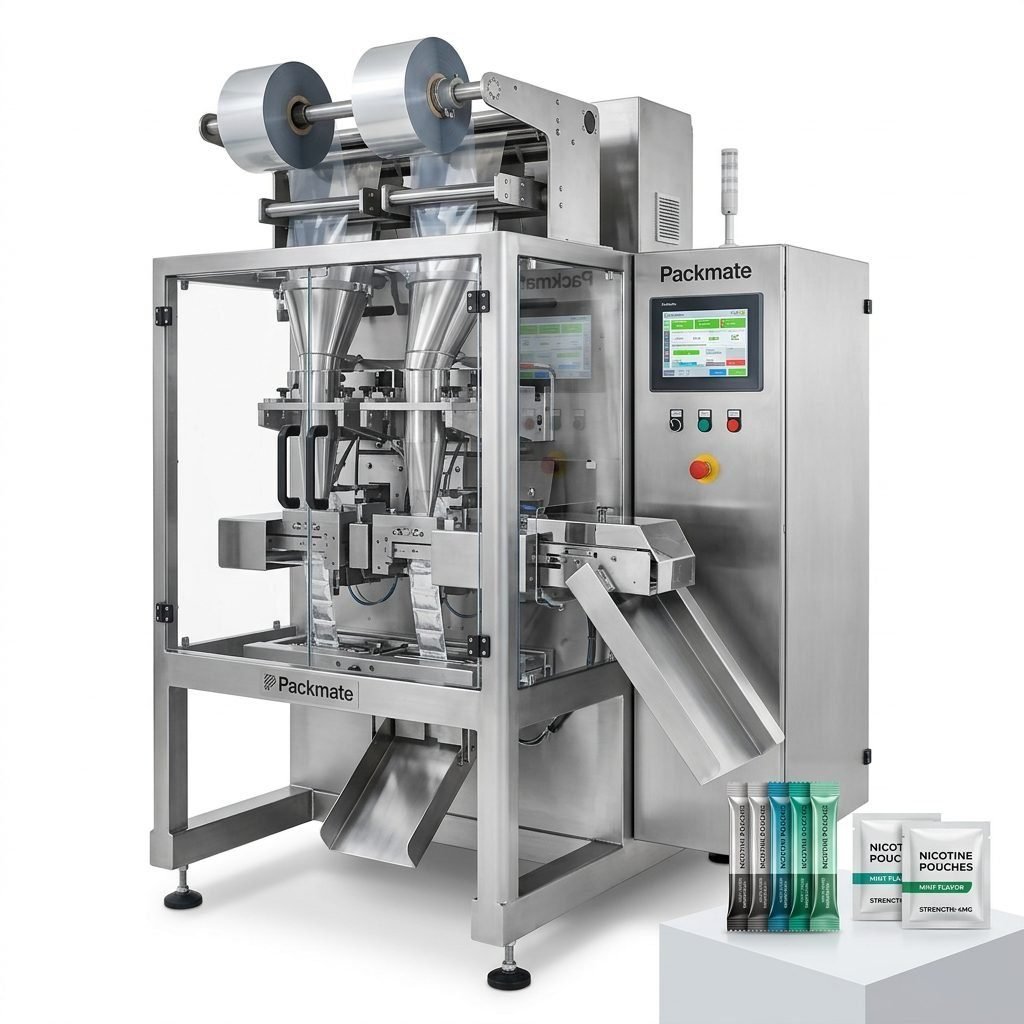
Sachet & Stick Pack Machines
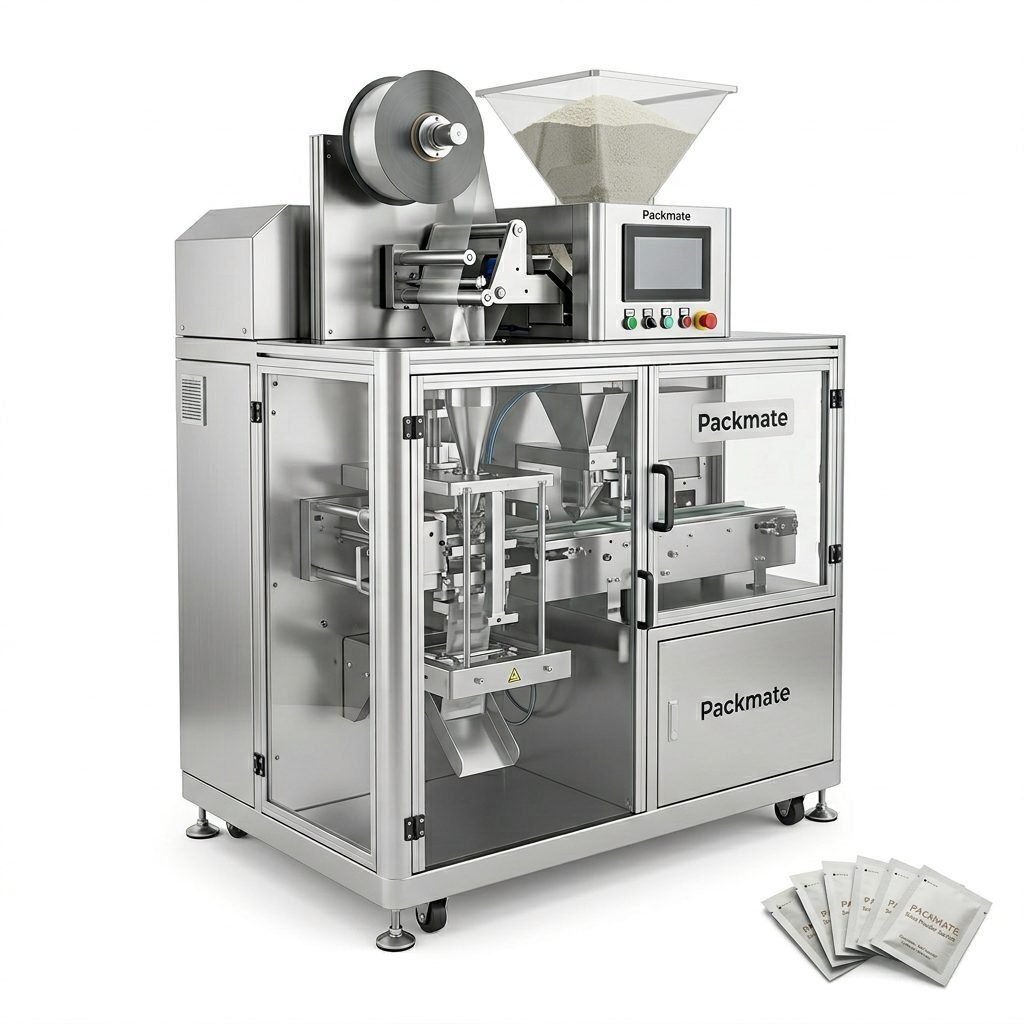
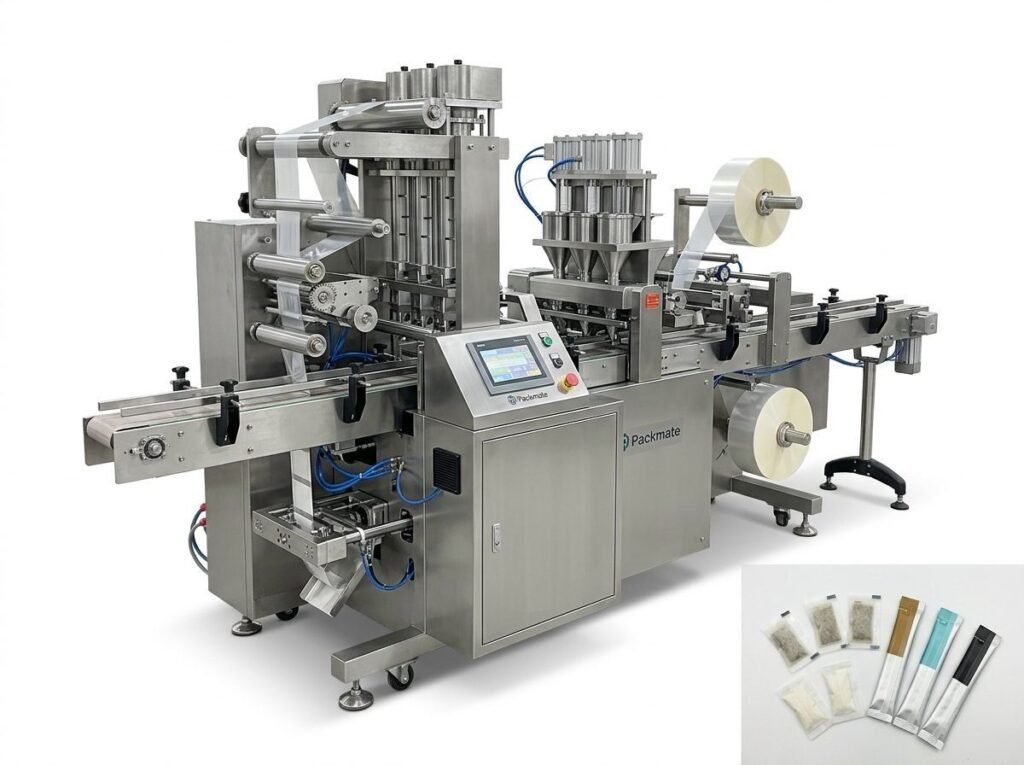
Stick packs are ideal for single-dose nicotine pouches or dissolvable products. Sachet machines are flexible for small portion packs. Both are suitable for fast-moving consumer channels and small retailers.
Pouch & Snus Machines (including multi-lane)
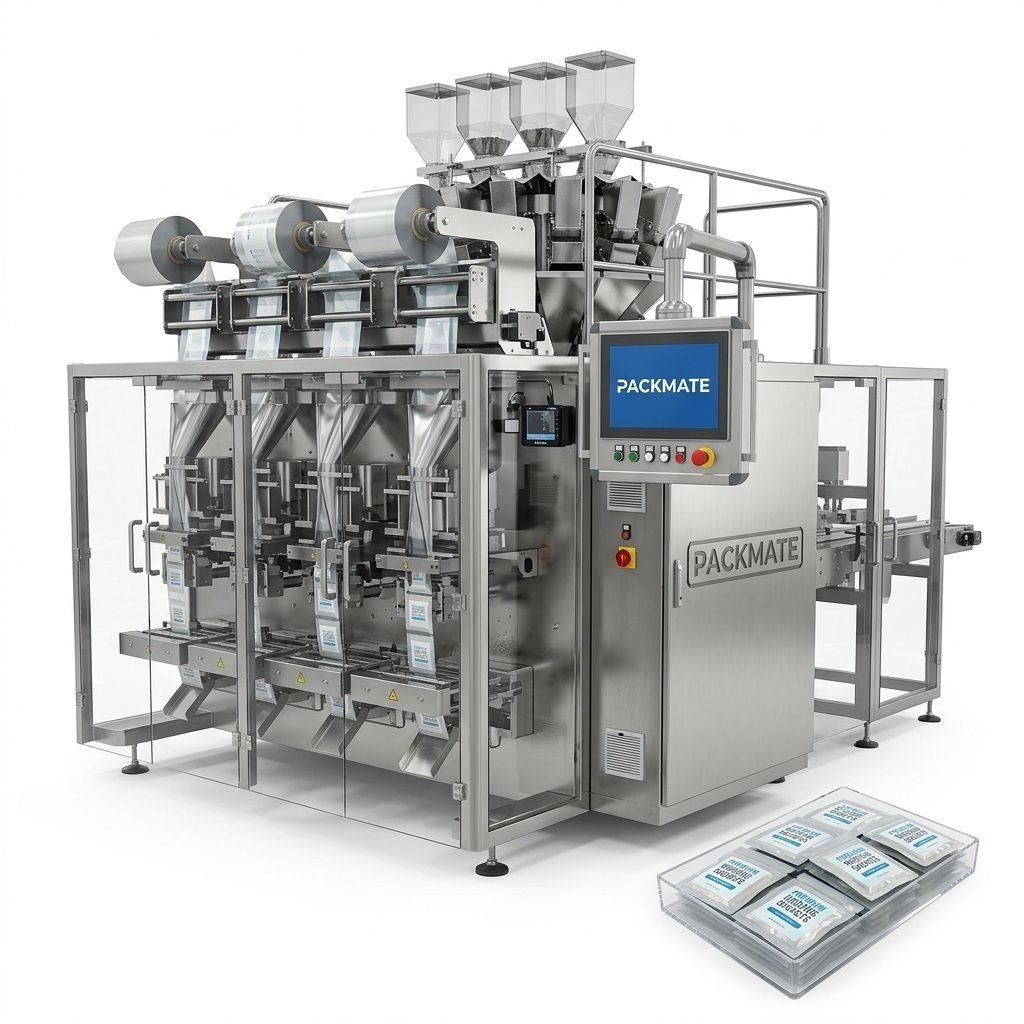
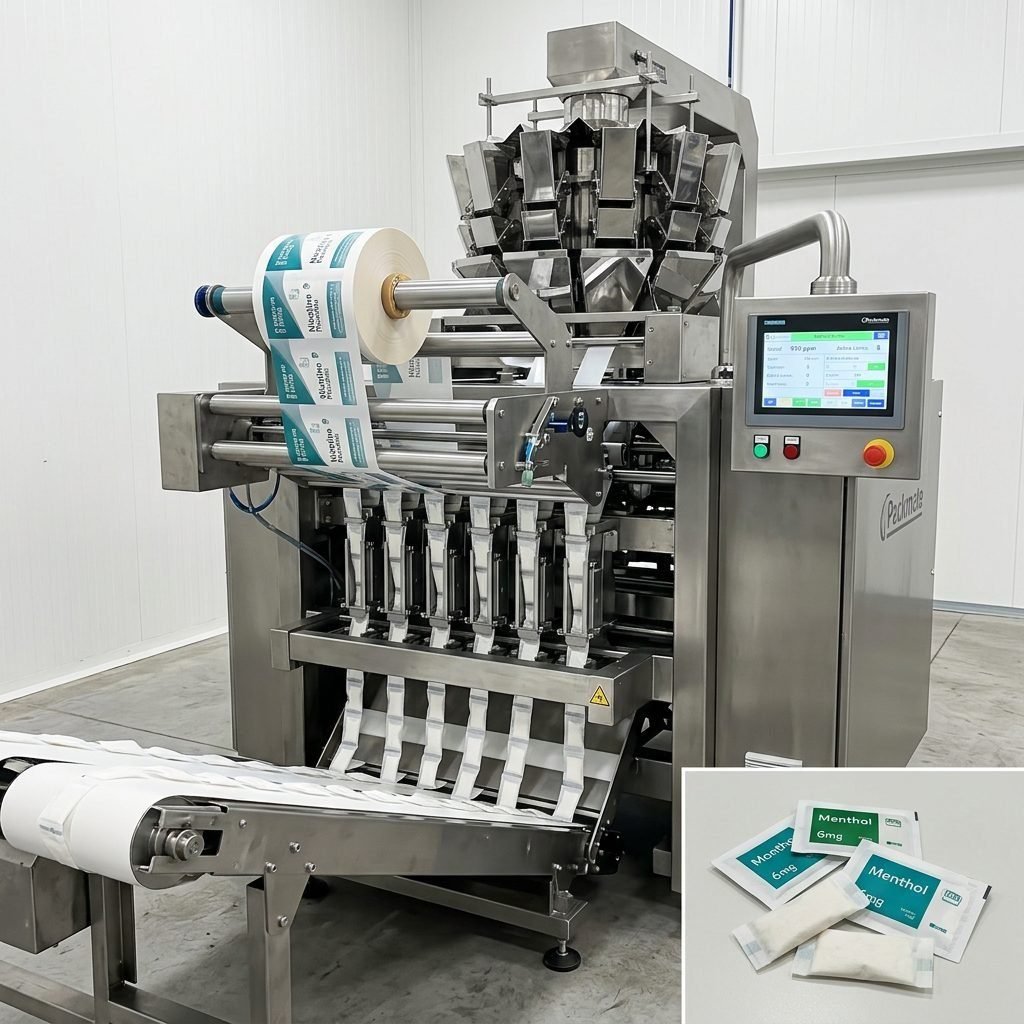
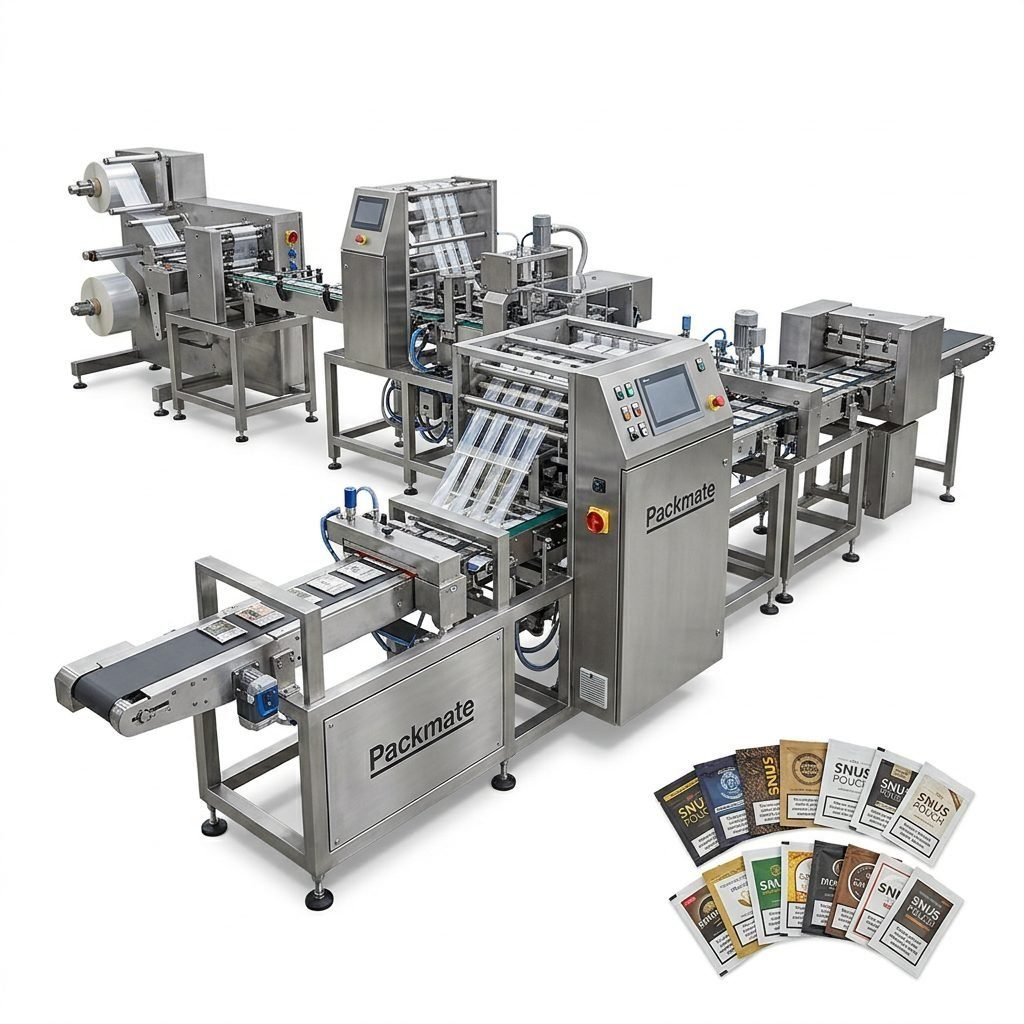
Multi-lane snus packaging machines allow high throughput while keeping floor space efficient — an important factor in limited factory footprints. These systems are specialized for nicotine pouch formats and often include integrated weighing and sealing.
For an overview of suitable models, see product ranges like Snus & Nicotine Packaging Machines and Sachet & Stick Pack Machines.
Key Technical Criteria: What to Compare
1. Throughput & Scalability
Match the machine speed (pouches/min or lanes x speed) to your short-term and long-term production forecasts. If you expect market growth, opt for modular machines or multi-lane systems that scale.
2. Material Compatibility
Verify the machine handles your chosen film types (laminated films, aluminum foil, paper laminates) and fillers (powder, granule, paste). Machines with adjustable dosing heads and gentle material paths are better for hygroscopic nicotine formulations.
3. Filling Accuracy & Loss Minimization
Precision weighing systems reduce content variance and regulatory risk. Choose machines with integrated check-weighers and feedback control for tight tolerance requirements.
4. Automation, HMI & Data Connectivity
User-friendly touchscreens, recipe management, and remote diagnostics improve uptime. For export or compliance needs, data logging and batch traceability are valuable.
5. Hygiene, Materials & Maintenance
Stainless steel contact parts, easy-to-clean design, and accessible components shorten downtime. Ask about mean time to repair, spare parts kits, and local technician training.
🔧 Tip: Prioritize machines with PLC controls and commonly available electrical parts to ease repairs in Sierra Leone.
Supplier Evaluation: Beyond the Spec Sheet
Technical specifications are the baseline. Equally important are supplier credibility, certifications (CE, ISO), local references, and experience with nicotine pouch lines. Packmate Snus Machine has over 30 years in packaging development and offers specialized snus and nicotine pouch solutions — useful if you need turnkey support.
Look for suppliers who provide:
- On-site installation & operator training
- Commissioning and performance validation
- Long-term spare parts availability
- Remote support and clear warranty terms
Cost of Ownership & Return on Investment
Initial purchase is only part of the expense. Factor in installation, spare parts, consumables, energy, maintenance labor, and expected throughput when calculating ROI. Machines offering consistent yields and low scrap will outperform cheaper alternatives over time.
Warranty & Service Contracts
Negotiate service-level agreements, defined response times for critical parts, and training for your local team. If possible, secure an initial spare parts package for fast-moving wear items.
Regulation, Compliance & Labeling in Sierra Leone
Regulatory frameworks for nicotine products are evolving across West Africa. Confirm import rules, labeling requirements, and taxation for nicotine-containing goods. Build flexibility in your packaging line to accommodate label changes, batch codes, and safety statements. Use suppliers that understand international compliance and offer adaptable printing/labeling modules.
Installation & Local Workforce Training
Equipment that is easy to operate and maintain reduces reliance on expensive external technicians. Plan for:
- Operator and maintenance training sessions
- Translated manuals (English is official language in Sierra Leone)
- Spare parts stocking strategy within the country or nearby ports
Logistics: Shipping, Customs & Local Support
Shipping heavy machinery to Freetown or nearby ports requires planning: check customs duties, import permits, and inspection protocols. Work with suppliers who offer DDP or clear shipping documentation and can help with local agents to ease clearance. Consider machines that can be broken down into containers with protected components and clear reassembly instructions.
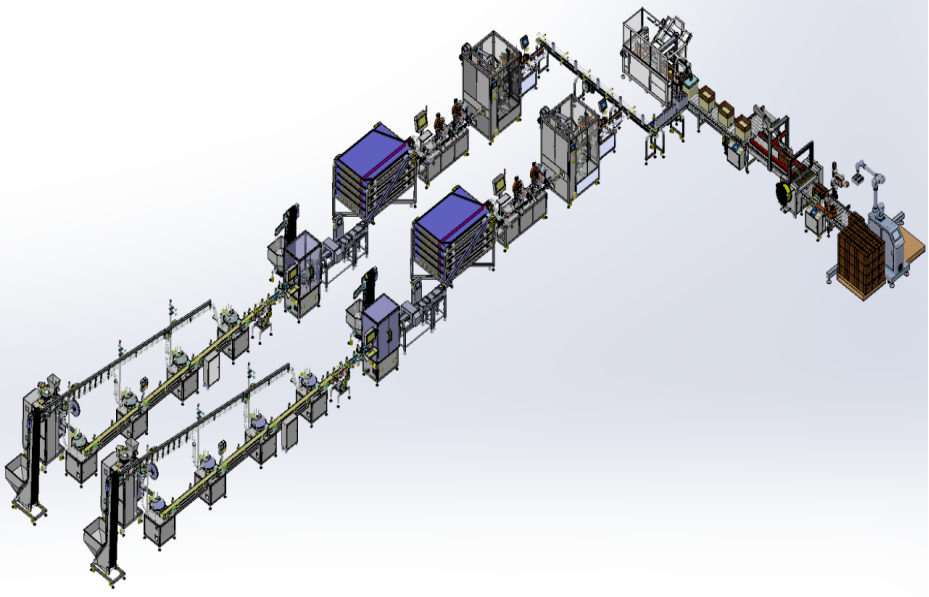
For integrated systems including weighing and auxiliary lines, check offerings like Weighing & Packaging Systems and Auxiliary Packaging Equipment to build a complete production flow.
✅ Practical procurement tip: Use staged payments tied to performance milestones (factory acceptance test, shipping, commissioning) to protect your investment.
Recommended Steps to Buy
1) Define product formats and monthly volume. 2) Shortlist suppliers with nicotine pouch experience. 3) Request factory acceptance test videos and references. 4) Verify certifications (CE, ISO) and after-sales plan. 5) Evaluate total cost of ownership and spare parts lead times. 6) Plan installation, operator training, and local spare parts inventory.
If you want real-world examples and machine categories, check Packmate Snus Machine’s product lines such as Snus & Nicotine Packaging Machines and Sachet & Stick Pack Machines.
Case Example: Small Batch Start-up in Freetown
A Sierra Leonean start-up aiming for regional distribution chose a 4-lane snus pouch machine for compact footprint and moderate throughput. They prioritized stainless contact parts, local technician training, and a spare parts package. After commissioning, production met retail demand and the multi-lane design enabled scaling without new floor expansion.
For turnkey solutions and full line integration, suppliers with a wide range like Filling & Packaging Lines and About Packmate provide useful references.
📌 Final selection checklist:
Capacity, material compatibility, humidity & power mitigation, spare parts plan, certifications, local support & training.
Making the Final Decision
Shortlist 2–3 machines and request factory acceptance tests or site visits. Compare real-world metrics like uptime, yield, and ease of changeover. If possible, negotiate a trial period or acceptance criteria in the purchase contract to ensure the machine meets your Sierra Leone operational realities.
Useful Links & Resources
Explore machine categories, case studies, and certifications from experienced suppliers when planning your purchase: Bag & Pouch Packaging Machines, Case, and Certificate.
Frequently Asked Questions
Q1: How do I handle humidity-sensitive nicotine formulations in Sierra Leone?
A1: Use machines with enclosed filling areas, desiccant-controlled storage, and fast packaging/sealing to reduce exposure. Consider dehumidifiers in the production area and choose films with good barrier properties.
Q2: What certifications should I require from a packaging machine supplier?
A2: At minimum, require CE and ISO production quality assurances. For nicotine-related products, ensure traceability and data logging capabilities to meet possible regulatory audits.
Q3: How much local support can I expect after purchase?
A3: Confirm the supplier’s after-sales network. If the supplier does not have local offices, request remote support, technician training, spare parts kits, and clear service timelines. Many established manufacturers provide extended remote diagnostics and periodic on-site visits.
Q4: Is a multi-lane machine worth it for a new producer?
A4: Multi-lane machines offer better scalability and higher throughput per floor area, making them a strong choice if you expect growth. For very small volumes, a single-lane system can reduce upfront cost while leaving room to upgrade.