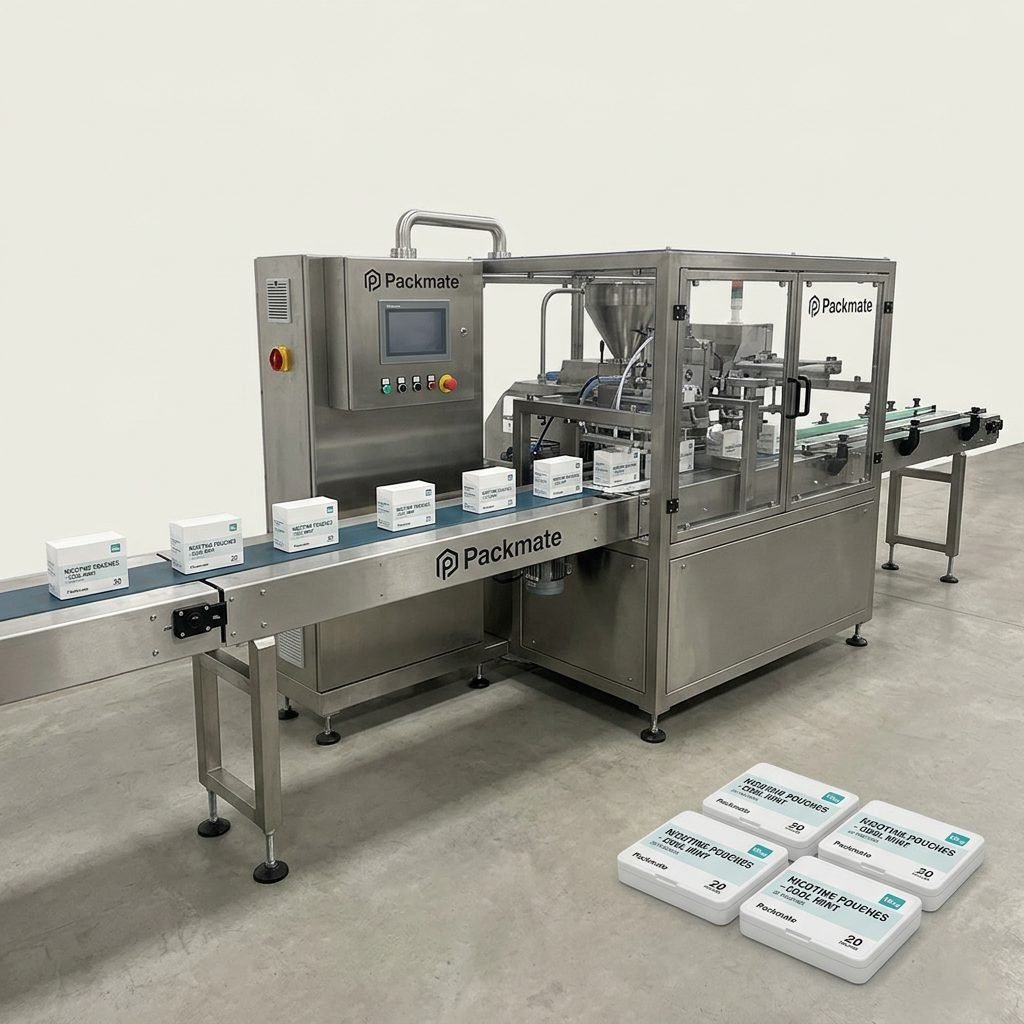
Entering the nicotine pouch or snus packaging market in North Macedonia requires more than a good product — it demands the right packaging machine for consistent quality, regulatory compliance, and efficient production. This practical guide helps Macedonian manufacturers, importers and entrepreneurs choose the best nicotine packaging machine by focusing on local market habits, regulatory cautions, machine types and the vendor selection process.
Understand the North Macedonian market and local preferences
North Macedonia is a developing market for smokeless nicotine products. While traditional cigarette use remains familiar, nicotine pouches are gaining attention among younger urban consumers in Skopje and Bitola who prefer discreet, smoke‑free consumption. Local buyers value compact, low‑noise packaging lines that produce tidy, exportable pouches and stick packs. Language considerations matter: labeling and instructions may need to appear in Macedonian (Cyrillic) and Albanian for regional distribution. Always verify local regulations and customs rules before importing machines or starting production.
Regulatory & cultural notes
– Check product ingredient rules, marketing restrictions and labeling laws with North Macedonian authorities and your legal advisor.
– Consider packaging formats that respect local social norms: discreet pouches and minimalistic outer cartons often perform better.
– For exports to neighboring Balkan markets or EU countries, select machines that can meet CE/ISO requirements and produce export‑grade packaging.
Which machine type fits your business?
Packaging machines for nicotine pouches and snus come in several main types. Choosing the right type depends on batch sizes, product format, and long‑term plans:
Sachet and stick pack machines
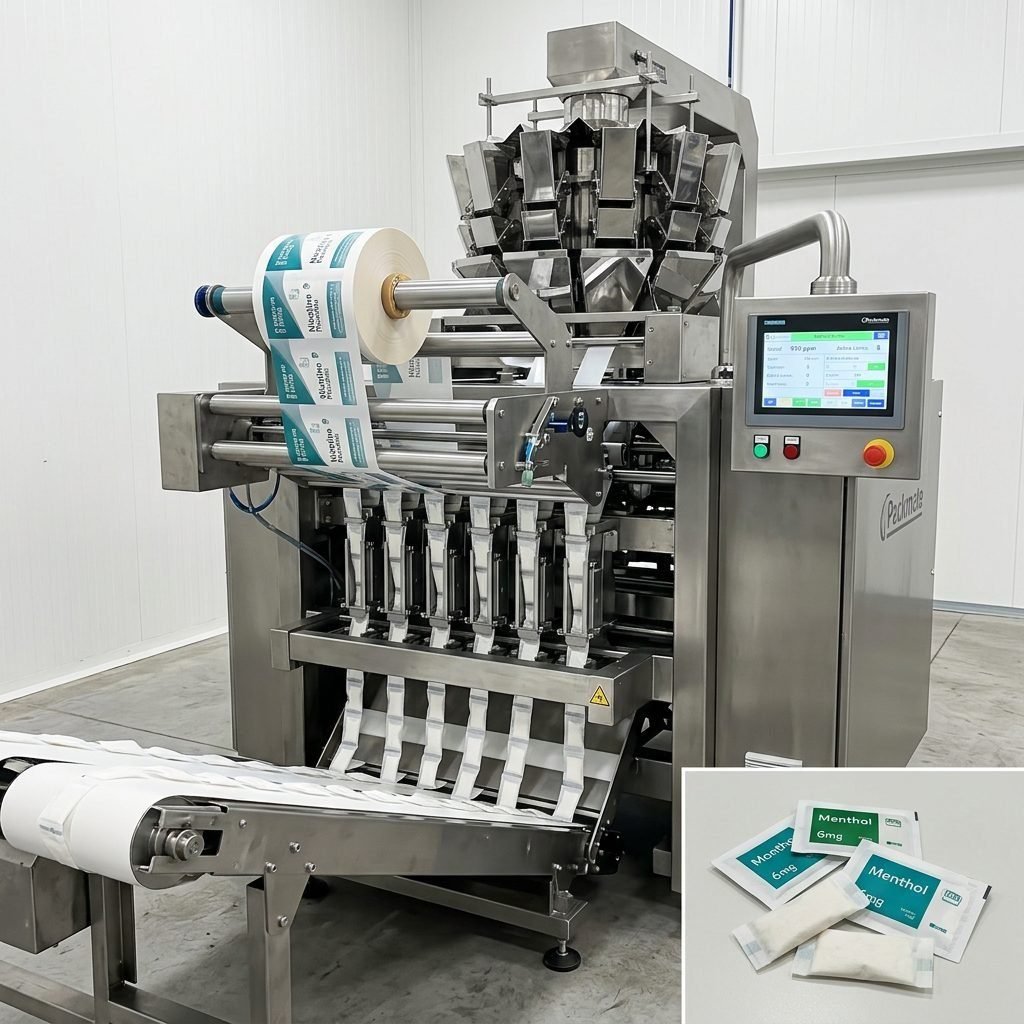
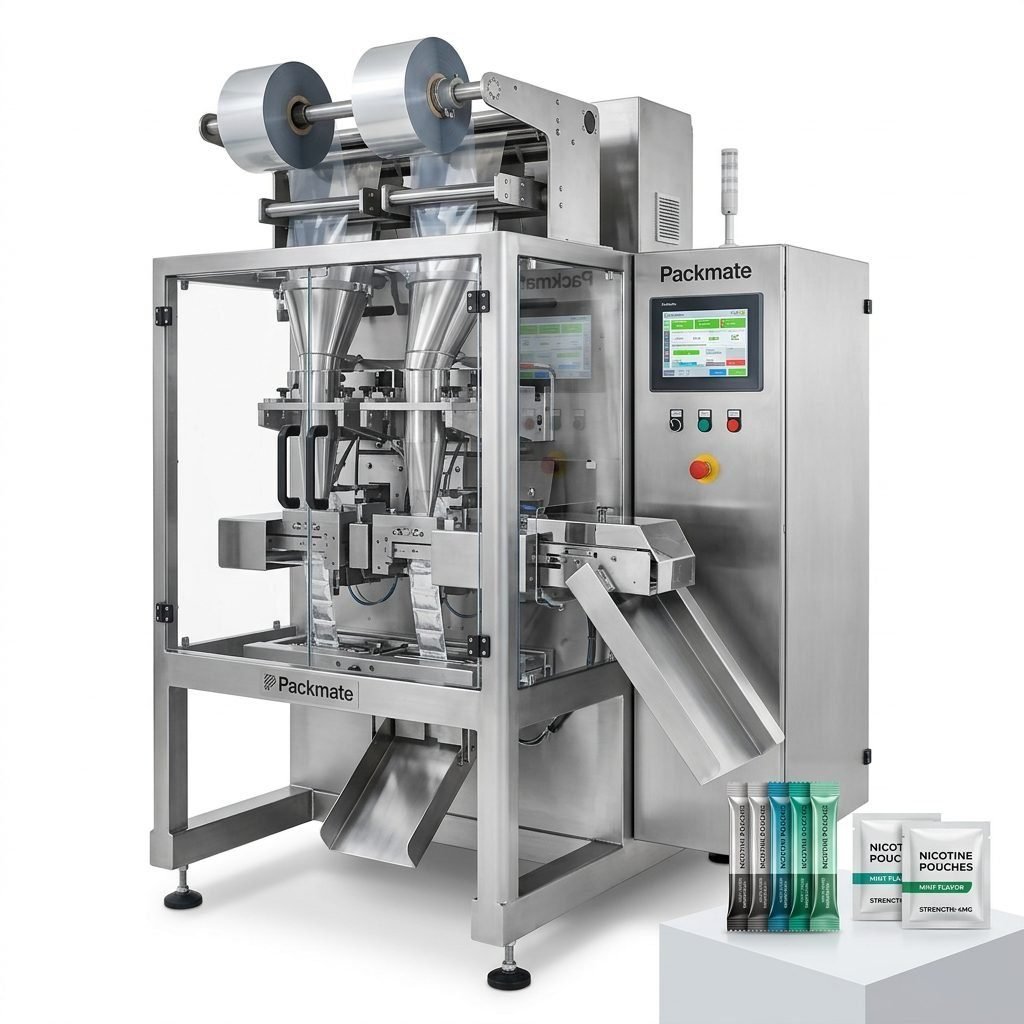
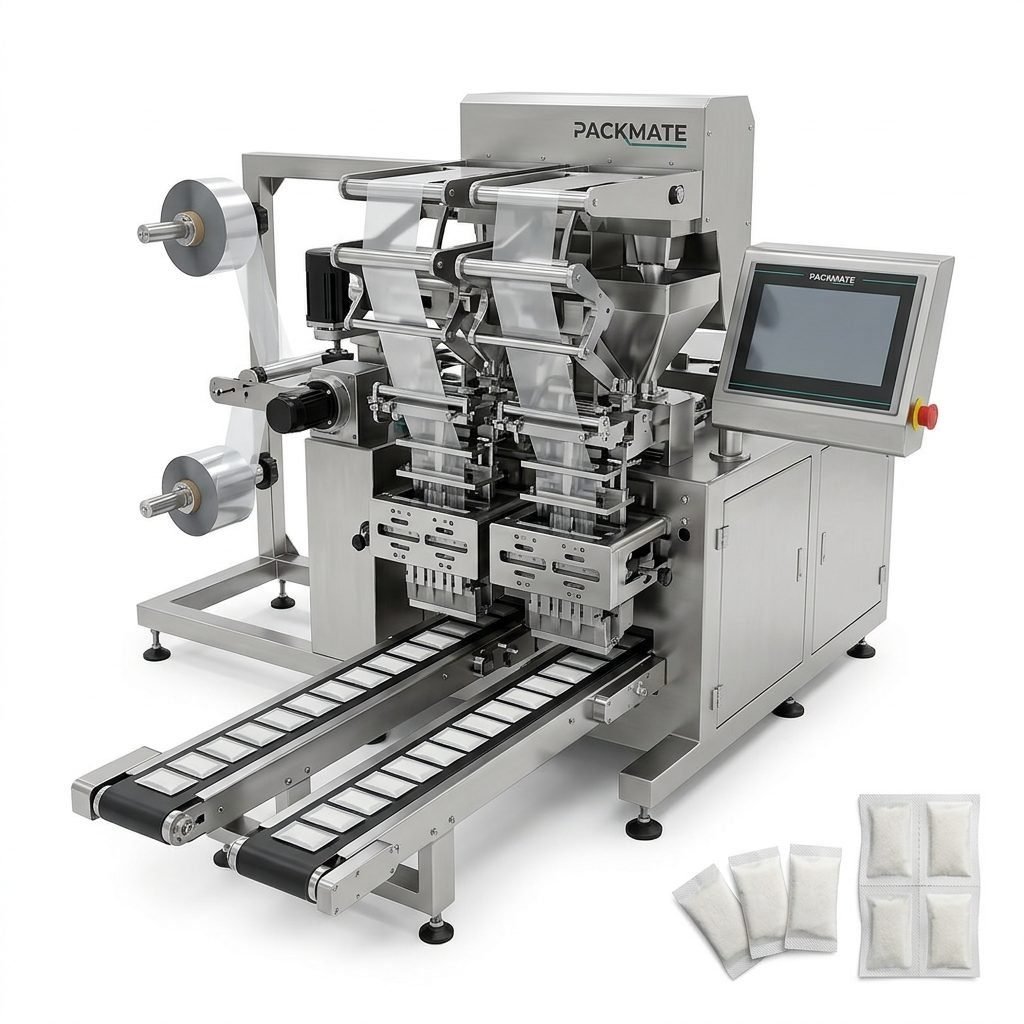
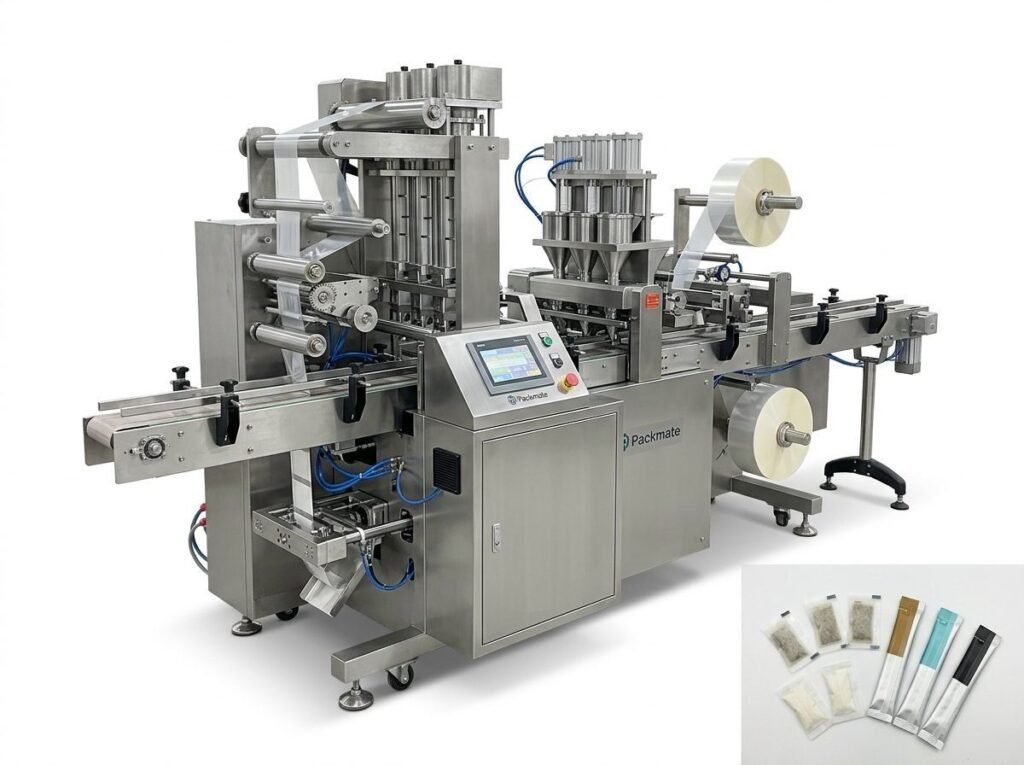
Stick packs are ideal for single‑dose nicotine formulations and provide high consumer convenience. Sachet machines can form flat or pillow pouches suitable for nicotine pouches when combined with correct filling technology. These machines can be compact and cost‑effective for small to medium production runs.
Multi‑lane snus/nicotine pouch systems
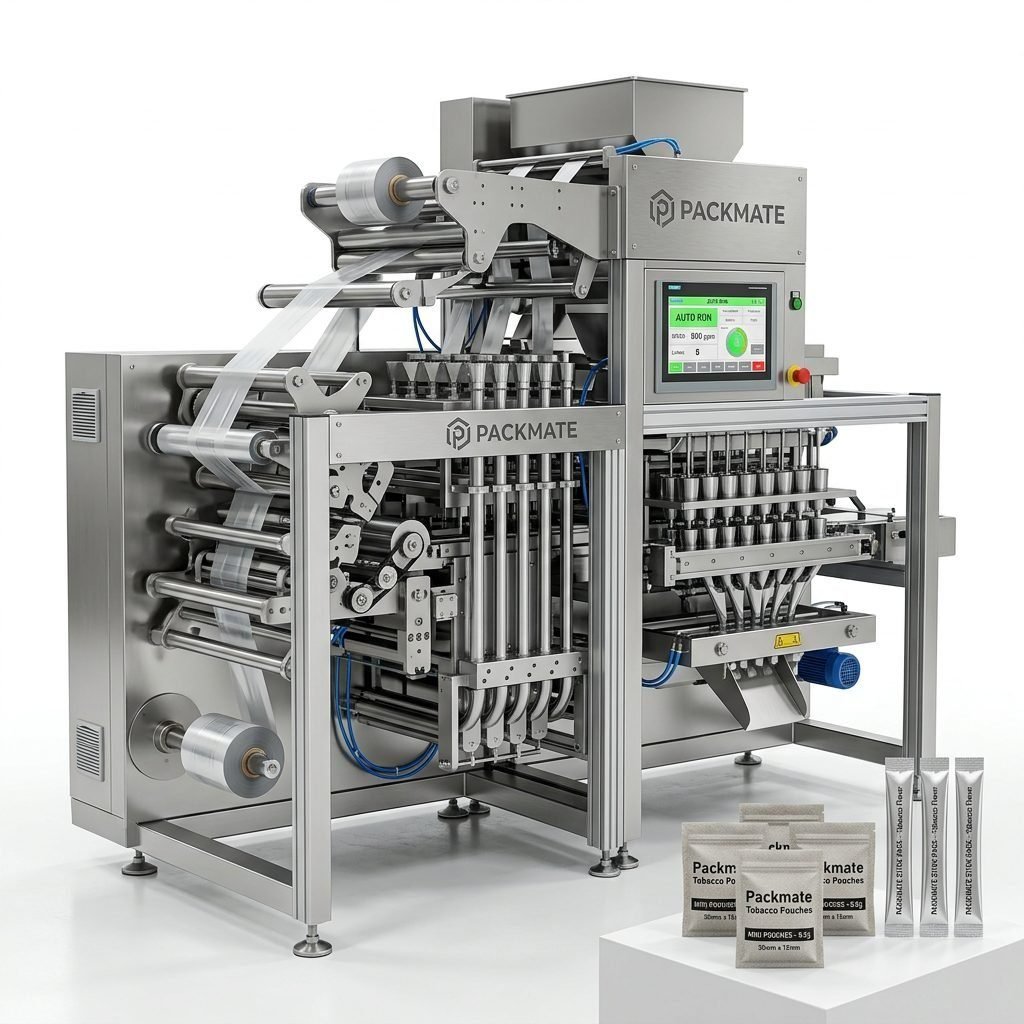
If you expect rapid scale or want to serve export markets, consider multi‑lane pouch machines that can produce many pouches per minute across several lanes. They have higher throughput and better stability for micro‑dose pouches but require more floor space and higher initial investment.
Integrated production lines
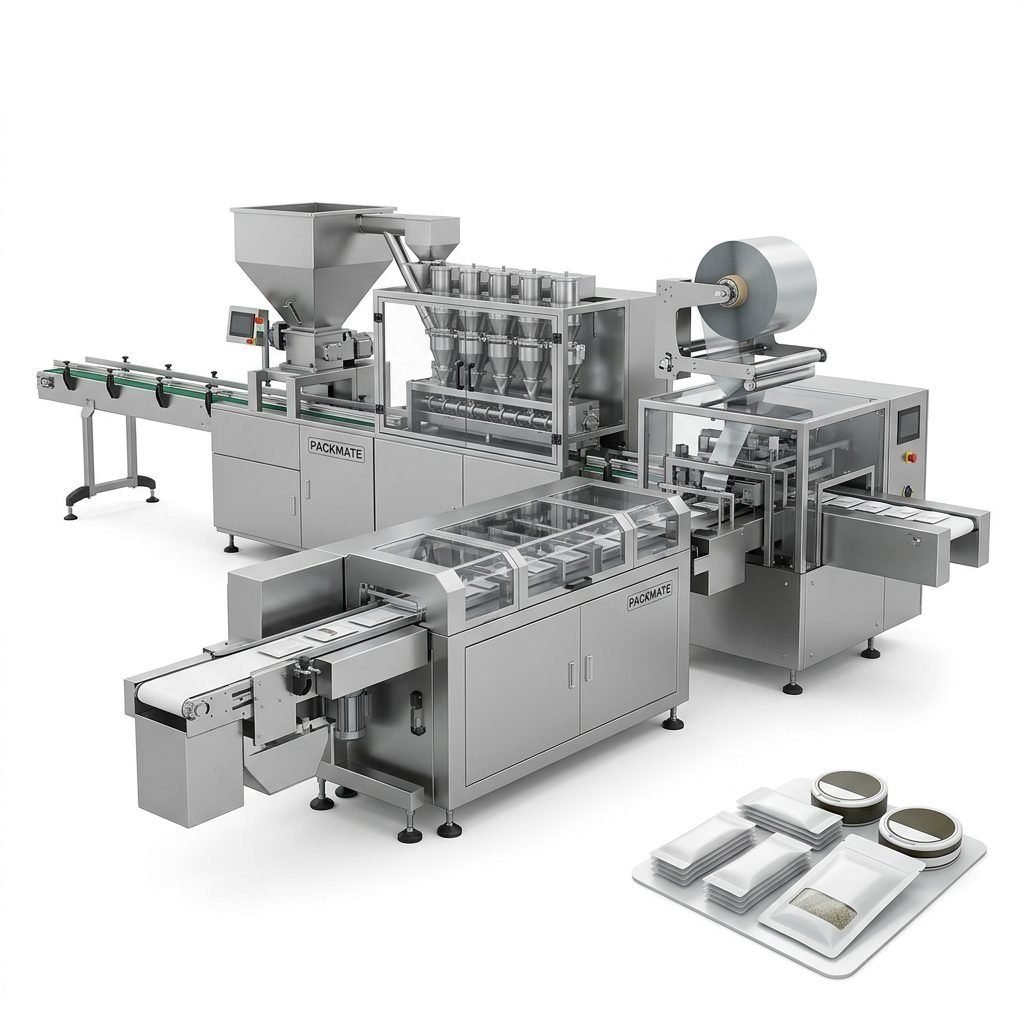
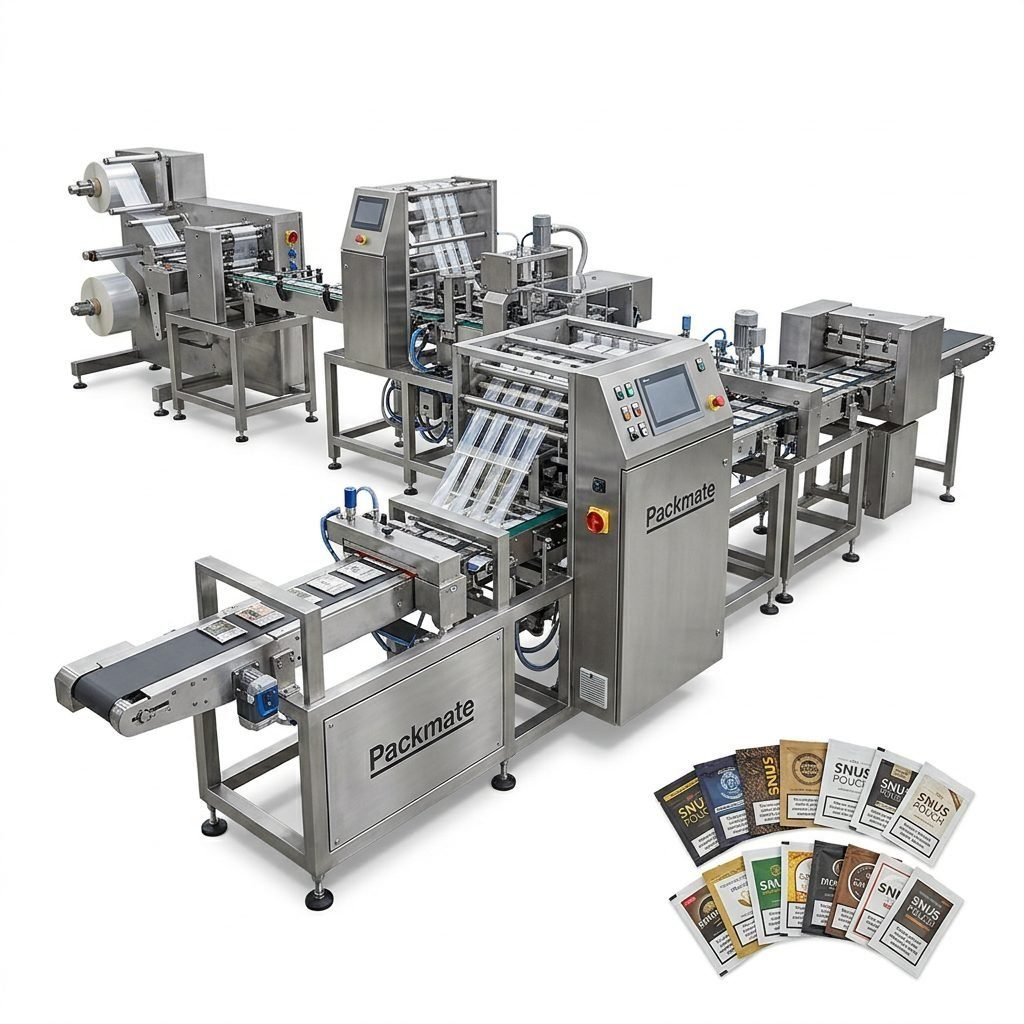
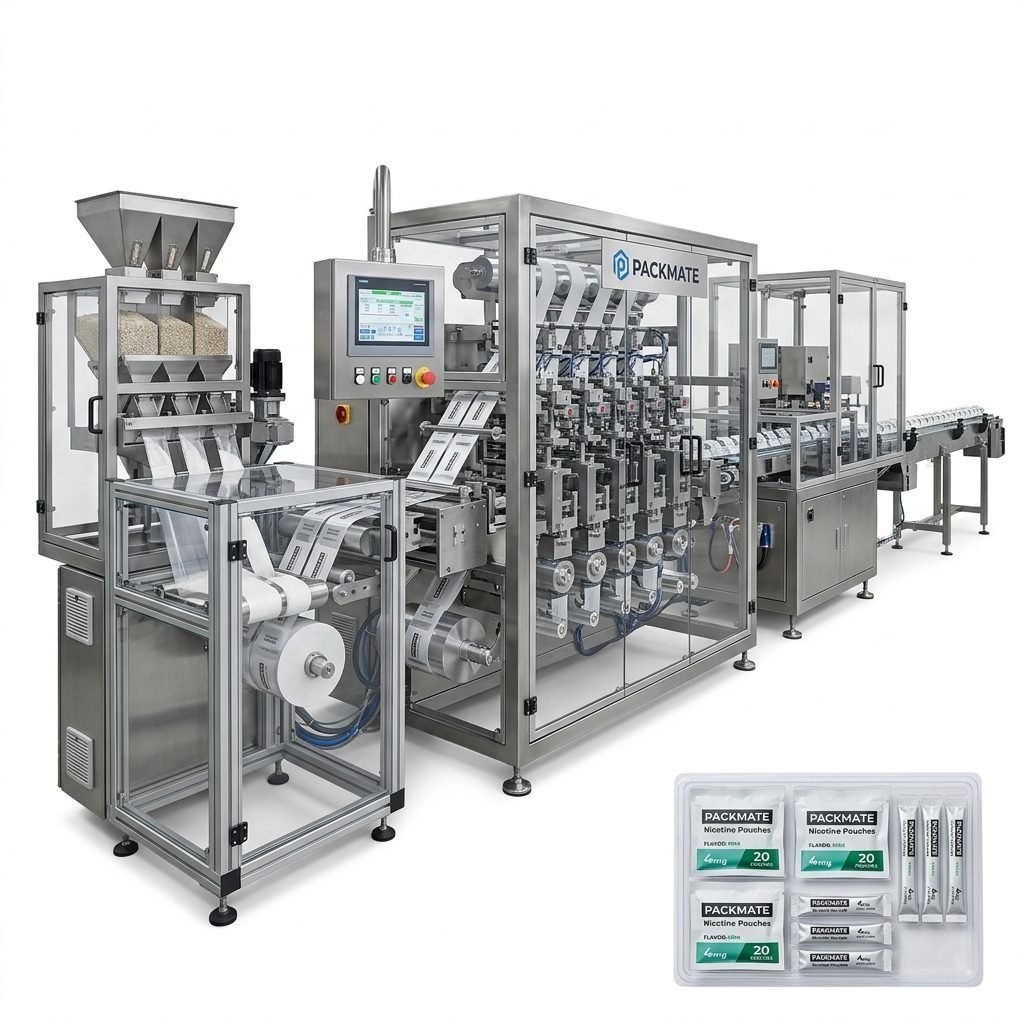
For full automation, integrated lines combine filling, sealing, labeling and secondary packaging. These are suited to companies aiming for a turnkey solution and who want to minimize manual handling and contamination risk.
Quick checklist: machine specs that matter
⚙️ Production speed: choose based on target daily output (pouches per minute × shift hours).
📏 Lane configuration: single vs multi‑lane affects throughput and maintenance complexity.
🔬 Filling accuracy: micro‑dose tolerance matters for nicotine content control and regulatory compliance.
🔧 Material compatibility: verify compatibility with your pouch material (non‑woven, fibre, paper, cellulose, etc.).
🛠️ Spare parts availability, service response time, and CE/ISO certification are non‑negotiable for reliable operation.
How to evaluate suppliers — focus on reliability and service
When selecting a vendor for nicotine packaging machines, local presence is helpful, but global experience matters most. Look for manufacturers with proven snus/nicotine experience, strong manufacturing facilities and international certifications. Packmate Snus Machine, for example, specializes in snus and nicotine pouch equipment with decades of engineering experience — check their machine range and company profile for detailed specifications and cases.
Useful links for machine evaluation and product pages:
Snus & Nicotine Packaging Machines,
Sachet & Stick Pack Machines,
About Packmate.
Ask for evidence: test runs and case studies
Request a demonstration video or witness a test run producing your exact pouch size and formulation. Review case studies showing long‑term reliability and reach out to existing customers if possible. A supplier’s trade show presence and certificates (CE, ISO) are good indicators of quality — see exhibition and certificate references for verification.
Installation, training and local support considerations in North Macedonia
Local installation and operator training reduce downtime. If the supplier cannot send a technician to North Macedonia, ensure comprehensive remote support, spare parts kits and documented maintenance guides in English or the local language. Check customs clearance and logistics: machines from Asia or Europe may require specific import documentation, and local forklift/crane capacity should match machine dimensions.
Practical installation tips
• Arrange a site survey to confirm power supply, ventilation and floor loading capacity.
• Organize translation or bilingual training if English technical manuals are not sufficient for your staff.
• Secure a spare parts agreement to avoid long lead times for critical components.
Total cost of ownership & ROI
Evaluate machines not just by purchase price but by total cost of ownership: energy use, maintenance intervals, spare parts, downtime risk, packaging material waste and operator training needs. A higher‑quality machine with better precision often reduces rejects and saves money over time. Build a simple ROI model: calculate revenue per pouch, target production volume, and estimate payback period based on machine throughput and uptime.
Customization and scalability — plan for growth
Start with a machine that fits current demand but allows upgrades. Modular machines or lines that accept additional lanes, automated feeding systems, or upgraded dosing modules can save cost when scaling. If you plan exports, choose packaging formats and sealing technologies that meet import countries’ expectations. For bespoke solutions, investigate suppliers who offer turnkey lines and full integration such as weighing, conveying and secondary packaging.
For examples of turnkey projects and past installations, review real world references and case studies to verify performance and adaptability:
Case.
Common pitfalls to avoid
– Choosing the cheapest machine without testing with your product formulation.
– Ignoring spare parts and local service availability.
– Underestimating installation space and power requirements.
– Skipping regulatory checks that may impact labeling, ingredients or packaging materials.
Making the final decision
Follow these steps: define product format and daily target → request demo with your product → evaluate supplier certifications and after‑sales support → verify installation logistics and training plan → finalize contract with clear spare parts/service SLA. Reach out to manufacturers that specialize in nicotine packaging for reliable solutions and technical expertise. If you want to contact the supplier directly, use the official contact page to arrange consultations:
Contact Us.
For a catalog of equipment options including ancillary devices like weighing and filling systems that integrate with pouch packaging, review the full equipment listings to match your technical needs:
Weighing & Packaging Systems and
Filling & Packaging Lines.
Local partnerships and market entry
Partnering with local distributors, co‑packers or marketers familiar with North Macedonian retail channels can accelerate entry. Consider attending European packaging exhibitions where suppliers demonstrate machines and discuss regulatory strategies — this helps build relationships with engineers and service teams who understand cross‑border logistics and local customs requirements.
Summary & next steps
Selecting the right nicotine packaging machine in North Macedonia is a balance of: product format, throughput needs, regulatory compliance and supplier reliability. Prioritize machines that offer stable filling accuracy, easy maintenance, available spare parts and local or remote technical support. Request product test runs, review case studies, and confirm installation and training plans to reduce startup risk.
Frequently asked questions
Q1 — What certifications should I require from a nicotine packaging machine supplier?
A1 — Ask for CE and ISO certificates as baseline, plus documentation of electrical safety, materials compatibility and any regional conformity documents. Supplier test reports for dosing accuracy are also valuable.
Q2 — Can a small shop in Skopje start with a compact stick pack machine?
A2 — Yes. Compact stick pack or sachet machines are ideal for small‑scale operations and offer easier installation, lower energy use and simpler training compared to multi‑lane systems.
Q3 — How do I handle spare parts and maintenance from abroad?
A3 — Negotiate spare parts kits, clear lead times and remote diagnostics in your purchase agreement. Ideally select a vendor with regional partners or reliable courier arrangements to shorten downtime.
Q4 — Are there packaging materials that work best for North Macedonian consumers?
A4 — Discreet, low‑noise pouches and minimalistic outer boxes are popular. Use moisture‑barrier pouches and tamper‑evident seals for longevity and consumer trust.
Q5 — Where can I see real examples of snus/nicotine packaging lines?
A5 — Review case studies and actual line photos from experienced suppliers to understand performance. Start with supplier case pages and request references for similar installations.