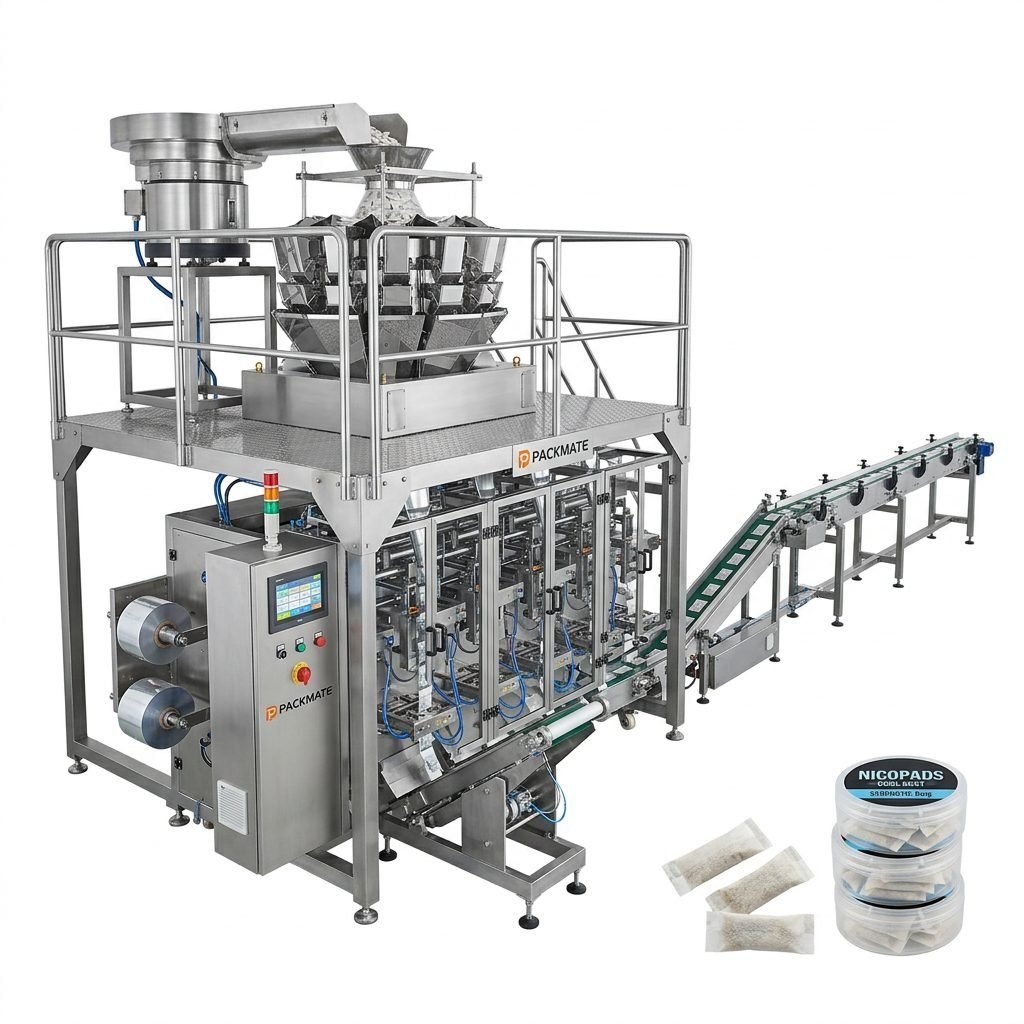
Choosing the right nicotine packaging machine in Malaysia is more than just comparing specs and prices. It requires understanding local market tastes, regulatory constraints, production environment (tropical humidity), and after-sales support. This guide walks you step by step through what Malaysian nicotine pouch and snus manufacturers should evaluate to select the best equipment for their production needs.
Understand the Malaysian Market Context
Malaysia’s population is diverse — Malay, Chinese, Indian and expatriate communities — which influences packaging language, design and regulatory expectations. Furthermore, halal awareness and conservative consumer sentiment can shape distribution channels and point-of-sale placement. From a technical perspective, Malaysia’s humid tropical climate means moisture-barrier packaging and robust sealing performance are essential to maintain product quality across transportation and retail shelves.
choose machines with excellent sealing control, humidity-tolerant components and flexibility for multilingual labelling (Malay, English, Chinese).
Core Machine Types and When to Use Them
Selecting the right machine type depends on your product format, production volume and packaging performance goals. Below are the common options:
Sachets & Stick Pack Machines
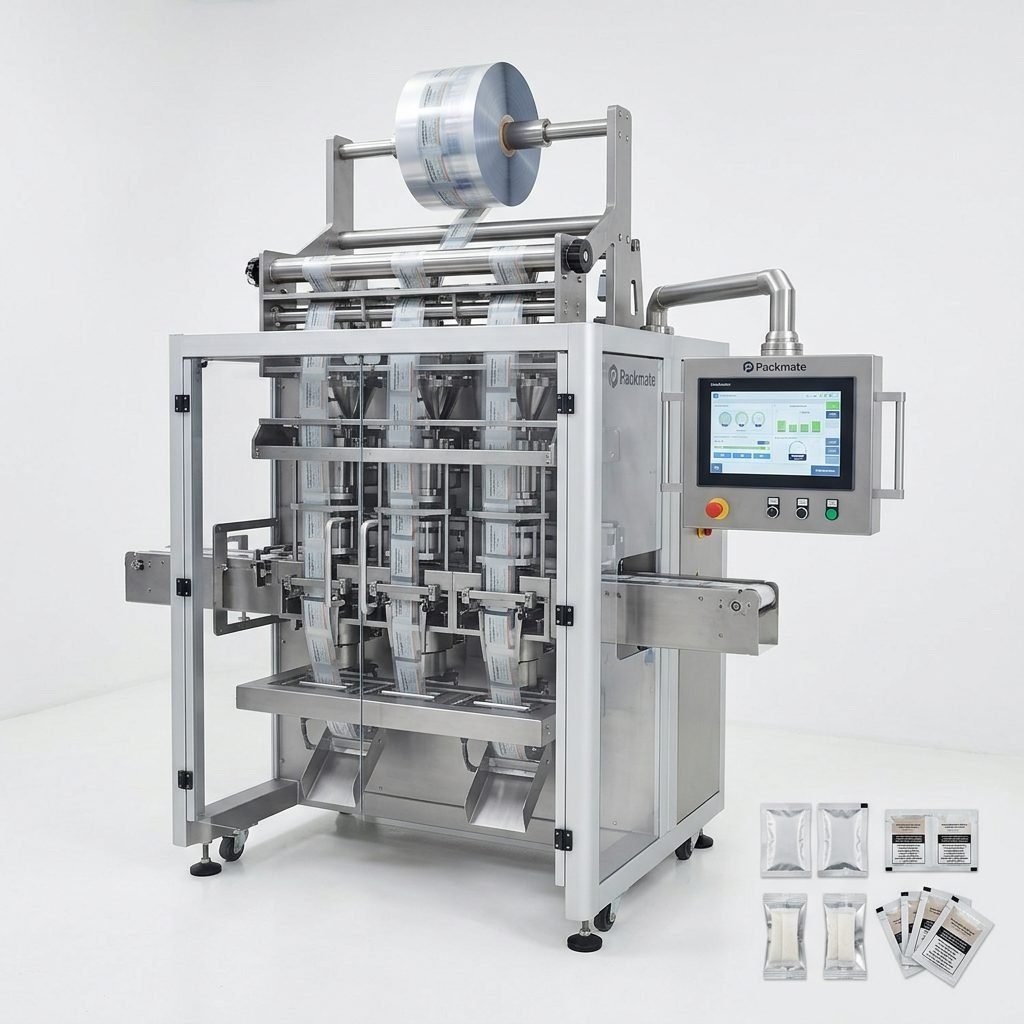
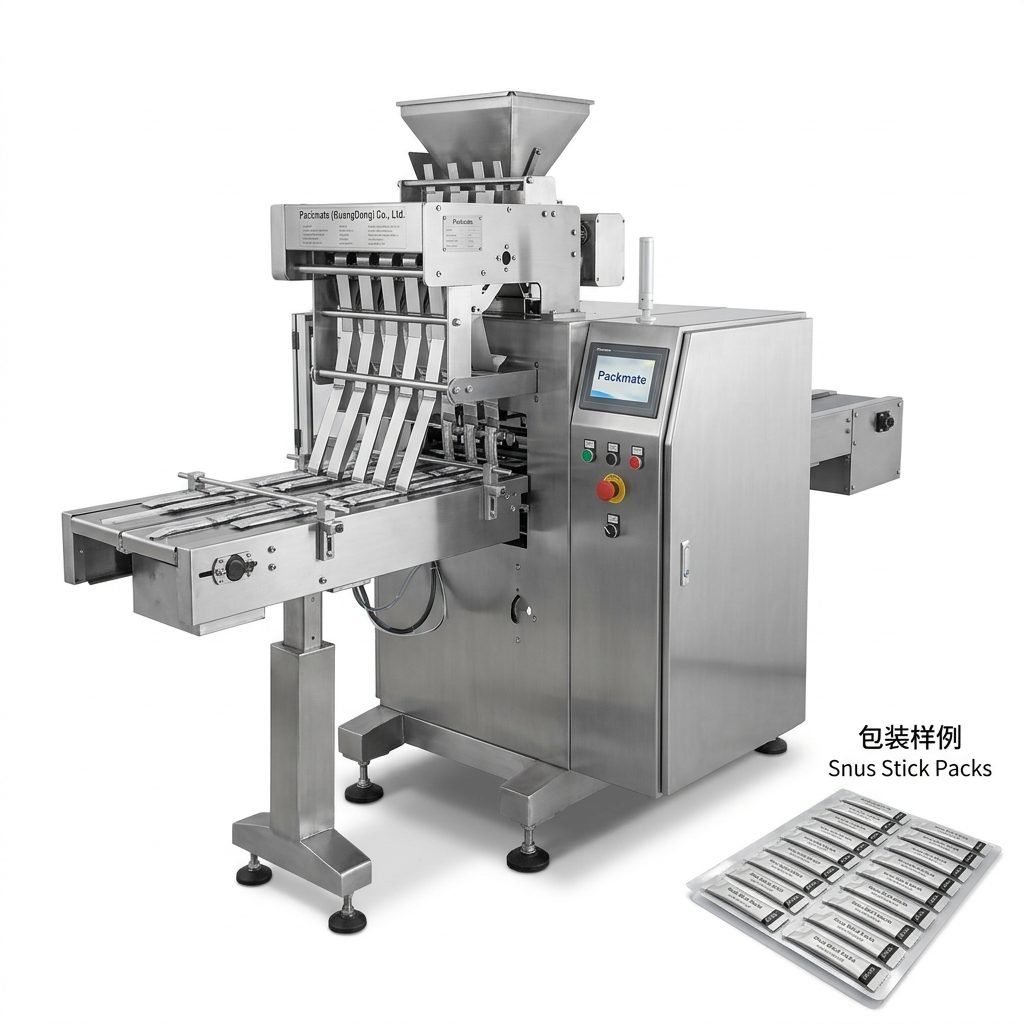
Ideal for small single-dose nicotine pouches and consumer trial packs. Stick pack lines offer high speed for single-dose formats and are often chosen for promotional sachets and travel-size products. See models and details on Sachet & Stick Pack Machines: Sachet & Stick Pack Machines.
Snus / Nicotine Pouch Packaging Machines
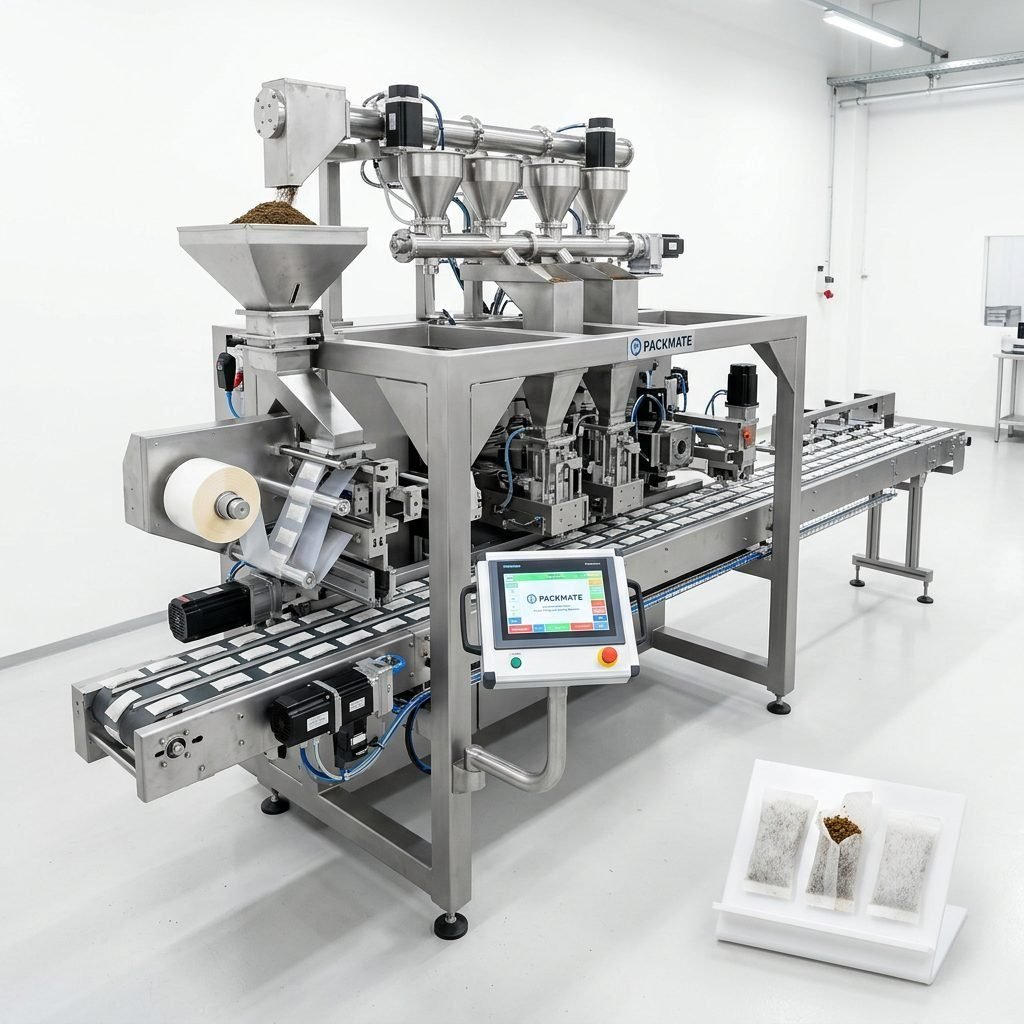
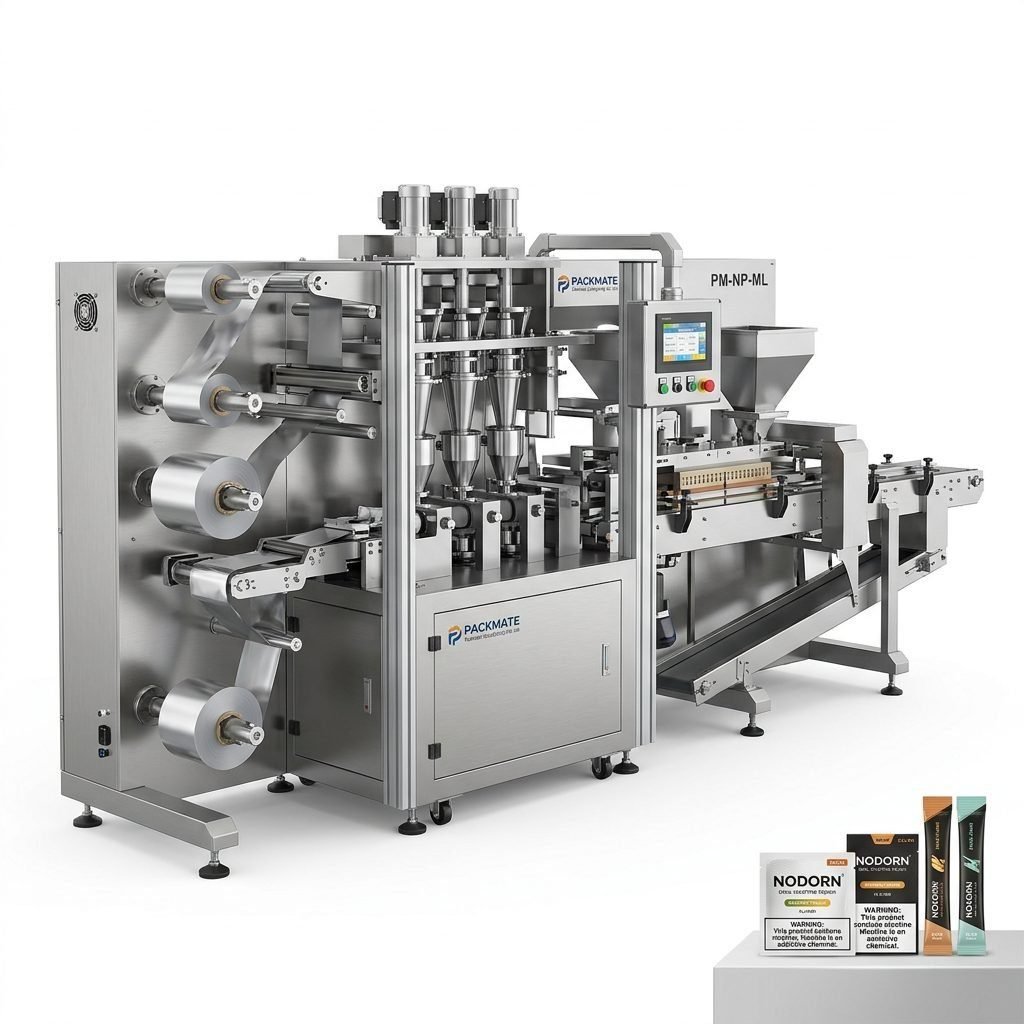
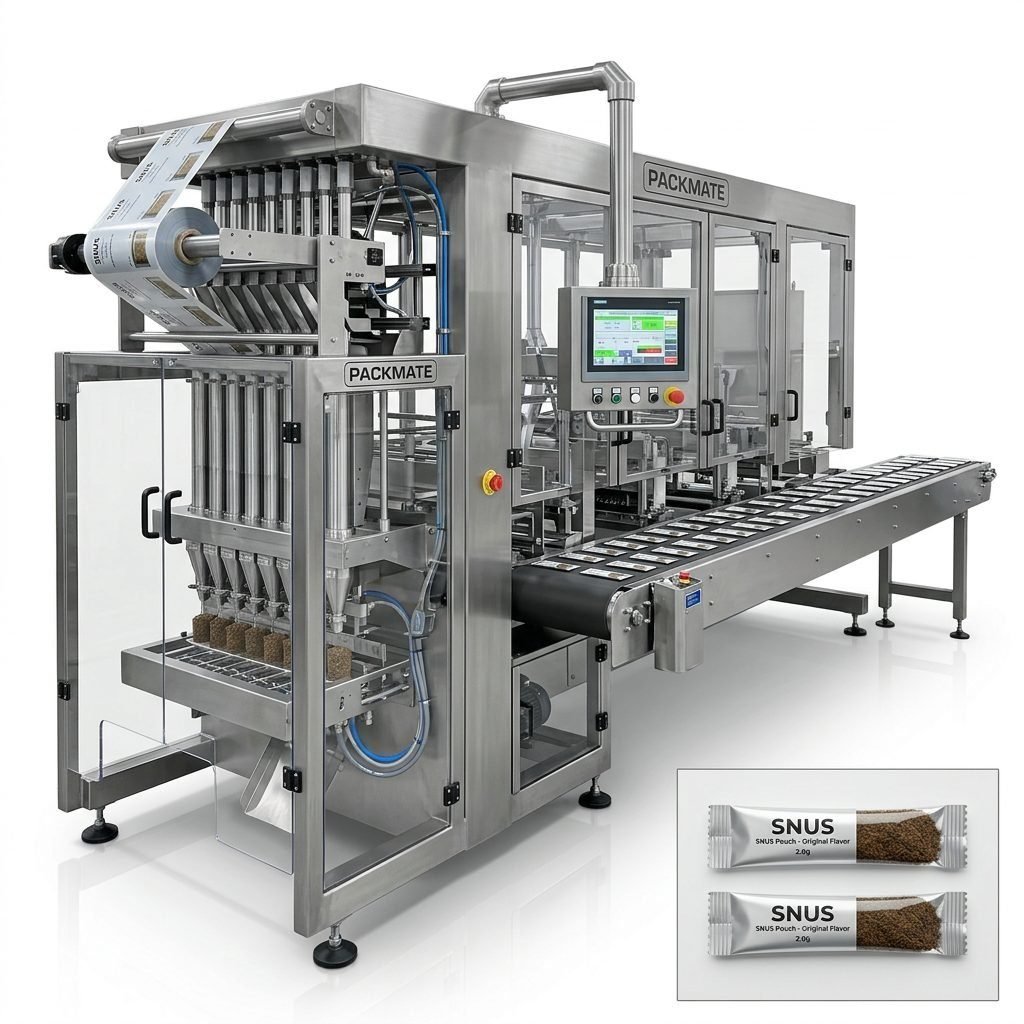
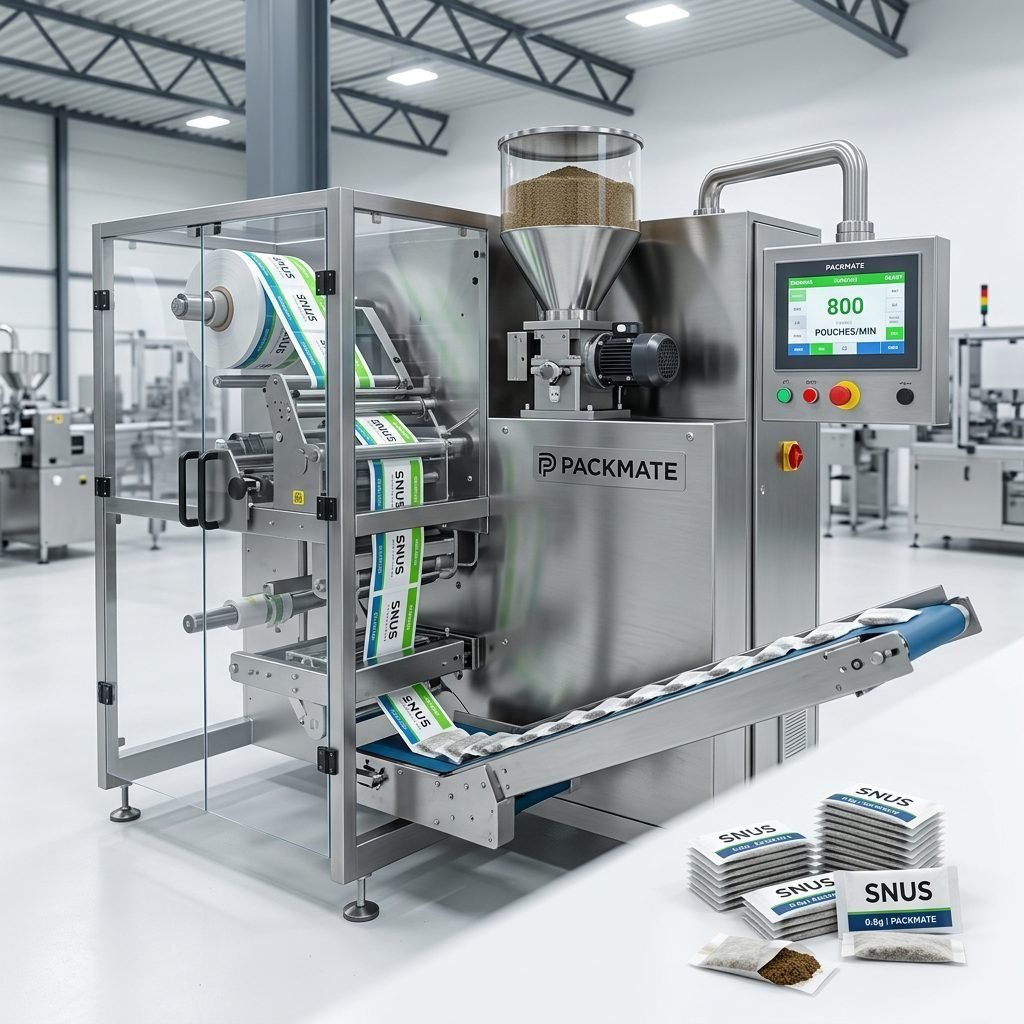
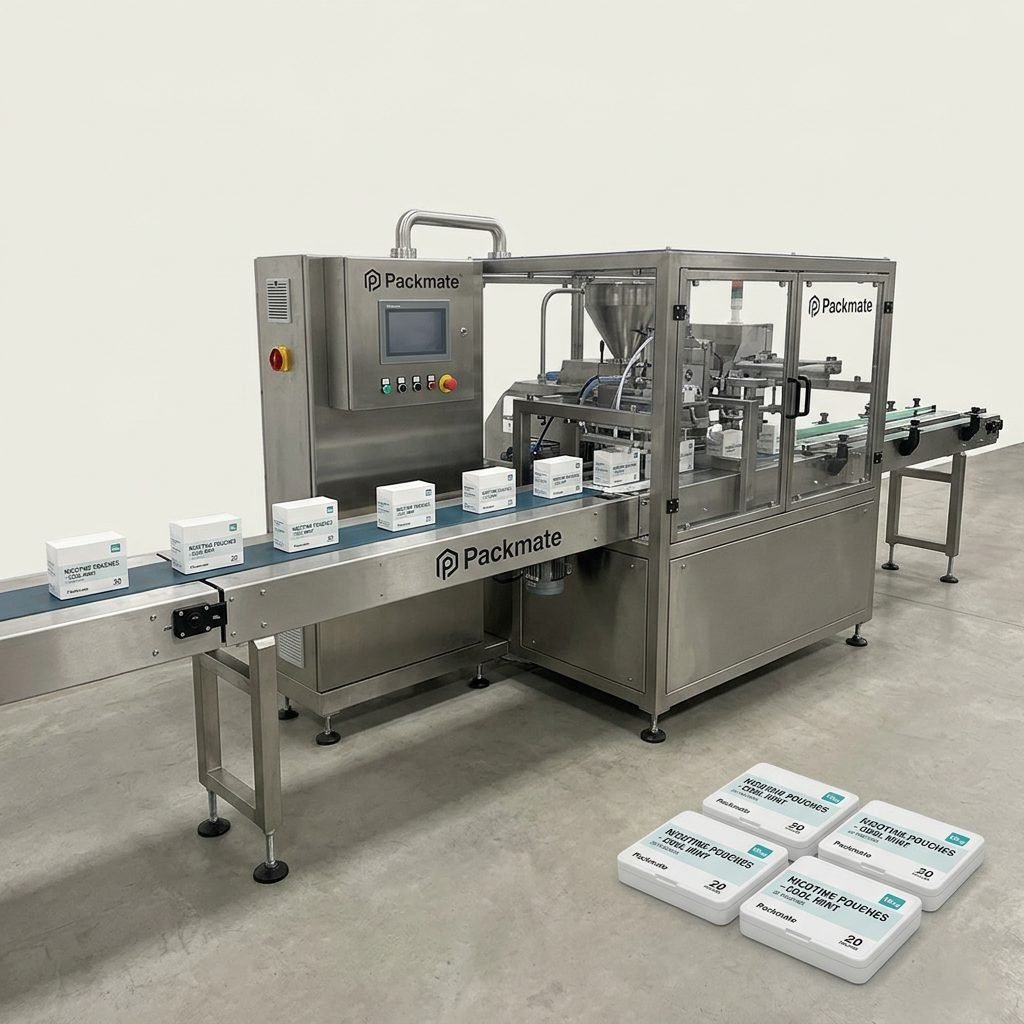
Specifically designed for nicotine pouches and snus — these machines focus on accurate dosing, reliable pouch formation, and gentle handling of moist or dry granules. They can be single-lane or multi-lane for increased throughput. Packmate offers specialized lines — explore Snus & Nicotine Packaging Machines here: Snus & Nicotine Packaging Machines.
Multi-lane Systems
When output demands increase, multi-lane machines provide a compact way to scale production without multiplying floor space. They are common for established brands distributing across Southeast Asia, offering synchronized lanes and centralized control.
Filling & Weighing Systems
Accurate dosing is critical for nicotine products to meet both regulatory and consumer expectations. Look for integrated weighing and dosing systems that support ± small tolerances and fast calibration routines. More system options: Weighing & Packaging Systems.
Critical Selection Criteria
Use the following checklist when comparing suppliers and machines. Each factor significantly affects long-term production costs, quality and compliance.
Production Capacity & Speed: Match machine hourly output to your current and 12–24 month projected demand. Overbuying increases CAPEX and underutilizing equipment reduces ROI.
Format Flexibility: Can the machine handle different pouch sizes, materials (foil, PET, laminates) and dosing ranges? Flexible tooling reduces downtime for product runs.
Sealing & Packaging Integrity: Heat-seal control, jaw design, and film handling must prevent leaks — especially critical in Malaysia’s humid climate.
Accuracy & Weight Control: Integrated weighers, auger fillers, or dosing modules should deliver consistent fill weights to ensure regulatory compliance and customer trust.
After-Sales Support & Local Service: Look for suppliers offering local installation, spare parts, training and quick-response maintenance — vital when operating in multiple Malaysian states or remote facilities.
Technical Features to Prioritize
When inspecting machines, focus on these technical hallmarks that improve uptime and product quality:
- Servo-driven movement for precise pouch positioning and repeatable operation.
- PLC and touch-screen HMI with recipe storage, production logging and remote support capability.
- Hygienic design and corrosion-resistant components to withstand humid and salt-air conditions in coastal Malaysian regions.
- Quick-change tooling and modular components to minimize downtime between SKUs.
- Integrated rejection systems and vision inspection for seal integrity and code/print verification.
insist on live demonstrations and request production proof runs with your actual film and formulation to verify performance under real conditions.
Regulatory & Cultural Considerations in Malaysia
Malaysia enforces regulations on tobacco and nicotine-related products, packaging, advertising and labeling. Manufacturers should ensure product packaging complies with local labeling requirements (ingredient lists, health warnings where applicable), and consider social norms and distribution restrictions. In many Malaysian retail environments, visibility of nicotine products is controlled — discreet, compliant packaging and secure supply chains are important.
Additionally, because a large part of the population observes halal dietary guidance, even non-food products benefit from sensitivity to wording and channel placement. Engaging local legal counsel or regulatory consultants is recommended before launching new packaging formats.
Why Choose a Manufacturer with Local-Global Capabilities
Partnering with a supplier that blends international compliance and local adaptability reduces risk. Packmate (GuangDong) Co., Ltd. offers turnkey lines and has global cases demonstrating performance across climates and markets. Learn more about the company and capabilities: About Packmate and review past implementations at Case.
Procurement Checklist — Step-by-Step
Follow this sequence to make an informed purchase:
- Define SKU range, pouch sizes, film types and target hourly output.
- Request machine specifications, spare parts list, acceptance test and warranty terms.
- Ask for a factory acceptance test (FAT) with your film and product — verify seal integrity and dosing accuracy.
- Confirm installation, operator training and spare parts lead times for Malaysia.
- Assess total cost of ownership: CAPEX, energy, consumables, spare part frequency and expected MTBF (mean time between failures).
include performance guarantees, acceptance criteria, and a schedule for on-site commissioning and operator certification.
Installation, Commissioning and Local Service
Smooth installation matters. Insist on a supplier who provides:
- On-site commissioning by trained engineers and validation tests under load.
- Operator and maintenance training tailored to Malaysian staff shifts and language preferences.
- Local stocking of common wear parts or rapid shipment options to minimize downtime.
- Remote diagnostics capability to get quick support across time zones.
Cost, ROI and Scaling
The cheapest machine rarely offers the best ROI. Consider:
- Yield and scrap rates — higher-quality machines reduce material waste.
- Changeover time — faster changeovers increase available production windows.
- Energy efficiency — lower operating costs over machine life.
- Uptime guarantees — a reliable supplier reduces lost production days.
conduct a 3–5 year cost-of-ownership model that includes spare parts, labor, and expected production growth to make an apples-to-apples comparison.
Practical Example: Typical Line Composition
A common production line for nicotine pouch manufacturing in Malaysia might include:
- Bulk hopper and dosing system (auger or weigh-filler)
- Snus pouch forming & sealing machine (single- or multi-lane)
- Automated transfer to secondary packaging (cartoner or sachet cluster)
- Checkweigher and vision inspection for print/expiry codes
- Case packer or manual palletizing depending on volume
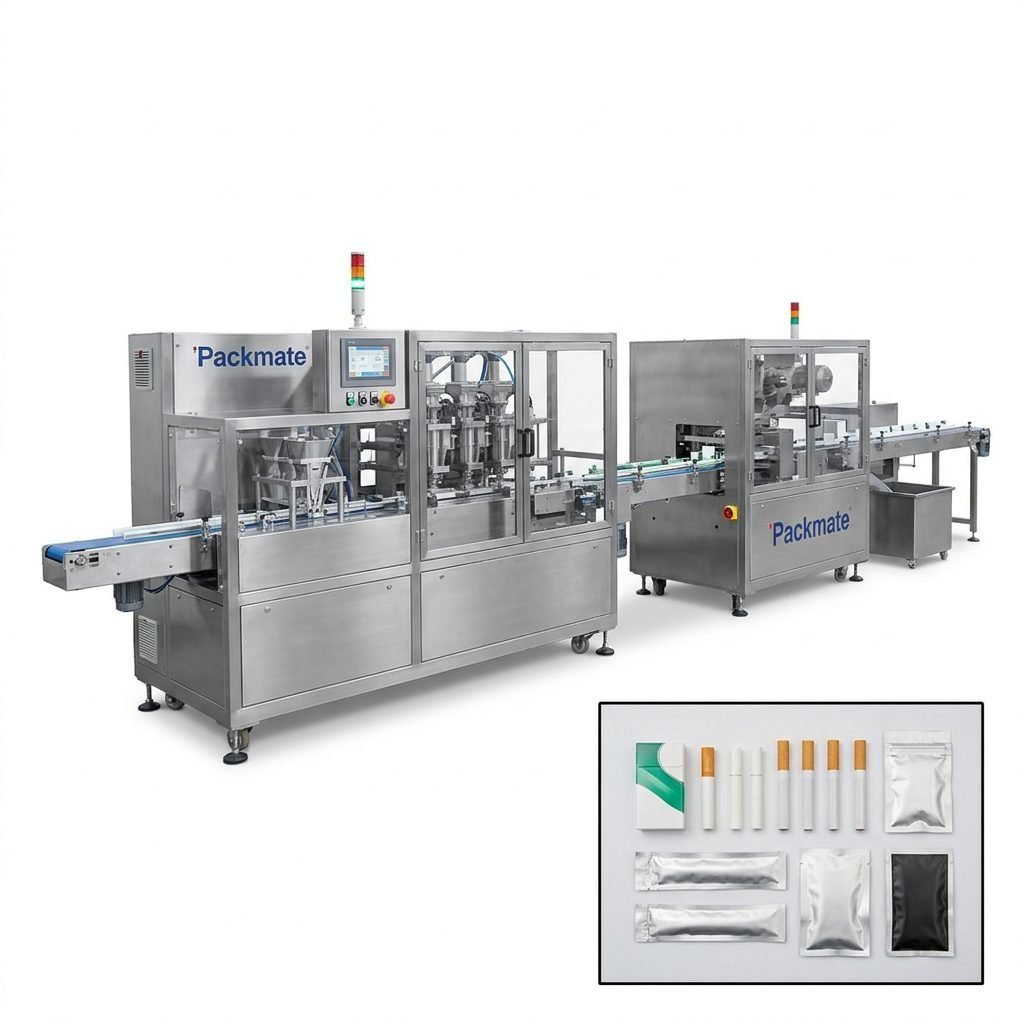
For integrated line solutions, explore Filling & Packaging Lines and Packaging Auxiliary options: Filling & Packaging Lines and Auxiliary Packaging Equipment.
Questions to Ask Potential Suppliers
During vendor evaluation, include these targeted questions:
- Can you run FAT with our film and product sample?
- What is your standard warranty and what does it exclude?
- How quickly can spare parts be delivered to Kuala Lumpur or designated Malaysian ports?
- Do you provide operator and maintenance training in Malay or English?
- Can you provide references from Southeast Asian customers with similar applications?
prioritize suppliers with documented Southeast Asia installations and clear spare parts logistics to Malaysia.
Final Checklist Before Purchase
Ensure you have:
- Signed contract with clear acceptance criteria and FAT results
- Installation and commissioning plan with timelines
- Operator & maintenance training schedule
- Spare parts list and local stocking plan
- Regulatory compliance evidence and documentation
Need help? Service and support
If you want a partner who can deliver machines and full-line solutions with global experience and local adaptability, review service offerings and contact options here: Service and Contact Us.
Summary of Action Steps
1) Define SKUs and expected growth; 2) Request FAT with your materials; 3) Compare total cost of ownership, not just price; 4) Verify local service and spare parts; 5) Ensure regulatory packaging compliance for Malaysia.
Frequently Asked Questions
Q1: What machine speed do I need for a new nicotine pouch brand?
A1: Calculate annual demand, peak season needs, and desired shift patterns. For startup brands, a modular single-lane machine with 40–100 pouches per minute may be sufficient, while established brands often move to multi-lane systems for 200–1000+ pouches per minute.
Q2: How does Malaysia’s climate affect machine selection?
A2: High humidity accelerates film moisture uptake and can challenge seal integrity. Choose machines with precise temperature control, proper film tensioning systems and materials handling solutions that protect product quality.
Q3: Do I need local certification or CE/ISO for machines in Malaysia?
A3: CE and ISO-certified equipment demonstrates global safety and quality standards and simplifies import and insurance processes. Local regulatory paperwork for nicotine products is a separate requirement; suppliers should provide compliance documentation for machine safety and electrical standards.
Q4: How to ensure quick spare parts delivery to Malaysia?
A4: Negotiate spare parts stocking terms before purchase — either having a parts kit shipped with the machine, identifying local distributors, or using air-shipment arrangements for critical wear items. Suppliers with regional warehouses or partners shorten lead times.
Q5: Where can I see examples of complete packaging lines?
A5: Visit Packmate’s product and case pages to review full line solutions and real-world installations: Snus & Nicotine Packaging Machines and Case.