Choosing the right snus packaging machine supplier in Chile is more than a procurement decision — it’s a strategic choice that affects product quality, regulatory compliance, production efficiency, and long‑term business growth. This buyer’s guide breaks down the practical steps, local considerations, technical checks, and negotiation tactics you need to confidently select a reliable supplier for nicotine pouch and snus packaging equipment.
Understand Chile’s Market & Local Habits
Chileans value quality and convenience; oral nicotine alternatives like snus or nicotine pouches are often used discreetly in social or professional settings. When choosing equipment, keep in mind local preferences for compact, low‑noise machines that produce clean, tightly sealed pouches in a variety of portion sizes and flavors. In addition, Chile has specific import and health regulations: ensure your supplier can assist with technical documentation and certifications required by customs and local health authorities to avoid delays at ports such as Valparaíso or San Antonio.
Key local considerations:
🔧 Port logistics: Ask about FOB, CIF options and estimated lead times to Valparaíso or Santiago.
📌 Spanish language support: On‑site installation and user manuals in Spanish greatly reduce downtime.
⚠️ Regulatory paperwork: Suppliers should provide CE/ISO certificates, calibration reports, and material traceability to satisfy customs and local QA.
Define Your Production Needs Precisely
Before contacting suppliers, map out your production targets: expected daily output, pouch types (single‑dose, multi‑lane), product formats (powder, granule, liquid, or pouch), and future expansion plans. A clear specification list helps you compare machine models on a like‑for‑like basis and avoid overpaying for unused capabilities.
Important technical specs to prepare:
• Output speed (pouches per minute) — match to your SKU mix and labor plan.
• Lane configuration — single lane vs multi‑lane for small‑dose pouches.
• Filling accuracy and weighers — critical for nicotine products with strict dose control.
• Materials compatibility — pouch films, barrier requirements, and sealing methods.
• Changeover time — how fast you can switch flavors or sizes.
Evaluate Supplier Technical Credentials
A reliable supplier should combine proven engineering experience with quality management systems. Look for manufacturers with industry credentials, an extensive machine portfolio, and evidence of continuous improvements.
Checklist for technical evaluation:
✅ 30+ years or demonstrable project history in packaging machinery.
✅ Manufacturing capacity (factory area, CNC equipment, precision assembly).
✅ CE and ISO certifications for electrical safety and quality control.
✅ Case studies or references from global customers, preferably in nicotine pouch production.
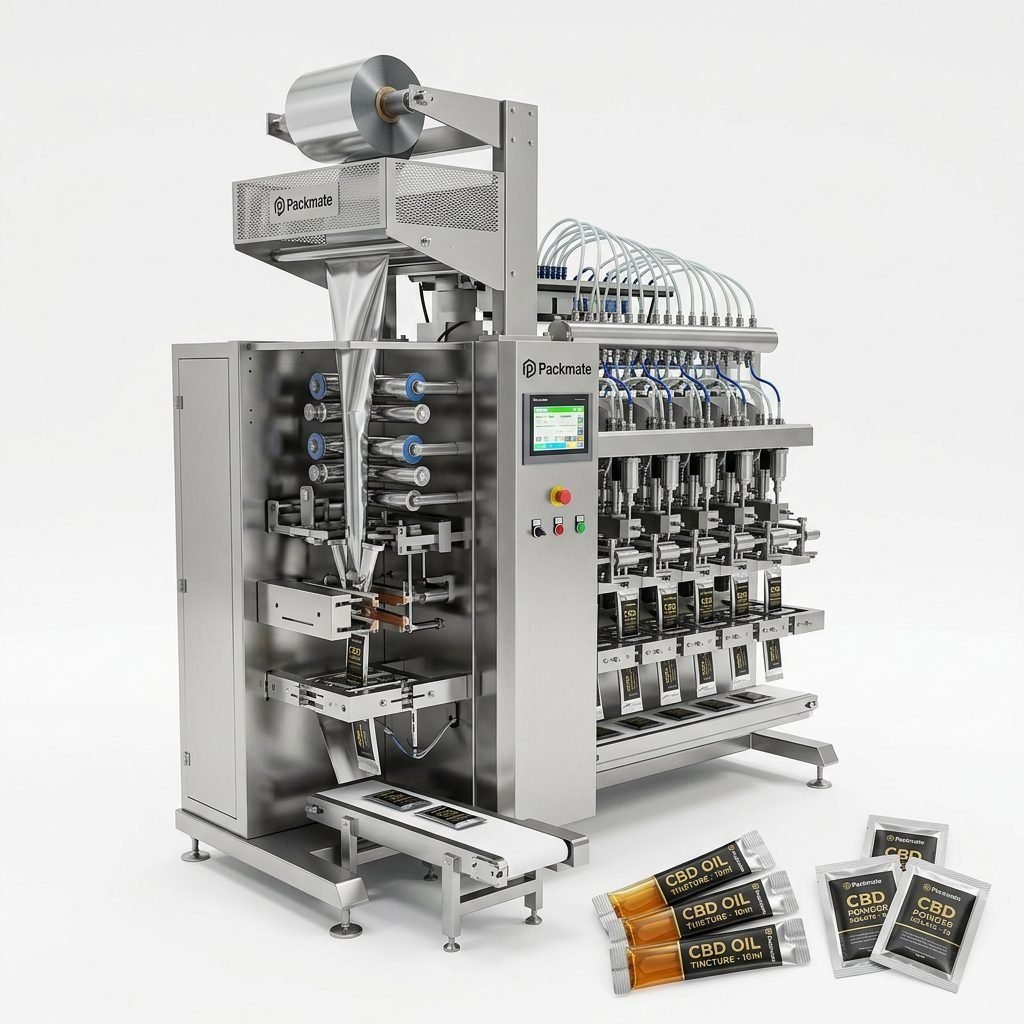
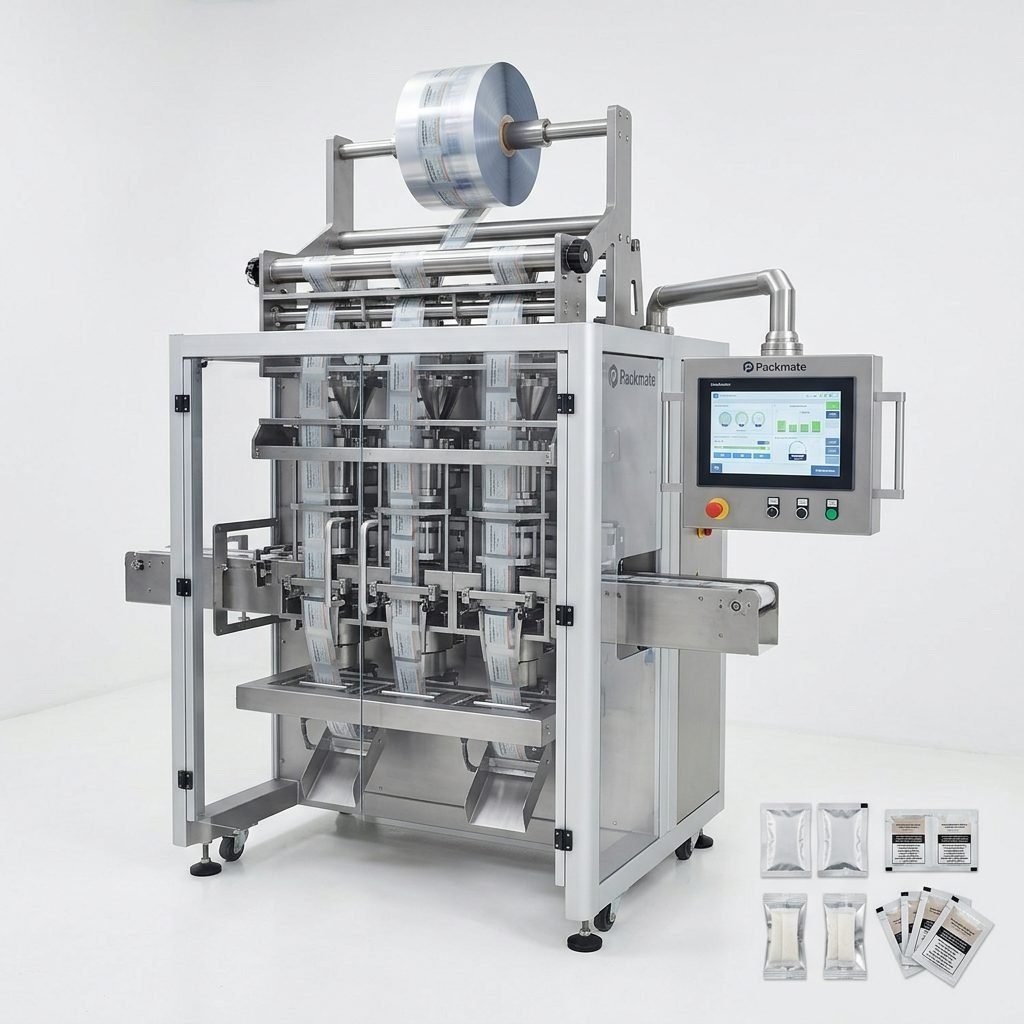
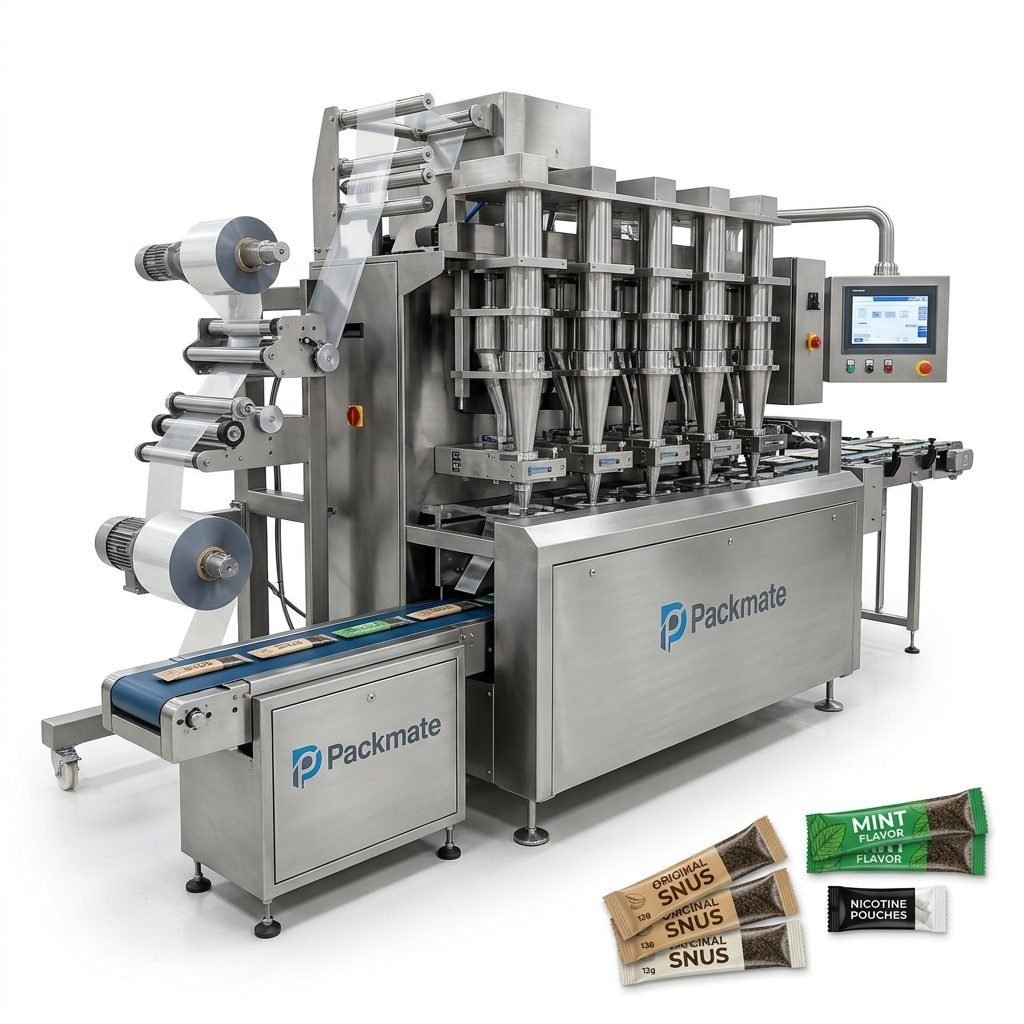
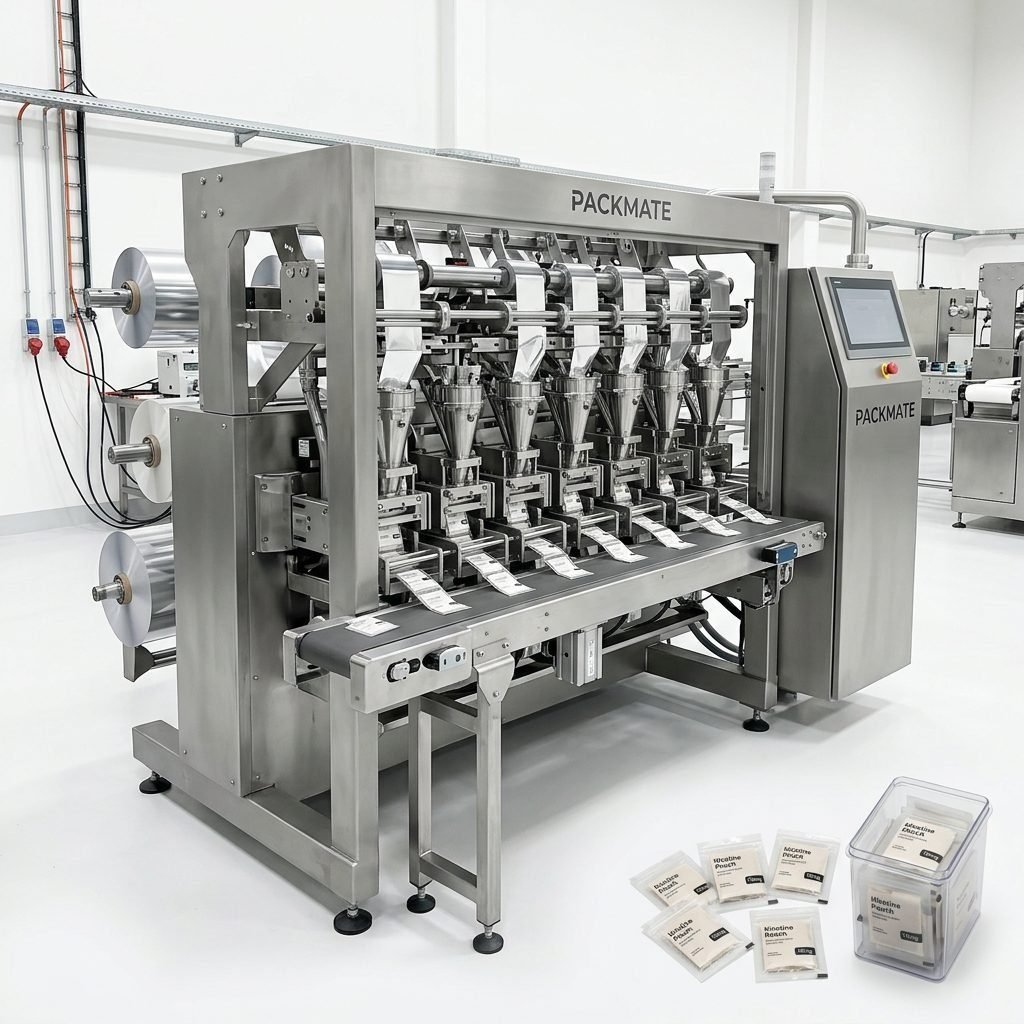
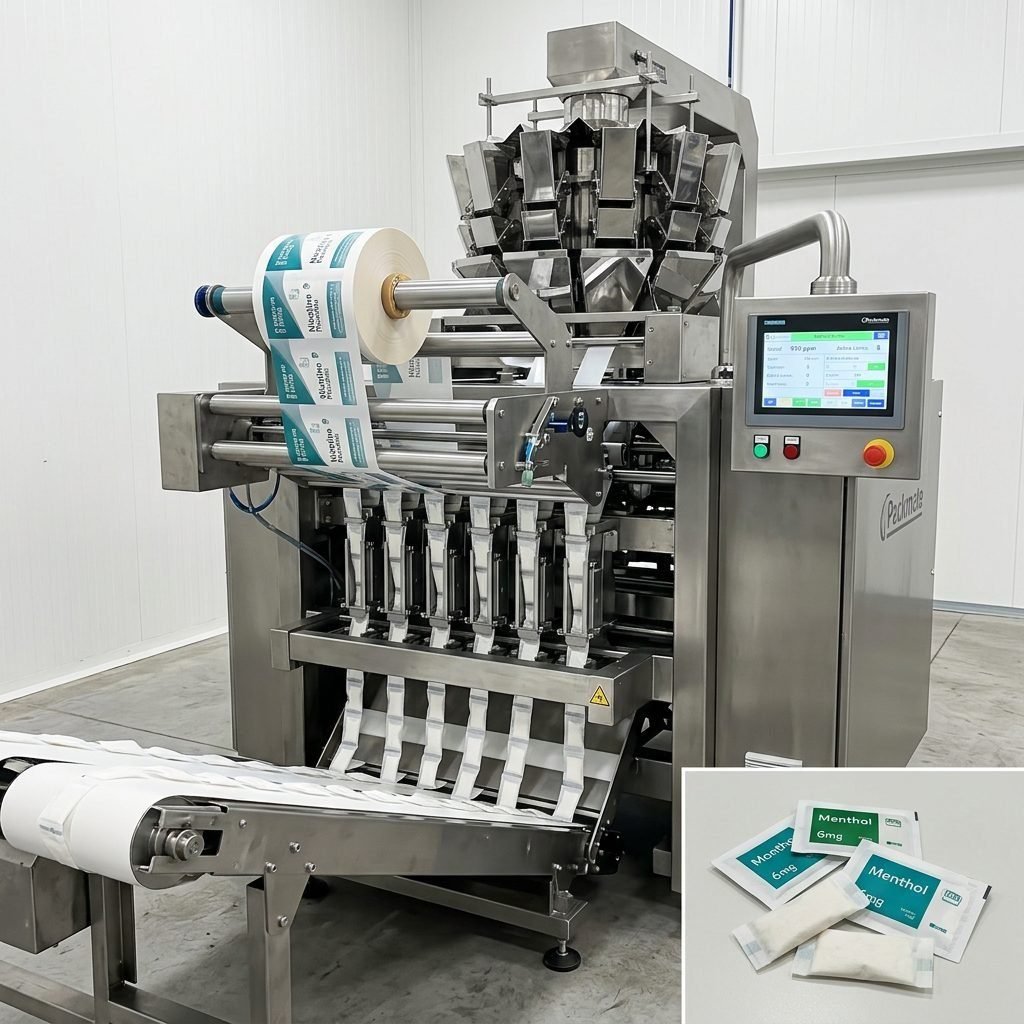
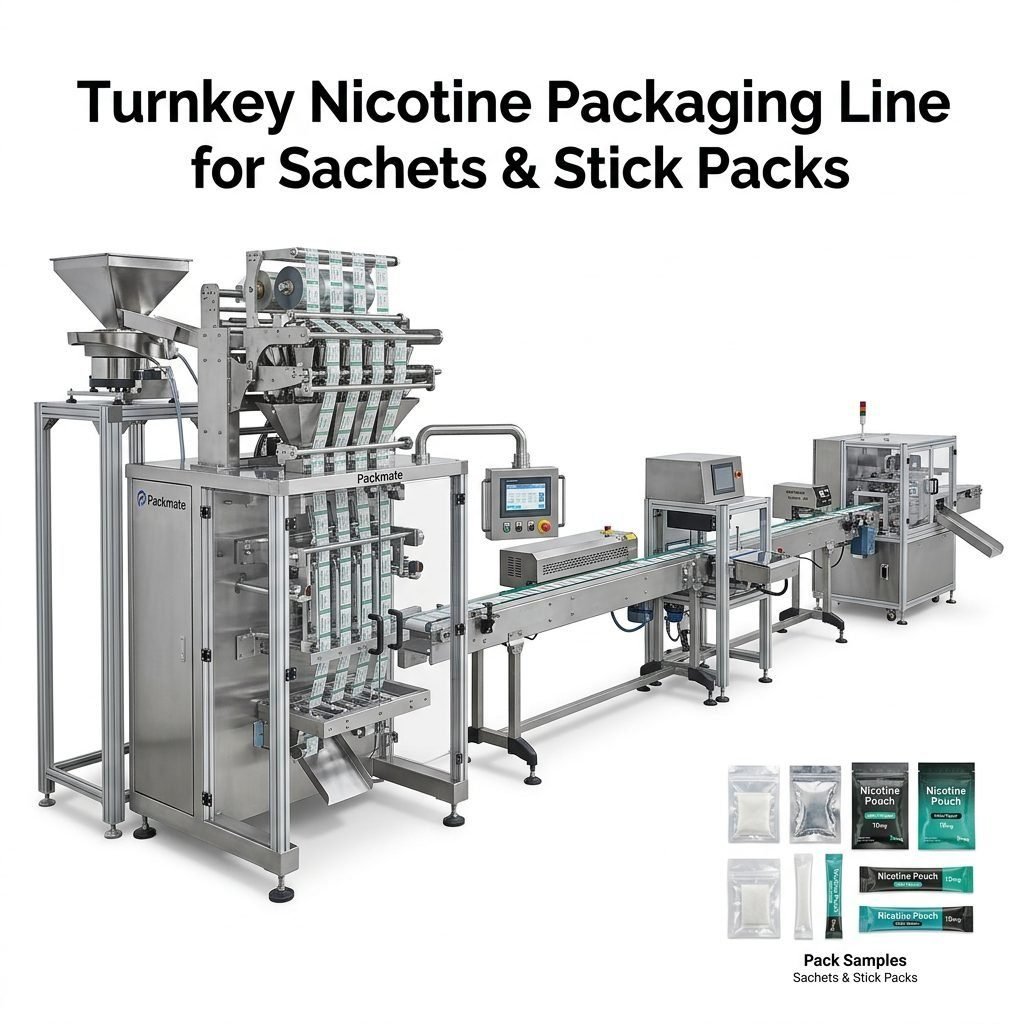
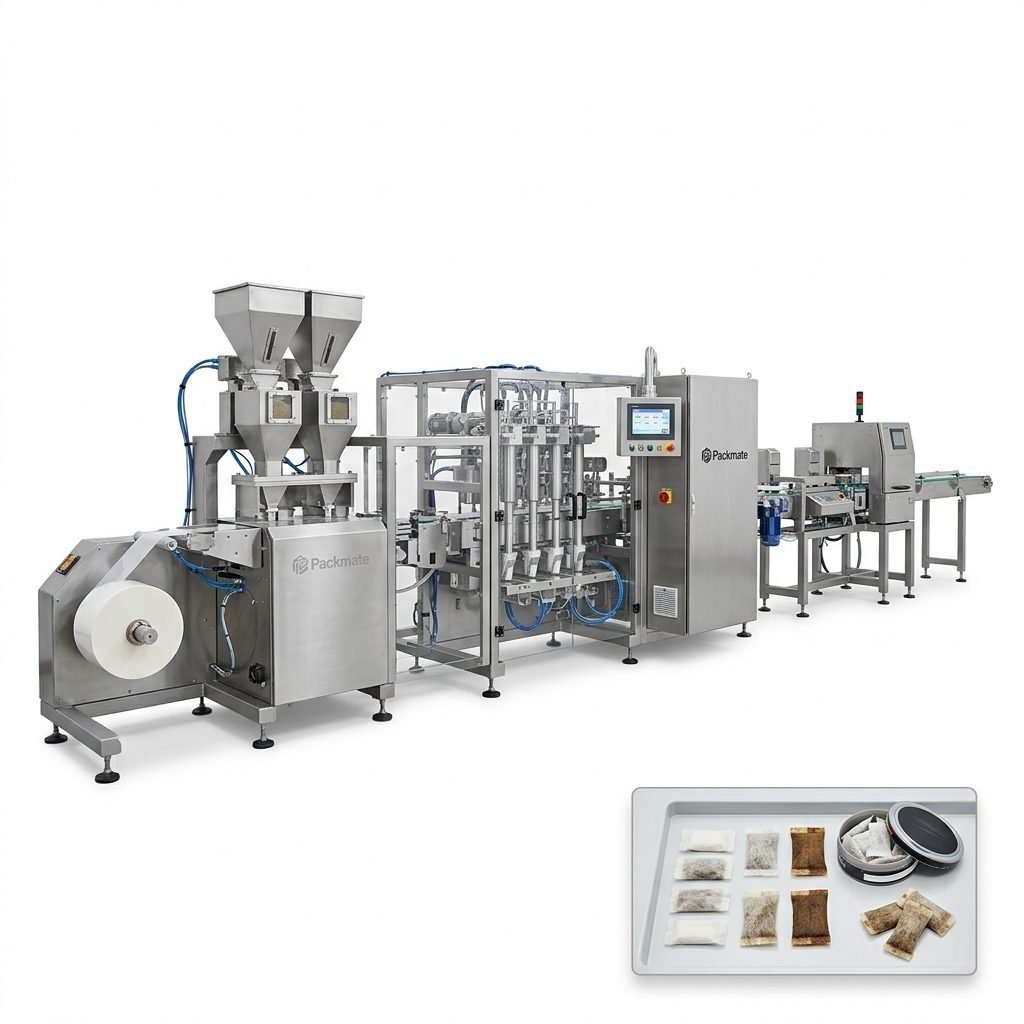
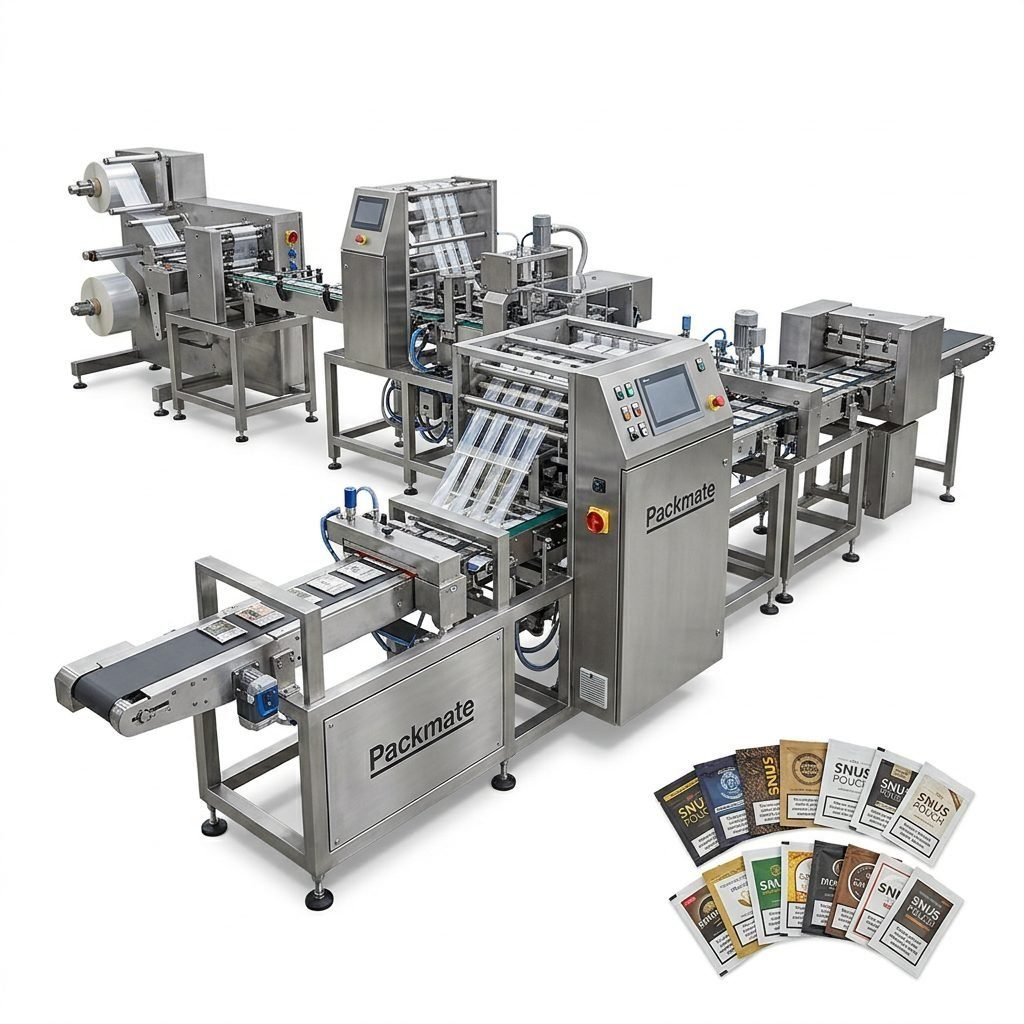
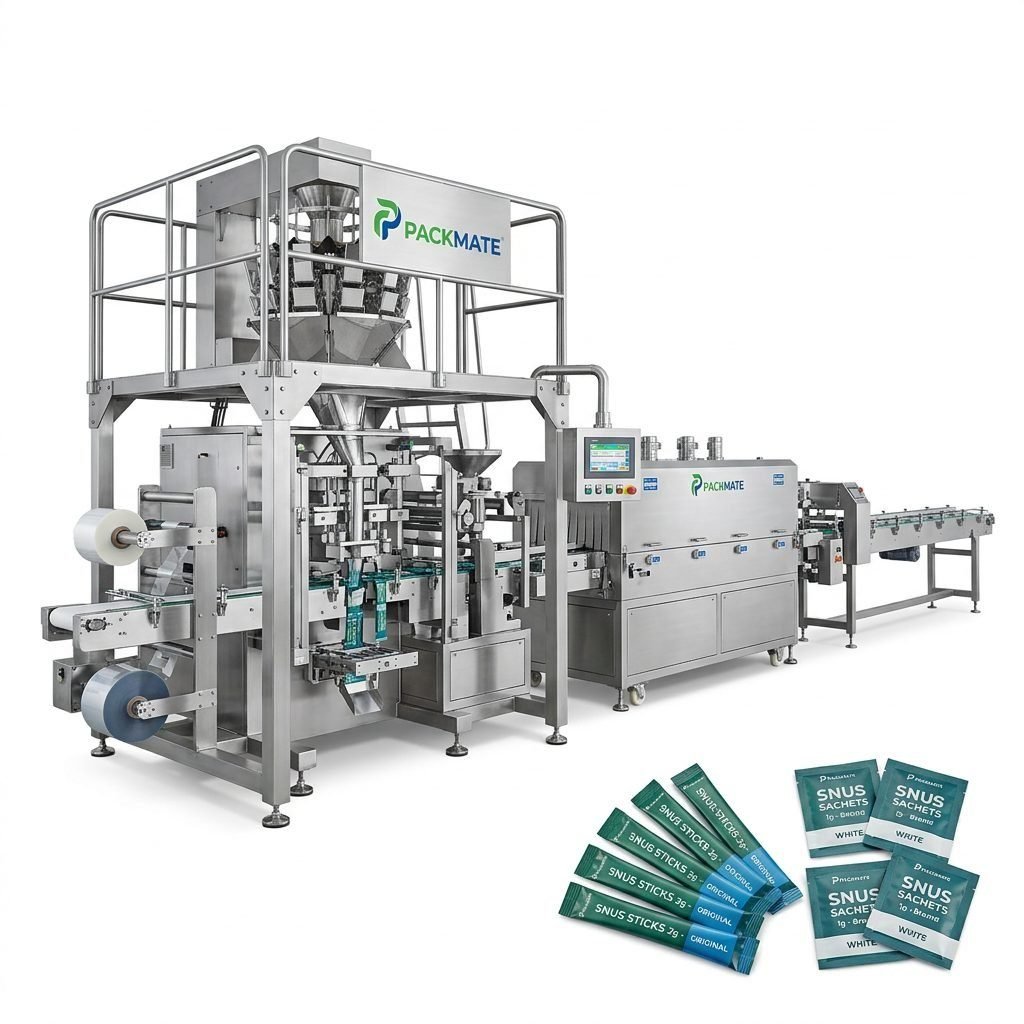
Packmate Snus Machine illustrates the type of supplier to prioritize: extensive experience in snus and nicotine pouch lines, 20,000㎡ manufacturing capability, and a wide range of machines including stick pack, sachet, and multi‑lane systems. Learn more about specialized offerings here: Snus & Nicotine Packaging Machines.
Inspect Factory & Production Quality Remotely or On‑Site
An in‑person factory visit is ideal, but if travel is impractical, request a live video tour and machine demonstration. During the inspection, focus on machining centers, assembly practices, testing protocols, and spare parts storage.
What to observe:
• CNC and precision tooling availability — ensures repeatable component accuracy.
• Assembly lines and clean test areas for hygienic product handling.
• Quality testing — 100% functional checks, electrical safety tests, and calibration records.
• Spare parts lead times and stock levels.
For reference and examples of global projects, suppliers often publish real cases and exhibition highlights which help confirm their market presence: Case and Our Exhibition.
Assess After‑Sales Support & Spare Parts Strategy
After‑sales service is the backbone of long‑term reliability. Your supplier must offer clear warranty terms, timely spare parts shipments, technical training, and remote troubleshooting.
🔧 Critical service capabilities: guaranteed spare part delivery times to Chile, remote diagnostics (PLC, HMI), on‑site commissioning support in Spanish, and a documented training program for operators and maintenance staff.
Check if the supplier provides long‑term service packages and a local or regional service partner to minimize downtime. Packmate offers global turnkey solutions and technical support — more on services here: Service.
Verify Compliance & Documentation
Nicotine products are increasingly regulated. A trustworthy supplier will supply full documentation for customs and compliance: CE & ISO certificates, electrical schematics, material declarations (RoHS/REACH where applicable), calibration certificates, and FAT (Factory Acceptance Test) reports.
Ask for sample documentation early in negotiations to avoid last‑minute problems. If exporting to Chile, ensure packing lists, commercial invoices, and technical manuals are available in both English and Spanish when possible.
Compare Total Cost of Ownership (TCO) — Not Just the Purchase Price
Purchase price is only part of the equation. Evaluate energy consumption, operator labor, maintenance frequency, spare part costs, warranty coverage, and expected lifetime. A higher initial investment in robust multi‑lane equipment may deliver lower per‑pouch costs and faster ROI for growing Chilean brands.
TCO factors to model:
• Energy usage and compressed air demand.
• Mean time between failures (MTBF) and mean time to repair (MTTR).
• Consumables and spare parts pricing.
• Downtime costs and service SLA penalties.
Negotiate Terms, Delivery & Installation
Negotiate clear delivery milestones, installation responsibilities, training, and penalties for missed deadlines. A good supplier will offer FAT (video or on‑site) before shipment and a detailed installation plan for Chile, including expected manpower and customs clearance support.
Key contract points:
• Payment terms and escrow options (LC, TT, milestone payments).
• Warranty length and scope (mechanical, electrical, software).
• Spare parts kit included with delivery.
• Training sessions and language of instruction.
• Acceptance criteria for performance tests.
Test Runs & Acceptance Criteria
Insist on FAT demonstrating actual pouch formats, seal integrity, weight accuracy, and production speed. Document acceptance criteria — sample runs, reject rates, and packaging integrity tests — before shipment.
📌 FAT tips: require live demonstration with your chosen film and pouch material, request video evidence, and include third‑party inspection if necessary.
Language & Cultural Fit — Why It Matters in Chile
Spanish language capability and cultural sensitivity accelerate projects in Chile. Suppliers who provide manuals, training, and remote support in Spanish reduce misunderstanding, improve operator confidence, and shorten the commissioning period. Consider local partners or a distributor who can provide faster on‑site response and spare parts handling.
Sourcing Example: What a Good Supplier Proposal Looks Like
A professional proposal should include: machine specifications, electrical diagrams, layout drawings, machine weight and crating dimensions, FAT plan and acceptance criteria, detailed warranty and spare parts list, delivery schedule with port of discharge options, and training plan. If possible, ask for a reference list of clients in Latin America to confirm regional experience.
To explore manufacturer background, references, and catalogs that illustrate a supplier’s breadth, view the company profile and product range such as: About Packmate and Catalog.
Fast Checklist Before You Sign
• Confirm certificates and FAT evidence.
• Verify spare parts lead times to Chile and warranties.
• Ensure Spanish documentation and training availability.
• Agree on clear acceptance tests and penalties for non‑performance.
• Confirm logistic plan and estimated arrival at Chilean port.
✅ Pro tip: request a small spare parts kit with the first shipment and set up a remote support schedule for the first 90 days after installation to ensure a smooth ramp‑up.
Working with International Suppliers — Customs & Shipping Notes for Chile
Prepare for customs formalities by coordinating HS codes, origin certificates, and compliance documents. Engage a freight forwarder experienced with heavy machinery to manage port handling in Chile. Plan for local taxes, valuation methods, and any required homologation or registration with Chilean authorities for nicotine‑related production equipment.
When ready to contact a supplier with proven snus packaging expertise and global support, use the official contact channels: Contact Us.
Final selection summary
Choose a supplier that demonstrates technical depth, documented quality management, strong after‑sales service, and local support capabilities. Prioritize companies that can deliver turnkey production lines, experience with nicotine pouch formats, and help navigate Chilean customs and regulatory needs.
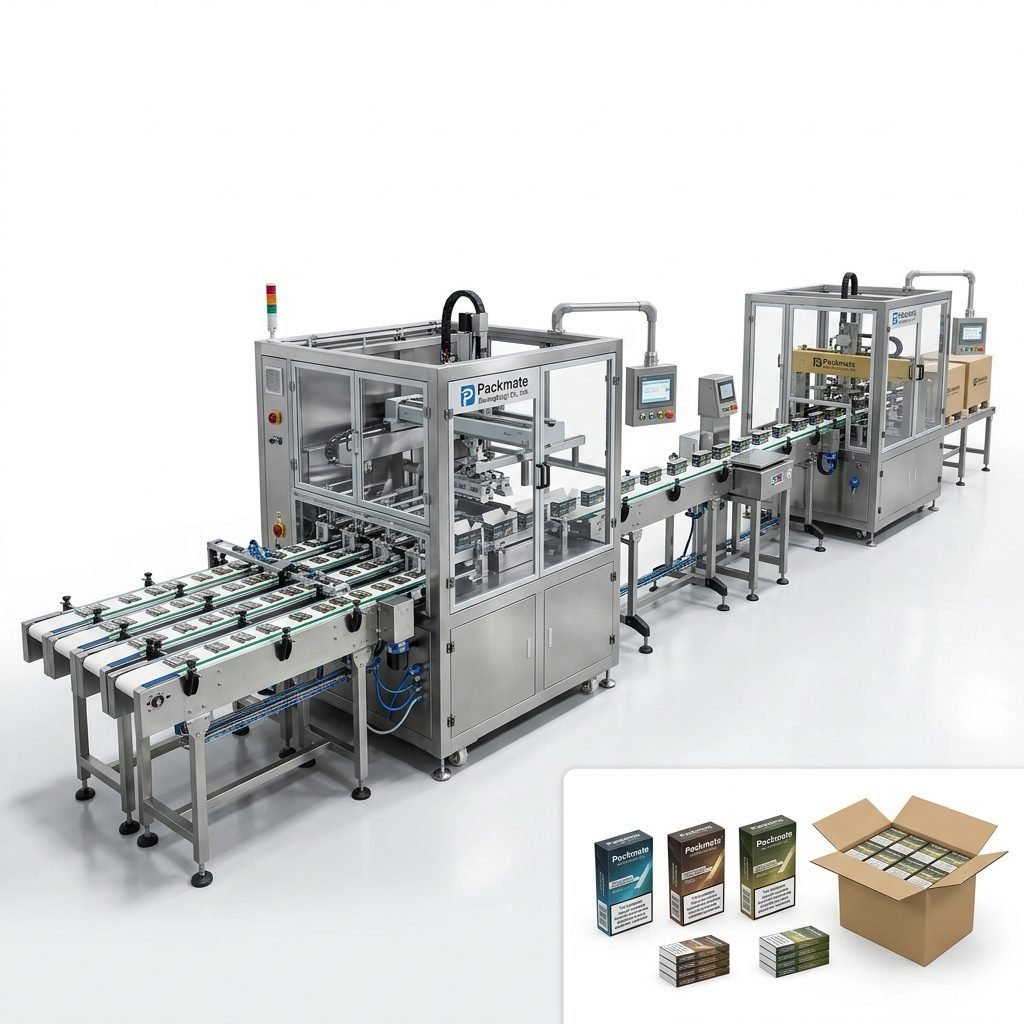
Suppliers with a broad portfolio — including sachet, stick pack, and filling systems — often provide the flexibility to expand product ranges. Explore complementary equipment categories for future growth: Bag & Pouch Packaging Machines and Filling & Packaging Lines.
FAQs — Common Questions from Chilean Buyers
Q1: What certifications should I insist on for snus packaging machines?
A1: At minimum request CE and ISO documentation, electrical safety reports, and FAT records showing performance with your chosen packaging material.
Q2: How long will a typical lead time be to ship a turnkey snus line to Chile?
A2: Lead times vary by model and customization, but expect 8–20 weeks for production plus shipping and customs clearance; negotiate FAT and partial deliveries to shorten ramp‑up delays.
Q3: Is Spanish language support essential?
A3: While not mandatory, Spanish manuals and on‑site or remote training in Spanish significantly improve installation speed and minimize operator errors.
Q4: What spare parts should I order with my first machine shipment?
A4: Common spare kits include belts, seals, sensors, spare PLC modules, and critical mechanical wear components sized for at least three months of normal operation.
Q5: How can I verify a supplier’s claims about performance?
A5: Require a FAT with your product, request video demonstrations, speak to regional references, and review documented case studies to confirm real‑world performance and reliability.