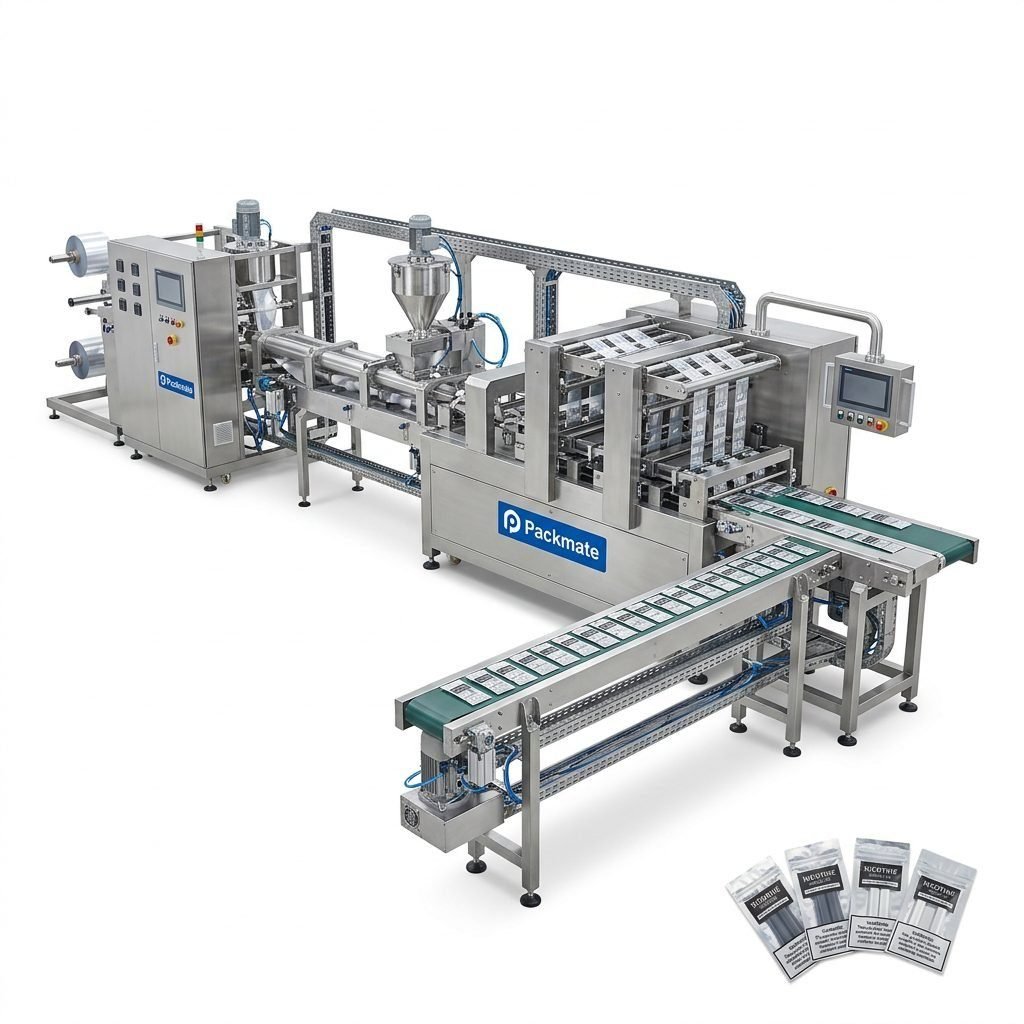
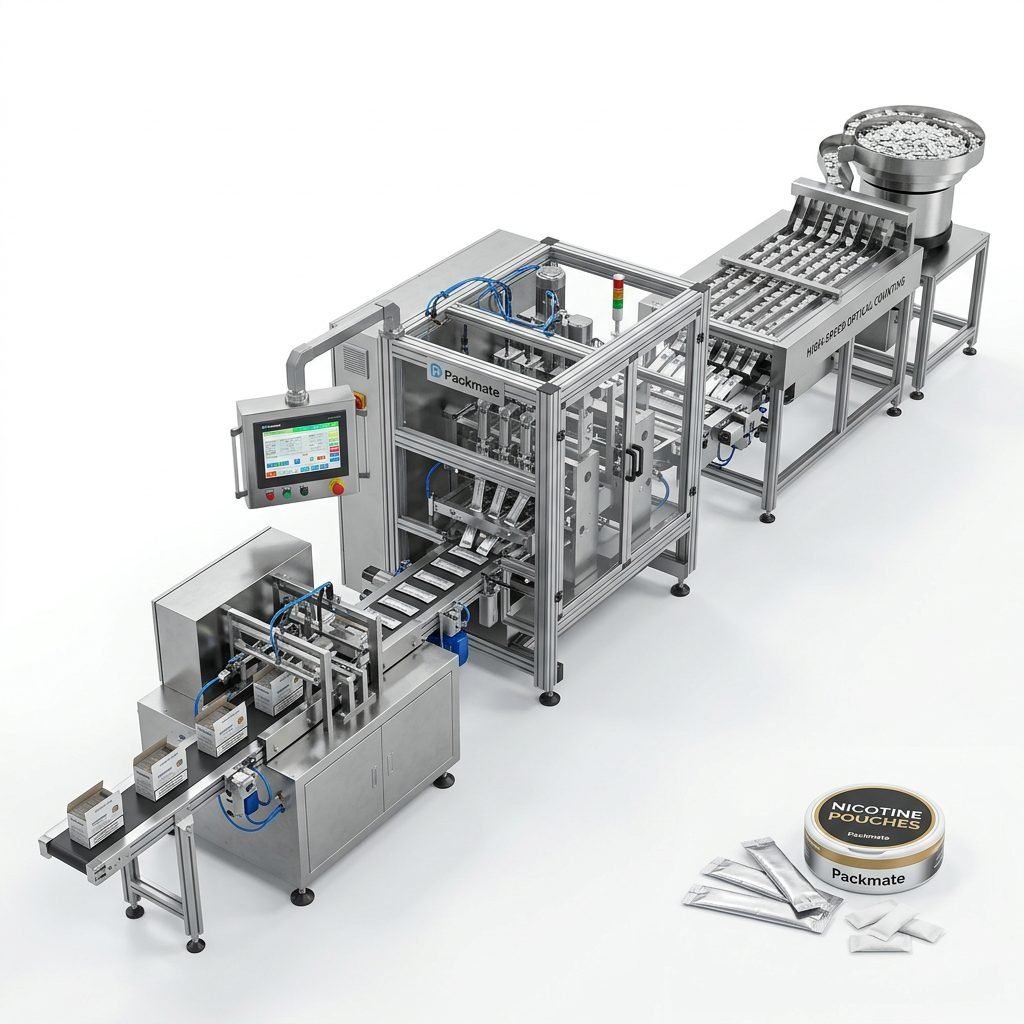
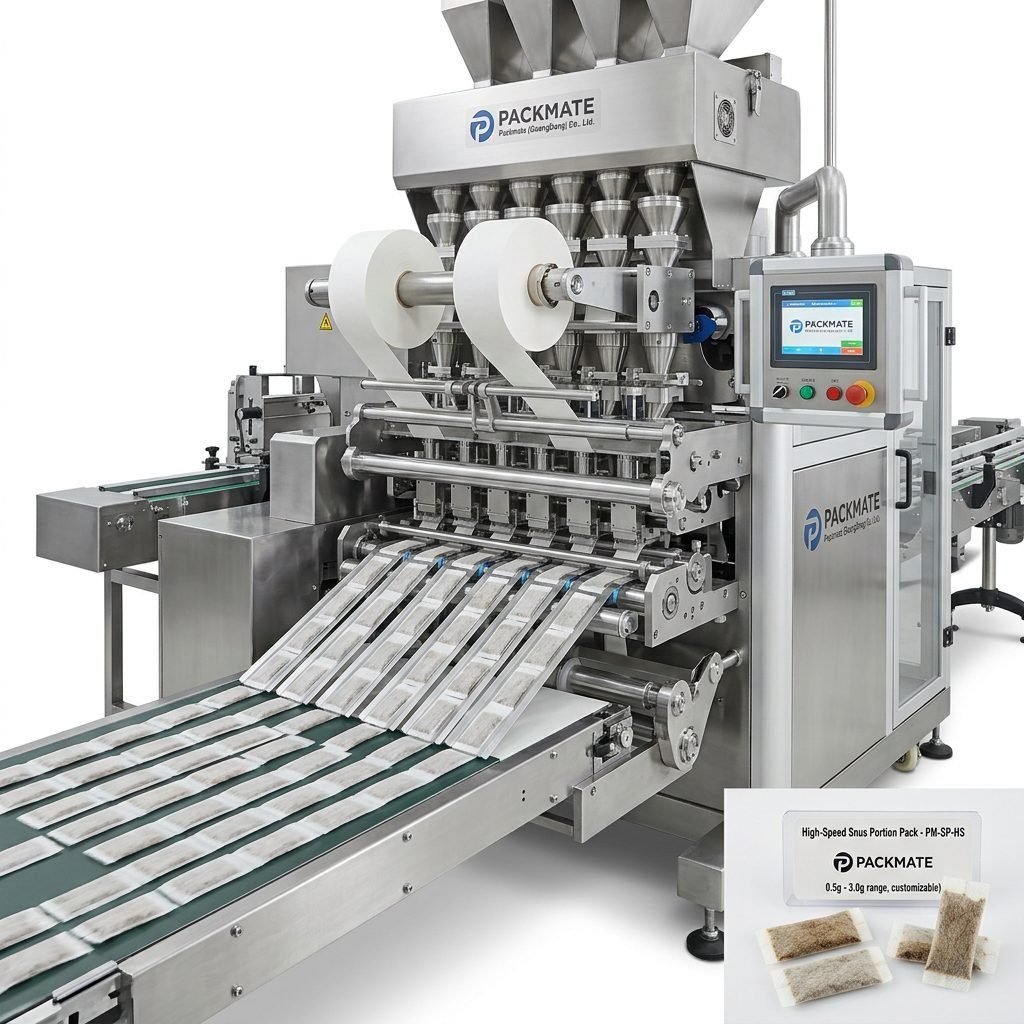
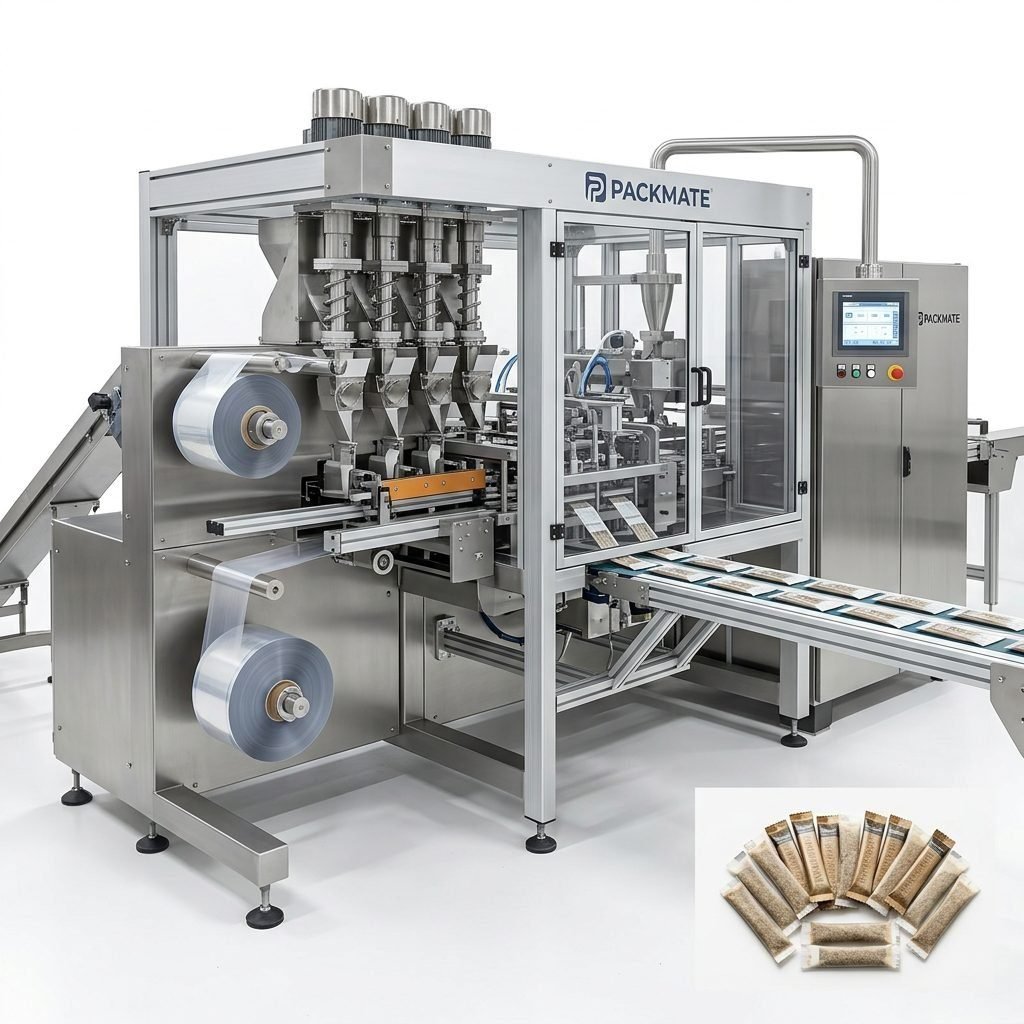
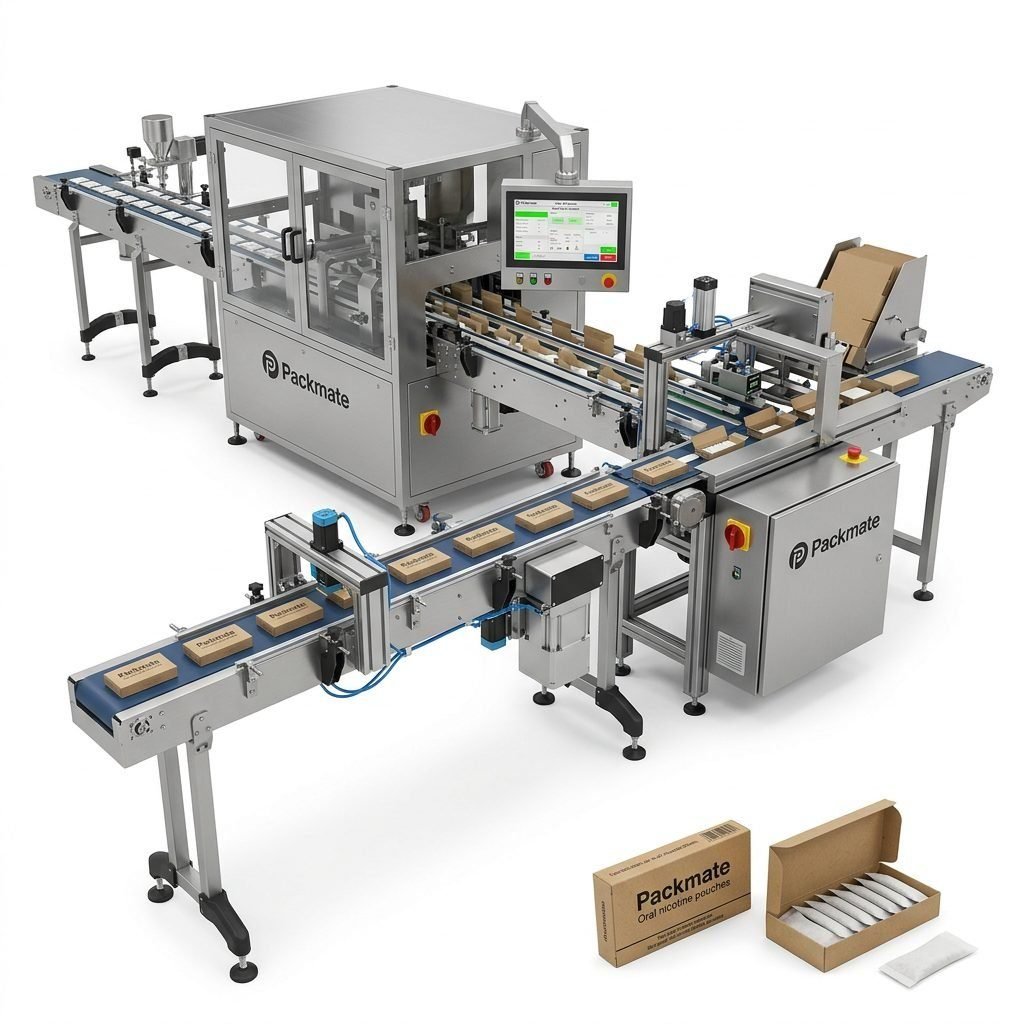
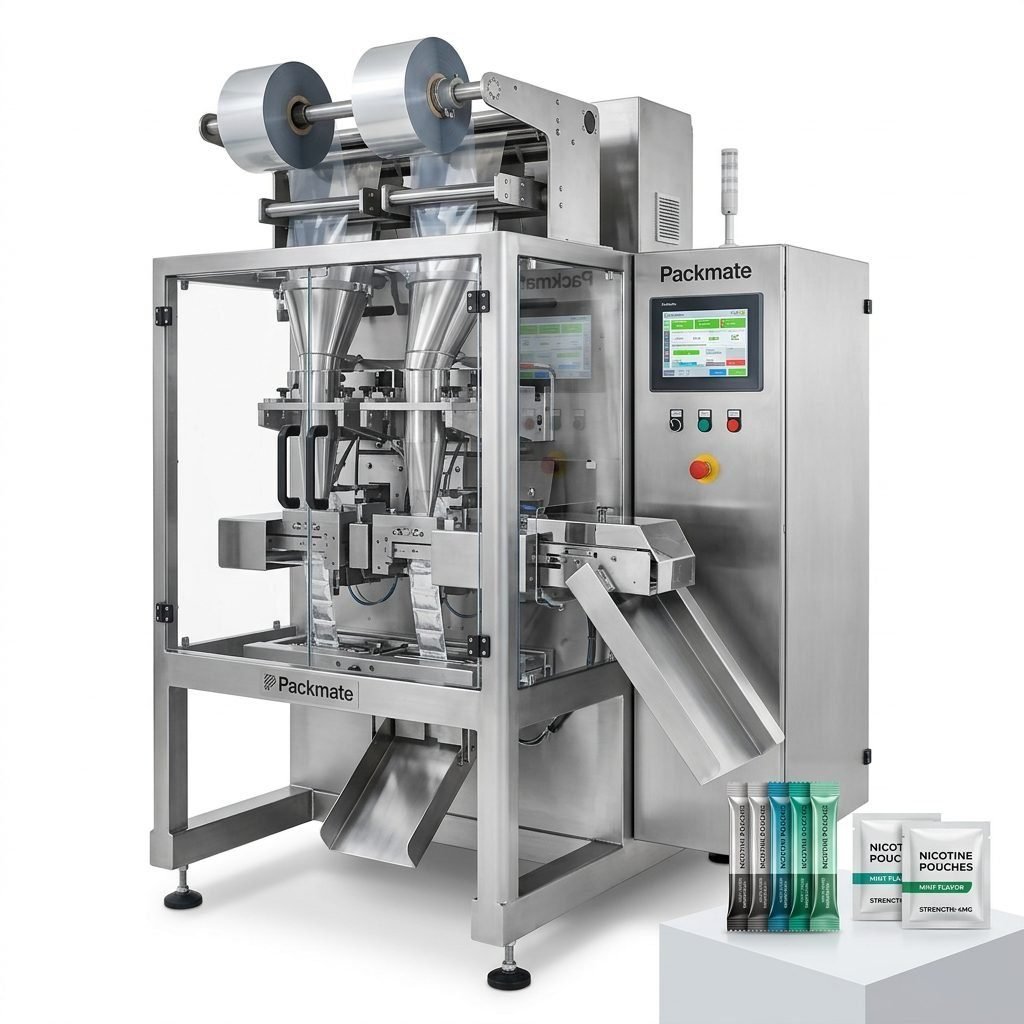
In modern snus and nicotine pouch production, achieving consistent portion weight, rapid throughput, and reliable hygiene standards are non-negotiable. A High-Precision Snus Production Line with Integrated Weighing System delivers controlled portioning, reduced material waste, and consistent product experience for end users — all while enabling manufacturers to scale output without sacrificing accuracy.
Why precision weighing matters for snus portion packing
Snus and nicotine pouches are small-dose products where even minimal weight deviations can cause regulatory, cost, and user experience issues. Manufacturers face three core challenges: maintaining consistent dose per pouch, minimizing overfill to control costs, and ensuring stability across multi-lane production. An integrated weighing solution with high-speed feedback control addresses all three by delivering real-time weight verification and automatic compensation.
Key business impacts
✅ Reduced material costs — accurate portioning prevents systematic overfill.
🔧 Improved regulatory compliance — documented weighing records simplify audits.
📦 Consistent consumer experience — consistent pouches build trust and brand loyalty.
Featured capability highlights
⚖️ Integrated multi-head weighing – supports precise micro-dose control across multiple lanes.
🔁 Closed-loop feedback – immediate correction of filling parameters when deviation is detected.
🔒 Hygienic design – stainless steel contact surfaces and easy-clean modules for pharma-grade standards.
Core components of a high-precision snus line
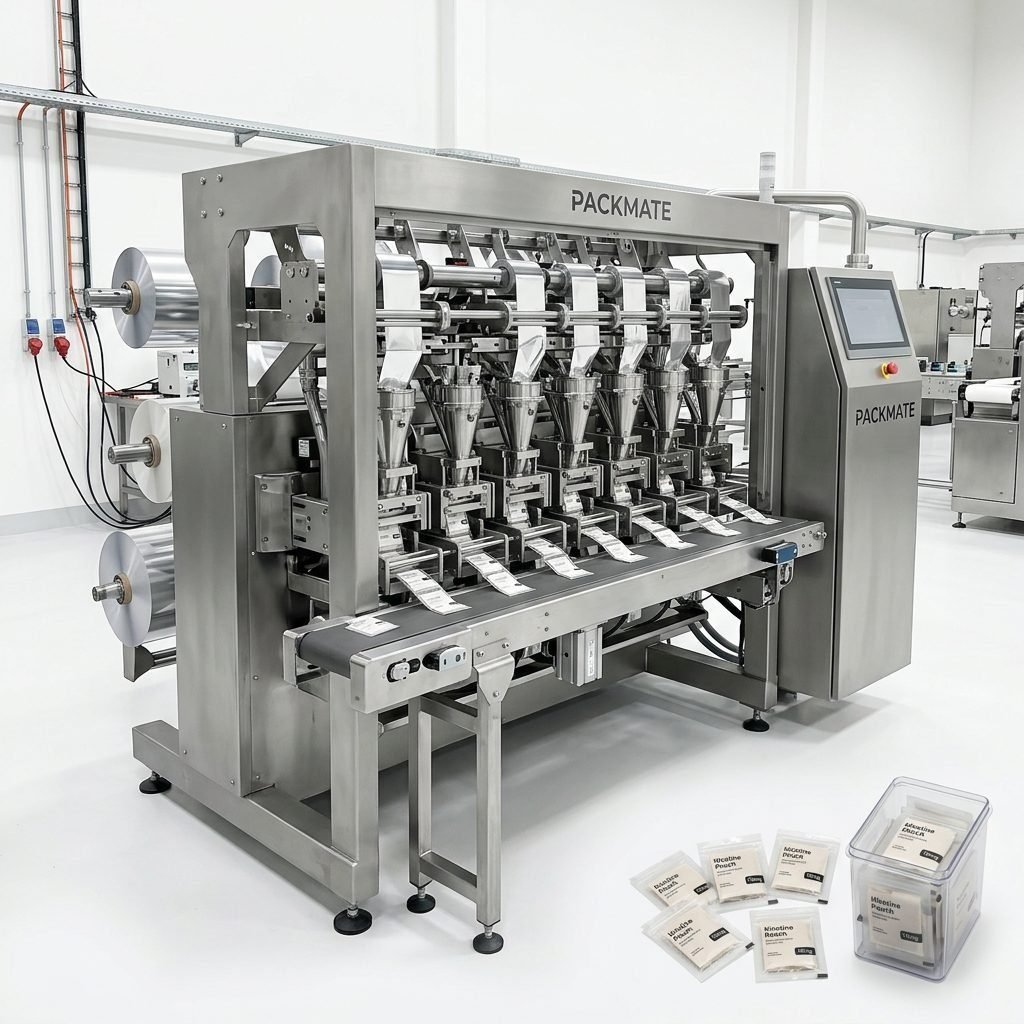
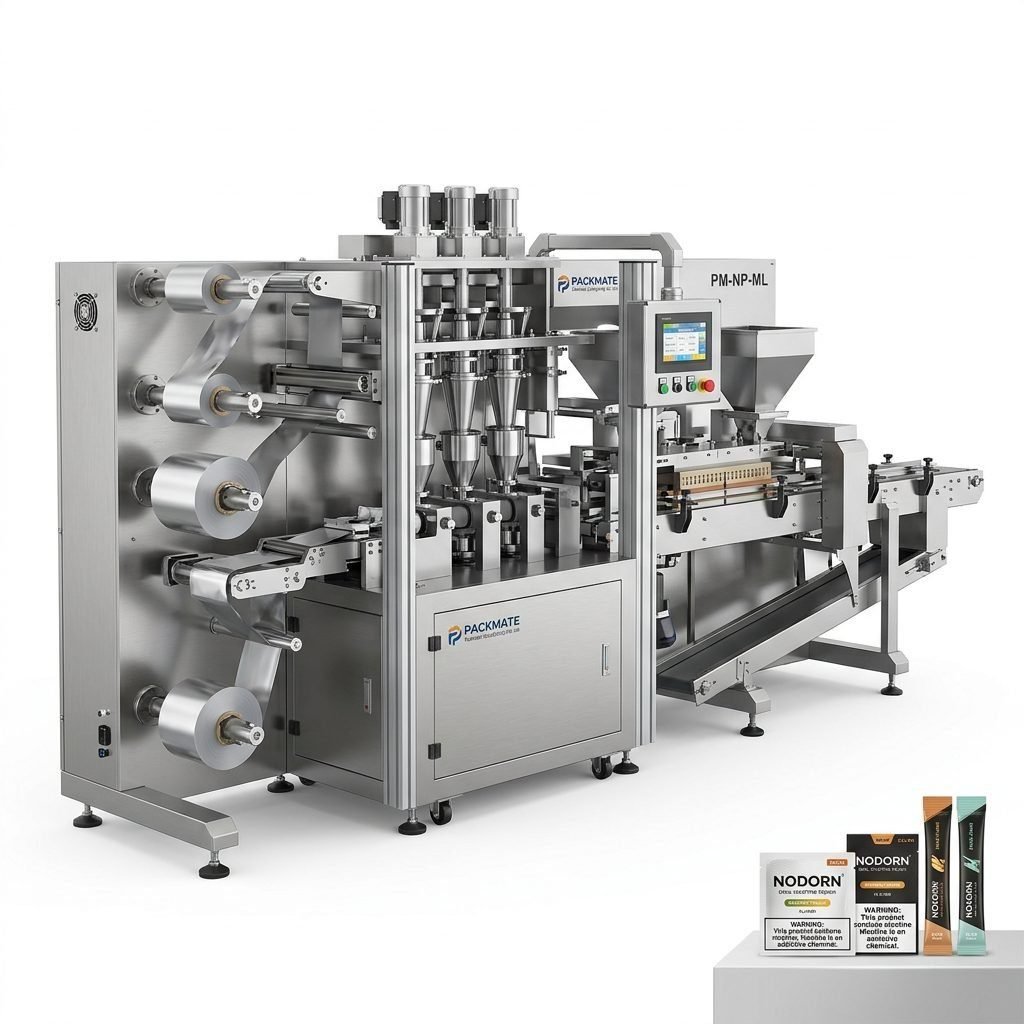
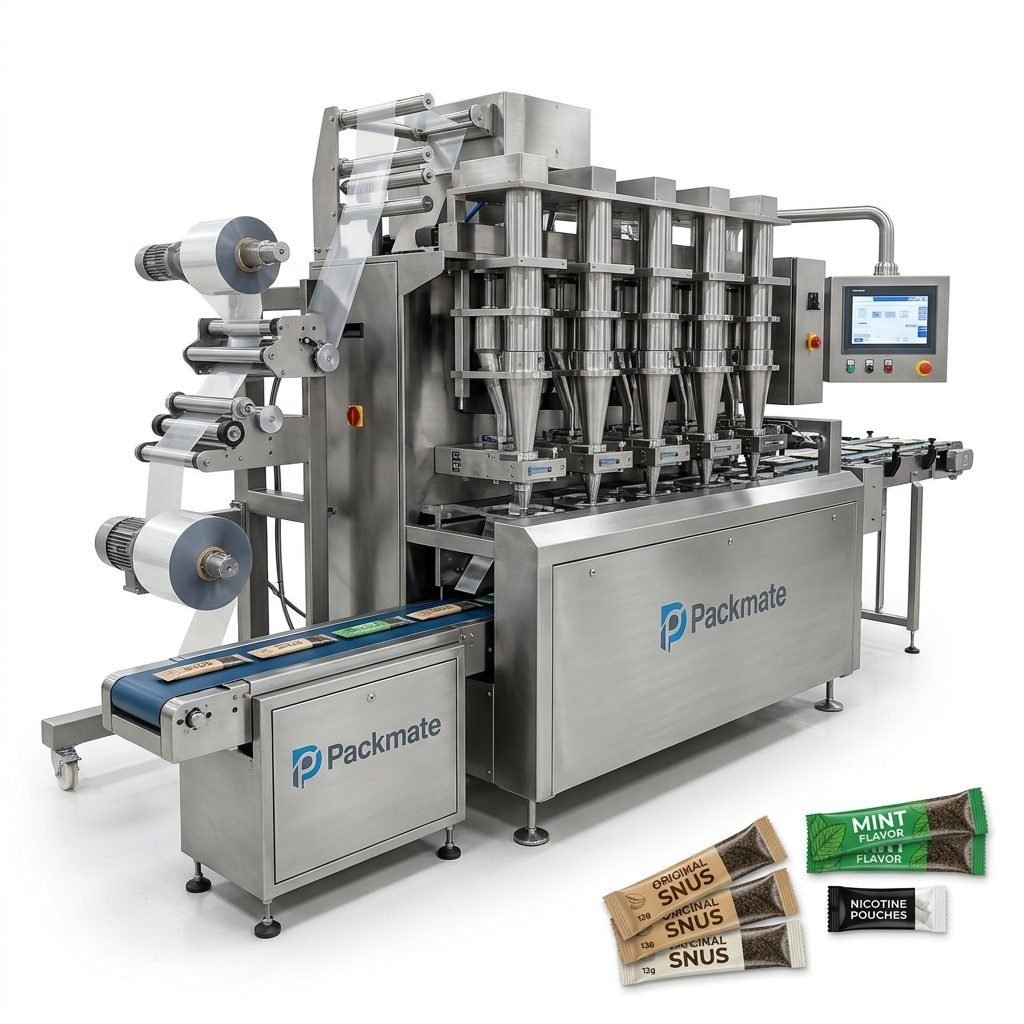
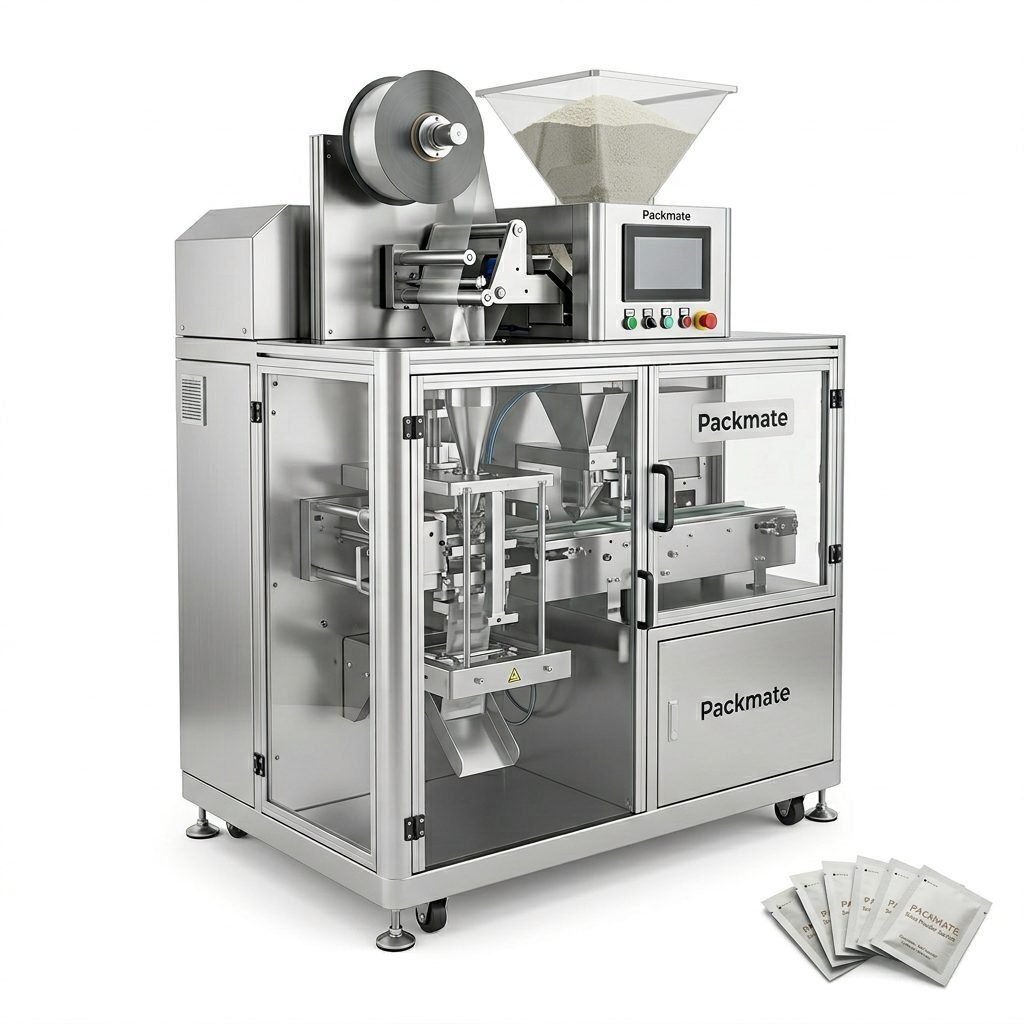
A best-in-class snus production line combines several synchronized subsystems. Below is a practical breakdown of each stage and its role:
1. Material feeding and dosing: Precision feeders, metering screws or vibratory hoppers ensure uniform material delivery to weighing heads. Proper dosing reduces variance before weighing, improving overall consistency.
2. Multi-head weighing module: High-sensitivity load cells combined with fast electronics measure each pouch’s content in real-time. Multi-head configurations allow parallel portioning for high throughput while keeping individual pouch weights within strict tolerances.
3. Rotary or intermittent pouch forming & filling: After weighing, portioned material is directed into pre-made pouches or formed pouches using a stick/sachet system. Precision timing guarantees synchronous sealing and minimal product loss.
Automation & quality control layer
🧪 Inline checkweighers — verify final pouch weights and trigger rejects for out-of-spec items.
📊 SCADA / data logging — comprehensive production records and traceability to meet audit requirements and facilitate process optimization.
Design considerations for small-dose nicotine pouches
Precision engineering for small-dose products needs a focus on vibration damping, dosing accuracy at low volumes, and contamination prevention. Typical considerations include:
• Low-dead-volume hopper design to prevent dose inconsistency from bridging.
• Temperature-stable electronics and high-resolution load cells that maintain accuracy over long runs.
• Redundant weighing heads or averaging algorithms to ensure single-pouch variance is within tight limits.
Throughput vs. accuracy: achieving balance
Production goals often force a trade-off between speed and precision. The modern approach is to use multi-lane systems with synchronized weigh-fill modules: each lane runs at modest speed while overall output scales by lane count. This strategy avoids pushing a single weighing head beyond its optimal response time while still delivering high total throughput.
Typical configuration example
🔧 8-lane forming & filling with 16-head weighing array — delivers high throughput with each lane maintaining strict weight control.
⚙️ Redundant dosing + averaging logic — smoothes short-term fluctuations without interrupting production flow.
📈 Data capture for each pouch — enables SPC (statistical process control) and reduces long-term drift.
Integration with peripheral equipment
A complete production line must integrate auxiliary equipment such as primary packaging, labeling, metal detection, and cartoning. Packmate offers modular systems that connect weighing and filling modules with upstream and downstream devices to create a turnkey packaging line. Explore product categories for details: Weighing & Packaging Systems, Snus & Nicotine Packaging Machines, and Sachet & Stick Pack Machines.
Hygiene, maintenance and lifecycle costs
Lifespan and total cost of ownership depend heavily on component selection and maintainability. Key practices:
• Use food-grade stainless steel and sealed load cells to prevent contamination and moisture damage.
• Design for rapid tool-less access to wear parts to minimize downtime during cleaning or changeovers.
• Implement scheduled calibration and electronic drift compensation to keep per-pouch variance low over thousands of cycles.
Regulatory compliance and quality certification
International markets require machines and processes that support traceability and safety. Packmate equipment meets standards including CE and ISO, and is built with documentation workflows for audits. For certification and documentation, see our Certificate page.
Packmate strengths you can rely on
🏭 Over 30 years of engineering experience and a 20,000㎡ factory ensure consistent build quality.
🌐 Global turnkey solutions—Packmate supports system design, installation, and commissioning worldwide. Learn more About Packmate.
📁 Wide product range—50+ models from auxiliary devices to full-fledged filling & packaging lines: Filling & Packaging Lines.
Operational best practices for reliability
To achieve trouble-free operation:
• Keep electronic modules in temperature-controlled enclosures to avoid drift.
• Train operators on quick-change procedures to reduce downtime during formulation or pack-size changes.
• Use SPC dashboards to detect gradual shifts in material behavior (moisture, particle size) and adjust dosing profiles proactively.
Customization and future-proofing
Manufacturers planning growth should evaluate modular platforms that allow lane expansion, additional weighing heads, or upgraded HMI/data logging in the field. Packmate’s modular approach supports staged investment — begin with a compact configuration and scale lanes or add automation as demand grows.
Case study snapshot
A European nicotine pouch producer transitioned from single-head filling to an 8-lane integrated weighing line and reduced average overfill by 12%, while doubling net output. The integrated data logs simplified monthly compliance reports and enabled actionable SPC improvements.
Exhibition & support
Packmate regularly showcases machines at international exhibitions — visitors can observe live demonstrations and confirm performance before purchase. For upcoming events and past exhibitions see Our Exhibition.
If you need a tailored system or want to review machine models for a specific product format, check our product catalog and case studies: Catalog | Case.
Getting started checklist for specifying a snus line
1) Define target pouch weight, tolerance and desired throughput.
2) Provide product physicals (particle/granule size, moisture content and bulk density).
3) Decide required traceability level and data retention period for audits.
4) Confirm environmental constraints (cleanroom class, temperature) and packaging format (pre-made pouch vs. form-fill-seal).
Contact & after-sales
Packmate provides pre-sales engineering, FAT (Factory Acceptance Test), onsite installation, and long-term spare parts and service support. For direct inquiries visit Contact Us.
Choosing the right integrated weighing and packaging system is a strategic decision: it affects cost, compliance, and consumer satisfaction. With a robust production line designed for snus and nicotine pouches, manufacturers can scale quickly, maintain tight weight tolerances, and minimize waste — all essential to competing in regulated global markets.
Common questions
Q1: How accurate are integrated weighing systems for snus pouches?
A: Accuracy depends on the load cell resolution, dosing mechanism, and line speed. Typical high-precision systems achieve per-pouch tolerances within a few milligrams for small-dose products when configured correctly and calibrated regularly.
Q2: Can a single line handle multiple pouch sizes and formulas?
A: Yes. Modular machines with quick-change tooling and recipe management in the HMI allow rapid format changes. For frequent changes, consider redundant dosing heads or extra lanes to reduce downtime.
Q3: What are typical maintenance needs for weighing modules?
A: Routine calibration, verification of load cell seals, and cleaning of hoppers and product-contact surfaces. A well-structured maintenance schedule and operator training minimize unexpected downtime.
Q4: Do you provide on-site commissioning and staff training?
A: Yes. Packmate offers professional installation, commissioning, and operator/maintenance training as part of its service packages. See our Service page for details.
Q5: How can I request a customized quote or FAT?
A: Provide product specs and desired throughput to receive a tailored proposal. Packmate supports FATs and offers demonstrations at exhibitions—visit Our Exhibition for upcoming events or contact us directly.