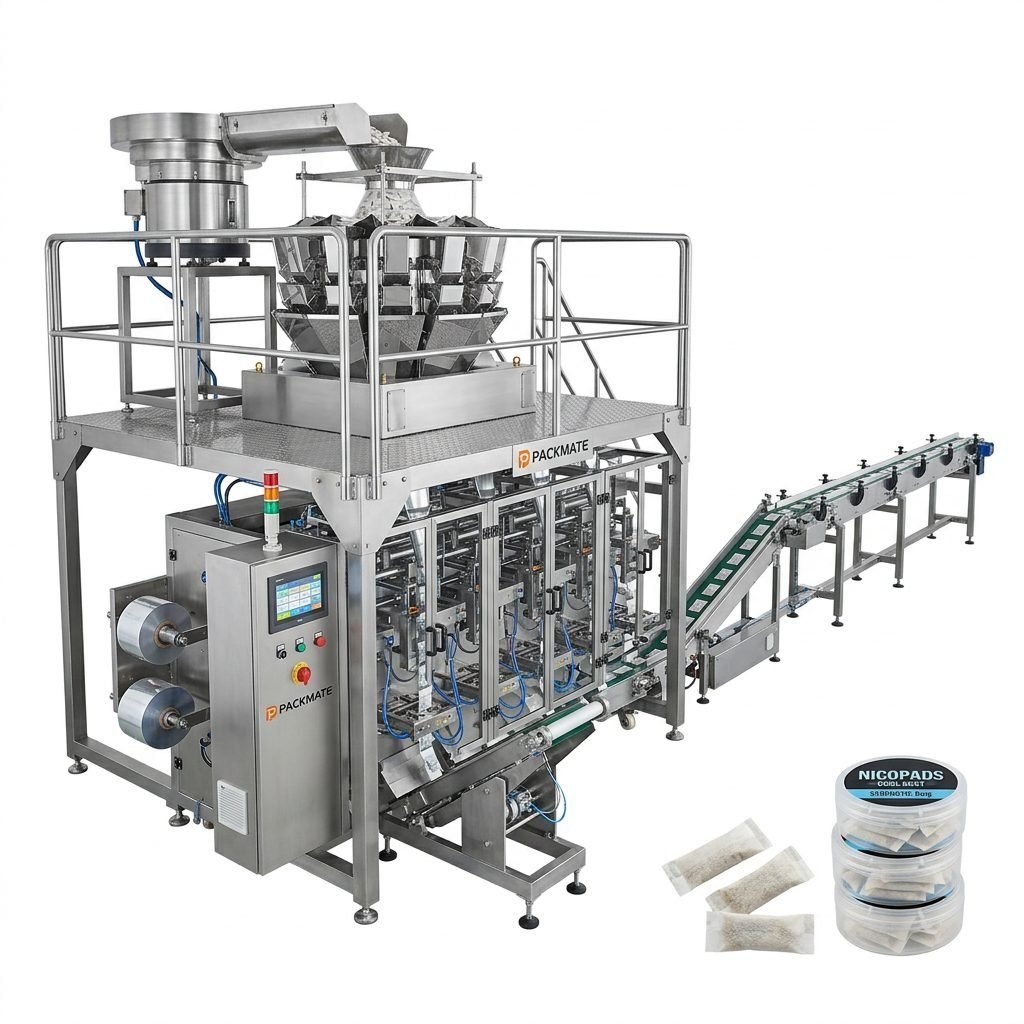
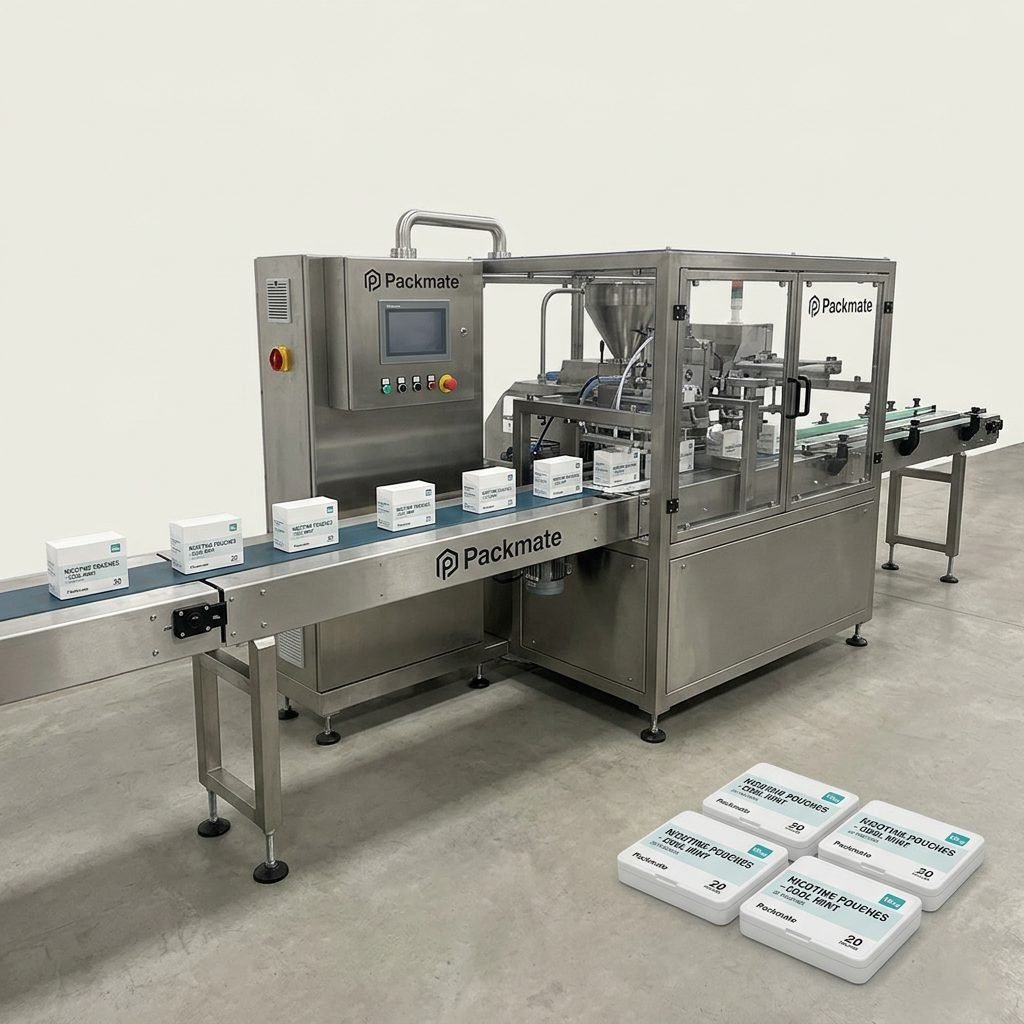
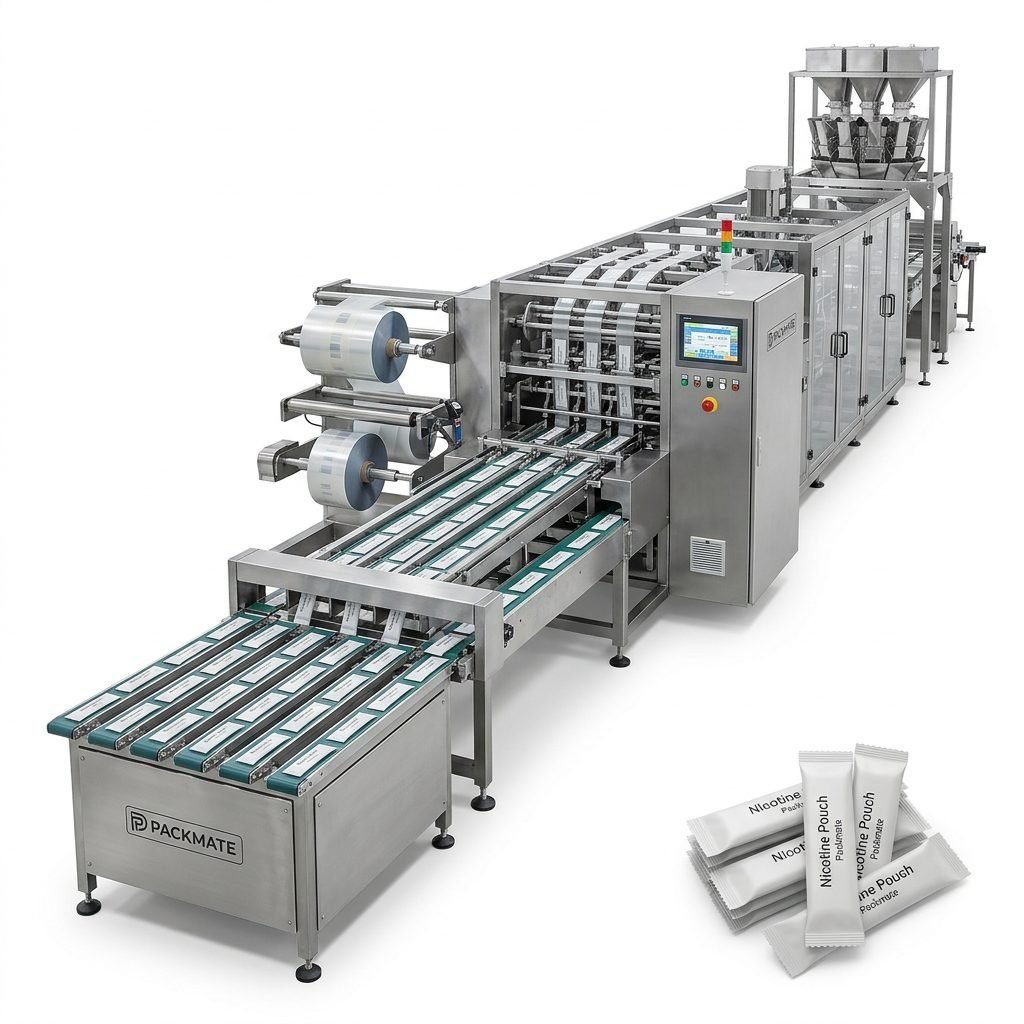
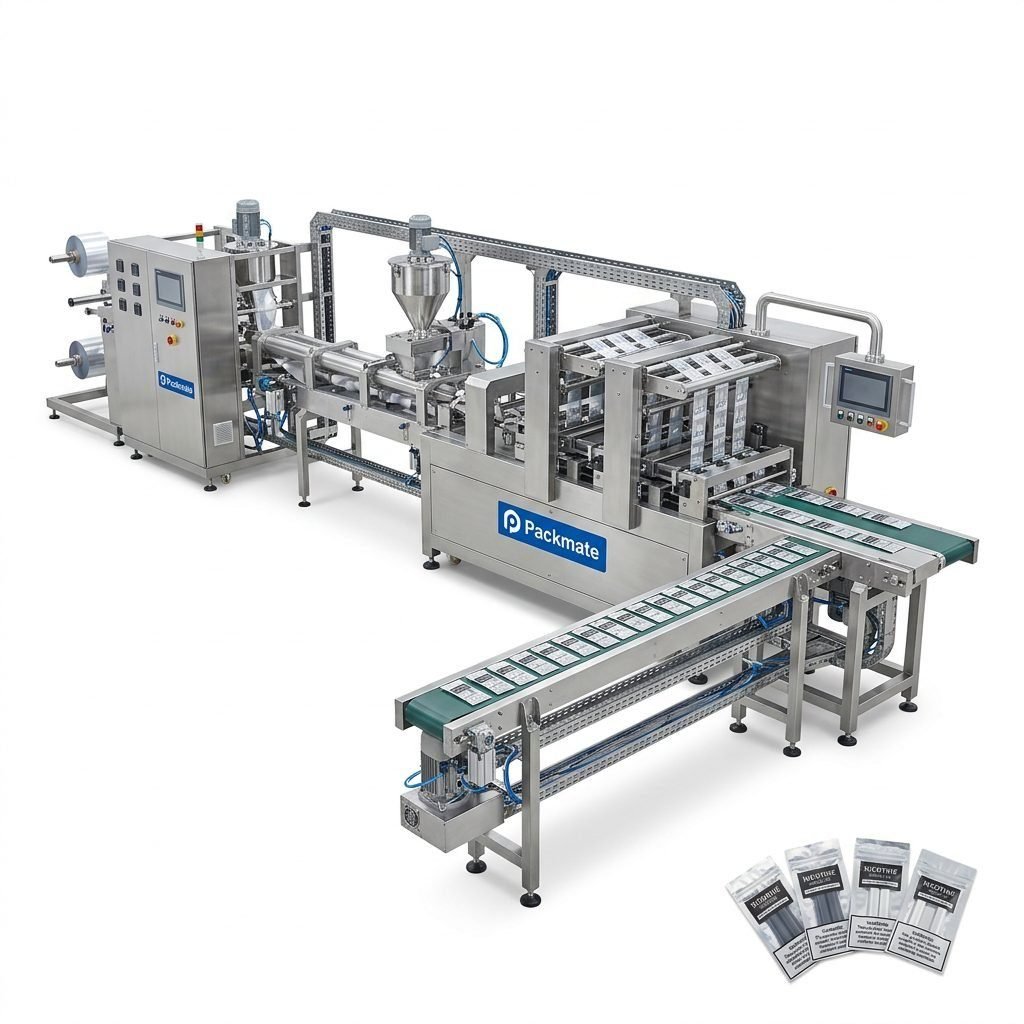
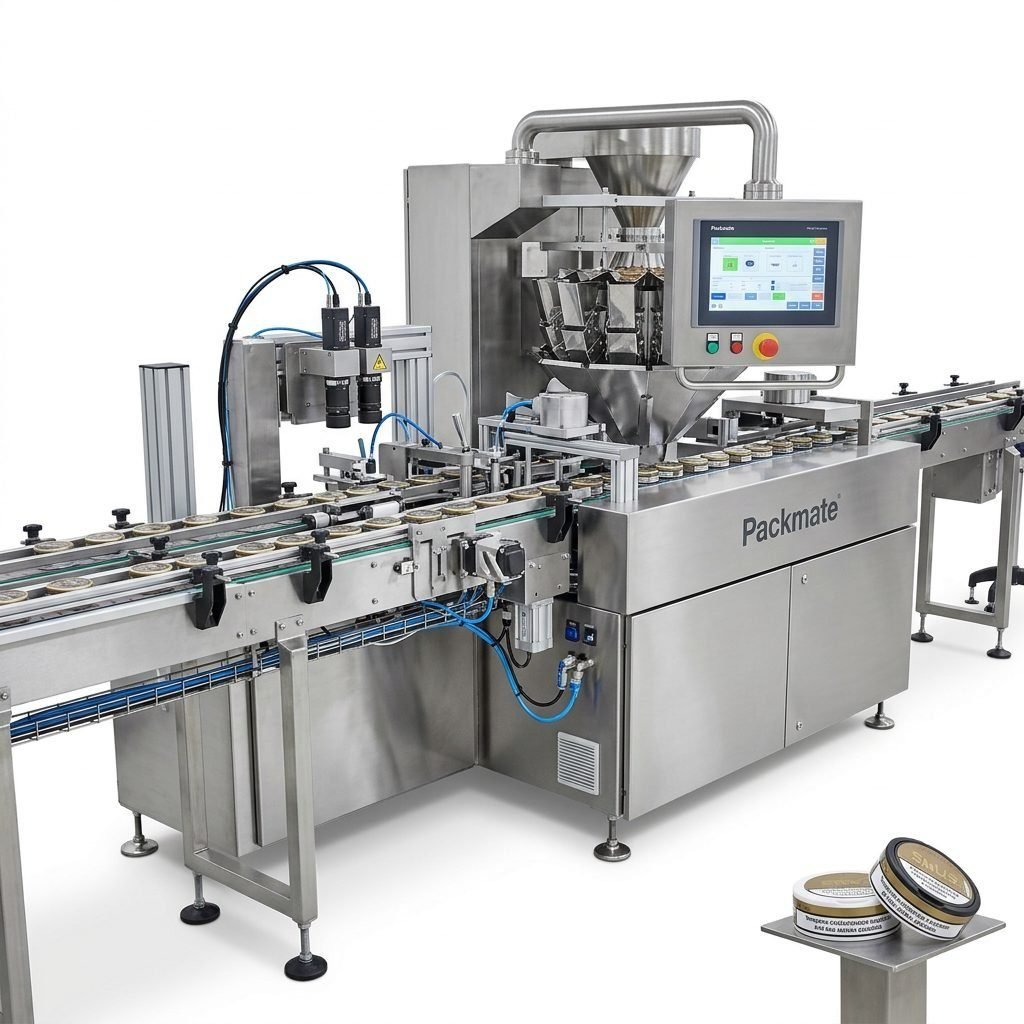
The nicotine pouch market is evolving rapidly, driven by consumer preferences, regulatory pressure, and the growing need for safer, smarter packaging. Packaging machinery suppliers, especially those with deep experience in snus and nicotine pouch technology, are positioning themselves to deliver equipment that balances production speed, product safety, sustainability, and brand differentiation. This article explores the future trends shaping nicotine pouch packaging — from child-resistant solutions and sustainable materials to machine-level innovations that enable brand-driven experiences and global compliance.
🔒 Child-Resistant Design: Beyond a Regulatory Checkpoint
As jurisdictions tighten rules around nicotine products, child-resistant (CR) packaging is no longer optional. Manufacturers need packaging lines that incorporate CR features reliably at high speed without compromising shelf appeal. Modern snus and nicotine pouch packing systems are engineered to integrate CR closures, specialized pouch structures, and tamper-evident seals while maintaining throughput.
Key machine features that support CR packaging include precision filling to ensure strict portion control, lamination and multi-material sealing for secure closures, and automated inspection systems to detect sealing defects. For business leaders, the focus is on solutions that minimize rework and ensure consistent compliance — an area where experienced suppliers provide tangible advantages.
Highlight: Investing in CR-compatible multi-lane packaging lines reduces the risk of recalls and helps companies enter regulated markets faster. Machine customization allows CR features to be introduced without sacrificing speed.
♻️ Sustainable Materials & Circular Thinking
Sustainability in nicotine pouch packaging spans raw material selection, recyclability, and the carbon footprint of the production line itself. Brands increasingly demand pouches made from mono-material films, recyclable laminates, or compostable alternatives. Packaging machinery must be flexible enough to run these modern materials without downtime or quality loss.
Machine suppliers are responding by developing sealing technologies and forming systems that adapt to lower-seal-energy films and delicate substrates. Heat control, precise web handling, and adjustable dwell times are essential to prevent film distortion and ensure hermetic seals with eco-friendly films.
Tip: When evaluating packaging lines for sustainable materials, verify machine capability for low-temperature sealing, clean changeover procedures, and material testing support from the manufacturer.
Machine Efficiency & Energy Use
Energy-efficient drives, optimized heating systems, and intelligent standby modes reduce the environmental impact of production lines. Manufacturers should look for equipment that supports energy monitoring and offers modular upgrades to improve efficiency over time, preserving capital while lowering long-term operational costs.
🎨 Brand-Driven Innovations: Packaging as a Marketing Channel
Nicotine pouch packaging is a key brand touchpoint. Advances in printing, tactile finishes, and pouch formats let brands stand out on crowded shelves. High-speed multi-lane machines with integrated printing or secondary labeling allow small-batch personalization and quick SKU changes — empowering marketing teams to run promotions, regional variations, or limited-edition designs with minimal downtime.
Packaging lines that allow variable printing, hot-stamping, embossing, and opaque ink application enable richer brand storytelling. Integration with flexible upstream systems (weighing, dosing) and downstream finishing (cartoning, shrink-wrapping) ensures a coherent brand presentation from pouch to retail pack.
Connecting Brand & Production
Cross-functional collaboration is essential: design teams need to understand production constraints, and operations need to support rapid design changes. Suppliers who provide turnkey solutions and pre-validated format change recipes reduce the friction between marketing creativity and manufacturing reality. For more technical options and machine families, explore products that focus on snus and nicotine packaging, such as Snus & Nicotine Packaging Machines.
🧩 Automation & End-to-End Integration
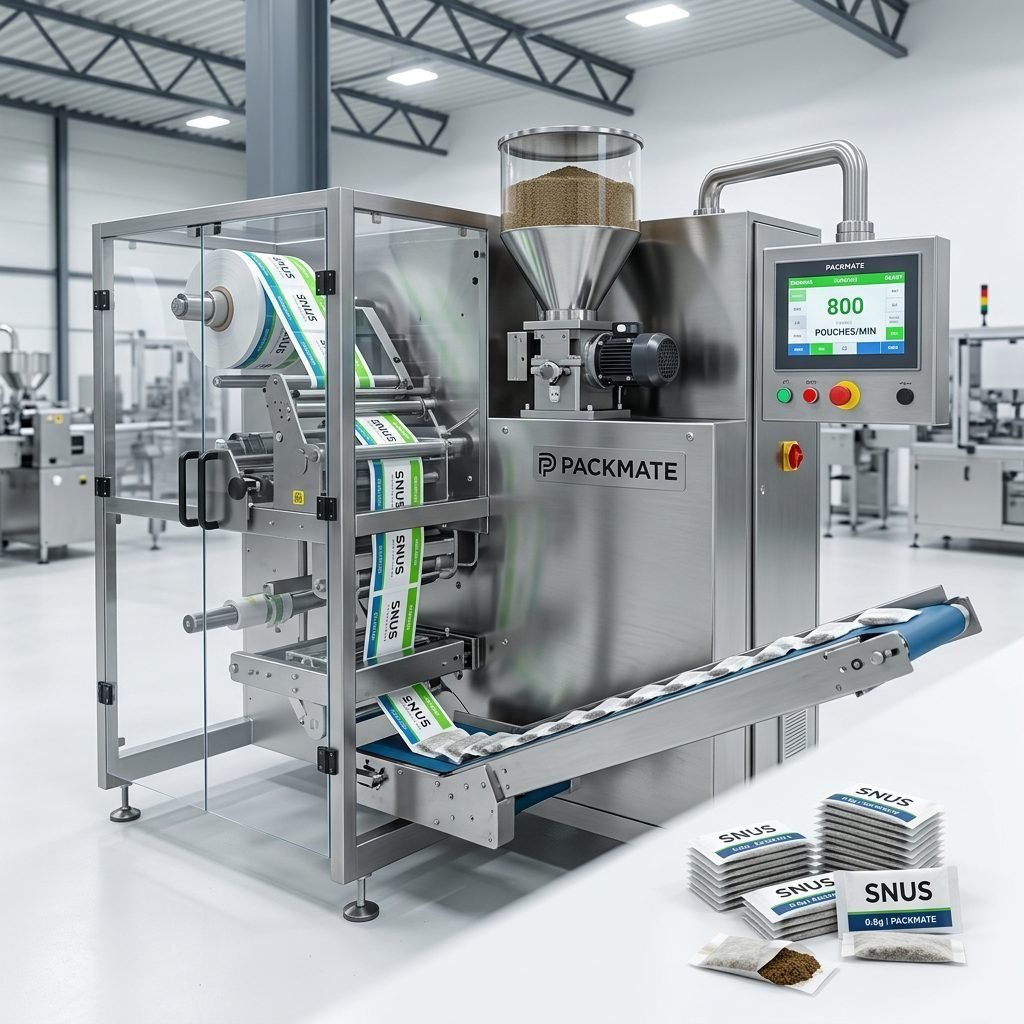
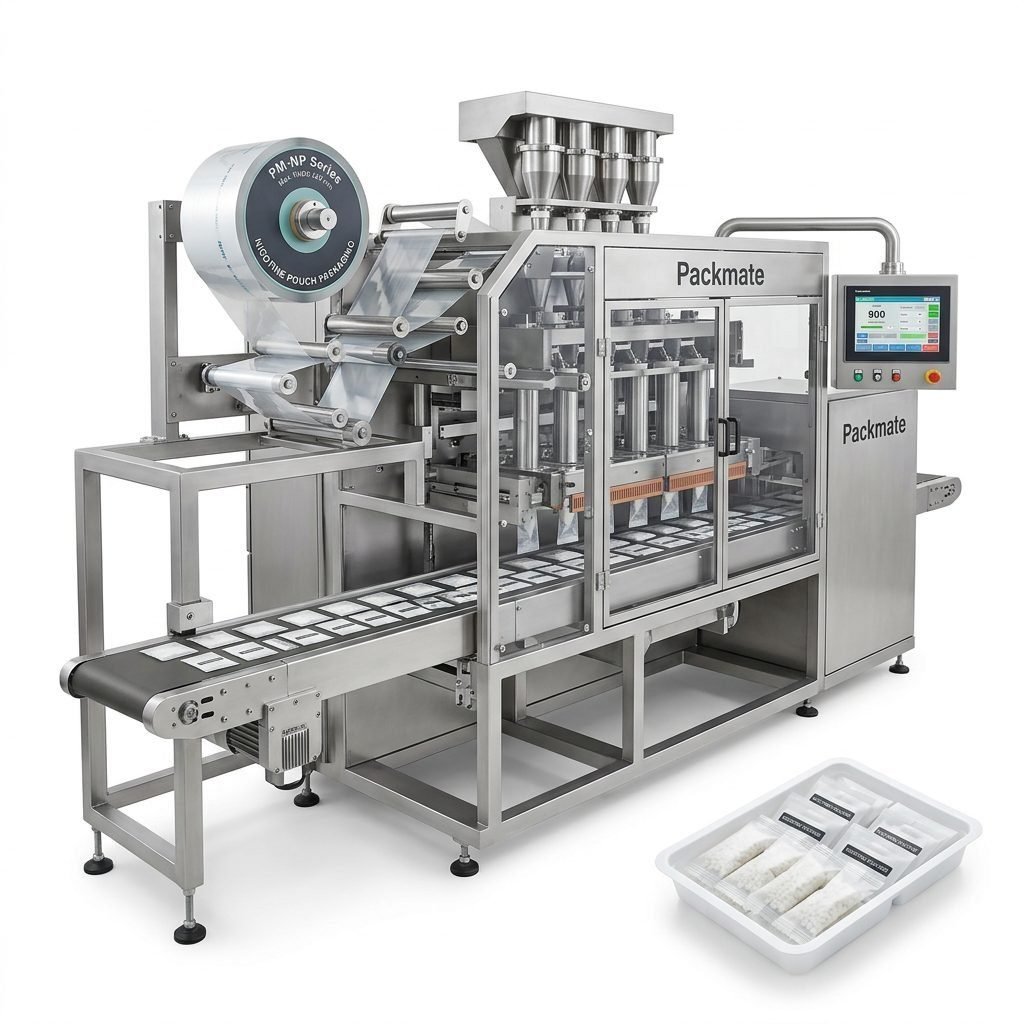
Modern production lines go beyond the pouch machine. Full solutions combine dosing/weighing, pouch forming, sealing, quality inspection, and end-of-line packing. Integration reduces manual handling and contamination risk while increasing throughput consistency. For businesses targeting scale, turnkey filling and packaging lines are a strategic investment.
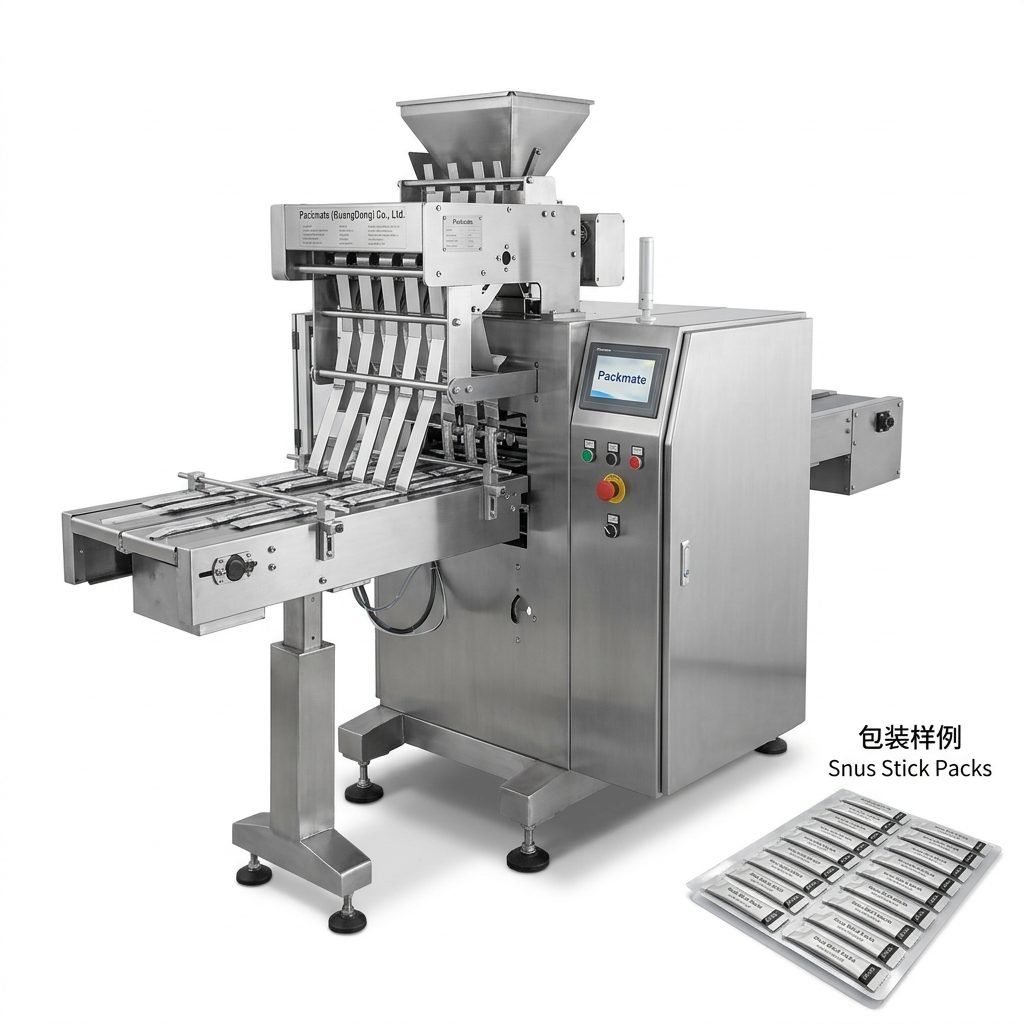
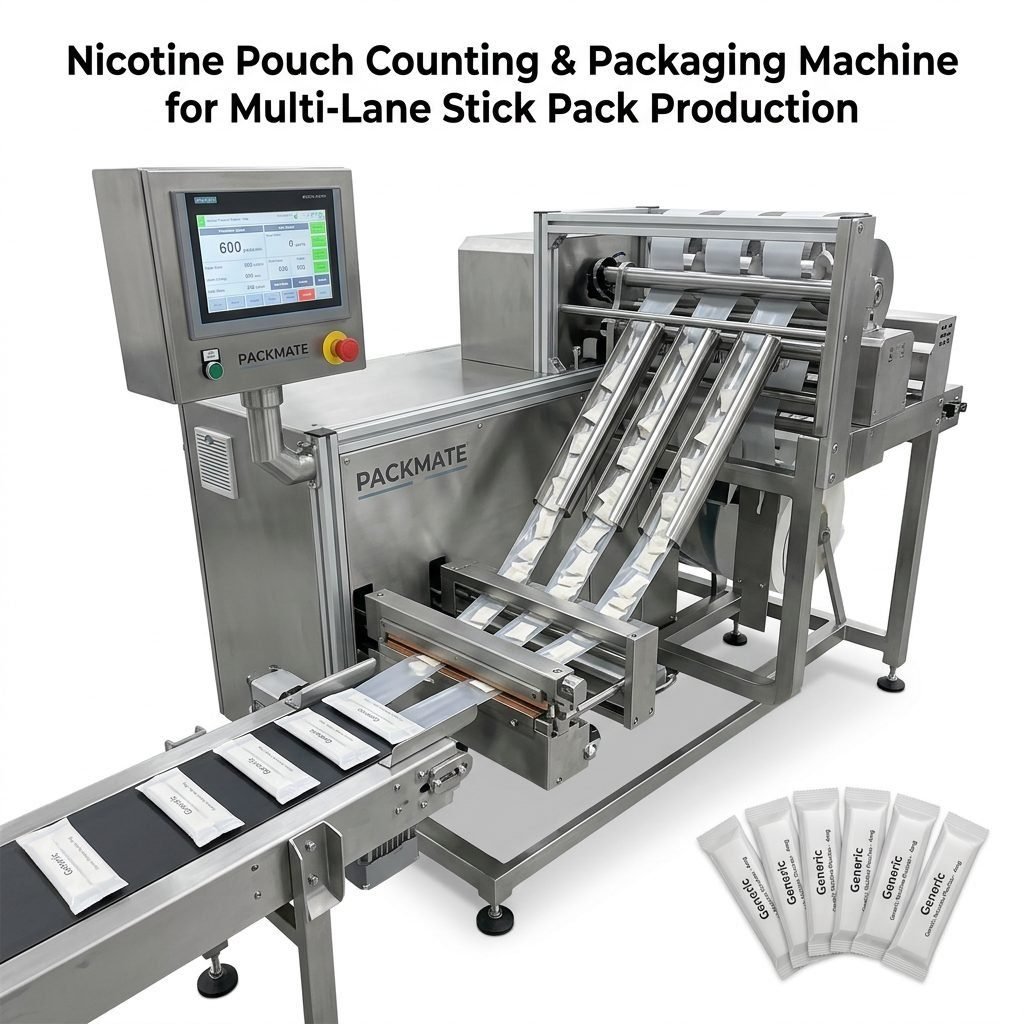
Advanced solutions include high-speed multi-lane systems that support small-dose pouches in multiple lanes simultaneously. These systems are particularly valuable for nicotine pouches where portion accuracy and gentle handling are critical. Suppliers with broad portfolios often provide complementary machines such as weighing & packaging systems and auxiliary equipment to complete the line.
Note: Evaluate the supplier’s experience with multi-lane systems and whether they offer full integration services — this dramatically shortens commissioning time and reduces start-up risk.
🔍 Quality Control and Traceability
Traceability and product safety are central to nicotine pouch operations. Inline vision systems, seal integrity testing, and automatic reject mechanisms are standard expectations. Machine-level data capture allows manufacturers to log production parameters (temperature, speed, weight) which support root-cause analysis in case of quality deviations.
A modern line should offer straightforward connectivity for MES and ERP systems, enabling batch-level traceability from raw material lot to finished carton. This capability simplifies compliance reporting and enhances consumer safety programs by making product recall processes more manageable.
Vision Systems & Reject Handling
High-resolution cameras combined with AI-enabled algorithms help detect pouch defects, misprints, or foreign particles. Ensure your supplier provides clear performance metrics for detection rates and false rejects to understand the true runtime and cost implications.
🌍 Regional Considerations & Market Nuances
Packaging expectations can vary by region. For example, Nordic markets have a long history with snus, prioritizing minimalistic design and strong regulation; North American and Asian markets may emphasize colorful branding and innovative formats. Manufacturers expanding internationally should select packaging machinery that can handle multiple formats and labeling languages without extensive hardware changes.
If your production will serve diverse regions, consider machines that support quick format changes, multi-language printing, and variable-dose capabilities. Suppliers like Packmate that offer global turnkey solutions and experience across continents can provide pre-configured options that respect local consumer habits and regulatory requirements. Learn more about the company background and capabilities via About Packmate.
⚙️ Customization & Serviceability
Customization is often the difference between a machine that runs and a machine that grows with your business. Look for modular machines that accept add-ons such as hot-foil units, RFID encoding, or inline cartoning without major retrofits. Equally important is access to spare parts, local service, and training — factors that minimize downtime and protect throughput.
Reputable OEMs provide detailed documentation, remote support, and a spare parts ecosystem. If you need a full line, consider suppliers that can also provide Bag & Pouch Packaging Machines and Filling & Packaging Lines for a cohesive supply chain.
Pro tip: Verify the supplier’s local support network and the availability of critical spare parts before purchase — service contracts and training packages are valuable investments.
📈 Scale & Future-Proofing
As nicotine pouch demand grows, scalability becomes critical. Choose platforms that scale in throughput (adding lanes or modules) and support new formats. Future-proof lines are built on standardized interfaces, modular PLC architecture, and configurable HMI systems that accept software updates without hardware replacement.
Investing in a flexible production backbone reduces total cost of ownership and enables rapid responses to market shifts — whether launching a new flavor, adjusting portion sizes, or adding a new regional SKU.
Selecting a Supplier
When choosing a supplier, consider industry experience, engineering depth, and the ability to deliver turnkey solutions. Suppliers with a long history in snus machinery and comprehensive manufacturing capabilities, including CNC machining and precision assembly, often provide higher reliability and easier integration. For tangible examples and case studies, review customer success stories and technical catalogs — these often reveal practical machine performance in real-world conditions. Visit Case and Catalog to learn more.
✅ Closing Thoughts
The future of nicotine pouch packaging will be defined by a convergence of safety, sustainability, and brand experience. Manufacturers that invest in modular, energy-efficient, and CR-capable lines will be best positioned to meet regulatory requirements and consumer expectations. Whether you need a specialized snus pouch line, integrated weighing systems, or auxiliary equipment for end-of-line finishing, selecting an experienced partner with global turnkey capabilities reduces risk and accelerates time-to-market. Explore product categories such as Sachet & Stick Pack Machines and Auxiliary Packaging Equipment to match specific production needs.
Actionable next steps: Map your SKUs, decide on target markets, and request a turnkey proposal that includes installation, training, and spare parts planning. Consider multi-lane options to future-proof capacity.
🔗 Useful Resources
For detailed machine portfolios and technical specifications, consult the manufacturer’s product pages: Snus & Nicotine Packaging Machines, Bag & Pouch Packaging Machines, Filling & Packaging Lines, and the company’s About Packmate page for factory and certification details.
❓ Frequently Asked Questions
Q1: How do child-resistant features affect production speed?
A1: Child-resistant designs can introduce complexity, but modern machines are engineered to maintain high speeds. Look for machines with validated CR modules and automated quality checks to minimize impact on throughput.
Q2: Can packaging lines handle eco-friendly films as easily as conventional films?
A2: Many new lines are optimized for low-seal-energy films, but it requires correct heat control, web tensioning, and often tailored sealing jaws. Always run material trials and seek supplier support for material recipes.
Q3: What level of integration is typical in a turnkey nicotine pouch line?
A3: Typical turnkey lines include dosing/weighing, multi-lane pouch forming and sealing, inline inspection, and end-of-line cartoning or flow-wrapping. Suppliers may also offer automated palletizing and full MES connectivity.
Q4: How important is spare parts availability and local service?
A4: Extremely important. Fast access to critical spares and responsive local service reduces downtime and is a decisive factor when selecting a machine manufacturer.
Q5: Where can I see live demonstrations or get case studies?
A5: Reputable manufacturers showcase machines at global exhibitions and publish case studies online. Check the company’s exhibition and case pages for demonstrations and real-world examples.