The global snus and nicotine pouch industry is undergoing a rapid transformation driven by automation, innovation, and stringent regulatory expectations. As demand grows for consistent product quality, higher throughput, and more compact production footprints, manufacturers and packaging engineers are turning to advanced snus packing lines and multi-lane configurations to stay competitive. This article explores the major trends shaping the snus machine sector and explains how automation and innovation are changing production — from precision dosing to fully integrated turnkey solutions.
Industry Snapshot: Where Snus Packaging Stands Today
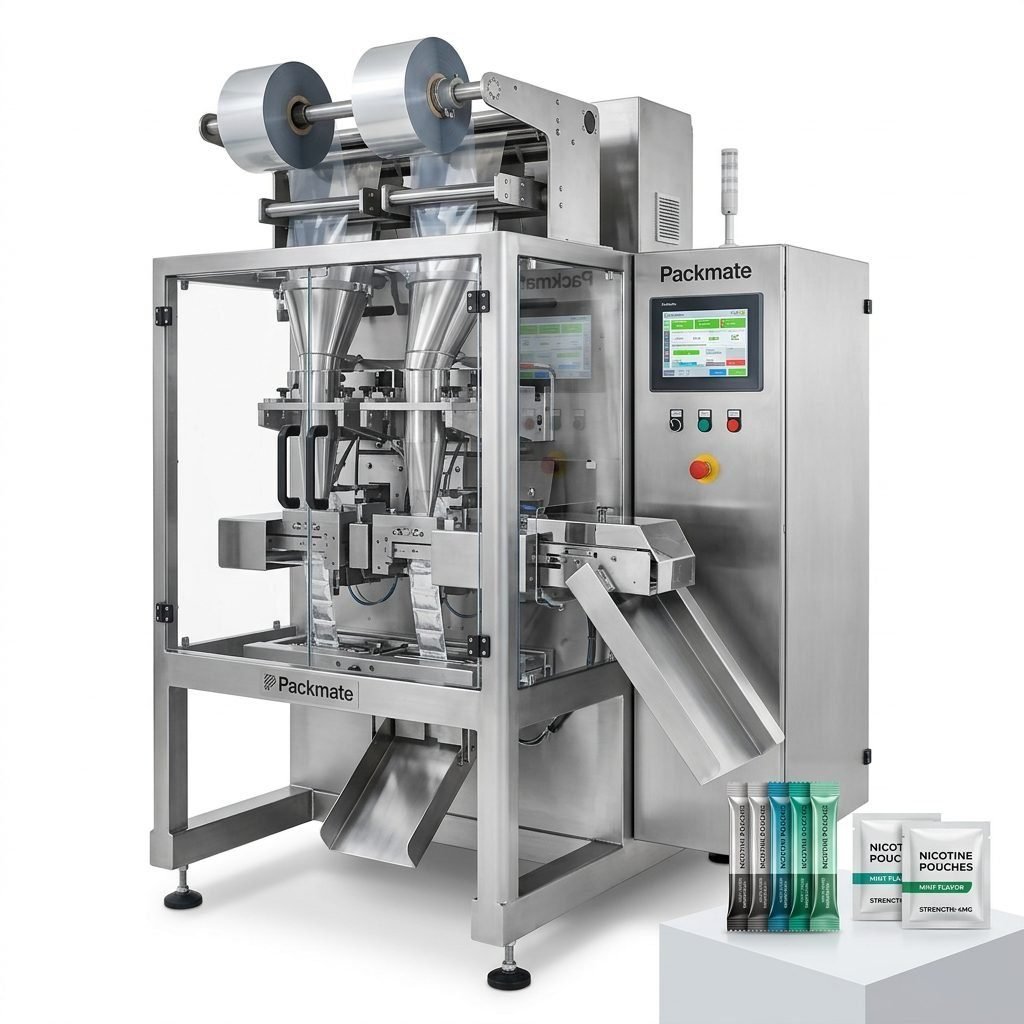
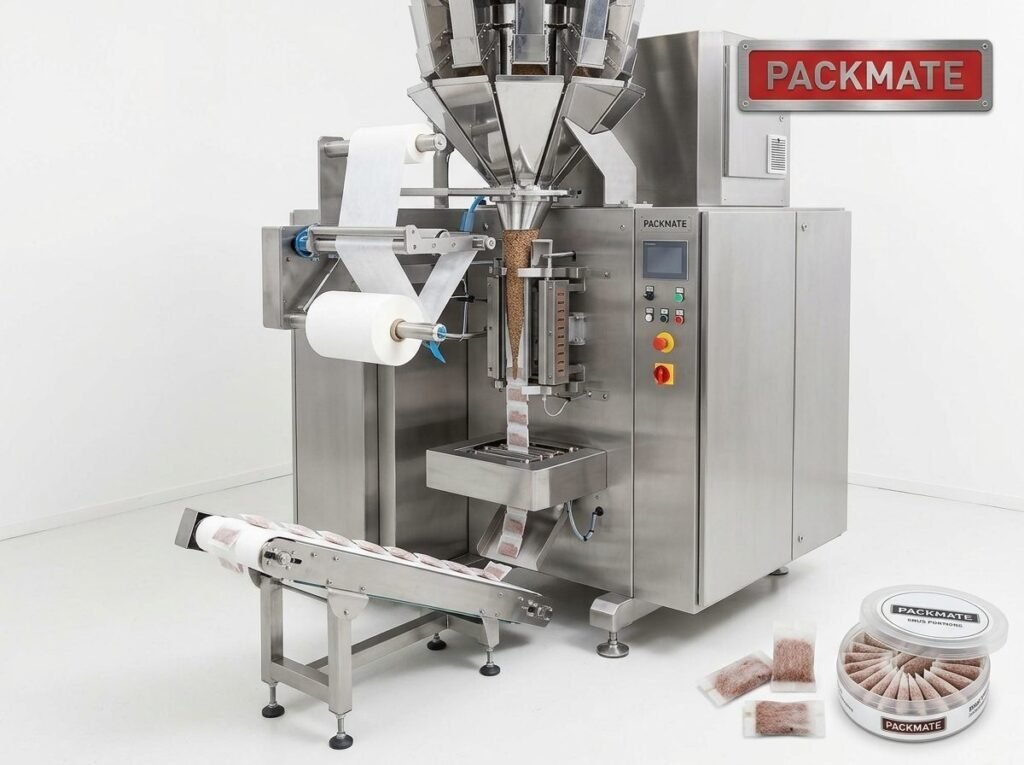
In recent years, the market for nicotine pouches and snus has expanded across Europe, North America, and parts of Asia. Producers need machines that reliably handle small-dose pouches, complex pouch shapes, and multiple ingredients. The rise of specialized equipment such as multi-lane systems, stick pack units, and sachet machines demonstrates the shift toward higher-efficiency, scalable lines. Suppliers like Packmate focus on delivering equipment that balances performance and compliance, with many models certified to international standards such as CE and ISO.
Key Drivers
Several forces are driving uptake of advanced snus packing machines:
✓ Market growth: Expanding consumer demand for nicotine pouches creates pressure for higher throughput and consistent quality.
✓ Regulatory compliance: Traceability, hygiene, and materials handling standards require precise, validated equipment.
✓ Cost-efficiency: Automation reduces labor costs and minimizes variability across batches.
✓ Product variety: Diverse pouch formats and dosing options demand flexible machinery capable of rapid changeovers.
Automation: From Single Machines to Integrated Production Lines
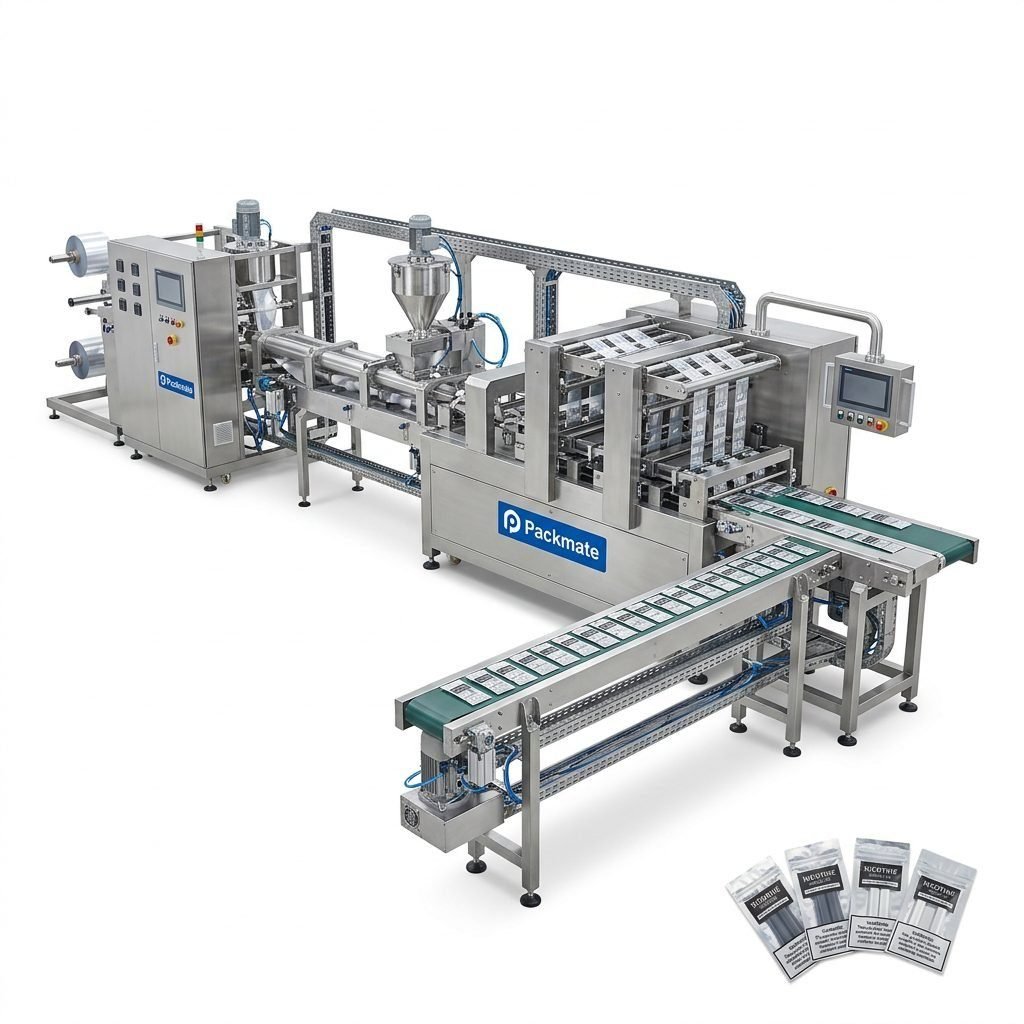
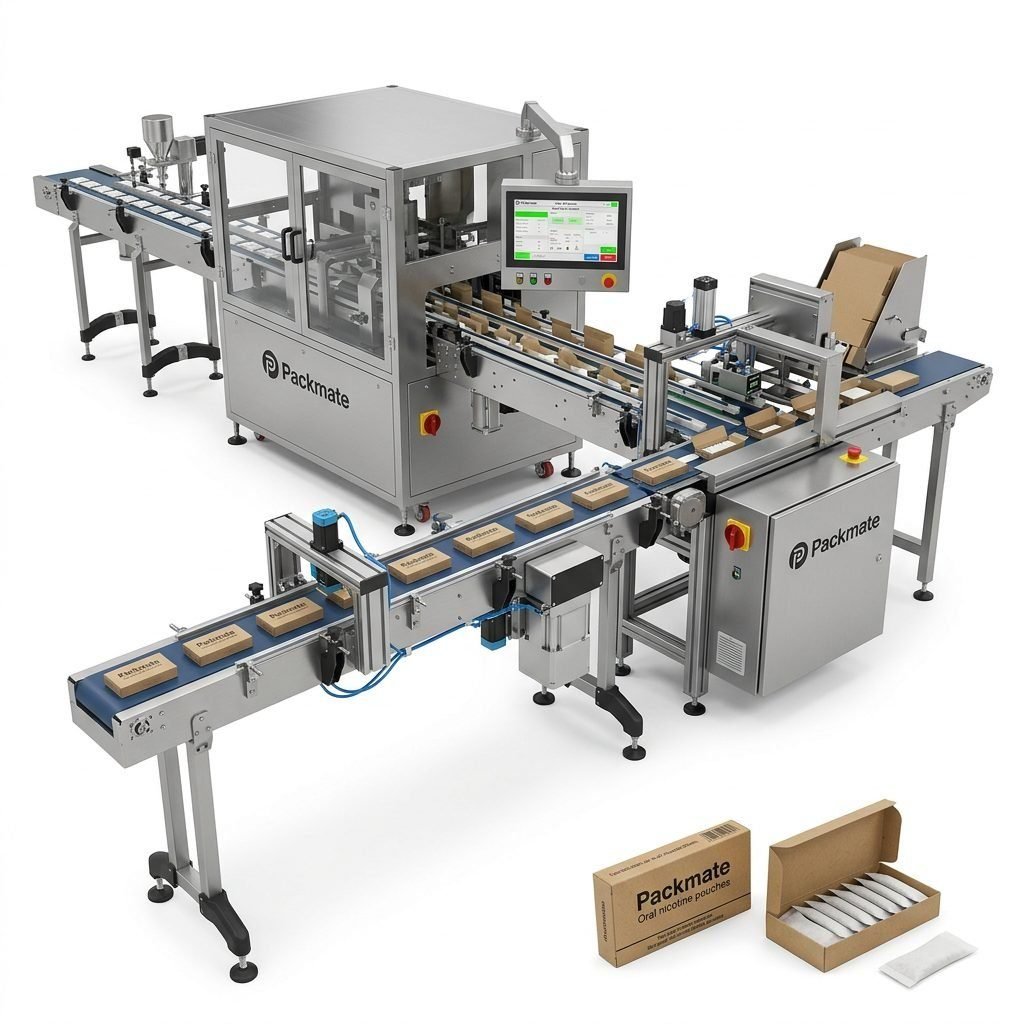
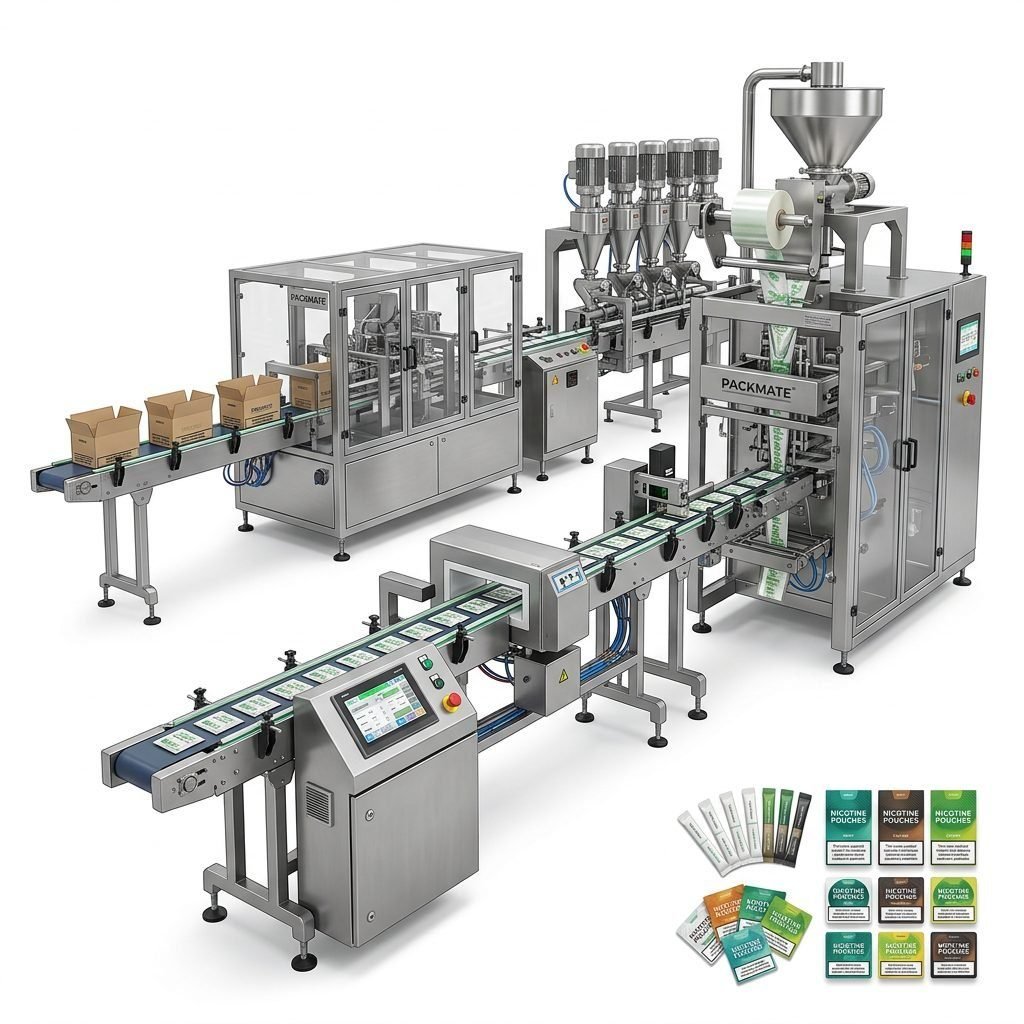
Automation is the backbone of modern packaging. Instead of stand-alone machines, many manufacturers now prefer integrated production lines where filling, dosing, pouch forming, sealing, and secondary packaging are synchronized. This approach reduces manual handling, increases throughput, and improves traceability.
⚙️ Core automation benefits:
Higher uptime through predictive maintenance and remote diagnostics.
Consistent dosing enabled by precise feeders and servo-controlled mechanisms.
Faster changeovers with modular tooling and recipe-driven settings.
Multi-lane Systems: Scaling Throughput Without Sacrificing Accuracy
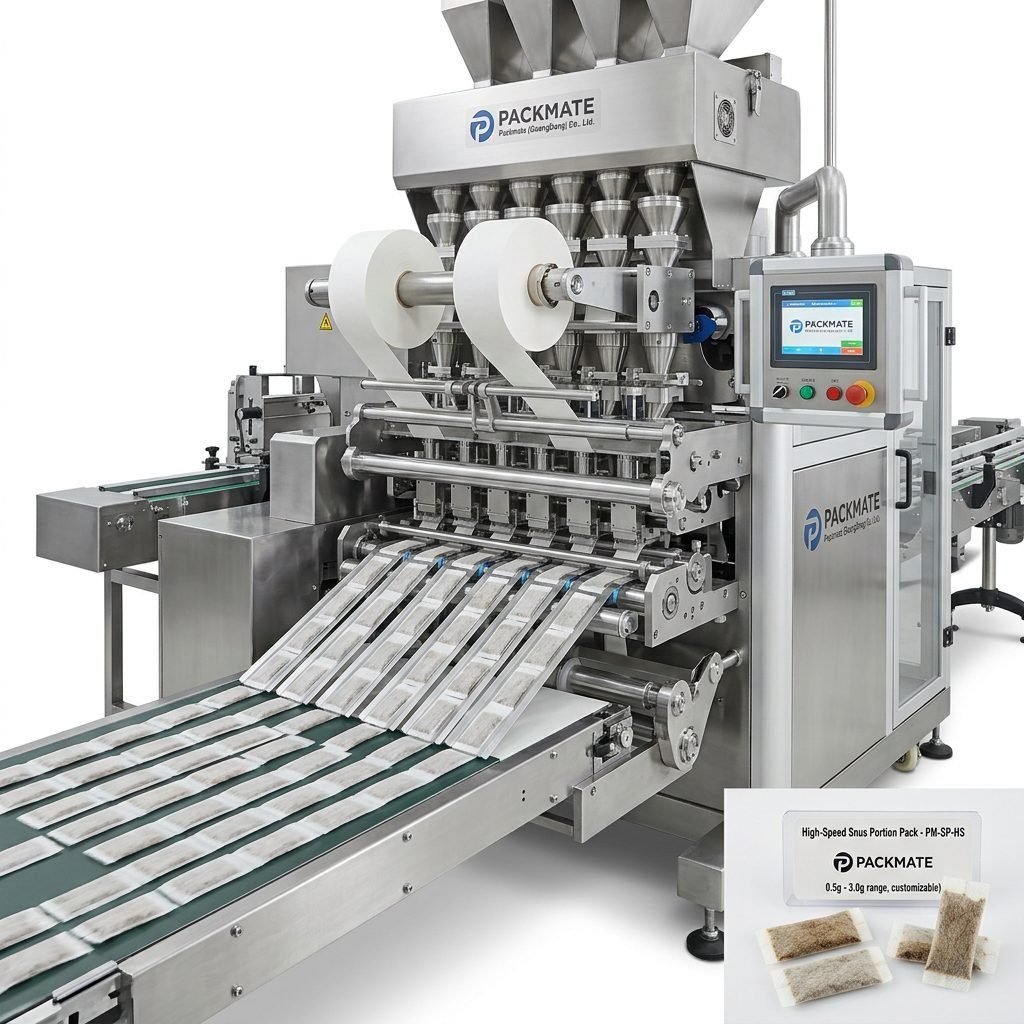
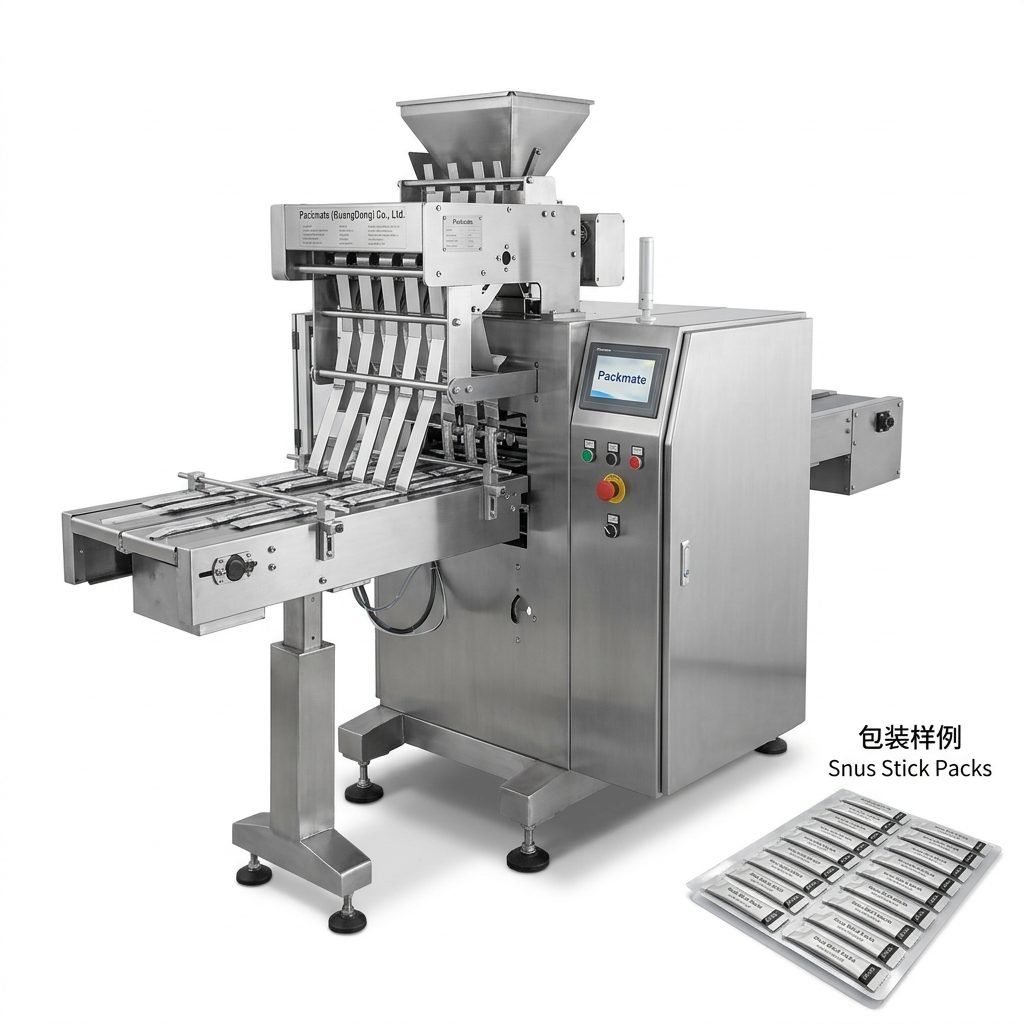
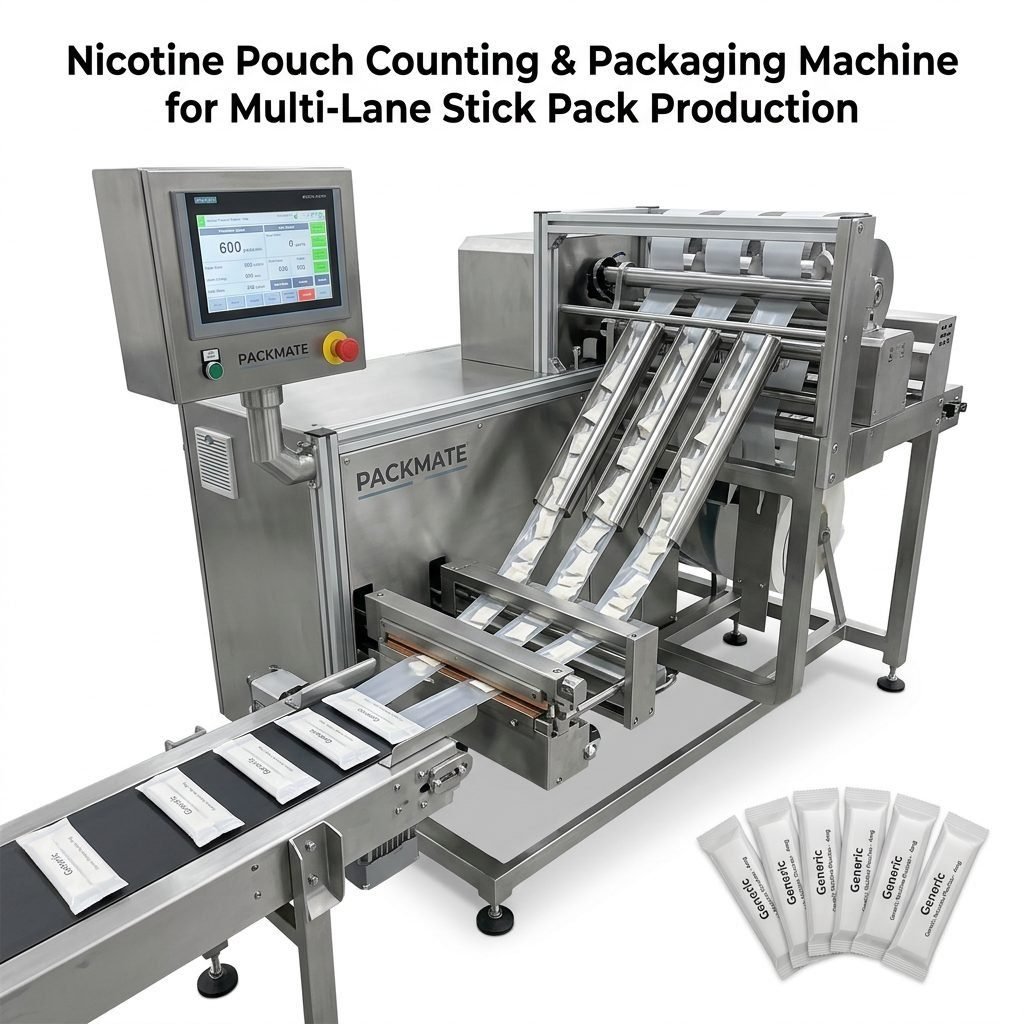
Multi-lane machines multiply throughput by producing multiple lanes of pouches simultaneously. For nicotine pouches, where each unit is small but demand is high, multi-lane lines are a game-changer. They require precise synchronization across lanes to ensure uniform fill weights and heat-seal integrity.
Manufacturers should look for equipment that offers:
– Independent lane control for quick adaptation to product changes.
– High-precision dosing modules that maintain weight tolerances across lanes.
– Robust mechanical designs that minimize maintenance and downtime.
Precision Engineering and Manufacturing Strength
Precision in snus packing is critical. Tolerances for dosing, cutting, and sealing can impact product consistency and shelf life. Leading manufacturers invest in advanced machining centers and strict quality control processes to deliver equipment with high repeatability.
📐 Manufacturing highlights: A facility equipped with CNC machining centers, precision assembly lines, and calibration labs ensures every machine meets stringent specifications. Facilities with a large manufacturing footprint (for example, 20,000㎡) can support model variety and customization.
Materials, Hygiene & Compliance
Compliance with food and pharmaceutical-grade hygiene is non-negotiable. Machinery must be constructed from approved materials, designed for cleanability, and documented for regulatory audits. Certifications such as CE and ISO are commonly expected by global customers and help demonstrate adherence to recognized safety and quality standards.
Innovation in Filling & Dosing Technologies
Accurate filling is especially important for nicotine pouches where dosage uniformity impacts both product performance and regulatory compliance. Innovations include precision auger fillers, vacuum-assisted dosing for powders, and gravimetric systems integrated with real-time feedback loops to maintain weight accuracy.
For producers exploring equipment choices, key categories include:
– Snus & Nicotine Packaging Machines: specialized systems tailored for pouch formats and small-dose handling (Snus & Nicotine Packaging Machines).
– Sachet & Stick Pack Machines for single-serve or tear-open formats (Sachet & Stick Pack Machines).
Weighing & Inspection Integration
Inline checkweighers, metal detectors, and vision systems are increasingly integrated to ensure every pouch meets quality criteria. Automated rejection and data logging facilitate traceability and help maintain high yield rates.
Turnkey Solutions and Customization
Many clients prefer turnkey packaging lines that include upstream and downstream equipment such as filling systems, conveyors, case packers, and palletizers. Suppliers that offer end-to-end solutions reduce integration complexity and accelerate time-to-production.
📦 Turnkey advantages: Single-source responsibility, matched performance specifications, and streamlined installation and commissioning. When considering a partner, review their factory space, model range, and case studies to verify capability.
Customization Examples
Custom solutions include specialized dosing for micro-doses, modified pouch shapes, barrier packaging for product stability, and multi-lane layouts to fit specific production targets. Suppliers with a strong engineering heritage are best positioned to deliver such tailored machines.
Digitalization & Industry 4.0: Smart Factories for Snus Production
Digital transformation allows production managers to monitor KPIs in real time, run preventive maintenance routines, and optimize workflows. Connectivity features such as OPC-UA, MQTT, and secure remote access are increasingly standard in modern packaging equipment.
Benefits of a connected line include:
– Real-time performance dashboards and alerts.
– Predictive maintenance reducing unplanned downtime.
– Recipe management for reproducible changeovers and reduced setup errors.
Sustainability & Material Efficiency
Environmental considerations are reshaping packaging decisions. Machines designed to minimize material waste, improve film utilization, and support recyclable or mono-material structures are gaining preference. Energy-efficient drives and optimized cycle times contribute to lower operational footprints.
Design for Recyclability
Collaborations between material suppliers and machine builders are enabling new film formats and sealing techniques that maintain product protection while easing downstream recycling efforts.
After-Sales Support, Spare Parts & Global Service
Long-term performance depends on reliable support. Global customers benefit from vendors that offer timely spare parts, remote troubleshooting, and comprehensive training. Exhibitions and live demos allow end-users to evaluate machine performance and ask technical questions in person.
For businesses evaluating partners, consider:
– Clear spare parts availability and lead times.
– Structured training programs for operators and maintenance staff.
– Local service footprint or effective remote support capabilities.
Market Expansion & Global Cooperation
Companies like Packmate have expanded globally by supplying high-efficiency packaging lines across Europe, the Americas, and Asia. Partnering with an experienced manufacturer helps shorten the ramp-up period for new product launches and market entries. Proof points often include certificates, case studies, and exhibition participation to showcase machine capabilities.
Learn more about the company behind many of these developments on the About page (About Packmate) and reach out for tailored projects via the Contact page (Contact Us).
Choosing the Right Snus Packaging Solution
Selecting the right equipment requires balancing current production needs with future scalability:
– Define target throughput and acceptable downtime.
– Specify product formats, dosing tolerances, and changeover requirements.
– Assess supplier capabilities for customization, testing, and documentation.
– Consider total cost of ownership including energy, spare parts, and service.
📌 Pro tip: Request a site acceptance test (SAT) and witness trial runs. Review case studies to verify real-world performance and ask for references from customers using similar product formats.
Case Studies & Live Demonstrations
Exhibitions and factory tours remain valuable for evaluating equipment. Case collections and demonstration videos provide proof of concept, while live demos permit assessment of noise, vibration, and ergonomics. See real-world deployments and project references in the company case section (Case).
What to Watch During a Demonstration
– Accurate dosing and weight consistency across cycles.
– Ease of film threading and access for cleaning.
– Changeover speed and tooling accessibility.
– Integration readiness with upstream or downstream equipment.
What’s Next: R&D Priorities in Snus Machinery
R&D is focusing on micro-dosing accuracy, improved sealing technologies for various barrier films, and smarter control systems with AI-driven optimization. Future machines will be more modular, easier to sanitize, and better equipped for data-driven process improvement.
Collaborations & Standards
Collaboration across material suppliers, regulators, and equipment manufacturers will accelerate development of recyclable packaging solutions and standardization of safety and traceability protocols.
Final Thoughts
The evolution of snus machine technology is defined by automation, precision engineering, and a push toward integrated, sustainable production. Companies that invest in reliable multi-lane systems, advanced filling and inspection, and strong after-sales support will be well-positioned to meet market demand and regulatory requirements. As the industry grows, the partnership between experienced manufacturers and forward-thinking producers will determine who leads in quality, efficiency, and innovation.
Frequently Asked Questions
Q1: How do multi-lane snus machines improve output without sacrificing product quality?
A1: Multi-lane machines multiply production channels but rely on synchronized dosing and independent lane control to maintain uniform weight and sealing integrity across every pouch.
Q2: What certifications should I expect from a reputable snus machinery supplier?
A2: Look for CE and ISO certifications, plus clear documentation for hygiene, material traceability, and electrical/control system safety.
Q3: Can turnkey solutions include upstream filling and downstream case packing?
A3: Yes — many suppliers offer full production lines, including filling modules, conveyors, case packers, and palletizing systems. Review supplier portfolios to confirm integration experience.
Q4: How important is after-sales support and spare parts availability?
A4: Extremely important. Rapid access to spare parts, trained service engineers, and remote diagnostics are essential to maintain uptime and protect production targets.
Q5: Where can I view product catalogs and machine details for snus packaging equipment?
A5: Detailed product lines, including snus & nicotine packaging machines and sachet & stick pack machines, are available on the manufacturer’s site: Snus & Nicotine Packaging Machines and Sachet & Stick Pack Machines.