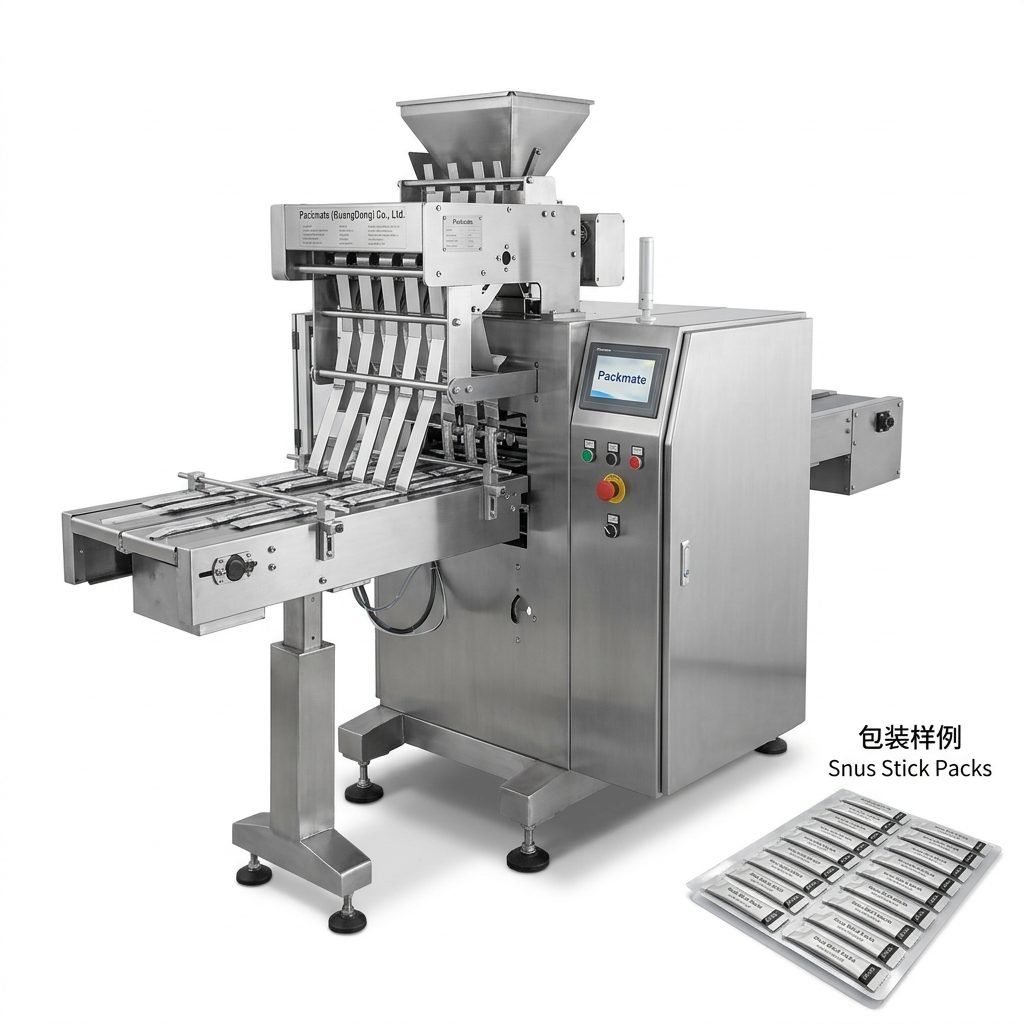
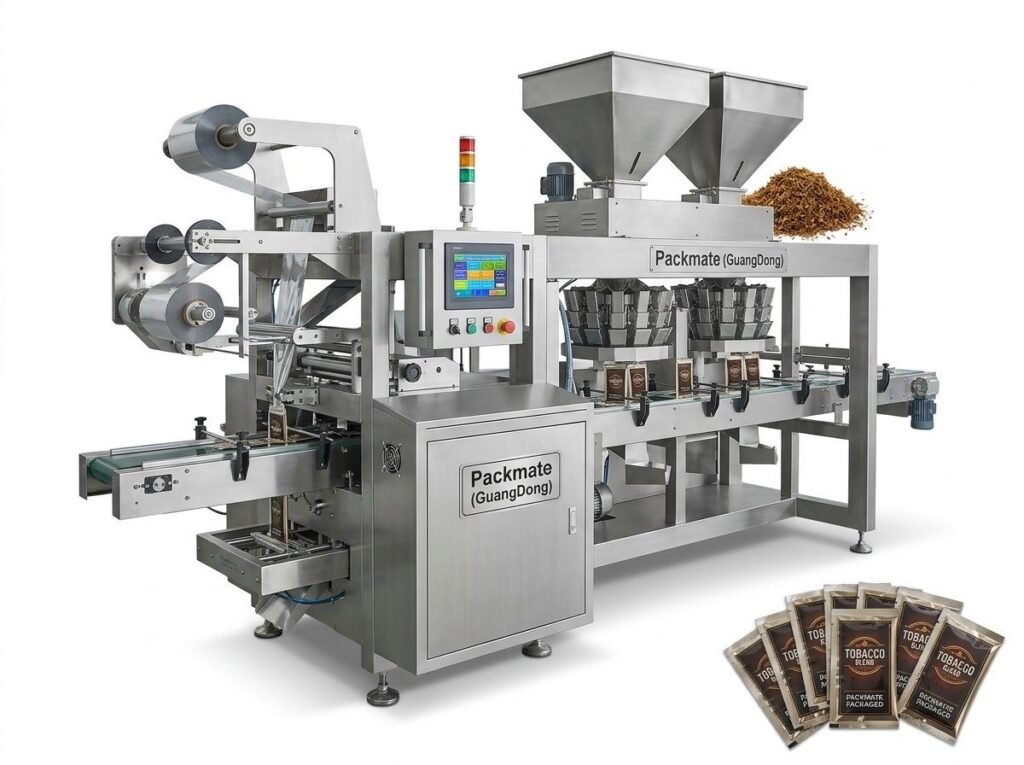
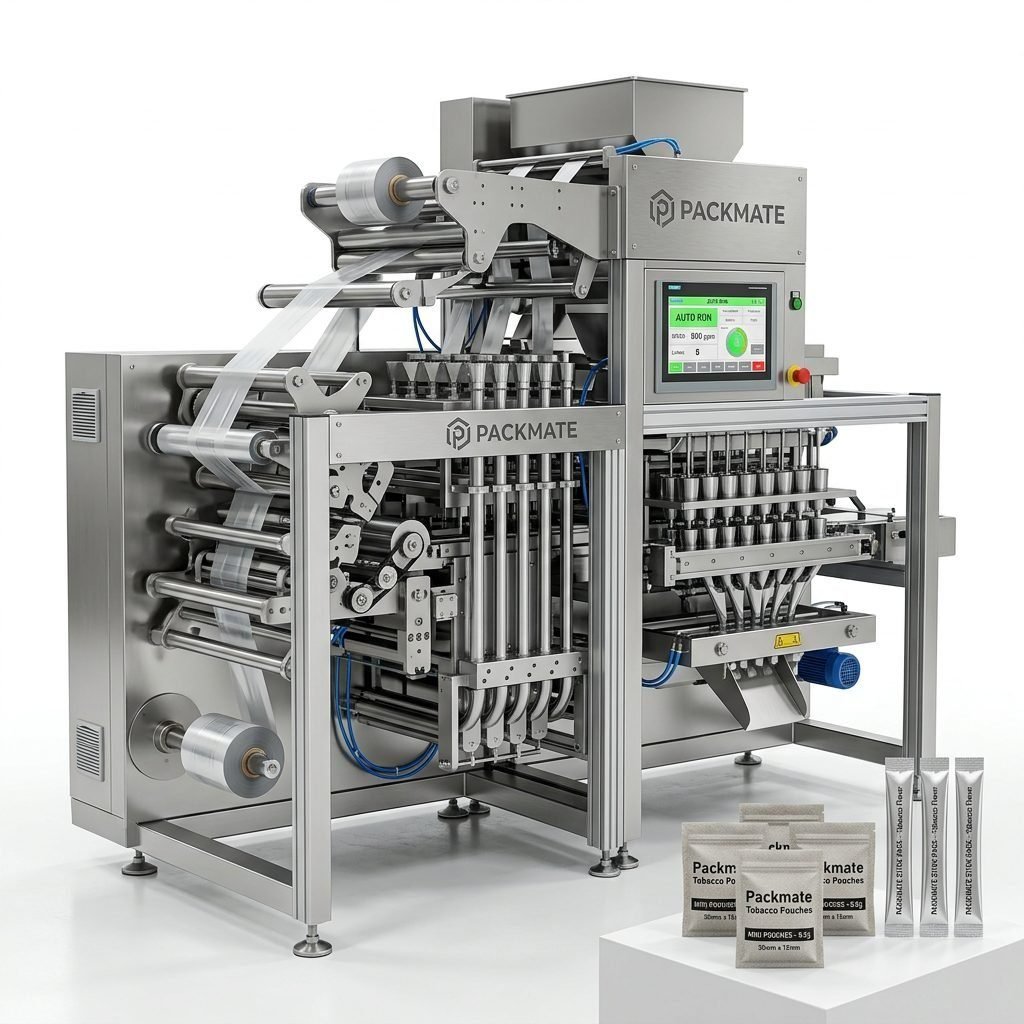
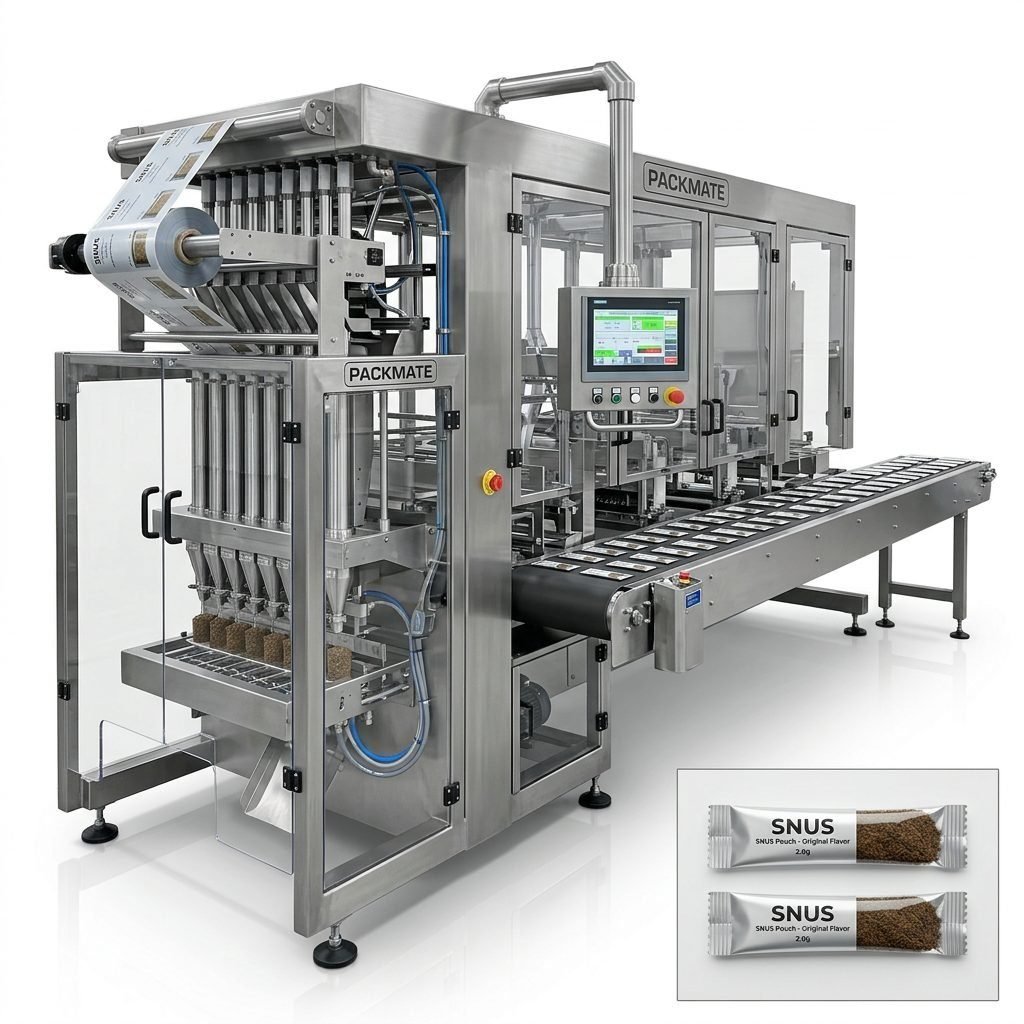
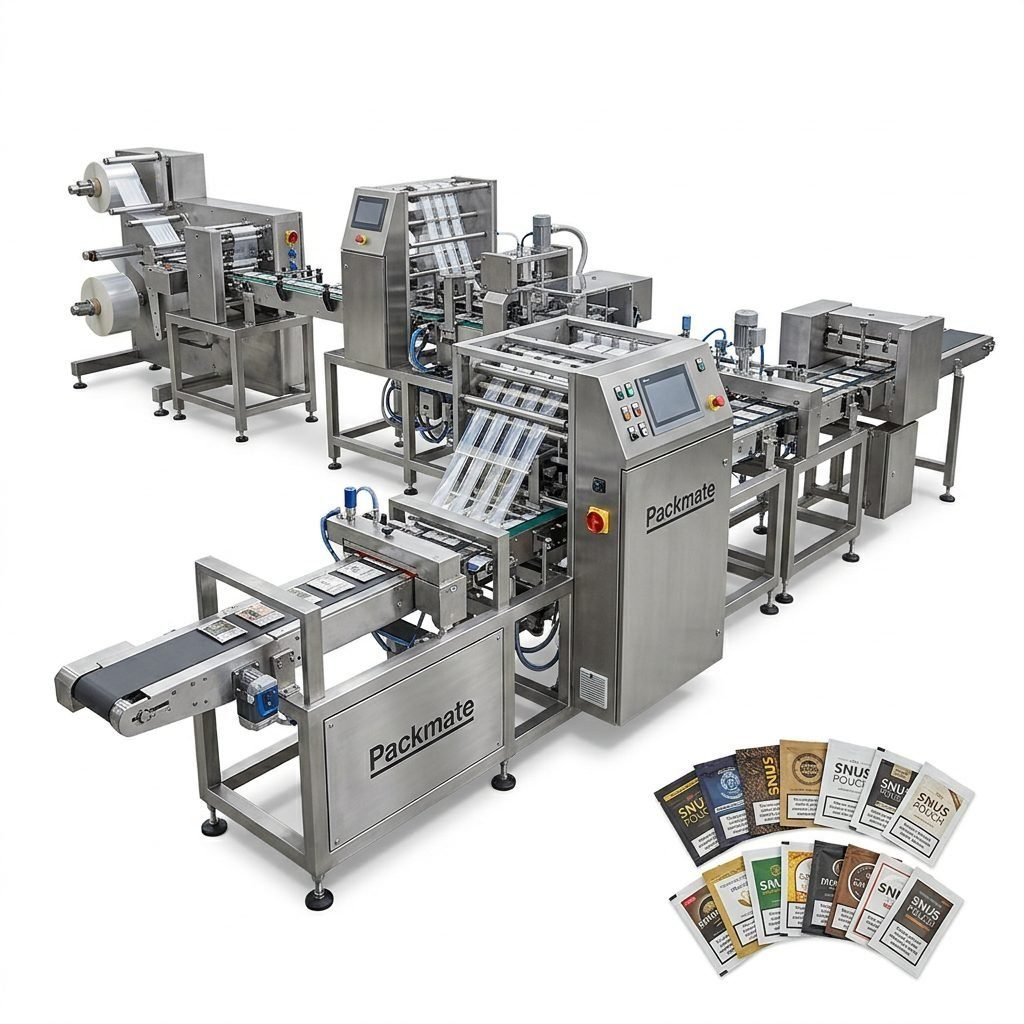
Modern snus and nicotine pouch production demands a precise, repeatable packaging workflow from dosing and filling to sealing and final inspection. This article walks through a complete snus packaging machine workflow step‑by‑step, covering machine modules, critical control points, and best practices for high throughput, consistent quality, and regulatory compliance. If you are exploring turnkey solutions, Packmate Snus Machine offers specialized equipment across the line, including multi‑lane systems that are ideal for small‑dose pouches and high-speed sachet lines. Learn more about our machine families at Snus & Nicotine Packaging Machines and Filling & Packaging Lines.
Overview of the Complete Workflow
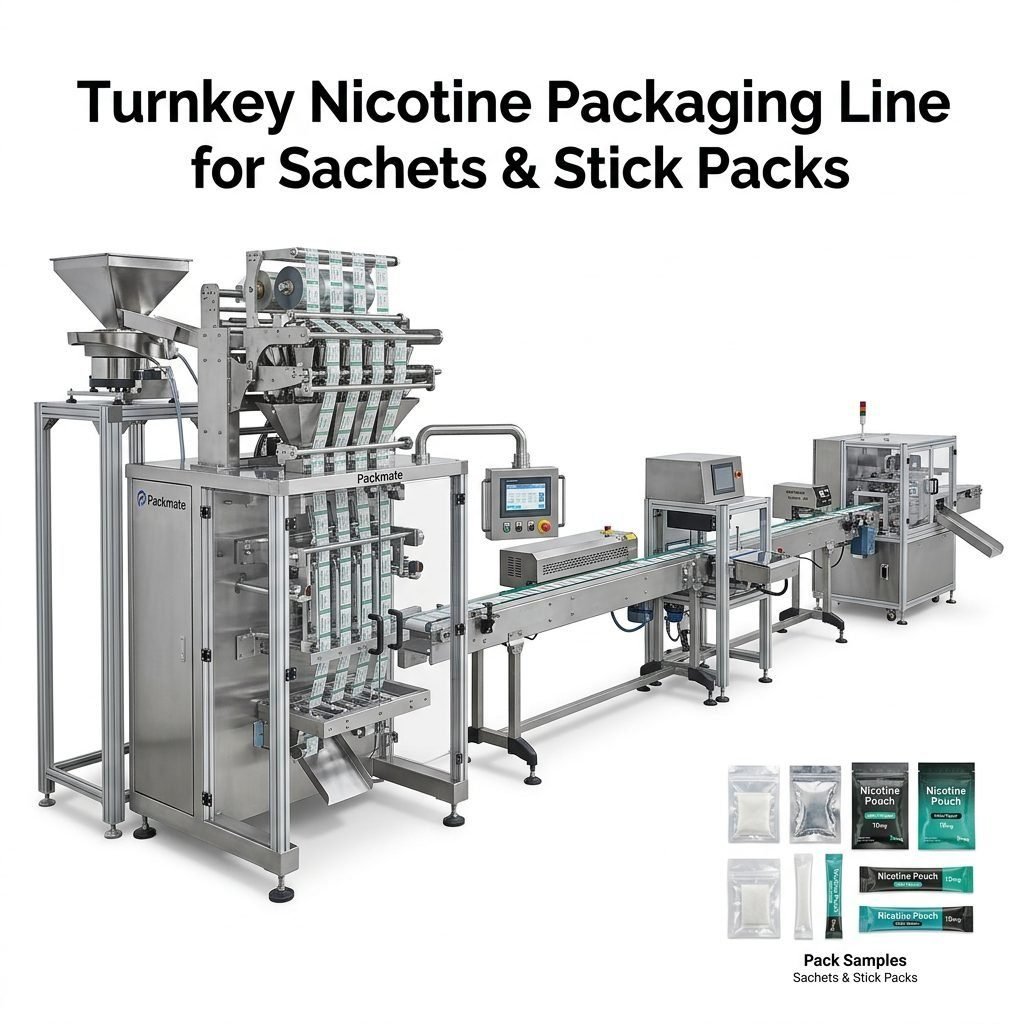
A modern snus packaging line typically follows this sequence: bulk feeding → dosing/weighing → pouch forming or pouch feeding → filling → sealing → cutting and forming individual units → date/lot coding → leak and weight inspection → secondary packaging (cartoning/bagging) → palletizing. Each station must communicate with the line PLC for synchronized operation. Packmate’s turnkey lines provide integrated control and modular upgrades — see our Bag & Pouch Packaging Machines for options.
1. Bulk Feeding and Ingredient Handling ⚙️
The workflow starts with controlled bulk feeding of the snus blend (tobacco-based or nicotine pouch powder/granulate) from silos or tubs into the dosing system. Effective design minimizes segregation and ensures homogenous product flow. Typical feeders include screw conveyors, vacuum transfer or vibratory feeders for small pouch systems. For hygroscopic powders, environmental controls (humidity, temperature) and enclosed transfer are recommended to preserve product stability.
2. Dosing / Weighing Module 🔬
Precise dosing is critical for regulatory compliance and consistent consumer experience. High-accuracy multi-head weighers or volumetric fillers are used depending on product characteristics. Multi-lane packaging lines often feature synchronized weighers feeding multiple lanes simultaneously. A reliable dosing system will have quick-change hoppers and recipe memory in the PLC for rapid product changeovers.
Key dosing tip: Validate the dosing accuracy at line speed with regular in‑line sampling. Use the PLC’s recipe controls to lock tolerances and activate alarms if out of range.
3. Pouch Forming or Pouch Feeding 🧩
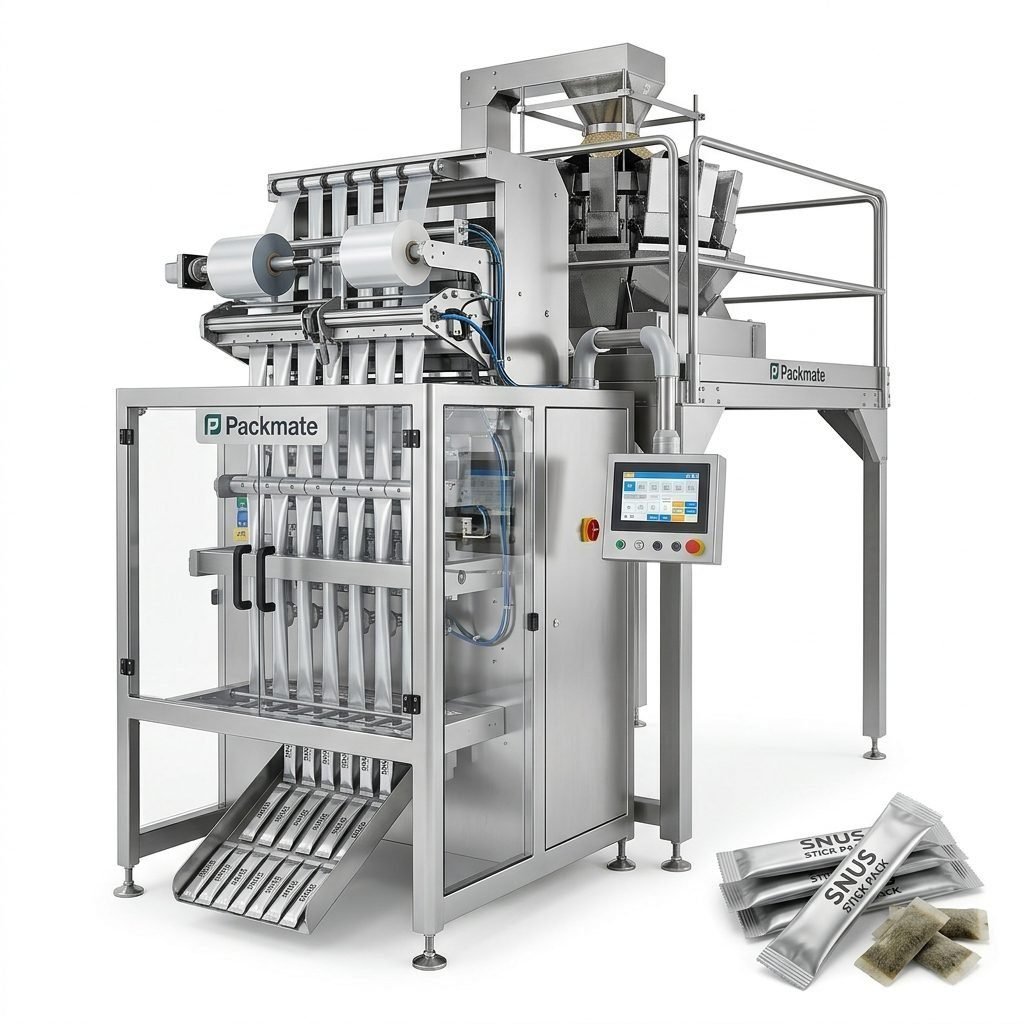
Depending on the packaging format (pre-made pouches, stick packs, sachets or formed pouches), the line will either form pouches from roll stock or index pre-made pouches into place. Forming machines must maintain precise film tension and registration to ensure accurate fill position. For nicotine pouches and stick packs, multi-lane form-fill-seal (FFS) systems increase throughput and reduce footprint.
4. Filling Station ➜ Controlled Deposit
Filling is performed via volumetric, auger or piston fillers for powders and granulates, or by pump systems for liquids. For snus pouches, a precise drop or plug feed deposits product into each pouch cavity. Timing and synchronization with the sealing head are essential to prevent contamination and ensure correct weight. Incremental dosing with feedback from load cells helps maintain tight tolerances.
5. Sealing: Heat, Ultrasonic or Cold Seal 🔒
Sealing creates the final consumer barrier. Choose sealing technology by film type and product temperature sensitivity: heat seal for common laminates, ultrasonic for sensitive materials and cold seal for specialty films. Sealing parameters (temperature, pressure, dwell time) must be validated per film and monitored online. Integration of a continuous monitoring sensor or camera for seal integrity significantly reduces defective output.
Seal integrity check: Implement periodic destructive testing and in‑line non‑destructive checks (vision, vacuum decay) to detect pinholes, weak seals or contamination.
6. Cutting, Separating and Final Shaping ✂️
After sealing, the web is cut into individual pouches or units. Cutting systems use precision rotary knives, guillotines or laser cutting depending on material and required edge quality. Multi-lane lines must maintain lane alignment to avoid miscuts. Some machines also include corner rounding or notch punching to meet retail presentation or consumer convenience requirements.
7. Coding, Printing and Traceability 🏷️
Apply lot codes, best-before dates and regulatory markings using inkjet, thermal transfer or laser coders. Traceability can be enhanced by marking unique batch IDs or serialized QR codes. Ensure coder placement is compatible with the sealed area and does not compromise the integrity of the pouch.
8. Inspection: Weight, Vision, Leak Detection ✅
In-line inspection is mandatory for modern snus production. Typical systems include multi‑cell checkweighers, machine vision for print and seal validation, and leak detectors for hermetic packages. Reject conveyors and automatic sorting prevent out‑of‑spec product from progressing. Integrating inspection data into the MES supports full production traceability.
Quality control best practice: Store inspection logs centrally and configure automatic alarms for drift, enabling predictive maintenance and reduced downtime.
9. Secondary Packaging: Cartoning and Case Packing 📦
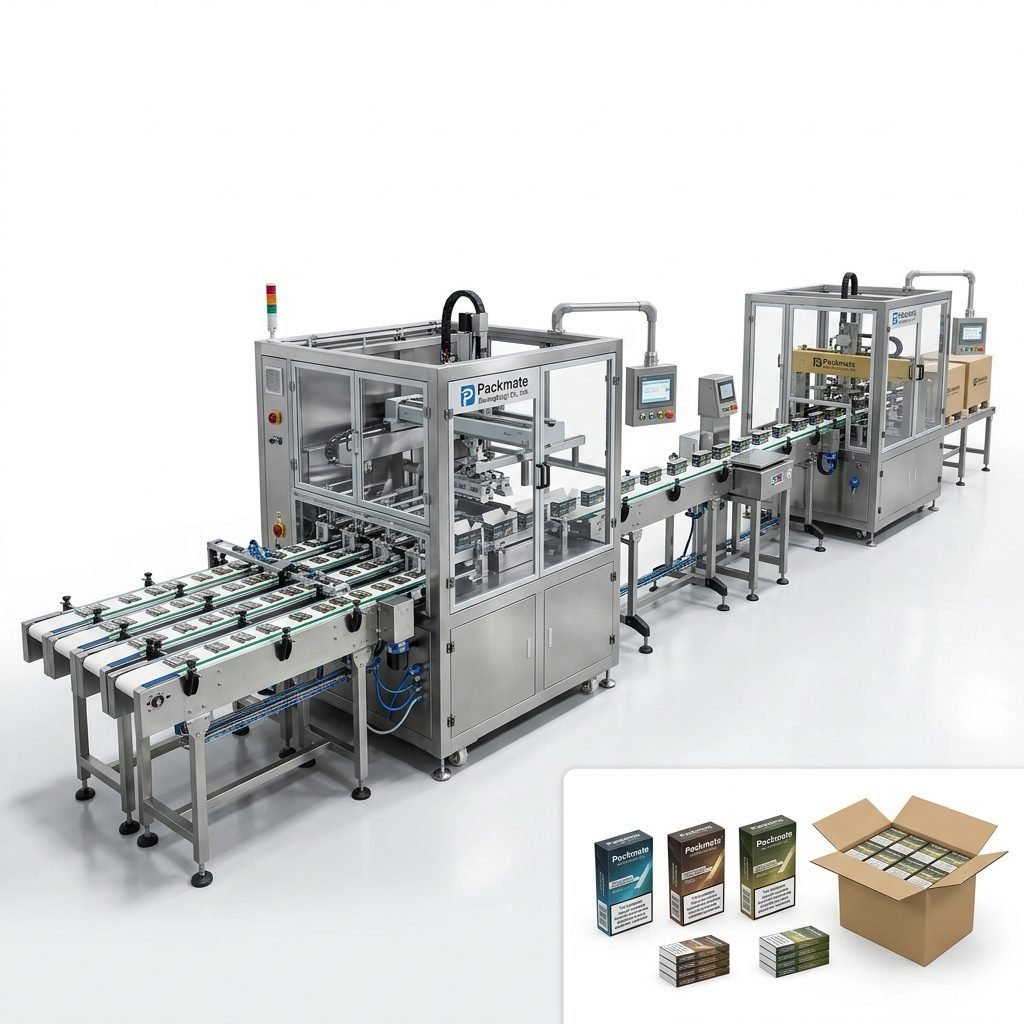
After individual units pass inspection, they are grouped into consumer packs (cartons or pouches) using high-speed cartoners, wrap-around systems or flow-wrappers. Case packers then bundle retail cartons into trays or cases for shipping. Secondary packaging also includes placing leaflets, desiccants or inserts when required by regulation.
10. Palletizing and Logistics Integration 🚚
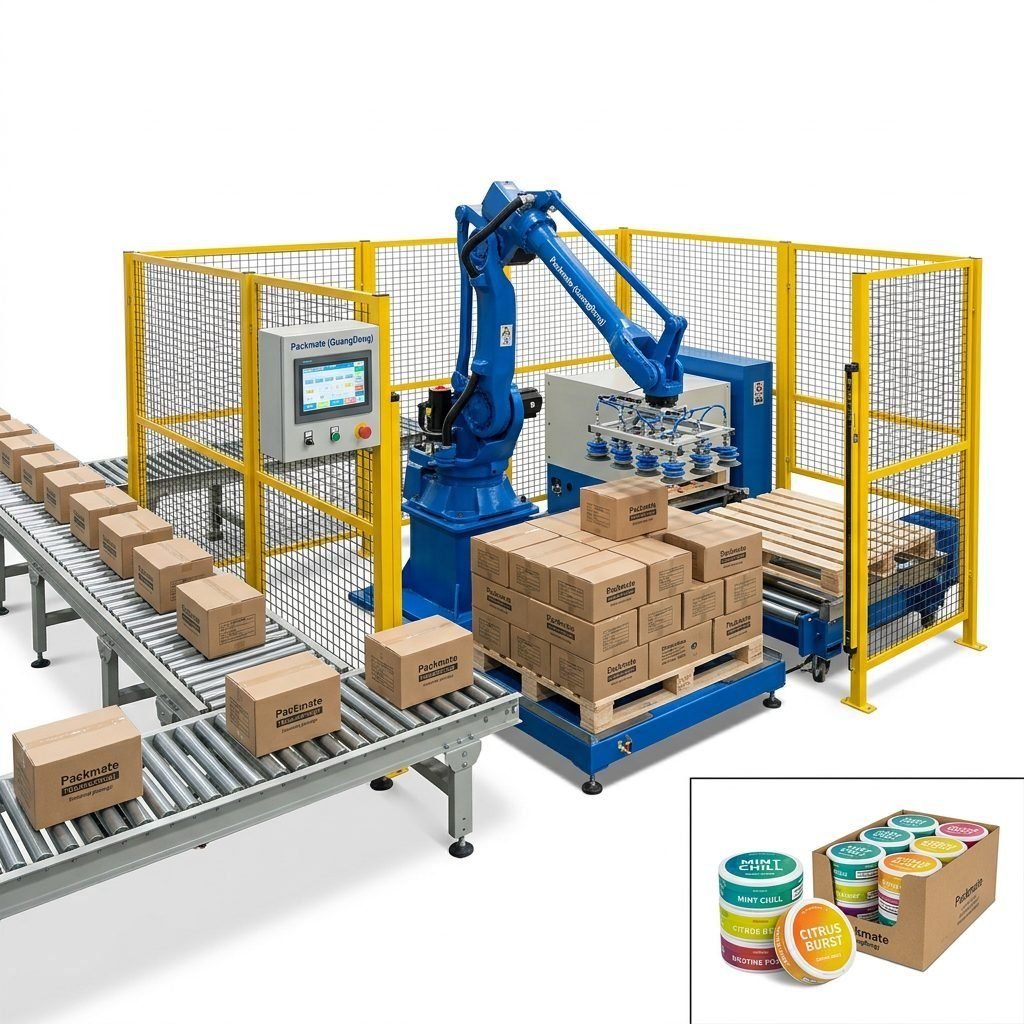
Fully automated palletizers handle layer-by-layer stacking, stretch-wrapping and labeling for warehouse management. Integrate pallet labels with the ERP to match production batches with shipping orders. Modern lines support Industry 4.0 communication protocols for real-time production and logistics synchronization.
Design Considerations for High Performance
High‑performance snus lines must balance speed, accuracy and serviceability. Packmate focuses on modular designs with quick-change stations, hygienic machine frames, and intuitive HMI recipes. For customers needing small-dose multi-lane systems, our experience in multi-lane engineering reduces footprint while maintaining throughput.
Scalability: Start with a core filling and sealing module, then add lanes, weighers or secondary packers as your volume grows. Review case studies at Case.
Automation, Controls and Safety
Modern lines use PLCs, servo drives and centralized HMIs for synchronized motion and recipe control. Safety interlocks, light curtains, and access controls are standard for operator protection. Remote diagnostics and spare parts support are essential for uptime; Packmate offers service contracts and global support — see our Service page for options.
Operator Ergonomics & Maintenance
Design machines for ease of cleaning, changeover and part replacement. Quick‑release clamps, modular belts and accessible sensors reduce maintenance time. Provide operator training and clear SOPs so teams can safely and efficiently manage production runs.
Regulatory and Compliance Notes
Snus and nicotine pouch products are regulated differently across regions. Ensure machines are CE/ISO compliant where required and maintain traceability and batch records for regulatory inspections. Packmate machines comply with common international standards — more details are in our Certificate area.
Practical Tips for Commissioning and Ramp-up
– Conduct FAT (Factory Acceptance Test) with customer recipes before shipment.
– Plan IQ/OQ with your QA team during installation.
– Run pilot batches to validate sealing, weight and coding parameters.
– Monitor first 24 hours of production closely to refine alarms, reject thresholds and CIP cycles.
Commissioning reminder: Keep spare wear parts and a maintenance toolkit onsite for the first production month to minimize downtime.
How Packmate Supports Your Line
Packmate combines three decades of engineering experience with a 20,000㎡ manufacturing base and advanced CNC capabilities to deliver reliable snus packaging systems. Whether you need multi-lane sachet machines, stick pack lines, or custom turnkey solutions, our models and field engineering can be tailored to meet throughput, space and compliance needs. Browse our machine families including Sachet & Stick Pack Machines and auxiliary equipment at Auxiliary Packaging Equipment.
Installation and Training
Our rollout includes mechanical installation, electrical integration, software setup and operator training. We provide commissioning documentation and remote support to shorten time-to-market. Visit About Packmate to learn more about our capabilities.
Final Thoughts
A well-designed snus packaging workflow reduces waste, improves product consistency and simplifies regulatory compliance. Attention to dosing accuracy, sealing integrity and in‑line inspection pays dividends in reduced recalls and higher customer satisfaction. Modular, serviceable machinery with clear data logging enables manufacturers to scale while maintaining control over quality and traceability.
Frequently Asked Questions
Q1: What sealing method is best for nicotine pouch films?
The best method depends on film laminate and product sensitivity. Heat sealing is common for standard laminates; ultrasonic sealing is suitable for delicate formulations and certain multilayer films. Cold seal is used for specialty films. Validate sealing through destructive and non‑destructive testing before full production.
Q2: How do I maintain consistent dosing across multiple lanes?
Use synchronized multi-head weighers with lane-specific calibration and in‑line load cell feedback. Regular calibration and recipe lock-down in the PLC help keep lane variation within tolerance. Keep feed hoppers level and use vibration/flow aids to prevent bridging.
Q3: Can I retrofit inspection systems onto older lines?
Yes. Vision, checkweighers and leak detectors can often be retrofitted with proper mechanical integration and PLC communication. Packmate and many suppliers provide retrofit solutions to improve quality assurance without replacing the entire line.
Q4: What support is available after purchase?
Typical support includes spare parts, remote diagnostics, on-site service, preventive maintenance contracts and training. Check the Contact Us page to arrange service or discuss tailored support plans.
Q5: Are Packmate machines compliant with international standards?
Yes. Packmate machines are designed to meet common international standards and certifications; see our Certificate page for specifics on CE and ISO conformity and consult with our engineers for market‑specific requirements.