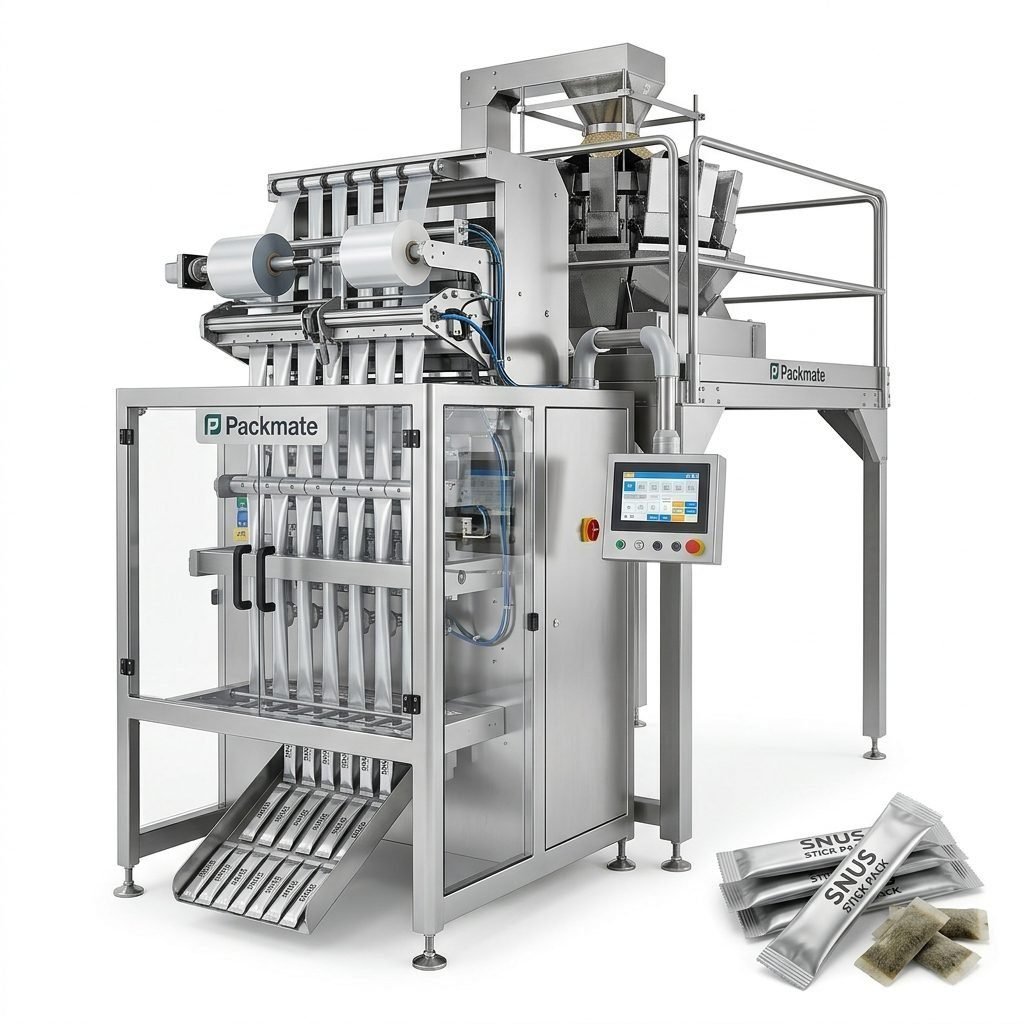
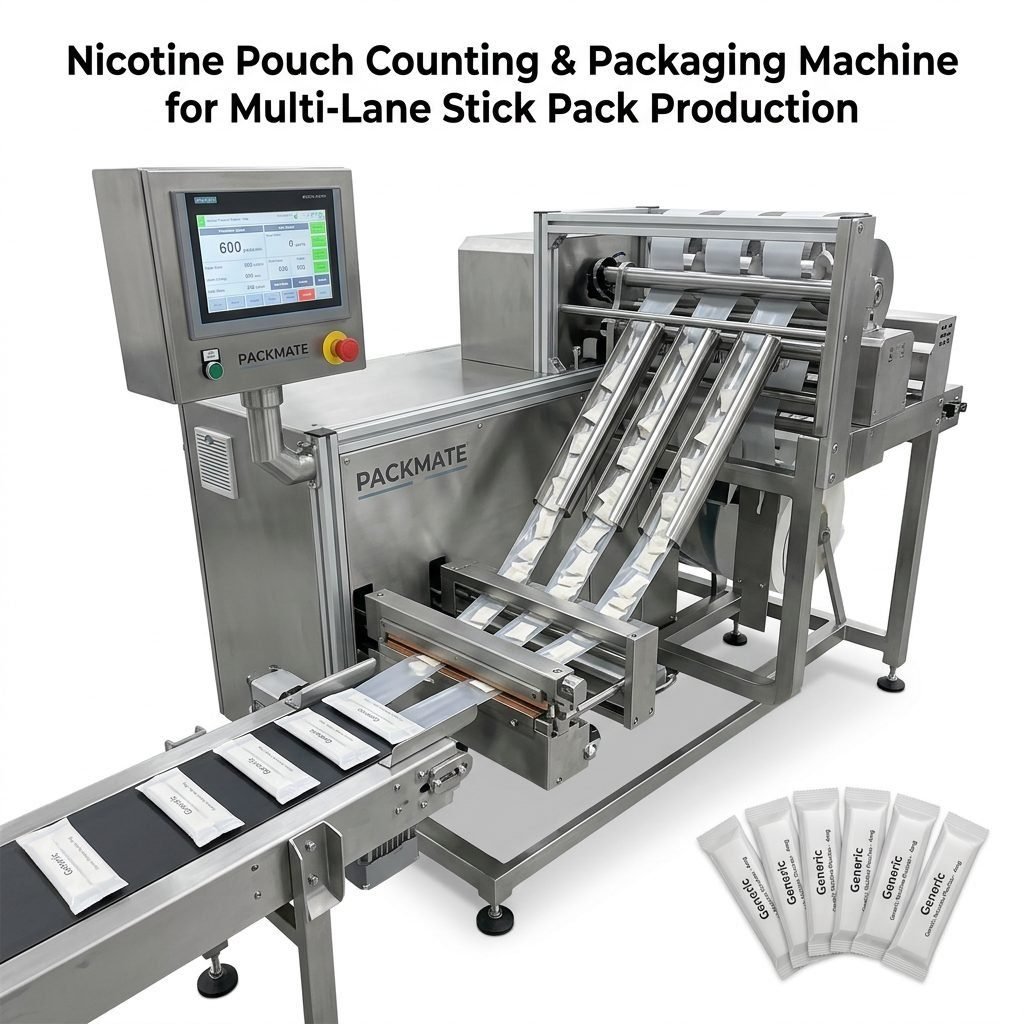
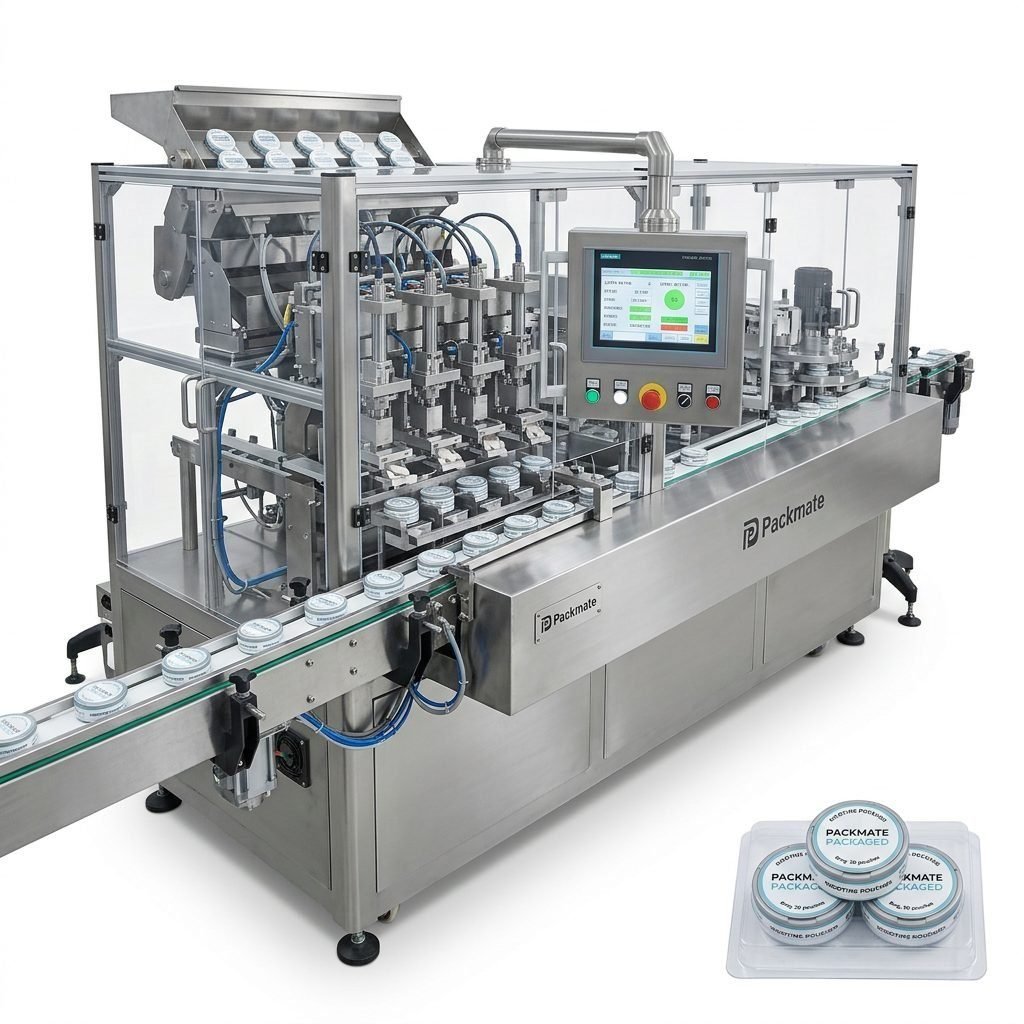
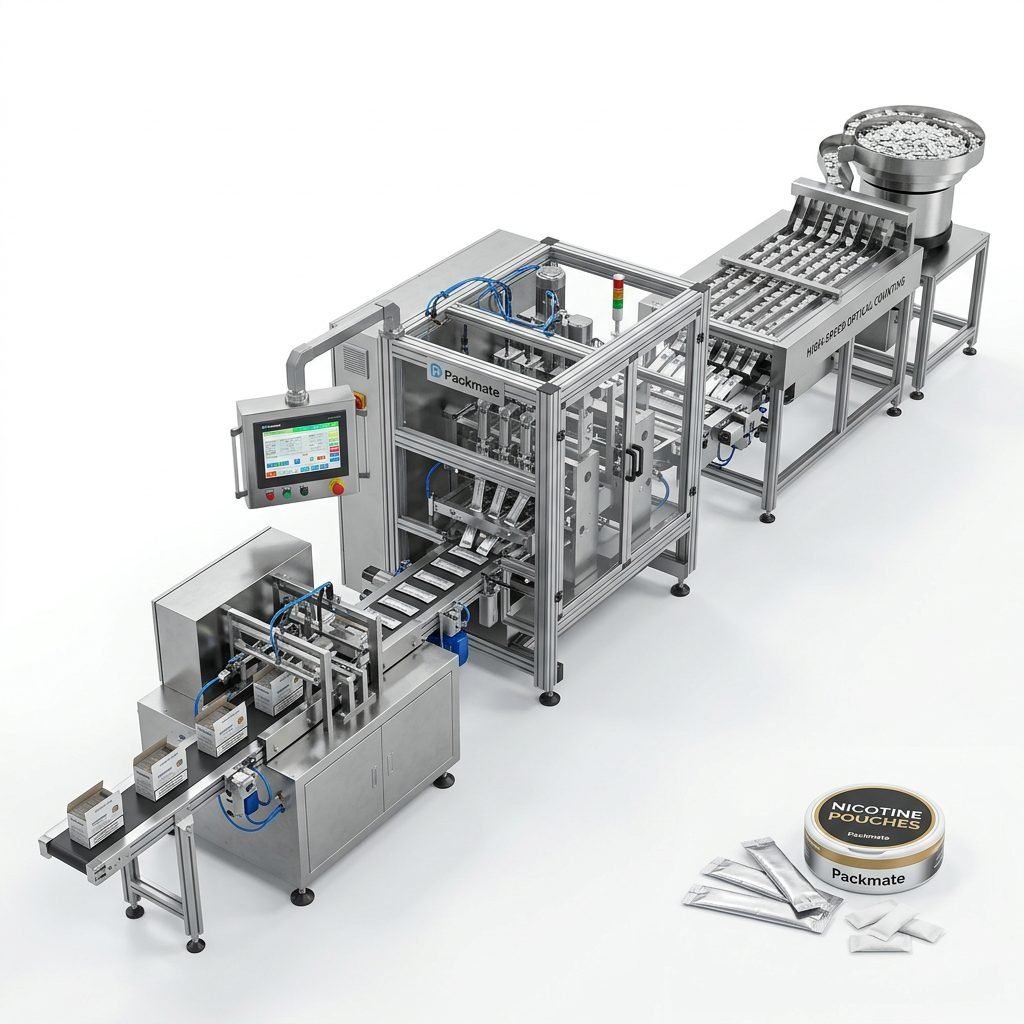
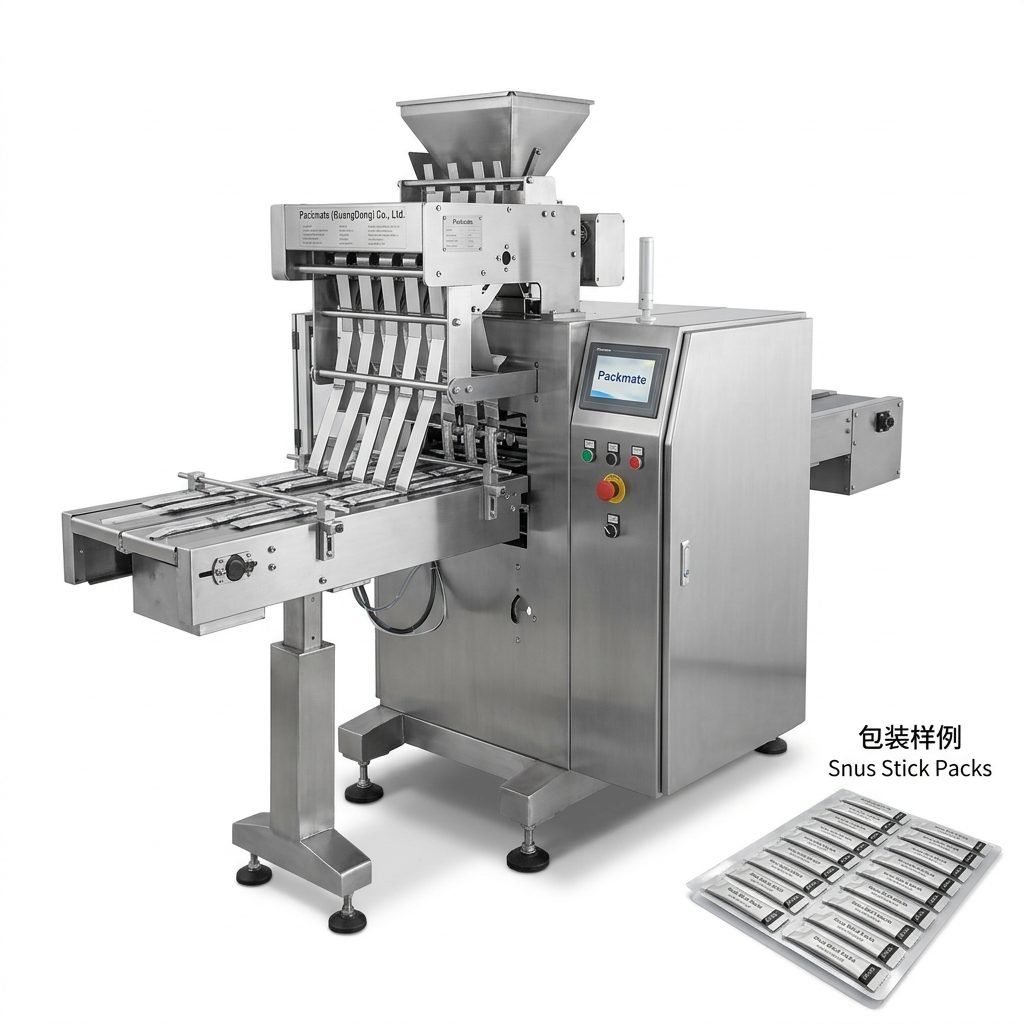
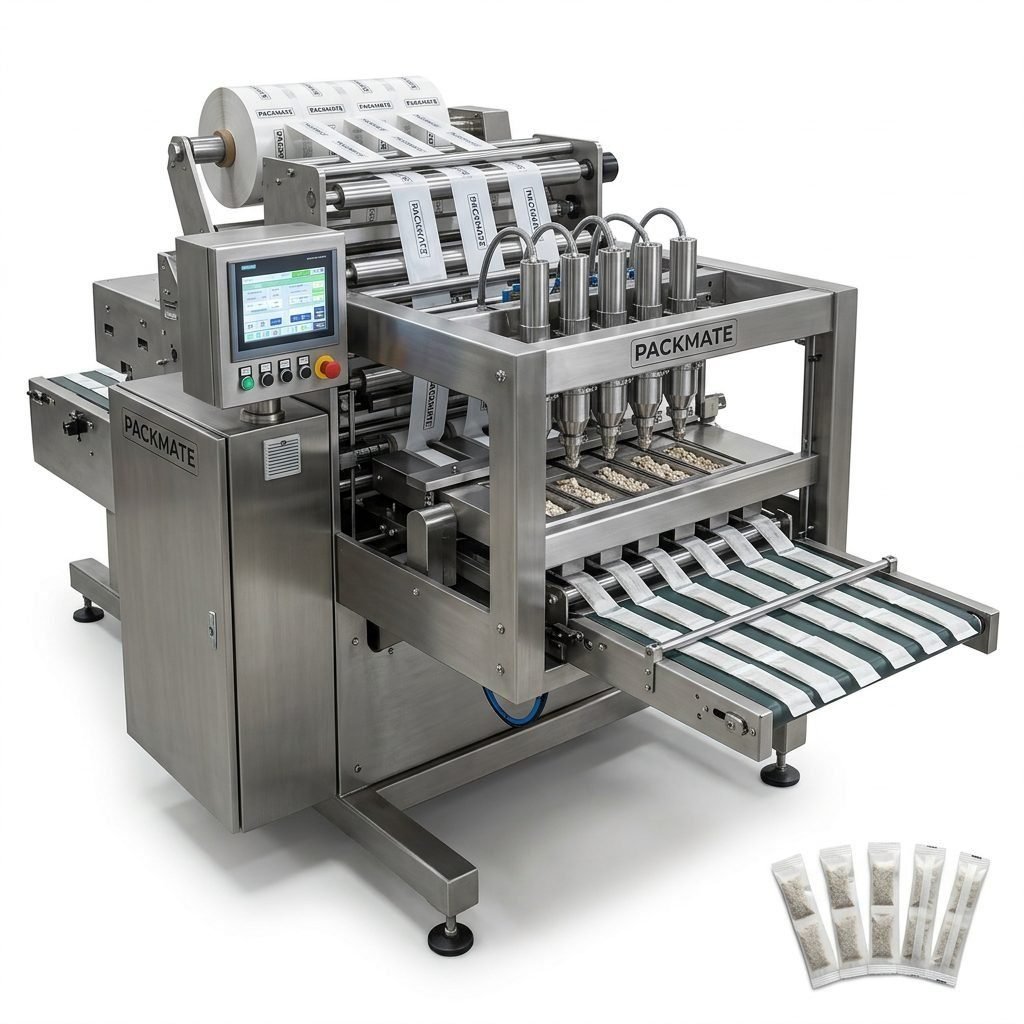
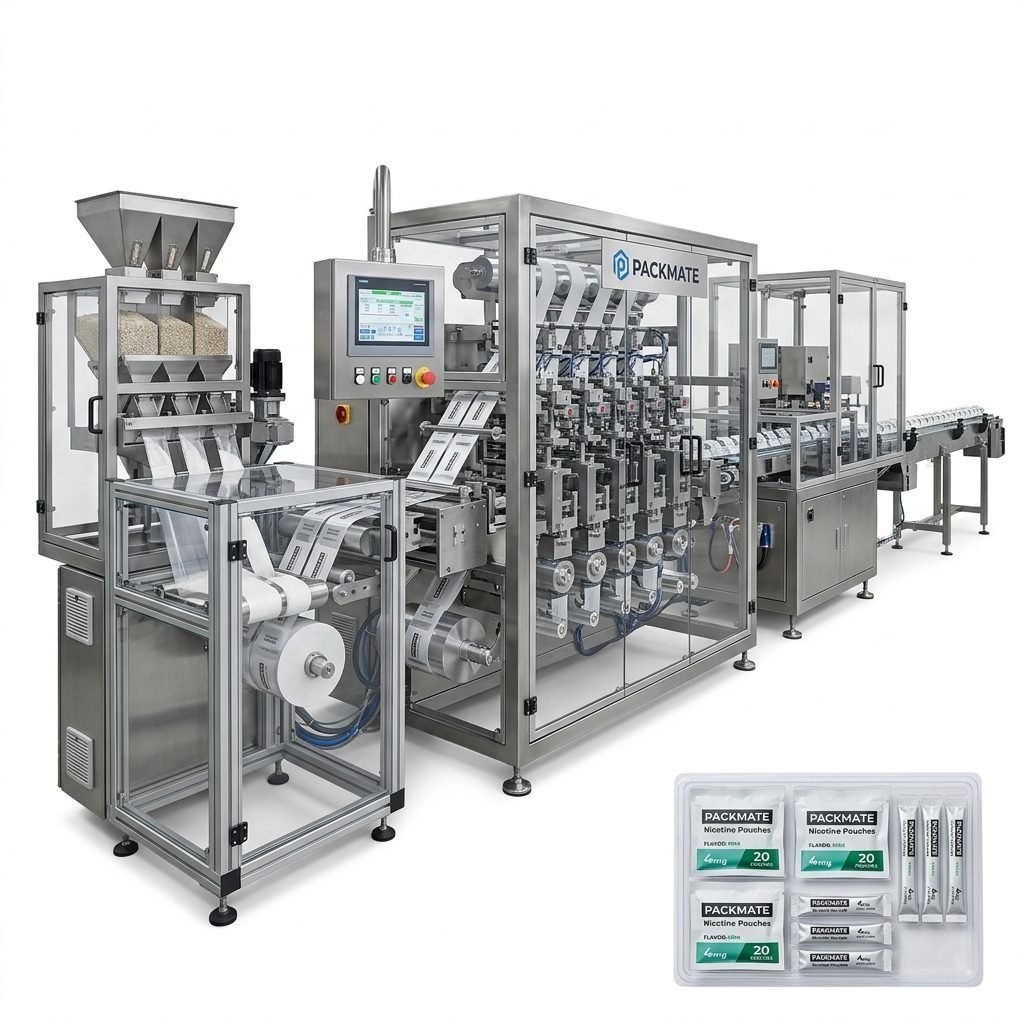
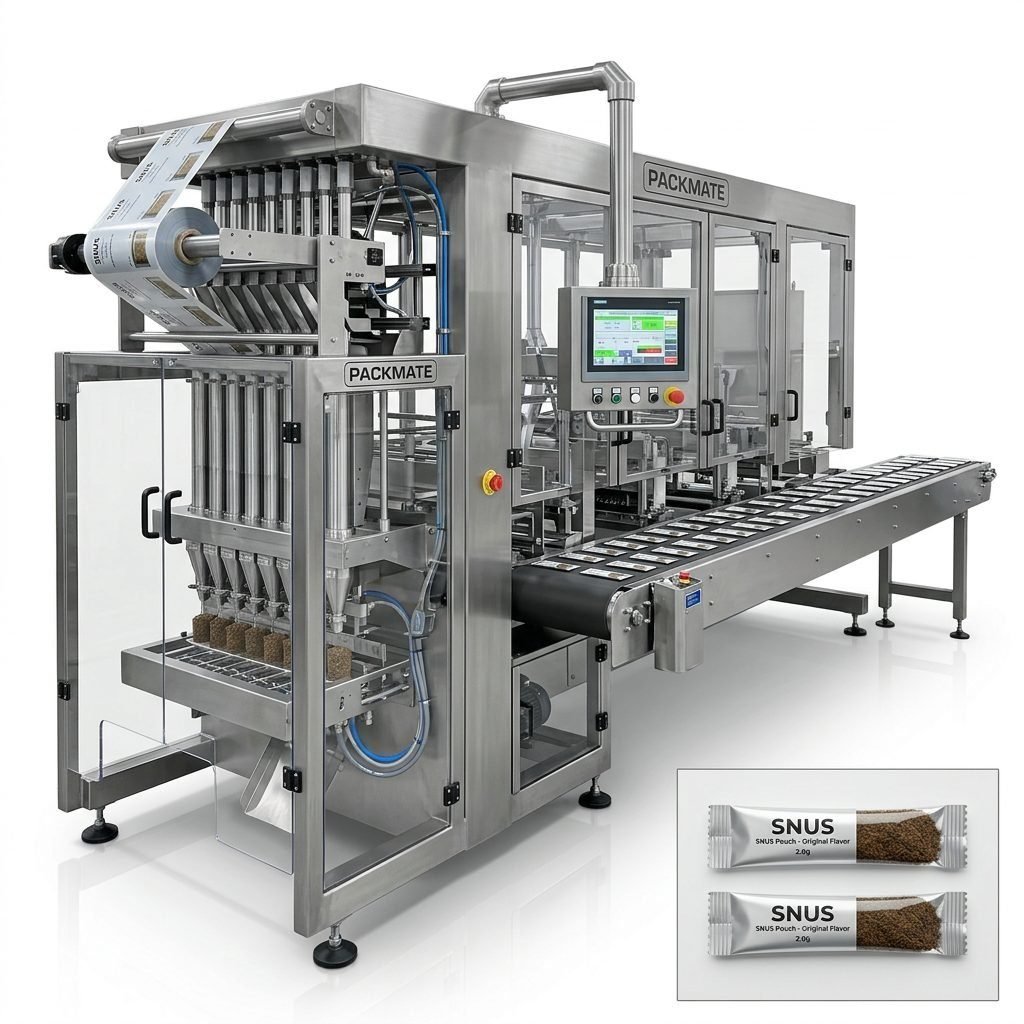
In the modern snus and nicotine pouch market, production lines must be engineered to deliver consistent product quality, high throughput, and regulatory compliance. This article explores a complete snus production workflow system designed to optimize manufacturing efficiency and quality while reducing downtime and waste. You will find practical recommendations, equipment layouts, and best-practice controls suitable for small-dose pouch producers up to high-volume multi-lane operations.
Overview: Why a Dedicated Snus Production Workflow Matters
A well-designed workflow integrates material handling, dosing, pouch forming, sealing, inspection, and packing into a continuous, automated line. For manufacturers aiming to scale, adopting specialized equipment such as multi-lane snus packing machines, precision weighing systems, and hygienic filling modules is essential. Packmate Snus Machine leverages over 30 years of engineering experience to deliver turnkey lines that address these exact needs, combining stability, accuracy, and modularity.
Key Benefits at a Glance
✅ Higher throughput through multi-lane synchronization.
⚙️ Consistent pouch weight and sealing integrity via precision feeders and servo-controlled seal heads.
📈 Reduced waste and rework by inline inspection and automated rejects.
🔒 Traceability & compliance through batch coding, serialization, and digital logs.
Core Workflow Components and Their Roles
A robust snus production workflow typically includes the following modules. Each module must be selected and configured for the specific product format (loose snus, nicotine pouch, tea pouches, powder mixes) and production volume.
1. Raw Material Preparation & Feeding
Feed systems handle powders, granules, or tobacco blends. Use closed conveyance and controlled feeders to maintain hygiene and prevent cross-contamination. Precision screw feeders or vibration hoppers with level sensors ensure steady flow and accurate dosing into the weighing or filling station.
2. Weighing & Portioning
High-accuracy weighing systems are crucial for consistent pouch fill weights. Multi-head weighers and loss-in-weight feeders can be integrated depending on the product’s dosing tolerance. Visit the Weighing & Packaging Systems page for compatible solutions.
(Weighing & Packaging Systems)
3. Pouch Formation & Filling
Pouch-forming technologies vary: stick packs, sachets, or multi-lane nicotine pouches. For nicotine pouches, multi-lane systems offer compact, high-yield production. Equipment must ensure even distribution of powder or granules into each pouch lane and precise metering for small-dose formats.
(Snus & Nicotine Packaging Machines)
4. Sealing, Cutting & Forming
Reliable sealing prevents product leakage and preserves shelf life. Servo-controlled seal bars, precise temperature control, and accurate cutting units yield uniform pouches. For laminated films or foil, adjust dwell times and pressure to avoid deformation.
5. Inline Inspection & Quality Control
Vision systems, weight checks, and leak detection catch defects immediately. Automating inspection reduces human error and ensures only compliant pouches proceed to secondary packing.
6. Secondary Packaging & Cartoning
After primary pouch production, integrate counting, blistering (if needed), and cartoning machines. Secondary packaging should be synchronized with the primary line to maintain flow and avoid bottlenecks.
Design Principles for an Efficient Snus Production Line
Efficiency is achieved by thoughtful integration of machines and controls. The following principles guide layout and equipment selection:
🔧 Modularity — design lines with modular stations so capacity can be expanded or reconfigured quickly.
📦 Synchronized Throughput — match speeds between feeder, filler, and sealer to prevent backups.
🧰 Ease of Maintenance — prioritize accessible components and quick-change parts to minimize downtime.
🔁 Closed-loop Control — use PLC/SCADA systems for real-time adjustments and traceability.
Automation, Data, and Traceability
Implementing Industry 4.0 principles brings measurable gains. Connect scales, vision systems, and filling heads to a central control platform for data capture: batch IDs, weight distributions, reject rates, and runtime metrics. This data supports continuous improvement and simplifies audits.
Traceability Features to Consider
– Batch coding and serialization for each pouch or carton.
– Digital batch records stored centrally for regulatory review.
– Automatic rejection and logging for off-spec products.
– Integration with ERP and inventory systems for raw material tracking.
Quality Assurance & Regulatory Compliance
Snus and nicotine pouch producers must adhere to product safety and labeling laws in their markets. Machines should be constructed with sanitary materials, meet CE/ISO standards, and support Good Manufacturing Practice (GMP) workflows. Packmate’s equipment is certified to international norms and designed for easy cleaning and inspection.
(Certificate)
Operational Best Practices
Efficient operation requires trained personnel, preventive maintenance, and standardized changeover procedures. Key practices include:
🔁 Short, documented changeover checklists to move between SKUs quickly.
🧾 Standard operating procedures (SOPs) for cleaning, calibration, and start-up/shutdown.
🛠️ Scheduled preventive maintenance with spare parts kits for critical components.
👨🏭 Continuous operator training and cross-skilling to reduce human error.
Customizing Systems for Your Product Mix
Because snus formats vary widely, the production workflow must be customized. Options include single-lane precision lines for niche products or multi-lane arrays for mass production. Packmate offers 50+ machine models and turnkey solutions to match your required format, output, and automation level. Explore product options such as bag & pouch machines and sachet & stick pack machines to configure the best fit.
(Bag & Pouch Packaging Machines)
(Sachet & Stick Pack Machines)
Selecting a Supplier: What to Look For
Choose a supplier with deep domain experience, robust manufacturing capability, and global service. Packmate’s 20,000㎡ facility, advanced CNC centers, and global project references make it a strong partner for manufacturers expanding into snus and nicotine pouch production. For more corporate information and global exhibition schedules, visit the About and Exhibition pages.
(About Packmate)
(Our Exhibition)
Questions to Ask Potential Partners
– Do they provide turnkey solutions including automation and line integration?
– Can they support validation, documentation, and training for new products?
– What spare parts and after-sales services are available locally or globally?
– Are the machines configurable for multiple pouch formats without major tooling changes?
Installation, Ramp-up & After-sales
Professional installation, onsite training, and ramp-up support reduce commissioning time. A supplier should offer remote diagnostics, spare parts packages, and preventive service plans to keep lines operating at peak efficiency. Use the Contact page to request site surveys and project quotations.
(Contact Us)
Case Example: Multi-lane Nicotine Pouch Line
A medium-sized manufacturer upgraded from single-lane stick packing to a 4-lane multi-format snus line. The reconfiguration included synchronized feeders, a servo-controlled pouch former, and an inline vision system. Results: throughput increased by 3.5x, rejects dropped by 60%, and changeover time between SKUs decreased by 40%. Read more about real life deployments in our case studies.
(Case)
Cost Optimization and ROI Considerations
Initial capital outlay is offset by higher yield, reduced labor, and lower material waste. When estimating ROI, account for:
– Increased production capacity and market share.
– Lower variable costs per pouch due to automated metering.
– Reduced product recalls with stronger QA controls.
– Enhanced flexibility to introduce new SKUs faster.
Preparing for Scale: From Pilot to Full Production
Start with pilot runs to validate formulations, dosing tolerances, and sealing parameters. Use pilot data to configure full-scale equipment, select proper film materials, and finalize inspection tolerances. A partner with test labs and demonstration capability accelerates validation and ensures smooth scale-up.
Final Considerations
The best snus production workflow balances throughput, quality, and regulatory demands. Investing in reliable, configurable machinery and robust controls will pay dividends through consistent product quality, faster market response, and lower operating costs. If you are evaluating snus packaging lines, consider the full lifecycle: design, commissioning, training, and long-term service.
Need Expert Help?
For consultations, equipment specifications, or to schedule a demonstration, visit our product catalog and service pages to explore model options and after-sales support.
(Catalog)
(Service)
Frequently Asked Questions
Q1: How do I choose between single-lane and multi-lane snus machines?
A: Consider your target output, SKU variability, and floor space. Single-lane lines are ideal for low-volume speciality products, while multi-lane systems are best for scaling volumes with uniform pouch sizes.
Q2: What accuracy can I expect from modern weighers and dosing systems?
A: Modern multi-head weighers and loss-in-weight feeders can achieve tight tolerances (often ±1-3% depending on product characteristics). Proper calibration and stable feeding are essential for consistent accuracy.
Q3: How long is a typical installation and commissioning period for a snus production line?
A: Installation and commissioning vary by line complexity. A basic single-lane line can be commissioned in weeks, while complex multi-lane turnkey projects may take several months including validation and staff training.
Q4: What certifications should I check when buying packaging equipment?
A: Ensure the equipment meets CE/ISO standards and supports GMP processes. Check for machine safety, electrical conformity, and material contact approvals where applicable.
Q5: How do I get spare parts and technical support abroad?
A: Choose suppliers with global service networks or defined spare parts logistics. Many manufacturers provide remote diagnostics, express shipping for critical components, and training for local technicians.