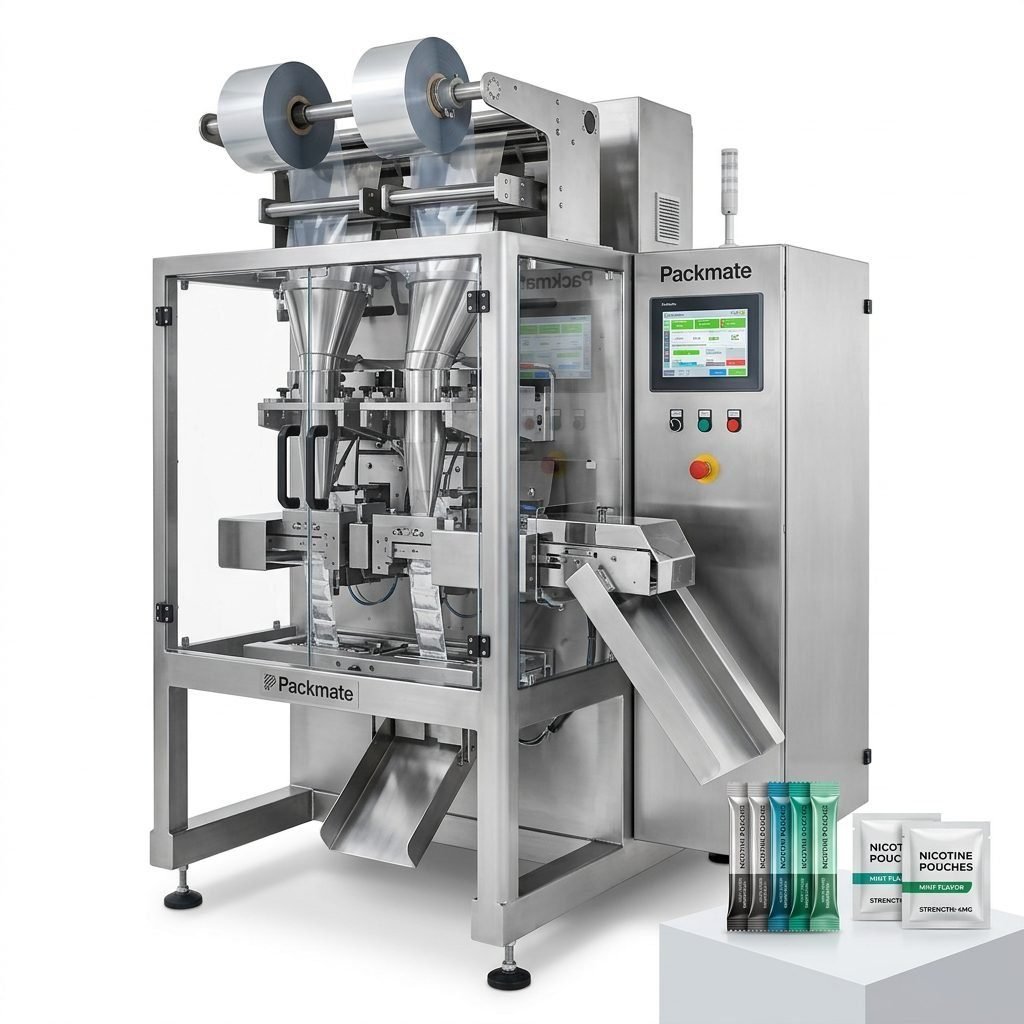
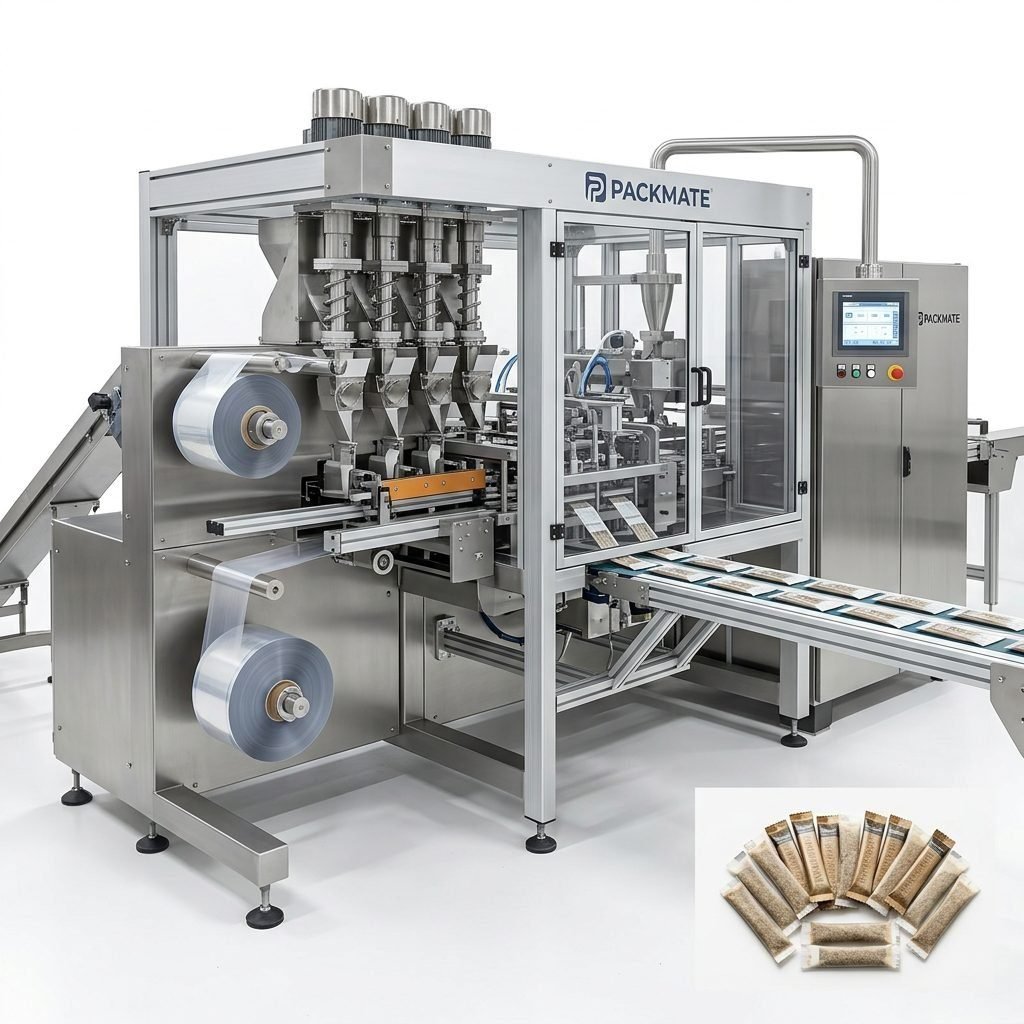
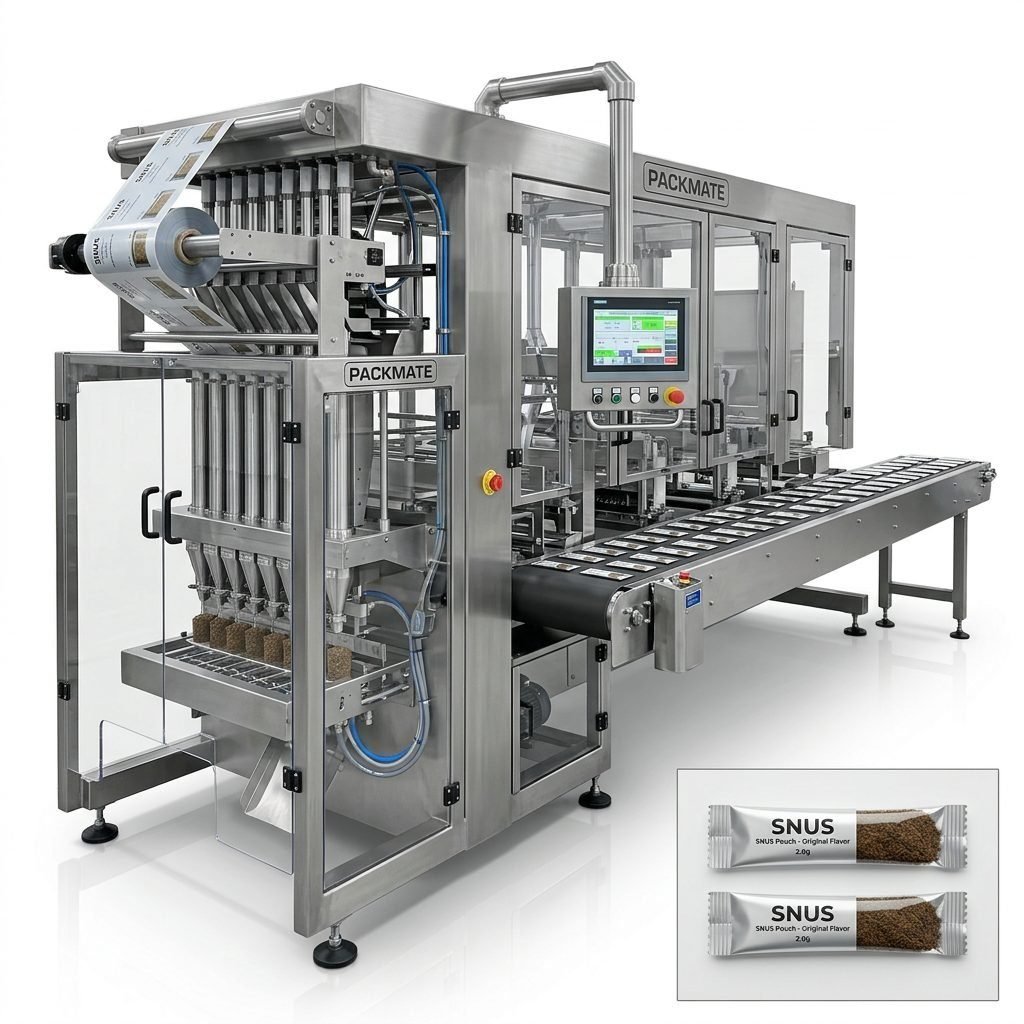
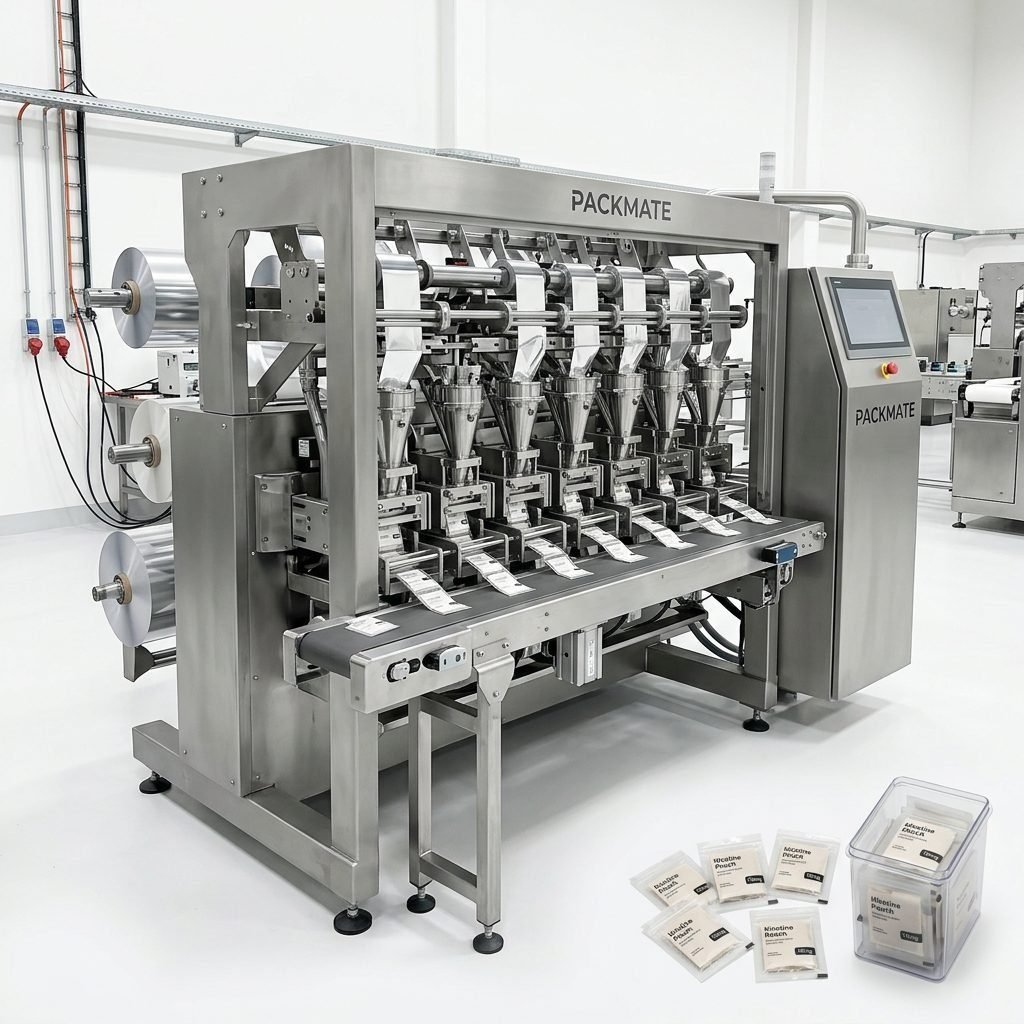
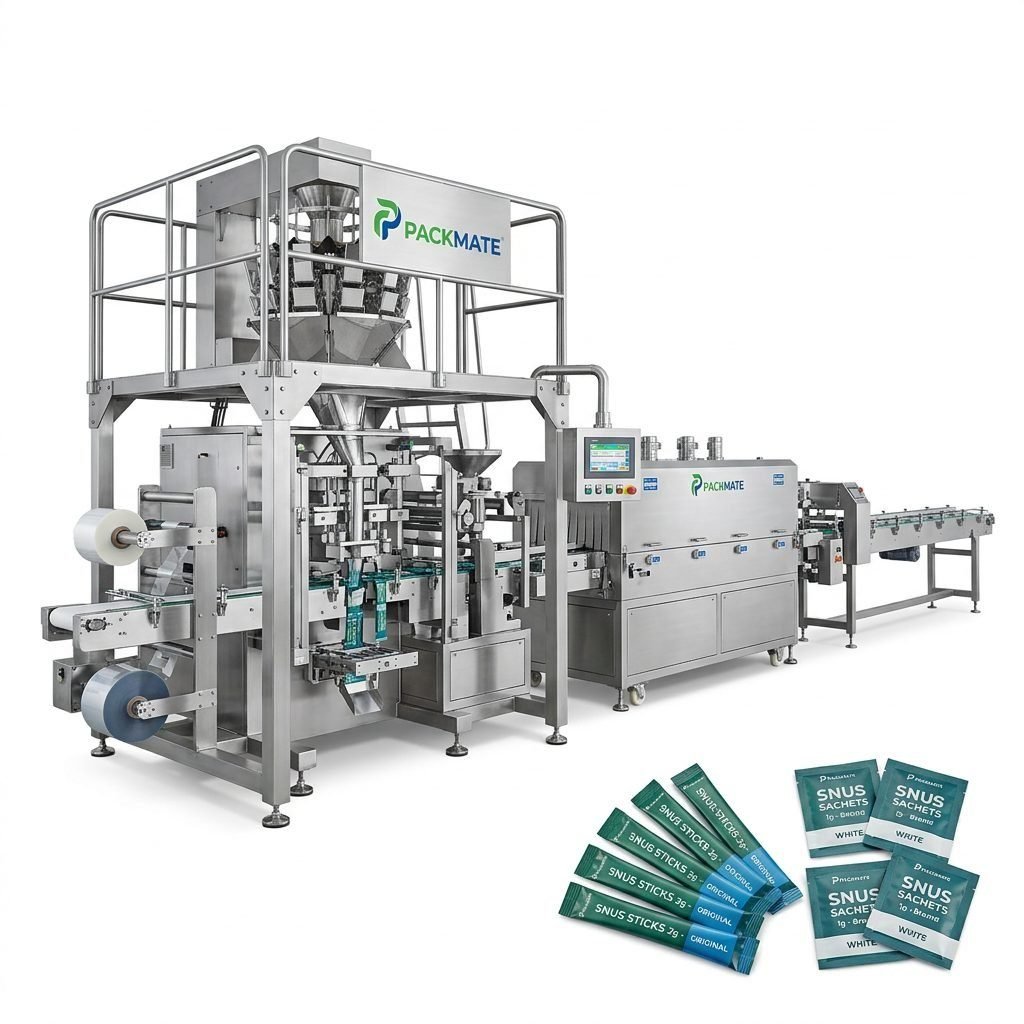
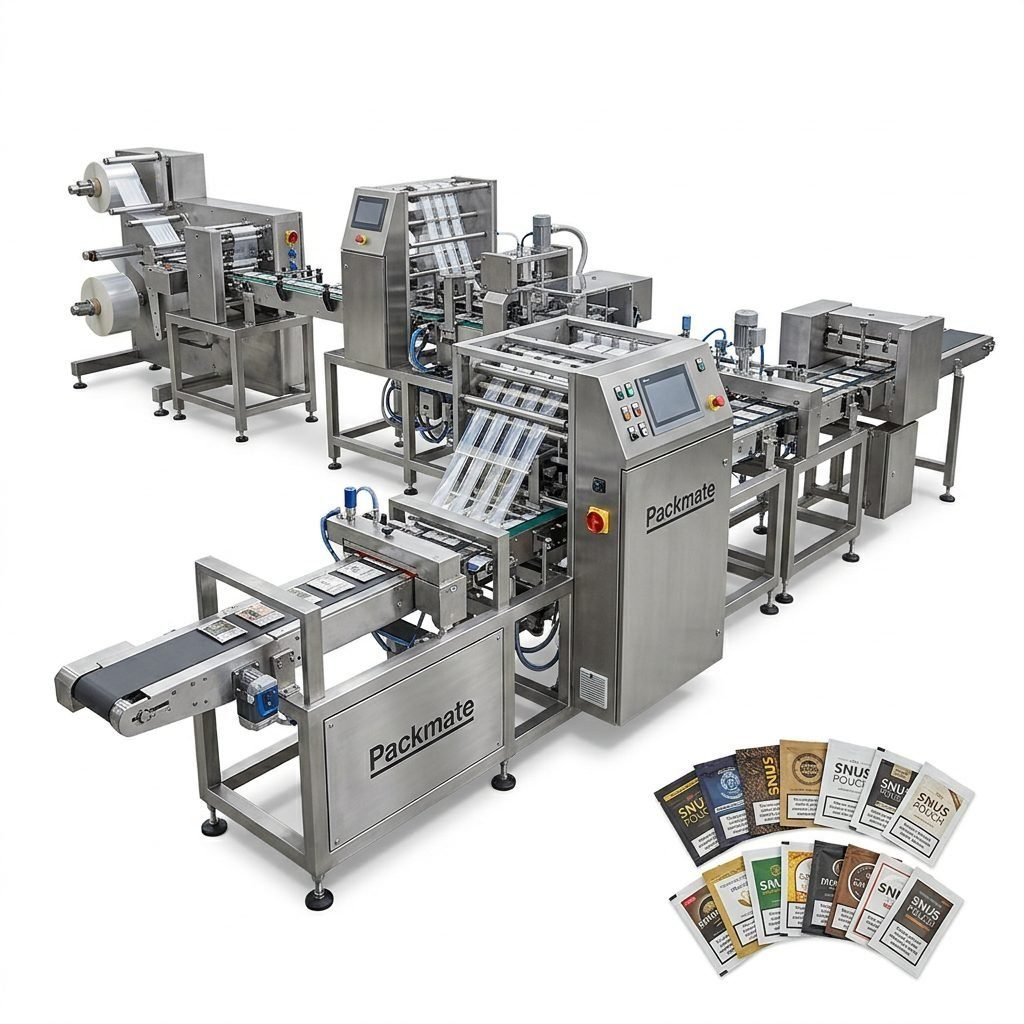
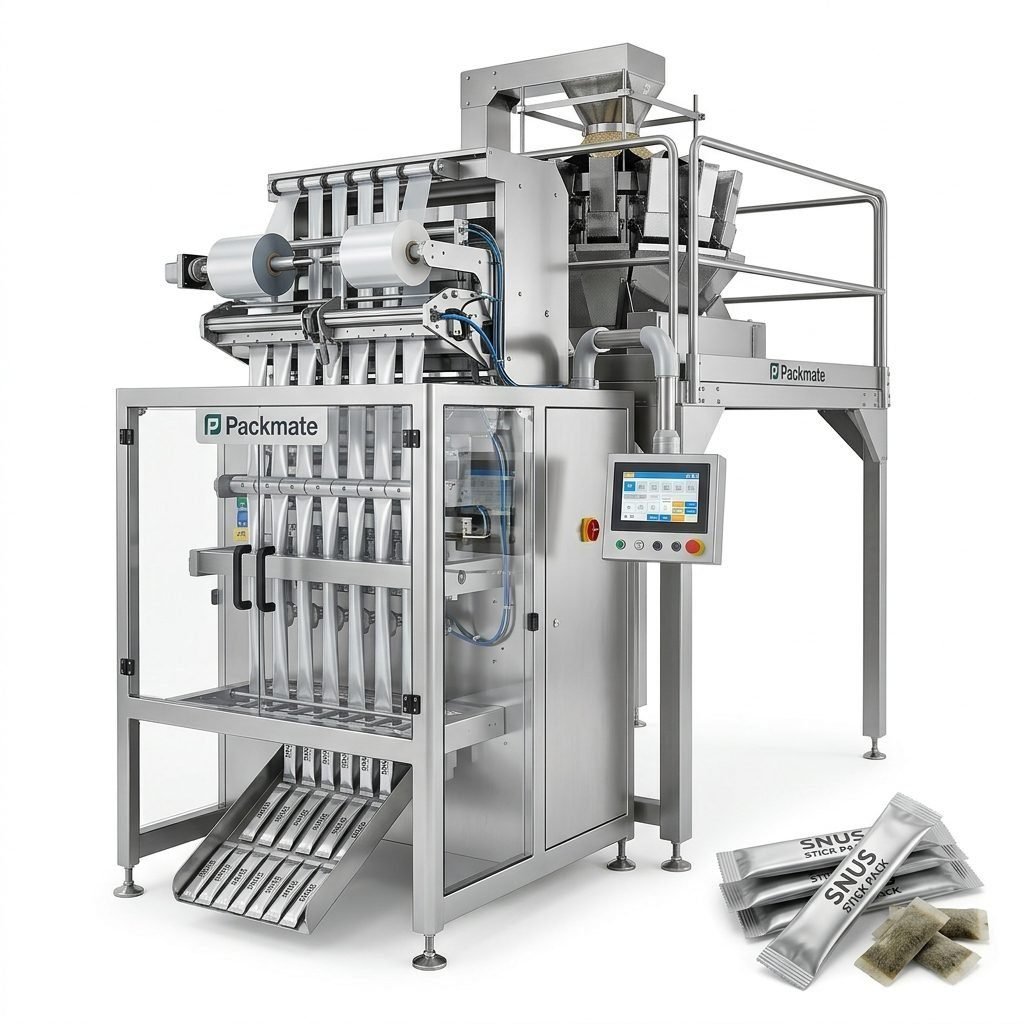
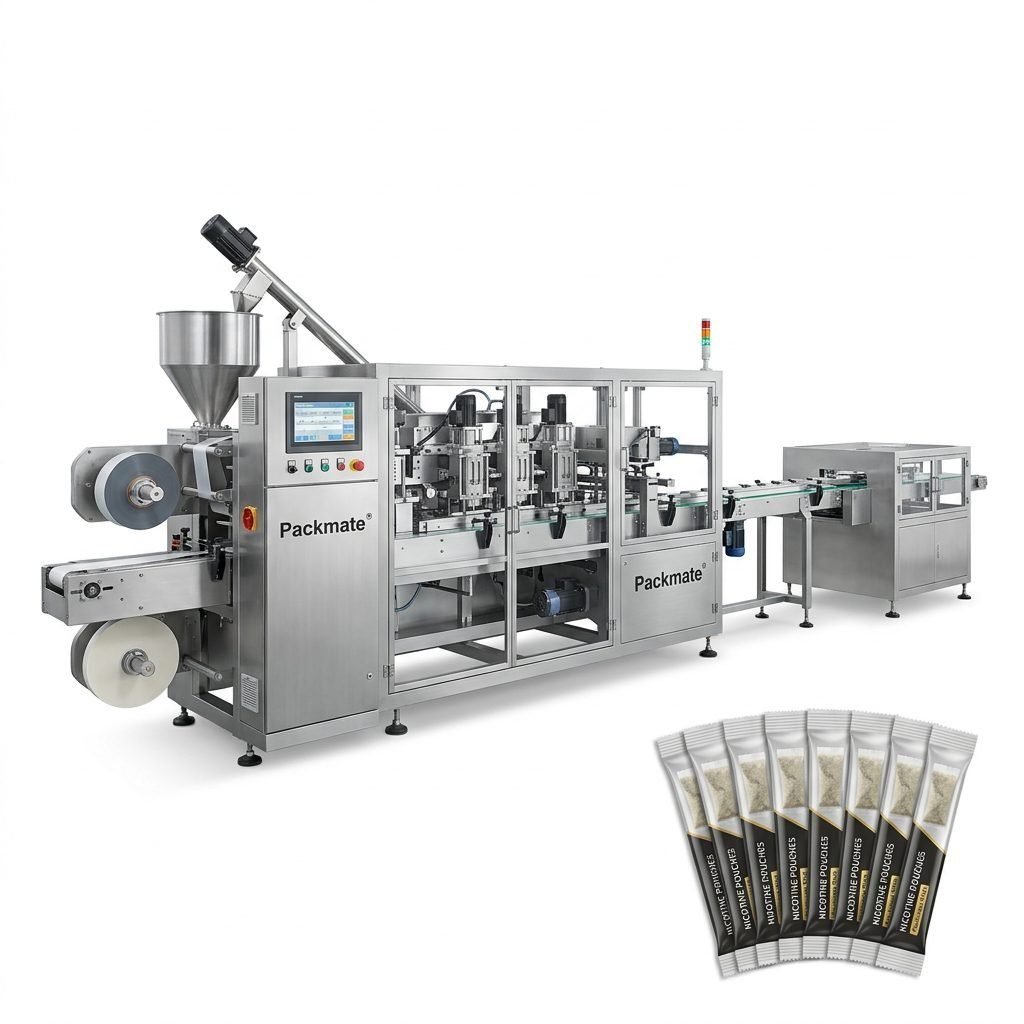
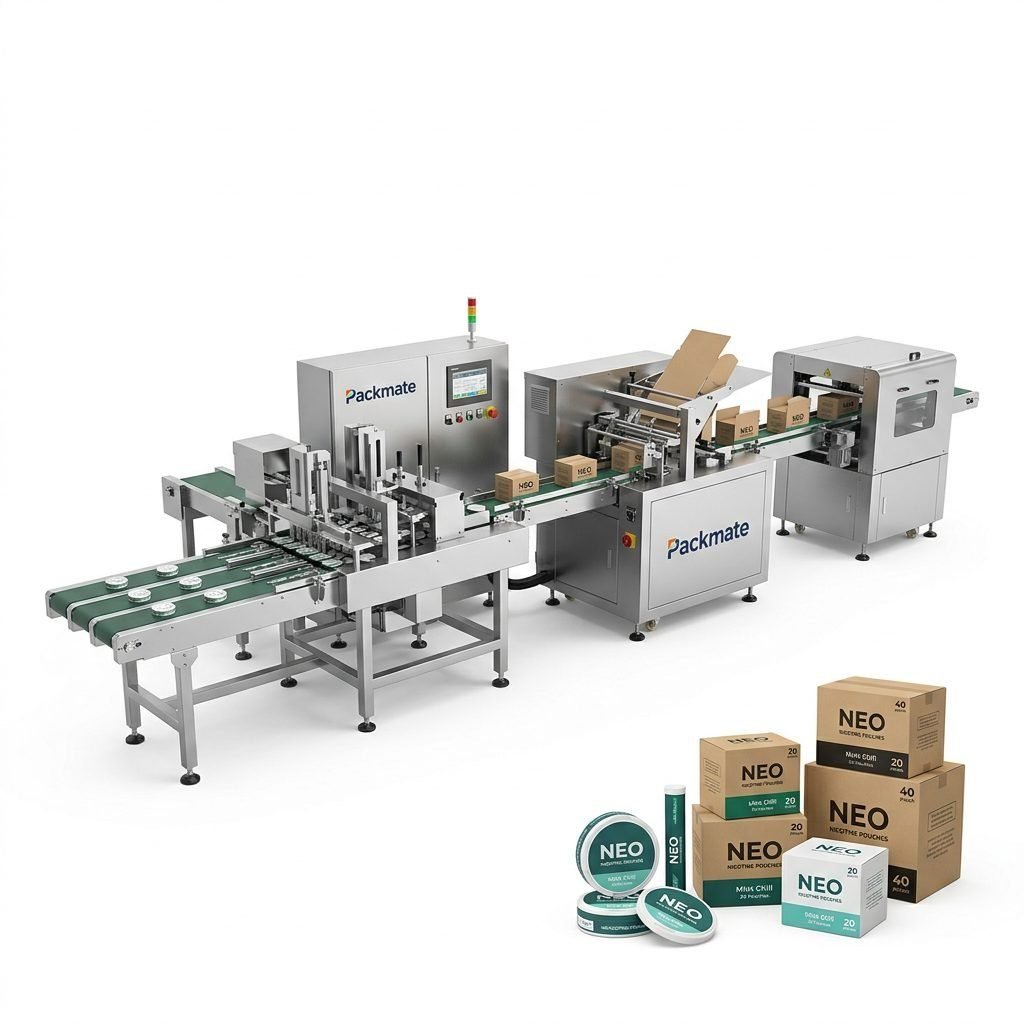
In an era of rapid product innovation and strict regulatory oversight, manufacturers of nicotine pouches and snus need packaging systems that deliver speed, precision, and consistent quality. Smart snus packaging equipment combines automated feeding, multi-lane forming, precise dosing, and integrated quality inspection to create productive lines that scale with market demand while ensuring product integrity.
Why Automation Matters for Snus & Nicotine Pouch Production
Manual or semi-automated approaches can no longer keep pace with global demand or the stringent hygiene and traceability requirements of nicotine-containing products. Automated snus packing machines reduce labor costs, minimize variability between batches, and help manufacturers meet compliance expectations. The result is faster ramp-up, lower waste rates, and predictable throughput.
🔧 Key benefit: increased line efficiency and repeatability through synchronized motion control and automated changeovers.
Core Components of a Smart Snus Packaging Line
Modern lines are modular and typically include upstream feeding and blending, intelligent dosing systems, multi-lane pouch forming units, heat-sealing stations, date/lot coding, metal detection, and final case packing. Each module communicates with the line PLC and often integrates vision systems and statistical process control for real-time quality assurance.
Multi-lane Systems and Small-dose Precision
For nicotine pouches and snus, small-dose accuracy is critical. High-performance multi-lane machines enable multiple tracks of simultaneous pouch formation and filling, dramatically boosting output per footprint. Advanced volumetric and weigh-scale dosing ensure consistent pouch weight and consumer experience across all lanes.
✅ Production tip: choose a machine with lane-individual monitoring and lane shutoff to prevent whole-line stops when a single lane fault occurs.
Common Machine Configurations
Equipment options include stick pack machines, sachet machines, pillow and stick-sachet hybrids, and dedicated nicotine pouch form-fill-seal systems. Auxiliary modules such as ancillary conveyors, checkweighers, and bottle or carton packers support end-to-end automation. For a catalog of machine types and configurations visit the Snus & Nicotine Packaging Machines page.
Packmate’s equipment range spans single-lane to high-density multi-lane systems, enabling both niche craft producers and large-scale manufacturers to select optimal throughput and investment profiles.
Design Considerations When Choosing Snus Packaging Equipment
Selecting the right line requires balancing capacity, product format, regulatory needs, and total cost of ownership. Key questions include: What pouch formats will you run? Are interchangeability and quick changeovers required? What is the target throughput and acceptable downtime? Answering these drives specification choices such as servo-driven controls, quick-release tooling, CIP compatibility, and hygienic surface finishes.
⚙️ Engineering focus: prioritize systems that use standardized, widely available spare parts and provide remote diagnostics to shorten downtime.
Hygiene, Safety and Regulatory Compliance
Nicotine products are subject to strict regulatory frameworks. Machines designed for these products must be easy to clean, prevent cross-contamination, and support tamper-evident packaging where required. Look for equipment with CE and ISO conformity, hygienic design principles, and traceability modules that log batch numbers, operator actions, and production parameters.
For certified systems and documentation support, explore the Certificate and Mission & Vision pages to understand supplier compliance and quality frameworks.
Integration with Upstream & Downstream Processes
A truly smart packaging line does not operate in isolation. Integration with weighing & dosing stations ensures accurate fill weights; linking to upstream blending systems maintains product uniformity; and downstream case packing and palletizing streamline logistics. Factory-wide MES or ERP integration supports order tracking, production planning, and lot traceability.
Visit Weighing & Packaging Systems and Filling & Packaging Lines pages for examples of integrated solutions that reduce manual touchpoints and improve overall equipment effectiveness (OEE).
Machine Intelligence and Industry 4.0 Features
Modern pack lines include data acquisition, fault prediction algorithms, and remote service capabilities. Real-time dashboards enable operators to monitor pace, reject rates, and machine alarms. Predictive maintenance reduces unexpected breakdowns by flagging wear items before failure.
📈 ROI insight: data-driven maintenance and efficiency tracking can improve uptime by double-digit percentages in months.
Customization, Turnkey Solutions and Supplier Capabilities
A reliable supplier provides more than equipment—they deliver turnkey lines, factory layout assistance, installation, and training. With over 30 years of engineering experience and a 20,000㎡ manufacturing facility, Packmate provides tailored solutions from concept to commission, backed by precision CNC machining and rigorous factory testing.
Learn more about company expertise and global cases by visiting About Packmate and Case pages for examples of delivered lines and real-world performance.
After-sales Service and Spare Parts
Post-sale support ensures consistent performance. Essential services include on-site commissioning, operator training, spare-parts kits tailored to consumables, and remote troubleshooting. Suppliers that offer documented service agreements and rapid spare shipping lower long-term operating costs and production risks.
📦 Service reminder: confirm lead times for critical spares and remote-support availability before finalizing purchase.
Case Studies and Global Deployments
International deployments demonstrate how scalable snus packaging lines adapt to varying regulatory regimes and consumer formats. From boutique short-run flavors to high-volume standardized pouches, real-world case studies show how multi-lane packers and automated feeding systems reduce cost-per-unit while preserving product quality.
Explore global exhibitions and the Our Exhibition page to see live demos and discuss tailored production solutions with technical teams.
Sustainability and Material Choices
Packaging design impacts both compliance and sustainability goals. Machines that support flexible pouch materials, reduced film thicknesses, and efficient film utilization contribute to lower material costs and environmental footprints. Consider lines that minimize film waste through precision cutting and nestable pouch layouts.
🌱 Green note: optimized material use and reduced rejects are quick wins for sustainability metrics.
Practical Steps to Implement a Smart Snus Packaging Line
Start with a factory assessment: define capacity targets, product variants, and regulatory constraints. Work with engineering partners to model line layouts and identify utilities and cleanroom needs. After equipment selection, validate recipes and run FAT (Factory Acceptance Tests) to confirm machine performance before shipment.
For tailored quotes, machine options, and turnkey lines, the Packmate product pages such as Bag & Pouch Packaging Machines and Sachet & Stick Pack Machines provide technical specs and configurator options to expedite planning.
Common Performance Metrics to Monitor
Track OEE, rejects per million, mean time between failures (MTBF), and mean time to repair (MTTR). Regularly review filling accuracy data, seal integrity reports, and vision-detected defects to continually refine process parameters and tooling.
📊 KPI tip: integrate SPC charts into the HMI for immediate visual feedback on critical tolerances.
Why Choose an Experienced Manufacturer
Experience drives reliability. Manufacturers with decades of R&D and a broad machine portfolio deliver robust designs, proven automation strategies, and extensive spare-parts inventories. Their engineering teams can rapidly customize tooling, design hygienic enclosures, and optimize lines for unique product characteristics.
Check supplier references, factory capabilities, and certifications to validate long-term partnerships. Use the Contact Us page to request technical brochures, site visits, and quotes.
Final Considerations
Investing in smart snus packaging equipment delivers measurable benefits: higher throughput, improved product quality, streamlined compliance, and reduced total cost of ownership. Plan for scalability, ensure robust service agreements, and select partners with strong engineering depth and global support networks.
📞 Next step: request a case study or demonstration to validate machine output and quality for your specific pouch formats.
Frequently Asked Questions (FAQs)
Q1: How quickly can a multi-lane snus packaging line be commissioned on-site?
A1: Typical on-site commissioning ranges from 2 to 6 weeks depending on line complexity, validation requirements, and utility readiness. Remote pre-commissioning support shortens on-site time.
Q2: What certifications do reputable manufacturers provide for nicotine pouch equipment?
A2: Look for CE and ISO certifications, hygienic design documentation, and support for regulatory traceability. Manufacturer certificates and test reports should be available on request.
Q3: Can machines handle different pouch formats without full retooling?
A3: Many modern machines feature quick-change tooling and recipe-driven HMI to switch formats with minimal downtime; confirm specific format ranges with the supplier.
Q4: What after-sales services are essential for long-term line performance?
A4: Essential services include preventive maintenance plans, spare parts kits, remote diagnostics, operator training, and rapid-response field service.
Q5: Where can I see machine examples and request product documentation?
A5: Visit the product pages such as Snus & Nicotine Packaging Machines, Bag & Pouch Packaging Machines, and Sachet & Stick Pack Machines to view specs, catalogs, and case references.