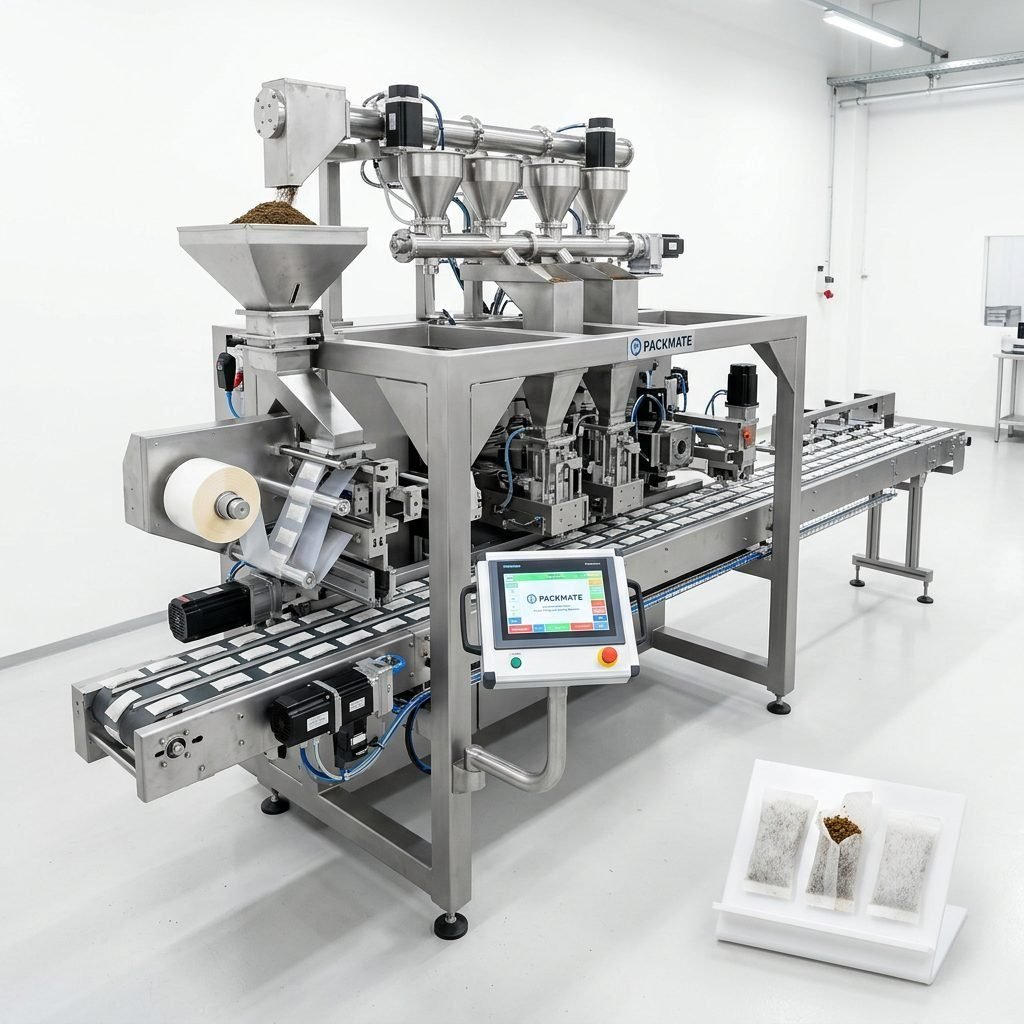
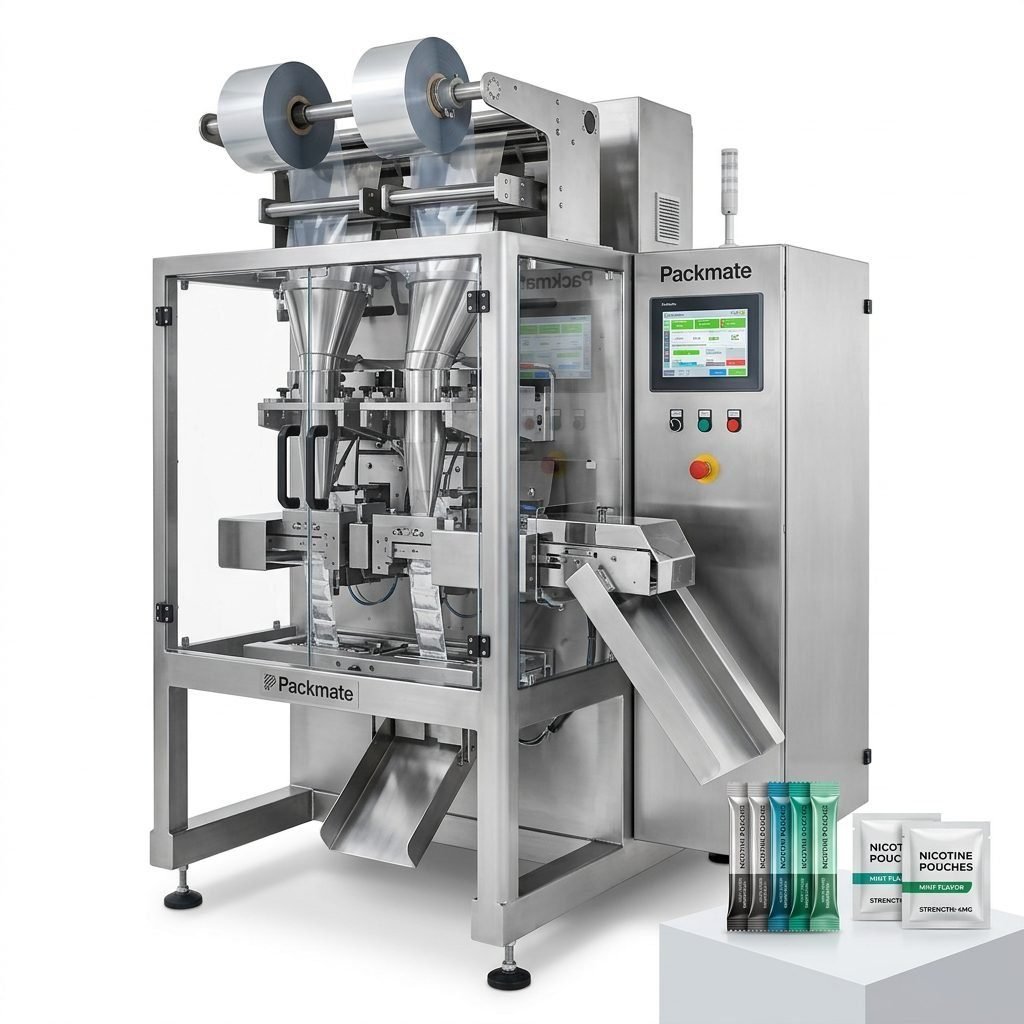
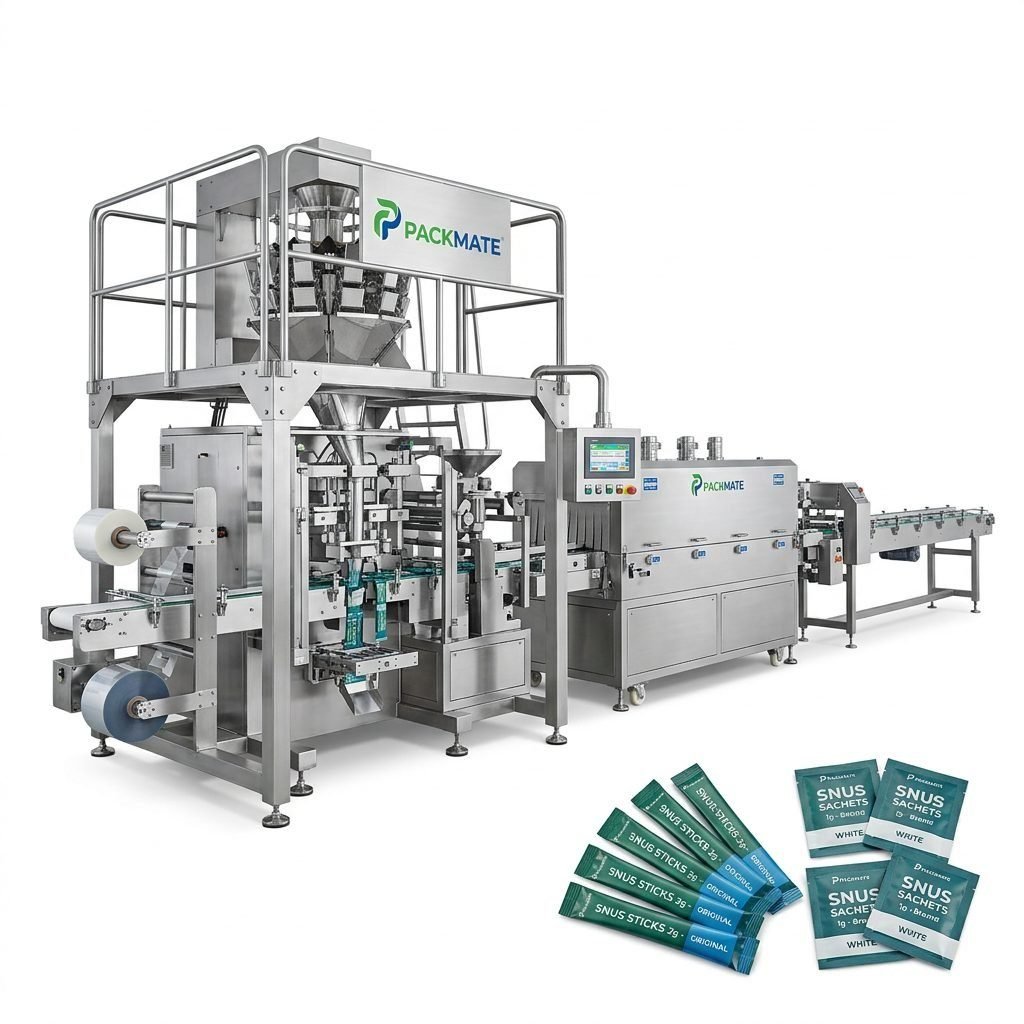
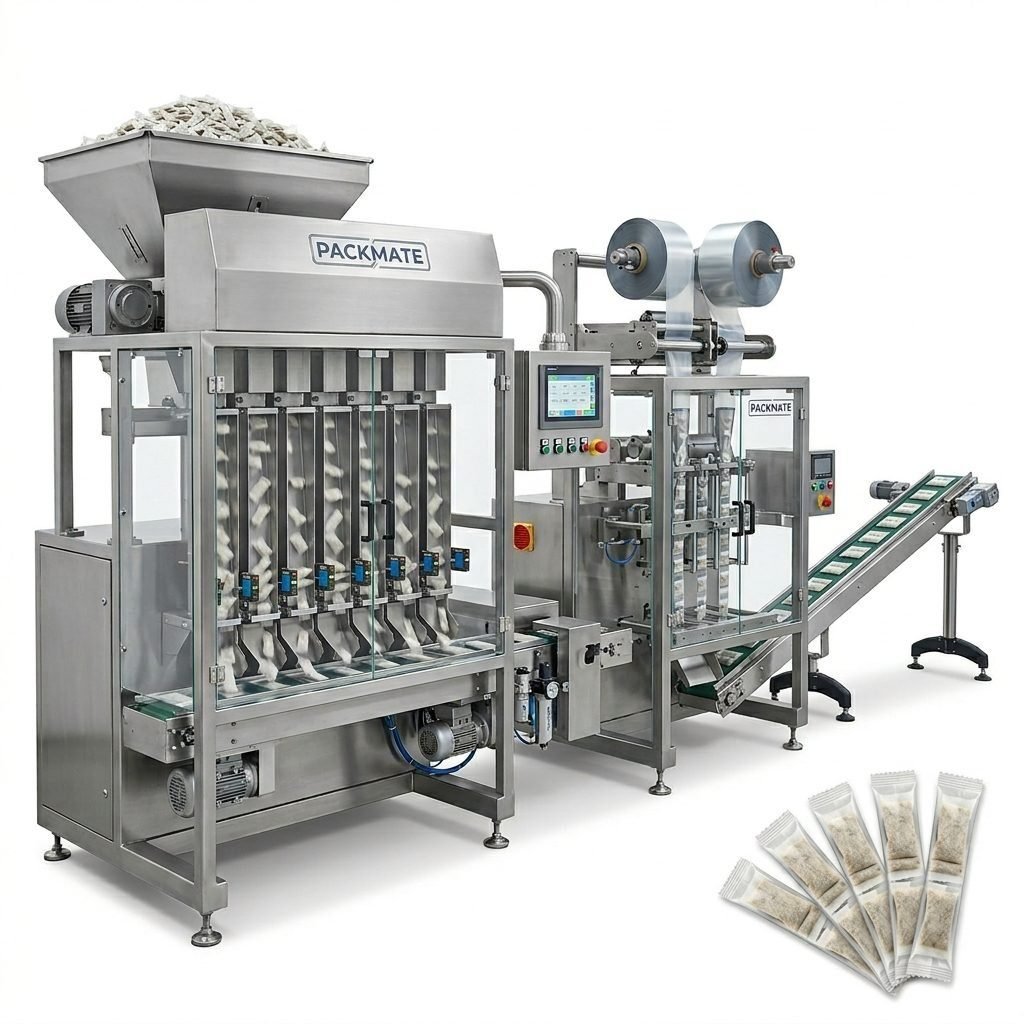
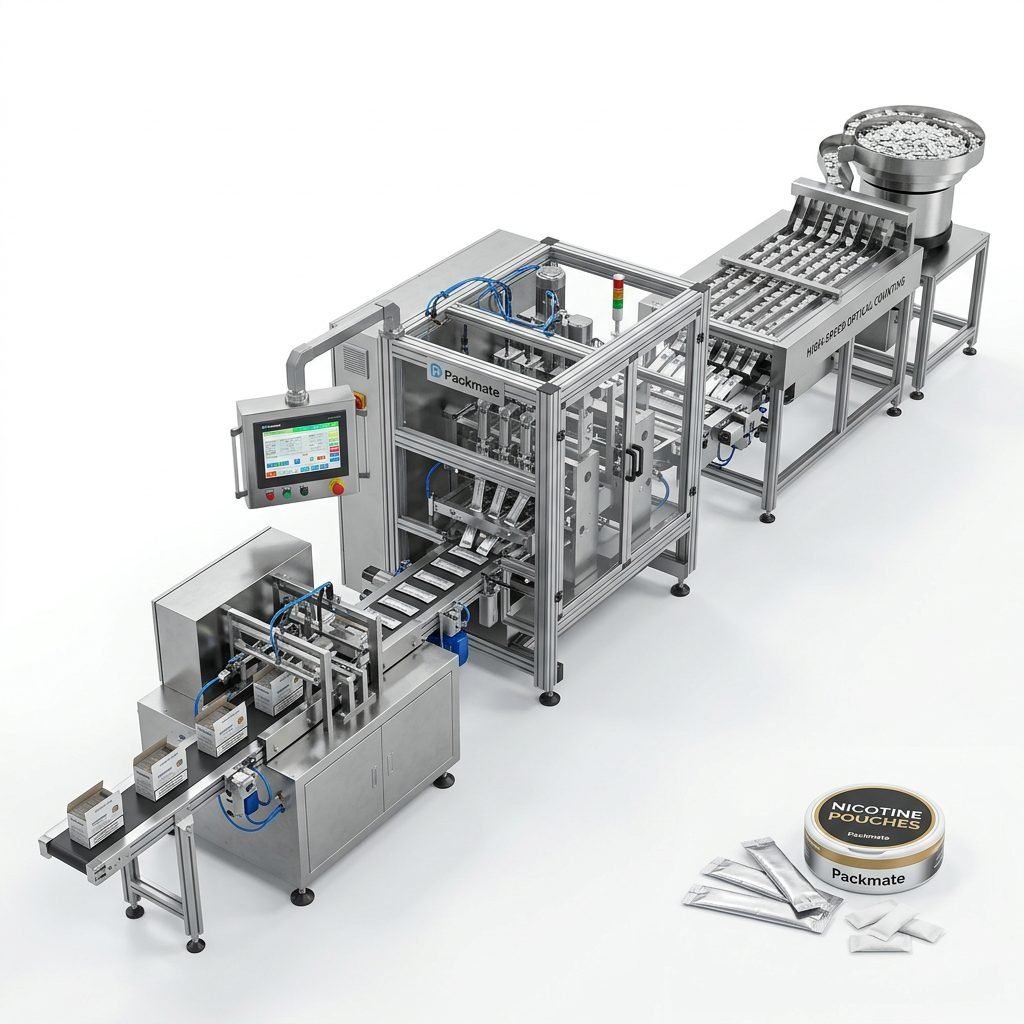
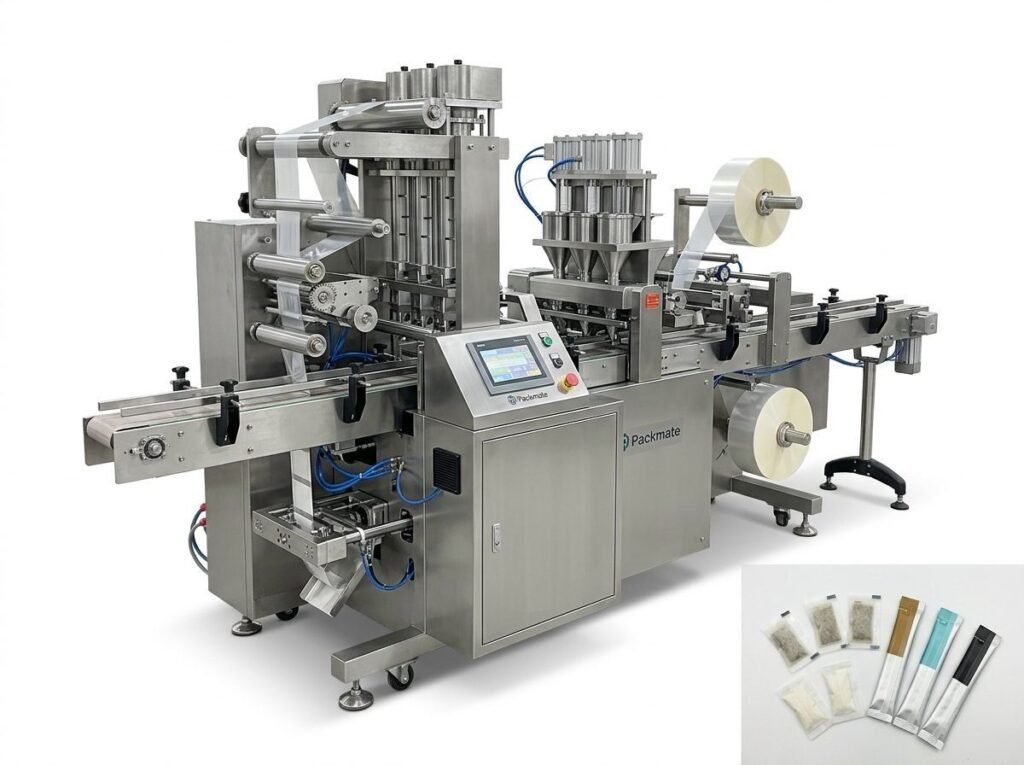
For small-scale snus and nicotine pouch producers, selecting the right compact packaging machine is critical to maintain product quality, improve throughput, and control costs. This guide explores top small-scale solutions that deliver reliable performance for snus production — from single-lane sachet systems to multi-lane stick-pack and pouch lines — and helps you evaluate machines based on speed, accuracy, footprint, and total cost of ownership.
Why Compact Snus Packaging Machines Matter for Small Producers
Compact machines allow startups and niche brands to enter the snus market without the heavy capital investment of full-scale lines. They are designed to be space-efficient, energy-conscious, and easier to operate. Key benefits include:
✅ Flexibility: Support for different pouch types (sachets, stick packs, flat pouches) and quick-changeover between recipes.
⚙️ Precision: Accurate dosing and sealing systems to maintain nicotine pouch consistency and shelf life.
🔒 Compliance: Many compact machines meet CE and ISO standards, helping producers satisfy regulatory needs.
Core Components of a Small-Scale Snus Packaging Line
Small snus packaging solutions typically combine several essential modules. Understanding each component helps you build a compact line tailored to your product:
- Feeding & metering system — ensures consistent pouch or powder dose.
- Forming and sealing unit — creates the pouch, seals it, and cuts it to size.
- Date/lot coder — marks production information for traceability.
- Check weighing & rejection — verifies weight and rejects under/over fills.
- Secondary packaging — grouping, boxing, or wrapping for retail distribution.
Popular Compact Machine Types for Snus
Depending on product format and production goals, consider these compact machine families:
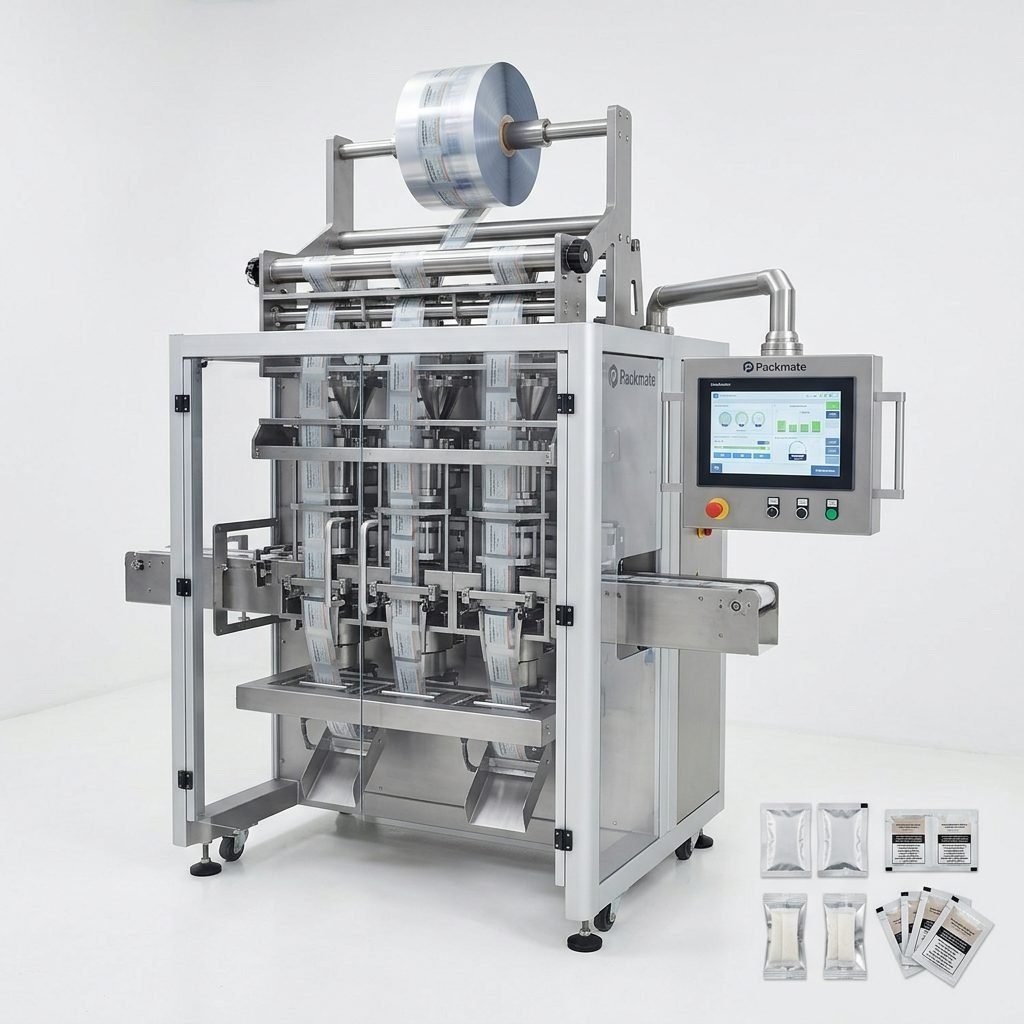
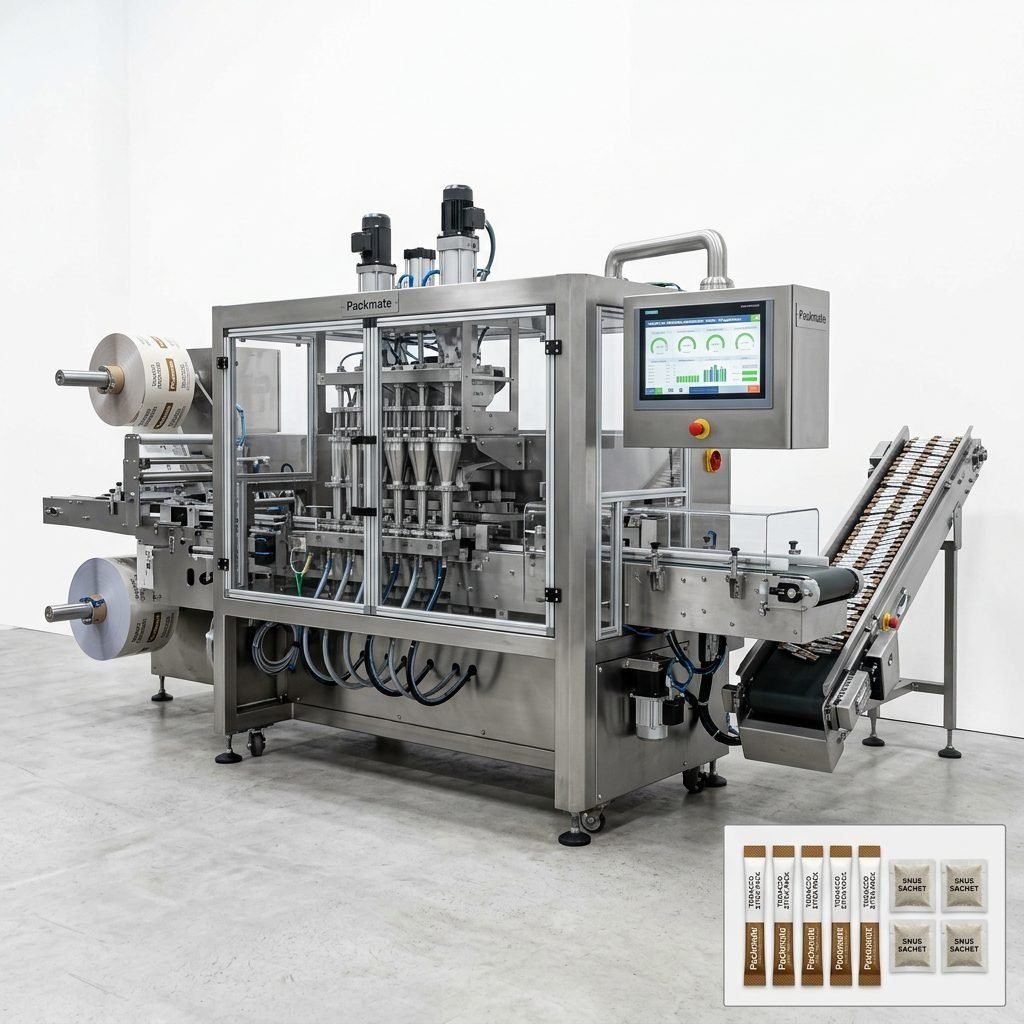
Stick Pack Machines — ideal for single-serve nicotine pouches with controlled dosing and fast cycle rates.
Sachet Machines — versatile for powders and moist snus formulations, often with simple format adjustment.
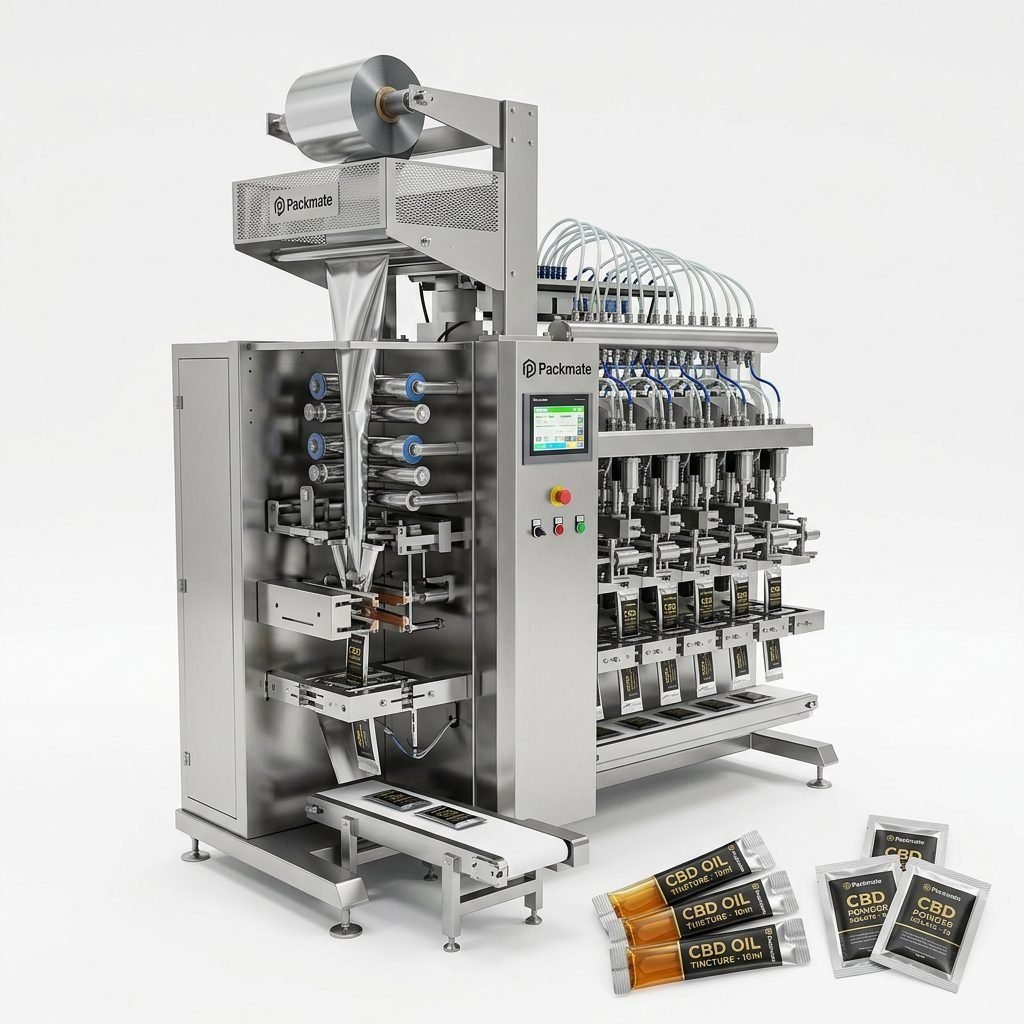
Multi-Lane Pouch Systems — scale-up option that multiplies throughput while keeping machine footprint compact.
Key Specifications to Check Before Buying
When evaluating a compact snus packaging machine, inspect the following technical aspects to ensure the equipment fits your product requirements and future growth plans:
- Throughput (pouches/min): Choose a model that meets daily production targets while leaving room for growth.
- Dose accuracy: ± tolerances in mg for nicotine dosing, critical for product consistency.
- Footprint: Compact floor space and accessibility for maintenance.
- Changeover time: How quickly the machine moves between sizes and formats.
- HMI & controls: Ease of operation with recipe memory and diagnostic tools.
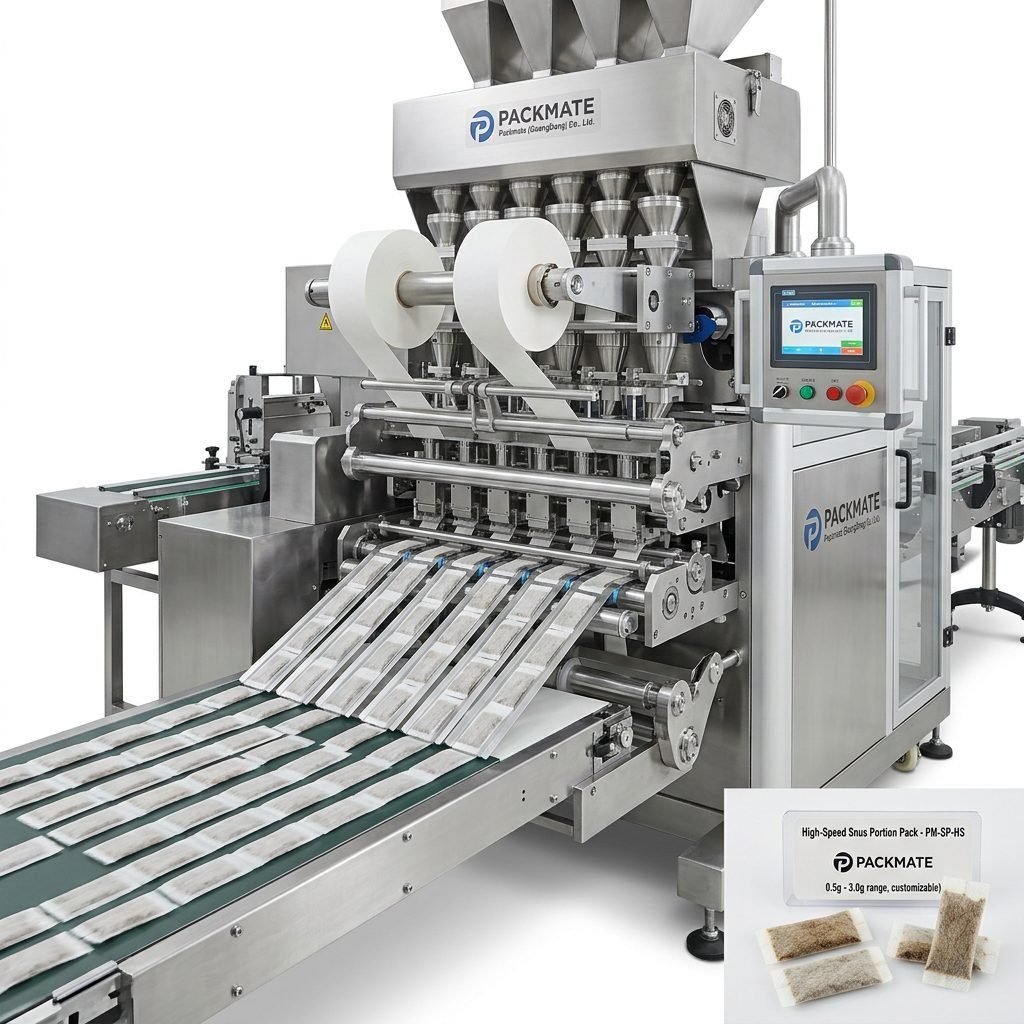
Case Example: Multi-Lane Compact Line for Premium Nicotine Pouches
A popular compact configuration combines a 4-lane forming system with precision auger fillers and integrated check weighing. This setup increases effective throughput while maintaining a small factory footprint, making it suitable for premium brands producing multiple SKUs per shift.
Selecting Features that Improve ROI
Investing in the right options can significantly shorten payback time and reduce operational headaches:
🔁 Quick-Change Tooling: Reduces downtime when switching pouch sizes or recipes.
🧰 Modular Upgrades: Add lanes, dosing heads, or automation later without replacing the base machine.
📡 Remote Diagnostics: Faster troubleshooting and reduced service visits via online support.
Material Compatibility & Hygienic Design
Snus and nicotine pouches often include moist or powdery compounds that demand easy-to-clean contact parts and stainless-steel construction. Look for polished contact surfaces, open-access panels, and CIP-friendly (clean-in-place) designs if frequent cleaning is required.
Compliance, Certification & After-Sales Support
Regulatory compliance is a major concern in the nicotine product space. Choose machines and suppliers that provide relevant certifications and ongoing technical support.
Important: Look for CE and ISO compliance, documented material certificates, and validated cleaning procedures. A manufacturer with global show presence and case references can ease import, commissioning, and validation processes.
Supplier Example & Resources
Experienced manufacturers in the snus packaging niche provide focused solutions, from compact stick-pack machines to multi-lane nicotine pouch lines. For further product details and machine families, explore the following resources:
- Snus & Nicotine Packaging Machines — product range and technical specs
- Sachet & Stick Pack Machines — compact stick-pack and sachet options
- Bag & Pouch Packaging Machines — pouch-oriented solutions
- About Packmate — company background and manufacturing capabilities
Layout & Installation Tips for Small Factories
A compact machine still needs effective workflow planning. Consider these practical tips to maximize uptime and ergonomics:
- Plan for service access on both sides of the machine and allow clearance for roll replacement and maintenance.
- Position upstream feeders and downstream check-weighers to form a linear, low-footprint production line.
- Implement simple automation for infeed orientation and outfeed stacking to reduce manual handling.
- Allocate a dedicated cleaning/maintenance bench close to the machine to speed routine tasks.
Maintenance & Spare Parts Strategy
Regular preventive maintenance extends machine life. Maintain a small inventory of high-wear parts (seals, conveyor belts, cutters, sensors) and establish a service contract with your vendor for prioritized support.
Cost Considerations & Financing Options
The upfront purchase price is only one element of cost. Evaluate total cost of ownership, including energy consumption, spare parts, labor savings from automation, and expected output. Many suppliers offer leasing, modular purchase, or upgrade paths to spread capital expenditure.
Tip: A machine with higher initial speed but poor accuracy may increase rejects and costs. Balance speed with precision for optimal ROI.
Real-World Performance: What to Measure
During trials or acceptance testing, measure yield, mean time between failures (MTBF), average changeover time, and cleaning time. These KPIs will determine whether a compact machine truly fits your business needs.
Integration with Upstream & Downstream Lines
Even small producers benefit from systems thinking. Ensure the compact machine can integrate with:
- Automated dosing and blending systems for precise snus formulation.
- Conveyors and accumulation buffers for smoothing production peaks.
- Secondary packers or end-of-line cartoning for retail presentation — see filling & packaging lines for options.
Why Choose an Experienced Manufacturer
Working with a supplier that specializes in snus packaging brings benefits: domain expertise in moisture-sensitive products, proven multi-lane designs, and a track record of global installations. Check vendor case studies to confirm performance under conditions similar to yours — for real examples see the case studies.
Final Recommendations for Buyers
Selecting a compact snus packaging machine is a strategic decision. Follow these steps for a confident purchase:
- Define product specs: pouch format, dose range, and anticipated SKUs.
- Set production goals in pouches per shift and desired uptime.
- Ask for onsite demonstrations or video trials with materials similar to yours.
- Verify certifications and after-sales support options — manufacturer references and exhibition presence can be telling.
- Plan for modular growth: choose systems that allow lane additions or automation upgrades.
Need help comparing models? Visit the manufacturer’s product pages for detailed specs on auxiliary equipment and service packages, or contact their sales team for tailored turnkey solutions: Contact Us.
Conclusion
Compact snus packaging machines offer a compelling path for small and medium producers to enter or expand in the nicotine pouch market. By prioritizing dose accuracy, hygienic design, modularity, and vendor support, you can deploy efficient, reliable lines that scale as your business grows.
Common Questions
Q1: What production volume can a compact multi-lane machine handle?
A: Depending on lanes and dosing heads, compact multi-lane systems can deliver from several thousand to tens of thousands of pouches per hour, offering a scalable middle ground between benchtop and full-scale lines.
Q2: Are compact machines compliant with international standards?
A: Yes — reputable manufacturers provide CE and ISO certified equipment and documentation to help you meet regulatory and import requirements.
Q3: Can I upgrade a compact machine later?
A: Many modern compact machines are modular; you can add lanes, measurement heads, or automation modules as demand grows.
Q4: How important is vendor support for small producers?
A: Extremely important — timely spare parts, remote diagnostics, and on-site commissioning reduce downtime and speed up ROI.
Q5: Where can I find more detailed specs and case studies?
A: Visit the manufacturer’s product pages and case study sections for detailed specifications and real-world installation information.