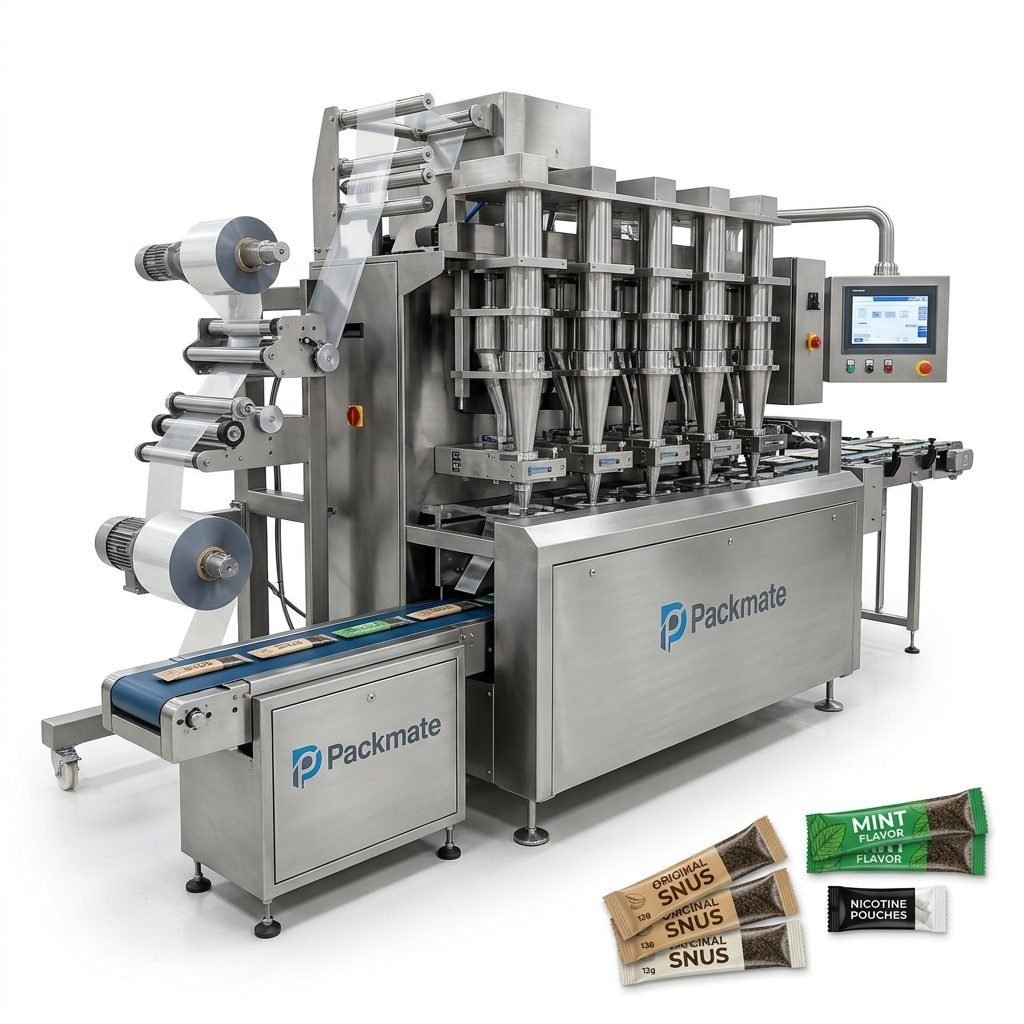
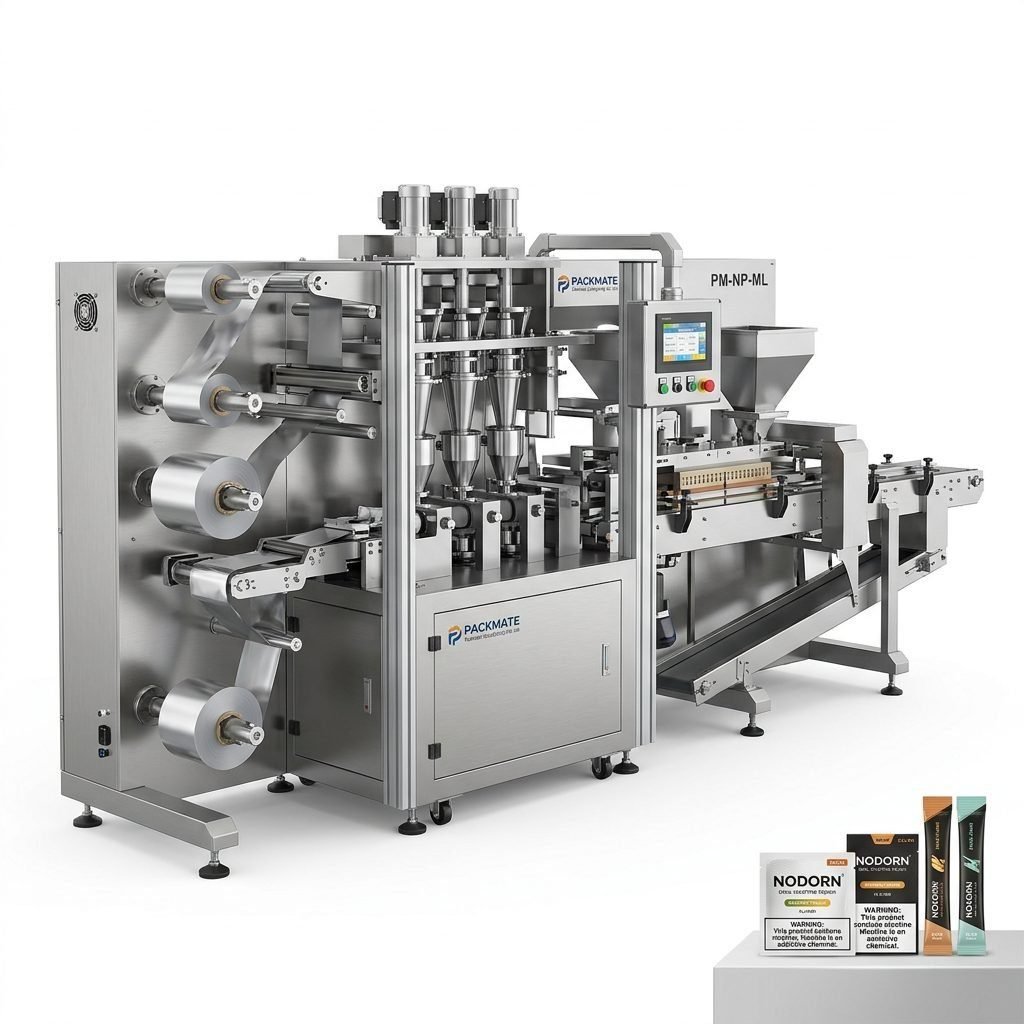
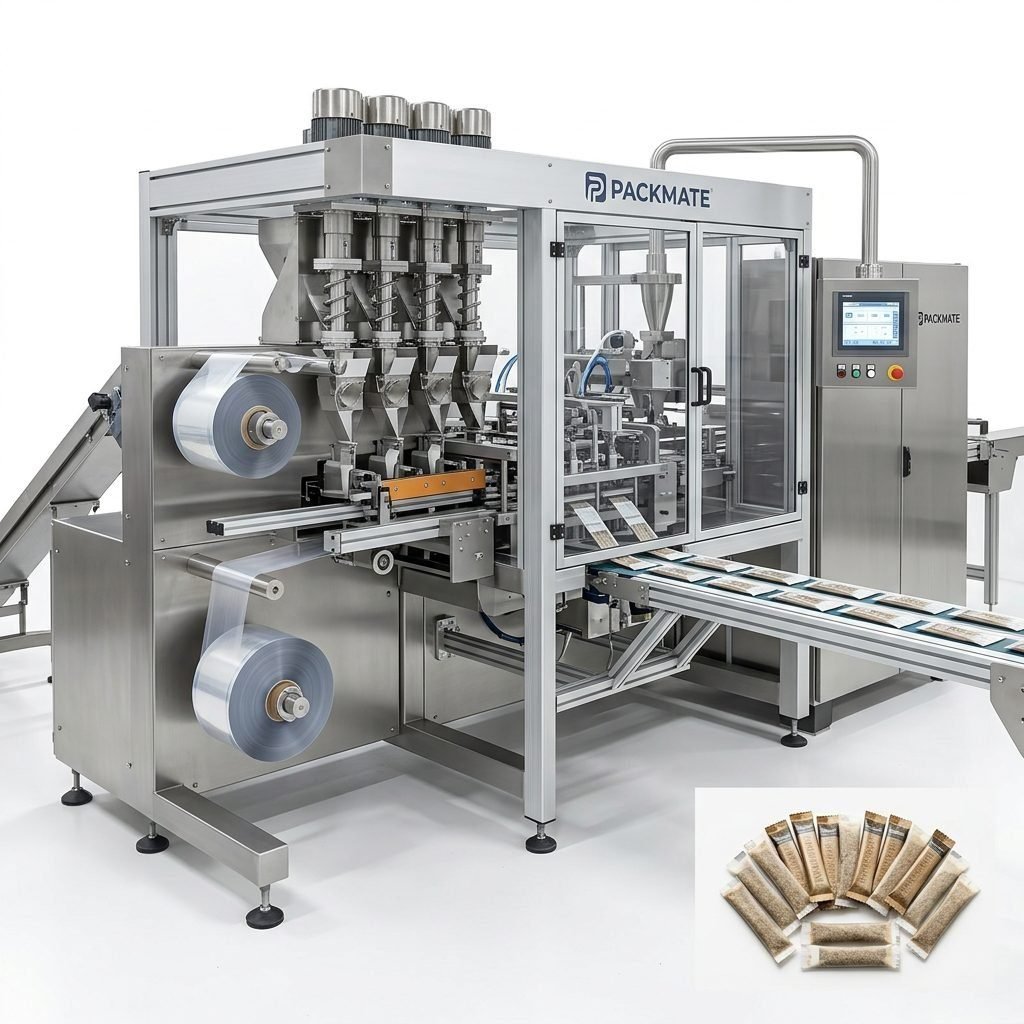
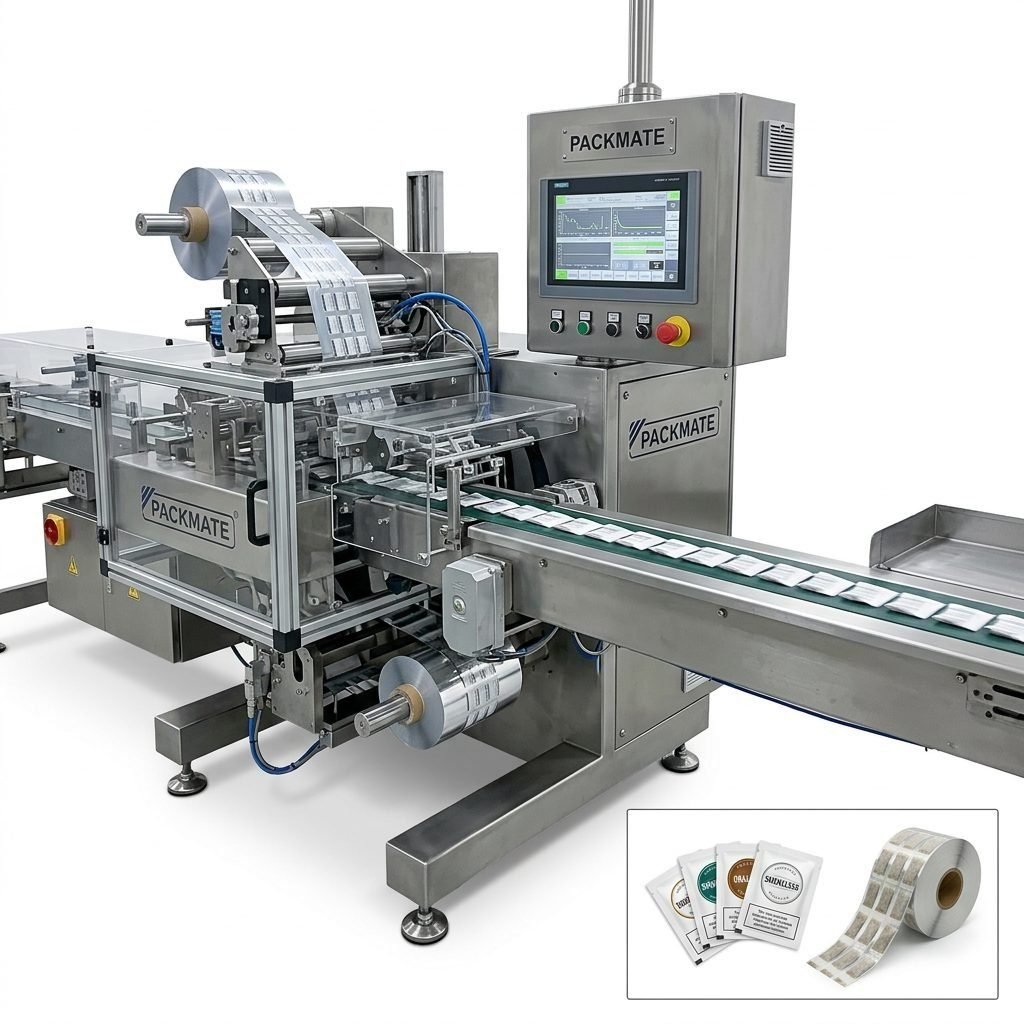
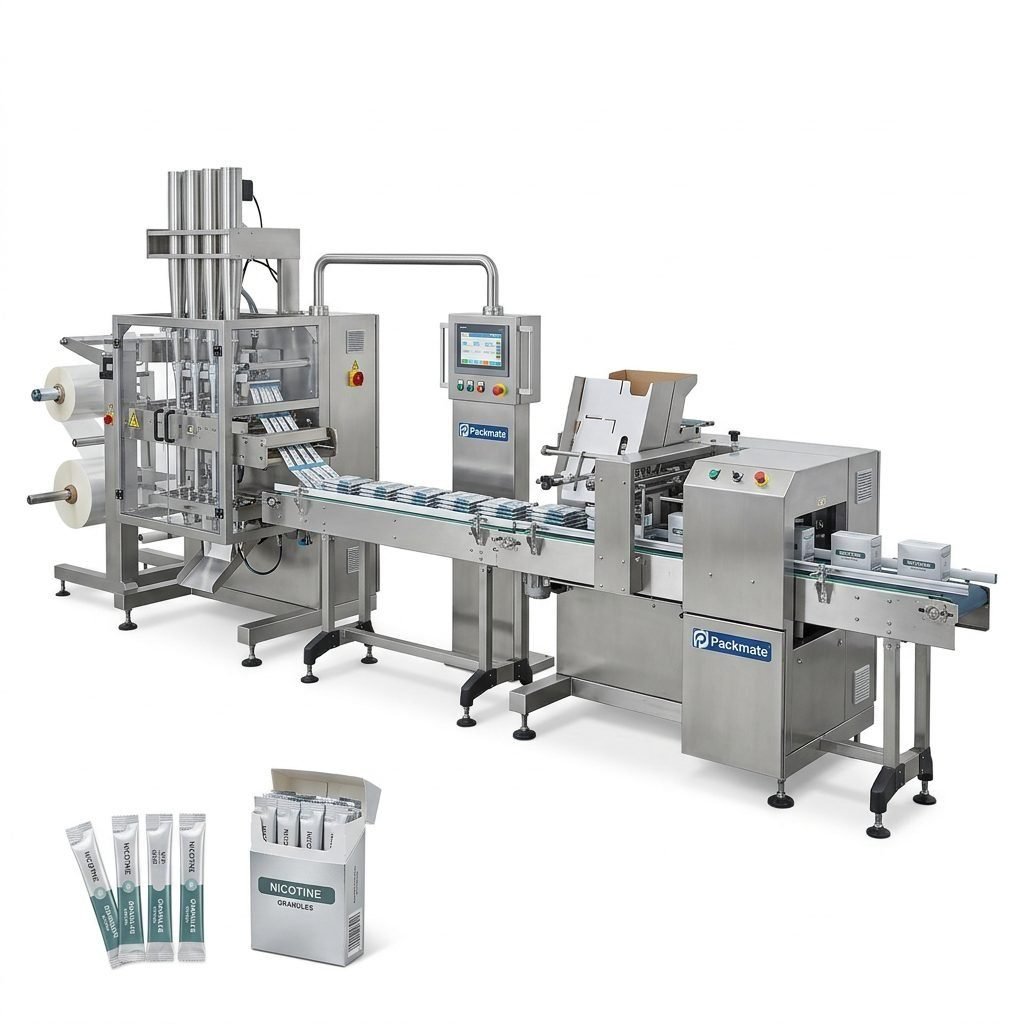
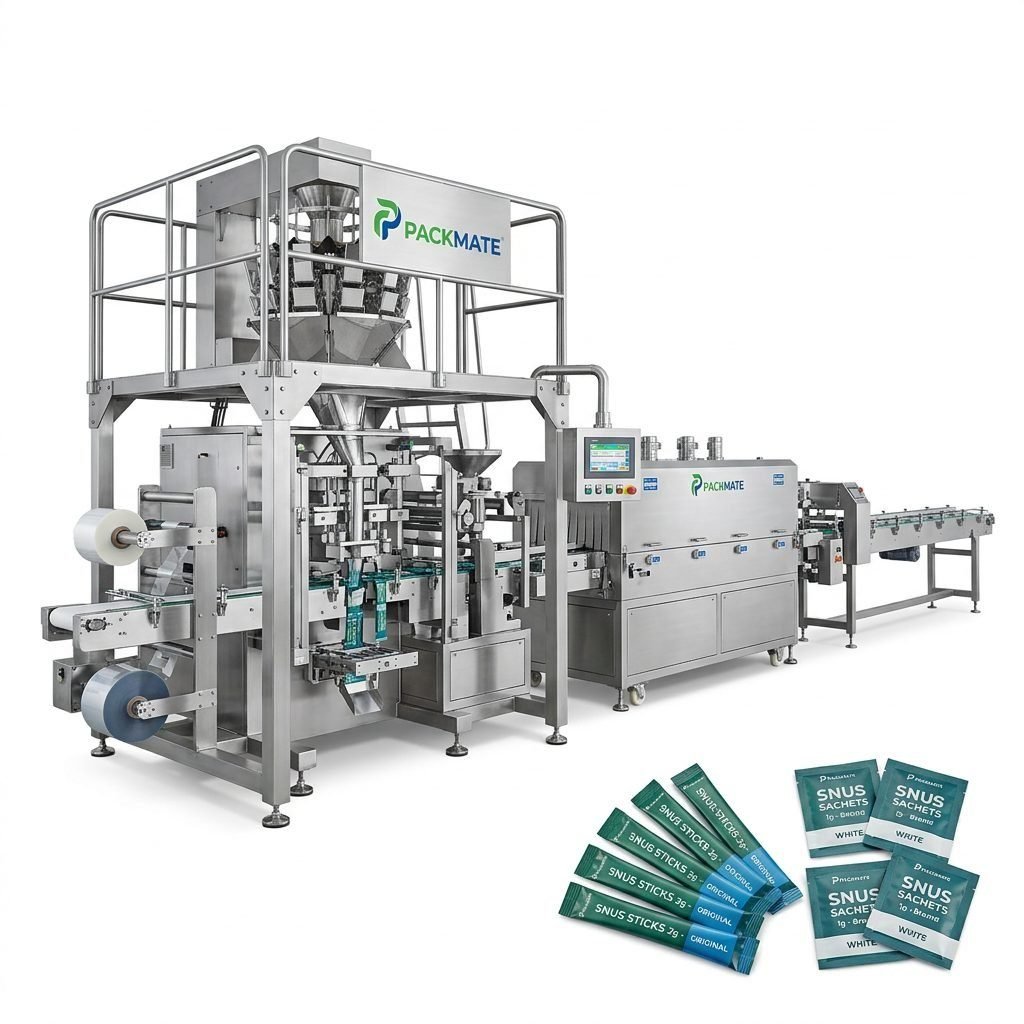
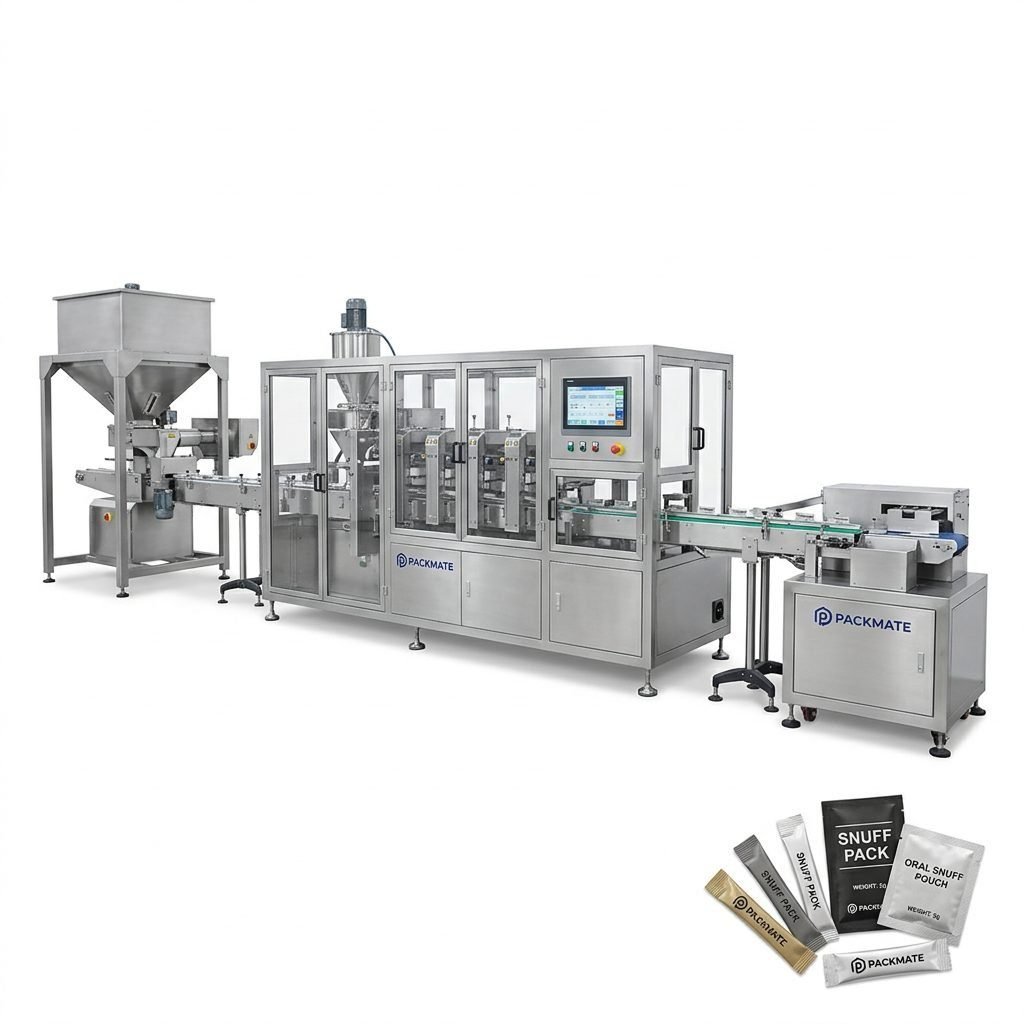
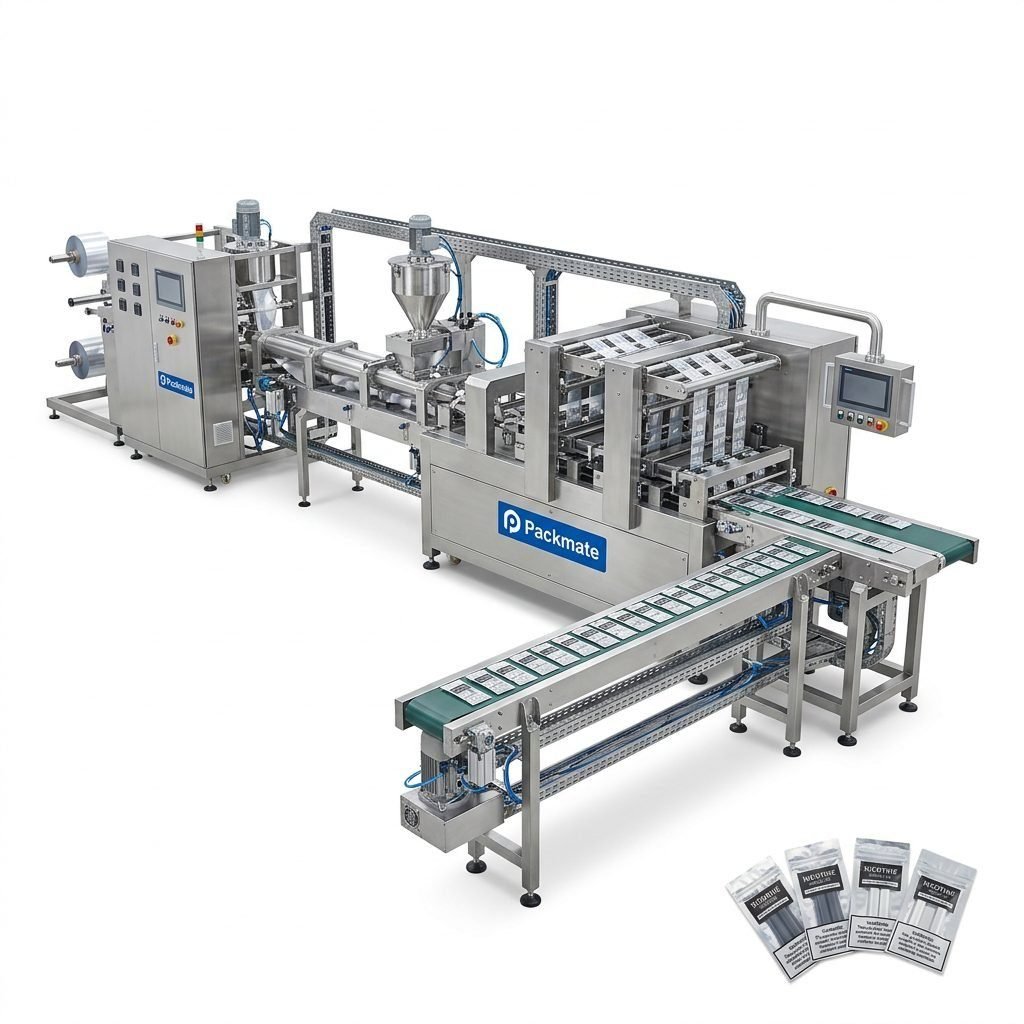
The Automatic Snus Pouch Packaging Line is a modern, fully automated solution designed to handle the entire production process for snus and nicotine pouches — from precise filling to secure sealing and final packing. With increasing global demand for discreet portion products, manufacturers need packaging systems that deliver consistency, flexibility, and traceable quality. This article explores the features, workflow, advantages, customization options, and real-world applications of a complete snus pouch packaging line, helping purchasing managers, production engineers, and business owners make informed decisions.
Overview of a Fully Automated Snus Pouch Packaging Line
A complete automatic snus pouch packaging line integrates multiple machines into a single, synchronized production chain. Typical modules include bulk feeding, precision weighing, pouch forming, metered filling, sealing, cutting, multi-lane synchronization, date coding, and final secondary packing. The goal is to reduce manual handling, increase throughput, and ensure hygienic, repeatable packaging suitable for nicotine pouches, snus, tea portions, powders, and small-dose granules.
Key Components and Their Functions
The line comprises several specialized units that work together:
⚙️ Bulk Feeding & Dosing: Gentle conveying systems deliver raw material to weighing hoppers or volumetric fillers, minimizing dust and ensuring consistent input.
🎯 Precision Weighing: Multi-head weighers or custom volumetric dispensers accurately portion each pouch to maintain consistent nicotine dosage or content weight.
🛠️ Pouch Forming & Filling: Form-fill-seal (FFS) or pre-made pouch handlers place and shape pouches, while synchronized filling heads deliver the exact measured content into each portion.
🔒 Sealing & Cutting: Heat or ultrasonic sealing systems provide reliable closure; cutting units separate individual pouches or strip packs while maintaining tidy edges.
📦 Secondary Packing & Cartoning: Automated collating, counting and cartoning modules prepare retail-ready packages, trays, or shippers with optional labeling and batch coding.
✓ Production stability: High-precision motors, PLC control and servo synchronization deliver steady output across long shifts. ✓ Hygiene & compliance: CIP-friendly designs and materials meeting CE/ISO standards keep product safety at the forefront.
Technical Highlights That Matter
When evaluating an automatic snus pouch packing line, several technical parameters determine real-world performance:
• Multi-lane capability: Parallel lanes increase throughput without increasing footprint, ideal for small-dose snus pouches produced in high volumes.
• Servo-driven accuracy: Servo motors and closed-loop control systems ensure position and speed precision during forming, filling and sealing.
• Tooling flexibility: Quick-change mold sets and adaptable heads let lines process various pouch formats — round, oval, stick, sachet or pillow shapes.
• Integrated inspection: Vision systems and weight checks reduce defects and ensure each pouch meets weight and appearance standards.
• HMI & recipe control: User-friendly touchscreens store product recipes, enabling quick shiftovers and consistent repeatability.
Performance Metrics & Capacity Planning
Production capacity depends on pouch size, lane count, and cycle speed. Typical performance ranges:
• Single-lane systems: ideal for small projects or R&D, offering low throughput with high flexibility.
• Multi-lane systems: 4-12 lanes common for commercial operations — these scales multiply per-lane speed to reach tens to hundreds of thousands of pouches per day.
Pro tip: Plan capacity with a margin for future growth and include modular upgrades such as additional lanes or a higher-speed filler to avoid full line replacement later.
Materials Handling, Compatibility & Product Types
Snus lines are engineered to work with a range of materials: non-woven fabrics, cellulose-based pouch materials, paper laminates, and various barrier films. Fill materials include moist snus, dry nicotine powder, tea, herbal blends, and fine granules. Understanding the material properties is essential for specifying:
• Flow characteristics of the filling material (free-flowing vs cohesive)
• Moisture content and its impact on sealing and storage
• Film compatibility for sealing temperature and barrier requirements
Special Considerations for Nicotine Pouches & Snus
Because nicotine pouches are sensitive products with regulatory and consumer-safety implications, manufacturers should emphasize traceability, controlled dosing, and tamper-evident packaging. Equipment designed for nicotine pouch production often features enclosed dosing areas, negative pressure dust control, and materials chosen for easy cleaning and minimal cross-contamination.
Automation Advantages: Why Invest?
Automation brings measurable benefits:
• Consistent quality: Machine-controlled dosing and sealing reduce human error and produce uniform pouches.
• Lower labor costs: Fewer operators needed for high-volume lines; staff shift toward supervision and maintenance.
• Faster time-to-market: Repeatable recipes and quick format changeovers reduce ramp-up time for new SKUs.
• Data & traceability: Integrated batch coding, weight logs and recipe histories support audits and regulatory compliance.
Note: Investing in automation is not just about output — it’s about long-term reliability, predictable cost-per-unit, and the ability to adapt to changing product lines quickly.
Customization & Turnkey Solutions
Manufacturers like Packmate specialize in customized lines tailored to customer needs. Turnkey solutions often include layout design, machine supply, integration, on-site commissioning, staff training, and after-sales service. Key customization elements:
• Tailored pouch formats and tooling sets
• Specific filling methods (weighing, volumetric, auger)
• Integration with upstream mixers or downstream cartoners and shrink wrappers
• Compliance features for specific markets (labeling languages, regulatory documentation)
Packmate’s Manufacturing Strength
With 30+ years of engineering experience and a 20,000㎡ facility featuring advanced CNC machining and precision assembly, Packmate delivers robust snus machinery and full production lines. Their 50+ machine models and global support network make them a strong partner for both newcomers and established producers.
Quality, Certifications & After-Sales Support
Important factors when selecting a supplier:
• International certifications (CE, ISO) validating design and manufacturing processes
• Factory acceptance testing (FAT) and site acceptance testing (SAT) to verify performance
• Spare parts availability and global service presence for rapid response
• Technical training for operators and maintenance staff to maximize uptime
Applications & Market Opportunities
Snus and nicotine pouches have seen growing demand across many regions, including Europe and North America. Applications include:
• Tobacco-alternative nicotine pouches
• Portion tea and herbal sachets
• Pharmaceutical single-dose sachets and sample packs
• Consumer sampling kits and promotional packs
Market insight: As regulations evolve, producers who can demonstrate consistent dosing and robust traceability will have a competitive advantage.
Selecting the Right Supplier: Questions to Ask
When comparing suppliers, consider these queries:
• What is the actual demonstrated throughput for my product format?
• Can the line be expanded with additional lanes or modules in the future?
• What is the expected lead time for spare parts, and is remote diagnostics available?
• Are FAT and performance trials offered before shipment?
Why Packmate is a Strong Option
Packmate offers decades of experience, global turnkey delivery, and a portfolio that spans snus/nicotine packaging machines, sachet & stick pack machines, filling & packaging lines and auxiliary equipment. Integration expertise and a wide model range allow Packmate to match small startups and large-scale manufacturers alike. Learn more about specific product lines and services:
Snus & Nicotine Packaging Machines |
Filling & Packaging Lines |
About Packmate |
Contact Us
Installation, Commissioning & Training
A professional supplier will provide on-site commissioning and operator training as part of a turnkey package. Typical services include layout planning, electrical and air connections, validation runs, and creating maintenance schedules. Documentation for operation and spare parts lists should accompany the handover.
Cost Considerations & ROI
Initial investment in fully automated equipment may be higher than semi-automated solutions, but total cost of ownership often favors automation due to reduced labor, lower scrap rates, and higher throughput. Consider lifecycle costs — installation, energy consumption, spare parts, and planned maintenance — when calculating ROI.
Key metric: Estimate cost-per-pouch at target volumes to compare proposals objectively. Higher initial equipment cost can be offset by lower per-unit costs at production scale.
Real-World Cases & Global Reach
Leading suppliers demonstrate successful installations across Europe, Asia and the Americas, with tailored solutions for local regulations and consumer preferences. Case studies often highlight dramatic throughput increases, improved consistency and the ability to introduce new SKUs quickly. For real examples, see documented customer cases and exhibition demonstrations to assess machine performance under realistic conditions.
Explore customer success stories and events: Case | Our Exhibition
Maintenance & Spare Parts Strategy
A preventative maintenance program reduces unplanned downtime. Suppliers should provide a spare parts kit and recommended stock lists. Remote support and diagnostic tools accelerate troubleshooting, while modular design simplifies repairs and reduces mean time to repair (MTTR).
Final Recommendations for Buyers
When selecting an automatic snus pouch packaging line, prioritize proven multi-lane designs, servo control, hygienic construction and strong after-sales support. Insist on FAT trials, clear documentation, and a scalable approach to future-proof production. A reputable partner will work with you to align machine selection with production goals, regulatory needs, and budget constraints.
Useful Links & Resources
For detailed product options and technical catalogs, visit:
Sachet & Stick Pack Machines |
Auxiliary Packaging Equipment |
FAQs
Common Questions
Q1: How fast can a multi-lane snus pouch line run?
A1: Speeds depend on pouch format and lane count; multi-lane lines can reach tens of thousands of pouches per hour when properly configured.
Q2: What quality checks are standard on these lines?
A2: Common checks include weight verification, vision inspection for pouch integrity, seal integrity testing and batch coding verification.
Q3: Can the line handle both powder and moist products?
A3: Yes — with appropriate dosing systems and materials handling options. Suppliers will specify different feeders or vacuum systems depending on product characteristics.
Q4: What level of after-sales support should I expect?
A4: Look for supplier warranties, remote support, spare parts availability and on-site commissioning/training to ensure smooth operations.
Q5: How do I start the procurement process?
A5: Define product formats and target capacity, request machine specifications, arrange a FAT demonstration, and review turnkey proposals with clear timelines and deliverables.