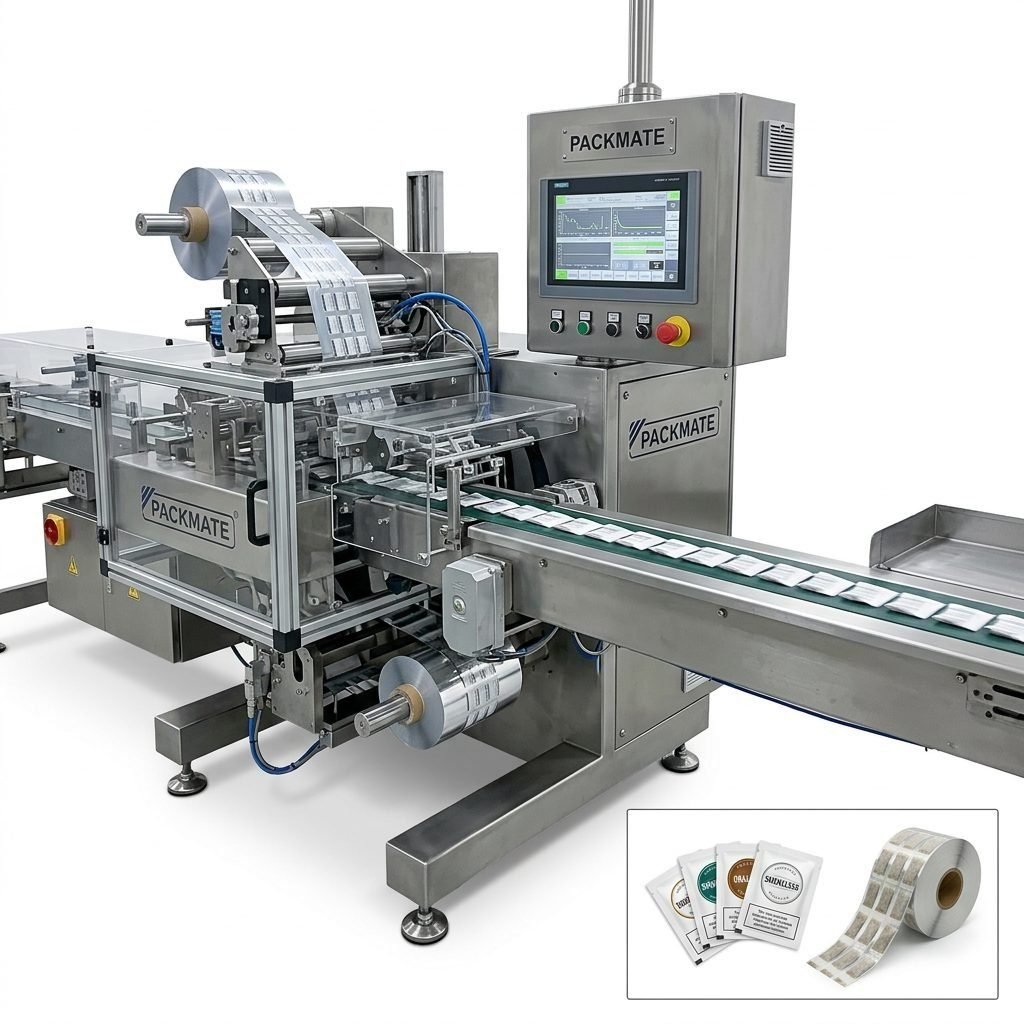
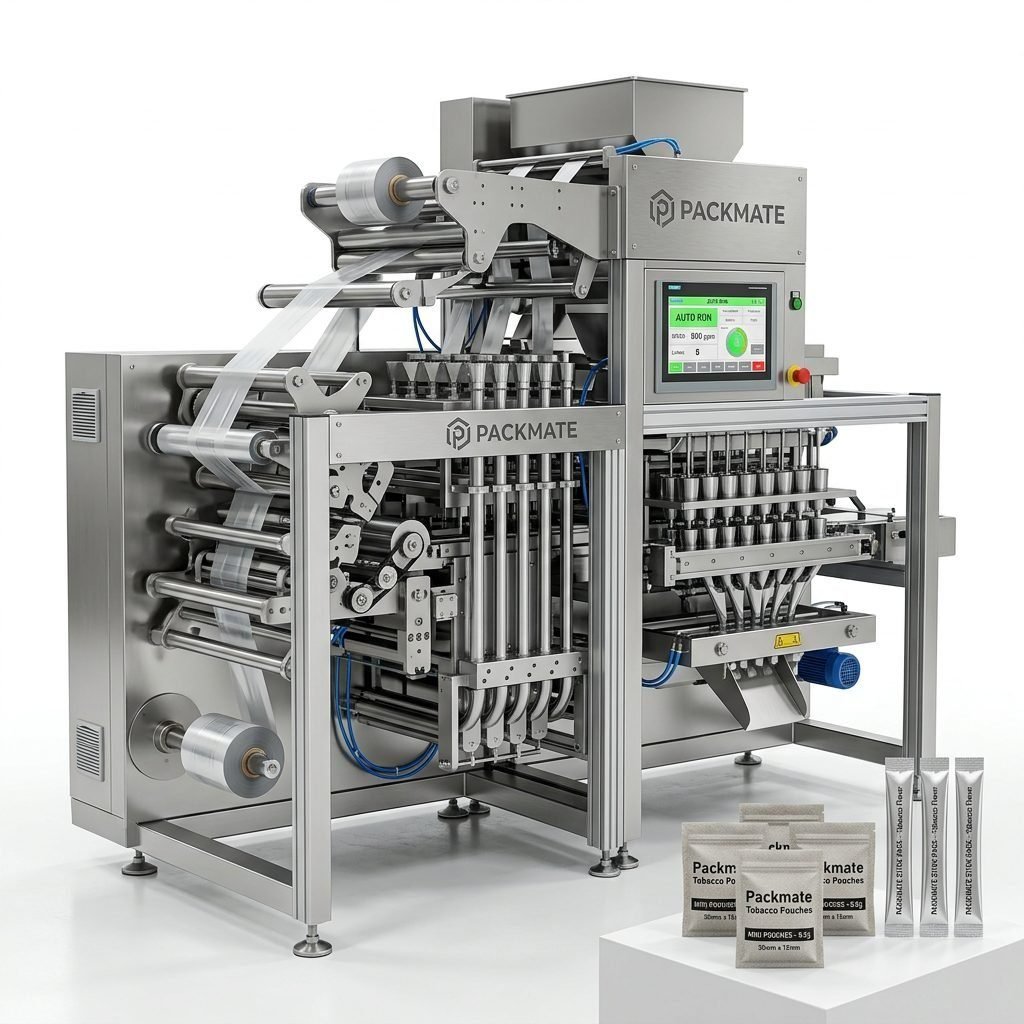
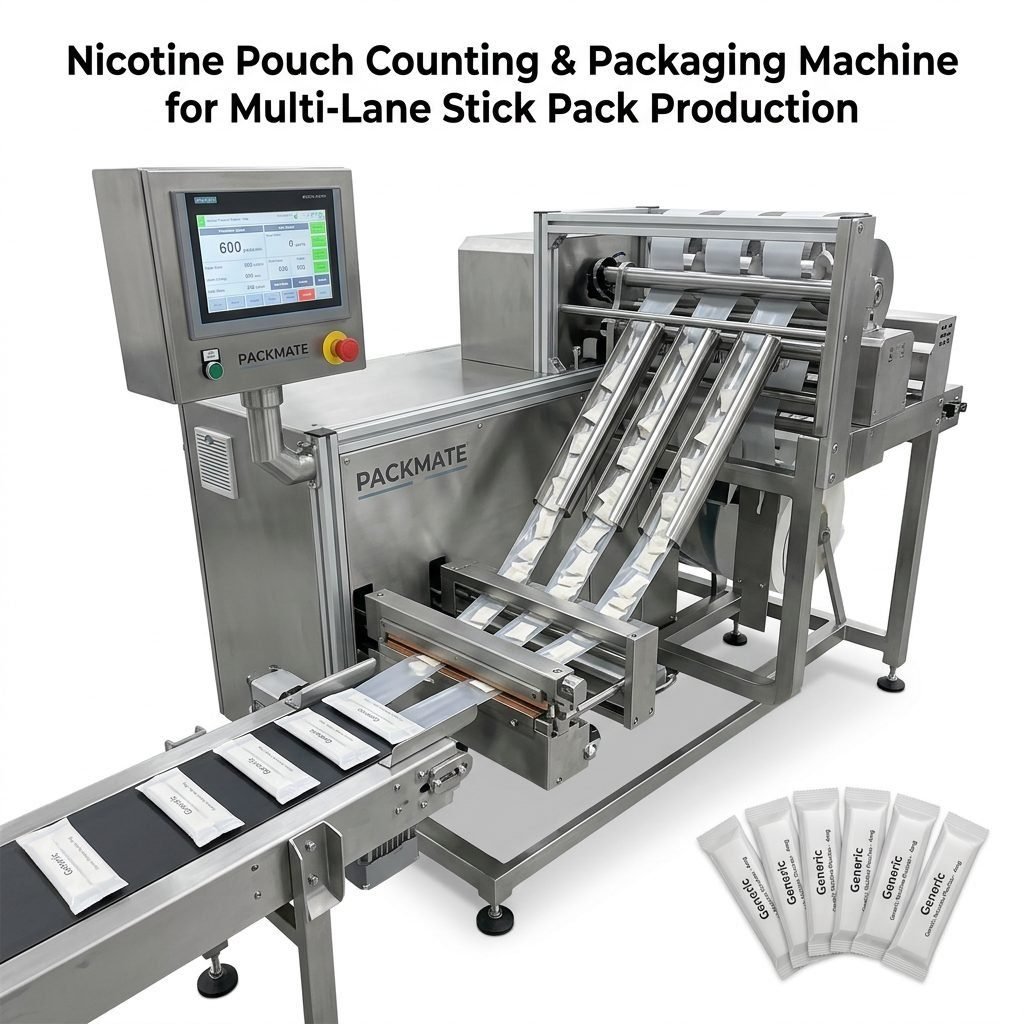
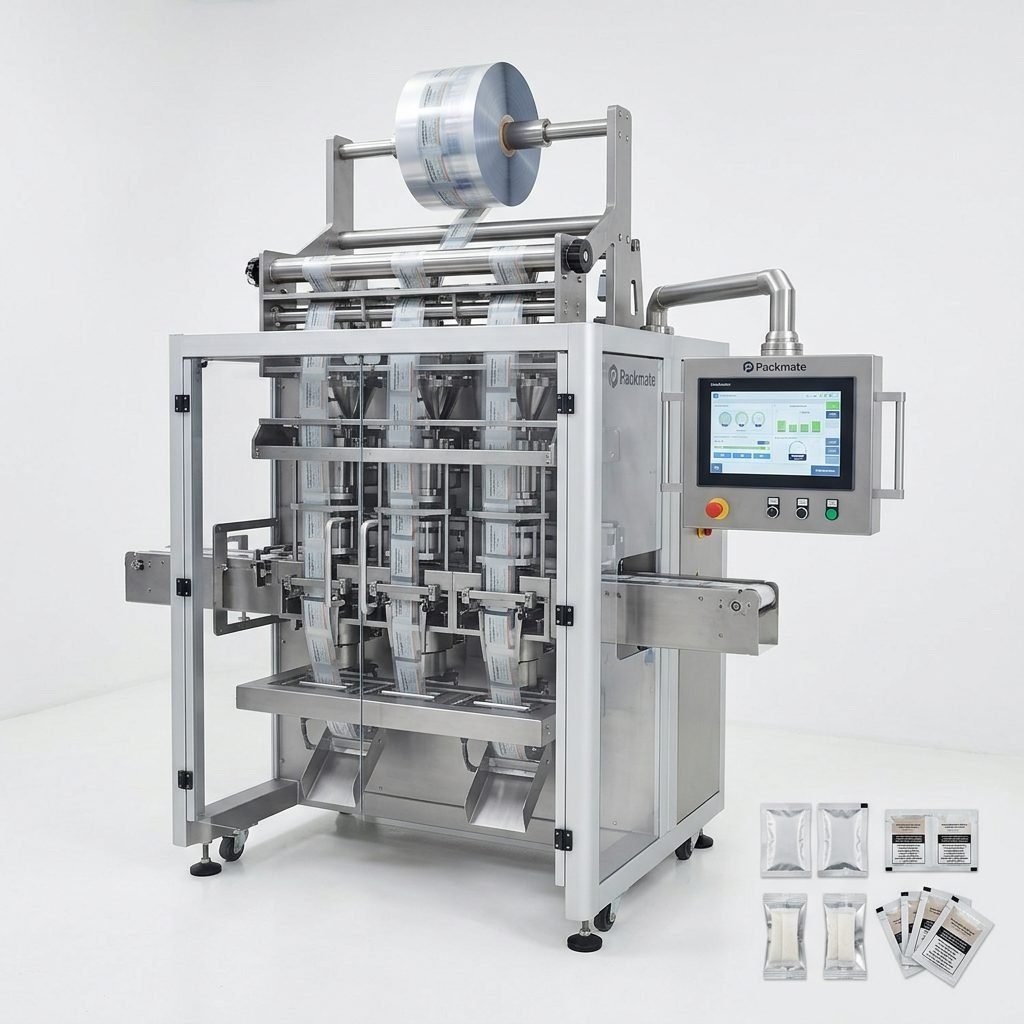
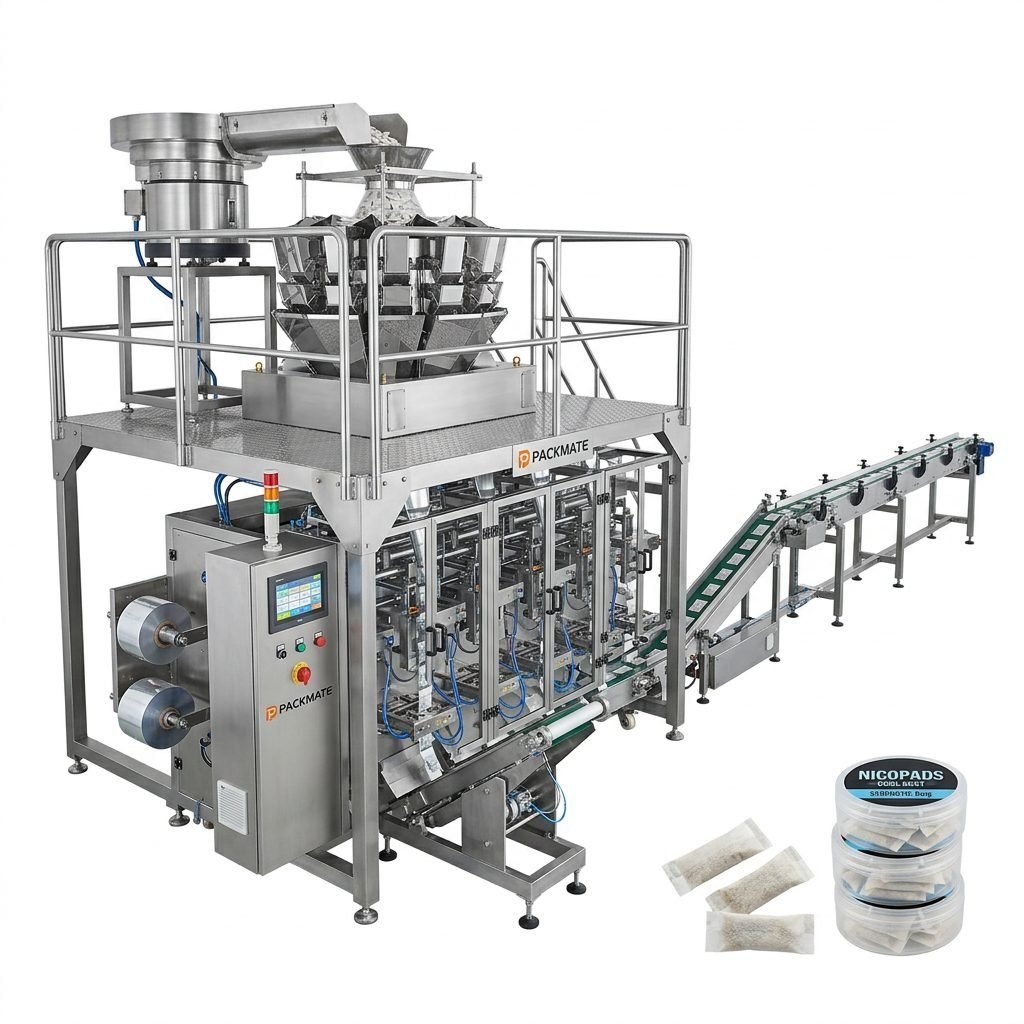
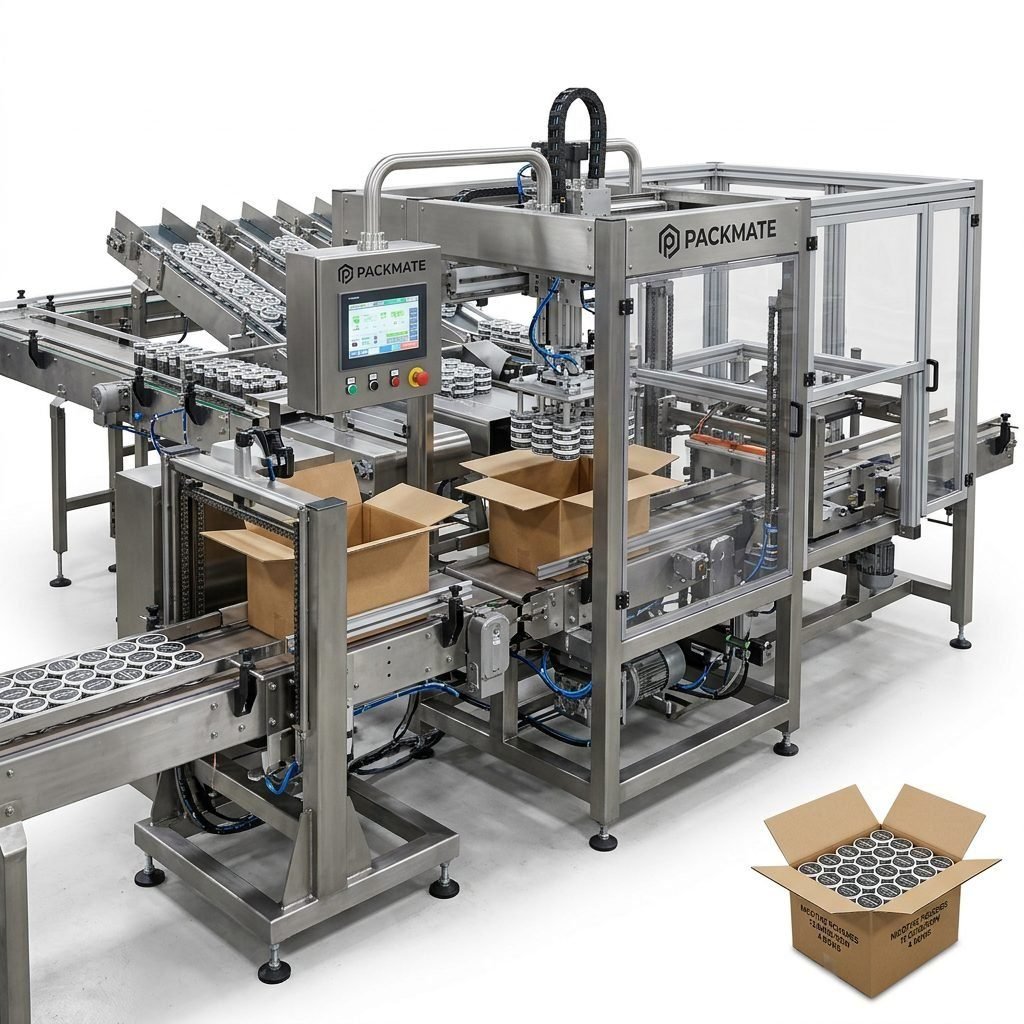
The evolution of tobacco-free oral products has created a rising demand for reliable, high-speed packaging solutions. Automatic nicotine pouch packing machines have become essential for manufacturers seeking consistent portioning, airtight sealing, and flexible packaging formats. This article explores the technical advantages, production applications, customization options, and practical buying and operational guidance for automatic nicotine pouch and snus sachet packaging systems.
🔧 What Is an Automatic Nicotine Pouch Packing Machine?
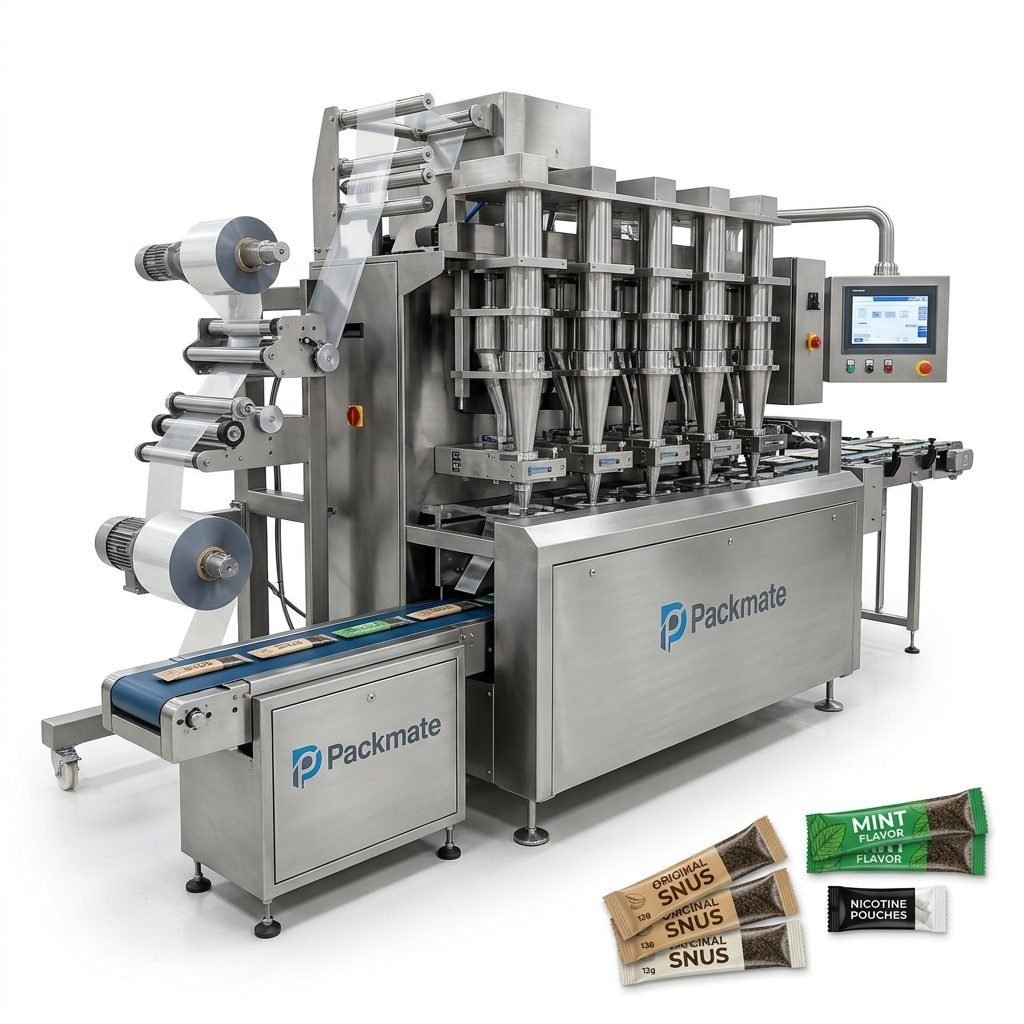
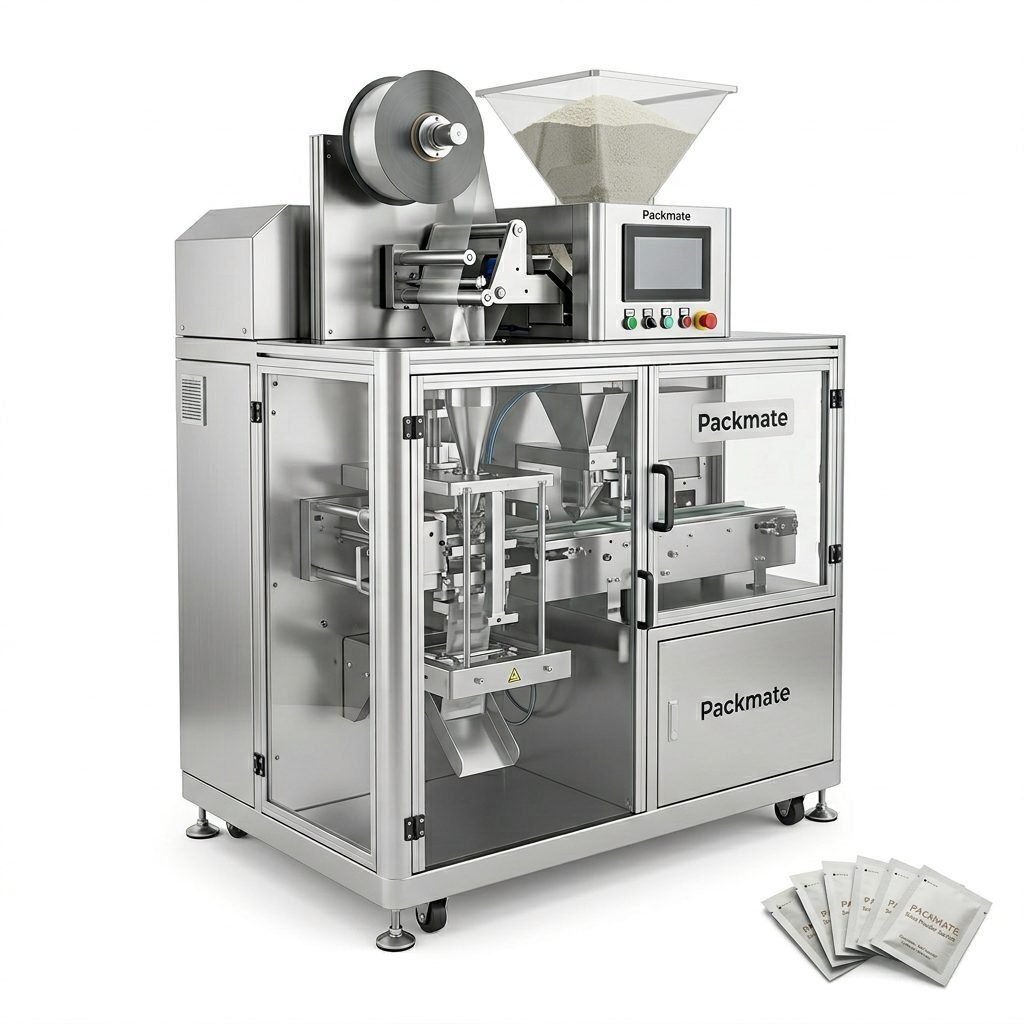
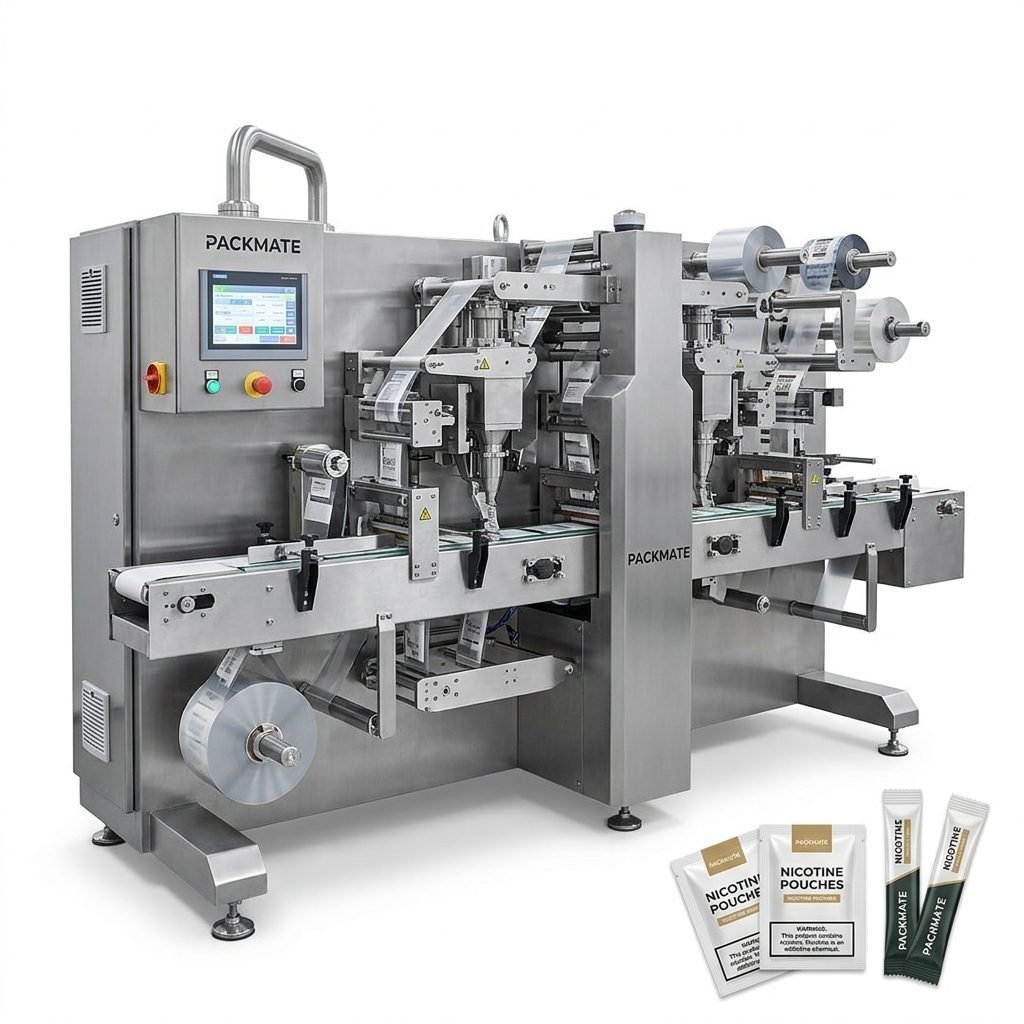
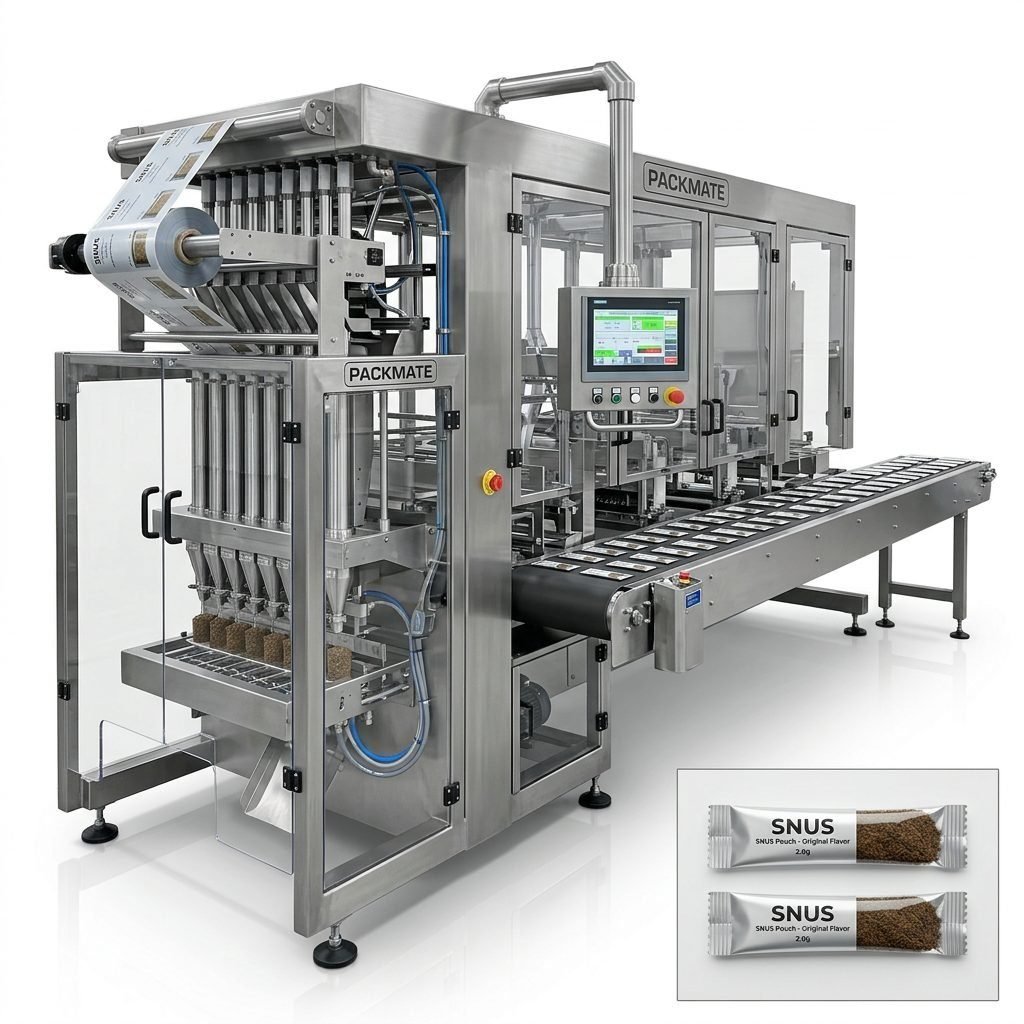
An automatic nicotine pouch packing machine is a specialized packaging unit designed to form, fill, and seal sachets or pouches that contain nicotine pouches, snus, or similar smokeless oral products. These machines can operate in single-lane or multi-lane configurations and are engineered to deliver high-speed, high-precision sachet packaging for brands focused on product consistency and regulatory compliance.
⚙️ Core Functions
A full-featured machine typically performs the following sequential tasks in a continuous automated line: web feeding, pouch formation, dosing/portioning, sachet sealing, cutting, and finished product discharge. Advanced systems also include automatic feeding of film or paper substrates, multi-head weighers or auger fillers, and integrated quality inspection modules.
Key takeaway: For modern nicotine pouch production, choosing a machine that supports multi-lane output and modular dosing ensures scalable throughput while keeping production costs optimized.
📈 Benefits of High-Speed Sachet Packaging Solutions
Manufacturers of snus and nicotine pouches benefit from automatic packing machines across multiple dimensions: speed, hygiene, consistency, and cost-effectiveness. Below we break down the main advantages.
Speed and Throughput
High-speed machines can run at several hundred to thousands of sachets per minute depending on lane count and sachet size. Multi-lane systems multiply the effective output without proportionally increasing floor space, delivering significant manufacturing capacity gains.
Precision Dosing & Consistency
Accurate dosing systems — such as multi-head weighers, auger fillers, or vibrating feeders — ensure each pouch contains consistent mass and composition. This consistency is critical for regulated nicotine products where dosing tolerance is strictly controlled.
Flexible Packaging Formats
Modern sachet machines accommodate multiple sachet styles: pillow, stick, flat sachets, and custom-shaped pouches. This flexibility helps brands differentiate on shelf appearance while using the same base production line.
Safety & Compliance: Choose machines with CE/ISO compliance and hygienic designs to simplify regulatory approvals and audits.
🏭 Typical Production Line Configuration
A complete nicotine pouch packaging line often includes infeed conveyors, dosing units, the primary sachet machine, metal detectors, checkweighers, and packaging conveyors. For integrated turnkey systems, auxiliary equipment like nitrogen flushing, date coding, and cartoning modules can be added to the same production flow.
Multi-Lane Sachet Units
Multi-lane units are engineered to run several sachet lanes in parallel. They are ideal for low-dose products where the sachet volume is small but demand is high. Synchronization between lanes and robust sealing heads ensure uniform pouch formation and minimization of downtime.
🔍 Technical Features to Consider
When evaluating machines, examine the following technical aspects carefully to match capability to product requirements.
1. Dosing Technology
Select between gravimetric (weigh-based) dosing, volumetric augers, or custom feeders depending on the product type (powder, granules, fiber, paste). For nicotine pouches with fine particulate or fiber blends, precise gravimetric systems or specially designed vibratory feeders often yield the best results.
2. Sealing & Film Compatibility
Ensure the machine supports the film materials you plan to use—foil laminates, coated papers, or PE films. Robust temperature control and jaw pressure adjustment enable reliable seals across a range of materials.
3. Changeover Speed & Tooling
Quick-change tooling and intuitive HMI controls reduce downtime for format changes, making the line more versatile for different sachet sizes and product SKUs.
Operational tip: Prioritize machines that include remote diagnostics and modular spare parts to minimize unplanned maintenance and speed up troubleshooting.
🛠️ Customization & Turnkey Solutions
Manufacturers increasingly require tailored solutions that reflect product formulation, packaging aesthetics, and throughput targets. Leading suppliers provide modular options like integrated weighing systems, nitrogen flushing, vacuum conveying, and complete case packing modules to deliver a true turnkey production line.
If you want to explore proven machine categories and detailed product offerings, view the manufacturer’s product range: Snus & Nicotine Packaging Machines, and find complementary systems at Sachet & Stick Pack Machines.
🏷️ Selecting the Right Supplier
Choosing the right manufacturer is as important as the machine itself. Look for suppliers with demonstrable industry experience, robust manufacturing facilities, and global after-sales support. Suppliers that offer on-site testing, FAT (Factory Acceptance Testing), and tailored installation services help minimize deployment risks.
A trusted partner should be transparent about certifications, provide detailed case studies, and show evidence of global installations and exhibitions. Learn more about supplier backgrounds via their company profile page: About Packmate.
Factory strength: Look for manufacturers with advanced CNC machining, precision assembly lines, and a large factory footprint that indicates production capacity and R&D capability.
💡 Practical Considerations Before Purchase
Before selecting a machine, map out your product requirements: sachet dimensions, target output, raw material compatibility, traceability needs (date/lot coding), and packaging aesthetics. Equally important are facility constraints such as available floor space, power supply, and sanitary zoning.
Maintenance & Spare Parts
Ensure the supplier provides clear maintenance schedules and easy access to critical spare parts. Machines with modular components and accessible maintenance points reduce downtime and long-term ownership costs.
Training & After-Sales Support
Operator training, remote technical support, and field service are vital. Prioritize suppliers who offer comprehensive training packages and a responsive service network.
📦 Real-World Applications & Case Examples
Nicotine pouch machines are used widely across the nicotine pouch, snus, herbal pouch, and portioned oral product markets. Case studies show manufacturers upgrading to multi-lane sachet machines to meet seasonal demand surges and to expand SKUs without building new facilities. For detailed examples and project references, see the provider’s case portfolio: Case.
Example outcome: A mid-size producer shifted from single-lane to 8-lane sachet production and realized a 6x increase in output with minimal additional footprint.
💲 Return on Investment (ROI) Considerations
Investing in automatic nicotine pouch packing machines typically yields ROI through labor savings, higher throughput, reduced product giveaway, and improved packaging integrity. Evaluate total cost of ownership by estimating throughput improvements, product yield increases, and lower labor overheads over a 3–5 year horizon.
🔁 Operation & Routine Maintenance Checklist
Routine checks extend machine uptime and include daily cleaning, weekly lubrication of bearings and guide rails, monthly verification of sealing temperatures and alignment, and periodic calibration of weighing systems. Maintaining a digital log of maintenance activities and part replacements helps identify recurring issues early.
🌐 Exhibitions & Industry Engagement
Industry exhibitions are excellent venues to observe live demonstrations and compare suppliers. Check upcoming events and exhibition histories to evaluate a manufacturer’s market presence: Our Exhibition.
Certification check: Confirm CE, ISO, and other relevant certificates to ensure safety and export compliance. See sample documentation: Certificate.
✅ Final Recommendations
When investing in an automatic nicotine pouch packing machine, prioritize machines with proven multi-lane capability, flexible dosing systems, and accessible support networks. Engage a supplier that offers factory testing, clear warranty terms, and scalable solutions that grow with your product line.
Pro tip: Request sample production runs using your exact product formulation to validate dosing and sealing before final purchase.
❓ Frequently Asked Questions
Q1: What production speeds can I expect from multi-lane nicotine pouch machines?
A1: Depending on lane count and pouch size, machines can range from a few hundred to several thousand sachets per minute aggregated across lanes. Precise numbers depend on feed systems and seal/cut cycles.
Q2: Which dosing technology is best for powdered nicotine blends?
A2: Gravimetric and precision vibratory feeders typically perform well for powdered blends. For sticky or coarse formulations, customized augers or tailored feed systems may be necessary.
Q3: How do I ensure conformity with global regulations for nicotine pouch packaging?
A3: Implement traceability features, use certified materials, and choose machines that can integrate labeling and coding modules. Work with suppliers providing CE/ISO documentation and compliance support.
Q4: Can existing lines be upgraded to multi-lane systems?
A4: In many cases, yes. Suppliers often provide retrofit solutions or modular upgrades that increase lane count or add auxiliary modules without a complete line rebuild.
Q5: Where can I get more technical information and product catalogs?
A5: Visit the online product and catalog pages for detailed specifications, or contact the supplier for tailored proposals and on-site evaluations: Catalog and Contact Us.