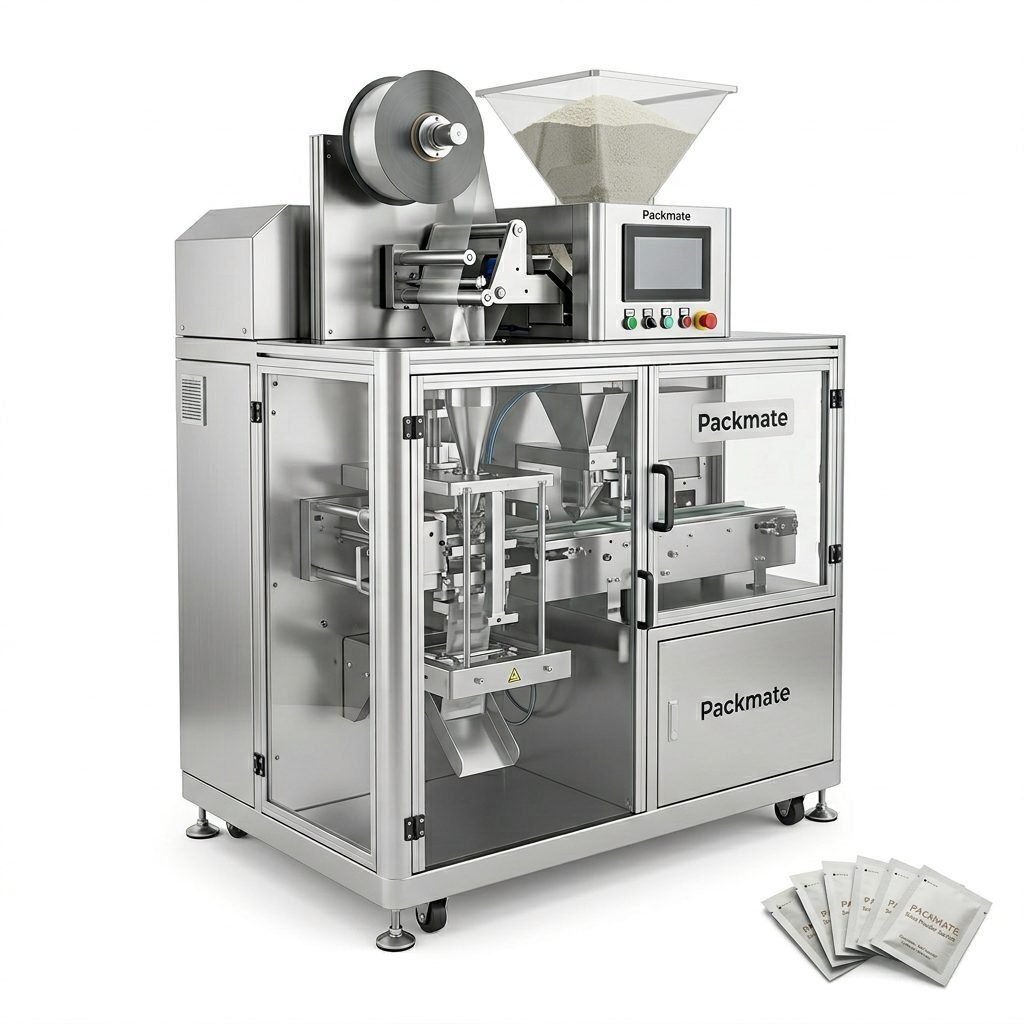
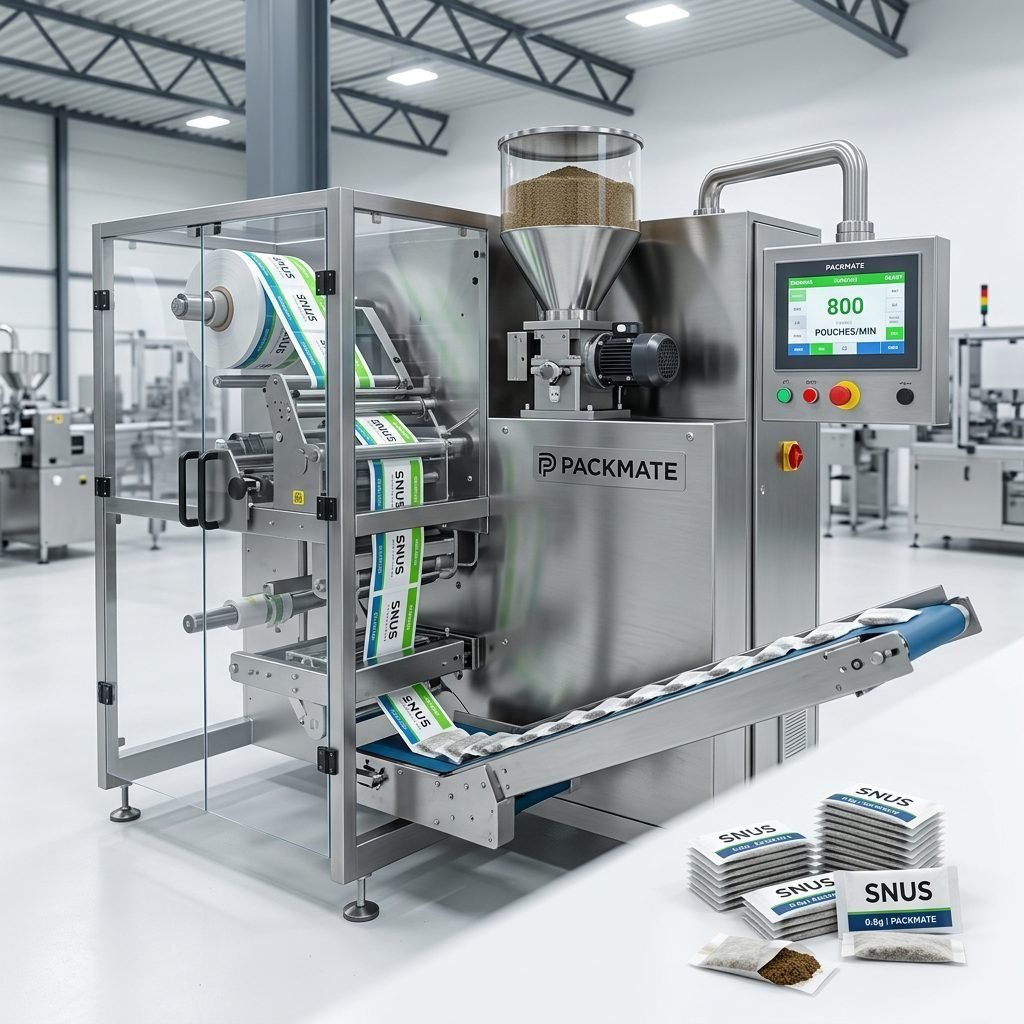
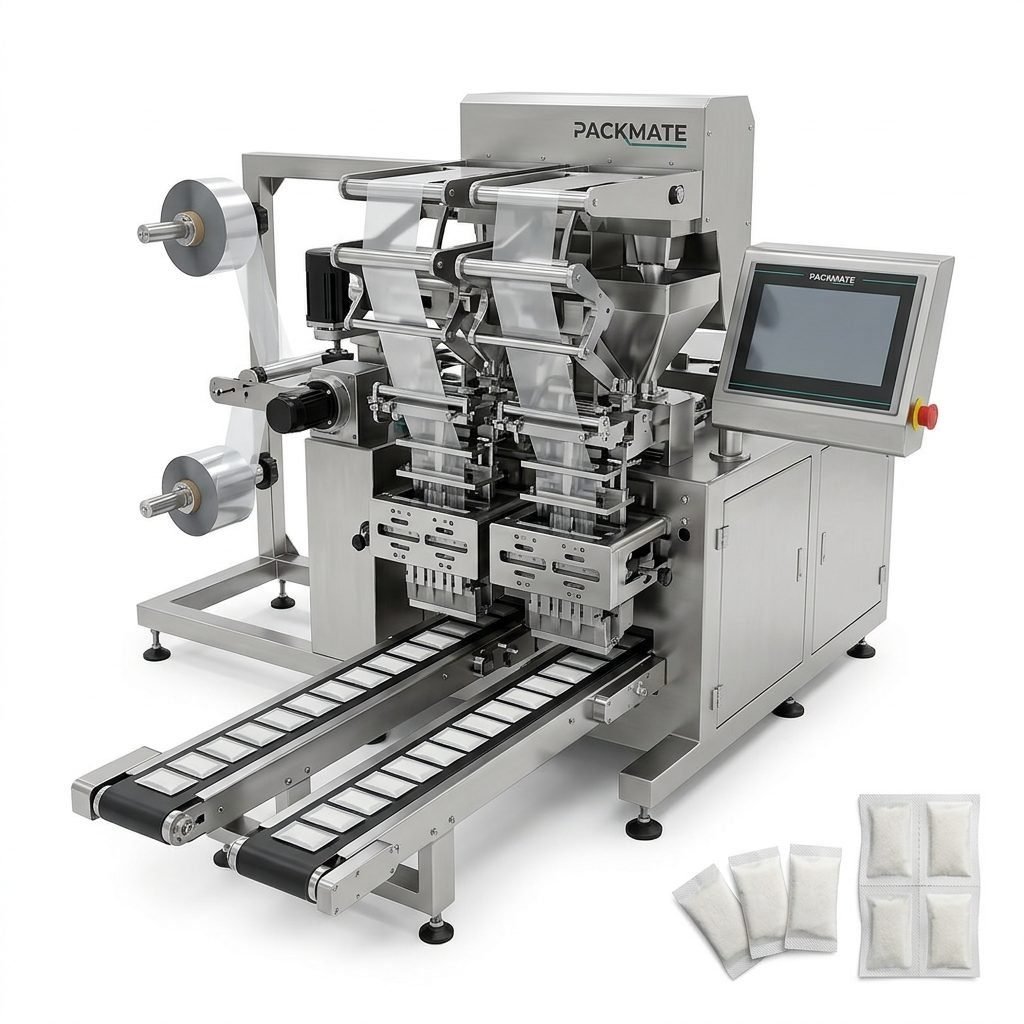
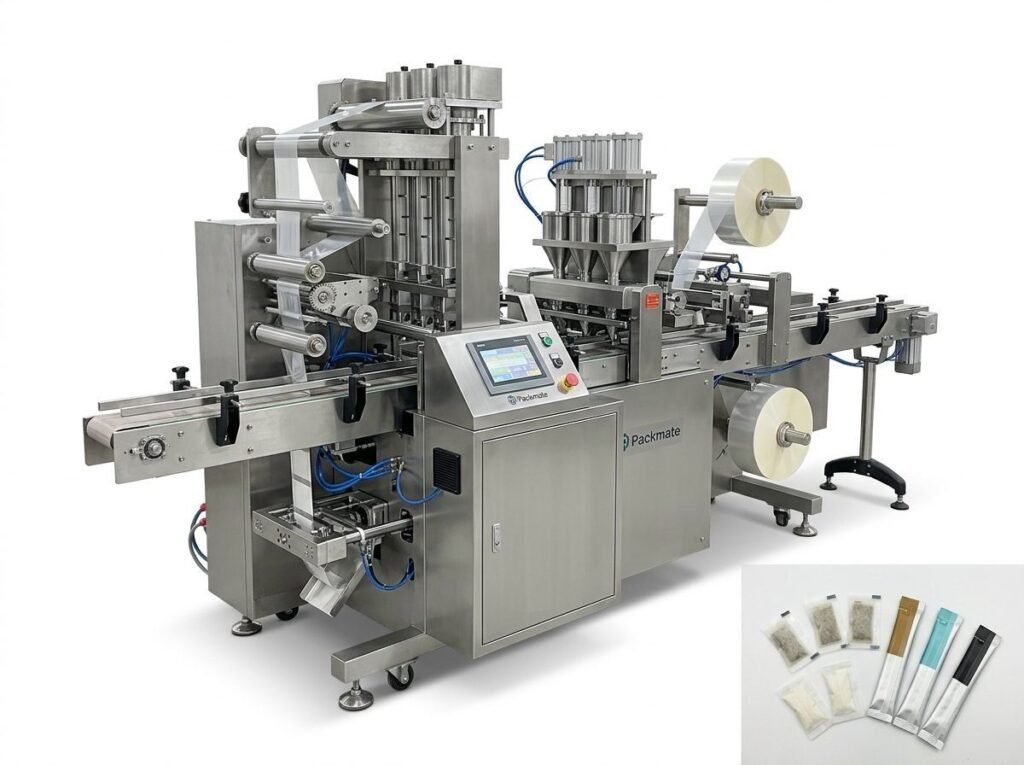
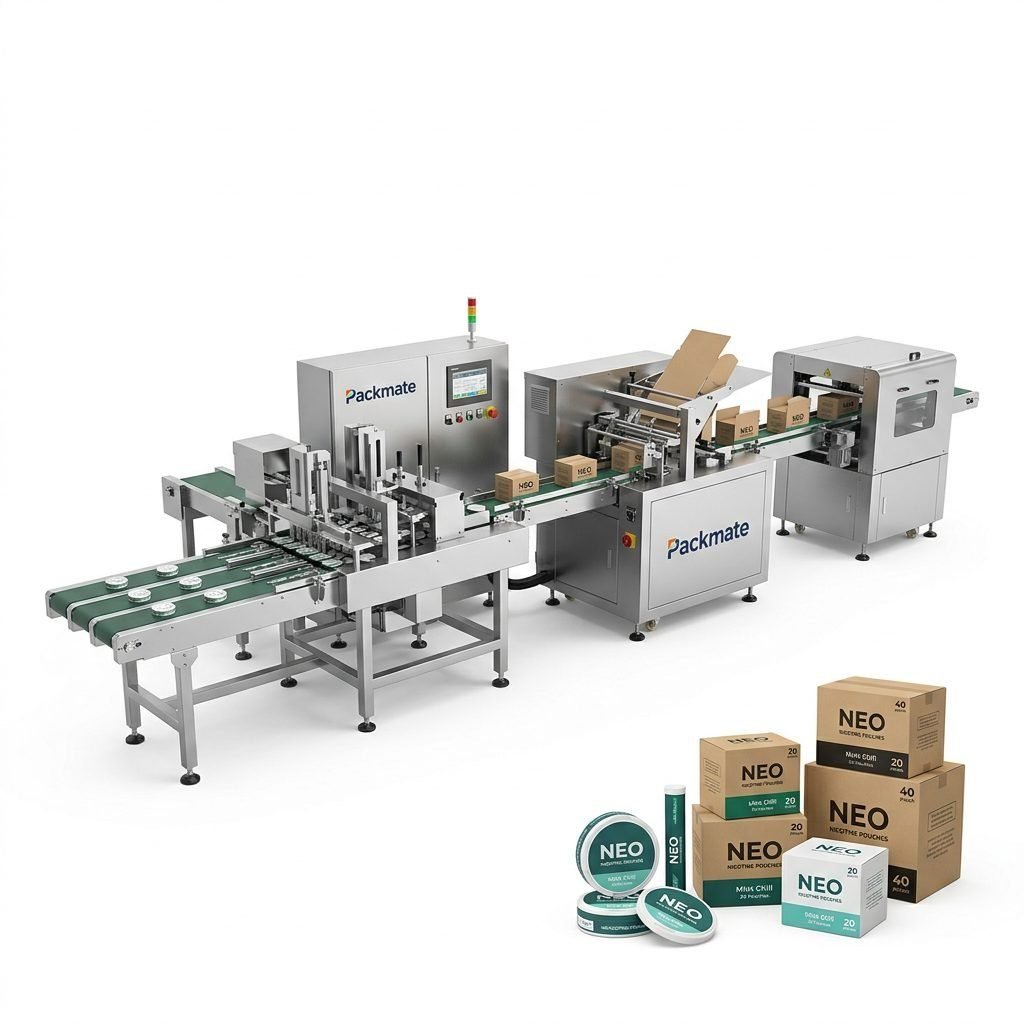
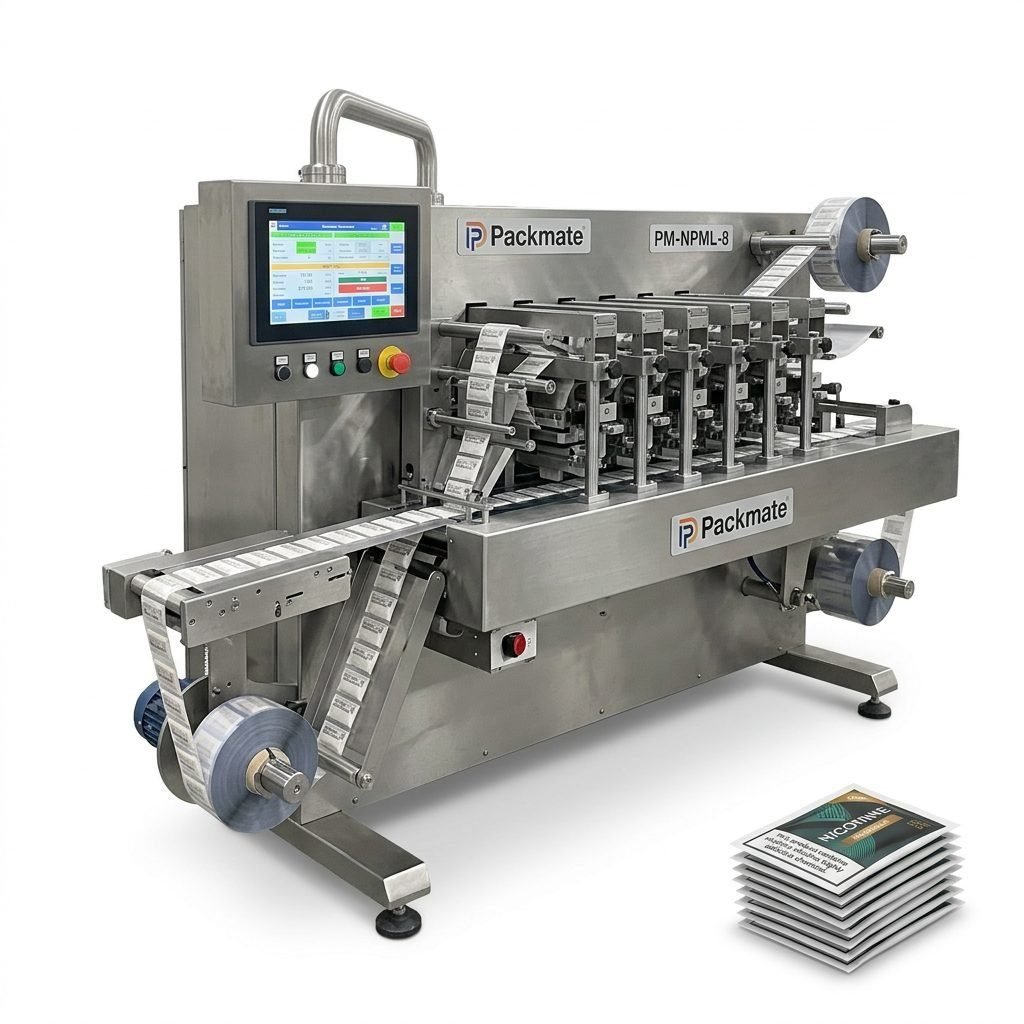
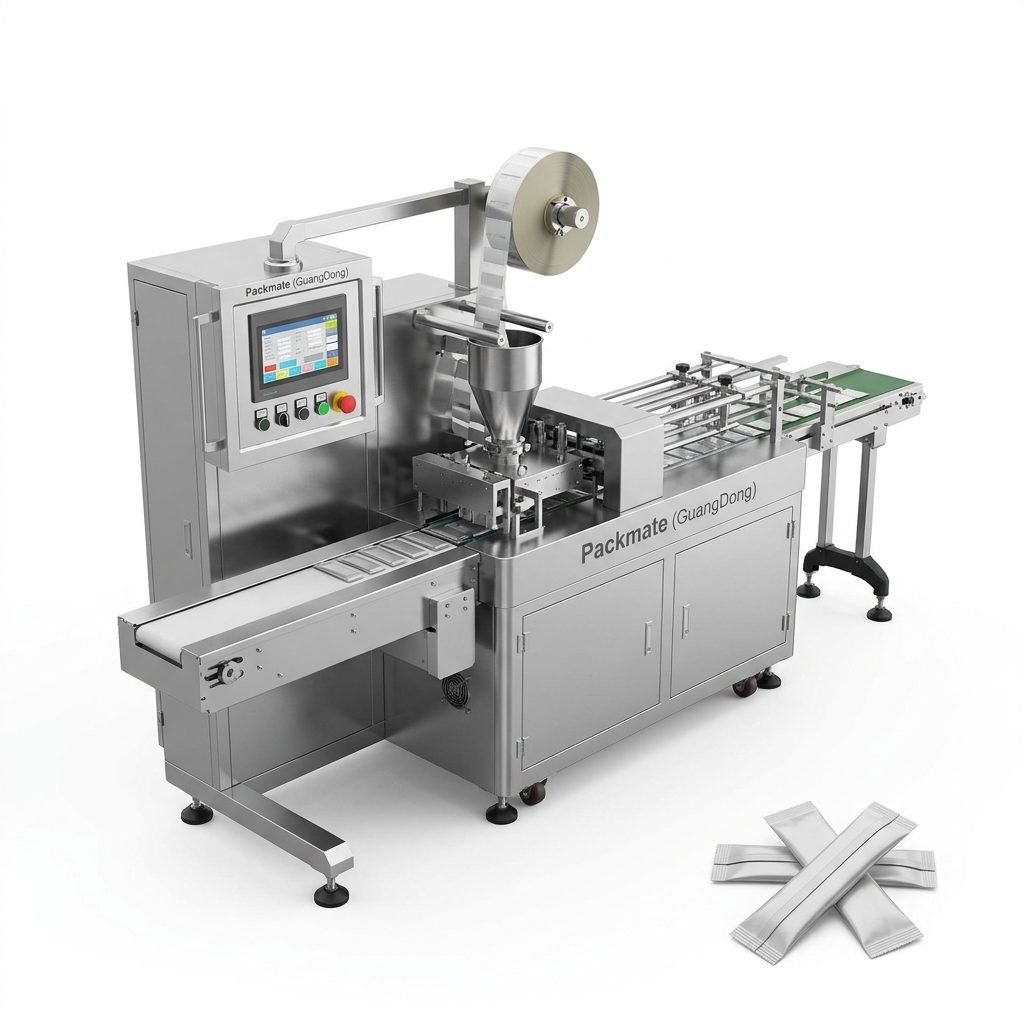
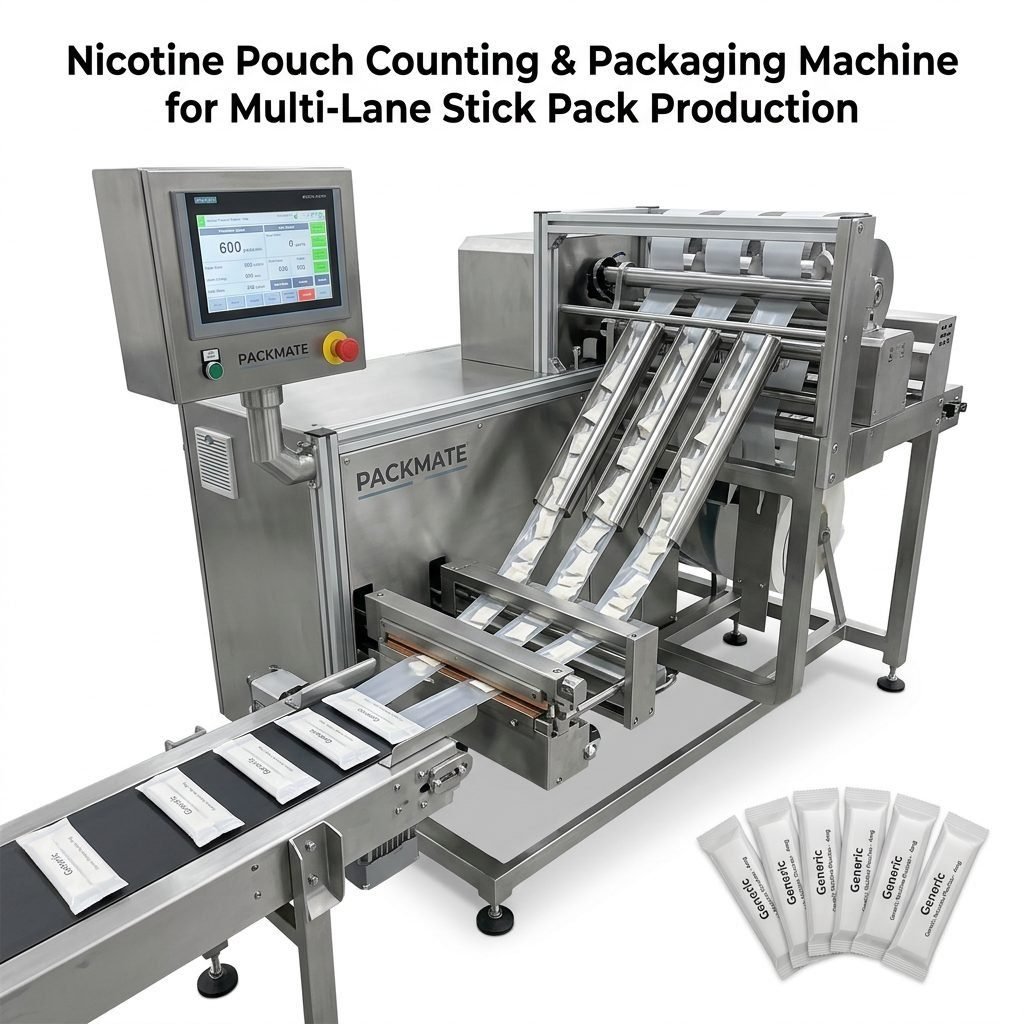
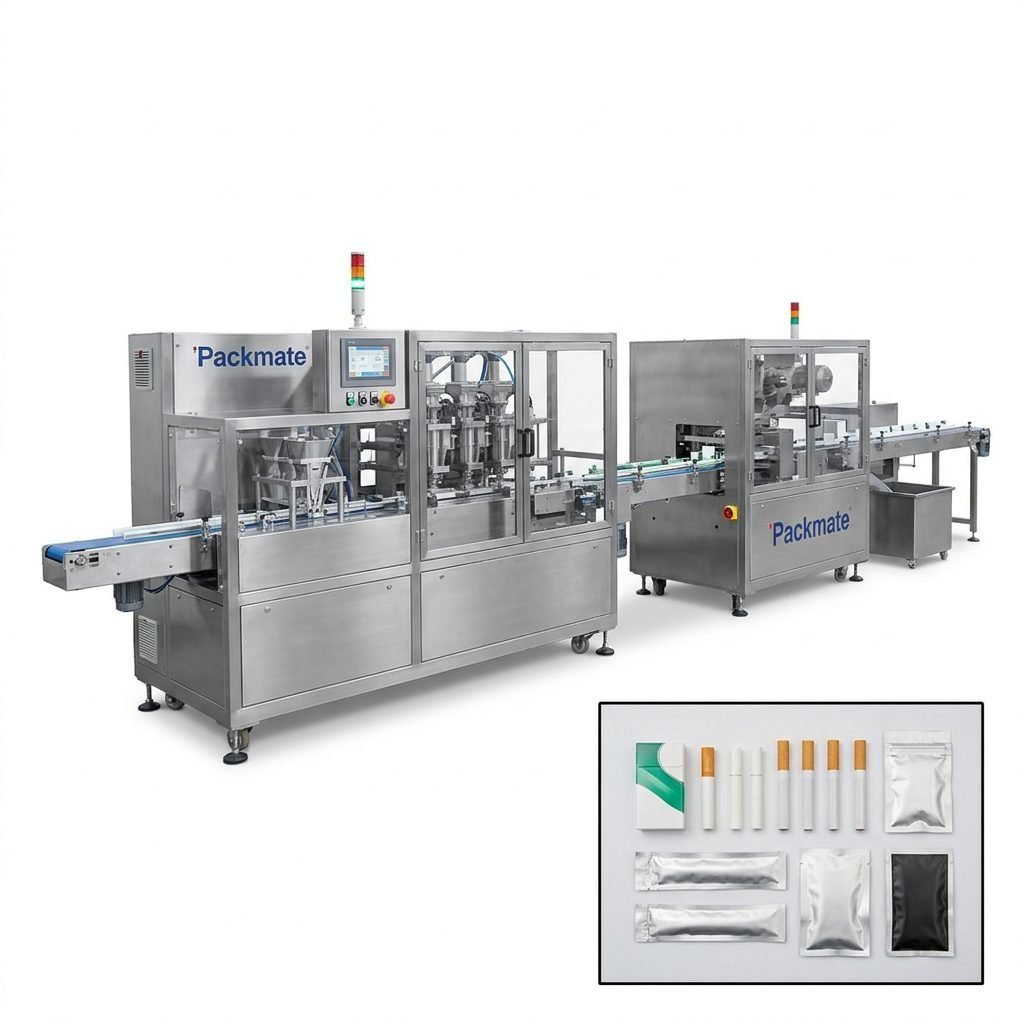
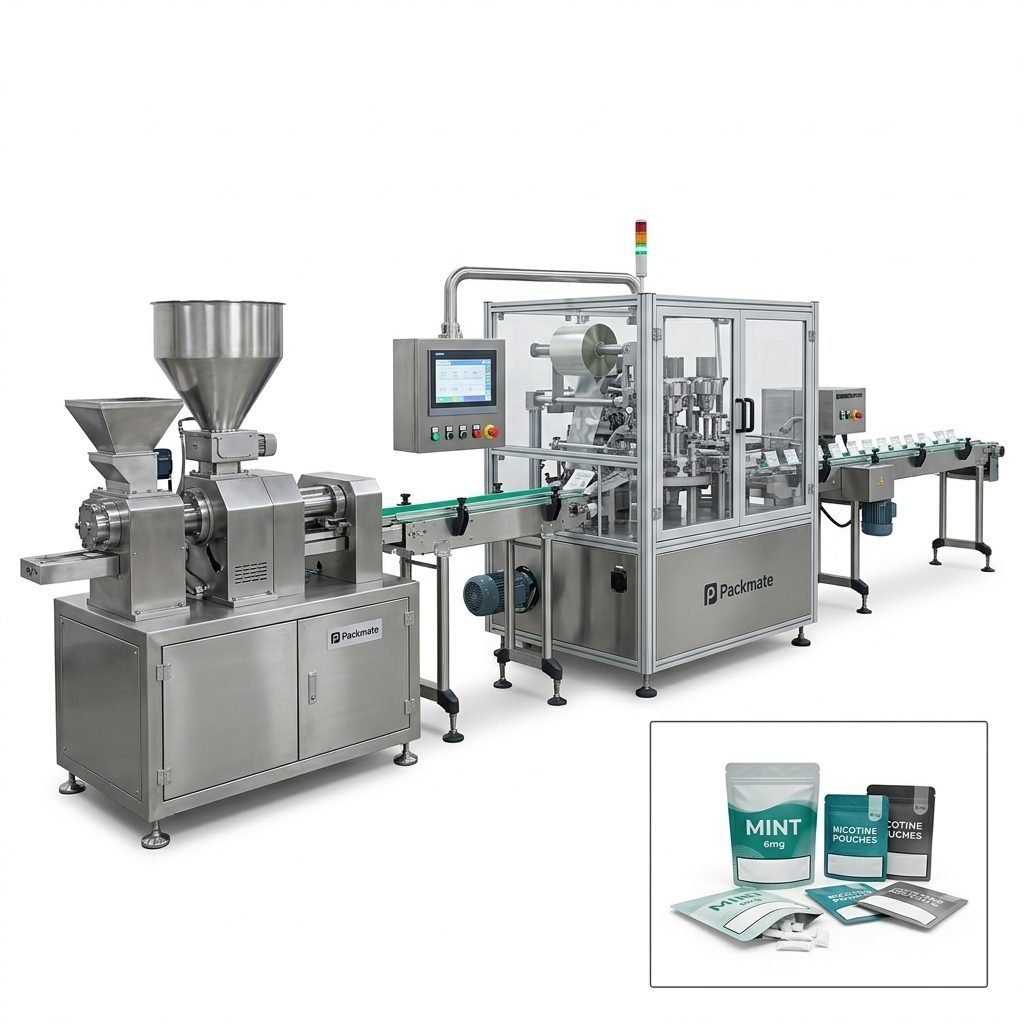
In the rapidly evolving nicotine pouch and snus market, packaging lines must balance micro-dose accuracy with high throughput and regulatory compliance. Modern pouch filling machines use a combination of precision mechanics, intelligent control systems, and modular automation to deliver both speed and consistency. This article explores the core technologies, engineering choices, and operational practices that allow contemporary nicotine pouch filling machines to improve accuracy and production efficiency — with practical guidance for purchasing, commissioning, and long-term operation.
Why accuracy matters for nicotine pouches
Nicotine pouches typically contain small, tightly controlled amounts of product and active ingredients. Even minor variability in fill weight or pouch content distribution can cause:
✅ Regulatory risk and rejection
✅ Brand complaints and returns
✅ Increased material waste and costs
✅ Production downtime for adjustments
Key performance metrics
When evaluating filling machines, focus on: fill weight variance (±mg), throughput (pouches/min), changeover time, downtime percentage, and overall equipment effectiveness (OEE). Machines that couple high-precision dosing with fast lane scalability deliver the best value for small-dosage nicotine products.
Core filling technologies that improve accuracy
Modern nicotine pouch fillers often combine several proven technologies to minimize variability:
⚙️ Precision auger and piston dosing: For powders and blended formulations, servo-driven augers or piston fillers can dose micro-gram to gram-level portions with repeatable positioning.
⚙️ Multi-head weighers: Multi-head or linear check weighers integrate upstream dosing with real-time feedback to correct each lane on a cycle-by-cycle basis.
⚙️ Vibration and flow control: Controlled vibratory feeders and anti-bridging measures maintain consistent material flow into the dosing zone.
⚙️ Vision and weight inspection: Inline vision systems and dynamic checkweighers detect misfills, foreign matter, and seal defects, enabling immediate rejection and statistical process control.
Servo motion and closed-loop control
The adoption of servo-driven axes and closed-loop encoders has transformed filling accuracy. Servo systems allow:
– Smooth acceleration profiles to avoid product bounce and segregation.
– Precise positioning for multi-lane fills where synchronous dosing across lanes is required.
– Rapid recipe changes with pre-programmed parameters for different pouch sizes and weights.
Design features that drive production efficiency
Efficiency is not only about raw speed; it’s about minimizing downtime and maximizing throughput per labor hour. Leading systems incorporate:
🔁 Quick-change tooling to reduce machine stops during format swaps — often with tool-less clamps or single-knob adjustments.
🧠 Recipe management and HMI for rapid recall of settings across multiple SKUs and operators.
🔗 Modular multi-lane platforms that add lanes instead of whole machines to scale capacity with demand.
🤖 Integrated automation — automatic pouch feeding, vertical handling, cap/label stations, and synchronized conveyors to reduce manual touches.
Case example: multi-lane snus lines
High-output nicotine pouch production often relies on multi-lane machines that run 4–16 lanes simultaneously. Each lane has independent dosing but shared film handling and sealing systems. The advantage: linear scaling of throughput with minimal added foot-print and common drive systems that reduce maintenance complexity. For turnkey solutions and multi-lane options, manufacturers can review product lines such as Snus & Nicotine Packaging Machines and Filling & Packaging Lines.
Quality control and regulatory compliance
Compliance with CE, ISO, and local regulations is essential — not only for legal reasons but to ensure consistent product safety. Reliable manufacturers provide:
- Material traceability and batch records
- Sterile or GMP-compatible contact surfaces where required
- Validated clean-down and CIP (where applicable)
- Complete documentation packages for export and inspection
Packmate Snus Machine maintains CE and ISO-aligned manufacturing practices and offers certificates and case studies for global clients; see more in their Certificate and Case sections.
Monitoring and data-driven optimization
Smart packaging lines stream telemetry to a central historian and analytics engine. Typical KPIs tracked include fill variance distribution, reject rates, changeover times, and OEE. These insights enable predictive maintenance and incremental tuning of dosing parameters, reducing scrap and improving first-pass yield.
Operational best practices for consistent fills
Even with advanced machines, operational discipline is essential:
🔎 Standardized weighing protocols for initial setup and periodic verification.
🧰 Scheduled preventive maintenance for augers, servos, seals and feeders.
🧠 Operator training & digital SOPs to minimize human-induced variability during changeovers.
Material and formulation considerations
Powder flowability, moisture content, and particle size strongly affect dosing accuracy. Working with suppliers to optimize granulation, anti-caking agents, and packaging environment (dehumidified lines) will drastically improve per-dose consistency.
Selecting the right supplier and system
When choosing a partner, evaluate their engineering depth, customization capability, and after-sales service. Key questions include:
- Do they offer turnkey lines including weighing, pouch forming, and secondary packaging?
- Can they provide multi-lane scalability and quick-change formats?
- Is spare parts support and global service available?
Manufacturers like Packmate provide a range of options — from single-lane units to highly automated multi-lane lines — and support with global exhibitions, catalogs, and direct contact. Explore their About Packmate, Catalog, and Contact Us pages for details.
Lifecycle costs and ROI
Evaluate total cost of ownership (TCO): machine price, installation, validation, spare parts, expected scrap reduction, and throughput gains. High-precision machines often justify higher upfront costs through reduced material waste and faster market ramp-ups.
Real-world applications beyond nicotine pouches
The same technologies apply to tea sachets, powdered supplements, pharmaceutical sachets, and fragile herbal blends. Multi-purpose filling lines provide flexibility to shift production between categories with minimal retooling; see related systems like Sachet & Stick Pack Machines and Weighing & Packaging Systems.
Quick checklist before purchase
★ Desired throughput and lane count
★ Required fill accuracy and measurement methods
★ Changeover frequency and format diversity
★ Local support, spare parts availability, and training
Conclusion
Modern nicotine pouch filling technology blends precision dosing, servo control, multi-lane scalability, and inline inspection to deliver both high accuracy and strong production efficiency. Paired with disciplined operations, material optimization, and vendor support, these systems can significantly reduce waste, improve compliance, and accelerate time to market for new SKUs.
Frequently Asked Questions
Q1: How small can fill tolerances get on modern nicotine pouch machines?
A: Many high-end systems achieve single-digit milligram repeatability depending on product characteristics and weighing strategy.
Q2: Is a multi-lane machine better than several single-lane machines?
A: Multi-lane platforms typically provide better space efficiency and centralized control, but evaluate maintenance access and single-lane isolation needs.
Q3: How important is material conditioning for accuracy?
A: Extremely important — consistent humidity, particle size, and anti-caking measures directly affect dosing repeatability.
Q4: What after-sales services should I require from a supplier?
A: Remote diagnostics, spare parts stocking, commissioning support, operator training, and preventive maintenance contracts are recommended.
Q5: Where can I see complete packaging line examples?
A: View turnkey examples and machine families on the manufacturer pages such as Bag & Pouch Packaging Machines and Auxiliary Packaging Equipment.