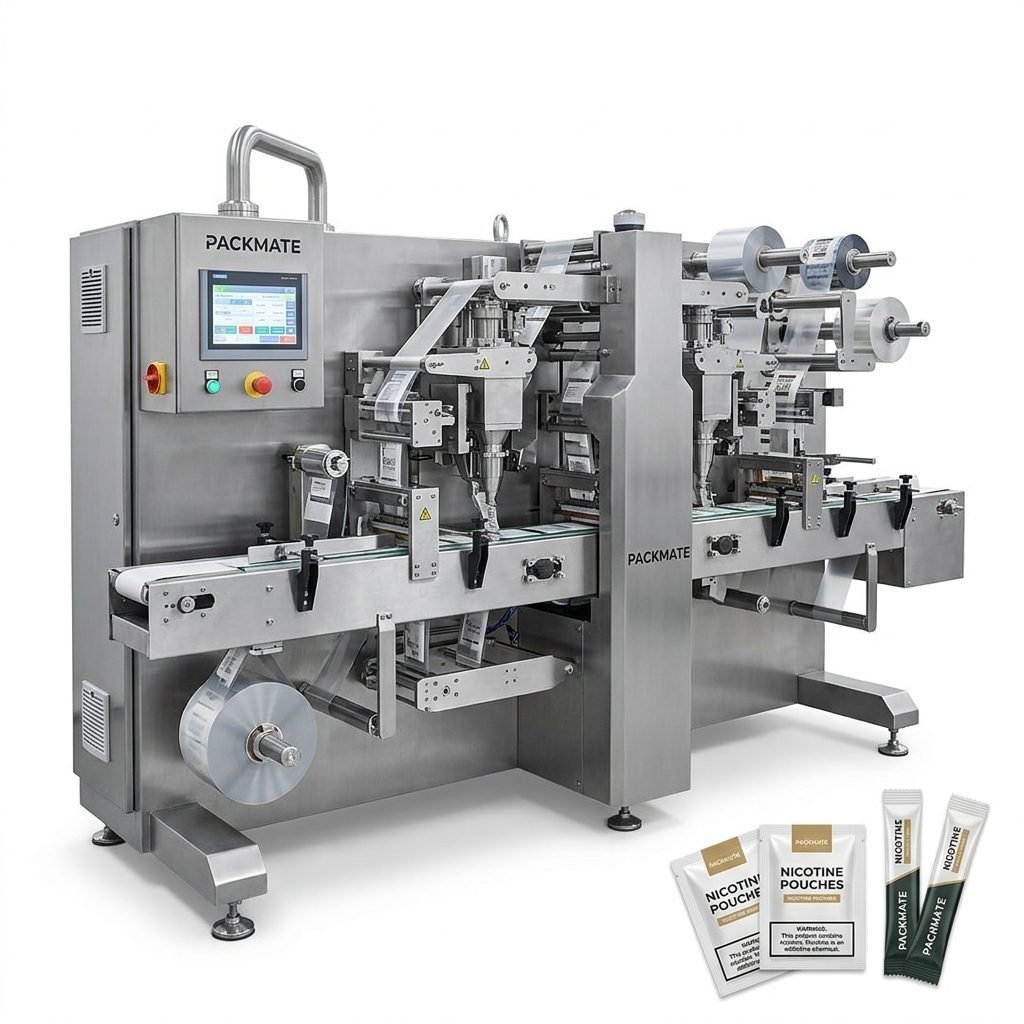
In the fast-growing nicotine pouch and snus market, manufacturers need packaging lines that deliver high throughput, reliable operation and consistently high product quality. This article explores how an efficient nicotine pouch production line can boost output, cut costs and improve quality — with practical guidance on machine selection, production layout, quality control and long-term maintenance. Whether you are scaling a start-up or upgrading a large factory, these insights will help you design a lean, scalable and compliant packaging solution.
Why an Optimized Production Line Matters
A well-designed nicotine pouch production line reduces downtime, minimizes waste and ensures consistent pouch weight and sealing integrity. For manufacturers, that means improved yield, predictable costs and faster time-to-market. Key advantages include:
🔧 Higher throughput: Multi-lane and high-speed stick pack or sachet machines can multiply output without proportionally increasing labor costs.
✅ Lower material waste: Precision dosing and synchronized film usage reduce scrap and trim loss.
⚙️ Better product quality: Consistent filling, accurate sealing and controlled humidity handling preserve nicotine pouch performance.
Core Components of a High-Performance Line
A nicotine pouch production line typically integrates several specialized machines. Choosing components that match your product specifications and production targets is critical.
🔹 Weighing & dosing systems: Accurate multi-head or auger dosing ensures each pouch meets target net weight, reducing rework and regulatory risk. For more integrated options, review Weighing & Packaging Systems.
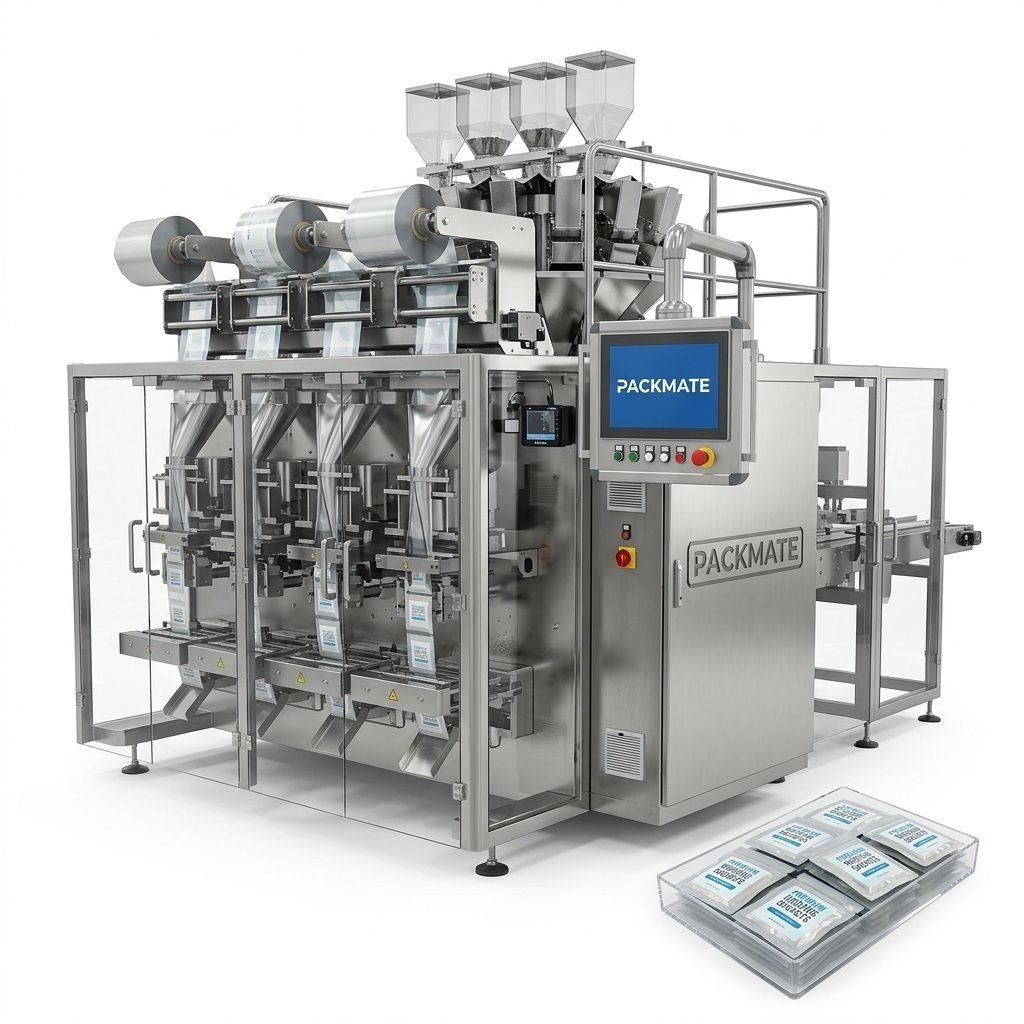
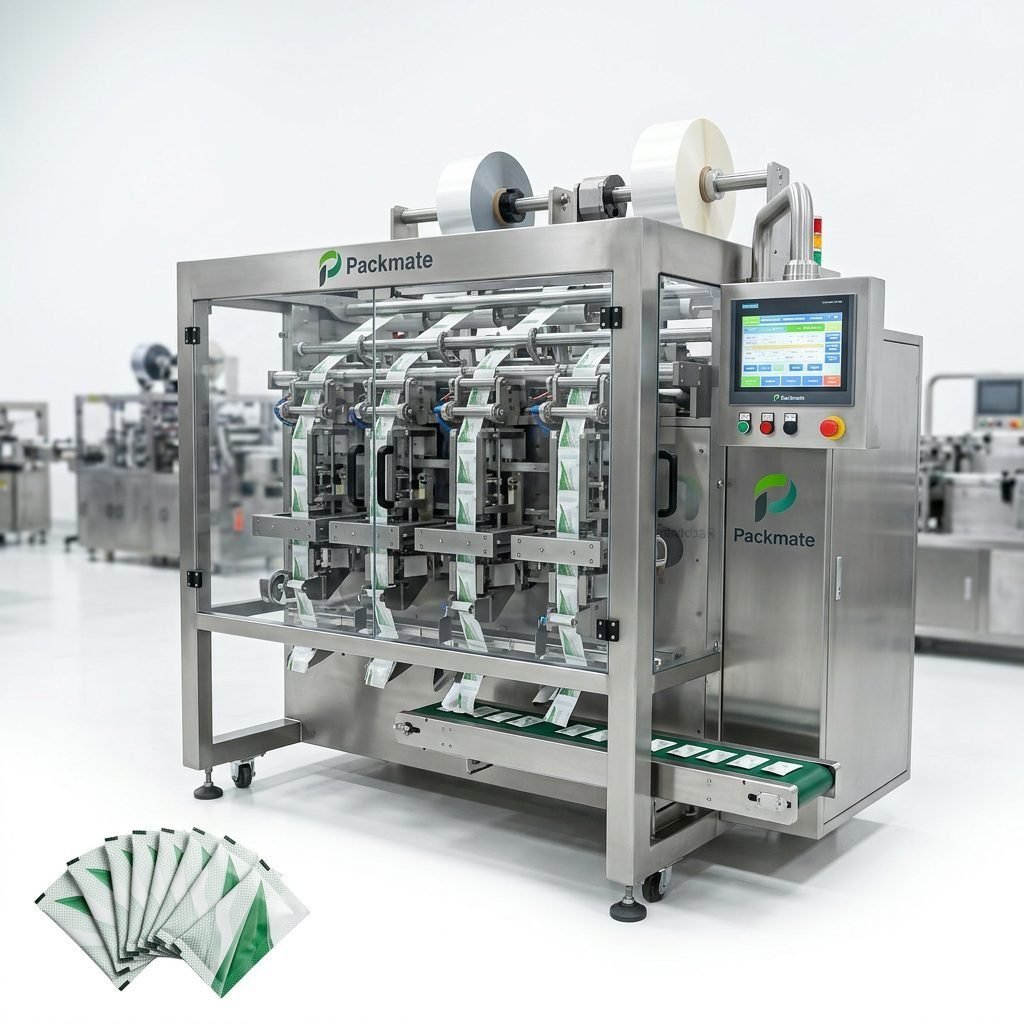
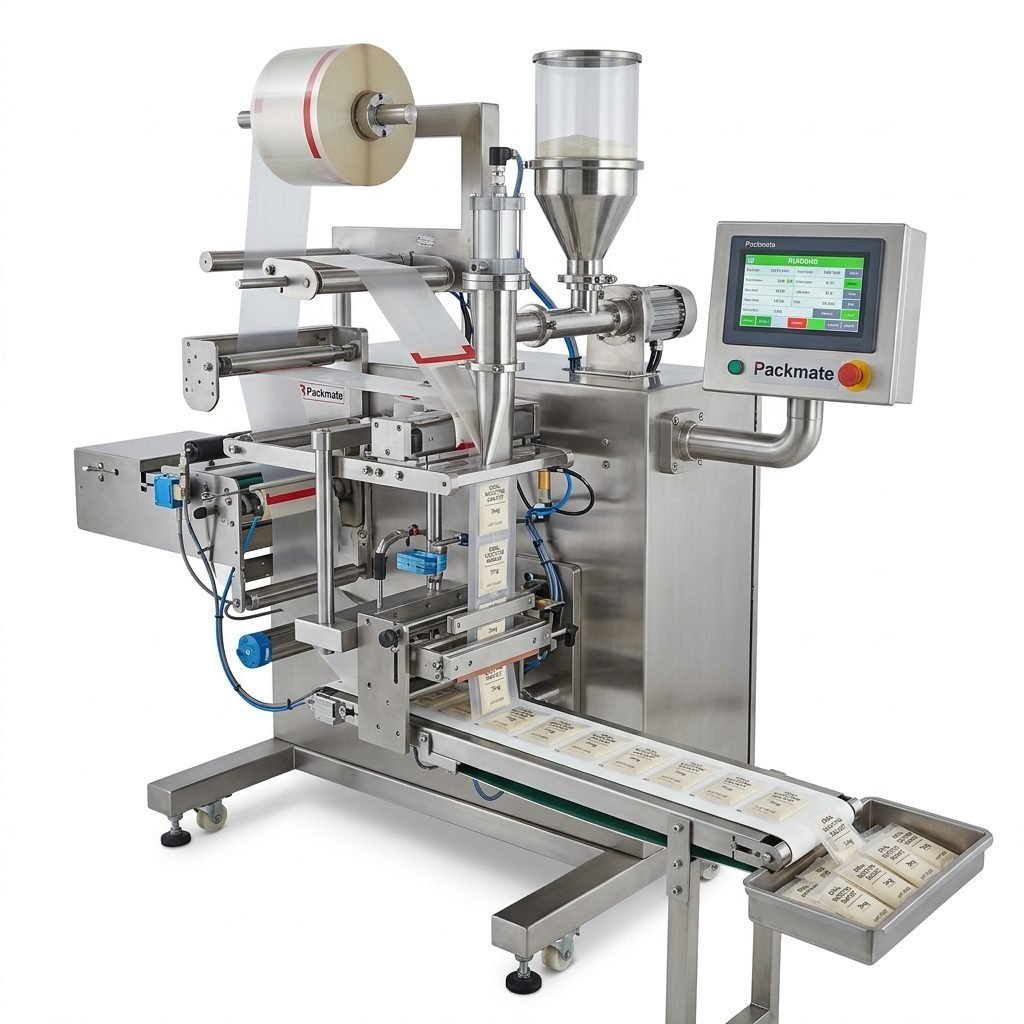
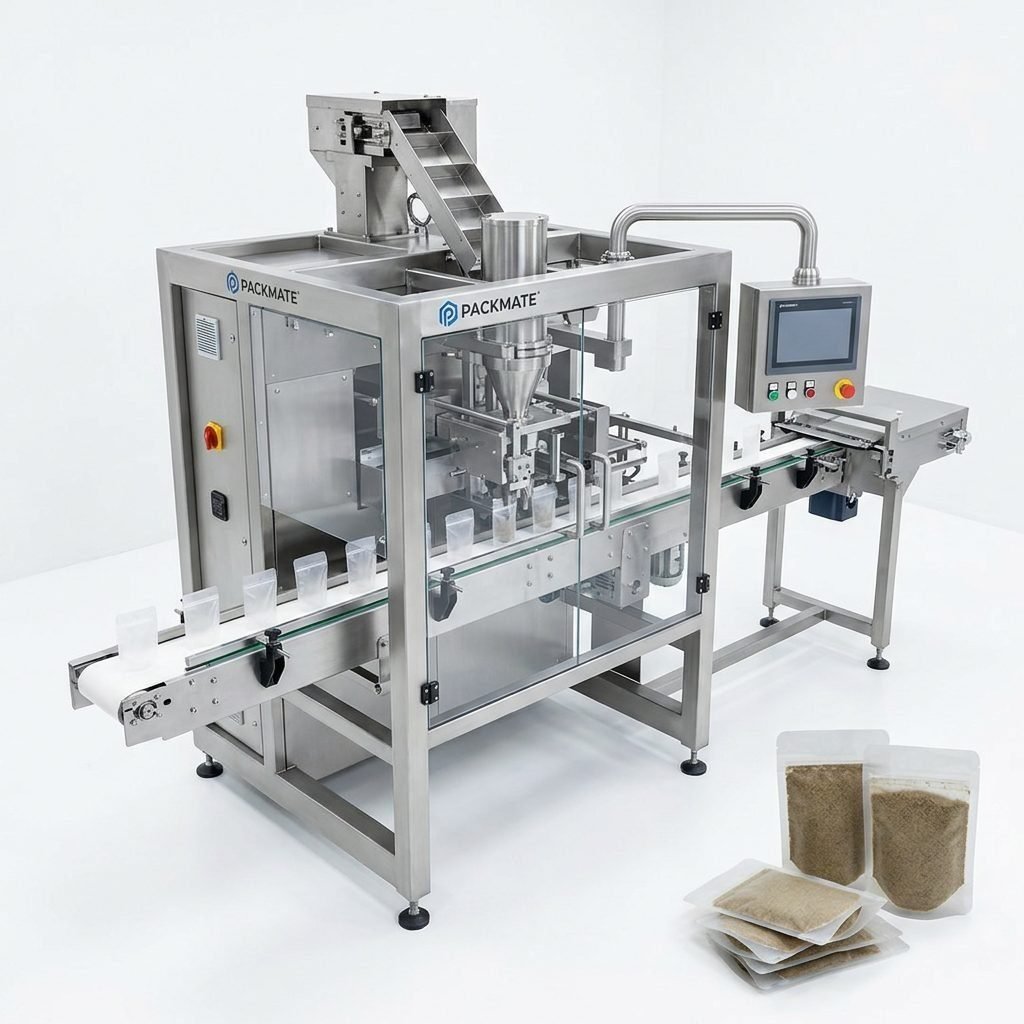
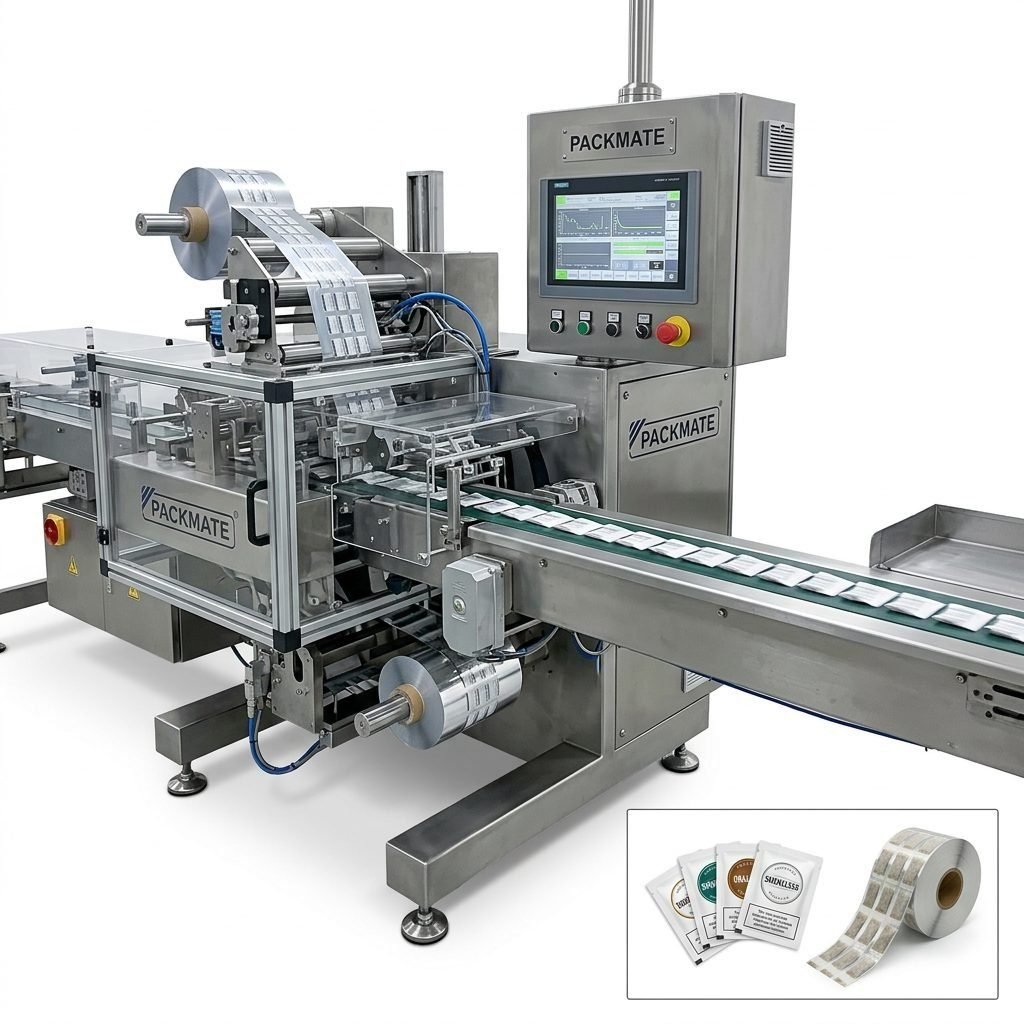
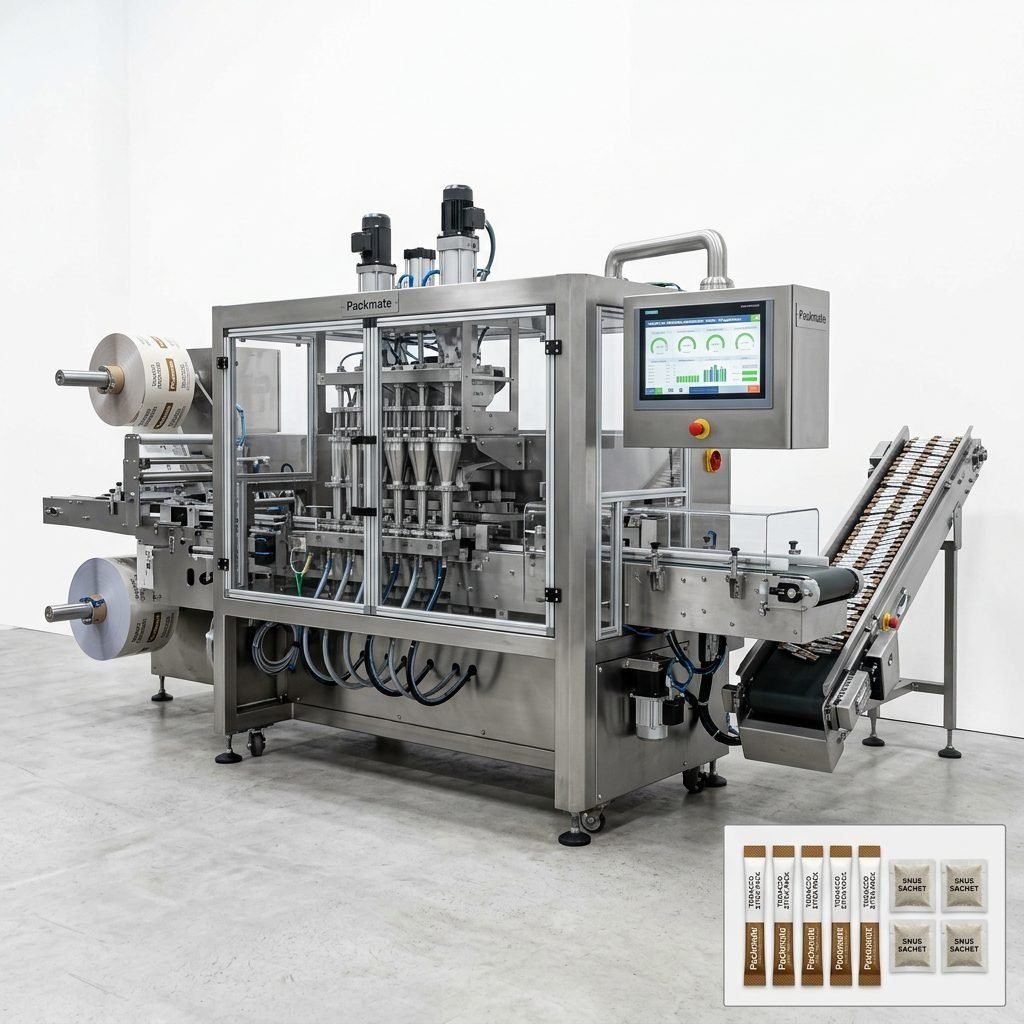
🔹 Form-fill-seal machines: Sachet, stick pack or pouch machines form packaging from rollstock, fill product and seal in one continuous process. Explore Sachet & Stick Pack Machines for versatile formats.
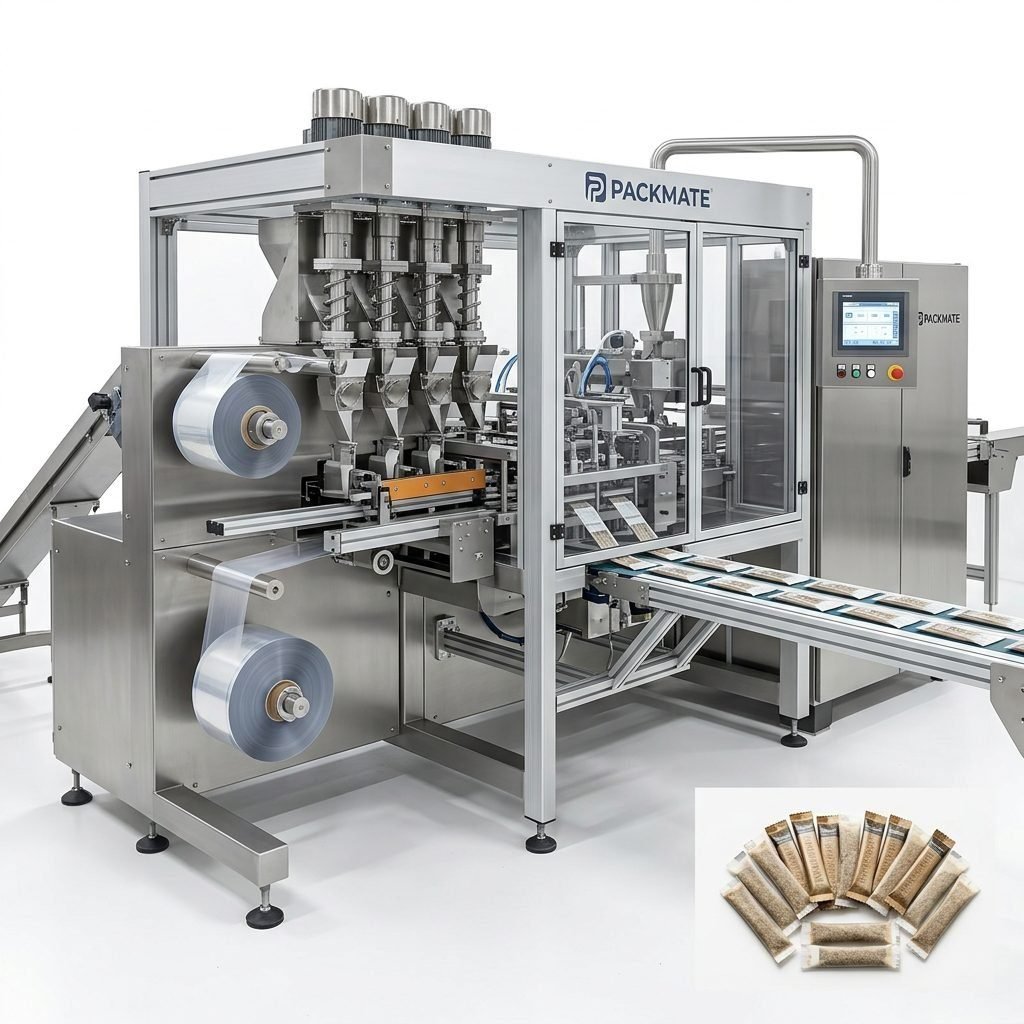
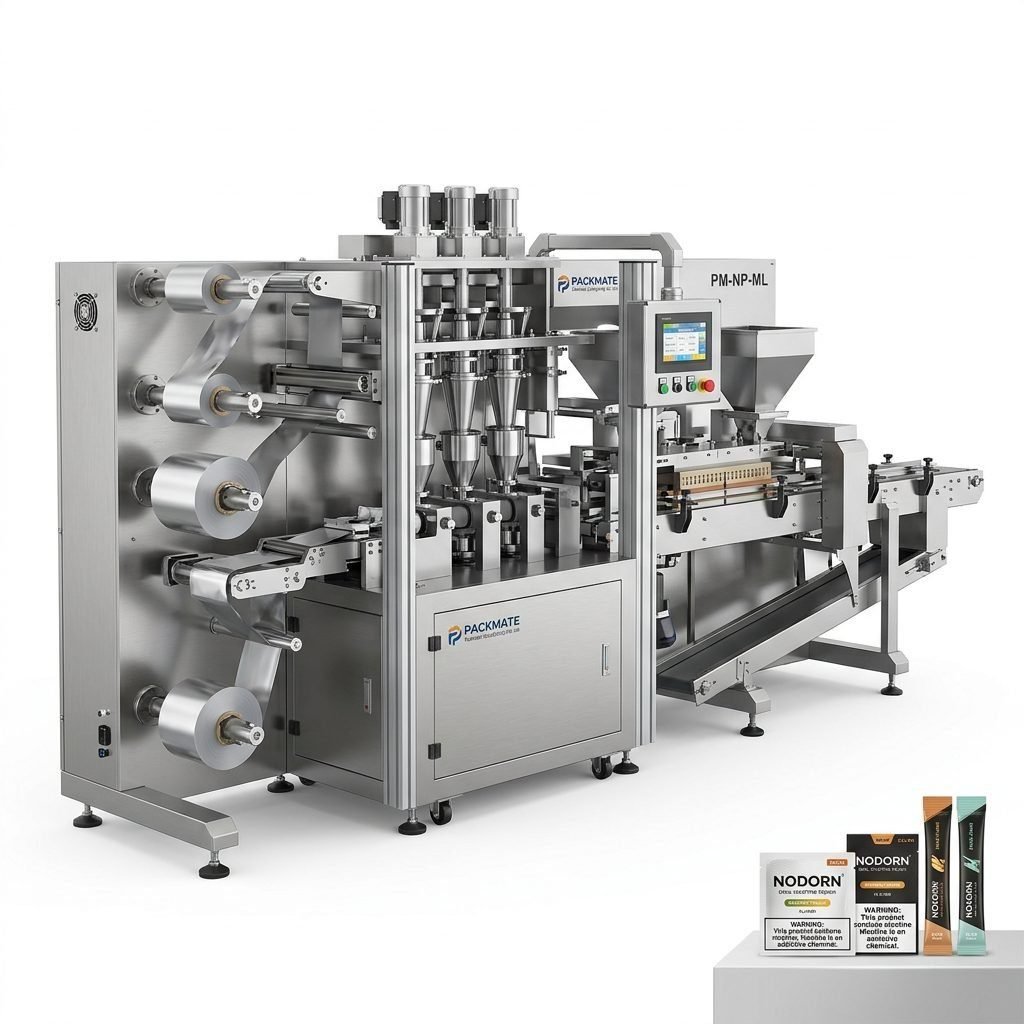
🔹 Multi-lane snus packaging: For small-dose nicotine pouches, multi-lane systems dramatically increase output per footprint. See Snus & Nicotine Packaging Machines for multi-lane solutions.
🔹 Auxiliary equipment: Ancillaries like labelers, metal detectors, nitrogen flushing units and case packers support product traceability and shelf-life. Visit Auxiliary Packaging Equipment to match auxiliary modules.
Design Considerations for Cost-Efficient Production
Thoughtful line design balances capital investment, operating cost and scalability. The following design principles help reduce total cost of ownership:
– Choose modular machines that allow incremental upgrades rather than full replacements. Modularity lowers initial expense and accelerates adaptation to new SKUs.
– Prioritize energy-efficient motors and pneumatics; better drives and intelligent control systems reduce electricity consumption. Energy savings quickly offset higher equipment cost.
– Opt for quick-change tooling and standardized format kits to minimize downtime during product changeovers.
Lean Layout and Material Flow
A compact footprint with clear material flow reduces handling time and contamination risk. Typical layout tips:
📦 Place raw material storage and film unwinds close to the forming machines to shorten replenishment cycles.
🧭 Position metal detectors and checkweighers downstream of filling to catch defects early.
🔄 Design pathways for easy operator access and maintenance without interrupting upstream processes.
Quality Assurance: From Raw Material to Finished Pouch
High-quality nicotine pouch production relies on strict QA at each step. Implement controlled procedures and automated checks to prevent defects and regulatory non-compliance.
– Incoming inspection for pouch substrates, films, and nicotine powder ensures each batch meets barrier and tolerance specifications.
– In-line weight checks, vision inspection for seal integrity and barcode verification ensure every pack is traceable and within spec.
– Environmental control for humidity and temperature helps maintain pouch moisture and adhesive performance during pouch sealing.
Automation and Process Control
Integrating PLC and HMI systems enables centralized control, recipe management and data logging. Automated adjustments maintain consistent pouch weight and seal quality even as ambient conditions change.
📈 Use production dashboards to monitor OEE (Overall Equipment Effectiveness), reject rates and downtime causes in real time.
🔁 Implement automatic line stop and reject protocols for critical faults to avoid cascading quality issues.
Selecting the Right Supplier and Machine Model
Choosing a reliable manufacturer is as important as machine specs. Look for these supplier attributes:
– Proven experience in snus and nicotine packaging (preferably 10+ years in small-dose multi-lane systems). Packmate Snus Machine offers decades of engineering expertise and a wide model range — learn more About Packmate.
– Local or global after-sales support and spare parts availability to minimize downtime.
– Flexible customization and turnkey solutions including installation, training and performance validation. Review customer Case examples to verify real-world performance.
Technical Specification Checklist
When evaluating machines, ensure the documentation clearly lists:
– Target output (pouches/min per lane and total lanes).
– Filling accuracy (g ± tolerance) and dosing method.
– Film width compatibility and roll capacity.
– CIP/cleanability features and material-contact surface finish.
– Certifications (CE, ISO) and safety interlocks.
Installation, Commissioning and Operator Training
Proper commissioning ensures machines reach expected performance metrics. A robust plan includes site preparation, FAT/SAT testing and operator certification.
🚀 Pre-shipment FAT (Factory Acceptance Test) replicates your recipes to validate filling accuracy and sealing performance.
🧭 On-site SAT (Site Acceptance Test) verifies integration with upstream/downstream equipment and local utilities.
👩🏫 Hands-on operator training reduces human error and speeds shift turnover — ask your supplier for dedicated training sessions.
Maintenance Strategies to Reduce Downtime
Preventive maintenance, spares planning and predictive analytics extend machine life and reduce unplanned stops.
– Maintain a critical spare parts kit (sealing jaws, sensors, belts) on-site for quick swaps.
– Use vibration and thermal monitoring where applicable to detect bearing wear early.
– Schedule periodic calibration of weighing modules and vision sensors to ensure ongoing accuracy.
Regulatory and Market Considerations
Nicotine pouch manufacturers must comply with local and export regulations on labeling, product safety and traceability. Machines with built-in serialization and label verification simplify compliance.
For businesses operating in Europe, North America or Asia, consider local consumer preferences and packaging customs. For example, compact multi-pouch cartons are popular in Scandinavian markets, while resealable sachets may be favored elsewhere. Packmate supports multi-format output to match diverse market needs.
Sustainability and Packaging Materials
Sustainable packaging is increasingly important. Choose machines that can handle bio-based films and mono-material laminates to improve recyclability. Optimized cutting and sealing reduce film use and carbon footprint over the life of production.
Case Example: Scaling with Multi-Lane Systems
A mid-size nicotine pouch producer doubled capacity by replacing a single-lane form-fill-seal with a 6-lane multi-head snus packing system. Benefits realized:
✅ Output increased without proportional factory expansion.
✅ Labor per pouch decreased significantly due to automation.
✅ Material consumption per pouch fell because of better web utilization and synchronized cutting.
Partnering for Turnkey Solutions
For many customers, turnkey partnerships reduce project risk. Suppliers that deliver machines, layout design, auxiliary equipment and commissioning support allow manufacturers to focus on product development and market expansion. Learn more about full service and support on the Contact Us page.
Useful Resources
– Product catalogs and machine models: Snus & Nicotine Packaging Machines
– Alternative formats: Sachet & Stick Pack Machines
– Company background and certifications: About Packmate
– For project inquiries and support: Contact Us
Conclusion
Building an efficient nicotine pouch production line requires careful selection of equipment, attention to material flow and investment in automation and quality controls. By choosing modular multi-lane systems, integrating precise weighing and vision inspection, and partnering with an experienced supplier, manufacturers can scale output, lower costs and consistently deliver high-quality pouches to market.
Frequently Asked Questions
Q1: What is the ideal output to target when choosing a multi-lane snus machine?
A1: Target output depends on your SKU mix and market demand. Many producers start with a 4–6 lane system to balance footprint and throughput, then scale lanes or add parallel lines as volumes grow.
Q2: How can I reduce material waste on sachet and pouch lines?
A2: Use precise web tracking, optimized cut patterns and accurate dosing. Upgrading to servo-driven film handling and synchronized knife systems reduces trim and scrap.
Q3: What certifications should I expect from a reputable machine supplier?
A3: Look for CE and ISO compliance, and ask for test reports and references. Suppliers with documented FAT records and export experience are preferable.
Q4: How important is after-sales service for nicotine pouch production lines?
A4: Critical — fast spare parts delivery, remote diagnostics and on-site support reduce downtime and protect production targets.
Q5: Can I convert existing sachet lines to handle nicotine pouches?
A5: In many cases, yes — with the right dosing modules and sealing jaws. Evaluate material-contact surfaces and control upgrades to ensure compliance.