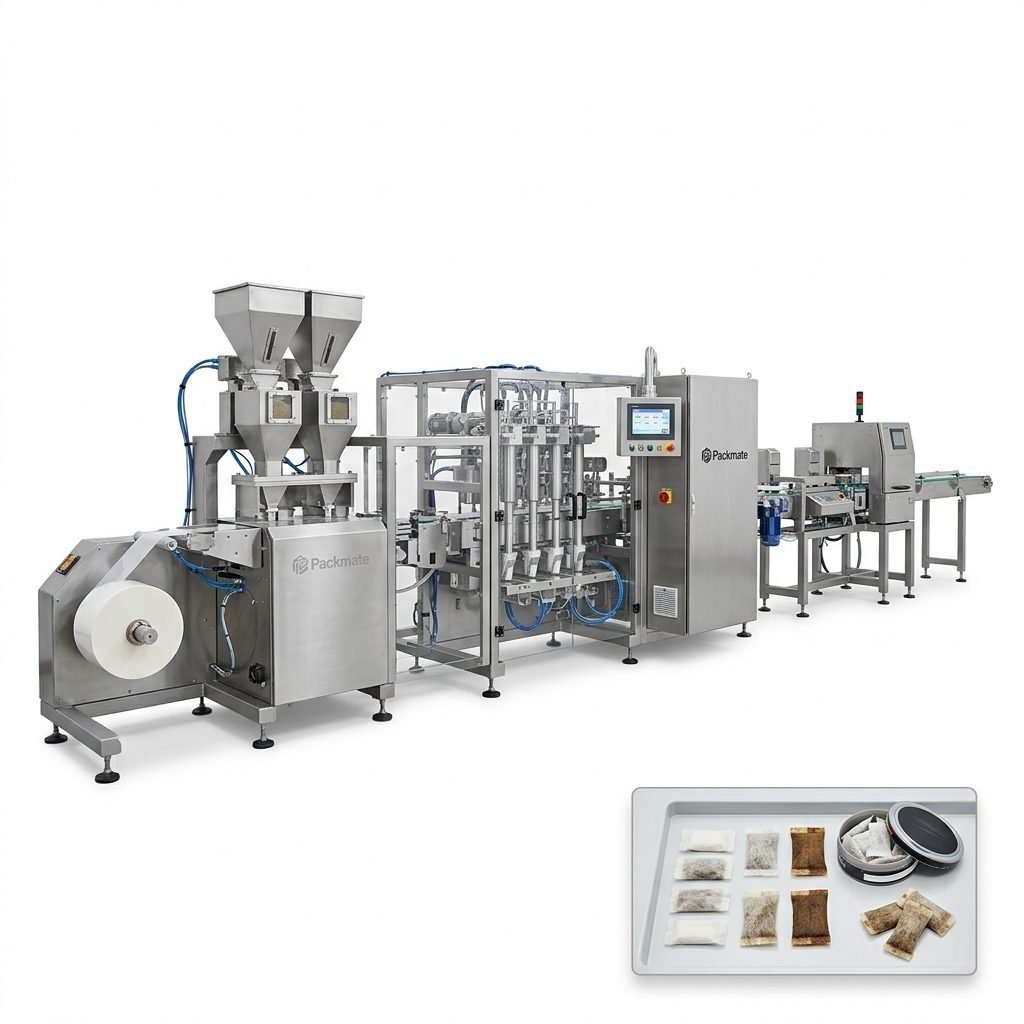
Navigating the growing snus and nicotine pouch market requires not only a reliable product formula but also a high-efficiency packaging solution. This guide walks you through choosing the best snus pouch production system — from core components and production capacities to factory capabilities, customization options, compliance matters, and long-term service considerations. Whether you are launching a boutique brand or scaling a multinational operation, understanding packaging equipment strategy is essential to protect product quality, meet regulations, and maximize profitability.
Why Choose a High-Efficiency Snus Pouch System?
A purpose-built snus pouch production system delivers speed, precision, and consistency. Modern systems reduce waste and ensure pouch weight accuracy — crucial for small-dose nicotine products. Key business benefits include:
🔶 Higher throughput — Multi-lane machines and automated feeding maximize output per shift.
✅ Consistent dosing — Precision weighing reduces product giveaway and maintains regulatory compliance.
⚙️ Reduced labor costs — Automation minimizes manual handling and human error.
🔒 Improved hygiene & traceability — Enclosed lines and data capture support safety and quality systems.
Core Components of a Snus Pouch Production Line
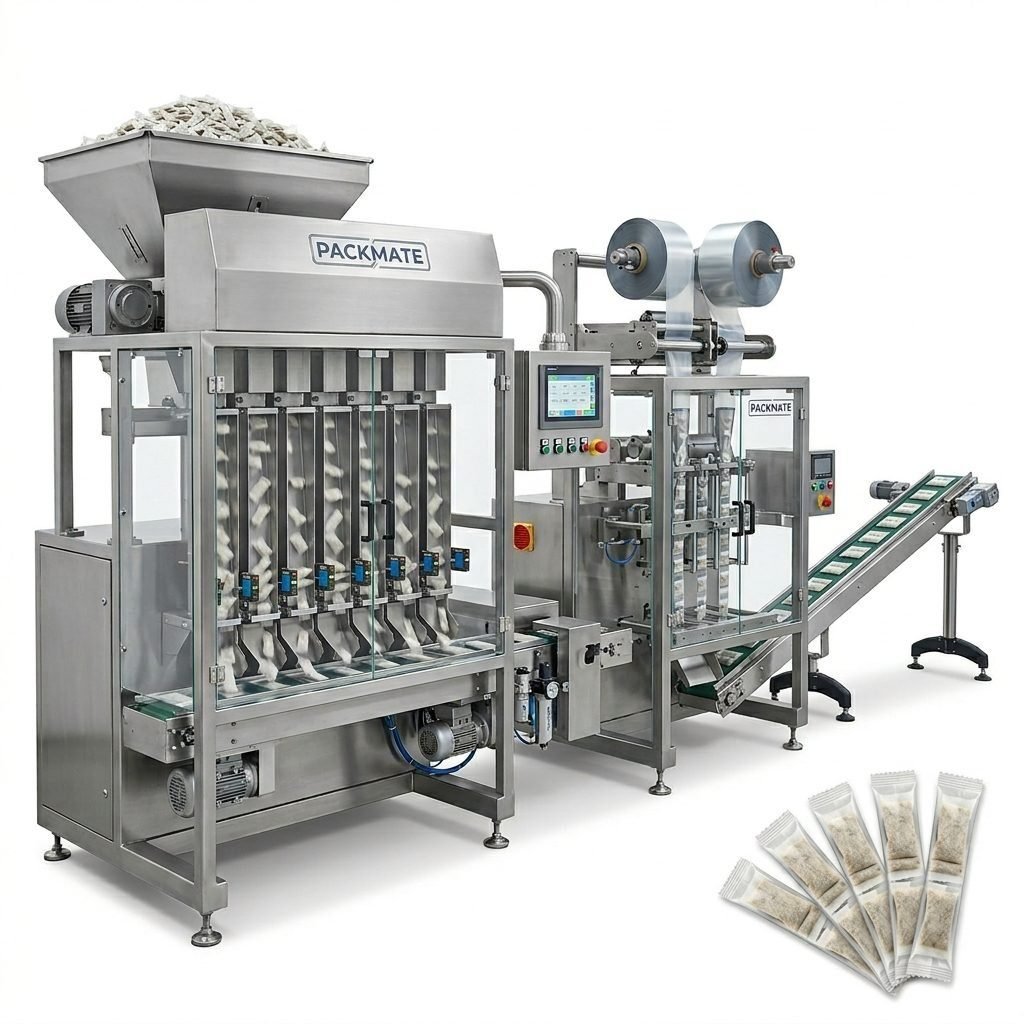
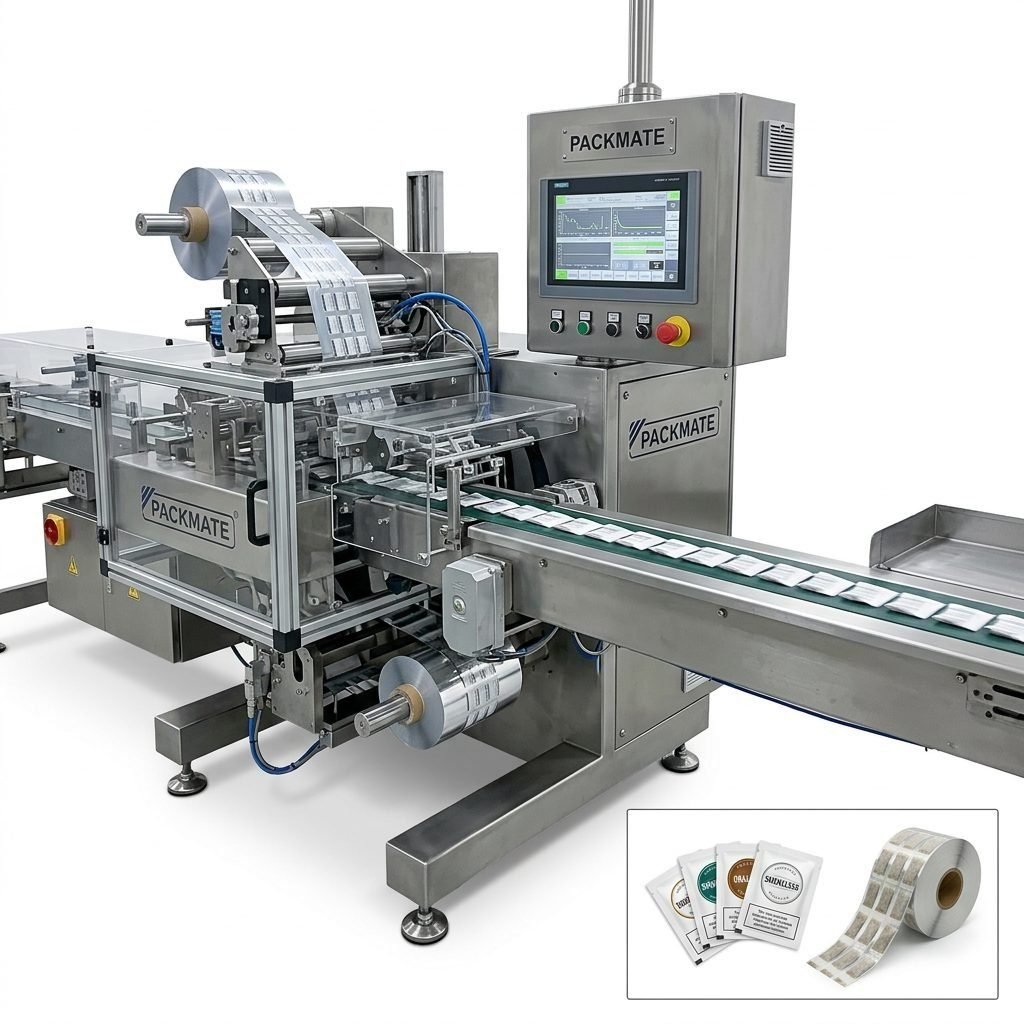
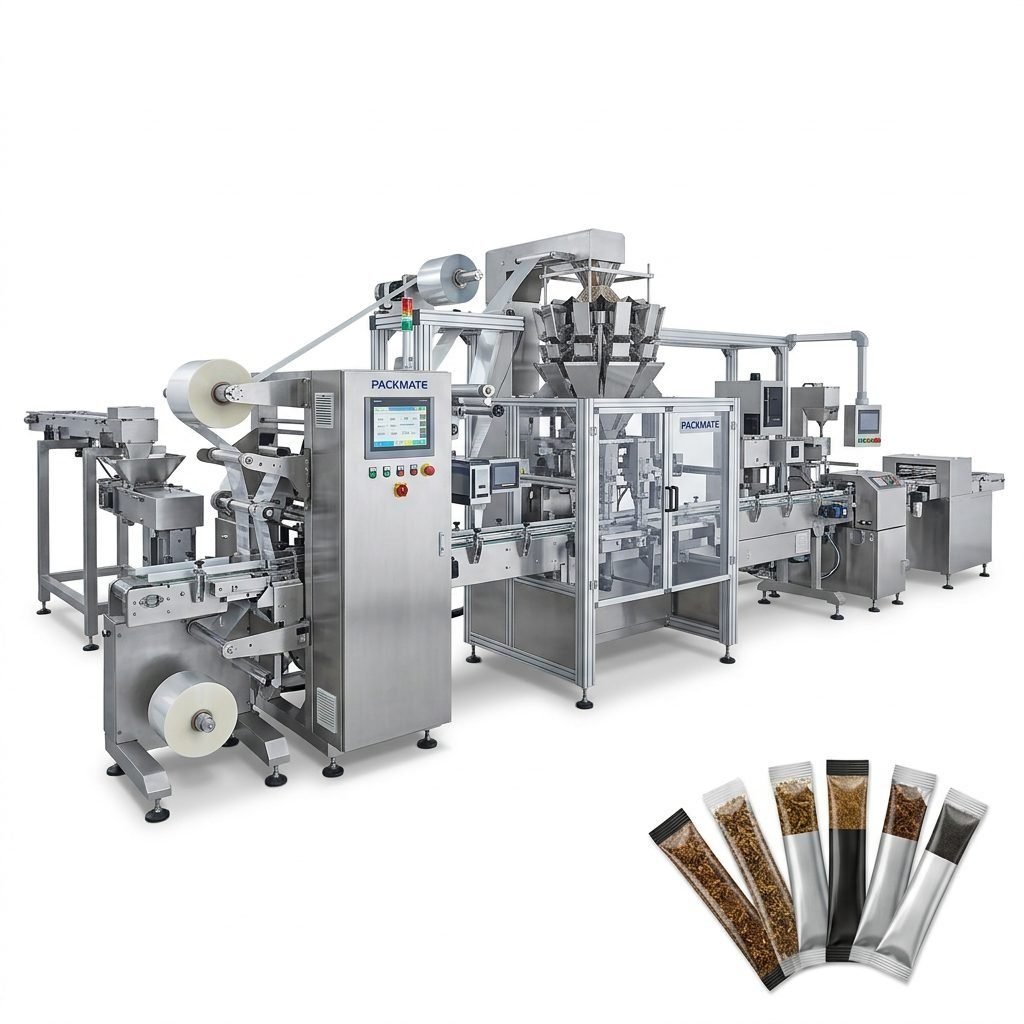
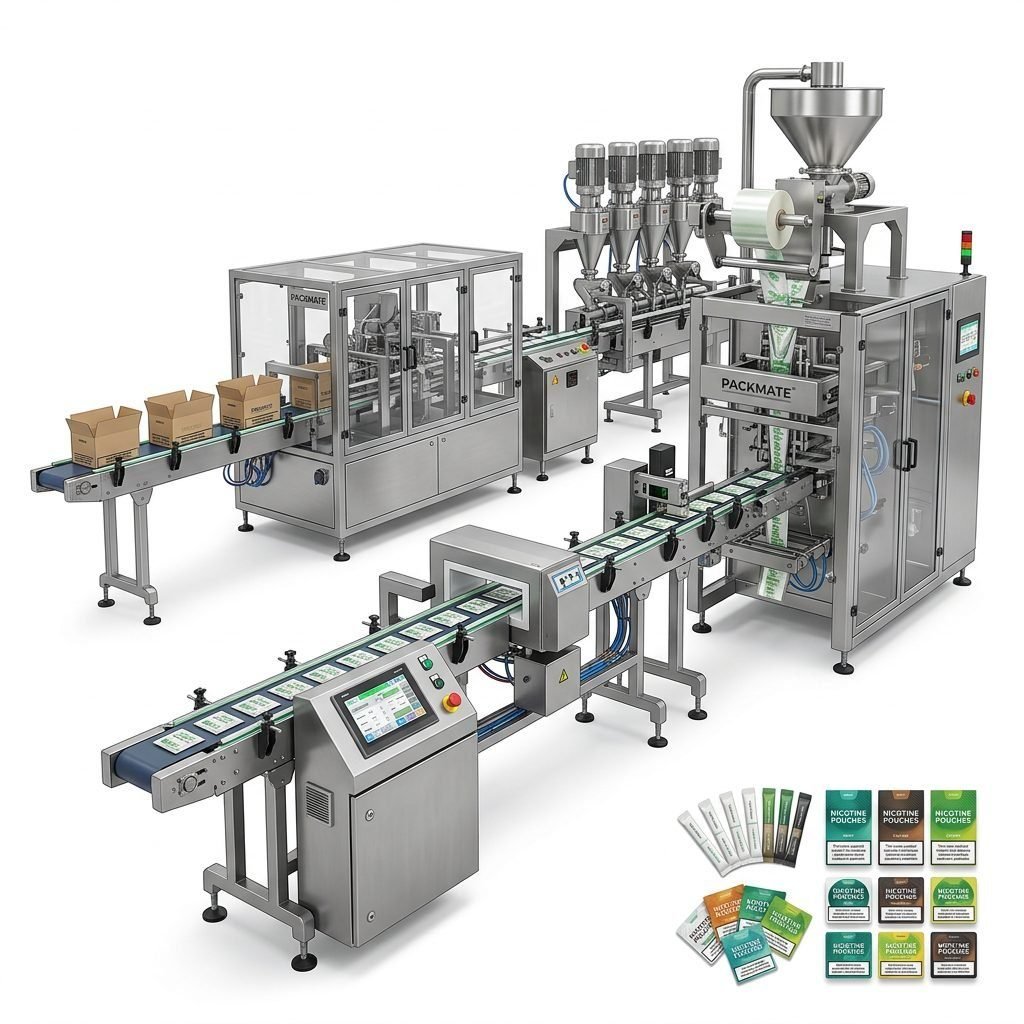
A complete snus pouch line integrates several specialized machines. Selecting equipment that interfaces seamlessly is essential for stable operations.
1. Feeding & Dosing Systems
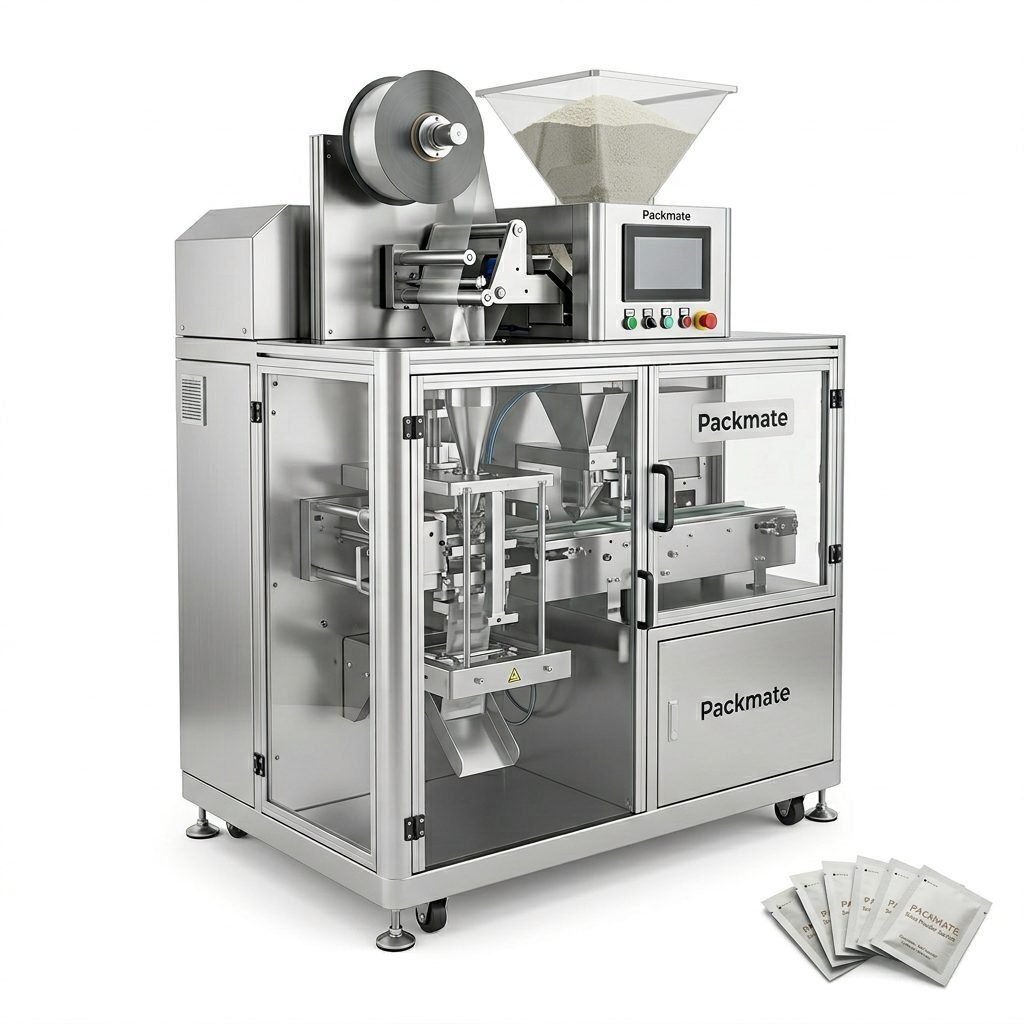
Accurate feeding and dosing are the foundation. Systems can be volumetric or gravimetric; for nicotine pouches, precision weighing (multi-head or single-head scales) is often preferred to meet tight tolerances.
2. Form-Fill-Seal / Pouch-Filling Modules
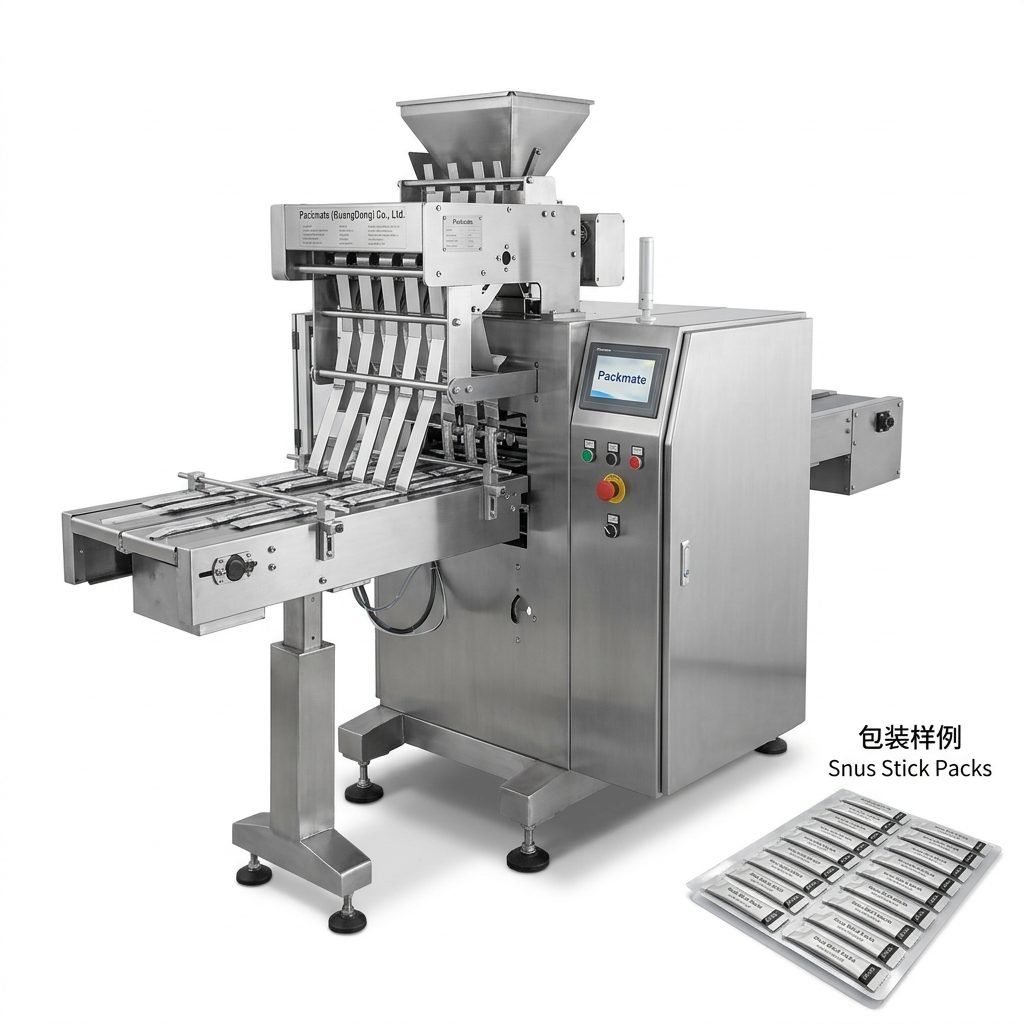
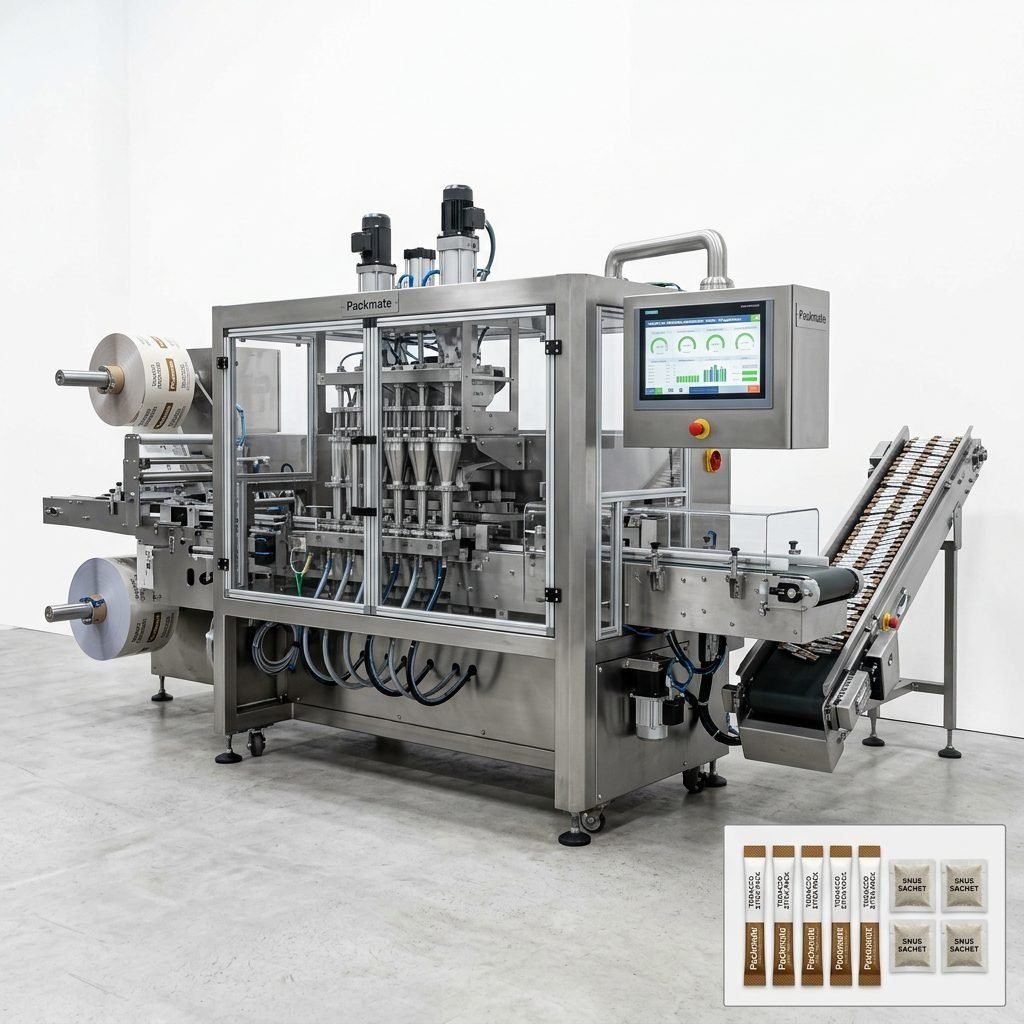
Machines designed for sachet, stick pack, or pre-made pouch formats should offer precise material handling, stable sealing, and minimal product exposure. Look for options tailored to small-dose snus formats such as multi-lane sachet systems.
3. Multi-lane Synchronization
Multi-lane platforms increase output by running several lanes in parallel. Synchronization controls must ensure even pouch spacing and consistent filling across lanes to avoid imbalance and rejects.
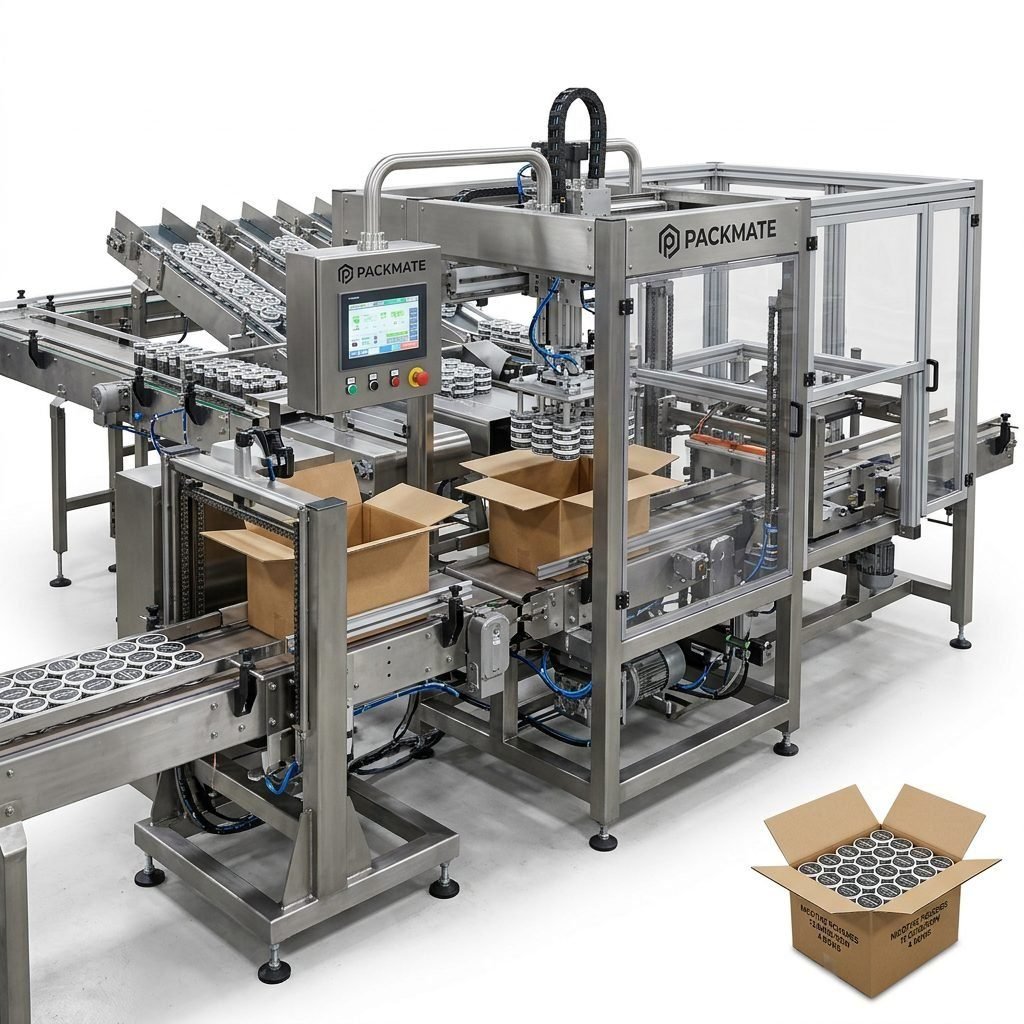
4. Secondary Packaging & Case Packing
Automated cartoning, shrink-wrapping, and case-packing modules provide end-of-line stability. Seamless integration saves floor space and lowers handling time while preserving sterile or dry conditions as required.
Production Capacity: From Pilot to Mass Scale
When choosing equipment, align capacity to demand. Typical stratification:
🔹 Pilot / R&D: Single-lane or benchtop machines for formula trials and small batches.
🔹 Commercial: Multi-shift single-lane with automated feeding for steady volumes.
🔹 High-volume: Multi-lane sachet/stick pack systems with integrated weighing and case packing for tens to hundreds of thousands of pouches per day.
Customization & Turnkey Solutions
Off-the-shelf machines can be efficient, but nicotine pouch producers often need tailored solutions:
- Product-specific dosing heads for viscous or particulate blends.
- Material changes for barrier films, heat-seal compatibility, or recyclable substrates.
- PLC and HMI customization for local languages and operator familiarity.
- Integration with upstream mixing/blending and downstream cartoning for turnkey lines.
For example, Packmate offers fully customized lines and turnkey solutions that combine dosing, multi-lane forming, and automated packaging. Learn more about dedicated machinery here:
Snus & Nicotine Packaging Machines,
Sachet & Stick Pack Machines,
and integrated lines at
Filling & Packaging Lines.
Factory Capabilities & Quality Assurance
Selecting a manufacturer with robust factory infrastructure is critical. Look for:
⚙️ Advanced machining (CNC centers) for tight tolerances.
🏭 Dedicated assembly lines and quality testing to ensure each machine meets spec.
📜 Certifications — CE and ISO compliance demonstrate global readiness.
Certifications & Regulatory Compliance
Nicotine products face strict regulation in many markets. Machines should support traceability, allergen controls, and hygienic design. Verify supplier documentation for CE, ISO, and any region-specific approvals. Packmate’s equipment is designed to meet international standards and support client audits.
Installation, Commissioning & After-Sales Service
A dependable after-sales package reduces downtime risk:
- On-site commissioning and staff training to reach optimal OEE quickly.
- Remote diagnostics and spare parts availability for minimal downtime.
- Preventive maintenance programs and service agreements tailored to shift patterns.
For global businesses, working with a manufacturer that participates in exhibitions and maintains international partnerships can be advantageous. Explore Packmate’s approach and global cases:
Case | Our Exhibition.
Choosing the Right Machine: Checklist
Use this checklist when evaluating suppliers and equipment:
⚠️ Capacity alignment — Can the machine meet projected peak volumes?
⚠️ Product flexibility — Can it handle formula changes and different pouch types?
⚠️ Integration — Will the line work with existing upstream/downstream equipment?
⚠️ Service & parts — How fast are spare parts shipped and is remote support available?
⚠️ Hygiene & maintenance access — Is cleaning straightforward and compliant with your standards?
Real-World Case: Multi-Lane Snus Line
Multi-lane lines designed specifically for snus production enable premium output without sacrificing accuracy. A typical deployment includes synchronized multi-head scales feeding a multi-lane forming and sealing station, followed by automated stacking and case packing. Benefits include:
- Rapid production scaling — add lanes to increase capacity without duplicating full lines.
- Lower footprint vs multiple single-lane machines.
- Centralized control reduces operator count and simplifies maintenance.
See multi-lane and accessory solutions here:
Weighing & Packaging Systems and
Auxiliary Packaging Equipment.
Estimating Cost & Return on Investment
Initial capital outlay covers machinery, installation, tooling, and training. Consider total cost of ownership: energy use, spare parts, downtime risk, and labor savings. A high-efficiency line typically recoups investment faster through:
- Lower per-unit labor and waste.
- Higher first-pass yield and consistent compliance.
- Scalable upgrades (e.g., adding lanes) instead of full line replacements.
Maintenance Best Practices
Maximize uptime by implementing:
- Daily checks for sealing temperature, material feed alignment, and conveyor tension.
- Scheduled replacement of wear parts based on run-hours, not just visible wear.
- Operator training focused on quick-change tooling and hygiene-critical cleaning procedures.
Market Considerations: Regional Demand & Customs
Different regions have distinct regulatory and consumer preferences. For example:
🔹 Northern Europe: Mature snus markets with strict labeling and product stability requirements — prioritize traceability and packaging integrity.
🔹 North America & Asia: Rapid growth in nicotine pouch demand — flexibility for different pouch formats and fast changeovers can capture market share.
🔹 Emerging markets: Emphasize cost-effective automation and local service networks.
Selecting a Supplier: What to Ask
When vetting suppliers, request:
- Factory tour or video showing CNC capabilities and assembly lines.
- References and case studies from similar product lines.
- Detailed maintenance and spare parts plans.
- Commissioning timeline and operator training inclusions.
For a deeper look at maker history, capabilities, and certifications, check supplier references such as:
About Packmate and their
Certificate details.
Final Recommendations
Investing in the right snus pouch production system is a strategic decision. Prioritize manufacturers with proven engineering experience, transparent quality control, and strong after-sales service. Balance capacity needs with flexibility so your line can adapt as product lines expand or regulations evolve.
✅ Tip: Start with a clear forecast and modular architecture — add lanes or modules rather than replacing the entire line when demand grows.
Common Questions
Q1: What capacity do I need to justify a multi-lane system?
A multi-lane system is most cost-effective when your daily production consistently exceeds the output of a single-lane line and you want a smaller footprint with higher throughput. If forecasts show sustained growth or seasonal peaks, multi-lane scalability often provides better ROI.
Q2: How do I ensure dosing accuracy for very small pouch weights?
Use precision weighers (gravimetric systems) with appropriate dosing heads and closed-loop feedback. Regular calibration, proper segregation of wet/ dry ingredients, and environmental controls (humidity/temperature) all contribute to consistent results.
Q3: Are turnkey solutions worth the investment?
Turnkey lines reduce integration risk and shorten time-to-market. They are especially valuable when you lack internal automation expertise or need guaranteed performance deliverables from a single vendor.
Q4: Where can I find spare parts and service for global deployments?
Choose suppliers with global service networks, local spare parts stocks, or rapid shipping policies. Manufacturers that participate in international exhibitions and maintain regional partnerships usually provide better long-term support.
For additional resources, product catalogs, or to request a tailored quote, visit the manufacturer’s contact and service pages:
Catalog |
Service |
Contact Us.