In an era where precision dosing, regulatory compliance, and production efficiency define competitive advantage, choosing the right snus machine with an integrated weighing system is essential for manufacturers of nicotine pouches and similar small-dose products. This article examines technical features, production benefits, integration tips, and best practices to help procurement teams, plant engineers, and production managers evaluate and select high-performance snus packing equipment suited to modern packaging lines.
Why a Weighing System Matters for Snus & Nicotine Pouch Production
Accurate dosing is the foundation of product consistency and regulatory compliance. A built-in weighing system ensures each pouch receives the specified net weight within tight tolerances, reducing product giveaway and minimizing rework. Manufacturers benefit from:
✓ Consistent dosing across lanes and batches, which is crucial for nicotine products where small weight deviations can affect potency and compliance.
✓ Lower material waste via precise portioning, translating into direct cost savings.
✓ Traceability and quality control through digital weight records that support batch reports and audit trails.
Key Weighing Technologies Used
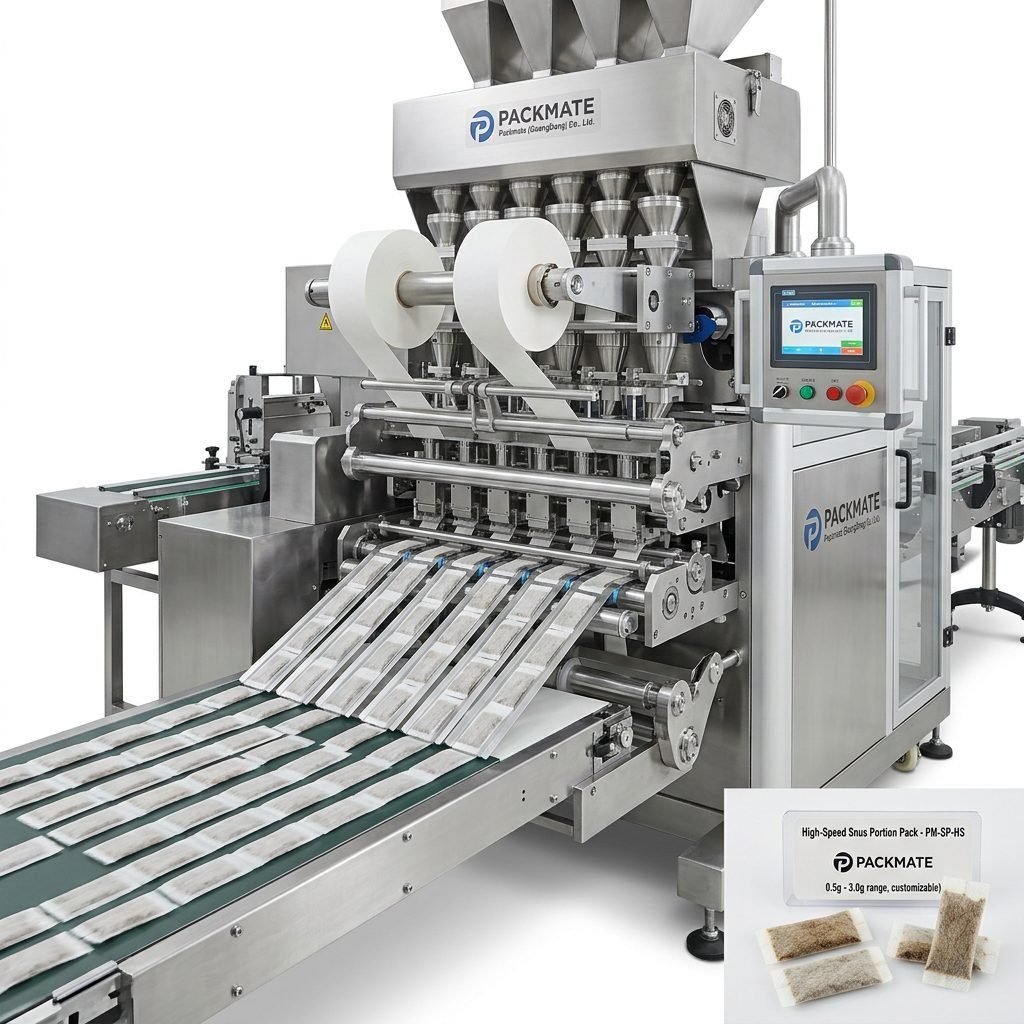
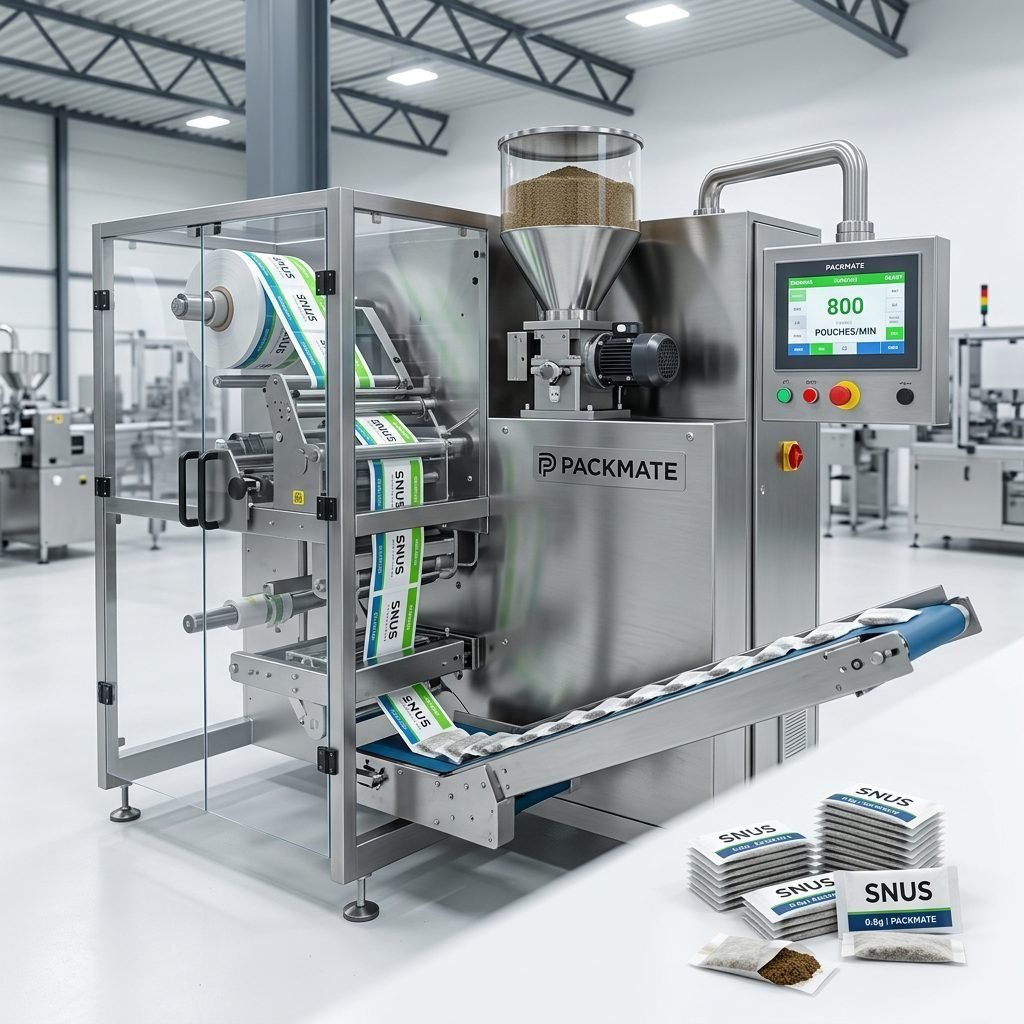
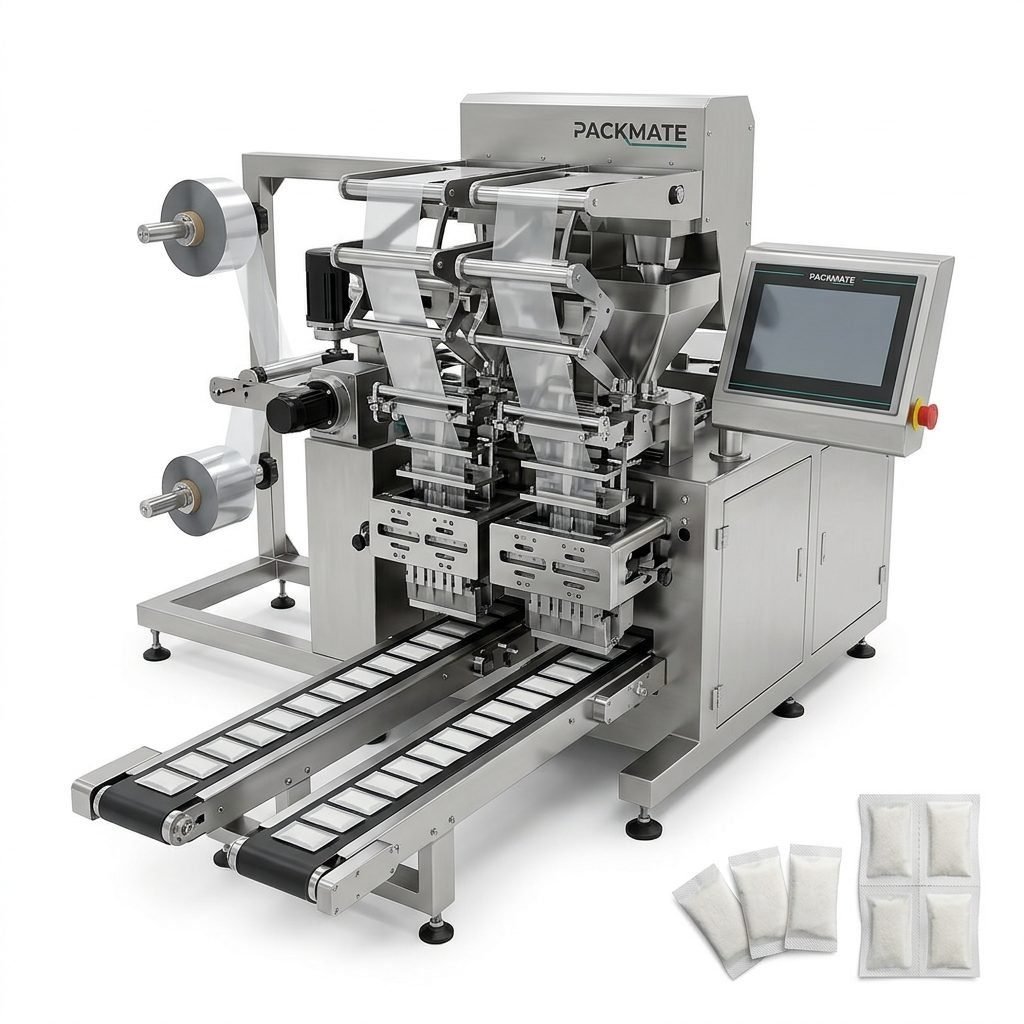
Modern snus packaging lines often use multi-head weighers or loss-in-weight feeders depending on product form (powder, granule or mixture). Multi-head weighers excel in high-accuracy, high-speed portioning for granular blends, while loss-in-weight feeders are ideal for continuous dosing of powders. Integration with pouch forming and sealing modules ensures synchronized cycle timing for maximum throughput.
Performance Metrics to Compare
When evaluating systems, prioritize measurable KPIs:
🔧 Accuracy (± tolerance) per pouch
🔧 Cycle speed (pouches per minute or per lane)
🔧 Changeover time between SKUs and pouch sizes
🔧 Integration capability with upstream/downstream equipment and MES systems
Design Considerations for High-Speed Pouch Packing
High-speed pouch packing for snus requires mechanical rigidity, precise motion control, and reliable sealing. Machines must handle small portion volumes repeatedly without drift. Critical design elements include servo-driven feeders, photometric or laser registration for accurate film tracking, and modular tooling to accommodate varied pouch formats.
Multi-Lane Systems vs Single-Lane Systems
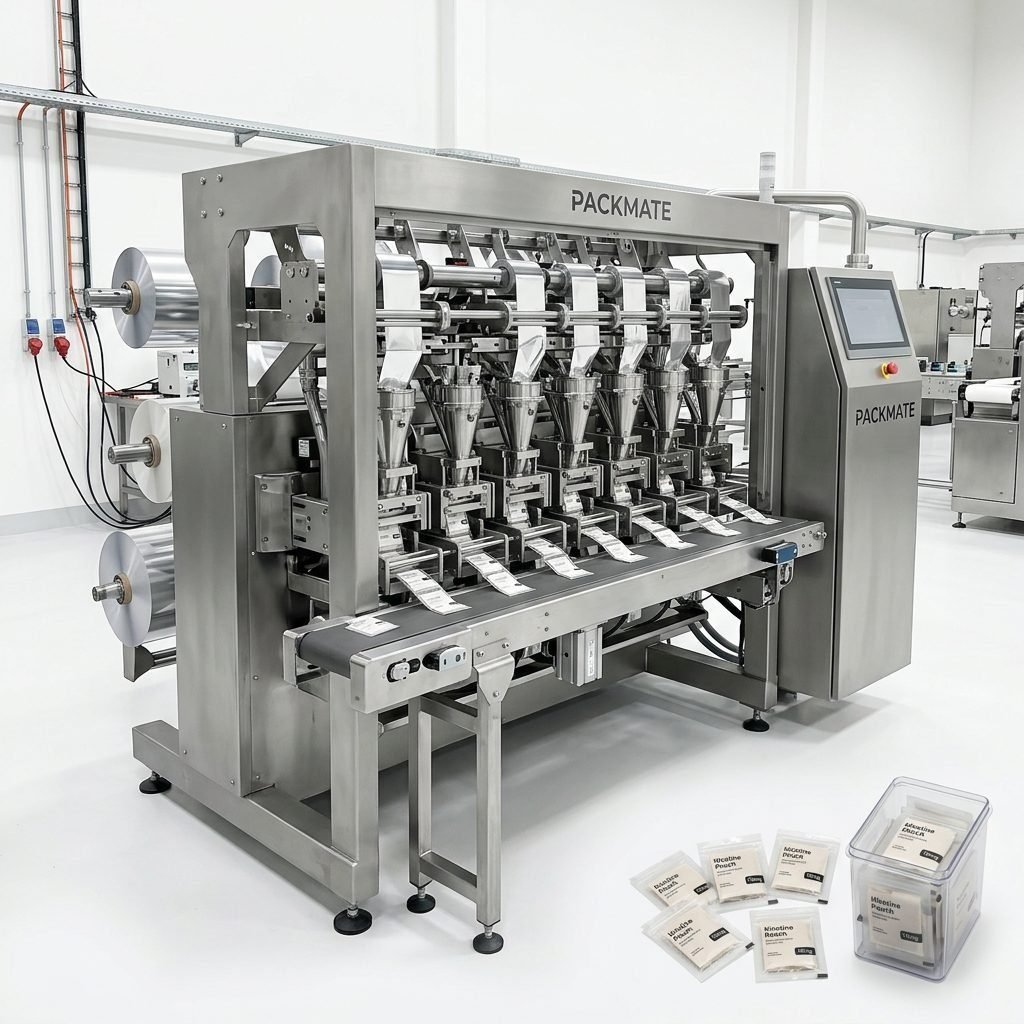
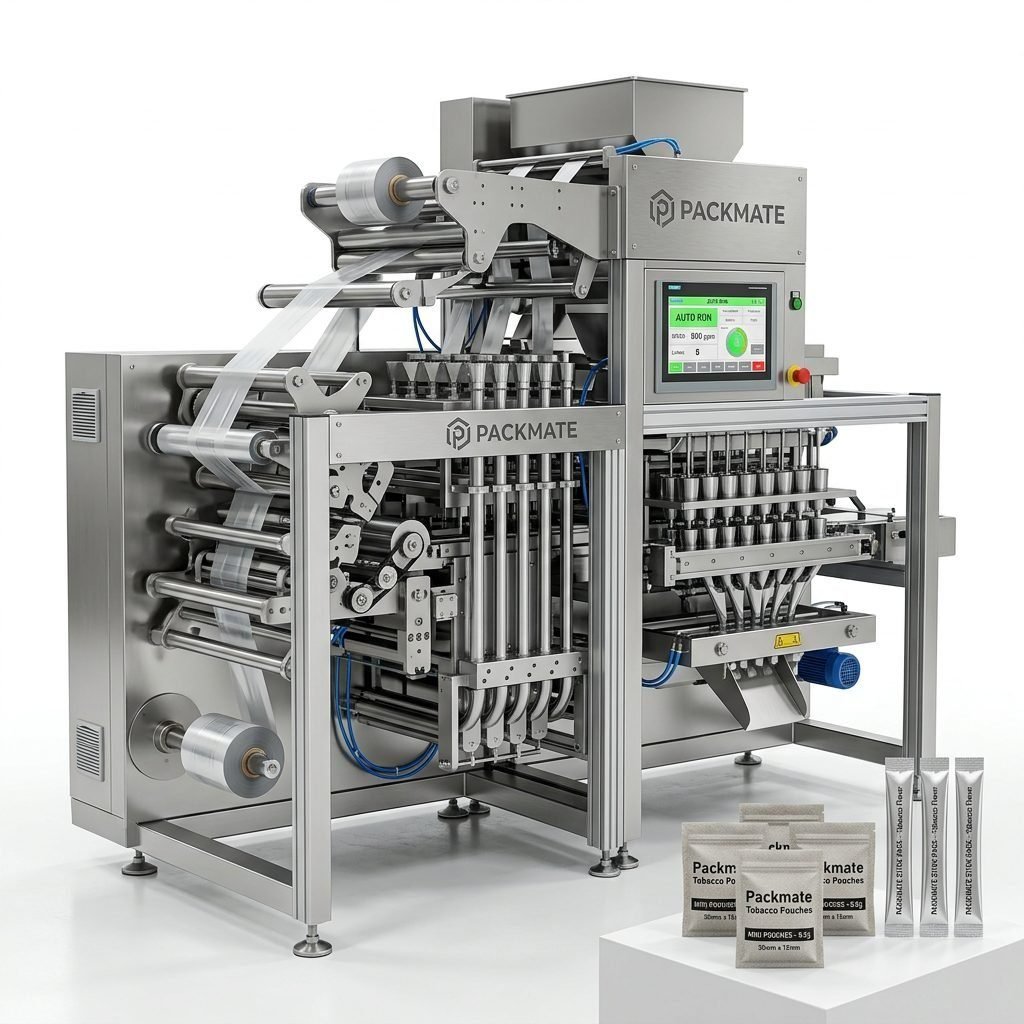
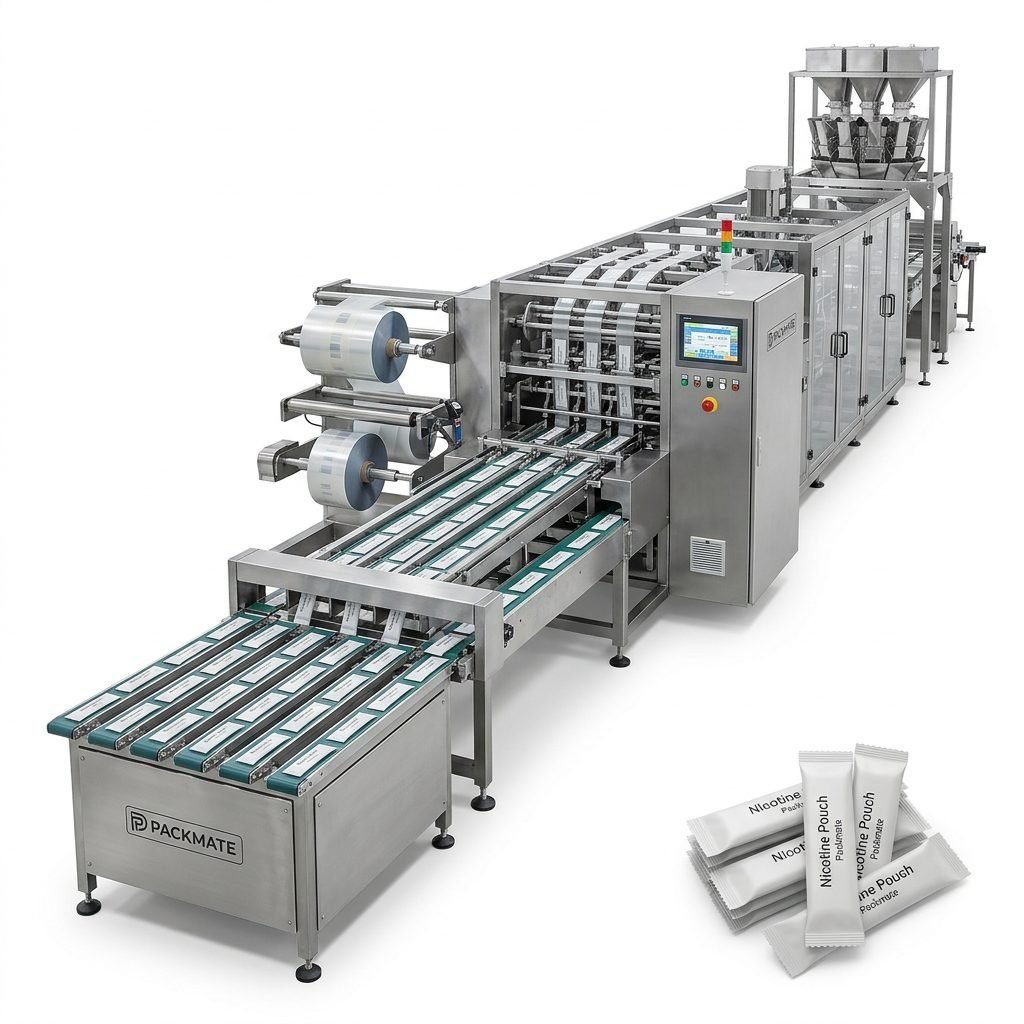
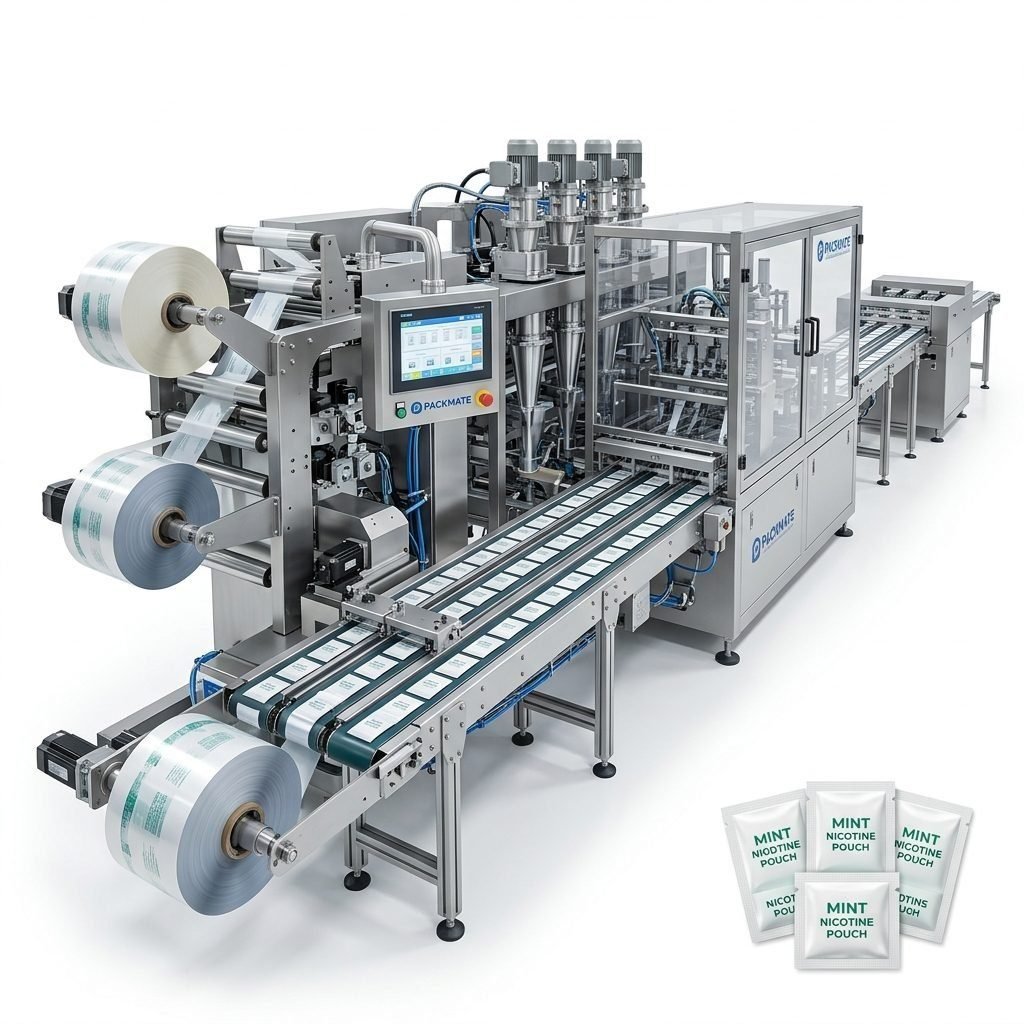
Multi-lane machines multiply output while maintaining compact floor footprint — ideal for manufacturers scaling volumes without adding multiple single-lane lines. However, they require advanced synchronization and higher initial investment. Single-lane machines offer flexibility and simpler maintenance for smaller batches or frequent SKU changes.
Materials Compatibility and Hygiene
Choose machine designs and surfaces that meet hygiene standards and are compatible with your product ingredients. Stainless steel contact parts, hygienic feeders, and easily accessible inspection points reduce contamination risk and simplify cleaning procedures.
Integration and Turnkey Solutions
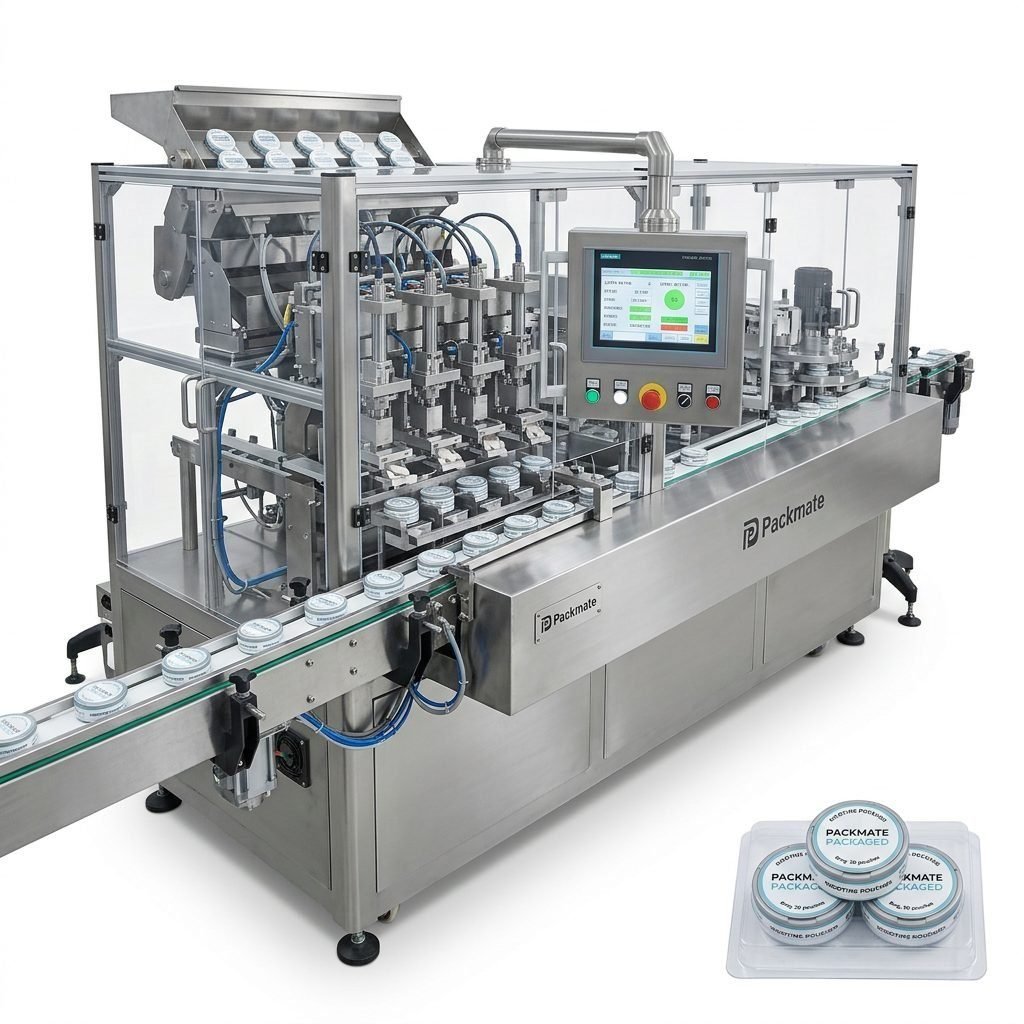
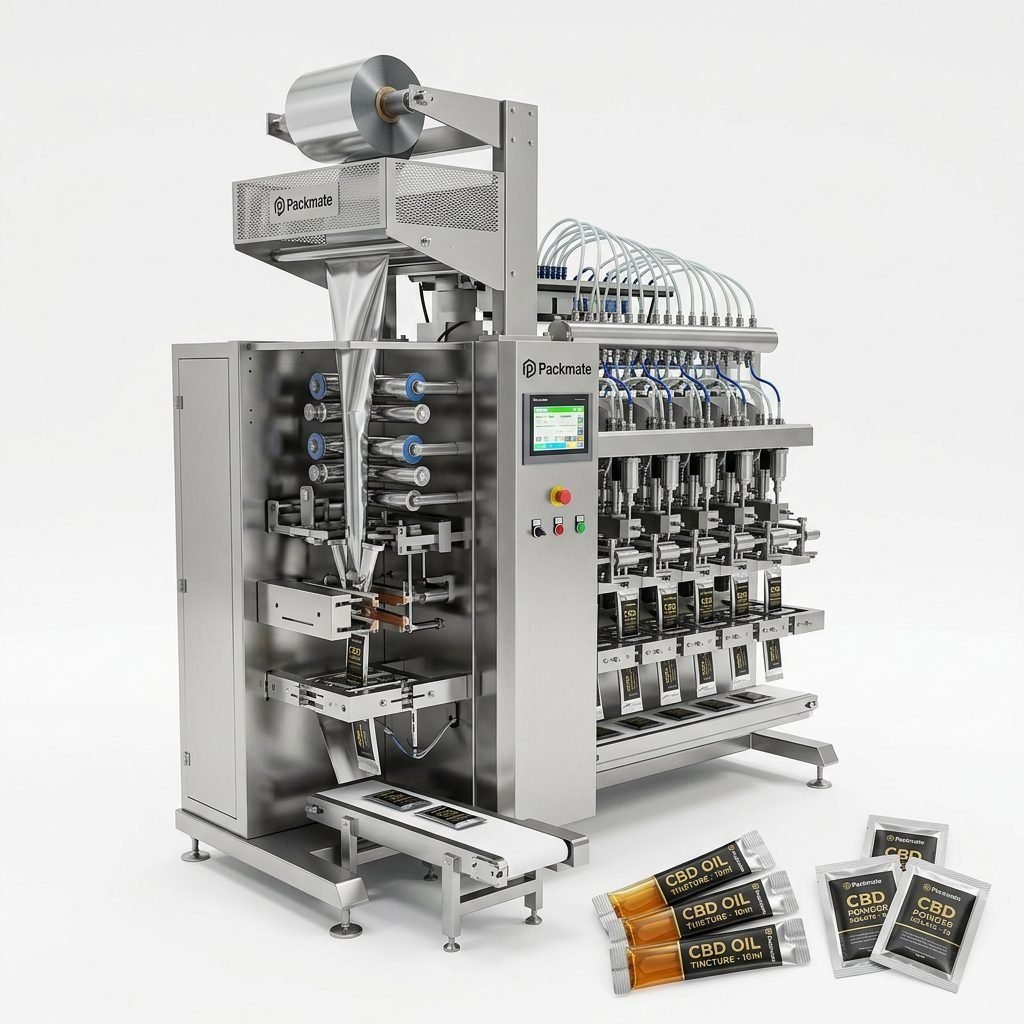
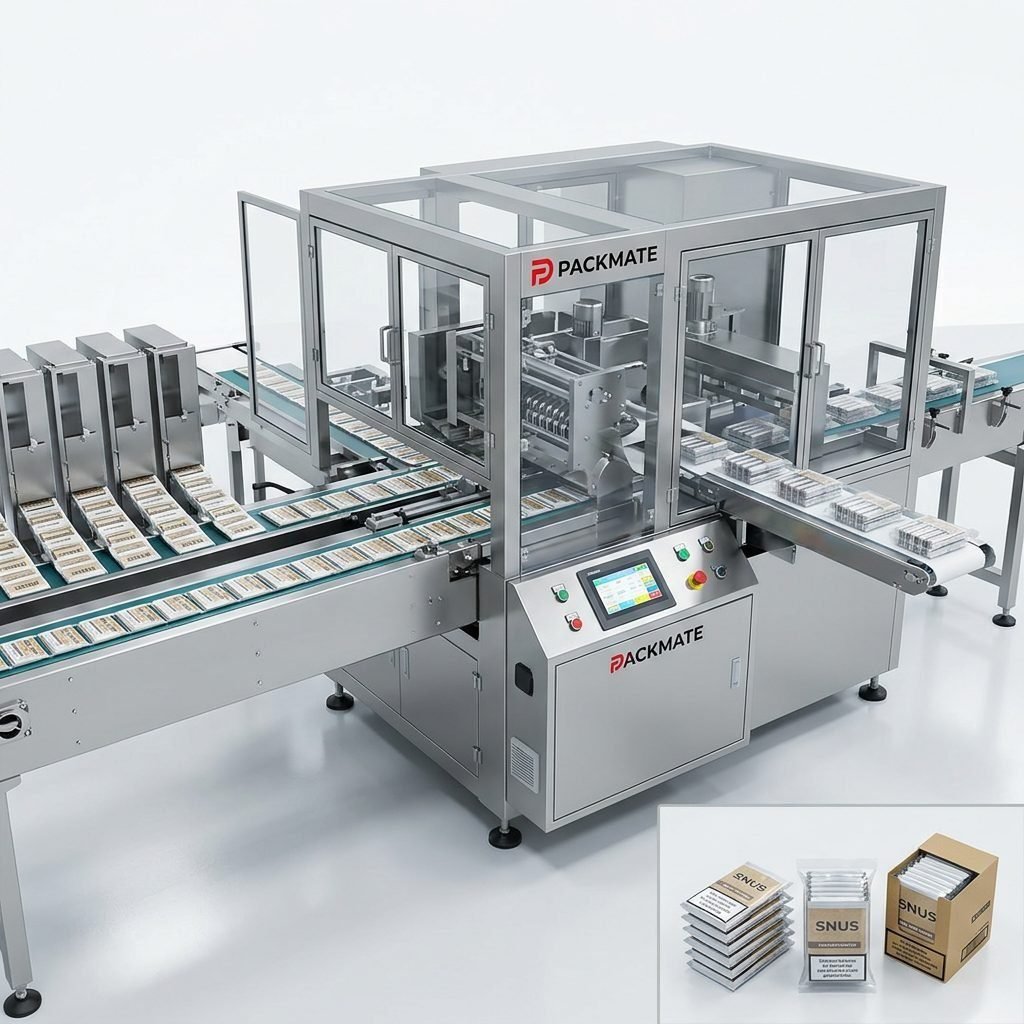
For manufacturers seeking a smooth ramp-up, a turnkey solution that integrates weighing, filling, pouch forming, sealing, and secondary packaging is often the best path. Packmate offers full lines that combine precision weighing systems with pouch machines and downstream case packing, simplifying project management and reducing compatibility challenges. Explore product groupings such as Snus & Nicotine Packaging Machines and Weighing & Packaging Systems to see integrated options.
Automation and Data Connectivity
Connectivity for Industry 4.0 enables remote monitoring, SPC charting for weight distributions, predictive maintenance alarms, and batch logging. Ensure the chosen machine supports common industrial protocols and can export weight records for compliance reporting.
⚠ Important: confirm whether your in-house ERP/MES can accept weight and batch data in the machine’s native formats — this reduces post-installation integration time.
Customization and Factory Support
Manufacturers producing multiple SKUs will benefit from modular options: adjustable filling heads, quick-change dosing pies, and programmable tooling sets. Packmate’s 30+ years of experience and a 20,000㎡ facility enable tailored solutions, from standard pouch lines to fully customized multi-lane configurations. Learn more about company capabilities on the About Packmate page.
Spare Parts, Training, and Service
A reliable after-sales plan includes parts availability, training for operators and technicians, and remote support for troubleshooting. Manufacturers should evaluate supplier response times and service networks, especially when exporting lines globally.
Operational Best Practices to Maximize ROI
Achieving the best return on investment requires more than equipment — it requires optimized processes and trained teams. Implement these best practices:
✔ Regular calibration schedules and weight verification to maintain dosing accuracy.
✔ Standard operating procedures for changeovers to reduce downtime.
✔ Production trials for each new SKU to tune the weigher and sealing parameters.
✔ Operator cross-training to handle multiple parts of the line and quick troubleshooting.
Case Study Snapshot
A European manufacturer of nicotine pouches moved from single-lane filling to a 6-lane integrated line with a multi-head weigher and reported a 4x increase in throughput while reducing weight variance to within tight regulatory limits. The integrated data logging simplified compliance reporting during audits.
Selecting the Right Supplier: Questions to Ask
When engaging vendors, clarify technical, commercial, and support aspects. Important questions include:
• What are the guaranteed weight tolerances at target speeds?
• Can the system handle your full SKU mix without costly retooling?
• Are spare parts stocked regionally and what is lead time?
• What documentation, training, and commissioning services are included?
Products and Resources
Browse related equipment families to understand full line options, including pouch machines, weighing systems, and filling lines. Useful resources include Filling & Packaging Lines and the broader range of Bag & Pouch Packaging Machines.
Regulatory and Market Considerations
Nicotine products face varied regulations across regions. Systems that capture accurate weight logs and can produce compliant labeling help manufacturers adapt to different market requirements. Consider machines certified to global standards (CE, ISO) and ask vendors for documentation to support market entry.
Cultural and Regional Notes
In regions where snus consumption has a long tradition, such as parts of Scandinavia, product texture, pouch feel, and pouch size are often tailored to local preferences. When exporting to such markets, engage with local distributors or advisors to ensure your packaging attributes meet consumer expectations and local regulations.
Conclusion and Next Steps
Selecting the best snus machine with a weighing system is a cross-functional decision that blends engineering specifications, operational practices, and supplier capabilities. Prioritize equipment that delivers verified accuracy, seamless integration, and robust after-sales support. Evaluate turnkey options to reduce project risk and accelerate time-to-market. For a deeper dive into product lines and case studies, review company pages and dedicated product groups.
Useful Links
Discover machine families and support resources to inform procurement and engineering decisions:
– Snus & Nicotine Packaging Machines
– Weighing & Packaging Systems
– Filling & Packaging Lines
– About Packmate
Frequently Asked Questions
Q1: How accurate are integrated weighing systems for small-dose snus pouches?
A1: Modern multi-head weighers and loss-in-weight feeders can routinely maintain accuracy within narrow tolerances suitable for nicotine pouches. Verify vendor guarantees and test results during FAT/SAT.
Q2: Can a weighing system be retrofitted to an existing pouch machine?
A2: In many cases, retrofits are possible but depend on machine architecture and space. A turnkey supplier can recommend a retrofit path or propose an integrated replacement for better long-term performance.
Q3: What maintenance practices keep weighing accuracy stable?
A3: Regular calibration, cleaning of feed paths, scheduled preventive maintenance of sensors and load cells, and verification using certified test weights preserve accuracy and reduce drift.
Q4: How do multi-lane systems impact changeover and cleaning times?
A4: Multi-lane systems improve throughput but can increase changeover complexity. Design choices like quick-change modules and hygienic access points help reduce downtime and cleaning labor.
Q5: Where can I see machine demonstrations and real case studies?
A5: Visit supplier exhibition pages and case study sections to view demonstrations and successful implementations. Packmate showcases live demos and global case references that illustrate real production results.